












In China, whether on Earth or in the Heavens, it’s the Year of the Horse.
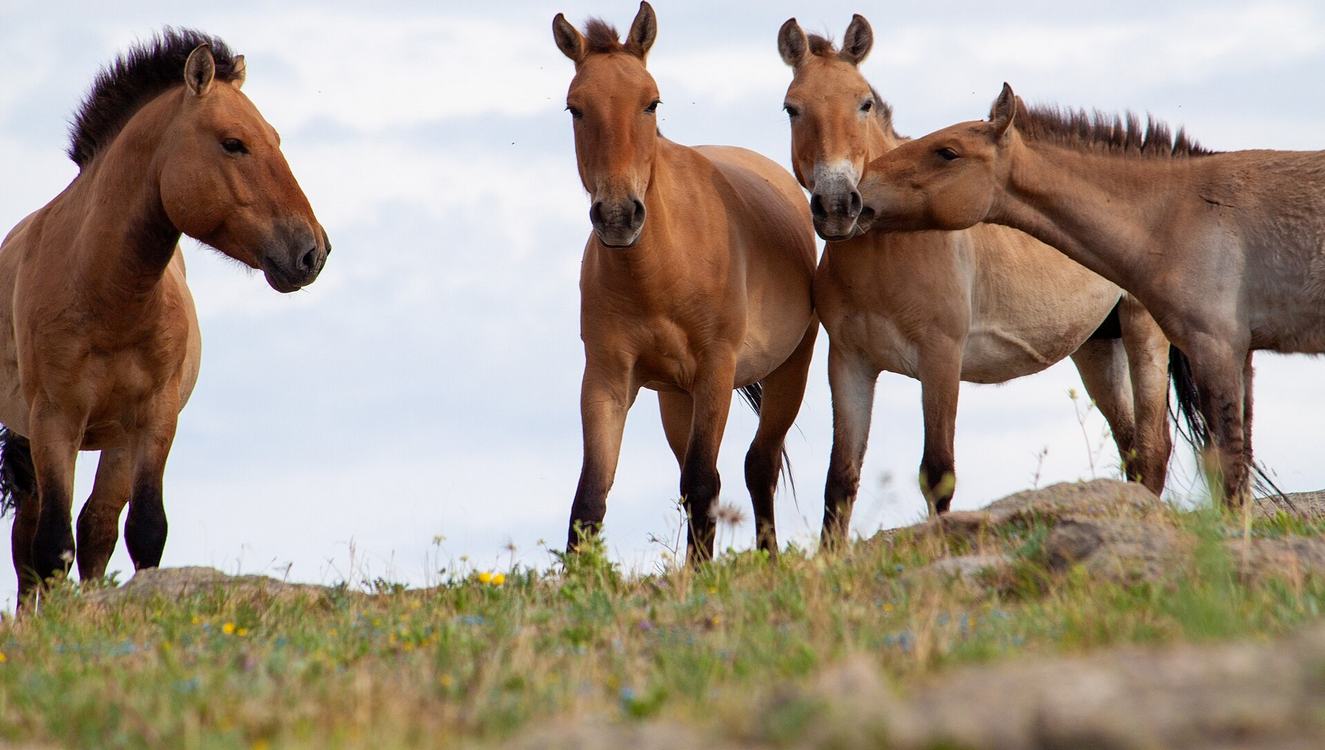
This year is the 40th anniversary of one of the country’s earliest conservation efforts: the Wild Horse Return Program, which since 1986 has been breeding, relocating, and protecting the famous Przewalski’s horse on the country’s vast grasslands.
2025’s data from the project’s monitoring arm shows that the wild horse population in China is now 900-strong and growing autonomously. This makes up one-third of the total global population of Przewalski’s horse, the last non-domesticated species on the planet.
In 1985, the species was considered extinct in the wild in China, and the animals alive today had their genesis at the hooves of a few animals kept in zoos and breeding centers in Europe.
The rare horse has become a flagship symbol of ecological restoration, and a recent cultural icon that inspired the creation of “Chengcheng,” the mascot for the 2026 Year of the Horse Spring Festival Gala.
A large portion of the 900 animals are located in Dunhuang West Lake Nature Reserve. Here, in Gansu Province, known in antiquity as the “Jade Gate”—the entrance to China proper, 200 animals roam across 28 herds.
Their numbers over the last one-and-a-half-decades have been bolstered by relocations from the Gansu Endangered Animal Protection Center in Wuwei city further east, which pioneered a long-distance road transport method called “loose relocation.”
Rather than anesthetizing and crating the animals which can sometimes lead to casualties, they are allowed more room to move in the transportation. At one point, the Wuwei center transported 28 of these wild horses over 600 miles to the reserve.
MORE ON THIS FANTASTIC ANIMAL:
- World’s Last Wild Horse Thriving After 3 Years in Spain’s Gallop Towards Rewilding
- Wild Horses Return to Kazakhstan Plains After Two Centuries of Absence
When they arrived, they underwent an acclimatization period. During this crucial phase, the animals are getting used to foraging again, and often need their diet supplemented with hay, stored on site. This is gradually reduced, and then eliminated to encourage the animals to forage.
“Around six foals are expected in 2026. We aim to build a healthy population with stable generational succession,” said Wang Hongjun, head of the center’s wildlife management department.
Additional reserves in Xinjiang, Inner Mongolia, and Ningxia also host the animal, and are all self-sustaining, though introductions continue. The Przewalski’s horse carries 60 million years of evolution with it, making it an important source of genetic knowledge for the equine family. All other wild equines are either donkeys or zebras.
SHARE This Great Year To Mark The 40th Anniversary Of A Great Success…