













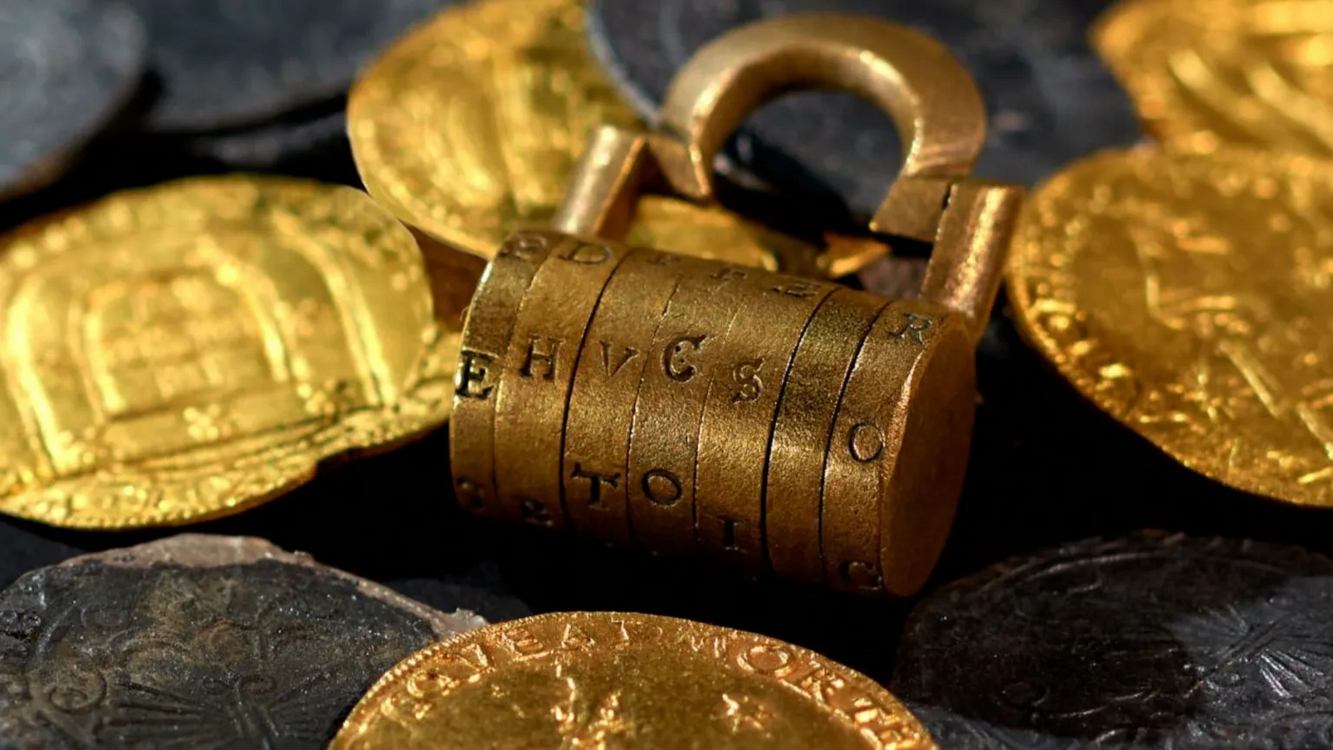
With the help of a hospital CT scanner, scientists have cracked the code to a 400-year-old padlock discovered in a treasure-laden shipwreck on a beach in Wales.
A metal detector found the padlock buried in the sand, but it could just as easily have been pulled from the pages of the Da Vinci Code, and has foiled all who had tried to guess the correct combination.
“There are four different rings, and because there are six different letters on each of the rings, there are 1,296 different combinations, and you have to make sure they’re aligned with the loop at the top,” said senior curator Alastair Willis at the Swansea Waterfront Museum, which received the padlock and the rest of the treasure on loan in July of 2026.
“Also, confusingly, there are other letters on the ends which don’t move, which are unrelated, and it’s like they were to mislead any potential burglar.”
The padlock was discovered along with other relics and treasures under the sand on a beach near Port Talbot in southern Wales. The metal detector, named Peter Hughes happened to pass over its location, which led to this nationally-significant discovery.
It was later determined to have been part of the cargo of the ship Ann Francis, which was wrecked in a storm in December, 1583, on her way back from Spain.
The first indication to Hughes that he had found something big was the presence of a Spanish silver coin. Additional artifacts, gold and silver coins, standardized coin weights, and the brass padlock were all found during subsequent visits by Hughes.
“I tried to unlock it for about 20 years, I tried moving the dials, finding the right combinations, and I failed,” Hughes told the BBC. “But with the aid of modern technology, we’ve been able to crack what’s like the Da Vinci code, really.”
The unyielding padlock eventually found a home, along with the rest of the treasure, in the Amgueddfa Cymru, or the Museum of Wales, as part of an exhibit called Tides of Treasure after Hughes turned them all over in 2017.
Eventually, Amgueddfa Cymru and Cardiff University decided to use a micro-CT scanning device to find the correct combination. Dr. David Williams, a research associate based at Cardiff University’s School of Engineering, wasn’t convinced CT scanning would work, but took up the project nonetheless.
CURIOUS TREASURES: Indian Governor Offers $1 Million to Anyone Who Can Decipher This 5,300-year-old Writing System
After two inconclusive scans, the third one allowed them to crack the code: ANCE.
“There are four different rings, and because there are six different letters on each of the rings, there are 1,296 different combinations, and you have to make sure they’re aligned with the loop at the top,” said senior curator Alastair Willis at the Swansea Waterfront Museum, which received the padlock and the rest of the treasure on loan in July of 2026.
MORE STORIES LIKE THIS: Codebreakers Crack Secrets of Lost Mary Queen of Scots Letters 430 Years After She Wrote them in Captivity
“Also, confusingly, there are other letters on the ends which don’t move, which are unrelated, and it’s like they were to mislead any potential burglar.”
Researchers suppose that the padlock would have locked a chest that perhaps contained the coins, or other valuables that perished in the intervening centuries like documents or textiles.
SHARE This Delightful Story Of A Mystery Resolved With Your Friends…