














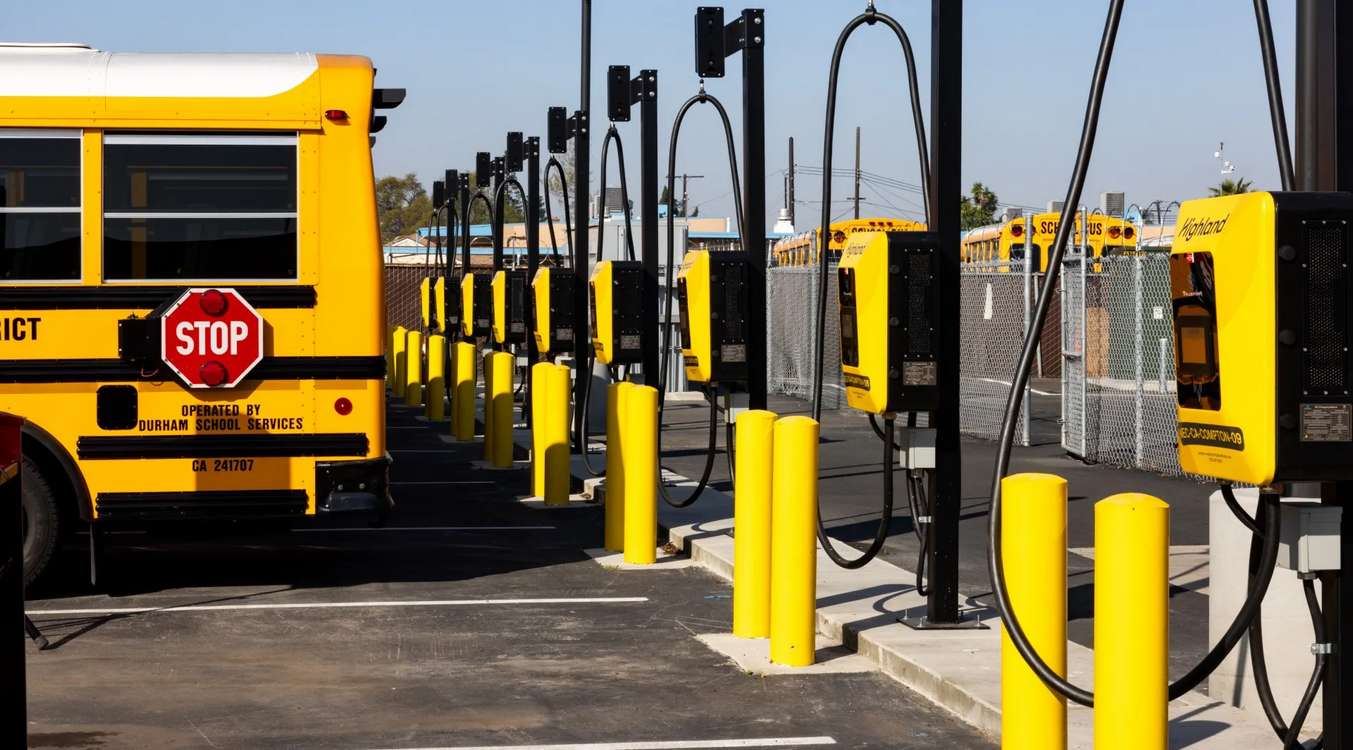
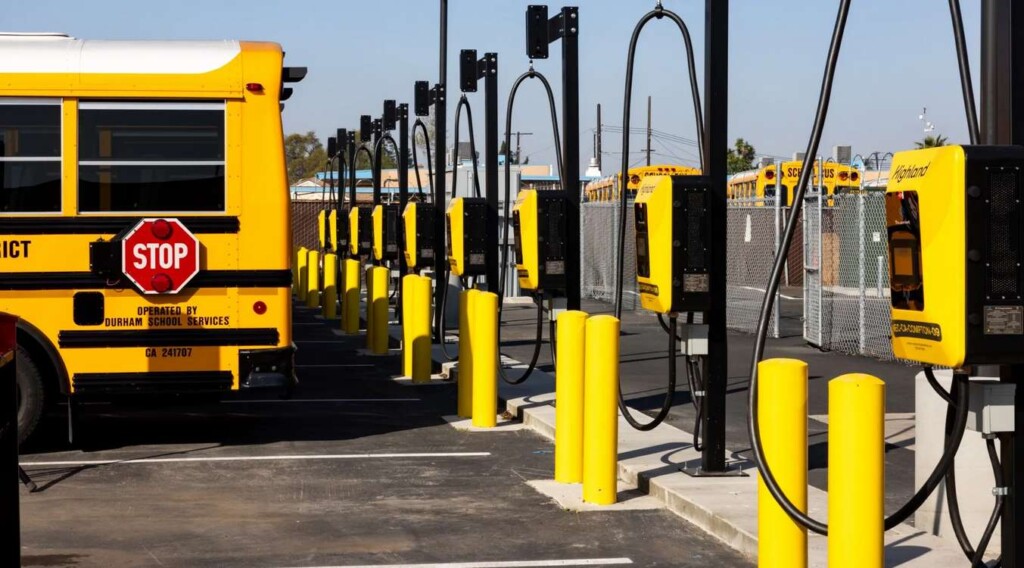
A Colorado town’s new electric school bus fleet also doubles as a backup battery to help out during peak power demand.
Charging at night, using power to pick up, drop off, and then drop off children again, the buses would normally sit at their charging stations until daybreak calls them out again.
But in Cherry Creek School District, after the last backpack has gone bobbling down the street home, the buses return to their depot to become a supporting cast to the power grid thanks to a clever bi-directional charging system that allows them to use excess energy from their routes to power excess demand from homes.
In most of the world, peak demand will be after work hours when men and women come home, turn on their kitchen appliances, TVs, or air conditioners, and begin to unwind. Being that hundreds of kilowatt hours remain in the school buses’ batteries after taking children home, Highland Electric Fleets has designed them to pay forward their own grid demand by releasing some of those kWh during the late afternoon and early evening.
There are still plenty of hours during the night, when demand is lowest, to recharge before the school day.
“This partnership works to support our environmental goals while delivering long-term operational savings,” Jennifer Perry, Cherry Creek’s interim superintendent, said at the June 3rd groundbreaking for the new bus facility.
The 6 buses and the bus “barn” are being funded by a $2.4 million rebate that Highland Electric Fleets collected from a partnership with the federal government. Cherry Creek wasn’t charged a penny.
MORE ELECTRIFICIATION STORIES:
- All-Electric Truck Completes Milestone Canberra-to-Sydney Haul, Cutting 84% in Fuel Costs
- Sub-Zero Temperatures Didn’t Affect Madison’s Electric Bus Fleet This Year–A Major EV Milestone
- India Approves $7 Billion For 10,000 Electric Buses to Clean Air in 170 Cities
Given that diesel prices remain elevated from the war, and given that maintenance on electric vehicles is so much less than in EVs owing to the 95% reduction in the number of moving parts, Perry said that there’s a competitive cost savings in the long-term.
Indeed Highland Electric Fleets have several of these pilot programs ongoing, which will also support healthy communities through the reduction in diesel tailpipe exhaust, and the general mood from the reduction in noise pollution.
Highland Electric estimates that 2 dozen of these buses could help the grid manage the excesses of 100 homes during peak hours, while a couple hundred could support over a thousand.
SHARE This Great News For Electrification In Colorado, And The Country…
I’ve never seen those electric buses in Denver before. They must be rechargeable instead of gas. A bit like electric cars that they have in Australia. But maybe it’s only for like school buses that are electric and needs to recharge for when the battery gets low before it runs out. It’s much different than gas, or it could well be pretty much the same thing. But those electric buses look very cool indeed.