













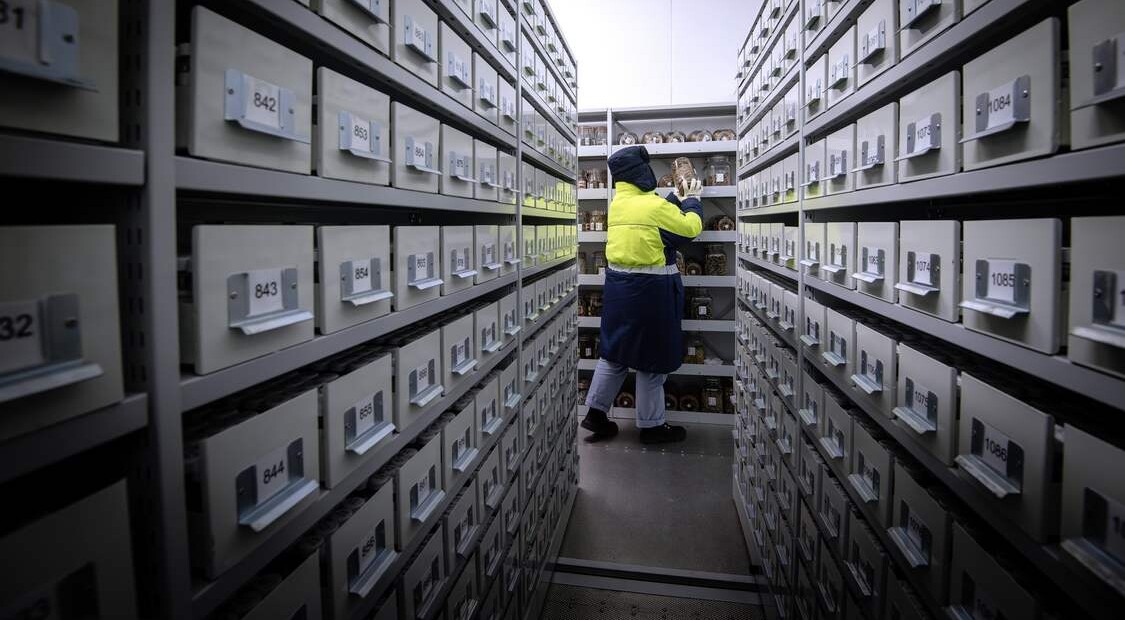
After a marathon effort to digitize each of the 7.4 million plant and fungi samples in its herbarium, the Royal Botanic Gardens Kew has said the result will help “democratize knowledge” while leveraging AI’s incredible computation power to plan conservation strategies, discover new chemicals, and more.
The new archive is just one part in an international online archive of herbariums that are aiming to assess as many plants and fungi species as possible.
The effort has already revealed fascinating and important trends in these kingdoms, such as how flowers worldwide are blooming weeks earlier than in earlier decades.
RBG Kew has one of the largest plant and fungi collections on the planet. Its scientists have been collecting samples since the time of Charles Darwin. But a 180-year-old pressed stem with a few leaves makes for a difficult ID job for a pair of eyes; not so for artificial intelligence models which have been trained to examine microscopic details.
With the advent of such technology, RBG Kew began a marathon effort to digitize every specimen: stem, leaf, seedhead, flower bud, and more. This has proven especially useful for mosses or forbs, plants which can have no perceptible difference between species.
“We can use digital assets, artificial intelligence and other technologies to really harness the information locked in many of these specimens that have been here for centuries, and use that to advance science and conservation at a global level,” said Kew’s executive director of science Alexandre Antonelli.
“We can use this digitized information to discover new species, and also to reveal species that have gone extinct or are likely to have done so.”
OTHER KEW ACTIVITIES: Quarter Century of Collecting Seeds From Around the World Safeguards Them From Extinction
The possibilities are expansive. Thousands of plant and fungi species are identified every year, but nothing substantial is known about at least 300,000 plants which have already been identified. Additionally, it’s believed that there are still 100,000 plants and 2 million fungi species that are undescribed.
Each one could hold genomic secrets that could support or even transform agriculture, medicine, or materials sciences. Penicillin and statins were both isolated from fungi, to name the most obvious examples.
SIMILAR EFFORTS: Scientists Map Underground Fungal Networks and Find They Cover 62 Quadrillion Miles
A broader, instantly accessible digital archive will supercharge environmental DNA gathering, a method of scientific observation that can identify species by biological material shed into the environment—invaluable for estimating ecosystem-wide populations of hard-to-find species like fungi which may only fruit a few times a year.
Efforts like Kew’s and others mean that an archive of 145 million plant, animal, and fungi samples is now freely available to anyone with an internet connection worldwide who might want to access them for any reason.
SHARE The News Of This Mammoth Undertaking With Your Friends…