










All News - Page 1670 of 1711 - Good News Network
Home Blog Page 1670

U.S. Mayors Embrace Kyoto Protocol

mayorsclimatelogo

mayorsclimatelogo In the fight against global warming, 320 mayors of U.S. cities have boldly gone where the U.S. government would not — into the forefront with 164 nations to embrace the Kyoto Accord and set targets that will lead to reduced greenhouse gas emissions by 2012.

Seattle Mayor Greg Nickels said that even if the federal government did nothing to clean up its act, U.S. mayors could make a difference.

On the day in 2005 when the Kyoto Protocol became law around the world — except in the U.S., where in 2001 President Bush had withdrawn from the treaty — Nickels launched the Climate Protection Initiative and urged heads of other cities to join Seattle in pledging to meet or beat the Kyoto standards, by reducing their heat-trapping gas emissions 7 percent from 1990 levels by 2012.

The response has been staggering. As of October 19, 2006, 320 mayors representing over 51.6 million Americans have joined Seattle, and the rest of the world, in taking local action to reduce global warming pollution.

Seattle was the first to require all its city-owned buildings to be certified green. The buildings, including the new city hall and central library, use less water, less energy and are healthier places to inhabit.

The city’s diesel buses run on veggie oil producing 78 percent fewer greenhouse gas emissions and less air pollution; electric-powered Segways move the meter-reading patrols along Seattle’s streets; its public utility, Seattle City Light, became the first major U.S. electric utility to achieve zero net emissions of greenhouse gases last year.

Big cities like New York, Los Angeles, Chicago and Dallas have signed on to Nickels’ Climate Protection Initiative and they are pooling their best ideas to share with smaller cities, everything from how to enact anti-sprawl land-use policies to how to green the roofs of your buildings.

A report by AP yesterday features all sorts of programs run by U.S. cities trying to meet the Kyoto standards:

Lincoln, Neb., is now running its public buses on biodiesel, has begun operating wind turbines at its electric utility and has established miles of bike and pedestrian trails. Lexington, Ky., has replaced incandescent traffic signal bulbs with more energy-efficient LED ones, added hybrid cars to its municipal fleet and began picking up trash just once a week to trim vehicle emissions. In Salt Lake City, stricter guidelines aimed at making public buildings green have been passed and wind energy is being more widely used. And, many cities have partnered with businesses to meet their goals…
Dubai Tours Offer Positive View of Islam

With tensions high between the Western and Islamic worlds, Dubai's leaders are funding mosque tours for Western visitors that aim to clear up misconceptions about Islam, especially that the religion condones violence. The tours have become hugely popular and have grown from irregular gatherings of a dozen people to five-times-weekly tours of a hundred or more. (AP via Forbes)

Hearts Open to Donate Fire Equipment a World Away

guinea-bissau-fire-truck-daved-applefield.jpg

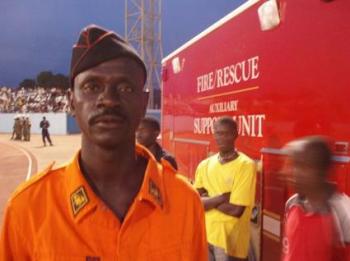
guinea-bissau-fire-truck-daved-applefield.jpgAn entire marketplace burned to the ground in the poor West African country of Guinea-Bissau because they didn’t have a working fire engine.

The news reached the town of Plymouth, Mass, in the USA, which happened to have some used fire trucks hanging around — and an ambulance too.

Some local people bought the trucks, the fire department donated some hoses, and off they were shipped half way round the globe to people they didn’t even know.

Photo courtesy of David Applefield
A member of the Guinea Bissau fire force stands proudly watching over the country’s new fire engine, donated and outfitted by Plymouth, Mass. fire departments.


Good News From Iraq

iraqi science-teacher

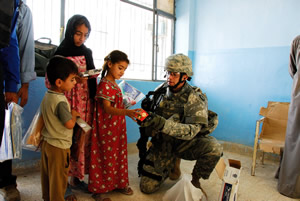
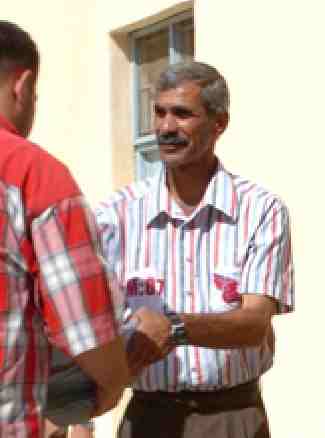
iraqi_science-teacherThere’s some good news from Iraq this month as the U.S. military celebrated the opening of remodeled schools in Kirkuk, new healthcare facilities in Wassit Province, the grand opening of a new surgical and pregnancy wing in northern Baghdad and receipt of soccer balls and schools supplies from Americans to Iraqi children.

(photo) Mr. Adel, a science teacher at the Musalla Secondary School in Kirkuk, Iraq, hands a bag of school supplies to a student during a school reopening ceremony Thursday, after renovations were completed.

Inspiration Point: Creating Art on Dusty Windshields

wadedust2

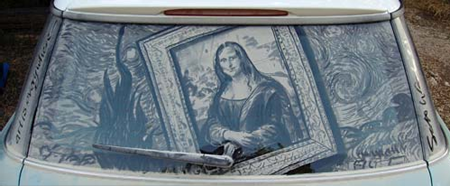
wadedust2Living on dusty roads has provided Scott Wade the perfect canvas for creating a new form of art. Wade uses his fingers — as well as traditional tools like brushes — to create his inspired dust art. He even uses popsicle sticks to shift the dirt into plains of inspiration. (photo) Ode to Van Gogh’s ‘Starry Night’ and Da Vinci’s ‘Mona Lisa’...

Good News from Afghanistan

afghan-hydro-corps.jpg

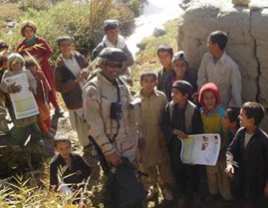
afghan-hydro-corpsThe U.S. plans to double their construction workload in the next year to provide new roads, electric power and water distribution systems to the Afghan people, the U.S. Army’s top engineer said yesterday. The Army Corps of Engineers will expand their development work in the coming fiscal year beginning this month to some 600 projects, an investment of more than $1 billion, said Lt. Gen. Carl A. Strock. Local Afghan children visit the site of a micro-hydro powerstation (photo)

Autism Eases, Given Body’s Own Oxytocin

Hug The Monkey is a Web site about oxytocin, the hormone of love and enjoyment:

Lewis Mehl-Madrona is an M.D. who doesn’t see autism as an incurable disease. He’s found that these kids have rich social and communicative lives, and that parents can learn the "secret language of their autistic children."

Death Rates in US Hospitals Much Improved

The largest annual study of hospital quality in America, issued this week by HealthGrades, finds death rates among Medicare patients continue to decline. The nation’s average in-hospital mortality rate improved, on average, 7.89 percent from 2003 to 2005. The degree of improvement varied widely by procedure. For instance, your risk of dying from Pneumonia improved 17.23 percent; from Coronary Bypass Surgery, 13.59 percent; and from Pancreatitis, 24.72 percent…

The Joy of Giving is Hormone Based

brainNeuroscience has once again shown that selfless giving has its root in human nature: People do it because it feels good.

Researchers found "the warm glow that accompanies charitable giving has a physiological basis" in the brain…

Inspiring Photos From the Iraqi Front

soldier_helps_iraqi_boy

soldier_helps_iraqi_boy
Eric Adolph uses the steps as an impromptu classroom to help an Iraqi boy with his English lesson in Tall Afar, Iraq, on Oct. 15, 2006. (left)

(Spc. Adolph is attached to the U.S. Army’s Bravo Company, 352nd Civil Affairs Battalion. DoD photo by Staff Sgt. DeNoris A. Mickle, U.S. Air Force)

eagle_scout_project

Command Sgt. Maj. Douglas Adair hands out school supplies donated by the Boy Scouts of America during an operation to help students in a rural district of western Baghdad on Oct. 12, 2006. (right)

(Adair is with the 115th Engineer Battalion, U.S. Army photo by Spc. Joshua Ramey, 1st Armored Division Public Affairs)

Greenpeace Victory Over Pirate Fishing in Baltic Sea

ships

trawlingpiratesGreenpeace scored a meaningful victory in its efforts to halt pirates overfishing in the North Atlantic. At least a third of the cod caught and landed in the Baltic is taken illegally, severely hampering recovery of fish populations. On October 2, with Greenpeace insistence, Russian authorities began detaining "The Trawler girls," five notorious ships docked in their port for refueling…

How Cell Phones are Helping Fishermen in India

The Peace Through Commerce blog features a story illustrating how cell phones are prospering some of the poorest people in the world, like a fishman in India who now fetches a fair price for his catch, thanks to the geographical reach of his "poor man’s telephone." (Zaadz)

Sufferer of Depression and Paranoia Finds Hope With Good News

Sufferer of Depression and Paranoia Finds Hope With Good News
and A Place to Focus

Thank you so much for your website. I suffer from depression and paranoia, I feel like I can never truly be happy as I always get this sense of encroaching doom. I am not able to let my defenses down at the risk of feeling naive.

Your website is just what I need to focus. Most of my fears are heightened by media sensationalism, which eventually boils down to being little more than hype.

We all need hope for the future, or else what do we have to live for?
Best wishes from South Africa

Mike
July 17, 2006

Man Gives Away Free Flowers in City Streets (Video)

Another inspiring video: Making people smile on a day in April, 2003, giving away free flowers to strangers on the streets of London. With lovely music, “Peace Train sounding louder… Everybody jump upon the Peace Train,” this young man steals your heart with his efforts to “Come Together in Sweet Harmony” with his fellow humans. Cheers to Hugh — We’re with you on the pollen path!

Insurance Industry Goes to Work on Global Warming

Insurers make up the world’s second-largest industry, and stand to lose the most if climate changes raise sea levels. Finally ready to address the problem, policy-writers are offering incentives to ‘go green.’ Two examples of this trend from the October 13, 2006 edition of the Christian Science Monitor…

Enterprise Rent-A-Car Commits to Plant 50 Million Trees

Arbor Day photo

arbordaytreeEnterprise Rent-A-Car will commemorate its 50th anniversary by pledging the unprecedented gift of 50 million trees to The National Arbor Day Foundation.


Enterprise has formed a partnership with the Foundation to plant 50 million trees over the next 50 years “a gift of more than $50 million”…

The U.S. Forest Service will help to plant these trees “one million of them each year” in National Forests located in the United States, Canada, and Europe to restore areas damaged by fires, storms, and disease, as well as to help expand and preserve habitats for endangered species.

The ceremonial first trees of the Pledge – several small White Pines – were placed in dirt last week by first lady Laura Bush to officially launch the program. The trees will be planted permanently in the Mark Twain National Forest in southern Missouri.

The Enterprise gift to The National Arbor Day Foundation is the largest in the charity’s history. To put this gift into perspective, there are 25,000 trees in New York’s Central Park. Planting 1 million trees a year is like planting a new Central Park every 10 days… for the next 50 years.

The rental car company reaches the 50 year milestone in February 2007.
(Arbor Day Foundation Announcements)

Honeywell to Spend $451M Cleaning Lake in NY

onondagalake

onondagalakeThe giant corporation Honeywell Inc. will spend $451 million to help clean New York’s Onondaga Lake under the "Polluter Pays" principle held by federal and state environmental departments.
The lake is a sacred American Indian site where the famous chief Hiawatha once canoed, but after a century of pollution it became one of only three lakes in the country designated a federal Superfund site…

Sudan Signs Peace Deal with Eastern Rebels

A peace deal was signed between the Sudanese government and Eastern rebels who had been waging a guerilla war against targets in the country for ten years. AP reported that common ground had been reached "on three issues: wealth sharing, division of power and security arrangements." (International Herald Tribune)

Killer’s Wife Salutes Amish Mercy, Forgiveness

The widow of a man who murdered five Amish girls in their schoolhouse sent a letter to the Amish community thanking them for their compassion and support. Marie Roberts said she was “overwhelmed by the forgiveness, grace and mercy” shown to her family following the rampage on October 2, when her husband Charles killed himself and five others.

The devoutly Christian Amish families expressed their forgiveness of the shooter within hours of the tragedy and immediately set about to help Mrs. Roberts and her three young children, bringing them food and eventually setting up a fund at a local bank.

The mother and grandmother of Marian Fisher, one of the young victims, welcomed Mrs Roberts’ aunt into their home the day after the shootings, the local Lancaster newspaper reported on its website.

Mrs Roberts’ grandfather also attended Marian’s funeral. (BBC)

In a letter from the Roberts family and addressed to Amish friends, neighbors and the local community, she shared their feelings of gratitude and aching:

“Your love for our family has helped to provide the healing we so desperately need. Gifts you’ve given have touched our hearts in a way no words can describe.

“Please know that our hearts have been broken by all that has happened. We are filled with sorrow for all of our Amish neighbors whom we have loved and continue to love.

“We know there are many hard days ahead for all the families who lost loved ones, and so we will continue to put our hope and trust in the God of all comfort, as we all seek to rebuild our lives.

“Your compassion has reached beyond our family, beyond our community, and is changing our world, and for this we sincerely thank you.

Banker to the Poor Wins Nobel Prize, Reinvests Winnings

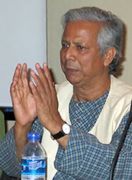
grameen_yunus_dec_04.jpg

Bangladeshi Banker to the Poor, Muhammad Yunus, and his Grameen Bank are winners of the 2006 Nobel Peace Prize for their efforts to help lift millions of women and men from poverty, nurturing their small business dreams with tiny loans as small as $20 each.

grameen_yunus_dec_04Over the last 30 years, Yunus’ bank has issued more than five billion dollars into the hands of 6 million borrowers yielding phenomenal results. Called micro-financing, low-interest loans are offered that require no collateral, but collect repayment over a period of years after placing people in honor system support groups. Given that opportunity, even the poorest of the poor can — and will — work to create their own well-being and raise their families and communities out of poverty.

“Charity is not the answer to poverty,” Yunus said. “It only helps poverty to continue. It creates dependency and takes away the individual’s initiative to break through the wall of poverty.”

During a famine in Bangladesh, Yunus discovered that very small loans could make a significant difference in a poor person’s ability to thrive. His first loan consisted of $27 from his own pocket, which he lent to women who made bamboo furniture in a rural village near the university where he worked. The woman used the money to buy bamboo, lifting her craftsmanship to a profitable level, breaking the bonds of not only her poverty, but her workers as well. The loan was repaid in full.

30 years and more than $5.7 billion in loans later, Yunus is just getting started helping the poor. His long-term vision is no less than the elimination of poverty from the world. He told reporters he would use part of his share of the $1.4 million award money to create a company that would make low-cost, high-nutrition food for the poor. The rest of his share would go toward setting up an eye hospital for the poor in Bangladesh.

Muhammad Yunus was born in Bangladesh in 1940. He studied Economics at Dhaka University and obtained his Ph.D. at Vanderbilt University in the US when he was 29 years old. Three years later he moved back to his hometown in Bangladesh, where he joined Chittagong University as a professor of economics. In 1976, Yunus founded the Grameen Bank to make loans to poor Bangladeshis.0195795377.01._aa_scmzzzzzzz_Loans to poor people without any financial security might have seemed an impossible idea. But to ensure repayment, the bank relies on a system of solidarity groups. Small informal groups of villagers apply together for loans and the groups’ members act as co-guarantors of repayment and support one another’s efforts at economic self-advancement. Because of this community solidarity, the borrowers’ default rate has remained less at than 2 per cent.

The success of the Grameen model has inspired similar efforts throughout the developing world and even in industrialized nations like the United States, where the PLAN project is helping people start small businesses in Dallas, Texas.

The Grameen model of micro financing has been emulated in 23 countries and many of the projects have maintained the emphasis toward lending specifically to women. More than 96% of Grameen loans have gone to women, who suffer disproportionately from poverty and who are more likely than men to devote their earnings to serving the needs of the entire family.

Muhammad Yunus, the author of Banker to the Poor: Micro-Lending and the Battle Against World Poverty, is the first Bangladeshi to win the Nobel Peace Prize.

FURTHER READING

Times Online tells the story of one Grameen borrower who, with her $50.00 loan, bought a cow. Now she owns a restaurant and three shops and her family no longer goes to sleep hungry

An NBC News story, Richly Deserved Prize for Banker to the Poor, has some great storytelling describing Yunus’ work.