The inside of the anechoic chamber, credit - Julian Walter
The inside of the anechoic chamber, credit – Julian Walter
If you were asked where the most silent place on Earth is, you might respond Antarctica or somewhere in the Sahara Desert, but you’d actually be wrong.
It’s in Minnesota—where among the many buildings of Orfield Laboratory lies the Anechoic Chamber, a place so scientifically configured to absorb sound, that a mere blink becomes deafening.
The ambient noise inside the Anechoic Chamber is at negative decibels—minus-24.9 dBA to be exact—which is a Guinness World Record and so quiet that it’s actually below the threshold of human hearing. With zero sound of any kind, visitors, who sometimes can hardly stand the silence, report hearing their body’s minute functions like blood pumping and eyes blinking.
“When it’s quiet, ears will adapt,” Steven Orfield, the lab’s founder, told the Daily Mail’s Ted Thornhill in 2012. “The quieter the room, the more things you hear. You’ll hear your heart beating, sometimes you can hear your lungs, hear your stomach gurgling loudly. In the Anechoic Chamber, you become the sound.”
Part of what creates ambient sound is the reflection of it on walls and glass—the typical stuff rooms are made out of. If one steps into a foam-lined recording booth, they may notice the audible sound levels drop or seem significantly muffled: that’s because the foam is inhibiting the reflection of soundwaves; but some are still able to bounce off and create sound.
The Anechoic Chamber is a steel box suspended on springs inside a larger steel box. The interior box is lined with brown fiberglass ridges of different sizes that completely neutralize soundwaves of all different frequencies coming from any direction. These ridges even cover the floor, and so visitors stand on a suspended mesh.
Orfield says that some people, probably city dwellers, can’t take it for long. The typical tour is 90 minutes, 20 of which are in the chamber. He claims that what most people don’t realize is their coordination of movement is deeply informed by subtle sounds, and removing them entirely means that some people have difficulties even walking.
“You take away the perceptual cues that allow you to balance and maneuver,” he said. “If you’re in there for half an hour, you have to be in a chair.”
Some companies have used the chamber to test various things, for example, Harley Davidson used it to chill out the engine noise on a recent model, while NASA has used it to help astronauts get accustomed to the vacuum of space.
It’s a rather unique attraction for those visiting the Minneapolis area, and a whole hour with up to four people in the chamber costs $400.
WATCH the Action Lab Explore the Anechoic Chamber, especially at 3:00 when they pop a balloon inside…
SHARE This Amazing Place To Visit With Your Friends From Minnesota…
Marine veteran Richard Remp gets High School diploma from Superintendent Justi Glaros – Family photo
When a dying veteran’s last wish was to receive a high school diploma, a superintendent teamed up with an American Legion Outpost commander to make it happen.
Thanks to their tireless effort on behalf of a man who had given his all and more for the country’s armed forces, his final moments would be those of pride and joy as he was handed the honorary education he never received.
At Sharon School District in Pennsylvania, Superintendent Justi Glaros got a call from Legion Post 247. The caller, 247’s second vice commander, James Cappuccilli, explained that a marine who had given up higher education to fight in WWII, Korea, and Vietnam, was hoping to receive an honorary diploma.
The marine, Richard Remp from Sharon, but who then lived in Poolesville, MD, had watched when another elderly marine was presented with a diploma, and thought he might like to have one too. Glaros did some research and found out that it was a simple procedure provided that the veteran had fought in one of those three wars.
Remp had fought in all three, but he had attended a neighboring high school, making it a longer chore for Glaros to get everything in order.
In the meantime, Remp suffered a fall, and when he was brought to the hospital it was discovered he had stage 4 prostate cancer that was aggressively attacking his liver. The prognosis was not much time.
The neighboring school needed a month to fulfill the order for the honorary diploma, at which point Glaros jumped into action. Summoning the schoolboard, she explained the situation and got the go-ahead to print a diploma from their own high school.
“I’m blessed to be in the position to be able to do it for this man,” Glaros said. “The opportunity to give the diploma to him is what I wanted.”
It was an opportunity she had to hurry to take, driving four-and-a-half hours down to Remp’s home and delivering the diploma by hand as part of a graduation ceremony last weekend in the man’s living room.
“The last thing he remembers is the fact that she came down and gave him the diploma,” American Legion Post 247 Commander Julian Singh told the Sharon Herald. “That was his last waking moment.”
Remp passed away Sunday at the age of 98. He had received a combat commendation ‘V’ for valor.
60 years after passing Air Force selection as a candidate to be the first African-American astronaut, Edward Dwight fulfilled that dream by blasting off with Blue Origin on Sunday for a short trip into space.
Riding aboard the New Shepherd rocket from Amazon founder Jeff Bezos’ private space company, Dwight flew into space for a 10-minute jaunt above the Kármán Line, the imaginary barrier that separates Earth’s atmosphere from outer space.
“Fantastic! A life-changing experience. Everyone needs to do this!” Dwight told NPR. “I didn’t know I needed this in my life, but now I need it in my life.”
Beating out Star Trek actor William Shatner to become the oldest person ever to enter space at 91 years of age, Dwight nearly fulfilled the ambitions and dreams of a generation of black Americans when, during the Kennedy Administration, it was announced that NASA was keen on sending a black man to space, and that Dwight was the best-trained candidate to do so.
Recalling those days to Smithsonian Magazine, Dwight said he used to get 1,500 pieces of mail a week, all addressed to ‘Astronaut Dwight, Kansas City.’ By then, he had spent 6 years quickly climbing through the Air Force’s ranks to become a captain while accruing 9,000 hours of flight time, 2,000 of which came in high-performance jets.
Holding an aeronautics degree from Arizona State University and enough flying hours to qualify for the flight test school at Edwards Air Force Base in the Mojave Desert, Dwight was one of 136 people who applied for NASA’s Astronaut Group 3, and one of 26 specifically recommended by the Air Force.
The Kennedy Administration, Air Force Chief of Staff Curtis LeMay, and others felt that a black astronaut would be a fantastic public relations and political demonstration of the country’s progress. By April 1961, the USA had already lost out to the Soviets in the race to put a man in space, but putting the first black man in space, they thought, would be maybe even more inspirational.
“Why don’t we put the first non-white man in space?” Edward R. Murrow, a former broadcast journalist who had become Kennedy’s director of the United States Information Agency, wrote to NASA administrator James Webb “…we could retell our whole space effort to the whole non-white world, which is most of it.”
Unfortunately, it wasn’t to be. Dwight wasn’t selected, but rather proceeded to have a long and prosperous career as an artist and sculptor until a group of deep pockets paid for his seat aboard the New Shepherd launch in honor of his service and inspiration to the country.
Feeling like now he has “bragging rights,” Dwight has no plans to stop pursuing the stars even at his advanced age. Compared to his training back at Edwards, he said the separation of the capsule from the rocket was “more dynamic” than he expected.
“I want to go into orbit. I want to go around the Earth and see the whole Earth. That’s what I want to do now,” he told NPR, which has a board member who helped pay for Dwight’s ticket.
SHARE This Man’s Long-Awaited Lift-Off With Your Friends On Social Media…

Pair of brown noddies (by Phil Guest, CC license); and red-footed booby (by Gregg Yan, CC license)
18 years after rats were eradicated, Tromelin Island off the coast of Madagascar is a thriving colony of seabirds once again.
The same story happened over and over during the age of exploration: Europeans brought rats or rabbits on board their ships and dumped them on delicate, pristine island ecosystems.
Hundreds of islands became desolate wastelands this way, damage that has for the most part been reversed, as GNN has reported, in one of the greatest conservation stories ever told.
Now, this small teardrop of sand, rock, and palm trees in the southern Indian Ocean, is the most recent example of conservationists being able to completely rewild a landscape back to a period before European contact.
Spanning just 1 square kilometer, Tromelin Island is now home to thousands of breeding pairs of 7 seabird species like the masked and red-footed boobies.
By 2013, these two species had doubled in number from the precarious, rat oppressed lows of just a handful in 2004. In the subsequent 9 years, white terns, brown noddies, sooty terns, wedge-tailed shearwaters, and lesser noddies all came back on their own initiative.
Matthieu Le Corre, an ecologist at the University of Reunion Island, told Hakkai Magazine how, in some cases, restoring seabird populations can be a tricky thing based on the particular species’ nesting habits.
On other islands where Le Corre has worked, they’ve had to install robotic bird calls and life-size replicas to convince the birds the island is a safe place to nest again. But Tromelin Island needed no such help, since these terns, noddies, and boobies are much more dispersed in their nesting patterns.
“In terms of conservation, it’s a wonderful success,” Le Corre says.
SHARE Yet Another Island Returned To Normal With Your Friends…
Quote of the Day: “Imagination is the eye of the soul.” – Joseph Joubert
Photo by: Jr Korpa
With a new inspirational quote every day, atop the perfect photo—collected and archived on our Quotes page—why not bookmark GNN.org for a daily uplift?
A fat cat that weighs more than double his healthy size has been thrown into the deep end on a mission to lose weight by swimming.
Moses, who weighs as much as a French bulldog, started the unusual hydrotherapy sessions in a bid to slim down in much the same way that people with bad knees, a bad back, bad hips, or too great a body mass index use pools to start exercising.
The nine-year-old cat piled on the pounds after refusing to go outside or exercise despite his owner putting him on countless diets.
At Avonvale Veterinary Centre in Wellesbourne, Warwickshire, staff say that his weight loss mission is going ‘swimmingly.’
“When he first came to us, Moses was nearly 10kg in weight,” said Olivia Stokes, veterinary hydrotherapist, meaning 22 pounds. “His owner said he had been on diets and been encouraged to exercise before but had still not been able to lose weight.”
“So, we decided to try a different approach with hydrotherapy. I have been in the industry for five years and a qualified hydrotherapist for almost two years, and I have never experienced hydro with a cat before, so Moses was a first for me.”
Obviously this was because Moses didn’t like water, as is true for so many cats. Stokes tried a variety of toys and treats to get Moses started but eventually switched to tougher methods, including starting him on a moving treadmill before adding water.
Now she says that Moses sits and waits on the treadmill for the water level to come up before starting.
“Once he has been walking for 13 minutes, I then lift him up, raise the water level further, and swim him for a couple of minutes to give him a full body workout,” she added.
Moses is now starting to shape up, and as well as losing weight has become far more active and livelier at home. He is already down 2.2 pounds, and the vets see an increase in muscle tissue as well.
Avonvale Veterinary Centres via SWNS
“That’s a loss in body weight of almost four percent in about six weeks, which is perfect as we don’t want to lose the weight too quickly,” said Stokes. “The important thing is that his body shape is clearly changing as he loses the fat and builds back muscle.”
“I am very proud of Moses’ progression; he’s even walking with the incline on the treadmill now.”
Moses’ owner Jenna Joshi is thrilled with her pet’s progress.
“I could see a difference almost straight away,” she remembers. “After his first hydro session, he came through the cat flap, which he hadn’t done in a long time.”
“We are still having regular weight checks, still doing hydrotherapy, and making good progress. It was difficult at first but now he doesn’t complain and knows exactly what he needs to do when he goes for his sessions.”
The best treatment for overweight animals is to monitor their food intake and don’t let them get fat in the first place. It can take far more time for a housepet to lose weight than even a semi-determined human being, but fortunately Moses has a strong will and a determined human.
If This Cat Can Lose Weight, Your Friends Can Too: SHARE This Story With Them…
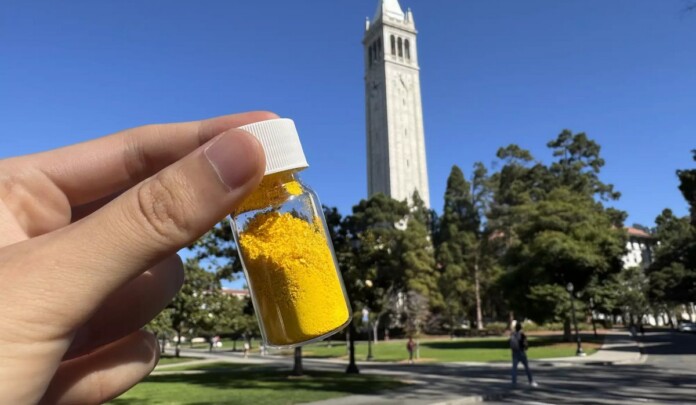
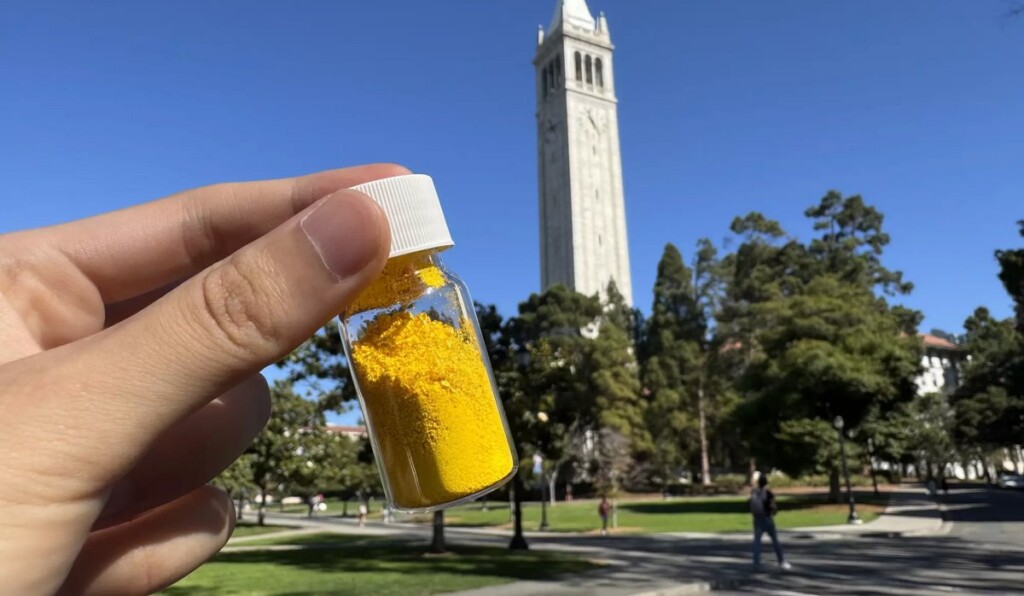
Diamonds made with the new technique are mostly pure — but they're too tiny to fit on your finger. (Image credit Institute for Basic Science)
Diamonds made with the new technique are mostly pure — but they’re too tiny to fit on your finger. (Image credit Institute for Basic Science)
In South Korea, chemists have recently developed a way to grow artificial micro-diamonds in minutes, rather than days.
Furthermore, the technique doesn’t require high temperatures or intense pressure, and are made “from scratch” with the potential to revolutionize the diamond industry by providing unlimited micro-diamonds for polishing and cutting uses.
Gemstones are formed typically by intense heat, intense pressure, natural catalysts, or some combination of the three. Diamonds require an awful lot of the first two to manufacture artificially, but Rodney Ruoff, a physical chemist at the Institute for Basic Science in South Korea, has eliminated the need.
Instead of gigapascals of pressure and temperatures as high as 2,700 degrees Fahrenheit (1,500 degrees Celsius), Ruoff and his colleagues needed graphene, silicon, gallium, iron, and nickel—and that’s it.
“For over a decade I have been thinking about new ways to grow diamonds, as I thought it might be possible to achieve this in what might be unexpected (per ‘conventional’ thinking) ways,” Ruoff told Live Science by email.
Ruoff started with gallium, which had been shown in a previous, unrelated paper to catalyze the formation of graphene. Graphene is pure carbon, just like a diamond, but the chemical structure is straight and flat rather than the latter’s tetrahedral formation.
At that point, the experiment met its most expensive component—a home-built chamber designed by co-author Won Kyung Seong—that could house the gallium-nickel-iron mixture in a graphene crucible and withstand the introduction of hot methane gas. When all these elements came together—with a pinch of silicon—diamonds were formed in 15 minutes at sea level pressures inside the chamber.
The chemical minutiae of how the experiment succeeded is still murky, and it will be at least another few years before the scientists or others working with similar methods will know for sure whether Ruoff’s process can produce diamonds for jewelry, because the ones described in their study were thousands of times smaller than lab-grown diamonds used for jewelry.
However, the ‘film’ of micro-diamonds could very well serve to take the place of larger diamonds for the purpose of being crushed into powder. Because diamond is the hardest substance known, diamond dust is the tool by which diamonds are polished, and Ruoff’s 15-minute micro-diamonds (copyright available) may save jewelers thousands of dollars in the cost of diamond dust.
SHARE This Awesome Experimental Chemistry With Your Friends…
Grandpa sees truck restored – Blake Kincheloe / YouTube
credit – Blake Kincheloe CC 3.0. ND-SA
A son recently surprised his grandfather by repairing his 70-year-old pickup truck to a fully functioning automobile, and the video will bring a tear to your eye.
“50 dollars and a hog” is what Richard Kincheloe’s mother paid for a red, 1954 International Harvester pickup truck, which Richard, now a grandfather, drove around for years until it broke down.
His grandson Blake Kincheloe, grew up thinking of the International as his own little truck, even giving it the nickname “Cannonball”, however it has served as a multi-ton paperweight and spider hotel, sitting broken and idle on Richard’s property.
Coming of age, Blake contemplated what a swell idea it would be to have the old truck up and running again.
Taking it into C&J’s Classic Cars, he first planned for nothing more than a set of modern brakes, but soon a full restoration was ongoing, adding parts all over the car from brake lights, which the original didn’t have, to a bathroom door latch because the door handle mechanism was unsalvageable.
“What’s that pappa?” a female voice can be heard asking Richard in a video made by Blake and other family/friends as the truck approached. “Well, I’ll be danged!” he exclaimed.
As for his priceless response, it’s best to listen for yourself (NOTE: Some word choices may not be for children.)
WATCH the short USA Today video below (with ad), OR the longer original video at the bottom…
SHARE This Charming Family Video With Your Friends Who Love The South…
The French postal service has released a scratch-and-sniff stamp that will fill your letter room or office with the aroma of freshly baked bread as it honors the classic baguette.
The best thing since sliced bread, the baguette was recently honored by UNESCO with the status of ‘Intangible Cultural Heritage,’ or in other words, a standout element in the story of humanity that can’t be pinned down to the words on a page, the outcome of a battle, or the bricks making up a monument.
The stamp was unveiled last Thursday by La Poste on the occasion of Sant-Honore’s feast day—the patron saint of bakers.
“The baguette, the bread of our daily lives, the symbol of our gastronomy, the jewel of our culture”, La Poste says on its website.
It will cost €1.96 and run for a limited time with just under 600,000 copies set for printing. It depicts a baguette wrapped in blue and white ribbons.
The stamp’s ink is coated in microcapsules that burst when the customer scratches it, releasing the scent. La Poste purchases the special ink pre-made, and the smell is derived from a collection of bakeries.
“And the difficulty for us is to apply this ink without breaking the capsules, so that the smell can then be released by the customer rubbing on the stamp,” Damien Lavaud, printer at Philaposte, was quoted as saying by France Bleu, according to France24.
UNESCO attempts to summarize the value and uniqueness of baguettes over other breads with the following description.
Baguettes require specific knowledge and techniques: they are baked throughout the day in small batches and the outcomes vary according to the temperature and humidity.
They also generate modes of consumption and social practices that differentiate them from other types of bread, such as daily visits to bakeries to purchase the loaves and specific display racks to match their long shape.
SHARE This Charming Celebration Of The Greatest Of France’s Modest Achievements…
Quote of the Day: “Love begins by taking care of the closest ones, the ones at home.” – Mother Teresa
Photo by: Kelly Sikkema (cropped)
With a new inspirational quote every day, atop the perfect photo—collected and archived on our Quotes page—why not bookmark GNN.org for a daily uplift?
Colletes mining bee on Washington College campus – Credit Pamela Cowart-Rickman
In a charming coincidence, a pair of bee and insect specialists from Washington College are buzzing with excitement about a unique and newly documented population of native bees right on their very own campus.
Although the large group of ground-nesting bees has been noticeable on one corner of the campus for years, recent identification of at least five different species all using the same area has sparked interest from researchers.
The section of the college green located in front of East and Middle Halls is a hotspot for these vital pollinators, with ground-nesting ‘mining’ bees from the Andrena and Colletes genera thriving on the hill at the base of the halls.
Recently, thanks to her keen eye and love of insects, photographer Pamela Cowart-Rickman realized that the area has multiple species of native mining bees all nesting together, something that has not been well documented.
Cowart-Rickman, who studied biology at WC as an undergrad and developed a love of insects has tentatively identified five different species that are all sharing the same nesting grounds. They include four different Andrena (mining bees), one Colletes (cellophane bees), and likely three cuckoo bees in the genus Nomada.
“The Washington College site provides rare nesting habitat for multiple native bee species, several of which are uncommon and unidentified,” said Sam Droege from the US Geological Survey’s Bee Lab.
“We always talk about providing plants to support native bees and other pollinators, but we rarely think about providing adequate nesting habitat for their survival. These native bees provide beneficial pollination to fruiting trees and plants, not only on the College campus, but also the Chestertown community.”
“They have been nesting amongst and on top of each other for several years in this same location,” said Cowart-Rickman of the bees she has spotted. “The various Andrena have the largest nesting area and emerge first in late February. The Colletes have a smaller area and emerge later in late April.”
Several of the species present on Washington College campus – credit Pamela Cowart-Rickman
Cowart-Rickman devotes her free time to photographing insects and has been helping researchers identify and track populations. She has found and documented several species for MD Biodiversity, BugGuide, iNat, and researchers at the Canadian National Collection of Insects.
When she realized what she had stumbled upon right outside her own office building on campus, she reached out to Dr. Beth Choate, deputy director of the Washington College Center for Environment and Society. Choate, who has published research on the abundance of wild bee populations in urban and rural gradients, was also intrigued by the nesting sites Cowart-Rickman had found. The two decided to investigate further.
“On a nice day in the spring, you can see the male bees hovering right at grass level. There were hundreds of these males searching for a female to mate when we were out there,” said Choate.
Females create a small burrow in the ground for rearing young and a ball of pollen and nectar is placed in each to feed the larval bee when it emerges from the egg, Choate explained. Once the males and females mate, the female returns to her nest and lays the egg in the carefully constructed burrow to develop.
The area of the campus where the bees have been found nesting together – credit Matt Lester
“Ground-nesting bees need bare, minimally covered ground in order to dig into the soil. They also prefer sunny and well-drained soil, but it will be interesting to learn what is unique about the soil in this space and why the aggregation has become so large,” said Choate.
“Since ground-nesting bees are solitary and do not form colonies, they generally aren’t as noticeable as this aggregation. Females often create nests near one another; however, an aggregation this large is unique.”
After seeing one of Cowart-Rickman’s nesting bee photos on iNat, and realizing the rarity of the site, Dr. Jordan Kueneman, a researcher with Project GNBee who is working on tracking ground-nesting bees at the Danforth Lab at Cornell University, reached out to Cowart-Rickman about possibly providing further research samples and information.
“We were very excited to learn about the ground-nesting bee aggregations at Washington College, for a myriad of reasons,” said Kueneman. “First, the size of the aggregation is substantial, and multiple species are utilizing areas of the overall site to nest. This scenario is ideal for understanding nesting requirements for bees and how those vary by species.
“Second,” Kueneman continued, “intermixed aggregations of nesting bees are particularly interesting to study from an ecological perspective, as the cost/benefits of varying nesting strategies and behavior can be more easily studied, particularly in the context of phenology, nest architecture, and risk of parasitism.”
He noted that due to its location, the Washington College aggregation can easily provide the opportunity for students and the public to learn about the biology of ground-nesting bees and the value they provide to the environment. He is also hopeful that knowledge of the history of the area and the site’s management can help inform how ground management practices on campus have impacted the population in the past and provide opportunities to explore how current management will impact this population in the future.
Research and monitoring of the aggregation will continue as teams from both schools work together to study what makes this site so appealing to multiple species of bees.
SHARE This Fascinating Bee Behavior With Your Friends On Social Media…

Officials investigating the stone carving – Thailand’s Department of National Parks, Wildlife and Plant Conservation
Three Thai villagers were out looking for mushrooms when they came across this boulder depicting a woman in breathtaking detail.
“Went mushroom hunting and found this,” Pramul Kongkratok, one of the locals, wrote on social media according to theNation Thailand. “I’ve lived here for so long, but just learned we have this around here. It’s a blessing.”
Showing admirable responsibility, Mr. Kongkratok called the Department of National Parks, Wildlife, and Plant Conservation to investigate, who in turn we’re told contacted art and antiquities authorities to ascertain how old the carving might be.
Some theories, however, have quickly emerged: notably that it could have been made in the 6th century during the flourishing of a kingdom called Dvaravati, which was located in modern-day Thailand near the border with Cambodia, exactly the place where the carving was found.
However, the carving style is not really comparable to other examples of Dvaravati reliefs like this one of musicians seated in a row.
Another theory is that it depicts the mother of Lord Buddha, Maya Devi. In part this is because the woman figure is holding a branch of the Bodhi tree, or pipal in Hindi, the tree under which Prince Siddharta Gautama meditated for 7 days and attained Enlightenment.
Rarely depicted alone, and if so, typically lying down in order to illustrate the story of Buddha’s birth—when his mother dreamt the spirit of a white elephant entered her womb, many are as skeptical of the Maya Devi claim as the claim of Dvaravati origin.
In general, the artists living during the golden age of Buddhist kingdoms in South Asia kept significantly conformist carving styles, while this discovery doesn’t.
Smithsonian reports that a Wat, or Thai Buddhist monastery, inhabited by a group of artistically inclined monks, is located less than a mile from where the carving was found in Dong Yai Wildlife Sanctuary.
Whatever the origin, it’s a beautiful carving and a delightful reminder that the world is full of surprises.
SHARE This Delightful Mystery With Your Friends Who Love Asia…
From Canada’s province of Manitoba comes the story of how dozens of volunteers succeeded when presented with a mammoth logistical challenge: giving away 12 million pounds of potatoes.
There are bumper crops, and then there’s whatever happened on Isaiah Hofer’s Manitoba farm last year.
Potatoes were coming out of the ground in such numbers that after fulfilling all his normal deliveries and quotas, Hofer still had 10 million pounds of potatoes left.
“[P]eople that have been in this industry for the last 40 years, they’ve never seen something like this,” said Hofer. “We had at least almost 100,000 bags of surplus potatoes. In potato language, a bag is 100 pounds [45 kilograms].”
He had a few options, including leaving them to rot as fertilizer, turning them into animal feed, or selling at a tiny profit or even a loss in such a flush market. In the end, Hofer followed his heart and resolved to give all of them away to the needy.
In his email inbox, he saw a letter from the industry group Keystone Potato Producers Association which happened to be spotlighting the work of a US food charity outfit Farmlink Project.
Farmlink arose from the government-enforced business closures and supply chain disruptions during the pandemic, and was responsible for connecting farms with surplus food with food banks cut off from usual deliveries.
Since 2020, they have rescued around 100 million pounds of food from going to waste on farms and distributing it to food banks across North America. Contacting some other farmers he knew, Hofer was soon able to offer Farmlink 12 million pounds (5.4 million kg) of potatoes for donation.
Teaming up, Hofer and Kate Nelson, chief marketing officer and a co-founder of Farmlink, began to strategize about how to get rid of the spare spuds, and Foodsharing Ottawa was their first target.
CBC news, reporting on the story, said that there has been a dramatic spike in food insecure households in Canada since last year, and Foodsharing Ottawa’s volunteer executive director Wendy Leung knew that just one of Hofner’s 40,000-pound potato donation parcels could make a huge difference.
Suddenly though, Leung had to swap her typical logistical tools of cardboard boxes, hatchbacks, and shopping carts for a forklift, climate-controlled facility, semi trucks, and a large volunteer workforce if it meant getting hold of the potatoes.
Hofer and Nelson, who were looking at a CAD$30,000 cost for their donation, were able to rely on some contacts who provided packaging and transportation.
Their efforts paid off, and Hofner’s farm saw the departure of 115 trucks carrying the spuds to food banks and charities as far afield as San Diego, California. Many were sent to the populace province of Ottawa.
“Together, I think we actually gave back to over 50 local organizations across the city with countless numbers of individuals and households,” Leung told CBC. “And all these potatoes were claimed actually within eight to nine days.”
In 2020, GNN reported on a similar volunteer effort to rescue 200 tons of potatoes and onions from rot during the pandemic, when EastWest Food Rescue was formed to coordinate the volunteer hauling of the produce from farms in Washington State out to the coastal cities for use in food banks.
SHARE These Heroic Donation Efforts To Feed Millions In Canada…
Taningia danae squid with bioluminescent headlights – Credit: University of Western Australia / Inkfish
Australian marine biologists recently captured video of a large, deep-water squid attacking one of their cameras over 3,000 feet below the surface of the ocean.
The deep-sea hooked squid is one of the largest deep-dwelling squid species, but rather than the animal’s size, it was the glowing lights on the end of its tentacles that most interested scientists.
A team from the Minderoo campus of the University of Western Australia’s Deep Sea Research Center was deploying baited, free-falling cameras to record video footage of deep-sea life.
Chief scientist Heather Stewart, from the collaborating Kelpie Geosciences, UK, and an adjunct at UWA, was working in an area known as the Samoan Passage where she let the camera fall to 5 kilometers down before recovering it.
“As we were reviewing the footage, we realized we had captured something very rare,” Stewart said.
They had found a Taningia danae, or deep-sea hooked squid, renowned for having the largest photophores of any animal known. Photophores are bioluminescent organs that form a part of the squid’s hunting strategy—flashing fish with bright light to disorient them in the lead-up to an attack.
“The squid, which was about [30 inches] 75cm long, descended on our camera assuming it was prey, and tried to startle it with its huge bioluminescent headlights,” Stewart added.
Professor Alan Jamieson, director of the Minderoo-UWA Deep Sea Research Center, said observing deep-sea squid in their natural habitat, especially in the mid-water, was notoriously challenging.
“Many records of this species are from strandings, accidental bycatch or from the stomach contents of whales,” Professor Jamieson said.
“The rarity of live observations of these amazing animals makes every encounter valuable in gathering information on geographic locations, depth, and behavior, plus it is such a unique animal that we hardly ever get to see, so we had to share it.”
WATCH the video with narration below…
SHARE This Amazing Encounter Of The Deeps With Your Friends…
Quote of the Day: “We all have our darkness, and the trick is making something noble of it.” – Andrew Solomon
Photo by: Warren Wong
With a new inspirational quote every day, atop the perfect photo—collected and archived on our Quotes page—why not bookmark GNN.org for a daily uplift?
A Cleveland man is being hailed as a hero for his determination to rescue an infant trapped in a burning house.
John Stickovich was on his way to work when the 62-year-old saw a house consumed in fire and smoke, but no fire engines had yet arrived.
In front of the house, Stickovich saw who he assumed was the occupant looking on despondently.
“The mother was sitting on the… lawn with her one baby and I asked her if she was all right and she said, ‘My baby is still in the house,’ and I was thinking to myself, ‘Oh my God, I have to save the baby.’ That’s how it was going to be,” Stickovich told Nexstar’s WJW.
Circling the house, he tried to go in through the side door, but kicking it in, he found the smoke and fire was too much. At the back of the house, another door was already open, and Stickovich crawled in to search for the baby before being driven back out empty-handed.
He asked the mother where she last saw her child, to which she replied that it was next to the baby gate. So plunging once more into the inferno, Stickovich sought in vain with time and oxygen running short. Contemplating what to do, the thought of saving himself emerged, but the hero-to-be squashed it after hearing the infant making a sound.
Throwing himself in the sound’s direction, his arm caught hold of the baby’s leg before the man retreated with all the strength he had left.
The fire had been so severe that two firefighters arriving after Stickovich completed the rescue mission were injured trying to control the blaze. The department said Stickovich’s actions were without doubt the reason that the baby survived.
Treated for smoke inhalation at the MetroHealth Medical Center, Stickovich was able to go home the same day, and WJW Cleveland says that it is believed the city is poised to honor the man for his bravery.
“I feel wonderful that I could save the baby. That mother doesn’t have to mourn her baby. That baby gets to live today,” he said. “Everybody is just calling and saying how great of a job it was, but I mean, I would do it for anybody, it doesn’t matter. And I would hope that somebody would do it for me.”
WATCH the story below from WKYC…
SHARE This Hero’s Incredible Actions With Your Friends On Social Media…

3 of the 2,000 southern white rhino up for auction. credit Platinum Rhino
3 of the 2,000 southern white rhinos auctioned – Credit: Platinum Rhino
An ambitious plan to rewild 2,000 southern white rhino into secure protected areas in Africa over the next 10 years has officially begun, with 40 of these majestic beasts on their way to a new home at the Munywana Conservancy in Zululand, KwaZulu-Natal, South Africa.
It’s the first relocation of a continent-wide effort organized by African Parks called ‘Rhino Rewild, and follows the recent acquisition of 2,000 southern white rhino that had been privately owned by a multi-millionaire who dreamed of keeping them in a preserve for the purpose of harvesting their horns to flood the illegal rhino horn trade and crash the price to disincentivize poaching.
Their new home, Munywana Conservancy has a historic foundation: in 2007, over 20,000 acres of land were returned to its ancestral owners, the Makhasa and Mnqobokazi communities as part of South Africa’s land restitution process.
Both communities requested that the land continue to be kept under conservation. Through this legacy, the Munywana Conservancy, now a 79,000-acre (29,866-hectare) reserve, is upheld through a collaboration of community and private landowners.
“We are extremely pleased to receive these 40 rhino from African Parks, to supplement the current population of white rhino at our community conservancy,” said Thokozani Mlambo, Chairperson of the Makhasa Trust, one of the three primary shareholders of the Munywana Conservancy.
“We see this as recognition of the important role that community-owned land plays in conservation, and we are proud to be collaborating in such a significant partnership to rewild rhino across our continent.”
Millionaire breeder John Hume of South Africa was unable to continue financing his venture, when, after years of litigation, the Convention on International Trade in Endangered Species (CITES) remained adamant that they would not grant him an exception for the sale of rhino horn—banned as it has been since 1974, and so facing bankruptcy, Hume put all the animals up for auction in April.
Hume’s 2,000 rhino were approximately 15% of the remaining wild population of southern white rhino.
The white rhino as a species is under extreme pressure due to poaching and habitat loss, and hence the need for well-protected areas for them to thrive. While southern white rhino reached an all-time low of between 30 to 40 animals in the 1930s, effective conservation measures increased the population to approximately 20,000 individuals by 2012.
These mega-herbivores are important in shaping savannahs, which store approximately 30% of the world’s terrestrial carbon. Where rhino are present, there is an increase in both flora and fauna; and thriving wild rhino populations are indicators of ecosystem renewal.
The Munywana Conservancy offers a secure environment to support the rewilding of these animals. With this move, Munywana’s current rhino population will be bolstered, enhancing genetic diversity, aiding future rhino translocations to other locations, and supporting tourism—a key driver of the local economy.
“On behalf of the government of South Africa, we were very supportive of African Parks’ plan to purchase and rewild these rhino and remain a key partner in providing technical and scientific advice and the support needed to carry out this conservation solution in South Africa and on the African continent,” said Ms. Barbara Creecy, the South African Minister of Forestry, Fisheries and Environment.
To achieve a successful outcome of this translocation, the animals’ body condition and parasite adaptation will be closely monitored as they adjust to their new environment. In addition, the conservancy will implement intensive security measures to ensure the safety of the 40 dehorned rhino.
“We believe that both African Parks and the Munywana have the same ethos and guiding principles when it comes to conservation, and in that spirit the Munywana has gladly accepted this donation, enabling these rhino to commence the process of becoming fully wild and free-roaming,” said Dale Wepener, Munywana Warden & Conservation Manager.
The funding for the translocation was provided by the ever-stalwart Aspinall Foundation, with additional help from The Wildlife Emergency Fund.
“We recognize the magnitude and logistical feat of moving 2,000 rhino. This is just the beginning of a long-term partnership with African Parks where we can play our part in making a tangible contribution to the future of the southern white rhino in Africa,” said Damian Aspinall, chairman of WeWild Africa.
SHARE This First Step Of A Long Journey Towards A Wilder Africa…
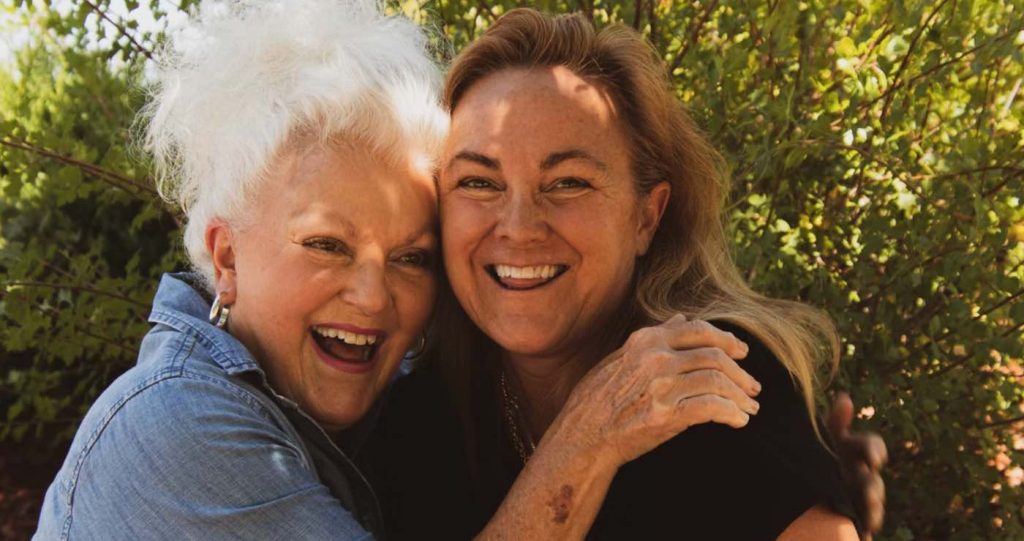
Jamie Rooney is re-united with his dog Rocky in Jack Poplawski's helicopter - Supplied Jamie Rooney
Jamie Rooney is reunited with his dog Rocky in Jack Poplawski’s helicopter – Supplied Jamie Rooney
A helicopter pilot in Australia recently found a man’s missing dog in the Outback in what the owner called a “needle in a haystack rescue.”
For those who’ve never been to cattle country Down Under, it might come as a surprise to know that because the ranches are so vast, farmers will often hire helicopter pilots to round the cattle up for them.
But in late April, pilot Jack Poplawski got a different sort of phone call—a man had lost his dog and was desperate for some help.
Jamie Rooney was driving along in a remote part of West Australia’s Pilbara region near the town of Newman, and, coming across a large creek, he thought he’d let his dog Rocky go for a swim to cool off.
The American Staffordshire terrier was all too happy for the opportunity. It couldn’t have been more than a minute that Rocky was out of sight—as Rooney had gone up to his truck to get something. But returning to the water, Rocky was nowhere to be seen.
After frantically looking around the water, Rooney drove up and down the trails in the area, standing on the roof periodically and calling his dog’s name, but Rocky never turned up.
“Earlier that day, as I was driving past the airport I could see all the helicopters going up … [so] I just went online for rescue helicopters and I just called the number,” Rooney told ABC News Down Under.

On the other end of the line was pilot Jack Poplawski.
“At the start they said, ‘Look, it’s a needle in the haystack’, and I was very worried,” Rooney said. “Once you leave maybe 5-10 minutes out of town [Newman], it’s just nothing. It’s just vast outback land.”
But as a devoted dog owner himself, Poplawski was determined to help, despite the odds.
Flying low over the terrain, Poplawski’s 20-12 vision spotted a set of tracks, which even from his helicopter appeared to the pilot as too large to be a dingo’s. It was minutes later that Poplawski spotted Rocky trotting along a small track.
The reunion in the back of Poplawski’s chopper was emotional, with Rooney left grateful and in tears. The owner says the experience has led him to invest in a GPS tag for Rocky’s collar, as well as a new appreciation for the cattle-mustering pilots of Australia’s Outback.
SHARE This Pilot’s Incredible Eyes And A Happy Ending For A Dog And His Dad…
Tomb from ancient China dates back 2,200 years ago – National Cultural Heritage Administration handout
In mid-April, Chinese archaeologists announced they had completed the first stage of excavations on a kingly tomb believed to date back 2,200 years to the state of Chu.
An integral part of fledgling Chinese history, Chu was a powerful kingdom that once conquered and annexed the state where Confucius was born, and the archaeologists believe they know exactly who it is that’s buried inside.
Located in the eastern province of Anhui, work at the tomb began in 2019 because reports had found it was a common target of looters. Excavations have shown it to be the most complex funerary structure from its time ever discovered in China.
Over 3,000 relics, including lacquered wood products, bronze vessels, figurines, chariot and horse pits, and sacrificial remains were all found in addition to a woven bamboo mat that allowed scientists to get a radiocarbon analysis that showed the tomb’s age.
“At present, the on-site work has entered the second stage within the coffin chamber, that is, the excavation and cleaning of the interior of the coffin chamber,” Gong Xicheng, deputy director of the Anhui Provincial Institute of Cultural Relics and Archaeology, told Xinhua.
“Perhaps by then, the identity of the tomb owner will be revealed and the mystery can be solved.”
The history of even ancient China is astonishingly well recorded and researched, and this historical canon suggests that the owner may be King Kaolie who reigned from 262 to 238 BCE in the state of Chu, which lasted from 770 to 228 BCE.
It’s currently the working hypothesis because Kaolie moved the Chu capital to Shouxian County in Anhui province, where the tomb was found. Aside from Kaolie, there were three other kings who ruled Chu from Shouxian, but Kaolie’s reign lines up nicely with the carbon dating from the mats, and the other three kings all had misadventures that meant they probably didn’t have the luxury of a tomb as grand as this one.
The state of Chu emerged from the breaking up of the Zhou Dynasty, one of the four official Chinese dynasties to exist before the common era, and one which saw the establishment of several of Chinese civilization’s foundational texts and beliefs, such as the I Ching, or Book of Change, and early Confucianism.
Excitingly, only one-third of the tomb has been fully excavated, and potentially many more secrets and treasures are waiting to be discovered.
SHARE This Great Archaeological Discovery With Your Friends…
Quote of the Day: “In all things of nature there is something of the marvelous.” – Aristotle
Photo by: Hasan Almasi
With a new inspirational quote every day, atop the perfect photo—collected and archived on our Quotes page—why not bookmark GNN.org for a daily uplift?