Daniel Lukic hasn’t been piloting drones for that long, but his capturing of a school of cownose rays off the coast of Australia is enough to convince you he’s a master.
The Sydney-based amateur videographer was on Forster Beach when he was lucky enough to be present with his equipment during a rare migration of these rays as they passed by.
Numbering in the hundreds, Lukic’s video taken from above makes it appear like someone threw confetti in the water.
“There was probably 400 or 500, maybe even more. It almost looked like glitter,” he told ABC News AU. “I get pretty excited when I see this sort of stuff because it’s a single moment in time where you just had to be there.”
Marine biologists speaking with ABC suggested that maybe the rays gather in such large numbers (which is known as a ‘fever’ rather than a school) as a means of protection like other fish. The IUCN classifies the cownose ray as “data deficient,” and so doesn’t have anything to say about the conservation status of the animal.
According to ABC, they are normally seen in fevers of around 100 individuals, but the size that Lukic managed to record is either extremely rare, or not rare and scientists just don’t know much about their habits.
It simply doesn’t get enough publicity, considering the fact that modern aviation has reached a point where tens of thousands of giant metal tubes filled with the most flammable liquid can launch themselves into the air at hundreds of miles per hour every day and almost nothing ever goes wrong.
2023 was the safest year in aviation history, with no large, turbofan-powered jet aircraft being involved in anything resembling a crash anywhere on Earth, meaning that scenario just laid out took place tens of thousands of times every day for 365 days without a single fatal crash or collision.
Even fatality risk onboard an aircraft is becoming a percentage of a percentage point, with just 2 losses of life occurring from machine or technical malfunctions onboard.
That’s not to say that no one died onboard aircraft—there were several fatal crashes involving smaller aircraft, one of which— Embraer Legacy 600—was carrying 7 passengers but also the mercenary commander of the Wagner Group, Yevgeny Prigozhin, and two of his allies in the aftermath of their mutiny against the Russian strongman Vladimir Putin.
One wonders why anyone would board an aircraft under those circumstances, and if investigations into the failure of aircraft in flight is one of the most rigorous in society (and they are) then by contrast we can say that the investigation into Embraer Legacy 600 was unacceptably improper.
There was also Yeti Airlines flight 691, which was an ATR 72 prop plane that went down en route to Kathmandu with 75 people on board. All perished after the plane stalled.
But along with representing a much lower share of world air travel and containing technical differences owing to the propellers, this incident, the deadliest of 2023, wasn’t included in the analysis.
So putting aside political assassinations, the skies were safer than at any point in human history, and hopefully the sometimes brusque, always stressed, but evidently competent 600,000 people in America’s airline industry will see 2023 as a challenge to replicate.
SHARE This Excellent Aviation Statistic With Your Friends Who Fear Flying…
Quote of the Day: “The limits of the possible can only be defined by going beyond them into the impossible.” – Arthur C. Clarke
Photo by: GWC (copyright 2019)
With a new inspirational quote every day, atop the perfect photo—collected and archived on our Quotes page—why not bookmark GNN.org for a daily uplift?
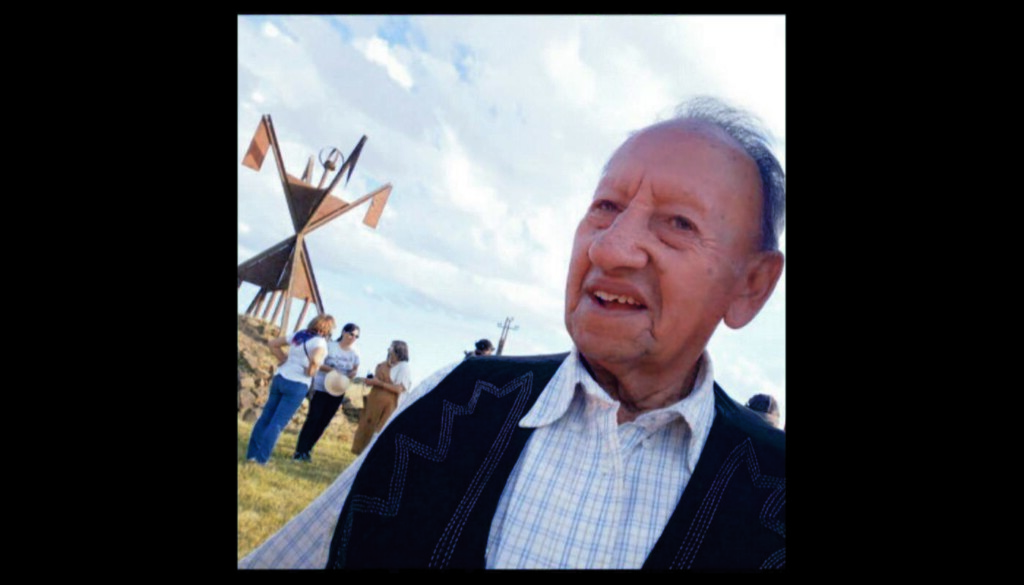
What do you do if you’re the last person who speaks an indigenous language that reveres silence? That’s a fine pickle to find yourself in, and for the last speaker of Chaná in Argentina, it was time to finally speak up.
Chaná, correctly called ‘Lanték’ is part of the Charruan language family, and according to the New York Times reporting on the phenomenon of the resurrection of Lanték, it’s a quiet, throaty sort of language that requires far more manipulation of the back of the mouth rather than the front.
Mr. Blas Jaime, an Argentine from the province of Entre Ríos, was already retired and 71 years of age when he decided to go and seek out someone with whom he could chat in his mother tongue. But years of keeping a low profile and speaking only Spanish obscured the fact that there were no other people to chat with—in that moment, and without a shadow of a doubt, Blas Jaime was wielding a dead language.
At a certain critical moment in South American history, Jaime attended an indigenous fair, and was invited by the organizers to tell his story. From that moment, he realized he could never stop talking, realizing the ancient heritage of his people depended on it.
He was featured in several documentaries, dozens of newspaper reports, he delivered a TedTalk, he spoke Chaná in a children’s cartoon to raise awareness of the language, he put his words and face on a coffee brand, and he delivered a speech in Lanték on an artist’s Instagram account which rung out over loudspeakers all over Buenos Aires.
But most importantly, he spent years working with a linguist Pedro Viegas Barros to create a dictionary which now has over 1,000 Chaná words, as well as an index of Chaná rituals and folklore.
His work has attracted the attention of UNESCO, which devotes a large amount of its time, staff, and budget to preserving and celebrating diversity of language around the globe—thousands of which, like Lanték, are at risk of becoming extinct.
“People have to be committed to making it part of their identity. These are completely different grammatical structures, and new ways of thinking,” Serena Heckler, a program specialist at the UNESCO regional office in Montevideo, Uruguay’s capital, told the Times’ Natalie Alcoba.
Different ways of thinking is a good way to put it, because for people like Mr. Jaime, his identity as a native speaker, owing to the disgraceful legacy of colonialsim, involved keeping a low profile.
“It was passed down from generation to generation: Don’t cry. Don’t show yourself. Don’t laugh too loudly. Speak quietly. Don’t say anything to anyone,” said Evangelina Jaime, Mr. Jaime’s daughter, who learned the language from him and now teaches it to others.
Speaking to Alcoba and the Times, Evangelina said that in their peoples’ culture, women were the keepers of memory and stories, but Blas’ mother died without a daughter to whom to pass to torch, so she taught everything to Blas instead. He is now referred to as Tató Oyendén, or custodian of the ancestral memory.
She teaches online to a mixture of academics and individuals from Argentina and Uruguay who believe they may be descendants of colonialized Chaná people.
SHARE This Intriguing Story Of A Language Resurrected From Silence…
An artist's depiction of Tyrannosaurus macraeensis - SWNS via the study authors.
An artist’s depiction of Tyrannosaurus macraeensis – SWNS via the study authors.
A newly discovered giant dinosaur species may be the closest relative of Tyrannosaurus rex, and could even represent the moment that the genus experimented with a huge body.
The new species was recently described in the journal Scientific Reports by paleontologist Sebastian Dalman and his colleagues. It was a mighty carnivore that lived in North America around five million years before T. rex.
Named Tyrannosaurus mcraeensis, proof of its distinction came from examinations of parts of the animal’s fossilized skull, which was previously discovered at the Hall Lake Formation in New Mexico.
Although the remains were initially assigned to T. rex and are comparable in size to its 30-foot-long body, the research team say that they belong to a new species due to the presence of multiple “subtle” differences in the shape of, and joins between, the skull bones of the specimen and T. rex.
Based on the locations of the remains in relation to rocks and other dinosaur fossils, the researchers suggest that T. mcraeensis may have lived between 71 and 73 million years ago—between five and seven million years before T. rex.
“Analysis of the relationships between T. mcraeensis and other theropod dinosaur species indicates that it may have been… the closest known relative of T. rex,” said Dalman, a doctoral student at the New Mexico Museum of Natural History.
It’s also possible that it was the first of the Tyrannosaurids to experiment with a giant body, owing to the giant-bodied herbivores it shared the land with. The land in this case was called Laramidia, an island continent that existed between 100 and 66 million years ago and stretched from modern-day Alaska to Mexico.
“Tyrannosaurini may have evolved a giant body size by approximately 72 million years ago, alongside other giant dinosaurs from southern Laramidia such as ceratopsians, hadrosaurs, and titanosaurs,” said Mr. Dalman.
The discovery might have also cleared up for good the question of where the most famous of all dinos originated from. Competing hypotheses include suggestions that T. rex evolved in Asia, but now it seems settled to say the tyrant lizard king evolved in Western North America.
SHARE These Important Facts In The Story Of The World’s Most Famous Dino…
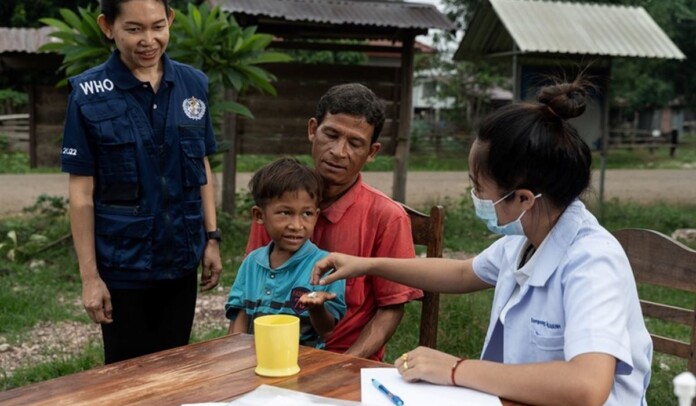
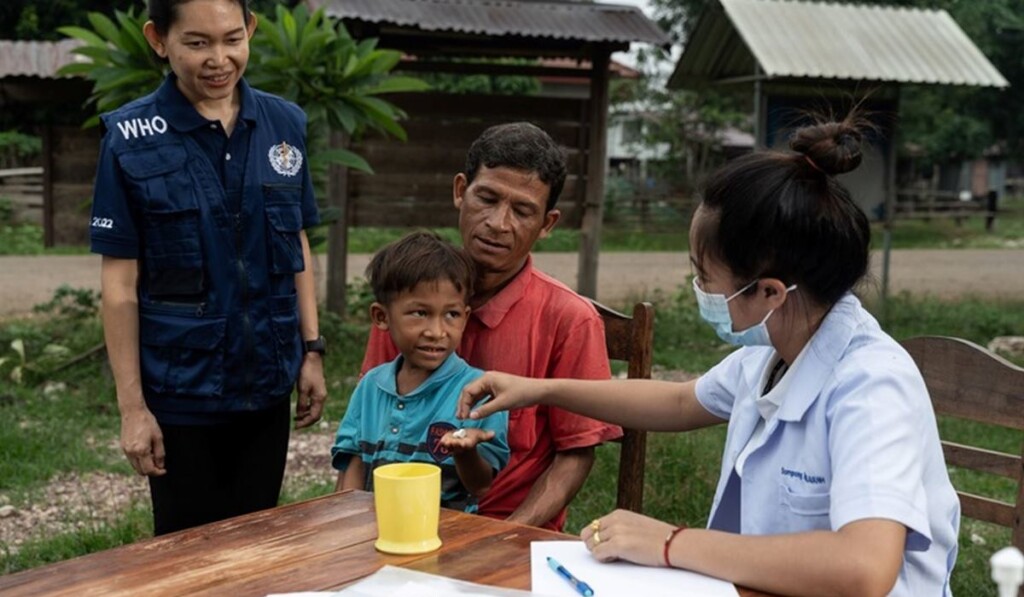
Lao focused on preventative medication in at-risk areas - credit, WHO/Enric Catala
Lao focused on preventative medication in at-risk areas – credit, WHO/Enric Catala
Becoming the first sub-Saharan African country to eliminate Malaria in half a century, Cape Verde has gone three years without a single case of transmission.
Malaria kills most people who die every year, and now that the complex phenomenon of various parasites and various mosquitoes has been quelled, it should stay that way owing to the fact that Cape Verde is a nation of islands.
Indeed, all international travelers and migrants have free access to malaria diagnoses, which has been one of the nation’s strategies for controlling the spread of the parasite. Active mosquito control has also helped, as well as a general rise in the standard of testing and treatment.
“This success reflects the hard work and dedication of countless health professionals, collaborators, communities and international partners. It is a testimony to what can be achieved through collective commitment to improving public health,” Cape Verde’s Health Minister Dr Filomena Gonçalves told the BBC.
Mauritius, another island nation in African seas, was the last country to eliminate malaria—doing so in 1973.
Not needing the natural benefits of islands and oceans, the Lao People’s Democratic Republic was recently hailed by the WHO for its successful eradication of the disease lymphatic filariasis.
Commonly known as elephantiasis, it’s a debilitating parasitic disease spread by mosquitoes. For centuries, this disease has afflicted millions of people worldwide, causing pain, severe disability and social stigmatization.
Lao PDR is the 18th country in the Asian and Pacific tropics to have eradicated the disease from their society, proving that determined measures can succeed against it even among low-income countries.
It’s also the second neglected tropical disease that the country has eliminated following the elimination of trachoma as a public health problem in 2017.
To eliminate the disease, which by 2002 was endemic in only one southern Lao province (Attapeu), local health authorities and partners gave preventive medication to at-risk communities from 2012 to 2017. Elimination efforts also benefited from activities to reduce malaria and dengue, including distribution of long-lasting insecticide-treated nets and health education campaigns.
“Our country’s achievement has been made possible through years of collective efforts by dedicated health workers together with support from WHO and partners,” said Dr. Bounfeng Phoummalaysith, the Health Minister for Lao DPR at a ceremony celebrating his ministry’s efforts.
SHARE These Pathological Triumphs In The Developing World…
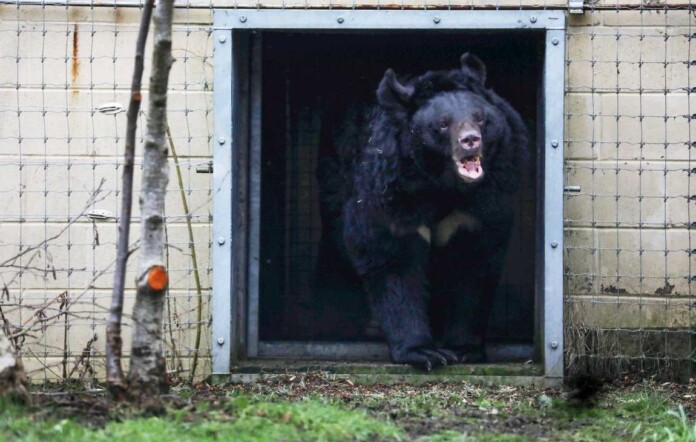
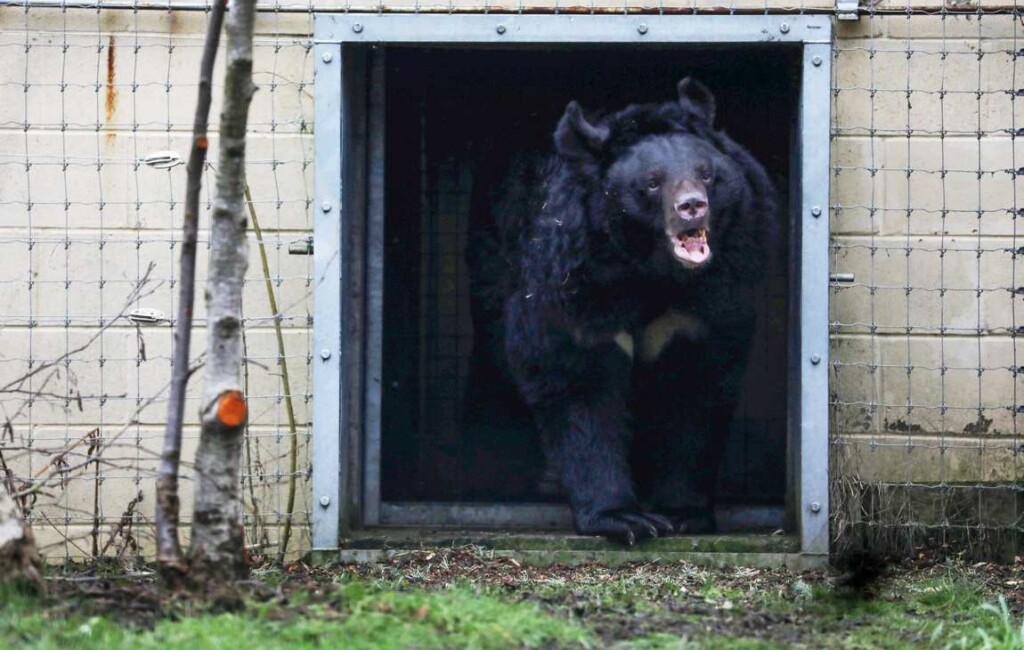
Yamil in his new enclosure in Scotland - Five Sisters Zoo, via SWNS
Yamil in his new enclosure in Scotland – Five Sisters Zoo, via SWNS
A bear trapped in a zoo in Ukraine that had been hit by shelling has been saved by Scottish zookeepers.
The Asiatic black bear was discovered when Ukrainian soldiers entered the village of Yampil which had been under Russian occupation for five months.
The striking bear with dense black fur that was given the same name as the village was concussed from the shelling and had to be carried out of the rubble by soldiers on a tarp. Once out of the warzone, Yampil the bear eventually reached Belgium, where he was cared for by the wildlife charity Natuurhulpcentrum.
Staff at Five Sisters Zoo in West Lothian, Scotland heard about Yampil from the charity, and they decided to fly down to visit him, unsure of what to expect.
“Bears can often suffer mental health problems after going through a traumatic experience, and so it was really important we understood Yampil and what to expect from him,” said Garry Curran, the head of carnivores at Five Sisters. Speaking to the Guardian, he recounted that the team breathed a collective sigh of relief when they saw the bear contentedly chomping on a cucumber when they arrived.
“Although he appeared a little nervous at first, he seems to have adapted surprisingly well and didn’t actually show any concerning stress-related behaviors. He seems to be a calm and gentle individual, which was reassuring for all of us,” Curran told the Guardian.
Arrangements were made to transport the bear to Scotland, and after travelling 690 miles over 12 hours, Yampil arrived at his new home last Friday.
Now, Five Sisters Zoo are fundraising to finish construction of a permanent enclosure for Yampil. The zoo has raised £60,000 through their efforts so far, and are hoping to reach their target of £200,000, which will be used to fund Yampil’s specialist enclosure, care and upkeep. Any interested souls can donate through their appeal link here.
Staff at the zoo are grateful for the money raised so far through donations from individuals and for the materials donated from local businesses used to construct the enclosure.
“We have rescued bears before and have some terrific facilities,” said the owner of Five Sisters, Brian Curran. “However, Yampil is the first rescued Asiatic black bear we will care for, and he requires a whole new enclosure to match his special needs.”
Curran said that if Yampil feels comfortable in his temporary surroundings, he may go into hibernation, which would allow the construction to proceed at a more tranquil pace. WATCH him explore his new environment…
SHARE This Inspiring Animal Rescue Story With Your Friends…
Quote of the Day: “They invented hugs to let people know you love them without saying anything.” – Bil Keane (Creator of The Family Circus)
Photo by: Anastasia Sklyar
With a new inspirational quote every day, atop the perfect photo—collected and archived on our Quotes page—why not bookmark GNN.org for a daily uplift?
They breed anger and derision; they cause annoyance, discomfort, and even expensive repairs, but India’s famous potholes actually saved a life on Friday.
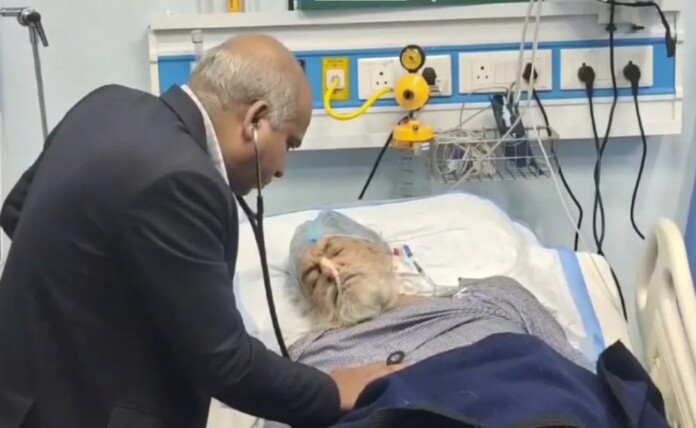
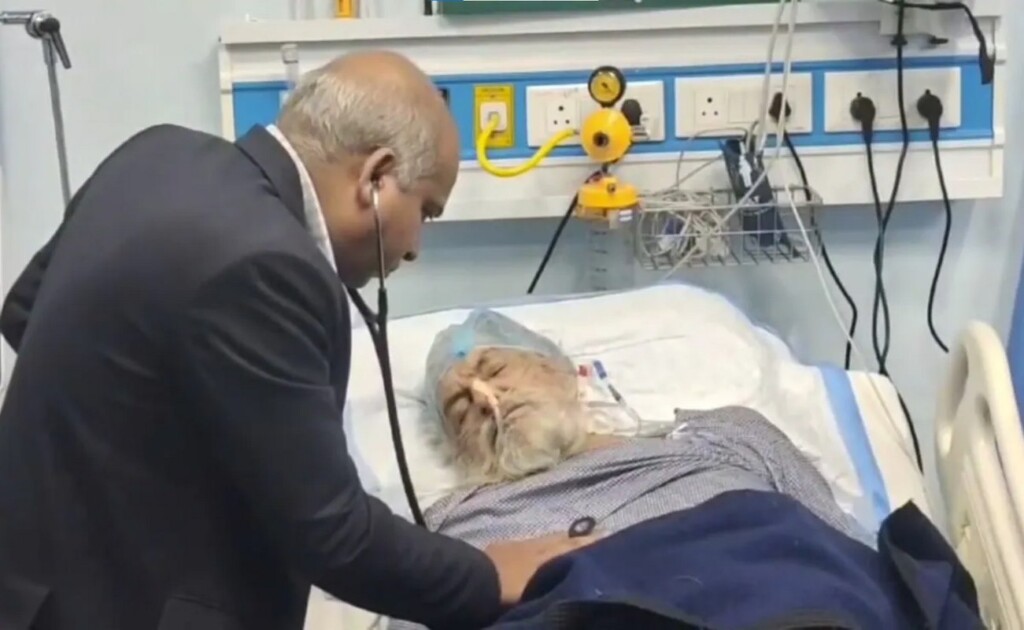
The ‘late’ Darshan Singh Brar was being transported to the Indian version of a wake after his untimely death from a chest infection at the age of 80.
Family, relatives, and friends had already gathered for a banquet and cremation, when the ambulance he was being caried in received a nasty jolt from a pothole on the roads in Nising, in far-Northern India’ Haryana state.
It was then that Mr. Brar’s grandson who was onboard the ambulance at the time noticed his hand moving. Checking his pulse and finding—to his great shock—there was one, he notified the driver to immediately turn toward the nearest hospital.
He was declared alive and savable, and was referred to the Rawal Hospital in the city of Karnal.
“It is a miracle. Now we are hoping that my grandfather recovers soon,” said Balwan Singh, another of Mr. Brar’s grandsons. “Everyone who had gathered to mourn his death congratulated us, and we requested them to have the food we had arranged. It is God’s grace that he is now breathing and we are hoping he will get better.”
A valued and respected member of his local community in Nising, NDTV news reports that “an entire colony” was named in his honor.
He had been feeling very ill and was taken to the hospital in Nising and put on a ventilator. After four days, his heartbeat stopped. He was taken off the ventilator and declared dead.
Doctors at Rawal Hospital said that the grandfather is breathing without the aid of a ventilator and his heartbeat has normalized. They can’t say for certain why the other hospital declared him dead, but speculated it may have been a technical error.
The next time you are planning to go to town hall or the council about the potholes on your street, consider the story of Darshan Singh Brar.
SHARE This True Miracle With Your Friends Who Know India…
Dubbed the ‘Millennium Camera,’ a device dreamed up by an experimental philosopher in Arizona aims to capture a one thousand year-exposure of Tucson.
Along with some colleagues, Jonathon Keats, a research associate at the University of Arizona College of Fine Arts, installed the camera next to a bench in Starr Pass with the aim of encouraging people to imagine a thousand years into the future.
Any photographer who has turned their camera off auto shoot mode will know that if you let in even just 10 minutes of light, much less 1,000 years, you’ll have a blank white image.
Keats has planned for that, and chose to use a pinhole camera equipped with rare materials.
Through a pin-sized hole in a thin sheet of 24-karat gold, light will slip into a small copper cylinder mounted atop a steel pole. Over ten centuries, sunlight reflected from Tucson’s landscape will slowly fade a light-sensitive surface coated in many thin layers of rose madder, an oil paint pigment.
When, or perhaps if, humans remove the surface from the camera in the year 3024, there will be a millennium-long exposure of the changes of Tucson’s cityscape.
“Most people have a pretty bleak outlook on what lies ahead,” Keats said ahead of his project. “It’s easy to imagine that people in 1,000 years could see a version of Tucson that is far worse than what we see today, but the fact that we can imagine it is not a bad thing. It’s actually a good thing, because if we can imagine that, then we can also imagine what else might happen, and therefore it might motivate us to take action to shape our future.”
The bench at Starr Pass invites hikers to pause and look down at the city, and the camera encourages hikers to imagine what the future will hold.
“One thousand years is a long time and there are so many reasons why this might not work. There are forces of nature and decisions people make, whether administrative or criminal, that could result in the camera not lasting,” he said.
If the camera does last, however, Keats outlines what we can assume the final image will look like. The landscape’s most steadfast features will appear sharpest, although the land is not completely stable, so there will be some inevitable blur to the image.
Conversely, the most dynamic parts will be softest. Sudden changes will result in what will look like multiple images overlapped.
“Let’s take a really dramatic case where all the housing is removed 500 years in the future. What will happen then is the mountains will be clear and sharp and opaque, and the housing will be ghostly,” he said.
“All change will be superimposed on one image that can be reconstructed layer by layer in terms of interpretation of the final image.”
The philosopher is also looking to install the cameras around the globe. In China, he is planning to put one in the once-industrial, yet fast-modernizing city of Chongqing, as well as in Griffith Park in Los Angeles. In May, he will install one in the Austrian Alps.
“This project depends on doing this in many places all over the world. I hope this leads to a planetary process of reimagining planet Earth for future generations,” he adds.
SHARE This Time Capsule Project With Your Friends In To Photography…
An experimental cancer test already being studied in humans shows that by examining blood proteins instead of tumor DNA, it may be possible to detect up to 18 early-stage cancers with exceptional accuracy.
Cancer tests don’t often use the same methods of detection, and having one or two unified testing options would likely save thousands of lives.
A US biotech firm called Novelna recently presented their findings of a trial of 440 humans with a total of 18 different cancers. Blood plasma samples were taken from each patient, along with 44 healthy blood donors.
By analyzing trace proteins in the blood, the Novelna team were able to achieve a high “sensitivity,” or the detection rate of early-stage tumors, and a high “specificity” or the control for false-positives. Furthermore, the proteins controlled for in the test are sex-specific.
At stage I (the earliest cancer stage) and at the specificity of 99%, the panels were able to identify 93% of cancers among males and 84% of cancers among females.
“This finding is the foundation for a multi-cancer screening test for the early detection of 18 solid tumors that cover all major human organs of origin for such cancers at the earliest stage of their development with high accuracy,” the authors wrote in the journal BMJ Oncology. “These findings pave the way for a cost-effective, highly accurate, multi-cancer screening test that can be implemented on a population-wide scale.”
The team acknowledged the small trial size and admitted that larger trials would be needed to confirm the accuracy already established, but they also highlighted that almost all of the proteins for almost all of the cancers were present in the blood samples at very low levels, indicating the importance of such tests for catching tumors before they form.
“If the assay performance in future, well-designed sequential studies is anywhere close to what this preliminary study suggests, then it could really be a gamechanger,” Dr. Mangesh Thorat, of the Centre for Cancer Prevention at the Wolfson Institute of Preventive Medicine, told the Guardian. He was not involved in the study.
Dr. Peter Attia, the well-known MD, science communicator, and proponent of “medicine 3.0” which places strong emphasis on prevention over treatment, said recently that in order to truly bring down mortality levels of common cancers like breast, colon, and prostate cancer, early test detection should start in mid-life as often as twice a year.
Indeed, the rate of survival for women who catch breast cancer in its earliest stages is in the ninetieth percentile, while for those who catch it at stage 4, it’s very low.
Tests that would cover a variety of cancers at early stages could facilitate wider testing regimens around the world, where cancer is now responsible for one out of every six deaths.
SHARE This “Gamechanger” Cancer Test On Social Media…
Hyundai Crab-Walking” Car MOBION at 2024 CES – Rumble screenshot
Hyundai Crab-Walking” Car MOBION at 2024 CES – Rumble screenshot
Korean car giant Hyundai have fulfilled the dreams of every teenager who never learned the tricks to parallel parking in driving school by unveiling a car that can turn its wheels 90 degrees.
Selecting a spot, drivers of the new Hyundai Mobion simply press a button and a partially automated driving procedure will see the fully electric four-door “crab walk” into the spot.
Like AMG to Mercedes or Abarth to Fiat, Mobis is a special engineering workshop within Hyundai that’s producing a special range of cars based on existing Hyundai models and technology.
“The Mobion represents the embodiment of Hyundai Mobis’ core technologies, all of which are ready for immediate mass production,” Vice President Lee Seung-Hwan, the Head of Advanced Engineering at Hyundai Mobis confirmed.
Part of the reason why the car can crab walk is because the engineers at Mobis replaced the large central electric motor with one small individual motor for each wheel. This design also allowed them to incorporate suspension, braking, and turning hardware into each wheel.
As a result, the Mobion can also strafe, or drive diagonally. It can turn on a dime 180 degrees with a turning circle of zero centimeters beyond the front and back bumpers.
Since these movements would be incredibly unpredictable for fellow motorists, the Mobion carries its own set of special signaling indicators. Light projectors along the chassis will actually place a strobing arrow onto the roadway to indicate when the car is going to move in a strange direction.
Like all concept cars, there’s no indication of when the Mobion will be purchasable, however, T3 reports that a recent reveal from company affiliate Kia also featured a crab-walking electric car, suggesting that this isn’t just a showpiece to bump stock prices, but the future of parallel parking—at least in South Korea.
WATCH the Mobion in action… GNN has no affiliation with any ads displayed
SHARE This Awesome Car With Your Friends Who Hate Parallel Parking…
Quote of the Day: “Associate reverently, as much as you can, with your loftiest thoughts.” – Henry David Thoreau
Photo by: Robert Pearce
With a new inspirational quote every day, atop the perfect photo—collected and archived on our Quotes page—why not bookmark GNN.org for a daily uplift?
Frozen kitten when kind woman first brought it into her home in China –Released via SWNS
Frozen kitten when kind woman first brought it into her home in China –Released via SWNS
A heartwarming outcome followed a frigid emergency when a woman found a kitten, frozen solid in the snow outside her home, during a deadly winter storm in Eastern China.
She was able to revive the small kitten after finding it motionless and completely stiff near the shrubbery in Dezhou, Shandong.
The kitten was still alive but her tail was as rigid as a stick.
The kind hearted woman brought the feline inside and nursed it back to health, using a hairdryer and towels to warm it up.
After the stranger’s determination and hard work, the kitten regained its strength and made a full recovery.
And the woman decided to adopt her, naming her Mimi.
WATCH the video to see the progress as the kitten comes back to life…
SEND THE HEARTWARMING Video to Cat Lovers on Social Media…
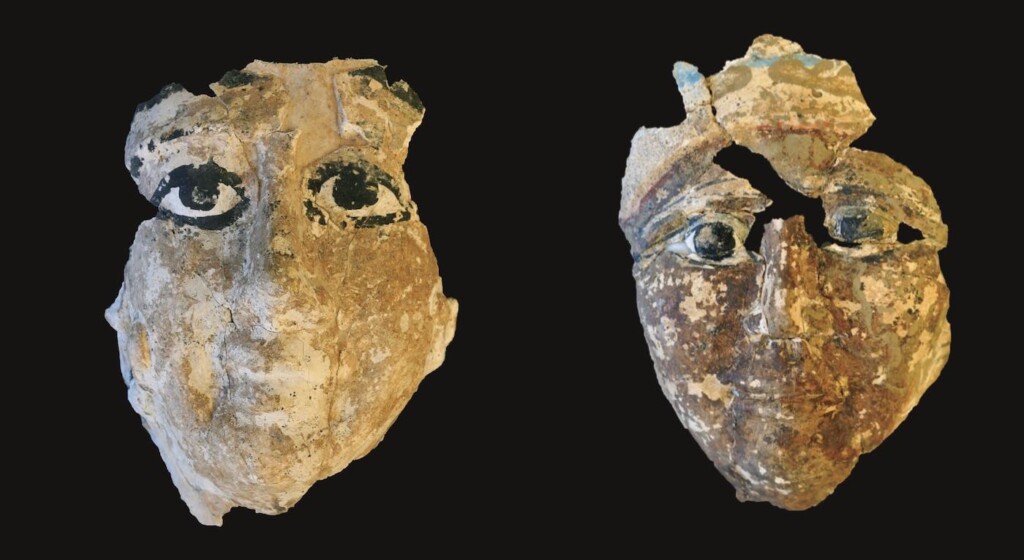
Finds from Saqara – Egypt Ministry of Tourism and Heritage / Facebook
Archaeologists in Egypt have discovered a series of rock tombs in Saqara, 1,800-4,800 years old, that contained colorful mummy masks, plates, statues, and artwork.
The joint Egyptian and Japanese archaeological mission with Kanazawa University has succeeded in uncovering a rock tomb, a number of architectural elements, burials and archaeological finds of different historical eras, inside the Catacomb tombs in the Saqara region.
They even found a statue of Harpocrates, the child god of silence, according to the Egyptian Ministry of Tourism and Antiquities.
Dr. Mustafa Waziri, the Secretary-General of the Supreme Council for Archaeology, explained on a Facebook post from Ministry of Tourism and Heritage that studying the architectural design of the discovered cemetery and the ceramic plates and pots found inside it points to the historical period of its construction dating back to the Second Dynasty era.
“The burials that have been revealed consist of the remains of a human burial of a man with a colored mask, another burial of a young child, as well as a number of late and heroic burials with a coffin from the Eighteenth Family Era inside an alabaster plot in good condition,” said Dr. Mohamed Youssef, Director General of Saqara Archaeology who’s leading the Egyptian side.
Artwork with words saying it was created for a man named Heroide – Egyptian Ministry of Tourism and Heritage on Facebook
Ahram Online explained that the discovery includes intricate designs that “offer a glimpse into the craftsmanship of ancient Egyptian builders” and a window into the lives of those who lived in this ancient civilization.
Archaeology in Saqara – released by Egyptian Ministry of Tourism and Heritage on Facebook
Nozumo Kawai, leading the Japanese side, said that the mission found two white terracotta statues of the idol Isis, and of the child idol riding a bird, masked with remains of green and white colors.
They also found parts of two mascots of Isis and the idol Oshabati made of limestone with hieroglyphic inscriptions; a pottery saddle; and a pottery pieces with hieratic inscriptions.
The mission has completed archaeological recording and documentation of all the findings, expressing hopes that the mission will make more discoveries in the area during its upcoming excavation seasons to reveal more secrets of the Saqara Archaeological Region that are still revealed.
REVEAL THE TREASURES By Sharing Them With Friends On Social Media…
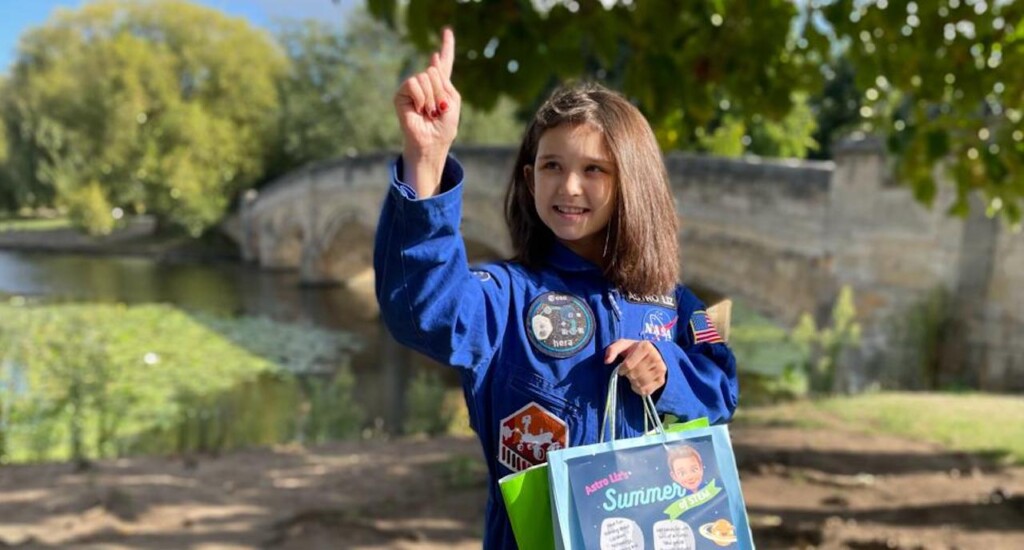
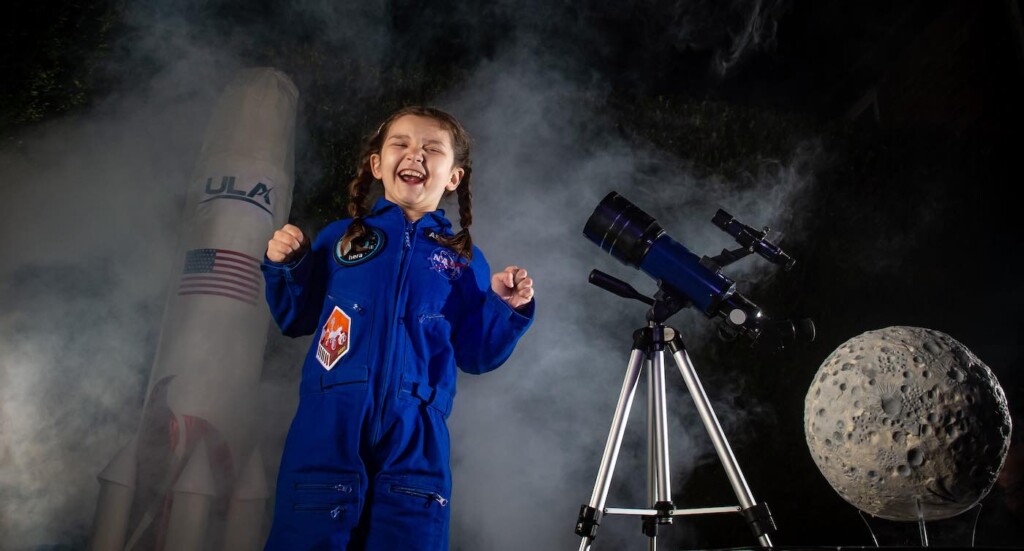
Elizabeth Norman ‘Astro Liz’ is a 10-year-old astronaut in training and has become the first child ever to send something to the moon - released to SWNS
Elizabeth Norman ‘Astro Liz’ is a 10-year-old astronaut in training and has become the first child ever to send something to the moon – released to SWNS
A British schoolgirl who is passionate about space was chosen to contribute to a time capsule headed for the lunar surface—on the first US commercial launch to the Moon.
The Vulcan Centaur rocket blasted off in Florida Monday and the 10-year-old secured the spot on the voyage after catching the eye of space bosses with her own backyard rocket launch.
Elizabeth Norman from Leicester, England made a model of the Vulcan Centaur and launched it 30-ft into the air in her garden a few years ago.
She then uploaded a video to Twitter @AstroLizsLab where it was seen by senior staff at the United Launch Alliance (ULA)—a joint venture between Boeing and Lockheed Martin behind the Vulcan Centaur rocket.
It successfully launched from Cape Canaveral at 7:18 carrying the Peregrine lunar lander, with Elizabeth watching live with her mom, dad, and brother, counting down to the big moment.
“Go Vulcan! Go Peregrine! Go Astro Liz!” Elizabeth shouted as ULA Mission Control commenced the launch countdown.
“It’s such a privilege to experience Elizabeth’s payload on its way to the Moon,” said her father Steve.
The primary payload of this mission is the Peregrine lunar lander—developed by Pittsburgh-based Astrobotic—and it was successfully deployed 50 minutes after liftoff following two burns of the Centaur upper stages.
Of the 20 payloads that Peregrine seeks to land on the moon, five are NASA science instruments. The other 15 come from a range of customers, with a charge of $1.2 million per kg. But ULA also offered to take something belonging to ‘Astro Liz’.
Inside her payload—part of the first ever lunar ‘time capsule’—Elizabeth placed a sticker saying ‘Astro Liz’, the name of her blog and social media pages, and a message for her brother.
The lander reached lunar orbit 225,000 miles from Earth and is expected to make a hard landing on the moon near the Gruitheisen Domes scheduled for February 23. However, an unexpected challenge arose post-launch, and the complication may pose a threat to the spacecraft’s ability to land on the moon. The team should learn more soon.
Elizabeth’s passion for space took off after watching coverage of NASA’s Perseverance Rover’s flight to Mars in July 2020.
She threw herself into learning all about space—and has always got multiple science experiments going. She even started a science-themed YouTube channel in July 2020, to upload educational videos to get other kids passionate about space.
But things really kicked off for the budding astronaut after she decided to make a model of the ULA’s Vulcan Centaur rocket out of cardboard, which caught the eye of Tory Bruno, the CEO of ULA.
7-year old Elizabeth Norman launched a model Vulcan rocket in 2021 – ULA / SWNS
He watched the launch of her 7-foot cardboard version of the rocket sent to the Moon, as it sailed 30ft into the air, impressing Elizabeth’s neighbors.
He was so impressed, he reached out and asked if she could be part of the real launch.
“We are overwhelmingly grateful to Astrobotic for providing the opportunity for Elizabeth to launch her space dream and send her very own payload to the moon,” said her mom Jennifer Norman. “This is not only a chance for her to achieve her mission but also to show other young people that a future in space is within their grasp and big adventures can start at any age.”
“None of us, including her, could ever have imagined that her dream would take off so rapidly. We can’t even put it into words because it’s so surreal that it’s actually happened.”
Astro Liz tweeted: “Big hug, Peregrine! I’m with you to the end and tonight my hometown of Leicester celebrates the Astrobotic mission, that of ULA and the incredible teams that worked so hard to get us this far! Love from Liz.”
BLAST HER STORY To Space-Loving Friends By Sharing on Social Media…
A husband and wife in Austin, Texas have been honored as heroes for nourishing neighbors-in-need by hosting a community fridge outside their restaurant.
Now, the owners of Nixta Taqueria are feeling a boomerang of good karma, after the community found out their business was in trouble.
In 2019, Edgar Rico and Sara Mardanbigi opened Nixta Taqueria in East Austin, an area known as a food desert—where options for fresh produce and groceries are scarce.
They weathered the pandemic by offering curbside delivery—and their compassion came to life when they became the pilot location of the new Austin Free Fridge Program.
Edgar and Sara began replenishing the community fridge sometimes upwards of 20 times a day with everything from fresh meals to ‘hydration packs’ during heatwaves.
It became a lifeline for many folks, and the couple were happy to keep it stocked.
Nixta Taqueria hosts and refills a Free Fridge
But this summer they were forced to shut operations due to an electrical issue, which they said was caused by “city oversight”.
They knew that with so many people relying on them they had to figure out a solution. A week later, they created a GoFundMe page—and in two days surpassed their $80,000 goal.
“It’s the best feeling in the world when you can tell that people have your back,” they wrote on the donation page where a stream of comments provided praise and encouragement.
“Help is there—and asking for it isn’t anything to be ashamed of.”
Strangers and customers stepped up to support the taqueria, saying thank you for taking care of the community during winter storms, heatwaves, and pandemics. Donors contributed $118,000 so far. One wrote:
GoFundMe
“The feeling I get when I read those words is, ‘We got you.’’’
The restaurant is back up and running, with Edgar and Sara relieved that they can continue paying their workers and serving customers (but with limited capacity through the construction period).
“More than anything, it affirmed my belief that there is this unspoken bond and connection that we have with one another that transcends the day-to-day.”
WARM THE HEARTS of Friends By Sharing This Sweet Story on Social Media…
Quote of the Day: “Over every mountain there is a path, although it may not be seen from the valley.” – Theodore Roethke
Photo by: GWC (copyright 2016)
With a new inspirational quote every day, atop the perfect photo—collected and archived on our Quotes page—why not bookmark GNN.org for a daily uplift?
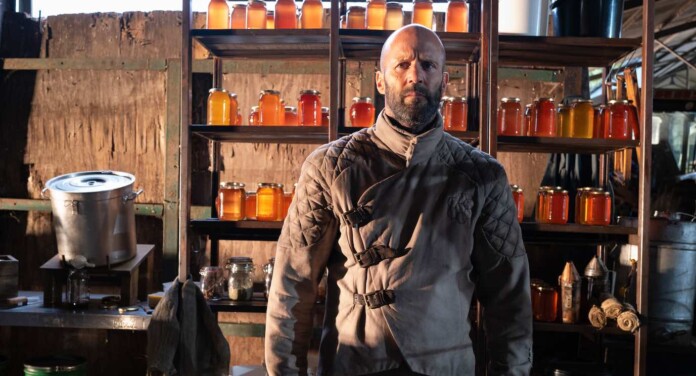
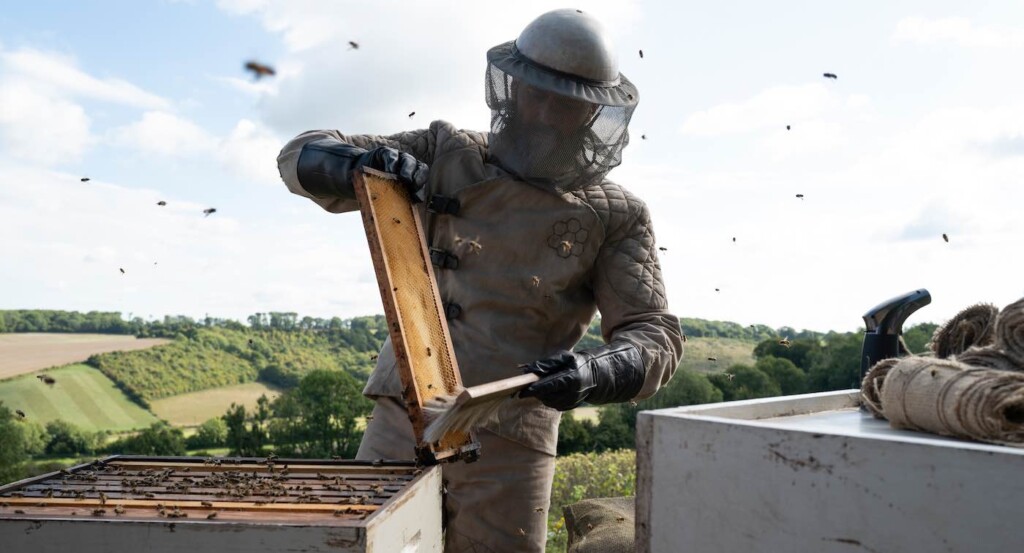
Jason Statham tries his hand at beekeeping during filming of new action movie The Beekeeper SKY / SWNS
Jason Statham tries his hand at beekeeping during filming of new action movie The Beekeeper SKY / SWNS
Beekeeping is one of the hottest hobby trends of 2024 thanks to a host of fans learning from celebrity bee-enthusiasts, according to a new poll.
Stars creating a buzz around the pastime include Beyoncé, Scarlett Johansson, David Beckham, Sting, and Flea from the Red Hot Chili Peppers.
The poll of 2,000 adults revealed that nearly half (47%) are looking for more unusual hobbies, such as origami and foraging for food in the wild.
Olympic diver Tom Daley loves to knit. He and fellow-knitter Julia Roberts were voted as two of the most inspiring celebrity hobbyists.
Other activities gaining momentum among survey participants include open mic poetry, arranging flowers and geocaching—a public treasure hunt that uses GPS locations to bury hidden containers.
49 percent of recipients choose to opt out of sedentary hobbies, like reading, in favor of ones that get them outdoors and moving.
And half of those surveyed favor pastimes that are in some way good for the environment—like creating bug ‘hotels’ in their gardens. The small, artificial buildings serve as long-term lodging or a winter hibernation habitat for crawling and flying insects
The double opt-in randomized survey by OnePoll was commissioned by Sky ahead of the action film release of The Beekeeper, starring Jason Statham.
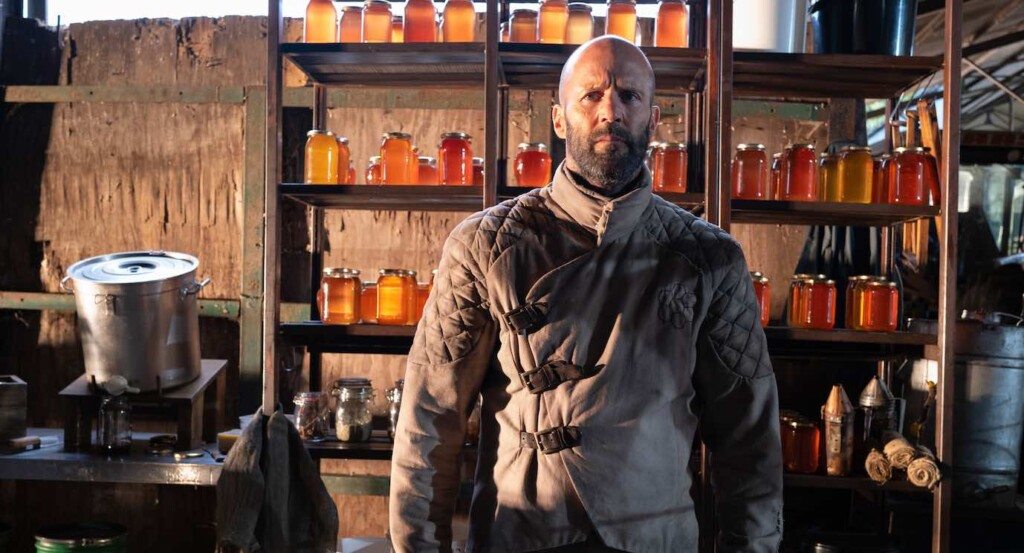
Jason Statham trying beekeeping during filming of new action movie The Beekeeper SKY / SWNS
“I’m not surprised there’s so much buzz around beekeeping,” said the film’s director, David Ayer. “I’m hoping our film will only enhance that.
Indeed, 14 percent of survey respondents reported they’d found some hobby inspiration from a movie.
Ayer and his film colleagues actually practiced beekeeping on the set, and Jason Statham genuinely learned how to open a hive and work with the bees.
“Always one to immerse himself in a movie, he really connected with the whole zen of beekeeping, which was quite therapeutic between all the grueling action sequences.”
From trendy beekeeping to meditative birdwatching or zen gardening, hobbies can be a doorway into a deepening relationship with nature.
TOP INSPIRING CELEBRITY HOBBYISTS
1. David Beckham – Beekeeping
2. Tom Daley – Knitting
3. Scarlett Johansson – Beekeeping
4. Rod Stewart – Model railways
5. Beyoncé Knowles – Beekeeping
6. Sting – Beekeeping (promotes and supports the hobby, tho he owns no hives)
7. Julia Roberts – Knitting
8. Brad Pitt – Pottery
9. Richard Branson – Chess
10. Flea of Red Hot Chili Peppers – Beekeeping
11. Nicole Kidman – Sky diving
12. Henry Cavill – Warhammer
13. Will Smith – Fencing
14. Francis Bourgeois – Trainspotting
15. Bill Gates – Playing Bridge
16. Claudia Schiffer – Collects insects
17. Susan Sarandon – Ping Pong (Founder of Spin clubs)
SEND A BUZZ To Bee-Enthusiasts By Sharing on Social Media…
U.S. Air Force 2nd Lt. Madison Marsh is Miss Colorado gunning for for Miss America crown – SWNS
U.S. Air Force 2nd Lt. Madison Marsh is Miss Colorado gunning for for Miss America crown – SWNS
Madison Marsh is not only the current Miss Colorado–she’s a Harvard student and a U.S. Air Force 2nd lieutenant who has earned a coveted spot to train as a fighter pilot.
But on Sunday night, the 22-year-old was gunning for the Miss America crown, an event that now features high pressure interviews on stage and a fitness competition—and she won it all.
“Pageants are changing and one of the ways is in what being physically fit means to women,” the Arkansas native explained.
“For me, it’s great because I need to stay physically fit and in the gym for the military, so it already coincides with pageant training.”
As a young girl, Madison had a love of science and a dream to be a pilot and astronaut. Her parents encouraged her dreams, sending her to Space Camp when she was 13, where she met astronauts and fighter pilots.
At 15, she started flying lessons earning her pilot’s license two years later and then began to work towards her goal of becoming a cadet in the Air Force Academy.
She also wanted to try competing in pageants as an extracurricular activity.
“My cousin had competed in pageants for a long time, and one of the big things about it that I love is the community service aspect and the focus on public speaking.”
Just before graduating from the Academy and being commissioned as an Air Force Officer, Ms. Marsh was crowned Miss Colorado in May 2023.
Harvard student and Air Force 2nd Lt. Madison Marsh is the 2023 Miss Colorado, posing at the USAFA vs. U.S. Army football game at Denver (SWNS photo released)
“It was very surreal,” said Madison, who is quick to address preconceived notions and stereotypes about modern beauty pageants and their contestants.
“The Miss America organization is all focused on what you can provide for the community through your social impact, making sure that you have a stellar resume, that you’re good at public speaking, that you can connect with people, and are empowered to lead in other ways that’s not just about you.”
As Miss Colorado, Marsh enjoyed talking with other young girls about being a pilot and sees it as an opportunity to dispel stereotypes that exist about military women. Now, as Miss America, she has unlimited opportunities to do more.
“It’s an awesome experience to bring both sides of the favorite parts of my life together and hopefully make a difference for others to be able to realize that you don’t have to limit yourself.”
Madison’s future may see her as a Top Gun fighter pilot, but she’s currently determining which career opportunities and personal projects she wants to pursue—and the sad loss of her mother to pancreatic cancer may have pulled Madison toward a career in cancer research.
“I lost my mom about five years ago and I started a nonprofit immediately afterwards with my family to raise money and awareness of pancreatic cancer for people in our town.”
She started to realize that her bigger passions were in policy-making and cancer research so she entered a master’s degree program at the Harvard Kennedy School through the Air Force Institute of Technology’s Civilian Institution Programs.
“I’m now trying to take the next step and use my studies from the Kennedy School to learn about the inner workings and the difficulties of what policy really looks like—issues like economic environments and other social pressures that might be inhibiting our ability to implement cancer policies that can affect all Americans.”
She will also work with the Dana Farber Cancer Institute and a professor from the Harvard Medical School to research early detection of pancreatic cancer.
TELL Young People That They Can Do Anything By Sharing This on Social Media…