











All News - Page 249 of 1716 - Good News Network
Home Blog Page 249

Your New Horoscope From Rob Brezsny: A ‘Free Will Astrology’

Our partner Rob Brezsny provides his weekly wisdom to enlighten our thinking and motivate our mood. Rob’s Free Will Astrology, is a syndicated weekly column appearing in over a hundred publications. He is also the author of Pronoia Is the Antidote for Paranoia: How All of Creation Is Conspiring To Shower You with Blessings. (A free preview of the book is available here.)

Here is your weekly horoscope…

FREE WILL ASTROLOGY – Week of September 30, 2023
Copyright by Rob Brezsny, FreeWillAstrology.com

LIBRA (Sept. 23-Oct. 22):
If you have ever contemplated launching a career as a spy, the coming months will be a favorable time to do so. Likewise if you have considered getting trained as a detective, investigative journalist, scientific researcher, or private eye. Your affinity for getting to the bottom of the truth will be at a peak, and so will your discerning curiosity. You will be able to dig up secrets no one else has discovered. You will have an extraordinary knack for homing in on the heart of every matter. Start now to make maximum use of your superpowers!

SCORPIO (Oct. 23-Nov. 21):
Have you been sensing a phantom itch that’s impossible to scratch? Are you feeling less like your real self lately and more like an AI version of yourself? Has your heart been experiencing a prickly tickle? If so, I advise you not to worry. These phenomena have a different meaning from the implications you may fear. I suspect they are signs you will soon undertake the equivalent of what snakes do: molting their skins to make way for a fresh layer. This is a good thing! Afterward, you will feel fresh and new.

SAGITTARIUS (Nov. 22-Dec. 21):
According to legend, fifth-century Pope Leo I convinced the conquering army of Attila the Hun to refrain from launching a full-scale invasion of Italy. There may have been other reasons in addition to Leo’s persuasiveness. For example, some evidence suggests Attila’s troops were superstitious because a previous marauder died soon after attacking Rome. But historians agree that Pope Leo was a potent leader whose words carried great authority. You, Sagittarius, won’t need to be quite as fervently compelling as the ancient Pope in the coming weeks. But you will have an enhanced ability to influence and entice people. I hope you use your powers for good!

CAPRICORN (Dec. 22-Jan. 19):
Singer-songwriter Joan Baez has the longevity and endurance typical of many Capricorns. Her last album in 2018 was released 59 years after her career began. An article in The New Yorker describes her style as “elegant and fierce, defiant and maternal.” It also noted that though she is mostly retired from music, she is “making poignant and unpredictable art,” creating weird, hilarious line drawings with her non-dominant hand. I propose we make Baez your inspirational role model. May she inspire you to be elegant and fierce, bold and compassionate, as you deepen and refine your excellence in the work you’ve been tenaciously plying for a long time. For extra credit, add some unexpected new flair to your game.

AQUARIUS (Jan. 20-Feb. 18):
Aquarian author and activist Mary Frances Berry has won numerous awards for her service on behalf of racial justice. One accomplishment: She was instrumental in raising global awareness of South Africa’s apartheid system, helping to end its gross injustice. “The time when you need to do something,” she writes, “is when no one else is willing to do it, when people are saying it can’t be done.” You are now in a phase when that motto will serve you well, Aquarius.

PISCES (Feb. 19-March 20):
I invite you to spend quality time gazing into the darkness. I mean that literally and figuratively. Get started by turning off the lights at night and staring, with your eyes open, into the space in front of you. After a while, you may see flashes of light. While these might be your optical nerves trying to fill in the blanks, they could also be bright spirit messages arriving from out of the void. Something similar could happen on a metaphorical level, too. As you explore parts of your psyche and your life that are opaque and unknown, you will be visited by luminous revelations.

ARIES (March 21-April 19):
Author Diane Ackerman says it’s inevitable that each of us sometimes “looks clumsy or gets dirty or asks stupid questions or reveals our ignorance or says the wrong thing.” Knowing how often I do those things, I’m *extremely* tolerant of everyone I meet. I’m compassionate, not judgmental, when I see people who “try too hard, are awkward, care for one another too deeply, or are too open to experience.” I myself commit such acts, so I’d be foolish to criticize them in others. During the coming weeks, Aries, you will generate good fortune for yourself if you suspend all disparagement. Yes, be accepting, tolerant, and forgiving—but go even further. Be downright welcoming and amiable. Love the human comedy exactly as it is.

TAURUS (April 20-May 20):
Taurus comedian Kevin James confesses, “I discovered I scream the same way whether I’m about to be devoured by a great white shark or if a piece of seaweed touches my foot.” Many of us could make a similar admission. The good news, Taurus, is that your anxieties in the coming weeks will be the “piece of seaweed” variety, not the great white shark. Go ahead and scream if you need to—hey, we all need to unleash a boisterous yelp or howl now and then—but then relax.

GEMINI (May 21-June 20):
Here are famous people with whom I have had personal connections: actor Marisa Tomei, rockstar Courtney Love, filmmaker Miranda July, playwright David Mamet, actor William Macy, philosopher Robert Anton Wilson, rockstar Paul Kantor, rock impresario Bill Graham, and author Clare Cavanagh. What? You never heard of Clare Cavanagh? She is the brilliant and renowned translator of Nobel Prize Laureate poet Wisława Szymborska and the authorized biographer of Nobel Prize Laureate author Czesław Miłosz. As much as I appreciate the other celebrities I named, I am most enamored of Cavanagh’s work. As a Gemini, she expresses your sign’s highest potential: the ability to wield beautiful language to communicate soulful truths. I suggest you make her your inspirational role model for now. It’s time to dazzle and persuade and entertain and beguile with your words.

CANCER (June 21-July 22):
I cheer you on when you identify what you want. I exult when you devise smart plans to seek what you want, and I celebrate when you go off in high spirits to obtain and enjoy what you want. I am gleeful when you aggressively create the life you envision for yourself, and I do everything in my power to help you manifest it. But now and then, like now, I share Cancerian author Franz Kafka‘s perspective. He said this: “You do not need to leave your room. Remain sitting at your table and listen. Do not even listen, simply wait. Do not even wait, be quite still and solitary. The world will freely offer itself to you to be unmasked. It has no choice. It will roll in ecstasy at your feet.”

LEO (July 23-Aug. 22):
Let’s talk about changing your mind. In some quarters, that’s seen as weak, even embarrassing. But I regard it as a noble necessity, and I recommend you consider it in the near future. Here are four guiding thoughts. 1. “Progress is impossible without change, and those who cannot change their minds cannot change anything.” —George Bernard Shaw. 2. “Only the strongest people have the pluck to change their minds, and say so, if they see they have been wrong in their ideas.” —Enid Blyton. 3. “Sometimes, being true to yourself means changing your mind. Self changes, and you follow.” —Vera Nazarian. 4. “The willingness to change one’s mind in the light of new evidence is a sign of rationality, not weakness.” ―Stuart Sutherland.

VIRGO (Aug. 23-Sept. 22):
“The soul moves in circles,” psychologist James Hillman told us. “Hence our lives are not moving straight ahead; instead, hovering, wavering, returning, renewing, repeating.” In recent months, Virgo, your soul’s destiny has been intensely characterized by swerves and swoops. And I believe the rollicking motion will continue for many months. Is that bad or good? Mostly good—especially if you welcome its poetry and beauty. The more you learn to love the spiral dance, the more delightful the dance will be.

WANT MORE? Listen to Rob’s EXPANDED AUDIO HOROSCOPES, 4-5 minute meditations on the current state of your destiny — or subscribe to his unique daily text message service at: RealAstrology.com

(Zodiac images by Numerologysign.com, CC license)

SHARE The Wisdom With Friends Who Are Stars in Your Life on Social Media…

“Life is an adventure in forgiveness.” – Norman Cousins

Quote of the Day: “Life is an adventure in forgiveness.” – Norman Cousins

Photo by: Wyatt Fisher (christiancrush.com)

With a new inspirational quote every day, atop the perfect photo—collected and archived on our Quotes page—why not bookmark GNN.org for a daily uplift?

UPDATE—World’s First Drug to Regrow Teeth Enters Clinical Trials

In June, GNN reported on the first evidence of a drug that was able to regrow adult teeth in mice, after it was discovered by a dental scientist named Takahashi in Japan years ago.

Now, a pharmaceutical firm called Toregem Biopharma, funded by Kyoto University where Takahashi is based, is moving forward with clinical trials in healthy human adults.

Slated to begin in July of next year, the trials will investigate whether or not Takahashi’s antibody-based drug that targets a protein which suppresses the growth of new teeth from our “teeth buds,” is successful in adults.

If so, the next trial will include children with anodontia, a condition where they are born without some of their teeth.

In 2018, Takahashi showed that ferrets, who like humans have tooth buds, baby teeth, and permanent teeth, were able to regrow their teeth when given the drug.

“The idea of growing new teeth is every dentist’s dream. I’ve been working on this since I was a graduate student. I was confident I’d be able to make it happen,” Mr. Takahashi said.

Anodontia is a congenital condition present in about 1% of the population that impedes the development of teeth. About 10% of those patients have oligodontia, in which they lack 6 or more natural teeth.

RELATED: These Micro-robots Can Clean Teeth By Shapeshifting into Toothbrush or Floss Forms

Around 2005, and upon Takahashi’s return to Japan, literature began being published that pinpointed certain genes in mice that when deleted caused them to grow fewer or more teeth.

Investigating the latter, Takahashi found that this gene synthesized its own protein called USAG-1, and that when he targeted it with a neutralizing antibody, the mouse’s teeth proceeded to grow like normal.

SHARE This Huge Dental Breakthrough With Anyone Missing Teeth…

For First Time, Seawater Made Drinkable by Sunlight to Be Even Cheaper Than Tap Water

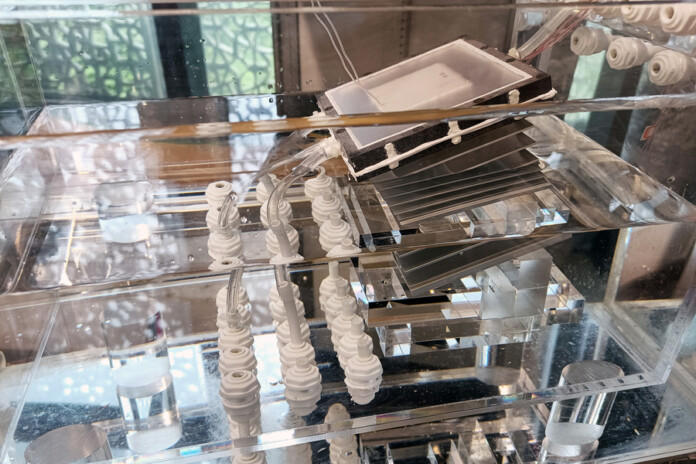
MIT solar desalination still - credit Jintong Gao and Zhenyuan Xu
MIT solar desalination still – credit Jintong Gao and Zhenyuan Xu

In a headline that’s rare to see these days, a US-China collaboration has created the cheapest and fastest way to purify seawater yet discovered by science.

The prototype of the passive solar-powered desalination tool can produce 4-6 liters of clean water per hour, and the designers believe a scaled-up version could sustain a coastal household in sunny climes year-round.

For as much as natural resource managers, city planners, and climate activists warn about droughts becoming more severe in the future, the solution has always been staring us in the face.

Only 3% of the Earth’s water is fresh, an amount that, along with technology, has already enabled the human race to reach nearly 8 billion members. By contrast, 68% of the Earth’s surface, and 97% of its water, is undrinkable.

Seeking to exploit that unending reservoir of potential, a team from MIT and Shanghai Jiao Tong University developed a desalination still about the size of a briefcase that utilizes “thermohaline” circulation similar to the ocean itself.

Thermohaline circulation is described by NASA as the “Great Ocean Conveyor Belt” and occurs when water in the polar regions becomes more saline due to evaporation and sea ice melt.

After this, the denser water forces its way to the depths of the polar oceans, pushing the less-saline, colder water of the deeps out toward the tropical oceans. In essence, it’s a giant current, but one that moves much slower than the wind-driven currents.

OTHER SOLUTIONS LIKE THIS: New Zealand Designer Makes Ingenious Solar-Powered Skylight That Desalinates Water For Drinking

In the case of the still, the seawater circulates in swirling eddies that when coupled with sunlight, enables water to evaporate. The salt is left circulating inside while the water vapor is collecting at potable rates of purity

“For the first time, it is possible for water, produced by sunlight, to be even cheaper than tap water,” said Lenan Zhang, a research scientist in MIT’s Device Research Laboratory. “This opens up the possibility for solar desalination to address real-world problems.”

MORE GREAT INVENTIONS: One Cat’s Obsession With Hunting Birds Leads to Invention That Has Saved Hundreds of Thousands

For coastal communities around the world with a bit of government money and water scarcity issues, the product has the real potential to address them. All components of the still are designed for a 10-year lifespan.

SHARE The News About Cheap Desalination With Your Friends…

California Scientists Unveil Fire-Safe Liquid Fuel That Does Not React to Flame

Dominik Sostmann
Dominik Sostmann

Chemical engineers in California have designed a fuel that ignites only with the application of electric current.

The “safe” liquid fuel doesn’t react to flames and would not start accidental fires during either storage or transport.

“The fuel we’re normally using is not very safe. It evaporates and can ignite—and it’s difficult to stop that,” said Yujie Wang, a chemical engineering doctoral student at the University of California Riverside who co-authored a paper on the new fuel.

“It is much easier to control the flammability of our fuel and stop it from burning when we remove voltage.”

When fuel combusts, it is not the liquid itself that burns. Instead, it is the volatile fuel molecules hovering above the liquid that ignite on contact with oxygen and flame. Removing an oxygen source will extinguish the flame, but this is difficult to do outside of an engine.

“If you throw a match into a pool of gasoline on the ground, it’s the vapor of the gas that’s burning. You can smell that vapor and you instantly know it’s volatile,” said Prithwish Biswas, UCR chemical engineering doctoral student who is first author of the paper published in the Journal of the American Chemical Society.

“If you can control the vapor, you can control whether the fuel burns.”

ANOTHER GREAT BURN: Clean Fuel Made by Pulling CO2 From Air and Plastic Waste–Powered Only by the Sun and Photosynthesis

The base of the new fuel is an ionic liquid, which is a form of liquified salt. “It is similar to the salt we use to flavor food, which is sodium chloride,” Wang said. “The one we used for this project has a lower melting point than table salt, low vapor pressure, and is organic.”

Once in the lab, the team modified the ionic liquid’s formula, replacing the chlorine with perchlorate. Then, they used a cigarette lighter to see if the resulting liquid would burn. “The temperature from a normal lighter is high enough, and if it was going to burn, it would have,” Wang said.

Next the team tried an application of voltage followed by a lighter flame, which did ignite. “Once we shut off the current, the flame was gone, and we were able to repeat that process over and over again — applying voltage, seeing smoke, lighting the smoke so it burned, then turning it off,” Wang said. “We were excited to find a system we could start and stop very quickly.”

FUEL FROM AIR: Tech Startup Can Now Brew Up Carbon-Negative Rocket Fuel by Capturing CO2 Emissions From the Air

Adding more voltage to the liquid resulted in larger flames with more energy output. As such, the approach could also act like a metering or throttling system in an engine.

“You can measure the combustion in this way, and cutting the voltage works like a dead man switch — a safety feature that automatically shuts down a machine if the operator becomes incapacitated,” said Michael Zachariah, a distinguished professor of chemical engineering and corresponding paper author.

Theoretically, the ionic liquid fuel could be used in any type of vehicle—and the team has filed for a U.S. patent. However, there are still questions that need to be answered before it could be commercialized. The fuel would need to be tested in various types of engines, and its efficiency would need to be determined.

An interesting property of the ionic liquid is that it can be mixed with conventional fuel and still behave the way it does on its own. “But there needs to be additional research to understand what percentage can be mixed and still have it be not flammable,” Zachariah said.

Though there are a number of areas for additional research on the liquid, the team is excited to have made a fuel that is safe from accidental, unintended fires.

AND CHECK OUT: Chemists Discover New Way to Harness Clean Energy From Ammonia

“This would definitely be more expensive than the way they currently manufacture fuels. These compounds are not normally produced in bulk, but if they were, the cost would go down,” Zachariah said.

“How competitive would it be? I don’t know. But if safety is important, that’s a major aspect of this. You make something safe, then there is a benefit that goes beyond the bottom line,” Zachariah said.

LIGHT A FIRE of Curiosity About the Safe Fuel By Sharing on Social Media…

Eating Yogurt Can Get Rid of Your Garlic Breath, Say Researchers

Micheile Henderson - Unsplash
Micheile Henderson – Unsplash

Scientists say the proteins present in whole-milk plain yogurt act to neturalize the smell and snuff out the sulphur-based compounds that cause the lingering smell from eating garlic.

The researchers feel confidant in their findings, and encourage garlic lovers to wolf down a yogurt for desert after eating garlic bread or a chicken kiev.

Dr. Sheryl Barringer, senior author of the study and a professor of food science and technology at Ohio State University in the United States, has previously investigated other foods to deduce whether they too can rid odors from the breath.

Among the foods already shown to combat garlic breath are lettuce, apples, milk, and mint. It’s interesting to note that culinary styles that use a lot of garlic like those in India and the Near East typically also make use of mint and yogurt more so than do culinary styles in the West.

Dr. Barringer and Manpreet Kaur, a first author of the study and a Ph.D. student in Dr. Barringer’s lab, placed equal amounts of raw garlic in glass bottles, ensuring the cluster of offending sulphur-based volatiles were released in concentrations that would be detected by the human nose.

They used the analytical tool of mass spectrometry to measure the levels of the volatile molecules in gaseous form which were present both before and after each treatment.

The researchers found that yogurt alone reduced nearly all (99%) of the major, odor-producing raw garlic volatiles.

When tested separately, the fat, water and protein components of yogurt also had a deodorising effect on raw garlic, though fat and protein performed better than water.

The proteins studied included forms of whey, casein and milk proteins that were all effective at deodorising garlic. But a casein micelle-whey protein complex was found to perform the best.

“High protein is a very hot thing right now,” Dr. Barringer explained. “Generally, people want to eat more protein. An unintended side benefit may be a high-protein formulation that could be advertised as a breath deodoriser in addition to its nutritional claims.”

MORE FOOD SCIENCE RESEARCH: Tasty Burgers and Steaks Made of Mycelium Are New Healthy Food Alternative to Plant-Based Meats

“I was more excited about the protein’s effectiveness because consumer advice to eat a high-fat food is not going to go over well,” said Dr. Barringer, referring to how decades-long advice to avoid fat in various foods was simply not true, particularly in dairy where the presence of full milk fats have been found in more recent, comprehensive science to have a protective effect against cardiovascular disease and weight gain.

In the garlic study, the team carried out further experiments involving changing the pH level of the yogurt to make it less acidic, and found that doing so led to a reduced effectiveness of deodorisation of the yogurt on garlic.

“That’s telling me it goes back to those proteins, because as you change pH you change the configuration of proteins and their ability to bind,” Dr. Barringer said. “We know proteins bind flavor—a lot of times that’s considered a negative, especially if a food with high protein has less flavor.”

Yogurt and its individual ingredients neutralized a lower percentage of volatile compounds in fried garlic compared to raw garlic, and believe this is because frying reduces the presence of those volatiles by itself.

MORE NEWS LIKE THIS: Peanut and Food Allergies May Be Reversed with Compound Produced by Healthy Gut Bacteria

Dr. Barringer and her team believe their study sets a good basis to explore different proteins which could soon be formulated to create the perfect garlic-breath eradication product.

In the meantime, Dr. Barringer suggests Greek yogurt, which has a higher protein value than the whole milk plain yogurt, may be the most effective way to rid yourself of garlic breath.

“With apples, we have always said to eat them immediately,” Dr. Barringer said. “The same with yogurt is presumed to be the case: have your garlic and eat the yogurt right away.”

SAVE Your Friends From Garlic Stink With This Cool Trick… 

“Sooner or later, those who win are those who think they can.” – Paul Tournier

By Nighthawk Shoots

Quote of the Day: “Sooner or later, those who win are those who think they can.” – Paul Tournier

Photo by: Nighthawk Shoots

With a new inspirational quote every day, atop the perfect photo—collected and archived on our Quotes page—why not bookmark GNN.org for a daily uplift?

Police, Good Samaritans Team Up to Lift Two-Ton Car Off Crushed Teen Driver and Save His Life

ABC 7 screenshot - fair use.
ABC 7 screenshot – fair use.

Last week in Georgia, people power made a life-saving rescue possible after a driver was trapped under a 3,600-pound car.

A collision launched the 19-year-old motorist through the sunroof as the car flipped over on its head, pinning him underneath without space to expand his chest.

Moments before, Georgia police sergeant Michael Peterson switched on the lights and sirens after seeing a car pass by at high speeds, but after catching up he found it had overturned with three young men clambering out of the passenger doors.

With every moment counting, police body-cam footage captures Peterson speaking with the trapped driver, confirming his life was in the balance, and ordering the teens, some motorists, and other officers who stopped to help to hoist up the nearly 2-ton vehicle while another pulled the victim free.

“C’mon ya’ll, we got this,” Sgt. Peterson can be heard saying.

MORE ROADSIDE RESCUES: Determined ‘Lassie’ Dog Leads New Hampshire Police Back to Scene of Owner’s Car Crash Down a Hill

The Lawrenceville Police Department confirmed that the teen driver had suffered several injuries, but he was recovering in a medical facility. It was the Department’s opinion that without the rapid action of Peterson and the Good Samaritans, he would not have made it.

WATCH the video below… 

SHARE This Road Rescue With Your Friends From Georgia Or Elsewhere… 

Discovery of Electric Blue Tarantula Stuns Scientists Who Auction Naming Rights for Charity

courtesy Narin Chomphuphuang

Even arachnophobes may have to tip their hat to this beast, who seems to bend all the rules of his race by sporting electric blue hair gel.

The story of its discovery is a fascinating one, but the exercise of plumbing the depths of a Thailand mangrove forest wasn’t merely scientific in nature, but humanitarian as well.

With the excitement in national news which the discovery of the tarantula drummed up, the team behind it, led by scientist Narin Chomphuphuang and joined by popular Thai YouTube explorer JoCho Sippawat, decided to auction off the rights to give the iridescent spider its scientific name in order to raise money and awareness for JoCho Sippawat’s people.

Sippawat is from the Lahu indigenous group of Northern Thailand and Southern China. While recognized by the latter, in Thailand their existence is denied, and they are subject to mistreatment by the government according to the International Working Group for Indigenous Affairs.

Last year, GNN reported that Sippawat had discovered a tarantula living in the hollow of a bamboo tree—not just a new species but a new genus, as none of the 1,000-strong members of the tarantula family has ever been documented living inside bamboo.

Chilobrachys natanicharum is now the spider’s official name, after two Thai businessmen who bid the highest for the honor.

C. natanicharum has a blue coloration in patches all around the front of its body, which is extremely curious.

MORE EXCITING NEW SPECIES: Tiny New Species of Chocolate Frog is Discovered After Scientists Follow its Unique ‘Beep’ Sound

“The enchanting phenomenon of blue coloration in animals arises from the fact that blue is one of the rarest colors found in nature, and it is a structural color that is produced by the arrangement of biological photonic nanostructures, rather than pigments,” Mr. Chomphuphuang writes in the introduction of a study describing the species.

C. natanicharum has unique coloration due to the presence of two types of hair: metallic-blue and violet ones. The color depends on the ratio of the two hair colors,” they wrote in the journal ZooKeys.

courtesy Narin Chomphuphuang

Chameleons produce vivid and fascinating colors via pigments, but the tarantula’s hairs absorb some light and reflect the rest—a complex interplay that makes blue animals especially rare.

“To appear blue, an object needs to absorb very small amounts of energy while reflecting high-energy blue light,” which is challenging, Chomphuphuang told CNN.

While their study is about getting into the nitty-gritty details of the spider and proving exactly why it belongs to which genus and what makes it different from other species, the study lacks any indication of why an ambush hunter that typically relies on camouflage and hiding would sport iridescent blue as its camouflage in a jungle environment.

SIPPAWAT’S OTHER SPIDER: New Species of Tarantula That Lives in Bamboo is Discovered by Wildlife YouTuber

Bright colors are utilized in many species as a mating tool (think male peacocks compared to female ones), but the brightest tarantulas observed were juvenile males and females.

Typically, tarantulas are arboreal or terrestrial, but this one was found by the team in the hollow of a mangrove tree in a mangrove swamp at low tide, potentially indicating an aquatic aspect to its life.

Based on the conservation status of southern Thailand’s mangroves, the electric blue tarantula is likely one of the rarest of its kind.

SHARE This Stunning Hunter All Bad In Blue With Your Friends… 

Dad Honors Career by Recreating Adorable Photo With Son Who is Now a Pilot at Same Airline–LOOK

Ruben Flowers Jr. and son in 1994 - Southwest Airlines
Ruben Flowers Jr. and son in 1994 – Southwest Airlines.

From a Chicago airport comes the beautiful story of a father and son who were able to recreate a special moment to celebrate an even more special one.

Newly-fledged pilot for Southwest Airlines Ruben Flowers III got to ride shotgun on his father’s final flight before retiring, which they memorialized by taking a photo in the same position as one nearly 30 years earlier.

Ruben Flowers Jr. was getting ready for take-off back in 1994 when his son, Flowers III, got to visit the captain. Sitting in the co-pilot’s seat, they snapped a nice photo.

Flowers Jr. flew for Southwest for 30 years, all the while inspiring his three children to take to the skies as well, with Flowers III telling People Magazine it’s the “best office view in the world.

Flowers III was coming to the end of his flight school just as his father was nearing the end of his career, and it was that time when he stumbled across that old family photo and got him thinking of doing something special for his dad.

“It was a dream of mine to make this happen,” Flowers III says. “It was my number one goal to fly with my dad.”

MORE STORIES LIKE THIS: Mother and Daughter Become Co-pilots on Southwest Flight: ‘It’s been a dream come true’

He wasn’t sure whether or not he would complete his flight school before his father’s March 3rd retirement. But fate was on the young man’s side, and on March 3rd as part of a flight from Omaha to Chicago, Flowers II and III sat side by side, pilot and co-pilot, father and son, and snapped the last picture of his dad’s long career.

credit Southwest Airlines

“I really enjoyed flying with my son,” Flowers Jr. told People. “It was truly a blessing for me. It was just awesome.”

PILOTS ARE AWESOME: Airline Pilot Reunites 9-Year-Old with Her Beloved Doll Lost Half a World Away

After they landed in Chicago, Flowers III kept on going while his dad went to a retirement reception at the airport to celebrate a beautiful career and a beautiful legacy that continues flying after him.

SHARE This Beautiful Father And Son Moment… 

Real World Test Shows All-Electric Big Rigs Can Go Farther and Charge Faster

Freightliner new Cascadia, January 2019. Technical Data: Exterior, black, 126BBC w/72Ó Raised Roof Sleeper, DD15 w/ 400HP & 1,750 lb/ft torque, DT12 Direct Drive, AeroX Package, Professional Exterior Finish Appearance Package with additional black powder-coated items, Detroit Connect Virtual Technician Freightliner new Cascadia, January 2019. Technical Data: Exterior, black, 126BBC w/72Ó Raised Roof Sleeper, DD15 w/ 400HP & 1,750 lb/ft torque, DT12 Direct Drive, AeroX Package, Professional Exterior Finish Appearance Package with additional black powder-coated items, Detroit Connect Virtual Technician
A Daimler eCascadia electric truck © Daimler not for reuse

An industry research non-profit has found that battery-electric big rigs have doubled their range and charging speed numbers in just 2 years of operation.

In conducting a real-world test on 21 freight trucks for three weeks, North American Council for Freight Efficiency (NACFE) found this lighting-fast innovation occurring across the market for battery-electric big rigs

This includes models from Ford, Daimler, Tesla, Volvo, and General Motors.

“This gives us real data, real-world experience to look into the future a bit — and I think the future of battery electric commercial trucks is bright,” said Mike Roeth, NACFE’s executive director.

While the NACFE’s 2023 report didn’t contain weight details for the trucks involved, which Roeth admits was frustrating since weight affects range, he confirmed that each of the 21 vehicles was hauling average freight for the shipping company who owned it, and included trailers full of produce or bottled water, and international freight on shipping containers.

The exciting part of the data is the range and charging times were bang in the zone of what Roeth told Canary Media is known as the “sweet spot in… medium regional haul return-to-base,” and represents the largest part of trucking routes within states and encompasses around 300 miles of movement.

The Daimler eCascadia electric tractor-trailer, for example, averaged 322 miles per day which consisted of 26 deliveries.

MORE EVOLUTION IN TRUCKING: 24 Million Miles Ahead of Tesla, Autonomous Semi Truck Logs Accident-Free Milestone on Delivery Routes

For those who live inside built-up or urban areas, the idea of silent, emission-free freight trucks passing through town is a tantalizing prospect. Depending on the size, freight trucks, and big rigs can have between 10 to 18 gears, meaning their 0-35 time is extremely smog-filled, slow, and noisy.

However, there’s another aspect to stop-and-go city traffic that makes electric big rigs ideal—regenerative braking systems. This clever bit of tech can recharge the battery pack by utilizing the braking force of the huge heavy vehicle, and NACFE found that the Daimler eCascadia was able to recover a quarter of its charge simply in the course of braking during a 13-hour haul day.

There are big hurdles to overcome before electric trucking is adopted widely. At the moment, without state and federal government support, no trucking company could afford the upfront price tag of the electric trucks over diesel ones, even if they represent savings over time due to reduced maintenance costs. For this reason, outside of EV-friendly states, e-trucking would be very difficult.

MORE EMISSIONS FREE TRANSPORT: Sweden’s First EV-Charging Road Will Power Electric Vehicles as They Drive

More than necessarily the upfront cost impediment is the necessity for and cost of a reorganization of short-term and long-term trucking schedules, employee shifts, employee hours, depot infrastructure, and marketing and business information.

It’s an effort that’s worth making, though, as climate change aside, the truckers love electric rigs since they are far smoother to brake and accelerate, and much less noisy. It’s also worth considering the heavy particulate matter coming out of the exhaust of these big rigs that mildly poisons the driver and pedestrians.

SHARE This Industry Report Promising Big Change In The Right Direction…

“No man can taste the fruits of autumn while he is delighting his scent with the flowers of spring.” – Samuel Johnson

Quote of the Day: “No man can taste the fruits of autumn while he is delighting his scent with the flowers of spring.” – Samuel Johnson

(It’s a poetic way of advising, ‘live in the present rather than clinging to the past’.)

Photo by: Joseph Gonzalez

With a new inspirational quote every day, atop the perfect photo—collected and archived on our Quotes page—why not bookmark GNN.org for a daily uplift?

Peanut and Food Allergies May Be Reversed with Compound Produced by Healthy Gut Bacteria

Why do we need fiber? it feeds the bacteria in our gut, which in turn produces something that could prevent food allergies and irritations such as those triggered by peanuts, a study this year showed.

A short-chain fatty acid called butyrate is produced by Clostridium bacteria in our stomach as they ferment fiber that reinforces the walls of the GI tract and protects against colon cancer, among other things.

In a mouse model, researchers at the University of Chicago used an oral solution of butyrate to stymie a life-threatening anaphylactic response in the allergic animals when they were exposed to peanuts.

Without enough fiber in the diet, humans can experience die-offs of these beneficial, butyrate-producing gut microbes. Too much eating of simple sugars and carbs instead makes room for harmful species, resulting in a condition known as “gut dysbiosis.”

Without butyrate, the gut lining can become permeable, and bits of food leak out of the GI tract and into circulation, triggering an anaphylactic response in one pattern of allergic reactions.

One of the ways to rapidly treat this has been a microbiome transplant, also known unpleasantly as a fecal biota transplant. But this has had mixed results in the lab, said Dr. Jeffery Hubbell, Ph.D., one of the project’s principal investigators.

“So we thought, why don’t we just deliver the metabolites like butyrate that a healthy microbiome produces?” he said in a news release.

Hubbell and his colleagues at the University of Chicago did just that in a mouse model in early 2023, but the solution is vile to taste and smell, so a new configuration of polymers that cloak the butyrate has been developed by him and his team.

The researchers administered these “polymer micelles” to the digestive systems of mice lacking either healthy gut bacteria or a properly functioning gut lining.

MORE NEWS LIKE THIS: 16% Drop in Peanut Allergies Among Children As Parents Follow Guidelines And Introduce Peanuts Earlier

The treatment restored the gut’s protective barrier and microbiome, in part by increasing the production of peptides that kill off harmful bacteria, which made room for butyrate-producing bacteria.

“We were delighted to see that our drug both replenished the levels of butyrate present in the gut and helped the population of butyrate-producing bacteria to expand,” said Cathryn Nagler, Ph.D., a senior author of the study.

MORE WORK ON ALLERGIES: Researchers Find the Key to Fixing Human Allergies to Dogs

“That will likely have implications not only for food allergy and inflammatory bowel disease, but also for the whole set of non-communicable chronic diseases that have been rising over the last 30 years, in response to lifestyle changes and overuse of antibiotics in our society.”

Nagler and Hubbell co-founded a company called ClostraBio to further develop the butyrate micelles into a commercially available treatment for peanut allergies, reports Univ. of Chicago press. They are working with the FDA on an investigational new drug application and hope to begin clinical trials in patients with moderate ulcerative colitis within the next 18 months.

SHARE This Simple Yet Potentially Huge Drug Target On Social Media… 

Strike Finally Ends: Your Favorite Shows Are Returning Now That Writers Are Getting Paid Fairer Share

WGA Strike in June - CC 3.0. ufcw770
WGA Strike in June – CC 3.0. ufcw770

After 146 days of picketing, the Writer’s Guild of America (WGA) and the Alliance of Motion Picture and Television Producers (AMPTP) reached a tentative agreement to end the strike that has paralyzed Hollywood TV.

Along with raising base pay, the agreement, released as a 7-page document from the WGA negotiating team, includes a system of bonuses based on the success or failure of the streaming numbers of the shows a writer works on.

Some protections against artificial intelligence of also been agreed on, as well as minimum staff requirements for writing rooms.

LA Times reports that in the age of streaming, writers’ rooms have shrunk, freezing out writers who are just launching their careers and making it hard to gain experience.

“This contract—won with the power of member solidarity and our union siblings over a 148-day strike—incorporates meaningful gains and protections for writers in every segment of the membership,” the union said in the document.

RELATED STORIES: 12-Year-Old Saves Man Who Passed Out Underwater, Credits CPR Learned from ‘Stranger Things’

For TV viewers, many entertainment shows that had been halted could be back in production as soon as next week, as many are made mere hours in advance of recording time.

This includes NBC’s The Tonight Show With Jimmy Fallon, CBS’ The Late Show With Stephen Colbert, and ABC’s Jimmy Kimmel Live!

SHARE This Good News For Writers With Social Media…

Exquisite New Fossil Shows Scientists How Much More Ferocious Australia’s Crocs Once Were

supplied Adam Yates
supplied Adam Yates

While Australia’s saltwater crocodiles are famous for sporting an evolutionary design that hasn’t changed in tens of millions of years, a newly discovered species of extinct crocodilian is teaching scientists Down Under just how ferocious they once were.

Baru iylwenpeny is a newly discovered species of “cleaver-headed” crocodile from Australia’s Northern Territory that roamed the now-arid landscape around 8 million years ago.

Found in 2009 at the Alcoota fossil bed, an exquisitely preserved skull of this animal was recently examined by biologists at the Museum and Art Gallery of the Northern Territory, and found to be the third new species in this extinct genus of reptile.

Baru crocodiles were the original crocodilian species in Australia, and they evolved there starting around 25 million years ago. The saltwater crocodiles wrastled by the “Crocodile Hunter” Steve Irwin, which became a symbol of Australia during the years of his smash hit TV show, actually evolved in Africa and arrived on the Australian continent much more recently.

By contrast, the Baru crocs lived in a much lusher and wetter environment and evolved to take prey differently.

Today’s saltwater crocs are fast ambush predators that eat a lot of small fish, or take terrestrial animals that stray close to the water, drowning them.

DISCOVERIES FROM PALEO-AUSTRALIA: Newly Discovered Rock Art Panels Depict How Ancient Ancestors Envisioned Creation and Adapted to Change

The Baru crocs evolved extremely robust skeletal structures, broader mouths, and denser skulls. With dorsally oriented nostrils and eyes, a poor range of head movement, and fossils found in riverine conditions, it’s believed they hunted mostly megafauna as semi-aquatic ambush predators.

“The main difference between [Baru iylwenpeny] and the other older Barus is that it has bigger back teeth,” said earth science curator at the Museum and Art Gallery of the Northern Territory, Dr. Adam Yates. “All of these adaptations are pretty much giving it a bigger, stronger bite,” he said.

MORE WICKED FOSSILS: One of the Largest ‘Sea Dragon’ Fossils Ever Found in Britain Unearthed As a Complete Ichthyosaur

The wider mouth also meant that this species had room for another one of its extra large teeth, and Yates believes it would have pretty much eaten “whatever it wanted.”

As Australia heated up, and riverine environments shrank, the animal as well as all its forbearer species went extinct during the middle of the Miocene Epoch—around 25 million to 5 million years ago.

WATCH a great examination and explanation by Dr. Yates… 

SHARE This Great Beast With Your Friends Who Love A Good Science Story… 

Missing Toddler Found Sleeping in Woods with Dog as A Pillow After Walking 3 Miles Barefoot

released to the press by Brooke Chase
Thea and her dog Buddy – released to the press by Brooke Chase

After a frantic four hours of search and rescue, a two-year-old toddler from Michigan was found sleeping in the woods amid sweet dreams, fairy dust, and the two family dogs whom she had “wrapped around her finger.”

Thea Chase was playing barefoot in the yard of her home in rural Faithorn, Michigan, when her uncle instructed her to go inside and put some shoes on.

Her Mother Brooke said she had the instinct to go and check on her and their two dogs, a Rottweiler named Buddy, and an English Springer named Hartley.

It soon became terrifyingly clear that Thea was no longer in the yard, after which Brooke and Thea’s uncle began to shout for her. They searched the woods near at hand to the house for about a quarter of an hour before calling the police and Chase’s husband.

“When we get a call like that, everything else stops,” Michigan State Police Lt. Mark Giannunzio told CNN.

In the rural area, the police put out a call for drones, canine teams, and search and rescue personnel to comb the county, while members of Brooke’s close-knit community in town formed their own search party.

MORE RESCUE STORIES: 12-year-old Uses Boy Scout Know-How to Rescue Lost Couple and Injured Dog on a Hike

Eventually, around midnight, a family friend who was still out looking for Thea on ATV discovered Buddy by the side of a trail. He reported that as he approached the dog started barking.

Thea and her dog Hartley – released to the press by Brook Chase

The still-shoeless 2-year-old was located a short way from the trail, sleeping as soundly as a wood nymph, her head atop Hartley’s body. When the ATV driver tried to wake her up, Hartley informed the man with a not-so-polite growl that it was rude to wake a sleeping angel.

“She has those dogs wrapped around her finger,” said Brooke, who according to CNN was “in a fog” for the whole four hours it took to rescue the girl on a 60°F night, who had wandered off 3 miles into the woods.

SHARE These Two Dutiful Canines And This Great Story With Your Friends… 

“The young man knows the rules, but the old man knows the exceptions.” – Oliver Wendell Holmes

Quote of the Day: “The young man knows the rules, but the old man knows the exceptions.” – Oliver Wendell Holmes

Photo by: Hermes Rivera

With a new inspirational quote every day, atop the perfect photo—collected and archived on our Quotes page—why not bookmark GNN.org for a daily uplift?

After Job Lay Off, Jersey Man Said ‘I Want to Mow Your Lawn’ and His Free Services Spread Across Nation

credit - I Want To Mow Your Lawn
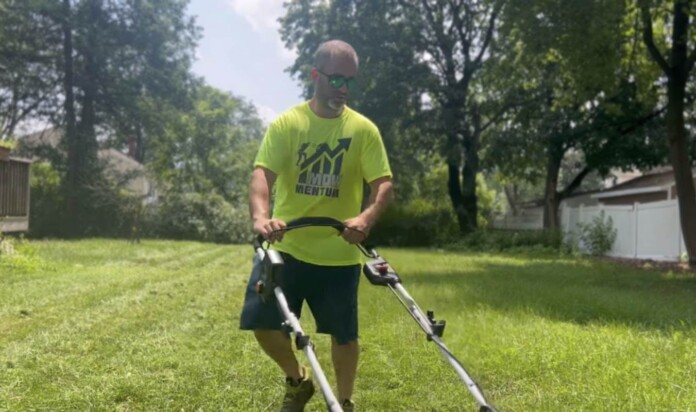
Founder Brian Schwartz mowing the lawn of someone who cant – credit I Want To Mow Your Lawn

There’s a man in New Jersey who wants to mow your lawn. Don’t believe him? Ask the patent office—he trademarked the phrase.

Brian Schwartz from Wayne, New Jersey, has pull-started a nationwide movement to automate and scale kindness after losing his job during the pandemic and feeling like he wanted to make a positive impact in the world.

Soon after, he started a volunteer lawn care organization to help seniors, the disabled, and veterans mow their lawns, trim their hedges, and cut back their trees. And he does it all for free.

“When we help someone like Edna, a dedicated teacher juggling personal battles, or Peter a D-Day Veteran who stormed the Beaches of Normandy, it’s incredibly fulfilling,” Schwartz told GNN. “Every lawn mowed is not just grass cut; it’s relief provided, a burden eased, and a community strengthened.”

While sprouting grassroots in New Jersey, the movement spread internationally, and I Want To Mow Your Lawn was born. Brian now oversees over 500 volunteers in 46 states, with similar orgs springing up in Australia, the UK, and Canada.

I Want To Mow Your Lawn and its volunteers have spruced up over 2,000 lawns, but all this helping others springs from a strong foundation at home.

Volunteers from I Want To Mow Your Lawn at work – credit I Want To Mow Your Lawn.

“Every day I’m reminded of my late father (who passed away January 2021 after a two-year battle from brain cancer), who believed in my vision enough to contribute to its foundation via our GoFundMe to become a 501c3,” Brian said.

MORE NEWS LIKE THIS: ‘No Mow May’ Gives You a Reason to NOT Mow the Lawn: Leave the Weeds to Feed the Bees

“The notion of him looking down with pride, knowing that we’re making a tangible difference, is a powerful driving force. Watching my young son, Dylan, absorb and internalize the work we do is deeply rewarding. Every time we help someone, I see it as not just aiding our immediate community but also shaping the next generation’s values and principles,” he adds.

Once it became clear that there were plenty of people willing to do the work for free, and plenty of people who needed a helping hand, Brian began looking for other ways to help, and began introducing people to more sustainable garden planning, such as installing rock gardens, native gardens, or switching to battery-operated equipment.

OTHER PROJECTS LIKE THIS: Locals Are ‘Interrupting Violence’ in Minneapolis – One Lawn Chair at a Time

Brian can outfit some of his volunteers thanks to collaborations with major equipment makers like STIHL MilwaukeeTool and Ryobi, while ironically, I Want To Mow Your Lawn’s “No Mow May” petition has gathered 700 signatures from clients looking to ensure their lawns remain vital food producing stopovers for bees and other pollinators during key spring months.

The overwhelming support and recognition from individuals, volunteers, and partners like Project Evergreen and Raising Men Lawn Care Service have been heartwarming,” Schwartz told GNN.

A look their the organization’s YouTube channel reveals it’s not all about lawns, but snow and ice, as well as piles of leaves. If there’s a lawn with a problem, Brian and his team are happy to help.

WATCH an explainer video below… 

SHARE This Monday MOWtivation On Tuesday With Your Friends… 

Toddler Is Reunited with Brother Who Revived Her After Drowning in Family Pool (Watch)

Eric with little sister Rose – SWNS

A tear-jerking moment, captured on film, shows a toddler being reunited with her teenage brother after he saved her from drowning.

The 18-year-old in shot, Eric Johnson, saved his little sister by performing CPR after he found her floating in the family’s swimming pool.

Little Rose was only 2 at the time and was at home with her brother and mom Nina who said that their habit is to always have one person in the room with Rose.

Alert and aware, Eric came into the living room and noticed that the door was open, and neither Nina nor Rose was around. Checking the swimming pool, the big brother found his little sister unconscious in the pool.

He pulled her out immediately and performed CPR. By the time their mom was called 911, Rose was already regaining consciousness.

First responders arrived shortly after and rushed the two-year-old to hospital and put on a ventilator for two days.

“We normally have one person in the room with her but we both went to the restroom. It was only a few minutes,” Nina explained. “Every time I look at him I think about it. I don’t think he realizes that he didn’t just save her life, he saved my life as well, he saved our family’s life.”

The rescue happened two years ago but Nina has decided to share it now for the first time.

According to Nina, the incident has brought the two siblings together, who are now 20 and 4. The two have always been close, but are now closer than ever.

CPR IN ACTION: For 3 Hours Doctors Continued CPR on Toddler with No Pulse–Until Life Returned

She said: “Their relationship is wonderful. They are so close. They cuddle together. They watch TV together. She shouts at him when he annoys her. It’s beautiful.”

She hopes that the video will inspire others to learn CPR, which has helped her family escape unscathed from the terrifying incident.

MORE LIFE-SAVING STORIES: 12-Year-Old Saves Man Who Passed Out Underwater, Credits CPR Learned from ‘Stranger Things’

“Even if it’s just one person from each family it could make such a difference,” said Nina. “I don’t know where I would be now if Eric hadn’t known how.”

CPR, also known as chest compression, is routinely offered in courses at fire departments and schools, normally for free. It can restart the heart of people who have no pulse or breath, even hours after chest compression is started.

WATCH the reunion below… 

SHARE This Touching Moment And Potentially Life-Saving Advice… 

Asteroid Sample Delivered Back to Earth in a ‘Brilliant Feat’–a Time Capsule of Ancient Solar System

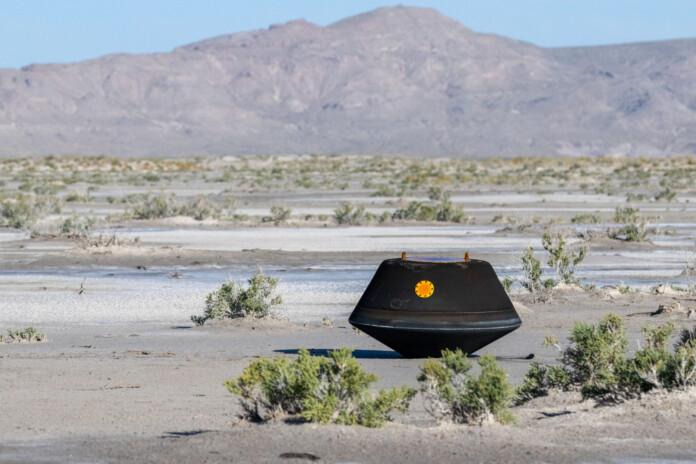
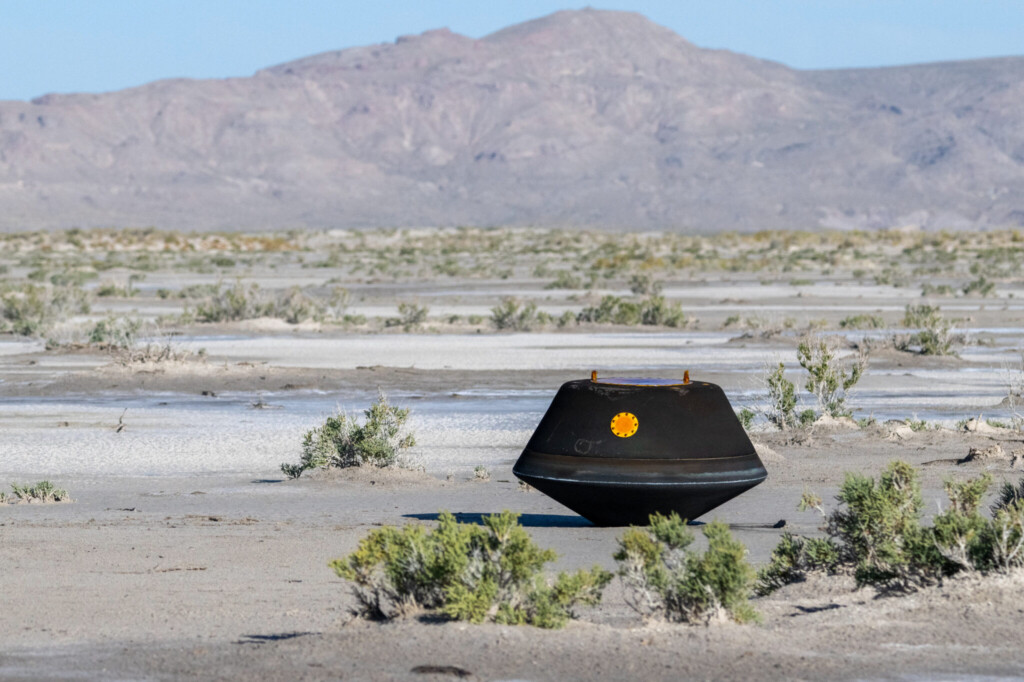
The sample return capsule from NASA’s OSIRIS-REx mission is seen shortly after touching down in the desert, Sunday, Sept. 24, 2023, at the Department of Defense's Utah Test and Training Range. The sample was collected from the asteroid Bennu in October 2020 by NASA’s OSIRIS-REx spacecraft. Photo Credit: (NASA/Keegan Barber)
The sample return capsule from NASA’s OSIRIS-REx mission is seen shortly after touching down in the desert, Sunday, Sept. 24, 2023, at the Department of Defense’s Utah Test and Training Range. The sample was collected from the asteroid Bennu in October 2020 by NASA’s OSIRIS-REx spacecraft. Photo Credit: (NASA/Keegan Barber)

In huge spacefaring news, NASA has its hands on a capsule containing about half a pound of material taken from a large asteroid called Bennu.

The first extraterrestrial soil sample brought back by Americans since the Apollo Missions was accomplished as part of the years-long OSIRIS-REx Mission, the first-ever asteroid sample-and-return mission NASA has undertaken.

Touching down in a DoD Test Range in Utah at 10:52 a.m. EDT on Sunday, the OSIRIS-REx capsule represents the culmination of 7 years of hard work that started when a small spacecraft was launched in 2016, remotely directed to the asteroid Bennu where it arrived and sought a safe landing area in 2019, collected a sample in October of 2020, and then headed for home in 2021.

The Bennu sample—an estimated 8.8 ounces, or 250 grams—was transported in its unopened canister by aircraft to NASA’s Johnson Space Center in Houston on Monday.

Curation scientists there will disassemble the canister, extract and weigh the sample, create an inventory of the rocks and dust, and, over time, distribute pieces of Bennu to scientists worldwide.

MORE NEWS LIKE THIS: NASA Just Found an Ocean World with Atmosphere–The Best Place to Look for Life in Our Galaxy

Moving as fast as possible to get the canister under a “nitrogen purge,” as scientists call it, was one of the OSIRIS-REx team’s most critical tasks yesterday.

Nitrogen is a gas that doesn’t interact with most other chemicals, and a continuous flow of it into the sample container inside the capsule will keep out earthly contaminants to leave the sample pure for scientific analyses.

“For us, this was the World Series, ninth inning, bases-loaded moment, and this team knocked it out of the park,” said Rich Burns, project manager for OSIRIS-REx at NASA’s Goddard Space Flight Center. “The whole team had butterflies today, but that’s the focused anticipation of a critical event by a well-prepared team.”

FUTURE BIG SPACE MISSIONS: India Becomes Fourth Nation to Touch Down on the Moon In Mission to Study its South Pole

The returned samples collected from Bennu will help scientists worldwide make discoveries to better understand planet formation and the origin of organics and water that led to life on Earth, as well as benefit all of humanity by learning more about potentially hazardous asteroids.

WATCH a NASA explainer video below… (Note: GNN has no affiliation with any ads displayed) 

SHARE Another Small Step For Man But Giant Leap For Mankind…