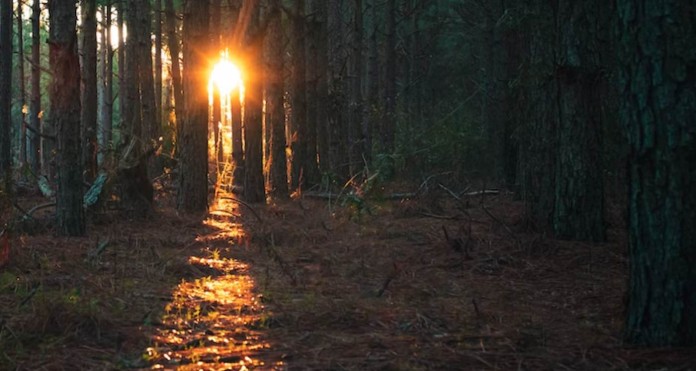
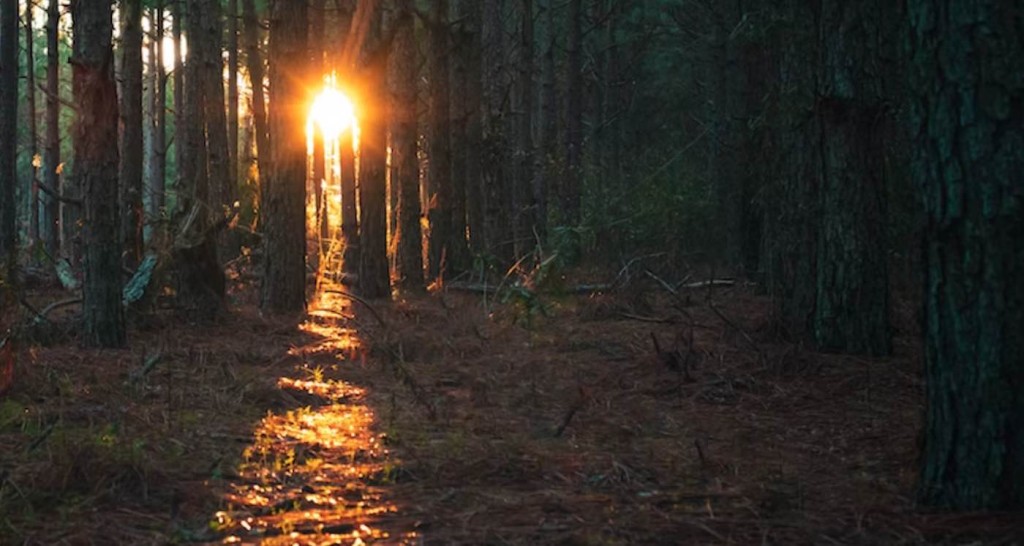
Quote of the Day: “It is during our darkest moments that we must focus to see the light.” – Aristotle Onassis
Photo by: Joshua Woroniecki
With a new inspirational quote every day, atop the perfect photo—collected and archived on our Quotes page—why not bookmark GNN.org for a daily uplift?
High-tech food waste recycling machines in Seoul. Wikimedia
Of South Korea’s countless kilograms of annual food scraps, very few will ever end up in a landfill. This is because of two reasons—the first is that it’s been illegal since 2005, and the second is because they have perhaps the world’s most sophisticated food waste disposal infrastructure.
While representing a significant burden on the economy, the food waste disposal nevertheless produces ample supplies of animal feed, fertilizer, and biogas that heats thousands of homes.
As the New York Times’ John Yoo and Chang Lee reported from Seoul, South Korean cuisine tends to lend itself to creating food scraps, since many staple dishes come with anywhere from a few to a few dozen sides.
With the culture erring on the side of abundance rather than restraint, many of these small dishes of tofu, kimchi, bean sprouts, and other bites would be tossed in the landfill if it wasn’t illegal to do so.
The government put the ban hammer on it because the mountainous terrain isn’t ideal for landfill construction.
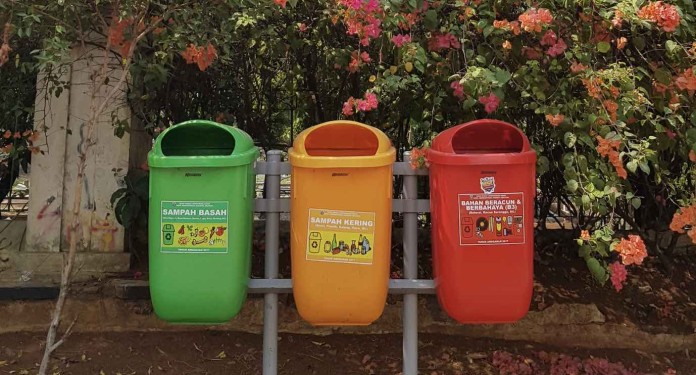
Instead, restauranteurs and street hawkers pay the municipality for a sticker that goes on the outside of special bins. Once filled with food scraps, they are left on the road for collectors in the morning who take 90% of all such waste in the country to specialized collection facilities.
At apartments and among residential housing areas, hi-tech food waste disposal machines are operated by a keycard owned by residents under contract with the disposal companies.
Once taken to the recycling facilities, the food is sorted for any non-food waste that’s mixed in, drained of its moisture, and then dried and baked into a black dirt-like material that has a dirt-like smell but which is actually a protein and fiber-rich feed for monogastric animals like chickens or ducks.
This is just one of the ways in which the food scraps are processed. Another method uses giant anaerobic digestors, in which bacteria break down all the food while producing a mixture of CO2 and methane used to heat homes—3,000 in a Seoul suburb called Goyang, for example. All the water needed for this chemical process comes from the moisture separated from the food earlier.
While one such plant was shut down from locals complaining about the unbearable smell, many plants are odorless, thanks to a system of pipes built into the walls that eliminate it via chemical reaction.
It’s the way South Korea does it. Sure, it costs them around $600 million annually, but they have many admirers, including New York City which hopes to implement similar infrastructure in the coming years.
SHARE This South Korean Born Solution To Food Waste…
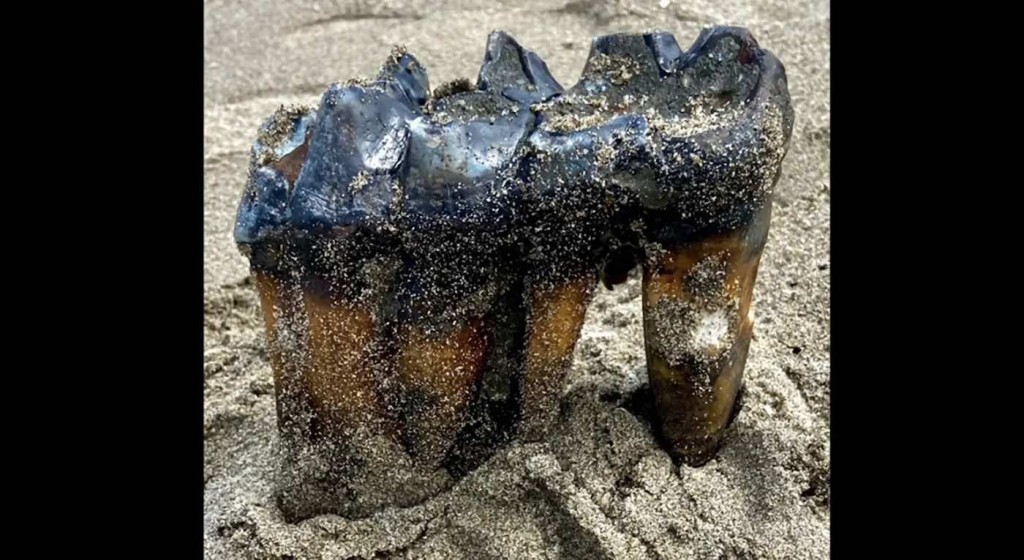
Mastodon tooth found on the beach by Jennifer Schuh
When a California woman found what looked like used firewood on a beach, she snapped some photographs of the nevertheless strange-looking object and went on her way.
As it turns out, she had stumbled across something remarkable—a mastodon tooth, and after posting pictures of it on Facebook, set off a chain reaction that led to quite the saga.
“She didn’t know what it was, the importance of it. It looks like a piece of old firewood. So she left it there. It’s understandable,” said Wayne Thompson, a paleontology collections advisor for the Santa Cruz Museum of Natural History.
KRON4 News reports that Santa Cruz is a hotspot for mastodon remains, and Thompson himself actually reassembled a whole mastodon skull for the museum once: it took 2 years.
Thompson contacted the woman, Jennifer Schuh, explaining the situation and asking her to go back and retrieve the foot-long bone, but, as she arrived there she realized that unlike her, someone else didn’t pass up the chance to pocket the super rare find.
A weekend of beachcombing didn’t turn it up, and so Thompson went to social media pleading to the new mystery owner to do the right thing and turn it over to the museum.
Then, a call came in from the nearby town of Aptos. Jim Smith had found it on a regular beach jog. According to Mr. Smith, he also didn’t know what it was but took it home rather than to social media.
Jim donated it to the museum.
“It’s super, super, super important for understanding elephant life in Santa Cruz County during the last Ice Age. There are only a few mammoth specimens, and mammoths are more common than mastodons. Aptos was a popular destination for Ice Age proboscideans,” Thompson told KRON4. “It’s a piece of Santa Cruz history.”
Alive for between 5 million and 10,000 years ago, mastodons are the smaller, rarer cousins of mammoths, and while Santa Cruz is famous for their remains, this is only the third-locally recorded mastodon fossil.
Schuh didn’t get to take home such an important piece of natural history and set it above her mantle, but she went online and bought a scaled replica to wear as a necklace, saying it’s not often one gets to touch something with so much history.
WATCH the story below from NBC…
SHARE This Rare Discovery And The Comedy Of Errors That Followed…
This is Part 2 of a two-part exclusive on World at Large. Some sections are taken from Part 1, published in April.
Out in the ultra-rural jungles of eastern Madagascar, something is happening that all climate-conscious philanthropists and investors should take note of.
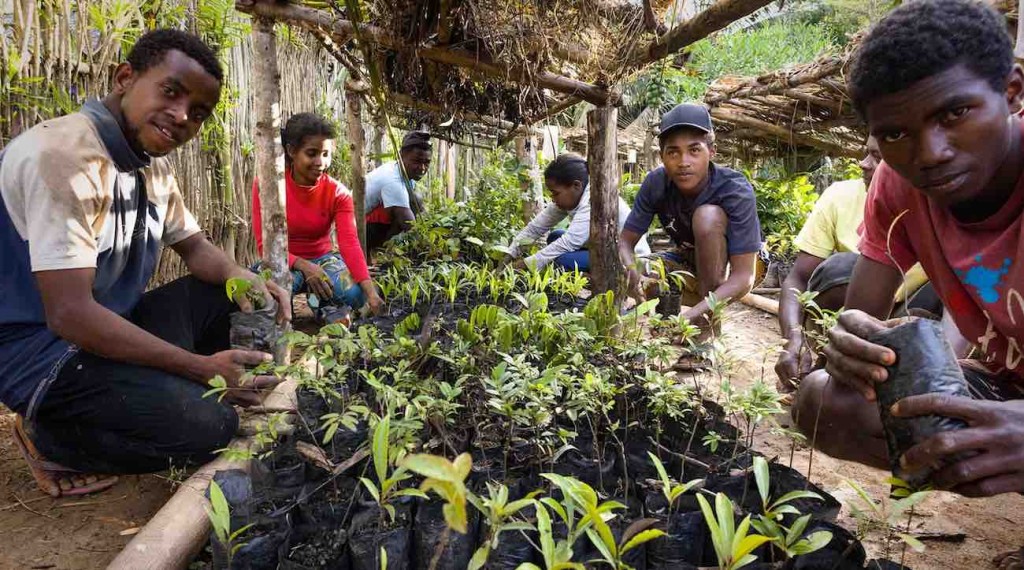
A few intrepid locals have created a 6-year, work-for-knowledge program that’s turning jobless country folk into passionate, skilled, forest management agents and entrepreneurs, ready to show the world that they themselves have the power to restore the glory of Madagascar’s stunning biodiversity.
Organized by a Malagasy woman and her Wall Street ex-pat husband, Green Again Madagascar is unlike any other tree-planting nonprofit around.
“It’s really exemplary of bottom-up restoration,” Leighton Reid, assistant professor in the School of Plant and Environmental Sciences at Virginia Tech, who conducted research for the group, told WaL.
Restoration success in Madagascar is simply different than in other countries. Madagascar split from the Indian subcontinent around 90 million years ago, allowing native plants and animals to evolve in relative isolation. Consequently, it’s a biodiversity hotspot with over 90% of wildlife being endemic.
More than 80% of Madagascar’s 14,883 plant species are found nowhere else in the world, a number which includes five whole plant families.
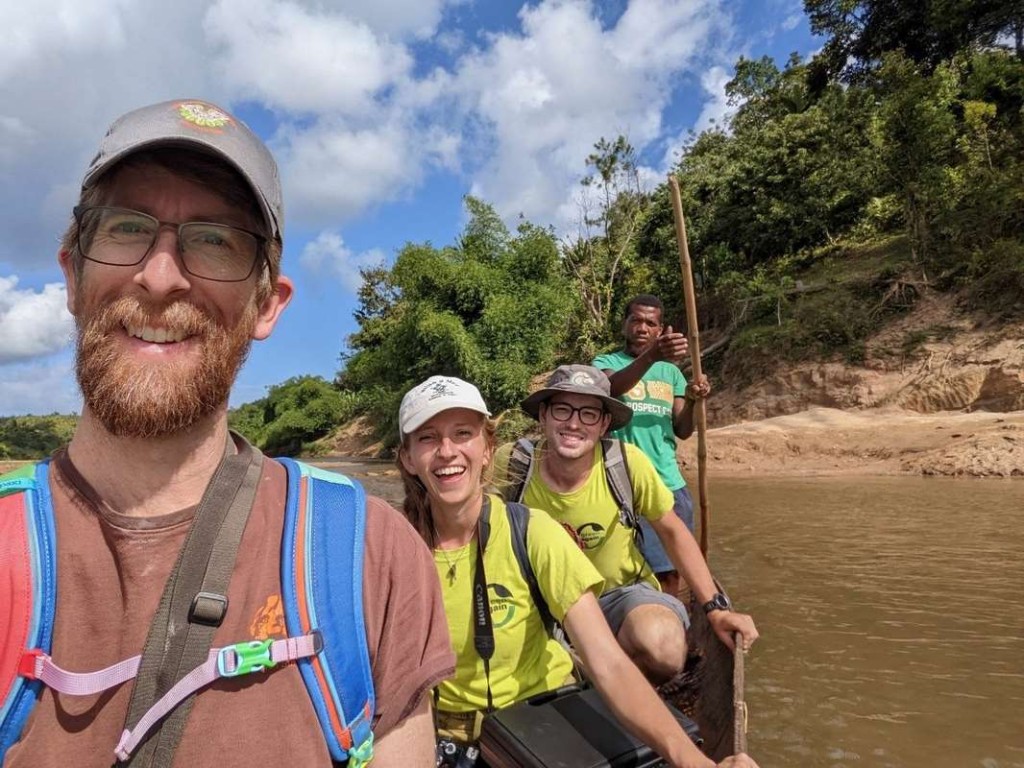
PICTURED Leighton Reid and colleagues Eva Colberg and Chris Logan cross the Ivoloina River in a dugout canoe. PC Leighton Reid.
Yet, none of this staggering biodiversity has been able to create enough urgency among conservation NGOs to develop a functional plan to stop forest loss in the country. A study published alongside Part 1 of this WaL exclusive showed that Madagascar had lost 4.85 million hectares of tree cover since 2000, equivalent to a 25% national loss.
Yet this isn’t always because of macro problems like a lack of funding, organization, or accountability. Assistant Professor Reid worked with Green Again Madagascar to gather data on how to germinate and grow various species.
“There are major technical challenges to reforestation in Madagascar, Madagascar has about 90% plant endemism, so if you’re trying to do reforestation in Madagascar, and nobody has studied how to propagate a given tree species, you can’t borrow that information from Mozambique or South Africa,” assistant professor Reid told WaL.
How to truly make a forest
Matt Hill, the CEO and Founder of Green Again Madagascar, explained that most organizations have the time and patience to plant an average of 5 species when reforesting elsewhere on the island. Green Again’s inventory, thanks in no small part to the near total staffing of the organization by Malagasy, consists of 65 species.
In order to gather data on how to ensure these trees can survive long enough so they don’t bring the whole reforested ecosystem down with them when they die, Reid, who had gotten to know Hill some years before, came out to work with Green Again in 2014-2015 to see if they could establish best practices for 17 different species.
They tried a variety of different techniques and strategies to see if they could get the trees to survive transplantation from the nursery which included additional watering, nutrient amendments, and placement around a host tree. Key among the successful strategies was the timing of planting—between October and January.
Trees planted during this 3-month window when the weather was perfect had about a 90% survival rate. Too late, and they would be drowned during the monsoon season, too early and they would fail to drought. This also means that fewer trees can be kept in nurseries since there’s nothing to do with those that aren’t planted during that 3-month window.
The only other consistently successful treatment was the construction of a small tee-pee of fronds that shaded the saplings during the hottest time of the day.
“We assumed almost that having some shade was going to be helpful, and that was based on the knowledge of local Malagasy farmers, they build these little tee-pees from fern leaves on top of their crops when they plant them, and it seems to help that,” Reid told WaL. “Trees that had those little fern tee-pees were 75% less likely to die”.
It all goes to show how difficult tree planting and reforestation—now so widely practiced as a climate mitigation strategy, can actually be, if any long-term thought of the quality of the forest and its trees is given.
Certain species fared better than others, and the data isn’t always clear why.
“Trema orientalis: it had a 94% survival after 1 year, and 0% after 6 years. That’s considered a success,” Reid explains, differentiating between ‘pioneer species’ and longer-lived ones. “If we were to see that in different species—Ficus species, 66% survival after 1 year, 0% after six years… in my mind that’s a failure”.
However, he’s confident that their data combined with Green Again’s intellectual capital on tree planting is enough to ensure replanted forests endure.
WaL asked Reid if he was able to communicate with any of the local landowners whereupon the restoration project and research were being done about why it was they were interested in restoring it.
“I think there’s some nostalgia, especially among older people, for the biodiversity that’s gone. You also hear people talk about how they used to go out and get medicines from the forest, and that they can’t do that anymore”.
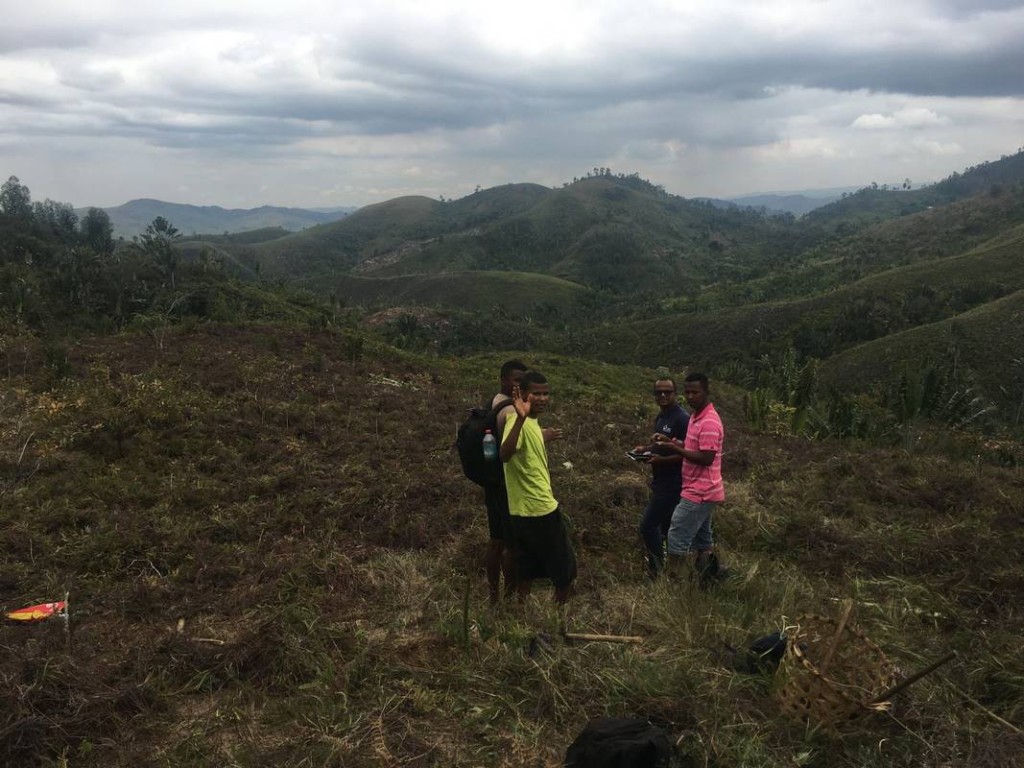
PICTURED: An example of the typical marginal land worked by Green Again, this one in Ampasimbe. PC: Matt Hill, Green Again Madagascar.
The buy-in cost and helping animals
As detailed in Part 1, Green Again Madagascar can achieve reforestation where and how no other organization can because they have the complete buy-in from the locals, with the average tree nursery crew member living within a 60-90 minute walk from the nursery in the extremely rural eastern reaches of the country.
However, accompanying that extreme locality is the necessity to work where the locals are—places where animals like lemurs haven’t been seen in a generation or more. These areas might have been burned for agriculture again and again, then abandoned or turned into marginal village land rather than being allowed to regrow naturally.
Because of this, there has been little history of protocol for interactions between Green Again’s teams and any of the iconic animals of Madagascar like the fossa, lemurs, and chameleons.
“Most of our farmers live in places without any animals, but now we’re starting some new experiments that are appropriate for doing just outside national parks, and the reason is that it depends on the animals,” explained Green Again CEO Hill. “You’ve got to tease the animals out”.
When not planting trees for corporate or Malagasy customers, Hill and Green Again have had time and resources to carry out projects on behalf of the wildlife called “applied nucleation,” a method of assisted natural regeneration that relies on creating small islands of woody pioneer plant species a short distance from existing wildlife habitat that mimics how vegetated areas naturally expand in nature.
It encourages seed dispersers like rodents, birds, moths, and bats, to adventure out into the island to help propagate the areas around it.
“We’ve been doing applied nucleation for four years now but never on a large-scale, only two or three islands. This year, we’re doing 141 islands, and next year we’re [doing…] 244,” said Hill. “By 2030, we should be doing 1 kilometer by 1-kilometer square, which is huge”.
Compared to simple plantation-style reforestation, biodiversity of birds is the same between applied nucleation and plantation-style islands, one study found—also published by Leighton Reid. The concentration of leaf-litter anthropods however, is much higher in applied nucleation islands rather than plantations. Plantations were also significantly more expensive.
“Historically, we’ve been about the trees, and we’re trying to concentrate on that because there’s so much [international] attention on the animals but not on where they live. Now… we’re putting the necessary tools out there for the lemurs to save themselves”.
The Malagasy government has made large pledges to the international community about how much of its own forests it will restore—up to 9.8 million hectares over the next 10 years. The administration of President Andry Rajoelina could do very well for these goals by looking within its own borders for guidance, capacity, and know-how for such a project rather than toward the West.
Green Again Madacasgar is changing the world in the way every bloated-budget development organization says its own various uncoordinated agencies should—through engagement with local stakeholders.
An organization cannot be more local, and their locals more of a stakeholder, than Green Again Madagascar.
SHARE This Inspiring Madagascar Solution With Your Friends…
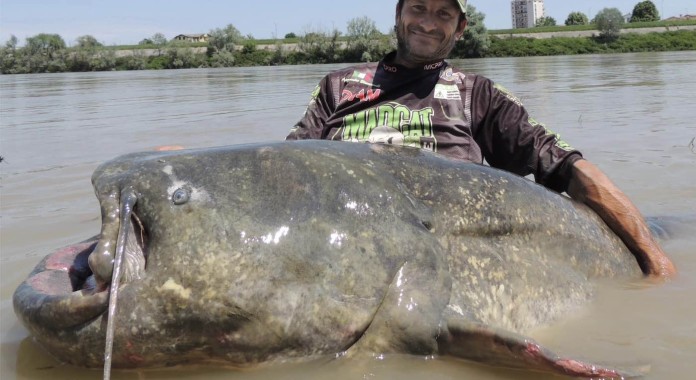
A professional Italian fisherman just reeled a 9-foot catfish out of a river that just last year was suffering so badly from Europe’s heatwave that in some places it had dried out almost completely.
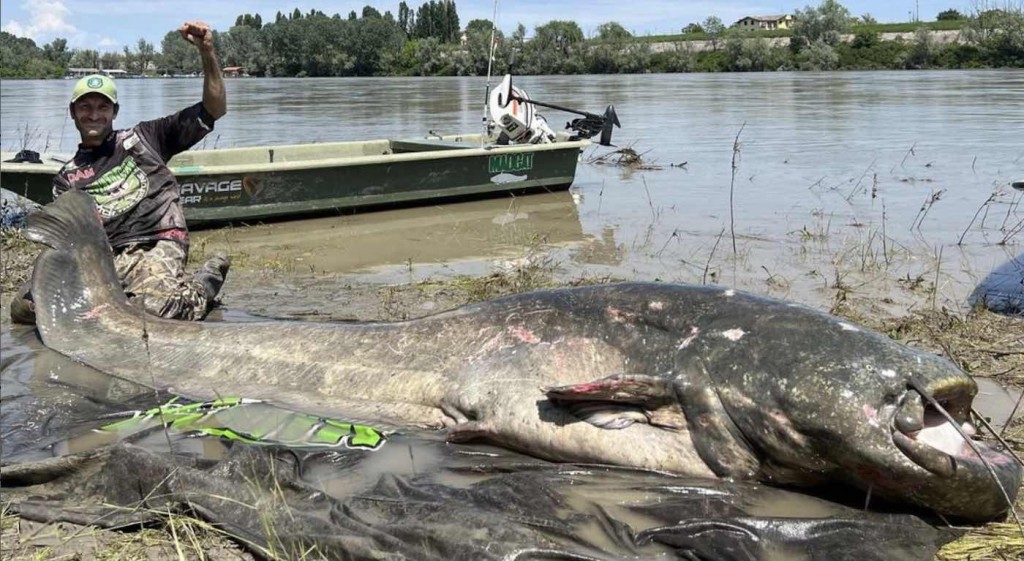
As long as a U-Haul truck, he released the fish in order to allow such a specimen to continue influencing the ecosystem.
The true river monster was a giant wels catfish, and Alessandro Biancardi was alone when he had the first inklings that whatever it was that had tugged on his line on May 25th was not going to come quietly.
What was just another normal day on the Po River quickly turned into a battle as Biancardi struggled against the fish whilst negotiating sunken hazards and strong currents.
“The fear of losing it almost sent me into a panic,” he writes on the website of his fishing team, Madcat. “I was alone facing the biggest catfish I [had] ever seen in 23 years.”
Exhausted, he eventually took the beast to shallow water where he was able to land it. It was at that point that he became so preoccupied with the fish that he forgot to moor his boat, which drifted away with all his belongings.
Rushing to tie the fish up, and recovered his boat and called a friend that was staying nearby at a fishing camp full of people like him who had been hoping to land one of the Po’s famous catfish.
With 10 witnesses, Ale whipped out his measuring tape—9 feet 4 inches (285 cm) the biggest in his life, and, according to Madcat, the world.
He sent the measurements to the International Game Fish Association for consideration for the catch-and-release record. Madcat says it has beaten the previous record by 4 cm.
“I was very curious about the weight but I feared too much to stress that rare specimen,” wrote Biancardi, explaining that he then let it back into the river.
Many fear the already drought-stricken river will suffer further still after a dry winter, but the Po, which Virgil described as the king of rivers, (Fluvious rex) still has an ecosystem intact enough to produce monsters
SHARE This Once In A Lifetime Catch With Your Friends…
Quote of the Day: “Strive not to be a success, but rather to be of value.” – Albert Einstein
Photo by: Sebastián León Prado (cropped)
With a new inspirational quote every day, atop the perfect photo—collected and archived on our Quotes page—why not bookmark GNN.org for a daily uplift?
Having a twice-a-week yoga practice has recently been shown to be effective at reducing symptoms of fatigue in people with cancer, as well as reducing the likelihood of a beaten cancer from returning.
18 million people around the world develop various forms of cancer every year, and it’s well known that physical inactivity increases the risk of getting cancer.
On top of that, it’s known that most forms of exercise prevent it—the same is true for yoga, which was just the subject of an investigation by what the Guardian newspaper called “the world’s leading cancer researchers.”
Three studies presented at the annual meeting of the American Society of Clinical Oncology (ASCO), the world’s largest cancer conference, together suggest that prescribing rest for a patient suffering from low energy levels or fatigue is not the best health measure.
In one of the studies, directed by the University of Rochester Medical Centre, 500 cancer patients that had received a treatment program for their cancer between 2 weeks and 5 years in the past were randomly assigned to either a control group or an intervention group that involved two 75-minute yoga classes per week.
“Our data suggest that yoga significantly reduces inflammation among cancer survivors,” the study’s authors wrote in a report published at the ASCO meeting. “Clinicians should consider prescribing yoga for survivors experiencing inflammation, which may lead to a high chronic toxicity burden and increased risk of progression, recurrence, and second cancers.”
One of the many, many societal benefits enjoyed worldwide from the existence of Indian culture, yoga is probably the best form of low-intensity exercise available to a human, as it increases heart rate, engages whole muscle groups, and deepens the breath.
“What I say to doctors is you should recommend to them [cancer patients] yoga as an option and you should help them find places in their community where they can do it,” Karen Mustian, the paper’s lead researcher, told the Guardian.
In the second study, also led by Rochester, researchers examined yoga’s impact on fatigue and quality of life.
Senior cancer patients who attended the same yoga class schedule showed lower levels of fatigue and reported higher statistically significant levels of life satisfaction.
A third study found cancer patients who are classified as “active” such as those who might take a 30-minute brisk walk, have a reduced risk of death by almost one-fifth.
“We also have to educate the family,” said Dr. Jurema Telles de Oliveira Lima, who oversaw the third study. “Because it’s very common that the family wants to protect the older person when they have cancer, like: ‘I’m not going to let him do anything or go anywhere.’ We have to tell the family that it [physical activity] can be best for the patient and also on a psychological level as well.”
SHARE This Important Cancer Health And Yoga News With Your Friends…
Published in April of last year, a study found that older men put on a relatively simple 8-week program were able to reduce their biological age by 3.2 years.
It might be surprising to read, but it wasn’t a magic pill, a miracle cure, or some strange herb from a cave in Peru, that conferred this remarkable benefit on the men aged 50-72, but six small changes to diet and lifestyle aimed at altering their epigenetics.
The 6 changes consisted of recommendations for better sleep and for a duration of at least 7 hours, some phytonutrient powder supplements consisting of polyphenols and curcumin, a 10-minute meditation or breathing practice done twice daily, a 12-hour eating window, such as 8 a.m. to 8 p.m., a probiotic consisting of Lactobacillus plantarum, and 30 minutes of exercise per day 5 days a week at 60-80% of maximum heart rate.
The goal of the study was to affect “epigenetics” which could be described as human adaptation in response to conditions met throughout life. Epigenetics can’t turn us into a different species, but they do allow Sherpas to live in the high altitude of the Himalayas year round, or indigenous Indonesians to stay underwater for long periods without needing to breathe.
It makes babies conceived during periods of famine or food scarcity more susceptible to conserving glucose throughout their life, and much more besides.
There are epigenetic changes that make us age faster, and there are changes that slow or even reverse this process; which is what longevity researchers generally refer to when they make claims such as “reverse aging.”
What aging is today
Over the last few years, life expectancy in some countries like the U.S. is going down for the first time since World War II. With the number one risk factor for disease being ‘aging,’ and ‘disease’ being the second highest risk factor for disease, there’s an enormous incentive to mitigate both.
Doing so has been hypothesized as representing a $7 trillion savings in medical care over 50 years: which is slightly more than the savings predicted for keeping the global temperature from rising 2°C.
The researchers’ goal was to alter epigenetics through methylation, which bears some brief explanation.
“Currently, the best biochemical markers of an individual’s age are all based on patterns of methylation,” the researchers write. Methylation is, as lead author Kara Fitzgerald explained in a recent radio interview, simply the attaching of a methyl group to a cytosine on select areas of the DNA-containing chromosomes.
As life evolved, it found that methyl groups were extremely common and useful, and evolution has created perhaps millions of processes that involve methyl groups, not least of which is gene expression, which is the scientific phrase for the degree to which a gene affects our bodies and health.
“Of 20+ million methylation sites on the human genome, there are a few thousand at which methylation levels are tightly correlated with age,” the authors write, adding that a DNA clock that measures methylation will better predict an individual’s risk for mortality than chronological age.
Diet was not significantly altered from normal, yet personalized recommendations, except as part of a general lowering of carbohydrate intake. It was mostly plant-based, with an emphasis on choosing low-glycemic fruit, and replacing proteins with nutrient-dense options like beef liver and eggs. Eating was prohibited after 7 p.m. and before 7 a.m. the next morning. The entire diet plan can be found here.
The study wanted to see what older people who have no adverse risk of disease and are of generally good health could achieve with the multi-faceted approach.
“It took us a long time to run the study because we did some pretty hefty screening,” Fitzgerald said on Revolution Health Radio, “so we can reverse bio-age in healthy individuals, there’s just no doubt in my mind that using these interventions in individuals with various diseases we should see more significant change”.
Fitzgerald feels one of the most significant elements of the study was the weekly appointment of a nutritionist, who was also in charge of ensuring the exercise and mediation were pursued correctly according to a pre-determined script.
Little else of a general nature changed in the control group, apart from a reduction of 25% in mean triglycerides, and a reduction in total cholesterol.
Undoubtedly the most exciting part about this finding is the relative simplicity with which it was achieved. The probiotic and phytonutrient aspects were simple supplements, while the exercise part doesn’t really ask more than the minimum government recommendations. Indeed some individuals will have difficulty finding 20 minutes a day for meditation, but for reducing biological age by 3.2 years, it’s not so much to ask.
SHARE This Remarkable Multi-Faceted Approach With Your Friends…
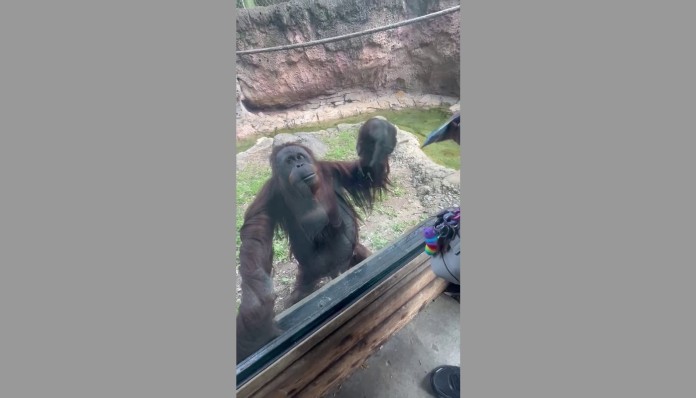
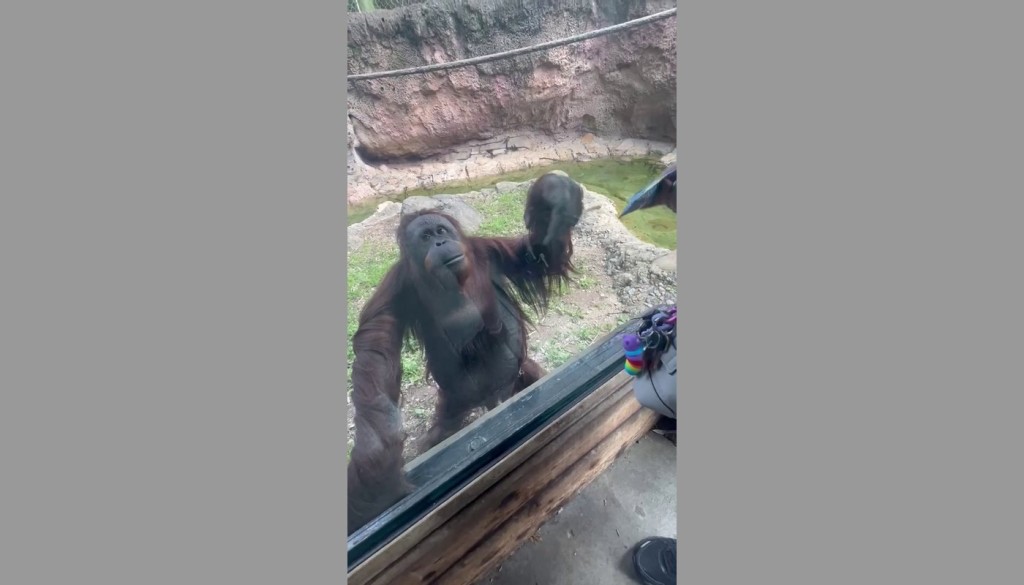
When Amber the orangutan met a visitor called Taylor, her day became focused on a single objective—finding out what was inside her purse.
Filmed at the Louisville Zoo in Kentucky, the ape’s gestures are simply too human to believe, such as gesturing with her index finger like an overly proud security guard at a concert security screening.
Then, lifting her chin as if she were trying to look over a ledge, it becomes clear to Taylor she’s interested in what’s inside her small shoulder bag.
As she begins to rifle through it on Amber’s behalf, the orangutan spots a bag of sweets and immediately knows that’s what she wants.
The whole interaction is amazing as she walks to the edge of the enclosure and begins to show Taylor how she can give him the sweets through the keeper’s area.
Despite the veins in a leaf appearing like a nervous system, our woody neighbors do not have a nervous system—but that doesn’t mean they can’t feel your touch upon their many hands.
Quite the contrary, scientists have established using sophisticated microscopy that plants register the beginning and end of every touch by sending slow waves of calcium signals to their cells.
Conducted at Washington State Univ., the scientists used 84 experiments from twelve members of tobacco and thale cress species that had been specially bred with calcium sensors.
Previous research has shown that when a pest like a caterpillar bites a plant leaf, it can initiate the plant’s defensive responses such as the release of chemicals that make leaves less tasty or even toxic to the pest. An earlier study also revealed that brushing a plant triggers calcium waves that activate different genes.
Using a glass rod the width of a human hair, they gently probed the leaves’ individual cells under a microscope to see what the response was.
“It is quite surprising how finely sensitive plants cells are—that they can discriminate when something is touching them. They sense the pressure, and when it is released, they sense the drop in pressure,” said Michael Knoblauch, WSU biological sciences professor and senior author of the study in the journal Nature Plants.
“It’s surprising that plants can do this in a very different way than animals, without nerve cells and at a really fine level.”
It took just 30 seconds for the waves to reach out and begin signaling, pretty fast for tree-time.
The authors believe these waves are likely due to the change in pressure inside the cell. Unlike animal cells with permeable membranes, plant cells also have strong cellular walls that cannot be easily breached, so just a light touch will temporarily increase pressure in a plant cell.
The current study was able to differentiate the calcium waves between touch and letting go, but how exactly the plant’s genes respond to those signals i.e. what the plant is capable of initiating in response to touch remains to be seen.
Quote of the Day: “The hardest arithmetic to master is that which enables us to count our blessings.” – Eric Hoffer
Photo by: Nikhil kumar (cropped)
With a new inspirational quote every day, atop the perfect photo—collected and archived on our Quotes page—why not bookmark GNN.org for a daily uplift?
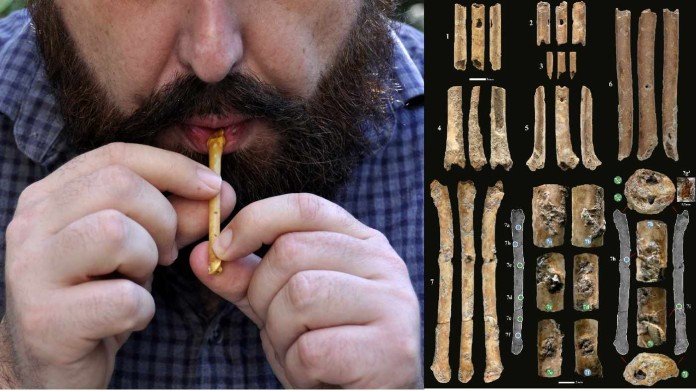
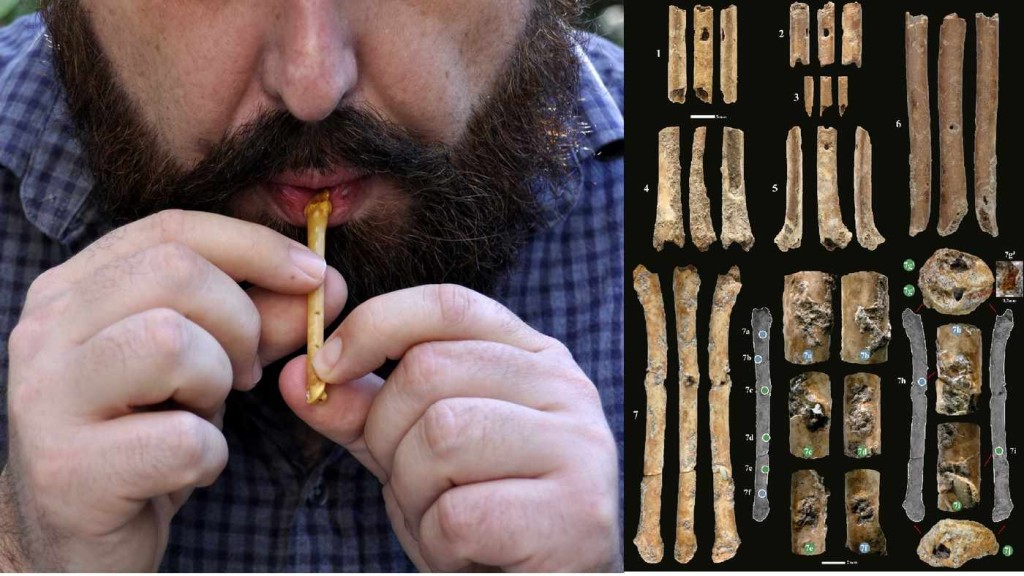
The aerophones and one of the archaeologists trying to play one - SWNS
The aerophones and one of the archaeologists trying to play one – SWNS
Researchers have discovered 12,000-year-old miniature flutes that may have been used for mimicking raptor calls.
The precise motive of the mimicry is unknown. It could have had religious connotations or been part of some form of hunting strategy.
Although the prehistoric site of Eynan-Mallaha in northern Israel has been thoroughly examined since 1955, it still holds some surprises, say scientists who found the collection of seven instruments there.
The Natufians, the Near Eastern civilization that occupied a village on the site between 13,000 and 9,700 BCe, are thought to have used them for hunting, music or to communicate with the birds themselves.
“The village, located on the shores of Lake Hula, was home to this civilization throughout its 3,000 years of existence,” the study read.
“It is therefore of vital importance in revealing the practices and habits of a culture at the crossroads between mobile and sedentary lifestyles, and the transition from a predatory economy to agriculture.”
The study published on the finding of these aerophones details they’re the first ever to be discovered in the Near East. Aerophones are a class of musical instruments in which a vibrating mass of air produces the initial sound.
They are made from the bones of a small waterfowl, with the smallest one being just 5 millimeters, and produce a sound similar to certain birds of prey, such as the Eurasian sparrowhawk and common kestrel, when air is blown into them.
Smaller bones would have been deliberately selected in order to obtain the high-pitched sound needed to imitate particular raptors.
“The choice of bones used to make these instruments was no accident—larger birds, with bigger bones that produce deeper sounds, have also been found at the site,” the study authors continue. “Indeed, it is clear that the Natufians attributed birds with a special symbolic value, as attested by the many ornaments made of talons found at Eynan-Mallaha.”
- Fair use. Star Wars TGC: Edge of Darkness (Card: Sandcrawler)
– Fair use. Star Wars TGC: Edge of Darkness
A new solar system has been found where planets orbit two suns just like on Luke Skywalker’s home planet in Star Wars.
It’s the fifth multi-star system ever discovered, and the third one which features two stars.
Tatooine, the desert home planet of Luke and Anakin Skywalker was imagined as a desert world with two suns when Star Wars was first released in 1977. Fans would have to wait more than 30 years for the confirmation that such systems actually exist with the discovery of Kepler 16, a binary star system with a gas giant planet in orbit around them.
Now astronomers at the University of Birmingham have discovered another binary star system called BEBOP-1 after the project which funded its discovery—”Binaries Escorted By Orbiting Planets,” or BEBOP.
Three years ago the Birmingham researchers Dr. Matthew Standing and Dr. Lalitha Sairam found that a planet, called TOI-1338b, orbiting these two suns had already been spotted by NASA’s TESS (Transiting Exoplanet Space Surveyor) space telescope.
That planet was found using the transit method, meaning it was discovered when a telescope recorded the drop in perceived light coming from the host star every time the planet orbited in front of it. Over 5,000 exoplanets have been found since the first two were identified in 1992; most via the transit method.
They were able to register the planet’s size, but not its mass. In the study of exoplanets, mass is the more important finding, as it can inform whether the planet is rocky or gaseous.
Using state-of-the-art instruments installed on two telescopes in the Atacama Desert in Chile, the team tried to measure the mass of TOI-1338b. Despite their best efforts following years of work, they could not achieve their goal, but instead discovered a second planet—BEBOP-1c—and measured its mass.
Artist’s impression of Kepler 16 – NASA – JPL – Caltech
“BEBOP-1c has an orbital period of 215 days, and a mass 65 times larger than Earth, which is about five times less than Jupiter’s mass,” said Dr. Standing, lead author of the paper documenting its discovery. This likely indicates it’s a gas giant.
At the moment only two planets are known in the BEBOP-1 system—what are known as ‘circumbinary planets,’ but more might be discovered in the future with repeat observations, the research team said.
Although rare, circumbinary planets are important in pushing the understanding of what happens when a planet is created, according to scientists.
Discovered by the Kepler Space Telescope, several star systems in the constellation Cygnus have two stars and were the first to excite Star Wars fans. Kepler 16b, also a gas giant, was quickly dubbed “the Real Tatooine,” while a different star system designated Kepler 35, not only has a gas giant, but estimations believe there could be two rocky worlds sitting in the system’s habitable zone where the radiation and temperature are not too hot and not too cold.
Additionally, astronomers found a triple-star system in 2016 using a new instrument at the European Southern Observatory’s Very Large Telescope. A planet found there called HD 131399A(b), is one of the strangest ever found—8 times the size of our solar system’s largest planet Jupiter, and which orbits via the influence of all three stars in the system; taking 550 Earth years to finish a single revolution.
“I like to start thinking about it from when the planet is opposite all three stars,” Kevin Wagner, an astronomer at the University of Arizona who helped the discovery, told Gizmodo at the time.
“When they aren’t eclipsing, you’d see three suns in the sky. As the planet progresses in its orbit, the stars will start to grow apart, to the point where the setting of one coincides with the rising of another.”
In essence, writes the Gizmodo author, you’d have two seasons: one with three sunrises and sunsets every day, and another of perpetual daylight, where a rising star (or stellar pair) is always there to replace a setting one.
Not that anyone or anything could live on that world—being as far away from its star(s) as Pluto is to the sun, and made of gas.
SHARE The Science Behind Star Wars’ Tatooine With Your Friends…
Elephants are one of the holiest animals in Hinduism. Also, yoga was invented in India.
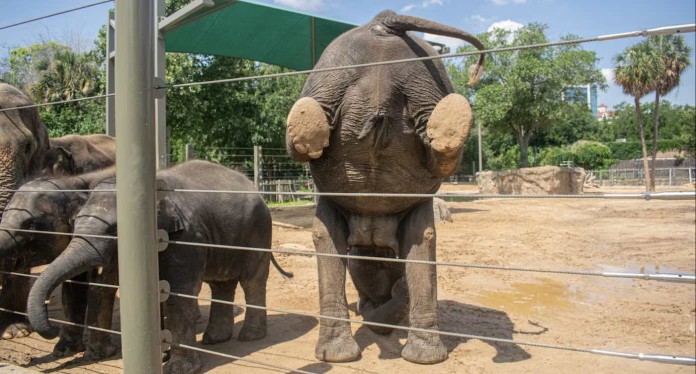
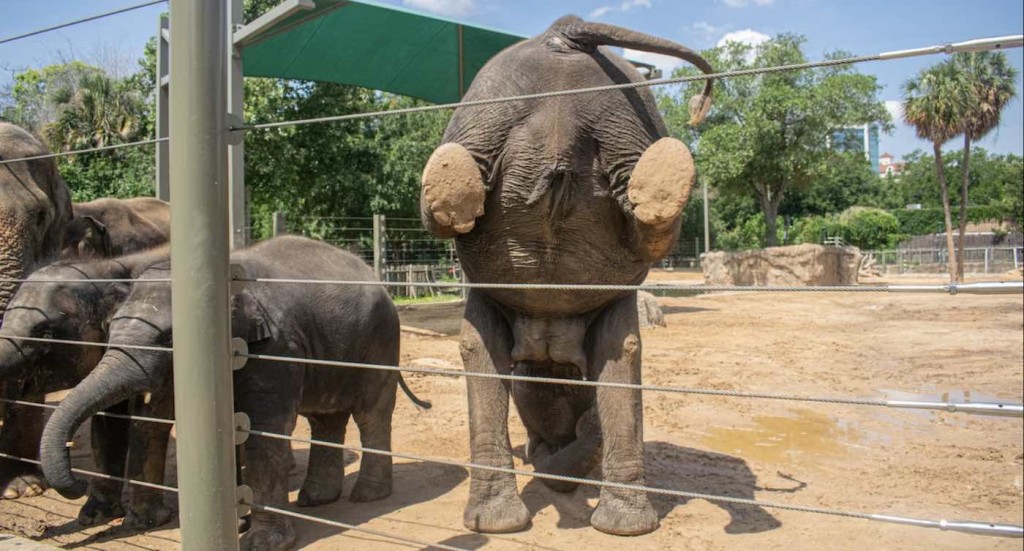
Is it any surprise then that elephants really like doing yoga? Check out this picture for example—the world’s largest and heaviest land animal doing a headstand. Can you do a headstand?
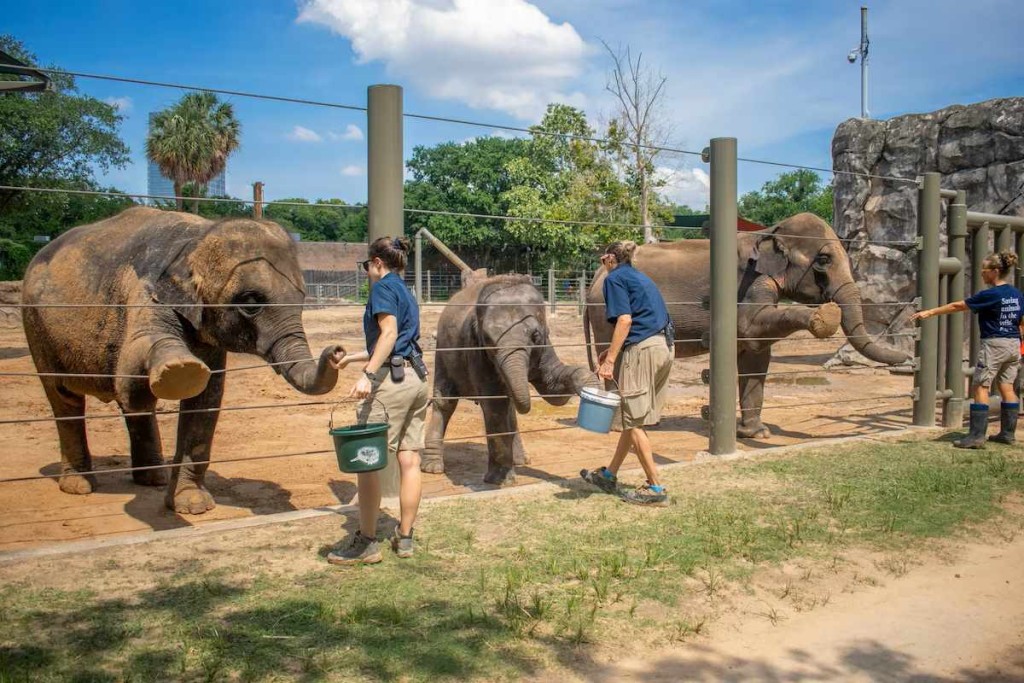
At the Houston Zoo, elephants participate in a static or slow-motion stretching practice much like yoga for between 30 seconds and 5 minutes a day to help them strengthen muscle groups while stimulating their brains and bodies.
During their yoga, the zoo’s elephant keepers are able to get a full look at their entire bodies, from trunk to tail, as well as check on their range of motion. If anything seems off, they’ll call over one of the five staff veterinarians for a check-up. To help keep them motivated to move, the elephants are rewarded with special treats like whole wheat bread, cantaloupe, raisins, or bananas, on top of their regular diet of roughage.
Tess the nearly 40-year-old mother of four and grandmother of one, pictured here standing on her head, keeps limber with the most number of moves of any of the herd. Methai, a 54-year-old matriarch, takes things a bit easier.
“Cultivating strong, positive relationships with our elephants is critical to providing them with the best healthcare to ensure their well-being is put first,” said Kristin Windle, Houston Zoo elephant supervisor.
Jackelin Reyna Houston Zoo
“The elephant yoga stretching sessions allow us to build that relationship using positive reinforcement to increase their range of motion and get eyes on their skin, feet, and inside their mouths. We can learn a lot about our elephants in these important sessions.”
The more intelligent an animal is, the more attention they need when kept at zoos. These are Asian elephants, which are believed to be more sensitive and generally intelligent than African bush elephants.
As any yoga practitioners reading will know, yoga, which means unity, isn’t just a way to limber up but is also extremely beneficial for cognitive exertions, whether academic or emotional.
SHARE These Elephant Yogis With Your Yoga Friends On Social Media…
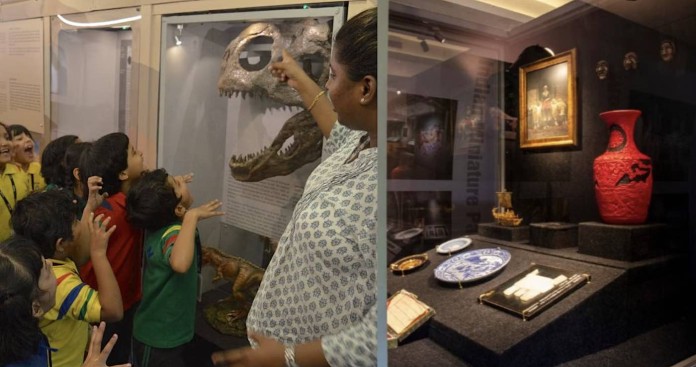
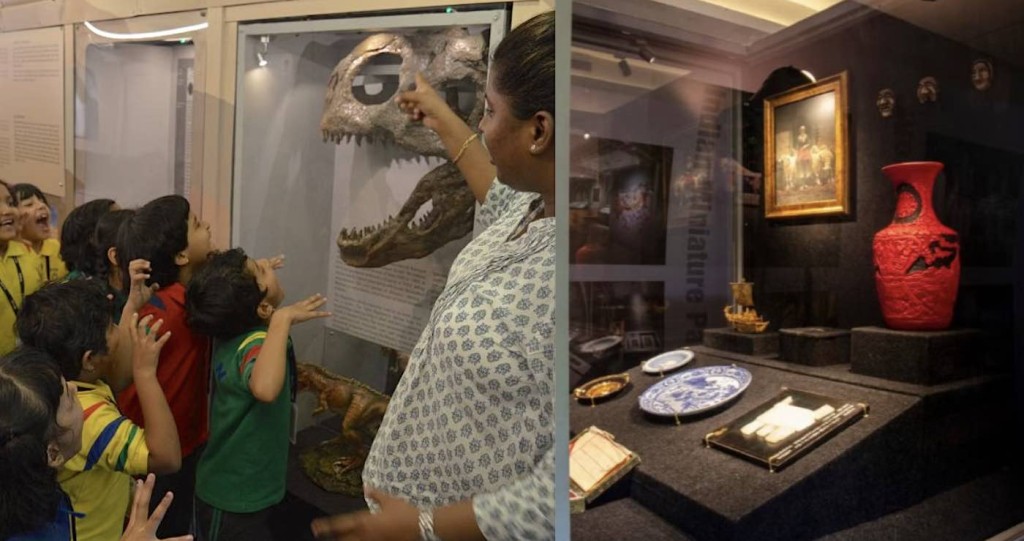
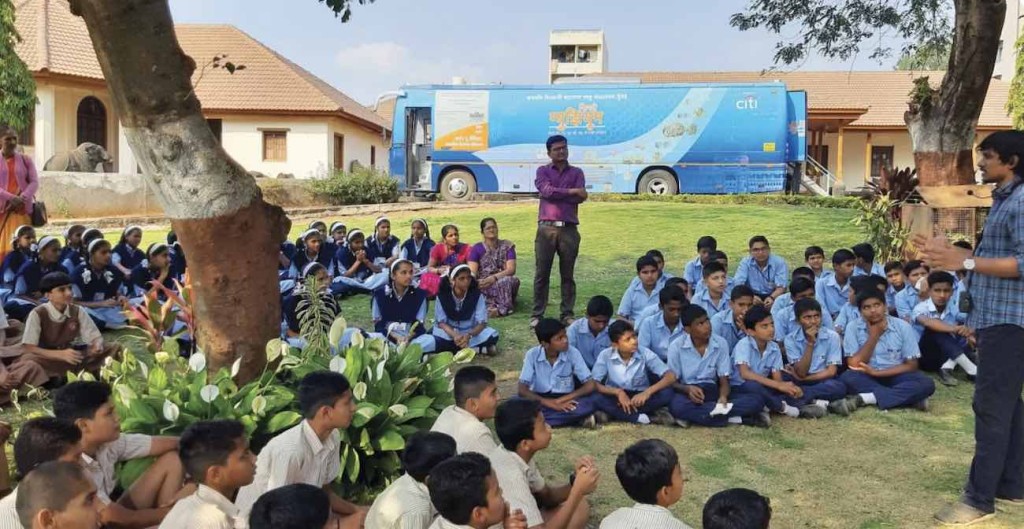
Since 2015, a mobile museum has been traveling around the most rural parts of India, introducing disadvantaged schoolchildren to the rich tapestry of Indian history—from the dinosaurs to the Mughals.
The innovative education idea has so far traveled over 50,000 miles and visited 700 cities in the states of Karnataka, Maharashtra, Goa, Gujarat, Haryana, and Delhi NCR.
The “Museum on Wheels” was dreamed up by the staff at a famous Mumbai Museum called Chhatrapati Shivaji Maharaj Vastu Sangrahalaya, who received support for the idea of a pair of large coach buses carrying museum-like exhibitions to rural communities from both parents and the government.
“Even in today’s day and time, people from rural backgrounds, especially children, do not see museums as a place that can aid learning. With this initiative, we want to change the narrative and say, ‘If you can’t visit a museum, we can bring it to you’,” says Krutika Mhatre, who spearheads the MOW project.
She told The Better India that the subject matter rotates every 6 months based on feedback from schoolteachers in the towns and cities visited.
Museum on Wheels -MOW
The overwhelming success of the MOW initiative led to the museum getting a government grant for the purchase and outfitting of a second bus in 2019.
“We wanted to start with a topic that everyone was familiar with. So we based it on Harappan civilization, and it was a great success,” said Krutika.
It makes sense—the Harappan, or Indus Valley Civilization, was the first great civilization of the Indian subcontinent, dating back to 3,300 BCE. The Harappans built the Great Baths, an archaeological find today recognized as a World Heritage Site.
Museum on Wheels – MOW
But the MOW has also featured exhibitions on the dinosaurs of Cretaceous India, traditional Indian games, Indian coinage through the ages, and other past civilizations.
Krutika remembers that not only did many of the schools they visited not have a museum in town to go to, but many of the classrooms didn’t even know what a museum was.
It’s especially important in a nation like India that is so big, where human history stretches back so far, and which is also rapidly modernizing.
SHARE This Capital Idea With Your Friends Interested In Education…
Quote of the Day: “Gladly, as his suns fly through the Heavens’ glorious plan. Run, brothers, your race—Joyful, as a hero to victory.” – Friedrich Schiller, Ode To Joy, the poem used in Beethoven’s 9th Symphony (translated from German)
Photo by: Will Li (cropped)
With a new inspirational quote every day, atop the perfect photo—collected and archived on our Quotes page—why not bookmark GNN.org for a daily uplift?
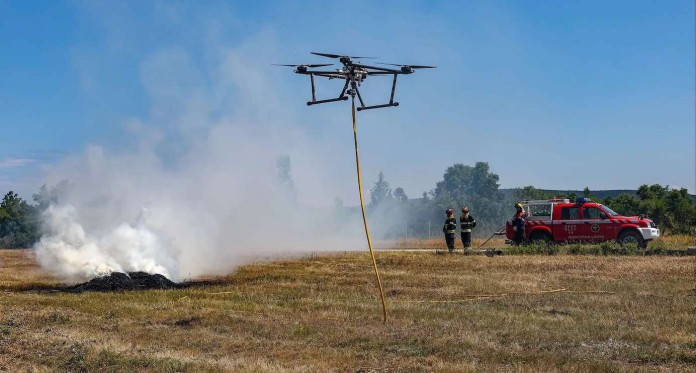
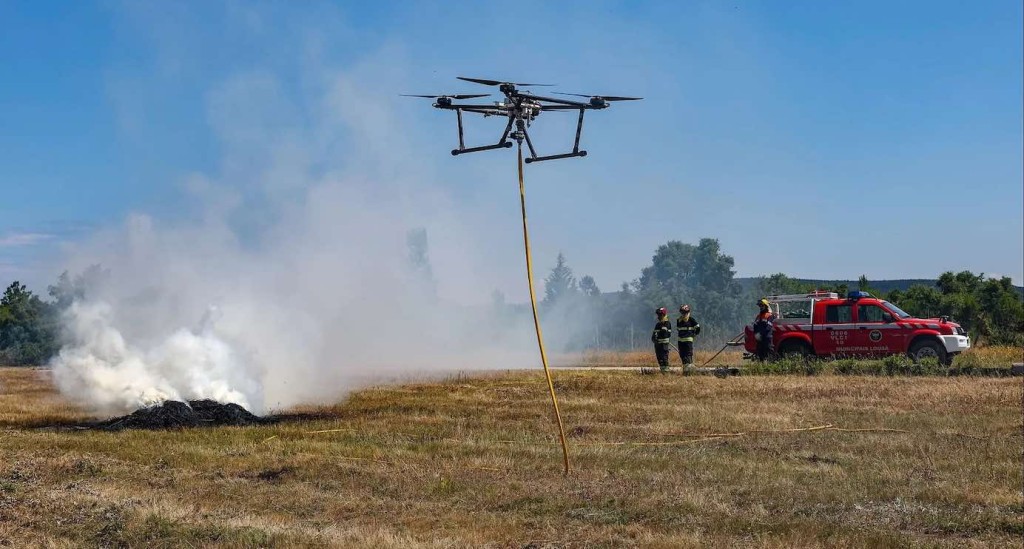
In one of Europe’s technical centers for firefighting research, a nimble drone that can carry a fire hose is being tested for quick-response firefighting.
Hovering 164 feet above a potential blaze, a pair of symmetrical jet streams can channel the water from a nearby fire engine onto mountainsides where the bulky automobile can’t get.
In a demonstration video, a pile of burning roadside brush the size of a 4-door sedan was snuffed out by the jets in about 15 seconds.
Called SAP (for “ported nozzle system” in Portuguese) the device took 4 years to manufacture at the University of Coimbra’s Forest Fire Research Laboratory.
Certain parts of Portugal have been scorched recently, more so than usual, and the firefighters working at Coimbra are looking for quicker, more flexible responses to combat small fires before they become large blazes.
Science has shown that the greater a nation’s abilities to target and contain small fires, the statistically fewer are their larger ones. This type of drone could be a critical tool for quick and early fire control.
It’s designed to be user-friendly and as light as possible (46 pounds or so). While it’s limited in range to the length of its hoses, the developers believe it will be ideal for fires that are dangerous to approach such as those created by chemicals or explosives.
Currently, the durations of droughts across many parts of the world have reached short-term records, leaving many forests in North America, Australia, and Southern Europe vulnerable to blazes.
Reporting on the subject, the BBC adds that another pair of eyes in the sky—satellites—are becoming one of the most important tools for firefighters, as they can scan forest reserves for the early stages of wildfires, as well as use smart-computing to create a picture of the wind conditions.
The development comes as New York City’s air quality was suddenly made the worst in the world after winds blew the smoke from Canadian wildfires down across the Mid-Atlantic.
SHARE This Awesome Piece Of Kit With Your Friends In Firerprone Areas…
Virginia Oliver has already renewed her lobster fishing license for the 2023 season. Unlike other lobstermen however, for this Mainer it’s an almost century-long ritual.
Virginia Oliver started catching lobsters off the coast when she was a little girl, and has no plans of retiring.https://t.co/fAFvyiQTRb
That’s because Virginia is the state’s oldest lobster fisherman—at 103 years old, an anniversary that she celebrated with friends, family, news reporters, and lobster-shaped earrings studded with jewels last Tuesday.
Affectionately named the “Lobster Lady,” Virginia has been trapping and hauling the crustaceans since she was 8 years old.
“It’s really not work to me,” the Messenger reported she had said when she was 101. “It’s just what I do. I like to do it. I wouldn’t go if I didn’t want to.”
Credit – Wayne Gray
All four of her children lobster, as well as her late husband. She says she loves the freedom that working on the water offers her.
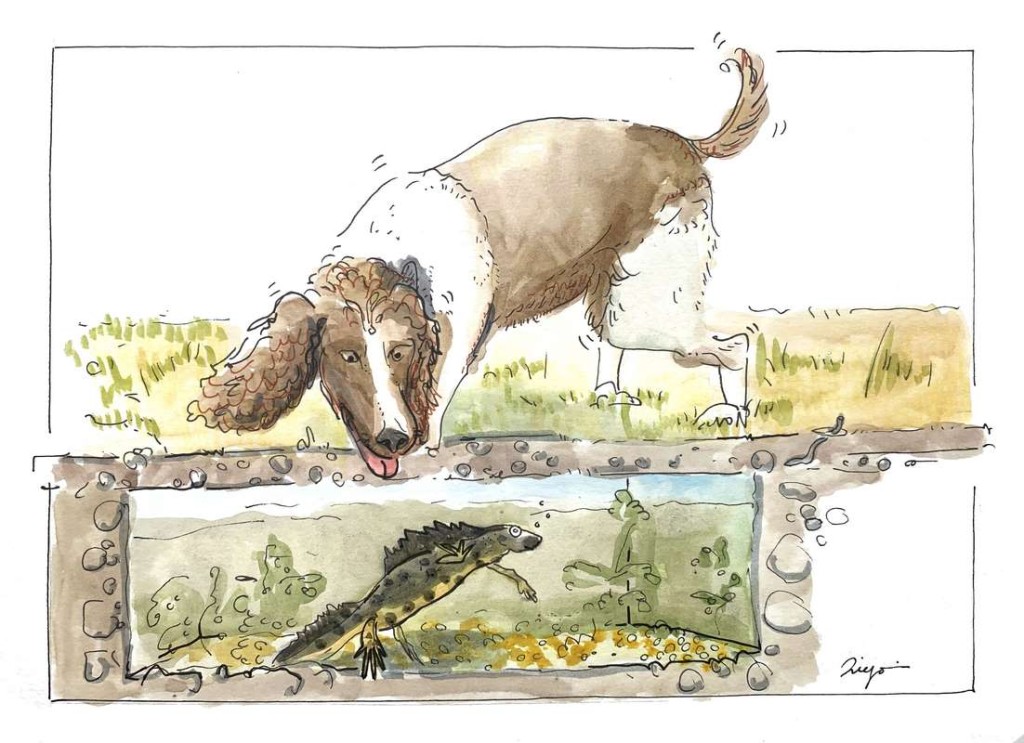
A super skilled sniffer dog called Freya is helping to track down highly-endangered great crested newts in an attempt to save the species.
The six-year-old English springer spaniel’s powerful nose can sniff out the semi-aquatic creatures even when they are hiding underground, say scientists who found that Freya was able to locate the newts 87% of the time.
The great crested newt is a species of special conservation concern across the UK as well as central and northern Europe.
While much is known about their life in the water, little is known about their behaviors on land, as they’re often underground and out of sight in mammal burrows or rocky crevices. By being so hidden, it’s difficult to gather data about them.
Great crested newts breed in ponds and spend the majority of their lives either in woodland, grassland, freshwater, wetlands, or farmlands.
They have black warty skin with a striking orange stomach and can be found across lowland England and Wales, but due to a loss of ponds across the years, the UK populations have fallen accordingly.
Freya was sent out to find how environmental factors specific to great crested newts might affect their detectability.
She was tested to see whether she could identify the newts at a range of distances and in different types of land, including sandy or clay soil either with or without vents, which are present in mammal-like burrows.
While she had two false positives during the first run-through, she had an 87% success rate overall.
She was also able to detect newts in both sandy and clay-vented and unvented soils with high accuracy.
Over 128 trials, published together in PLoS One, she showed an 88% success rate, with the 12% of false calls generally being false positives.
Freya and the newts – SWNS
Freya was significantly faster at detecting great crested newts in vented soil versus unvented soil, naturally because more scent-carrying air would be leaving the burrows.
Study author Nikki Glover believes other dogs would likely require significant training to achieve success rates as high as Freya, with accuracy also depending on the specifics of the detection site.
“This pioneering research shows how detection dogs can be a valuable addition to the current toolbox used to locate threatened amphibian species, particularly those using subterranean shelters,” said Ms. Glover, a research student at Salford University.
SHARE This Scientist Spaniel And Their Amazing Results At Newt Finding…
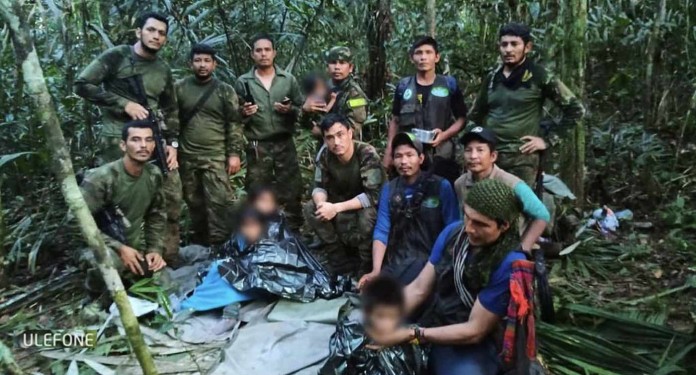
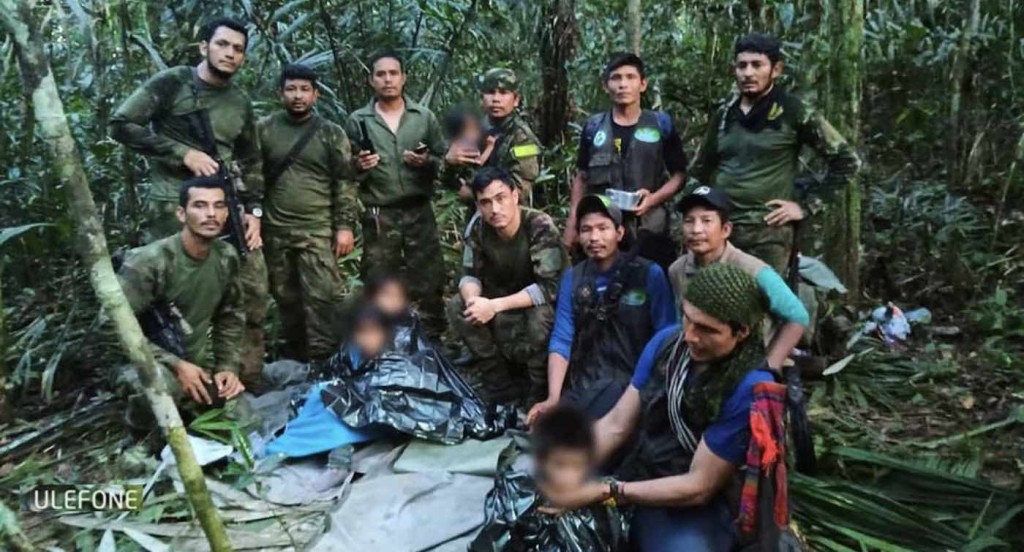
Four Colombian children from an indigenous community who survived a plane crash have been found alive after being lost five weeks in the jungle.
GNN reported two weeks ago about the plight of four Colombian children who miraculously survived a plane crash that killed all three adults on board.
At the time, rescuers were hot on their trail, and unconfirmed reports said they might have been found deep in the Guaviare province, but now the military rescue squad who had found cast-away items they were using to survive, finally managed to locate the youths and bring them home after a harrowing 5 weeks in the jungle.
Sounding like the beginning of a young adult novel series, the crash took place on May 1st on a route between the cities of Araracuara, in Amazonas province, and San Jose del Guaviare, a city in Guaviare province.
It took 2 weeks for Colombian military and rescue units to locate the crashed Cessna 206 light aircraft.
The units followed a trail of cast-away items, including a baby bottle, hair scrunchies, scissors, and plastic wrapping, to several areas where the children, aged 13, 9, and 4, along with a 12-month-old baby, sheltered and found food to eat.
Narcizo Mucutuy, the grandfather of the three girls and one boy, told reporters he was delighted at the news of their rescue.