All News - Page 340 of 1720 - Good News Network
Home Blog Page 340

The Humble Potato Could Hold the Key to Beating Hospital Superbugs as Well as Crop Diseases

EastWest Food Rescue group / Facebook

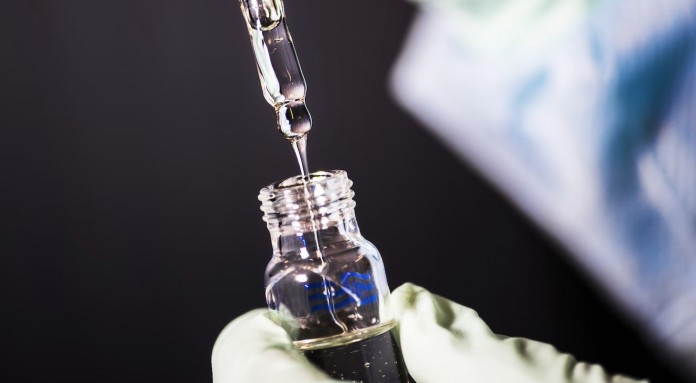
The humble potato, which contains a natural antibiotic that destroys harmful bacteria, could hold the key to beating hospital superbugs in the future, according to research from a multinational team of researchers in Europe.

The compound, called solanimycin, combats a host of fungi that wreak havoc on crops. In these recent experiments, it killed Candida albicans, which causes possibly-dangerous infections, like thrush in women.

Most current therapeutic antibiotic compounds originate from soil microbes—and the solanimycin findings show that plant-based microorganisms should get a closer look.

The research team see the discovery as an encouraging sign that plant pathogens could be coaxed to make compounds that may be used not only against plant fungi in crops that have developed resistance to treatments, but also against the growing threat of antimicrobial resistance in humans.

“We have to open to the exploration of everything that’s out there to find new antibiotics,” said Microbiologist Rita Monson, Ph.D., at the University of Cambridge who co-led the study.

This week in mBio, the team reported the discovery of solanimycin, initially isolated from a pathogenic bacterium that infects potatoes, that appears to be produced by a broad spectrum of related plant pathogenic bacteria.

RELATED: How the Healing Properties of Irish Soil Apparently Hold the Key to Fighting Superbug Health Threat

The pathogenic potato bacterium Dickeya solani, which produces solanimycin, was first identified more than 15 years ago—and researchers at Cambridge have been investigating its antibiotic potential for a decade.

“These strains emerged rapidly, and now they are widely distributed,” said the paper’s co-author, molecular microbiologist Miguel Matilla, Ph.D., at the Spanish Research Council’s Estación Experimental del Zaidín, in Granada.
.
Solanimycin isn’t the first antibiotic discovered from the microbe. In previous work, researchers found that D. solani produces an antibiotic called oocydin A, which is highly active against multiple fungal plant pathogens.

Those previous discoveries, together with the analysis of the genome of the bacterium, hinted that it might synthesize additional antibiotics, also with antifungal potential.

That hint paid off: Matilla, Monson, molecular microbiologist George Salmond found that when they silenced the genes responsible for the production of oocydin A, the bacterium continued to show antifungal activity.

POPULARFarmer Thrives by Growing Gluten-free Grain Needing No Water During Drought

That observation led to the identification of solanimycin and the identification of the gene clusters responsible for the proteins that make the compound.

The bacterium uses the compound sparingly, producing it in response to cell density. An acidic pH environment—as that present in a potato—also activates the solanimycin gene cluster. Monson said it almost looks like a clever protective mechanism.

“It’s an antifungal that we believe will work by killing fungal competitors, and the bacteria benefit so much from this,” said Monson. “But you don’t turn it on unless you’re in a potato.”

CHECK OUT: Cannabis-Fed Chickens May Cut Antibiotic Use on Thailand Farms

Monson said the researchers have begun collaborating with chemists to learn more about the molecular structure of solanimycin and better understand how it works.

She and Matilla hope for further testing of the compound using plant and animal models—and will focus near-term on trying to use this antibiotic antifungal for crop protection.

SHARE The Hope With Science Lovers on Social Media…

Researchers Found Ancient Village Remarkably-Preserved by Vesuvius Eruption, 2,000 Years Before Pompeii

Historic Pine of Naples overlooking Mt Vesuvius in 19th century, by Giorgio Sommer

2,000 years before Pompeii, an Early Bronze Age village was almost perfectly preserved— then hidden for centuries—after Mount Vesuvius erupted one autumn day.

Uncovered during the construction of a high-speed railway near Naples, Afragola offers a rare glimpse into life in the Campania region during harvest time.

Like Pompeii, Afragola was encased in many feet of ash, mud, and silt, which preserved the site so well that archaeologists could identify the season in which the disaster occurred from the remains of a food storage area.

Covering an area over 1.2 acres (5,000 square meters), the site also features well-preserved footprints of fleeing adults and children.

“The site is exceptional, because Afragola was buried by a gigantic eruption of Vesuvius and it tells us a lot about the people who lived there, and the local habitat,” said Dr. Tiziana Matarazzo of the University of Connecticut.

“In this case, by finding fruits and agricultural materials, we were able to identify the season of the eruption, which is usually impossible.”

The course of the eruption happened in various phases, starting with a massive explosion that sent debris away from the village, to the northeast.

This gave the villagers a chance to escape, which is why preserved footprints were discovered, and not bodies as at Pompeii, before the wind changed and ash and sea water blew over the village—mainly dispersed to the west and northwest up to a distance of about 15 miles (25km) from the volcano.

Vesuvius footprints from study by Dr. Tiziana Matarazzo of University of Connecticut / SWNS

“This last phase is also what completely buried the village. The thick layer of volcanic material replaced the molecules of the vegetal macro-remains and produced perfect casts in a material called cinerite.”

These conditions meant the materials were resistant to degradation, even after several millennia.

“Leaves that were in the woods nearby were also covered by mud and ash which was not super-hot, so we have beautiful imprints of the leaves,” added Dr. Matarazzo.

The village offers a rare glimpse at how people lived in Italy in the Early Bronze Age, according to the researchers, who published their most recent findings in the Journal of Archaeological Science.

“In Campania at this time, we have huts, but in Greece, they had palaces. These people probably lived in groups with maybe one or more persons as the head of the group.”

There was also one storage building in the village where all the grains and various agricultural goods and fruits were gathered from nearby woods to be stored and likely shared with the whole community.

Unlike the other huts in the village, the plant food warehouse caught fire, probably from a pyroclastic flow. It collapsed and carbonized the stored vegetables inside, which the villagers had amassed from the nearby woods, preserving the remains for thousands of years.

Imprints of leaves found at the base of trees and ripe fruit also point towards the harvest season.

Matarazzo said the Bronze Age Campanian Plain was home to a rich diversity of food sources, including a variety of grains and barley, hazelnuts, acorns, wild apples, dogwood, pomegranates, and cornelian cherry, all extraordinarily well-preserved in the aftermath of the volcanic eruption.

Author of a recent book about the remarkable preservation, Matarazzo says that future research will focus on animal bones found on site, including goats, pigs and fish, as well as footprints.

“The column of the Plinian eruption rose to basically the flight altitude of airplanes. It was unbelievable. This eruption was so extraordinary that it changed the climate for many years afterward.”

“The cover of ash was so deep that it left the site untouched for 4,000 years — no one even knew it was there. Now we get to learn about the people who lived there and tell their stories.”

SHARE The Fascinating Science of Ancient Disasters on Social Media…

Texas Trucker is Named ‘Highway Angel’ for Stopping to Rescue a Police Officer Pinned in Vehicle

Gary Wilburn – Truckload Carriers Association

Truck driver Gary Wilburn was named a Highway Angel for offering aid to an injured Arkansas state trooper who was pinned inside his vehicle after a serious crash.

The Truckload Carriers Association bestowed the honor and shared the ‘incredible story.’

On the afternoon of October 4, near Forrest City, Arkansas, Wilburn was driving very slowly in heavy traffic. He came across a crashed State Trooper’s vehicle on the side of the road. Every other motorist was passing the vehicle without stopping to look inside.

“I was in traffic for an hour before I saw the trooper,” said the trucker from San Antonio, Texas. “Some of the stuff I noticed was insane—no one’s calling the police, cars are driving by, and no one stopped to help him.”

Wilburn, who drives for Anderson Trucking, called 911 and reported what he found.

LOOK13 Truckers Use Their Vehicles to Prevent Suicide Attempt From Ending a Life

“He was banged up really bad,” Wilburn said. “Lower legs were broken, upper legs were broken and he was pinned in. His legs were crushed really bad.”

He then stayed with the trapped officer until emergency personnel arrived and he was airlifted to a local hospital.

Wilburn, who is still upset that no one had stopped, did not know what caused the accident, but says he is usually the man for the job.

“I’m that idiot that runs into burning buildings and pulls out pets. When I see something like that, I can’t keep going on about my day.”

Since the program’s inception in August 1997, nearly 1,300 professional truck drivers have been recognized as Highway Angels for exemplary kindness, courtesy, and courage displayed while on the job.

WATCH: Hero Trucker Ignores Own Safety to Save Utility Worker Stuck in a Bucket With Fire Blazing Below

There was no word on the officer’s condition. See more trucker heroes featured on GNN, here.

SALUTE One of America’s Hero Truckers By Sharing on Social Media…

Your Inspired Weekly Horoscope From Rob Brezsny: A ‘Free Will Astrology’

Our partner Rob Brezsny provides his weekly wisdom to enlighten our thinking and motivate our mood. Rob’s Free Will Astrology, is a syndicated weekly column appearing in over a hundred publications. He is also the author of Pronoia Is the Antidote for Paranoia: How All of Creation Is Conspiring To Shower You with Blessings. (A free preview of the book is available here.)

Here is your weekly horoscope…

FREE WILL ASTROLOGY – Week of October 15, 2022
Copyright by Rob Brezsny, FreeWillAstrology.com

LIBRA (Sept. 23-Oct. 22):
When he was young, Libran poet W. S. Merwin had a teacher who advised him, “Don’t lose your arrogance yet. You can do that when you’re older. Lose it too soon, and you may merely replace it with vanity.” I think that counsel is wise for you to meditate on right now. Here’s how I interpret it: Give honor and respect to your fine abilities. Salute and nurture your ripe talents. Talk to yourself realistically about the success you have accomplished. If you build up your appreciation for what is legitimately great about you, you won’t be tempted to resort to false pride or self-absorbed egotism.

SCORPIO (Oct. 23-Nov. 21):
In his absurdist play Waiting for Godot, Samuel Beckett offers us two characters, Vladimir and Estragon, who patiently wait for a white-bearded man named Godot. They’re convinced he will provide them with profound help, perhaps even salvation. Alas, although they wait and wait and wait, Godot never arrives. Near the end, when they have abandoned hope, Vladimir says to Estragon, “We are not saints, but we have kept our appointment.” My sense is that you Scorpios, like Vladimir and Estragon, may be close to giving up your own vigils. Please don’t! I believe your personal equivalent to Godot will ultimately appear. Summon more patience.

SAGITTARIUS (Nov. 22-Dec. 21):
Poet Charles Wright has testified, “I admire and revere and am awed by a good many writers. But Emily Dickinson is the only writer I’ve ever read who knows my name, whose work has influenced me at my heart’s core, whose music is the music of songs I’ve listened to and remembered in my very body.” In my astrological reckoning, now is an excellent time for you Sagittarians to identify artists and creators who provide you with similar exaltation. And if there are no Emily Dickinson-type influences in your life, find at least one! You need to be touched and transformed by sublime inspiration.

CAPRICORN (Dec. 22-Jan. 19):
I’ve read and studied poetry for many years, but only recently discovered Capricorn poet Lizette Woodworth Reese (1856–1935). How is it possible I missed her? Her contemporary, journalist H. L. Mencken, described her work as “one of the imperishable glories of American literature.” She received many other accolades while alive. But today, she is virtually unknown, and many of her books are out of print. In bringing her to your attention, I am announcing my prediction about you: Anything in your life that resembles Reese’s reputation will change in the next 12 months. If you have until now not gotten the recognition or gratitude you deserve, at least some of it will arrive.

AQUARIUS (Jan. 20-Feb. 18):
Author Sophia Dembling defines a friend as a person who consoles you when you’re feeling desperate and with whom you don’t feel alone. A friend is someone whose life is interesting to you and who is interested in your life. Maybe most importantly, a friend must not be boring. What’s your definition, Aquarius? Now is an excellent time to get clear about the qualities you want in a friend. It’s also a favorable phase to seek out vital new friendships as you de-emphasize mediocre and overly demanding alliances.

PISCES (Feb. 19-March 20):
Do you or do you not wish to capitalize on the boost that’s available? Are you or are you not going to claim and use the challenging gift that would complicate your life but also expedite your growth? Act soon, Pisces! If you don’t, the potential dispensation may disappear. This is an excellent chance to prove you’re not afraid of achieving more success and wielding more power. I hope you will summon the extra courage necessary to triumph over shyness and timidity. Please claim your rightful upgrade!

ARIES (March 21-April 19):
“Magic Realism Bot” is a Twitter account that generates ideas for new fairy tales. Since you will benefit from imagining your life as a fairy tale in the coming weeks, I’ll offer you a few possibilities. 1. You marry a rainbow. The two of you have children: a daughter who can sing like a river and a son who is as gleeful as the wind. 2. You make friends with a raven that gives you savvy financial advice. 3. You invent a new kind of dancing; it involves crying and laughing while making holy prayer gestures toward your favorite star. 4. An angel and a lake monster join forces to help you dream up fun new adventures. 5. You discover a field of enchanted dandelions. They have the power to generate algorithms that reveal secrets about where to find wonders and marvels.

TAURUS (April 20-May 20):
On February 1, 1976, singer Elvis Presley was partying with buddies at his home in Memphis, Tennessee. As the revelry grew, he got an impetuous longing for an 8,000-calorie sandwich made with French bread, peanut butter, blueberry preserves, and slabs of bacon. Since this delicacy was only available at a certain restaurant in Denver, Colorado, Elvis and his entourage spontaneously hopped onto his private jet and flew 900 miles to get there. In accordance with astrological omens, Taurus, I encourage you to summon an equally keen determination to obtain pleasurable treasures. Hopefully, though, they will be more important than a sandwich. The odds of you procuring necessary luxuries that heal and inspire are much higher than usual.

GEMINI (May 21-June 20):
Gemini writer Nikki Giovanni reminds us, “It cannot be a mistake to have cared. It cannot be an error to have tried. It cannot be incorrect to have loved.” In accordance with astrological omens, I ask you to embody Giovanni’s attitude. Shed any worries that your caring and trying and loving have been blunders. Celebrate them, be proud of them, and promise yourself that you will keep caring and trying and loving. The coming weeks will be an excellent time to renew your commitment to your highest goodness.

CANCER (June 21-July 22):
I’m not normal. I’m odd and iconoclastic. On the other hand, I don’t think my peculiarity makes me better than anyone. It’s just who I am. I love millions of people who aren’t as quirky as me, and I enjoy communicating with unweird people as much as I do with weirdos. Everything I just said is a preamble for my main message, Cancerian: The coming weeks will be prime time for you to give extra honor and credit to your personal eccentricities, even if they comprise a minor part of your personality.

LEO (July 23-Aug. 22):
Author Jennifer Huang testifies, “Poetry is what helps me remember that even in my fragments, I am whole.” What about you, Leo? What reminds you, even in your fragments, that you are whole? Now is an excellent time to identify the people, animals, and influences that help you generate a sense of unity and completeness. Once you’re clear about that, spend quality time doing what you can to nurture those healers. Maybe you can even help them feel more cohesion and harmony in themselves.

VIRGO (Aug. 23-Sept. 22):
How to be the best Virgo you can be during the coming weeks: 1. You must relish, not apologize for, your precise obsessions. 2. Be as nosy as you need to be to discover the core truths hidden beneath the surface. Risk asking almost too many questions in your subtle drive to know everything. 3. Help loved ones and allies shrink and heal their insecurities. 4. Generate beauty and truth through your skill at knowing what needs to be purged and shed. 5. Always have your Bullsh#t Detector with you. Use it liberally. 6. Keep in close touch with the conversations between your mind and body.

WANT MORE? Listen to Rob’s EXPANDED AUDIO HOROSCOPES, 4-5 minute meditations on the current state of your destiny — or subscribe to his unique daily text message service at: RealAstrology.com

(Zodiac images by Numerologysign.com, CC license)

SHARE The Wisdom With Friends Who Are Stars in Your Life on Social Media…

“Hope is a verb with its shirtsleeves rolled up.” – David Orr

Quote of the Day: “Hope is a verb with its shirtsleeves rolled up.” – David Orr

Image: Normal Rockwell painting, cropped

With a new inspirational quote every day, atop the perfect photo—collected and archived on our Quotes page—why not bookmark GNN.org for a daily uplift?

Good Gardening The Final Week: What We Learned After a Long Year, Plus Must-Have Gardening Tools

Welcome back to Good Gardening! In our Week 11 discussion, we wanted to know what the absolute must-have gardening tool is for our Good Gardeners. We got a lot of submissions. Here are some we liked…

Esther Colwell must have read my mind when, on the Sunday following Friday’s post, I began clearing the molding remains of my squash vines with my trusty “hori hori” a typical Japanese tool also called a “Leisure knife” (レジャーナイフrejā naifu) or “Sansai knife” (山菜ナイフsansai naifu). “Hori” is an onomatopoeia for a digging sound. In any case, Esther also uses one:

Andy’s Japanese hori hori.

It was given to me many years ago by my aunt Marian, who also loved to garden,” Esther wrote in. “It is great for tough weeds like dandelion roots, blackberries, and poison oak.”

Monica Richard’s “pick-axe hoe-thingy.”

Certified Permaculturalist Monica Richards wrote it to say the only thing she ever uses is her, “pick-axe hoe-thingy.”

On social media, we heard Emily Stover give two thumbs up for the “halo hoe” which is a precision deweeding tool that can be used from the comfort of a standing position, the same position from which GNN Founder Geri Weis-Corbley uses a mini-rake for clearing debris around the trunks of important plants.

“They who sing in the summer must dance in the winter,” – Italian Proverb.

Topic Week 12: End of season lessons learned

Question 1: What have you learned after a full season of gardening?

Question 2: What mistakes did you make that you will get right next year?

Question 3: Did you learn anything new from GNNs Good Gardening?

Tell Us Here in The Comments… or, send your questions, tips, and photos to [email protected]Join our Facebook Good Gardens thread every Friday on the GNN Facebook Page

Good gardening rules

  • Green thumbs can help novice greenhorns.
  • Share your gardening photos and resources.
  • Garden jargon encouraged!

INVITE Friends to our Gardening Discussion on Social Media–And Share Your Photos and Tips!

Meditation Could Protect Older People Against Alzheimer’s, According to New Research

Meditation could protect older people against Alzheimer’s, according to new research.

The practice of ancient religions and modern mindfulness heightens awareness and emotional health—faculties that decline with dementia like Alzheimer’s.

A strong point of the study was that the control group, meaning those who were used as a comparison to the meditators, were given another activity that has potential for fighting dementia—language learning.

In the study, French participants assigned to an 18 month meditation course did better than those given English lessons instead to keep their brains busy.

Author Dr. Gael Chetelat of the University of Caen-Normandy, said the meditation improved scores “reflecting attention regulation and socio-emotional capacities,” noting in particular that the attention regulation sub-score increased after meditation only.

“In the context of meditation practices, this capacity allows a heightened awareness and monitoring of the contents of experience without becoming absorbed by them,” said Dr. Chetelat. “Socio-emotional capacities decreased substantially after non-native language training, suggesting the difference observed may be due to maintenance of skills by meditation.”

The study included 137 men and women split into three groups. Meditation and English classes included two hour weekly sessions.

RELATED: Meditation and Music May Reverse Early Memory Loss in Adults

They also did home practice of at least 20 minutes a day. A control set carried on living their lives as normal, with no intervention.

The authors note that as meditation is becoming increasingly popular over recent years, it has helped people quit smoking, cope with cancer and even prevent skin condition psoriasis.

“Could meditation, a mental training approach toward attention and emotion regulation, preserve brain structure and function in cognitively unimpaired older adults?” said Dr. Chetelat.

SIMILAR: Meditation Training Reduces Long-Term Stress, Hair Analysis Shows

“Strategies to prevent dementia are urgently needed. Mental training that targets stress and attention regulation has the potential to improve both cognitive and emotional aspects of ageing.”

Staying ‘in the moment’ has been part of philosophical and contemplative practices for thousands of years. The hallmarks of many forms of mental illness is a preoccupation with one’s own thoughts, a condition meditation seems to affect.

“Mindfulness meditation can also reduce stress, anxiety and depression, including in older adults.”

MORE MEDITATION NEWS: Mindfulness Meditation Reduces Pain by Separating it From the Self

One draw back to the study was that the sample population was not representative of the global aging population, as it included very healthy individuals.

Mindfulness-based cognitive therapy, which combines meditation with orthodox ‘thought training’, is already recommended for depression in Britain and is available at the British NHS.

SHARE This Good Practice With Your Friends.

Look How Gently this Marmoset Handles a Giant Katydid in Incredible Video

Apple+ Tiny World

Apes are not the only primates that can shock us with their displays of human characteristics, one look at this video of a marmoset, gently handling a katydid is enough to immediately conjure a sense of comradery with the small monkey.

There’s a palpable sense of wonderment in the motions of the marmoset as it reaches out for a species of giant katydid, reminiscent of the day a child first learns how to reach out and capture a butterfly.

This incredible scene was featured in a brilliant documentary available on Apple+ aptly-called Tiny Worldand it’s narrated by Hollywood A-list funnyman, Paul Rudd.

Maromsets can be found all throughout South America. They belong to the family Callitrichidae, and while their favorite food is a particular carbohydrate-rich tree sap they also eat insects.

However there’s not the slightest inkling of aggression in the way, for example, this marmoset gently lifts the katydid’s back leg. It’s as it he wants a closer look.

“Marmosets are usually like, palm sized,” one Redditor comments. “Not all species, I’m pretty sure this one is. So that’s a pretty big ‘buggo.’ But it is called a giant katydid.”

WATCH the video and decide for yourself… 

BONUS VIDEO: Watch Tiny Hummingbirds Trustingly Perch On Human Hand To Sip Nectar (Note: GNN has no affiliation with any ads displayed)

The Wholesome Moment an Italian Boy is Politely Invited to Peer Inside His Dream Sports Car

“Attenzione!” calls an Italian father to his young boy, who was eagerly peering inside the coach of a jet black Lamborghini parked in a quaint Italian mountain town.

The father had seen the owner approaching, and he was surely feeling a little vergogno, an Italian word for a kind of embarrassment, as his son looked into the car uninvited.

The owner, proving politeness has a magic of its own, encouraged the boy to come inside the car and check it out and snagged a cell video of his reaction.

Che bella”—”how beautiful,” the boy can be heard saying. Finishing a quick look around at the fiery orange interior, the boy turns and says “I like your car!”

“So careful, so polite and so much wonder and amazement in his face. Truly adorable kid!” a Redditor commented.

Another said “I don’t know who is it more wholesome for: the excited kid, the dad being happy and thankful, or the guy being able to do such thing.”

WATCH the scene below…

SHARE This Touching Video With Your Friends…

Watch the Moment a Dog is Rescued by Volunteers After 26 Hours Down an Old Mine Shaft

Suka the terrier, rescued from an old mine - SWNS
Suka the terrier, rescued from an old mine – SWNS

A dog has been rescued by volunteers after spending over 26 hours down an old mining shaft.

Suka the terrier, went missing on Sunday while out for a walk with her owner Ben Weston near St Ives, Cornwall.

She wasn’t on a leash and ran off into the woods. When she never returned, her owners searched for her into the night and Monday morning.

Eventually, they came across an deep hole, and could hear their poor pup whimpering from inside.

An intense video filmed by Carbis Bay Crew, a volunteer group of cavers, divers, mine explorers and climbers, shows the extraordinary operation in action.

“The fire brigade turned up first and then we did five minutes later,” Sam Perkin’s, a member of Carbis Bay Crew who was present at the rescue. “They assessed the situation and couldn’t pick up any signs of life, so couldn’t commit to sending anyone down.”

“But as soon as they left, we could hear the dog yipping again—so I called up some other members to help get her out.”

The hold turned out to be an old mineshaft; so old that the timbers meant to support the opening had rotted away, leaving only the previously excavated dirt and granite which had been left behind to slowly compact in on itself to support the passage.

The footage also shows the moment the pup is reunited with her emotional owners. Suka is now reportedly safe and sound at home with her owners.

WATCH the video below…

SHARE This Terrierfying Experience With Your Dog Lovers On Social Media…

“We learn to keep going, because all the times we thought we couldn’t take one more step, we did.” – Shauna Niequist

Quote of the Day: “We learn to keep going, because all the times we thought we couldn’t take one more step, we did.” – Shauna Niequist

Photo by: Nazrin Babashova

With a new inspirational quote every day, atop the perfect photo—collected and archived on our Quotes page—why not bookmark GNN.org for a daily uplift?

A ‘Plant Dating’ Pop-up has Appeared in London to Help Brits Find Their Perfect ‘Plant-ner’

Mr. Plant Geek - SWNS
Mr. Plant Geek – SWNS

A ‘plant dating’ pop-up has appeared in London to help Brits find their perfect ‘plantner’.

The ‘Lonely Plants Club’ match-making service has been set up to marry the public with the perfect houseplants to suit their lifestyles and personalities.

It gives them the opportunity to get to know a new houseplant love interest before getting too involved and taking one home.

Taking place at the Lucky Club Mayfair, the event was created after a study found 78% of adults take their time researching their options before committing to a new ‘relationship’ with a houseplant.

It was set up by plant inspiration site, The Joy of Plants, with the help of TV’s Mr. Plant Geek, and attendees at the launch of the pop-up last night were given the opportunity to find their perfect plant match and take it home with them.

The research also found the typical adult has owned a single plant for as many as five years, with just 7% claiming they have managed the same length of time in a human relationship.

While 79% browse Google for plant-spiration, with 16% turning to Instagram when looking for ideas.

And 21% admitted to being green with envy at anyone who has a thriving houseplant collection.

“Finding a new plant love isn’t all that different to finding a new partner,” said a spokesman, from TheJoyofPlants.co.uk “It takes a lot of research, some trial and error and a sprinkle of chemistry to find ‘the one’.”

“So, we’ve set up this plant dating pop up to help match plant singletons with their leafy love matches.”

SIMILAR: 3 Easy Houseplants Can Instantly Reduce Air Pollutant by Up to 20%

The study also found the average person boasts six potted pals in their home. Two groups of exactly the same amount of people (60%) reckoned respectively that they’re good at taking care of these botanical beauties, and that they had let a plant die by not taking good enough care of it.

When deciding which plants to commit to, the top three statistics adults look for include how much water they need, what type of light suits them and where they might fit in within their home’s current aesthetic.

And 9% believe houseplants and flowers make a good companion in their life, with 34% considering plants a great topic of conversation for a first date, God love them.

SIMILAR: Quiz Finds Which Plants Match Your Personality and Helps You Choose Perfect Potted Pal for Your Home

It also emerged that 83% would go as far to say they’d be impressed if someone had an extensive knowledge of plants.

The poll of 2,000 plant enthusiasts, carried out via OnePoll, found six in 10 have taken a keen interest because it’s a great way of bringing nature inside your home.

51% enjoy watching their beloved plants thrive and grow.

“Houseplants are a great way to experience the mood-boosting feelings you get from caring for someone—or something—else and watching them thrive and grow as a result of the time, care and attention you put into them,” said the UK’s Mr. Plant Geek, horticulturalist, TV presenter and host of the event.

SHARE This Opportunity to Plant Some Roots For The Long Term…

Black Hole Spews Out Material Years After Shredding a Star: ‘We’ve Never Seen Anything Like This’

Illustration of a black hole consuming a star (Credit: DESY, Science Communication Lab)

In October 2018, a small star was ripped to shreds when it wandered too close to a black hole in a galaxy located 665 million light years away from Earth.

Though it may sound thrilling, the event did not come as a surprise to astronomers who occasionally witness these violent incidents while scanning the night sky.

But nearly three years after the event the same black hole is lighting up the sky, and scientists believe that they’re witnessing the outflow of that star’s remnants years after it would normally happen, prompting a whirlwind of questions.

“This caught us completely by surprise—no one has ever seen anything like this before,” says Yvette Cendes, a research associate at the Center for Astrophysics at Harvard and lead author of a new study analyzing the phenomenon.

The team concludes that the black hole is now ejecting material traveling at half of the speed of light, but are unsure why the outflow was delayed by several years. The results, described this week in the Astrophysical Journal, may help scientists better understand black holes’ feeding behavior, which Cendes likens to “burping” after a meal.

The team spotted the unusual outburst while revisiting tidal disruption events (TDEs)—when encroaching stars are pulverized by black holes—that occurred over the last several years.

SIMILAR: This is What it Looks Like When a Black Hole Snacks on a Star

Radio data from the Very Large Array (VLA) in New Mexico showed that the black hole had mysteriously reanimated in June 2021. Cendes and the team rushed to examine the event more closely.

The team collected observations of the TDE, dubbed AT2018hyz, in multiple wavelengths of light using the VLA, the ALMA Observatory in Chile, MeerKAT in South Africa, the Australian Telescope Compact Array in Australia, and the Chandra X-Ray Observatory and the Neil Gehrels Swift Observatory in space.

Radio observations of the TDE proved the most striking.

“We have been studying TDEs with radio telescopes for more than a decade, and we sometimes find they shine in radio waves as they spew out material while the star is first being consumed by the black hole,” says Edo Berger, also at Harvard University and co-author on the new study.

MORE ON BLACK HOLES: Hawking’s 50-Year Mystery About Falling into Black Holes Has Finally Been Solved

“But in AT2018hyz there was radio silence for the first three years, and now it’s dramatically lit up to become one of the most radio luminous TDEs ever observed.”

TDEs are well-known for emitting light when they occur. As a star nears a black hole, gravitational forces begin to stretch, or spaghettify, the star. Eventually, the elongated material spirals around the black hole and heats up, creating a flash that astronomers can spot from millions of light years away.

RELATED: Astronomers Capture Black Hole Eruption Spanning 16 Times the Full Moon in the Sky

Some spaghettified material occasionally gets flung out back into space. But the emission, known as an outflow, normally develops quickly after a TDE occurs, not years later.

Taking the conversation to Reddit, the astronomers were asked if the phenomenon was like how in a food processor, there’s a ring of material always just outside the reach of the blades.

“Basically yea,” Cendes replied. “This material was in an accretion disc surrounding the black hole after [the star] was unbound. In 20% of cases you then see a radio outflow at the part where it’s torn apart.”

The outflow of material is traveling as fast as 50% the speed of light. For comparison, most TDEs have an outflow that travels at 10% the speed of light, Cendes says.

“This is the first time that we have witnessed such a long delay between the feeding and the outflow,” Berger says. “The next step is to explore whether this actually happens more regularly and we have simply not been looking at TDEs late enough in their evolution.”

SHARE This Fun Fact With Your Space-Loving Friends… 

Flying Taxi Takes Off for the First Time in Public Display From XPeng Motors – VIDEO

XPeng - released.
XPeng – released.

150 people, smartphones out, watched an electric flying car perform a successful test down at Dubai’s skydiving range. There they caught a glimpse of what the not too distant future will bring.

A gaggle of flying taxi companies around the world all seem to be on the verge of populating the skies with different versions of “eVTOL” vehicles, or “electric vertical take-off and landing.”

XPeng Motors’ X2 flying taxi is a teardrop-shaped two-seater EVTOL that can cruise at around 1,000 meters in elevation at 81 miles per hour. The battery currently can store electricity for a 35 minute flight, enough for a CEO’s quick carbon-free jaunt across a skyline.

The test was unmanned, and done by automated control.

“XPeng’s X2’s public display in Dubai represents a significant milestone for XPeng AeroHT and the international achievement of flying cars,” said Brian Gu, Vice Chairman and President of XPeng.

XPeng – released

“Dubai is a world-renowned ‘City of Innovation,’ which is the reason we decided to hold the X2 first public flight event here. Today’s flight is a major step in XPeng exploration of future mobility.”

RELATED: United Airlines Pre-Orders 200 Flying Taxis With Vertical Takeoff for 4 Passengers

Bloomberg reporting on the test noted that XPeng is in competition with other companies like TCab Tech and AutoFlight for pole position as Asia’s urban air mobility’s leader, a market expected to reach $1 trillion over the next 20 years.

“The flying car is the epitome of ambition, innovation and future-oriented vision that has always inspired Dubai,” said Dubai Chamber of Commerce President and CEO Hassan Al Hashemi.

WATCH the test below…

SHARE The News With Your Friends On Social Media…

Lettuce is Grown Right Inside the Supermarket to Sell Without Packaging—a Hydroponic Garden in a Fridge

Down in Cairo, a supermarket is taking its produce aisle to a new level of freshness.

A hydroponic fridge grows different kinds of lettuce right there in the store, ensuring that no one has to complain about freshness or travel distance.

A hydroponic system is a way of growing certain plants in humid tubes without soil, supplemented with liquid fertilizer and nutrients. The system uses 90% less water than soil gardening, and is perfect for fast growing greens.

Schaduf, the company, hopes to expand the technology to other stores to help reduce the carbon footprint of the travel associated with fresh fruit and veg.

Hydroponic farms are becoming more and more common in built-up areas, creating indoor vertical farms stored in warehouses, or rooftop gardens even in large cities like Montreal.

WATCH on Twitter…
SHARE These Green Greens With Your Friends…

“Today is going to be a good day. I am enough just as I am. I will figure this out. Every day, I’m getting a little stronger.” – Mel Robbins

Quote of the Day: “Today is going to be a good day. I am enough just as I am. I will figure this out. Every day, I’m getting a little stronger.” – Mel Robbins

Photo by: Bailey Zindel

With a new inspirational quote every day, atop the perfect photo—collected and archived on our Quotes page—why not bookmark GNN.org for a daily uplift?

How a Tiny Injured Kitten Kickstarted an Entire Sustainability Initiative to Eliminate Plastic

Itty Bitty Kitty City

It’s so easy to pantomime corporations as mass polluters of the environment, but they’re run by humans, who reacted exactly as anyone else would when they saw a picture of Munchkin the orange Tabby.

The stray kitten was taken in by rescuers after it was found with a plastic packaging ring from a Munchkin “Any Angle Cup” stuck around his neck. It had begun to grow into the kitten’s skin.

The impact of this single photo brought about a corporate revolution that will reduce plastic use by 643,630 pounds annually.

Alerted to the kitten’s plight, Munchkin, who manufacture baby products, contacted the rescue group, Itty Bitty Kitty City, and paid for Munchkin the kitten to receive topnotch medical care, and donated $2,500 to the organization.

“It was soul crushing to read Laura’s [the rescuer] note and look at the photos of that sweet kitten, both personally because I’m a passionate advocate for animals and a pet parent myself of two cats, and professionally,” Diana Barnes, Chief Brand Officer and Creative Director at Munchkin

“We’ve all seen marine life and animals that are entangled in plastic, but no executive ever wants to imagine their brand is the source of this suffering. Laura asked us for nothing, she simply wanted awareness, she was asking us to do better.”

If the story ended there, it would be enough to tighten your throat, but it gets better, way, way better.

Barnes described cups as the “holy grail” of Munchkin’s product line. However they had just finished a total reconfiguration and branding of all 500 varieties of packaging. But the image of little Munchkin the kitten with the plastic hurting him was too much, and so Barnes and her team went right back at it.

After a year of research and development and over 250 packaging transit tests, Munchkin developed animal-safe packaging for 478 Munchkin cup SKUs.

The new design is free of plastic and utilizes e-flute corrugated linerboard made of 60-70% recycled content. Should another animal find itself in a similar situation as Munchkin the Cat, the packaging will easily break apart.

Munchkin the Cat, all grown up – courtesy of Munchkin

During the redesign process, Munchkin (the company) incorporated QR codes on the cup packaging, directing consumers to digital instructional manuals. This allowed the brand to remove the paper manuals, resulting in 37,278 lbs. of paper saved annually. If all Munchkin’s cup instruction manuals were placed end-to-end, they would have spanned the length of California 1.5 times.

The new packaging – courtesy of Munchkin.

The volunteers at Itty Bitty Kitty City were stunned and “overwhelmed” to watch this large nationwide corporation go through this massive financial expenditure simply in order to protect animals and the environment, but maybe we shouldn’t be surprised that a pair of wounded kitten eyes have that power of persuasion.

WATCH the video the put together by the company in the aftermath…

SHARE This Inspiring ‘Tail’ Of Corporate Responsibility…

Heartbroken Pet Owner Gets Tattoo of Beloved Pooch Who Died – Using Ink Mixed with His Ashes

- credit SWNS.
– credit SWNS.

A devoted dog owner was so heartbroken when her beloved bull terrier passed away that she got his ashes inked permanently into her skin, so that he’s ‘always with her.’

Robyn Moscrop rescued her bull terrier Bronson back in 2019 who she “spoilt rotten” and “treated like a baby.”

The 27-year-old was devastated when her pampered pet suddenly died last July from unknown causes when he was only around the age of three.

To commemorate her very special dog, her boyfriend who conveniently worked as a tattooist, immortalized her favorite portrait of him with his ashes mixed into the ink.

Robyn said the tattoo provided her with a sense of closure given it means Bronson’s “always with his mum” and will never be forgotten.

“It’s not something I could lose or misplace, it’s always there,” she said. “Seeing it when it was done was really emotional, I did have a cry.”

RELATED: Kentucky Tattoo Parlor is Creatively Covering Up Hate Tattoos For Free

“It sounds silly really, but sometimes when we’re at places and say I’m just wearing a t-shirt, I just think ‘oh, he’s here with me and seeing all this too.”

It was the cremationist who, after saying she would make a clay pawprint, mentioned she heard some pet owners using ashes in tattoos before. Ashes can be used to make all kinds of things, since they are a high quality form of carbon. GNN has reported that certain companies will press ashes into memorial stones, and some will even make vinyl records with them.

“I’d never heard of that before,” Robyn admitted. “I told my boyfriend and he said ‘yeah, I’ve heard artists have done it,'” adding that he would love to do it for her.

Robyn grew up with bull terriers and loves the breed so much that when she wanted her own pet, she decided to rescue Bronson. Not much was known about his history other than he was a stray, deaf and was around one when he was rescued.

SIMILAR: Company Turns Your Loved One’s Ashes into Elegant Stones

“He was a crazy dog. He made such an impression on everyone because he had such a personality,” she remembers. “He just kept me really busy and I’d see other people with their really well-behaved dogs and I’d be thinking ‘oh my god, why can my dog not be like that?'”

“But I still absolutely loved him, he was spoilt rotten. He had his own social calendar. He’d go on playdates where we’d hire fields out and let 20 bull terriers off the lead for them all to play. He honestly had such an incredible life.”

SHARE This Touching Story With Your Fellow Dog-Moms… 

This Ancient AC System will Cool your House Without Electricity

The Nave - released by Yael Issacharov.
The Nave – released by Yael Issacharov.

A designer has adapted ancient methods of A/C into a modern, stylish wall ornament that powerfully regulates indoor temperatures without a watt of electricity.

The Nave is a large terracotta radiator filled with cold water, inspired by the Jarrah of ancient Palestine. Pores in the terracotta release tiny amounts of water which evaporate and cool down the interior of the Nave, cooling the wall radiatively, and thus the room.

Humans have been baking in the heat of the deserts and the tropics for millennia, and long before the invention of air conditioning, engineers and architects had methods for cooling down built into their homes.

Yael Issacharov, industrial designer at the Holon Institute of Technology, says the Nave performs best in desert climates where the dry air will gestate evaporation at a faster rate. The invention won her the gold at the IDA Design Awards, and bronze at the A’Design Awards.

She says its price would be more expensive than a regular A/C unit, but along with recouping the cost through energy savings, the Nave is actually quite beautiful to look at, and frees up the use of the window.

The Jarrah of Palestine was actually used to store drinking water, as the evaporation process helped keep the water cool, as well the room it was stored in.

Other desert cultures like the ancient Persians used wind-catching towers mounted on their buildings to channel desert breezes down into the living areas of the house.

Jaali from Mughal India is another passive-cooling system built into the cultural architecture, and can be found on buildings like the Taj Mahal. A perforated slab of intricately carved marble or sandstone takes advantage of a natural law of thermodynamics that means air must speed up as it passes through small spaces.

RELATED: Architecture Built 1,000 Years Ago to Catch Rain is Being Revived to Save India’s Parched Villages

Air coming into a room through a jaali cools down as it sweeps through the small hexagonal holes, which double as humidifiers at night as the humid night air deposits moisture around the holes when it enters.

SIMILAR: Ancient Cultures May Hold the Key To Keeping Buildings Cool in a Changing Climate

Like the jaali and the windcatchers, the Nave can keep a space at a comfortable 77°F in the desert heat.

At the moment, no one has expressed commercial interest in the Nave, but Fast Company reports that Issacharov is certainly open to offers as she expands the design to be able to fit with more installation and construction methods.

SHARE This Cool Invention With Your Friends… 

Boy Told He was No Good is Now Captain of England’s Team and Makes Viral Video to Change Attitudes–WATCH

Harry Kane has become the most prolific goal-scoring Englishman in modern history, and he’s channeling this star power to help England break its stigma with mental health.

He’s launched the Harry Kane Foundation to use his influence to help fund critical mental health work by coaching the power of positive thinking and resiliency, especially among youth.

No one understands stress, pressure, and anxiety like English National Football Team players, who under the spotlight of the English sports media endure the harshest scrutiny of perhaps all national team football.

Before Kane became the first name on the starting lineup for London team Tottenham Hotspur, he spent four consecutive years loaned out to different teams in lower divisions. Sometimes whole seasons would go by without him ever getting a sustained period of football.

He kept his chin up and eventually made it into the Tottenham lineup during the 2014-2015 season, when he won Young Player of the Year.

READ MORE: Englishman Creates a Mental Health Walking Group Just for ‘Lads’ Like Him

Drawing on that experience, Kane is now using his celebrity profile to fund and popularize volunteer-supported mental health groups like The Mix, and Mind, that specialize in helping young adults deal with stress; particularly through anonymous helplines offering free counseling with embarrassing problems and “please-don’t-make-me-say-it-out-loud thoughts” that we all have.

Kane’s collaboration with the Premier League’s Charitable Trust has created resilience and positive mindset lesson plans for more 18,000 schools across Britain, that feature Harry talking about the power of positive thinking.

He’s teamed up with some smashing animators to produce the film below to narrate his story thus far, and the journey on which he is soon to embark.

WATCH Harry Kane’s Story…

SHARE This Positivity With Your Football-Inclined Friends…