














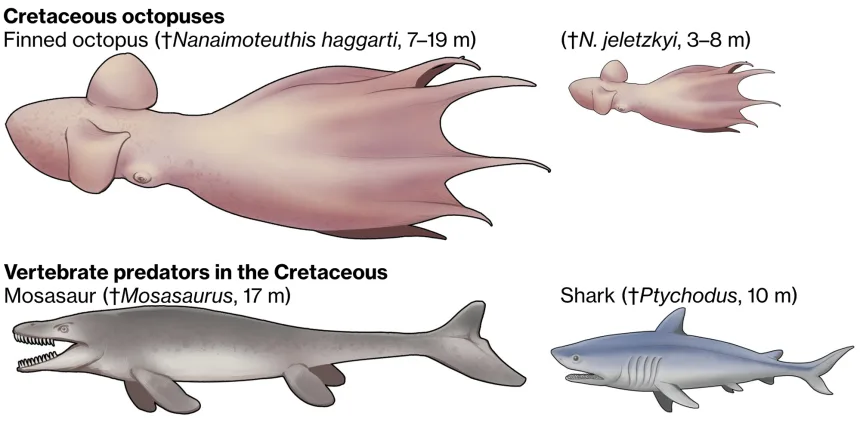
The kraken: a giant squid or octopus of myth, seems to have swam in the Cretaceous oceans, a Japanese study shows.
Recovering a selection of truly revolutionary fossils from sediments in Japan and Vancouver Island, the researchers present a prehistoric octopus that could grow as long as 60 feet, and use its powerful jaws to grind bones.
Fossil evidence of cephalopods like octopuses is extremely difficult to gather because their soft bodies deteriorate quickly, having just 1 single bone that can remain to be fossilized.
Using a technique they termed “digital fossil mining,” researchers at the University of Hokkaido applied high-resolution grinding tomography to look within sedimentary rock samples from the Cretaceous period before subjecting the images to an artificial intelligence model that could exquisitely map the fossils they contained.
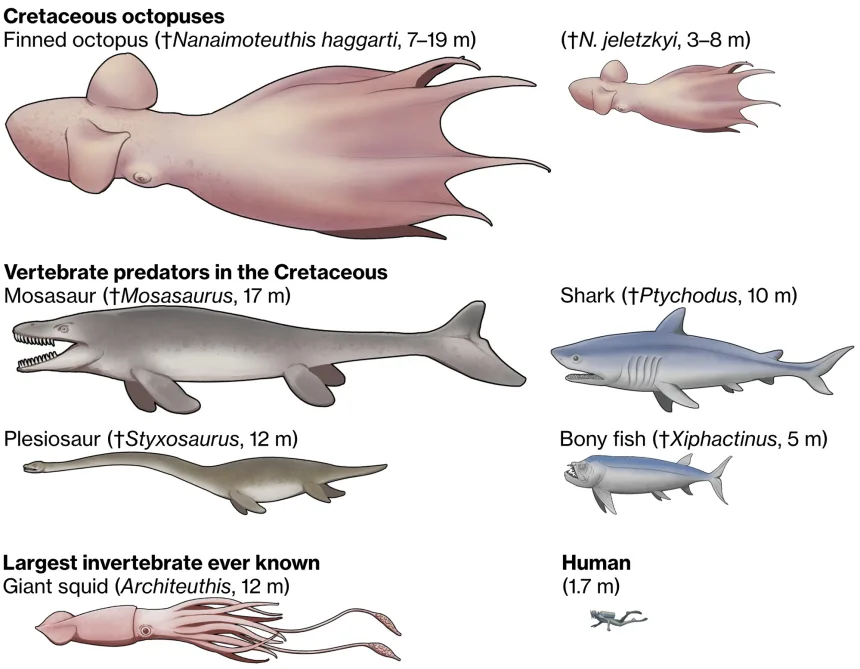
Those fossils were the beak and lower jaw of a creature called Nanaimoteuthis, the largest species of which Nanaimoteuthis haggarti, grew to sizes between 23 and 62 feet in length. These truly colossal invertebrates used their beaks to grind up shells and bones as evidenced by the substantial amount of wear on the largest fossil the team found, which correlated with a 62-foot body length and would have placed it beyond any of the formidable marine reptiles like mosasaurs and plesiosaurs that shared the ocean with it.
“Within this ecosystem, Nanaimoteuthis likely used its large body and long arms to capture prey, and its powerful jaws to process hard food,” study coauthor Yasuhiro Iba, an associate professor of Earth and planetary sciences at Japan’s Hokkaido University, told CNN. “Like modern octopuses, it may have relied on intelligence to find, capture and consume its prey.”
The giant squid of our oceans today, stretching 30 feet in length and bearing 3 inch jaws, is the largest invertebrate living or extinct that’s known to science. N. Haggarti wielded jaws around 150% larger, and could be 23 feet longer. Its discovery also places it as the oldest Cirrata, or finned octopus. The fins itself would be as wide as an average man is tall.
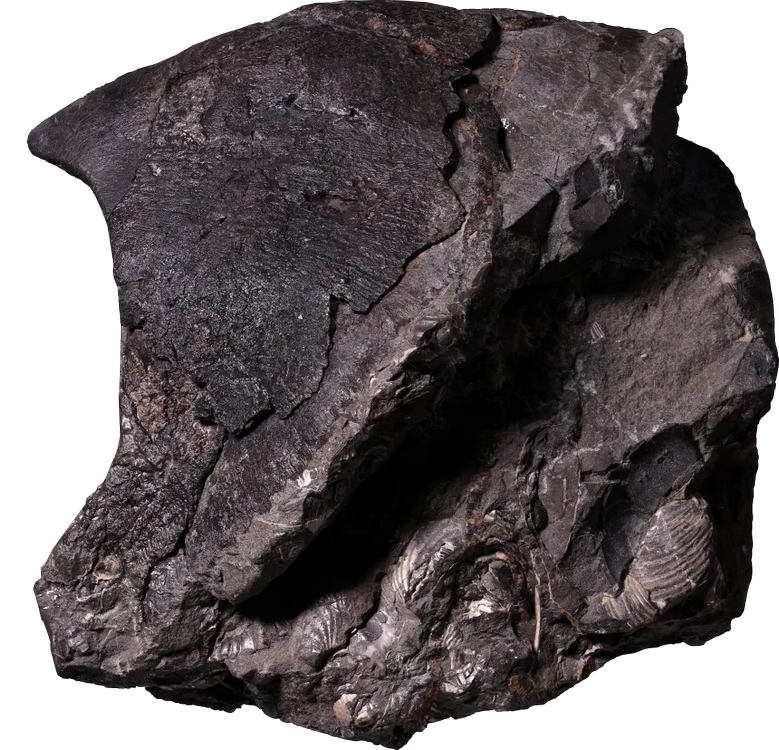
In their study, the authors hypothesize that the animal, like modern octopuses, was intelligent, as evidenced by asymmetric wear on its beak, though some scientists who weren’t involved with the study said to CNN that this claim requires more evidence.
COLOSSAL NEWS: Colossal Squid Filmed in Deep-Sea Natural Habitat for the First Time
For their part, the authors state that the asymmetric wear reflects brain lateralization, or the division of the brain into hemispheres with unique specializations that manifest in the dominant application of one side of the body for various tasks. In the case of this Kraken of the Cretaceous, it’s grinding down the bones or shells of its prey, which it preferred to do on one side of its jaw.
Whatever the case, the largest jaw, which would have been attached to a 60-foot-long animal, had lost 10% of its total chitinous mass from wear, suggesting an extremely active hunting behavior.
OTHER REVOLUTIONARY FOSSILS: A Burrowing Dinosaur? More Evidence from Utah Suggests that Some Dinos Were Happier Underground
It was clearly a top predator: how couldn’t it be? The question next will be what was its relationship with the mosasaur: the top marine vertebrate predator. Was it an uneasy stalemate, or could one prey on the other?
While the kraken certainly had the body size to compete with the mosasaur, viewing it as prey is a different question. Would it have benefited or even been able to have consumed such large animals, which could grow themselves to beyond 30 feet in length?
SHARE This Staggering Discovery That Puts The Octopus At The Top Of A Food Chain…