











All News - Page 467 of 1734 - Good News Network
Home Blog Page 467

This Week’s Inspiring Horoscopes From Rob Brezsny’s ‘Free Will Astrology’

Our partner Rob Brezsny provides his weekly wisdom to enlighten our thinking and motivate our mood. Rob’s Free Will Astrology, is a syndicated weekly column appearing in over a hundred publications. He is also the author of Pronoia Is the Antidote for Paranoia: How All of Creation Is Conspiring To Shower You with Blessings. (A free preview of the book is available here.)

Here is your weekly horoscope…

FREE WILL ASTROLOGY – Week beginning July 30, 2021
Copyright by Rob Brezsny, FreeWillAstrology.com

LEO (July 23-Aug. 22):
Leo poet Renée Ashley articulates a perspective I recommend you adopt. She writes, “I’m drawn to what flutters nebulously at the edges, at the corner of my eye—just outside my certain sight. I want to share in what I am routinely denied, or only suspect exists. I long for a glimpse of what is beginning to occur.” With her thoughts as inspiration, I advise you to be hungry for what you don’t know and haven’t perceived. Expand your curiosity so that it becomes wildly insatiable in its quest to uncover budding questions and raw truths at the peripheries of your awareness.

VIRGO (Aug. 23-Sept. 22):
There are many things in your heart you can never tell to another person,” declared Virgo actor Greta Garbo (1905–1990). “It is not right that you should tell them,” she concluded. “You cheapen yourself, the inside of yourself, when you tell them.” I presume Greta was being melodramatic. My attitude is the opposite of hers. If you find allies who listen well and who respect your vulnerability, you should relish telling them the secrets of your heart. To do so enriches you, deepens you, and adds soulful new meanings to your primary mysteries. The coming weeks will be a favorable time to seek this wise pleasure in abundance.

LIBRA (Sept. 23-Oct. 22):
Now is a fantastic time to seek out effervescent socializing and convivial gatherings and festive celebrations. If you surround yourself with lively people, you’ll absorb the exact influences you need. May I suggest you host a fun event? If you do, you could send out invitations that include the following allures: “At my get-together, the featured flavors will be strawberry chocolate and impossibly delicious. There’ll be magic vibrations and mysterious mood-enhancers. Liberating conversations will be strongly encouraged. Unpredictable revelations will be honored. If possible, please unload your fears and anxieties in a random parking lot before arriving.”

SCORPIO (Oct. 23-Nov. 21):
Scorpio author Andrew Sean Greer writes, “As the Japanese will tell you, one can train a rose to grow through anything, to grow through a nautilus even, but it must be done with tenderness.” I think that’s a vivid metaphor for one of your chief tasks in the coming weeks, Scorpio: how to carefully nurture delicate, beautiful things as you coax them to ripen in ways that will bring out their sturdiness and resilience. I believe you now have an extra capacity for wielding love to help things bloom.

SAGITTARIUS (Nov. 22-Dec. 21):
Suggested experiments to try soon: 1. Remember a past moment when you were touched with the sudden realization that you and a person you’d recently met were destined to fall in love. 2. Remember a past moment when you kissed someone for the first time. 3. Remember a past moment when someone told you they loved you for the first time or when you told someone you loved them for the first time. 4. Allow the feelings from the first three experiments to permeate your life for five days. See through the eyes of the person you were during those previous breakthroughs. Treat the whole world as expansively and expectantly as you did during those times.

CAPRICORN (Dec. 22-Jan. 19):
Capricorn poet Kenneth Rexroth was shirtless as he strolled along a rural road. To his delightful amazement, a fritillary butterfly landed on his shoulder, fluttered away, landed again, fluttered away—performed this dance numerous times. Nothing like this had ever happened to him. Later he wrote, “I feel my flesh / Has suddenly become sweet / With a metamorphosis / Kept secret even from myself.” In the coming days, I’m expecting at least one comparable experience for you. Here’s your homework: What sweet metamorphoses may be underway within you—perhaps not yet having reached your conscious awareness?

AQUARIUS (Jan. 20-Feb. 18):
“Each time we don’t say what we want to say, we’re dying.” Aquarian artist and singer Yoko Ono said that. I will add a further nuance: Each time we’re not aware of the feeling or experience or situation we want, we’re dying. And these will be key themes now that you’ve entered the “I KNOW WHAT I WANT AND I KNOW HOW TO ASK FOR IT” phase of your cycle. The most healing and vivifying thing you can do during the next six weeks is to be precise about your desires.

PISCES (Feb. 19-March 20):
In 1829, Piscean author Victor Hugo began work on his novel, The Hunchback of Notre Dame. He had other projects, though, and by September 1830, he had made scant progress on Hunchback. Growing impatient, his publisher demanded that he finish the manuscript by February 1831. In response, Hugo virtually barricaded himself in his room to compel himself to meet the deadline. He even locked his clothes in a closet to prevent himself from going out. For the next five months, he wore only a gray shawl as he toiled nonstop. His stratagem worked! I recommend you consider trying a somewhat less rigorous trick to enforce your self-discipline in the coming weeks. There’s no need to barricade yourself in your fortress. But I hope you will have fun taking stringent measures.

ARIES (March 21-April 19):
What does it mean to *feel real*? Some people have a hard time doing that. They have such false ideas about who they are that they rarely feel real. Others are so distracted by trivial longings that they never have the luxury of settling into the exquisite at-home-ness of feeling real. For those fortunate enough to regularly experience this treasured blessing, feeling real isn’t a vague concept. It’s a vivid sensation of being conscious in one’s body. When we feel real, we respond spontaneously, enjoy playing, and exult in the privilege of being alive. After studying your astrological potentials, Aries, I suspect that you now have an enhanced capacity to feel real.

TAURUS (April 20-May 20):
When she was a child, author Valerie Andrews visited her secret sanctuary at sunset every day for seven years. She lay on the ground among birch trees and aromatic privet plants, feeling “the steady rhythmic heartbeat of the earth” as she basked in the fading light. I’d love for you to enjoy the revitalizing power of such a shrine. The decisions you have to make will become clear as you commune with what Andrews calls “a rootlike umbilicus to the dark core of the land.” Do you know of such a place? If not, I suggest you find or create one.

GEMINI (May 21-June 20):
I suspect that your immediate future will be a patchwork of evocative fragments. You may be both annoyed and entertained by a series of flashing attractions, or an array of pretty baubles, or a hubbub of tasks that all seem at least mildly worth doing. Chances are good that they will ultimately knit together into a crazy-quilt unity; they will weave into a pattern that makes unexpected sense. In the spirit of the spicy variety, I offer three quotes that may not seem useful to you yet, but will soon. 1. “Isn’t it possible that to desire a thing, to truly desire it, is a form of having it?” – Galway Kinnell 2. “It is not half so important to know as to feel.” — Rachel Carson 3. “Like all explorers, we are drawn to discover what’s out there without knowing yet if we have the courage to face it.” — Pema Chödrön

CANCER (June 21-July 22):
A Tumblr blogger named Cece writes, “The fact that you can soak bread in sugar, eggs, cinnamon, and vanilla, then butter a pan and fry said bread to make a meal is really liberating.” I agree. And I share this with you in the hope of encouraging you to indulge in other commonplace actions that will make you feel spacious and uninhibited. You’re in a phase of your astrological cycle when you’ll thrive on doing day-to-day details that excite your lust for life. Enjoying the little things to the utmost will be an excellent strategy for success.

WANT MORE? Listen to Rob’s EXPANDED AUDIO HOROSCOPES, 4-5 minute meditations on the current state of your destiny — or subscribe to his unique daily text message service at: RealAstrology.com

(Zodiac images by Numerologysign.com, CC license)

SHARE The Wisdom With Friends Who Are Stars in Your Life on Social Media…

Instead of Issuing Tickets For Broken Headlights, Denver Police Are Handing Out Gift Cards to Get Them Fixed

A new partnership with police in Colorado is putting smiles on the faces of motorists who might not have the money to fix a broken part on their vehicle.

An Advance Auto Parts store has gifted the Denver Police Department with 100 gift cards worth $25 each to hand out to drivers who are normally pulled over by cops and given a warning or ticket to pay a fine.

“Now, when they pull over a motorist for, say, a bad headlight or a defective taillight, they’ll have the option to give a $25 gift card to help the motorist get it fixed–and get them back on the road and stay safe,” a representative of Advance Auto Parts explained.

Denver Police Chief Paul Pazen says officers have already issued the cards, and are enjoying the smiles it puts on drivers’ faces.

“Advance Auto Parts’ donation not only helps us get greater compliance with the motoring public, but it also helps us build and strengthen relationships with our community.”

WATCH the announcement below…

SHARE The Idea With Other Small Businesses on Social Media…

Historian Believes the Holy Grail and Lost Ark of the Covenant May be Hidden Under This House in English Countryside

Kate Murphy - SWNS

A real-life Indiana Jones believes he may have found the secret location of the Holy Grail and the Ark of the Covenant—under a house in Staffordshire.

Kate Murphy – SWNS

Historian and anthropologist David Adkins is convinced that priceless treasures, which were taken from Jerusalem in 1307, were stashed beneath Sinai Park House in Burton-on-Trent.

He claims to have uncovered links between the property and the Knights Templar who concealed the mythical Ark and Grail centuries ago.

David is now hoping to search the labyrinth of tunnels beneath the 14th century house to prove the Holy Grail was hidden there.

“I’ve been researching it for 34 years, so I’ve really got a complete history of the place and looked into archives that no one had touched before,” said the 50-year-old.

“There are so many pointers that when Knights Templar left La Rochelle in 1307 we know they had a treasure. There are theories about Oak Island in Nova Scotia and Roslyn Chapel in Scotland but it has never been found.”

“Sinai House is the most obvious place once you get inside the mind of a medieval Templar,” he says. “The name Sinai really shouts at you from the pages of history because you have got no other ancient house with that name.”

The two key points for Adkins is the labyrinth of natural tunnels and caves and the timing of when Burton Abbey monks took possession of that house—at the same time as the Templars were trying to conceal that hoard.

“A geologist once told me that there were caverns as big as Westminster Abbey beneath the house,” he told the Express.

In 1880, a dig took place in the Sinai House tunnels and archaeologists reached half-a-mile underground before being ‘forced back by fumes’. The cellar’s stone archway has remained bricked up since.

The opening was sealed with bricks – SWNS

“We know there is really strong evidence they brought manuscripts and gold from the Temple of Solomon in 1307. I think they adapted the tunnels to conceal whatever they brought from Jerusalem.”

RELATED: Archaeologists Discover ‘Dazzling’ 3,000-Year-old Egyptian City, Left ‘As if it were yesterday’

David said the family living in Sinai House at the time left in the early 1300s, and Burton Abbey then took over the property, which was hidden by Needham Forest atop a hill that drops into the Trent Valley.

Kate Murphy, the current owner has now given David permission to search the vast caverns under her home in a bid to solve the mystery. The researcher, who previously made headlines when he tracked down a 10,000-year-old skull known as ‘Greta’, wants to start his search with a geophysical scan.

Murphy, 56, bought the house in 1994 for £50,000. It is nationally designated as a Grade II historical building— which means it is of ‘special interest warranting every effort to preserve’ it.

CHECK OUT: One of Archaeology’s Great Mysteries Nearly Solved as Scientists Piece Together 2,000-yo Astronomy Calculator

SWNS

LOOK: The First Time a 10-Year-old Boy Uses His Birthday Metal Detector, He Unearths a Centuries-Old Sword

“It’s a hugely important site and I first saw it with my late husband David in 1990 because we liked timber framed houses.

“I’m totally wedded to the idea that there is something there,” she told SWNS. “I think the theory is very good, well researched and I’m very impressed by David’s work.”

“I’m very excited about it and it’s not cynicism about the story that I think it is unlikely something will be found – that is because of the inaccessibility of the tunnels.

“There is plenty more evidence in the house like the wall paintings of the tabernacle that there is something going on.

SHARE the Intriguing News With Your Friends on Social Media…

“There are times when solitude is better than society, and silence is wiser than speech.” – Charles Spurgeon

Credit: Tony Detroit

Quote of the Day: “There are times when solitude is better than society, and silence is wiser than speech.” – Charles Spurgeon

Photo: by Tony Detroit

With a new inspirational quote every day, atop the perfect photo—collected and archived on our Quote of the Day page—why not bookmark GNN.org for a daily uplift?

Man is Stunned After He Sets Up Camera Inside Bird Box and Attracts 41 Million Fans Worldwide

A wildlife fan who set up a camera in a bird box to film a family of blue tits was stunned when the videos attracted 41 million hits in one month.

43-year-old John Chadwick started live-streaming footage of the birds with their chicks so his family could watch their progress before they flew the nest.

But just weeks after uploading the videos to YouTube, he racked up millions of views from around the world.

John said: “It’s gone a little bit bonkers. I only wanted to show my neighbors, friends, nieces, and nephews what the birds were up to. I had no idea the films would attract such interest.

“To think that literally tens of millions of people have been avidly watching the birds from around the world is just incredible and quite overwhelming.”

The sound engineer, who has toured with Aerosmith and the Beatles’ Ringo Starr, bought the bird box on a whim during lockdown.

He installed it on a willow tree in the back garden of his home in Leicester in March, and within hours two blue tits moved in and they had five chicks.

John said: “Within a day the birds moved in, and I wanted to know what was going on inside.

“I’d learnt how to livestream to help my local pub do their open mic, and over lockdown in February I bought a bird box camera.

“I started to livestream and do a highlights video every day—on the first day 100 people watched it.

“It showed things like the chicks being fed in the nests as the parents carried in caterpillars.

“Daily highlights continued, and about three days before the chicks fledged, I hit 100 subscribers.

CHECK OUT: Eyes of Robins Have Magnetic Field-Detecting Protein that May Be Long-Sought Migration Sensor

“After three months of doing three hours editing a night of 15 hours of daily footage, I had 2,000 subscribers.

“I decided to put a final video together and keep it as short as possible—showing the birds going into the nests, the eggs hatching, and the chicks fledging.

“I put that up on June 7 and by Thursday 100,000 people had watched it, and by Saturday I had five million views.

“I went to a barbecue on Saturday afternoon and when I came back I had two million more In the first week I had done 10 million and now more than 41 million. It is just bizarre.”

John’s videos are mostly watched by people in America and India, with UK audiences accounting for just five per cent of his total views.

RELATED: Man Hikes With Support Owl Named Louie — Inspiring Others With PTSD Along His Way (LOOK)

And despite the huge global success of the films, John is unlikely to make enough for a nest egg of his own.

He said: “My personal challenge to myself was to cross the threshold to get monetized, and then recoup the £150 I paid for the camera and £90 for the hard drive—it is due any day.

“Some people say they find it quite relaxing and some people are genuinely fascinated.”

MORE: ‘We heard a faint tapping’: Goose Finds Injured Mate at Wildlife Hospital and Won’t Budge From the Door

(WATCH a great compilation of the best bird moments below.)

TWEET This Fun Story, So Pals Can See the Good News Too…

NASA Measures Interior of Mars for the First time, Revealing Huge Liquid Core

NASA / JPL / Caltech

In the first ever measurement of another planet’s core, seismography conducted over several Martian years have revealed the liquid metal core is softer than expected—more like a Mars-mellow than a Mars Bar.

While the recently arrived Perseverance rover has been hoovering up much of the Mars-related attention, a trio of recently published papers that measured the depth and composition of the crust, mantle, and iron-nickel core of the Red Planet—made by the 2018 NASA InSight lander—is looking to steal the limelight.

Using the same techniques in Earth seismography, geo-planetary scientists looked at data gained from InSight’s extremely sensitive seismometer to measure a series of “marsquakes.” The data they recovered help paint a picture of the progression of Mars from a planet that once had loads of liquid water and a stable atmosphere thanks to its magnetic field, to a world of frigid temperatures and rust.

There were challenges, and in what National Geographic described as a major analytical feat, it’s worth mentioning what needed overcoming.

  • On Earth, seismography is done with thousands of instruments placed in different areas. InSight has one.
  • With no plate tectonics to speak of, earthquakes on Mars are extremely faint and the strongest ever recorded would barely be noticed by humans—even if they were standing mere miles from the epicenter.
  • Given the lack of additional instruments and the faintness of the tremors, the seismometer on InSight needed to be extremely sensitive, such that it would also pick up readings from the wind, as well as the creaks coming from minute molecular changes in the metal of the lander itself as it heats up and cools down every Martian day.
  • The most seismically active region on Mars was half a planet away from the lander, and the planet’s core blocked any readings that might have reached InSight.

A big softy

Insight Lander; NASA/Caltech

Through all this, the team managed to get dimensions of the planet’s core, the upper mantle, and the Martian crust—all to within a few miles of accuracy.

“As a seismologist, you probably have one chance in your life to find a core for a planet,” says InSight member Simon Stähler, a seismologist at the research university ETH Zurich, in an interview with National Geographic.

Their principle resources were P-waves and S-waves, the same two tremor types that scientists measure on Earth and on the Moon. P-waves move a bit like wind on water, pushing things down, while S-waves vibrate and wriggle side-to-side, dislodging particles as they move.

CHECK OUT: See Incredible Photos and Hear Martian Winds From the Red Planet—Thanks to Perseverance Rover

These two waves move through different kinds of matter, giving a sort of “length and height” level of granularity. P-waves can move through solids, liquids, and gasses, while S-waves can move only through solids. Because the P-waves can go through a solid mantle into a liquid core, measuring their readings in a way similar to sonar gives you an idea of the depth of the core, while measuring the return speed of the S-wave gives you a depth at which the core begins, since it can’t pass through liquid, and returns surface-bound.

MORE: NASA Helicopter Sends Stunning Photos of Martian Landscape from 33 Feet Up – LOOK

By measuring a set of P-wave, S-wave, and then a fainter delayed S-wave a few hundred seconds later, the team determined that the Martian core is around 1,830 kilometers wide, slightly bigger than anticipated. This means that unlike Earth, which has an upper mantle and lower mantle, Mars has only one—about 500 kilometers deep.

“We inferred a mean core density of 5.7 to 6.3 grams per cubic centimeter, which requires a substantial complement of light elements dissolved in the iron-nickel core,” write the authors, which published a paper on each planetary layer, in the journal Science.

What it means

Estimated to contain carbon, oxygen, hydrogen, and sulfur, this softer-than-expected core and single-layer lithosphere could shed light on the creation and disappearance of the Martian magnetosphere which took place 3.7 billion years ago.

With a smaller lithosphere and a more porous core, convection currents would have created the potential for rapid cooling of the interior which National Geographic hypothesize as the genesis for the Martian magnetosphere.

The loss of the magnetosphere would have caused the original Martian atmosphere to dissipate, so understanding what planetary components might have led to that is key to understanding why Mars lost all her water and became a cold rusty desert.

RELATED: Listen to the First Eerie Sounds From Mars: China’s Rover Films Itself Driving on Red Planet, Making History

Lastly, by mapping in detail the Martian crust, which consists of either two or three layers at a depth between 24 and 72 kilometers, the team found that radioactive, heat-producing elements were 13-21 times more plentiful than elsewhere, which could help form a working theory on why Martian volcanoes appear where they do on a planet that has no plate tectonic forces which would normally create them.

The Red Planet is revealing its secrets to us, forming a case study of planetary geosciences in conditions totally unlike those on Earth, and expanding our capabilities of understanding the most interesting heavenly bodies—planets.

PLANT the Far Out News in Friends’ News Feeds—Share This Story on Social Media…

‘Recycle Your Electricals’ Campaign Diverts 1,000 Computers to Those in Need, So Far

Remade
Remade

In a drive to soak up some of the 527 million small electrical items owned by UK homes, many of which would be thrown in the trash, a new campaign to repair, recycle, or ethically scrap electricals is underway in Glasgow.

The Recycle your Electricals campaign is utilizing local resources like mend and repair stores, conscious consumers, and state campaigns to get devices into the hands of those that need them, and valuable materials out of the machines that don’t.

Run by the non-profit Material Focus, and relying on support from the Glasgow city council and the Remade Network, The Recycle your Electricals campaign is already seeing a huge response.

With a focus on repairing, donating, recycling, and reselling, it’s essentially a massive reshuffle of the distribution of electrical goods.

“For too long, consumers have been blamed for not reusing and repairing enough when the facilities don’t exist for people to make better choices,” said Sophie Unwin, Director of Remade Network, who are contributing their Tech Drop service which allows people to bring anything with a battery or plug that will fit into a carrier bag to one of their locations, giving residents the option of “ethical binning,” with Remade sort out the details.

This has allowed them to donate 1,000 desktop PCs, sourced from government offices, to households that have no access to the internet through 50 local charity groups. The social enterprise has so far diverted 250 tons of CO2.

No wee problem

Material Focus estimates that the cost of the materials contained within unwanted electricals amounts to around £17 billion ($24 billion). A lot of these have to be dug out of the earth at extreme costs to companies—and to the climate in the form of CO2.

MORE: The Repair Shop That is Fixing Our Throwaway Culture

“This project is vital to ensuring that we make good use of our old electricals,” said Scott Butler, Executive Director of Material Focus. “Whether they are re-used or recycled—these items contain valuable materials that will otherwise be lost forever. Our research has shown that in the UK we are hoarding over 527 million small electrical items, an average of 20 per household.”

Along with funding from Glasgow City Council, Remade Network and Material Focus receive money through a UK scheme called WEEE (Waste Electronic and Electrical Equipment) which sets parameters to which manufacturers can design products in order to ensure they can be recycled.

Any non-compliance is punished with a tax that goes to a fund which groups like Remade and Material Focus draw from.

Material Focus’ recycling locator has over 2,500 points where people can take their old e-waste, a service which 127,000 people have already used.

RELATED: Company Embodies ‘Right to Repair’ By Redesigning Auto Parts That Constantly Fail—And Selling Them Cheaper

E-waste is a growing problem worldwide, but that’s perhaps because there’s been no large-scale solution for it.

Receiving old electronics, harvesting them for components, and selling them to manufacturers for cheap is a great way to keep rare minerals in the ground, and prices down at the shops.

DON’T Let Good News Go to Waste—Share This Story on Social Media…

Wasps Have Inspired an Innovative New Tool for Surgery

Dutch scientists have designed a new device to be used in keyhole surgery—and it’s inspired by the way parasitoid wasps lay their eggs.

At the moment, the tools used in such surgery can end up clogging because they use suction.

This new tool doesn’t have that problem because it uses friction.

According to the BBC, the Delft University of Technology team has been busy creating a working prototype.

The plan is for the tool to be ready and available for use in the next few years.

MORE: Paramedics in the UK Have a New Teammate – a Robot That Does the CPR for Them

(WATCH the BBC video below to learn more about this inspiring story.)

BUZZ This Good News Over to Pals on Social Media…

Scientists Studying Crows Get Big Surprise –They’re So Smart They Understand the Concept of Zero

Chuck Homler, DBA Focus on Wildlife/CC license 4.0

Building on substantial evidence of crow consciousness, a German university has proven some crows can learn to recognize ‘zero’ as a counting unit.

While that sounds ridiculous, zero is not nothing, rather it’s one of the most complex mathematical concepts devised—that something can and should represent nothing, not only as the base value, but as a placeholder.

The work comes from the University of Tübingen in Germany, where professor Andreas Nieder works with carrion crows to perform intelligence tests.

“The conception of “nothing” as number “zero” is celebrated as one of the greatest achievements in mathematics,” wrote Nieder in his paper. “We show that crows can grasp the empty set as a null numerical quantity that is mentally represented next to number one.”

Exactly how this breakthrough was made is straightforward and did not involve birds watching Sesame Street.

The crows were shown two sets of dots on a screen and were taught to indicate if the two screens had the same values. There could be between zero and four dots. Exactly as with 1, 2, 3, and 4—when the screens showed no dots, neurons in the crow’s brain demonstrated it was understanding this was a numeric value, but that it was a numeric value that contained nothing.

MORE: Here’s How Thousands of Birds Are Being Saved From Flying into Toronto Buildings

Sometimes the crows made mistakes, often by thinking zero was in fact one, but it was rare they thought zero represented more than two.

Counting Crows

It took human civilization at least until the 20th century BCE to firmly establish the empty or base value. At some point between the Akkadians and Old Babylonians, there was a symbol to represent a number was missing from a column, for example the 0 in 1,025 doesn’t mean the number is 26, it just means there are no hundreds in this number.

CHECK OUT: New Research Shows Why Crows Are So Intelligent and Even Self-Aware—Just Like Us

As early as 1,770 the Egyptians were making hieroglyphs with the base value “nfr” from which began counting and distances. The ponderous Greeks never managed to capture the concept into their counting, language, or philosophy, meaning that as well as occasionally being smarter than a first grader, these “Counting Crows” were smarter in some ways than the Classical Greeks.

Nieder contributed greatly to the current theory of animal consciousness, which is that it’s possible this highest level of thought isn’t necessarily bound to the presence of the cerebral cortex, a cranial region found only in primates, apes, and hominids.

In an older experiment he trained two crows to peck at panels following a flash of blue light or red light, but Nieder made the task more difficult by changing the rules constantly, which required the crows to zoom out and look at the task as a whole, rather than simply assigning physical motions to a reward.

He would change which light was assigned to which panel, and he would sometimes change the rules before the flash, and sometimes after the flash, constantly interrupting the birds’ base instructions.

RELATED: New Bird Song That ‘Went Viral’ Across This Species of Sparrow Was Tracked by Scientists For the First Time

“These results suggest that the neural foundations that allow sensory consciousness arose either before the emergence of mammals or independently in at least the avian lineage and do not necessarily require a cerebral cortex,” wrote Nieder and the other authors in their corresponding paper published in Science.

HELP Your Friends Count on Reading Fascinating Research—Share This Story With Them…

“Though there may be times when your hands are empty, your heart is always full, and you can give things out of that…” – Frances Hodgson Burnett

Credit: Lina Trochez

Quote of the Day: “Though there may be times when your hands are empty, your heart is always full, and you can give things out of that…” – Frances Hodgson Burnett

Photo: by Lina Trochez

With a new inspirational quote every day, atop the perfect photo—collected and archived on our Quote of the Day page—why not bookmark GNN.org for a daily uplift?


Doritos Gives 13-Year-old Girl $20,000 Reward for Discovering Rare ‘Puffy’ Chip, Which the Entrepreneur Listed on eBay

A true visionary is someone who recognizes opportunities where others do not. If you’re keen enough to spot it, the next new trend might pop up almost anywhere—even in a bag of chips. (You just have to be careful not to eat your fortune before you find your fame.)

13-year-old Rylee Stuart was plowing through a packet of Doritos when she happened on a chip that looked like a puffed-up triangular pillow. The Queensland teen was about to pop it into her mouth, but noting its unique shape, thought better of scarfing down the inflated morsel.

Instead, Rylee posted her unusual find to TikTok, asking her followers for feedback on how to best eat it. Their advice? Put the puffy chip on eBay to see what price it might fetch. With a starting bid of $0.99, that’s just what the enterprising Aussie teen did.

Fast forward, and thanks to a dose of social media magic, Rylee’s funky TikTok entry has chalked up 6 million views and counting.

@m0mmymilkerza

Reply to @awhitsroblos WTH IDL WHAT TO DO #fyp #tiktok #doritos #duet #gobid

♬ original sound - 🐮

Meanwhile, prior to the listing being taken down, the eBay auction for the “one of a kind” culinary oddity topped out in the neighborhood of $100,000. But not before its Internet notoriety caught the attention of Doritos Chief Marketing Officer Vandita Pandey.

MORE: Fisherman Thrilled to Find Rare Melo Pearl in His Seafood Lunch – Worth up to $350,000

In recognition of her “boldness and entrepreneurial spirit,” Rylee’s crunchy bite of zeitgeist earned her a cool $20,000 award from the corporation’s head honchos.

“It’s been a whirlwind couple of days for Rylee and her family and we’ve loved following her story,” Pandey told 9News. “We’ve been so impressed with Rylee’s boldness and entrepreneurial spirit, so we wanted to make sure the Stuart family were rewarded for their creativity and love for Doritos.”

Now that the funky snack zeppelin has gone viral, Rylee’s dad has been teasing his daughter that he’s contesting ownership of the golden ticket.

CHECK OUT: Strangers Track Down Writer Who Launched Message in a Bottle Nearly a Century Ago

“Dad is saying that since he bought the packet, it’s his chip,” a gleeful Rylee told 9News. “But I ate the packet and found it, so I believe it is mine.”

RELATED: Yemeni Fishermen Hit Jackpot With $1.5 Million Find in Belly of Floating Sperm Whale Carcass

Since it’s commonly held that possession is nine-tenths of the law, we won’t be disputing her claim. One thing’s sure, however: Rylee’s eagle-eyed chip-scouting ability combined with the talent to make it meme-worthy gives a whole new meaning to the phrase “cashing in your chips.”

Featured image: Larry D. Moore, CC license 4.0

SHARE The Fun Find From This Savvy Teen With Pals on Social Media…

Hydrogen is Powering the Olympic Village – Heat, Electric, and Lights That Are a Model of Japanese Innovation

Japan National Stadium/Arne-Müseler-_-www.arne-mueseler.com
Japan National Stadium/Arne-Müseler

The Tokyo Olympic Games in 1964 left a mark on the world in the form of the Shinkansen high-speed train, a feat which this year’s repeat hosts look to match with a vision of the future of civic planning.

While enduring some criticism for going through with the games during COVID-19, Tokyo has presented the world with the first hydrogen-powered Olympics, complete with an entire fleet of hydrogen fuel-cell vehicles, a hydrogen-powered pair of stadiums, a hotel, and Olympic village.

Hydrogen power, not to be confused with hydro-electric power, is foreseen by some as the obvious renewable energy of the future. As the most abundant element in the universe, hydrogen fuel-cells produce no emissions of any kind except for water, which can be used to irrigate agriculture or gardens.

Like most renewables technologies, hydrogen power has had its fair share of growing pains, but with help from Tokyo’s Research Center for a Hydrogen Energy-Based Society (ReHES), established by the city government in the lead-up to the games, these problems can be surmounted.

“With their immense reach and visibility, the Olympic Games are a great opportunity to demonstrate technologies which can help tackle today’s challenges, such as climate change,” says Marie Sallois, Director for Sustainability at the International Olympic Committee.

MORE: Company Says its Multi-Day Storage Batteries For Renewable Energy Are the Holy Grail We’ve Been Waiting For

“Tokyo 2020’s showcasing of hydrogen is just one example of how these Games will contribute to this goal.”

Starting in 2017, Japan became the first nation-state to adopt a national hydrogen strategy, and increased their hydrogen power R&D to around $300 million to fund 2018 and 2019. As part of this push they built one of the largest hydrogen fuel plants in the world in the town of Namie in Fukushima.

CHECK OUT: ‘Future Belongs to Renewable Energy’ Says India’s Largest Oil Baron and Greenland, Which Ended Search for Oil

There, 10,000 kilowatts of clean energy produce 900 metric tons of hydrogen per year: Helping power a fleet of 500 hydrogen cars, 100 hydrogen buses, and even hydrogen forklifts. 35 refueling stations have been built around the city.

At the intersection between the Tokyo Bay and heritage zones, the International Olympic Village is the first full-scale hydrogen infrastructure in Tokyo.

RELATED: Researchers Use Wastewater to Generate Electricity – While Cleaning It Up

There, hydrogen fuel cells power lights, heating, and hot water to the dormitories and cafeterias which temporarily house 11,000 athletes.

Once the games are concluded, the village will be converted into hydrogen-powered flats, a school, shopping center, and more.

SHOW Your Friends the Potential Future of Civic Planning—Share This Story…

New Yale Study Suggests Mammals Might Dream About the World Before They Are Even Born

As a newborn mammal opens its eyes for the first time, it can already make visual sense of the world around it. But how does this happen before they have experienced sight?

A new Yale study suggests that, in a sense, mammals dream about the world they are about to experience before they are even born.

Writing in the latest issue of Science, a team led by Michael Crair, the William Ziegler III Professor of Neuroscience and professor of ophthalmology and visual science at Yale, describes waves of activity that emanate from the neonatal retina in mice before their eyes ever open.

This activity disappears soon after birth and is replaced by a more mature network of neural transmissions of visual stimuli to the brain, where information is further encoded and stored.

At eye opening, mammals are capable of pretty sophisticated behavior,” said Crair, senior author of the study, who is also vice provost for research at Yale.” But how do the circuits form that allow us to perceive motion and navigate the world? It turns out we are born capable of many of these behaviors, at least in rudimentary form.”

MORE: The Weirdness Of Dreams May Be Why We Have Them, Says New Theory of Dreaming

In the study, Crair’s team, led by Yale graduate students Xinxin Ge and Kathy Zhang, explored the origins of these waves of activity. Imaging the brains of mice soon after birth but before their eyes opened, the Yale team found that these retinal waves flow in a pattern that mimics the activity that would occur if the animal were moving forward through the environment

This early dream-like activity makes evolutionary sense because it allows a mouse to anticipate what it will experience after opening its eyes, and be prepared to respond immediately to environmental threats,” Crair noted.

Going further, the Yale team also investigated the cells and circuits responsible for propagating the retinal waves that mimic forward motion in neonatal mice.

They found that blocking the function of starburst amacrine cells, which are cells in the retina that release neurotransmitters, prevents the waves from flowing in the direction that mimics forward motion. This in turn impairs the development of the mouse’s ability to respond to visual motion after birth.

RELATED: Moving Your Sleep Time An Hour Earlier Could Cut Depression Risk by 23%, Study Says

Intriguingly, within the adult retina of the mouse these same cells play a crucial role in a more sophisticated motion detection circuit that allows them to respond to environmental cues.

Mice, of course, differ from humans in their ability to quickly navigate their environment soon after birth. However, human babies are also able to immediately detect objects and identify motion, such as a finger moving across their field of vision, suggesting that their visual system was also primed before birth.

CHECK OUT: How To Adjust Your Sleep This Week So You’re Ready For Daylight Savings Jolt

These brain circuits are self-organized at birth and some of the early teaching is already done,” Crair said. “It’s like dreaming about what you are going to see before you even open your eyes.”

(WATCH the Yale video for this story below.)

Source: Yale University

SEND This Dreamy Research Over to Pals on Social Media…

Google Maps Now Shows How Busy the Subway Cars Are – So People Can Avoid Pandemic Crowds

With the state of the pandemic varying across the globe, the new normal looks different depending on where you go.

But no matter your situation, Google Maps has some helpful new tools to help you navigate and explore as safely as possible.

It’s no surprise that transit ridership took a drastic plunge during the early days of the pandemic. While people are returning to public transit—with transit directions on Maps increasing 50% compared to last year in the U.S.—safety remains top of mind.

That’s why Google Maps is expanding transit crowdedness predictions to over 10,000 transit agencies in 100 countries, so you’ll know if your line is likely to have lots of open seats, hit full capacity, or be anywhere in between.

With this information you can decide whether you want to hop on board or wait for another train. Because pandemic or not, no-one likes standing in a jam-packed subway car.

These predictions are made possible through our AI technology, contributions from people using Google Maps, and historical location trends that predict future crowdedness levels for transit lines all over the world.

‘All these predictions were designed with privacy in mind. Google said in a statement: “We apply world-class anonymization technology and differential privacy techniques to Location History data to make sure your data remains secure and private.”

In New York and Sydney, we’re piloting the ability to see live crowdedness information right down to the transit car level.

This feature is powered by data from agencies like Long Island Rail Road and Transport for New South Wales, with more cities coming soon.

RELATED: Paramedics in the UK Have a New Teammate – a Robot That Does the CPR for Them

So how is transit crowdedness trending across the U.S.? New York City, Atlanta, San Francisco, Boston, and Washington D.C. lead the pack as some of the cities with the most crowded lines.

Nationally, you’re most likely to get a seat at 9 a.m, whereas cars may be standing room only between 7-8 a.m.

In the evening, leaving earlier than rush hour will up your chances of grabbing a seat, with lines being far less crowded at 3 p.m. than they are between 4-5 p.m.

Be intentional with your time

After living through a global pandemic, people have told us that they want to be more intentional about how they spend their time. The new Timeline Insights tab, which is visible only to you, can help you do just that.

MORE: Paralyzed Man’s Brain Waves Get Turned Into Sentences on Computer, Scientists ‘Thrilled’ Beyond Words

If you’re an Android user and you’ve chosen to turn on Location History, you’ll see a new tab in your Timeline (just tap on your profile photo, then Your Timeline to find it) that provides monthly trends about how you’re navigating the world.

You’ll see which modes of transportation you’ve used and the distance and time you’ve driven, flown, biked or walked. You can also see how much time you’re spending at different places—like shops, airports and restaurants—and instantly drill down to see all the places you visited.

Reminisce about past trips and plan future ones when you feel safe

If you’re feeling nostalgic but not quite ready to travel yet, head on over to the Trips in Timeline tab which is now live for everyone on Android.

Use Trips in Timeline to relive parts of past vacations, like which hotels you stayed at during that epic trip to Tokyo or the restaurants you visited on your weekend getaway.

Planning ahead? Export these places to a list and share them with friends who need travel recommendations.

If you want to edit your information, you can easily manage your data—in bulk, in-line, or with auto-delete controls—right from your private Timeline.

CHECK OUT: Underwater Robot Deploys and Lifts Victims to the Surface When They’re Drowning in Pool or Lake

Navigating this ever-changing ‘normal’ will take some getting used to, but Google Maps is here to help you get your bearings. Check out a few more helpful tips to help you plan and get around—whether you’re using Google Maps on Android or iOS.

SHARE These Helpful Innovations With Friends on Social Media…

One of the Biggest Myths About EVs is Busted in New Study

Andrew Roberts

One of the biggest debates in modern automotive industry, that there are comparative or more greenhouse gasses produced through EVs and hybrid vehicles, looks to finally be settled after the release of a comprehensive review.

Using a life cycle assessment (LCA), the measurement of every ounce of carbon created from the cradle to the grave of the vehicle showed that electric vehicles still had substantially less emissions than internal combustion engine vehicles (ICVs).

From the moment the concept of the Toyota Prius had its curtain drawn back for the first time, automotive minds have been skeptical that hybrids and electrics (EVs) would be any more green after considering the extreme carbon costs of creating the battery and the fact that the electricity to charge it came from burning the same fossil fuels they were meant to replace.

However in the new LCA from the International Council for Clean Transportation everything, from the mining costs of lithium to make the batteries, to transporting them across the world via container ship, to the end-of-life burden, and even the current and perceived mix of energy generation in a given society, was taken into account across the four dominant car markets: Europe, the U.S., India , and China. Even in the latter two—the biggest burners of coal (often brown coal) and oil for electricity on Earth—it still uses less emissions to drive an EV than an ICV.

MORE: Long-lasting Solid-state Lithium Battery From Harvard May Solve a 40-year Problem

“Emissions over the lifetime of average medium-size EVs registered today are already lower than comparable gasoline cars by 66%–69% in Europe, 60%–68% in the United States, 37%–45% in China, and 19%–34% in India,” the summary of the report states.

“Additionally, as the electricity mix continues to decarbonize, the life-cycle emissions gap between EVs and gasoline vehicles increases substantially when considering medium-size cars projected to be registered in 2030.”

Early skeptics of EVs and hybrids did have a reason to suspect just how eco-friendly they were at the turn of the century, for example even with modern battery technology, it’s still a little more carbon-intensive to manufacture an EV or hybrid.

However like all technologies, market innovations make things better, cheaper, and faster. Battery recycling technology for example would not only drive the cost of the EV down, but also the carbon footprint.

RELATED: Daimler Trucks is Now Accepting Orders for All-Electric Freight Trucks, Having Tested Them on America’s Highways

A hiccup in the report is that it uses estimates from the International Energy Agency to make projections about the potential energy mix 18 years into the future, which is how long the report assumes a car’s drivable lifespan is.

That’s extremely ballpark, as bureaucrats across the world tend to say a lot more than they do in regards to advancing renewable energy policy, and if a major political power shift occurred in any of these countries, the IEA report wouldn’t be accounting for such policy changes.

CHECK OUT: With EV Battery Prices Dropping 87% in a Decade, Tesla is Now Making a Car That Will Cost $25,000

Nevertheless you’d still only have to drive an EV bought today for one year before officially using less carbon than if you bought an ICV.

POWER UP the Good News—Share This Story With Pals on Social Media…

“A creative life cannot be sustained by approval any more than it can be destroyed by criticism.” – Will Self

Quote of the Day: “A creative life cannot be sustained by approval any more than it can be destroyed by criticism.” – Will Self

Photo: by Aleksandra Sapozhnikova

With a new inspirational quote every day, atop the perfect photo—collected and archived on our Quote of the Day page—why not bookmark GNN.org for a daily uplift?

More Than Half of Americans Have a New Definition for Financial Well-Being After the Pandemic, Poll Finds

SWNS

If you’ve taken a step back to review your finances during the pandemic, you’re certainly not alone.

A new survey revealed 58% of Americans have “completely” changed how they think about money due to the pandemic and nearly as many (56%) believe their concept of financial well-being has been altered since the pandemic.

The poll of 2,000 Americans explored the impact financial wellness has on their mental and physical health.

In fact, the pandemic caused 48% to increase the amount of money they believe they need in their rainy day or emergency fund.

Conducted by OnePoll on behalf of Capital One, the survey found respondents added one month of emergency expenses to their savings (an average of five months pre-pandemic to six months now).

3 in 10 respondents said their top financial struggle is establishing good spending habits, so it’s no wonder the top habit they want to change is spending on items they don’t really need (44%).

Impulse spending is another habit two in five respondents are trying to shake, and 41% even said they made impulse purchases during the pandemic they regretted.

29% of these respondents blamed pandemic-related stress for their impulse spends—which cost an average of $162 per spend.

MORE: This is the Surprising Outcome When a California City Gave Struggling Folks Free Money for a Year

And while men were less likely to make impulse purchases than women, they were often more expensive with more than 1 in 4 (27%) spending over $250 on their impulse purchase.

“After living through the last year and a half, one of the most important things we’ve learned is that there isn’t a ‘one-size-fits-all’ approach to well-being,” said Lia Dean, President, Retail Bank & Premium Card Products, Capital One. “People have always been stressed about money, perhaps never more so than right now, which is why we want to create a world where our customers can save more and live fully without losing sleep over their finances.”

Nearly 3 in 10 (29%) respondents believe their credit score is the strongest indicator of their financial well-being, followed by the ability to pursue their financial goals without concern (19%).

1 in 5 respondents used the pandemic to start a new savings goal as they strive toward a healthier financial future.

RELATED: Americans Living in These States Are the Best at Saving Money – And They’re Saving For Different Things in 2020

As they look ahead over the next year, some of Americans’ top goals included starting an emergency fund (39%), paying off their credit card (34%) and starting to save for retirement (24%).

With all of these financial firsts and new goals in mind, 33% of those surveyed are confident they could actually become a “finfluencer” to advise their family and friends on financial decision-making.

TOP PANDEMIC FINANCIAL FIRSTS
Made a new savings goal – 20%
Prioritize my mental health with therapy, meditation or another ritual – 19%
Started a side hustle – 18%
Started exercising regularly – 17%
Investing in stock – 12%
Started an emergency fund – 12%
Applied for a credit card – 11%
Investing in cryptocurrency – 11%
Started a 401k – 5%
Applied for a mortgage – 4%
Began consulting with a financial coach – 3%

TOP GOALS FOR NEXT 12 MONTHS
Start an emergency fund – 39%
Pay off my credit card – 34%
Save up for a big vacation – 29%
Start saving for retirement – 24%
Pay off student loans – 15%
Pay off my mortgage – 9%

PASS On the Financial Hope—Share This Story With Friends…
New Mexico Wilderness Area Grows by 50% After Largest-Ever Land Donation

Sabinosa Wilderness - BLM

Reprinted with permission from World at Large, a news website of nature, politics, science, health, and travel.

BLM

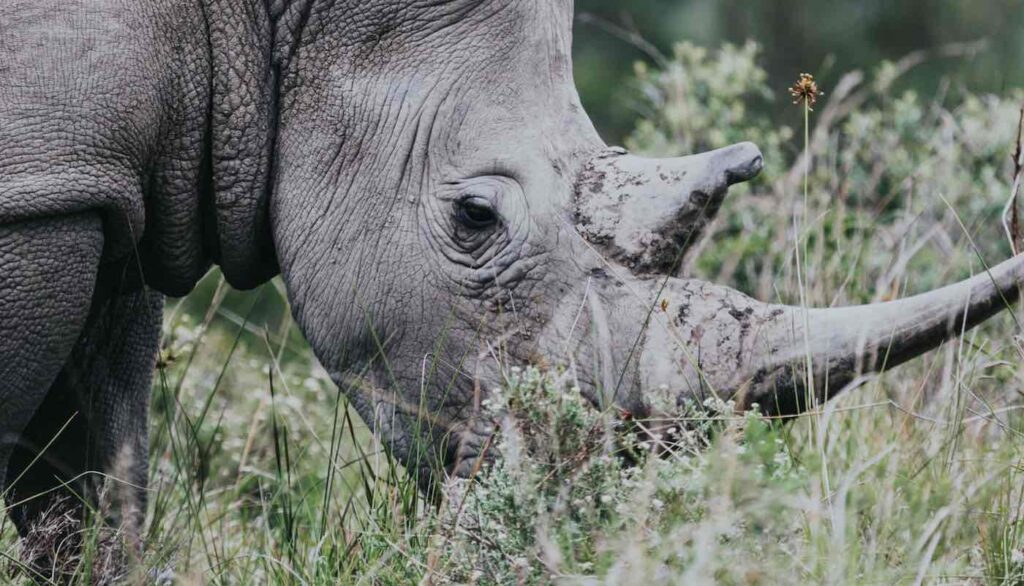
Sabinoso Wilderness Area in New Mexico, an inaccessible and tiny refuge just five years ago, has grown by almost 10,000 acres, or 50% of its total size, after receiving the largest gift in the Bureau of Land Management’s (BLM) history.

The Cañon Ciruela property was donated by the Trust for Public Land which works to create public spaces from private donations all over America, and was a follow-up from another much smaller donation made in 2017 in an effort to grow Sabinoso out from the confines of private landholdings which surrounded it.

Described as “a series of high, narrow mesas surrounded by cliff-lined canyons,” the BLM, who manages wilderness areas in the U.S, called the property “rugged country primarily [of] piñon pine and juniper woodlands with occasional clusters of ponderosa pine. A perennial warm-season grass savanna is found on the mesa tops. Streams periodically flow in the canyon bottoms supporting riparian vegetation including willow and cottonwood.”

The area is home to black bears, mountain lion, elk, mule deer, and turkey, among smaller animals.

Pueblo Tribal member and Secretary of the Interior Debra Haaland visited a remote patch of the wilderness in New Mexico’s San Miguel County to talk of the gift, recognizing the land’s history as a hunting ground of several native tribes, including the Jicarilla Apache and northern Pueblos.

MORE: 20 Wolf Cubs Born in Zoos Successfully Integrated into Wild Packs to Be Raised As Their Own and Diversify the Gene Pool

“We’re here today because we recognize the importance of preserving this special place,” the Secretary said, according to the San Francisco Chronicle. “We know that nature is essential to the health, well-being and prosperity of every family and every community.”

The Cañon Ciruela property provides a second public access point for the wilderness area, which was opened for hiking, primitive camping, hunting, and more under the DOI of Ryan Zinke in 2017.

Additionally, the donation permanently protects a critical tributary watershed that feeds into the existing wilderness which ensures there will be nothing but natural forces that interrupt the life-giving waters flowing into the area.

CHECK OUT: First Native American-Owned Film Studio Shoots Tom Hanks Movie

The Trust for Public Lands is the kind of entity President Biden is relying on to conserve 30% of America’s geographic area in its natural state as part of his commitment to preventing climate change, and as part of the America the Beautiful Act, which rather than sweeping government penmanship, hopes to rely mainly on private landowners and donations to reach the “30×30 goal.”

GROW the Good News—Share This Story in Friends’ Feeds…
Stranded During COVID, Athlete Trained With Water Jugs—Now She’s Won Olympic Gold, a First for Philippines

Instagram/@hidilyndiaz

Have a minute? Try sitting still and watching the second hand of a clock as it sweeps its way around the dial. Feels like a long time, doesn’t it? Now, picture waiting for something to arrive, not for an hour, not for a day, but for 100 years. An eternity, right?

Now imagine what it must feel like for that century-long wait to finally be over. Awesome and then some, of course, and it’s the very reason Hidilyn Diaz, a 30-year-old weightlifter from the Philippines was over the moon when, with her final dramatic lift of the competition, she won the first-ever gold medal for her homeland after a 100-year Olympic drought.

The Philippines has been sending teams to the Summer Olympics since 1924. Over the course of ensuing competitions, Filipino athletes have historically scored 10 medals, but the gold remained elusive. (Diaz herself won a silver in the 2016 Rio de Janeiro games.)

Training throughout the pandemic has been rough, but for Diaz, the challenges she faced were tougher than most.

Stranded by COVID-19 travel restrictions, Diaz was unable to see her family for more than a year. To top that off, she lacked proper training equipment and was forced to improvise—but she persevered.

Coming as she did from an economically challenged childhood, the lessons Diaz learned early in life about self-sufficiency and resilience certainly stood her in good stead during the ordeal she endured leading up to the games.

A Reddit discussion chronicles the many obstacles Diaz had to overcome just to get to Tokyo, and how she repeatedly rose to the occasion.

“The most amazing thing about her story is that she got stuck in Malaysia during the COVID lockdown. She was only there for an Olympic qualifying event when the government banned traveling and she ended up being stuck there for more than a year. I read she had to build her own workout equipment using water jugs,” one Reddit commenter reported.

“And despite all that, [she] and her team were running online seminars at the same time in exchange for donations. They used the funds they raised to help get basic necessities like groceries to people back home in the Philippines who were having trouble during the lockdown,” another enthused.

To win the gold, Diaz needed to take down the 2019 world champion, China’s Liao Qiuyun, who’d earned an impressive overall score of 223 for her three lifts. But Diaz proceeded to set a new world record with a clean and jerk of 127 kg (about 280 lbs), taking her cumulative total to 224 and cinching the top honors in the event.

MORE: From Working At McDonald’s To Competing At The Olympics, This US Track Youngster is Living American Dream

Realizing what she’d just accomplished, an ecstatic Diaz was overcome with emotion. Tears flowed freely as she took the podium and saluted the Filipino flag while the country’s national anthem played.

“We are so proud to see our motherland’s flag raised at the Olympic podium and we are deeply thankful to Hidilyn Diaz for bringing the first gold medal to the Philippines,” Brendan Flores, president of the National Federation of Filipino American Associations told The Washington Post.

RELATED: An Armless Archer Aims to Win Gold at Summer Paralympic Games Joining Team USA – VIDEO

As proud as her country is of her, for Diaz, the feeling is more than mutual. She sees her win as a “golden opportunity” to inspire other up-and-coming Filipinos to set their sights high, to work hard, and to never give up.

“I am thankful that God is using me to inspire all the young generation and all the Filipino people to keep fighting during this pandemic,” she said in a statement reported by WaPo. “To all the young generation in the Philippines, please dream high… That’s how I started. I dreamed high and finally, I was able to do it.”

SHARE This Fantastic Win for the Philippines With Pals on Social Media…

Company Says its Multi-Day Storage Batteries For Renewable Energy Are the Holy Grail We’ve Been Waiting For

Form Energy
Form Energy

Unveiled after years of work, an energy startup in Massachusetts is claiming that in a few years they can produce, at scale, “the battery you need to fully retire coal and natural gas plants.”

Hoping to solve the key challenge with renewable energy—that of storage—Form Energy’s new battery technology, which they’re calling the “Holy Grail,” ditches lithium for one of the most abundant minerals on Earth: iron.

Many battery startups are looking to create a battery system that can reliably store the energy generated when the sun is shining and the wind is blowing for those periods of stillness and darkness when no energy can be created.

A deep-dive into Form Energy’s inner-workings by the Wall Street Journal revealed this gem of a quote, that there is a “Cambrian Explosion” going on in the sector of batteries and energy storage.

GNN has reported on this story every step of the way—analyzing new tech from hydrogen cells, to aluminum lava, to giant towers that lift and drop enormous metal weights.

How it works

Iron anode section of prototype battery, Form Energy

Form Energy’s battery uses the chemical reaction that creates rust, i.e. iron and oxygen, to store energy in a kind of technology known as stage transition, which harvests the energy given off by matter when it’s stressed or changes form, for example from a gas to a liquid, or when a giant weight is lowered, held, and dropped again.

Understanding these technologies without being an expert in thermodynamics or chemistry simply involves accepting the fact that since matter is energy, energy can be stored and released in ordinary elements as they change form.

“Our first commercial product using our iron-air technology is optimized to store electricity for 100 hours at system costs competitive with legacy power plants,” write Form on their website. “This product is our first step to tackling the biggest barrier to deep decarbonization: making renewable energy available when and where it’s needed, even during multiple days of extreme weather, grid outages, or periods of low renewable generation.”

“We’ve completed the science,” says Form Energy’s President and COO Ted Wiley, “what’s left to do is scale up from lab-scale prototypes to grid-scale power plants.”

Wiley from their location in Sommerville, Massachusetts added that “the modules will be one-tenth the cost of any technology available today for grid energy storage.”

RELATED: Biodegradable Algae Solar Panels Clean The Air While Growing Green Energy

Inside the battery cells, thousands of tiny pieces of iron are exposed to oxygen and rust, but when the oxygen is removed, the iron-oxide goes back to iron. By controlling this process, the battery is charged and discharged.

According to WBUR News Boston, Form are planning to have their first 1 MW pilot project installed at the Great River Energy power plant in Minnesota by 2023.

CHECK OUT: Aptera Solar-Powered Car With ‘1,000-Mile’ Range Gets 7,000 Preorders for Delivery in 2021

Behind this relatively unknown firm are major investors like the Italian oil giant Eni, Amazon’s Jeff Bezos, Microsoft founder Bill Gates’ subsidiary Breakthrough Energy, and iron giant ArcelorMittal, who just committed $200 million in a series D funding round, hoping to acquire non-exclusive supply rights of iron for the company’s batteries.

There are many other wonderful ideas of how to bring renewable energy storage to world markets, but not all of them will survive or attract the funding necessary to see their dreams realized.

However the free market, by selecting one firm’s goods and services over another’s, naturally moves the talented labor on to other sectors where it can be better utilized, meaning that as soon as a small pool of battery firms attract most of the investment money, hundreds of innovative energy nerds will be unleashed on other substantial problems in the society. A win-win.

POWER UP Your Friends’ News Feeds With the Good News—Share This Story…