All News - Page 497 of 1724 - Good News Network
Home Blog Page 497

Doctor Determines Perfect Prescriptions For Stage 4 Cancer: With Functional Profiling His Results Are ‘Stunning’

Maria Lewis at the Institute and home

A pioneering California oncologist is doubling the success rates for cancer treatment—and one mom was so thrilled with her outcome that she reached out to a stranger recommending the clinic, and now the new friends are forever bonded as stalwart survivors of terminal diagnoses.

When Maria Lewis first felt a lump, her heart sank because she had lost many family members to cancer. She was diagnosed with triple negative breast cancer—meaning it did not have any of the receptors that are commonly found in breast cancer—and was given 3-6 months to live with little hope of any treatment working.

After being told to prepare for the worst, the 50-year-old with four children living at home traveled to Los Angeles after searching online for some help.

She went to see Dr. Robert Nagourney, who uses the emerging technique of ‘functional profiling’ to test which drugs will work in any patient using samples of the actual tumors or fluid.

Basically, this involves killing a patient’s tumor in the lab first, based on which FDA-approved drugs and drug combinations work best, then providing those to the patient—using personalized medicine based not on genomics but on cell biology.

Nagourney had become disenchanted with the trial and error approach he witnessed during fellowships at Georgetown and elsewhere, and decided that there must be a better way. Today, his approach is catching on around the world, given his patients’ success.

By the time Maria arrived in his clinic, she was at stage 4—with a large 6 cm tumor on her breast, a tumor on her kidney, and lymph node involvement.

Maria Lewis at the Institute and home

One week after going home to Utah, Dr. Nagourney finished his testing and she returned to receive chemotherapy based on the results in the lab that targeted just the right drugs. Three weeks after that chemo session, she could no longer feel her tumor. Three weeks after that, the tumor was gone.

RELATED: Revolutionary CRISPR-based Genome Editing System Destroys Cancer Cells ‘Permanently’ in Lab

After Maria recovered, she heard about Shellie Chrum in St. Louis (a friend of her neighbor’s) who was dealing with a similar dire diagnosis: widely metastatic breast cancer that had spread to her lungs and bones, including the spinal column. She immediately called Shellie.

New best friends

“Although we have never met in person, we have spoken on the phone for many hours,” Maria told GNN. “Having had a life threatening cancer diagnosis myself, and having been blessed with the results that I have had, I want to shout it from the rooftops so that everyone can hear and learn from my experience with Dr. Nagourney’s functional profiling test.”

Shellie took the advice of her new friend and went to California last summer so Nagourney could remove fluid from the 43-year-old, which provided ample cells for his EVA/PCD analysis (Ex-Vivo Analysis of Programmed Cell Death).

After he determined she was HER2–positive (for human epidermal growth factor 2) Nagourney knew that she would be a good candidate for the common drug combo Trastuzumab (Herceptin) and Pertuzumab (Perjeta), but how to address the disease involving lung and bone left the doctor puzzling.

POPULAR: Simple New Blood Test For Prostate Cancer Determines Presence and Stage of Cancer With 99% Accuracy

He discovered a highly favorable interaction between Vinorelbine and Trastuzumab, and added a low dose Everolimus—which resulted in a four-drug combo that “no other breast cancer patient had ever received.”

After just two cycles of the drugs, given on the first and eighth day of a three-week cycle, the scan results compared with late-June were “stunning… and consistent with a complete or near-complete response to therapy”.

(Click below to continue the story and find out how much it costs…)

Continue Reading on Page 2…

Federal Judge Orders Record Penalty Against Exxon for Thousands of Clean Air Act Violations

In yet another loss for ExxonMobil in a historic and long-running environmental enforcement case, a U.S. District Court judge has imposed a $14.25 million penalty to punish the company for violating the federal laws—the largest yet imposed in a Clean Air Act citizen enforcement suit.

Exxon has been fighting this case for 11 years now, but last July, a three-judge panel had rejected most of the arguments Exxon had made in its appeal of the original $19.95 million penalty in this case.

The appellate court sent the case back to Judge David Hittner to make additional findings as to how many of the thousands of proven Clean Air Act violations were of a type or magnitude that was “capable of causing” the kinds of harms suffered by those who live near the sprawling refinery and chemical plant complex in Baytown, Texas.

Exxon’s 3,400-acre facility sits about 25 miles east of downtown Houston, and tens of thousands of people live within three miles of the complex.

RELATED: Arctic Oil Drilling Plans Suffer ‘Stunning Setback’ as Almost ‘No One Shows Up’ For the Sale

In his new opinion, Judge Hittner found that the environmental groups had proven at trial that over 3,651 days (8 years) thousands of instances of illegal flaring and unauthorized releases of pollutants causing smoke, chemical odors, ground-level ozone, and respiratory problems were “fairly traceable” to the injuries plaintiffs suffered.

“We are extremely pleased that Judge Hittner has, once again, assessed a civil penalty against Exxon that is larger than any penalty ever imposed in a Clean Air Act citizen enforcement suit,” said National Environmental Law Center senior attorney Josh Kratka, who was part of the legal team representing Environment Texas and Sierra Club.

CHECK OUT: Air Pollution Laws May Have Saved Over 1.5 Billion Birds in American Skies, Finds New Cornell Study

In support of his penalty assessment, Judge Hittner pointed to the fact that Exxon had committed more than one violation every single day for a period of eight years.

This case follows successful cases the same groups brought against Shell Oil Company for violations at its Deer Park refinery, Chevron Phillips for violations at its Cedar Bayou plant, and Pasadena Refining Systems, Inc. for violations at the Pasadena refinery.

POPULAR: US Bans New Mining Claims on Public Land Near Yellowstone Park With Bipartisan Support

“Exxon’s Baytown refinery-chemical complex is the largest polluter on the Houston Ship Channel impacting the air quality of hundreds of thousands of citizens,” stated Neil Carman, clean air program director, Sierra Club’s Lone Star Chapter. “Exxon Baytown still needs to clean up its act and do more to create cleaner air in the Houston area,” he added.

(Featured photo by Maksym Kaharlytskyi)

“Loving yourself does not mean being self-absorbed, or disregarding others. It means welcoming yourself as the most honored guest in your own heart, worthy of respect, a lovable companion.” – Margo Anand

Quote of the Day: “Loving yourself does not mean being self-absorbed, or disregarding others. It means welcoming yourself as the most honored guest in your own heart, worthy of respect, a lovable companion.” – Margo Anand

Photo by: Aziz Acharki

With a new inspirational quote every day, atop the perfect photo—collected and archived on our Quote of the Day page—why not bookmark GNN.org for a daily uplift?


Tricking Coronavirus With a Fake ‘Handshake’ – Scientists Develop Peptides That Could Inactivate COVID

Fool the novel coronavirus once and it can’t cause infection of cells, new research suggests.

Scientists have developed protein fragments—called peptides—that fit snugly into a groove on the SARS-CoV-2 Spike protein that it would normally use to access a host cell. These peptides effectively trick the virus into “shaking hands” with a replica rather than with the actual protein on a cell’s surface that lets the virus in.

Previous research had determined that the novel coronavirus binds to a receptor protein on a target cell’s surface called ACE2. This receptor is located on certain types of human cells in the lung and nasal cavity, providing SARS-CoV-2 many access points to infect the body.

For this work, Ohio State University scientists designed and tested peptides that resemble ACE2 enough to convince the coronavirus to bind to them, an action that blocks the virus’s ability to actually get inside the cell.

“Our goal is that any time SARS-CoV-2 comes into contact with the peptides, the virus will be inactivated. This is because the virus Spike protein is already bound to something that it needs to use in order to bind to the cell,” said Amit Sharma, co-lead author of the study and assistant professor of veterinary biosciences at Ohio State. “To do this, we have to get to the virus while it’s still outside the cell.”

RELATED: 2 New Nasal Sprays That Kill COVID-19 Virus Are Looking Remarkably Effective

The Ohio State team envisions delivering these manufactured peptides in a nasal spray or aerosol surface disinfectant, among other applications, to block circulating SARS-CoV-2 access points with an agent that prevents their entry into target cells.

“With the results we generated with these peptides, we are well-positioned to move into product-development steps,” said Ross Larue, co-lead author and research assistant professor of pharmaceutics and pharmacology at Ohio State.

The study was published in the January issue of the journal Bioconjugate Chemistry.

SARS-CoV-2, like all other viruses, requires access to living cells to do its damage – viruses hijack cell functions to make copies of themselves and cause infection. Very rapid virus replication can overwhelm the host system before immune cells can muster an effective defense.

POPULAR: 10 Positive COVID Updates From Around the World – 2021 is Looking Brighter

One reason this coronavirus is so infectious is because it binds very tightly to the ACE2 receptor, which is abundant on cells in humans and some other species. The Spike protein on the SARS-CoV-2 surface that has become its most recognizable characteristic is also fundamental to its success in attaching to ACE2.

Recent advances in crystallizing proteins and microscopy have made it possible to create computer images of specific protein structures alone or in combination, like when they bind to each other.

Sharma and his colleagues closely examined images of the SARS-CoV-2 Spike protein and ACE2, zooming in on precisely how their interactions occur and what connections are required for the two proteins to lock into place. They took notice of a spiral ribbon-like tail on ACE2 as the focal point of the attachment, which became the starting point for designing peptides.

CHECK OUT: She was Demoted, Doubted and Rejected But Now Her Work is the Basis of the Covid-19 Vaccine

“Most of the peptides we designed are based on the ribbon contacting the Spike,” said Sharma, who also holds a faculty appointment in microbial infection and immunity. “We focused on creating the shortest possible peptides with the minimum essential contacts.”

The team tested several peptides as “competitive inhibitors” that could not only securely bind with SARS-CoV-2 Spike proteins, but also prevent or lower viral replication in cell cultures. Two peptides, one with the minimum contact points and another larger one, were effective at reducing SARS-CoV-2 infection in cell studies compared to controls.

Sharma described these findings as the beginning of a product-development process that will be continued by the team of virologists and pharmaceutical chemists collaborating on this work.

LOOK: We Use 6 Billion Face Masks a Day—But Scientists Have a Genius Way to Turn Them Into Roads

“We are taking a multi-pronged approach,” Sharma said. “With these peptides, we have identified the minimal contacts needed to inactivate the virus. Going forward we plan to focus on developing aspects of this technology for therapeutic purposes.

“The goal is to neutralize the virus effectively and potently, and now, because of the emergence of variants, we’re interested in assessing our technology against the emerging mutations.”

(Source: Ohio State – Photo by @visuals)

SHARE the Virus-Free Handshake With Friends on Social Media…

Photo of Paralyzed Man Cleaning Plastic From India River Goes Viral – And He’s Showered With Gifts to Better His Life

A passion for photography has always possessed this young engineer from Kerala, India. Now he knows there was a purpose, after a photo he took while walking around his village ended up changing a man’s life and getting a shout-out from India’s prime minister.

Nandu Ks with Rjappan

Carrying around a rented camera searching for stories, Nandu Ks found nothing very interesting until one day he came to a bridge.

I was always keen to capture images which had a story to tell, images which had life.

“I noticed a man rowing a boat and collecting something from the river,” Nandu told GNN.

The old man was N. S. Rajappan, and he’s been plucking plastic bottles from the river for years to earn a meager living. Paralyzed since the age of five when he was struck with polio, his daily routine has kept the waterways of Vembanad Lake clear of plastic—all from the seat of his small boat.

Without crutches, the 69-year-old would drag his legs a short way down the riverbank to the Meenachil River, after which he was free to wander the waters in search of bottles.

From the bridge that day, Nandu witnessed people throwing bottles into the river, while underneath a smiling Rajappan scooped them up.

Filling his boat with plastic only earns him about Rs 12 (17 cents), but it’s enough for a meal—and it’s satisfying to know he is helping the environment.

“Somebody should remove the waste from the water… I am doing what is possible for me,” he told a local news outlet.

Pro Media, Nandu Ks

Nandu uploaded his story and photos to his Pro Media Facebook page, and people began retweeting it, including the UN Environment Program chief Erik Solheim, who suggested, “Let’s make this guy famous.”

The Indian Prime Minister, himself, Narendra Modi, then commended Rajappan’s efforts during his monthly radio address. “I have seen news from Kerala which reminds us of our responsibilities,” he said, telling his listeners the story. “Imagine how highly he thinks! We must also take inspiration from him and contribute towards cleanliness as far as possible.”

Afterward, the story went completely viral, and inspired Indians to send gifts to the elder worker.

RELATED: Volunteers Remove 9,200-lbs. of Trash From One of the Dirtiest Rivers in the US

He’s been rewarded with a new motorboat, courtesy of a local businessman, and plans are in the works to build him a little home to replace the riverside shack that had been severely damaged in a storm.

Best of all, a Bangalore-based company making wheelchairs has given him a heavy-duty motorized wheelchair.

“With support coming in from thousands of people, both financially and morally, I could see his life changing,” Nandu said.

Invited to dinner with Nandu’s brother and family, he watched himself on TV.

And all of it happened because of one photograph.

“I always wondered what it felt like to follow your passion, but never knew its true feeling till the day I met Rajappan chettan (brother Rajappan),” Nandu says.

LOOK: Selfless Teen is Local Hero After Daily Trips During Lockdown To Clean Dirty Road Signs And Cut Back Town’s Hedges

“I went to him and showed him the photo I clicked. He smiled at me—and then I knew what it meant to be a photographer.”

The two have become good friends, and Nandu’s family invited him to dinner to show him the TV news segment featuring his good works. (See the video below.)

“It takes a photographer to be at that moment and make that picture happen for the world to know the story.”

POPULAR:‘Madman’ Digs Canal for Decades to Bring Water to Dry Indian Village, Enduring Jeers that Turned to Cheers

SHARE This Incredible Example on Social Media to Inspire Your Friends… 

This Week’s Inspiring Horoscopes From Rob Brezsny’s ‘Free Will Astrology’

Our friend Rob Brezsny provides his weekly wisdom to enlighten our thinking and motivate our mood. Rob’s Free Will Astrology, is a syndicated weekly column appearing in over a hundred publications. He is also the author of Pronoia Is the Antidote for Paranoia: How All of Creation Is Conspiring To Shower You with Blessings. (A free preview of the book is available here.)

Here is your weekly horoscope…

FREE WILL ASTROLOGY – Week beginning March 5, 2021
Copyright by Rob Brezsny, FreeWillAstrology.com

PISCES (Feb. 19-March 20):
For you Pisceans, March is Love Yourself Bigger and Better and Bolder Month. To prepare you for this festival, I’m providing two inspirational quotes. 1.) “If you aren’t good at loving yourself, you will have a difficult time loving anyone, since you’ll resent the time and energy you give another person that you aren’t even giving to yourself.” —Barbara De Angelis  2.) “Loving yourself does not mean being self-absorbed or narcissistic, or disregarding others. Rather it means welcoming yourself as the most honored guest in your own heart, a guest worthy of respect, a lovable companion.” —Margo Anand

ARIES (March 21-April 19):
In late April of 1969, Cambridgeshire, UK hosted the first-ever Thriplow Daffodil Weekend: a flower show highlighting 80 varieties of narcissus. In the intervening years, climate change has raised the average temperature 3.24 degrees Fahrenheit. So the flowers have been blooming progressively earlier each year, which has necessitated moving the festival back. The last pre-Covid show in 2019 was on March 23-24, a month earlier than the original. Let’s use this as a metaphor for shifting conditions in your world. I invite you to take an inventory of how your environment has been changing, and what you could do to ensure you’re adapting to new conditions.

TAURUS (April 20-May 20):
Author Leo Buscaglia told us that among ancient Egyptians, two specific questions were key in evaluating whether a human life was well-lived. They were “Did you bring joy?” and “Did you find joy?” In accordance with your current astrological potentials, I’m inviting you to meditate on those queries. And if you discover there’s anything lacking in the joy you bring and the joy you find, now is a very favorable time to make corrections.

GEMINI (May 21-June 20):
Are you ready to seize a more proactive role in shaping what happens in the environments you share with cohorts? Do you have any interest in exerting leadership to enhance the well-being of the groups that are important to you? Now is an excellent time to take brave actions that will raise the spirits and boost the fortunes of allies whose fates are intermingled with yours. I hope you’ll be a role model for the art of pleasing oneself while being of service others.

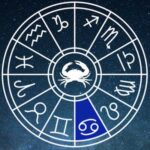
CANCER (June 21-July 22):
During World War II, the Japanese island of Ōkunoshima housed a factory that manufactured poison gas for use in chemical warfare against China. These days it is a tourist attraction famous for its thousands of feral but friendly bunnies. I’d love to see you initiate a comparable transmutation in the coming months, dear Cancerian: changing bad news into good news, twisted darkness into interesting light, soullessness into soulfulness. Now is a good time to ramp up your efforts.

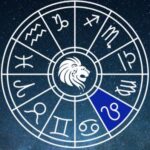
LEO (July 23-Aug. 22):
“Scars speak for you,” writes author Gena Showalter. “They say you’re strong, and you’ve survived something that might have killed others.” In that spirit, dear Leo, and in accordance with astrological omens, I invite you to authorize your scars to express interesting truths about you in the coming weeks. Allow them to demonstrate how resilient you’ve been, and how well you’ve mastered the lessons that your past suffering has made available. Give your scars permission to be wildly eloquent about the transformations you’ve been so courageous in achieving.

VIRGO (Aug. 23-Sept. 22):
According to novelist Doris Lessing, “Everybody in the world is thinking: I wish there was just one other person I could really talk to, who could really understand me, who’d be kind to me.” She implied that hardly anyone ever gets such an experience—or that it’s so rare as to be always tugging on our minds, forever a source of unquenched longing. But I’m more optimistic than Lessing. In my view, the treasured exchange she describes is not so impossible. And I think it will be especially possible for you in the coming weeks. I suspect you’re entering a grace period of being listened to, understood, and treated kindly. Here’s the catch: For best results, you should be forthright in seeking it out.

LIBRA (Sept. 23-Oct. 22):
“How much has to be explored and discarded before reaching the naked flesh of feeling?” wrote composer Claude Debussy. In the coming weeks, I hope you’ll regard his words as an incitement to do everything you can to reach the naked flesh of your feelings. Your ideas are fine. Your rational mind is a blessing. But for the foreseeable future, what you need most is to deepen your relationship with your emotions. Study them, please. Encourage them to express themselves. Respect their messages as gifts, even if you don’t necessarily act upon them.

SCORPIO (Oct. 23-Nov. 21):
You may never wander out alone into a dark forest or camp all night on a remote beach or encounter a mountain lion as you climb to a glacier near the peak of a rugged mountain. But there will always be a primeval wilderness within you—uncivilized lands and untamed creatures and elemental forces that are beyond your rational understanding. That’s mostly a good thing! To be healthy and wise, you need to be in regular contact with raw nature, even if it’s just the kind that’s inside you. The only time it may be a hindrance is if you try to deny its existence, whereupon it may turn unruly and inimical. So don’t deny it! Especially now. (PS: To help carry out this assignment, try to remember the dreams you have at night. Keep a recorder or notebook and pen near your bed.)

SAGITTARIUS (Nov. 22-Dec. 21):
“What damages a person most,” wrote philosopher Friedrich Nietzsche, “is to work, think, and feel without inner necessity, without any deep personal desire, without pleasure—as a mere automaton of duty.” Once a year, I think every one of us, including me, should meditate on that quote. Once a year, we should evaluate whether we are living according to our soul’s code; whether we’re following the path with heart; whether we’re doing what we came to earth to accomplish. In my astrological opinion, the next two weeks will be your special time to engage in this exploration.

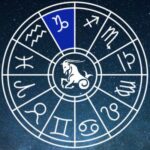
CAPRICORN (Dec. 22-Jan. 19):
What are your edges, Capricorn? What aspects of your identity straddle two different categories? Which of your beliefs embrace seemingly opposed positions? In your relations with other people, what are the taboo subjects? Where are the boundaries that you can sometimes cross and other times can’t cross? I hope you’ll meditate on these questions in the coming weeks. In my astrological opinion, you’re primed to explore edges, deepen your relationship with your edges, and use your edges for healing and education and cultivating intimacy with your allies. As author Ali Smith says, “Edges are magic; there’s a kind of forbidden magic on the borders of things, always a ceremony of crossing over, even if we ignore it or are unaware of it.”

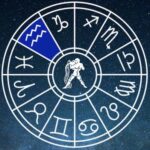
AQUARIUS (Jan. 20-Feb. 18):
According to intermedia artist Sidney Pink, “The idea of divine inspiration and an aha moment is largely a fantasy.” What the hell is he talking about?! That’s fake news, in my view. In the course of my creative career, I’ve been blessed with thousands of divine inspirations and aha moments. But I do acknowledge that my breakthroughs have been made possible by “hard work and unwavering dedication,” which Sidney Pink extols. Now here’s the climax of your oracle: You Aquarians are in a phase when you should be doing the hard work and unwavering dedication that will pave the way for divine inspirations and aha moments later this year.

WANT MORE? Listen to Rob’s EXPANDED AUDIO HOROSCOPES, 4-5 minute meditations on the current state of your destiny — or subscribe to his unique daily text message service at: RealAstrology.com

(Zodiac images by Numerologysign.com, CC license)

SHARE The Wisdom With Friends Who Are Stars in Your Life on Social Media…

To Fortify With Iron, Ingenious Metal Fish Soaked in Soup Provides Nutrition And is Much Cheaper Than Pills

Lucky Iron Fish

Many people have an iron deficiency—especially vegetarians. In fact, it’s the most common and widespread nutritional disorder in the world.

Lucky Iron Fish

To address this problem, especially in low-income populations, two Canadian medical school graduates created a simple and delightful solution—it’s called the Lucky Iron Fish.

Essentially no more than a specially-designed iron ingot in a whimsical shape, their Lucky Iron Fish provides a significant portion of the recommended daily amount of iron for an adult when boiled for 10 minutes.

Iron, which is easily absorbed if you eat meat, but difficult to get from plants, is critical for blood circulation, and a lack of it in your diet can lead to dizziness and fatigue, as well as anemia.

The iron supplied in the Lucky Fish lasts five years if used daily, and quite ingeniously, users will know when it’s time to get a new one as the smile on the fish will slowly wear away. When the fish is no longer happy, it’s time to get a new one.

Dr. Gavin Armstrong was working abroad in Asia—where he learned firsthand the effects of iron deficiency in adults and children. He chose the fish shape based on the cultural significance of the symbol.

Dr. Gavin Armstrong in Cambodia, Aim2Flourish

In Cambodia, the fish is a lucky symbol, and in a bid to convince people to stick a great lump of iron in their soup pots, he adopted the fish iconography to appeal to their culture.

It worked. And where it didn’t work—namely in India where vegetarianism is common—Armstrong, a graduate student from the University of Guelph, simply changed the shape and created the Lucky Iron Leaf.

MORE: These are the 3 Most Promising Longevity Supplements From Scientific Research So Far

Armstrong’s idea has earned him public praise. The innovation won a Flourish Prize for positive business innovation that helps to achieve one of the 17 United Nations Global Goals for Sustainable Development (Good Health). The announcement from AIM2Flourish cited sales of over a million units in 2016 alone, and an endorsement from Oprah Winfrey.

They also work with charities and NGOs, including CARE and World Central Kitchen, to put get these fish swimming in pots where families can’t afford it.

At $50 per fish, it is one-thirtieth the cost of a five-year supply of iron supplements, and certainly more fun for children. It’s also backed by numerous clinical trials proving its efficacy.

With iron deficiency being a tangible public health concern that also affects economic success, we are indeed ‘lucky’ to have this key ingredient for soups the world over.

RELATED: Managing Your Gut Bacteria Shown to Alleviate Anxiety, Says New Research

(WATCH the Lucky Iron Fish video below.)

Tell Your Vegan Friends They Just Got Lucky—Share on Social Media!

“Every year should teach you something valuable; whether you get the lesson is up to you. Every year brings you closer to expressing your whole and healed self.” – Oprah Winfrey

Quote of the Day: “Every year should teach you something valuable; whether you get the lesson is up to you. Every year brings you closer to expressing your whole and healed self.” – Oprah Winfrey

Photo by: Marcos Paulo Prado

With a new inspirational quote every day, atop the perfect photo—collected and archived on our Quote of the Day page—why not bookmark GNN.org for a daily uplift?

Pandemic May Have Created a Generation of Schoolchildren More Interested in STEM Careers Than Ever: Poll

SWNS

The pandemic has created a generation of schoolchildren interested in a career in science, technology, engineering, and mathematics—a new poll on STEM trends has revealed.

SWNS

A survey of 1,000 kids aged 11-17 revealed 83% have been learning about the pandemic by watching the news—with 71% asking their parents about the virus because they’re interested.

Two-thirds have also been inspired by the hard work of the nurses and doctors working during the pandemic.

And 48 percent of secondary-age schoolchildren would be interested in a career in STEM after seeing how people working in these industries have helped people.

With children glued to the news, experts are becoming more mainstream, with youngsters more likely to recognize Chief Medical Adviser to the UK Professor Chris Whitty’s name (55%) than celebrities and sports stars including Harry Kane (50%), Selena Gomez (48%), and Zoella (35%).

One in five schoolchildren surveyed said the pandemic had made them interested in a career as a doctor in ICU, while 18% would now consider a career working on vaccines.

The survey commissioned by Medicspot also found 16% would like to be an ICU nurse, 16% would be interested in a career in pharmacy, and 14% would like to be a virologist.

During the pandemic, Medicspot has increased its staff numbers by 183 percent and provided Covid testing, along with ‘fit to fly’ certificates, at 90 locations across the UK.

“It’s heartening to see how many youngsters have been inspired by the medical professionals and scientists who have been working on the frontline to treat people suffering from Covid-19 and behind the scenes on the treatments,” said a Medicspot spokesperson.

The poll also found 68 percent of respondents think science is a cool subject—and 41 percent are now more interested in learning more about it.

Almost three-quarters are looking forward to going back to school, while 61 percent are going to try and work harder in their science lessons.

MORE: Yale is Offering Its Popular Happiness Course to Some High School Students for Free — Including College Credit

The survey, carried out by OnePoll, also found 52 percent would like to make a difference by helping people like the nurses, doctors, and scientists on the front line when they are older.

RELATED: Garment Workers Are Now Being Educated in Bangladesh So They Can Go to College

INSPIRE Your STEM Friends—Share This Story With Them…

Ancient DNA Shows Cats Domesticated Themselves – Why Are We Not Surprised?

Photo credit: Juan Gomez

Domestication of animals was an amazing feat that changed human relationships with the natural world.

But while a Pomeranian looks nothing like a wolf, a thoroughbred jump horse looks nothing like a wild pony, and a potbellied pig looks nothing like a black boar, ‘domestic’ house cats look pretty much exactly like wild cats.

That’s because they domesticated themselves—not through form, but through function, and research reveals that wildcat ancestors share essentially the same genetics as house cats today.

The two lineages of cats—the European forest cat (felis silvestris silvestris) and Southwest Asia/North African wildcat (felis silvestris lybica)—are solitary hunters that lack any strong social hierarchy, which would make them poor candidates for domestication by humans, to start with.

It was the cat, itself, who came to prize the territory around the homes of the ancient farmer, or the wharf of the ancient mariner. They were drawn to a plentiful supply of prey in the form of rodents—which brought their species and ours to be inseparably linked.

A study from 2017 looked at the genetics of over 200 cats, from all five wild subspecies, along with cat remains from stone age Romania, and even Egyptian cat mummies, and found that f. lybica in the Near East in 4,400 BCE, and in North Africa around 1,500 BCE, gave rise to the domestic cat, likely because it was here where the earliest agricultural civilizations occurred.

European wildcat -felis silvestris by Cloudtail the Snow Leopard, CC license, Flickr

Still, cats existed unchanged through thousands of years—essentially until the Middle Ages, before selective breeding, the typical activity of domestication, began to give rise to more unique types of cats.

“I think that there was no need to subject cats to such a selection process since it was not necessary to change them,” said evolutionary geneticist and study coauthor Eva-Maria Geigl to National Geographic. “They were perfect as they were.”

Rather than merging social hierarchies and breeding selectively like humans did with wolves—cats simply existed in close proximity to humans, without ever fully entering societal processes.

Rise of the Tabby

The first domestic cat genes the scientists identified were the blotch pattern on the tabby cat—the first truly domesticated, if such a word can be used, house cat.

MORE: He Thought it was a Kitten Lost in the Snow – But it was One of The Most Endangered Mammals in Europe

Striped tabby cats were found in the European gene set of wildcats back before 6,500 BCE, and there they stayed for 3,000 years before emerging in the Near East genetic profile.

Tabby cats evolved their characteristic blotches in the Ottoman Empire in 1,300 CE, and it wasn’t until the 18th century that the tabby pattern began to be associated, societally, with domestication.

Not until the 19th century, thousands of years after dog diversification, did Europeans begin selecting certain characteristics to breed together in cats, resulting in the Russian Blue, perhaps around 1875, and the Maine Coon around the same time.

RELATED: Man Gets Engaged to Woman He Traveled 4,000 Miles to Meet–After She Liked a Photo of His Chubby Cat

While not being truly domestic, cats are a celebrated part of our lives, and exist in 74 million homes in the United States alone. Their lack of selective breeding means that for the most part, genetic susceptibility to disease, typical of hyper-specialized dog breeds, is mostly absent in cats, and it’s not uncommon for them to live past 20 years old.

IF You’re Feline It, Paw This Fasinating Story Over to Friends…

These Floating Islands Will Form a ‘Parkipelago’ in Copenhagen’s Harbor

Floating Islands

The Scandinavian countries are famous for their bays, and Copenhagen harbor in Denmark’s capital is a perfect example of that beauty in a metropolitan setting.

Now a new architecture project drifting in the harbor’s waters celebrates this heritage while allowing residents to relax away from the boom of urban development along the shoreline.

Copenhagen Islands

A series of floating islands, crafted using traditional building materials, are being planned as the country’s first “parkipelago.”

Complete with discreet features that will allow residents to enjoy the islands through kayaking, picnicking, and swimming, Danish design company Studio Fokstrot describes them as a celebration of traditional Danish harbor life, and a way to strengthen the cohesion of marine harbor ecosystems.

Each island is built from thin strips of wood, steel, and recycled boat material, and the first one is 215 square feet, featuring a single mature linden tree for shade.

The presentation website dreams big, claiming that once more islands are finished (three new islands are slated to float in spring 2021), the entire parkipelago will be home to floating gardens, floating saunas, floating mussel farms, and a floating sail-in café—all of which can be explored for free.

Underneath the islands’ hulls, special care is made to create a surface from which seaweed and other marine plants can cling, attracting small fish and crustaceans, which thereby attract larger sea life.

MORE: This Brilliant Low-Income Housing in Colombia is Made From Coffee Waste

“During summer the islands can be distributed to unused parts of the harbor, serving as an adventurous escape for the increasing amount of kayaks, sailors, and general users of the harbor coastline,” reads the website. “During winter and for special events or festivals, the islands can be brought together as a super-continent, creating a cluster more easily accessed from the harbor side.”

READ: This Wood Grown in a Lab Could Cut Deforestation, With Furniture Made From Plant Cells

If one thinks about the prevalence of seaside megacities that don’t have so much room for green spaces—an especially good example of which are those in Africa—the floating islands instantly seem like a great idea for those looking to increase the number of parks available to their citizens in other countries, too.

SHARE the Slick Scandi Design on Social Media…

Labradoodle Has Incredible Bond With 7-Year-old Who Was Adopted Into the Family at the Same Time – LOOK

SWNS

Meet the labradoodle who acts like a human thanks to his incredible bond with his best friend, a seven-year-old boy who was adopted into the family at the same time.

Reagan the dog was over the moon when his new family welcomed a foster baby Buddy, also 11-months-old, into their home.

The pair grew up together, and these adorable photos show them posing like a pair of brothers, wearing identical outfits, on holiday, and even sharing joint birthday parties.

SWNS

Pooch Reagan belongs to grandmother Sandi Swiridoff, 60, who adopted him just months before her daughter Kari Lewis, 31, fostered little boy Buddy.

Now Buddy, and his little sister Reagan, have been permanently adopted by the Lewis family, so boy and dog are officially best friends forever.

Snaps show the dog and all the kids acting just like siblings—putting up the Christmas tree together, reading bedtime stories, and eating spaghetti.

SWNS

Whether they are doing yoga or having a nap, the fun pair tend to look more than a little adorable.

SWNS

Sandi, from Portland, Oregon, said: “Reagan gets SO excited whenever Buddy comes over. They are seven years old now, and don’t see each other every day, but that only increases the excitement level when they are reunited.”

SWNS

“Their bond was instant. Reagan seemed to know that Buddy needed a furry friend to help him adjust and make him feel safe and loved. Watching their bond warms my heart, as they have the same energy level and personality.”

SWNS

Retired nurse Sandi and her husband Eric adopted Reagan in 2014. They were preparing for a “child-sized void” in their lives after their first foster grandkids were adopted by their forever families.

SWNS

One one of their last weekends together, Sandi took the children to “have a look” at a litter of Australian Labradoodle puppies, but when they arrived she saw there was only one left— Reagan.

MORE: Cuddling in Freezing Temperatures, Newborn Calf and Collie Become Adorable Best Friends

She said: “As I reached down to pick up this little ball of fur, he licked my face. At that moment, I knew he was going home with us.”

If you’d like to hang out with Reagan and Buddy a little more, just check out this full-time ‘Instagramma’s’ wonderful Instagram @reagandoodle.

SPREAD the Pawsitivty—Share This Story With Friends…

Africans Are Being Empowered to Write and Edit Wikipedia Articles About Their Own Countries and Culture

WikiAfrica AfroCuration/Adama Sanneh (far left)

As the 10th most-visited website on Earth, and the largest repository of human knowledge there is, school curriculums and even entire worldviews can be formed simply through reading Wikipedia.

However, when the city of Paris has more information contained in Wikipedia than the entire African continent, there is a significant risk of young Africans beginning to perceive home as a “single story.”

Wikimedia’s Bobby Shabangu at a WikiAfrica AfroCuration edit-a-thon, Johannesburg, 2019/Adama Sanneh

Further, an enormous amount of content on Wikipedia about African culture, languages, geography, and more, is written by Westerners. The inevitable lack of cultural context inherent in the everyday experiences of Africans can lead to stereotyping—again turning one small part of the African story into the whole story.

The WikiAfrica Education Program, founded by the Moleskine Foundation, is an effort to foster creativity and an interest in culture in African school curriculums by teaching students how to prepare and submit, as well as edit, articles on Wikipedia.

Since 2006, the WikiAfrica Program has led students contributing 40,000 submissions, including articles, and also audio clips, edits, photos, and more. Notably, many of the most detailed of these submissions were in African languages like isiXhosa.

Co-founder of the Moleskine Foundation, Adama Sanneh, an Italian-born son of a Gambian/Senegalese father, understands that creativity creates culture, and culture is the force that changes society.

A self-professed nerdy kid drawn to culture, art, and philosophy during his childhood growing up outside of Milan, he started the Moleskine Foundation in an effort to try and galvanize Africans into changing power dynamics on the internet—and in their daily lives.

“We aim to inspire young people from the continent and beyond, and especially African language speakers, to transform themselves from passive knowledge consumers to active knowledge producers,” says Sanneh, who then explained the startling information gap between Paris and Africa.

“When we look at entries in African languages the situation is even more grim. So obviously the idea is to do something about it, and with this cultural and bottom up approach the idea is to really inspire young people to become knowledge producers, to talk about their surroundings, to talk about their knowledge, and especially to do it in their languages,” he told GNN. 

Un-erased from history

Adama Sanneh (far left)

Disenchanted by the traditional NGO-approach to development and aid in Africa, which made Sanneh feel he was on the “wrong side of history,” his work with Moleskine embodies the widely-held belief that African problems must be addressed by Africans, and that African history should be written by and for Africans.

“There’s so much misunderstanding around the African continent,” says Sanneh.

In 2019, Moleskine Foundation teamed up with the Constitution Hill Trust in Johannesburg to put on a Wikipedia ‘edit-a-thon’ called “AfroCuration,” where—following a presentation on the history of the constitution of South Africa—Sanneh and his team had 200 computers waiting for the students.

“We had more than 300 young people coming together at Constitution Hill in the museum, so it was really inspiring and full of history,” he said. “They could chose among 100 different entries of heroes, various aspects of the Constitution, and then write those articles in their own languages, meaning isiZulu, isiXhosa, Tshivenda, etc. They wrote more than 200 entries, in one day, on Wikipedia.”

“The great thing was that those entries, whether about Winnie Mandela (Nelson’s second wife), or about specific moments in South African history, that were missing in their own language… in the following month, those entries were seen collectively more than 250,000 times.”

In another AfroCuration event, also at Constitution Hill, but with the AfroPunk Army Initiative, 12 Black, female South African historical figures essentially returned to the broader historical record—with their names and deeds making it onto Wikipedia for everyone to see and read.

“Now you can find an article about Joyce Seroke, who’s a super-important figure in South African history in the fight against apartheid, and who’s never mentioned,” says Sanneh. “Now you can find it on Wiki in isiZulu, isiXhosa, Tshivenda.”

Education = life

The importance of the African languages to the WikiAfrica Education Program cannot be understated, because a culture can’t fully express itself without its language. For example, Chinese Confucian theology would never be complete without Chinese words.

This was never more important than after the pandemic arrived, when virtually no information, guidelines, or policies were being translated into African languages. Sanneh saw a need, as well as an opportunity.

MORE: $14 Billion Raised For Great Green Wall to Continue Planting Trees Across Africa, Keeping Sahara From Destroying Villages

“When we started the situation was very grim, there was only one article in Luba, or something like that,” he told GNN. “We launched a campaign to ask people to translate… ten articles around COVID-19 that would allow the sparking of creative solutions.”

“In a couple of months we passed from one to more than 300 articles in more than 20 different African languages. That gave access to more than 300 million people when we look at the composition of the languages,” he said.

RELATED: We’ve Made Massive Progress Educating Girls Around the World in the Last 25 Years, Says Report

With the WikiAfrica Education Programn now working with schools across the continent to get Wikipedia skills into school curriculums, Sanneh has time to turn his attention to other projects.

Host of the Creativity Pioneers Podcast, which looks at how creativity can spark social change, not just in Africa, but all over the world, Sanneh interviews creatives, social  activists, and more—people like Uzodinma Iweala, the Nigerian-American novelist who wrote the bestselling novel Beasts of No Nation.

CHECK OUT: Nigerian Entrepreneur Invents Giant Solar-Powered Refrigerators That Cut Spoilage to Help Farmers Earn 25% More

You can find new episodes every Thursday, and get to know the entrepreneurs, artists, activists, and scientists that make Africa, in Sanneh’s opinion, the most creative continent around.

Empower Your Friends—Share This Positive Trend With Them…

“Potential is always bigger than the problem” – Rev. Michael Beckwith

Greg Rakozy

Quote of the Day: “Potential is always bigger than the problem” – Rev. Michael Beckwith

Photo by: Greg Rakozy

With a new inspirational quote every day, atop the perfect photo—collected and archived on our Quote of the Day page—why not bookmark GNN.org for a daily uplift?

Greg Rakozy

Chicago Coffee Shop Owner Has Collected 6,000 Warm Coats for the Homeless–And Delivered Them With Coffee

Pilot Pete's Coffee and Treats
Pilot Pete’s Coffee and Treats

Tucked into a suburban Chicago train station may appear to be an unassuming coffee shop. But what’s going on behind the scenes is much more than just your average cup of Joe.

For the seventh year in a row the shop’s owner Pilot Pete, a.k.a. Peter Thomas, has been the driving force behind ‘Coffee With a Purpose’, an annual community initiative that collects and distributes coats and other necessities to help the local homeless population brave the harsh Midwest winters.

Thomas says the idea came to him when he was trying to find a way to give back to the community as well as get others involved. He admits he was initially unprepared for the positive avalanche of responses. In the weeks prior to Christmas in the drive’s first year, he and other volunteers took in 3,000 coats.

This year, for drive number seven, Thomas and crew helmed the Coffee With a Purpose command center from the back of a 26-foot moving truck. The humanitarian caravan made a total of six stops throughout greater Chicago.

Pilot Pete’s brewed up 40 gallons of coffee for the occasion. The hot java was supplemented by donations from three other Elmhurst businesses eager to do their part.

Baked goods came courtesy of Rough Edges Confectionery; the truck and a driver were provided Good Move Movers, and custom truck signage was the handiwork of Angel Fancy Design Studio.

At each stop, Thomas invited people up to “shop” for whatever they needed—free of charge. In addition to coats, there was a wide selection of blankets, socks, hats, gloves, scarves, and personal hygiene items to choose from, all collected, sorted, and hung by gung-ho community volunteers.

Thomas notes that with the added impact of COVID, there were more people in need than ever this time around. “[When]we made this effort, all the shelters were on lockdown,” he said in an interview with the Elmhurst Independent. “No one was allowed in or out, that is, once you’re out, you can’t get back in, so there are more and more homeless people… This is a good year to be extra giving.”

But what Thomas and the community members who work alongside him are trying to achieve goes beyond merely handing out warm clothing and coffee. Forging a human connection with people who are so often invisible in society is an integral factor in their giving equation.

Thomas says making donations one-on-one makes it feel more genuine. “You never know where someone has been or what someone’s been through before meeting them,” he told the Independent. “With the homeless, we treat everyone the same or equal.”

According to Thomas’s proud mom, Joni Morgan, her son’s inclusive attitude is just who he is. “Ever since he was a little he always would find the outsiders and pull them in to make them feel welcome,” she told ABC’s Local-ish program.

MORE: Teen Collects 30,000 Pairs of Shoes to Donate ‘Dignity’ to LA Homeless

Thomas sees coffee as the perfect metaphor to inspire positive action. “I love working with coffee as a tool of motivation to fuel and ignite people to soar beyond their expectations and to soar beyond society’s expectations,” he told ABC. “I’m fueling them and caffeinating them to do something better… something that will make them feel good about themselves so we can all grow together as one coffee family and fly beyond greatness.”

As of this writing, with plans for a new Elmhurst Metra station in the works, the future of Pilot Pete’s Coffee & Treats is a bit up in the air. Not surprisingly, the community he’s been rallying for years is now rallying behind him.

“Pilot Pete’s is more than a coffee shop. Peter Thomas gives back to our community in so many ways—from the annual coat drive for the homeless, school fundraisers, motivational quotes tucked into every cup sleeve, and more—his is the shining face every commuter needs to see. His ‘coffee with a purpose’ mentality is part of what makes Elmhurst a beautiful place,” reads the Change.org petition to keep Pete’s in place.

RELATED: Tex-Mex Restaurant Owner Spends $2,000 of His Own Money to Promote Competitors Who Are Struggling

Since a tall, sweet, hot cup of coffee—laced with a heavy dollop of the milk of human kindness—is the kind of brew that belongs on everybody’s menu, here’s hoping Thomas will be able to continue serving up his special brand of hospitality for years to come.

(WATCH the ABC video of this story below.)

SHARE the Generosity—Send This Article to Your Friends…

Aptera Solar-Powered Car With ‘1,000-Mile’ Range Gets 7,000 Preorders for Delivery in 2021

Aptera

Looking like a mix between an F-1 car and the Batmobile, the world’s first mass-produced solar-powered car just took several more steps towards its first market day.

Aptera

On February 18, Aptera Motors announced a $4 million Series A round of financing—and also 7,000 reservations of their new electric vehicle, worth a total of $250,000.

The Aptera electric trike has three wheels, costs around $25,000, and contains 34-square feet of solar cells which generate electricity to power the car for most daily commutes.

It can be plugged in, of course, for rainy days or nighttime, but unlike basic EVs it needs just 15 minutes of charge to drive 150 miles without stopping. Even the simple act of leaving it parked in the sun for a day can provide 40 miles of range all on its own—the equivalent of your car refilling itself with two gallons of gasoline.

As part of a bid to get the car to market by the end of the year, Aptera has moved into a new production and design facility in San Diego, California.

A technological estuary

Aptera

An estuary is a unique environment where a large river mouth or river delta mingles with salty seawater—an apt comparison to the Aptera solar trike, which is an estuary of different technologies coming together, each complementing the other.

Despite looking as dramatic as any Pagani Zonda or Lamborghini, the tapered backside, aerodynamic body, and arched, dolphin-like undercarriage are all designed to reduce drag.

In fact, the detail paid to the reduction of drag and energy use borders on obsessive. But it’s through this ultra-efficiency that solar power, a relatively limited form of electricity generation, can actually become a useful feature for powering a car.

MORE: New Electric Car Batteries Can Fully-Charge in 5 Minutes, Like Filling Your Car With Gas, If Better Chargers Are in Place

“We think energy should be used to turn your wheels—that starts with aerodynamics,” says Anthony, in a video released by the company announcing it was taking preorders.

“In a typical vehicle you use 60% of your fuel just pushing the air out of the way at highway speeds; so if you could take that aerodynamic drag down to 0, you’d instantly get 60% better fuel economy.

“Instead of having 200-300 parts to the body, [the Aptera] have four parts to the main structure, and that makes it much easier to build, track, and assemble,” says Steve Fambro, the second co-founder of the company, in the same video.

Indeed, made of composite materials involving fiberglass, carbon, and aluminum, most of the paneling is designed to be 3D printed—further reducing emission production and costs.

RELATED: Hyundai Launches First Car With Solar Roof Charging System

They’ve also added intelligent auto-pilot features and taken advantage of 20+ years of innovation in battery and electric drivetrain technology to create what they call the best electric car in the world.

(WATCH Aptera’s new video below.)

Power Up With Positivity By Sharing The Good News To Social Media…

Giant Sharks That Glow in the Dark Discovered by Scientists Who Got Wise to Their Camouflage

For many, sharks are scary enough as it is—and a glow-in-the-dark-shark is simply more than our nerves could handle.

Fortunately, the kitefin shark (Dalatias licha), now thought to be the world’s largest bioluminescent vertebrate, lives in the “twilight zone” at depths of 300 to 1,000 meters.

Frontiers in Marine Science Journal/Jérôme Mallefet

The five-foot-long shark was confirmed as a glowing species in a recent study off the eastern coast of New Zealand. Bioluminescence is a well-established evolutionary phenomenon among deep sea life, and it’s not the first time it’s been documented in sharks.

The confirmation that the kitefin does in fact emit bio-light makes it the largest animal to display this characteristic.

But why would sharks, which we typically think of as ambush hunters, evolve to broadcast their position to the denizens of the mesopelagic zone?

MORE: NASA Technology to Map The Stars Could Now Help Save World’s Largest Fish

The hypothesis in the corresponding study, published in Frontiers of Marine Science, suggests that what at first seems like a way to light up and be seen is actually a kind of “counterillumination,” or camouflage.

For example, the kitefin shark preys upon the two species of lantern sharks analyzed in the study. Bioluminescent sharks, the study details, emit blue-green light when viewed at depths of about 450 meters, potentially breaking up their shape and allowing them to pass by unnoticed.

For the hunter, this bioluminescence works like a tiger’s stripes or a snake’s scale pattern— allowing them to get close enough to prey species without being detected.

RELATED: Dolphins Have Similar Personality Traits to Humans, Study Finds

“Considering the vastness of the deep sea and the occurrence of luminous organisms in this zone, it is now more and more obvious that producing light at depth must play an important role structuring the biggest ecosystem on our planet,” the researchers wrote.

SWIM This Fascinating Story Over to Your Pals on Social Media…

Heroic Sailor Dives Into Choppy Seas to Save 4 Kittens From Burning Ship

SWNS

A brave navy sailor recently plunged into choppy waters to rescue four kittens from a burning ship off the coast of Thailand.

23-year-old Thatsaphon Saii received the emergency call and dove into the water—while still wearing his pants—to swim over to the wreckage.

All eight crew members had already escaped the inferno and been picked up by a passing fishing boat.

However, four terrified kittens were left behind. They moved to the bow and were left clinging to a crane structure as the flames rapidly engulfed the ship.

SWNS

Heroic Thatsaphon swam 50 feet through rough seas before he climbed aboard the sinking ship and put three cats into an old rice sack.

The other kitten, he carried one on his shoulder.

SWNS

The sailor emerged with the trembling moggies and paddled with them in his arms back to the navy vessel. The kittens were dehydrated and given fresh water while they recovered onboard.

The boat, an old wooden fishing vessel, was left to burn and sink into the depths near the island of Koh Adang.

MORE: Hikers Brave Miles of Icy Mountain Trails After Rescuing Dog That Was Stranded For 2 Weeks

Thatsaphon, who’s part of the Royal Thai Navy’s Air and Coastal Defence Command Operation Unit 491, said: ‘When we arrived it was to secure the wreckage and check for oil spills. But we noticed the cats onboard.

“I immediately took off my shirt and put on a life jacket so I could jump into the sea. The flames were at the back of the boat but it was starting to sink, so I knew I had to be quick.

“I’m so relieved that we were able to save the kittens. They would have drowned or died of thirst if they went into the sea.”

RELATED: Cat Was Thought to be a Goner in California Mudslides. 3 Years Later, the ‘Miracle Cat’ Showed Up Again

All four kittens are now fully recovered from their adventure on the high seas, with navy officials currently looking after the little cats at their office.

SHARE This Daring Rescue Story With Your Pals on Social Media….

Hot Springs National Park Turns 100 Today—The Oldest Protected Land in America

NPS/Mitch Smith

On the slopes of Hot Springs Mountain in the town of Hot Springs, Arkansas, the first-ever piece of United States land was protected forever—40 years before Yellowstone became the first national park.

NPS/Mitch Smith

Today, Hot Springs National Park will celebrate its centennial: having been converted from a Reservation (its 1832 designation, which “reserved” it as a recreation area, closed to development) to a National Park in 1921—about a hundred years after the Quapaw Indians ceded the land around the hot springs to the US in a treaty and moved to a reservation south of the site.

The Park protects 5,500 acres of forested hillsides sitting over a fault line that, over the course of thousands of years, turns rainwater to 143° Fahrenheit, and sends it rushing out of the ground.

Now a bit of history: Hot Springs National Park is the only park that is mandated to freely give away its most plentiful resource, and members of surrounding communities regularly come and fill up jugs of water from the hot springs.

Bathhouse Row, where eight different buildings host swimming pools of the warm water, is a National Historic Landmark, and for decades it was the most visited natural spa in the country.

Hot Springs was the first location ever chosen by a Major League Baseball team for a “Spring Training,” too, and legends like Babe Ruth, Cy Young, Satchel Page, and others all prepared for the season here—enjoying the ability to rest and recover in the spas after training.

A year of celebration

A number of centennial celebrations will be taking place during the month of March, and throughout the year.

For athletes, 2021 is the year of the iron ranger, and those who log 100 hours of running, hiking, paddling, or cycling within the park system of Arkansas will receive a special iron ranger patch.

In April, the month when it was first declared a Reservation nearly 200 years ago, the park will offer specialty guided hikes and guided tours looking at the park’s history.

MORE: Americans Say COVID-19 Has Given Them a Newfound Appreciation of Nature

On June 12 there will be a 1920s themed party, where guests are encouraged to dress like characters from The Great Gatsby for a costume contest, music performances, and more.

RELATED: Bipartisan Senate Passes Great American Outdoors Act to Finally Fund Maintenance Backlog in National Parks

A monthly photo contest will be held each month on social media and on the Hot Springs webpage. Participants need only follow the theme for the month, then submit their photos to the park via email at [email protected], or through social media using the hashtags #HotSprings100 and #HotSpringsPhotoContest. Each monthly winner will be featured on the park’s website banner.

CHECK OUT: River Running Through Zion National Park Will Be Protected Forever Thanks to the Nature Conservancy

While the park staff is warning that events could change because of COVID-19, Hot Springs is currently open to the public, and a great place to destress no matter the pandemic.

JOIN in on the Celebrations—Tell Your Friends All About It…

“We are each other’s harvest; we are each other’s business; we are each other’s magnitude and bond.” – Gwendolyn Brooks

Quote of the Day: “We are each other’s harvest; we are each other’s business; we are each other’s magnitude and bond.” – Gwendolyn Brooks

Photo by: Robert Anasch

With a new inspirational quote every day, atop the perfect photo—collected and archived on our Quote of the Day page—why not bookmark GNN.org for a daily uplift?