









As many times as Nike has revolutionized the shoe, their latest groundbreaker is an option designed not for elite athletes, but to answer a specific need that has gone largely unaddressed.
Nike
Called the Flyease Go, it is the first totally hands-free shoe, enveloping and releasing your feet solely through natural motion—a bit like Tony Stark putting on his Iron Man suit.
The revolutionary shoe is perfect, says a top Nike designer, for pregnant women in their third trimester, arthritis patients, or those who have lost some or all of the use of their arms—such as stroke victims or injured military veterans.
In a chipper article on Fast Company, Nike designer Tobie Hatfield recounted the story of how in 2008, the world’s largest athletic shoe and sportswear company received the unfortunate news that their very first employee had suffered a stroke and could no longer use one of his arms.
Hatfield was put in charge of designing a special shoe to accommodate one of their most treasured staff members, and came up with one involving a zipper and Velcro.
Now the genesis of that idea has led to the creation of the Flyease Go, an “everyday performance lifestyle shoe,” that is totally hands-free, and will be released in a slow rollout this year starting at $120.
Universal design
Divided in two halves restrained by a neoprene tension band, but with a limited, two-stage hinge in the middle of the outsole, the slipper or loafer-like front portion of the shoe arches up to a 30-degree angle as the hinge opens when the shoe is not being worn.
The heel bends the same, but in the opposite direction, and when the foot is inserted into the loafer-like front, a simple pressing motion closes the hinge, refastening the neoprene band and pulling the two halves together snug around your feet.
In the past, Nike has drawn inspiration from the titans of human athleticism—Mohammed Salah, LeBron James and the like—but here they’ve taken inspiration from one of the most iconic and universal biomechanic motions of our species.
The back heel of the shoe has a hard plastic shell, terminating in a small ledge, called “the kickstand heel,” which is the hands-free mechanism for opening the hinge, and is based on the motion we all do with our sneakers when we don’t feel like untying the laces.
You know the one we mean, when you press down on the back of the heel with one foot in order to pull your foot out of the shoe.
“What I love about this shoe in particular is we listened to the extreme needs of [people with specific limitations],” Sarah Reinertsen, the Senior Director of Nike Ease, tells Fast Company. “But with this solution we feel like it’s a universal proposition.”
“We talk a lot about universal design and what universal design does when it creates an invitation for every and any athlete,” said Chief Design Officer John Hoke also. “And when we solve that problem really, really, well—like I think the Nike Go does—it creates universal appeal. It’s not going to be bound by one unique audience. It welcomes any audience because it’s so clever.”
(WATCH the Nike video below to go ‘behind the design.’)
SWOOSH This Story Over to Your Pals on Social Media…
Dutch designer and artist Daan Roosegaarde has turned a field of ordinary leeks into a dazzling light-show in celebration of the crops that feed us.
Studio Roosegaarde
Using LED light beams, the show, called GROW, is based on photobiological science that has suggested certain combinations of light spectrums can actually raise healthier crops.
No stranger to big inventive ideas, this latest project from Studio Roosengaarde is one of what will be called Dreamscapes, which look to “make the farmer the hero,” and celebrate the fields that grow our life-sustaining food with a combination of art and science.
The humble field of leeks is transformed by night into a stage upon which millions of red and blue spirits appear to dance, as beams of light cast from projectors at the boundaries of the paddock catch on every leaf and every drop of dew.
“GROW is the dreamscape which shows the beauty of light and sustainability. Not as a utopia but as a protopia, improving step by step,” says Roosengaarde on the project website.
Studio Roosegaarde
The particular colors and intensity are based on new agri-science that demonstrates how different spectrums of light can enhance plant growth, meaning that GROW is not a light show for the sake of it, but that it also provides larger, healthier food to consumers which can be grown using fewer pesticides.
Studio Roosegaarde has a tendency for great ideas of combining science and art. Good News Network has featured his work before, including a series of billboards in Monterrey, Mexico, that purify the air as well as 30 trees, and an art installation in China that turns smog into diamonds.
(WATCH the short film from Studio Roosegaarde below.)
GROW the Good News—Send This Story to Those in the Know…
Perhaps the world’s most infamous phishing racket, the Emotet malware network has been taken down by police, sparing people around the globe millions of dollars in data-theft and computer, software, and network maintenance fees.
In what was the cyber-equivalent to a massive international police raid, the governments of the US, UK, Canada, Lithuania, Holland, France, Ukraine, and Germany all participated in the bust.
First observed in Europe in 2014, Emotet expanded its reach over the years and was behind millions of costly cyberattacks across the globe. The FBI opened its first related investigation when a North Carolina school district was compromised by Emotet in 2017.
“The Emotet malware has evolved substantially since it was first observed by industry,” said Jessica Nye, a cyber team supervisor at the FBI of the announcement. “It became increasingly stealthy in its ability to gain access to your computer, which then opened the door to additional malware.”
Characterized by Word Document attachments that would ask you to “Enable Macros,” a harmless-enough sounding feature of Microsoft Word, an article from the BBC claimed that the robotic network (botnet) sent over 150,000 phishing emails with 100,000 different subject lines and file names.
The FBI notice of the bust described Emotet malware coding as “nimble,” and “ever-mutating. Once the unsuspecting victims pressed ‘Enable Macros’, it created a backdoor into computers, the access to which would then be sold to cyber criminals who would upload their own malware—normally trojans that would record banking information.
Europol reported this week that international cybercrime police took control of Emotet’s infrastructure from the inside, which effectively meant seizing roughly half of the total devices spreading the malware, and took it apart server by server.
“Through the combined efforts of the incredible FBI team, foreign partners, and private sector partners, the command and control network of Emotet was significantly impacted,” Nye said. “To recreate this botnet, the criminals would have to rebuild from scratch.”
Amazingly, the Dutch members of the cyber raid managed to get hold of an enormous rolodex of email addresses that had been successfully infiltrated by the botnet, and they are encouraging people to search for their email addresses in their system to see if yours sat in Emotet’s records.
SHARE This Fascinating Crime Story With Friends on Social Media…

Quote of the Day: “Don’t be afraid to give up the good to go for the great.” – John D. Rockefeller
Photo by: Gabriella Clare Marino
With a new inspirational quote every day, atop the perfect photo—collected and archived on our Quote of the Day page—why not bookmark GNN.org for a daily uplift?
It’s not often that making a killing on Wall Street winds up being a boon for ‘Main Street’, but that’s what happened, beginning last week, when internet users began buying up shares of the sagging retail company GameStop on the stock market.
The ‘crowd-vesting’ strategy paid off for the Reddit users who had banded together against hedge fund titans by using a nontraditional disruptive trading tactic.
GameStop’s stock price went through the roof—from $43 to $325 in one week—leaving the Reddit band of Merry Men with a sizable profit, which inspired an idea of paying it forward.
Hunter Kahn, a 20-year-old Cornell University mechanical engineering student raked in close to $30,000 in GameStop profits. While the bulk of that windfall will be spent financing his education, Kahn also used part of his newfound stash o’ cash to purchase and donate Nintendo Switch games and consoles valued at $2,000 to a local children’s hospital.
“As a beneficiary of the recent events on Wall Street I think it is important that myself and others pay forward our good fortune,” Kahn posted to his Instagram.
“I am proud to announce my humble donation of 6 Nintendo Switches and games to go with them to the Children’s Minnesota Hospital.”
But, the ‘Robin Hood’ of the group might be maverick billionaire venture capitalist Chamath Palihapitiya, who was an early executive at Facebook. His initial $115,000 purchase of GameStop shares turned into a $500,000 payout, and he donated it all to the Barstool Fund, a new COVID-19 charity that gives cash payments to small businesses who are about to go out of business.
“I want to announce that I’m taking all the profits that I made plus my original position—so I’m gonna take $500,000—and I’m gonna donate to the Barstool Fund for small businesses,” Palihapitiya revealed during a segment on CNBC.
While fortunes are made and lost on the stock market every day and no one can predict where the market will close when the final bell rings, this is just the kind of generous investing trend we’d love to be able to report about a whole lot more often.
INVEST in the Good News—Tip This Story Off to Your Pals…
As a thank you for their tireless service during the pandemic, NFL has announced it’s inviting around 7,500 vaccinated health care workers to Super Bowl LV as honored guests.
The majority of these health care workers will come from hospitals and health care systems in the Tampa and central Florida area. They’ll receive free Super Bowl tickets and gameday experiences directly from the NFL. All 32 NFL clubs will also be selecting health care workers from their communities to attend the Super Bowl this Sunday.
“These dedicated health care workers continue to put their own lives at risk to serve others, and we owe them our ongoing gratitude,” said NFL Commissioner Roger Goodell in a statement. “We hope in a small way that this initiative will inspire our country and recognize these true American heroes. This is also an opportunity to promote the importance of vaccination and appropriate health practices, including wearing masks in public settings.”
There will also be 14,500 additional fans in attendance at Raymond James Stadium to crown the champion of an unprecedented NFL season.
“Our local healthcare workers have worked around the clock to ensure the health and safety of our community,” said Mayor Jane Castor, City of Tampa, “and I cannot think of a better way to honor them than with the eyes of the world on our hometown for Super Bowl LV. Our country has endured so much over the last year and we can’t lose sight of those who worked day in and day out to keep us safe. Thank you to the NFL for helping make this happen.”
BOWL Your Friends Over With the News—Share This Story on Social Media…
With so many scary coronavirus headlines these days, we thought we would revise our very popular article series highlighting all the positive updates about the COVID-19 pandemic that we can find from around the world.
If these hopeful headlines uplift you—don’t forget to share, and make some good news go viral across the globe…
1)Coronavirus Numbers Are Finally Dropping in the U.S.
January 26 marked two weeks of a substantial decline in COVID-19 hospitalizations in the United States.
Not only hospitalizations, but the 7-day average of coronavirus cases has dropped significantly, too—cut by a one-third since its Jan. 12 peak—according to the COVID Tracking Project maintained by The Atlantic.
Falling hospitalizations are occurring across 36 states, with numbers holding steady in 12 more states. California, for instance, reported a 20 percent decrease in hospitalizations over three weeks.
“It’s a stable indicator pointing in the right direction,” as you can see from the chart below from the CDC (Centers for Disease Control).
2) Medical Schools Are Being Inundated With Applications From Those Who Want to Join the Field
The number of students applying to medical school for the upcoming 2021 academic year is up by 18%.
It’s a “huge spike” compared to the previous year and also a record “considering that the Association of American Medical Colleges usually sees an increase about 1 to 3 percent year over year.”
The surge is being compared to the flood of military enlistments that followed the 9/11 attacks, when Americans became inspired to serve.
3) Drug Companies Say They Don’t Want to Make a Profit On Their Vaccines
Both Oxford-AstraZeneca and Johnson & Johnson have decided that, until the pandemic ends, they’ll sell their COVID-19 vaccines using a not-for-profit model.
According to the Financial Times, Oxford-AstraZeneca is currently priced at about $3-$4 per dose—which just covers costs.
Johnson and Johnson’s vaccine, which is still to be authorized, will be priced at around $10, but it only needs one dose in order to be effective.
4) India and New Zealand Are Buying Vaccines For Neighboring Countries Who Can’t Afford Them
It’s inspiring to see countries pledging to deliver vaccines to neighboring nations who might otherwise have trouble getting doses for their populations.
Daniel Schludi
As part of its ‘vaccine diplomacy’ campaign, India plans to offer 20 million vaccines to Nepal, Bhutan, Sri Lanka, Myanmar, Bangladesh, Afghanistan, the Maldives, and Mauritius, with many of these aid shipments being completely free.
Meanwhile, the New Zealand government has earmarked $53 Million to make sure its Pacific-Island neighbors have access to safe and effective COVID-19 vaccines, which they might not otherwise be able to afford.
5) Chick-fil-A Manager Fixes Traffic Backup At Drive-Through Vaccination Clinic
After the computer system handling registrations went down during a South Carolina drive-thru coronavirus vaccine clinic, the back-up of cars left people waiting for hours.
Sandy Morckel
In the midst of the chaos, the town mayor decided to contact the local manager of a Chick-fil-A fast-food restaurant, tweeting, “When you need help, call the pros.”
After he looked over the situation, he knew right away what to do. ‘There’s your problem right there,’ he told Mount Pleasant Mayor Will Haynie. ‘It’s backed up because you have one person checking people in.’ Then Chick-fil-A manager Jerry Walkowiak showed them how to do it.
With the help of a few Rotary club volunteers, they slashed the one-hour wait time to just 15 minutes, transforming the messy traffic jam into a smooth operation that vaccinated 1,000 people that day.
6) The Moderna Vaccine Can Vanquish Viral Variants, Too
The Massachusetts-based biotech company Moderna has tested their vaccine against two new, rapidly spreading strains of COVID-19.
According to Nature, it appears that the vaccine works as effectively against the UK variant as it does against the original form. While the vaccine appears less effective at neutralizing the South African 501Y.V2 variant, it still provides protection.
Moderna is now planning to test a booster jab that will enhance immunity against emerging forms of the coronavirus.
7) This All-Female Team Delivers COVID-19 Vaccines by Snowmobile in Harsh Rural Alaska Conditions
Dr Katrine Bengaard
People living in the remotest parts of Alaska are receiving the COVID-19 vaccine early so they can continue to get visits from family members—all thanks to a determined group of women.
The team of four is using planes, snowmobiles, and sleds—whatever it takes—to deliver the vaccine across rural northern Alaska. Consisting of a pharmacist, a doctor, and two nurses, the adventurous medical team has delivered 65 vaccinations, so far, traveling hundreds of miles to villages to get the job done.
8) After Recovery From COVID-19, Immune Cells ‘Remember’ For at Least Half a Year
Good news for those who have already contracted COVID-19: The immune system appears to remember how to make antibodies that can fight off the virus for at least six months following the initial infection—and likely for much longer.
A study led by scientists at Rockefeller University and published in Nature, found that—perhaps due to the “exposure to remnants of the virus hidden in the gut”—participants continued to improve their antibodies months after contracting the coronavirus.
9) Group is Giving Away Free Bags of Marijuana to People Who Get Vaccinated
Joints for Jabs
Dubbed “Joints for Jabs,” a community effort has been planned for Washington, D.C. for whenever public vaccination sites open.
DC Marijuana Justice will celebrate the “momentous occasion” by thanking people for getting vaccinated, with dozens of DC homegrowers lawfully distributing free bags of cannabis outside vaccination centers as soon as the general public is able to get vaccinated.
“We are looking for ways to safely celebrate the end of the pandemic and we know nothing brings people together like cannabis,” says DCMJ co-founder Nikolas Schiller.
10) People Are Using Their Free Time to Pick up Books and Read Again
With more downtime than usual, it seems that many people have turned back to books.
Borrowing books also grew exponentially in the US. National Geographic reported that weekly e-book lending increased across the nation by nearly 50% in the months following March 2020.
A survey in Canada showed similarly positive reading trends, with 58% of respondents in a survey from the non-profit BookNet saying they planned on reading more because of lockdowns.
MAKE GOOD Spread Like a Virus—Share With Friends On Social Media…
A stunning 3D-printed home is currently available for sale on Zillow at 34 Millbrook Ln, Riverhead, New York.
SQ4D
At $300,000, it costs 50% less than comparably sized houses in the area, and the manufacturer, SQ4D, hopes to use it as a jumping-off point to tackle housing shortages in the city and surrounding towns.
Using its Autonomous Robotic Construction technology, the 3D-printed home will be erected on the spot so that it features approximately 1,500 square feet of living space, with a detached 2-car garage—all on a quarter-acre with a garden.
Inside the structure, the open-floor plan includes 3 bedrooms and 2 full bathrooms. The 3D-printed material is actually made of concrete, and therefore has much better energy efficiency and durability. SQ4D also offers a 50-year limited warranty on the house.
SQ4D is one of a number of construction firms armed with humungous 3D printers, looking to direct the revolutionary technology towards the inefficiencies and high costs of the housing industry.
Requiring merely three laborers on-site to oversee the job, SQ4D can print a concrete building (without a roof) in one-third of the normal time frame required for such work.
ADD an Exciting Dimension to Your News Feed—Share This on Social Media…

Recycling talent and material, Formr makes quirky furniture pieces from salvaged construction site garbage while using the woodworking talent of formerly incarcerated individuals.
Formr
Operational for only 9 months, Formr has nevertheless hired six ex-convicts and designed 10 clever pieces of home furniture such as a coat rack, a laptop desk for your couch, and tables with tech features built into them, all ranging between $89 and $500.
Sasha Plotitsa is a California-based industrial designer who was hired to design a cannabis dispensary—one that would eventually be closed down from pressure by the federal government in 2009.
Sasha Plotitsa, Formr
It was through this process he came to understand firsthand a very American problem: the percentage of non-violent drug offenders in prison populations.
“I saw for myself what the failed war on drugs looked like,” Plotitsa told Elizabeth Segran of Fast Company. “When someone comes out of prison, they have to check the box on a job application that says they have a record. That makes it very hard for them to get their life back on track.”
Attempting to tackle waste and recidivism rates, Plotitsa started regularly phoning contractors and asking if he could stop by and dig through their construction site garbage. Old wood, plasterboard, rusted pipes, shattered concrete; all this construction waste adds up to 500 million tons, as Formr estimates, and more than 100 tons goes unrecycled.
At the same time, he started employing formerly incarcerated people, particularly those from prisons with woodworking shops, which many correctional facilities in California indeed have.
Formr
“It’s quite a process,” he details, describing the path to furniture whereby he builds a relationship with a contractor, goes and digs through their waste, finds the best bits, sanitizes them, and removes all the nails and screws before he can start making a piece.
Often, he finds, it can be difficult keeping his workers on staff, as life after prison can often be volatile and unstable. Still, there are some success stories.
One of this staff, Gary Harrell, spent a life-shattering 45 years in prison, but nevertheless loved working with Formr creating furniture. He started making his own artistic pieces, which have since been picked up by institutions and galleries such as the Smithsonian, MoMA PS1 in New York City, and the Library of Congress.
As drug laws, particularly those pertaining to marijuana, are rolled back around the country, there are millions of people who will have to tick a box on a job application that says “I was convicted of a felony.”
Quote of the Day: “You gotta find your best self and when you do, you gotta hold on to it for dear life.” – Cheryl Strayed
Strayed is the author of Wild (made into a film by Reese Witherspoon, which depicted Cheryl battling the Pacific Trail)
Photo by: Sébastien Goldberg (Norway)
With a new inspirational quote every day, atop the perfect photo—collected and archived on our Quote of the Day page—why not bookmark GNN.org for a daily uplift?
When you think about the average day in the life of a toddler, crayons and cartoons likely come to mind. Discovering an immaculately preserved 215-million-year-old dinosaur footprint? Probably not.
National Museum Wales
But that’s just what happened when 4-year-old Lily Wilder was taking a nature walk with her father on a rocky beach at Bendricks Bay near the Welsh town of Barry last month.
The indented impression spotted by eagle-eyed Lily measures just shy of four inches. Experts believe it was created by a two-footed dinosaur that likely stood about 30 inches tall and was 8.2 feet long.
Its species—one that’s not been seen before—is a mystery that’s set the scientific community alight. Karl-James Langford of Archaeology Cymru hailed the find as “the finest impression of a 215-million-year-old dinosaur print found in Britain in a decade.”
“Lily saw it when they were walking along and said, ‘Daddy look!’” Lily’s mom Sally Wilder said in a statement widely reported by the UK media.
“When Richard came home and showed me the photograph I thought it looked amazing… Richard thought it was too good to be true. I was put in touch with experts who took it from there.
“We were thrilled to find out it really was a dinosaur footprint and I am happy that it will be taken to the national museum where it can be enjoyed and studied for generations.”
After permission was granted by Natural Resources Wales to remove the fossil from the beach legally, the specimen was transported to Amgueddfa Cymru, the National Museum in Cardiff, where expert paleontologists hope to discover its secrets.
They believe by studying it, they will be able to better learn how such dinosaurs actually walked. “Its spectacular preservation may help scientists establish more about the actual structure of their feet as the preservation is clear enough to show individual pads and even claw impressions,” an Amgueddfa Cymru spokesperson told The Daily Mail.
“Its acquisition by the museum is mainly thanks to Lily and her family who first spotted it,” Amgueddfa Cymru Paleontology Curator Cindy Howells told The Irish Times, giving credit where credit was due.
Apart from its scientific potential, Howells also pointed out Lily’s dino-mite discovery was part of one perhaps unexpected but hopefully trending upside to the coronavirus lockdown.
“During the Covid pandemic scientists from Amgueddfa Cymru have been highlighting the importance of nature on people’s doorstep, and this is a perfect example…
“Obviously, we don’t all have dinosaur footprints on our doorstep but there is a wealth of nature local to you if you take the time to really look close enough.”
Korean medical scientists have employed AI-learning to create a new prostate cancer screening with almost 100% accuracy.
The breakthrough, which is a simple urine strip, is likely to revolutionize testing, as existing methods are not only inaccurate but can result in over-diagnosis and necessitate invasive biopsies.
The current method is a PSA test, which stands for “prostate-specific antigen,” and that tests the levels of this particular protein in the blood. This test can have a misdiagnosis rate as high as 80%.
This is because PSA is produced from both cancerous and non-cancerous prostate cells, and even if the test detects cancerous PSA, there is a risk that it’s diagnosing tumors that would never produce symptoms during a lifetime, according to the Mayo Clinic.
Furthermore, other conditions such as inflammation of the prostate, an infection, or an enlarged prostate, can also fool a standard PSA test, leading to the a prescription for an invasive biopsy which can cause bleeding and pain.
Designed at the Korea Institute of Science and Technology, the breakthrough, led by chief scientist Dr. Kwan Hyi Lee, created a urine test strip containing an electrical-signal-based ultrasensitive biosensor, and introduced AI analysis to quantify the values of four separate prostate cancer factors.
The AI then uses an algorithm to determine whether or not they add up to cancer. This process led to a greater than 99% accuracy rate across 76 different tests.
“For patients who need surgery and/or treatments, cancer will be diagnosed with high accuracy by using urine to minimize unnecessary biopsy and treatments, which can dramatically reduce medical costs and medical staff’s fatigue,” said Professor Gab Jeong, who aided Dr. Lee in the project, in a statement according to Phys.
Prostate cancer is the most common variety in males, and millions of people every year around the world lose their lives to it. Like other medical procedures, sometimes a patient can feel embarrassed by a particular method of diagnosis and may choose not to get one as a result—which could certainly be the case with invasive biopsies.
The invention of a simple urine strip has the added benefit of being able to be done in private, and combined with the super accurate results, the test seems like a field-changer.
Treat Your Friends To The Good News By Sharing This To Social Media…
From baking banana bread to taking up cycling, many people have taken up new hobbies during the pandemic. One artist living on the west coast of Canada started spending time creating extraordinary sculptures out of twigs and dried grass—then placing them in her local park, where they look like they sprang from nature’s storybook.
Even if you can’t get to Robert Burnaby Park near Vancouver, Nickie Lewis has been posting photos of her intricate creatures on social media so people outside British Columbia can get to know them.
From dragons to trolls, fairies to mermaids and Star Wars Ewoks, Lewis conjures the whimsical and mythical, creating big and small surprises for strangers.
@TheWizardsMakery/Instagram
If you do live in the area, she created a map to help you find the art. Park officials said they have “no plans to remove the artworks at this time.”
Lewis works from home as co-owner of The Wizards Makery, which specializes in one-of-a-kind, custom art. Follow her on Instagram at @thewizardsmakery —to see more of her work, and take a peek at those sweet-faced forest critters in the photo gallery below.
Recent rockfish stocks up and down the California waters have rebounded completely after regulations were placed on them in the 2000s.
This year many of these stocks are declared “rebuilt,” and new regulations implemented by the California Department of Fish and Wildlife reflect this abundance, including being able to go further out to sea to drop your line.
For sport and hobby fishermen, the rockfish, with its succulent taste and vibrant vermillion color, is a true trophy fish.
“Of the eight stocks that were declared overfished in the early 2000s, all but one, yelloweye rockfish, has been declared rebuilt today,” said CDFW Senior Environmental Scientist Caroline McKnight, according to Recordnet.
Rockfish are part of a family calledsebastidae, which contain finned bottom-dwellers that include species considered demersal and benthic fish. These are also known as groundfish, and the genus sebastes are sometimes called rockfish because they’ve been known to hide among rocks.
“Rebuilding these stocks required collaboration between a lot of different people, from fishermen to scientists to environmentalists,” said Pacific Fishery Management Council (PFMC) Chair Marc Gorelnik in a statement.
“It was a tough process, but in rebuilding these stocks, we also built long-lasting, valuable relationships. Responsible fisheries management requires sacrifices, but it pays off. This is a really hopeful story.”
Decades in the making
All the way back in 1999, the PFMC analyzed the populations of 288 specific species out of 600 that were of commercial value and environmentally biodiverse, and began to place stringent measures to combat overfishing.
Large area closures, low annual catch limits, quotas, and harvest guidelines, gear modifications, retention prohibitions or limitations, and adaptive management practices were all used over a period of two dcades, demonstrated a study published in Nature Sustainability, to dramatically improve the fish stocks all across the Pacific coast.
Nine of the ten Pacific coast groundfish stocks that were declared depleted or overfished when they began are now rebuilt, and the one that’s left, yelloweye rockfish, has already been subject of a management plan and is steaming ahead towards restoration faster than anyone expected, according to a recent stock analysis.
“Rebuilding these overfished stocks was a painful process for West Coast fishermen,” said Pacific Council Executive Director Chuck Tracy. “This study shows that their short-term sacrifices paid off in the long run, leading to more sustainable fisheries for future generations.”
After something began eating all the vegetables from their garden, causing so much upset, a camera was erected to discern what was causing all the destruction.
It turned out to be a groundhog–and they named it Chunk.
“Chunk plops himself right in front of the camera every time and devours our produce,” it says on the YouTube channel that started years ago. “He even has the nerve to stare right into the camera like a boss!”
After looking at all the footage they found they were “absolutely shocked how amazing he was!”
He totally changed their whole outlook of the situation, and now he has the right to enjoy all the veggies he wants.
Quote of the Day: “The secret of change is to focus all of your energy, not on fighting the old, but on building the new.” – Dan Millman
Photo by: Ryan Stone
With a new inspirational quote every day, atop the perfect photo—collected and archived on our Quote of the Day page—why not bookmark GNN.org for a daily uplift?
“Dogged” is a word that means stubbornly tenacious, and when it comes to devotion, there’s no dog more dogged than a fluffy white pooch named Boncuk who patiently waited outside the doors of a hospital for almost an entire week for her “hooman” to come home.
YouTube
When Boncuk’s owner Cemal Şentürk went in for treatment in the Turkish city of Trabzon, the determined doggo trailed the ambulance he was riding in to the Medical Park Hospital.
Şentürk’s daughter Aynur Egeli explained that while Boncuk (meaning “bead”) was sent home each night and placed under “house arrest,” the next day, the cagey canine would be off to the hospital again—all by herself.
She kept up the routine for Şentürk’s entire stay.
“The dog comes here every day at around 9 in the morning, waits until the evening, and then leaves. She never comes inside, but waits for her owner [outside],” hospital security guard, Muhammet Akdeniz, told Turkish news service DHA.
The hospital staff made something of a mascot of Boncuk, feeding her and giving her water. Şentürk could sometimes see his loyal pet outside his hospital room window. Cheered by her visits, he’d wave to her and call her name.
After six days, Şentürk was discharged. His companion of nine years was there waiting for him, her tail wagging, jubilant to be reunited with her doggy daddy.
“Boncuk has behaved really sweet during the six days and has managed to capture the love and affection of the whole staff,” the hospital’s international patient center director Murat Ercan told CNN.
“I missed her too, constantly,” a teary Şentürk told DHA. [“Dogs] bring joy… They provide companionship just like humans—and they make people happy.”
You can teach a dog to sit. You can teach a dog to roll over. You can teach a dog to fetch. But loving their humans? That’s something some dogs like Boncuk know instinctively—and with all their hearts.
(MEET the faithful pup in the INSIDE Edition video below.)
WOOF Your Praise of This Loyal Dog by Sharing This Story on Social Media…

When Prince Charles of Great Britain read Plantlife UK‘s annual 2012 report, he was astonished to find that England had lost 97% of all its natural wildflower meadowland.
Dylan Nolte
He then organized the Coronation Meadows Initiative, which helped build 60 wildflower meadows—one for each year since his mother, the Queen, assumed the throne.
But not only did 60 become 90—totaling over 1,000 acres—but converting old animal paddocks and lawns into wildflower meadowland became the fashion for national gardening and landscaping. Environmental charities and societies are utilizing these trends to promote pollinator restoration, carbon sequestering, and all other manners of ecological benefits.
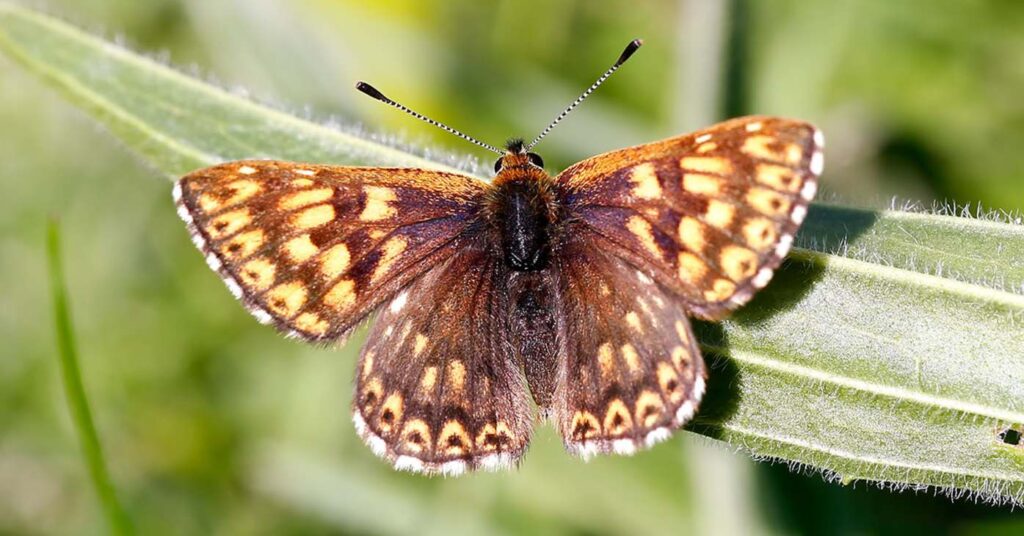
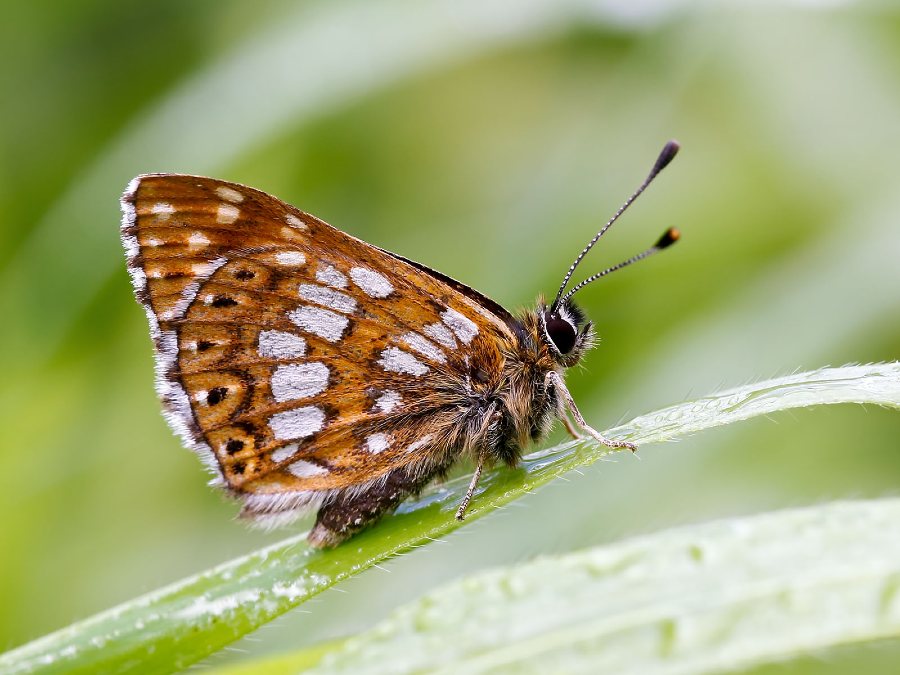
In Ipswich on the UK’s southeastern coast, a valley running down to a quaint river was turned into landfill in the 1960s and loaded up with trash. Capped and left to sit, in 2017 Landseer Park was turned into a 50-acre wildflower and pollinator sanctuary by a charity called Buglife. It’s now home to rare bee species and butterflies such as the dark green fritillary.
Local reporter Ross Bentley describes the meadows in lovingly nationalistic detail when he wrote for the East Anglian Times.
“Such is the subtle majesty of our native wildflowers that their beauty only becomes truly apparent close up: the lilac of field scabious; the flamboyant blue spikes of viper’s-bugloss; the yellow, honey-scented lady’s bedstraw—the names conjuring up images of their usage back centuries ago when people understood better the properties of our natural flora.”
“When the sun shines on England”
Mark Fairhurst
For Forbes Adam, strolling through the old barley field which has been newly meadowed is like stepping onto “25-acres of hope.”
Her plan was to restore an ancient kind of habitat across much of the North Atlantic called “woodmeadows,” which are exactly what they sound like—a mosaic of trees, grasses, and flowers that marry the creatures of the meadow with those of the forest, and which still can be found across Scandinavia today.
So far, Adam has recorded more than 1,000 different species of invertebrate, according to an interview she gave with The Guardian, including 34 bee species and 26 butterflies.
She now runs the Woodmeadow Trust, a charity that helps advise landowners on creating this sort of iconic English habitat everywhere, from Yorkshire in the north to London in the south. That aspiration has a slogan: “a woodmeadow in every parish.”
Over the next 22 years, the larger Plantlife UK charity is hoping to capitalize on the wildflower appreciation trend with a campaign to restore 360,000 acres of wildflower meadows (120k hectares) across the nation.
They practice natural seeding techniques, which involves harvesting seeds at different times from local strains of plant species and seeding areas with this stock rather than buying wildflower seeds from a store.
WhoisBenjamin
The difference is that the naturally collected seeds will create plants which grow and produce nectar and flowers at different rates, meaning the season during which pollinators can find food, and humans can stroll among the beautiful petals, will be much longer.
Plant Life’s Magnificent Meadows website contains all kinds of resources for making your own wildflower meadow, and how to get involved in the movement to save the English meadow, an important piece of ecological identity, as Alice Duer Miller divulges in The White Cliffs:
When the sun shines on England, shafts of light,
Fall on far towers and hills and dark old trees,
And hedge-bound meadows of a green as bright—
As bright as is the blue of tropic seas.
With COVID vaccines in short supply, waiting times are not unusual—but not for those stuck in traffic alongside these dedicated healthcare workers who made sure that fresh doses didn’t go to waste.
Josephine County Public Health
During last Tuesday’s snowstorm in Oregon, this inoculation crew found themselves stranded in a traffic jam. Rather than let vaccine doses expire, they hopped out of their vehicles and braved the cold, walking car to car looking for people eager to receive the shots.
After a day spent doling out vaccinations at various locations, Josephine County Public Health Director Michael Weber and 20 colleagues were on their way back to home base in Grants Pass, Oregon with six vaccine doses leftover. Stuck in a snowbound line of cars behind an accident, Weber realized that the 6-hour shelf life of these vaccine doses that had been removed from sub-zero storage would expire quickly.
With the vaccine’s viability window closing, rather than let the precious cargo go to waste, Weber leaped into action. “I decided to start going door-to-door, car-to-car, offering the vaccine,” he told The Washington Post. An ambulance that had accompanied them was also present and ready to treat anyone in the rare case of an allergic reaction.”
Weber and four team members carried pre-filled hypodermics, medical supplies, and a big umbrella to canvass motorists for likely candidates. After 45 minutes, all the remaining doses had been happily distributed.
The six lucky people who got the unexpected shot in the arm were elated. One “vaccinatee” was so psyched, he jumped out of his car and stripped off his shirt in the blizzard to get his injection.
Josephine County Public Health
And finally, in a quintessential “somebody up there likes me” moment, the last dose went to a woman who’d missed her scheduled appointment that same day. She was thrilled.
The foundation of the COVID-19 vaccine, and many others, can be drawn back to the work of an intrepid immigrant to the United States from Hungary, whose never-say-die attitude and belief in her work led to one of the most important technological developments in vaccine research.
Katalin Karikó
Katalin Karikó is now being talked about for a Nobel Prize, but life wasn’t always so congratulatory for her, and the story about how she practically invented mRNA and RNA-derived therapies and vaccines—the basis of so many lifesaving treatments—was filled with challenges.
When Karikó left her native Hungary with husband and young child, she had just $1,200 stuffed in her daughter’s teddy bear. Now, after years of her work developing mRNA and RNA technologies, she is the senior vice-president for the German pharmaceutical giant BioNTech, and her work has received more than 12,000 academic citations.
After graduating with a Ph.D. in biochemistry from the University of Szeged, she afterwards embarked on a research career at the Hungarian Academy of Sciences.
However, after getting laid off, Karikó subsequently relocated to the United States after receiving an invitation from Temple University in Philadelphia in 1985. She would eventually transfer to University of Pennsylvania, which would end up being an extremely difficult period.
In that time, messenger RNA research was extremely popular, but shortly after she arrived, the method for using a virus’s genetic material to command a human body to duplicate certain proteins to fight the virus was considered too radical, and too financially risky to fund.
The failed grant applications began piling up on Karikó’s desk, but she was not deterred.
Ten years after she arrived in Philadelphia, she was demoted from her position at UPenn and was then diagnosed with cancer.
“Usually, at that point, people just say goodbye and leave because it’s so horrible,” she told Stat, a health news site, in November. “I thought of going somewhere else, or doing something else. I also thought maybe I’m not good enough, not smart enough.”
Along with another immunologist called Drew Weissman, the pair finally received patents for their mRNA technology in 2012, but after receiving yet more trouble from UPenn, Karikó took a job at BioNTech, a German company founded, perhaps fittingly, also by immigrants.
Is it a coincidence that the first and most widespread COVID-19 vaccine was produced by this company? In reality it was Karikó and Weissman, repeatedly underestimated or dismissed by Pennsylvania academics, that partnered their method of mRNA gene-therapy with the expertise of Pfizer, to create the vaccine that has already protected millions of people.
The pair are being talked about for a Nobel Prize, including by famed British intellectual Richard Dawkins and Moderna CEO Derek Rossi.
UPenn "told me that they’d had a meeting and concluded that I was not of faculty quality,” she said. ”When I told them I was leaving, they laughed at me and said, ‘BioNTech doesn’t even have a website.’”
“Through their painstaking research into mRNA—and persistence despite setbacks— Weissman and Karikó laid the groundwork for vaccines that will save countless lives,” said Director of the Rosenstiel Center for Research on Basic Medical Sciences.
In an interview with CNN, Karikó, with eyes as blue as sea glacier ice, explained that the time for awards and celebrations will come at another time, when the pandemic she will be chiefly responsible for ending, indeed ends.
SHARE This Fascinating Story With Friends on Social Media…