With a new inspirational quote every day, atop the perfect photo—collected and archived on our Quote of the Day page—why not bookmark GNN.org for a daily uplift?
Intel headquarters in Santa Clara California - credit, Coolcaesar, CC BY-SA 4.0.
57 years ago today, the Intel Corporation was founded in Mountain View, California. One of the largest manufacturers of computer hardware, Intel was a key component of the rise of Silicon Valley as a high-tech center, as well as a pioneer of random access memory and microprocessors. It was one of the first companies listed on Nasdaq, and is today the third largest semiconductor producer in the world by revenue. READ more about this American tech powerhouse… (1968)
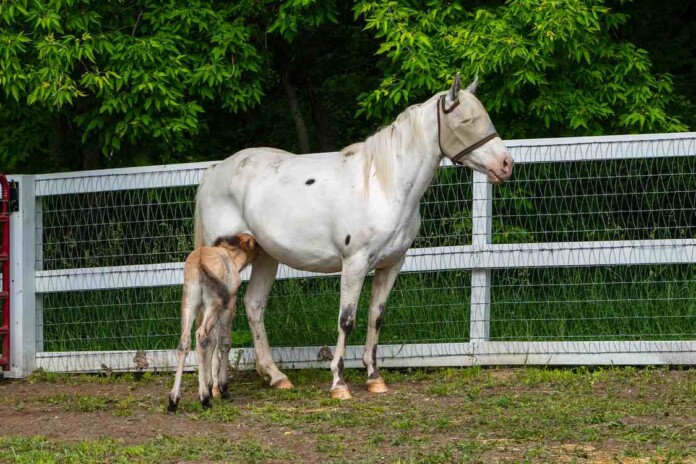
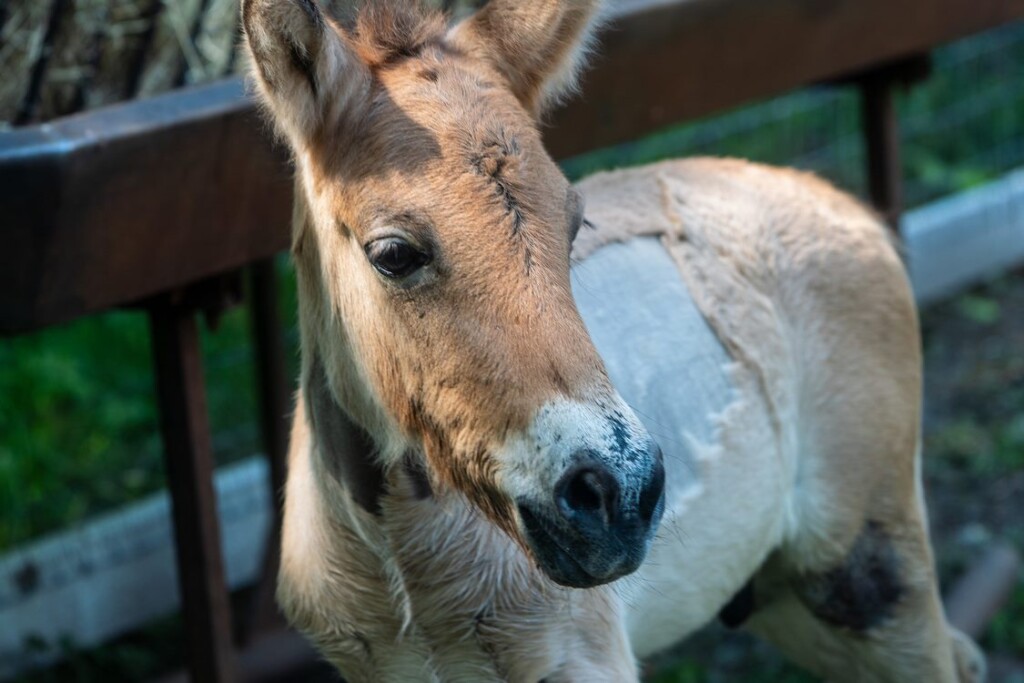
Alice the pony and Marat the foal at the Minnesota Zoo - released
Alice the pony and Marat the foal at the Minnesota Zoo – released
A story of resilience and maternal instinct comes now from Minnesota, where a foal belonging to Asia’s last remaining wild horse species is thriving thanks to an unexpected hero: a domesticated horse named Alice.
Having lost her own offspring, Alice decided to put Marat, the months old Przewalski’s horse foal, between her heart and her hooves.
Born May 17th at the Minnesota Zoo, the male foal is the result of a decades-long commitment to saving the endangered Przewalski’s horse, which over the last 15 years has progressed remarkably well.
Just days after his birth, the foal became critically ill and was transferred to the University of Minnesota’s Veterinary Medical Center. While he made a full recovery, the temporary separation led his mother, Nady, to reject him—a behavior not uncommon among wild horses after separation.
Enter Alice, a gentle Pony of the Americas mare from Brush Poppin Ranch in southeastern Minnesota. Just days earlier, Alice had lost her own newborn filly. Her owners, Sylvia and Jeff Passow, hoped her nurturing temperament and milk supply might help another foal in need.
Within hours of hearing about the orphaned wild foal, the Passows made the drive to the Minnesota Zoo. From their first meeting, Alice accepted Marat as her own, nuzzling him gently and allowing him to nurse. The two have formed a heartwarming bond, and Alice will remain by his side for the next several months as he continues to grow.
Just a few thousand of Marat’s species exist in the wild and zoos around the world – released
“This is the kind of story that reminds us of what conservation is all about: collaboration, compassion, and hope,” said Randy Kochevar, Chief Animal Care, Health, Conservation and Behavior Officer at the Minnesota Zoo. “Thanks to the Passows’ generosity and Alice’s instinct, this endangered foal now has a second chance.”
Przewalski’s horses are the world’s last truly wild horse species, never domesticated and genetically distinct from other horses. Once declared extinct in the wild by the 1960s, the species survived only through a small number of individuals in zoos.
Through decades of careful breeding, international cooperation, and scientific breakthroughs, including recent genetic research and cloning efforts, populations have been reestablished on the steppes of Mongolia and China. Fewer than 2,000 Przewalski’s horses exist today, making each foal born in human care critical to the species’ survival.
The Minnesota Zoo has long played a leading role in this global effort. Since opening in 1978, the Zoo has welcomed more than 50 foals as part of the Association of Zoos and Aquariums’ Species Survival Plan (SSP), which coordinates breeding to maintain genetic diversity.
In 2024, the Zoo contributed to a landmark genetic study aimed at strengthening future conservation efforts for the species.
Along with Mongolia and China, this year GNN reported that 150 animals have been transported to the steppes of Kazakhstan, another of the horse’s former pastures. Released at the Altyn Dala Reserve in Kazakhstan’s Kostanay region, it’s hoped they will naturally breed and spread out, eventually becoming prey for the Turanian tiger, an extinct local subspecies Kazakhstan is also attempting to reintroduce.
SHARE This Heart-Nuzzling Story Of Adoption And Mothering…
Currently open to 1,000 bathers daily in three different cordoned swimming locations for free, Parisians are flocking to enjoy their river the way their great-grandparents once did.
Excitement that pollution in the Seine river would be low enough to allow for healthy swimming grew and grew in the years and months leading up to the Summer Olympics in Paris in 2024, when it was supposed to be used for the triathlon event.
Both Paris mayor Anne Hidalgo and French President Emanual Macron promised to take a dip in the Seine in July before the Games’ opening, and while the former did, the latter was officially unable to because of campaign commitments, though critics accused him of fearing that pollution remained.
In 2023, GNN reported on the progress made by the $2.3 billion project that started shortly after Paris was awarded the Games. By 2018 the city had already passed a law which mandated the Seine’s many houseboats had to moor by sewage access. They had been dumping right into the river before.
More than half-a-billion euros was earmarked for huge storage basins and other public works that will reduce the need to let bacteria-laden water spill out into the Seine when it rains, while other government money is going to improve sewage treatment plants along the banks and at the tributary of the Marne.
One storage facility located near Paris’ Austerlitz train station can hold 20 Olympic swimming pools of dirty water from being spat raw into the river.
Following the Games, some of the athletes who swam in the Seine got sick, and the river as well as the government became easy targets for finger pointing.
In February of this year, the Guardian reported that water samples contained the DNA of rare mussels sensitive to pollution and thought to be on the point of extinction in France, indicating that efforts were paying off, if a little late.
The thick shelled river mussel, the black river mussel, and the depressed river mussel are all considered near-extinct, and the researchers sampling the Seine for DNA hadn’t even been looking for them; they were expecting fish, which they also found at 10-times the density and diversity of a study done in 1960.
Then, in early July as a heat-wave gripped Europe, the Seine was declared open for swimming. A much needed way to cool off that happens to be carbon-neutral, it’s believed the Seine swimming spots will become chief attractions inside the city and beyond, where another 10 such spots, cordoned off to protect swimmers from boat traffic, are planned to open.
Lifeguards, changing facilities, and showers are all present at the bathing spots, and now, despite whatever else he has going on, Macron can have no excuse from taking that dip.
SHARE This Great News From Paris, Like The Return Of An Old Friend…
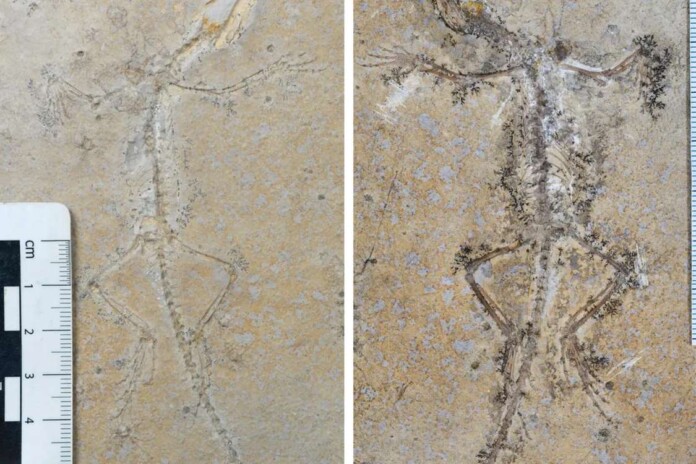
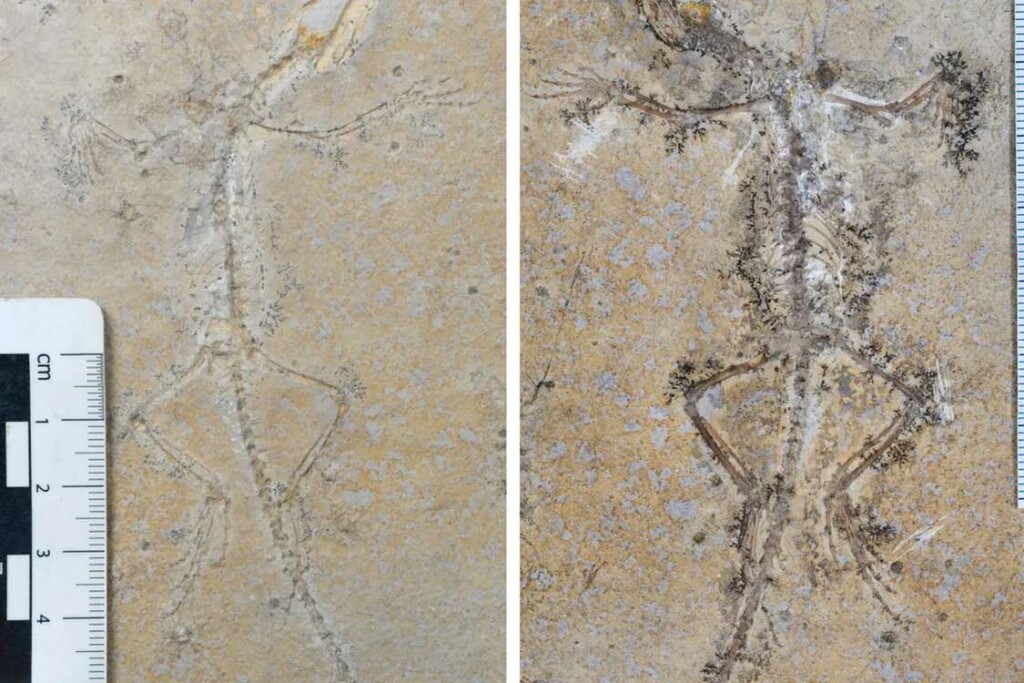
Side by side composite image of the two fossil halves - credit London Natural History Museum, released
Side by side composite image of the two fossil halves – credit London Natural History Museum, released
The story of how Sphenodraco scandentis came to be known is one for the ages: involving lies and deceit, and the well-trained eye of a brilliant paleontology student.
Ph.D. student Victor Beccari couldn’t shake the feeling he had seen the fossil before: it was a slab of rock containing the impression of a Jurassic-period reptile housed at the London Natural History Museum.
It was during the same visit that he realized where—at the Senckenberg Nat. History Museum in Frankfurt.
Beccari followed his instincts and confirmed that each museum contained a half of the whole: one had the fossil, and the other the imprint it made on the prehistoric sediment.
“It seems that someone in the 1930s decided to double their profit by selling both halves separately,” Beccari says in a museum statement. “As they didn’t tell either buyer that there was another half, the connection between the two fossils had been lost until now.”
“These kinds of fossils are normally preserved flat, so when they’re split open you often get the skeleton in one half and the impression of the skeleton in the other.”
When the two halves were reunited, something more was revealed other than intergenerational deception and buyer’s remorse—neither museum had identified it correctly.
Previously labeled Homoeosaurus maximiliani, it’s actually a new species of ancient lizard that dwelt among the trees. Sphenodraco scandentis, as the specimen has been renamed, is the earliest known member of the order Rhynchocephalia to have lived in trees.
These ancient lizard-like reptiles are actually not true lizards, but a third major reptile order alongside snakes and lizards. There is a living member of this order today, called the tuatara, that lives in New Zealand.
Beccari’s subsequent work on S. scandentis shows that it had a short body, long limbs, and long forefingers, similar to draco gliding lizards today. It strongly suggests an arboreal lifestyle, and would be the oldest rhynchocephalian known to live in the trees.
One of the key places on Earth for studying rhynchocephalians is an area of German rocks known as the Solnhofen Limestone. During the Late Jurassic, this region would have been a chain of islands across a subtropical sea, and it just so happens that it was where the Senckenberg Museum’s specimen came from.
Although the fossils are well-preserved, they’ve not all been studied in detail. Many of the historic descriptions of rhynchocephalians are somewhat vague, focusing on characteristics that are fairly broad across a variety of animals.
“I think we’re really underestimating the diversity of these animals,” Beccari said. “In a lot of cases, fossils coming from the same place that look somewhat similar get lumped together. So, everything with longer limbs was called Homoeosaurus and everything with shorter limbs was Kallimodon.”
“The closer you look at how these animals have been studied in the past, the more you appreciate that the species aren’t that well-defined. We know that modern islands can have hundreds of species of reptiles, so there’s no reason that ancient islands didn’t too.”
“I’m going back over existing fossils to look for signs that other currently accepted species might cover multiple rhynchocephalians. There are also still a number of undescribed specimens that may also represent new species as well.”
“It goes to show just how important museum collections are to understanding ancient diversity. Even though many of these fossils were discovered almost two centuries ago, there’s still a lot they can teach us.”
GNN recently reported on other instances like this: a new tyrannosaurid that had sat in a museum drawer for 50 years, and a small, riverside dinosaur that had been poorly described for 150 years.
SHARE The Story Of This Young Man’s Brilliant Discovery With Your Friends…
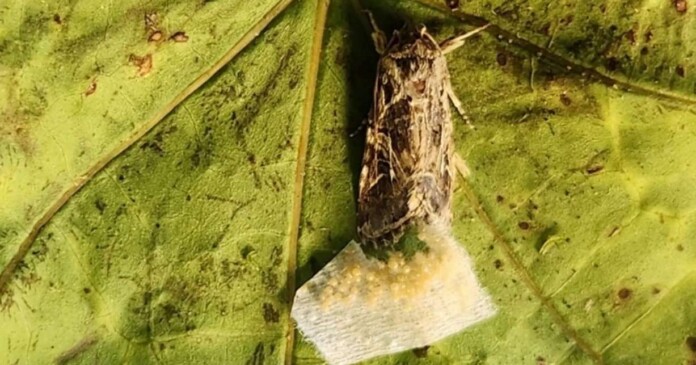
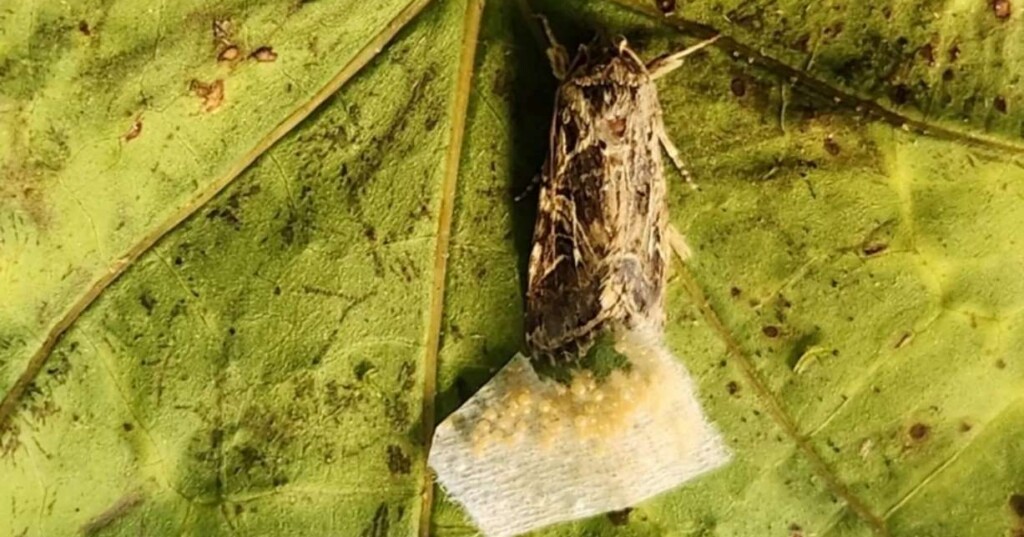
A moth laying eggs on a tomato plant - credit, Tel Aviv University
A moth laying eggs on a tomato plant – credit, Tel Aviv University
Scientists have found that plants make a series of sounds that indicate they are under duress, and that certain animals have evolved to hear these and react to them.
Described as a “vast, unexplored field,” the phytoacoustics are inaudible to the human hear, but adjusted to frequencies that we can hear, the sounds are not unlike the popping of corn in a pan.
A genus of moths is known to lay its eggs on the leaves of the tomato vine so that the larvae have a ready food source when they emerge. Scientists at Tel Aviv University performed a series of trials to see if these moths would lay their eggs on plants which were sounding off that they were dehydrated or stressed in some way.
The hypothesis would be that if moths could hear the sound, they may choose to avoid laying their eggs on the ‘screaming’ plants, as a stressed plant would produce fewer or inferior tomatoes, resulting in weaker, less-nourished larvae.
The result was exactly that. When controlled for visual indicators on the leaves and fruit, moths reliably chose to lay eggs on the silent plants over the sounding ones.
“This is the first demonstration ever of an animal responding to sounds produced by a plant,” said Professor Yossi Yovel of Tel Aviv University who co-led the project. “This is a vast, unexplored field—an entire world waiting to be discovered.”
Dr. Yovel has made other foundational discoveries in plant signaling, including that stressed plants emit airborne sounds that can be recorded from a distance and classified, and another that showed plants ‘hear’ the sounds of pollinators nearby and rapidly increase the sugar concentration in their nectar.
On the back of this most recent paper, he plans to extend his research to make a catalogue of sounds from different plants, and begin to see how many, if any, animals are reacting to them.
“This is speculation at this stage, but it could be that all sorts of animals will make decisions based on the sounds they hear from plants, such as whether to pollinate or hide inside them or eat the plant,” said Dr. Yovel according to the BBC.
With all this talk about screaming plants and listening plants, the authors stressed that plants are not sentient as we understand it. The sounds are made by changes in the physical structure of leaves, not by compression and manipulation of air, the beating of extremities against other body parts, or any other vocalizations that we know of in the animal kingdom.
Others are slightly more convinced, however, such as forester and author Peter Wohlleben, who is eager to see when scientists can devise a computer which detects through pheromones what trees are ‘talking’ about. His work indicates this is a primary means of tree communication.
Whether or not science is on the cusp of elaborating plant ‘intelligence,’ it’s undeniable that there is a virtually universal plant ‘awareness’ which if we’re honest, isn’t always an inferior quality to intelligence.
Quote of the Day: “We sit in the mud… and reach for the stars.” – Ivan Turgenev
Photo by: Ryan Jacobson
With a new inspirational quote every day, atop the perfect photo—collected and archived on our Quote of the Day page—why not bookmark GNN.org for a daily uplift?
The Sleeping Beauty Castle bedecked for the park's 50th anniversary.
70 years ago today, Disneyland was dedicated and opened in Anaheim, California. It is the most visited theme park in world history with 757 million visits since it opened as of December 2021. In 2022, the park had approximately 16.9 million visits, making it the second most visited amusement park in the world that year, behind only Magic Kingdom, the very park it inspired. READ more… (1955)
Bat boys often blend into the background, becoming bit players in the operations of a major league baseball game.
But the Philadelphia Phillies recently gave their bat boy, Adam Crognale, the star treatment, creating a hype video that helped get him elected to this year’s All-Star Game ball crew.
Thanks in part to the video that showcased Adam’s skills snagging foul balls and supporting his team, the 26-year-old New Jersey native won the 3-day public voting to serve as the National League’s bat boy in the MLB All-Star Game last night.
Watch the hype film posted on social media by the Phillies…
The best Bat Man in the biz is on the All-Star ballot! Vote and let's send Adam to ATL 🤩
“I know I’m living the dream of some 8 or 10-year-old kid in the stands,” Adam told CBS Philadelphia. “It’s a dream come true. I don’t take it for granted…”
The dream holds even more meaning considering what Adam has overcome in his young life—a cancer diagnosis of lymphoma in his knee that temporarily stole his ability to run.
Fortunately, his treatment was successful and he went on to graduate from Temple University and earn his ‘dream job’ as the Phillies’ bat boy.
“There’s nothing better than coming to this ballpark,” Adam told CBS Philadelphia in 2024. “I’ve said that since I was a 5-year-old kid, and I probably will not stop saying that.”
And now, his ball handling skills have made him an all-star.
(Watch this thoughtful young man being interviewed, before he won the vote…)
Wilga at a local store where she was last seen before becoming missing - credit WA Police, handout
Carolina Wilga at a local store where she was last seen before becoming missing – credit WA Police, handout
A German backpacker lost for 12 days in the Australian outback has survived and spoken out regarding her traumatic experience.
Carolina Wilga’s disappearance gripped the nation after her friends and family lost contact with her in late June and her van was discovered immobilized off a trail in a nature reserve in the state of Western Australia.
The 26-year-old had been found walking along a track on the outskirts of the reserve, having been ravaged by mosquitos and chewed up in the rough terrain.
Inspector Martin Glynn of the Western Australia police said Wilga was found last Friday at 7:30 p.m. local time by a member of the public who took the backpacker to the nearest town, Beacon. It was there that she was airlifted to a hospital in Perth where she released a statement to the press on Monday.
“The thought of all the people who believed in me, searched for me, and kept hoping for me gave me the strength to carry on during my darkest moments. For this, I want to say thank you from the bottom of my heart,” Wilga, who was pictured in the hospital among cards of well-wishes, flowers, and food required to “gain 12 kilos back.”
“Especially to the police investigators, searchers, the German Consulate, the medical staff and the wonderful nurses who took care of me with so much compassion. My deepest thanks also go to every single person who simply thought of me — and of course, to my rescuer and angel, Tania!”
A press conference from the WA Police on Friday revealed that, having been found by Tania Henley, her mental state was “quite… fragile.”
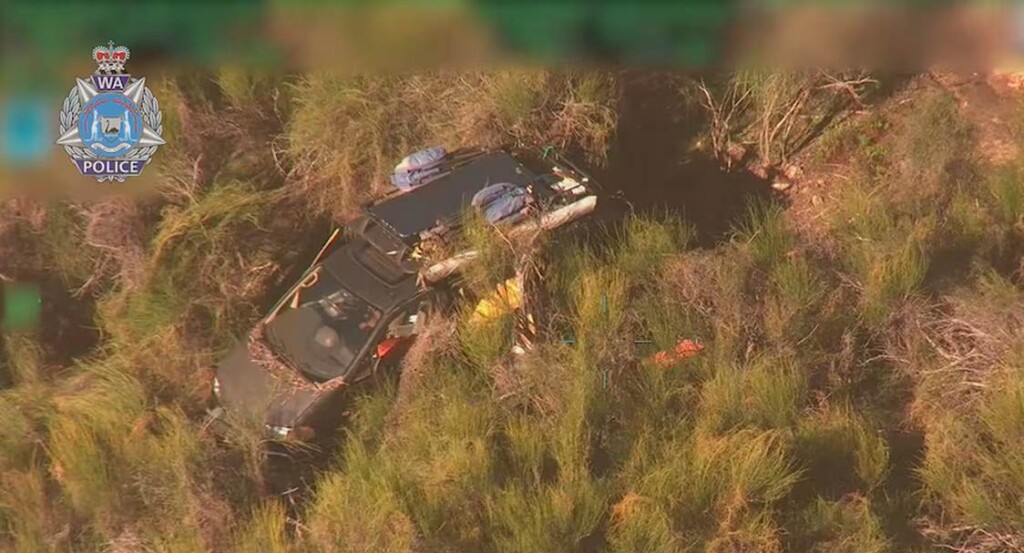
The details of Wilga’s survival ordeal are that her van became immobilized in mud, and that for a reason later revealed in her statement, she left it, became disoriented, and got lost. According to ABC News Australia, she was barefoot, and survived off drinking water from puddles and eating what little food remained in her pockets after she left the van.
An aerial picture of Wilga’s van – credit WA Police, handout
“There’s a very hostile environment out there, both from flora and fauna. It’s a really, really challenging environment,” said Glynn.
She wandered around the Karroun Hill Nature Reserve from the point at which her van was stuck, which was 21 miles from any of the reserve’s main trails. At night the temperatures regularly fall to 32°F, and she sought shelter wherever it was available, including a cave.
“You’re always so hopeful with these missing person situations,” Glynn said. “It’s really quite traumatic because you obviously always go out with the best of hope that you will find the person. It’s just a great outcome for everyone involved.”
In her statement, Wilga said that many people had asked her why she left the van. Her response was that when she careened off the trail, she hit her head significantly, became confused, wandered away, lost sight of it, and was lost, an all-too-common scenario for missing hikers.
Survival experts would agree unanimously: you should almost never leave your vehicle if it breaks down. It’s not only a ready source of shelter from the sun, wind, rain, and cold, but it’s much easier for rescuers to see it from the air. In the case of Wilga, the van was found by an aerial search, but she was long gone by then.
Outback survival experts speaking with ABC say there are two main reasons why people leave their cars. The first one is irrational, and known as an amygdala hijack, where an overcoming sense of panic and denial cause people to make irrational decisions, like believing they can follow a trail back to get help, or climb a hill to see if they can spot civilization in the distance.
The second is more rational, and its the sense of wanting to take action. In reality, sitting down, sipping some water, and having a think about things is a much better course of action that will typically result in the confirmation that waiting by the vehicle is the best option.
Additionally, Wilga’s story is a reminder of how easy it can be to get lost in remote country, even just a few hundred yards from a trail or a car. If wandering off the trail is necessary for any reason, take measures to ensure you know which way you came from, such as making signs on the ground, or bending down branches to mark your way.
Lastly, follow Wilga’s lead and never give up hope, as there will almost always be someone looking for you.
SHARE This Harrowing Story Of Survival With Your Friends…
An image based on numerical simulations of a black hole merger - credit, NASA/Ames Research CenterC. Henze
An image based on numerical simulations of a black hole merger – credit, NASA/Ames Research CenterC. Henze
A collaboration between humanity’s three gravitational wave detectors have identified a black hole merger event that created something 225-times the size of our Sun.
It’s the largest such event ever detected in the history of gravitational wave astronomy, and pushed the limits of the discipline and what it can teach us to the highest degrees.
In 2015, history was made when the LIGO observatories in Livingston, Louisiana, and Hanford, Washington, detected a ripple in the fabric of space time cause by a black hole approximately 65-times the mass of the Sun.
Since then, LIGO has teamed up with the gravitational wave detectors Virgo in Pisa, Italy, and KAGRA, in Japan. Together they form the LVK collaboration, and have greatly expanded the capabilities of detecting these phenomena.
Using practically the entire Northern Hemisphere as a capture area, LVK during its most recent observations detected over 200 individual gravitational waves, but one labeled GW231123, named for its detection date on November 2023, blew all the rest away.
At between 2 and 13 billion light years from Earth, it was a literal universe shaking event. GW231123 marked the collision and merger of two rapidly spinning black holes, one measuring 103 solar masses, and the other 137 solar masses. Each was spinning 400,000 times the rotational speed of the Earth.
The high mass and extremely rapid spinning of the black holes push the limits of both gravitational-wave detection technology and current theoretical models.
“The black holes appear to be spinning very rapidly—near the limit allowed by Einstein’s theory of general relativity,” explains Charlie Hoy of the University of Portsmouth and a member of the LVK. “That makes the signal difficult to model and interpret. It’s an excellent case study for pushing forward the development of our theoretical tools.”
Scientists speaking with the media said it will take years before the event is fully understood, but the working hypothesis is that the two black holes in this merger may have come to exist through their own mergers of smaller black holes in the more distant past.
“This is the most massive black hole binary we’ve observed through gravitational waves, and it presents a real challenge to our understanding of black hole formation,” says Mark Hannam of Cardiff University and a member of the LVK Collaboration. “Black holes this massive are forbidden through standard stellar evolution models. One possibility is that the two black holes in this binary formed through earlier mergers of smaller black holes.”
Collaboration researchers are continuing to refine their analysis and improve the models used to interpret such extreme events.
“It will take years for the community to fully unravel this intricate signal pattern and all its implications,” says Gregorio Carullo of the University of Birmingham and a member of the LVK. “Despite the most likely explanation remaining a black hole merger, more complex scenarios could be the key to deciphering its unexpected features. Exciting times ahead!”
SHARE This Big Wave Surfing Through The Universe On Social Media…
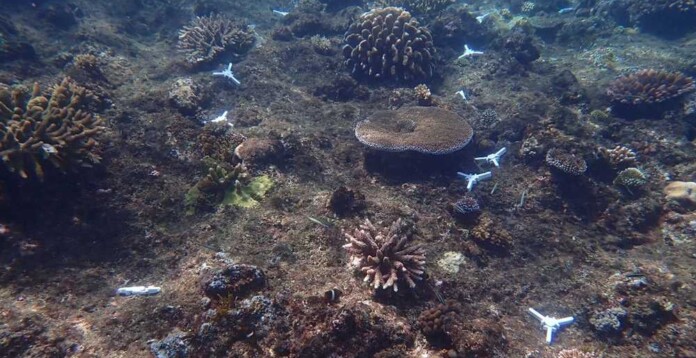
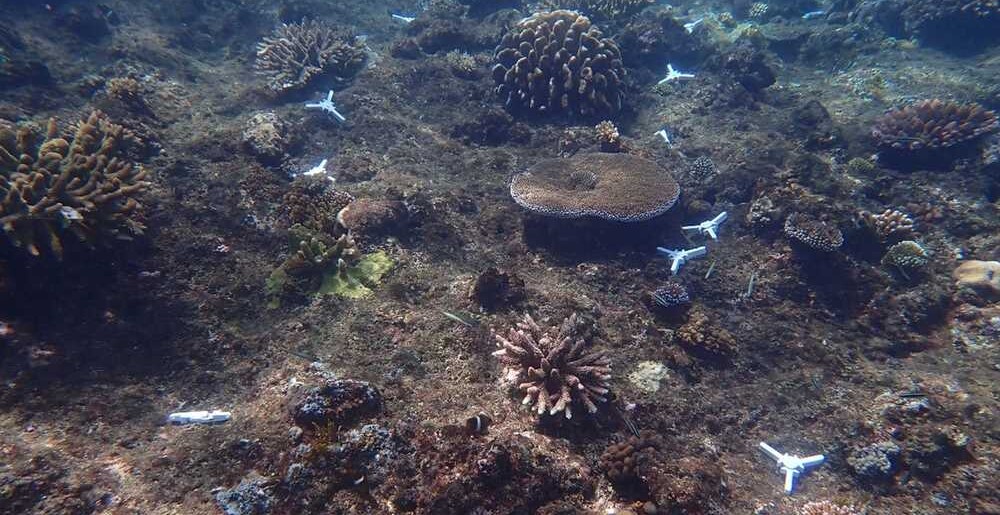
Surface-deployed substrates for coral spawning and colonization - credit ReefSeed
Surface-deployed substrates for coral spawning and colonization – credit ReefSeed
In the Maldives, a mobile coral spawning system has been trialed with scintillating success, as 10,000 juvenile corals were grown by local operators.
It represents not only a major hope that island nations can abate the loss of coral reefs, but also that the spawning system’s $1.5 million grant investment was well-spent, and that an expansion in production of the technology could well be warranted.
Co-developed by the Australian Institute of Marine Science (AIMS) and Maldives Marine Research Institute (MMRI), ReefSeed is a shipping container-sized, portable, seaside spawning laboratory for coral.
Designed to allow local marine scientists anywhere in the world to spawn and grow coral for reef restoration in weeks rather than months, and to operate without external power sources or the need for divers, ReefSeed received $1.5 million from the G20 Coral research and Development Accelerator Program.
It passed its recent acid test with flying colors, as the MMRI were able to use a single containerized ReefSeed unit to spawn 3 million larvae during a single spawning season, which they turned into 10,000 juvenile corals.
These corals were then deployed via 720 seeding devices across 9 different reefs. It was done without any of the AIMS experts present, proving its utility doesn’t require expertise in the system.
The spawning took place on Maniyafushi island in the South Malé Atoll of the Maldives, and AIMS coral reproduction scientist and ReefSeed co-lead, Dr. Muhammad Azmi Abdul Wahab, said the plan was to offer ReefSeed to as many other island communities as possible.
“We have learned much from working with colleagues at MMRI, which will help us make improvements in the training and refinements in the way the system itself can work,” Dr. Wahab told Oceanographic.
“Coral reefs in the Maldives sustain communities and livelihoods but, like coral reefs globally, they have been impacted by bleaching driven by climate change. Innovations like ReefSeed can play a role in supporting restoration efforts providing hope for these communities.”
MMRI scientists were invited to the Great Barrier Reef to witness, alongside their AIMS colleagues, the autumn spawning season on the world’s largest reef, something which GNN has reported before has to be seen to be believed—like the shaking of a giant snowglobe.
It was there they learned the fundamentals of coral spawning that they would take back to Maniyafushi island and their ReefSeed station.
SHARE This A+ Test Of A Coral-Making Machine That Could Save Reefs…
Quote of the Day: “Happiness grows at our own firesides, and is not to be picked in strangers’ gardens.” – Douglas William Jerrold
Photo by: Sergei Solo
With a new inspirational quote every day, atop the perfect photo—collected and archived on our Quote of the Day page—why not bookmark GNN.org for a daily uplift?
Quba Mosque, the first mosque in the history of Islam, at the outskirts of Medina. It was founded by Islamic prophet Muhammad - public domain
1403 years ago today, the Prophet of Islam, Muhammad, journeyed with his followers from Mecca to Medina. As an event it’s known as the Hijrah, and the start of the Islamic calendar. The whole departure spanned about three months, during which Muhammad remained behind to convince those who were reluctant. The second Rashidun Caliph, Umar ibn Al-Khattab, designated the Muslim year during which the Hegira occurred the first year of the Islamic calendar in 638 or the 17th year of the Hegira. This was later Latinized to Anno Hegirae, the abbreviation of which is still used to denote Hijri dates today. READ more on this day… (622)
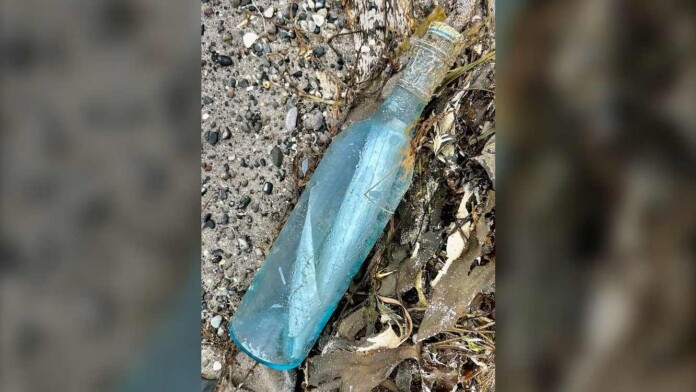
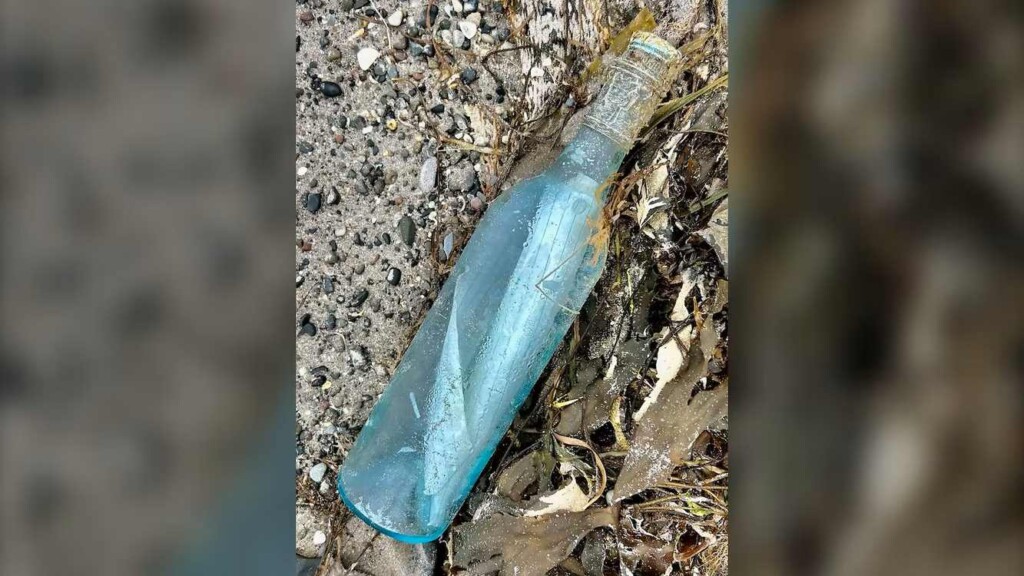
A bottle containing a note from a Newfoundland couple is shown on a beach in southwestern Ireland - credit Kate Gay, handout
A bottle containing a note from a Newfoundland couple is shown on a beach in southwestern Ireland – credit Kate Gay, handout
From the shores of Newfoundland to the shores of Ireland comes the story of two young lovers frozen in time within the blue glass of a wine bottle.
Separated by 5 time zones, 1,800 miles, and 13 years, the humble message in a bottle proves once again to have a unique power for connecting human beings.
It was 2012, and Brad and Anita were enjoying a picnic on Bell Island, off the coast of Newfoundland. The long-distance daters then got the idea to write a letter and stuff it in the wine bottle they had just emptied.
“Today we enjoyed dinner, this bottle of wine and each other on the edge of the island,” Anita wrote. Brad, then a greenhorn police officer, stood up and gave it all he had into the waters of Conception Bay, unsure if it cleared the rocks.
On July 7th, according to the Canada Press, the bottle was found by Kate and Jon Gay on the Maharees Peninsula in southwest Ireland, over 1,800 miles away. That night, they broke it open with members of their local conservation society, read the letter out loud, and hurried to get in touch with the authors.
Less than an hour later, a local named Martha Farrell confirmed to the Maharees Conservation Association that, according to the text message she had just received, Brad and Anita were still in love—but now were married with three children.
“And then I said, ‘Yay, love conquers all—and the Atlantic Ocean!’” Farrell said in an interview.
The Squires were married in 2016, and next year will celebrate their 10th wedding anniversary alongside their two teens and younger child. The Maharees Conservation Association, co-founded by Farrell in 2016, is also celebrating its 10th anniversary next year.
“Anita and I both feel like we have new friends, and we’re all equally amazed,” Brad Squires told Canada Press. “I guess we have some people to visit and a trip to probably plan.”
SHARE This Classic Kind Of Story With Your Friends On Social Media…
Quote of the Day: “The traveler sees what he sees, the tourist sees what he has come to see.” – G. K. Chesterton
Photo: Dariusz Sankowski
With a new inspirational quote every day, atop the perfect photo—collected and archived on our Quote of the Day page—why not bookmark GNN.org for a daily uplift?
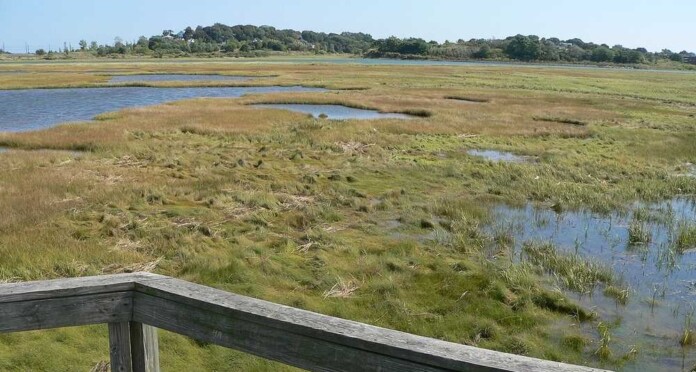
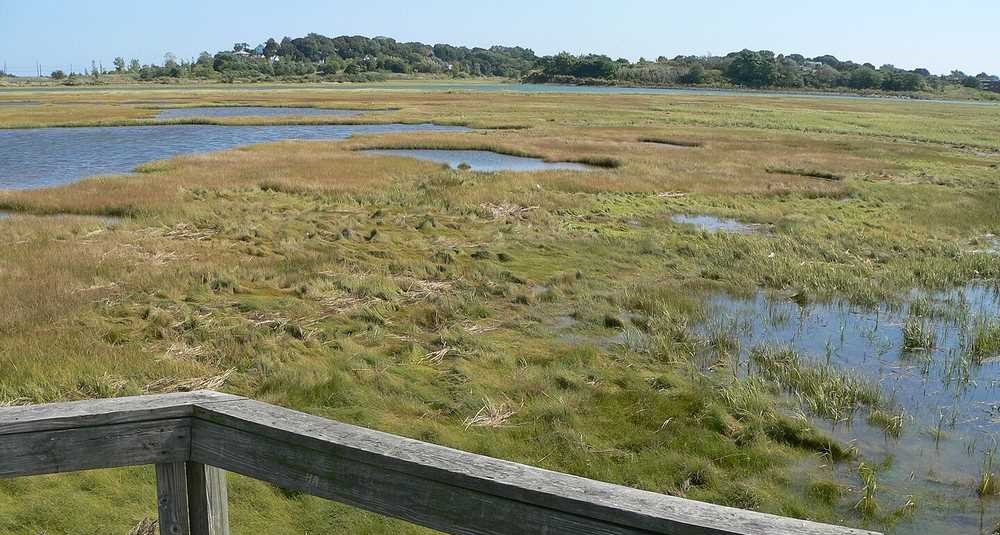
Belle Isle Marsh Reservation - credit NewtonCourt CC BY-SA 4.0.
Belle Isle Marsh Reservation – credit NewtonCourt CC BY-SA 4.0.
There are roughly 1,000 native bird species in the 50 States, and if you stand long enough on the walkways of Boston’s Belle Isle Marsh Reservation, you could see around one-fourth of them.
This protected Mid-Atlantic salt marsh remnant has recorded an astonishing 271 species of birds. It offers Bostonians a cool, breezy refuge of salty air and bird calls not far from Logan International Airport.
It’s the only remaining salt marsh in city, which was once surrounded by them. It protects neighborhoods from coastal erosion, absorbs storm surges, and delights the community who campaigned to protect it in the 1980s in the early days of the environmentalism movement.
“You can be out there on the main street then you come in here and you’re in a different place in a different time,” Heather Famico of the Department of Conservation and Recreation (DCR) told CBS News Boston.
The 359-acre marsh is nestled between the urbanized cities of Boston and Revere where it serves as a much-needed respite for migrating birds and as a habitat for many species including some on the Endangered Species List, while providing a beautiful and rare open green space to relax in.
That description was made by the Friends of Belle Isle, a grassroots advocacy group that formed in the 1980s when salt marshes, then a more common feature of the greater Boston landscape, were disappearing.
Belle Isle was looked at for development, but the organization prevented that from happening.
Longtime readers will know that GNN breaks for birders, and here one has a chance of spotting threatened and endangered birds like the least bittern, short-eared owl, and king rail. Other species like the saltmarsh sparrow, Virginia rail, and American oystercatcher, are all considered to have special conservation interest.
“It’s a cool oasis in a hot city. We need this,” said Kannan Thiruvengadam from the Friends of Belle Isle. “We need to be out here, enjoying, appreciating, advocating and learning what it is that we need so we can then protect it.”
WATCH the story below from CBS Boston…
SHARE This Great Opportunity To Get Outdoors With Bostonians You Know…
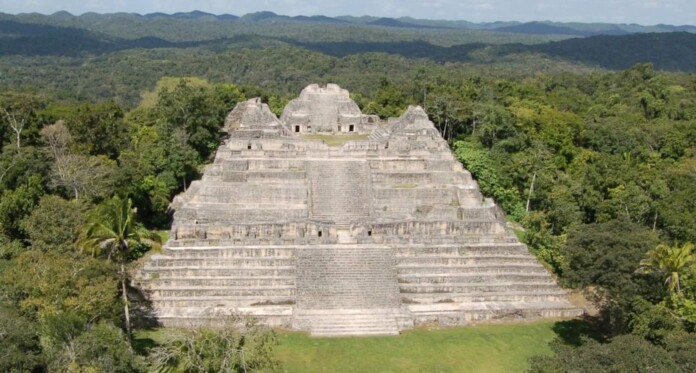
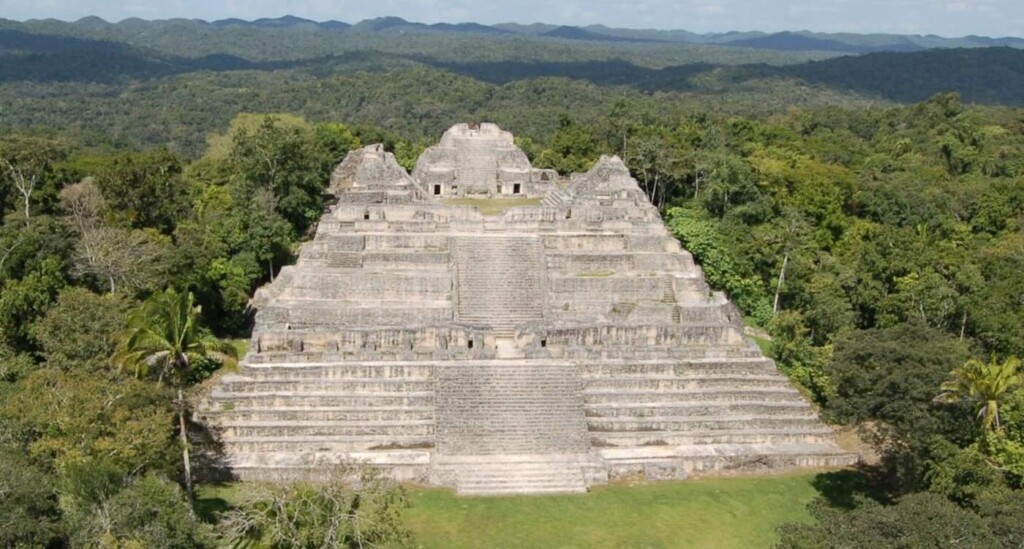
Caana, the Maya's central architectural complex in Belize discovered by Diane and Arlen Chase in the 1980s. The tomb was found in an acropolis to the right - credit, Caracol Archaeology Project / University of Houston
Caana, the Maya’s central architectural complex in Belize discovered by Diane and Arlen Chase in the 1980s. The tomb was found in an acropolis to the right – credit, Caracol Archaeology Project / University of Houston
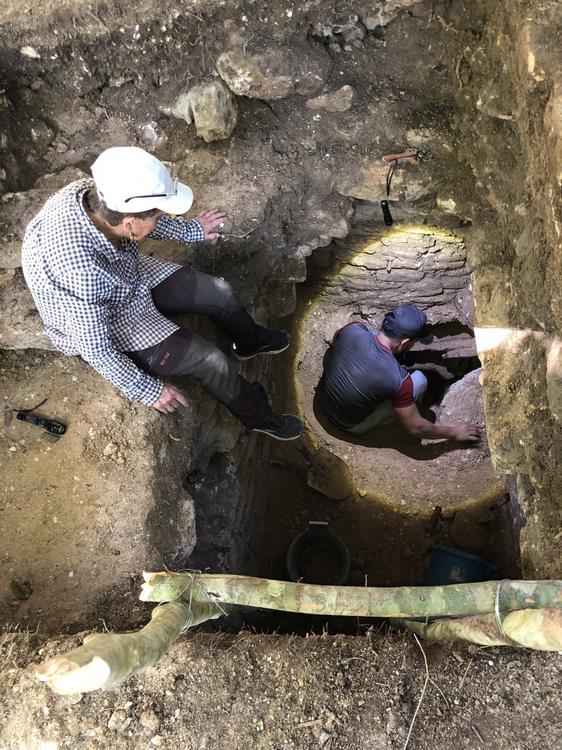
A major breakthrough in Maya archaeology had been made down in Belize, as the royal tomb of a major city’s first-known ruler is discovered by a husband-wife archaeology team.
Buried with elaborate jade, ceramics, and symbolic artifacts, the tomb offers unprecedented insight into early Maya royalty and connections with the non-Mayan Mexican city-state of Teotihuacan.
Caracol was a metropolis of its time in the lower Yucatan Peninsula, and one of the first great Mayan cities of the Classical period.
Its connection with Teotihuacan is key to the story of this discovery and the story of the life of Te K’ab Chaak, a warrior-king whose remains were found by excavations led by Arlen and Diane Chase, archeologists from the University of Houston who have been working at Caracol, among other sites, for 40 years.
They began excavation season by returning to a site that was first dug in 1993—the northeast acropolis, where burial chambers had been found previously. Striking through the floor of the first burial chamber revealed that it was also the ceiling of deeper, older set of tombs, one of which was filled with grave goods.
11 richly-decorated ceramic vessels along with jade earflares, a mosaic jadeite funerary mask, carved bone items, and loads of red pigment left no shadow of a doubt that Diane and Arlen had turned up a “one-percenter.”
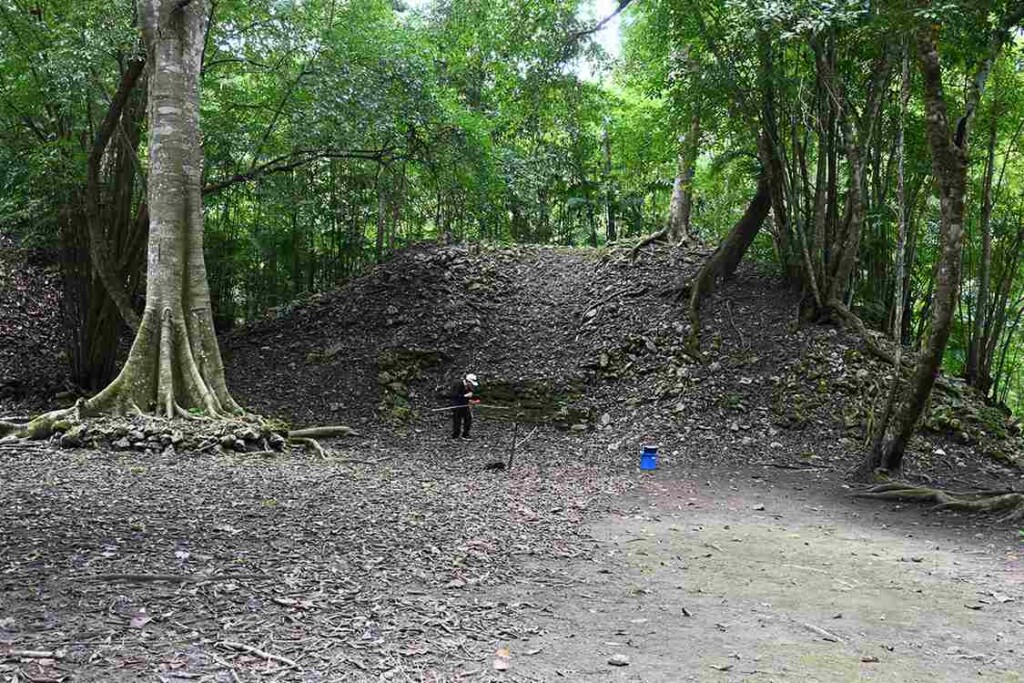
The North Acropolis at Caracol sits enveloped by dense jungle vegetation, preserving centuries of history beneath the surface – Caracol Archaeology Project / University of Houston
“This guy is a one-percenter and that’s why he has so many vessels and three sets of jade earflares in that chamber,” Arlen, a professor of comparative cultural studies, said in a statement on the discovery released by his university.
“The Early Classic period is the time when the rulers assert the fact that they oversee everything, completely distant from the rest of the population. That changes at the end of the Early Classic period, especially in Caracol, when, after the successful warfare against Tikal, they start to share the wealth with the general population. But not this person.”
The northeast acropolis was still covered in trees and earth and completely invisible in aerial surveys, but standing next to it, the manmade nature of the structure becomes clear.
Diane said in a video interview that across their careers, one set of jade earflares is rare, much less three. When you add in a jadeite death mask, something she and her husband have found only on one other occasion, you suddenly get the sense of the power and influence of this person. Additionally, much of the tomb floor and walls were covered in cinnabar.
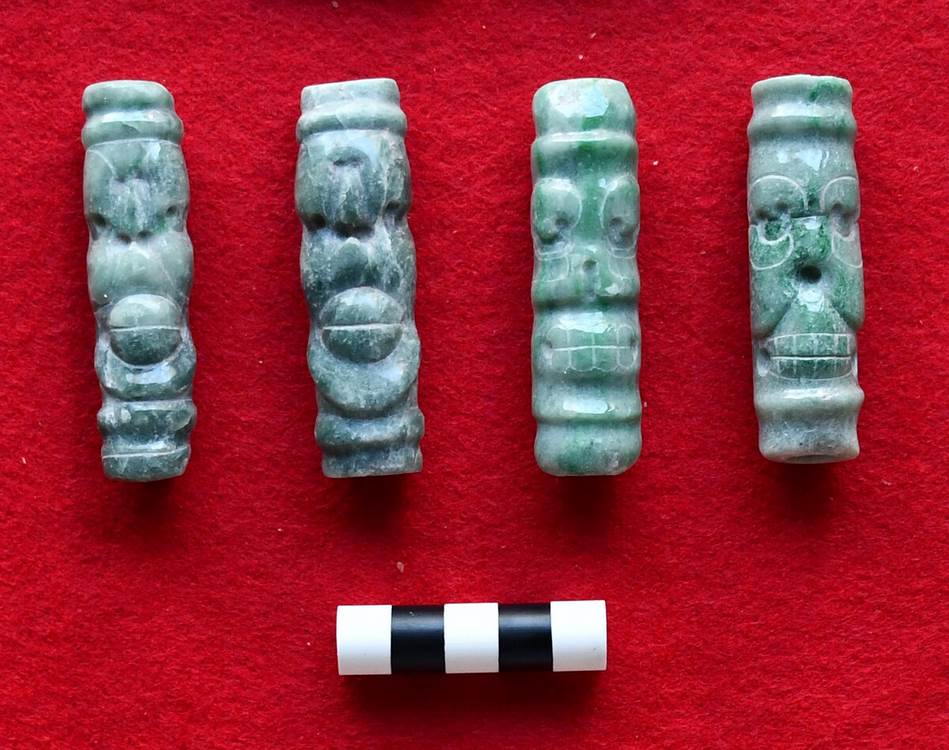
Four jadeite tubular beads showing live and dead spider monkeys – Caracol Archaeology Project University of Houston
“You’re dealing with some of the highest royalty when the things get covered in cinnabar, which is red,” said Arlen. “So everything is colored red like the rising sun in the east.”
Ascending to the throne in 331 CE, Te K’eb Chaak ruled over a city larger than the metropolitan footprint of the modern-day Belize capital, if such a thing can be believed. He lived a long time, as his skull was void of all teeth. Caracol was a center of trade, and Arlen’s assertion that he commanded and controlled that trade is backed up by iconography found on one of the ceramic vessels.
Atop the lid of one is a depiction of Ek Chuah, the Maya god of traders, surrounded by offerings. Ek Chuah is not seen almost at all in Early Classic Mayan iconography. Yet there he was, Arlen said in the same video, at 350 CE.
The covered vessels – credit, Caracol Archaeology Project / University of Houston
A different kind of Mexico
“Maya carved stone monuments, hieroglyphic dates, iconography, and archaeological data all suggest that widespread pan-Mesoamerican connections occurred after an event in 378 CE referred to as ‘entrada,’” said Diane Chase in the statement.
This is the crux of the discovery from the point of view of the archaeologist, who wants to uncover as much information as possible about life in the past. While the public breaks for the jade death mask and colored ceramic vessels, Te K’ab Chaak offers a rare opportunity to explore life in the Mayan political world before this ‘entrada.’
30 years before Te K’ab Chaak took the throne in Caracol, Teotihuacan, some 640 miles northward, was already a massive trading hub that dealt in many products across Mesoamerica.
In Caracol, two other tombs were found with Te K’ab Chaak in the northeast acropolis, including one which contained cremated remains of several people radiocarbon dated to 350 CE.
Fifteen pristine blades of green obsidian from Pachuca, Mexico, (north of Teotihuacan) several pottery vessels also likely came from central Mexico, and a carved atlatl projectile tip—atypical for the Maya but typical for a Teotihuacan warrior—were included in the cremation.
The royal tomb was ultimately accessed in 2025 by carefully excavating through the floor of an earlier tomb built above it, first discovered in 1993 – Caracol Archaeology Project University of Houston
The cremation itself and its placement in the center of a residential plaza are also more typical practices for a high-status Teotihuacano and do not accord with standard Maya burial practices.
Based on other ceramics in this cremation, the main individual was likely a Caracol royal family member that had adopted central Mexican ritual practices. This individual may even have served as a royal Maya envoy who had lived at Teotihuacan and returned to Caracol.
In other words, relations between these two great population centers, separated by roughly 153 days of travel on foot through the jungle, were already firmly ensconced by the reign of Te K’ab Chaak—a whole generation before such relations and connections are generally thought to have been established.
The royal dynasty founded by Te K’ab Chaak continued at Caracol for over 460 years, and the connections between the two regions were undertaken by the highest levels of society during that time.
It presents the picture of a bustling and interconnected Mexico long before the modern world arrived with its roads, airports, and skyscrapers.
“We need to sort of rethink how we view the past when we get finds like this,” Arlen concludes.
WATCH the video below from the university…
SHARE This Amazing Insight Into Classical Mexico With Your Friends…
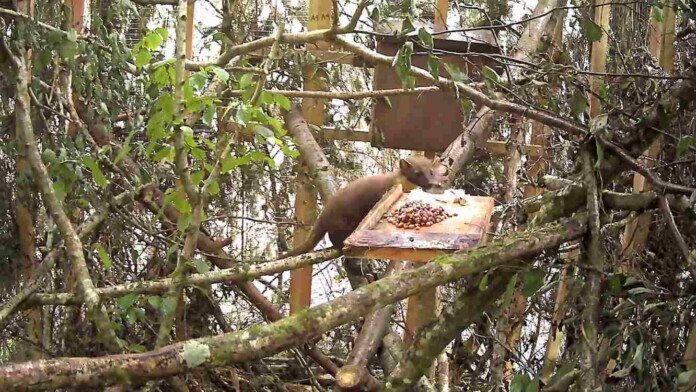
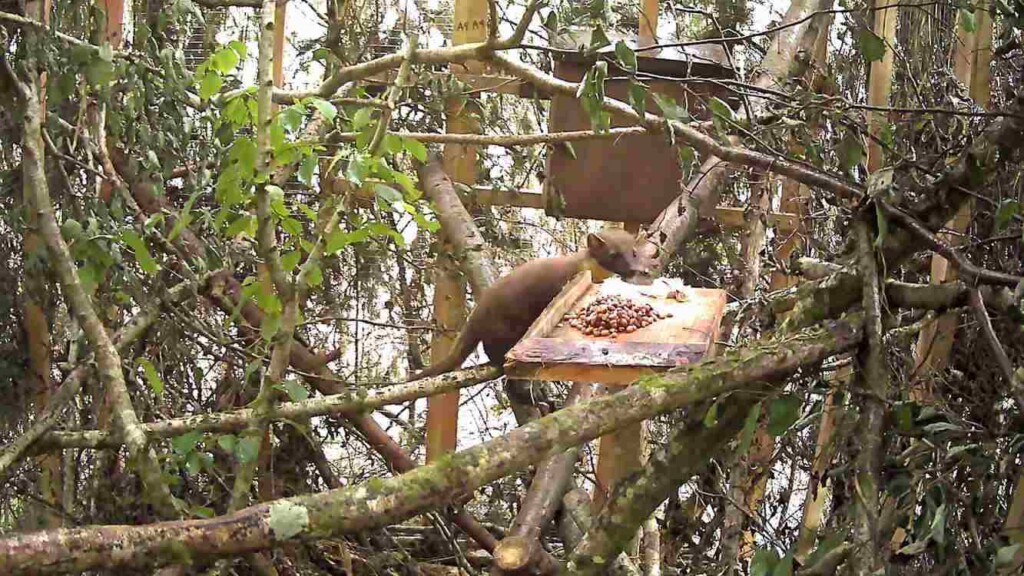
A pine marten spotted on a trail cam - credit, Two Moors Pine Marten Project, via SWNS
A pine marten spotted on a trail cam – credit, Two Moors Pine Marten Project, via SWNS
Camera trap footage has conservationists celebrating what are probably the first pine martens born in southwest England in over 100 years.
Their births follow a “pioneering” reintroduction project that sought to rebalance the predator-prey dynamics of a wild England by bringing back these arboreal, small game specialists.
credit – Devon Wildlife Trust
The project saw the release of 15 pine martens, eight females and seven males, at undisclosed locations in England’s southwest back in autumn 2024. Now camera trap footage has revealed the first glimpses of kits, recorded at a secret site in Dartmoor National Park in June this year.
Devon Wildlife Trust’s Tracey Hamston, who leads the Two Moors Pine Marten Project, described the news as a “historic moment” and admitted the team were “ecstatic” when they saw the footage.
“When our volunteers discovered the footage of pine marten kits on one of our trail cameras we were ecstatic,” she said. “This is a historic moment for the return of a native animal and for the future of the southwest’s woodlands.”
“To have breeding pine martens back after a century’s absence signals a positive step in nature’s recovery. It’s also testament to the many hours work undertaken by the project partnership and dozens of local volunteers,” she concluded.
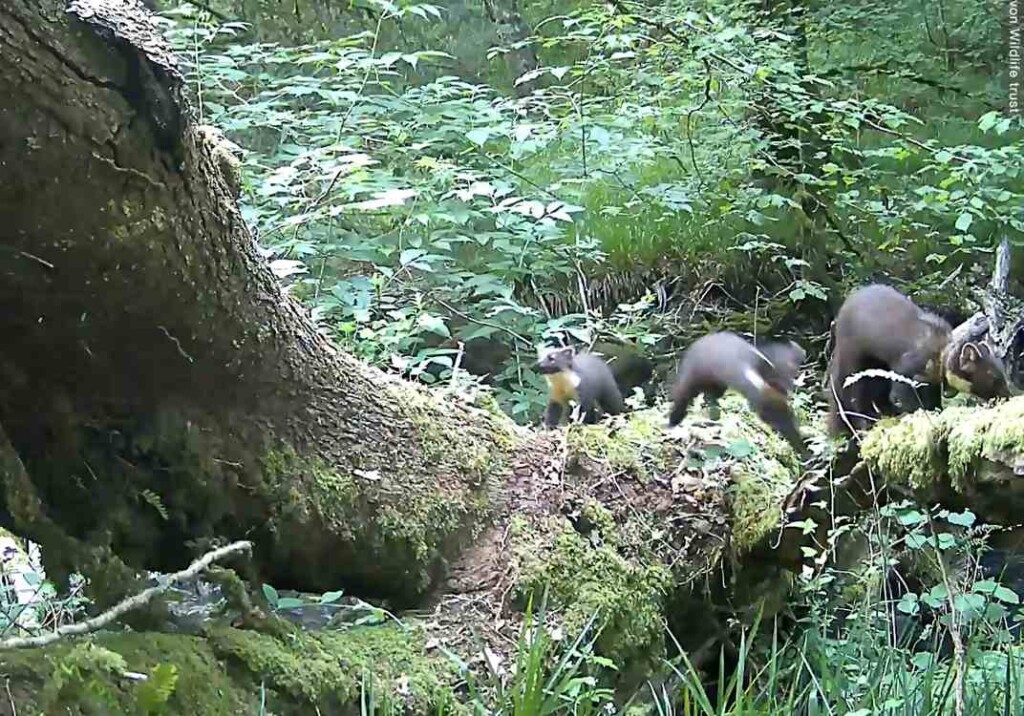
Two videos show the adorable youngsters exploring their new home, and in another, three kits are seen chasing each other through foliage and up a bank in their Dartmoor woodland home, before disappearing from sight.
A pine marten spotted on a trail cam – credit, Two Moors Pine Marten Project, via SWNS
Another film shows the same mother with two kits as they scamper along a fallen tree close to a fast-running stream.
Part of the Mustelidae family that includes weasels and ferrets, martens were once common in the southwest of England but fell victim to the loss of their favored woodland habitat and the fur trade.
Since the animals’ release in September 2024, the team has spent hundreds of hours tracking the movements of the 15 pine martens, installing den boxes for them, and checking camera traps to learn more about their whereabouts and behavior.
“Staff and volunteers have been checking camera traps for several months and over the past few weeks have been eagerly anticipating seeing kits,” said Jack Hunt, Woodland Trust Assistant Site Manager at Devon said. “This sighting is wonderful news.”
Female pine martens usually give birth to two or three kits in spring, and the youngsters spend their first seven to eight weeks hidden in their dens before emerging in early summer. They then stay with their mothers through autumn and into winter, before becoming fully independent the following spring.
The animals have been brought back to the region thanks to the work of the Two Moors Pine Marten Project: a partnership of seven organizations including among others Dartmoor National Park Authority and Devon Wildlife Trust.
Project experts anticipate that the southwest’s population should now grow gradually over coming years. Their nocturnal habits and elusive nature mean sightings are likely to be rare.
The project is now preparing for a further release of animals in autumn 2025. After rigorous health checks by vets, the animals (likely to number around 20 in total) will be released with landowner permissions at secret locations on Exmoor, the other “moor” in the “Two Moors” Pine Marten Project.
“Exmoor’s woodlands are well-suited to the animals,” said Hamston. “Their arrival in early autumn will coincide with the local natural harvest of wild berries—food which pine martens love.”
The Two Moors Pine Marten Project is keen to hear from anyone who does come across one of the beautiful animals in Devon; people can get in touch on their website.
SHARE This Cute And Important Animal Returning To England…
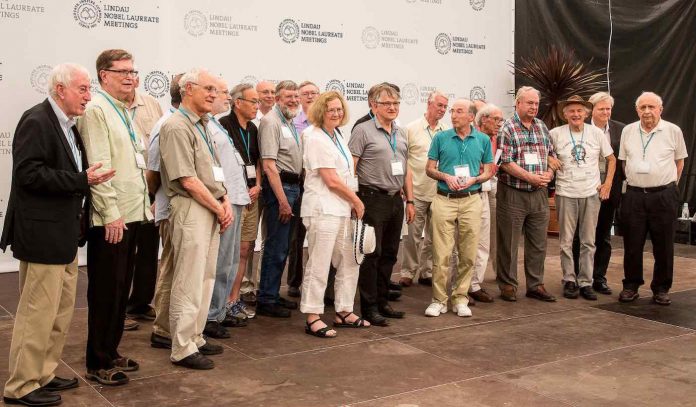
The original scientists, by Vincenzo108 – CC license
70 years ago today, 18 Nobel laureate scientists signed the Mainau Declaration publicly decrying nuclear weapons. Within one year, 34 others—mostly chemists and physicists—joined the German nuclear scientists Otto Hahn and Max Born in calling for an end to perilous radioactive bombs. READ the text of the Declaration… (1955)