














Ancient Indian stepwells are being restored to modern water storage facilities to help cure modern water shortages.
Recently, an Indian environmentalist and editor was invited to share his incredible work restoring hundreds of natural and man-made water sources all across India on CNN.
His nonprofit, Environmentalist Foundation of India (EFI), has cleaned and reshaped more than 600 bodies of water either to a state of nature or to a clean and functioning source for human use.
Most recently this has included stepwells, one of the jewels of Indian architectural heritage and civic planning, which have been used for millennia and multiple iterations of empire to supply water in the hot and often dry climate.
“Stepwell restoration is the next big implementation challenge that I would like to add to EFI’s responsibilities because we have a greater responsibility now on protecting these historical assets, which are a testament to human intelligence,” Arun Krishnamurthy tells CNN during an interview in India.
“There’s so much science behind it, the kind of material they use, the kind of artisan skill sets with which they developed and built them, so learning all of it and working on stepwells has been quite a remarkable experience for me.”
EFI has already restored two of these stepwells, and has another 6 slated for 2026. Unlike the 600 natural ponds and lakes Krishnamurthy and his volunteers have worked on, the stepwells demand another sort of expertise.
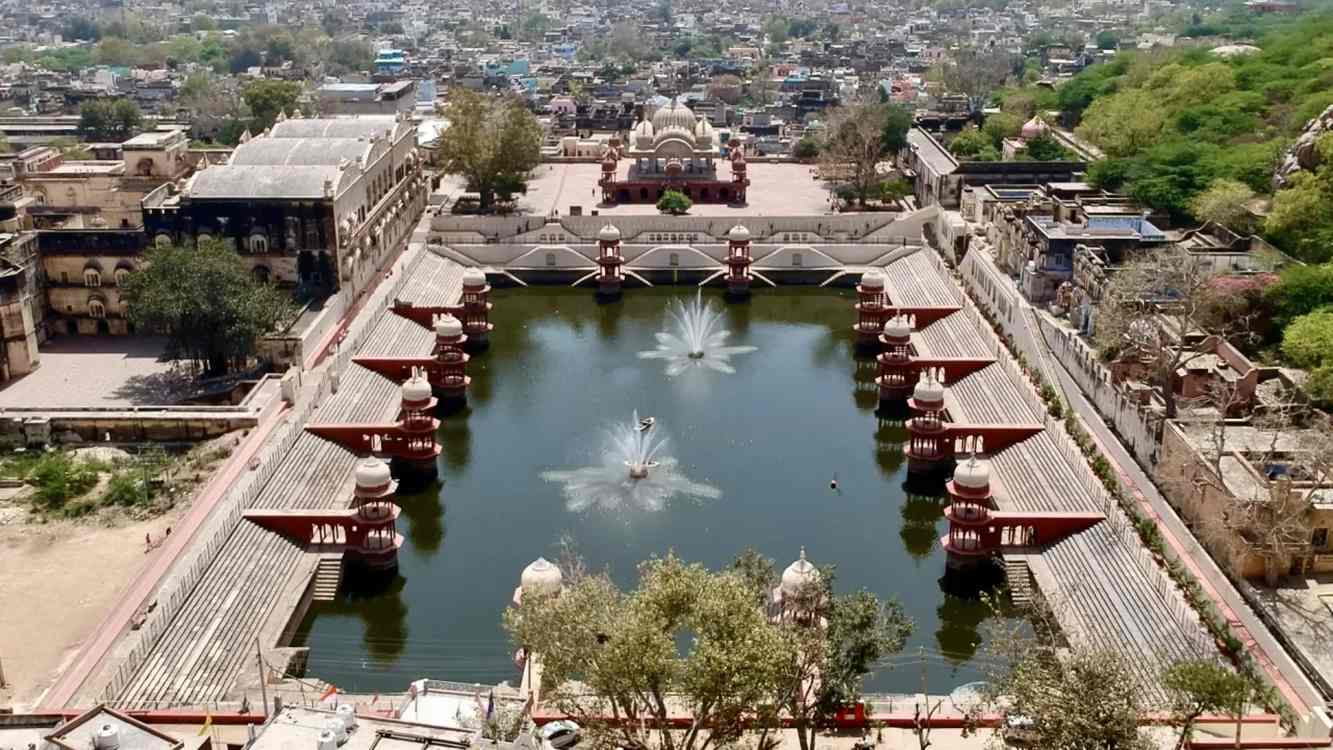
Their designs and materials often rely on antique methods of construction and landscaping, skillsets Krishnamurthy has had to go seek out as part of his first project in 2022 to restore the Moosi Rani Sagar, a magnificent stepwell in the Rajasthan city of Alwar.
Set amongst the oldest mountains in India, the Moosi Rani Sagar was fed by a hillside collection tank and a 900-meter-long canal equipped with a sedimentation tank. This infrastructure channeled water from the hills down into the magnificent stepwell, having first cleared the water of debris in the canal, and sediment in the secondary tank. It emerged as clean, relatively speaking.
Restoration work required dozens of hands to clear overgrowth of invasive weeds along the canal course, and dredging all of the structures to clear the silt buildups. Over time, lack of civic organization, poverty, and despondency has led to many of these convenient holes in the ground becoming garbage dumps.
With help from the Hinduja Foundation and Prince Albert II de Monaco Foundation, the silt was dredged, the stones cleaned, the fetid water pumped out, and the garbage removed. The holding tank, along with being a must-see local attraction, contributes its cleaned water to the civic water supply, mixing archaic with modern for the benefit of this parched Indian state.
MORE INDIAN INFRASTRUCTURE: Terracotta Is a 3,000-Year-Old Solution to Fighting Extreme Heat
EFI has just begun planning the renovation of a stepwell in Devanahalli, near Bangalore. Here, similar problems exist to those which plagued the Moosi Rani Sagar, but it will also require reinforcements to the stone design, for which Krishnamurthy had to find locals familiar with the stone and the working of it, a process he believes he will have to replicate many times in the future.
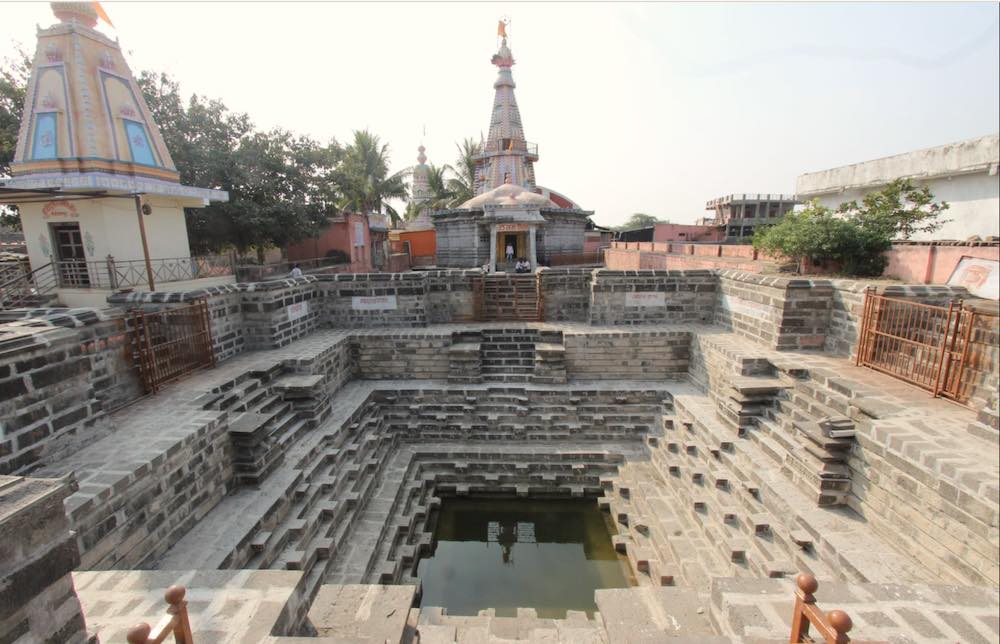
Known as “baolis” or “bwaris,” many of India’s more than 3,000 baolis have fallen into disrepair or outright abandonment, being turned instead into dumps or being buried by foliage.
“When they began clearing what they thought was a garbage dump, they found the structure of a step-well beneath the garbage,” writes Vikramjit Singh Rooprai, a heritage advocate and writer who works with the Aga Khan Trust for Culture—a nonprofit also working toward the restoration of India’s baolis.
ALSO CHECK OUT: 100,000 New Jobs Will Clean Up the Coastline and Protect Species from Plastic, Overdevelopment
“It was one of the deeper stepwells of Delhi. After restoration, the Purana Qila Baoli has so much water that the entire lawns of the [Old Fort in Delhi] are being irrigated by it,” he adds.
For Krishnamurthy and Rooprai, the Moosi Rani Sagar and Purana Qila Baoli are just headline examples of stories that could be repeated many times over to the tune of millions of gallons of water for cities and towns across the subcontinent.
SHARE These Brilliant Part-Tourist Destinations Part Civic Projects…