













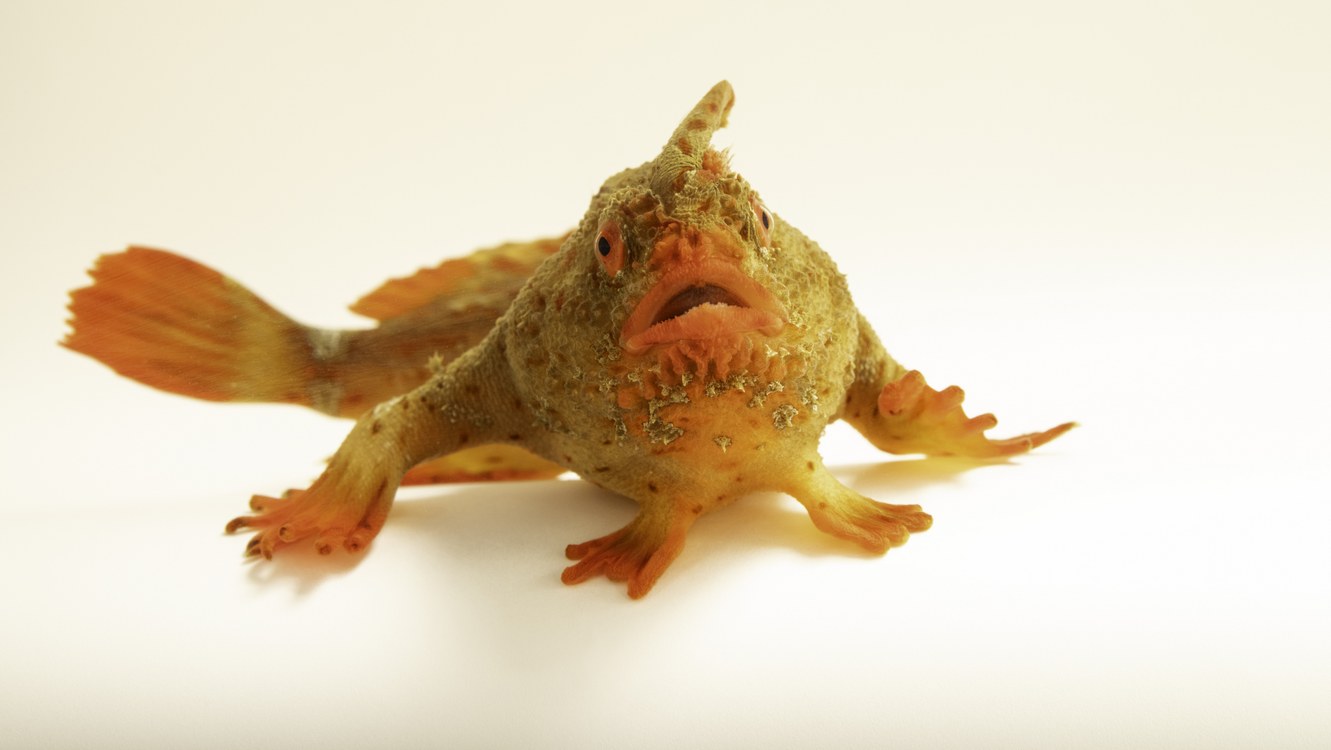
National Geographic calls it the ocean dweller who struts about more like a rock &roll frontman than a fish.
No bigger than a human thumb and sporting a red-lipped frown like a moody punk rocker, the Critically-Endangered red handfish is also the extraordinary 18,000th species in the National Geographic “Photo Ark,” just in time to celebrate its 20th anniversary.
National Geographic Explorer, photographer and Photo Ark founder Joel Sartore photographed this handfish while visiting the Institute for Marine and Antarctic Studies at the University of Tasmania.
It’s all part of Sartore’s now 20-year effort to document all species living in human care to show a world worth saving.
“I started the Photo Ark in 2006 with the idea that if we can illuminate species of all sizes — especially the little ones that don’t get a lot of love — then we might be able to ignite connection and compassion for all of the living things we share this planet with,” Sartore said in a statement.
“There’s no better example of what the Photo Ark is all about than our 18,000th milestone species,” Sartore says. “The rare and remarkable red handfish is brilliantly unique and critically important to marine biodiversity. We should care about their future as much as we care about our own.”
Red handfish live in a small patch of rocky reef on the southeast coast of Tasmania, and there are believed to be fewer than 250 individuals left in the wild. They’re benthic ocean dwellers, meaning they live on the ocean floor, and they use their fins as “hands” to walk along the seafloor instead of swimming through the water.
Because of their unique locomotion, red handfish are estimated to travel only the length of a standard basketball court in a single year, making them especially vulnerable to habitat loss and destruction from invasive species, human disturbance, pollution, and warming waters. They are one of 14 species of handfish, not all of which are endangered, but they are among the most threatened marine fish groups in the world.
Driven by a passion for nature and conservation, Sartore designed the Photo Ark to create human connections with animals and inspire people to take action for our planet’s incredible and often imperiled wildlife before it’s too late.
INCREDIBLE FISH YOU’VE NEVER HEARD OF: Endangered Pupfish Found Only in a Death Valley Cave Springs Back to Life in Numbers at 25-Year High
What started as one portrait of a naked mole-rat at the Lincoln Children’s Zoo in Lincoln, Nebraska, has evolved into a global endeavor of documenting the beauty and vulnerability of Earth’s biodiversity.
Filled with thousands of animal portraits on black-and-white backgrounds, the Photo Ark eliminates distractions and size comparisons, compelling viewers to look each animal in the eye.
WILDLIFE WONDERS: Family That Owned This ‘Wildlife Wonder of the World’ for 300 Years Sells Bass Rock to Protect 100,000 Seabirds
“The Photo Ark does so much more than raise awareness. It spurs real, on-the-ground conservation. Joel’s portraits drive a shift in attitudes, proving that when people truly connect with the beauty of these animals, they’re moved to protect them,” says Ian Miller, chief science and innovation officer at the National Geographic Society.
“The legacy of the Photo Ark isn’t just what Joel’s accomplished over these past two decades, but the tremendous possibilities for saving species as we look ahead to the next 20 years.”
SHARE This Wild And Wonderful Fish Celebrating A Very Special Anniversary…