












In the lush, emerald hills and valleys of Wales, dogs are trained to protect endangered wildlife a whole hemisphere away.
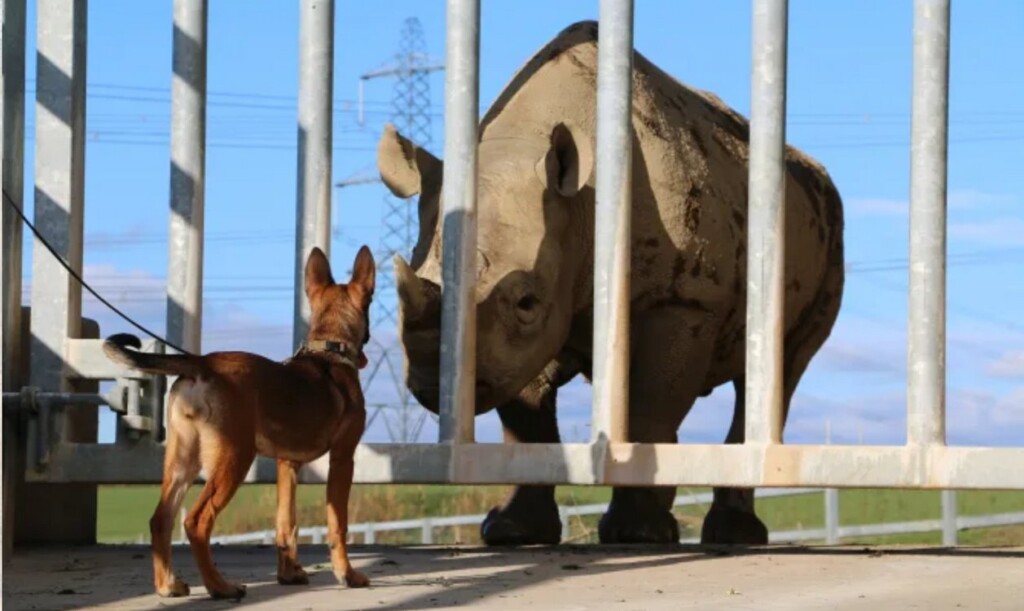
Their scent tracking allows them to turn hunters into the hunted, and catch poachers even in total darkness; even hours after they’ve left their kill sites. After a decade of work in Africa, these special dogs have helped rhinos recovery in areas where their numbers were plummeting.
As is so often the case with conservation, whether it’s John Muir or Jane Goodall, someone has to be in the right place at the right time with the right solution: and in this story it was professional dog trainers Darren Priddle and Jacqui Law.
After seeing photos of poached rhinos in Africa on the internet, the Welsh couple, who’d been training dogs for military work, drug detection, and policing for years, decided they had the drive, the knowledge, and the resources to make a difference.
“We can deploy dogs in the UK to track people … to look for drugs, firearms, and explosives, so why could we not look at developing the dogs that we were training for conservation efforts?” Mr. Priddle told CNN, which reported on the operations of their nonprofit Dogs4Wildlife.
For over a decade, Dogs4Wildlife (not to be confused with the similar outfit K9s4Africa) has been training Belgian Malinois, Dutch shepherds, spaniels, and retrievers for work in Africa’s game reserves. They breed between one and two litters per year, with training for the bush beginning as early as 3 days old when Priddle and Law will put different scent objects and textures into their puppy houses to “get the neurons firing.”
The curriculum then continues along a similar path for police tracking dogs, in this case the Malinois and shepherd dogs, and for sniffing dogs like the spaniels and retrievers. Organized working sessions at Welsh zoos ensure that the canines lose the olfactory novelty of elephants, giraffe, wildebeest, and antelope.
By 16-18 months, the dogs are typically ready for assignment, and have so far been deployed in Tanzania, Mozambique, and Zimbabwe. In some instances, they’ve helped lower poaching rates as soon as their first successful pursuit.
“When these reserves bring a specialist dog onto a wildlife reserve … the word spreads very quickly that the APUs now have the capability to actually catch these poachers on a more efficient and successful basis,” Priddle said.
MORE AFRICAN INITIATIVES: Leopard Population Has Nearly Tripled in the World’s Largest Conservation Area
“Some of the smaller wildlife reserves almost eradicate poaching in all types completely, just because of the deterrent value that dog brings to the party.”
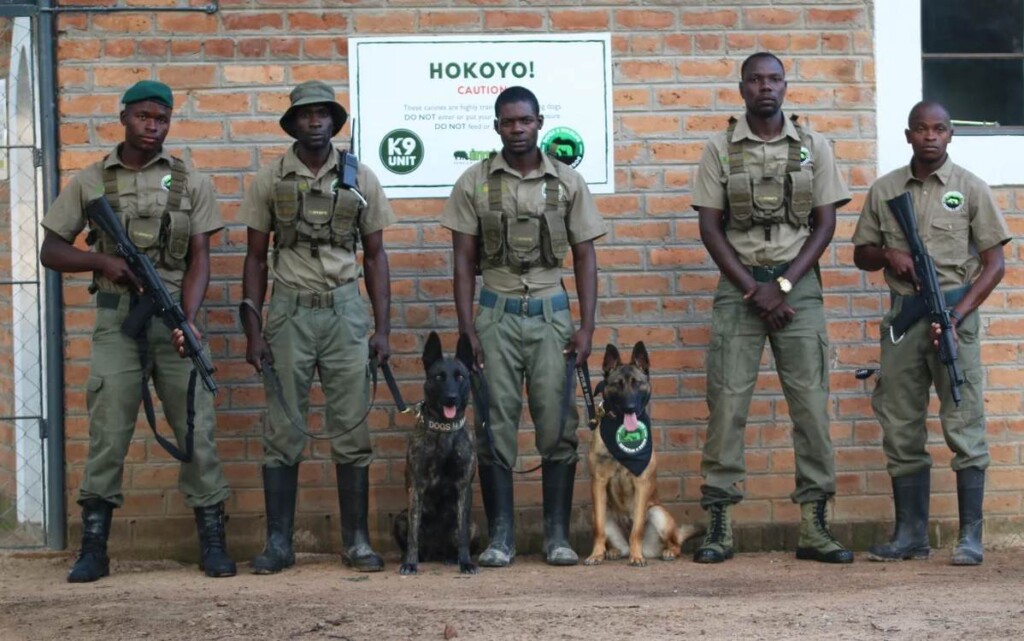
CNN recounted the story of a Belgian Malinois trained at Dogs4Wildlife that followed the scent trail of a poached warthog three miles out of a reserve right to the doorstep of the poacher, and the anti-poaching unit, or APU, apprehended the perpetrator on the spot.
Another Malinois, in 2013, led APUs to a rhino calf totally off their patrol route that had been caught in a snare.
Their ability to detect danger from poachers in total darkness has “saved” many APUs from coming under fire from poachers in the vast, 10,000-acre Imire Conservancy in Zimbabwe, where APUs have employed the services of several generations of these Welsh-trained dogs.
MORE STORIES LIKE THIS: Dogs Are Being Trained to Track Elusive Spotted Lanternfly and Save Crops from Devastation
Through WhatsApp groups, Priddle and Law can remain in contact to advise APUs on the training and care of the dogs they come to work with, though the groups are two-way help lines, as the sentimental trainers get to watch through glossy eyes the incredible impact the animals that they’ve known since birth are having on the Colorful Continent.
SHARE These Amazing Working Dogs And The Two Special Welshmen Who Train Them…