













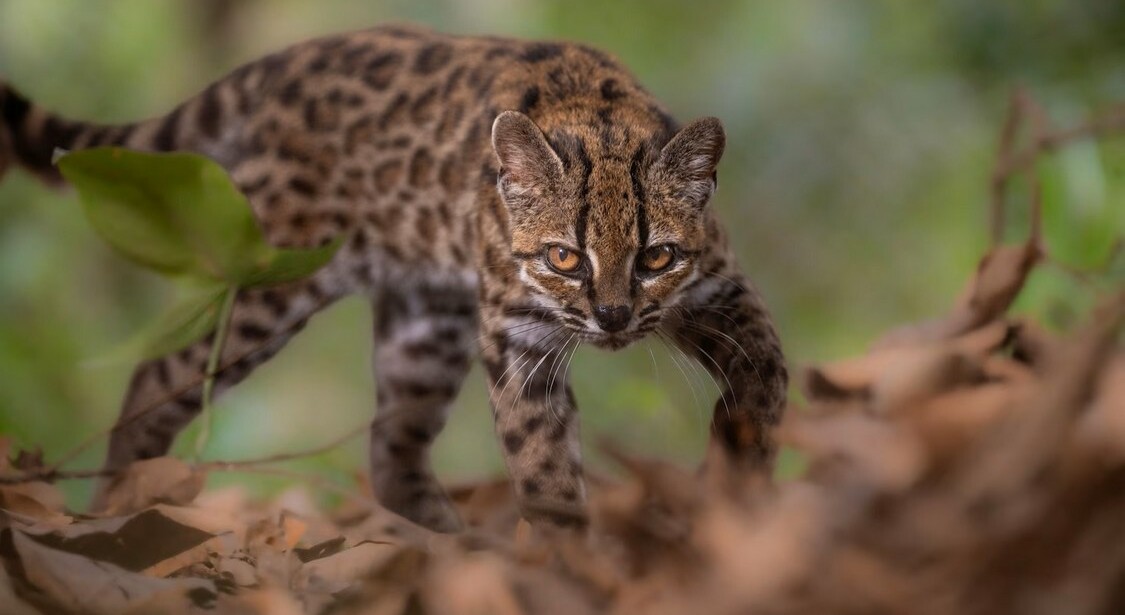
In a story that proves ‘explorer’ is still a good answer to the question “what do you want to be when you grow up?” a whole new cat species has been identified for the first time in over 100 years.
Found in Bolivia, the animal is smaller than the average housecat, but now enters the scientific record because of a National Geographic Explorer’s dedication to wild cats, and a willingness to step outside her field of expertise.
The fruit of that labor is Leopardus tilcayo, an animal which diverged from its nearest common ancestor around 1.4 million years ago, or about as much time as modern lions diverged from the extinct cave lion.
The story began with a phone call in 2016 to Bolivian biologist Paola Nogales-Ascarrunz, founder of the Bolivian Felids Research Program. A man had found a “weird cat,” and had brought it to a wildlife sanctuary. The sanctuary explained to Nogales-Ascarrunz that the man had at first taken the kitten home, but realizing it didn’t have a domesticated bone in its body, brought it to the sanctuary.
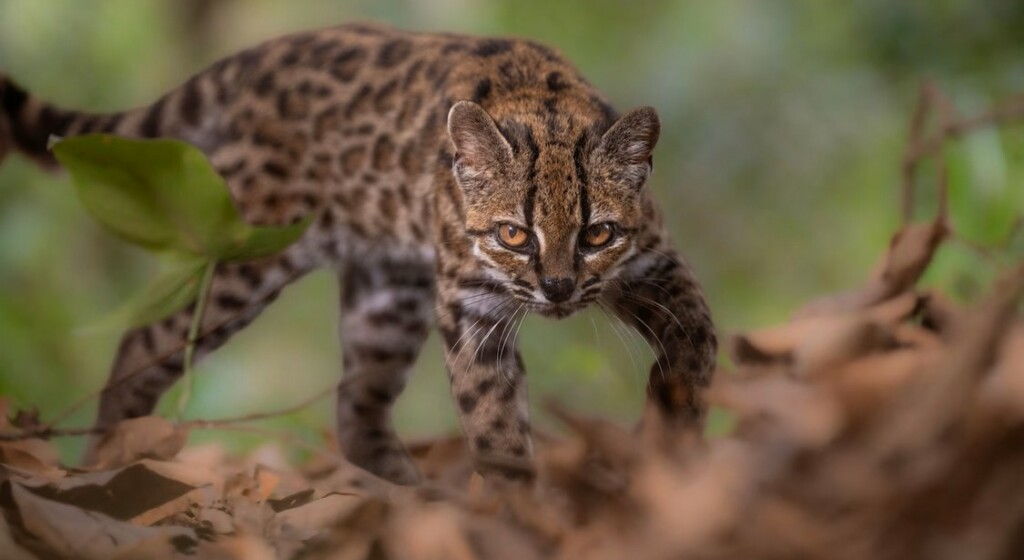
Curious, the National Geographic Explorer arrived to see the animal, which struck her immediately as rather unique. It had these long whiskers, small ears, and big rosettes on its fur—suggesting it was a member of the genus Leopardus, and perhaps an oncilla, or tiger cat (a bit of a misnomer because these small felids are related neither to the leopard nor the tiger).
Nogales-Ascarrunz thought it was a Leopardus tigrinus, called tigrinas, oncillas, tigrillos, or little spotted cats, and a species widely dispersed around South America. 3 years later, while preparing a booklet on Bolivia’s cat species, Nat Geo reports, she realized the two animals had substantial differences.
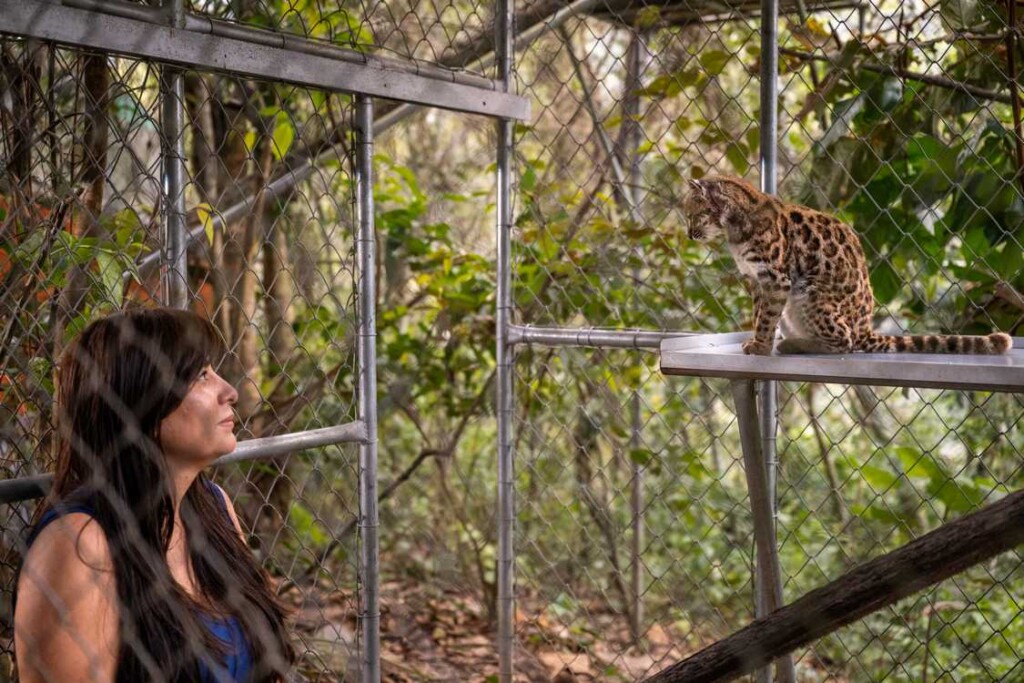
She then embarked on a half-decade long foray into genomic analysis to get to the bottom of the “weird cat’s” identity, and with the help of Eduardo Eizirik, a geneticist at Pontifical Catholic University of Rio Grande do Sul in Brazil, made a startling breakthrough: a species never recorded by science before.
In a paper published yesterday in Cell, Nogales-Ascarrunz, Eizirik, and their co-authors described the first new feline species since 1923, proposing the cat should be called Leopardus tilcayo, in recognition of the indigenous community’s name for the animal.
“We asked the local people, ‘Why do you call it tilcayo?’” Nogales-Ascarrunz told National Geographic Magazine, which broke the story to the world. “And they said, ‘I don’t know! My grandpa called it tilcayo, so I call it tilcayo.”
The only thing scientists know about the lifestyle of L. tilcayo is that it lives in the Yungas forest ecosystem on the eastern slopes of the Bolivian Andes. What it eats or eats it, what it’s reproductive cycle looks like, or how social it is all remain a mystery. Despite this, the investigation into L. tilcayo’s genomics has opened up a whole new conceptual schema for the Leopardus genus, practically redrawing whole branches of its family tree.
“We’ve been working on tiger cats for 25 years or so, trying to sort out the whole genus, Leopardes,” Eizirik told Nat Geo. “What we once thought to be a single species, we’ve started to see that it was actually a species complex.”
MORE AWESOME NEW SPECIES: New Species of Monkey Found in DR Congo Shows How Much There’s Left to Discover
From the first tiger cat species recorded in 1775, to that species being reorganized as two in 2013, now the new study builds on Eizirik’s 2024 work to expand it further to 5 members.
“Our world is extremely complex,” Nogales-Ascarrunz says. “Sometimes we think that most of it is known, that there’s not a whole lot to discover, but in fact, it’s the other way around.”
In 2020, Leopardus contained 8 species: the ocelot, margay, oncilla, kodkod, pampas cat, Geoffrey’s cat, Andean mountain cat, and the southern tigrina. Multiple subspecies exist, at least one of which was recommended in 2024 by Eizirik to be established as a distinct species: the clouded tiger-cat (L. pardinoides).
The tilcayo had evolutionarily separated from its closest cousin among these 1.4 million years ago, giving it time to develop its own ecology, and find its own role in the ecosystem food web.
NEVER STOP EXPLORING: Explorers Become First Ever to Row 2,000 Miles of the Arctic’s Northwest Passage–Led by a Texan
While almost none of these cats are considered endangered outright, their continual division into different species has also divided their perceived populations. At best, the tiger cat section are considered Vulnerable by the IUCN.
These days, when GNN reports that a new species of animal has been identified, it’s often a deep-sea dweller, insect, or some little frog in a far-off forested mountain. But if you think that’s all there is left to find, think again—think about the tilcayo.
SHARE This Incredible News From South America With Your Friends…