














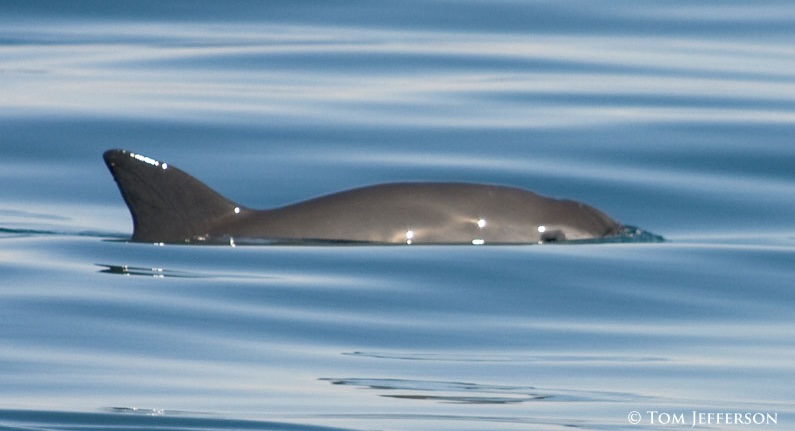
The elusive vaquita porpoise swims in the wild only in shallow northern waters of Mexico’s Gulf of California (also known as the Sea of Cortez)—and it’s one of the rarest and most endangered marine mammals on Earth.
With a wild population numbering as low as ten, the vaquita is perilously close to extinction—an outcome caused by their entanglement in gillnets, which are used to illegally catch another banned species for the international black market.
Measuring a compact 5 feet in length, Phocoena sinus is the world’s smallest cetacean (pronounced se·tay·shn)—a group that includes whales, dolphins, and porpoises.
Known for the distinctive dark rings around the eyes and mouth, the vaquita only became known to science in the latter half of the 20th century.
Despite intensive conservation efforts, the vaquita’s future remains uncertain—which is why the new project is so exciting for scholars and students.
Researchers from Florida Atlantic University—in collaboration with the San Diego Natural History Museum, SeaWorld California, and NOAA Fisheries—have created a highly detailed digital record of a rare vaquita skeleton using advanced imaging technologies.
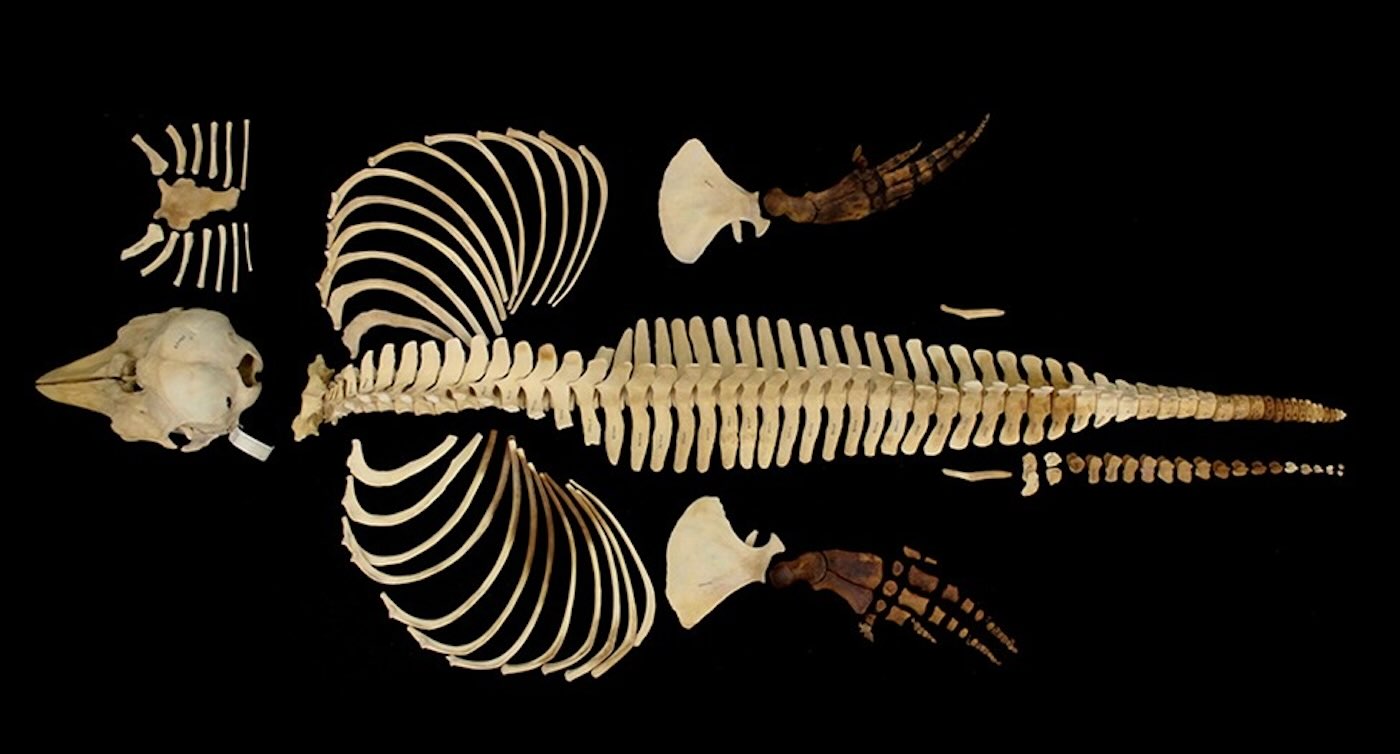
The team combined medical CT scanning, high-resolution micro-CT imaging, and digital photography to capture the specimen at multiple scales, from overall skeletal structure to microscopic bone detail.
The resulting datasets were reconstructed into precise 3D models that allow the entire skeleton—which was donated to the museum in 1966—to be virtually explored, measured, and studied without having people handling the fragile original specimen.
The project, published in June 2026 in Marine Mammal Science, makes all data freely available through the open-access repository MorphoSource, including photographs, scan data and downloadable 3D meshes.
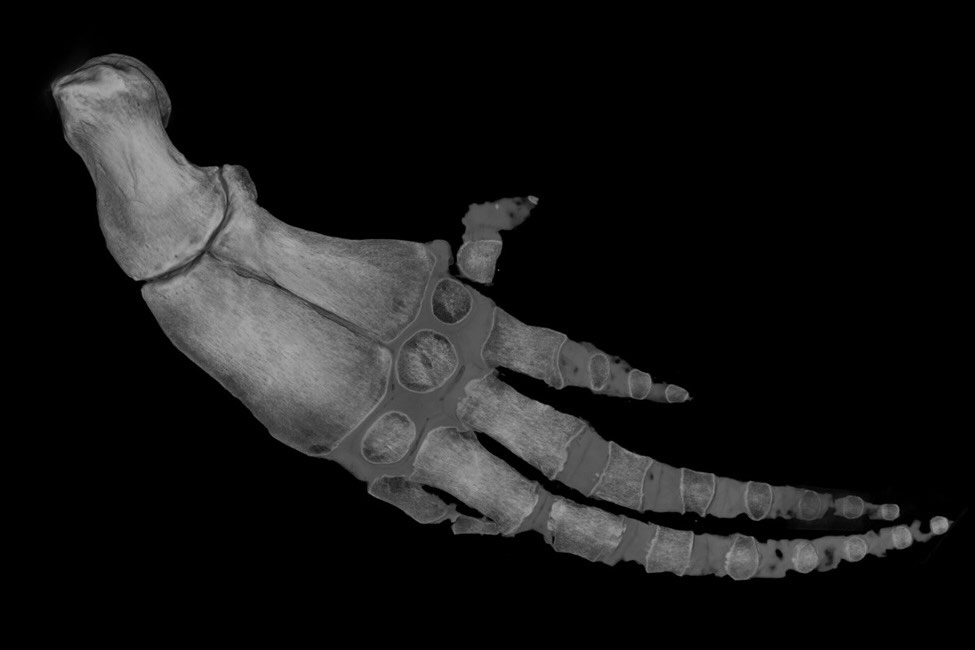
“These digital resources can be used for scientific research, education, and public outreach, including the creation of 3D-printed replicas for museums and classrooms,” says the project’s media release.
“By transforming a rare physical specimen into a permanent, shareable digital archive, the study expands access to the world’s smallest porpoise and most endangered marine mammal and provides a new tool for conservation and learning.”
DISHING ABOUT DOLPHINS: Sampling DNA in Seawater Can Reveal the Health of Dolphin Populations, in First for Conservation
The survival of this species depends on urgent, coordinated international action to eliminate gillnet fishing within the vaquita habitat. Fortunately, such efforts are already underway—and you can support them via the National Marine Mammal Foundation.
SHARE SOME GOOD NEWS With Animal Lovers on Social Media…