There are proud mothers, and then there’s this lady.
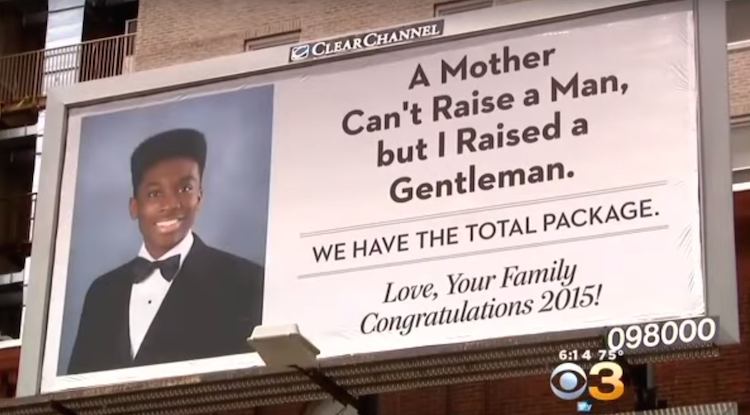
Ovella O’Neal of Southern New Jersey decided to shout her son’s praises to the world. As a high school graduation gift for her son, Aljelani “A.J.” Igwe, she rented a large billboard that reads: A Mother Can’t Raise a Man, But I Raised a Gentleman.
The “congratulations” message for her son, posted near A.J.’s school in Camden, New Jersey, is also intended to serve as an inspirational message for other single parents.
A.J. is planning to pursue a Bachelor’s Degree in Engineering at Rowan University in the fall.
(WATCH the video below for more) – Story tip from Alan Wallace
Proudly Share This Story With Your Fellow Scholars…
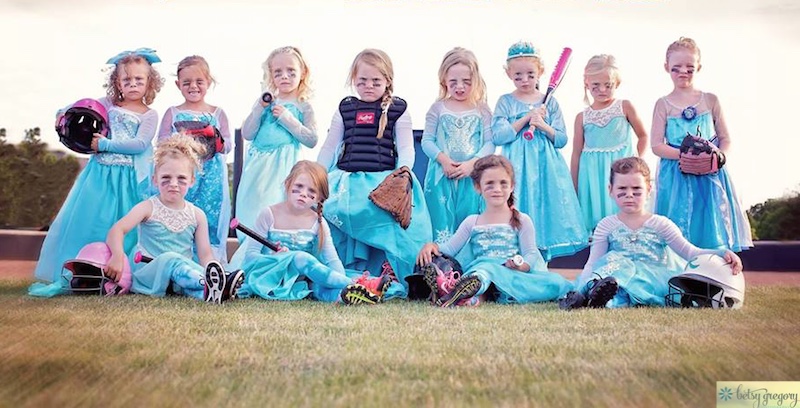
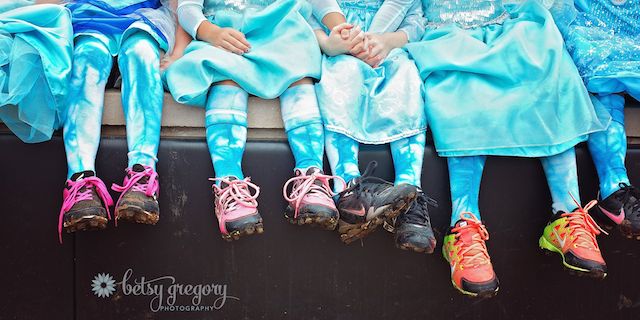
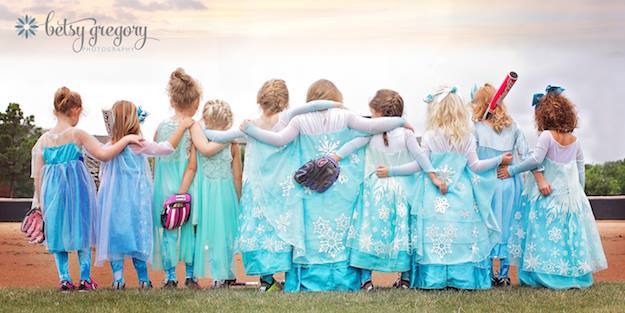
A tee ball team of princesses stepped up to the plate this week to prove that girls can be tough AND pretty.
The squad of little girls known as ‘The Freeze’ from Edmond, Oklahoma took their group photo dressed as Elsa from Disney’s princess movie Frozen.
Their mothers collectively decided that it would be a good learning experience for the young girls, and hope that the message is clear: whether you prefer sparkles or getting down and dirty, it’s important to be authentically you.
One of the girl’s mothers, the photographer Betsy Gregory, posted the photos on Facebook in the hopes of encouraging girls of all ages to be themselves.
“I think a lot of young women see the picture as empowering — empowering from the sense that you can be cute, sparkly and tough, and that’s okay,” Gregory told Today. “Beauty comes from the inside and that’s what we want to teach these girls. That you can do things and be pretty, but what is inside is what matters most.”
All Photos used with the permission of Betsy Gregory
Share This Story With all the Girls in Your Life….
Two months ago, Good News Network broke the story about Elvis Summers building a tiny home on wheels for a woman named Smokie who had been sleeping in the dirt near his home. The publicity generated around the world brought in $80,000 for his GoFundMe page, set up so he could build more shelters.
Now that Elvis has had time to get organized, he is calling for volunteers to join him in a marathon shelter-building event in July.
He has officially incorporated and successfully filed for 501(c)3 nonprofit status to launch My Tiny House Project L.A.
“This rocket ship is about to blast off!” he happily told Good News Network.
Men have claimed for years that they’d take a birth control pill if they could.
Looks like it’s finally time to put that offer to the test – except, this is not a pill, it’s far better.
The medical research nonprofit Parsemus Foundation has developed a contraceptive called Vasalgel that is likely to receive the Food and Drug Administration’s seal of approval, if all goes according to plan. Human trials will begin soon, and it could hit the market by 2018-2020.
For these men, it will be easy: one injection would last for years, and there are no hormones involved. Parsemus, which is dedicated to developing low-cost solutions that are neglected by the pharmaceutical industry, says the procedure is similar to a no-scalpel vasectomy and is reversible. It has already been used successfully in India.
Since long-term birth control methods aren’t a big money-maker and pharmaceutical companies would rather sell pills to women every month, the Foundation is relying on donations from the public and other nonprofits to pay for development costs. You can donate on their website.
The only other options of birth control for U.S. men are the condom or a vasectomy. There are other male contraceptives being developed outside of the U.S., in both London and Indonesia. Read more about them here at Telegraph.UK.
Send This Story Upstream to Your Friends… (Photo by badjonni, CC)
Scientists in Austria are taking their research on prosthetic limbs one step further by restoring the sense of touch to those who wear them.
Professor Hubert Egger from the University of Linz recently unveiled research which enables patients to actually feel the bottom of their artificial feet.
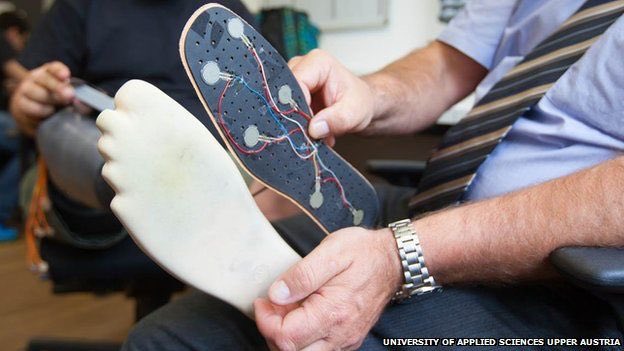
The process begins with surgically re-wiring the nerves at the end of the residual limb so they are better able to receive signals. Then, sensors that measure pressure are placed on the bottom of the prosthetic.
The sensors essentially relay pressure points through a stimulator in the shaft of the prosthetic, which touches the end of the stump. The nerves send signals to the brain, and, miraculously, the prosthetic toes have touch.
Wolfang Ranger, who lost his right leg in 2007, has been testing out the technology at the University of Linz laboratory and at home.
“It feels like I have a foot again. It’s like a second lease of life,” he told BBC News. “I no longer slip on ice and I can tell whether I walk on gravel, concrete, grass or sand. I can even feel small stones.”
Scientists say this is the first time that a leg amputee had been fitted with a sensory-enhanced prosthesis.
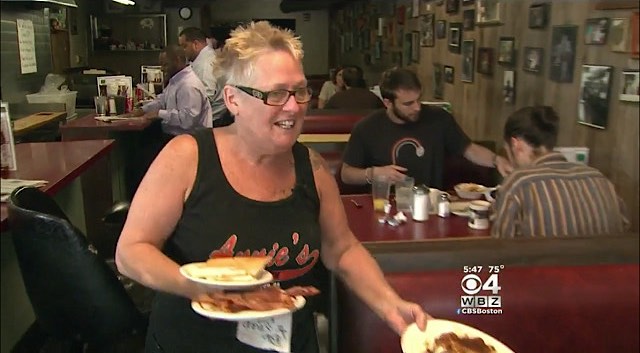
For the past 24 years, Annie’s Clark Brunch has been a favorite of folks looking for a $4.75 three-egg omelet.
This year, however, owner Ann Jenkins was given a list of mandatory renovations needed to bring the restaurant up to code – repairs that would cost $50,000.
Fortunately, the family-owned restaurant near Clark University in Worcester, Massachusetts, is getting a generous helping of support, thanks to its loyal diners.
Local community members started a fundraising page, and donations started pouring in from current and former Clark students – some from as far as India, England and Thailand.
“It’s remarkable, remarkable. I am tearing up,” Jenkins told WBZ TV. “How do you thank people? I say that to them all the time and you know what they say? Get back out front and start cooking.”
So far, the community has raised more than $30,000. And the university, which owns the building, has also offered Jenkins an interest-free loan for the repairs.
(WATCH the video below or READ the report from WBZ-TV) – Photo: WBZ video
Serve Up this Tasty Dish to Your Friends – Share below…
“Who are you?” is a powerful question, and it’s the one photographer Nigel Skeet uses before taking portraits for his new Homeless Rock Star Project.
Many of these subjects have never been asked that question. They haven’t been asked what their favorite movie is, or what kind of music they listen to.
But during what Skeet calls an “INNERview,” the answers to those questions become the basis of professional portraits that bring out the best in Redding, California’s homeless people.
“When we INNERview them, the questions are designed to break down barriers and spark a conversation. The questions and answers may seem boring or ‘normal’ to you and I, but that’s exactly the point,” Skeet told Good News Network. “Most of these people have never been asked these questions before, especially by members of the general public. This is one of the elements that spark that feeling of hope.”
Another Homeless Rock Star photo by Nigel Skeet
Before posing for their pictures, the men and women in these photos all sat down for a hair and makeup session – a first for most of them.
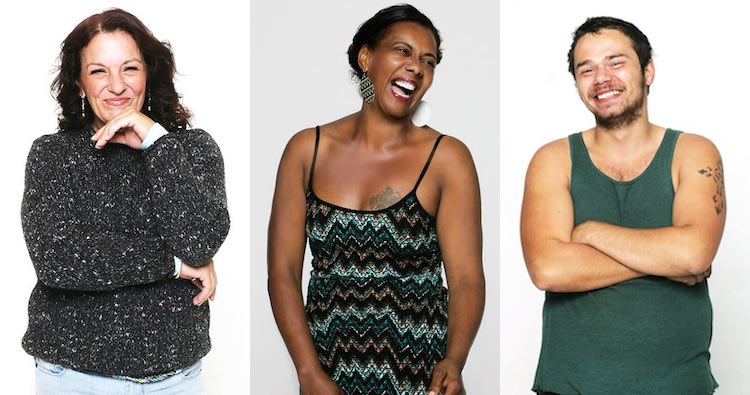
Cheryle (pictured, top left), has a knack for playing the harmonica. She loves the movie Phantom of the Opera, and enjoys eating miniature watermelons with yogurt. Before Skeet invited her into his studio, she hadn’t had the opportunity to tell anyone those things in quite some time.
“I had just become homeless and was alone for the first time, no family, no clothes. Being homeless and alone was all new to me,” she said. “I heard about this and thought to myself, ‘I need this!’ even though I didn’t know what to expect.”
Cheryle was self-conscious because some of her teeth were missing, but makeup artist Bethany made her feel beautiful in no time.
“It made me feel like I could do anything,” Cheryle said.
Cheryle is currently enrolled in college to become a guidance counselor for high-risk teens. She has taken English and Art, and is now taking Interpersonal Communication and Sign Language classes.
Mark is another portrait subject (pictured, top right), a 21-year-old who had been sleeping on the streets for some time. Now, he’s a certified nursing assistant, and finally has his own apartment.
“The photo shoot made me feel like I was worth something,” Mark said. “This project is so good because they talk to you and treat you like you’re human.”
Skeet first began photographing rock bands at age 14 during an AC/DC concert in Amsterdam in 1979. When he moved to L.A. in 1986 and landed in the middle of the hair metal scene, the Sunset Strip became his stomping ground. Later, when he opened his own studio in downtown Redding, people warned him to ‘beware of the homeless problem’ in town.
Nigel Skeet – by Andrew Gant
It was then that Skeet decided to start bringing them into his studio and photographing them, interviewing his subjects just as he would his own friends. He also asks them to sign his studio wall before they leave.
“I wanted to create something specifically to show the community that these people are individuals with the same hopes, dreams and life experiences that we all have,” he said. “I was also shocked at how the entire atmosphere within the studio shifted once we got started.”
On July 1st, he’ll be hosting a Homeless Rock Stars Youth Event in Redding. Homeless youth are encouraged to enroll now, and to keep this in mind: the first step in helping people get out of homelessness is confronting the stigma head-on and making the word ‘homeless’ completely meaningless.
“We know that’s not who you are and we will remind the world of just that,” he said.
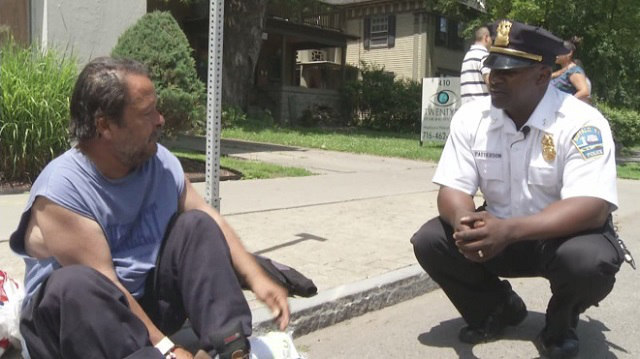
Buffalo, New York is becoming a model for the nation, having already reduced its chronically homeless population by a whopping 90 percent in the last three years, and now the city’s police force is offering help.
Officers have been working with homeless advocates to identify anyone on the streets who still needs help. Police Chief Brian Patterson is creating a specially-trained patrol unit to work even more closely with the organizations who provide housing and medical care for the chronically homeless.
“Everyone has feelings – everyone has a story – and it’s important for myself to understand people’s story,” Patterson told WIVB-TV. “The only way to do that is to meet people on their terms and (in) their setting, and have great conversations.”
The city’s Transit Authority Police Department has also been working to assist – not arrest – homeless citizens since January. Officials and advocates hope their new collaboration boosts the rate of those in housing or shelters to 100 percent by the year’s end.
(WATCH the video below or READ the report at WIVB-TV) Photo: WIVB video – Story Tip from Gina Marie Littlebird
>
Share the Great News about Helping the Homeless… (below)
Back in May, 2014, Good News Network shared a story about a cat who saved a little boy by scaring off an attacking dog.
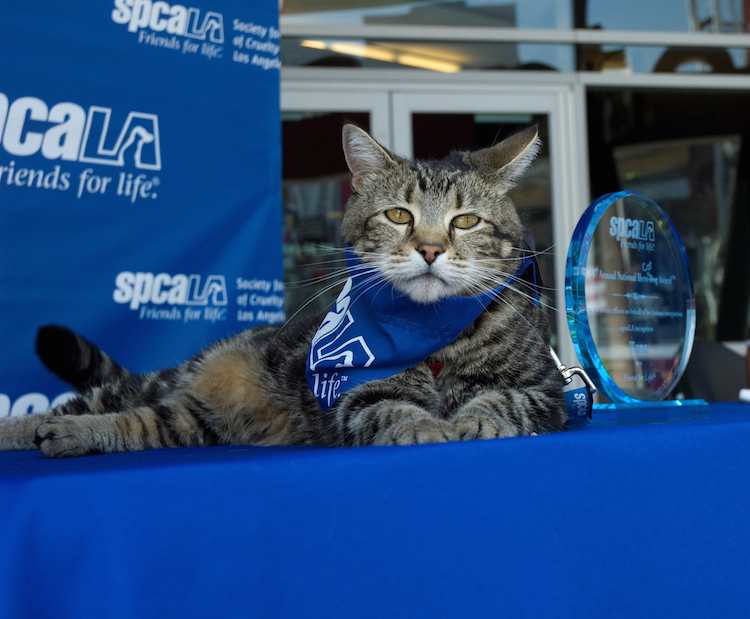
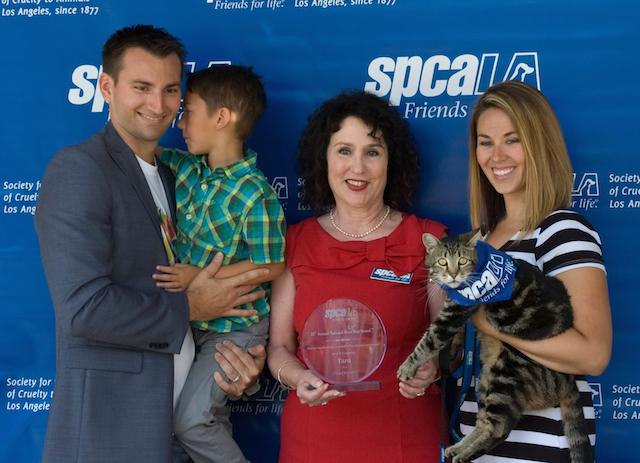
This weekend, that tabby cat, Tara, formerly a stray, was awarded with the Los Angeles SPCA’s National Hero Dog Award, an honor usually reserved for canines.
In the organization’s 33rd year of giving the award, they made an exception for the Bakersfield, California cat, after its heroic actions were documented on the family’s security camera. The rescue has been viewed 24 million times since being uploaded to YouTube on May 13.
“We were so impressed by Tara’s bravery and fast action that the selection committee decided that a cat this spectacular should be the National Hero Dog” said Madeline Bernstein, spcaLA’s president. “A cat who was abused, forgotten, or neglected by her family would not have been as likely to perform selfless, heroic acts to save her companion.”
Tara also bagged herself a year’s supply of free cat food courtesy of PurinaOne.
Photos courtesy of SPCALA
Share This Hero’s Story with Your Two-legged Friends….
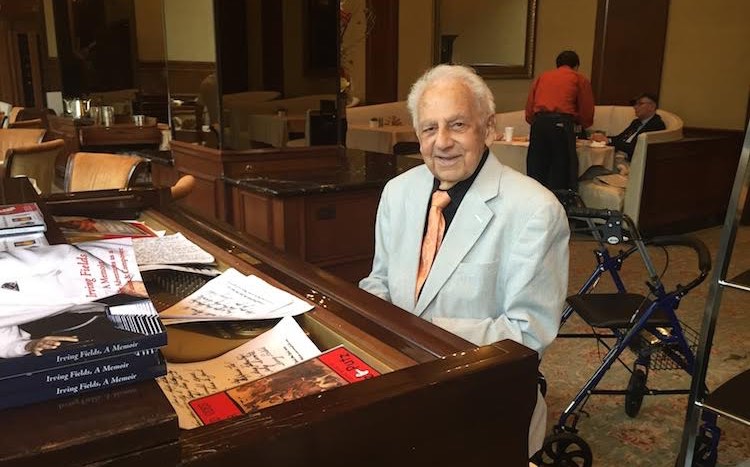
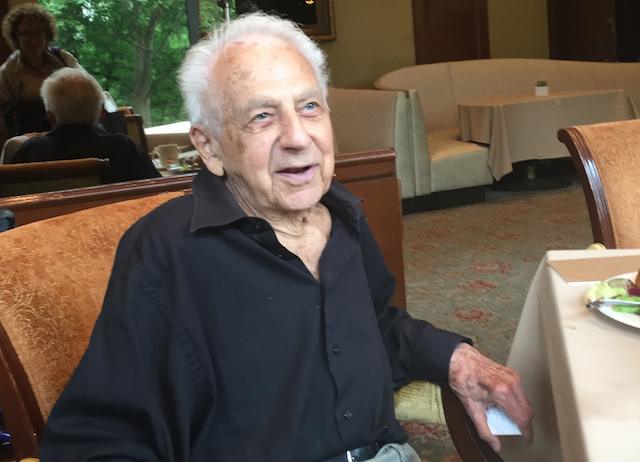
After Irving Fields finished a tune from Carousel, he grabbed his walker and began shuffling to each of the four occupied tables at the Park Room restaurant at the Park Lane Hotel in New York City, asking people, “What can I play for you?”
We speculated about his age over our appetizers. Could he be 75, maybe 80? When he got to our table, he proudly exclaimed, “I’m going to be 100 years old in August.”
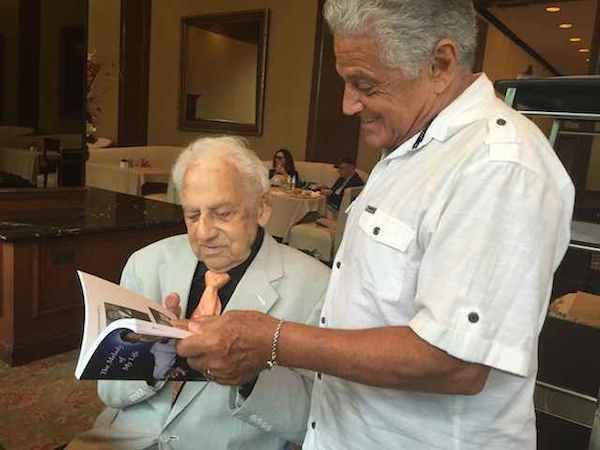
Irving shows Park Room patron and father of the author, Paul Hovitz, the more lively section of his memoir
Amazement ensued.
I followed him back to his piano and found a smattering of photos, handwritten lyrics, and several copies of his memoir, The Melody of my Life.
“The middle of the book gets kind of racy,” he explains. “I was still single then.”
As it turns out, Irving Fields is kind of a big deal. The native New Yorker (born Irving Schwartz) has sold over 2 million copies of his 1957 album Bagels and Bongos. It spawned a series of sequential albums entitled Pizza and Bongos, Bikinis and Bongos,Champagne and Bongos….and so on. He says he’s recorded a total of 100 albums in his lifetime.
“Has he written you a song yet?” the Park Room’s Executive Chef Larry Sloves asked me, after our main course arrived. “If you told him you’d be back next week, he’d have a song written for you, guaranteed… He’s already written one for each of us.”
Fields also penned a “YouTube theme song” in a mere 15 minutes. When it was posted on the video streaming site, it captured the ears and hearts of 800,000 viewers. He’s also written a song for the Statue of Liberty entitled, Here’s to the Lady, which undoubtedly he’ll be performing for the lunch crowd on July 4th.
In a couple of weeks, a documentary about Mr. Fields will begin shooting right here in the Park Room, where he says he’ll be joined by Tony Bennett, Betty White, and others over the age of 90 who have “made a name for themselves and remain successful.”
Will Irving write a theme song for the Good News Network? Stay tuned to find out…
(WATCH him write the YouTube song below – and SHARE the catchy tune with your friends…)
A new study published June 11 by the scientific journal Addiction finds that in England, children’s exposure to second-hand smoke has plummeted by nearly 80% since 1998.
An emerging social norm in England has led to the adoption of smoke-free homes not only when parents are non-smokers but also when they smoke.
The study gathered data from over 35,000 children who participated in the annual Health Survey for England from 1998 to 2012. Children’s exposure to second-hand smoke was measured through the presence of cotinine, a nicotine derivative, in saliva samples. The body converts nicotine that has been absorbed as a result of inhaling tobacco smoke into cotinine which stays in the body much longer than nicotine and so provides an accurate record of the quantity of smoke inhaled in recent days.
In the late 1980s, the concentration of cotinine in the saliva of non-smoking children averaged 0.96 ng/ml. By 1998, that figure had dropped to 0.52 ng/ml, and by 2012 it had dropped further to 0.11 ng/ml. By 2012, over two thirds of all children had undetectable levels of cotinine, an occurrence that was once a rarity.
In 2010 the UK government included in its national tobacco control plan the ambition to see two-thirds of households with smoking parents go smoke-free by 2020. Already well over half of homes containing children with smoking parents have gone smoke-free. If current trends continue, government targets for protecting children from second-hand smoke will be reached ahead of time.
A mischievous 62-year-old photographer known for his practical jokes dreamed up a good one for airline passengers arriving at Milwaukee’s Mitchell Field airport.
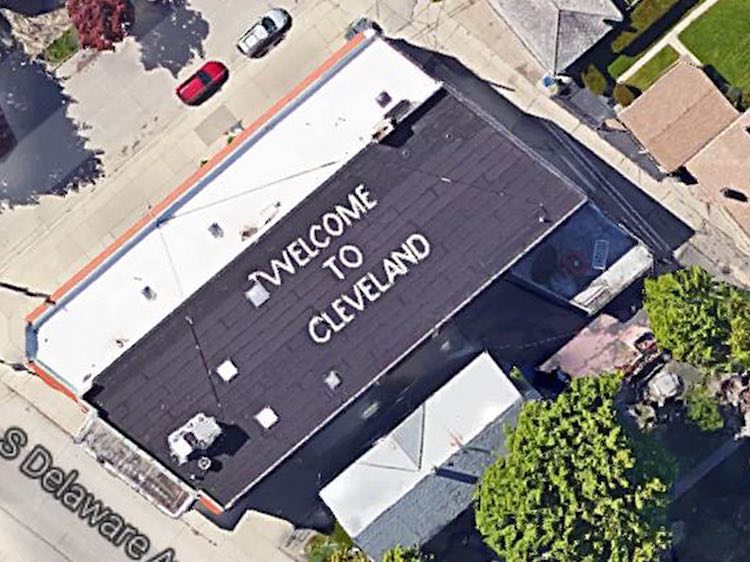
Because Mark Gubin’s large art gallery’s building was directly underneath the flight path of low flying jets, he painted a welcome message on his roof – but the greeting has been confounding passengers for 27 years now.
He painted the message in white letters 6 feet-tall telling people: WELCOME TO CLEVELAND.
Germany agreed Thursday to turn more than 60 former military bases into nature preserves, “with the aim of creating vast new green oases and sanctuaries for rare species of birds,” reports the AFP.
Environment Minister Barbara Hendricks said an ongoing overhaul of the German armed forces had made it possible to set aside more than 31,000 hectares (76,600 acres) of forests, marshes, meadows and moors.
Devotees celebrating the first International Yoga Day today have a science-backed reason to love the ancient practice. Since the yoga-honoring day was proclaimed by the United Nations in 2014, a study was released that shows yoga, which originated in India more than 5,000 years ago, may contribute to heart health as much as doing aerobic workouts like cycling or brisk walking.
Based a review of 37 clinical trials, researchers found that doing yoga, with its breath control and body stretches, lowered blood pressure, cholesterol, heart rate and other cardiovascular risk factors in increments comparable to those seen with aerobic exercise.
“Taken together, these improvements could facilitate and complement a regimen toward better cardiovascular health,” said Paula Chu, a doctoral candidate in health policy at Harvard University in Cambridge, Massachusetts, who led the study published in December, 2014.
Not only is yoga a medical benefit, the postures, which can be done at any age with adaptations, are believed to help nourish self-awareness, control stress and develop physical strength and balance.
Thousands of celebrities, soldiers and politicians in India stretched out in sun salutations and downward dogs on June 21 to mark the day. See more celebration activities from NBC, here.
“Yoga is an invaluable gift of India’s ancient tradition,” said the Prime Minister of India, Narendra Modi. “It embodies unity of mind and body; thought and action; restraint and fulfillment; harmony between man and nature; a holistic approach to health and well-being. It is not about exercise but to discover the sense of oneness with yourself, the world and the nature.”
When it came time for Abby Grubbs to celebrate her tenth birthday, she told her parents she didn’t want a new barbie, a LEGO set, or neon colored hair braids. At least, not for herself.
The young cancer survivor said she wanted to give the presents, instead, to children in the pediatric cancer center at a hospital in Fort Wayne, Indiana. So, last Friday as part of her “off chemo” birthday celebration, she and her mom wheeled a wagon full of LEGO toys through the ward.
Abby just wrapped up two and a half years of treatment for leukemia and recently got the green light to leave cancer behind her.
LEGO sets were Abby’s gift of choice because they don’t take much physical energy but they occupied her mind while she was sick. Team JOEY provided the sets, in part through Abby’s birthday donations. She also brought books from another favorite kids cancer project, Kate’s Kart.
“She really understands what a difference it makes to have that something that we may think is a small gift, but can really a make a huge difference in the ability to get through a tough medical procedure,” Abby’s mom, Sherry Grubbs, told TODAY.
(WATCH the video below from WANE News or READ more from TODAY) – Photo from Heroes Foundation
An American who made his fortune through gambling and investing in real estate has created the largest block of conservation land privately owned East of the Mississippi.
M.C. Davis (pictured, left) has stage 4 lung cancer, but is leaving an extraordinary legacy. He spent some $90 million to buy 54,000 acres in the Florida panhandle from timber companies who had destroyed the natural habitat.
The 70-year-old, who was raised in Santa Rosa county, is restoring the property he named Nokuse Plantation to its original splendor as a longleaf pine forest.
NPR reports that he has managed already to produce a haven for threatened species, “an ecological hotspot, filled with wildlife…eagles, ospreys, bobcats, foxes, raccoons, armadillos.
“This is a 300-year project,” said Davis describing his plantation to Florida State University’s Research in Review. “That’s what it’s going to take to return this to the old-growth longleaf environment that once stood here.”
Davis is also on a personal crusade to teach young people the importance of saving wildlife from the ravages of growth and development, having built a $12 million science and learning center in Walton County. The grounds, indoor theater, and massive nature displays of the E.O. Wilson Center are all free – part of his charitable effort to help educate Florida’s youth about saving the planet while there’s still time.
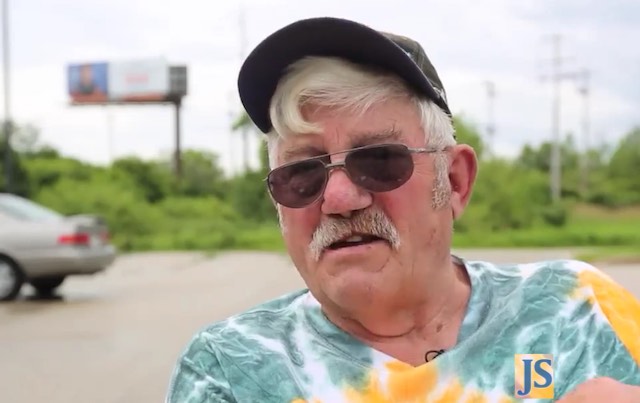
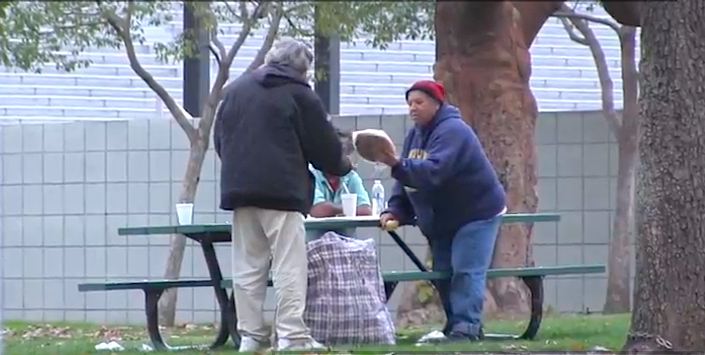
Chef Willy Fontanez was having an off day when he spotted a “rough-looking” person passing by his food truck, La Gumbo Ya Ya, which was parked in a downtown Oklahoma neighborhood.
“Good morning!” Willy called out to him. “Have you eaten lunch yet?”
The answer was no– so Fontanez asked him what he wanted.
“I was just thinking about having to throw away so much food when someone was in front of me that was hungry,” Fontanez told Good News Network.
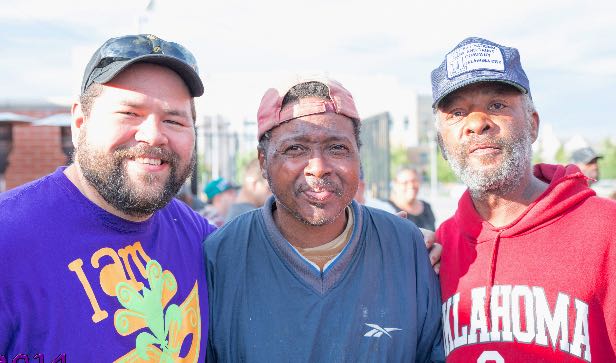
La Gumbo Ya Ya owner Willy Fontanez (left) with customers
Since that day in July, 2013, hundreds of folks in need have received thousands of free meals from La Gumbo Ya Ya. No matter where Fontanez and his wife, Rachel, park their big purple truck, it is recognized as a safe place to ask for a meal.
“They can order anything on the menu–gumbo, Po’ Boys or any of our other Puerto Rican specialties–and get a drink, like any other customer,” Fontanez said. “Sometimes they only have a few coins but they want to pay, so we take it… It’s about giving them dignity and a smile.”
Fontanez, who has served in the U.S. Army and as a youth minister, has dedicated his life to being of service to others. His grandparents, who hailed from Puerto Rico, always held gatherings where food was of the utmost importance, and they always kept their home open to those who needed a meal or a place to stay.
“I started a food truck because it was less expensive than starting a restaurant. I never knew how exciting and humbling this journey would be,” Fontanez said. “It’s sad that more restaurants don’t give food away. There is a lot of waste there.”
As for whether or not folks may take unfair advantage, Willy isn’t concerned in the least.
“We can’t control others and what they do, all we can do is love. You gave a blessing to someone, and their choices don’t take away our love,” he said.
Photos by La Gumbo Ya Ya
Other food trucks in Oklahoma do similar things, so the folks at La Gumbo Ya Ya are in the process of forming an alliance of food trucks that offer free meals to those in need, no strings attached.
As for Fontanez, he hopes to have a second truck on the streets by this fall, but needs to raise about $20,000 to do that.
“Even when we have a low sales day, if we can give a few meals away, I’m happy with that,” he said. “I take that positive feeling home to my family.”
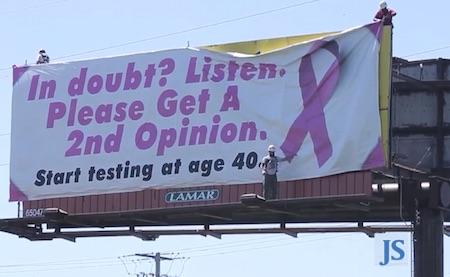
After 79-year-old Jack Maier won the lottery in 2006, he decided to use the winnings to rent a bunch of billboards around town to remind young women to pay attention to their health.
The billboards going up in Milwaukee, Wisconsin cost $2,000 each for only one month of advertising, but after losing his wife, Myrna, to breast cancer, Maier was determined to urge other women to get mammograms, and second opinions.
We posted a Mothers Day video last month showing kids reassuring moms about their parenting abilities through heartfelt letters. Now, Minute Maid is back again with a reminder to dads everywhere that they’re #doingood.
When a single father is asked how he is performing as a dad, he responds with doubt and hope.
Then they asked his son.
The heartwarming response is sure to bring a tear to your eye.
SHARE the love with your own family members (below)…
With Father’s Day coming up this Sunday in America, I thought I’d remind you about our Good News Network Gift Memberships.
For $15 you can buy a 1-year Gift Membership that includes access to free, downloadable eBooks and audio programs.
Our Member Gifts come from authors and experts in their fields with titles like Live Happier, Live Longer (for the over 50 crowd); Relationship Help is Here; and High-Powered Mentoring for 7 Areas of Your Life.