











All health care workers should include a bit of humor or fun to help boost the spirits of patients.
Watch these nurses brighten this little cancer patient’s day with a mini-dance party.
Story tip from Jae Bird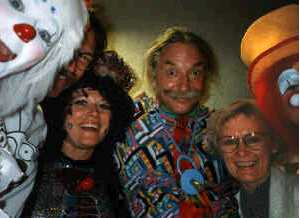
RELATED STORY: The Doctor is a Clown?!?



All health care workers should include a bit of humor or fun to help boost the spirits of patients.
Watch these nurses brighten this little cancer patient’s day with a mini-dance party.
Story tip from Jae Bird
RELATED STORY: The Doctor is a Clown?!?
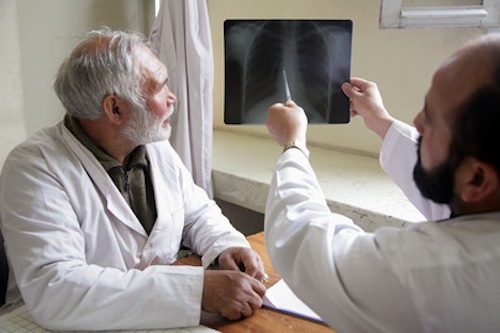
“Pakistan’s shambolic public health system suffers from corruption, mismanagement and lack of resources. But one public sector hospital in Karachi provides free specialized healthcare to millions, led by a man whose dream was inspired by the UK’s National Health Service.”
(READ the story from the BBC)
The Arctic bowhead whale population is estimated to be around 17,000, up from 5,000 in the early 1980s, according to an Alaskan Eskimo commission.

At the age of 17, after witnessing hundreds of snakes dying from drought on his island in India, Jadav Payeng started to grow trees on what was barren land devastated by erosion.
35 years later a jungle of almost 3000 acres (1200 hectares) — larger than Central Park — has grown in the wasteland, thanks to his daily careful cultivation. Diverse animals, including Elephants, now enjoy his lush oasis.
A documentary, Forest Man, shows how one person can change the course of nature.
(WATCH the video below)
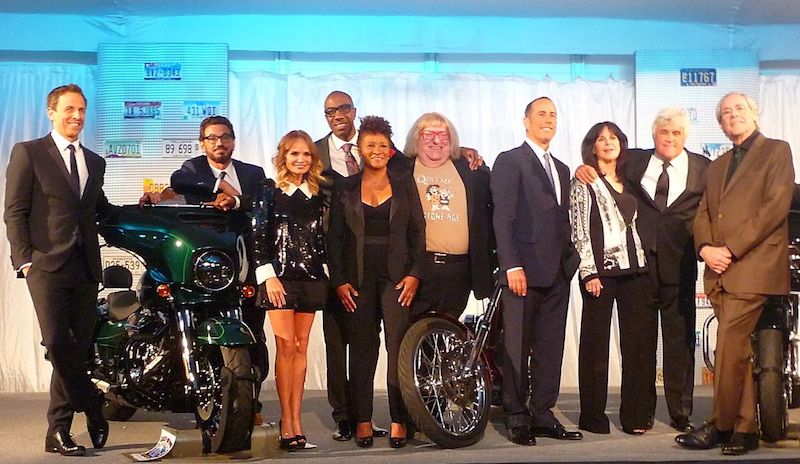
Jay Leno, the indefatigable host of the Tonight Show for 20 years, was honored with the Mark Twain Prize for American Humor Sunday by an all-star slate of comedians at the Kennedy Center in Washington, D.C.
Jerry Seinfeld, Jimmy Fallon, Wanda Sykes and Garth Brooks were among the celebrities saluting Leno, who retired in February despite his show’s ratings as the top late night program in America.
In his acceptance speech, Leno called the event, “the most wonderful night of my life.”
The 17th Annual Mark Twain Prize, which also featured Robert Klein, Seth Meyers, Kristin Chenoweth, Al Madrigal and Chelsea Handler, will be broadcast on PBS stations throughout the US on November 23, 2014.
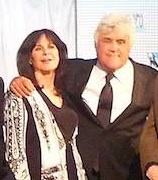
Starting in 1987, Leno was a regular substitute host for Johnny Carson on The Tonight Show. In 1992, he replaced Carson as host. He continued to perform more than 100 nights as a stand-up comedian every year throughout his tenure on The Tonight Show.
His free charitable performances have entertained US military troops overseas and thousands of unemployed people in Detroit during the recent recession. He has often donated his time to fundraising shows like the ones for victims of the Gulf oil spill in 2010 and Hurricane Katrina.
(WATCH a video below or READ about the red carpet at Washington Post – NOTE* Please click pause at the end of the video)
Previous recipients of the Twain Prize included Richard Pryor (1998), Jonathan Winters (1999), Carl Reiner (2000), Whoopi Goldberg (2001), Bob Newhart (2002), Lily Tomlin (2003), Lorne Michaels (2004), Steve Martin (2005), Neil Simon (2006), Billy Crystal (2007), George Carlin (2008), Bill Cosby (2009), Tina Fey (2010), Will Ferrell (2011), Ellen DeGeneres (2012), and Carol Burnett (2013).


A cross-country runner in North Dakota carried an injured competitor across the finish line during a high school track meet, a show of compassion that stood out as other teens kept running.
Melanie Bailey, a senior at Devils Lake High School, was running Saturday in the Eastern Dakota Conference’s Cross Country Championship when she spotted Danielle LeNoue lying on the ground sobbing in pain.
(WATCH the video and READ the story from KENS-5 News)
Story tip from Leija Haabe – photos from separate events

A new report by university scientists proves the existence of a potential breakthrough energy source new to science, according to detail released last week.
The New Energy Foundation, a non-profit advocacy group in the U.S. believes the implications of the report should revolutionize the production of energy, and herald the beginning of a new era in science.
The comprehensive report (PDF) by scientists from Bologna University in Italy and Uppsala University in Sweden highlights a 32-day test of the energy device known as the E-Cat. Data from the test implies transmutation of one isotope to another of two separated elements, which is radical and cannot be explained by conventional science.
“I was impressed with the work that was done to insure the measurements were accurate,” said Michael Nelson, Alternate Discipline Leader for SLS Propulsion at NASA’s Propulsion Research and Development Laboratory. “Aside from the fact that this could not have been produced from any known chemical reaction, the most significant finding to me is the evidence of isotopic shifts in lithium and nickel. Understanding this could possibly be the beginning of a whole new era in both material transmutations and energy for the planet and for space exploration. This is an exciting technology to witness come about.”
 Possible applications of this breakthrough technology include low-cost desalination of salt water, power production with no emissions, and ultimately applications in home and industry to provide power, heat, and hot water.
“It is challenging to science that these results so far have no convincing theoretical explanation, but the experimental results cannot be dismissed or ignored just because of lack of theoretical understanding,” said William Zebuhr, Chairman of the New Energy Foundation. “This report demands worldwide attention, so that our current understanding of nuclear science can be expanded.”
The non-profit New Energy Foundation provides grants to new energy researchers and publishes the bimonthly magazine Infinite Energy. For more information about the foundation and reporting on the E-Cat possibilities, visit www.infinite-energy.com.
Story tip from Lee Katchen

Rookie pitcher Brandon Finnegan of the Kansas City Royals makes a fan’s day by giving him tickets to a postseason game, just because he asked.
The grateful fan offers to take Finnegan to dinner, and Finnegan says “OK, but you don’t need to pay.”
(READ the story on WAPC)
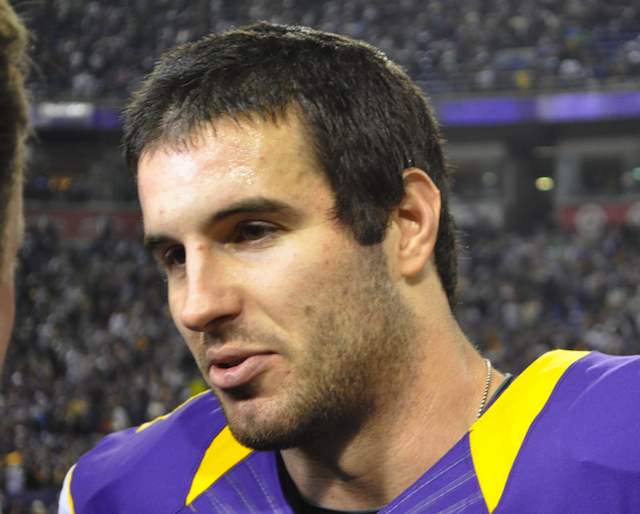
The quarterback for the NFL Minnesota Vikings, Christian Ponder, and his wife were in “the right place at the right time recently to help a family coping with tragedy.”
A widower’s two daughters just lost their mom in a car accident. After approaching the star athlete who was shopping at a mall, Ponder told the store’s manager to bill him for anything the family wanted to buy.
(WATCH the video below from WCCO-TV or READ the story from Yahoo Post Game)

“High up in the Sierra at the end of a twisty mountain road, this tiny town is going to have a 100th birthday party Saturday for its oldest and most revered resident: a huge, brass cash register.”
The San Francisco Chronicle reports:
The birthday gal — and it is a gal, its owner insists — will be working, like it always is. It’s been whirring up totals and clattering open its drawers dependably at Young’s Market on Main Street since the day it was made and installed in 1914.
(WATCH the video below, or READ the story at SF Gate)
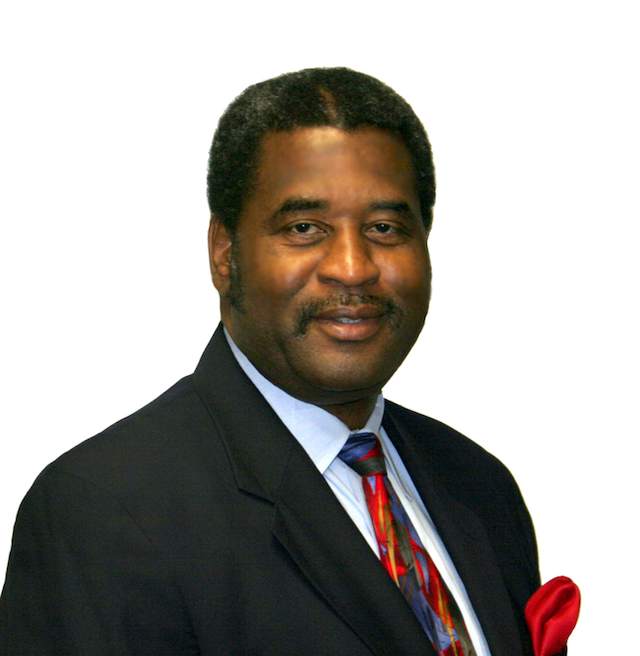
Kentucky State University’s interim president, businessman Raymond Burse, slashed his salary by $90,000 in order to raise the salary of the school’s 24 lowest paid employees by as much as 40 percent.
By reducing his own annual salary, he was able to give 24 custodial workers and groundskeepers a pay hike that took them from $7.25 an hour to $10.25 an hour.
(WATCH the video below or READ the story from NBC Nightly News – NOTE* audio atuo-plays so adjust your speakers)
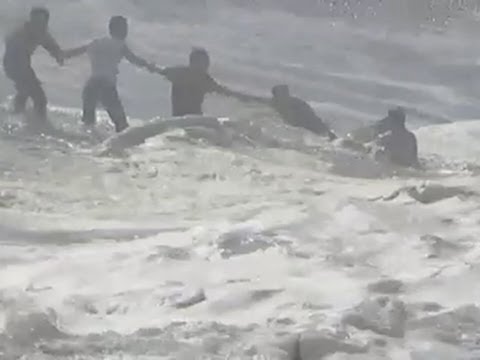
“Beachgoers in Oregon pulled a struggling swimmer to shore by forming a human chain after she and seven others were stranded on a rocky outcropping during high tide.”
“These young people handled themselves very well in doing what they needed to do to save this girl. She would have died if they had not put their heads together and responded like they did,” said a witness.
The rescue took place in Fogarty Creek State Park.
(WATCH the cell phone video above or READ the AP story from the Salt Lake Tribune)
RELATED: Chain of People Hold Hands to Save Boy From Drowning (Watch) – March, 2013
Story tip from Mike McGinley
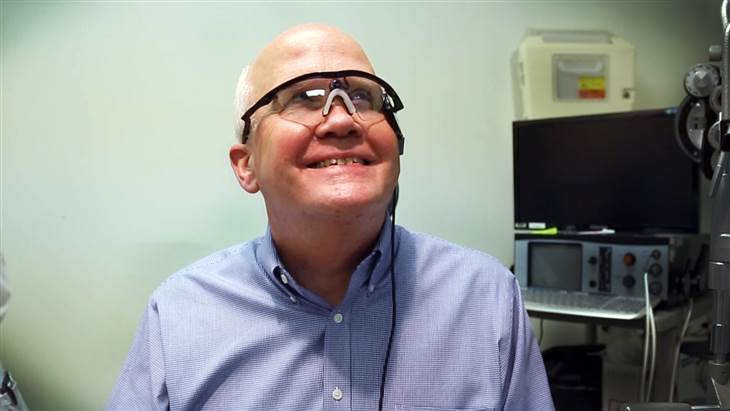
After 33 years of blindness, a North Carolina man regained the ability to see light with the help of a bionic eye.
Last month, Larry Hester became the seventh person in the nation to get a “bionic eye,” according to the Duke Medicine blog.
The first thing he saw up close was his wife’s kiss.
(WATCH the video below or READ the story from the Washington Post)

A single mom working two jobs to provide for her two children, US Army veteran Trista Hopkins got the surprise her life during a normal afternoon as a cafeteria worker in a Dallas middle school.
Hopkins knew something special was happening when media began arriving. She then realized the focus was on her when a man from the non-profit Rebuilding Together put his arm around her and announced that she was the recipient of their Homes 4 Heroes program, and her dilapidated home would be completely remodeled and rebuilt.
(WATCH the video below or READ the story, w/ photos, from WFAA-TV)

When it comes to Ebola, the rubber met the road at the Firestone rubber plantation in Harbel, Liberia.
Harbel is a company town made up of 80,000 Firestone workers and their families surrounding the rubber plantation.
NPR News reports: “Firestone detected its first Ebola case on March 30, when an employee’s wife arrived from northern Liberia. She’d been caring for a disease-stricken woman and was herself diagnosed with the disease. Since then Firestone has done a remarkable job of keeping the virus at bay. It built its own treatment center and set up a comprehensive response that’s managed to quickly stop transmission.”
The head of the U.S. Centers for Disease Control and Prevention’s team in Liberia, has hailed Firestone’s efforts as resourceful, innovative and effective.
(READ the story from NPR News)

“The NCAA has granted the Mount Saint Joseph University women’s basketball team a waiver to move the date of its season opener up two weeks to allow a terminally ill player to play,” according to Sports Illustrated
Lauren Hill, a freshman forward with the Lions, committed to play for Division III Mount Saint Joseph last October. A month and a half later she was diagnosed with an inoperable brain tumor, reported WKRC.
(WATCH the video below or READ the story from SI.com)

Do you believe in fate? Soul mates? Divine Intervention?
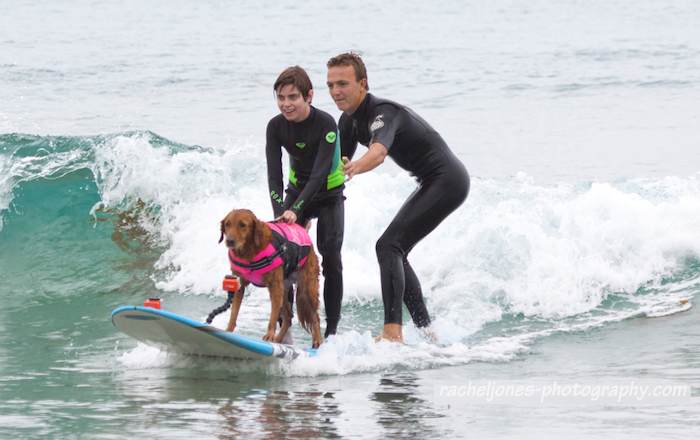
Famed surfing dog Richochet, who rides the waves with disabled or special needs children and veterans, last week formed a heartwarming threesome with two teens who were destined to meet.
Both boys have the same name, the same age, and the same heart condition. Both families wrote to Surf Dog within a day of each other.
The Surf Dog arranged for donated airfare and hotel rooms to bring together these two critically ill teens to surf on one board as “one perfect heart.”
The story is important because there is an overwhelming shortage of donors. Each day, 18 people in the United States die while waiting for organ transplants. Right now, more than 120,000 patients are on the waiting list in the United States.
Watch the video below and become inspired to make sure that everyone in your family is registered as an organ donor. REGISTER HERE.
Read more about how Judy Fridono and her surfing service dog helped bring these two boys together at SurfDogRicochet.com.

Peter Sharp, a man known for his flash mobs that aim to make people happy, started a commuter train dance party in Australia.
After an awkward introduction speaking to commuters on the Fremantle line near Perth, Sharp starts playing “I Feel Good” by James Brown on a CD player.
At the next stop, the new crop of riders started bopping to the music and looked happy to join the party.
Sharp says on YouTube that the dance party “makes starting a conversation on the train seem effortless.”
(WATCH the video below below)
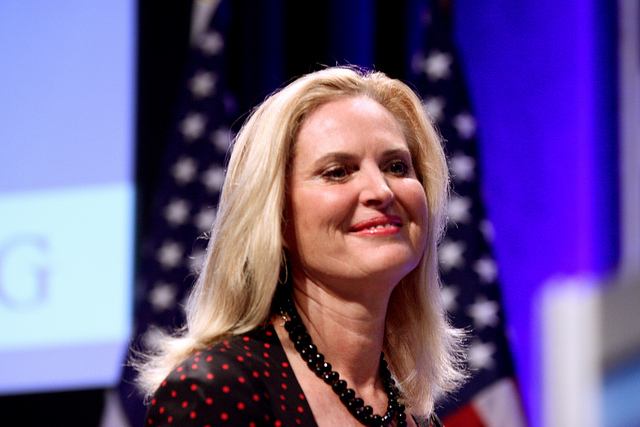
“Ann Romney helped launch a major research center this week aimed at finding cures and treatments for Alzheimer’s disease, multiple sclerosis and other devastating neurological diseases,” reports the USA Today.
The wife of the 2012 US presidential nominee, who was diagnosed with multiple sclerosis nearly 16 years ago, will help raise $50 million for the Ann Romney Center for Neurological Diseases at Brigham and Women’s Hospital in Boston.
She and her husband Mitt made an undisclosed contribution to the center, which will also tackle Parkinson’s and Lou Gehrig’s diseases and brain tumors.
(READ more from USA Today)
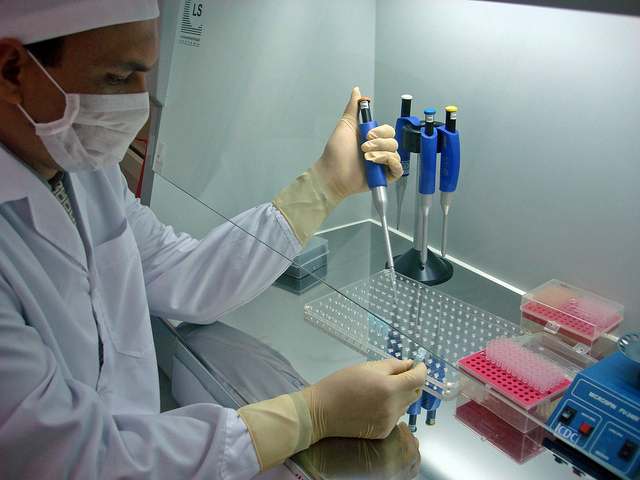
While the American media continues ramping up fears about the Ebola outbreak, scientists around the world are moving swiftly to bring a multitude of promising drugs to human clinical trials. In fact, there are so many drugs in testing right now, it is hard to keep track. Here are some of the highlights from progress in Canada, the US and China.
The first human trials for the Ebola vaccine, VSV-EBOV, developed by The Public Health Agency of Canada at the National Microbiology Laboratory in Winnipeg began Monday at Maryland’s Walter Reed Army Institute of Research.
Medical officials said the vaccine shows “great promise” and should “prompt the immune system to produce antibodies, which then identify and neutralize foreign objects, such as bacteria and viruses.”
Should the vaccine prove as effective in human tests as results have been in animals, then “we could literally stop this outbreak,” a Canadian Health Minister told the Journal.
A drug that would inhibit the Ebola virus from replicating has been under development for five years by China’s Academy of Military Medical Sciences.
Last month the Chinese FDA approved JK-05 for emergency use only in military situations, based on strong preclinical and safety data. Sihuan Pharmaceutical, which partnered with the military lab, is seeking fast-track approval by the end of the year for the drug, which was shown to stop the virus in animals.
Last week, University of Utah scientists said they have isolated a potential universal drug target for Ebola that would make it easier to develop and test drugs that could treat all five known strains of the virus. The study, published in this week’s online edition of Protein Science, was funded by the US National Institutes of Health. The researchers designed peptide mimics for the unchanging region in any Ebola protein that controls entry of the virus into the human host cell, initiating infection.
The US company Mapp Biopharmaceutical Inc. helped to fund the same Canadian research team in Winnipeg to produce ZMapp, which was successful in animal trials. Some of their research stock was used to treat two American Ebola survivors, Dr. Kent Brantly and Nancy Writebol, and was offered to Spanish officials for a nurse who contracted the disease.
Kentucky BioProcessing has put all other projects on hold to focus on full-scale production of the drug for Mapp, according to the Lexington Herald Leader.
In September, Health and Human Services announced that it had issued an 18-month contract with Mapp Biopharmaceutical for as much as $42.3 million for “the development and manufacturing of the medication ZMapp toward the goal of U.S. Food and Drug Administration approval.”
“It is one of several treatments under development for Ebola,” Dr. Nicole Lurie, assistant secretary for preparedness and response, said in a news release.
Another promising drug candidate, TKM-Ebola, which has been used to treat American physician Rick Sacra and other patients, was developed by Tekmira Pharmaceuticals based in Vancouver, BC, thanks largely to funding from the U.S. Department of Defense, reports the International Business Times.
Both ZMapp and TKM-Ebola have been tested on monkeys, which give a closer immune response to that of humans.