By 2020, the European Union will have cut its carbon emissions by 20 percent more than it had pledged it would under the Kyoto climate change treaty, according to an announcement made at a meeting of the bloc’s environment ministers May 14.
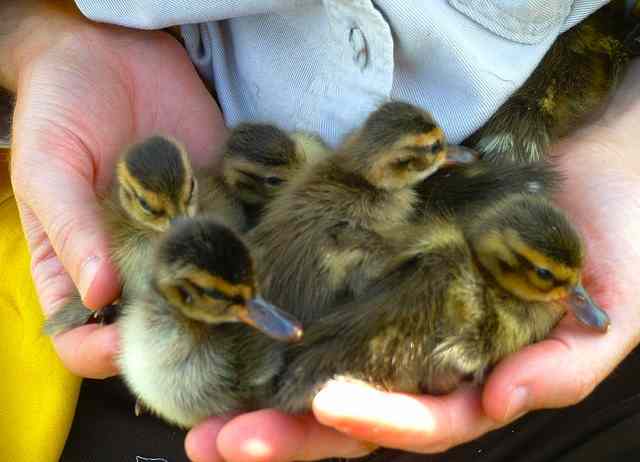
A group of baby ducks outside a Red Cross headquarters couldn’t have picked a better location to get stuck in a storm drain.
The ducklings were rescued by caring employees at the facility along with two construction workers, who used a golf club to help retrieve the tired ducklings.
Most days I have the good fortune of getting to pick up my two-year old son from daycare. There are few more powerful moments, if any, than the joy you feel when your child runs into your arms having waited for your return all day.
Our ride home is a short one. Only about 5 minutes at the most. On the ride home my son always asks if Mommy and “Beel” (his sister Bailey) are home. Usually we don’t know until we turn the corner and can see the driveway. Next, I unbuckle him from his car seat and let him go. What he does next always tickles me because it is so innocent and because it is something that never occurs to me.
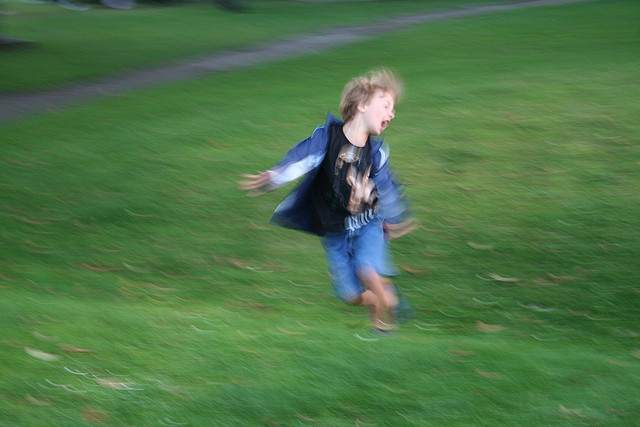
My son climbs out of his car seat and takes a wide turn around the back of the car eventually ending up at the front door. I on the other hand. Being the sensible adult. Take the shortest path to the front door. Why wouldn’t I?
Then again, why are we always looking for the shortest path? Most of us have our daily routines down the minute. How long it takes to shower, get dressed, drive to work, etc. We usually attempt to complete most of these tasks as fast as we can, leaving no time for variance.
Why do we do this? From what I’ve gathered in my 43 years, taking the shortest or quickest path does not make either of these experiences more enjoyable. If anything, it allows us time to “tack on” one more thing that we previously did not have time for.
Hmmm.
What if we stopped trying to have as many mediocre moments as possible and started working on having a few more awesome moments?
I think it is worth a try.
I think we all need to learn from our kids and start taking a few more wide turns. Taking wide turns might cause us not to be able to check off everything on our to do list, but I’m pretty sure it will help us add to our fun pile. And, really isn’t that more important?
So go ahead. Take a wide turn today. My guess is you will be glad you did.
A British Columbia woman’s search for the anonymous lady who helped her to get home from a bus stop has proven futile so far, but she — and the cab driver who was hired to take her there — will never forget her kindness.
Last week, Pamela Douglas was waiting for a bus to take her home, but the bus never arrived. The senior citizen decided to walk home — a journey that would take at least two hours.
As she strode off, a young woman who was also in the bus shelter ran after her, reports the Times Colonist.
The “bubbly young woman in her mid-20s” wanted to ensure her safety and called a taxi.
Later, all three had tears in their eyes when she gave the driver money for the fare.
Diagnosed with a likely-fatal cancer, a woman near death was abruptly cured by an injection of measles vaccine so potent that it equaled ten million regular doses.
Stacy Erholtz was out of conventional treatment options for blood cancer last June when she underwent the experimental trial at the Mayo Clinic.
The 50-year-old Minnesota mother is now part of medical history.
The cancer, which had spread throughout her body, went into complete remission.
Just one week after the mega dose of measles vaccine, the cancer became undetectable in her body.
This was the first human trial in which a virus was used to destroy metastatic cancer, a method that had long been researched and successful in mice.
12 years ago, an attack outside a bar left Jason Padgett with a severe concussion. But the incident also turned the furniture salesman from Tacoma, Wash., into a mathematical genius.
Now, researchers have figured out how this happened, and they think such skills may lie dormant in all human brains.
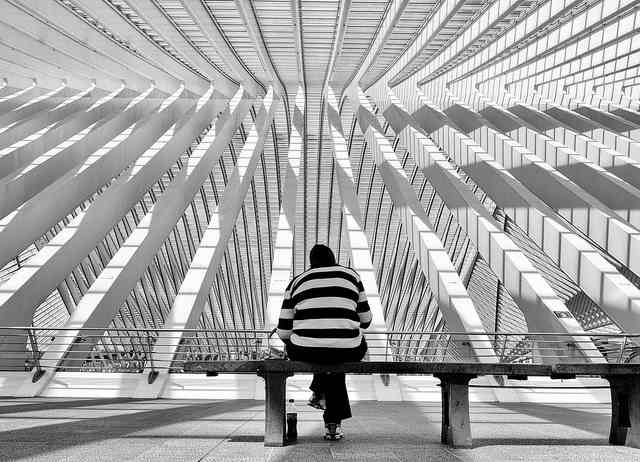
Padgett, who has published a new memoir called Struck by Genius: How a Brain Injury Made Me a Mathematical Marvel, said, “I see shapes and angles everywhere in real life,” (from the geometry of a rainbow, to the fractals in water spiraling down a drain). “It’s just really beautiful.”
A Portland industrial designer and his new wife — along with millions of couples around the world– wished they could continue cuddling deep into the night without their arms falling asleep.
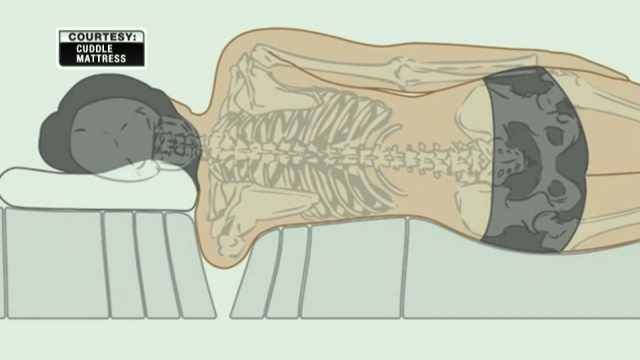
Then, Mehdi Mojtabavi had an idea. He designed a mattress that had grooves like a record, to make it possible to slip your arm beneath your sweetheart, yet not lose circulation to the limb. He called it the Cuddle Mattress. The design is also perfect for those who want to sleep on their side, but have trouble finding a comfortable position for their shoulder.
After winning a prestigious Red Dot Award in 2007, the manufacturing of the mattress has finally begun.
Assembled by hand in a Portland warehouse, the first limited batch of 50 Cuddle Mattresses sold out immediately.
For a limited time it will cost you $1,500 before the retail price is set at $1,799.
A little boy named Jeremy was riding a bike calmly around his driveway when suddenly the neighbor’s Labrador-Chow puppy came into the yard and attacked his leg, pulling him to the ground and shaking him violently.
The Triantafilo family posted an amazing video on YouTube from surveillance cameras that showed the family’s cat, Tara, charging at the dog in mid-attack, and running it off their property.
The hero cat, a stray adopted by the Bakersfield, California family six years ago, has been seen by millions of people worldwide, after the story went viral on news and social media websites.
Jeremy is doing fine, after getting ten stitches to sew up his leg.
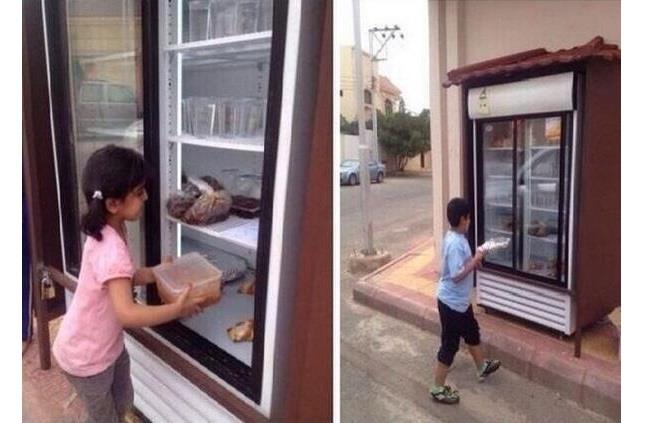
A Saudi man, who wishes to remain anonymous, has installed a giant refrigerator in front of his house to provide fresh food for the needy. He invited his neighbors in the city of Hail to bring their leftovers for sharing.
His idea for the street fridge was to spare the needy the “shame” of begging or dumpster diving for food.
According to the Gulf News, the story spread far and wide after a Muslim religious scholar with millions of followers on Twitter, Shaikh Mohammad Al Araifi, tweeted some love to “the Saudi man from Hail who was engaged in an indirect act of charity.”
A benefactor has given the gift of freedom, in the form of a new custom-fitted car, to an Australian mom left paralyzed six months ago after the birth of her third child.
The generosity was completely anonymous.
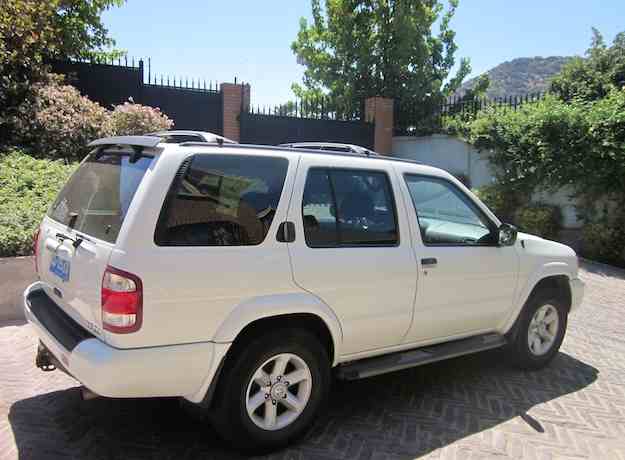
The SUV, which had been fitted with hand controls, will fit Jessie Bruton’s wheelchair as well as strollers and equipment for her three young boys, reports the SMH.
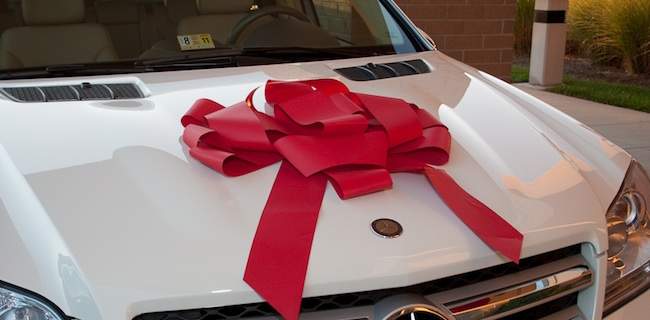
“It was just incredible to get home and see the car parked there with a red bow and a lovely card saying they hoped it would help my family out, and make me smile,” Mrs Bruton said.
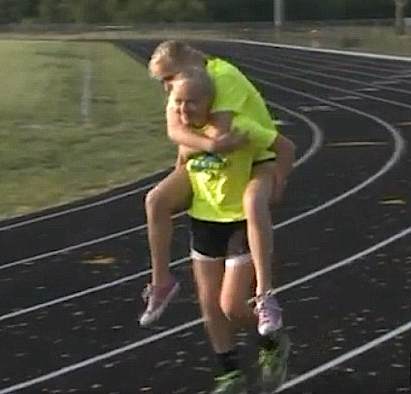
Illinois twins Chloe and Claire Gruenke spent the weekend competing at a regional track meet. Both were running in the 800 meter race when suddenly 13-year-old Chloe felt something “pull and pop” in her thigh. She eventually crumpled to the ground.
Claire, who was behind, came up and hoisted her sister on her back and powered the remaining almost 400 meters to finish the race.
“The energy from the crowd made me stronger,” she told KTVI later.
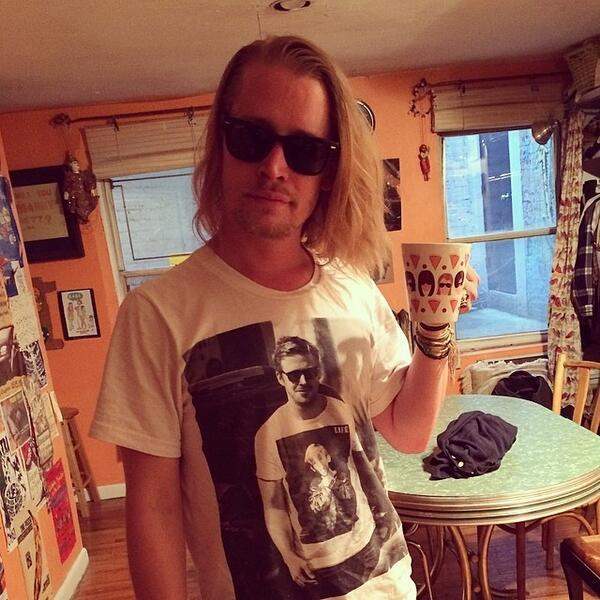
Macaulay Culkin, the former child star of the Home Alone films, apparently tweeted this photo of himself creating a meta “Inception” moment with Ryan Gosling.
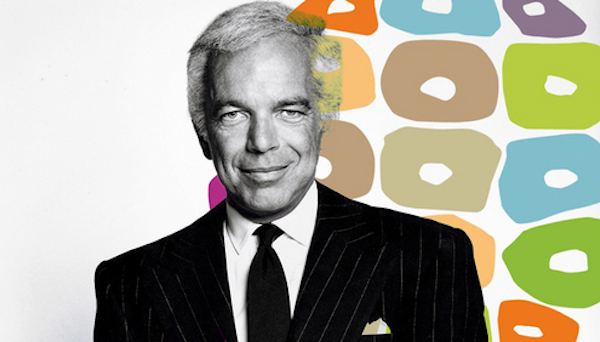
In the late 1980s, fashion industry legend Ralph Lauren was diagnosed with a benign brain tumor. Shortly after the removal of the tumor, his close friend Nina Hyde was diagnosed with breast cancer, a disease that later took her life.
In the quarter century since then, Ralph Lauren has been dedicated to the fight against the deadly disease.
Recognized for his early leadership in the fight, Lauren made a personal and corporate commitment to finding a cure.
Yesterday he announced, in a rare and personal video, a new partnership with The Royal Marsden, one of Princess Diana’s favorite charities, the largest and most comprehensive cancer centre in Europe. The Ralph Lauren Corporation is to build them a state-of-the-art breast cancer research facility in Chelsea, London.
This will be the second breast cancer research center founded by the 73 year-old fashion mogul.
As a tribute to his friendship with Nina Hyde, The Washington Post’s fashion editor for 18 years, Ralph Lauren co-founded the Nina Hyde Center for Breast Cancer Research at Georgetown University in 1989.
“Breast Cancer is not just a women’s issue,” says Lauren. “It affects all of us – the husbands, fathers, brothers, children and friends of the women dealing with this dreaded disease.”
His Pink Pony campaign helped mobilize the fashion industry to take a stand against breast cancer. As part of the campaign in 2001, Lauren founded the Ralph Lauren Center for Cancer Care and Prevention in Harlem, New York to provide healthcare to the medically under-served African-American population, which is at a much greater risk of dying of cancer.
This evening, May 13th, Lauren will attend a gala dinner at Windsor Castle, hosted by His Royal Highness The Duke of Cambridge, to celebrate the work of The Royal Marsden.
Mild-mannered pharmacy employee John Robertson is being hailed as a hero after saving a customer’s life. When a customer failed to pick up his prescription, Robertson got worried and, with the help of deputies, went to check on the man at his home. Turns out, the man was injured and had been lying on his bathroom floor for up to two days.
Robertson, who followed his intuition and concern, was given a Hometown Hero award.
Global renewable jobs hit almost 6.5 million in 2013, a 14 percent increase over the previous year, driven by the rising solar market and employment in China, says a report from the International Renewable Energy Agency.
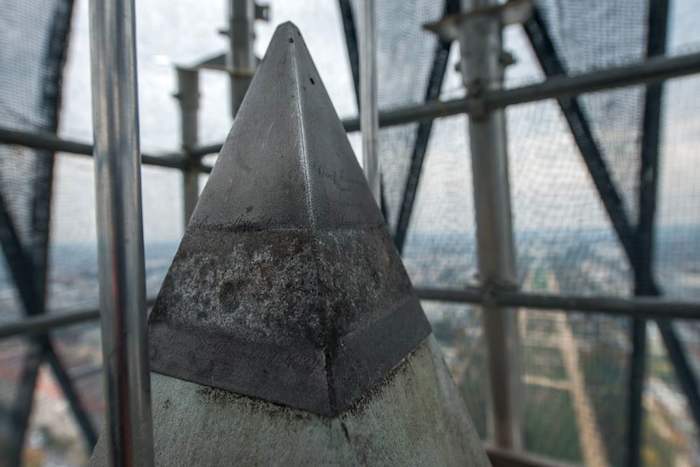
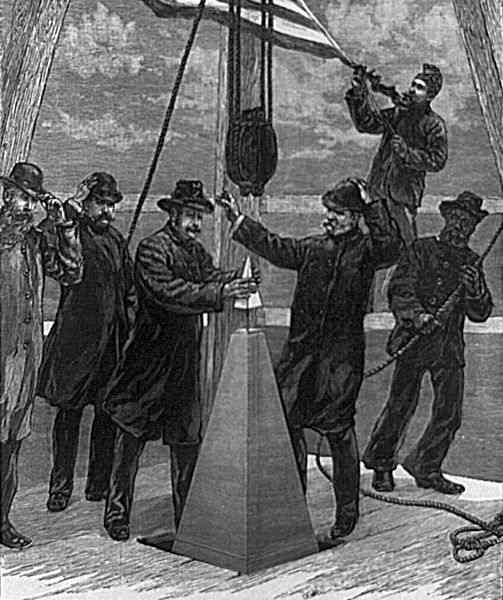
The apex was the largest single piece of aluminum cast at the time, and considered a precious metal worth as much as silver. Two years later, a new process made aluminum easier to produce and the price plummeted. The once-valuable capstone still provided a non-rusting tip that served as the original lightning rod.
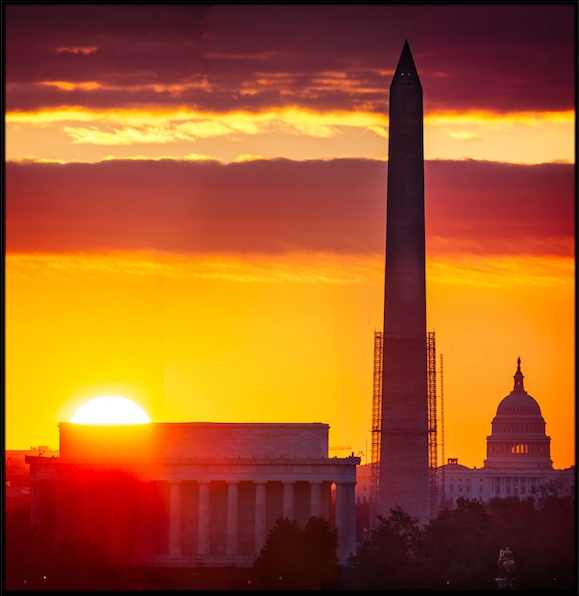
US Capitol and Lincoln Memorial with scaffolding on the Washington monument – Colin Winterbottom (NationalMall.org)
After almost three years, the Washington Monument reopened to the public yesterday. A 2011 earthquake left gaping cracks that needed repair, so the 130-year-old structure needed to be closed for 32-months. With extended hours of admission, the 555 foot-tall landmark (169m), is once again offering tourists, free of charge, one of the best panoramic views in the world.
“It really is an engineering marvel,” said Al Roker on the TODAY show, reporting from the opening ceremony in D.C.. “It is built the way the pyramids were. There’s no reinforcing steel structure, there’s no mortar used to hold this together. It is the weight of the stones that actually keeps that together.
David Rubenstein, who founded a global private equity investment firm in D.C., paid for half of the $15 million repair bill, with public funds allocated by Congress to cover the remainder of the restoration. The 5.8 magnitude earthquake left 150 cracks in the structure, some leaking rain, and most of them at the top, where the masonry is only seven inches thick.
The apex was the largest single piece of aluminum cast at the time, and considered a precious metal worth as much as silver. Two years later, a new process made aluminum easier to produce and the price plummeted. The once-valuable capstone still provided a non-rusting tip that served as the original lightning rod.
“David’s support of the national parks and the work of the National Park Service sets a high standard for park philanthropy nationwide,” said National Park Service Director Jonathan B. Jarvis. “It is appreciated by every visitor who will learn something about President Washington or simply enjoy the view from the top.”
Built to commemorate George Washington, the first American president, the monument, made of marble, granite, and bluestone gneiss, is both the world’s tallest stone structure and the world’s tallest obelisk, standing 555 feet 5 1⁄8 inches (169.294 m) tall. Taller monumental columns exist, but they are not all stone.
Construction of the monument began in 1848 with a cornerstone laid on July 4, 1848. Work was halted from 1854 to 1877, because of a lack of funds, and the intervention of the American Civil War. A difference in shading of the marble, visible approximately 150 feet or 27% up, shows where construction was halted.
P.H. McLaughlin sets the aluminum capstone in 1884. (Illustration from Harper’s Weekly, via Library of Congress)
Its original design was by Robert Mills, an architect of the 1840s, but his design was modified significantly when construction resumed. The capstone was set on December 6, 1884 and the completed monument dedicated two months later. Upon completion, it became the world’s tallest structure, a title previously held by the Cologne Cathedral. The monument held this designation until 1889, when the Eiffel Tower was completed in Paris, France.
The number of people over the age of 90 has tripled since 1981 in England and Wales. The population living more than 100 years has quintupled, from 2,420 to 12,320.













 , said, “I see shapes and angles everywhere in real life,” (from the geometry of a rainbow, to the fractals in water spiraling down a drain). “It’s just really beautiful.”