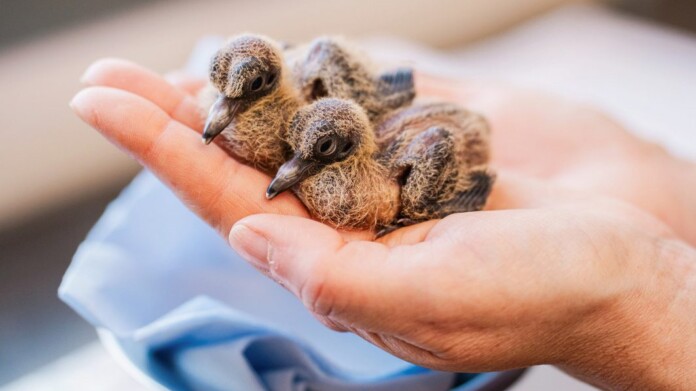
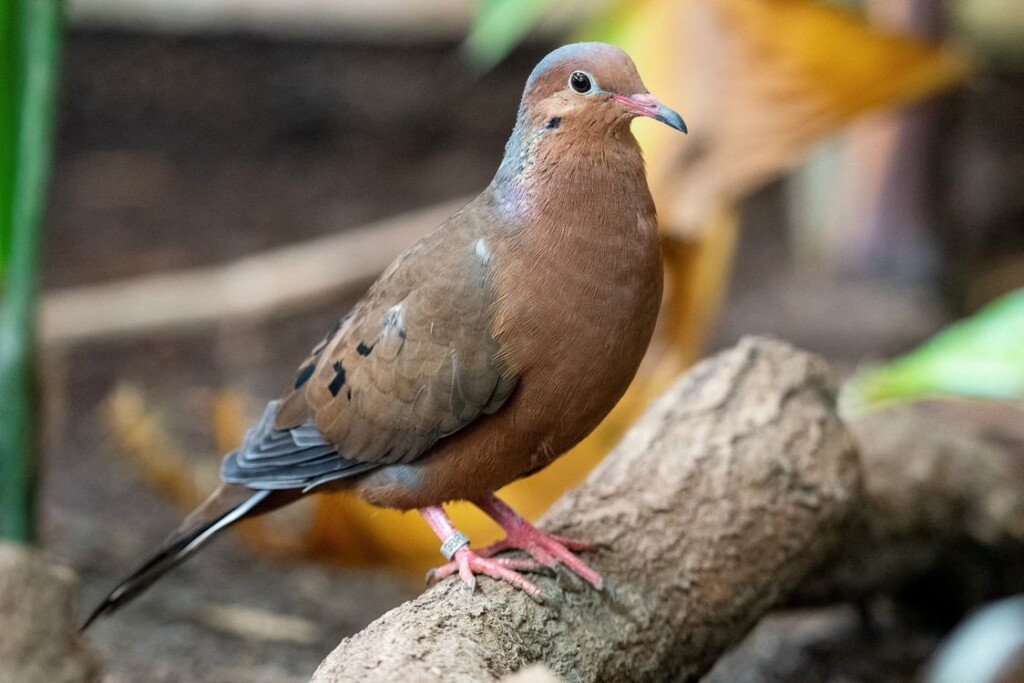
With a new inspirational quote every day, atop the perfect photo—collected and archived on our Quote of the Day page—why not bookmark GNN.org for a daily uplift?
A local entrepreneur in Tanzania is clearing two hurdles in one leap by transforming old cement bags into backpacks that include a small solar panel to power a reading light.
By clearing municipal waste and helping rural children study after dark, the bags won the backing of the United Nations Development Program for their problem-solving potential.
Soma Bags employs 85 rural workers to satisfy a demand for 13,000 backpacks a month. They can’t meet it, but they do their best.
This backpack craze is all due to Mr. Innocent James, born in the Mwanza region of northern Tanzania, who remembers studying for school by the light of a kerosene lantern. More than 20 years later, many rural households still depend on this antiquated implement for lighting after dark.
Expensive to run and somewhat dangerous to use, many parents can’t afford or don’t trust their children with a kerosene lantern, and so send them to bed without means to read books. James’ solution, CNN reports, was inspired by a university professor he met.
The man carried around a solar panel to charge his phone sewn into the fabric of his jacket, giving James the idea to sew cheap, flexible solar panels onto the outside of bags to power a reading light.
He began making bags himself in 2016, sewing together around 80 per month and selling them for between the equivalent of $4.00 and $8.00 in Tanzanian shillings. This amounted to the same cost as running a kerosene lantern for about 15 days.
James’ fledgling business was supported by the UNDP’s Funguo Innovation Programme, funded by the European Union (EU) and the UK Government which highlights collaborative efforts to promote sustainable solutions and educational opportunities in underserved communities.
The impact of Soma Bags has been tremendous, the UNDP reports. The bags have provided children with a reliable source of light that allows them to read at night. This has led to an improvement in academic performance as children are now able to study more effectively. The bags have also provided children with access to information and communication, allowing them to keep in touch with their families and friends.
The company generates revenue through bag sales and exclusive brand partnerships while significantly contributing to environmental conservation by repurposing up to 200,000 cement packing sacks monthly, preventing them from becoming street litter.
“There is a crop of young people [in Tanzania] who are coming up, and they have realized that they have to take the future into their own hands,” Joseph Manirakiza of the UNDP, told CNN. “Innocent represents a group of young people using their talent to do something meaningful.”
SHARE This Great Multi-Purpose Social Solution With Your Friends…
A toddler in Northern Ireland has survived a harrowing brush with death due to the rarest genetic disease in the UK.
Overcoming months of intensive care and potentially significant brain damage, she is now hitting crucial developmental milestones that her mother described as nothing short of a miracle.
Callie McKinney from County Down seemed for all the world like a normal infant girl, until she went into cardiac arrest, reports Belfast Live in an exclusive story.
The doctors told her parents to expect the worst—that she may not last the next 48 hours, but time and time again the doctors were proven wrong. After a six-month stay in the Royal Belfast Hospital for Sick Children, Callie was finally discharged: a defibrillator implanted in her chest, a once-in-a-nation diagnosis, but alive and chippy.
“For the first year of her life, Callie was a healthy and happy baby girl and we never imagined the difficulties that she would face,” said Callie’s mother Caitlin to Belfast Live.
“Callie is the only person in the UK who is currently diagnosed with a very rare genetic condition called PPA2, which will leave her at risk for the rest of her life, especially if she consumes any sort of alcohol. She is also at risk if she ever gets sick and even having the slightest temperature can be very dangerous for her.”
But this little star of the County Down has met critical developmental milestones on time, including sitting up, eating solid food, and learning to walk.
“We were told that Callie would be severely brain damaged as a result of what she went through and would essentially have no quality of life going forward, but the resilience that she has shown is nothing short of a miracle,” said Caitlin.
Callie’s doctors have used the experience of treating the girl to try and improve the diagnostic accuracy of PPA2. According to Caitlin, similar cases to Callie’s have been put down as “Sudden Infant Death Syndrome,” but being that Callie survived the death part long enough to be diagnosed with the genetic disorder PPA2, it’s possible a number of the SIDS cases were actually PPA2.
“In order to try and raise money for research into PPA2 and the Children’s Heartbeat Trust, later this year I am going to be running the Belfast Marathon and will be donating everything to the incredible charity,” said Caitlin.
CELEBRATE This Girl’s Survival And Homecoming On Social Media…
The Segnole 3 Rock Shelter floor map - Credit: Dr Médard Thiry
The Segnole 3 Rock Shelter floor map – Credit: Dr Médard Thiry
In a proud moment for our heritage, researchers have found evidence that Stone Age humans carved a map of their territory into the floor of a cave, located in modern France.
Chipping away to create indentations for basins, these pioneering cartographers then cut grooves into the cave floor to represent rivers and gullies, all of which accurately depict a low-lying river system in the Esssone Department of the Iles-de-France Region.
Before this discovery, the oldest known three-dimensional map was understood to be a large portable rock slab engraved by people of the Bronze Age around 3,000 years ago.
Identified in the Segnole 3 rock shelter originally found in the 1980s, this 3D map could be 13,000 years old, if it corresponds to other activity in the cave.
“This completely new discovery offers a better understanding and insight into the capacity of these early humans,” Dr. Médard Thiry from the Mines Paris—PSL Centre of Geosciences, told the University of Adelaide press, whose researchers contributed to the discovery.
Segnole 3 is well known for containing the artistic engraving of two female horses on either side of another depiction of an equine sex organ. Rainwater infiltration into the cave caused it to spill out onto the cave floor through what is perceived as the vulva.
However, once the water reaches the floor, after a few meters it begins to run through a series of sharp grooves and around little humps protruding up from the floor. The research team from PSL and Adelaide, revisiting the cave after initial research in 2017, believe concretely that the grooves and humps are a model of the surrounding ecosystem, and are connected with the horse carving.
The Segnole 3 Rock Shelter floor map and topographical map of the area – Credit: Dr Médard Thiry
“What we’ve described is not a map as we understand it today—with distances, directions, and travel times—but rather a three-dimensional miniature depicting the functioning of a landscape, with runoff from highlands into streams and rivers, the convergence of valleys, and the downstream formation of lakes and swamps,” Adelaide’s Dr. Anthony Milnes explains.
“For Palaeolithic peoples, the direction of water flows and the recognition of landscape features were likely more important than modern concepts like distance and time.”
In the depiction, a shadowed depression represents a large flat basin caused by the bend of in the River École. The sharp well-defined line on the right represents the point where the valley slope begins, and the fainter lines in the center of the image represent the course of the École, and where its overflow channels are.
“Our study demonstrates that human modifications to the hydraulic behavior in and around the shelter extended to modeling natural water flows in the landscape in the region around the rock shelter,” Milnes continues. “These are exceptional findings and clearly show the mental capacity, imagination, and engineering capability of our distant ancestors.”
“The fittings probably have a much deeper, mythical meaning, related to water. The two hydraulic installations—that of the sexual figuration and that of the miniature landscape—are two to three meters from each other and are sure to relay a profound meaning of conception of life and nature, which will never be accessible to us,” concludes Dr. Thiry.
SHARE This Unbelievable Discovery With Your Friends On Social Media…
A Guitar Center in West Los Angeles - credit: Cbi62 CC 3.0. BY-SA
A Guitar Center in West Los Angeles – credit: Cbi62 CC 3.0. BY-SA
While organized sports, celebrities, and businesses have been rushing to try and make Los Angeles County whole again after the recent spate of wildfires, Guitar Center is playing its part, offering to replace lost musical instruments.
Trying to make a living as a musician is famously challenging, and if one were to lose a $2,000 guitar or a $6,000 piano in the recent blaze, one can only imagine what that might do to them.
No cash is handed out, and applications will require information on the kind of equipment that was lost and an approximate value before a replacement can be furnished.
Applicants must be from the LA area. Also invited to apply are music programs and institutions.
According to NME, applying institutions must conduct “in-school music classes in which the students make music, after-school music programs that are not run by the school, community music programs which offer music instruction to the community or music therapy programs in which the participants actively make music.”
Quote of the Day: “A single twig breaks, but the bundle of twigs is strong.” – Chief Tecumseh
Photo by: Courtney Smith (cropped)
With a new inspirational quote every day, atop the perfect photo—collected and archived on our Quote of the Day page—why not bookmark GNN.org for a daily uplift?
In one of the more remarkable marches of human progress, Bangladesh has reached the point of near-universal electricity access for its citizens.
Coupled with the rapid electrification has been one of the greatest single declines in the poverty rate of a nation ever seen, falling from 44.2% in 1991 to 18.7% in 2022.
Granted, half of these households are considered according to Our World in Data to have lower tier access, which accounts for home lighting and charging mobile phones at least 4 hours a day, but the other half are considered as having higher tier access, defined as the added capacity to power high-load appliances (such as fridges) for more than eight hours a day.
Bangladesh is the world’s most densely populated large country with a density of 3,020 per square mile. As the twelfth densest country in the world, the 11 above Bangladesh are all microstates whose combined land area would not even equal half the size of the smallest state in Bangladesh.
To put this into perspective, (a rather silly perspective) if one wanted to reduce the population density of Bangladesh to that of Mongolia, its borders would have to include both all of Africa and all of Eurasia. That’s how crowded Bangladesh is, and what these amazing reductions in poverty truly mean to global human flourishing.
SHARE This Incredible Progress With Your Friends On Social Media…
Dozens of stories and videos have come out showing heroic actions taken across Los Angeles County where 5 separate wildfires recently broke out in a single short period and burned thousands of homes down.
With the fires originating in the canyon systems north of the city, Kalyna Fedorowycz, a 16-year-old equestrian, was faced with a frightening ordeal as she and the other hands at a stable had to load the horses up into trailers and get them out of the path of the fire.
Famously ‘spookable,’ there was inevitably one horse that just wouldn’t get onto the transport.
Fedorowycz, not willing to leave the black mare behind, led the animal 14 miles along the road in front of the horse transport, sometimes riding, sometimes walking, sometimes jogging, but all the while coaxing the recalcitrant horse along.
In a stunning video taken by Fedorowycz’s father from the vehicle behind her, one sees her negotiating fallen trees and power lines, flaming debris, columns of smoke, powerful winds, constant loud, sharp noises like sirens, all while doing whatever it took to get the mare to continue on.
Posted on TikTok, the video vent viral, with commenters overwhelmed with the young woman’s love and determination.
“I don’t think most people realize how challenging something like this is 😳 as someone who’s worked with other people’s horses I say this was so brave and I have mad respect for you ❤️” said one.
“Some of these shots are absolutely breathtaking. I’m so sorry you had to go through this. The bond you have with that beautiful animal is palpable,” said another, named Rachel.
I thought I would post some of the videos my dad took as he drove behind me. I can’t thank everybody enough for all of the love and support. I hope everyone stays safe! 💞🔥
Saint Taurin's church in Thiberville - credit: havangl, public domain
Saint Taurin’s church in Thiberville – credit: havangl, public domain
From France comes a story of blind philanthropy when a wealthy Parisian left his €10 million fortune to a tiny Normandy town he had never visited before.
Heir to his parents’ fortune made in the vinting business, Roger Thiberville, a meteorologist shared but one thing with the town of 1,800 residents: its name.
Thiberville is a typical Norman town, writes Euro News, including a 19th-century chateau, but little else that would find it among either headlines or tourist trails.
Describing the endowment as “beyond imagination” the local mayor said the money would help clear a €400K debt from the municipal balance sheet, before funding a variety of projects including a bowling green and a synthetic soccer pitch.
“It’s an exceptional sum of money,” said Guy Paris, the mayor of 28 years. “Obviously the amount is beyond imagination. We don’t yet know what we will do with it.”
“We won’t spend it all. We’re going to manage this dowry as we have always done with our municipal budget—with prudence and responsibility,” he told the radio station France Bleu.
Thiberville the man was born in Mantes-la-Jolie, located in a wine-growing region 50 kilometers west of Paris. The inheritance of his parents was originally intended for his sister, who died without heirs, meaning it passed to him.
He also died without heirs, and requested only that his ashes and a plaque with his name be installed in the town cemetery.
Jarvis testing out a new bridge - credit: courtesy of Jake Jarvis
Jarvis testing out a new bridge – credit: courtesy of Jake Jarvis
Hurricane Helene ripped through North Carolina 3 months ago, but the 24-hour news cycle has gone well beyond the scenes of quaint mountain towns obliterated by the flooding.
One man though has not moved on to newer and fresher topics, and he’s being hailed by one NC community as a “godsend.”
Jake Jarvis runs Precision Grading construction and demolition, and since Helene, has been completing tens of thousands of dollars in construction work pro bono, including demolishing houses, building bridges, and clearing river crossings.
“I couldn’t give them an estimate, so I just said: ‘Well, I’ll just do it,’ you know,” Jarvis said, remembering one job on which he worked long into the January night.
The residents of Bat Cave, North Carolina see destruction everywhere they look. Many would like to move on, but as great an emotional toil as saying goodbye to a family home is, often they can’t—because the house is still there, wrecked, but standing.
“It’s hard on you mentally because you see devastation every single day and I have definitely experienced the struggle with that,” Jarvis said.
Jarvis told ABC 13 that he has a list of 29-30 people who need help immediately. An elderly couple was walking half a mile every day to town because the river crossing was impassable in their vehicle. Jarvis flattened it out, accepting only donations to fund the work.
Another, grandmother-age resident needed her house demolished; Jarvis took care of it, but not before salvaging precious remnants of a life swept away; a charming chandelier; a copy of The Little Prince.
Quote of the Day: “Be of love a little more careful than of anything.” – E. E. Cummings
Photo by: JSB Co. for Unsplash+
With a new inspirational quote every day, atop the perfect photo—collected and archived on our Quote of the Day page—why not bookmark GNN.org for a daily uplift?
Andy Emmott in his hosptial bed on January 15th - credit, SWNS
Andy Emmott in his hospital bed on January 15th – credit, SWNS
A dad has bravely donated his kidney to save an 11-year-old girl who reminded him of his own daughter, who passed away.
Andy Emmott says he offered himself up “without hesitation” when he discovered young Amber was in desperate need of a kidney to save her life.
It’s a heartwrenching story. Emmott’s daughter Sarah died from kidney disease at just eight years old despite his tireless search for a donor.
She had been battling congenital nephrotic syndrome and other complex health problems since she was born, spending much of her young life at Leeds General Infirmary and Martin House Hospice.
After a brave fight and a widespread campaign that was supported by soccer team Leeds United and England National Football player Kalvin Phillips, Sarah finally managed to secure a kidney transplant.
However, she tragically passed away exactly 364 days after receiving the organ.
“I donated a kidney because a kind stranger donated one to my daughter,” said the 55-year-old Emmott. “I saw the appeal for Amber and there were so many similarities between Amber and Sarah that I felt I just had to put myself forward and luckily, I was a very good match.”
Andy Emmott and his daughter Sarah – credit, SWNS
The Yorkshire native is recovering well and has since returned to his job at Northern Powergrid, albeit sticking to office duties only until fully recovered.
His manager, Amanda White, has expressed her gratitude and pride for Andy, saying “I am scared stiff to donate blood, so to donate a kidney is amazing.”
“As a team we are really proud of Andy, and we wish both him and Amber a full and speedy recovery.”
Since Sarah’s diagnosis, Andy has worked tirelessly to raise funds for Theodora Children’s Charity.
“Theodora Children’s Charity supported Sarah during her numerous stays on the children’s ward at Leeds General Infirmary. They brought so much joy and laughter to her and were a great distraction…” said Emmott.
“They are a small charity and don’t get as much support for the work that they do, having to compete with bigger well-known charities so any donations are much appreciated.”
An anti-fungal agent produced naturally by carrots has been suggested in a new study to substantially aid in the regulation of blood sugar.
The authors suggest that carrots may be a useful, low-cost, non-pharmaceutical diabetes treatment, although as the study was only conducted in mice, they stress further studies are needed.
Americans are crazy about dieting. Health enthusiasts and those concerned about their weight have practiced every diet imaginable, but health researchers rarely have the time and funding to properly investigate their supposed benefits.
Among these many eating patterns are ones that aim to help the proliferation of beneficial microbes that live throughout the human GI tract. Researchers at the University of Southern Denmark (SDU) recently found that two bioactive compounds in carrots were linked to better composition in the microbiome, including species that aid in the regulation of blood sugar.
“Everything we eat affects the composition of gut bacteria,” explains project coordinator Morten Kobæk Larsen, associate professor at the Department of Clinical Research, SDU. “Consuming carrots shifts the gut bacteria towards a healthier balance, benefiting mice with type 2 diabetes.”
The benefits of a healthy gut microbiota are manifold. One key feature to remember is that beneficial gut bacteria help to break down fiber in the gut, producing short-chain fatty acids in the process which our cells need for various processes including preventing colon cancer, reinforcing the gut lining, and regulating energy metabolism.
The study from SDU studied the effects of carrots over 16 weeks in two groups of mice—one that was diabetic and another that wasn’t. One group was fed with a diet containing a supplement of freeze-dried carrot powder, which was found by study’s end to have had a positive effect on blood sugar regulation.
“Our study showed that carrots altered the composition of the gut microbiome—the billions of microorganisms living in the gut that play a crucial role in digestion and health. Mice consuming carrots exhibited a healthier balance of gut bacteria,” said Larsen.
The chief bioactive compounds in carrots are called falcarinol and falcarindiol and are produced by the carrots and members of the carrot family like parsnips, fennel, and parsley, for the purpose of defending themselves from fungal infections. These phytonutrients are just two of many—originating in fruits and vegetables of all kinds—that seem to confer fitness-promoting effects to humans who eat them.
These compounds have many names; one may have read about polyphenols, terpenes, triterpenes, or carotenoids. All these variations provide for similar purposes: defending the plant against infections.
The researchers at SDU told Sci-tech Daily that they are currently securing funding for future trials in humans to investigate whether the effect in mice can be replicated in diabetics, as well as to find out which varieties of carrots contain the most falcarinol and falcarindiol.
GIVE Your Friends On Social Media A Bite Out Of This Good News Story…
One of the funerary crowns - credit: Vilnius Archdiocese
One of the funerary crowns – credit: Vilnius Archdiocese
Crowns, jewels, and a scepter belonging to royal members of the old Poland-Lithuania commonwealth have recently been found behind loose stones under a cathedral in Vilnius.
Hidden away for safeguarding before the outbreak of World War II, the artifacts were described as “priceless historical treasures,” that demonstrate the close union between the two countries.
According to Polish news, the hunt for the lost royal treasures began a decade ago. While the Archdiocese of Lithuania knew the items were down in the subterranean level of the Vilnius Cathedral, they weren’t exactly sure where.
Specialists from the Palace of the Grand Dukes of Lithuania Museum arrived last October for a survey using endoscopic cameras, and were able to locate the treasures hidden behind medieval stonework under a staircase. The discovery was announced on January 6th.
“The discovered insignia are priceless historical treasures: symbols of Lithuania’s long tradition of statehood, symbols of Vilnius as the capital city and magnificent works of goldsmithing and jewelry,” Gintaras Grušas, the Archbishop Metropolitan of Vilnius, told reporters at the time.
– credit Vilnius Archdiocese
The items included the funerary crown of Alexander Jagellion, King of Poland and Grand Duke of Lithuania between 1501 and 1506. The crown was not meant for the man during his life, but was sculpted for his eventual entombment.
Also among the items were the scepter, orb, rings, chains, and medallions of two women: Elisabeth of Austria and Barbara Radziwiłł, the first and second wives of another king/grand duke, Sigismund II Augustus.
Elisabeth hailed from the Hapsburg family, which along with the Jagellion dynasty formed two of the longest and most powerful royal families in northern Europe for centuries.
Collected after a 1931 flood exposed the coffins of the monarchs in the understorey of the cathedral. Hastily wrapped in newspaper and hidden behind the wall, they are the most valuable historical artifacts from this period in Lithuania’s history, during which it was joined in political and matrimonial bonds to Poland for a period of around 400 years.
SHARE The News Of Lithuania’s National Treasures Found Once Again…
Amin Opayemi and Dania Olajide from Cumberland Community School - credit: SWNS
Amin Opayemi and Dania Olajide from Cumberland Community School – credit: SWNS
A high school in East London where teachers have convinced students to delete social media accounts and hand in their phones is seeing test scores soar.
Cumberland Community School in London’s Newham is ranked among the most consistently improving institutions year over year in the whole of the UK.
The percentage of students who achieved a GPA of 3.0 and above in their English and math exams is also well above the national average.
It seems undeniably the result of an initiative started back in 2023 during the end-of-year exam period when teachers convinced students to give up TikTok, Snapchat, and Instagram for two months.
That year, out of 300 students at Cumberland, 160 agreed to delete the social media platforms. Many also agreed to hand in their mobile phones while in school taking exams to avoid any temptation or distraction.
Last year 120 students took part and the school is planning to replicate the initiative in 2025.
“The social media ban was a game changer for us because all of a sudden our students were 100% focused on revising for their exams,” said Principle Ekhlas Rahman.
“The [2023] cohort that stuck to it throughout the revision and exam period did significantly better than they were predicted. We did it again this last year and the results were similar.”
“Huge credit goes to our staff and students who have put so much effort into this sustained improvement.
“Five years ago this school was failing its students… Now we are among the top performing in the country, it means much greater opportunity for our students.”
CELEBRATE The Achievement Of This School And Its Kids On Social Media (Ironically)…
Quote of the Day: “My heart is like a singing bird.” – Christina Rossetti
Photo by: Trac Vu
With a new inspirational quote every day, atop the perfect photo—collected and archived on our Quote of the Day page—why not bookmark GNN.org for a daily uplift?
A survey of 4,000 Americans who plan to file taxes this year reveals that, though it may be one of life’s unavoidables, most generations are unaware of some of the terms and intricacies.
The poll divided the respondents evenly by generation and gender and found some differences.
According to those surveyed, 20% of Gen Z believe that students don’t need to file taxes, 17% believe that you can write anything off as a business expense, and 13% think that if you’re paid in cash, you aren’t required to pay taxes.
One in four Baby Boomers believed that you don’t need to file taxes if you earn under the IRS income requirements (27%). And a quarter of millennials and Gen X even believe that immigrants don’t pay taxes.
The facts are: a business expense can only be included if it is something necessary and directly related to your business; students and people earning below the IRS threshold are not required to file, but should file if federal taxes were taken out of any earnings or if you are eligible for certain refundable credits because you may have a refund coming.
And immigrants are indeed required to pay taxes on any U. S. income made throughout the year.
Nearly a quarter (23%) of Gen Z and 28% of millennials have filed their own taxes directly, sending to the IRS without anyone’s help.
But many admit they haven’t ever filed their own taxes. Instead, 54% of millennials opt for an online tax service and 37% use a professional. One-third of Gen Z said they coral their parents to do it, whereas, half of Gen X and 44% of Baby Boomers use an online or tax software system to file.
Conducted by Talker Research on behalf of TurboTax, the survey also put respondents’ tax knowledge to the test.
Less than half of those polled (47%) were able to properly match the term “earned income tax credit” with its definition, with only 37% of Gen Z hitting the mark, compared to 56% of baby boomers.
53% of all respondents correctly defined “cost basis” as the original amount paid for an asset, and 52% knew what a “standard deduction” was.
A majority was familiar with the terms “dependents” (67%), “filing status” (61%), “tax deductions” (59%) and “child tax credit (57%). Generationally, baby boomers are twice as likely to be familiar with the term “estimated tax payments” than Gen Z.
“Filing taxes can feel overwhelming” said Lisa Greene-Lewis, CPA and spokesperson for TurboTax. “There’s no need to be overwhelmed, as there are options. . . whether you want to do your taxes yourself or have a tax expert do your taxes for you.”
Regardless of how familiar they are with the terms, more than three-quarters (77%) of Americans agree that when it comes to filing taxes, they just want their money as soon as possible.
An international team of scientists in the Antarctic has successfully extracted what is believed to be the world’s oldest ice—a historic milestone for climate science.
They drilled down almost two miles to extract 2.8-km of ice core, reaching the actual bedrock beneath the Antarctic ice sheet.
The air bubbles trapped inside the ice are “like tiny time capsules of Earth’s atmospheric past”. The samples equate to a continuous record of climate history dating back to 1.2 million years ago, which could illuminate the mysteries of glacial climate cycles.
This was the fourth Antarctic field mission for the Europeans behind the ‘Beyond EPICA – Oldest Ice’ project, funded by the European Commission.
They achieved more than 200 days of successful drilling and ice core processing operations across four seasons in the harsh environment of the central Antarctic plateau, working at an altitude of 3,200 meters above sea level with an average summer temperature of -35°C.
The ice core from Beyond EPICA will offer unprecedented insights into the Mid-Pleistocene Transition, a remarkable period between 900,000 and 1.2 million years ago when glacial cycles slowed down from 41,000-years to 100,000-year intervals.
The reasons behind this shift remain one of climate science’s enduring mysteries, one which this project seeks to unravel.
Collecting and classifying ice core samples in Antarctic – PNRA / IPEV via SWNS
“We have marked a historic moment for climate and environmental science,” said Carlo Barbante, Coordinator of Beyond EPICA and professor at Ca’ Foscari University of Venice, a member of the Institute of Polar Sciences of the National Research Council of Italy (Cnr-Isp).
“This is the longest continuous record of our past climate from an ice core, and it can reveal the interlink between the carbon cycle and temperature of our planet.”
The team speculated that even older ice—dating back 2.58 million years ago—may be discovered within the core’s base.
Watch a cool video about their operations…
SHARE THE EARTH NEWS With Science Lovers On Social Media…
Paul Butler with son Nathan and suspected meteorite rock – SWNS
A family woke up and found their car windshield with a hole in it, but their curious son soon cracked the mystery.
Paul Butler and his family were watching TV the night before when they heard a loud bang outside, but dismissed the noise as holiday fireworks and went to bed.
The next morning, they noticed the car’s window was shattered, but their 12-year-old son discovered a small black shiny rock nearby that didn’t match any of the other stones.
The eagle-eyed Nathan put a magnet next to the rock, revealing it was magnetized—a tell-tale sign the stone probably plummeted to Earth from outer space.
“I was looking around on the ground near the car and right by the front wheel was a black rock that stood out from all the others,” Nathan told SWNS news.
“I wondered if it could possibly be a meteorite but wasn’t sure until we used a magnet and researched it online.”
His 55-year-old father said it had “a strange shape” and “looked like it had been burned“.
“It is the only logical explanation for what caused the damage because it wasn’t there when the car drove into the driveway.
“The impact looks like it splintered the glass, which was inside the car and covering the dashboard and driver’s seat.”
The family took the car to a nearby repair garage in Stratford-Upon-Avon, England, where they delighted in explaining the billion-to-one cause of the damage.
Suspected meteorite rock in Paul Butlers hand – SWNS
How to tell if a rock is a meteorite
To identify if a rock is a meteorite, look for a dark, thin “fusion crust” on its surface, check if it’s unusually heavy for its size due to high iron content, test if it’s magnetic, and look for unusual surface indentations called “regmaglypts”.
Density: Meteorites are usually quite heavy for their size, since they contain metallic iron and dense minerals.
Magnetic: Since most meteorites contain metallic iron, a magnet will often stick to them. For “stony” meteorites, a magnet might not stick, but if you hang the magnet by a string, it will be attracted.
Unusual shape: iron-nickel meteorites are rarely rounded. Instead, they have an irregular shape with unusual pits like finger prints in their surface called “regmaglypts.”
Fusion crust: stony meteorites typically have a thin crust on their surface where it melted as it passed through the atmosphere.
– Light-colored crystals: Quartz is a common, light-colored crystal in Earth’s crust, but it is not found on other bodies in the solar system. – Bubbles: volcanic rocks or metallic slag on Earth often have bubbles or vesicles in them, but meteorites do not. – Streaking ability: if you scratch a meteorite on an unglazed ceramic surface, it should not leave a streak. A dense rock that leaves a black or red streak probably contains the iron minerals magnetite or hematite, respectively, neither of which are typically found in meteorites.
Nathan plans to take the space rock into Myton School in Warwick, to show off to his classmates. Meanwhile, Paul quipped, “When we found out it was about a billion-to-one chance of a meteorite hitting the car in our driveway we started buying lottery tickets.”
Quote of the Day: “Accustom yourself continually to make many acts of love, for they enkindle and melt the soul.” – Saint Teresa of Avila
Photo: Licensed from SWNS
With a new inspirational quote every day, atop the perfect photo—collected and archived on our Quote of the Day page—why not bookmark GNN.org for a daily uplift?