Legendary rockers Roger Daltrey and Pete Townshend of the Who have come to the UCLA Medical Center to launch the first teen-and-young-adults-only cancer treatment unit in the United States.
The Daltrey/Townshend Teen & Young Adult Cancer Program will serve patients ages 15 to 25 following on the successful efforts of the Teenage Cancer Trust, which has helped fund 19 special youth cancer centers in the United Kingdom.
The belief is that teenagers and young adults shouldn’t stop enjoying their youth just because they have cancer.
Instead of being hospitalized with children in a pediatric unit or with seniors in adult oncology, teens in the Daltrey/Townshend program will be housed in adjoining patient rooms that surround a large common lounge for hanging out with their peers. The units are designed to provide, as closely as possible, a normal life, bringing young people together so they can be themselves first, and gather with other young people coping with cancer care.
The Freecycle Network at Freecycle.org is a grassroots gifting network that — thanks to the sour economy and a growing commitment to the environment — has transformed into a global movement of millions who are offering and taking all manner of stuff.
Staffed by volunteer moderators, Freecycle aims to let you share your old TVs, clothes, broken blenders, tire chains and moving boxes with people nearby, using e-mail groups at Yahoo! and on the network’s website.
Stanford University will open an institution with the sole purpose of alleviating poverty in developing nations, thanks to a $150 million gift donated by a Silicon Valley businessman and his wife.
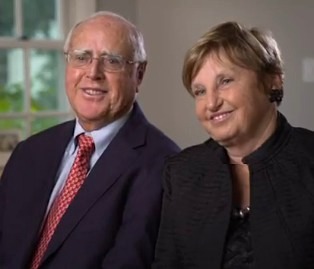
“More than a billion people live on less than $1.25 a day,” said Robert E. King with his wife, Dorothy, in a video. “That’s just not right.”
Called the Stanford Institute for Innovation in Developing Economies (known informally as “SEED”), it will draw from the school’s world-class MBA program and suite of courses in entrepreneurship to stimulate business ideas that can empower the people receiving food aid today so they can become self-sufficient and not need the aid in the future.
The Institute’s work is based on the belief that a powerful way to help alleviate poverty is through the stimulation of new entrepreneurial ventures and by scaling existing ones.
“Today’s students aspire to achieve a global impact that will change people’s lives for the better with everything from businesses that create employment and income sources to creating access to better education, health care, and governance,” said Garth Saloner, Dean of the Stanford Graduate School of Business.
The Inspiration
The idea for the gift came out of home stays that founding donors Dottie and Bob King have offered to international students at Stanford for more than four decades. They witnessed first-hand the impact that education and entrepreneurship can have on a wider community back home. One student, Andreata Muforo from Zimbabwe, brought peers from her global study trip to Africa to the King home for dinner. “We heard how those first-hand experiences compelled some of the MBAs to return for internships in Africa,” said Dottie King. “We saw the direct connection between the learning experience and the motivation to make change.”
“We believe that innovation and entrepreneurship are the engines of growth to lift people out of poverty,” said Bob King, who with his wife also founded the Thrive Foundation for Youth. “And we believe Stanford’s tradition of innovation coupled with a forward-thinking global bias as well as its multidisciplinary resources will make a real impact.”
The Kings have made a $100 million gift to fund the Institute. They have committed an additional $50 million in matching funds to inspire other donors to fuel Stanford University’s commitment to alleviating poverty, bringing the total philanthropic investment to potentially $200 million.
To amplify its impact, SEED will partner with organizations such as Endeavor, which mentors and accelerates the work of high-impact entrepreneurs; the Skoll Foundation, which drives change by investing in social entrepreneurs; and the global social enterprise investor Acumen Fund. All have established operations abroad.
Stanford University will open an institution with the sole purpose of alleviating poverty in developing nations, thanks to a $150 million gift donated by a Silicon Valley businessman and his wife.
“More than a billion people live on less than $1.25 a day,” said Robert E. King with his wife, Dorothy, in a video. “That’s just not right.”
Called the Stanford Institute for Innovation in Developing Economies (known informally as “SEED”), it will draw from the school’s world-class MBA program and suite of courses in entrepreneurship to stimulate business ideas that can empower the people receiving food aid today so they can become self-sufficient and not need the aid in the future.
Rachel Beckwith wanted to raise money for a clean-water charity by asking for donations instead of presents for her ninth birthday. Now, her death is inspiring other kids to do the same.
A California man who was touched by Rachel’s story has started 9th Birthday, an online campaign to get at least 300 children to skip presents on their ninth birthday and ask instead for donations to Rachel’s favorite nonprofit, charity:water.
Rachel’s heartbreaking story, spread by social media and newspapers, turned her child-sized charity effort into a national phenomenon. (Watch a TV news story below.)
“This is a powerful way to help keep Rachel’s story alive and give her gift of giving to the next generation,” David Hissami of San Clemente, Calif., explains on the 9th Birthday website.
Rachel had wanted to raise at least $300 for charity:water by the time she turned 9. Someone had told her that there are people in the world who die because they don’t have access to clean drinking water.
Rachel created a campaign on charity: water’s site to raise money, but she fell a little short of her goal by the time she turned 9 on June 12.
Just a few weeks later, on July 20, she was severely injured in a 14-vehicle chain-reaction crash on Interstate 90 in Bellevue, Wash., not far from her home. She died three days later.
News of her charity wish spread after her death, and suddenly donations from across the world poured in to charity:water in her name. Rachel’s death also helped keep others alive: One of her donated kidneys was transplanted into a California man , who in turn donated to Rachel’s cause.
By the time Rachel’s charity birthday campaign came to a close on Sept. 30, friends and strangers had raised more than $1.26 million for clean water in her memory.
“Throughout each day I look forward to reading your comments and hearing how Rachel’s story has touched people all over the world. In this painful time, it has given me inspiration and comfort,” Rachel’s mother, Samantha Paul, wrote at the time. “Knowing that Rachel’s decision to give up her ninth birthday will now help save thousands of people brings me to tears.”
Rachel’s story also profoundly moved Hissami, a 27-year-old web analytics freelancer.
“I read about the story and it was just one of those things. It really affected me. It really stood out,” he said in a phone interview Tuesday with msnbc.com.
“It just somehow occurred to me that so many people were giving to her thing and I wanted to do my part as well. I wanted to do something more long-term, to help people remember her.”
Hissami’s “9th Birthday” charity wasn’t affiliated with charity:water or Rachel’s mom, and the website didn’t solicit donations. Rather, it encouraged people to get children to skip presents on their ninth birthday and ask instead for donations to charity: water.
Hissami said he’s never met Rachel’s family but was inspired by her legacy.
“I’ve seen so much cynicism out there and just seeing something a person so loving at such a young age, it just really stood out to me.”
Hissami expects that one day when he has children of his own, they — and perhaps millions of other kids — will also want to give up their ninth birthday presents.
“I hope we might be able to define ninth birthday as a time when kids can donate, think of charity,” he said.
Will McNae, a spokesman for Rachel’s family, said the family was “very excited and humbled” that strangers have felt compelled to do something in Rachel’s memory and spirit. “The idea of continuing to spread awareness and education around the lesson of generosity is a fantastic thing,” he said.
Rachel’s family has also started a nonprofit organization, Rachel’s Wishing Well Foundation, to carry on her dream of helping people understand the importance of giving.
Paul, Rachel’s mom, plans to travel with charity:water to Ethiopia in July 2012 — the one-year anniversary of Rachel’s death — to visit some of the clean-water projects funded by her campaign.
Rachel Beckwith wanted to raise money for a clean-water charity by asking for donations instead of presents for her ninth birthday. Now, her death is inspiring other kids to do the same.
A California man who was touched by Rachel’s story has started 9th Birthday, an online campaign to get at least 300 children to skip presents on their ninth birthday and ask instead for donations to Rachel’s favorite nonprofit, charity:water.
Rachel’s heartbreaking story, spread by social media and newspapers, turned her child-sized charity effort into a national phenomenon. (Watch a TV news story below.)
The eulogy of Steve Jobs’s by his sister, novelist Mona Simpson, offered a touching look into the late Apple co-founder’s last days.
Hours before he slipped into unconsciousness, however, he did leave some enigmatic final words, which Simpson wrote in all capitals letters in her speech.
“Before embarking, he’d looked at his sister Patty, then for a long time at his children, then at his life’s partner, Laurene, and then over their shoulders past them. Steve’s final words were: OH WOW. OH WOW. OH WOW.”
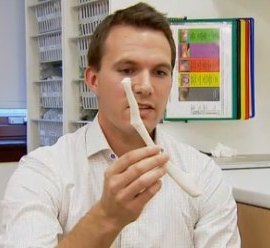
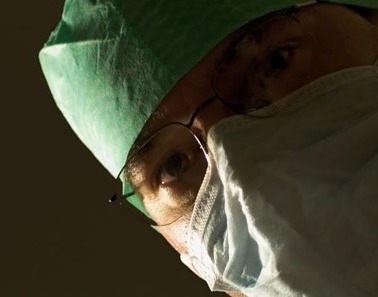
A trainee surgeon has figured out a way to save the U.K. National Health program a lot of money by taking advantage of 3D-printer technology.
Success in orthopedic operations relies on surgeons having an accurate 3D model of the area where the operation will take place. Such models take time to produce and cost up to £1200 ($1,915).
Mark Frame, a self-confessed ‘technology geek,’ used free open source software to convert CT scans into files which are readable by some 3D printers. Within a week, the first plastic 3D model of a child’s forearm was produced and delivered at a cost of just £77 ($123).
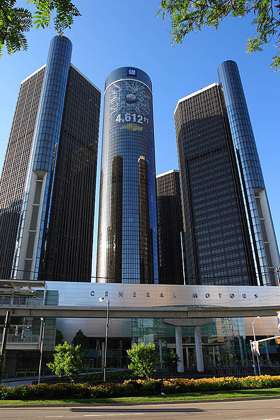
Michigan’s economy is recovering from the recession at the second-fastest pace in the U.S., lifted by reviving carmakers and local manufacturers, according to the new Bloomberg Economic Evaluation of States Index.
The home of Detroit was topped only by North Dakota, where an oil boom is raising incomes at the nation’s quickest rate. California, Massachusetts and Illinois round out the top five.
The index measures growth since 2008, when the country was mired in recession and as General Motors and Chrysler were on the path to bankruptcy.
The outpouring of support for Dan Wheldon’s family, after the two-time Indianapolis 500 winner was killed in a car race in Las Vegas Oct. 16, has been overwhelming.
It started with a small gesture by Graham Rahal, who wanted to raise money for Wheldon’s family by auctioning off his helmet, gloves and shoes from the IndyCar season finale.
He announced his intentions on Twitter and the response from the motor sports community was immediate.
Big ticket items donated to the auction had by Wednesday already brought almost a quarter million dollars for Dan’s wife and two young sons.
The outpouring of support for Dan Wheldon’s family, after the two-time Indianapolis 500 winner was killed in a car race in Las Vegas Oct. 16, has been overwhelming.
It started with a small gesture by Graham Rahal, who wanted to raise money for Wheldon’s family by auctioning off his helmet, gloves and shoes from the IndyCar season finale.
He announced his intentions on Twitter and the response from the motor sports community was immediate.
Big ticket items donated to the auction had by Wednesday already brought almost a quarter million dollars for Dan’s wife and two young sons.
With flu season upon us, scientists are reporting the development of a new material for face masks, air conditioners and air cleaning filters that captures influenza viruses before they can get into people’s eyes, noses and mouths and cause infection.
A new report in the journal Biomacromolecules unveils a new approach, which uses a substance termed chitosan made from ground shrimp shells, that could help reduce the numbers of people killed or sickened by influenza worldwide, which is estimated at 300,000.
With flu season upon us, scientists are reporting the development of a new material for face masks, air conditioners and air cleaning filters that captures influenza viruses before they can get into people’s eyes, noses and mouths and cause infection.
A new report in the journal Biomacromolecules unveils a new approach, which uses a substance termed chitosan made from ground shrimp shells, that could help reduce the numbers of people killed or sickened by influenza worldwide, which is estimated at 300,000.
Big news this week on several fronts: against the overuse of antibiotics in agriculture and for healthier food for school children. The Chicago Public Schools announced that its main food-service company, Chartwells-Thompson Hospitality, will begin buying and serving chicken drumsticks from birds raised in the local area without antibiotics. The deal will bring 1.2 million pounds of chicken to 473 schools per year.
Cuba announced Thursday it is allowing the purchase and sale of real estate for the first time since the early days of the revolution, the most important reform yet in a series of free-market changes ushered in by President Raul Castro.
The change follows the legalization in October of the purchase and sale of cars. Castro has also allowed citizens to go into business for themselves in a number of approved jobs.
A six-acre ranch in Santa Clarita, Calif. is a facility that heals and rehabilitates abused farm animals and invites visitors with emotional and physical challenges to interact with them.
Bonding with Sophie the goat was “a life-changing experience” for Miss Mejia-Schnaufer, whose battle with depression and eating disorders led to a suicide attempt this year. She credits Sophie, a rescue from an abusive petting zoo, with making her recovery possible.
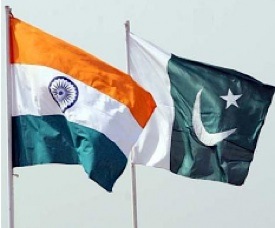
Pakistan’s cabinet unanimously decided on Wednesday to grant India Most Favored Nation trade status, a major breakthrough that could bolster efforts to improve relations between the two countries.
There are hopes that progress in trade ties will help bolster a fragile peace process, which the two resumed in February. ‘It’s a very powerful step, and a welcome step in the right direction,’ Indian Trade Secretary Rahul Khullar told Reuters in New Delhi.















 Legendary rockers Roger Daltrey and Pete Townshend of the Who have come to the UCLA Medical Center to launch the first teen-and-young-adults-only cancer treatment unit in the United States.
 “We believe that innovation and entrepreneurship are the engines of growth to lift people out of poverty,” said Bob King, who with his wife also founded the

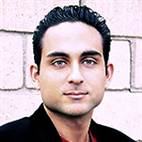 Rachel’s story also profoundly moved Hissami, a 27-year-old web analytics freelancer.
 “I’ve seen so much cynicism out there and just seeing something a person so loving at such a young age, it just really stood out to me.”




 by Jesse Richards, with its theory that the world is a nice place — and getting better.