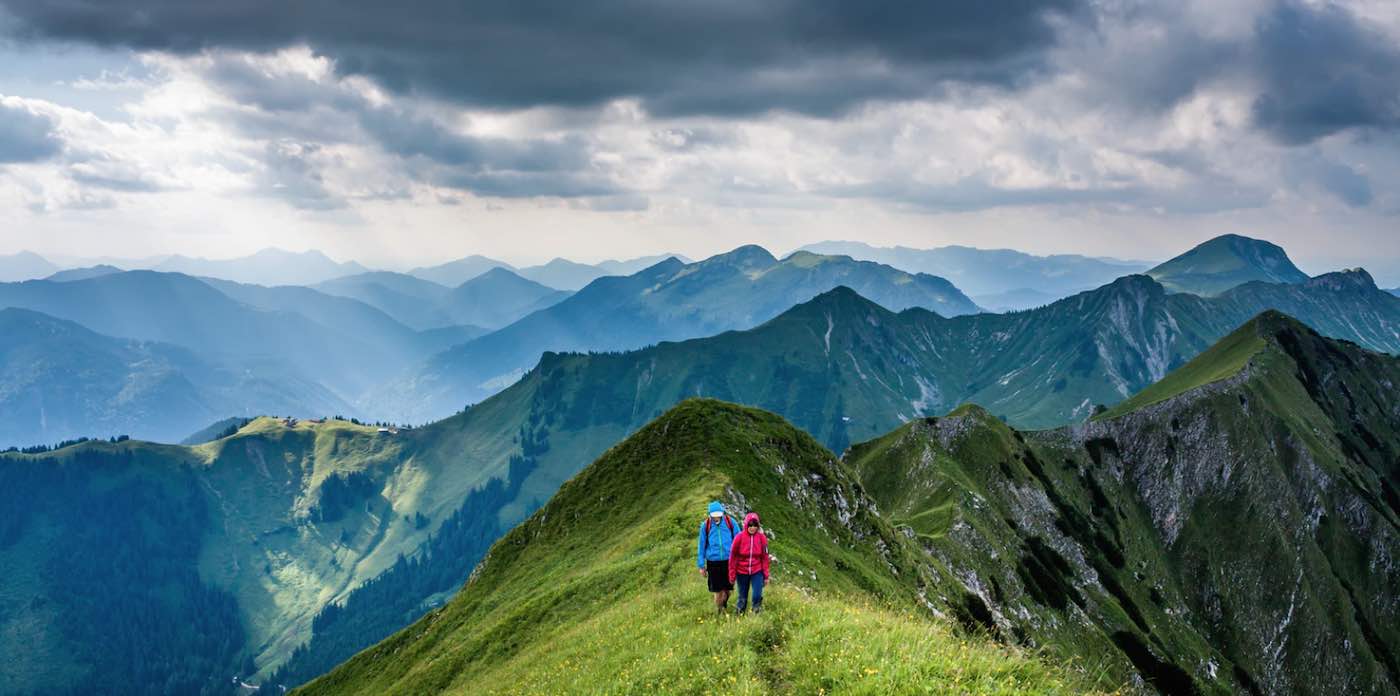
Quote of the Day: “Courage, my friends; ‘tis not too late to build a better world” – Tommy Douglas
Photo by: Aidamarie Photography
With a new inspirational quote every day, atop the perfect photo—collected and archived on our Quote of the Day page—why not bookmark GNN.org for a daily uplift?
When a three-day music festival was called off and the organizers declined to offer a refund to pass holders, a totally different festival decided to welcome them all for free.
Now in its 12th year, the Lucidity Festival was set to kick off in Santa Barbara, California this September. But citing “unforeseen last-minute changes in requirements” imposed by Santa Barbara County, the festival had to be canceled.
To make matters worse, the circumstances lead “to a postponement that we can not financially recover from,” and so organizers announced there would be no refunds for the passes.
To be fair, Lucidity Festival’s official policy is that passes can only be transferred from one holder to another, but refunds are never offered. While hundreds of derelict pass-holders are incensed and considering a class-action lawsuit, Lucidity has warned that if they can’t find a solution for a place to host the event by April next year, they will declare bankruptcy and end the festival for good.
The end of that saga, no one can yet predict, but a totally unaffiliated festival called Same Same But Different (SSBD) heard what was happening and decided to welcome all Lucidity pass holders free of charge as a gesture of goodwill.
“We know how challenging these times can be, especially when the festival experiences we all cherish don’t go as planned,” reads a statement released by SSBD. “It’s never easy when something you’ve been looking forward to doesn’t work out, and we understand how much time, energy, and anticipation went into planning for Lucidity.”
“Featuring a big lineup of electronic music artists the likes of Big Gigantic, Ganja White Night, and LSDREAM, SSBD is making it known that they are well-positioned to welcome thousands of Lucidity ticket-holders from September 27-29,” writes EDM.com.
“The enchanting festival will also feature sunrise-to-sunset DJ sets, a Vegas-inspired casino pop-up experience, yoga sessions, mindfulness workshops, and much more.”
As July and August come around after a hard, half-year of work, the thought may arise that you need a vacation. A team of scientists has proposed that this is actually true—and that your life may very well depend on it.
Their paper investigates how travel and tourism positively affects human health through the movement of the body into a “low entropy state”.
Entropy: a fundamental law of physics, and one rarely seen in travel literature, promotional material, or blog posts. Originating from thermodynamics, this principle describes the natural tendency of systems to move towards disorder or chaos, a process that is irreversible but can be mitigated.
A team of Chinese scientists publishing through Australia’s Edith Cowan University proposes that health is defined as a state of good order in four key systems of the body. These include the system of self-organization, self-defense, self-repair, and the anti-wear-and-tear system. If one or more of these systems are disrupted or disorganized, the others tend towards the same—in other words, a high-entropy state.
“It perfectly reflects the fundamental process from health to illness and eventually death in humans, and this law has been utilized in health science to explain human disease and aging,” says Fangli Hu, a doctoral candidate in Philosophy at Edith Cowan.
“While this fundamental process of the life course is irreversible, it can be mitigated through various measures, with tourism possibly being one of them. Tourism could induce entropy changes: positive tourism experiences, such as exposure to new stimuli, engaging in social interactions, and participating in physical activities, may help counteract entropy increase and enhance health,” she told WaL.
Travel exposes the “biosociopsycho” organism to a panoply of environmental and social forces that when examined individually are generally thought to be wellness-promoting.
In the West, and America especially, health-conscious people tend to become fixated on singular aspects of healthy living, whether that’s the inclusion of a single nutrient (like omega-3 fatty acids, for example), a single exercise modality (yoga), or a single lifestyle adjustment (intermittent fasting). Travel, Hu and her authors write, exposes the organism to potentially dozens of these at the same time.
Travel usually places a human being outdoors in fresher air and sunlight. It requires them to spend a lot of time walking or any of the myriad of physical activities that travel sometimes entails like cycling, hiking, or swimming. This glut of activities typically prevents them from overeating, and exhausts them such that sleep comes on fast and easy.
All of these are vital to the self-repair, self-organization, and anti-wear-and-tear systems. On top of this template for a day of tourism, there is the constant exposure to novelty: unfamiliar streets, strange customs, novel landscapes, and a non-native environment of microorganisms.
This jolts the self-defense and self-organizational systems into focus, as novelty corresponds to increases in stress vital to a well-maintained immune system.
“Novel settings can stimulate stress responses and elevate metabolic rates, positively influencing metabolic activities and the body’s self-organizing capabilities,” the authors write in the meat of their letter, published in the Journal of Travel Research. “These contexts may also trigger an adaptive immune system response. This reaction improves the body’s ability to perceive and defend itself against external threats; put simply, the self-defense system becomes more resilient”.
“Hormones conducive to tissue repair and regeneration may be released and promote the self-healing system’s functioning. Leisurely travel activities might help alleviate chronic stress, dampen overactivation of the immune system, and encourage normal functioning of the self-defense system”.
Again, the entropy concept reappears. Cells must be able to sense and adapt to their surroundings to maintain normal functioning.
“A dense interplay of physiological and environmental factors regulates cellular activities,” the authors write. “Based on cells’ sociomateriality, the environment assumes an imperative role in modulating cell responses. The environment therefore affects essential cell activities such as self-organization, repair, and regeneration”.
In 2024, no one is receiving a research grant to explore how exercise affects human health, but travel-affected wellness doesn’t necessitate exercise.
“Tourism’s potential health benefits are not solely reliant on any single element,” Hu told WaL. “Naturally, the more diverse the experiences, the greater the potential for enhanced well-being. While exposure to new environments, social interactions, and physical activities each could contribute to health, it is often the combination of these factors that might produce the most substantial benefits”.
In On the Face of It: A Traveler on His World, published by WaL founder Andrew Corbley, evidence is compiled to show that stepping into a foreign landscape and cultural ecosystem could change fundamental intercommunication within the brain, such that colors become brighter, sounds sharper, and memories more vivid.
Could it be that when we’re traveling, we’re experiencing the world at a higher resolution and capacity because it’s unfamiliar? Does one fall into a lethargic state of cognition when interacting with the same things, people, and places every day, week after week for years and decades on end?
Chaos and disorder, arising from a high-entropy state may impede our ability to remember and fully appreciate one’s life at home, while unfamiliar surroundings cause the body’s systems to snap back into a low-entropy state characterized by resilience and awareness.
Ms. Hu and her co-authors recommend that the concept of entropy increase/decrease in tourism and health be investigated with a variety of observational studies, self-report studies, and randomized controlled trials. These will help broaden and better define the relationship between travel and health, without needing to necessarily use a concept like entropy as a basis.
Who knows, American doctors may be writing prescriptions for a vacation in the not-too-distant future. WaL
We Humbly Ask For Your Support—Follow the link here to see all the ways, monetary and non-monetary.
The first and only fungus on a global conservation outfit’s ’25 Most Wanted List’ has been found in the rain-soaked mountains of Chile, almost 40 years after it was first documented.
The big puma fungus is actually quite small, and despite being on the ’25 Most Wanted List’ it’s also rather unremarkable, being slightly greyish brown, and no bigger than a shitake.
GNN is always abreast of updates to the brilliant conservation initiative Search for Lost Species which has rediscovered several wondrous species of plants and animals through collaborative scientific expeditions to look for forms of life not seen in over ten years.
The big puma fungus (Austroomphaliaster nahuelbutensis), an enigmatic species of fungi that lives underground in Chile’s Nahuelbuta Mountains had only ever been found in the wild once.
An expedition team from the Fungi Foundation in Chile set out for the temperate forests of the Nahuelbutas in May 2023 to retrace the footsteps of Chilean mycologist Norberto Garrido, who discovered the big puma fungus and described it to Western science in 1988.
They timed the expedition to coincide with the exact dates in May that Garrido had hiked the mountains more than 40 years earlier.
“It’s possible that the reproductive parts of the big puma fungus—the mushroom—are only fleetingly visible above the soil on the same few days each year, which made the timing of the expedition a crucial factor,” said Claudia Bustamante, a mycologist, and member of the expedition team.
The expedition was captured in a documentary called In Search of a Lost Fungus, in which viewers can see how a last-minute day hike organized near a local Nahuelbutas community led to the big puma fungus’ eventual discovery.
On the last day of the expedition, the Fungi Foundation led a workshop and a community hike to look for fungi in a nearby forest. During that hike, two of the local participants found a group of about four mushrooms that all matched the description of the big puma fungus.
The Nahuelbuta Mountains – credit Rewild, released.
The expedition team carefully collected the mushrooms, leaving the mycelium in the ground, and took the mushrooms to the Fungi Foundation’s fungarium (FFCL). Although the mushrooms matched the physical and microscopical description of the big puma fungus, it was a DNA analysis that eventually confirmed the team had found the correct species.
“We knew it was going to be hard to find the big puma fungus and that the chances of finding the mushrooms were low, considering their colors and how they blend with the fallen leaves,” said Daniela Torres, programs lead at the Fungi Foundation and leader of the expedition.
“It was truly a unique moment when we managed to be in the right place at the right time to see the mushrooms. Understanding the biodiversity that exists and interacts within a specific area helps us comprehend its behavior and its potential to adapt to ongoing changes and underlying threats.”
Since 2017, the Search for Lost Species has rediscovered 13 of the world’s most wanted lost species. In addition to the big puma fungus, Re:wild, working with partners across the world, has confirmed the rediscovery of Jackson’s climbing salamander in Guatemala, both Wallace’s giant bee and the velvet pitcher plant in Indonesia, the silver-backed chevrotain in Vietnam, the Somali sengi in Djibouti, the Voeltzkow’s chameleon in Madagascar, Fernandina giant tortoise in the Galápagos, Sierra Leone crab in Sierra Leone, the Pernambuco holly tree in Brazil, Attenborough’s echidna in Indonesia, De Winton’s golden mole in South Africa and Fagilde’s trapdoor spider in Portugal.
WATCH the documentary below…
SHARE This Great Nature Story With Your Friends Who Love Mushrooms…
A young woman’s attempted suicide on a bridge in Nashville was interrupted at the last minute by an unlikely hero.
She was halfway there, then “Livin’ on a Prayer” singer Jon Bon Jovi appeared at her side and managed to talk her out of the life-ending decision.
Pardon the pun.
The scene was released in local surveillance camera footage by the Nashville Police Department. Bon Jovi and a small crew were filming a portion of a video for “The People’s House” on the upcoming Bon Jovi album Forever.
That’s when he noticed that a woman had climbed beyond the rails of the John Seigenthaler Pedestrian Bridge and was looking down at the long drop into the Cumberland River.
In the video, Bon Jovi and another member of his crew slowly approach before arriving at the young woman’s side. He leans over the railing and begins to speak some more, while his colleague steps behind her and begins to touch her shoulder.
The potential disaster appears to conclude with the young woman turning around and hugging Bon Jovi, before they help her back over the edge.
The event took place on Suicide Prevention Day (Sept. 10th).
The Nashville Fire Department and Metro Nashville Police Department thanked Bon Jovi for his actions, with Police Chief John Drake saying, “It takes all of us to help keep each other safe.”
Quote of the Day: “Live as brave men; and if fortune is adverse, front its blows with brave hearts.” – Cicero
Photo by: Ivan Lapyrin
With a new inspirational quote every day, atop the perfect photo—collected and archived on our Quote of the Day page—why not bookmark GNN.org for a daily uplift?
Despite the Central Appalachia ecosystem being historically famous as coal country, under this diverse broadleaf canopy lies a rich, biodiverse world of native plants helping to fill North America’s medicinal herb cabinet.
And it turns out that the very communities once reliant on the coalfields are now bringing this botanical diversity to the country.
“Many different Appalachian people, stretching from pre-colonization to today, have tended, harvested, sold, and used a vast number of forest botanicals like American ginseng, ramps, black cohosh, and goldenseal,” said Shannon Bell, Virginia Tech professor in the Dept. of Sociology. “These plants have long been integral to many Appalachians’ livelihoods and traditions.”
50% of the medicinal herbs, roots, and barks in the North American herbal supply chain are native to the Appalachian Mountains, and the bulk of these species are harvested or grown in Central Appalachia, which includes southern West Virginia, eastern Kentucky, far-southwest Virginia, and east Tennessee.
The United Plant Savers, a nonprofit with a focus on native medicinal plants and their habitats, has identified many of the most popular forest medicinals as species of concern due to their declining populations.
Along with the herbal supply chain being largely native to Appalachia, the herb gatherers themselves are also native, but because processing into medicine and seasonings takes place outside the region, the majority of the profits from the industry do too.
In a press release on Bell’s superb research and advocacy work within Appalachia’s botanical communities, she refers back to the moment that her interest in the industry and the region sprouted; when like many of us, she was out in a nearby woods waiting out the pandemic.
“My family and I spent a lot of time in the woods behind our house during quarantine,” Bell said. “We observed the emergence of all the spring ephemerals in the forest understory – hepatica, spring beauty, bloodroot, trillium, mayapple. I came to appreciate the importance of the region’s botanical biodiversity more than ever, and realized I wanted to incorporate this new part of my life into my research.”
With co-investigator, John Munsell at VA Tech’s College of Natural Resources and Environment, Bell’s project sought to identify ways that Central Appalachian communities could retain more of the profits from the herbal industry while simultaneously ensuring that populations of at-risk forest botanicals not only survive, but thrive and expand in the region.
Bell conducted participant observation and interviews with wild harvesters and is currently working on a mail survey with local herb buyers. She also piloted a ginseng seed distribution program, and helped a wild harvester write a grant proposal to start a forest farm.
“Economic development in post-coal communities often focuses on other types of energy development, like fracking and natural gas pipelines, or on building prisons and landfills. Central Appalachia is one of the most biodiverse places on the planet. I think that placing a greater value on this biodiversity is key to promoting a more sustainable future for the region,” Bell told VA Tech press.
Armed with a planning grant of nearly half a million dollars, Bell and collaborators are specifically targeting forest farming as a way to achieve that sustainable future.
Shannon Bell on her own interactive trail of Appalachia – credit Virginia Tech
Finally, enlisting support from the nonprofit organization Appalachian Sustainable Development, Virginia Tech, the City of Norton, a sculpture artist team, and various forest botanicals practitioners in her rolodex, Bell organized the creation of a ‘living monument’ along Flag Rock Recreation Area in Norton, Virginia.
An interpretive trail, the monument tells the story of the historic uses that these wild botanicals had for the various societies that have inhabited Appalachia, and the contemporary value they still hold for people today.
WATCH Bell in her element along the monument trail below…
SHARE This Surprising History And Modern Movement In America’s Historic East…
From Baltimore M.D. Enoch Pratt Library, CC 2.0. John Matthew Smith, retrieved from Flickr.
The most unmistakable voice in Hollywood, James Earl Jones, recently passed away in his home at the age of 93.
For the children of the Millennial and X generations, his voice was an ever-present feature in their homes, thanks to the popularity of Star Wars, and The Lion King.
Though often remembered for his roles as various leaders, whether of a cult of snake worshipers in Conan the Barbarian, or of a fictional African kingdom in Coming to America, The New York Times eulogized him as “one of America’s most versatile actors in a stage, film, and television.”
The versatility was developed early on in his career following a term of service during (but not in) the Korean War, in which he attended Army Ranger school and became Second Lieutenant of a training unit in the rugged terrain of the Rocky Mountains.
As is so often the case with the most beloved actors in society, Jones dove deep into Shakespeare including roles such as Othello and King Lear, Oberon in A Midsummer Night’s Dream, and Claudius in Hamlet.
The stage would always be a home for Jones, where he performed almost exclusively for more than a decade during which he won the 1969 Tony Award for Best Actor in a Play as the starring role of troubled boxer Jack Johnson in The Great White Hope.
In the 1970s, Jones transitioned into Hollywood film, immediately receiving a Golden Globe nomination for his co-starring role in the romantic comedy and social commentary Claudine.
In 1977, Jones debuted in a voiceover role as the charisma behind the mask of the armored, fallen Jedi Darth Vader in Star Wars, a role which he reprised twice more for the following sequels. At first, he didn’t think his name should be listed on the cast credits. He explains why below…
When Linda Blair did the girl in The Exorcist, they hired Mercedes McCambridge to do the voice of the devil coming out of her. And there was controversy as to whether Mercedes should get credit. I was one who thought no, she was just special effects. So when it came to Darth Vader, I said, no, I’m just special effects. But it became so identified that by the third one, I thought, OK I’ll let them put my name on it.
Star Wars was pioneering in so many ways, and several of the lead actors at times felt it was all a little ridiculous, over the top, or even badly written. But thanks to the power and cunning use of his voice, Jones made Vader, as the chief villain, so very believable.
Many fantastic performances followed, including Field of Dreams and Hunt for the Red October, before his voice was utilized again for King Mufasa the lion in Disney’s The Lion King, another pillar of childhood memories for so many American kids.
In tribute of the great man, the Empire State Building was lit up in the shape of Darth Vader’s helmet, and tributes poured in from co-workers like Mark Hammil and other African American stars like Denzel Washington, all recognizing him as one of the greatest American actors.
WATCH a tremendous best-of compilation below…
SHARE The Legacy Of This Great Man With Your Friends…
The recent discovery of Australia’s most endangered reptile surviving in colder temperatures has inspired conservationists in Perth to continue trying to save the species thought to have only 400-500 individuals remaining in the wild.
Introductions of the Western swamp tortoise into other areas are now on the docket, as scientists look to find a suitable home for the animal while its natural habitat dries up.
But in terms of risk, their environment remains intact, whilst that of the Western swamp tortoise is rapidly drying out. In the state of Western Australia, in the southwestern reaches, wildlife managers recently found a juvenile tortoise 280 miles south of Perth in the town of Northcliffe—the site of a tortoise relocation project dating back to 2016.
Here, water temperatures fall to levels below the recognized minimum for these cold-blooded reptiles to stay active—about 14°C or 57°F. However, herpetologists at the time told national broadcaster ABC News that the continuous flow of the water would allow them to continue foraging. Just in case, other tortoises were released in an area farther north so that growth rates could be compared.
“It’s a pretty significant project because it’s one of the first examples of the assisted colonization of species outside their habitat because of a concern about the climate,” Nicki Mitchell, senior lecturer in animal biology at the Univ. of Western Australia, said at the time.
With only hundreds of these tortoises remaining in the wild, Southern Forests Wildlife official Pauline Hewitt was understandably excited when she found that turtles around the Northcliffe release area survived the cold climates. She found one individual in particular with a cracked shell who was taken to the Perth Zoo for rehabilitation, before being personally released back into its traditional habitat.
“It was really exciting to see her come home and just to see her flapping her legs as we went to put her down in the water,” Pewitt told ABC.
“We didn’t have certainty that the colder temperatures were something that the species would adapt to so well and it now looks like they’re quite capable of good growth rates in southern locations,” Mitchel again told the broadcaster, looking back at the results of the trial which concluded in 2019.
A new experimental population has been released in Augusta, about 60 miles east of Perth, and not so chilly.
The motive for the original experiment, as Mitchell alluded to, was that a 50 to 100-year weather pattern model for Western Australia predicts the current habitat of the Western swamp tortoise drying up to a dangerous degree. They would need to be transplanted into similar, but wetter ecosystems, and Northcliffe was identified as one such place.
SHARE This Deep Dive Into The Complex Recovery Of This Little Tortoise…
In Los Angeles County, a new, low-emissions commuter train is helping combat local and global smog by powering itself with hydrogen fuel cells.
Liquid or gaseous hydrogen is considered the best green alternative to the heavy fuels that power society’s largest machines, and this ZEMU train is just a few months away from starting routine service from San Bernadino and Redlands to LA proper.
ZEMU stands for zero-emissions multiple units, and possesses several advantages over other decarbonized rail transport. Electric trains recharge via overhead powerlines, but these require millions in funding to install and maintain and aren’t practical for long distances.
“The reality is it can be used anywhere existing rail happens now,” says Tim Watkins, chief of legislative and public affairs at the San Bernardino County Transit Authority, the agency behind the project. “It doesn’t require a new capital investment into infrastructure.”
Manufactured by the Swiss company Stadler, ZEMU trains take on hydrogen fuel that is split into hydrogen molecules, generating energy that recharges an electric battery that powers the train’s motors. The battery is also recharged by braking, and the only emission of any sort is water vapor.
“I think it’s going to enable a lot of places to decarbonize without having to make extremely expensive investments in infrastructure,” Watkins told Fast Company Magazine.
Currently undergoing the final testing phase on local tracks, service is slated to begin in early 2025. At the moment, the trains use hydrogen that’s been created via fossil fuels, so while the localized emissions are still zero, the trains still have a carbon footprint.
Green hydrogen, made using renewable energy sources, is expected to be available in the not-too-distant future, but even if the trains lead to CO2 entering the atmosphere, as Adele Peters at Fast Company details, San Bernadino needs zero-emissions transport fast.
The area was recently given an ‘F’ grade for air quality by a leading air quality index survey, and suffers from more days of smog than almost any other city in America.
SHARE This Story With Your Friends From LA OR On Social Media…
With a new inspirational quote every day, atop the perfect photo—collected and archived on our Quote of the Day page—why not bookmark GNN.org for a daily uplift?
Mathilde Wittock on her chaise lounge – credit, Rodolphe de Brabandere
Every year, 300 million tennis balls are manufactured for the beloved sport, and almost all are throw out.
A Belgian eco-designer has begun to repurpose some of these into bespoke furniture in a circular way that ensures the rubber and felt balls don’t end up in landfills.
credit – Mathilde Wittock
Mathilde Wittock and her team can hand carve 1,800 balls per day into micro-cushioning elements for a chaise lounge and a bench—her two flagship products.
To put that into perspective, 70,000 were used just in the recently concluded US Open.
They take around 2 to 3 weeks to make, but once they’re finished, one sees why it’s worth the wait. With the fuzz on the tennis balls dyed to match interior colors, they’re quite fetching, and must be delightfully comfortable.
“It takes around 24 different manufacturing steps to (make) a tennis ball, which is around five days. Then it has such a short lifespan,” Wittock told CNN in a video call from Brussels. “I was looking into tennis balls because I played tennis myself, so I know there is a lot of waste.”
Looking to find innovative sources of materials, the tennis balls seemed obvious because of their durability, short lifespan, and the fact that nearly all of them need 400 years to decompose in a landfill, provided they haven’t been given over to a dog first.
credit – Rodolphe de Brabandere
Tennis balls are filled with gas, which not only gives them their bounce but is also why the containers they come in are sealed like a soup can. Once open, the gas slowly leaves the core of the ball, leaving it flat and eventually unsuitable for the game.
Wittock receives donated tennis balls from sports clubs like the Federation of Wallonia in Belgium, which recently gave over its entire stock of 100,000 used tennis balls, which she says should provide for around 9 months of production.
“Eco-design is about circularity. You can use great materials that are low carbon emission or recycled, but you need to think of the end cycle,” she said. “If it’s not a circle, and if you can’t reuse (the elements) into something else, it’s not eco-design. It’s even worse, because it’s new materials.”
Owners of the furniture can hand their pieces back to Wittock, who will burn away the fuzz and send the rubber shells out for shredding, where they will be repurposed into bouncy play mats for kids.
SHARE This Wacky Bespoke Furniture That Keeps Waste Out Of Landfills…
Kaja Veilleux auctioning the Rembrandt painting Portrait of a Girl - credit Thomaston Auction Galleries
Kaja Veilleux auctioning the Rembrandt painting Portrait of a Girl – credit Thomaston Auction Galleries
“Tucked away” in a home attic in Maine alongside a “collection of heirlooms and antiques” art appraisers found a lost Rembrandt portrait.
Depicting a teenage woman in 17th-century Dutch attire, it recently sold at auction for $1.4 million, delighting the handlers who know it will be preserved and shared with the art world in a manner befitting the Dutch master.
The sale was handled by New England’s Thomaston Place Auction Galleries and Appraisers, who were on a routine house call to Camden, Maine. Kaja Veilleux, the gallery’s founder and a seasoned appraiser, was the one who eventually pinned the portrait as something special.
“We often go in blind on house calls, not knowing what we’ll find,” Veilleux said.
Painted on an oak board, and set in a gold Dutch frame, Veilleux turned the work over and found a neat little tag from the Philidelphia Museum of Art with the word ‘Rembrandt’ on it. It also bore the name of the work, Portrait of a Girl.
Not something you see every day to be sure. While finding masterworks of all sorts hidden in attics and cellars is no strange phenomenon, they’re typically rediscovered in Europe. To find one in Maine was a real shock.
A bit of research uncovered that the work was loaned by a Mr. Cary W. Bok to the museum for an exhibition in 1970. How it ended up in Maine is a mystery.
“Not many painters paint like Rembrandt, for one thing, and one of the trademarks of the Rembrandt paintings and the Dutch masters is what I call a ‘ribbon candy collar,'” Mr. Veilleux, wearing a soft gold waistcoat as part of his auctioneer attire, told local news channel WMTW in a Nick Nolte-like gravelly voice as he gestured to the girl’s lace collar.
It’s the first time he’s auctioned a piece for more than $1 million. He said that most things sell in about 30 seconds, but the Rembrandt sale went on for 10 minutes, with 9 buyers engaging in a telephone bidding war that “could have brought anything.”
But it’s not about the money for Veilleux.
“To me, it’s about bringing this art to light so it’s protected, cared for, and preserved.”
While it hasn’t been authenticated, Veilleux seems convinced, and suggested that $1.4 million is, in fact, a bargain.
WATCH the story below from WMTW…
SHARE This Incredible Story With Your Friends Who Love Art…
Coho Anchorage, part of the proposed reserve - released by NOAA.
Coho Anchorage, part of the proposed reserve – released by NOAA.
A California tribe has become the first indigenous group in the Lower 48 to be named co-stewards over a National Marine Sanctuary.
Extending out into the waters between the technology capital of the world and the Hollywood Hills, the Chumash Tribe have been campaigning for decades to achieve it.
Since 1969, the Chumash have been advocating for the preservation of the unique coastal ecosystem that supported them for generations, one in which a delicate balance of coral, kelp, sharks, dolphins, whales, and seals create a bountiful seascape.
Since 2015, tribal leaders have been trying to get the National Oceanic and Atmospheric Administration (NOAA) to designate it a marine sanctuary. And it’s been nearly a year since the Chumash were “months away from clinching” that designation.
Finally, on September 6th, the NOAA concluded the final regulatory step regarding the proposed Chumash National Marine Sanctuary with the issuing of a final environmental impact statement (FEIS).
Under NOAA’s “preferred alternative,” the bureaucratic term used to refer to the ultimate mixture of regulations to govern the area for conservation, tribal use, and offshore wind energy infrastructure, the sanctuary would include 4,543 square miles of coastal and offshore waters along 116 miles of California’s central coast.
Upon designation, the Chumash Heritage National Marine Sanctuary would become the third-largest seascape in the National Marine Sanctuary System.
“In order to preserve something, in order to protect something, people have to love it, and that is like giving us the opportunity, the world stage, to share our stories and our history,” Violet Walker Sage, head of the Northern Chumash Tribal Council, told CBS last year.
With the Biden Administration, the Northern Chumash found attentive listeners, and Walker, whose father was the chief who submitted the original proposal to the NOAA in 2015, knew these 4 years were the ideal moment to finish her late father’s work.
The Biden Administration appointed Deb Haaland, a Pueblo member, to lead the Dept. of the Interior. It went on to designate several sacred tribal areas in the south and southwest as national monuments, and perhaps, Walker thought, someone would finally listen to their pleas.
Bending an ear
“For the Chumash people, they have been a bit overlooked, unfairly, for some time now,” said NOAA representative Mike Murray, who worked with Walker on the final push for the marine sanctuary.
“We are here at NOAA to say, with Violet and others, ‘Let’s work in partnership and change that. Let’s have this protected area and every coastal attraction or visitor center or sign that one might encounter make it clear that this is Chumash territory, and this is very special, and there’s deep meaning in that.'”
As required by the National Environmental Policy Act, NOAA must wait 30 days after publication of the final environmental impact statement before making its final decision on designation. Following the 30 days, should NOAA decide to designate the sanctuary, the agency will release the final regulations and final management plan.
The sanctuary, as described in the preferred alternative, would recognize and celebrate Indigenous Peoples’ connections to the region, and be managed with their active participation and stewardship.
The sanctuary is anticipated to bring comprehensive community management to nationally significant natural, historical, archeological, and cultural resources—including kelp forests, rocky reefs, sandy beaches, underwater mountains, and more than 200 shipwrecks. It would span the area from Cambria to Santa Barbara, and connect the national marine sanctuaries of Monterrey Bay and Channel Islands, a passage that’s part of the migratory path of blue whales.
“Every tribal nation across the country maintains a significant cultural tie to its aboriginal lands and waters. Sadly, for many, those connections have been difficult to reach. But today, with this announcement, the Chumash people take great strides in restoring our connection to our maritime history.” said Kenneth Kahn, Chairman of the Santa Ynez Band of Chumash Indians, which will serve as a co-steward of the sanctuary, in a statement released by the NOAA.
The boundaries for the national marine sanctuary, as outlined in the preferred alternative in the FEIS, would not include areas where offshore wind turbines are currently planned to be built or where wind energy transmission cables are expected to be laid.
“My father, the late Chief Fred Collins, began the journey to protect these sacred waters 40 years ago, and we have been so proud to continue his work,” Walker Sage said in the same statement. “I am delighted to celebrate his vision, today’s success, and the future of our People who will always be connected to past, present, and future by this special stretch of coastline and the true magic its waters hold.”
WATCH a promotional video of the new sanctuary…
SHARE This Great News For American Tribes And American Wild Seas…
Beekeeper Ross Main and grandfather William – SWNS
A tad late for Grandparent’s Day, a man in Scotland recently found the hives tended by his grandfather that were presumed sold or lost for over 14 years.
Locating them in a quarry, he took up beekeeping in order to assume responsibility for his inheritance and his business now sells honey to farmers markets across Scotland.
Ross Main grew up with, and was very close to, his grandfather William, a beekeeper who regularly took him along to check on the bees.
William passed away from cancer in 2007, and Mr. Main assumed his hives had been sold. After the birth of his own son in 2015, Main was inspired to try and find them.
He traveled from his home in Fife in Scotland to the East Lothian quarry where his granddad kept his hives and was stunned to discover an original colony that had taken care of itself for years.
The hive was hundreds of meters down an overgrown track, dilapidated and falling apart.
“Seven years on, out of nostalgia, I went to the quarry and there was still a hive there,” said Main. “In that moment, I knew I wanted to look after the hive and rehome the bees, and I started learning from there.”
Main then began to teach himself beekeeping using videos on YouTube, collecting the bees from his grandfather’s original hive, donning a beekeeping suit, and transferring the colony to their new home.
He then grew them into a population of five million bees split into around 100 colonies all descended from William’s remnant.
Ross’ business Main’s Apiaries now sells honey to farm shops from three harvests a year.
Beekeeper Ross Main in front of his hives – SWNS
“Being around the bees could be quite scary because there were big swarms and I was quite young, but it really captured my imagination,” Main remembers. “I started with one hive, and they naturally multiply every year. Over the years, they’ve gradually built up and we’ve split them into new hives.”
As he gradually learned the trade, Ross began expanding his colonies, gifting the honey made to friends and family, and eagerly sharing his experience with anyone interested.
In 2021, he took the next step and started his business, Main’s Apiaries.
In addition to selling honey, Ross offers beekeeping experiences to prospective hobbyists, and even sells colonies to businesses interested in keeping honeybees on site, maintaining the hives himself weekly.
“We also offer corporate companies the opportunity to have hives on their land. They own the hives and the bees, and we do the maintenance throughout the year,” said Main, adding it’s important to diversify to maintain a viable business. “They support the local biodiversity within the area, and it promotes a healthy ecosystem.”
“The idea of showing other people the bees came from the first time my granddad took me to see the bees. He opened the hives, and it was quite a magical thing to be around all these swarms of bees,” he said.
“It was an experience I never forgot, and I wanted to offer it to other people.”
SHARE This Sweet Intergenerational Story With Your Friends…
Quote of the Day:Happy belated Grandparents Day! Helping kids get into mischief they haven’t thought of yet: “When they enter the door, discipline flies out the window.” – Ogden Nash
President Carter officially proclaimed the day in 1979 after decades of lobbying from Jacob Reingold and Marian McQuade, the West Virginia woman who persuaded her state to become the first one to celebrate and honor grandparents with a special day—the first Sunday after Labor Day.
Photo by: Ekaterina Shakharova
With a new inspirational quote every day, atop the perfect photo—collected and archived on our Quote of the Day page—why not bookmark GNN.org for a daily uplift?
A boy scout and his family were volunteering at a local food pantry when he realized the outdoor seating was in need of a little TLC.
Looking for a project to help get him nearer to his title of Eagle Scout, and despite having little experience in carpentry, 14-year-old Simon Starnes got to work.
Sister BJ’s Pantry, run by Sister Barbara Joseph Foley, offers free meals to the homeless with a special community emphasis on Friday and Sunday mornings, when these less fortunate patrons come to sip free coffee and take a long breakfast on the days when the nearest food bank isn’t open.
“I went to volunteer there for the Sunday mission, which is making breakfast for the homeless and then handing it out to them. But as I was doing it, I saw the tables were in bad shape and a lot of them were warped and splintering,” Starnes, part of Boy Scout Troop 21, told the Oklahoman.
“I kind of wanted to help fix that. I thought that if I built those (tables), it could definitely help make the experience a lot better for them,” he said.
Having never built a table, he asked around his troop for advice and discovered that another prospective Eagle Scout was the architect of the original picnic tables, and another member of his troop had done the landscaping.
Together with his father Scott, a friend, and three troop members, Starnes built 4 brand new picnic tables to the exact same dimensions as the originals.
The new picnic benches at BJ’s Pantry – released by the family.
Sister BJ opened the pantry in 2006, and says she has leaned heavily on the community and members of local church parishes.
“All my support all these years have come from private donations, and then, help within the Oklahoma City community,” she said. “That, in itself, is a good feeling. I love having all of the community support.”
SHARE This Quaint Community Story Of Volunteering To Help Others…
HAZ Railway Village – Credit Swindon Council (Swindon.gov)
A major restoration project in lower England has seen one of the world’s largest railworks turned into a modern celebration of this industrial heritage.
See all these pitched roofs and block houses? Once upon a time, they were homes provided for the workers of the Swindon Railway Village, where mechanics and laborers lived and worked near what was the railway engineering complex in the world at one point.
Between 1841 and 1842, the Great Western Railway (GWR) transformed what was a sleepy market town that had changed little since its inclusion in the Domesday Survey of the Normans in 1066 CE, into a hub of steam and enterprise organization.
Isambard Kingdom Brunel, arguably the greatest engineer Britain ever produced, established the ‘Swindon Works’ to construct and maintain steam locomotives that served the railways. This brought with it pioneering amenities such as the UK’s first modern public library and a ‘cradle-to-grave’ healthcare center that was later used as a blueprint for the National Health Service.
It also contained a whole village built to house and entertain the workers and their families, but over time, as the GWR lost its luster, the Swindon Works became largely obsolete, and until recently was the most dangerous neighborhoods in the city.
“I was robbed and mugged here, it was a no-go area”, said a 91-year-old former railway blacksmith, Jack Hayward, surveying the GWR Park in Swindon. “What they’ve done to transform it is remarkable.”
The Swindon Heritage Action Zone (HAZ) was launched in June 2019, as an ambitious five-year plan to revitalise the town’s unique railway heritage. As a partnership between Historic England, Swindon Borough Council, and other organizations, the HAZ has renewed, repurposed, and refurbished a large area including more than 300 historic buildings.
Historic heart, modern beat
The original Swindon Works designed by Isambard Brunel came with a large park that contained a cricket pitch and a pub for cricketers. The pub, which has been boarded up for decades, has been restored as a community hub and visitors center to the whole area, while the park has been expanded, cleaned, beautified, cloaked in flowers, and ornamented with trees along the borders of the original park plan.
Streets that had been altered have been returned to their original courses and dimensions according to photographs made of the Swindon Works during their heyday, and special bronze plates embedded in the cement sidewalks denote when you are walking on the heritage roads.
Cherry blossom trees have been planted in the gardens of the workers’ cottages, and plaques containing information and images on the history and landmarks of Works have been placed throughout the village.
Three notable buildings: the railway works, the health center, and the Mechanics Institute, have all been renovated. The health center was built in 1892, and contained a pool and other amenities for the workers. A full restoration of the engineering and interior spaces of the pool room and changing areas was carried out.
The Carriage Works, an eleven-unit building where train carriages were repaired, received £7 million “to repair the external stonework and guttering and to repair, reglaze and redecorate the windows and doors,” the Swindon local government said in a page on its website.
The ‘Health Hydro’ building – credit, Swindon.gov released.
Unit 11 is now occupied by the Royal Agricultural University’s new Cultural Heritage Institute which is delivering postgraduate courses to train the next generation of heritage managers and professionals. What could be more appropriate?
Far from just being a museum, several of the units are now opening to modern businesses for lease.
The Mechanics Institute was built resembling a church and included a covered market back in its day when it was producing the best-educated mechanically-inclined laborers in perhaps all Europe.
After the Institute closed in 1986, and after succumbing to both vandals and arsonists, it was saved from demolition by the council. A local creative collective, twelve local artists, eleven local schools, and some willing volunteers created a series of murals around the Institute. The murals tell the story of the Swindon Works with a modern artistic flair, but under private ownership, the institute building itself—such a key landmark in the area—is no closer to being renovated.
The Mechanics Institute – public domain.
An underpass that allows pedestrians to pass under major roadways, and which was once dubbed “muggings underpass,” has been completely transformed with modern lighting, plants, benches, and more murals from the groups that did the ones near the institute.
“They’ve done a great job of revitalizing the area. I’m hoping the 150-year history of Swindon railway works will not be lost,” said Mr. Hayward.
WATCH a beautiful virtual tour with narration from Swindon Town Council…
SHARE This Amazing Restoration Of English Engineering And Civil Heritage…
Abbie Rutledge embraces Trooper Brown at her graduation - credit, released to CBS.
Abbie Rutledge embraces Trooper Brown at her graduation – credit, released to CBS.
Two years ago, Alabama’s Abbie Rutledge was driving on her way to work when she saw the blue lights flashing behind her.
But what she didn’t know as she pulled over to the side of the road, heart beating up in her ears with anxiety, is that it would be one of the best things that ever happened to her.
Alabama state trooper J.T. Brown noted that Rutledge was speeding. The 20-year-old replied that she was sorry, didn’t have the money to pay a speeding ticket, and was stuck in a dead-end job.
Most people have a story about talking their way out of a ticket, and Trooper Brown has probably heard it all before. His response?
“How about we talk about it then?” he asked.
Rutledge told Steve Hartman of CBS News that the ‘talk’ went on for about 10 to 15 minutes, just sitting in the car talking about different career choices.
The conclusion, if one can believe it, was that the state trooper convinced Rutledge to enroll in nursing school.
Two years later and Rutledge is a surgical technician at the University of Alabama Hospital. She loves her job, and credits Trooper Brown with her accomplishment.
She invited Brown to her graduation, showing him that she still has the citation from that fateful traffic stop, listed as $0.00, and including the handwritten message: “Promise me you’ll go into scrub or nursing school & slow down, and I won’t give you a ticket.”
Hubble Space Telescope image of the Triangulum Galaxy, also known as Messier 33, which is the third-largest galaxy in our Local Group of galaxies.
Hubble Space Telescope image of the Triangulum Galaxy, also known as Messier 33, which is the third-largest galaxy in our Local Group of galaxies – credit, NASA, ESA, M. Boyer (STScI), and J. Dalcanton (University of Washington)
One of our closest and largest neighbors, the Triangulum Galaxy, was recently imaged by the Hubble Space Telescope, proving it’s still useful in the face of the James Webb Telescope’s incredible infrared resolution.
Located within the triangle-shaped constellation Triangulum and about half the size of our Milky Way, this galaxy called Messier 33, or M33 for short, is the third-largest member of our local group of galaxies after the Andromeda galaxy (M31) and the Milky Way.
M33 is known to be a hotbed of star birth, forming stars at a rate 10 times higher than the average of its neighbor Andromeda. Interestingly, M33’s neat, organized spiral arms indicate little interaction with other galaxies, so its rapid star birth is not fueled by galactic collision, as is the dramatic case in many other galaxies.
M33 contains plenty of dust and gas for churning out stars, and numerous ionized hydrogen clouds, also called H-II regions, that give rise to tremendous star formation. Researchers have offered evidence that high-mass stars are forming in collisions between massive molecular clouds within M33.
This image captures reddish clouds of ionized hydrogen interspersed with dark lanes of dust. The apparent graininess of the image is actually swarms of countless stars. M33 is one of less than 100 galaxies close enough for telescopes like Hubble to resolve individual stars, as evident here.
This inset image shows Hubble’s view of the center of galaxy M33 – credit, NASA, ESA, M. Boyer (STScI), and J. Dalcanton (University of Washington)
M33 is known to lack a central bulge, and there is no evidence of a supermassive black hole at its core.
This is considered strange since most spiral-shaped galaxies have a galactic center of densely concentrated stars, and most large galaxies have supermassive black holes at their centers. Galaxies with this type of structure are called “pure disk galaxies,” and studies suggest they make up around 15-18% of galaxies in the universe.
M33 may lose its streamlined appearance and undisturbed status in a dramatic fashion―it’s on a possible collision course with both the Andromeda galaxy and the Milky Way. This image was taken as part of a survey of M33 in an effort to help refine theories about such topics as the physics of the interstellar medium, star-formation processes, and stellar evolution.
SHARE This Dreamy Image Of Stars And Dust With Your Friends On Social Media…