















62 years ago today, Americans got their first glimpse of Ford’s new sporty car. The Mustang first appeared in showrooms at the 1964 World Fair in New York City for a retail price of $2,368 (equivalent to $23,263 in 2023). Because it was introduced four months before the usual start of the 1965 production year, it is affectionately known as the “Ford 1964-1/2. READ a bit about the famous car’s earliest designs… (1964)
Soaking in a Hot Tub Bestows Surprising Health Benefits, Even More Than Saunas, New Study Says


Saunas are all the rage these days for exercise recovery and longevity, because the increased ambient heat triggers a cascade of effects in the body that can lower blood pressure and reduce inflammation.
But, how many of us have access to a sauna?
That’s why researchers from the University of Oregon compared the effects of saunas to a simple soak in a hot bath—which is much more accessible to most people—and found good news for the sauna-less masses.
The research was published in the American Journal of Physiology and the authors say it was the first time that three different heat therapies were compared.
“We compared the most commonly utilized modalities of passive heating as they’re used in everyday life and studied in scientific research,” said lead author Jessica Atencio, a doctoral student in the lab of Professor Christopher Minson.
There’s much more research into sauna bathing than hot tub bathing—and most of it comes from Dr. Jari Laukkanen, a Finish cardiologist, clinician, and research scientist who has produced robust, multi-year studies on saunas—which are far more popular in Finland than elsewhere.
In the Oregon study, researchers monitored body temperature, blood pressure, heart rate, cardiac output (the amount of blood the heart pumps per minute), immune cell populations, and blood biomarkers of inflammation. Data was collected before, during and after subjects soaked in a hot tub, sat in dry heat, or tried far-infrared saunas.
The study looked at 10 men and 10 women who exercised regularly and ranged in age from 20 to 28 years old. The goal was to isolate the physiological responses to each heating method in a young, healthy population.
“We saw that hot water immersion was the most impactful in increasing core body temperature, which is the main stimulus for these subsequent responses,” Atencio told the University of Oregon press.
“Increasing body temperature causes an increase in blood flow, and just the force of blood moving across your vessels is beneficial for your vascular health.”
While the research team took blood samples from subjects after each kind of heat therapy, only hot-water immersion produced an inflammatory response as measured by the levels of inflammatory cytokines, a kind of immune signaling molecule, and immune cell populations.
Atencio and her team were not surprised by those results.
“Hot water immersion gives you the most robust changes in core temperature because you can’t effectively dissipate heat as you can if you have contact with the air and you’re sweating to cool the body,” she said. “When you’re submerged in water, the sweat mechanisms aren’t efficient.”
RELATED: 30 Years of Research Shows Sauna Bathing is Game-Changer for Longevity and Heart Disease
Minson has studied heat therapies for more than two decades. He has focused on how heat interacts with factors such as age, exercise, and illness in men and women.
“There’s no doubt in my mind that if people are willing to do some heat therapy, it’s going to align with improved health, as long as it’s done in moderation,” Minson said.
Dr. Laukkanen’s research with saunas shows that longer sessions, and more sessions per week was the best way to benefit.
Both saunas and hot tubs can replicate some of the benefits of exercise by increasing heart rate—but soaking in tubs, can create the effect more quickly and efficiently.
Minson believes that when moderate exercise isn’t a good option for people, heat therapy can be used as an effective substitute—to a certain extent—for aerobic exercise, even though regular exercise can provide even better results in some respects than those from heat therapy.
NOT CONVINCED? Research Shows Soaking in a Sauna Has Surprising Health Benefits
He noted that many other labs show “improved health” can be a result of heat therapy, but urges everyone to “be safe” and check with their docto.r
TELL YOUR FRIENDS TO TAKE MORE BATHS: Share The Study on Social Media…
World’s Last Wild Horse Thriving After 3 Years in Spain’s Epic Gallop Towards Rewilding


3 years ago, the last non-domesticated species of horse was reintroduced into a Spanish woodland in the hopes they would act upon the land as wild equines had done for thousands of years.
The Iberian Highlands Rewilding Project (IHRP) is now happy to report that 10 foals have been born since then, as the Przewalski’s horse gradually became accustomed to the scrubby, dryer world in the forest’s beyond Madrid.
Despite originating in the wide open plains of northern China and Mongolia, the Przewalski’s horse was the conservationists’ only chance of seeing a wild equine in Spain.
It’s the only horse found anywhere on Earth that hasn’t interbred with domesticated horses over the last 6,000 years. Once seriously threatened with extinction, captive breeding programs have seen the animal return to pastures across Eurasia.
“The horses are engineers of the forest,” says Pablo Schapira, a team leader at IHRP. “What we want to do is to put back the pieces of the puzzle so that nature can lead the way to a new environment.”
Overly ambitious? Maybe, but then again, the area the IHRP is working in is more than 1.8 million acres, and sometimes called “Empty Spain,” or “La Espana Vacia,” as it’s seen widespread depopulation over the decades. Today, these vast tracks of wild forests and neglected rangeland are at substantial risk of wildfire ever since the natural grazers were displaced, hunted, or driven off.
YOU MAY ALSO LIKE: Iberian Lynx Slinks Back From Brink of Extinction Within Just Two Decades of Conservation
The hope is that Przewalski’s horse, together with European bison, deer, and a specially-bred species of wild cattle supposed to take the place of the giant wild bovid that went extinct during the Middle Ages, will be able to control understory growth and reduce both the risk of fires starting and the intensity of fires that do start.
Local rewilding initiatives in Empty Spain and beyond have been given some $200,000 in loans from Rewilding Spain, the national chapter of Rewilding Europe, one of the largest conservation NGOs on the continent.
MEGA REWILDING PROJECTS: Kazakhstan Plants 37,000 Seedlings to Prepare for Imminent Return of Tigers
Some eco-entrepreneurs are using them to build safari lodges and acquire jeeps, potentially to turn this part of Spain into something that looks a lot more like an American national park than anything else that can be found in Europe.
Wolves, the Critically-Endangered Iberian lynx, and more vultures are planned for future releases into the Empty Spain in order to instill balance in the prey-predator relationship.
WATCH the story below from CGT News Europe…
SHARE This Brilliant Story That Encapsulates The Spirit Of Wild Europe…
Chicago Turns All Public School IDs into Library Cards to Boost Student Access


In 2022 during a conceptual bid to improve library access, Chicago Public Schools thought they’d see whether teens would be more likely to use the library if their school ID doubled as a library card.
It turns out when you remove membership requirements, attendance and use at all 81 locations of the Chicago Public Library (CPL) goes up.
As a result, CPS has expanded the original initiative, called the 81 Club, indefinitely, until every school ID could be used as a library card, and thereby ensuring any school ID holder in the city can access more than 6 million books and pieces of research simply by providing that ID number.
CPL officials in turn said the program was aimed at improving access to educational resources for students that have the greatest barriers to educational attainment.
The 2022 pilot program saw library access increased by 63% among economically disadvantaged students.
“With this expansion, every student—no matter their ZIP code, school enrollment or their age, will have access to library cards and programs and resources that make their lives more enriched,” Mayor Brandon Johnson said at an event announcing the expansion Tuesday inside the Austin Branch of the Chicago Public Library, 5615 W. Race Ave.
The program expansion also comes with a new digital access system called Sora that will allow educators to retrieve research data, eBooks, audiobooks, and classroom learning materials.
SHARE This Great, Almost No-Brainer Idea With Your Friends…
World’s Largest Battery Maker to ‘Spare No Effort’ in Electrifying Marine Cargo Industry


A Chinese conglomerate that controls 37% of global market for EV batteries has recently said it will “spare no effort” to electrify parts of the marine shipping industry.
The costs of lithium ions have fallen 90% over the past two decades, epitomizing the overall reductions in the costs of batteries that have facilitated the resulting boom in EVs.
In all that, however, little has been done to investigate battery-powered maritime usage. It’s for a good reason in that batteries produce lower-density energy than heavy fuels used to power container ships or tugboats. Displacing water requires a lot more umph than displacing air.
Now CATL, which also controls some 22% of the world’s energy storage system, is planning to double its maritime applications division in order to pioneer early battery systems for near-shore vessels.
“We will spare no effort in investing in R&D, human resources and materials to build the supply chain for this industry,” said Su Yi, who leads the group’s Maritime Business Unit.
The International Maritime Organization aims to halve the industry’s share of global emissions from shipping to 1.5% from 3% by 2050, a goal which up until now has been approached with greener fuels such as green methanol and hydrogen.
In 2024, GNN reported that consortium of Japanese firms successfully conducted a demonstration of the first ever zero-emissions ship above 20 gross tons when the pilot sailed it 30 kilometers, (18 miles) out to an offshore windfarm and back.
A year earlier, GNN reported that global shipping leader Maersk ordered a green methanol powered ship two years ago and had already placed an order for 25 more methanol-powered vessels in addition to retrofitting existing ships with methanol engines and turbines.
MORE MARITIME READS: World’s Largest Sailboat Moves Cargo Across Atlantic on Maiden Sustainable Voyage
Su told the Financial Times that the current focus is to produce the batteries with the extreme requirements of powering large vessels near shore. In addition to requiring maximum discharge rate, the batteries would need to last long and remain safe in ocean conditions.
CATL reported impressive 2025 earnings, with 42% year-over-year growth in revenues that topped $10 billion off the back of demand for data centers and energy storage. Su didn’t provide timelines or sales targets, but merely mentioned that she and her team were confidant there’d be market demand.
CHINA NEWS: New Railway Between Europe and China Will Shave a Week Off Delivery Times, Boost Kyrgyzstan Economy
Its existing strategy since 2017 has been a battery-swap model whereby near-shore vessels like tugs can swap their batteries at a station for a fully-charged one to enable ’round-the-clock operations.
The group had seen previous success with such a model in their long-haul trucking division. Previously, the company developed hybrid battery-fossil fuel solutions for still water and near-shore vessels, as well as cruise ships.
SHARE The News That Such A Successful Firm Wants To Decarbonize Shipping…
“You gotta try your luck at least once a day, because you could be going around lucky all day and not even know it.” – Jimmy Dean

Quote of the Day: “You gotta try your luck at least once a day, because you could be going around lucky all day and not even know it.” – Jimmy Dean (musician, entertainment host, radio producer, and co-founder of Jimmy Dean Sausage Company)
Photo by: Eddie Kopp fiveohfilms
With a new inspirational quote every day, atop the perfect photo—collected and archived on our Quote of the Day page—why not bookmark GNN.org for a daily uplift?

Good News in History, April 16

108 years ago today, Xuan Hua, also known by the dharma name An Tzu, was born. Xuan Hua founded The Dharma Realm Buddhist Association, and the City of Ten Thousand Buddhas in Ukiah, California, bringing Chan Buddhism and the fully ordained monastic order to the West. He also founded the Dharma Realm Buddhist University at CTTB, and the Buddhist Text Translation Society which works to translate Buddhist scriptures from Chinese into English, Vietnamese, Spanish, and many other languages. READ about his long efforts in the West… (1918)
Pedestrian Traffic Fatalities in the US Declined More Last Year Than in Any Since Data was Counted
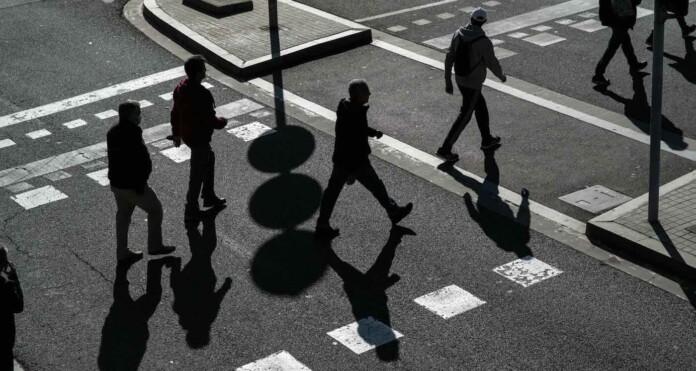
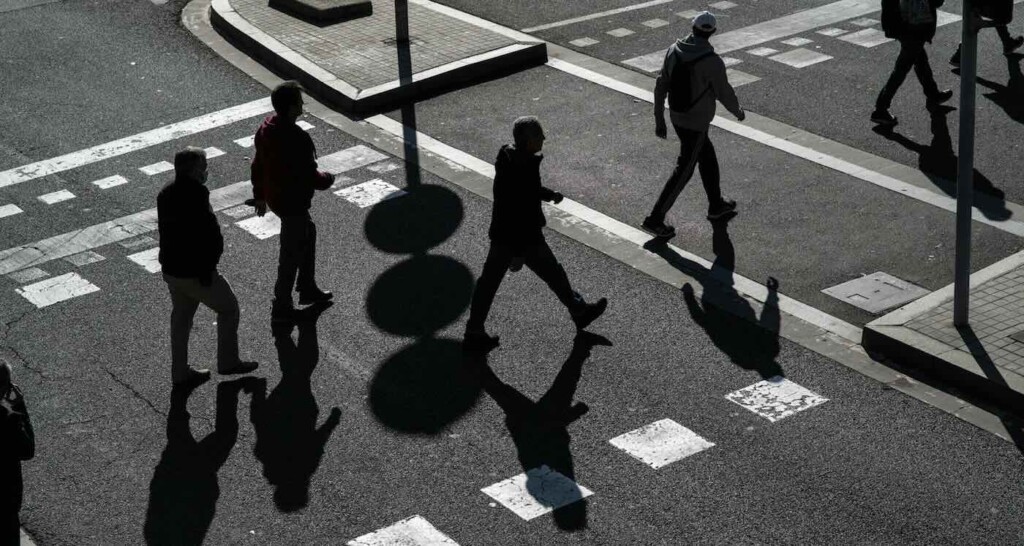
Though overall levels remain high, the number of pedestrians killed by motorists in the US fell nearly 11% over the first 6 months of 2025 compared to the same period in 2024.
Data from the Governors Highway Safety Association (GHSA) reveals how this was the single largest decline in pedestrian deaths since records began in 2015.
The 10.9% drop in pedestrian deaths from 2024 to 2025 (January-June) translates into 371 fewer fatalities, which as GHSA reminds us is more than just a number, but 371 friends, family, and loved ones that can still be hugged and cherished.
When measured by deaths per 100,000, the rate is the lowest it’s been this decade. If measured by deaths per vehicle miles traveled, its the lowest since 2019.
With some exceptions, there’s quite plainly a north-south divide, with states like Minnesota, Idaho, Indiana, New York, Pennsylvania, and Massachusetts recording deaths per 100,000 residents at lower than 0.6, while Florida, Arizona, New Mexico, Texas, South Carolina, Mississippi, Louisiana, and Georgia crest 1.0.
Previous GHSA data has shown that one of the biggest determinants to pedestrian traffic deaths is darkness, which is likely why the southern states, with their larger and poorly-lit rural areas, record more deaths than the northern states.
“Each pedestrian death is so much more than just a number. Each one is a family member, friend or neighbor that no one will be able to hug, see or share time with ever again. While we are pleased with the progress shown in the data, the only acceptable number of traffic deaths is zero,” said Jonathan Adkins, CEO of the GHSA.
Remind Your Friends The World’s Getting Better Every Day By SHARING This Story…
Brazil’s Blue-and-Yellow Macaws Return to Rio After 200 Years: ‘A dream come true’


In Rio de Janeiro’s largest urban park, the tumult of the city can subside to the faintest murmur among the thick Atlantic Forest ecosystem remnant.
It’s here that ecologists have reintroduced the blue-and-yellow macaw through a captive breeding program. It’s a delight—a “dream come true” for residents of a city where the colorful macaw is used everywhere in logos, clothing, and souvenirs, but which hasn’t dwelt in the forested mountains by the famous city in 200 years.
Several conservation organizations have been prioritizing the return of animals poached from Tijuca, the 10,000-acre park mentioned earlier, or driven off by deforestation in the 19th century. These include howler monkeys, the red-rumped agouti, and the yellow-footed tortoise.
All these animals have brought excited visitors to the park’s trails, but none have enraptured the cariocos, (people from Rio) more than the macaw, four of which have been set free into the trees.
“They are so magnificent. It’s no surprise that all the visitors are constantly asking how they can see them,” Viviane Lasmar, director of Tijuca national park, told the Guardian. “For me, as the head of the park, it’s special. But even more so as a carioca. It’s a dream come true.”
The organization handling the release is called Refauna, and having released the birds for a period of 15 days earlier this year, they’ve rounded them back into the aviary with plans for a possible permanent departure in September when food is plentiful.
STORIES FROM RIO: Gray Slums of Brazil Turn Green with Rooftop Garden Project in Full Bloom
This is done for two reasons. The first is that these macaws were rescued from captivity, and so lack the powerful flight muscles they need to travel some 6 miles a day searching for food. The second is due to the need to acclimatize the birds to the sights, sounds, smells, and tastes of their new home.
A point of national and local pride, the macaws’ presence may also help regenerate the Atlantic Forest biome in Tijuca and beyond, as this specific kind of forest has been reduced by 90% since the colonial period, and at its most productive harbors biodiversity that can rival the mighty Amazon next door.
BRAZILIAN CONSERVATION: In the Amazon, One Woman’s Ingenious Canopy Bridges Are Helping Monkeys Cross the Road Safely
The macaw’s sharp beak should allow it to break open nuts and fruits to help trees better disperse their seed, something virtually all trees in the park rely on to reproduce.
“The macaw really is a symbol of our efforts to bring life back to Tijuca,” Marcelo Rheingantz, the executive director of Refauna also told the Guardian. “My dream is that one day they will fly far away from here and we will be able to see them from all over the city.”
SHARE The Joy Of These Rio Residents At Having Their Iconic Bird Back…
‘Cloud Jaguar’ Sighting Is First in a Decade Caught on a Trail Cam in Honduras
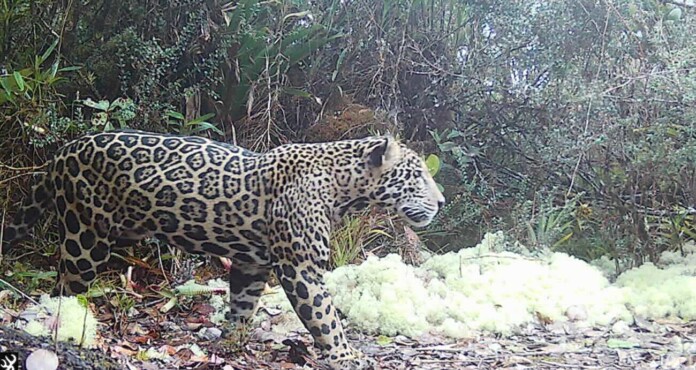
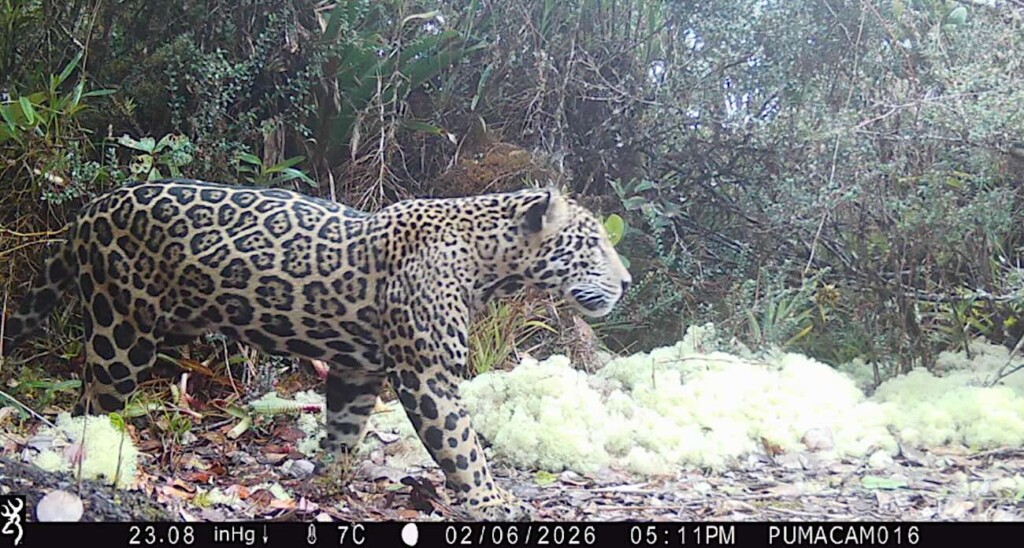
Just weeks ago, a jaguar was captured on camera in Honduras’ Sierra del Merendón mountain range for the first time in a decade as part of high-tech monitoring and conservation efforts from Panthera, the global wild cat conservation organization.
Taken among cloud forest at over 6,000 feet in elevation on the range’s highest peak, the images capture an impressively healthy male jaguar just two meters from the exact location of the park’s first-ever jaguar sighting—recorded 10 years and 2 days earlier.
They “cloud” moniker this cat has picked up in the media isn’t a reflection of speciation, such as the leopard and the clouded leopard, but merely because of its habitation atop the highest of heights in Honduras.
The discovery also marks the highest elevation at which a “cloud jaguar” has been documented in Honduras, with the species most commonly found below 3,000 meters, and provides rare evidence that jaguars are still moving through this high-elevation corridor between Honduras and Guatemala.
More than anything, the 2026 images suggest that a decade’s dedication of anti-poaching ranger patrols, conservation technology investment, and prey reintroduction, including peccaries and iguanas by Panthera and partners—as well as Honduras’ vow to eliminate deforestation by 2029—are showing wonderful signs of success.
The sighting is particularly significant given Honduras has one of the highest deforestation rates in all of Latin America. Today, the Merendón range is a critical passageway within the Jaguar Corridor, which connects habitats from Mexico to Argentina and enables species to roam, find mates and maintain genetic diversity. Jaguars have already been lost from nearly half of their historic range and are Near-Threatened on the IUCN Red List.
CAUGHT ON CAMERA:
- Thailand’s Mythical ‘Fire Tiger’ Captured on Trail Cam, One of the Rarest Sightings in the Cat World
- Rare Colocolo Cat Captured on Trail Cam in Chile Sauntering up as if on a Catwalk (Watch)
- Camera Catches Sighting of a Tiger with Cubs for First Time in 10 Years, Raising Hopes for Species in Thailand
Despite that, they may be the most successfully conserved member of the Panthera genus, thanks in no small part to the organization of the same name.
The original 2016 jaguar sighting was one impetus for Panthera’s launch of a binational conservation initiative between Honduras and Guatemala. Panthera hopes to further improve the jaguar’s odds of survival in working to establish new protected areas in Honduras in partnership with the Rainforest Trust and partners.
This news comes on the heels of the United Nations’ COP15 for the Convention on the Protection of Migratory Species in the Brazilian Pantanal where Panthera supported adoption of a unified international framework for jaguar conservation and habitat connectivity.
ROAR About This Majestic Beast With Your Friends On Social Media…
Researchers Turn Car Battery Acid and Plastic Waste into Clean Hydrogen and New Plastic
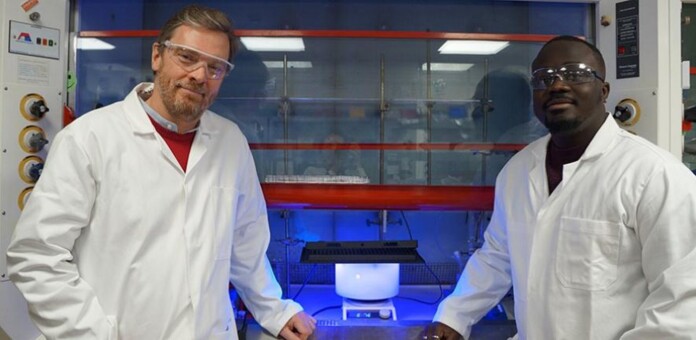
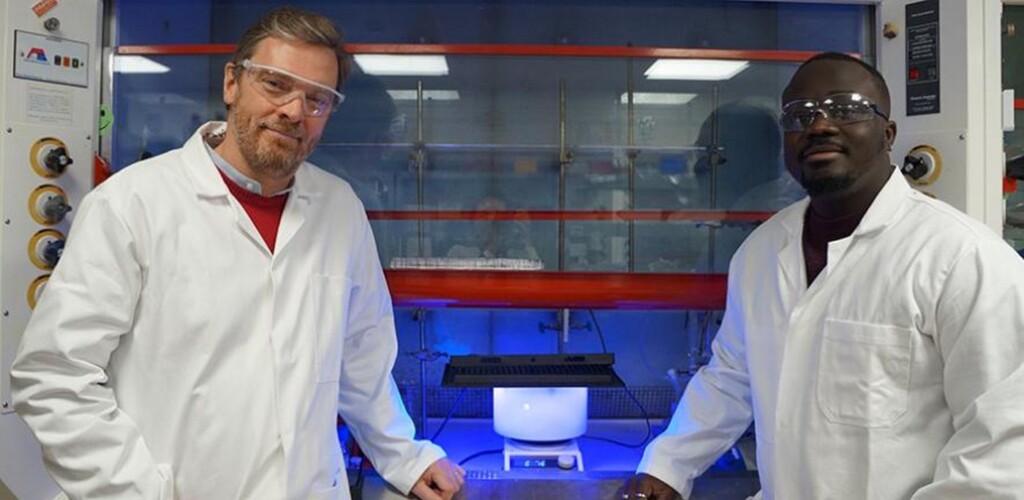
Researchers have developed a solar-powered reactor to break down hard-to-recycle forms of plastic waste – such as drinks bottles, nylon textiles and polyurethane foams – using acid recovered from old car batteries.
The process then converts the waste into clean hydrogen fuel and valuable industrial chemicals.
The reactor was developed by researchers from the University of Cambridge and powered powered by the energy from the Sun, making it a potentially cheaper, more sustainable alternative to current chemical-based recycling methods.
The team say their method could create a circular system where one waste stream solves another. Their results are reported in the journal Joule.
Global plastic production exceeds 400 million tonnes per year, yet only 18% is recycled, Cambridge state in a press release on the discovery. The rest is burned, landfilled, or escapes into ecosystems. The researchers say that their method, known as acid photoreforming, could help address the global mountain of plastic waste.
In an “almost accidental” discovery, the photocatalyst they invented turned out to be robust enough to withstand the highly corrosive effects of acid, opening a world of possibilities in the process including the chance to make productive use of the acid inside spent car batteries, which is normally neutralized and discarded.
“The discovery was almost accidental,” said Professor Erwin Reisner from Cambridge’s Yusuf Hamied Department of Chemistry, who led the research. “We used to think acid was completely off limits in these solar-powered systems, because it would simply dissolve everything. But our catalyst developed didn’t—and suddenly a whole new world of reactions opened up.”
“Acids have long been used to break plastics apart, but we never had a cheap and scalable photocatalyst that could withstand them,” said lead author Kay Kwarteng, a PhD candidate in Reisner’s research group, who developed the photocatalyst. “Once we solved that problem, the advantages of this type of system became obvious.”
The method developed by Kwarteng, Reisner and their colleagues, first treats waste plastics with the car battery waste acid, breaking the long polymer chains into chemical building blocks such as ethylene glycol, which the photocatalyst then converts into hydrogen and acetic acid (the main ingredient in vinegar) when exposed to sunlight.
In laboratory tests, the reactor generated high hydrogen yields and produced acetic acid with high selectivity. It also ran for more than 260 hours without any loss in performance.
The approach works for multiple types of plastic waste, even those that are currently tough to recycle, such as nylon and polyurethane. This offers a real advancement to current upcycling technologies that do not cover plastics beyond PET.
The approach works not just with new, laboratory-grade acid, but with the acid recovered from car batteries. These batteries contain between 20-40% acid by volume, and are replaced worldwide in huge numbers every year. The lead in these batteries is typically extracted for resale, but the acid creates extra waste once it is safely neutralized.
“It’s an untapped resource,” said Kwarteng. “If we can collect the acid before it’s neutralized, we can use it again and again to break down plastics: it’s a real win-win, avoiding the environmental cost of neutralizing the acid, while putting it to work generating clean hydrogen.”
MORE STORIES LIKE THIS: Hawaii University Hauls 84 Tons of Derelict Fishing Gear from Pacific Ocean Garbage Patch
The researchers say their method offers a potential order‑of‑magnitude cost reduction compared with other photoreforming approaches, largely because the acid enables increased hydrogen production rates and can be reused rather than consumed or wasted.
Kwarteng says that although challenges remain—such as ensuring reactors can withstand corrosive conditions—the fundamental chemistry is sound.
“These acids are already handled safely in industry,” he said. “The question now is engineering: how do we build reactors that can run continuously and handle real‑world waste?”
SPENT TO SAVED: Hard-to-Recycle Waste Forms Lightweight Concrete for Paving Roads and More in Hungary
“We’re not promising to fix the global plastics problem,” said Reisner. “But this shows how waste can become a resource. The fact we can create value from plastic waste using sunlight and discarded battery acid makes this a really promising process.”
The team plans to commercialize this process with the support of Cambridge Enterprise, the University’s innovation arm, while the research itself was supported by a broad collective of trusts, institutes, and other funding sources which can be found in the press release.
SHARE This Simple, Elegant Way Of Eliminating Multiple Waste Streams In One Go…
“Almost all our suffering is the product of our thoughts.” – Sam Harris

Quote of the Day: “Almost all our suffering is the product of our thoughts.” – Sam Harris
Photo by: Sara Oliveira for Unsplash+
With a new inspirational quote every day, atop the perfect photo—collected and archived on our Quote of the Day page—why not bookmark GNN.org for a daily uplift?

Good News in History, April 15

79 years ago today, years before the Civil Rights Movement gained prominence in the news, Jackie Robinson broke baseball’s color barrier becoming the first black player on any Major League Baseball team, debuting at first base for the Brooklyn Dodgers. “It represented both the dream and the fear of equal opportunity, and it would change forever the complexion of the game and the attitudes of Americans,” wrote Pete Levine. His talent earned him the Most Valuable Player award in the league two years later. In that fateful game, Robinson went hitless but did score the winning run. READ the conversation that preceded Robinson’s debut… (1947)
Restaurant Owner Shelves Easter Plans to Fulfill Dying Man’s Last Wish to Feed His Hospice Nurses


From New York comes the story of a restaurant owner who shelved his Easter plans to fulfill a dying man’s last wish.
Jokingly described as looking like “a big, bad biker guy” by his brother, 67-year-old father of 3 Frank Ozimek had a last wish as he approached his final hours: to repay some of the kindness he had received.
For 6 weeks, Ozimek had been undergoing cancer treatment at Niagara Hospice. With no success, and little time life, Frank asked his younger brother Ken for one final favor: he wanted to treat the nursing staff to a meal.
Ken Ozimek looked around on the internet but realized everywhere was closed for Easter. Eventually, Ken got through to someone: Tommy Milani, owner of Sub Delicious pizza and subs in Lockport.
“I said, ‘Absolutely, whatever you need, Ken,'” Milani told local news WKBW, adding of the hospice nurses, “They do an amazing job there. They’re all saints.”
Milani put his Easter plans on hold while he whipped up, flipped up, and delivered pizzas for the entire nursing staff.
Ken said that he was beyond grateful for Milani for helping his family at their time of loss.
ANOTHER STORY LIKE THIS: Elderly Father and Son Feast on Free Oysters After Cashing in on Decades-Old Restaurant Promise
“To me, it means the world to see that kindness, that greatness spread,” he told WKBW. “And I hope when people see this story, they take it and say, ‘Why can’t we do this and spread joy and kindness to each other?'”
Enriched by a close relationship with the Great Outdoors his whole life, Frank Ozimek was also a music lover who liked to attend the annual Niagara Falls Blues Festival. He is survived by his 3 children and 5 grandchildren.
WATCH the story below…
SPREAD The Joy And Kindness To Others, As Ken Said, By SHARING This Story…
Another African Country Has Cleared its Debt to the International Monetary Fund

Without any fanfare from either party, it was recently revealed that Mozambique cleared its entire $701 million debt with the International Monetary Fund (IMF).
The news comes as a meeting between the officials and the IMF was scheduled for August, which it had previously been presumed would include discussions about the outstanding debt becoming distressed.
Such a state would put billions in additional debts, current and future, for vital gas and infrastructure projects, at risk according to the World Bank.
Business Insider Africa reports that without any announcement, in the final days of march the IMF website updated Mozambique’s outstanding debt level to zero, while Fáusio Mussá, chief economist at Standard Bank in Mozambique, the local branch of Africa’s largest continental bank, disclosed that the country had settled.
The news makes Mozambique the latest in a small series of African country to get out from under internationally-held, aid-related debt.
The southeast African nation had built up all-time record foreign currency reserves of $4.15 billion, which have been reduced to $3.5 billion following the repayment.
The country ranks among the least-developed in the world along multiple lines of standard measurement, such as life expectancy and GDP-per-capita. It had been ravaged by a civil war until 1994 when it held its first multiparty elections had has remained mostly stable since.
MORE POSITIVE DEVELOPMENT: 30% of Barbados Seas to be Protected Under ‘Blue Bond’ Financing That Saved The Seychelles
Namibia and Nigeria are two other countries to have recently paid off large amounts of IMF debt. In October of last year, Namibia paid off $750 million to make it the second-lowest debtor to the organization in Africa, while in May, Nigeria paid back a $3.4 billion loan to cushion the impact from its government-mandated business closures and lockdowns while attempting to reduce the impact of COVID-19.
SHARE This Good News For Mozambique With Your Friends On Social Media…
Tree They Planted as Teen Sweethearts Suddenly Had Baby Offshoot Growing After She Got Pregnant


It’s a simple story of well-rooted love, nurtured year after year, blooming, and producing fruit—but the latest chapter has social media entranced.
High school sweethearts Kelsey Dixon and her now-husband Wes Dixon planted a cherry tree together as teenagers in 2007 and have taken a photo with it every year since.
“It’s a good tradition and 17 million or so people on Instagram seem to think so too,” Dixon said on the platform, where a story she shared has been viewed something like 48 million times.
The two would go on to marry, but even after they moved 3,000 miles away, they’d return every year to take a photograph with the tree—including one with Dixon’s baby bump.
As if the team at GNN needed any more evidence that trees are connected to what’s going on around them, Dixon’s mother-in-law sent her a picture that left the couple stunned.


The cherry tree sprouted a clutch of basal sprouts, or suckers, from one of its roots—in the same year that Kelsey gave birth to two children.
Mrs. Dixon has now published a children’s book—Roots and Wings—about the events and tradition that inspired it, and partnered with a vivarium called The Sill on a line of trees perfect to plant for the same or similar reasons.
Love is so often about little things that become (or perhaps always were) big things, and the story of the Dixons certainly fits that paradigm. It’s beautiful in its simplicity, much like the cherry blossoms it was born under.
WATCH the story below narrated by Kelsey…
SHARE This Beautiful Story With Your Friends On Social Media…
Nearby Star Seen ‘Blowing Bubbles’ for the First Time in New Image from Chandra Telescope


For the first time, a much younger version of the Sun has been caught red-handed blowing bubbles in the galaxy, by astronomers using NASA’s Chandra X-ray Observatory.
The bubble—called an astrosphere—completely surrounds the juvenile star. Winds from the star’s surface are blowing up the bubble and filling it with hot gas as it expands into much cooler galactic gas and dust surrounding the star.
Our Sun has a similar bubble around it, which scientists call the heliosphere, created by the solar wind. It extends far beyond the planets in our solar system and protects Earth from damaging particles from interstellar space.
This is the first image of an astrosphere astronomers have obtained around a star similar to the Sun. It shows slightly extended emission, rather than a single point of light as seen for other such stars.
“We have been studying our Sun’s astrosphere for decades, but we can’t see it from the outside,” said Carey Lisse of Johns Hopkins University in Baltimore, who led the study which was recently published in The Astrophysical Journal. “This new Chandra result about a similar star’s astrosphere teaches us about the shape of the Sun’s, and how it has changed over billions of years as the Sun evolves and moves through the galaxy.”
The star is called HD 61005 and is located about 120 light-years from Earth, making it relatively close. HD 61005 has roughly the same mass and temperature as the Sun, but it is much younger with an age of about 100 million years, compared to the Sun’s age of about 5 billion years.

Because it’s so young, HD 61005 has a much stronger wind of particles blowing from its surface that travels about 3 times faster and is about 25 times denser than the wind from the Sun. This amplifies the process of astrosphere bubble-blowing and mimics how our Sun was behaving several billion years ago.
“We are impacted by the Sun every day, not only through the light it gives off, but also by the wind it sends out into space that can affect our satellites and potentially astronauts traveling to the Moon or Mars,” said co-author Scott Wolk of the Center for Astrophysics | Harvard & Smithsonian (CfA). “This image of the astrosphere around HD 61005 gives us important information about what the Sun’s wind may have been like early in its evolution.”
Astronomers have nicknamed the HD 61005 star system the “Moth” because it is surrounded by large amounts of dust patterned similarly to the shape of a moth’s wings when viewed through infrared telescopes. The wings are formed from material left behind after the formation of the star, similar to the Kuiper Belt in our own solar system. Observations of these wings with NASA’s Hubble Space Telescope showed that the interstellar matter surrounding HD 61005 is about a thousand times denser than that around the Sun.

Since the 1990s, astronomers have been trying to capture an image of an astrosphere around a Sun-like star. Chandra was able to detect the astrosphere around HD 61005 because it is producing X-rays as the stellar wind runs into cooler interstellar dust and gas that surrounds the star.
MORE CHANDRA FAVORITES: LOOK at All the Dark Matter in This New Image from the James Webb Telescope
The dense local galactic environment, combined with Chandra’s high-resolution X-ray vision, the strong stellar wind, and the star’s proximity, all helped create a strong X-ray signal, allowing discovery of an astrosphere around HD 61005.
The Sun not only likely passed through a phase of development similar to HD 61005 when it was younger, it also likely traveled through a denser region of dust and gas than where the Sun is currently located, strengthening the connection with HD 61005.
“It is amazing to think that our protective heliosphere would only extend out to the orbit of Saturn if we were in the part of the galaxy where the Moth is located, or, conversely, that the Moth would have an astrosphere 10 times wider than the Sun’s if it were located here,” Lisse said.
YOU WILL SURELY LIKE: Star’s Final Breath Appears Like Columns of Smoke in Breathtaking New James Webb Image
HD 61005 is not visible from Earth with the unaided eye, but it is close enough that skywatchers could see it using binoculars.
The first hints of X-ray emission from the Moth’s central star were based on a brief, one-hour-long Chandra observation of HD 61005 in 2014. In 2021, astronomers observed HD 61005 for almost 19 hours, which allowed the detection of the extended astrospheric structure.
WATCH the story below from Chandra’s Social Media Team…
BEAM This Story Over To Your Friends Socials…
“Because of a great love, one can be courageous.” – Lao Tzu

Quote of the Day: “Because of a great love, one can be courageous.” – Lao Tzu
Photo by: Oksana Zub
With a new inspirational quote every day, atop the perfect photo—collected and archived on our Quote of the Day page—why not bookmark GNN.org for a daily uplift?

Good News in History, April 14

87 years ago today, John Steinbeck’s Pulitzer Prize-winning novel The Grapes of Wrath was published, a story he wrote after interviewing displaced migrants who escaped the Dust Bowl (a period of severe dust storms that greatly damaged the ecology of the Midwestern prairies during the 1930s and the Great Depression). The book won the National Book Award and the Pulitzer Prize for fiction and soon after was made into a celebrated Hollywood film starring Henry Fonda. WATCH a video… (1939)
Priceless Golden Helmet from 2,500 Years Ago Recovered After it Was Stolen from Museum in January


A golden helmet belonging to an ancient Romanian culture holding “inestimable value” was recovered after it was stolen in January from a Museum where it was on loan.
A museum director sought to demonstrate the value of Romanian history by loaning the national treasure to a Dutch museum as part of a 6-month-long exhibition, but disaster struck when thieves broke into the museum, stole the helmet, and a trio of golden bracelets.
The theft shocked the European art world and caused a diplomatic incident, with incensed Romanian officials breathing down the neck of Dutch police, urging them to stop at nothing to recover it.
Called the Helmet of Coțofenești, it was manufactured out of gold during the Dacia civilization in the decade around 450 BCE. Dacia left no written history, so only finds like the Coțofenești Helmet bear witness to their capabilities and identity. Embossed with mythical scenes and studs atop the cranium, a panel covered the eyes meant to shield the wearer, it’s believed, from bad luck.
On April 3rd in the city of Assen, police and officials at the Drents Museum unveiled the helmet, alongside 2 of the bracelets, which they said they recovered through a plea deal reached with 3 suspects arrested shorty after the January break-in.
“We are incredibly pleased,” Corien Fahner of the prosecution service told reporters. “It has been a roller-coaster. Especially for Romania, but also for employees of the Drents Museum.”
It was originally feared that if the thieves’ aim was for money, the helmet would be melted down, since its iconic design would have rendered it unsalable. Fortunately, it seems that either wasn’t the aim of the perpetrators, or their quick arrest interrupted the plan.
ROMANIAN HISTORY: Romania Hits 94% Recycling After Launching Largest Return Plan in the World
The Guardian, one of many outlets reporting on the theft and recovery, reported that Dutch authorities made several attempts to convince the suspects to reveal the location of the treasures under enormous pressure from the Romanian government.
It’s unclear which terms were agreed to in the plea deal, but one offer may have included a halving of their eventual prison sentence, while an undercover officer may have tried to buy the items outright for €400,000.
MORE MUSEUM THEFTS SOLVED: Ancient Egyptian Artifacts Recovered Just One Day After Being Stolen from Australian Museum
The National History Museum of Romania received €5.7 million as part of an insurance claim on the loss, some if not all of it, the museum may have to pay back now that the objects have been recovered.
One of the 3 stolen bracelets is still missing, while the helmet suffered a dent during the theft. Romanian authorities are confidant the third can be located, and said they will stop at nothing to bring the final treasure back to Bucharest.
CELEBRATE The Recovery Of This Priceless Historical Treasure…