Quote of the Day: “Happiness is the consequence of personal effort. You fight for it, strive for it, insist upon it, and sometimes travel the world looking for it.” – Elizabeth Gilbert
Photo by: Austin Distel
With a new inspirational quote every day, atop the perfect photo—collected and archived on our Quote of the Day page—why not bookmark GNN.org for a daily uplift?
A Utah student decided to dedicate her master’s thesis to the pursuit of getting a historic piece of land art inscribed on the National Registry of Historic Places.
Succeeding on all fronts, ‘Spiral Jetty,’ the famous creation on the shores of the Great Salt Lake, becomes the first feature of the Land Art movement to make it onto the registry.
Getting a property placed on the registry, which protects places of historic significance to America—such as Waldon Pond in Massachusetts—requires permission from the site’s owner or caretaker, and was one of several tasks that Amy Reid, who now holds a master’s degree in landscape architecture from Utah State University, had to accomplish.
Spiral Jetty is a testament to creator Robert Smithson’s enduring fascination with entropy, a statement from the Dia Art Foundation which manages the site explains.
Smithson created the earthwork in the spring of 1970 at Rozel Point, on the northeastern shore of Utah’s Great Salt Lake. Constructed from 6,650 tons of rock and earth gathered directly from the site, the spiral continuously changes form as nature, industry, and time take effect.
A short time after it was completed, the level of the lake rose, and the work was submerged. Over the years it’s re-emerged and been sunk again and again, but since 1997 has always been visible.
Not native to the state, Reid has lived in Utah for the last 15 years, and learned about the Spiral Jetty work from her sister who visited it in 2002 whilst studying art at UC Berkeley. It took several months of work contacting the Dia Foundation, the Utah Department of Natural Resources, and the Holt/Smithson Foundation to explain her mission and gather critical details about the history of the sculpture and its maker.
Unrelated to the famous James Smithson whose endowment created the Smithsonian Institute in Washington DC, Robert and collaborator/wife Nancy Holt were pioneers in the Land Art Movement of the 1960s and 70s. Smithson liked to see in his works something of a dialectic between man and nature.
For this he didn’t like the idea of a work to be permanent or protected. He enjoyed grit, imperfections, and decay, and Reid says her thesis project isn’t about protecting the Jetty forever.
“It really is to provide a formal record of this site in a way that has not been done before,” she told the Salt Lake Tribune in a feature story on the site’s designation.
“For history, for the record, we now have a very complete view of the landscape, the natural forces, the man-made impacts on the landscape—all these things that influenced Smithson to choose this site.”
In a statement, Jessica Morgan, Director of the Dia Art Foundation, said that she and her colleagues are “delighted” the Spiral Jetty has received the important recognition, which “will help us spread awareness of the iconic artwork and advocate for its long-term preservation.”
“In the fifty-four years that Spiral Jetty has existed, it has been both submerged by the Great Salt Lake and stood far from the lake front, bearing witness to the changing landscape around it,” Morgan wrote.
“Beloved in Utah and far beyond, this artwork has come to mean many things to many people, and we are proud to continue our work caring and advocating for Spiral Jetty to preserve it for generations to come.”
SHARE This Pioneering Work And The Dedicated Student Who Got It Recognized…
In a mouse model of contact dermatitis, preventive application of a cream containing SYM2081 (right image) reduced skin swelling compared to placebo (left image). – credit: Daniel Kaplan / SWNS
A new way of treating common inflammatory skin conditions such as eczema is on the horizon, according to a new study.
American researchers discovered that a compound called SYM2081 inhibited certain cells that drive inflammation in mice and human skin samples.
They say it paves the way for new treatments to prevent itching, hives, and other symptoms of skin conditions—such as eczema and rosacea—driven by mast cells.
Rosacea is a long-term skin condition that mainly affects the face. It may cause acne-like pimples, broken blood vessels, skin thickening, and facial flushing.
“I’m really excited about the clinical possibilities of this research,” said study senior author Professor Daniel Kaplan, of the University of Pittsburgh. “Currently, there aren’t a lot of good therapies that target mast cells, so we think that our approach could potentially have huge benefits in many skin conditions, including rosacea, eczema, urticaria, and mastocytosis.”
He explained that mast cells are filled with tiny granules “brimming” with histamine and other compounds that act as signals or activators of inflammatory pathways. When mast cells are activated, the granules spill open, releasing compounds that trigger a suite of immune responses.
Kaplan says the process—known as degranulation—is essential for protection against threats such as bee venom, snake bites, and pathogenic bacteria, but erroneous activation of mast cells also triggers allergic reactions, including swelling, hives, itching, and in severe cases, anaphylaxis, according to the findings published in the journal Science Translational Medicine.
In a previous paper, Kaplan and his team found that neurons in the skin release a neurotransmitter called glutamate that suppresses mast cells. When they deleted the neurons or inhibited the receptor that recognizes glutamate, mast cells became hyperactive, leading to more inflammation.
“This finding led us to wonder if doing the opposite would have a beneficial effect,” he said. “If we activate the glutamate receptor, maybe we can suppress mast cell activity and inflammation.”
To test the hypothesis, the research team looked at a compound called SYM2081, or 4-methylglutamate, which activates a glutamate receptor called GluK2 found almost exclusively on mast cells.
They found that SYM2081 effectively suppressed mast cell degranulation and proliferation in both mice and human skin samples. When the mice received a topical cream containing SYM2081 before the induction of rosacea or eczema-like symptoms, skin inflammation and other symptoms of disease were much milder.
A daily cream containing a GluK2-activating compound could therefore be a promising way to prevent rosacea and other inflammatory skin conditions.
“Although there are excellent therapies available for different types of rosacea, many are antibiotic-based and they only target some of the symptoms. There are no good therapies for flushing, so this is a significant unmet need,” said Kaplan.
Now that the research team has shown proof-of-concept of their approach, they hope to engineer new GluK2-activating compounds that could eventually be tested in clinical trials.
SHARE This Research Team’s Brilliant Findings On Social Media…

Pat Surtain gives football to boy in stands – Credit: Denver Broncos / Twitter
A young boy who had his dream snatched away by a stadium security guard has reason to cheer again after officials eventually returned his game ball.
Even though Levi Still’s father has been a lifelong Cincinnati Bengals fan, his son somehow ended up devoted to the Denver Broncos.
This year for Christmas, Levi received a Patrick Surtain II jersey and tickets to the next Bengals game—against the Broncos.
It was mild weather on game day, during which the visitors took the home team into overtime, with Surtain II recovering a fumble in the fourth quarter to the delight of Levi, wearing his name on the back of his shirt.
Though the Broncos fell in overtime, Levi had plenty to cheer for, as after the final whistle he received a surprise.
“All of a sudden, we see Pat Surtain walking to us. We just freaked out and he ended up handing [Levi] the football,” said Tracey Ewing, Levi’s mom.
But as they were getting ready to leave the stadium, security guards said it belonged to the NFL and under no circumstances—childhood dreams included—could it be allowed to leave. Devastated, Ewing took to Facebook and X to try and find a solution.
“The only thing I knew to do was go to social media and try to get my boy’s ball back,” she said.
Just now seeing this… Before the game yesterday I gave away a game ball to a little kid. Just for it to be taken away from him if anybody can put me in contact with the kid and his family hmu asap !!
Word even reached Pat Surtain, whose help would fortunately not be required, as Ewing told WCPO 9 Cincinnati that on Sunday morning, one of the security guards reached out.
“He instant messaged me and just said he, you know, [sic] the steps that he had taken to get it verified and to make sure he could have it, and then he reached out,” Ewing said.
“I felt happy because I thought I was never going to get it back,” Levi said after their family made a little road trip down to Paycor Stadium for the recovery.
WATCH the story below…
SHARE In This Young Broncos Fan’s Delight On Social Media…

3D scan of 6th Century sword –Credit: Dr. Ash Lenton at Australian National University
An astonishingly well-preserved sword has been uncovered in England among other grave goods that are helping to reveal critical details about the Anglo-Saxons.
Dating back to the 6th century, it was found in a cemetery for high-social-status individuals that’s being kept secret from the public due to the value, both historical and monetary, of the site.
Inferior forging techniques and damp burial conditions mean that most swords recovered in excavations in Britain are corroded and broken shadows of their former glory. This example by contrast contains gilt and silver inlays along the hilt, or handle, while the surprisingly intact blade is inscribed with runes.
“It’s really incredible, in the top echelons of swords, an elite object in every way, which is wonderful. It rivals the swords from Dover and from Sutton Hoo,” said Duncan Sayer, the lead archaeologist on the excavation and professor of archaeology at the University of Central Lancashire, referring to the burial mound in Suffolk where the famous Anglo-Saxon helmet was discovered.
The sword, discovered in Kent, is the focus of the 12th season of the BBC television program Digging for Britain, whose presenter Professor Alice Roberts, said she’s never seen anything of the sort in the more than a decade of hosting the show.
“It’s an extraordinary Anglo-Saxon cemetery, with really beautifully furnished graves,” she told the Guardian. “We have fairly sparse historical sources when it comes to this period, which used to be called the Dark Ages. We don’t have much in the way of contemporary writing.”
Dating to the Anglo-Saxon heyday stretching from the receding of the Roman Empire to the scourge of the Vikings, the cemetery is revealing new details about their life. For example, one of the skeletons was found with remnants of fly pupae on his bones, suggesting he may have spent time lying in state, with countrymen and loved ones coming to pay respects.
Genetic analyses of the bones of the cemetery show that most of the DNA contains similarities with northern Europe, hinting at a migration event shortly after the Romans ceded the British Isles to native officials. However, some of the female graves contained artifacts of Frankish origin.
Following proper conservation and the filming of the show, the sword will go on display in the Folkestone Museum in Kent.
SHARE The Story Of This Top Eschelon Sword With Your Friends…
With a new inspirational quote every day, atop the perfect photo—collected and archived on our Quote of the Day page—why not bookmark GNN.org for a daily uplift?
A photo found after hurricane cleanup - credit: Photos from Helene
A photo found after hurricane cleanup – credit: Photos from Helene
A North Carolinian is reuniting families with precious photographs blown away in the storm, offering them critical links to their pasts as they rebuild their homes and lives.
Taylor Schenker, who lives in Canton near hard-hit Asheville, was searching through debris along the Swannanoa River hoping to recover some things from her friend’s house which was completely destroyed.
As they sifted through mud and torn-up vegetation, Schenker was continually finding photographs that had survived the elements thanks to the waterproof glossy paper.
“It was [a photo of] a middle school basketball team. It was a photo of a beloved dog. I found a wedding photo of a bride hugging somebody,” Schenker told CBS News. “You take photos because you have a moment you want to remember and so, they did all seem just special.”
That night, she imagined the loved ones behind the shutter and in front of it having those memories taken away from them forever, and the thought affected her deeply.
She decided to use Instagram to help reunite families with their missing photographs. Photos from Helene is a tearful page, as over two dozen photos have been returned. Often commenters recognize themselves or a loved one.
Schenker has found about 100 photos herself, but she’s also gathered many more from local search and rescue teams.
“Being able to have that moment where you hand something so special to somebody and then also just give them a hug—because they’ve lost likely their entire home in this situation—it’s such a privilege to have an insight into this moment in their lives through these photographs and be able to give them back to them,” she said.
Schenker says she will sometimes mail the photos to families if they’ve left the area, but if there’s an opportunity for a hand-delivery, she prefers that.
WATCH the story below from CBS News…
SHARE This Young Woman’s Heroic And Touching Efforts In North Carolina…
A crescent moon with Venus below - credit poppet with a camera, CC 2.0. via Flickr
A crescent moon with Venus below – credit poppet with a camera, CC 2.0. via Flickr
It’s not an alignment, but the January sky will be lit up with the lights of our solar system neighbors.
As the eight planets move about our star along the plane of the ecliptic, certain periods of certain years offer extra-special opportunities to see them shining bright.
This January is one such time, when Venus, Mars, Jupiter, and Saturn will all be extremely visible. Venus and Saturn will illuminate the southwestern horizon for a couple of hours, be brighter than usual, and be quite close to one another.
By January 17th and 18th, they will appear at their closest points in the sky, known as a conjunction, even though they’re actually hundreds of millions of miles apart.
Directly above our heads, Jupiter will be shining bright. To the east, Mars will reach opposition in mid-January.
Opposition occurs when the Earth sits directly between the Sun and another planet. We see its light hitting the planet directly, and as such it’s the best time to see any planet. On January 13th, the full Moon will pass in front of Mars as we see it, lasting a couple of hours.
The best time for viewing these planets will be the middle of the month, which is when the Moon will be in its fullest stages. They will be the only other things likely to be seen in the sky on these days, and therefore fairly obvious to spot.
Uranus and Neptune will also be more visible than normal, but one will need a telescope to see them.
SHARE These Great Stargazing Days With Your Friends On Social Media…
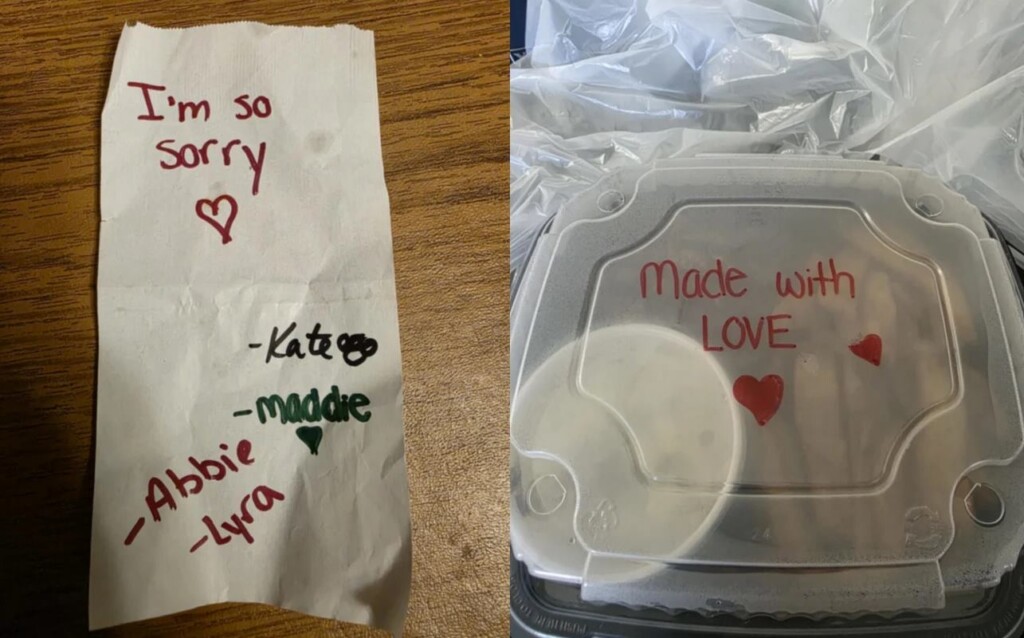
A grey seal in Scotland – Photo by Kevin Mueller on Unsplash
Grey seal colonies are flourishing along England’s east coast after being absent or scarce for years.
Thousands of pups are born every year along beaches that are closed to the public in winter, something which one ‘seal warden’ described as Britain’s greatest “wildlife safari.”
Even though lower England is one of the most densely populated regions on the planet, there are places one can see megafauna gather in numbers one would expect to see in Africa.
The 10-mile beach at Orford Ness in Suffolk, and Horsey beach 50 miles north in Norfolk teem with these big grey and white lumps during the November-January breeding season. By Christmas day, 1,200 seal pups had been born at Horsey, a number expected to grow by 2,500 before the breeding season ends.
At Orford Ness, their return came out of nowhere. Back in 2021, along a beach that belongs to England’s National Heritage Trust and where Cold War-era weapons were tested, the norm was to see zero seals. Then, one day, everything changed.
“One day, there were none, and the next day there were 200,” says Matt Wilson, a countryside manager for the trust. “Since then, they’ve come back each year, and the juveniles have stayed.”
This year, 600 pups were born on the beach, and according to seal conservationists, the current pup mortality rate is lower than the birth rate.
Storms are significant mortality events as they blow pups out to sea, and part of a grey seal’s normal behavior is to waddle up beaches to shelter behind vegetated dunes. To that end, Friends of Horsey Seals, a local volunteer wildlife charity, has fenced off a section where the colony can escape to in the event of bad weather.
According to Wilson and others speaking with the Guardian, the rapid increase in the grey seal population may be down to the presence of offshore wind farms. These structures offer ample space for mollusks and bivalves to glom on, more strongly anchoring the marine food web.
Another cause might be cleaner water resulting from reductions in pollution along non-tourist beaches observed in the last 10 years.
SHARE This Amazing Wildlife Viewing Opportunity With Your Friends…
Lupus effects on the skin - credit Nephron, CC BY-SA 3.0
Lupus effects on the skin – credit Nephron, CC BY-SA 3.0
Using a cancer treatment method, a small study has seen sufferers of Lupus go into remission such that they were able to halt their regular medication within just three months.
The results were hailed as a groundbreaking achievement in the treatment of Lupus, a debilitating life-long disease experienced by 5 million people around the world, and the results even bear the hallmarks of a potential cure.
Two studies, the first published in Germany, and the second in the UK with patients of the most severe form of the disease, refractory systemic lupus erythematosus, (SLE) saw patients receive CAR T-cell therapy, which genetically modifies a patient’s own immune cells ex vivo.
They are then injected back into the patient carrying an important mission in their genetic code. In almost all use cases of CAR T-cell therapy, this has been the targeting of cancer cells that use signaling molecules to evade detection by the immune system. But in this case, it was used to target the faulty biological equipment that causes the disease.
Lupus is an autoimmune disorder, meaning that defects in a patient’s genetics lead to their immune system targeting normal, healthy cells. Lupus is driven by a particular kind of immune cell called a B cell, and the treatment addressed T cells with orders to attack B cells carrying the defect.
In the German study, which was conducted in 2022, all five patients experienced a depletion of B cells, which eventually came back through normal cellular replenishment in the bloodstream, but without a return of Lupus symptoms.
“We’ve always known that in principle, CAR T therapies could have broad applications, and it’s very encouraging to see early evidence that this promise is now being realized,” said Dr. Carl June at the time; a professor at Penn State University Medicine and Director of the Center for Cellular Immunotherapies at Penn’s Abramson Cancer Center, who wasn’t involved with the study.
Recently, the same trial was replicated with three patients in the UK, including a 32-year-old and a 50-year-old who had been living with Lupus for 30 years.
The patients will be monitored for 15 years as a follow-up to examine the long-term effects. As it stands, the short-term effects relate to a significant weakening of the immune system, and or a hyperactivity of the immune system.
Lupus, particularly SLE, involves inflammation of internal organs, joint pain, acute swelling, and other effects that many patients would consider far worse than even the long-term side effects of the treatment.
“Lupus is a disease that requires lifelong medication, but this therapy has the potential to change that, which is incredibly exciting. This groundbreaking new therapy marks a significant milestone in our research into lupus,” said Professor Ben Parker, a consultant rheumatologist at Manchester Royal Infirmary, where the procedure was in part conducted.
SHARE This Amazing Advance With Those You Whose Loved Ones Have Lupus…
Quote of the Day: “Great minds have purposes; others have wishes.” – Washington Irving
Photo by: Dim Hou
With a new inspirational quote every day, atop the perfect photo—collected and archived on our Quote of the Day page—why not bookmark GNN.org for a daily uplift?
Flames from the Franklin Fire threaten to burn this Malibu home - credit: courtesy of Jonny Constantine
Flames from the Franklin Fire threaten to burn this Malibu home – credit: courtesy of Jonny Constantine
From California comes a story of heroism buried in the ashes of a recent wildfire.
As reported by the American Red Cross, Malibu resident Johnny Constantine might have saved himself first, but instead raced towards the fire as it approached his friend’s house, determined to ensure they escaped as well.
Smoke and embers from the recent Franklin Fire filled the air as the red glow illuminated his friends’ backyard.
“I saw the lights were out, but the bell worked. I kept hitting the button and yelling from their gate to wake up,” Constantine recounted. “The fire was so close—the smoke, red glow, and embers looked like it was going to come over the hill onto their property at any moment.”
After 15-20 tense minutes of honking, shouting, and ringing the bell, his friends finally woke up and escaped just as the fire neared their home. “I didn’t leave until they were safe,” Constantine said.
Thanks to a mixture of rain, low temperatures, and a lack of wind, the Franklin Fire stalled on its path across the Malibu hills. Shortly after Constantine’s evacuation, the fire was around 30% contained.
State officials said fire activity was minimal and there was no significant fire growth by mid-December. The last update placed the number of structures destroyed at 13, compared to the over 1,200 destroyed in the Dixie Fire.
GNN recently reported on the partnership between CAL Fire and Univ. of California San Diego that aims to monitor over 1,000 cameras for forest fire activity with AI. The use of these cameras alerted firefighters to the beginnings of 77 forest fires before a 911 call had been made about any of them.
Constantine was able to visit an American Red Cross evacuation shelter at Palisades, just one that the organization maintains for sheltering those fleeing these fires.
SHARE The Story Of This Man Refusing To Leave His Friend Behind…
-credit: CCCC First Harbor Engineering Co. Ltd. courtesy
The dry dock where the tubes were assembled – credit: CCCC First Harbor Engineering Co. Ltd. courtesy
The frigid waters of a bay in northeastern China are the site of a remarkable feat of engineering that’s won global recognition for its accomplishments.
Bolted to the seafloor in six individual segments, the Dalian Bay Undersea Tunnel spans over 2 miles of water and connects the peninsula-bound city of the same name with the mainland.
It was announced as Best Project of the Year by the decades-old American Engineering review, ENR, for its mixture of first-of-its-kind technologies and methodologies used in the construction.
Allowing motorists to avoid the lengthy C-shaped stretch of road around the bay, the trip has been shrunk from one hour to just 5 minutes.
“The team conducted an investigation on offshore concrete structures ranging from 15 to 86 years naturally exposed in the cold sea areas of China,” Sun Zhu, deputy chief engineer with CCCC First Harbor Engineering Co., the lead contractor on the project, told ENR. “Based on this research, a theoretical model was established to predict the 100-year service life of concrete structures in the marine environment of Dalian’s cold region.”
18 tubes of continuously poured concrete make up the undersea structure, each consisting of 7 segments containing 6 lanes for traffic. The tubes, some of which curve to form the tunnel’s path, were assembled 6 at a time along the edge of the bay in the highest capacity dry dock in all of Asia, which was built just for the project.
The total length of the curve adds up to around 1,050 meters, or around 3,200 feet; making it the tightest curve in an undersea tunnel in China. The segments were bolted onto rocks 32 meters below the sea.
– credit: CCCC First Harbor Engineering Co. Ltd. courtesy– credit: CCCC First Harbor Engineering Co. Ltd. courtesy
Because no such tunnel had ever been built in such cold temperatures, an on-site laboratory was established by First Harbor and its partners that ended up conducting 20 large-scale engineering and physics experiments.
Before each of the 60,000-ton tubes was sunk into their positions, they were pre-stressed with cables that would eventually be cut, rendering the tubes of concrete flexible.
“The technological research and development, as well as the preparatory work undertaken in the early stages, played a pivotal role” in the project, Zhu says. “It underscores the importance of advanced planning and prioritizing technology in engineering projects, particularly for large-scale undertakings.”
Campers paddle on a Willow River lake at One Heartland - credit One Heartland, submitted
Campers paddle on a Willow River lake at One Heartland – credit One Heartland, submitted
For those in the market, an 80-acre campground complete with river, lake, boat ramps, docks, and cabins in northern Minnesota is available after the previous owners were forced to close.
That’s because thanks to rock-bottom rates of HIV infection among babies in the state, One Heartland, one of the nation’s largest summer campgrounds for HIV-positive kids, is no longer needed.
Perinatal transmission of HIV, occurring when children contract the virus while in the womb or breastfeeding, has fallen to below 1% in HIV-positive mothers in the United States thanks to antiretroviral medications.
Globally, new HIV infections among children up to age 14 have declined by 38% since 2015.
One Heartland was founded in 1993 after Neil Willenson, a college student who wanted to be an actor, read about a 5-year-old HIV-positive child in Milwaukee facing isolation and stigma at school.
He created One Heartland as a short project, but ended up running it for the next 30 years.
“The impact was so transformative the first summer in 1993 that during the week the children were already saying ‘When can we come back?’” Willenson told Minnesota Star Tribune.
Willenson used to rent space in camps every summer, but he soon grew tired of being rejected for health concerns. Raising money, including from former Minnesota Twins player and manager Paul Molitor, he went and bought the Willow River property to turn it into One Heartland.
“We wanted to create a safe haven where children affected by the disease, perhaps for the first time in their young lives, could speak openly about it and be in an environment of unconditional love and acceptance,” added Willenson.
Children arrived at Willow River from all over the country, courtesy of a referral from the NIH, and donations from generous benefactors.
“That there’s no longer a need for the camp’s original purpose ‘is the greatest story that I ever could have imagined, it’s something I never could have predicted,'” Minnesota Star Tribune’s Jana Hollingsworth writes.
SHARE This Bittersweet Ending To A Man’s Heartwarming Work…
A rendering of the ARC plant - credit: CFS, released
A rendering of the ARC plant – credit: CFS, released
In a bold step towards the future of energy, a location and date have been decided for the first commercial nuclear fusion power plant in America.
Secured by Virginia Governor Glenn Youngkin with help from eastern seaboard utility company Dominion Energy, Chesterfield County will welcome Commonwealth Fusion Systems’ experimental ARC plant on the site of a decommissioned coal power plant.
Founded on the campus of MIT in Boston, Commonwealth Fusion Systems (CFS) is one of the world’s leaders in advancing the quest for commercial nuclear fusion energy—the ultimate energy source for humanity which replicates the process that forged our Sun to create emission-free, pollution-free energy.
Work will begin on the ARC plant next year, even before a smaller, prototype reactor is finished in Fort Devons, Massachusetts.
“Dominion will provide us with development and technical expertise while we’ll provide them with knowledge about how to build and operate fusion power plants,” said CFS chief executive officer Bob Mumgaard.
Governor Youngkin said Virginia managed to attract CFS over 100 other global locations. Receiving $2 billion in funding from an estimated 60 private investors that include Google and the Italian oil and gas giant Eni, CFS hasn’t suggested a price for the ARC plant, but Engineering News Record quoted outlets putting the figure around $3 billion; significantly less than the ITER fusion reactor in Europe.
CFS said the development of Northern Virginia as an artificial intelligence and data center hub of the East Coast attracted them to the Chesterfield site. The first component of the ARC plant will be the fusion complex, and is slated to be finished in 2026.
The ARC plant will use a tokamak: a doughnut-shaped chamber enclosed by superconducting magnets that will heat hydrogen isotopes to 180 million degrees Fahrenheit, causing them to form a plasma—fusing and releasing energy as a result.
No nuclear waste is produced through the method, and the hydrogen isotopes are either isolated from seawater or produced as a byproduct of the fusion process.
One single plant is claimed by CFS to be capable of generating 400 megawatts of electricity, and Youngkin says it may bring billions in economic development.
The ‘early 2030s’ is predicted to see the whole of the plant operational and selling clean electricity to local partners.
SHARE This Latest Advance In The Pursuit Of Clean Energy…
Quote of the Day: “And now we welcome the new year. Full of things that have never been.” – Rainer Maria Rilke
Photo by: Getty Images for Unsplash+
With a new inspirational quote every day, atop the perfect photo—collected and archived on our Quote of the Day page—why not bookmark GNN.org for a daily uplift?
George, his parents, and his treatment team - credit: Press handout
George, his parents, and his treatment team – credit: Press handout
Following three rounds of chemotherapy, a 2-year-old Englishman has become the youngest patient ever treated with ‘nanoknife’ technology.
This still-experimental cancer treatment helps to neutralize tumor sections via electrical currents.
George, from Camden, was diagnosed with rhabdomyosarcoma—a cancer of the liver and bile duct last year.
Dr. Sam Godfrey, science engagement lead at Cancer Research UK spoke to the BBC about the treatment, calling it cutting-edge, and explaining how it uses electrical currents to ensure surgeons get a better margin of clearance around a tumor.
This “cutting-edge surgical treatment will inform the treatment of children around the world,” he said.
“The surgeons managed to remove all the tumor and had clear margins all the way around the removed section of his liver,” said George’s father, Johnathan. “This was the news we’d been hoping and praying for.
After 18 months, George was declared cancer-free. Johnathan said that the family was proud their son’s treatment plan was able to advance medical science in the country, potentially helping to better the chances of other children like George.
CELEBRATE George’s Recovery And The Success Of This Unique Technology…
On December 18th, Fernandina Beach Fire Department rushed to the scene of a bicycle collision where a young man was trapped under his bike wheel.
Before the firefighters could free the boy, named KJ, they had to cut his foot loose from where it was trapped among the spokes of the wheel, ultimately ruining the bike.
KJ was then brought to the hospital to be treated for injuries including a nasty ankle sprain, but seeing how it was the holidays, the firemen felt they had to do something to cheer the lad up.
They came to the hospital and surprised him with a brand-new bike and helmet.
The following day, they shared a photograph on the Fernandina Fire Department Facebook page of them surprising KJ, who appears to be asleep, with his new gift.
His mother Joanna, smiling on his behalf in the photo, said that the injury left no serious damage but that KJ was still in shock.
“This reminds us of what the holidays are truly about. Merry Christmas and happy holidays from our fire family to yours. Stay safe, Fernandina,” the fire department said in the post.
SHARE This Brilliant Surprise From Generous Firefighters…
Gemma O’Brien’s children in Blackpool - credit: family photo
Gemma O’Brien’s children in Blackpool – credit: family photo
From Liverpool comes the story of a son who decided to donate the inheritance of his mother to make his city a better place.
When David Clarke lost his mother in a cycling accident, he was devastated. He inherited roughly $125,000 from her, but she transferred something else to him as well: a sense of civic responsibility.
“She had a huge social conscience and was interested in the world and how it worked—a lot of my moral framework comes from her,” Clarke told the Guardian.
Feeling like he should do something that reflected the woman’s values, he wrote to 600 neighbors in his postcode of L8 and asked their opinion: what should he do with this windfall?
Only 38 people wrote back, and of these, Clarke formed a committee that nominated 4 different Liverpool charities who would each receive a quarter of the inheritance (£25,000).
Team Oasis and Liverpool Kids Plant to Plate are two of the charities that received money from Clarke.
The former is based in one of Liverpool’s poorest areas and provides free meals to families and organizes workshops for dance, football, photography, or other rewarding activities. Half of the children that depend on Team Oasis are considered physically disabled, or living with special needs and/or mental health challenges.
The charity’s director Paul Nilson called the donation “such a blessing.” Some of the money was used to fund RV holidays in sea towns like Blackpool, a traditional English family getaway that these families might never otherwise experience.
“I could never get to places like that on my own with my kids,” Gemma O’Brien, who along with her three kids, frequent Team Oasis; particularly for her eldest son, who had a severe brain injury when he was young and is also autistic.
“They’ve made adjustments for him from day one. He found his passion for music there: he’s self-taught on guitar and piano now. It’s one of the only places where I feel safe and not judged.”
ALSO CHECK OUT:
Liverpool Kids Plant to Plate organizes lessons on growing and preparing one’s own food for kids in the urban areas of the city.
“To the guy who’s donated the money, the impact it’s had is out of this world,” O’Brien said.
MORE SMALL TIME PHILANTHROPY:
The story is reminiscent of the ‘democratized philanthropy’ of the Austrian Heiress Marlene Engelhorn, when she nominated 50 Salzburg citizens to give away her $25 million inheritance.
Designated the Good Council for Redistribution, the members, selected at random from a pool of 10,000 people, were offered “a series of lectures including from philosophers and economics professors to inspire their choices,” Euro News reports.
SHARE This Liverpudlian’s Choice Of Generosity Rather Than Enrichment…
A left ventricular assist device - credit: HeartWare Inc. / Framingham via AHA open access.
A left ventricular assist device – credit: HeartWare Inc. / Framingham via AHA open access.
A study looking at the bearers of artificial hearts found that a subset of them can regenerate heart muscle tissue—the first time such an observation has ever been made.
It may open the door to new ways to treat and perhaps someday cure heart failure, the deadliest non-communicable disease on Earth. The results were published in the journal Circulation.
A team of physician-scientists at the University of Arizona’s Heart Center in Tucson led a collaboration of international experts to investigate whether heart muscles can regenerate.
According to the Centers for Disease Control and Prevention, heart failure affects nearly 7 million US adults and is responsible for 14% of deaths per year. There is no cure for heart failure, though medications can slow its progression. The only treatment for advanced heart failure, other than a transplant, is a pump replacement through an artificial heart, called a left ventricular assist device, which can help the heart pump blood.
“Skeletal muscle has a significant ability to regenerate after injury. If you’re playing soccer and you tear a muscle, you need to rest it, and it heals,” said Hesham Sadek, director of the University’s Sarver Heart Center.
It was previously thought that when a heart muscle is injured, it could never grow back.
“Irrefutable evidence of heart muscle regeneration has never been shown before in humans,” he said. “This study provided direct evidence.”
The project began with tissue from artificial heart patients provided by colleagues at the University of Utah Health and School of Medicine led by Stavros Drakos, MD, PhD, and a pioneer in left ventricular assist device-mediated recovery.
Teams in Sweden and Germany used their innovative method of carbon dating human heart tissue to track whether these samples contained newly generated cells. The investigators found that patients with artificial hearts regenerated muscle cells at more than six times the rate of healthy hearts.
“This is the strongest evidence we have, so far, that human heart muscle cells can actually regenerate, which really is exciting, because it solidifies the notion that there is an intrinsic capacity of the human heart to regenerate,” Sadek said.
“It also strongly supports the hypothesis that the inability of the heart muscle to ‘rest’ is a major driver of the heart’s lost ability to regenerate shortly after birth. It may be possible to target the molecular pathways involved in cell division to enhance the heart’s ability to regenerate.”
In 2011, Sadek published a paper in Science showing that while heart muscle cells actively divide in utero, they stop dividing shortly after birth to devote their energy to pumping blood through the body nonstop, with no time for breaks.
In 2014, he published evidence of cell division in patients with artificial hearts, hinting that their heart muscle cells might have been regenerating because they were able to rest.
These findings, combined with other research teams’ observations that some artificial heart patients could have their devices removed after experiencing a reversal of symptoms, led him to wonder if the artificial heart provides cardiac muscles the equivalent of bed rest like a person needs when recovering from injury.
“The pump pushes blood into the aorta, bypassing the heart,” he said. “The heart is essentially resting.”
Sadek’s previous studies indicated that this rest might be beneficial for the heart muscle cells, but he needed to design an experiment to determine whether patients with artificial hearts were actually regenerating muscles.
Next, Sadek wants to figure out why only about 25% of patients are “responders” to artificial hearts, meaning that their cardiac muscle regenerates.
“It’s not clear why some patients respond and some don’t, but it’s very clear that the ones who respond have the ability to regenerate heart muscle,” he said. “The exciting part now is to determine how we can make everyone a responder, because if you can, you can essentially cure heart failure.
“The beauty of this is that a mechanical heart is not a therapy we hope to deliver to our patients in the future—these devices are tried and true, and we’ve been using them for years.”
SHARE This First-Ever Demonstration Of Heart Muscle Regeneration With Your Friends…