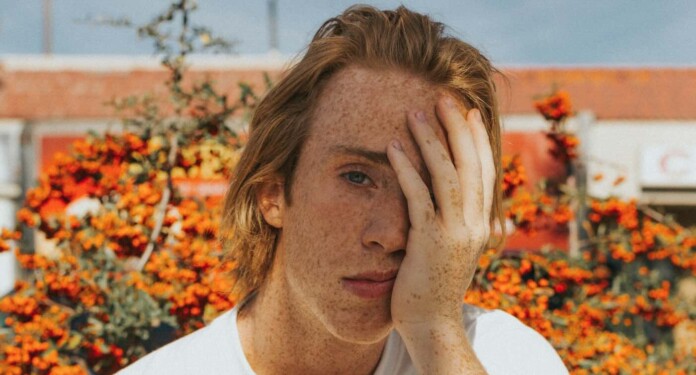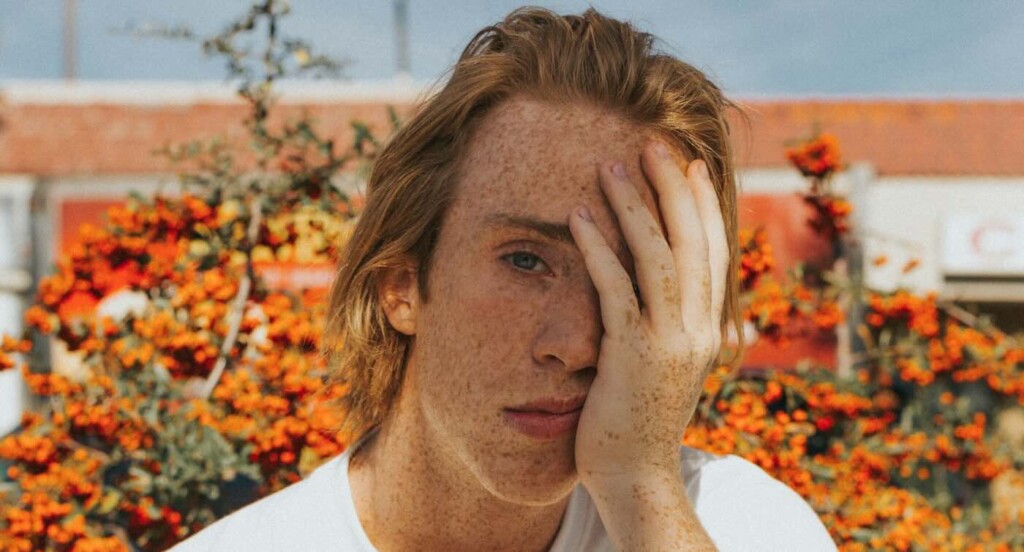









Orange cats have won a reputation for being energetic rascals. In Italy, it’s said the red cat is always the leader.
That’s probably because red/orange cats are almost always males, and now we know why thanks to two teams of scientists probing the genetic lineage of the orange coat in domesticated felines.
Working separately, reports Smithsonian Magazine, the two teams have independently arrived at the same conclusion—a mutation on the X chromosome.
Male animals have one copy of the X chromosome, while females have two—explaining yet further why female cats with orange in their coats tend to have it mixed in with other colors such as black in the case of a ‘tortoiseshell cat,’ and white in the case of a calico.
Kelly McGowan, a Stanford University geneticist who participated in one of the two studies, said that cats are a “fascinating exception” to the trend of orange coloration in other animals such as dogs, sheep, horses, and rabbits.
“Our work provides an explanation for why orange cats are a genetic unicorn of sorts,” she told Newsweek.
In most other mammals, mutations in a protein called Mc1r lead to red hair color, but not in cats. Instead, this decades-long mystery has been solved with the identification of the gene Arhgap36 that codes for a protein along the X chromosome.
Arhgap36 has never been suspected as a potential candidate for the “orange gene” before, in part because the protein it codes for regulates embryonic development—a life-or-death function, and not a place one would imagine to look for an aesthetic mutation.
A tortoiseshell cat – Photo by Олег Мороз on Unsplash
Greg Barsh from the Stanford University team that included McGowan found that the Arhgap36 mutation in orange cats resulted in a 13-fold increase in the production of RNA, the molecule that reads genetic material contained in DNA.
Furthermore, they found that rather than being a dangerous mutation, the orange cats had just a sliver of DNA missing from the Arhgap36 gene, and that this absence meant its effects were seen only in melanocytes, or skin cells that produce hair color.
The Arhgap36 was found on the X chromosome. Females inherit a copy of the X chromosome from both parents, meaning that the influence of a mutated copy of Arhgap36 is almost always balanced out by the normal copy inherited from the other parent.
By contrast, male cats have just one X chromosome—from their mother. If they receive a mutated Arhgap36, there will be no other influence on the cat’s fur color from the father’s side.
It’s the first time in animals that pigment production has been identified through this pathway.
Hiroyuki Sasaki from Japan’s Kyushu University told Newsweek “an obvious next question is when and where the genetic variation arose and how it spread, as our work showed that this variation is common in cats with orange coloration worldwide.”
SHARE This Story With Any Red Cat Owners You Know…
Alissimon with the 11 pound mushroom - credit Alissimon Minnitt, released
Alissimon with the 11-pound mushroom – credit Alissimon Minnitt, released
If you’re the kind of person who likes foraging for mushrooms, you know that some edible species can be easily confused with poisonous doppelgangers.
But after first spotting a giant puffball mushroom, the thing you’re most likely to confuse it with is a football.
From England’s Buckinghamshire comes the story of a woman who has fed her family for a whole week on the meat of a single shroom, a giant puffball (Calvatia gigantea), that she found on a walk in a field near her home in North Marston.
“Around seven years ago, my dad and I went for a walk and encountered what we thought to be a football, but on closer inspection and some research we realised it was actually a giant puffball mushroom,” Alissimon Minnitt wrote on her Instagram next to a truly extraordinary picture.
“Today when I was visiting we were on a walk again, reminiscing about this experience out of the blue and then in the next field we spot a white dot. it couldn’t possibly be … could it? It was indeed a giant puffball, but not any giant puffball, an 11lb giant giant puffball. My arms are weak but my spirit is strong.
As a vegetarian, Minnitt knows the value of mushrooms in her diet. While most home cooks would struggle to make a fungus the starring role 7 nights in a row, she had learned plenty of recipes from her mother who was a “star” in preparing them while she was growing up.
Giant puffball pizza – credit Alissimon Minnitt, released
“It’s got quite a bland taste but it absorbs flavor really well. So as a bread substitute, in that case, it actually works really well,” she told The Times of London, who used it to make schnitzel, curry, pasta, and meatloaf, grilled slices like a steak, and even as the base for a pizza. “That was a really weird one, I wasn’t expecting it to be nice but it was amazing.”
After the week’s worth of meals, her family was “mushroomed out.” She put some pieces in the freezer and took the remaining 2 pounds and buried it in the soil where she found specimen.
According to the Times, the spores of Calvatia gigantea can cause a certain lung disease if inhaled, although they’re also recorded as being a folk remedy for nosebleeds. For this reason, mature specimens are to be avoided.
The giant puffball produces spores internally, and blows them out like a sponge as it begins the downward slope of its life cycle. This is in contrast to typical toadstools which release them down through their gills.
SHARE This Unbelievable Mushroom With Your Friends Who Forage…
Quote of the Day: “There is no prejudice that the work of art does not finally overcome.” – André Gide
Photo by: Paul Gauguin painting (cropped), Art Institute of Chicago
With a new inspirational quote every day, atop the perfect photo—collected and archived on our Quote of the Day page—why not bookmark GNN.org for a daily uplift?
Boris traveled more than 200 km straight line to reunite with Svetlana (both pictured here after the reunion) - credit: ANO WCS, released.
Reprinted and altered with permission from World at Large
Conservationists have succeeded in restoring tiger populations in a region where they were virtually absent for more than 50 years in Russia.
It took a decade; from 2012 to 2021 in the Pri-Amur region of Russia, but more than a dozen members of the largest subspecies of the world’s largest feline are now roaming the wilds once more. The results were published in a study, the results of which, the authors say, “provide a potential framework for reintroductions of tigers and other large felids across the globe”.
The study specifically examined the success of rehabilitating and releasing orphaned cubs to restore tigers to their historical range in Russia.
The study followed the fate of 6 tiger cubs who were found as orphans in the forests of the Sikhote-Alin Mountains of Russia, which are closer to Beijing than Moscow, a UNESCO Natural Heritage Site, and the last stronghold of tigers in the country.
The cubs had been kept in specially designed enclosures where contact with humans was kept to an absolute minimum, and at appropriate ages, the cubs were offered live prey to learn how to hunt. The WCS’s Bronx Zoo and other partners advised on ways to raise and keep the cubs so they would not be dependent on humans.
The cubs were subsequently released as subadults (at least 18 months old) into the Pri-Amur region of Russia, beyond the Sikhote-Alin mountains, but still part of the original range of Amur tigers, specifically in an attempt to restore a population there.
That’s ‘Amure’
Along with providing the framework for rearing cubs in semi-captive conditions and preparing them for the wild, the study presented another fascinating phenomenon: a love story.
The cats seen above are Boris and Svetlana, two unrelated Amur tigers who were part of the 6 original orphans released into the wild in 2014. During the following year, as the scientists watched their GPS collars ping their locations onto computer screens, they witnessed a magical act of love and devotion that would make Romeo Montague seem unfaithful by comparison.
In 2015, a year after their release over 100 miles apart, the scientists watched as Boris began walking in virtually a straight line directly north. Day after day he continued his march until his paws had chewed up 120 miles—stopping where Svetlana had made a den.
Six months later, a litter of Amur kittens was born. The New York Times, reporting on the story, said that the two tigers had been rescued from completely different parts of the mountains, but grew up in captivity together in the facility that reared the 6 tigers. Something special must have bloomed between them during those growing days.
“This study represents a tantalizing new development in expanding the ‘toolbox’ for conservationists to return tigers to those parts of Asia where they have been lost. The team was scrupulous in preparing young cubs for life in the wild, especially in ensuring they did not habituate to humans. Their careful approach succeeded and paves the way for more reintroduction attempts—not only of tigers, but of other big cats as well,” said Dr. Luke Hunter, Executive Director of the WCS Big Cats Program.
And just like Boris and Svetlana’s unlikely union, Miquelle told The Times their international collaboration with the Russian Academy of Sciences was also unlikely, but yielded outstanding results.
“It’s a testimony to how really good things can happen when you start working collaboratively irrespective of nationality and politics,” Dr. Miquelle said. WaL
SHARE This Story With Anyone You Know In The Throes Of Love…
Bob Guldberg and Kylie Williams in their lab - credit, University of Oregon via SWNS
Bob Guldberg and Kylie Williams in their lab – credit, University of Oregon via SWNS
Scientists have invented a set of tiny sensors that can help tailor rehabilitation programs for those recovering from broken bones.
Proper rehabilitation is key to ensuring the natural repair process is carried out correctly, and the devices offered crucial feedback that sped up this process in lab rats, allowing them to recover from femur fractures months ahead of schedule.
Developed by researchers at the University of Oregon, the sensors transmit real-time data about what’s happening at an injury site after being implanted in the body.
The team says that the sensors would allow physicians to monitor a patient’s progress and adjust exercises along the way to ensure they’re benefiting from the right amount of exercise.
They used the technology in a study, published in the journal NPJ Regenerative Medicine, to show that a resistance-training rehab program can “significantly improve” femur injuries in rats in just eight weeks. Most femoral fractures take around four to six months to heal completely.
“Our data support early resistance rehabilitation as a promising treatment to increase bone formation, bone healing strength, and promote full restoration of mechanical properties to pre-injury levels,” said senior author of the study, Professor Bob Guldberg.
It’s long been understood that post-injury exercise follows a Goldilocks principle: too little or too much can impede recovery, while just the right amount can enhance healing. However, pinpointing the exact type and intensity of exercise needed for the best recovery can be challenging, especially as it varies from patient to patient, and from bone to bone.
For their study, the researchers aimed to test whether resistance running, a specific type of recovery exercise, could provide the right mechanical stimulation to improve bone recovery.
To do that, they built custom brakes for rodent exercise wheels, which added resistance similar to increasing the level on an elliptical machine or stationary bike.
Rats with femur injuries and implanted sensors then ran on either a regular exercise wheel or the modified resistance exercise wheel.
The sensors transmitted strain data throughout the exercises, offering the research team a glimpse into the mechanical environment of bone cells during recovery.
Over the eight-week study, researchers monitored the healing process of the injured femurs and found that the resistance-trained rats displayed early signs of bone healing compared to those in sedentary or non-resistance conditions.
By the end of the eight-week recovery period, the sedentary, non-resistance, and resistance-trained mice showed bone healing, but the resistance-trained animals had denser tissue, indicating that resistance rehab enhanced bone formation.
In fact, the injured bones of the resistance-trained rats exhibited mechanical properties, such as torque and stiffness, comparable to those of uninjured bones, something that Guldberg says indicates resistance training enhances recovery, even without any additional drugs or biological stimulants.
“One of the most impactful aspects of this work is that our resistance rehabilitation could regenerate the femur to normal strength within eight weeks without biological stimulants, and we’re really excited about that,” said study leader Dr. Kylie Williams.
Although the research was conducted in rodents, the team hopes that data-enabled rehab can also be used to improve healing in human patients who sustain musculoskeletal injuries.
Towards that goal, Penderia Technologies—a campus startup—is working on further improvements to the implantable sensors, including a battery-free design and wearable monitors to aid use in human patients.
“We are hopeful this work can one day be translated to clinical settings, where these sensors can capture personalized measurements that account for injury type and severity to best inform rehabilitation decisions,” Guldberg concluded.
BREAK The News Of This New Biotech Invention With Your Friends On Social Media…
Gukesh Dommaraju in January 2024 - credit: CC 2.0. Frans Peeters
Gukesh Dommaraju in January 2024 – credit: CC 2.0. Frans Peeters
The FIDE World Championships have just concluded in Singapore having seen an 18-year-old become the youngest chess champion in history.
Gukesh Dommaraju has earned the title a full four years ahead of the legendary Gary Kasparov who became World Champion at 22 years of age.
Dommaraju won the title in 58 moves with a final score of 7.5 to 6.5, per the International Chess Federation. The youngster from Chennai told the Indian press that he was just 7 years old when he watched Magnus Carlsson dethrone his countryman Viswanathan Anand as World Champion.
It happened in Chennai—his own hometown and Anand’s as well. From that day, he vowed to bring the title back to India. Having realized that dream, he told reporters in Singapore that he expected sleep to elude them that night.
“I probably got so emotional because I did not really expect to win that position,” said Dommaraju, who cried as he hugged his father following his victory, at a news conference on Thursday. “I know I’m not going to sleep tonight.”
Prime Minister Narendra Modi praised his achievement on X.
“His triumph has not only etched his name in the annals of chess history but has also inspired millions of young minds to dream big and pursue excellence,” wrote the head of state.
Gukesh Dommaraju in a 2024 Tournament – CREDIT Eldar Azimov / Wikimedia Commons-CC BY-SA 4.0
To the world chess community, it seemed that Dommaraju’s opponent over 14 games in the final round, Ping Liren, either broke under pressure or deliberately lost, such was the scale of the single mistake he made in the final game which cost him a match Mr. Anand admitted he was expecting to end in a draw.
“He appeared hasty to finish things, to exchange pieces quickly, and he got punished for that,” said Anand, who was crowned World Champion in the year 2000, wrote for The Hindu.
Jake the Doberman, the saddest dog in Warwickshire - credit: Dog Rescue and Adoption Kenilworth, retrieved from Facebook
Jake the Doberman, the saddest dog in Warwickshire – credit: Dog Rescue and Adoption Kenilworth, retrieved from Facebook
You wouldn’t know it from this photo, but this Doberman was nicknamed the “saddest dog in Warwickshire” after spending a heartwrenching 850 days in a shelter.
This included the past two Christmases, and despite the shelter’s best efforts, no one seemed interested in adopting him.
According to local outlet Coventry Live, Jake the Doberman was scared of other dogs. He was also scared by other people, and sounds, and “pretty much everything.” Living with dysplasia, and receiving treatment from the shelter staff, he was seen as just too much of a handful.
But while Jake was facing a third Christmas at the Dogs Trust in Kenilworth, local couple John and Amanda, looking to add four paws to their family, stopped outside his kennel.
Where others saw problems, John and Amanda saw solutions. Where others saw disability, they saw potential. After a few weeks of involvement with his training and therapy, they decided to adopt the lonely pooch.
“We are so happy to have Jake in his forever home for the holidays. Jake was so loved by the staff at Dogs Trust, and it was clear how much care and dedication they gave him during his time there,” Amanda said.
“When we collected him, there wasn’t a dry eye in the house—except for Jake, who happily jumped into our car! He’s settled in beautifully, growing in confidence every day, and has already made new friends, including the postie and a barman with dog treats.”
By the time of adoption, the shelter staff had come to view Jake as their own, and despite the joy of seeing him adopted, there was plenty of bittersweetness.
“Jake is a perfect example of why we don’t give up on dogs who need a bit of extra help,” said Emma-Jane Thomas, Manager at Dogs Trust Kenilworth. “Jake had some challenges to overcome, but seeing him build his confidence and settle into a happy place makes it all worthwhile.”
SHARE This Sad Dog’s Happiest Christmas Ever With Your Friends…
Quote of the Day: “Love has no age, no limit; and no death.” – John Galsworthy
Photo by: James Wheeler
With a new inspirational quote every day, atop the perfect photo—collected and archived on our Quote of the Day page—why not bookmark GNN.org for a daily uplift?
The dwarf planet Ceres - credit: NASA/JPL-Caltech/UCLA/MPS/DLR/IDA
The dwarf planet Ceres – credit: NASA/JPL-Caltech/UCLA/MPS/DLR/IDA
In 2017, NASA’s Dawn spacecraft sent data back to Earth from the dwarf planet Ceres, located in our solar system’s main asteroid belt, that the body contained deposits of organic compounds.
At first, it was hypothesized that these were deposited by comet or asteroid impact, but a new analysis of the data has suggested that, in fact, these deposits are far more likely to originate within the planet itself, putting it suddenly and dramatically within the most likely candidates to host evidence of life beyond Earth.
Though exciting, it’s potentially less of a surprise than if such evidence were found elsewhere; Ceres is a water-rich body with potential geologic activity, both believed to be prerequisites for life. Debate and study about its origin and evolution are both extensive and inconclusive.
Researchers at the Instituto de Astrofísica de Andalucía (IAA-CSIC) looked back over the data from 2017 when organic compounds were detected in Ceres’ Ernutet Crater and discovered an additional 11 regions where similar organics are located.
“The significance of this discovery lies in the fact that, if these are endogenous materials, it would confirm the existence of internal energy sources that could support biological processes,” explains Juan Luis Rizos, a researcher at IAA-CSIC and the study’s lead author.
“Ceres will play a key role in future space exploration. Its water, present as ice and possibly as liquid beneath the surface, makes it an intriguing location for resource exploration,” Rizos told Sci-Tech Daily. “In the context of space colonization, Ceres could serve as a stopover or resource base for future missions to Mars or beyond.”
Ceres is the second-wettest planetary object in the inner solar system behind only Earth.
To make the discovery, the team at IAA used a combination of the Dawn Mission’s instruments to examine a particular area. First, they scanned the whole of the planet with a camera that possessed a high spatial, but low spectral resolution. With it they identified where to look more carefully—a region between the Urvara and Yalode basins.
They then examined with a camera that had high spectral, but low spatial resolution, and found evidence of the organic molecules. Their distribution in the region hinted at an ejection event which must have followed the impacts that created the basins.
Data from the Dawn spacecraft show the areas around Ernutet crater where organic material has been discovered – credit: NASA/JPL-Caltech/UCLA/ASI/INAF/MPS/DLR/IDA
These were much larger than any in Ceres’ history, catapulting material—in this case potentially organic material—from deep within the dwarf planet to the surface.
If a future spacecraft or telescope can confirm that they are organic in nature, then it would virtually confirm that Ceres is producing these organic compounds endogenously and would then probably be the best place to look for life in our solar system, as the shelter of the planet’s crust would protect water and life from solar radiation.
“The idea of an organic reservoir in such a remote and seemingly inert location like Ceres raises the possibility that similar conditions could exist on other Solar System bodies. Without a doubt, Ceres will be revisited by new probes in the near future, and our research will be key in defining the observational strategy for these missions,” concludes the lead author of the paper.
SHARE This Little-Known Planet And Its Big Potential With Your Friends…
Colette Baker, Finley Jarvis and Zoey Pidgeon-Hampton with their new Open Bionics arms - credit: SWNS
Colette Baker, Finley Jarvis, and Zoey Pidgeon-Hampton with their new Open Bionics arms – credit: SWNS
Three children were overjoyed after receiving ‘the best Christmas present in the world’—bionic arms.
Zoey Hampton-Pigeon, Finley Jarvis, and Colette Baker were given their new ‘life-changing’ Hero Arms on December 12th thanks to the fundraising work of a woman whose own child needed a prosthetic years ago.
Sarah Lockey saw her daughter Tilly lose both hands to meningitis. Today though, Tilly is a confident young woman who wears two Hero Arms daily, who hosts, together with her mom, a fundraising campaign every year called the Big Hero 3, which selects three random children across the UK to receive a prosthetic made by the Open Bionics Foundation.
Advanced, intuitive, robust, and light, the Hero Arm is “the world’s most affordable advanced multi-grip prosthetic arm,” according to the Foundation. The Hero Arm is available in over 801 locations across the US for below-elbow amputee adults and children aged 8 and above, and all throughout the UK where it is manufactured.
This year, the Big Hero 3 campaign raised £20,000. Two other charitable foundations, along with an anonymous donor, made up the rest of the £40,000 required, allowing Finley, Colette, and Zoey to have what will probably be the best Christmas ever.
To wit, Colette’s mom Alyse said her daughter ‘screamed’ when she found out she was not only receiving a Hero Arm, but would get one before Christmas.
“For Ettie, she’s excited about being able to do things like handstands, ride her bike without an adaption, and tying her shoes,” she said. “As parents, we are excited about these things too, but also all the other ways the Hero Arm will change Ettie’s life.”
Zoey was born with a missing limb, which the family discovered during an ultrasound in the 20th week.
“When Zoey was born she saw several specialists but there are no answers about why this happened to Zoey, it’s just one of those things,” said her father Thomas.
His daughter is an active young girl and member of a gymnastics club. She goes to swimming lessons and loves trampolining, but she’s most looking forward to being able to use a jump rope.
“A Hero Arm will make such a massive difference to her independence enabling her to do all these tasks, as well as her beloved skipping, without relying on help from others.”
ALSO CHECK OUT:
The last child is Finley Jarvis—born with no hand due to his mom being involved in a serious car accident whilst carrying him.
“Finn is a happy-go-lucky boy—he is kind, fearless, and extremely switched on,” said his father Ben. “He is now 11 and about to attend Brymore Academy secondary school—an agricultural school. With this opportunity of a Big Hero Arm the possibilities for him to excel are endless.”
MORE HERO ARM RECIPIENTS:
Lockey said she and Tilly are hoping to do another campaign next year if any donors who want to get involved to help are interested.
“It is just incredible for three children to benefit and for their families all to meet and fundraise together,” Lockey said.
MEET the children below in a video update from the families…
SHARE This Inspiring Fundraising Work On Behalf Of These Sweet Sprouts…
President Joe Biden meets with Buffalo Bills safety Damar Hamlin in March 2023 - credit The White House
President Joe Biden meets with Buffalo Bills safety Damar Hamlin in March 2023 – credit: The White House
In Washington, the Senate recently passed a bill to fund training programs for CPR and defibrillator use in schools.
It had been advocated for months by Buffalo Bills safety Damar Hamlin, who in 2023 suffered cardiac arrest on the field during a game against the Cincinnati Bengals.
Called the HEARTS Act for ‘Cardiomyopathy Health Education, Awareness, Research, and Training in Schools,’ the House passed a similar law earlier in autumn, and President Biden, who met with Hamlin in the Oval Office during his advocacy campaign for the House bill, plans to sign it before he leaves office next month.
“Since experiencing cardiac arrest, I’ve been honored to work with partners who understand how important it is to provide CPR education and have access to AEDs to save lives,” Hamlin said, using the official acronym for what is commonly called a defibrillator.
“I’m very grateful to Senator Schumer for his work making his common-sense legislation a priority. My journey has shown us that no one expects cardiac arrest to happen and we all need to be prepared.”
Cardiac arrest is a strange phenomenon in that it is a death sentence, but one which can be readily cured provided someone is nearby who’s been trained in the use of an AED and knows how to perform CPR.
Similar efforts to Hamlin’s advocacy were undertaken in soccer stadiums, rather than classrooms, after that sport witnessed a similar near-catastrophe when Denmark’s star attacking midfielder collapsed on the pitch from cardiac arrest during a game at the European Championships in 2020.
When the next edition of the tournament came around this past summer in Germany, all stadiums had booths where fans could learn CPR and defibrillator use pro bono.
The Get Trained, Save Lifes, campaign was a partnership between the EURO Championships and the European Resuscitation Council to raise awareness of sudden cardiac arrest and the importance of bystander CPR.
A colorized scanning electron micrograph of Staphylococcus epidermidis (colored green) - credit NIAID, via Wikimedia Commons,CC BY 2.0 License
A colorized scanning electron micrograph of Staphylococcus epidermidis (colored green) – credit NIAID: via Wikimedia Commons, CC BY 2.0 License
Imagine a world in which a vaccine is a cream you rub onto your skin instead of a needle a health sector worker pushes into one of your muscles.
Even better, it’s cheap, entirely pain-free, and not followed by fever, swelling, redness, or a sore arm. No standing in a long line to get it either.
This is the vision that researchers at Stanford hope to achieve with a new tetanus vaccine derived from a bacterial species that’s found on the skins of virtually all human beings; one that’s largely harmless to us, yet nevertheless will trigger a ferocious antibody response if it breaches the skin barrier or gets inside the bloodstream.
A team of scientists led by the Standford Ph.D. in bioengineering Dr. Michael Fischbach hypothesized that Staphylococcus epidermidis, the harmless and ubiquitous bacterium, could be used as a delivery mechanism for the pathogen in a vaccine.
During experiments, Fischbach found that when the S. epidermidis bacteria were engineered to contain a small genetic trace of the tetanus bacteria, the immune system targeted it just as ferociously as before, while also resulting in a separate immune response to the tetanus gene of the kind one would expect from a vaccine.
The team learned through further examination of S. epidermidis that it naturally produces a large protein called Aap. This tree-shaped molecule is five times larger than normal proteins, and so large its ‘branches’ protrude from the cell wall. Fischbach and his team believe that this is the reason why the immune system’s response to this microbe is so robust: immune cells on our skin and hair follicles can study it even without coming in direct contact with it.
Mice, which have no native colonization of S. epidermidis, were found to have greater-than-vaccine level immune responses to this bug after it was swabbed directly onto their fur.
Fischbach and his team determined that this could be the basis for a topical vaccine, one in which the bacteria is engineered to carry the genetic material of humanity’s most dangerous diseases. Further tests carried out on the mice found that application of S. epidermidis engineered to carry tetanus generated enough antibodies to protect mice from six times the lethal dose of tetanus toxin—a truly astonishing discovery.
“We think this will work for viruses, bacteria, fungi, and one-celled parasites,” Fischbach told Stanford University press. “Most vaccines have ingredients that stimulate an inflammatory response and make you feel a little sick. These bugs don’t do that. We expect that you wouldn’t experience any inflammation at all.”
Most vaccines given to humans come in two forms, a live vaccine or a dead vaccine. Live vaccines contain the real thing, and side effects of the kind one would expect from an infection are not uncommon. In dead vaccines, the virus or bacterium can’t replicate. Antibody response to a dead vaccine is enhanced in modern vaccines by the presence of an ‘adjuvant’—like aluminum salts.
Aluminum is a toxic heavy metal like cadmium or lead, and its identification when found with the virus causes the immune system to respond much more seriously. The brilliance of what Fischbach called the “plug-and-play” vaccine cream developed in his lab is that the adjuvant is a harmless skin bacteria that already exists on the skin and hair of nearly every human on the planet.
Fischbach believes trials for the cream will commence in humans within 2 to 3 years.
SHARE This Breakthrough On Topical Vaccine Application With Your Friends…
Quote of the Day: “You can’t depend on your eyes when your imagination is out of focus.” – Mark Twain
Photo by: Jr Korpa (cropped)
With a new inspirational quote every day, atop the perfect photo—collected and archived on our Quote of the Day page—why not bookmark GNN.org for a daily uplift?
When dozens of employees at Klick Health said they wouldn’t be able to hug loved ones over the festive season, the company created some magic to orchestrate sentimental reunions to surprise team members.
In a new video called ‘Holiday Hugs’, the company first produces some amazing AI embraces for the workers missing loved ones.
Then, those heartwarming deep-fakes lead to surprise appearances ending in real-life in-person hugs.
“I just wish I could really squeeze her right now,” said teary-eyed Klickster Kari Bocassi from New York, after watching the AI-generated hug with her sister Marlene.
Then, moments later she bursts onto the set for a long in-person embrace.
The siblings spent the past 14 years caring for their mother after her Alzheimer’s diagnosis, but haven’t been together for the holidays since Marlene moved to Virginia.
Similarly, Toronto’s Fred Duarte gets the bear hug of his life when his brother Rico, who lives in Brazil, walks into Klick’s production studio for their first holiday reunion in seven years.
Created in partnership with the Foundation for Social Connection in Washington D.C., the effort comes as a public poll commissioned by Klick found that 74 percent of Americans and Canadians won’t be able to hug at least one person they wish they could over the holidays.
Just like the folks in the video, survey participants cited two major reasons why they’re not getting together for the holidays: 1) geographical distance and 2) loved ones having passed away. Klick could overcome both.
Watch the ‘Holiday Hugs’ video below, and continue reading to hear about the AI hugs…
Pointing out the health benefits of hugging, Klink Health says they don’t just make people feel better emotionally, they also have numerous health benefits: “According to the National Institutes of Health, hugs can lower blood pressure and boost the immune system.”
“There’s nothing quite like the warmth and reassurance of a heartfelt hug,” added Klick’s Chief Creative Officer Rich Levy. “Seeing the joy and tears of our Klicksters reminds us that no technology can truly replace the magic of human connection, but it can help bring us closer in the most surprising ways.”
‘Holiday Hugs’ was filmed in Klick’s in-house Studio K production facility, where the production team took Klicksters’ photo submissions and transformed them into video clips of lifelike hugs between them and their loved ones, using the Gen-3 Alpha Turbo tool by Runway.
If you’re interested in creating your own AI-generated holiday hug, Klick animators created a how-to-video showing how they did it.
GIVE A VIRTUAL HUG To Loved Ones By Sharing the Cool Video On Social Media…
Engineers at the University of Pennsylvania have made a critical breakthrough that promises better outcomes for pregnancies threatened with pre-eclampsia, a condition that arises due to insufficient blood flow to the placenta, resulting in high maternal blood pressure and restricted blood flow to the fetus.
Pre-eclampsia is one of the leading causes of stillbirths and prematurity worldwide, and it occurs in 3 to 5% of pregnancies. Without a cure, options for these patients only treat symptoms, such as taking blood pressure medication, being on bed rest, or delivering prematurely—regardless of the viability of their baby.
Making a decision to treat pre-eclampsia in any manner can be a moral conundrum, to balance many personal health decisions with long-standing impacts—and for Kelsey Swingle, a doctoral student in the UPenn bioengineering lab, these options are not enough.
In previous research, she conducted a successful proof-of-concept study that examined a library of lipid nanoparticles (LNPs)—which are the delivery molecules that helped get the mRNA of the COVID vaccine into cells—and their ability to reach the placenta in pregnant mice.
In her latest study, published in Nature, Swingle examined 98 different LNPs and their ability to get to the placenta and decrease high blood pressure and increase vasodilation in pre-eclamptic pregnant mice.
Her work shows that the best LNP for the job was one that resulted in more than 100-fold greater mRNA delivery to the placenta in pregnant mice than an FDA-approved LNP formulation.
The drug worked.
“Our LNP was able to deliver an mRNA therapeutic that reduced maternal blood pressure through the end of gestation and improved fetal health and blood circulation in the placenta,” says Swingle.
“Additionally, at birth we saw an increase in litter weight of the pups, which indicates a healthy mom and healthy babies. I am very excited about this work and its current stage because it could offer a real treatment for pre-eclampsia in human patients in the very near future.”
While further developing this cure for pre-eclampsia and getting it to the market for human use is on the horizon for the research team, Swingle had to start from scratch to make this work possible. She first had to lay the groundwork to run experiments using pregnant mice and determine how to induce pre-eclampsia in this animal model, processes that are not as well studied.
But, by laying this groundwork, Swingle’s work has not only identified an avenue for curing pre-eclampsia, it also opens doors for research on LNP-mRNA therapeutics addressing other reproductive health challenges.
“It turns out that there are relatively few studies that have been done with mRNA LNPs in pregnant mice, and little to none done in pre-eclamptic mice,” says Swingle. “Everything is different in pregnancy research. In mice, instead of tracking gestational weeks, we track gestational days so we know exactly how far along their pregnancy is. I had to learn the anatomy of a mouse placenta, and then determine the best ways to establish a mouse model of pre-eclampsia that best imitates the disease in humans.”
In this study, pre-eclampsia was induced in pregnant mice. Then, they injected the LNP with the minimum effective dose once, at day 11 of their 20-day gestation. This one-time injection cured pre-eclamptic mice until the end of pregnancy, but now the team must explore how many doses would be needed to treat the condition in larger animals and humans.
“At this stage in our research, we would bring this LNP to larger animals such as rats and guinea pigs first to determine how well it works in the ‘gold standard’ models of pre-eclampsia before we could advance this work to human trials,” says Swingle.
“Testing our LNP on guinea pigs will be particularly interesting, as their placenta closely resembles a human’s and their gestational period is longer, up to 72 days. We will be asking the questions ‘How many doses do these animals need?’ ‘Will the minimum effective dose change?’ and ‘How well does our current LNP work in each?’”
As Swingle thinks ahead for next steps in her research, which was funded by the National Institutes of Health and the National Science Foundation, she will also collaborate to further optimize the LNP to deliver the mRNA even more efficiently, as well as understanding the mechanisms of how it gets to the placenta, a question still not fully answered.
They are already in talks about creating a spin-off company and want to work on bringing this LNP-mRNA therapeutic to clinical trials and the market.
Swingle, who is currently finishing up her Ph.D. research, has not only successfully led this new series of studies advancing pre-eclampsia treatment at Penn, she has also inspired other early career researchers in the field as she continues to thrive while bringing women’s health into the spotlight.
ENLIGHTEN CHILDBIRTH PROFESSIONALS By Sharing This on Social Media…
The funniest and most popular photography competition in the world—The Nikon Comedy Wildlife Photography Awards—announced the winners of the 2024 competition this week, with the top honor going to a red squirrel stuck in a tree.
Over 9000 images were entered, the highest number in the contest’s ten-year history, from professional and amateur photographers vying for the top accolade.
The competition was tight among the 45 finalists, with judges selecting their favorites, with only a few points between the top 5 entries. But Milko Marchetti’s image called, ‘Stuck Squirrel’ was popular across the board.
The moment was over in a flash, Milko recalled.
“I have taken many photographs of squirrels, in many situations over the years in Italy, but this one struck me as really funny and such a strange position, because it is that exact moment when the squirrel is detaching its back legs from the trunk to enter its hide.”
“Whenever I show this image at the nature seminars at my local photography club, the audience always explodes with laughter, so I had to enter it!”
The competition was founded in 2015 by Paul Joynson-Hicks and Tom Sullam, both professional photographers and passionate conservationists to create a refreshing, fun, and free photography competition unlike any other, showcasing funny images of the earth’s most amazing wildlife and raising awareness about conservation.
There were special mentions for the younger generation of emerging photographers including the winning shot of a frog that won the Nikon Young Photographer Award (for those under 25), with a close up of a frog smiling at the camera. Kingston Tam from Australia received a Z8 + 24-120mm kit from Nikon for their entry.
Another Highly Commended Winner features King Penguins in the Falkland Islands. The image shows a male trying to make a move on a female who has already paired up with another male. The body position and wing posture make the message clear, ‘back off!’
When Larry Stewart was growing up in his grandparents’ home in a small Mississippi town, he didn’t know they were impoverished. It wasn’t until he started school that he learned what he “lacked”—the bathrooms, telephones, hot water and gas stoves to be found in other kids’ homes.
As a young adult, Larry confronted poverty again. Living paycheck to paycheck, he became homeless when his employer went out of business owing Larry more than one check. So Larry resorted to living in his car, covering himself in his laundry in an effort to stay warm and hoping to forget his hunger. By the time he’d gone two days without a regular meal, he was so desperate that he went to the Dixie Diner and ordered breakfast without knowing how he’d pay for it.
When he finished eating, he started looking around on the floor, pretending he’d lost his wallet. The cook even came out from behind the counter and helped him look.
Then, suddenly, the search was over.
“You must have dropped this,” the cook said. He was holding a twenty-dollar bill.
Larry was so grateful that he made a vow to himself: as soon as he was able, he’d do something for others like what the cook had done for him. Over time, he became financially stable, and he set out to keep his vow. Although he wasn’t well off by any means, he knew he couldn’t put off getting started.
One evening, he stopped at a drive-in restaurant and noticed that the waitress was wearing a tattered coat that couldn’t have been keeping her warm. When he handed her money to pay for his food, he knew it was the moment.
“Keep the change,” he said.
Tears welled in the waitress’s eyes, and her hands shook as she held the money. “You have no idea what this means to me,” she said, her voice shaking, too.
But Larry did have an idea what it meant to her.
Afterward, he was so inspired by what had happened that he started driving around looking for people who needed help. They weren’t hard to find, and he gave away $200 in fives and tens.
The more successful Larry became, the more money he gave away. By the time he’d earned considerable wealth in cable and phone services in Kansas City, Missouri, he was anonymously giving away substantial amounts as a “Secret Santa.” He consulted with local social workers, firefighters, and police officers to find needy and deserving recipients. He also found some of them on his own, at laundromats, social service agencies, government housing facilities, and businesses that paid minimum wage. At thrift stores, he often found people who were raising their grandchildren. When he would give them anywhere from $100 to $300, it would change the whole complexion of their Christmas as well as their outlook. For many of them, this money made it possible to buy presents and cover necessities like utility bills.
Larry didn’t want people to have to beg, get in line or apply for money. “I was giving in a way that allowed them to keep their dignity,” he said in an interview with a local news station years later. Just like the cook at the Dixie Diner had done for him.
All told, Larry gave away more than $1.4 million over the years. There are many stories from people whose homes he saved. People who told their families there wasn’t going to be a Christmas but wound up being able to buy gifts because of the money Secret Santa gave them. People who were able to pay their bills and get their gas turned back on, thanks to Larry.
In 2006, after serving as an anonymous Santa for more than twenty years, Larry was diagnosed with terminal cancer. At that point, he decided to go public because a tabloid newspaper was about to reveal his identity. Larry thought he should be the one to tell his story, hoping it would recruit more Santas to take his place. He’d seen that every time a Secret Santa was written about in the media, the coverage was followed by a wave of new Secret Santa appearances. He hoped making his identity public would continue to add to the ranks.
Larry got his wish. Thousands of people visited his website and signed up to become Secret Santas. And based on the number of people who emailed the site about their experiences that Christmas season, the new Secret Santas did more than sign up; they also turned out in force.
When Larry died in 2007, his handpicked successor—an anonymous Kansas City businessman—took over for him and continues to lead the Society of Secret Santas today. Its members follow in Larry’s footsteps around the world. The postings on the society’s website tell of giving money to victims of fires, people who had been evicted from their homes, and veterans and military families in need. They tell of former NFL player Dick Butkus handing out hundred-dollar bills in San Diego and former Major League Baseball player Luis Gonzalez doing the same in Phoenix.
A foundation was also formed in Larry’s honor to accept donations to be used by the Santas. The first donation was from former Kansas City parking attendant Sam Williams, who wanted to make a small gift in memory of the man who’d given him a hundred-dollar bill a few years before. “He gave me the biggest gift I ever got in my life,” Williams told KMBC News.
Larry gave Secret Santas everywhere a gift, too. As the society’s website says, “The compassion shared from one spontaneous random act of kindness is elevating, priceless and not easily explained. It is an instant connection between souls that can change a life forever. Being a Secret Santa has blessings beyond words.”
What’s more, it’s a gift anybody can give. “It’s not about the man, it’s not about the money—it’s about the message,” says a Secret Santa. “Anyone can be a Secret Santa with a kind word, a gesture, a helping hand.
And what impact that gesture may have is anybody’s guess. “You never know what one little act of kindness will do for somebody,” as Larry told Ted Horn, chef-owner of the Dixie Diner, when he tracked him down twenty-eight years after their first meeting. “It can change their whole life…It changed mine.”
Quote of the Day: “All nature is but art unknown to thee.” – Alexander Pope
Photo by: Mae Mu (a star anise)
With a new inspirational quote every day, atop the perfect photo—collected and archived on our Quote of the Day page—why not bookmark GNN.org for a daily uplift?
Boston Police Department cruiser - credit Ben Schumin, CC 3.0. By-SA
Boston Police Department cruiser – credit Ben Schumin, CC 3.0. By-SA
Though rarely mentioned among the most homicidal cities in the country, Boston has seen her fair share of mean times. But according to a new report, there have never been fewer murders in the city than now.
That’s because 2023 saw the fewest on record, and barring an explosion of violence in the last 17 days of 2024, this year will contain even fewer than that.
The city of Boston saw 37 homicides in 2023, which according to Christian Science Monitor, was the lowest number recorded since the Boston Regional Intelligence Center began counting.
At the time, the murder rate of 5.29 per 100,000 residents was the city’s lowest in the 21st century. For perspective, the decade spanning 2000 to 2010 saw only three years where homicides fell below 60 per year.
By September 2024, the homicide rate had fallen 60% year-over-year, and as of December 10th, the city of 654,000 residents had witnessed just 22 homicides.
Shootings have also reached a record low despite being the leading cause of homicide in the city in 2024, signaling broader declines in violent crime in general.
“While it’s difficult to pinpoint a specific cause for the steep decline, public safety experts point to the tight-knit network of neighborhood associations and community-based organizations focusing on young people at risk for violence,” writes Troy Aidan Sambajon for the CSM.
This time last year GNN was reporting on the homicide rates in Detroit and Chicago falling precipitously: 18% and 19% respectively, while Los Angeles also recorded a 25% drop compared to 2022.
SHARE This Positive End-Of-Year Statistic With Your Friends From Mass…
Synhelion’s industrial-scale solar fuel plant DAWN - Credit: Synhelion
Synhelion’s industrial-scale solar fuel plant DAWN – Credit: Synhelion
From Switzerland comes a new technology that aims to decarbonize the transportation methods we use right now.
Through a thermochemical process driven 100% by solar power, the energy startup Synhelion can synthesize gasoline, diesel, kerosene, or any other fossil fuel currently in use.
Their colloquially termed ‘solar fuels’ are carbon neutral, as they emit only as much CO2 as was used in their production, compared to fossil fuels that come from deep underground and add to the global carbon cycle.
The technology that powers the DAWN solar fuel plant pictured above relies on concentrated solar radiation reflected from a bank of mirrors into a receiver that creates temperatures as high as 1,500C°. This not only powers the production of fuels through synthesizing H20 and CO2, but also is fed into a storage system that powers the production after dark.
Launched in 2016, Synhelion has needed some time to get its feet under itself, but with its first industrial-scale plant in operation, transportation services are starting to take notice.
In September, Swiss aircraft manufacturer Pilatus Aircraft signed a five-year agreement with Synhelion that includes a commitment to purchase solar kerosene for their aircraft starting in 2027. Under the agreement, Pilatus will acquire 200 tons of solar fuel per year.
Just 8 days later, Lake Lucerne Navigation Company (SVG) and Synhelion announced an identical five-year agreement for 100 tons per year. The company’s iconic steamboats, integral to Lake Lucerne’s landscape for over a century, were originally powered by coal and later by heating oil.
With Synhelion’s solar fuels, neither these ferries, nor Pilatus’ aircraft, nor anyone else for that matter, need to retrofit or replace their existing vehicles. The solar fuels combust exactly the same as their fossil fuel equivalents, offering the chance for these firms to save tens of millions in the process of getting to net zero.
“We believe that solar fuels are, as of today, the best way to rapidly defossilize aviation,” Markus Bucher, CEO of Pilatus, said in a statement.
“Synhelion’s renewable solar fuels offer the ideal solution to defossilize our historic steamboats,” said Stefan Schulthess, Managing Director of SGV. “We’re excited to support this disruptive technology.”
The 2027 date for both agreements reflects when RISE, the first commercial-scale production facility for solar fuels is slated to be ready for operations, with the capacity to produce 1,000 tons of fuel per year from its location in sunny Spain.
Studies show that even at the current pace of electrification, there will be many remaining internal combustion engine vehicles around the world that will also need to be powered sustainably to meet net-zero emission targets by 2050.
While they still emit CO2, solar fuels also consume CO2 from the air during manufacture, and because the process is synthetic, nitrous oxide and other emissions harmful to human health are absent.
WATCH an explainer video below…
SHARE This Remarkable Future Of Fuels With Your Friends On Social Media…