All News - Page 16 of 1718 - Good News Network
Home Blog Page 16

NFL Delivers Net-Zero Super Bowl with Substantial Recycling of Trash and Other Materials

Levi's Stadium, which hosted the 2026 Super Bowl, in 2016 - credit, US CBP
Levi’s Stadium, which hosted the 2026 Super Bowl, in 2016 – credit, US CBP

While Bad Bunny may have remained the highlight of Super Bowl LX’s post-mortem, GNN got in touch with the event organizers to unwrap a little of the full-time good behind half-time’s Bad.

The National Football League’s environmental program, NFL Green, contracted ENGIE Impact, a sustainable resource management company, to work with national and local partners in the Bay Area to ensure that carbon emissions from the event were offset, all stadium waste was recycled, and stadium power was green and renewable.

ENGIE Impact also helped organize the NFL Green’s sustainability operations during the last Super Bowl in New Orleans, and a case study on the efforts shows how one of the biggest commercial events in the country can actually have a very small footprint.

250 tons of materials, including trash but also reusable items, were recovered, representing a 5-fold increase from the previous Super Bowl. ENGIE Impact also delivered a carbon-neutral Super Bowl, with funding from the NFL going to purchase offsets for approximately 3,000 additional tons of CO2.

While such precise figures aren’t yet available for this year’s event at Levi’s Stadium in Santa Clara, California, early indications are that similar successes were achieved.

Levi’s Stadium already possess a 3-color waste bin system for the entire complex, and ENGIE Impact ensured that staff would be on hand to answer any questions attending fans might have about where to throw their trash.

ENGIE Impact also organized a fantastic material collection drive far beyond just paper/metal/plastic waste, and GNN got in touch with Ryan Schlar, Director of Sustainable Mobile Operations at ENGIE Impact, to hear what was going on behind the scenes.

“This year, we donated fence mesh that lined the stadium to parks and recreation departments; leftover carpets from tailgate parties were given to schools to repurpose as carpet squares in classrooms; and wayfinding signage with blank back sides was given to artists, as it provides a great canvas for new projects,” he told GNN via email.

“In addition, sometimes materials that are not branded or unique to the event, like scaffolding, can be left and reused for future events. Some banner holders will stay in place at Levi’s Stadium to support FIFA signage for the World Cup this summer.”

Schlar said that this effort was also ongoing in New Orleans last year, and that donations look different for each event depending on what community organizations are in need of.

“We always try to work with and prioritize organizations that can offer a large communal benefit.”

MORE STORIES LIKE THIS: Soccer Team from George Clooney’s Holiday Town Donates Tournament Winnings to Flood Relief

Schlar said that Levi’s Stadium is almost entirely solar powered, while the diesel generators that handle the climate control for the stadium complex use biodiesel which has lower emission rates.

“Success looks different every year because we set the bar based on the stadium’s preexisting baseline,” Schlar said.

ALSO TWO YEARS AGO: NFL Scores Touchdown for Renewables: The Super Bowl Was 100% Solar Powered

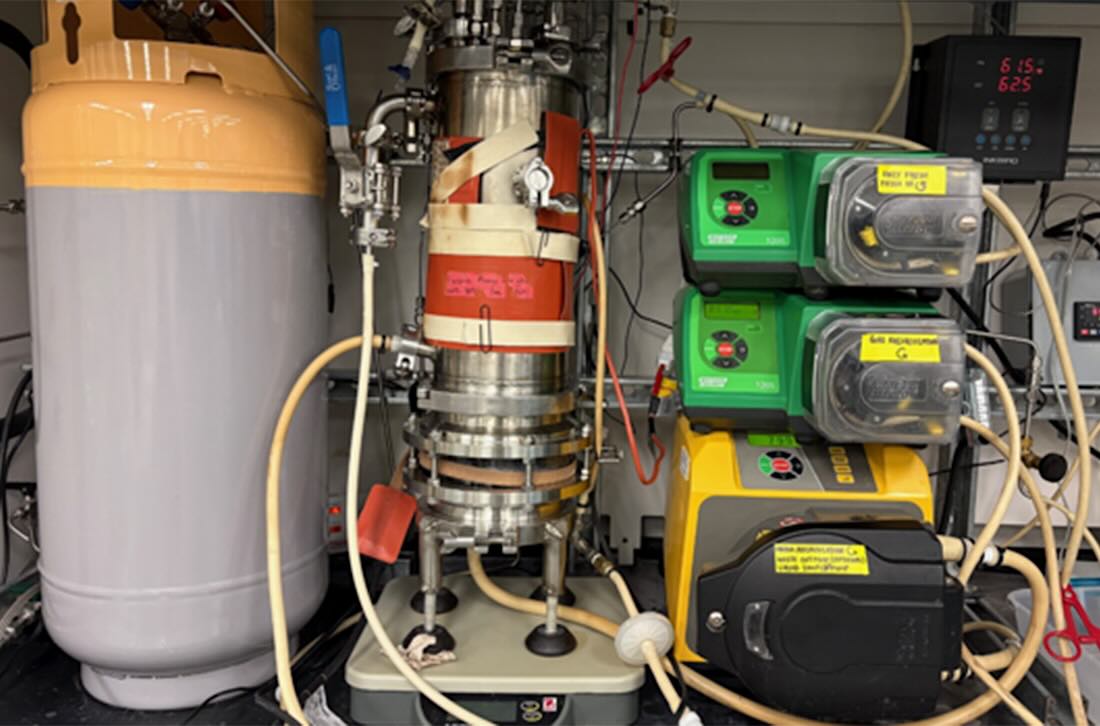
ENGIE Impact again organized the purchase of additional carbon offsets—which can come in various forms, such as tree-planting or direct-air capture plants like this one in Iceland—to balance out the carbon emissions generated by the power consumed in the stadium, but being that it’s mostly solar-powered already, the event may have actually been a net-negative emitter.

SHARE This Responsible Event Management Efforts On The Sport’s Biggest Day…

90 Million Year-old ‘Missing Link’ Fossil of Tiny Bird-like Dinosaur Discovered

- credit, Gabriel Díaz Yantén / SWNS
– credit, Gabriel Díaz Yantén / SWNS

As it often tends to, the fossilized remains of a tiny bird-like dinosaur are rewriting history.

A team of North and South American scientists described Alnashetri cerropoliciensis as the “missing link”—not from dinosaurs to birds, as the phrase has often been used to describe—but for finally understanding a mysterious group of small, widespread prehistoric animals.

Yet further, they team likened the discovery of the dino’s near-complete skeleton to a “paleontological Rosetta Stone.”

Alnashetri belongs to a group of bird-like dinosaurs, known as Alvarezsaurs, that are famous for their tiny teeth and stubby arms ending in a single large thumb claw.

But, for decades, they have remained a mystery because most of the well-preserved fossils were found in Asia, while records from South America were fragmented and difficult to interpret.

In 2014, the almost complete fossil of Alnashetri was discovered in the northern part of Patagonia, Argentina, by an international team led by University of Minnesota Twin Cities researcher Professor Peter Makovicky and his Argentinean colleague Dr. Sebastian Apesteguía.

The newer, more complete specimen allowed the team to finally map the group’s strange anatomy, and they’ve spent the last decade carefully preparing and piecing together the fossils to avoid damaging the small bones.

“Going from fragmentary skeletons that are hard to interpret, to having a near complete and articulated animal is like finding a paleontological Rosetta Stone,” said Dr. Makovicky. “We now have a reference point that allows us to accurately identify more scrappy finds and map out evolutionary transitions in anatomy and body size.”

He says the discovery of the nearly complete skeleton opens up a new understanding of how its lineage evolved, shrank, and spread across the ancient world.

“We have already found the next chapter of the Alvarezsaurid story there, and it’s in the lab being prepared right now,” said Dr. Makovicky.

MORE BIRD-LIKE DINOS: Bizarre Creature From China Had a Dinosaur Head on Bird’s Body – a Missing Link From 120 Million Years Ago

Microscopic analysis of the bones confirmed the animal was an adult at least four years of age. The largest species are the size of an average human, very small for dinosaurs, and Alnashetri itself weighed less than 2 lbs. making it one of the smallest dinosaurs known from South America.

Unlike its later relatives, Alnashetri had long arms and larger teeth, which the corresponding published research says proves that some Alvarezsaurs evolved to be tiny long before they developed the specialized features thought to be adaptations for an “ant-eating” diet.

MISSING LINKS: Newly Unveiled T-Rex Relative Was Sitting in Museum Drawer for 50 Years and ‘Rewrites’ Family Tree

The researchers said their worldwide distribution was caused by the breakup of the Pangea supercontinent.

“After more than 20 years of work, the La Buitrera fossil area has given us a unique insight into small dinosaurs and other vertebrates like no other site in South America,” said Dr. Apesteguía, a researcher at Universidad Maimónides in Buenos Aires, Argentina.

SHARE The Deep Insights Gleaned Into This Little Dino On Social Media… 

Total Lunar Eclipse Tuesday Morning Will Unveil Blood Moon for N. America, Australia and East Asia

Lunar Eclipse with Full Blood Moon Credit: Dejan Zakic For Unsplash+

The full Moon in March will appear orange-red in the early morning sky as a result of a total Lunar eclipse, and North Americans are positioned almost perfectly to see it.

Sometimes called a Blood Moon in the media for the coloration, it should probably be called a coral or a jasper moon, because it doesn’t look like any blood you’ve ever seen.

The eclipse peaks in the early morning hours on Tuesday, March 3rd, with totality occurring around 6:04–7:02 a.m. US Eastern Time (3:04–4:02 a.m. Pacific Time).

The explanation for why the Moon turns orange-red comes from how the light from the Sun breaches the atmosphere. Sunlight contains a full color spectrum, and different wavelengths possess not only different colors, but different properties. Blue light scatters easily, NASA writes, when it comes in contact with the atmosphere, which is why the sky appears blue during the daytime.

As the Earth passes between the Sun and Moon, red light from our star, which moves at a more direct and lower velocity, penetrates Earth’s atmosphere at a shallow angle and is cast on the Moon in red.

The difference between a ‘total’ and ‘partial’ Lunar eclipse is that in the former case, the Moon will pass into the deepest part of Earth’s shadow, known in eclipse jargon as the umbra, and the moment of totality. The Sun, Earth, and Moon will be in perfect alignment, with the shadow from the light of the former falling over the latter.

32 minutes either side of totality, the Moon will still be in Earth’s shadow, but not perfectly centered, and while still appearing orange-red the deepest red coloration won’t be seen. Sometimes that’s as close as the Moon will get to the umbra, and in this case it’s known as a partial Lunar eclipse.

This eclipse will be best viewed across western North America, Central America, and the western part of South America. Australia, New Zealand, and eastern Asia, can see it too.

SHARE This Great Moment To Get Out And Enjoy Nature With Your Friends…

“No man is above the law and no man is below it.” – Theodore Roosevelt

Credit: Planet Volumes for Unsplash+

Quote of the Day: “No man is above the law and no man is below it.” – Theodore Roosevelt

Photo by: Planet Volumes for Unsplash+

With a new inspirational quote every day, atop the perfect photo—collected and archived on our Quote of the Day page—why not bookmark GNN.org for a daily uplift?

Credit: Planet Volumes for Unsplash+


Good News in History, March 2

Vladimir Remek - credit, Frank Leuband CC BY-SA 2.0 de,

48 years ago today, Vladimir Remek became the first person not of Soviet or American citizenry to enter space, when we wore the patch of his native Czechoslovakia up to the Salyut 6 space station onboard the Soyuz 28 mission. He is considered today the first astronaut of the European Union, some 30 years before its existence. Upon his return, he was widely celebrated across his native Czechoslovakia. Remek was only able to travel to space alongside a Russian cosmonaut, which prompted the popular joke: “Why didn’t the Soviets send up two Czechoslovak cosmonauts? Because they would’ve landed in West Germany.” READ about the mission and wider program… (1978)

Ultra-Rare Pokemon Card That Cost $2 Sells for $40,000 at Auction, as Prices Soar

Rare, mint condition 1st Edition, Charizard Pokémon card from Shadowless Base Set – Hansons Auctioneers / SWNS

An ultra-rare Pokémon card that cost $2 in 1999 just sold for a whopping $40,000 at auction.

The 1st edition Shadowless Base Set Charizard card is known as the “holy grail” to collectors and enthusiasts, according to Hansons Auctioneers.

The “mint condition” card went under the hammer as part of the UK’s largest ever sale of Pokemon cards, to celebrate the 30th anniversary of the Japanese multi-media franchise that captured the imagination of children and adults around the world.

Back in 1999, you could buy a pack of 11 Pokémon cards at any Woolworths for between $1.50 and $2.

“A Charizard was the rarest holographic in Base Set, so pulling one from a pack was like winning a mini lottery,” said Hansons’ Pokemon specialist David Wilson-Turner, who said 30 years on, Pokémon is undergoing a huge resurgence.

“Only 4,000 to 10,000 cards were produced, most of which were played with and are now dogeared – so to find one in mint condition like this one, which has a grading of 9 (out of 10), makes it all the rarer.”

Rare 1st Edition Charizard Pokémon Card sells for $40k -Hansons Auctioneers SWNS

Prices of rare and sealed products continue to skyrocket, with some cards and booster sets being resold at huge premiums.

“Pokémon is a market that has grown rapidly in recent years,” said auctioneer Charles Hanson, star of TV’s Bargain Hunt.

“It is the strongest it has ever been right now and will only continue to grow.

“Wealthy young people in their 20s and 30s who got into Pokémon when they were children are buying rare cards and prices began to spike a few years ago.”

GOOD TO KNOW: Pokémon GO May Alleviate Some Depression, Says Study

So, everyone should dig out their toy boxes and attic collections. Y might be surprised—and thousands of dollars richer.

ALERT FELLOW PLAYERS TO CHECK the ATTIC–Share This on Social Media…

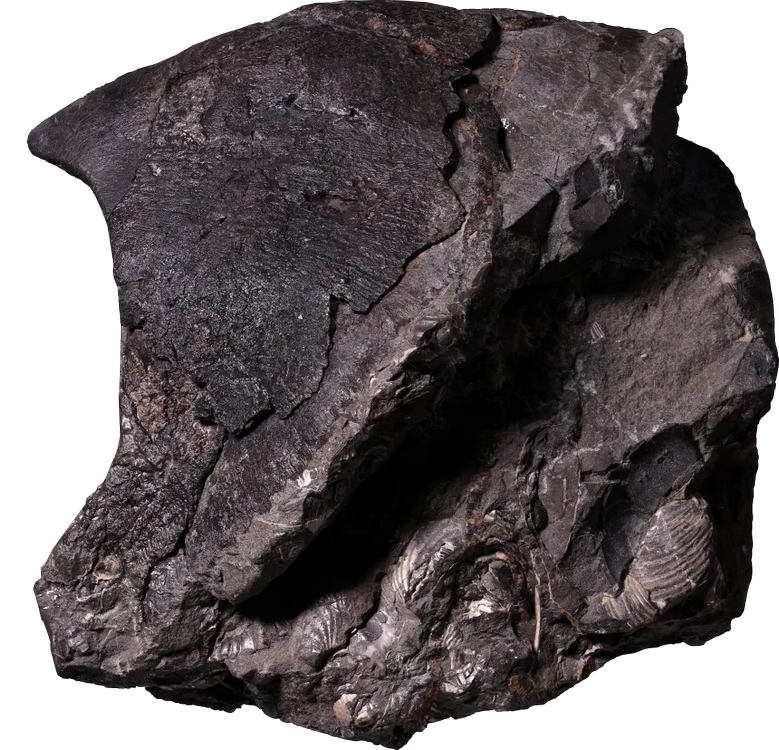
Rare Fossils in Amber Raise Questions About Secret Lives of Cretaceous Insects

Amber in Case 6 – Credit: Dr Jose de la Fuente / Institute for Game and Wildlife Research

Insects play a critical role in ecosystems but, because they are so rarely preserved as fossils, it’s hard to study their roles from habitats millions of years old.

But fossilized tree resin can occasionally preserve an insect within its amber, freezing a moment in time.

Most rare of all is when the moment in amber contains multiple insects that were living in close proximity to each other–providing a priceless opportunity to learn more about their ecosystems in bygone geological eras.

The biggest question is: Were they pollinators, parasites, predators, or prey—or were they just ‘in the wrong place at the wrong time’?

In a new study, researchers in Spain analyzed six pieces of amber containing fossilized ants that lived alongside dinosaurs during the Cretaceous period.

The samples include several different organisms of different species, a rare phenomenon called ‘syninclusion’.

“Amber inclusions are representative of possible interactions between different organisms shaping the environment,” said study lead author Dr. Jose de la Fuente, of the Institute for Game and Wildlife Research in the city of Ciudad Real. “(They) provide a snapshot of life on Earth millions of years ago.”

Ants are considered particularly important to ecosystems. The earliest ants, which were first found in the Upper Cretaceous period 66 to 100 million years ago, are known as Stem ants and didn’t leave modern descendants. All ants alive today evolved from Crown ants.

Both species are found in the amber samples studied by the scientists, as well as Hell ants, which evolved from Stem ants.

The study, published in the journal Frontiers in Ecology and Evolution, included four pieces of Cretaceous amber around 99 million years old, one piece of Eocene amber from around 34 to 56 million years ago, and one piece of Oligocene amber from around 23 to 34 million years ago.

The scientists used powerful microscopes to examine the amber, and found three of the six pieces of amber contained ants in close proximity to mites.

In one piece of amber the scientists found a Crown ant, wasp, and two mites, so close to the ant that they may have been traveling on it. Another (known as Case 4) contained a Stem ant and a mite, about four millimeters apart (around 1/10 inch).

AMAZING AMBER:
World’s Largest Prehistoric Flower Preserved in Amber is Stunning Reminder of Nature’s Wonder–LOOK
112-Million-Year-Old Amber Samples Preserve a Snapshot of an Ancient Forest

A further piece also contained three different species of ant close to a mite and some termites, as well as mosquitoes and a winged insect.

In another piece of amber, known as Case 6, the research team found a Stem ant, which seems to have been feeding on something, alongside a probable parasitic wasp and a spider. Another piece contains a Stem ant and a spider, while the other contained a Hell ant, a snail, a millipede, and some unidentifiable insects.

Dr. de la Fuente said the ant-mite interactions in Case 4 may reflect two possible scenarios: First, a relationship where mites attach to ants for free rides to new habitats, or second, one where mites feed on the ant host during transport.

But some evidence points to their relationship being mutually beneficial.

WHAT’S UNDER A MICROSCOPE? ‘Once-in-a generation’ Fossil Discovery Reveals New Species in 16-Million-Year-old Amber

Future research could help clarify that by using micro-CT scanning to look for attachment structures on mites which would have allowed them to clamber onboard ants to travel.

He said the spider in Case 6 could camouflage itself as an ant and may have benefited from proximity to real ants.

It makes a person wonder what Charles Darwin would have perceived—and conceived of—had he been included in this fascinating research project.

Forget Yankee Candle, This Company has Hired Disabled Americans for 20 Years to Produce Superior Scents

Credit: A Cheerful Giver candles

We may need to allow our ‘flame’ for Yankee Candles to burn out, now that we’ve learned about this New Jersey small business that gives back to their community in life-changing ways.

For over 20 years, the family-owned candle company has provided meaningful employment for adults with special needs, hiring them to place the wicks inside their delicious-smelling candles.

Founded in 1991, ‘A Cheerful Giver’ now sells to thousands of retail stores nationwide and has built a loyal following on Amazon.com—and for decades their commitment to inclusive employment has never wavered.

“These team members place the wicks in every candle we pour,” said the owners, Tony and Susan Gross. “They’re the heart of our operation.”

“How much they work is entirely up to them. There’s no pressure, no quotas—just purposeful employment and the pride that comes with being part of something real.”

The employees arrive through a partnership with Career Opportunity Development Inc (CODI), a New Jersey nonprofit founded by a group of loving parents 55 years ago to develop ways for young adults with disabilities to find work, vocational training, and housing.

Located outside of Atlantic City in Egg Harbor, CODI workers are employed in a number of different fields and get competitive wages that support their independence.

Courtesy of A Cheerful Giver

Each day, they work for as little as a few minutes, or as long as 6 hours.

“All of our wickers bring home a paycheck each day for all they’ve accomplished, building a sense of pride and purpose,” wrote Tony and Susan on their website.

ANOTHER AMAZING BUSINESS: Car Wash Hires All-Autistic Staff to Wash Away Barriers: 10 Years Later, There’s Now 4 Florida Locations

“When you buy an A Cheerful Giver candle, you’re supporting a workplace that has given differently-abled individuals the opportunity to contribute, earn, and belong.”

Available in three sizes, every candle is hand-poured with premium paraffin wax, delivering a “powerful scent throw” that has made A Cheerful Giver so popular—and, they ship their products all over the world.

“I was a Yankee Candle zealot until I tried A Cheerful Giver,” said one fan. “The scent throw is unmatched… I can smell it throughout my entire house.”

But what makes the company stand out isn’t just how the candles perform. It’s who makes them.

HOW DOES YOUR GARDEN GLOW? Glow-in-the-Dark Petunias Emit Bioluminescence Like Fireflies–Now For Sale in 48 States Online

“At Cheerful Giver, we are more than just another candle we; We are a proud American Company that makes our own products and gives back to ensure we are making a difference in the lives of others.”

RECOMMEND THE CANDLES: Share Their Flaming Good on Social Media…

Treacherous 43-Day Mountain Search Finally Reunites Dog With Owner After it Bolted During Road Trip: ‘It was amazing’

Rocky with Summit Lost Pet Rescue volunteer Ashley Goldberg – Photo courtesy of Brandon Ciullo

Steven Maa was worried his beloved dog wouldn’t survive the night in the Rocky Mountains.

He was driving cross-country to California from New Jersey to start a new job on the West Coast when he stopped for some skiing in Montezuma, Colorado on Dec. 28.

He left his dog Rocky with a local pet sitter, but, instead of relaxing, the mottled brown-and-black pooch soon bolted into the mountains—and a blizzard was rolling into the region which has a local elevation of nearly 10,000 feet (3,000m).

Steven was panicked. He reached out to the town’s mayor, who recommended Summit Lost Pet Rescue, a nonprofit with a near-perfect record of locating lost pets—with more than 200 recoveries in the last year alone.

For Rocky’s challenging case, the Summit search team set up trail cameras and a scent station, which usually includes the owner’s clothes and a comfy dog bed that can draw the animal out of hiding. They also launched a social media campaign that shared Rocky’s pictures.

A few days passed without any sign and temperatures plunged below zero. Steven feared the worst, but then Rocky appeared on one of the trail cams, stirring hope that the duo might be able to soon continue their road trip.

No luck. After spending multiple 16-hour days searching for him, Steven had to make the heartbreaking decision to leave Rocky behind and move ahead to his new job in California.

“I was a little clogged with emotion,” the founder of Summit Lost Pet Rescue, Brandon Ciullo, told PennLive. “I just couldn’t believe we couldn’t find him, and I was disappointed.”

Several weeks went by with no reported sightings and hope was dwindling. How long could a domesticated dog even survive in the wilds of a Rocky Mountain winter? A few weeks? A month?

But then on February 9th, a resident saw an unidentified dog on a household Ring camera. It was Rocky.

Steven confirmed the appearance after recognizing his collar. Then, Brandon and his co-founder Melissa Davis quickly set up a trap with scent trails using Steven’s clothes leading to a cage.

Within three hours, Rocky entered the trap.

Rocky after 43 days missing – Photo courtesy of Brandon Ciullo

Rocky was finally secured—a champion for surviving 43 days—and would soon be reunited with Steven. (Watch the joyous reunion below…)

The dog had lost almost half his body weight, dropping from 50 pounds to just 26. But when he was reunited with Steven, who arrived from California, the dog’s energy rebounded—and tears fell around the room when everyone saw how excited he was to see his family.

“We were just so overjoyed,” Steven said. “And in disbelief that he could survive for that long; (I’m) just extremely proud of him.”

And, after so many weeks fearing they had lost him, Brandon, too, was overcome with emotion: “He’s the only dog I’ve ever cried over.

“It was amazing. It’s what we put hundreds and hundreds of hours into. These reunions are why we do what we do.”

Rocky’s rescue marked the longest number of days a dog had been missing, before being found by the nonprofit Summit Lost Pet Rescue.

The group has a 99% success rate, recovering 213 of 214 lost dogs last year.

MORE MIRACLE DOGS:
Tiny Chihuahua Helps Rescue Owner Who Fell into Swiss Glacier
Dog Sits Down in Middle of Road Unmoving–Until Officer Follows to Save Her Owner
Dog Named Hero Saves Owner’s Life for Days–Fighting Off Cold and Coyotes and Getting Help

LET’S KEEP ROCKY’S RESCUE PARTY GOING By Sharing This on Social Media…

“The sole meaning of life is to serve humanity.” – Leo Tolstoy

Pakistani boy saluting – Credit: Assad Tanoli

Quote of the Day: “The sole meaning of life is to serve humanity.” – Leo Tolstoy

Photo by: Assad Tanoli

With a new inspirational quote every day, atop the perfect photo—collected and archived on our Quote of the Day page—why not bookmark GNN.org for a daily uplift?

Pakistani boy saluting – Credit: Assad Tanoli


Good News in History, March 1

Page one of Articles of Confederation - public domain

245 years ago today, the Articles of Confederation were officially adopted by the Continental Congress after ratification by all 13 states as the supreme law of the land in post-Revolutionary America. Calling into existence the most limited and constrained form of government ever achieved by modern man, affording it only those powers the former colonies had recognized as belonging to the King of England. There was no president, no executive agencies, no judiciary, and no tax base. READ More… (1781)

Older Male Whales More Successful at Mating Because They’re Better Singers, Shows Study

Humpack whale breaching Credit: Opération Cétacés / Claire Bonneville (via SWNS)

Older male whales are more successful at mating than their younger rivals because they are better singers, suggests new research.

The older singing whales are increasingly successful at birthing offspring compared to younger males, with the findings suggesting that the humpbacks may need time to learn and refine their singing and competitive tactics—giving experienced males a clear advantage.

Researchers believe that as the whale population recovers after centuries of being hunted, females may also have become more selective, which could lead to greater success among males with favorable traits or the strongest performance.

The international study, led by the Sea Mammal Research Unit at the University of St. Andrews in Scotland, showed that the role of age in male humpback whale reproduction has changed as their numbers grow.

Whaling drove many species to the brink of extinction, but scientists say its legacy runs deeper than just a drastic decline in numbers.

Decades after commercial whaling ended, researchers found its impacts continue to shape whale populations—influencing which males most often reproduce.

The study, published in the journal Current Biology, assessed two decades of data from humpback whales breeding in New Caledonia in the South Pacific.

They found that during the early years of recovery, the population was dominated by young males. But, over time, as the overall population increased, the age structure shifted: When older individuals became more common, they became increasingly successful at siring offspring, compared to younger males.

Group of humpback whales in breeding ground – Credit: Opération Cétacés / Claire Bonneville (via SWNS)

Humpback whales have never been observed mating in the wild, and so ‘who’ is fathering a calf remained largely unknown, until now.

Drawing on long-term monitoring conducted by the NGO Opération Cétacés, the research team analyzed changes in age structure, behavior, and paternity in male whales.

The team applied genetic analysis to identify paternity—and used an ‘epigenetic molecular clock’ to estimate the age of individual whales—all from just a small piece of whale skin.

Humpback whales have undergone a remarkable comeback in recent years, and, in fact, populations are now well above pre-whaling levels in Australia. It now seems behavior is also evolving.

The most elaborate songs in the animal kingdom

Male humpback whales are famous for producing some of the most elaborate songs in the animal kingdom. Their powerful vocal displays can often be heard far across breeding grounds.

AMAZING: Humpbacks Are Singing More: Number of Songs Has Doubled as Food Sources Became More Abundant

Males may also escort females or engage in intense physical competition with rival males.

“As the population recovered, there were more older males than expected singing, escorting females, and successfully fathering calves compared to younger animals,” said senior author Dr. Ellen Garland, of the Sea Mammal Research Unit.

The study’s lead author, Dr. Franca Eichenberger, also from the Sea Mammal Research Unit, said new technology is allowing new insights.

“It is only now, as whale populations recover and new analytical tools become available, that we are beginning to understand how far-reaching the consequences of whaling truly are.”

MORE WHALE TALES:
In World First, Scientists Share What Was Almost Certainly a Conversation with a Humpback Whale
Kayaker Singing in Hopes of Attracting Beluga Whales Never Imagined They Were Actually Listening (WATCH)

“The impacts extend beyond population size—they shape behavior, competition, and reproduction. Virtually all populations of whales have changed due to whaling; our work shows that they continue to change as they recover.

“Now is the time we can learn so much more about their behavior and life history. We just need to keep looking.”

CHEER ON OLDER MALES By Sharing The Surprising Research on Social Media…

Dozens of Strangers Form Parade for Man with Cancer, Driving Classic Cars Passed his Home for One Last Surprise (WATCH)

Photo by Matthew Hillar

A Colorado man was given a heartwarming surprise last week, after his granddaughter reached out to strangers who provided one last look at his favorite thing—a classic car show.

“I just wanted to do something special for him,” his granddaughter, Annaliesse Garcia, told KDVR News.

And ‘special’ it was, as dozens of car owners paraded past their grandfather’s home in Lakewood.

After posting the request on social media, the family only expected a handful of autos, but around 50 showed off their curvy bumpers and round mirrors for 80-year-old Max Archuleta, a lifelong fan of vintage vehicles.

Since being diagnosed with terminal cancer, he no longer has the energy to attend his beloved car shows.

“I had seen him at a show last summer, and I was like, that’s something that you do for your community,” said Butch Souza, who even taped a poster of Max’s photo to his 1951 Ford Shoebox.

The historical cars in every color lined up in single file and drove slowly past the home, some with American flags, and every driver waving and honking their horn.

“I couldn’t believe everybody,” Max said. “Just all this for me.”

WATCH the local news video below, from KDVR-TV in Denver…

MORE KINDNESS SURPRISES:
1,500 Bikers Show Up to Escort Bullied Teen to Prom in Spectacular British Convoy: ‘I don’t feel alone anymore’
When 5-year-old Missed Graduation, Plane Passengers Give Special Midair Ceremony – (WATCH)
High School Teens Swoop in to Support 6th Grade Stranger When No One Would Sign His Yearbook

GIVE FRIENDS A PARADE OF GOOD NEWS: Share This on Social Media…

Monopoly World Champion Reveals His Secrets for Always Beating Your Family, as the Game Celebrates 90 Years

Jason Bunn, World Monopoly Champion, at his home near Leeds, England – SWNS

A Monopoly World Champion has shared his top tips for winning your next game—and his first piece of advice is to always buy the ‘orange’ properties.

As the iconic board game celebrates its 90th birthday this year, Jason Bunn, who once won the world title, talked to SWNS news agency about his successful strategies.

His first secret to victory is building upon orange properties because they offer the best return on investment—St. James Place, Tennessee Avenue, and New York Avenue in American editions. (In the UK, the orange locations are Bow Street, Marlborough Street and Vine Street.)

The passionate Monopoly-playing grandfather says you should try to buy everything you land on—even if you don’t want it—because stockpiling properties gives you the upper hand in negotiations.

The 65-year-old has eight more expert tips to help players bankrupt their rivals.

This year marks the 90th anniversary of Parker Brothers buying the rights to Monopoly on March 19, 1935. It should be noted that the game’s concepts were earlier invented—and patented in the U.S.— by an anti-monopolist Quaker named Lizzie Magie who called it The Landlord’s Game and used it to teach the dangers of land monopolization.

“I won the World Championships in the 50th anniversary year—and that seems like a long time ago now,” said Jason, who scooped the titled in 1985.

Jason’s journey to glory began after spotting an advertisement in a local paper calling for entrants to a regional contest. Out of 50 contestants, four were sent to London for the British Championships, but the man from Leeds won, earning him a ticket to New York where he was crowned the World Champion.

From then, his childhood hobby snowballed into a lifelong obsession.

Jason Bunn with his Monopoly game collection – SWNS

He’s spent more than four decades amassing one of England’s most impressive collections of the board game, and today he owns around 500 boards. Among his treasures is a handmade Welsh edition featuring wooden inlay and solid silver pieces worth $800.

“Whenever I went on holiday, I’d buy the local Monopoly edition like other people buy postcards.” His collection includes themed boards inspired by Star Wars, Game of Thrones, X-Men, Coca-Cola, and even Elvis.

And, new releases are hard to resist: “When I see something new, I just have to have it. I must be the easiest in the world to buy presents for.”

He still plays Monopoly during family gatherings—and insists that the game does not need to drag on for hours. Jason once finished two games in a one-hour lunch break.

Credit: Maria Lin Kim

In fact, he believes the optimum game time is just 30 minutes, and says that family fights will only erupt because people ignore the official rulebook.

In his opinion, the popularity of the game is stunningly enduring. “What other trademark has been going for so long?”

Jason’s top tips for winning at Monopoly

1. Snap up the orange set
The orange properties offer the best return on investment, especially because players frequently land on them after leaving jail.

2. Build three houses quickly
Getting up to three houses on a set as fast as possible dramatically increases your earning power.

3. Buy everything you land on
Even if you don’t want it, it could be valuable later in negotiations. The real skill in Monopoly is deal-making.

4. Master the art of negotiation
The more properties you hold, the stronger your bargaining position with other players.

5. Use jail strategically
Late in the game, when the board is full of danger spots, staying in jail can actually be a safe haven.

6. Don’t put money on Free Parking
That’s a made-up house rule and not in the official game – it just slows everything down.

7. Stick to the proper rules
Playing correctly makes the game quicker and less argumentative.

8. Use the house shortage to your advantage
There are only 32 houses in the game – building up to four houses on each property can block opponents from developing theirs.

9. Think long-term, not short-term
Every purchase and deal should be about strengthening your overall position on the board.

SHARE THE TIPS With Board Gamers on Social Media…

Your Weekly Horoscope – ‘Free Will Astrology’ by Rob Brezsny

Our partner Rob Brezsny, who has a new book out, Astrology Is Real: Revelations from My Life as an Oracle, provides his weekly wisdom to enlighten our thinking and motivate our mood. Rob’s Free Will Astrology, is a syndicated weekly column appearing in over a hundred publications. He is also the author of Pronoia Is the Antidote for Paranoia: How All of Creation Is Conspiring To Shower You with Blessings. (A free preview of the book is available here.)

Here is your weekly horoscope…

FREE WILL ASTROLOGY – Week of February 28, 2026
Copyright by Rob Brezsny, FreeWillAstrology.com

PISCES (Feb. 19-March 20):
Sufi mystics tell us that the heart has “seven levels of depth,” each one bearing progressively more profound wisdom. You access these depths by feeling deeper, not thinking harder. Let’s apply this perspective to you, Pisces. Right now, you’re being called to descend past surface emotions (irritation, worry, mild contentment) into the layers beneath: primal wonder, the wild joy you’re sometimes too cautious to express, and the sacred longing that can lead you to glory. This dive might feel risky. That’s good! It means you’re going deep enough. What you discover down there will reorganize everything above it for the better.

ARIES (March 21-April 19):
In woodworking, “spalting” occurs when fungi colonize wood, creating dark lines and patterns that make the wood more valuable, not less. The decay creates beauty as long as it isn’t allowed to progress too far. Here’s the metaphorical moral of the story for you, Aries: What feels like a deteriorating situation might actually be spalting, Aries. Are you experiencing the breakdown of a routine, a certainty, or a plan? It could be creating a pattern that makes your story even more interesting and heroic. So keep in mind that an apparent decomposition may be transforming ordinary into extraordinary beauty. My advice is to play along with the spalting.

TAURUS (April 20-May 20):
I suspect you will soon be invited to explore novel feelings and unfamiliar states of awareness. As you wander in the psychological frontiers, you might experience mysterious phenomena like the following. 1. An overflow of reverence and awe. 2. Blissful surprise in the face of the sublime. 3. Sudden glimmers of eternity in fleeting moments. 4. A soft, golden resonance that arises when you hear arousing truths. 5. Amazingly useful questions that could tantalize and feed your imagination for months and even years to come.

GEMINI (May 21-June 20):
If I were your mentor, I’d lead you up an ascending trail to a high peak where your vision is clear and vast. If I were your leader, I’d give you a medal for all the ways you’ve been brave when no one was looking, then send you on an all-expenses-paid sabbatical to a beautiful sanctuary to rest and remember yourself. If I were your therapist, I’d guide you through a 90-minute meditation on your entire life story up until now. But since I’m just your companion for this brief oracle, I will instead advise you to slip out of any silken snares of comfort that dull your spirit, cast off perks and privileges that keep you small, and commune with influences that remind you of how deeply you treasure being alive.

CANCER (June 21-July 22):
Biologist Barbara McClintock won the Nobel Prize by developing what she called “a feeling for the organism.” She cultivated an intimate, almost empathic relationship with the corn plants she studied. She didn’t impose theories on her subjects. She listened to them until she could sense their hidden patterns from the inside. When you’re not lost in self-protection, you Cancerians excel at this quality of attention. Here’s what I see as your task in the coming weeks: Transfer your empathic genius away from people who drain you and toward projects, places, or problems that deserve your devotion and give you blessings in return.

LEO (July 23-Aug. 22):
Sufi writers describe heartbreak, grief, and longing as portals through which divine love enters. They say that a highly defended ego and a hardened heart can’t engage with such profound and potent love. In this view, suffering that makes the heart ache strips away illusions and fixations, allowing greater receptivity, humility, and tenderness toward all beings.​ I’m not expecting you to get blasted by an influx of poignancy in the near future, Leo, but I’m very sure you have experienced such blasts in the past. And now is an excellent time to process those old breakthroughs disguised as breakdowns. You are likely to finally be able to harvest the full power they offered you.

VIRGO (Aug. 23-Sept. 22):
In traditional Balinese culture, Tri Hita Karana is a concept that means there are three causes of well-being: harmony with God, harmony with people, and harmony with nature. When one is out of balance, all suffer. I’m wondering if you would benefit from meditating on this theme now, Virgo. Have you been focused on one dimension at the expense of the others? Are you, perhaps, spiritually nourished but socially isolated? Or maybe you’re maintaining relationships but ignoring your body’s connection to the earth? Here’s your assignment: Do a Tri Hita Karana audit. Which harmony is most neglected? Add to your altar, call a friend, or go walk in the great outdoors—whichever one you’ve been shortchanging.

LIBRA (Sept. 23-Oct. 22):
You are a diplomat in the struggle between beauty and inelegance. Your aptitude for creating harmony is a great asset that others might underestimate or miss completely. I hope you will always trust your hunger for classiness even if others dismiss it as superficial. One of your key reasons for being here on earth is to keep insisting on loveliness in a world too quick to settle for ugliness. These qualities of yours are especially needed right now. Please be gracefully insistent on expressing them wherever you go.

SCORPIO (Oct. 23-Nov. 21):
The bad news: You underestimate how much joy and pleasure you deserve—and how much you’re capable of experiencing. This artificially low expectation has sometimes cheated you out of your rightful share of bliss and fulfillment. The good news: Life is now ready to conspire with you to raise your happiness levels. I hope you will cooperate eagerly. The more intensely you insist on feeling good, the more cosmic assistance you will garner. Here’s a smart way to launch this holy campaign: Renounce a certain lackluster thrill that diverts you from more lavish excitements.

SAGITTARIUS (Nov. 22-Dec. 21):
In classical music, a “rest” isn’t the absence of music. It’s a specific notation that creates space, tension, and meaning. The silence is as much a part of the composition as the sound. I suggest you think of your current pause this way, Sagittarius. You’re not waiting for your real life to resume. You’re in a rest, and the rest is an essential part of the process you’re following. It’s creating the conditions for what comes next. So instead of anxiously filling every moment with productivity or distraction, try honoring the pause. Be deliberately quiet. Let the silence accumulate. When the next movement begins, you’ll understand exactly why the rest was necessary.

CAPRICORN (Dec. 22-Jan. 19):
Interesting temptations are wandering into your orbit. You may be surprised to find yourself drawn toward entertaining gambles and tricky adventures. How should you respond? Should you say “Yes! Now! I’m ready!”? Or is open-minded caution a wiser approach? Conditions are too slippery for me to arrive at definitive conclusions. What I can tell you is this: Merely considering and ruminating on these invitations will awaken uplifting and inspiring lessons. PS: To get the fullness of the blessings you want from other people, you must first give them to yourself.

AQUARIUS (Jan. 20-Feb. 18):
The engineer Nikola Tesla (1856–1943) said he envisioned his inventions in intricate detail before building them. He didn’t need literal prototypes because his mental pictures were so vivid. I suspect you Aquarians now have extra access to this power. What scenarios are you dreaming of? What are you incubating in your imagination? I urge you to boldly trust your thought experiments. Your mental prototypes may be unusually accurate. The visions you’re testing internally are reconnaissance missions to futures that you have the power to build. Regard your imagination as a laboratory.

WANT MORE? Listen to Rob’s EXPANDED AUDIO HOROSCOPES, 4-5 minute meditations on the current state of your destiny — or subscribe to his unique daily text message service at: RealAstrology.com

(Zodiac images by Numerologysign.com, CC license)

SHARE The Wisdom With Friends Who Are Stars in Your Life on Social Media…

“Art is the unceasing effort to compete with the beauty of flowers—and never succeeding.” – Gian Carlo Menotti

Credit: Clara Beatriz for Unsplash+

Quote of the Day: “Art is the unceasing effort to compete with the beauty of flowers—and never succeeding.” – Gian Carlo Menotti

Photo by: Clara Beatriz for Unsplash+

With a new inspirational quote every day, atop the perfect photo—collected and archived on our Quote of the Day page—why not bookmark GNN.org for a daily uplift?

Credit: Clara Beatriz for Unsplash+


Good News in History, February 28

Liu bang, Emperor Gaozu (205 -197 BCE)

2,228 years ago today, the Gaozu Emperor (given name Liu Bang) claimed the Mandate of Heaven and established the Han Dynasty—one of the three great dynasties of a unified Imperial China. Among the hundreds of Chinese emperors, Liu Bang was among the few born to a peasant family. Though he ruled briefly—just 7 years—it was enough to usher in the historical era known in the West as the first Pax Sinica, from as far south as the Pearl River to as far north as the Mongolian steps, and as far west as Xinjiang. In the last years of his reign, he instituted free-market reforms including privatized coinage and lower taxes. READ more about his life and the founding of the Han Dynasty… (202 BCE)

Astronomers Say They Have Solved One of Saturn’s Greatest Mysteries

Saturn eclipsed by Titan as seen from the Cassini probe - credit, NASA/JPL-Caltech
Saturn eclipsed by Titan as seen from the Cassini probe – credit, NASA/JPL-Caltech

A neat feat of calculation and deduction may have solved one of our solar system’s greatest mysteries.

Titan, the largest moon of Saturn, is bigger than Mercury, yet for all its conspicuousness, scientists don’t know exactly how it came to be so large that it’s gravitational influence causes Saturn to tilt and wobble.

There are some 274 moons that orbit Saturn, the solar-system’s second largest planet, and Matija Ćuk, a research scientist at the SETI Institute in Mountain View, California, proposes a theory that one of these collided with Titan in the planet’s ancient past, enlarging it in the process.

Ćuk believes it might have been the precursor to Hyperion, the largest nonspherical Saturnine moon, but which is tiny in comparison to Titan.

Ćuk put data collected by NASA’s Cassini Probe which visited Saturn between 2004 and 2017 together with new research and computer simulations to present the idea that an extra moon colliding with Titan set off a chain reaction that not only explains Titan’s size, but Saturn’s characteristic wobble and tilt, and even its famous rings, saying the theory “explains everything.”

Even as the James Webb Space Telescope has pushed the boundaries of understanding the university farther than we could have ever imagined, the discovery demonstrates how much is left to know about our own cosmic cul-de-sac.

“I propose that there was an extra moon about half a billion years ago that collided with Titan, that actually became part of Titan,” Ćuk told CNN about his research, accepted for publication in The Planetary Science Journal.

“From this event, Titan could have perturbed some of the inner moons into more collisions, which created the rings sometime later, maybe 100 million years ago.”

Previously, scientists estimated that the orbital force of Neptune accounted for the wobble of Saturn. This concept in astronomy is known as “resonance,” but data from Cassini showed they weren’t sufficiently synced up to explain this.

Then in 2022, scientists proposed that a lost moon called Chrysalis had spun too close to Saturn, broke apart, and formed its rings as well as its tilt and wobble.

Refining the concept, Ćuk showed that if you look closely, Saturn is wobbling a bit too fast for Neptune’s resonance to account for, but subtracting backwards in time, around when Saturn’s rings are thought to have formed, the wobble is very closely aligned with Neptune.

Adding in an extra moon, around 1,000-times larger than Hyperion, makes the resonance between Neptune and Saturn exact.

MORE SOLAR-SYSTEM SCIENCE: New Webb Image Captures Clearest View of Neptune’s Rings, Revealing the Ice Giant in Whole New Light

In other words, when Saturn had both the proto-Hyperion moon and proto-Titan, its resonance with Neptune was so close as to fit into established calculations on how the orbital force of one planet can affect others, but a collision between the moons sped up its wobble and accounted for why the Neptune theory seemed improbable.

CNN reached out to William B. Hubbard, professor emeritus of planetary sciences at the University of Arizona, who wasn’t involved in Ćuk’s research, to ask for comment.

LOCAL (RELATIVELY) NEWS: This Tiny Moon of Saturn Is the Smallest Case of a Subsurface Ocean Ever Found in the Solar System

Professor Hubbard concluded that Ćuk’s theory fits the billing better than did earlier theories about the Chrysalis moon.

This was the same conclusion as Carl Murray, an emeritus professor of mathematics and astronomy at Queen Mary University of London, who wasn’t involved in the work but was a member of the Cassini team. Murray called it “highly probable.”

SHARE This Local Astronomy Seemingly Solved… 

UK’s First Geothermal Power Plant Begins Using Underground Heat to Power 10K Homes

The United Downs plant in Cornwall - credit, Thomas Frost Photography / Geothermal Engineering Limited © SWNS
The United Downs plant in Cornwall – credit, Thomas Frost Photography / Geothermal Engineering Limited © SWNS

The UK’s first geothermal power plant has just begun operations, using hot water from deep underground to create renewable electricity.

The United Downs plant in Cornwall has been in development for nearly two decades, and will now begin providing enough electricity to power 10,000 homes.

Geothermal power generation comes via energy stored in the form of heat beneath the surface of the Earth. The company behind the project, (GEL) Geothermal Engineering Ltd., had to drill the deepest on-shore well ever drilled on UK soil—over 3 miles deep—to source the geothermal fluid that is used for the power plant.

The naturally heated water, exceeding 190°C, generates electricity 24 hours a day, 7 days a week regardless of the weather.

The water will help drive turbines to generate electricity for 10,000 homes but will also provide the UK’s first domestic supply of lithium, a critical mineral used in green technology.

Dr. Ryan Law, CEO of GEL, said the opening of the power plant is a “huge advancement for geothermal power in the UK.”

“Geothermal energy and critical minerals extraction are naturally complementary as they share the same subsurface resource,” Dr. Law explained. “The hot, mineral-rich fluids that generate clean electricity can also be processed to recover strategic materials like lithium carbonate.”

“Therefore, collocating power and mineral extraction plants maximizes investment in the wells, minimizes subsurface disruption, and accelerates the transition to secure domestic supply in both critical sectors.”

GEL have said the water they’ve brought to the surface after drilling contains one of the highest concentrations of lithium in the world.

Lithium carbonate is a key raw material used in the production of rechargeable batteries like those that power electric vehicles and energy storage systems. From its February, 2026 starting point, GEL says the plant has the capacity to produce 100 tons per annum.

Ground source heat pumps are a form of geothermal technology already used in the UK, and in places like Southampton, heating is provided to hundreds of homes via a local network. But the United Downs project has drilled to far greater depths where temperatures are hot enough to generate more than just heat, but actual electricity.

MORE INNOVATIVE ENERGY SOURCES: Iron-Air Batteries Powered by Rust Could Revolutionize Energy Storage By Using Only Iron, Water, and Air

Furthermore, the project has only cost around $59 million to date, funded through private investors and the EU.

Energy provider Octopus Energy has purchased the power generated at United Downs and will deliver it, via the national grid, to about 10,000 homes.

GEL has two other sites it plans to develop into geothermal power plants, and although one additional site has been initially turned down over environmental concerns, the company is appealing.

GEOTHERMAL HERE AT HOME: Giant 2-GW Geothermal Project in Utah Gains Federal Approval

Greg Jackson, Founder of Octopus Energy, said UK bills are “still too high” and the answer is “more homegrown, renewable energy.”

“For the first time, we’re bringing deep geothermal power to British homes—a clean, constant energy source right beneath our feet,” he said. “Projects like United Downs show how the UK can cut bills and carbon by tapping every ounce of our renewable potential.”

SHARE This Story With Any Brits You Know Who Might Need A Power Pick-Me-Up…

2 Dogs Rescued By ‘Animal Lover’-Plow Driver After He Saw Them Running Middle of a Blizzard

2 dogs rescued in storm – Credit: Town of Babylon on their Facebook Page

A snow plow driver was crawling through near-white out conditions on Long Island when he saw something strange.

Kenny McGowan has had to stop his snow plow in the past for all manner of hidden obstacles and hazards, from buried cars to fallen branches.

Instead, two slight figures were running along the asphalt/ice/snow/salt poutine that McGowan has scraping away.

“I looked over and I seen something in the corner of my eye right there, and then I looked in my mirror and I saw a dog. I’m like ‘that’s a dog running,'” McGowan told CBS News.

“I immediately put my sirens on, and stayed right behind them. Being an animal lover, being a father, I went right into protection mode … I was gonna do whatever I had to do to stop these dogs from getting hurt.”

He kept going until he was able to turn his plow sideways near Town Hall and block the dogs’ path, after which they ran shoulder to shoulder into the middle of a median strip and buried themselves in 3 feet of snow.

With the help of several Good Samaritans, who perhaps wanted to know why the truck driver had blocked the road, or because they too had seen the dogs, McGowan managed to get the two uncollared Labrador-mixes into the back of his truck.

MORE DOG RESCUES: Mountain Rescue Script Flipped as Hiker Saves Lost Dog Instead of a Dog Saving Hiker

The “animal lover” brought them immediately to the nearest animal shelter, whose staff heard the story and told CBS that both dogs could have frozen to death buried out of sight in the drift.

When they arrived in the shelter it was clear to everyone the two dogs were bonded. They didn’t leave each other’s side at any point, and the shelter didn’t bother trying to separate them.

ALSO CHECK OUT: Farmers’ Kids Cuddle Up with New Born Calf on the Couch After She Nearly Froze Outside

While they didn’t have collars, both were microchipped. Their owners were notified, and the dogs returned to what would presumably be an extra-warm doggie bed that night.

WATCH the video below…

COMMEND Kenny’s Compassion For Two Four-Legged Long Islanders Lost In The Snow…