












 10 year-old Ezra, living with a brain tumor, was given his wish — and more — by the designers, artists and staff of Blizzard Entertainment, the makers of the wildly successful online game, World of Warcraft. The Make-A-Wish foundation wanted to help grant Ezra’s wish to become the first outsider to create a new character for the game. Since the story broke in a local paper, the WoW community has rallied and cheered its newest star, whose father said, "I do believe it impacted the situation. It impacted his health and happiness." (OC Register – be sure to read the update) Thanks to my son Jack for submitting this story!
Warcraft Online Gaming Community Rallies Around Boy With Cancer Who Makes-a-Wish
UN Nuclear Inspectors Allowed Full Access in N Korea
"North Korea’s cooperation was ‘excellent’, said a UN inspector on Friday after visiting a nuclear reactor with his 4-person team from the International Atomic Energy Agency. It was the first UN inspection of the reactor in five years and full access to all areas was allowed." (AFP)
News Anchor Refuses to Read Paris Hilton Story in On-Air Protest

EDITOR’S BLOG – Mika Brzezinski is my new hero! The MSNBC anchorwoman refused to read a Paris Hilton story chosen as the lead for her morning newscast this week. This video shows her trying to burn the script and finally ripping it, and later shredding an updated copy. The public protest against her editors’ news judgement has brought her praise from both viewers and media professionals alike. She says, "I had one woman send me an email that said she was weeping tears of joy that someone finally took a stand… We were making a statement on our show. I hope it will start to change something… We need to have an open discussion about what is news and what is not."
This edited version of Brzezinski’s on-air protest has been viewed more than 1.3 million times on YouTube.
World’s First High-Speed All-Electric Sport Utility Truck

Earth-friendly, fuel-efficient vehicles that produce no emissions may seem like a dream of the future. But several companies are already well on their way to introducing such vehicles in North America and around the world. Recently, more than 400 environmentalists, investors and celebrities gathered for the unveiling and induction of the only five-passenger, all-electric, freeway-speed sport utility vehicle at Los Angeles' famed Peterson Automotive Museum: The Phoenix Motorcars "SUT" or sport-utility truck.
Donations Pour in for Brittle-Bone Survivor
Donations are pouring in for the woman featured in a California newspaper and here on GNN (first read the original story here). "Gail Rennetty will get her electric wheelchair and her cable TV so she can again watch the Animal Planet… So many people wanted to help after reading in the Mercury News about the San Jose woman’s struggles with "brittle bone" disease that Rennetty said she was in total shock." (Mercury News) This story will make you cry for joy, Thanks Andrew for the link!
Brittle Bones Can’t Crack Woman’s Spirit
When Gail Rennetty was a baby, she cried every time her mother touched her. She had so many broken bones by the time she was 2 months old, police were convinced her mother was a child abuser. Her doctor knew it was a rare disease and predicted she would die before she reached 30, and never amount to anything. Now, 53 years old, Rennetty has defied the odds, with university honors, and is still getting the most out of life. An amazing and inspiring story of overcoming hardship by remaining feisty… (San Jose Mercury News – video and text)
Pilot’s Mission: Inspiration to Minorities
23-year-old Barrington Irving is claiming to be the youngest, and the first black man to circle the globe solo. His journey took 97 days in a plane he built himself with donated parts and named Inspiration. He plans to inspire other minority youths to pursue aviation…(Video by AP)
Fastest Mammal in North America Averts Extinction
We all heard yesterday that the bald eagle was taken off the endangered species list. (Hadn't heard? Here's the scoop on the eagle numbers, and also a GNN article on the decision to delist from last year.)
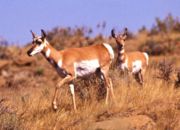
Here's some good news about another animal that was on the verge of extinction. America's fastest mammal, the Sonoran pronghorn, is backing away from the brink sooner than expected…
Florida Everglades Off the Danger List of World Heritage Sites
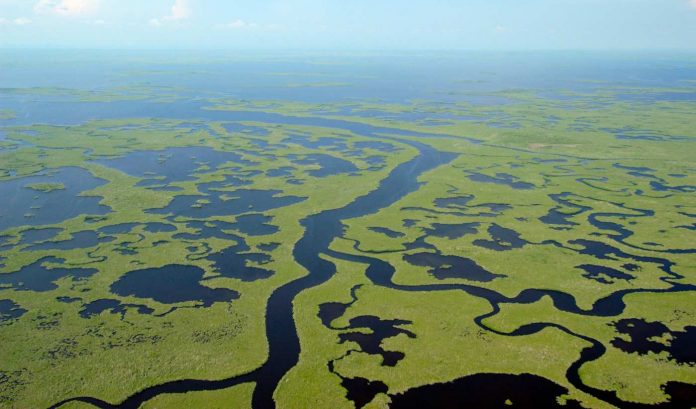
The World Heritage Committee announced that significant improvements in the preservation of the Everglades National Park in Florida, and of the Río Plátano Biosphere Reserve in Honduras, were sufficient to warrant their removal from UNESCO’s list of endangered World Heritage Sites.
The committee, in its 31st meeting, reviewed the list of 830 World Heritage Sites, including 31 they have deemed in danger or under threat. Thanks in part to an $8 billion investment by the United States government and a Comprehensive Everglades Restoration Plan, the Florida site, described as a river of grass, has been well on the road to recovery since its placement on the Danger List fourteen years ago.
The Everglades’ exceptional variety of water habitats has made it a sanctuary for a large number of birds and reptiles, including threatened species such as the manatee. It had been threatened by urban growth and pollution, as well as by the damage caused to Florida Bay in 1992 by Hurricane Andrew.
The Río Plátano Biosphere Reserve, one of the few remaining tropical rainforests in Central America, has been rehabilitated over eleven years. The corrective measures, recommended by the World Conservation Union in 1996, helped restore the abundant and varied plant and wildlife that was under threat by encroachment of agriculture, timber trade and hunting. They also reclaimed a traditional way of life for the some 2,000 indigenous people of the mountainous forest.
The World Heritage Committee is the governing body of the 183 nation UNESCO World Heritage Convention, which seeks to identify, recognize and protect the world’s most significant natural and cultural heritage. Their website lists all the sites sorted by nation here.
RELATED: Congress Votes Overwhelmingly to Restore Everglades, November, 2000:
Rarely does support for environmental action arrive from such a broad base of citizens: Democrats and Republicans, landowners and environmentalists, farmers and home builders. Rep. Clay Shaw, R-Florida, called the plan “the biggest environmental restoration project in the history of the world.”
Feathers Fly in Tel Aviv Pillow Fighting
“Israelis try to cushion the effects of their daily stress by taking part in the third annual mass pillow fight. While Israeli forces attack in Gaza and the regional conflict seemed far from an end, residents of the coastal city of Tel Aviv engage in some stress-busting scuffles involving pillows.” (Video)
A Greener Way to Grow Green Lawns
Summer is here and you want to roll in the green grass with your loved ones, so have you considered letting go of those 40-pound bags of chemical fertilizers and bottles of scary weed killers? Let your grass out of its chemical prison so it can spread its roots. Here’s how:
Cheetahs to Enter Olympics?

If Oscar Pistorius gets his way there will be a pair of ‘cheetahs’ entering competition in the 2008 Olympics in Beijing, China. Opposition to his dream is fierce, however. The cheetahs are thought to have an unfair advantage over normal competitors. Actually, these “cheetahs” are not the feline type, but rather the name given to a pair of j-shaped prosthesis Oscar will wear if he becomes the first amputee runner in the Olympic Games — Oscar, a.k.a., “The Fastest Thing on No Legs.”
The controversy over his desire to enter competition in the Olympics (he is a two-time medalist from the 2004 Paralympics) is heated by concern that he would have an unfair advantage — a testament to the progress made with limb prostheses in recent years…
The myoelectric hand is an excellent example of the technological advance made in this area. This device is capable of responding to brain commands via a computer chip and sensors attached to muscles on the chest and back and can provide the dexterity and control needed to tie a shoelace, for example. This device has already been built upon to include a full arm as well and earlier this year Claudia Mitchell, a former US marine who lost her arm in a motorcycle accident, was able to benefit from this device. To use it, surgeons had to re-route the motor nerves that once controlled her arm into muscles in her chest and side. In this situation, if she tries to move her arm or hand, specific muscles in her chest or side will contract and a myoelectric sensor attached to the muscle detects the contraction and sends the appropriate message to the arm or hand. With this device she was able to regain some significant abilities, such as being able to cut up food at a pace four times faster than someone with a more traditional prosthesis.
A bionic foot and ankle was recently patented by the researchers at the Biomechatronics Lab at MIT that attempts to match the function of a normal foot during walking and over a variety of different terrain, such as stairs. The ankle contains a motor that controls the angle and force absorbed and released with each step. A similar device from Ossur called the Proprio Foot is already on the market and it touts the ability for users to place both feet behind their knees when getting up or sitting down into a chair (the most natural position) and when walking it automatically lifts the toes at the appropriate point in the step to ensure sufficient ground clearance and create a balanced gait. The same company also offers a bionic knee that interactively responds to changes in the walking speed, applied weight and terrain.
But what of Oscar Pistorius? The International Association of Athletics Federations has given the South African the green light to compete in 2008 reversing a decision earlier this year that banned any athlete from competing that would benefit from artificial help. But while the go ahead has been given, the scientific investigation into the technical advantages of his “cheetahs” continues. As long as this investigation shows that there is no technical advantage and more critically, if Oscar can qualify for entry, the world will have even more of a reason to watch the most spectacular sporting event on Earth come 2008.
Additional Information: Ossur – www.ossur.com
Oscar Pistorius’s Web site
Michael Little works in analytical chemistry and has almost 20 years experience in the research based pharmaceutical industry. Michael resides in Laval, Quebec, with his wife and three children. Michael has written occasional science articles for GNN since 2007.
Good News Network Now on FaceBook

Facebook now is home to the Good News Network!
The second largest social networking site on the web, Facebook boasts more than 25 million members. Now it can aid the mission of the Good News Network by spreading our positive news messages of the world. Check out this screen shot of the GNN Group at Facebook…
Americans Set Record for Charity in 2006
"Americans gave nearly $300 billion to charitable causes last year, setting a record and besting the 2005 total that had been boosted by a surge in aid to victims of hurricanes Katrina, Rita and Wilma and the Asian tsunami." (AP via USA Today)
Encouraging Signs That Elder Care is On the Mend

Finally, for the first time, I have hope.
I started my career in the aging field in the "mean old days" of the 1970s, when much of the care in nursing homes was horrible. Today, the quality is better in home care, residential care and nursing homes. It's still not good enough, but thanks to a few providers with a new philosophy, there's a growing movement that's proving it's possible to provide not just good but exceptional eldercare…
Eco-Friendly Bamboo Bikes: a New Way to Pedal

Bamboo has captured the imagination of American manufacturers — providing the material for everything from plush tee shirts to baseball bats to flooring. Count in a bicycle shop owner whose bamboo bikes could "provide rudimentary transport — and jobs — in the emerging world," where bamboo is abundant. (LA Times) Thanks to Andrew for the link! (photo: Iron Man Bike of bamboo)
______________________________________________
______________________________________________
New Environmentally Friendly Jet Planned

"A new British low-cost airline easyJet has unveiled a design for their planned ecoJet that would be 25 percent quieter and emit 50 percent less carbon dioxide and 75 percent less nitrous oxide than today’s newest short-haul airliners." (Live Science)
Free Angels Bring Hope to Thousands

Linda Richard of Beaumont, Texas, delivers small hand painted ceramic angels to people living with life threatening illnesses such as HIV/AIDS and cancer, and recovering from major surgery or burns. Since 2001, Angels Of Destiny has sent thousands of angels to severely ill people, with children placed at the top of the list. As an avid collector of angels, Linda knows the comfort an angel nearby can bring…
The angels are made to represent all ethnic groups, and chosen to match the race and hair-color of the recipient.
If you’d like to request an angel for a loved one, whether at home or in a hospital, burn unit, military hospital, or cancer center, visit their website. The only cost is for shipping.
“I would like to say to everyone hoping to make a difference in this world to hold on to your dreams.” said Linda. “Find someone to believe in you (or believe in yourself).”
Angel recipients’ names are added to a prayer list and included in prayers for a full month. They will also receive a copy of The Father’s Love Letter, included as “a reminder of God’s great love for them.”
Angels Of Destiny is operated by an all volunteer staff. If you live in the Beaumont, Texas area and would like to volunteer, especially if you have experience painting ceramics, visit the website.
Court Protects Email from Secret Government Searches

A landmark ruling has given e-mail the same constitutional protections as phone calls. The government must have a search warrant before it can secretly seize and search emails stored by email service providers, according to a landmark ruling Monday in the 6th U.S. Circuit Court of Appeals. The court found that email users have the same reasonable expectation of privacy in their stored email as they do in their telephone calls — the first circuit court ever to make that finding. (Hooray!)
Bald Eagle Soars Off Endangered List: 11,000 Pairs From Only 417
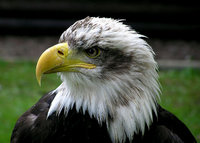
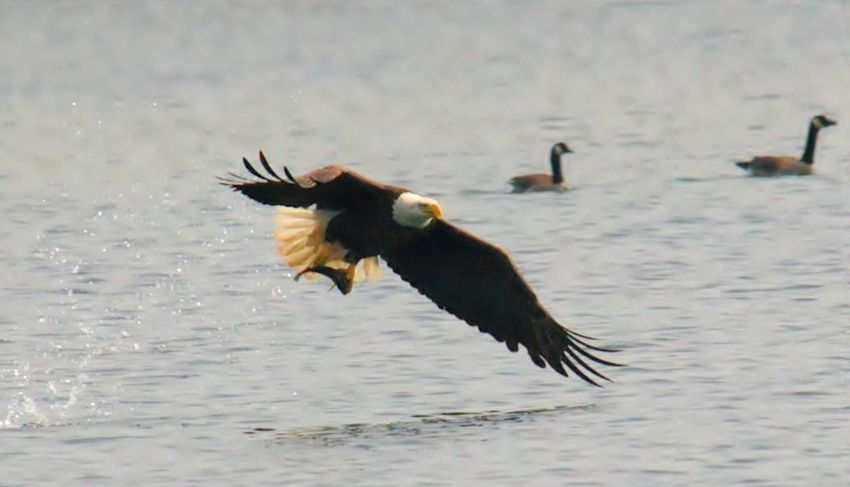
In one of the world’s greatest conservation success stories, bald eagle populations have climbed from a dismal count of just 417 nesting pairs in the entire continental US in 1963 to more than 11,000 pairs today in 2007.
This week the U.S. Fish and Wildlife Service removed the bald eagle from the list of threatened species entirely, after upgrading it in 1995 from endangered to threatened.
The United States government came to the eagle’s rescue by naming it one of the first species afforded full protection under the 1973 Endangered Species Act. It banned the use of lead shot for bird hunting in 1991, and funded an aggressive captive breeding program that assured for future generations the prominence of one of the most magnificent birds in the American landscape.
Half a million bald eagles inhabited the United States when the pilgrims arrived. Though the bird was made the U.S. national symbol on June 20, 1782, it suffered terrible abuses due to the mistaken belief that it was a dangerous predator. It was fed to hogs in Maine, shot from airplanes in California, poisoned in South Dakota, and hunted under a 50-cent bounty in Alaska. One hundred thousand eagles were killed in Alaska alone between 1917 and 1950. The state of Georgia declared that eagles, like the “hawk, owl, crow, sparrow, and meadow-lark, are considered to do more harm than good and may be shot at any time.”
These impacts declined somewhat with the passage of the Bald Eagle Protection Act of 1940, but everywhere eagle habitat continued to be logged, grazed, bulldozed and converted to farmland and housing. Eagles declined throughout the lower 48 and were extirpated from many states long before DDT became prevalent. The small populations that survived to the 1950s and 60s suffered catastrophic reproductive failure due to the thinning of their eggshells by DDT. All this began to change when the bald eagle was placed on the first national endangered species list in 1967. The listing (and that of the brown pelican and peregrine falcon) was a major factor in convincing Congress to ban most outdoor uses of DDT in 1972.
Eagle populations rebounded in response to the banning of DDT, protection from killing, habitat protection and restoration, artificial incubation of eggs, fostering of chicks, and reintroduction of eaglets.
A web-based report presents state-by-state graphs of eagle counts from 1967 to 2007 and provides a brief review of each state’s conservation history. Such information has never been collected in a single site before.
Four Regional Successes:
District of Columbia
The last bald eagle in Washington, D.C. deserted its Kingman Island nest on the
Anacostia River in 1946. From 1995 to 1998, urban youth volunteers with
the Earth Conservation Corps released four Wisconsin-born eaglets per year in the U.S. National Arboretum on the west bank of the Anacostia River. Several Corps members were killed in gang-related violence during the project. Three of the released eagles — Tink, Bennie, and Darrell — are named after them. In 2000, eagles nested again in D.C. on National Park Service land near the confluence of the Anacostia and Potomac Rivers. From their perch 80 feet high in an oak tree, they can see the Washington Monument and the National Cathedral. The nest was active in all years through 2007, but did not produce chicks in 2005 or 2006.
Alabama
Historically, bald eagles were common along Alabama’s Gulf Coast and the Tennessee Valley. The population dwindled throughout the first half of the 20th century and was extirpated from the state after a last nesting attempt in 1949. The Alabama Department of Conservation and Natural Resources initiated a Bald Eagle Restoration Project in 1984, releasing 91 juvenile eagles between 1985 and 1991. The first release was of four birds at Guntersville Lake in Jackson County. The first nesting attempt occurred in 1987, but was unsuccessful. Additional unsuccessful attempts occurred in 1988, 1989, and 1990 until in 1991 two nesting pairs successfully fledged young. Successful nesting has occurred in every year since, with the population steadily growing to 100 breeding pairs in 2007. The eagle is now found throughout the state along major lakes and rivers.
Iowa
The bald eagle was formerly a common nester throughout Iowa, but was extirpated by the early 1900s due to habitat loss and persecution. The killing of adults and removal of nestlings, such as occurred at a long-occupied nest near Rowan in Wright County in 1877 was typical. The last nest known to be occupied occurred near Kellogg in Jasper County in 1905. Both eaglets were taken. Seventy-two years later, in 1977, a successful nest was found near New Albin in the Mississippi River floodplain. The population has dramatically increased since then to 210 pairs in 2007.
New York
Bald eagles commonly nested in New York in the 19th century, began declining in the early 1900s, were rare by the 1950s, and dwindled to virtual extirpation in the 1960s. By 1974, the state population consisted of a single, non-reproducing pair in Livingston County. To save the species, New York instituted the first systematic reintroduction program with a combination of egg transplants, chick fostering, and eaglet hacking. Though unable to produce their own eggs, the Livingston County pair successfully accepted and fledged eight foster eagles over a five-year period. Between 1976 and 1988, 198 eaglets (mostly from Alaska, but also from the Great Lakes) were brought to New York and hacked into the wild. The first reintroduction consisted of two birds at the Montezuma National Wildlife Refuge, which was believed to be free of DDT. After 13 years of hard work, the eagle population began to expand on its own, jumping from three pairs in 1988 to about 123 in 2007. The state reintroduction program ended in 1988, but New York City recently took up the cause, releasing 20 Wisconsin-born eaglets in Ironwood Hill Park at the northern tip of Manhattan between 2002 and 2006.