












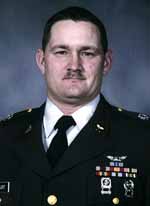
 The Bush administration will allow Wiccans to choose the pentacle, the symbol of their faith, for inscription on government-issued memorial markers for deceased veterans, it was announced today. Officials dragged their feet on the request for years (and were finally sued) but in the interim approved the symbols of six other religions and belief systems, like the Sikh emblem approved in only a few weeks. Wicca is a nature-based religion grounded in pre-Christian beliefs that honors the Divine as both Mother and Father, encompasses love of Nature and its cycles, and encourages harmony among all humans. (Green Bay Press) Related is a June 13, 2006 GNN story, Christianity Today Stands Behind Wiccan Widow.
Wiccans Win a Place in U.S. Military
Kenyans Plant Trees to Coax Back Flamingos
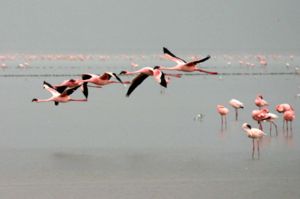
Where once a million flamingos awashed the shores in pink along Lake Nakuru, a community is replanting saplings to help rebuild the forests they had burned for farmland in the 1990’s. Realizing the error in judgment they have planted more than 3000 trees since January, and the flamingos are already returning, along with valuable tourist dollars. (Reuters)
Communities Smile at the Payoffs From Friendliness
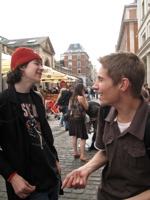
Port Phillip in Australia is encouraging people to smile or say "G’day" — the standard Australian greeting — to both neighbors and strangers as they stroll down the street. "Smiling," the mayor says, "encourages people to feel more connected with each other and safer, so it reduces fear of crime — an important element in the quality of life of many neighborhoods." … "Very small positive experiences can make people not only feel better about themselves, but also be more helpful to others." (The Daily Star also mentions a study showing people who find money left in a phone booth are more likely to help others.)
EARTH DAY News From the States: IL, WA, and GA
For a happier Earth Day, read four stories from the states, where in Washington, Illinois and Georgia, beautiful areas of the United States are being protected and efforts are being launched to mitigate global warming… Happy day, Earth!
First Academy Award Winning Film Released Under A Creative Commons License (Video)

The 1997 Academy Award®-winning documentary, “A Story of Healing,” has been re-released this week under a Creative Commons License, the first time in history that an acclaimed film is being widely distributed over the Internet for free with the message, “Please copy.” The nonprofit group that was the subject of the film recognized that by releasing the film under a relatively free license (strictly for non-commercial use, attribution required and no derivatives allowed) they would encourage people to spread the word about their inspiring charitable work. (And the fact that it’s here on the Good News Network proves they were right.)
KENYA: Slum-Dwellers to Benefit from UN Housing Fund
Millions of people living in urban slums throughout the world are set to benefit from the pro-poor housing fund set up by UN-Habitat and its partners, a senior UN official said on Friday.
Top Ten Tips for A Greener Work Day

In celebration of Earth Day this Sunday, Office Depot has released the company’s Top Ten Tips for A Greener Worklife. If small businesses improve their environmental performance by checking off as many items from the list as possible, they could save trees, clean the air and save on energy costs.
1. Go for “greener options” in the products you buy. Today’s greener options go way beyond recycled paper. Lots of products today are cost-effective and high quality, but use fewer chemicals, less energy and less materials resulting in lower waste. Try biodegradable packing peanuts, Foray low-odor and non-toxic dry-erase markers, and recycled scissors at www.officedepot.com/buygreen and through their Green Book catalog.
German Youths Make Amends for Holocaust
Even though it was not their own generation involved in Nazi crimes against Jews, two dozen German youth worked in Israel donating a year of service in libraries, nursing homes and community centers through a group called Ot Hakapara, Hebrew for “Sign of Atonement.” (AP via Guardian)
Hope for Mountain Gorilla Survival
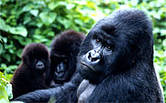
After a decade of conservation efforts, the mountain gorillas in Eastern Africa are showing a steady comeback. Results of a survey released today indicate that there are now 340 gorillas within the Bwindi Impenetrable National Park in Uganda, a 12 percent growth over the past decade, indicating a healthy and well protected population, reports the World Wildlife Fund…
Women Cycle Around the Middle East, for Peace
 249 female cyclists from 30 countries, both Western and Arab, began peddling for peace in northern Syria on April 7 in the third annual Follow the Women – Women for Peace ride. Crowds lined the roads to greet them as they crossed through Lebanon and Palestine. British and Iranian riders formed friendships and the Palestinian team even included 24-year-old Lena Arafat, the daughter of the late Palestinian leader, Yasser Arafat. Today the women finished the trip in Amman, Jordan. A staff writer for the Daily Star in Lebanon, Iman Azzi, talked to participants and shared her thoughts about the trek for peace…
Landmark Oceans Plan Passes in California
To preserve dwindling fish stocks, state lawmakers designated 200 square miles of water off Central California as marine reserves that limit or bans fishing. (AP)
Opinion: The Power of Green (Thomas Friedman)

Thomas Freidman had a great piece in the New York Times this Sunday promoting a Green New Deal, a dream for a hopeful ideology that can galvanize America. "One day … we will need to find a way to reknit America at home, reconnect America abroad and restore America to its natural place in the global order — as the beacon of progress, hope and inspiration. I have an idea how. It’s called ‘green.’ " (NYTimes)
Recycling at Boeing Paid Huge Dividends in 2006

Every day is Earth Day at Boeing!… Why? Because it puts money in their pocket. "The aerospace company said it earned more than $60 million last year as part of its massive recycling efforts, which included selling scrap metal and hawking used drill bits, safety glasses, wood containers and other excess goods at its six surplus stores in three states." Microsoft, Nordstrom and Costco are also heavily recycling. (Seattle P-I)
New Coffee Helps Save Chimps and Impoverished Farmers at the Same Time
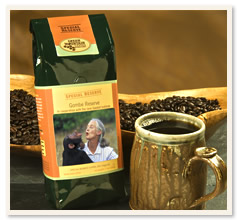
Chimpanzees and coffee have more in common than you might think.
It was in Gombe National Park in Tanzania in 1960 that legendary primatologist Dr. Jane Goodall first observed chimps in their natural habitat, the same lush habitat where coffee thrives. Beginning today, coffee lovers will be able to help preserve chimp habitat with each sip of their daily brew. A partnership was launched that will help to save these chimpanzees from the threat of extinction and also uplift their neighbors — the impoverished villagers surrounding the park — at the same time…
Poem From South Africa: Time Turns
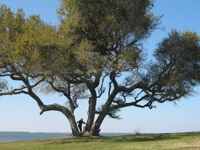
Editor’s Note– Today seems like a perfect day for publishing poems, so we’re choosing this day in April to celebrate "Poetry Month" in America. This is an item I’ve been saving, from Mike in South Africa. He wrote it in 1998 and he never finished it. When he sent it to me in February he said, "Readers can add their own additions and maybe something good will come of it."
I love it and think you might have some brilliant additions. Here is his poem, Time Turns…
Colombian Rebels Ready to Solidify Cease-fire, Urged by Novelist Marquez
Colombia has initiated several rounds of peace talks with that country’s second largest rebel group. In addition, the Colombian Nobel-winning novelist Gabriel Garcia Marquez met with rebel leaders in mid-March to help move negotiations forward. On Monday the rebels revealed they would “experiment to create an environment of peace (and) immediately … to solidify a cease-fire” in return for a release of prisoners. (Herald Tribune)
Virginia Tech Shooting: Crisis Charity Offers Tips, Tools to Deal with Aftermath

Following the fatal shooting of dozens of students at Virginia Tech University in Blacksburg, the national children’s crisis charity KidsPeace is issuing expert tips to help schools, parents, and children cope with the aftereffects of the situation. The 125-year-old nonprofit is also alerting schools and the public about the existence of a free resource that helps young people resolve problems before they become dangerous, and which has prevented school shootings in the past…
Mother Grabs Boys From Car as it Hurtles Towards a Cliff
A family’s car was rolling toward a 250-foot cliff with two boys still playing inside. "Somehow Mrs. Davis raced to their side, reaching in through the door and fighting with the straps and safety seats. She pulled the boys to safety a split second before the pick-up plunged over the cliff." (London’s Daily Mail – photos) Thanks to GNN fan Chris Manners for submitting the link!
Solar Power Breakthrough Requires No Direct Sun

New Zealand- "New solar cells developed by Massey University don’t need direct sunlight to operate and use a patented range of dyes that can be impregnated in roofs, window glass and eventually even clothing to produce power. Researchers at the centre have developed a range of synthetic dyes from simple organic compounds closely related to those found in nature, where light-harvesting pigments are used by plants for photosynthesis." (stuff.co.nz) Thanks to Kay Lenton ‘down under’ for submitting the link!
200 Service Stations Make the Switch to Greener Fuels

Australia — The ethanol industry in Queensland reached a major milestone, with more than 200 service stations now offering drivers the choice of renewable ethanol-blended fuels. There has been a five-fold increase in the number of outlets supplying ethanol-blended fuels thanks to the Queensland Ethanol Industry Action Plan launched in November 2005.
Premier Beattie announced that together, the 200 +e fuel stations now represent 16 percent of the 1,300 service stations in the Queensland state.
“City dwellers have the greatest opportunity to purchase +e fuels with 60 percent of the total +e service stations.”
“The initiative has been important in assisting fuel distributors overcome the additional expense incurred for blending infrastructure, storage facilities and transport of ethanol-blended fuel,” he said.
State Development Minister John Mickel said the benefits of using ethanol-blended fuels were also being promoted to Queensland motorists through the ongoing +e marketing campaign, which aims to educate motorists about the benefits of using renewable fuels.
“The +e Ethanol Powered by Nature campaign aims to increase consumption of safe, renewable ethanol-blended fuel in Queensland by informing and educating motorists,” Mr Mickel said.
Independent research commissioned by the Beattie Government shows that attitudes towards ethanol-blended fuel are changing. 42 percent of survey respondents are regularly fuelling up on ethanol blended fuel and most who try the fuel use it more than once.
Sixty percent of Queenslanders also recognise the environmental benefits from using ethanol-blended fuel, which is made from sugar cane or grains such as sorghum or wheat.
Mr. Mickel called on Queensland’s motorists to help drive this growth by filling up with ethanol-blended fuel.
Motorists are encouraged to check their vehicle’s compatibility with ethanol-blended fuel by contacting their manufacturer or visiting the Federal Chamber of Automotive Industries Web site www.fcai.com.au/ethanol
For a list of Queensland service stations retailing ethanol-blended fuel visit the ‘+e Ethanol Powered by Nature’ Web site at www.ethanol.qld.gov.au.