Quote of the Day: “Care is a state in which something does matter; it is the source of human tenderness.” – Rollo May
Photo by: mhrezaa
With a new inspirational quote every day, atop the perfect photo—collected and archived on our Quotes page—why not bookmark GNN.org for a daily uplift?
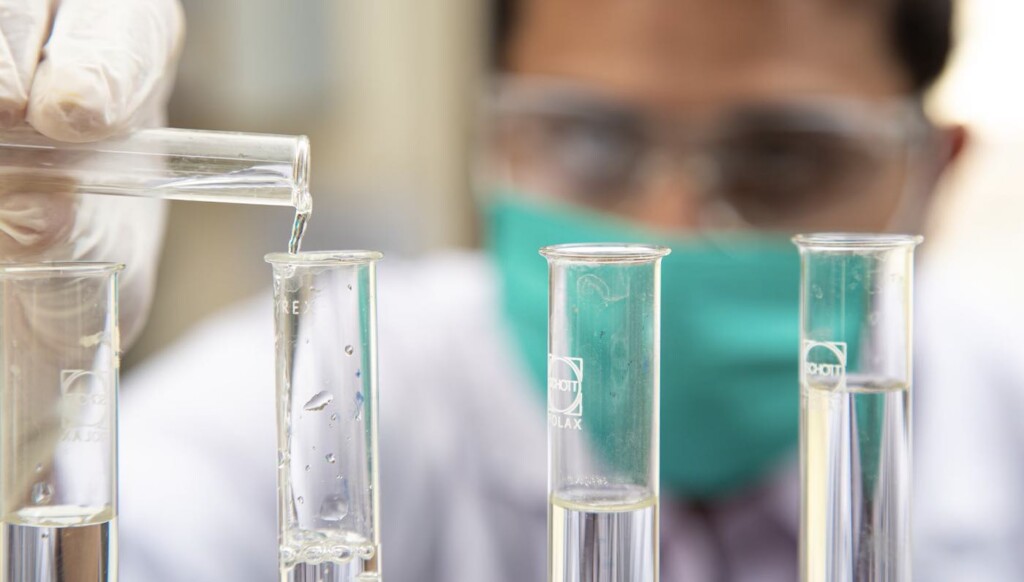
Oxford University scientists have discovered proteins in the blood that could warn people of cancer more than seven years earlier than currently possible.
In two studies, they identified 618 proteins linked to 19 different types of cancer, including 107 proteins in a group of people whose blood was collected at least seven years before diagnosis.
The research team discovered that the proteins could be involved at the very earliest stages of cancer, when the disease could be prevented.
The team believes the breakthrough could not only help treat the disease at an earlier stage, but even prevent it altogether.
They used a powerful technique called proteomics which allows them to analyze a large set of proteins in tissue samples at a single point in time, to see how they interact with each other—and find any important differences in proteins between different tissue samples.
In the first study, scientists analyzed blood samples taken from more than 44,000 British people, including more than 4,900 people who were subsequently diagnosed with cancer.
Using proteomics, the researchers analyzed a set of 1,463 proteins from a single sample of blood from each person. They compared the proteins of people who did and did not go on to be diagnosed with cancer to look for differences between them and find out which ones were linked to the disease risk.
The researchers also identified 182 proteins that differed in the blood three years before a cancer diagnosis took place.
In the second study, the team looked at genetic data from more than 300,000 cancer cases to do a “deep dive” into which blood proteins were involved in cancer development and could be targeted by new treatments.
They found 40 proteins in the blood that influenced someone’s risk of getting nine different types of cancer.
While altering the proteins may increase or decrease the chances of someone developing cancer, the researchers also discovered which ones may lead to “unintended side-effects”.
But the team, whose findings were published in the journal Nature Communications, stressed that they will need to do further research to find out the exact role the proteins play in cancer development. They also need to work out which of the proteins are the most reliable ones to test for, what tests could be developed to detect the proteins and which drugs could target them.
“To save more lives from cancer, we need to better understand what happens at the earliest stages of the disease,” said Dr. Keren Papier, co-author of the first study.
“We need to study these proteins in depth to see which ones could be reliably used for prevention,” explained Dr. Papier, a Senior Nutritional Epidemiologist at Oxford Population Health.
“Data from thousands of people with cancer has revealed really exciting insights into how the proteins in our blood can affect our risk of cancer,” said Dr. Papier.
“The genes we are born with, and the proteins made from them, are hugely influential in how cancer starts and grows,” explained co-author Dr Joshua Atkins, a Senior Genomic Epidemiologist.
Thanks to the thousands of people who gave blood samples to UK BioBank, researchers can build a much more comprehensive picture of how genes influence cancer development over many years.
“We’ve predicted how the body might respond to drugs that target specific proteins, including potential side-effects. Before clinical trials, we have some early indications of which proteins we might avoid targeting because of unintended side-effects,” said co-author Dr. Karl Smith-Byrne.
“This research brings us closer to being able to prevent cancer with targeted drugs – once thought impossible but now much more attainable,” said the Senior Molecular Epidemiologist at Oxford,
“To be able to prevent cancer, we need to understand the factors driving the earliest stages of its development,” said another team member Professor Ruth Travis.
“These studies are important because they provide many new clues about the causes and biology of multiple cancers, including insights into what’s happening years before a cancer is diagnosed.”
“We now have technology that can look at thousands of proteins across thousands of cancer cases, identifying which proteins have a role in the development of specific cancers, and which might have effects that are common to multiple cancer types,” exclaimed Prof. Travis.
Dr. Iain Foulkes, an executive director at Cancer Research UK, which funded the work said, “Preventing cancer means looking out for the earliest warning signs of the disease.
“That means intensive, painstaking research to find the molecular signals we should pay closest attention to.”
“Discoveries from this research are the crucial first step towards offering preventative therapies which is the ultimate route for giving people longer, better lives, free from the fear of cancer.”
THINK ABOUT Sharing The Detection News on Social Media…
Even after her death, Lillian Orlich is still serving the students of the Virginia school system where she taught for 67 years before retiring at 89.
In her will, she left them $1 million.
Known as “Ms. O” by generations of students, Lillian passed away on March 7. Within a month, employees at Prince William County Schools learned the news of her generous donation.
It may be surprising that a high school history teacher could save a million bucks, but she never married or had children, and friends say she lived a frugal lifestyle.
She spent most of her career at Osbourn High School in Manassas and Osbourn Park High School in the county outside of Washington, DC. By the time she retired, the students and her colleagues had become her family.
“I don’t have any living relatives,” she once told the Washington Post. “These are my relatives.”
The $1 million donation was paid to SPARK, the education foundation for the PW county schools. It will be used to expand a scholarship she set up with SPARK after retiring six years ago—which has already benefitted dozens of students who received cash grants for college.
The money will also be distributed across the foundation’s six focus areas, which include STEM education; social and emotional learning; digital innovation; school improvement; and particularly on educator preparedness because Orlich was a long-time teacher.
“Lillian Orlich’s devotion to this community is unprecedented because she dedicated her life’s work over the course of the last 3 quarters of a century investing in our future leaders,” said PWCS Superintendent of Schools Dr. LaTanya McDade.
Described as “a true Prince William County legend,” Lillian arrived early every day, often coming to the school at 3 a.m. She even worked through the summers—and for years she brought in food for the staff every Monday, according to the Post.
“The footprints she’s left in our hearts and minds can never be erased and her legacy lives on in the lives of the students and staff she impacted,” said McDade.
“She was the best teacher I ever had,” Michael Simpson told GNN.
Melissa Boyle, President of SPARK, said they were honored and proud to continue her legacy. “This is a rare and an inspirational moment in this school system.”
Shortly after she died at age 95, a memorial service was held for her at Osbourn Park High, in the auditorium named after her.
“Her compassion and unwavering commitment to selfless service has profoundly impacted countless generations,” said one Prince William County School Board member.
INSPIRE EDUCATORS and Family By Sharing This on Social Media…
Stroke is the top cause of disability worldwide—and the second leading cause of death—but the good news is that early intervention can prevent severe consequences, and a new tool could be a game-changer.
Researchers at Brigham and Women’s Hospital developed a new test by combining blood-based biomarkers with a clinical score to identify patients experiencing large vessel occlusion strokes (LVO) with high accuracy.
“We have developed a game-changing, accessible tool that could help ensure that more people suffering from stroke are in the right place at the right time to receive critical, life-restoring care,” said Joshua Bernstock, MD, PhD, a clinical fellow in the Department of Neurosurgery at the Boston hospital.
Most strokes are ischemic, in which blood flow to the brain is obstructed. LVO strokes are an aggressive type of ischemic stroke that occurs when an obstruction occurs in a major artery in the brain.
When blood supply to the brain is compromised, the lack of oxygen causes brain cells to die within minutes, making LVO strokes a major medical emergency requiring swift treatment with mechanical thrombectomy—a surgical procedure that retrieves the blockage.
“Mechanical thrombectomy has allowed people, that otherwise would have died or become significantly disabled, to be completely restored, as if their stroke never happened,” explained Dr. Bernstock.
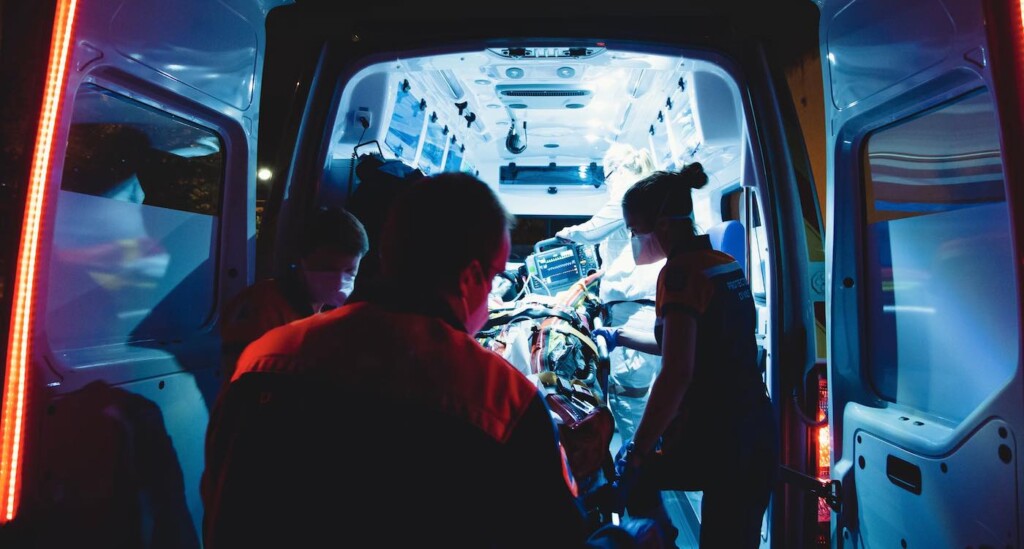
But brain bleeds cause similar symptoms to LVO stroke—yet treatment for each is vastly different. The new test makes it easy to distinguish one from the other while diagnosing in the field. Here’s how they did it:
Previously, the research team targeted two specific proteins found in capillary blood, one called glial fibrillary acidic protein (GFAP), which is also associated with brain bleeds and traumatic brain injury, and one called D-dimer.
By NAPOLY – matnapo
In this study, they demonstrated that the levels of these blood-based biomarkers combined with the scores observed during field assessment (stroke triage for emergency destination, or FAST-ED) could identify LVO ischemic strokes, while ruling out other conditions such as bleeding in the brain.
“The earlier this intervention is enacted, the better the patient’s outcome is going to be. This exciting new technology has the potential to allow more people globally to get this treatment faster,” said Bernstock, senior author of the study published in the journal Stroke.
In their diagnostic accuracy study, the researchers looked at data from a cohort of 323 patients coded for stroke in Florida and found that combining the levels of the biomarkers GFAP and D-dimer with FAST-ED scores less than six hours from the onset of symptoms allowed the test to detect LVO strokes with 93 percent specificity and 81 percent sensitivity.
Furthermore, the test ruled out all patients with brain bleeds, signaling that the technology may ultimately also be employed to detect intracerebral hemorrhage in the field.
Bernstock’s team also sees promising potential future use of this accessible diagnostic tool in low- and middle-income countries, where advanced imaging is not always available. It might also be useful in assessing patients with traumatic brain injuries.
Next, they are carrying out another prospective trial to measure the test’s performance when used in an ambulance. They have also designed an interventional trial that leverages the technology to expedite the triage of stroke patients by having them bypass standard imaging and move directly to intervention.
“In stroke care, time is brain,” Bernstock said. “The sooner a patient is put on the right care pathway, the better they are going to do.
“Whether that means ruling out bleeds or ruling in something that needs an intervention, being able to do this in a prehospital setting with the technology that we built is going to be truly transformative.”
SHARE THE LIFE-SAVING BREAKTHROUGH With Health Workers on Social Media…
Donnell and Mary Leahy play violin fiddle at Peterborough Music Festival / SWNS
An 18-year-old who broke her wrist was still able to play her gig after her dad lent her a hand—literally.
Mary Leahy broke her wrist just two days before her big solo at the Peterborough Music Festival, after falling off a farm cart.
But instead of pulling out, her father Donnell Leahy—one of the best fiddle players in Canada who toured with Shania Twain—stepped in to create a very special duet.
The 55-year-old oscillated the bow while Mary played the chords with her healthy hand.
“I don’t know how, but I managed to play with my left hand only,” said Mary, a full-time musician from Peterborough, Ontario. “It was really hard.
“I honestly don’t know how I pulled it off, but I did.
“His left hand was playing the fingers on my back (which) was tickling me, while I had to imagine myself playing the bow with my right hand.
They know the instrument inside and out, so the result looked and sounded seamless. (Watch the video below…)
“I think the novelty of it makes the show better. We’re even thinking of making it part of the act.”
Mary Leahy
Mary has been touring with her parents for 12 years, after starting fiddle lessons at age four.
The band, the MacMaster/Leahy Family, includes Mary’s talented mother, Natalie MacMaster, and her six younger siblings. The Celtic family plays festivals every summer.
After falling from a farm cart, she ended up with a wrist splint, and thought she’d have to sit on the sidelines.
“I’m usually the last person to do something stupid,” she mused. “I didn’t think for a second it was broken (but) when I woke up the next day, I was very swollen and very sore.”
Her best friend, Cecilia, who is also a musician, offered to play the piano with her, while dad jumped in on the fiddle.
“I loved having my dad help me out with the solo.”
Donnell, who toured with Shania Twain in 1997, was named as one of the world’s best fiddle players by a Wisconsin university, and has released several CDs with wife Natalie—including a Christmas LP (A Celtic Family Christmas) with the children joining the performances.
Watch the fantastic last-minute improvisation…
TICKLE YOUR FRIENDS With the Delightful Duet By Sharing on Social Media…
Quote of the Day: “All the great ones have a screw loose”… and that’s a good thing. – Tara VanDerveer (Women’s Basketball Hall of Fame coach who won more games than anyone else in the sport)
Photo: public domain
With a new inspirational quote every day, atop the perfect photo—collected and archived on our Quotes page—why not bookmark GNN.org for a daily uplift?
Patrick Swayze in Dirty Dancing drive-in movie at Bel Air Diner in Queens, NYC – SWNS / Onepoll
Patrick Swayze in Dirty Dancing drive-in movie at Bel Air Diner in Queens, NYC – SWNS / Onepoll
A poll of 2,000 adults found 43 percent believing that filmmaking has never been as good as it was in the 1980s— the era of big hair and leg warmers.
Dirty Dancing, Back to the Future, and E.T. were named the best 80s movies of the decade, according to the survey.
And there’s some cultural heft behind their top choices. The 1987 classic Dirty Dancing starring Patrick Swayze, for instance, won 12 awards after its release, including an Academy Award for Best Original Song, (I’ve Had) The Time Of My Life.
Top Gun, Die Hard, The Terminator, Raiders of the Lost Ark, and Star Wars: The Empire Strikes Back also appeared among the top ten best films named in the survey conducted by OnePoll.
Who were named the most iconic 80s stars? Arnold Schwarzenegger, Tom Hanks, and Tom Cruise.
The most influential directors named in the poll were—drum roll—Steven Spielberg, George Lucas and Ridley Scott.
“80s movies have some serious nostalgia power,” said a spokesperson for Lottoland.co.uk, which commissioned the survey to celebrate its range of new retro games.
“Many of the films on the list are popular with younger people who weren’t even around in that decade—and we’re even seeing the clothes and music coming back around, which I never thought I’d witness again.”
“They take you back to a time of big hair and even bigger movies.”
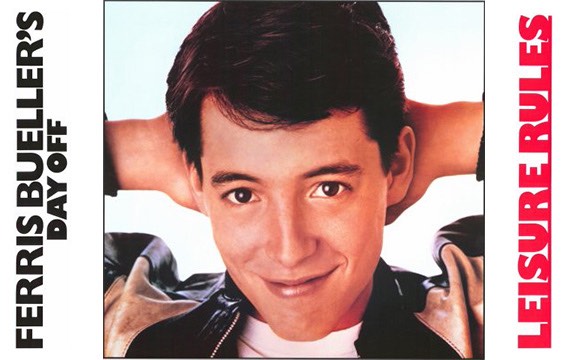
Ferris Bueller’s Day Off (1986), directed by John Hughes, came in at #30
Today, studios have tried to cash in on the classics, releasing remakes of original films—like the 2011 version of Footloose, which only 3% in this poll believed was on par with the 1984 original starring Kevin Bacon.
This might be why 35 percent have encouraged their children to watch films directly from the 80s, and 66% feel passionate about keeping these films alive for future generations, agreeing with the claim, ‘they don’t make films like they used to’.
Maybe you wish you could ‘turn back time” and relive the 80s all over again. Watching some of the films in the list below would be a great start….
TOP 40 BEST FILMS FROM THE 80s
1. Dirty Dancing (1987) – Directed by Emile Ardolino
2. Back to the Future (1985) – Directed by Robert Zemeckis
3. E.T. the Extra-Terrestrial (1982) – Directed by Steven Spielberg
4. Top Gun (1986) – Directed by Tony Scott
5. Die Hard (1988) – Directed by John McTiernan
6. The Terminator (1984) – Directed by James Cameron
7. Raiders of the Lost Ark (1981) – Directed by Steven Spielberg
8. Star Wars: The Empire Strikes Back (1980) – Directed by Irvin Kershner
9. Ghostbusters (1984) – Directed by Ivan Reitman
10. Aliens (1986) – Directed by James Cameron
11. The Goonies (1985) – Directed by Richard Donner
12. The Shining (1980) – Directed by Stanley Kubrick
13. Rain Man (1988) – Directed by Barry Levinson
14. Indiana Jones and the Last Crusade (1989) – Directed by Steven Spielberg
15. Airplane! (1980) – Directed by Jim Abrahams, David Zucker, Jerry Zucker
16. Star Wars: Return of the Jedi (1983) – Directed by Richard Marquand
17. The Blues Brothers (1980) – Directed by John Landis
18. Blade Runner (1982) – Directed by Ridley Scott
19. Fatal Attraction (1987) – Directed by Adrian Lyne
20. Gremlins (1984) – Directed by Joe Dante
21. The Karate Kid (1984) – Directed by John G. Avildsen
22. Batman (1989) – Directed by Tim Burton
23. Beetlejuice (1988) – Directed by Tim Burton
24. The Little Mermaid (1989) – Directed by Ron Clements, John Musker
25. Big (1988) – Directed by Penny Marshall
26. The Breakfast Club (1985) – Directed by John Hughes
27. When Harry Met Sally (1989) – Directed by Rob Reiner
28. Stand by Me (1986) – Directed by Rob Reiner
29. Scarface (1983) – Directed by Brian De Palma
30. Ferris Bueller’s Day Off (1986) – Directed by John Hughes
31. A Nightmare on Elm Street (1984) – Directed by Wes Craven
32. Who Framed Roger Rabbit (1988) – Directed by Robert Zemeckis
33. Beverly Hills Cop (1984) – Directed by Martin Brest
34. The Untouchables (1987) – Directed by Brian De Palma
35. The Color Purple (1985) – Directed by Steven Spielberg
36. Flashdance (1983) – Directed by Adrian Lyne
37. Lethal Weapon (1987) – Directed by Richard Donner
38. Full Metal Jacket (1987) – Directed by Stanley Kubrick
39. Platoon (1986) – Directed by Oliver Stone
40. The Princess Bride (1987) – Directed by Rob Reiner
SHARE THE LIST With Friends And Promote Your Faves On Social Media…
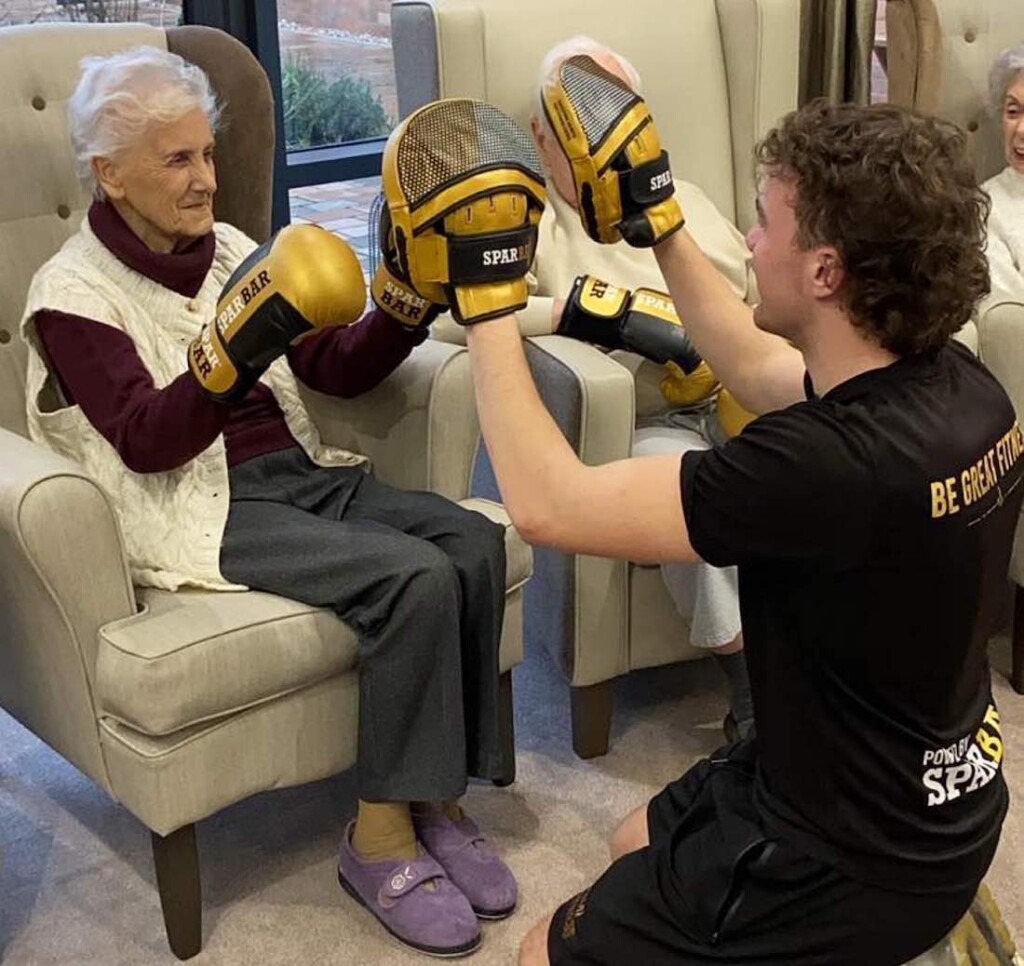
21-year-old Bailey-Greetham Clarke teaches the elderly to box – Be Great Fitness / SWNS
21-year-old Bailey-Greetham Clarke teaches the elderly to box – Be Great Fitness / SWNS
A 21-year-old is helping the elderly in senior homes stay fit with his boxing lessons that elevate focus and fun.
When he was just 17, Bailey-Greetham Clark was asked to speak at a day center for adults with educational needs. After this experience, Bailey realized that people from vulnerable groups do not have the same access to sport and fitness as others—so he started a wellbeing company called ‘Be Great Fitness’.
He now travels around Lincolnshire, England, making fitness and sports accessible to schools, hospitals, community centers and senior care homes.
Especially during COVID-19 lockdowns, the youth from Grimsby realized that these groups needed help pretty quickly.
“Coming out of the pandemic, we thought it was essential to bring fitness to them, especially, to spread some joy and cheer.
“Sport and exercise cheer people up, we make jokes and have a laugh with everyone, and we make their day better.”
It was so successful, Bailey now takes his fitness classes into 20-30 different care homes, guiding residents through one-hour sessions.
From simple boxing drills to hand-eye coordination games, every resident gets to wear the bulbous gloves colored neon pink, yellow, and green.
Bailey-Greetham Clarke teaches elderly seniors to box in Lincolnshire, England – Be Great Fitness / SWNS
Since posting heartwarming videos on TikTok, with up to 700,000 views (watch them below), interest in these sessions has surged, and Bailey has never been busier.
“We get tons of enquiries, my calendar is insane at the moment!
“We’re trying to get more people added to our team and roll sessions out nationally—and we’re working with partners to build on that, said the youth who was invited to do a TEDx Talk talk a year ago.
“I just want to ensure that the people have my passion and enthusiasm. That’s the next challenge, but it’s a great one to have!”
Bailey struggled with a challenging upbringing, and was taken in by his grandparents, which kickstarted his passion for helping the elderly.
When he was 14, he was forced to take a year out of school, and struggled with his weight. When he discovered boxing as a way to keep fit, his whole outlook changed, setting him on the pathway where he is today.
“Seeing first hand the genuine impact we make is insane.
“We can go into homes and show our ability to raise the spirits of not only residents, but the staff too.
FREE WILL ASTROLOGY – Week of May 18, 2024
Copyright by Rob Brezsny, FreeWillAstrology.com
TAURUS (April 20-May 20):
Hypothetically, you could learn to give a stirring rendering of Beethoven’s Symphony No. 5 on a slide whistle. Or you could perform the “To be or not to be” soliloquy from Shakespeare’sHamletfor an audience of pigeons that aren’t even paying attention. Theoretically, you could pour out your adoration to an unattainable celebrity or give a big tip to a waiter who provided mediocre service or do your finest singing at a karaoke bar with two people in the audience. But I hope you will offer your skills and gifts with more discernment and panache, Taurus—especially these days. Don’t offer yourself carelessly. Give your blessings only to people who deeply appreciate them.
GEMINI (May 21-June 20):
When I lived in San Francisco in 1995, thieves stole my Chevy Malibu. It was during the celebratory mayhem that swept the city following the local football team’s Super Bowl victory. Cops miraculously recovered my car, but it had been irrevocably damaged in one specific way: It could no longer drive in reverse. Since I couldn’t afford a new vehicle, I kept it for the next two years, carefully avoiding situations when I would need to go backward. It was a perfect metaphor for my life in those days. Now I’m suggesting you consider adopting it for yours. From what I can discern, there will be no turning around anytime soon. Don’t look back. Onward to the future!
CANCER (June 21-July 22):
Cancerian basketball coach Tara VanDerveer is in the Women’s Basketball Hall of Fame. She won more games than anyone else in the sport. Here’s one aspect of her approach to coaching. She says that the greatest players “have a screw loose”—and she regards that as a very good thing. I take her to mean that the superstars are eccentric, zealous, unruly, and daring. They don’t conform to normal theories about how to succeed. They have a wild originality and fanatical drive for excellence. If you might ever be interested in exploring the possible advantages of having a screw loose for the sake of your ambitions, the coming months will be one of the best times ever.
LEO (July 23-Aug. 22):
Am I one of your father figures, uncle figures, or brother figures? I hope so! I have worked hard to purge the toxic aspects of masculinity that I inherited from my culture. And I have diligently and gleefully cultivated the most beautiful aspects of masculinity. Plus, my feminist principles have been ripening and growing stronger for many years. With that as our background, I encourage you to spend the coming weeks upgrading your own relationship to the masculine archetype. I see this as an excellent time for you to take practical measures to get the very best male influences in your life.
VIRGO (Aug. 23-Sept. 22):
Now that your mind, your heart, and your world have opened wider than you imagined possible, try to anticipate how they might close down if you’re not always as bold and brave as you have been in recent months. Then sign a contract with yourself, promising that you will not permit your mind, your heart, and your world to shrink or narrow. If you proactively heal your fears before they break out, maybe they won’t break out. (PS: I will acknowledge that there may eventually be a bit of contraction you should allow to fully integrate the changes—but only a bit.)
LIBRA (Sept. 23-Oct. 22):
I would love you to cultivate connections with characters who can give you shimmery secrets and scintillating stories you need to hear. In my astrological opinion, you are in a phase when you require more fascination, amazement, and intrigue than usual. If love and sex are included in the exchange, so much the better—but they are not mandatory elements in your assignment. The main thing is this: For the sake of your mental, physical, and spiritual health, you must get your limitations dissolved, your understanding of reality enriched, and your vision of the future expanded.
SCORPIO (Oct. 23-Nov. 21):
Scorpio writer Andrew Solomon made a very Scorpionic comment when he wrote, “We all have our darkness, and the trick is making something exalted of it.” Of all the signs of the zodiac, you have the greatest potential to accomplish this heroic transmutation—and to do it with panache, artistry, and even tenderness. I trust you are ready for another few rounds of your mysterious specialty. The people in your life would benefit from it almost as much as you.
SAGITTARIUS (Nov. 22-Dec. 21):
Have you been nursing the hope that someday you will retrain your loved ones? That you will change them in ways that make them act more sensibly? That you will convince them to shed qualities you don’t like and keep just the good parts? If so, the coming weeks will be an excellent time to drop this fantasy. In its place, I advise you to go through whatever mental gymnastics are necessary as you come to accept and love them exactly as they are. If you can manage that, there will be a bonus development: You will be more inclined to accept and love yourself exactly as you are.
CAPRICORN (Dec. 22-Jan. 19):
I brazenly predict that in the next 11 months, you will get closer to doing your dream job than ever before. Because of your clear intentions, your diligent pragmatism, and the Fates’ grace, life will present you with good opportunities to earn money by doing what you love and providing an excellent service to your fellow creatures. But I’m not necessarily saying everything will unfold with perfection. And I am a bit afraid that you will fail to capitalize on your chances by being too insistent on perfection. Please assuage my doubts, Capricorn! Welcome imperfect but interesting progress.
AQUARIUS (Jan. 20-Feb. 18):
In his book Ambivalent Zen, Lawrence Shainberg mourns that even while meditating, his mind is always fleeing from the present moment—forever “lurching towards the future or clinging to the past.” I don’t agree that this is a terrible thing. In fact, it’s a consummately human characteristic. Why demonize and deride it? But I can also see the value of spending quality time in the here and now—enjoying each new unpredictable moment without compulsively referencing it to other times and places. I bring this up, Aquarius, because I believe that in the coming weeks, you can enjoy far more free time in the rich and resonant present than is normally possible for you. Make “BE HERE NOW” your gentle, relaxing battle cry.
PISCES (Feb. 19-March 20):
Two-thirds of us claim to have had a paranormal encounter. One-fourth say they can telepathically sense other people’s emotions. One-fifth have had conversations with the spirits of the dead. As you might guess, the percentage of Pisceans in each category is higher than all the rest of the zodiac signs. And I suspect that number will be even more elevated than usual in the coming weeks. I hope you love spooky fun and uncanny mysteries and semi-miraculous epiphanies! Here they come.
ARIES (March 21-April 19):
Polish-born author Joseph Conrad (1857–1924) didn’t begin to speak English until he was 21 years old. At 25, his writing in that language was still stiff and stilted. Yet during the next 40+ years, he employed his adopted language to write 19 novels, numerous short stories, and several other books. Today he is regarded as one of the greatest writers in the English language. You may not embark on an equally spectacular growth period in the coming months, Aries. But you do have extra power to begin mastering a skill or subject that could ultimately be crucial to your life story. Be inspired by Conrad’s magnificent accomplishments.
WANT MORE? Listen to Rob’s EXPANDED AUDIO HOROSCOPES, 4-5 minute meditations on the current state of your destiny — or subscribe to his unique daily text message service at: RealAstrology.com
Quote of the Day: “It is amazing what you can accomplish if you do not care who gets the credit.” – Harry Truman
Photo by: Seb Mooze
With a new inspirational quote every day, atop the perfect photo—collected and archived on our Quotes page—why not bookmark GNN.org for a daily uplift?
Aerial View of RGK Ranch Credit: Erich Schlegal for RGK Ranch
Aerial View of RGK Ranch Credit: Erich Schlegal for RGK Ranch
A rare win for conservation was just scored in the fast-developing Travis County, Texas, where 30 minutes from Austin’s busy tech sector, music venues, and barbeque spots, a historic family ranch has just been converted into a public park.
It wasn’t just converted, it was voluntarily sold by the family who owned it—at $40 million less than what developers were offering to turn the partially forested Hill Country remnant close to Hamilton Pool Preserve into a series of apartment complexes and shopping malls.
Known as RGK Ranch, this 1,507-acre cattle ranch was owned by the Kozmetsky family for three generations. Its recently deceased owner, George Kozmetsky, made a fortune with a company called Teledyne, and invested a lot of money, entrepreneurially and philanthropically, in Austin and Travis County.
George is survived by his son Daniel and daughter Nadya, who grew up spending summers on the ranch hiking the hills, floating on an intertube down Bee Creek, spotting bobcats, deer, and snakes among the scrub, and hunting for treasures like shed antlers, arrowheads, and fossils amid the unique karst rock formations.
The RGK Foundation, set up by George, and particularly at the initiative of Nadya, agreed to sell all but 90 acres of the ranch to Travis County for $90 million, which was funded by the Proposition B Parks Bond Measure, which Austin voters passed last November.
“The property was permitted for 1,400 houses and 150 acres of commercial development, including apartments and shopping centers,” said Jeff Francell, associate director of land protection for the Nature Conservancy in Texas, which facilitated the transaction.
“Instead of rooftops, they’re turning that property, which is incredibly close to Reimers Ranch, into a park everyone can use.”
Texas Monthly writes that because Travis County and other metropolitan areas in Texas are some of the fastest growing areas of the country, the state park system is straining to meet the demand of residents, and some parks are becoming overcrowded. Nowhere is this more true than in Travis, where the delicate and unique Hill Country was, for a period, being devoured by developers.
The fightback, so to speak, began in the 1980s, when Hamilton Pool Preserve was created to protect amazing hiking trails and the beautiful, crystal-clear waters of a limestone-fed swimming hole. In 2005, Reimers Ranch Park, another slice of Hill Country, was created, and now, RGK Ranch, which sits between the other two, will take the total amount of protected acreage in the zone to 5,430 acres.
“The Nature Conservancy has worked with the county ever since to add land and conservation easements around the park to preserve water quality, wildlife habitat, and just the rural character of the western end of Hamilton Pool,” Francell told Texas Monthly. “While this part of the county has developed, the county has built out a significant amount of parkland, most of which is connected.”
The Nature Conservancy has been working in parallel to secure an additional 3,000 acres, which they plan to combine with the County’s holdings to create wildlife corridors and hiking trails that connect all the various parks for a grand total of 8,600 acres.
The family will maintain 90 acres that include an access road, a house, and a lake, with the county receiving first-refusal rights if the family decides to sell in the future. The RGK Ranch park will be open to the public after minimal infrastructure installments (like a bathroom or two) are finished in 2025 or 2026.
SHARE This Fantastic News About A Generous Family Making Room For Nature…
Part of the reason the James Webb Space Telescope is so sophisticated is that it had to be able to see stars from the earliest periods of the universe—just a few million years after the Big Bang.
But a team of students at MIT has discovered that chances are very high that we have some of these stars in our own galactic backyard, at mere thousands of light-years from Earth, rather than billions.
Their discoveries: that 65 or so stars that formed 13 billion years ago are encircling the Milky Way’s halo, is a major observation that promises to change how we study the early universe for the next few decades.
It all started when Anna Frebel, professor of physics at MIT, launched an unusual class project to study ancient stars called Observational Stellar Archaeology, for which she and her students examined data collected over the years from the 6.5-meter Magellan-Clay telescope at the Las Campanas Observatory.
The Big Bang occurred 13.8 billion years ago, and in the ensuing expansion and formation of the universe, galaxies and stars had very little material to build from, and so were composed mostly of helium and hydrogen, with trace amounts of strontium and barium.
The latter two elements were one of the key signatures that Frebel and her students were looking for as they combed through years of stellar observations made by Magellan-Clay.
Some of these stars had never been closely examined by astronomers, so Frebel and her class chose them to study for their project. Looking at spectroscopy data, which can reveal the presence and abundance of various elements based on the light signatures from an object, they found 10 that contained the same low levels of strontium, barium, and also iron, as ancient stars and dwarf galaxies observed from the furthest reaches of the universe; approximately 1/10,000th of the content in our Sun.
Looking to gather more evidence for their theory that the Milky Way contains the hidden remnants of similarly ancient dwarf galaxies, Frebel and her students looked at the orbital data of the stars they found, and, sure enough, there was something anomalous about them—they were in retrograde, meaning they were orbiting in the opposite direction as the galactic disk and the halo of the Milky Way.
“The only way you can have stars going the wrong way from the rest of the gang is if you threw them in the wrong way,” Frebel says.
Cross-referencing, they looked at the orbital data of other stars that had previously been identified as containing ultra-low quantities of strontium and barium and found that others were also in retrograde.
“Interestingly they’re all quite fast—hundreds of kilometers per second, going the wrong way,” Frebel told MIT press. “They’re on the run! We don’t know why that’s the case, but it was the piece to the puzzle that we needed, and that I didn’t quite anticipate when we started.”
She and her students have taken to calling these stars Small Accreted Stellar System stars, or SASS stars, and are postulating that they are the last remaining stars of ancient dwarf galaxies that fell into the Milky Way as the latter grew in size. The SASS stars are ‘accreted,’ meaning they are being drawn in by something because they were once part of a galactic configuration on their own.
Along with pioneering a simple method for searching for these stars, Frebel and her students have opened the door for astronomers to be able to study the earliest reaches of the universe in much clearer detail—by looking at stars much closer, and therefore much brighter, to home.
“These oldest stars should definitely be there, given what we know of galaxy formation,” says MIT professor of physics Anna Frebel. “They are part of our cosmic family tree. And we now have a new way to find them.”
SHARE This Amazing Work By Professor Frebel And Her Students…
Spiders use their webs as giant microphones reveals new research that shows how the arachnids weave webs to do more than just trap their insect prey.
Scientists at Binghamton University, New York, found that spiderweb silk moves at the velocity of particles in a sound field for highly sensitive, long-distance noise detection.
Unlike human eardrums and conventional microphones that detect sound pressure waves, the researchers explained that spider silk responds to changes in the velocities of air particles as they are thrust about by soundwaves.
That sound velocity detection method remains largely underexplored compared to pressure sensing, but American scientists say it holds “great potential” for high-sensitivity, long-distance sound detection.
In their investigations, the team found that the webs match the acoustic particle velocity for a wide range of sound frequencies.
“Most insects that can hear sound use fine hairs or their antennae, which don’t respond to sound pressure,” said study leader Professor Ronald Miles. “Instead, these thin structures respond to the motion of the air in a sound field.”
“I wondered how to make an engineered device that would also be able to respond to sound-driven airflow. We tried various man-made fibers that were very thin, but they were also very fragile and difficult to work with.”
“Then, Dr. Jian Zhou was walking in our campus nature preserve and saw a spiderweb blowing in the breeze,” he added.
Before building such a device, the team had to prove spiderwebs really responded to sound-driven airflow.
To test the theory, they simply opened their lab windows to observe the Larinioides sclopetarius, or bridge spiders, that live on the windowsills.
The research team played sound ranging from 1 Hz to 50 kHz for the spiders and measured the spider silk motion with a laser vibrometer.
They found the sound-induced velocity of the silk was the same as the particles in the air surrounding it, confirming the mechanism that the spiders use to detect their prey.
“Because spider silk is, of course, created by spiders, it isn’t practical to incorporate it into the billions of microphones that are made each year. It does, however, teach us a lot about what mechanical properties are desirable in a microphone and may inspire entirely new designs,” said Professor Miles.
He is due to present the findings at a joint meeting of the Acoustical Society of America and the Canadian Acoustical Association in Ottawa, Canada.
SHARE These Scientists’ Awesome Discovery, And Just Imagine A Spider’s Web Microphone…
Quote of the Day: “It would not be possible to praise nurses too highly.” – Stephen Ambrose
Photo by: Bruno Rodrigues
With a new inspirational quote every day, atop the perfect photo—collected and archived on our Quotes page—why not bookmark GNN.org for a daily uplift?
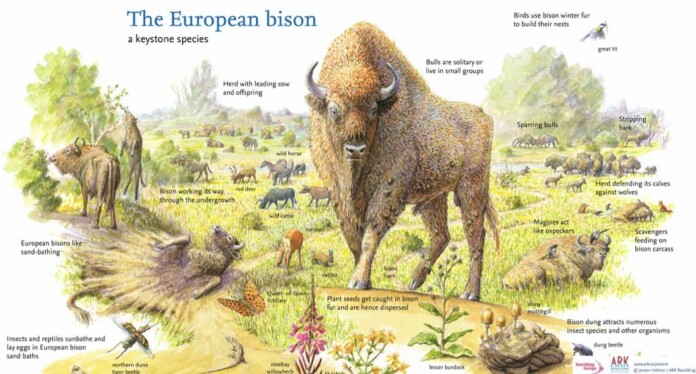
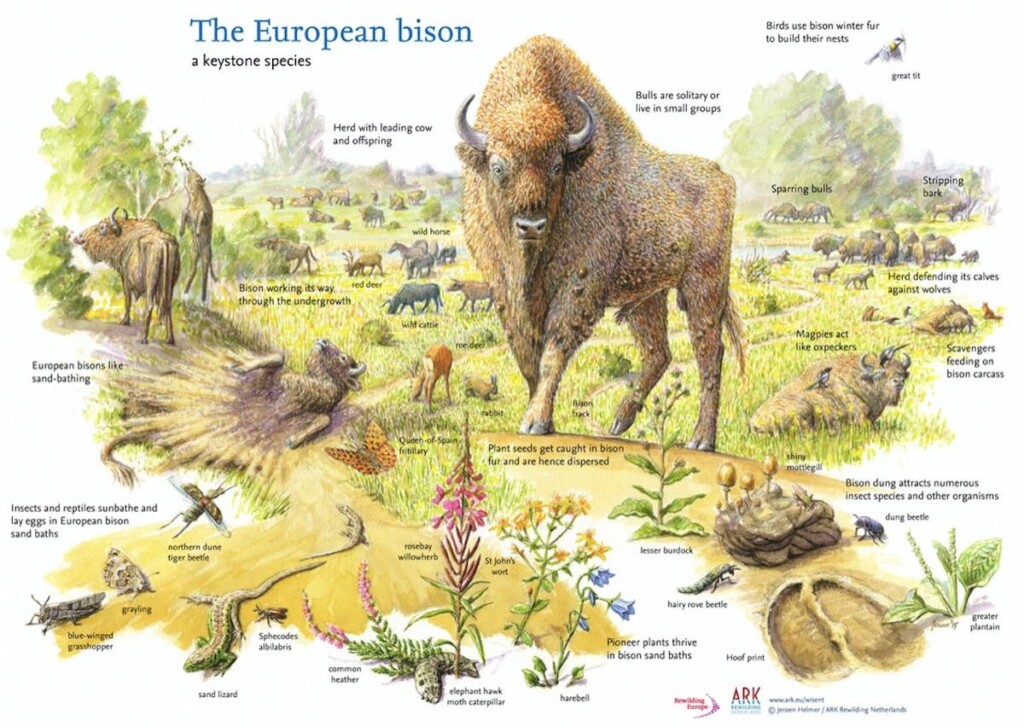
European Bison keystone species – ARK Rewilding Netherlands
European Bison is keystone species – Jeroen Helmer/ ARK Rewilding Netherlands
A recent study that looked at the effects of European bison on the ability of forests in Romania to store carbon found that these large animals have a ‘heroic’ effect.
By increasing the carbon storage potential of forests by 10%, it’s the equivalent of taking 54,000 US gasoline-powered cars off the road—and there are only 170 animals.
In 2014, WWF Romania reintroduced a herd of European wood bison into the Țarcu mountains that has grown from 100 to 170 head. Rooting around in the woods, scrub, and fields for their fodder, rolling around on the ground, and stomping, breaking, and squishing the landscape up with their hooves, are all important ecosystem mechanisms that have been absent for decades.
As the graphic above depicts, bison epitomize the concept of a keystone species, one that holds the ecosystem together through their actions, whether it’s dispersing seeds caught in their fur, or creating patches of clear earth for lizards to sunbathe in.
The study, which hasn’t finished peer-review, was funded by Rewilding Netherlands. It used a model based on previous research published in April that looked at how large animals affect the carbon cycle.
Their findings were that a herd of 170 bison grazing in a 50 square kilometer habitat in the Țarcu mountains had the potential to open the landscape up to an additional 54,000 metric tons of CO2, although the ratio of uncertainty was high, and could be 55% more or less, than the 54,000 figure.
Taken as a median, it represents a 10% increase in the carbon-bearing potential of the landscape.
“These creatures evolved for millions of years with grassland and forest ecosystems, and their removal, especially where grasslands have been plowed up, has led to the release of vast amounts of carbon,” said Professor Oswald Schmitz of the Yale School of the Environment in Connecticut. “Restoring these ecosystems can bring back balance, and ‘rewilded’ bison are some of the climate heroes that can help achieve this.”
Grasslands might be more important for carbon storage than forests because of the much lesser degree to which grasslands decay. In a forest, trees and leaves are constantly decomposing, releasing both carbon and methane. Trees that die before reaching maturity will release much of the carbon they stored throughout their life.
Grasslands on the other hand incur very little decomposition, and the carbon they do store is constantly being tamped down by the hooves of grazing animals.
Professor Schmitz and his team looked at nine different animals, including musk oxen, forest elephants, and river otters.
“Many of them show similar promise to these bison, often doubling an ecosystem’s capacity to draw down and store carbon, and sometimes much more,” Schmitz told the Guardian. “This really is a policy option with massive potential.”
SHARE This Amazing Potential For Bison To Change The Earth…
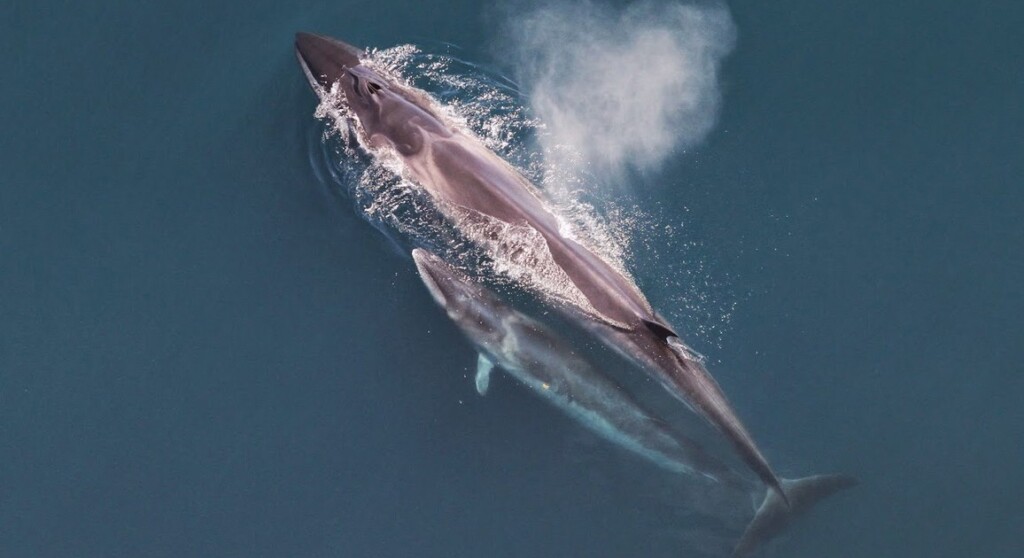
GNN has reported several times over the last three years about large baleen whales returning to waters in which they haven’t been sighted for decades.
Now again, news from Argentina shows that the benefits of the 1946 International Convention for the Regulation of Whaling are still compounding, with sei whales returning to the South American nation’s coastal waters for the first time in nearly a decade.
Overhunting during the 1920s and 1930s led these massive blue-grey giants to abandon their ancestral waters in Argentina.
“After nearly a century of being hunted to near extinction, sei whale populations are now bouncing back and returning to their former habitats,” said Mariano Coscarella, a biologist and marine ecosystem researcher at Argentina’s CONICET scientific agency, who added that the whales “reproduce every two or three years, so it nearly took 100 years for their population to reach a level where people could notice their presence.”
The third largest whale in the world, the sei can grow up to 64 feet (20 meters) in length and weigh up to 31 tons (28 tonnes). It’s also among the fastest whales in the world, and is certainly the fastest for its size group. It can swim 31 mph over short distances.
Despite being recognized on the IUCN Red List as Endangered, there are estimated to be 50,000 sei whales in a global population that is trending up.
Apart from sei whales and Argentina, a recent survey in the Seychelles sighted 10 groups of at least a few blue whales, the first such observations since 1966.
Back in March, a New England Aquarium aerial survey team sighted a gray whale off the New England coast last week, a species that has been extinct in the Atlantic for more than 200 years.
The largest animal on Earth, the blue whale, is returning to coastal Californian waters in numbers not seen since before the whaling industry, GNN reported in 2023 based on a 2014 survey.
And down in Antarctica, where many different whale species come to feed and breed, recent surveys have found the Southern Ocean is once again becoming a Sarengetti for whales, with an estimated 8,000 Southern fin whales found between 2018 and 2019.
SHARE This Great News For The World’s Largest Creatures…
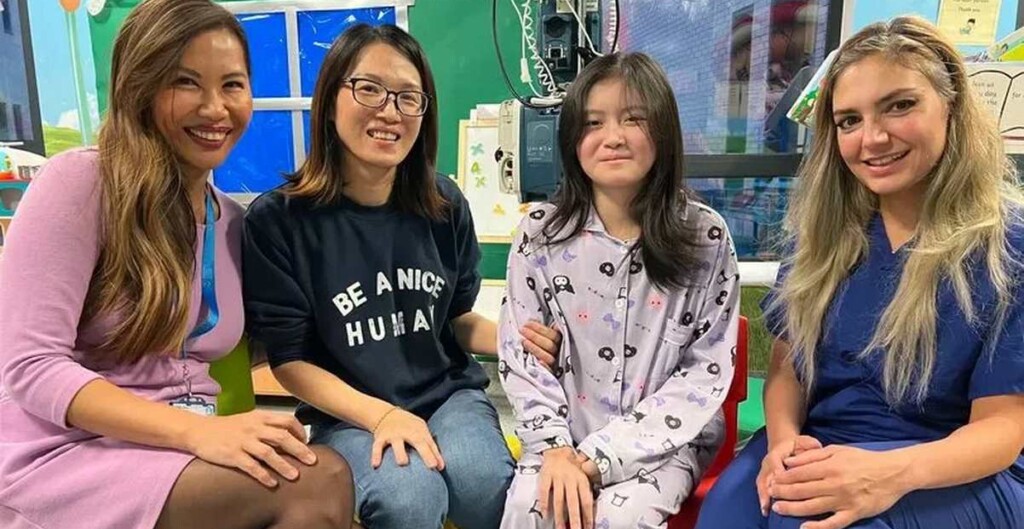
Left to right Dr Yvonne Slater, Consultant Paediatric Gastroenterologist, Ning Chen, Kai Xue, and Dr Mona Mossad, Consultant Interventional Radiologist - credit University Hospitals North Midlands.
Left to right Dr Yvonne Slater, Consultant Paediatric Gastroenterologist, Ning Chen, Kai Xue, and Dr Mona Mossad, Consultant Interventional Radiologist – credit University Hospitals North Midlands.
A 13-year-old has become the first in world history to successfully undergo liver surgery for Wild Syndrome, a condition so rare it’s only been documented 21 times.
After what seemed like an eternity in the hospital for Kai Xue and her mother Ning Chen—during which they traveled all over the UK and China looking for help—they finally found a possible solution at Royal Stoke University Hospital, in Stoke-on-Trent, England.
“Kai was born with an abnormal lymphatic system, and her left arm was very swollen,” Ning Chen told Stoke-on-Trent Live. “Throughout her childhood we were under the care of a number of different hospitals to try to find out what the matter was, but nobody knew the cause.”
The cause was a truly tiny hole in her liver that would result in lymphatic fluid leaking into her abdomen, applying undue pressure on her internal organs and causing swelling there and in other parts of the body.
Xue’s attending physician at Royal Stoke was Dr. Mona Mossad, a nationally recognized expert in lymphatic interventions, whose first procedure was dilating Kai’s thoracic duct to improve lymphatic drainage which had never been done on a child before.
After failing to improve Xue’s condition, Dr. Mossad sought to identify the source of the leak in the lymphatic system and found it was coming from a hole one-tenth of a millimeter on her liver.
Located on the left lobe, Dr. Mossad’s surgery team went to work repairing the hole using a set of specialized, tiny needles filled with surgical adhesive. During the surgery, they were forced to drain an astonishing 7 gallons of lymphatic fluid from a small 13-year-old.
After 5 weeks recovery, Kai Xue was given a clean bill of health.
“We are all over the moon for Kai, who is the first child to undergo this treatment anywhere in the world,” said Dr. Yvonne Slater, a consultant pediatric gastroenterologist who was part of Xue’s overall care team.
SHARE Kai’s Good Fortune With Your Friends You Need A Pick-Me-Up…
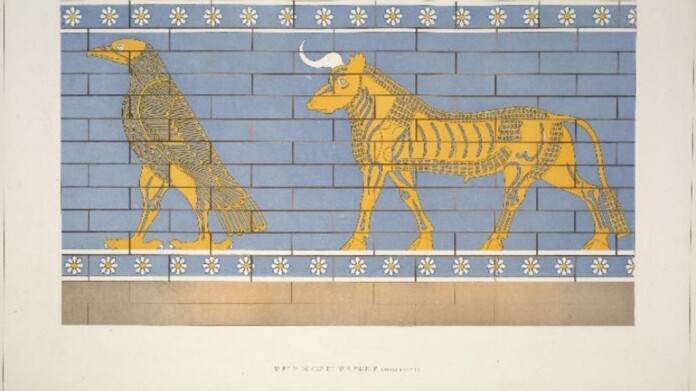
Late 19th century drawings of the tree and plough symbols published by French excavator Victor Place. From New York Public Library.
Late 19th-century drawings of the tree and plow symbols published by French excavator Victor Place. From New York Public Library.
An Assyriologist from Ireland believes he has discovered the meaning behind a series of symbols always presented together on the walls of the ancient Assyrian city of King Sargon II.
His belief is that rather than being simple motifs or allegorical pieces, they were a way to imprint Sargon’s name in the stars themselves through language, ensuring it would live on forever.
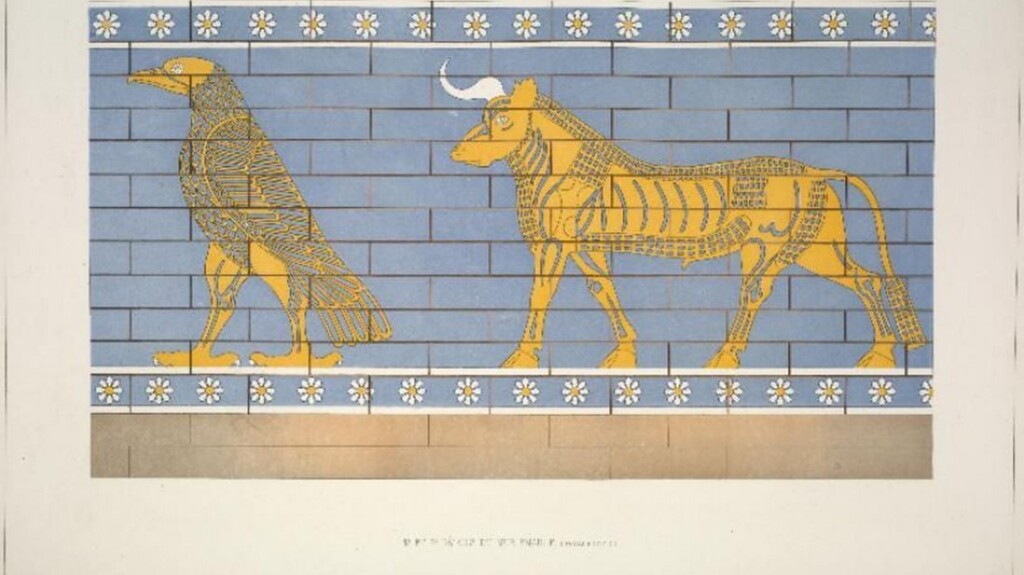
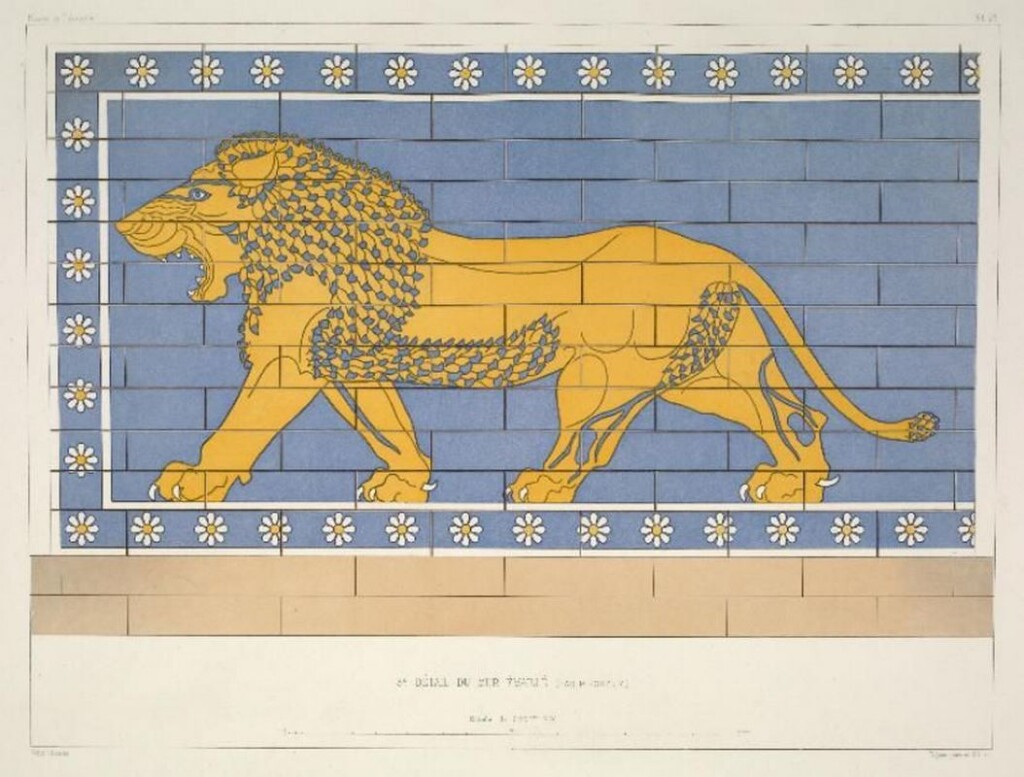
The ancient one-time capital city of Dūr-Šarrukīn, in modern day Iraq, contained multiple instances of a sequence of five images or symbols (lion, bird, bull, tree, plow) which also appeared shortened to three (lion, tree, plow) carved and painted onto the walls of the palace. There is currently no consensus on their meaning.
Late 19th-century drawings of the tree and plow symbols published by French excavator Victor Place. From New York Public Library.
Animal reliefs are nothing new in Mesopotamian carvings, but in paintings commissioned by French excavators working in the 19th century, we see they were always in the same order.
Dr. Martin Worthington of Trinity College Dublin’s School of Languages, Literatures, and Cultural Studies, proposes a new idea: the words for each animal and object when read together in the order they are depicted more or less sound out the name of Sargon, or šargīnu, as they would have said it back then.
But the clever part is, each of the symbols corresponded to one of the constellations. Trinity College Dublin news reports that the Greeks adopted most of their understanding about the cosmos from Babylon, which the Assyrians also did. We today in turn adopted them mostly from the Greeks, so in Dūr-Šarrukīn we have the lion (Leo) bird (Aquila) bull (Taurus), and the plow (the big dipper).
Late 19th-century drawings of the tree and plow symbols published by French excavator Victor Place. From New York Public Library.
The only one we don’t recognize on star charts today is the fig tree, but Dr. Worthington decoded that too: it stands in for the hard-to-illustrate constellation ‘the Jaw’ (which we don’t have today), on the basis that iṣu ‘tree’ sounds similar to isu ‘jaw’.
“The effect of the five symbols was to place Sargon’s name in the heavens, for all eternity – a clever way to make the king’s name immortal. And, of course, the idea of bombastic individuals writing their name on buildings is not unique to ancient Assyria,” said Dr. Worthington.
The paper was published in the Bulletin of the American School of Oriental Research.
MORE ANCIENT DECODING:
Most of the time, Assyriologists, or people who study the ancient civilizations of Mesopotamia, are working on transcribing the various cuneiform scripts of tablets found during excavations in the 19th and 20th centuries, of which there are tens of thousands in museum collections that haven’t ever been read.
ANCIENT ARCHAEOLOGY:
“I can’t prove my theory, but the fact it works for both the five-symbol sequence and the three-symbol sequence, and that the symbols can also be understood as culturally appropriate constellations, strikes me as highly suggestive. The odds against it all being happenstance are—forgive the pun—astronomical.”
SHARE This Sharp Professor’s Discovery Solving Of An Ancient Riddle…
Quote of the Day: “Real happiness is cheap enough, yet how dearly we pay for its counterfeit.” – Hosea Ballou
Photo by: Free Walking Tour Salzburg
With a new inspirational quote every day, atop the perfect photo—collected and archived on our Quotes page—why not bookmark GNN.org for a daily uplift?
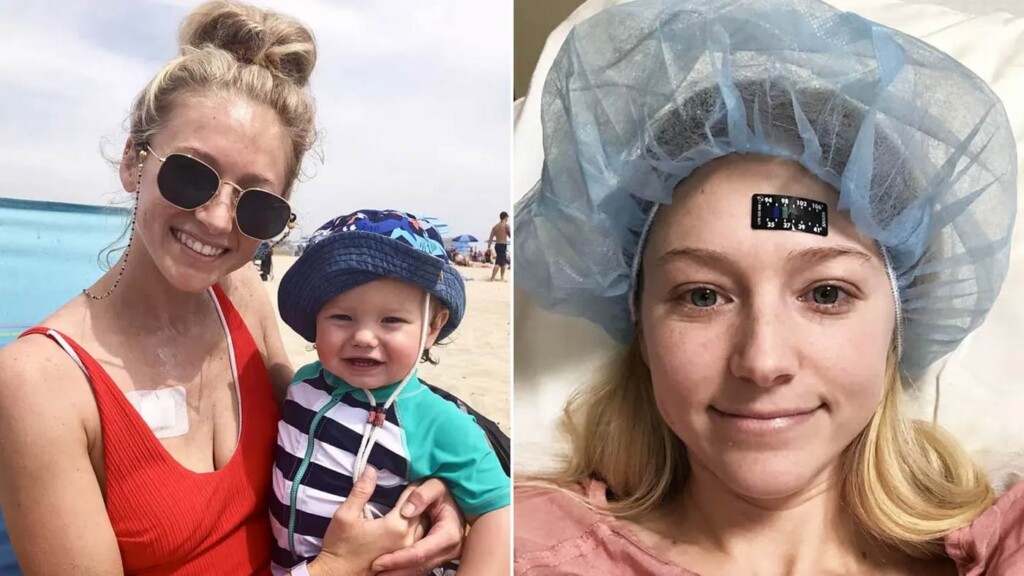
Kelly Spill was just 28 years old when she received her cancer diagnosis - credit, Kelly Spill, released
Kelly Spill was just 28 years old when she received her cancer diagnosis – credit, Kelly Spill, released
After less than a year of treatment with an experimental new cancer drug, a young woman has seen her tumor vanish, along with her fears that she would never be able to carry another child.
It should have been the happiest days of Kelly Spill’s life, until shortly after she delivered her first baby she received a life-threatening cancer diagnosis.
The 28-year-old from New Jersey was still recuperating in the hospital with her little boy Chase when she began to experience fatigue and bleeding, weight loss and loss of appetite.
Her doctors told her it was probably just symptoms of childbirth, but for reasons not explained in her interview with Fox, Spill said she knew it was cancer.
Stage-3 colorectal cancer was the diagnosis, a colonoscopy later revealed, but this super mom’s first fear wasn’t for her own life, that she wouldn’t be able to have another child, as she and her husband always wanted at least 3.
After looking around for hospitals, she decided to seek treatment at Memorial Sloan Kettering Cancer Center in New York, one of the world’s leading cancer treatment centers.
But even here, she was told radiation, chemotherapy, and surgery were the treatment options, which her doctors told her would seriously jeopardize her chances of ever giving birth again, something she said was “really hard to hear at just 28 years old.”
“Radiation targeted at, or absorbed by, a woman’s reproductive organs can affect fertility, as can chemotherapy, which may cause women to lose fertility-related hormones,” Dr. Amanda Schwer, a radiation oncologist at City of Hope Cancer Center in California told Fox News Digital.
Dr. Schwer was not involved with Spill’s treatment, which considering the severity of the cancer, Spill decided to pursue regardless of her dreams of an expanded family. But luck was on her side, as just one day before she was scheduled for her first chemotherapy session, members of the SU2C Colorectal Cancer Dream Team, a research team at Memorial Sloan informed her she would be eligible for a new clinical trial to test a gentler new drug for colorectal cancer.
Called dostarlimab, if it worked as the developers believed it might, then radiation, chemotherapy, and even surgery might all be avoided.
“All I knew at that time was that the side effects of this immunotherapy would be a lot less harsh on my body than chemotherapy, and I would have a chance of a better quality of life—and maybe even another baby,” Spill said.
All kinds of immunotherapy drugs are under development after the initial technology won a Nobel Prize more than half a decade ago, GNN has reported on several, including one that has cured several children of leukemia.
Spill was just the fourth person to receive dostarlimab—which she took as an injection every week for six months. After her fourth treatment, Spill got the news—her tumor had shrunk to half its original size.
Spill and her son Chase welcoming the new member of the family – credit, Kelly Spill, released
“By the ninth treatment, my tumor had completely disappeared, which was extremely exciting,” she said.
Having frozen an embryo in advance of the cancer treatments, Spill’s first thought was to go for number two, but followed her doctor’s advice that she should wait two years and see if the cancer returns. It didn’t.
In July of 2023, Spill gave birth to a healthy baby girl named Mya Grace. She remains cancer-free to this day.
SHARE This Wonderful Story Of Recovery And New Life With Your Friends…