The 5th test launch of the SpaceX Starship vehicle came with a party trick—a landing—which it stuck.
Not since the Moon landings has an American been able to say with as much certainty that they witnessed something straight out of science fiction—a vessel coming down from space and landing on the Earth using jet propulsion.
The footage is unforgettable and documents a truly staggering accomplishment, as not only is the Starship the first reusable rocket to land using propulsion, but the Starship is the largest, heaviest, and most powerful flying object ever made by humans.
The videos below show footage from different angles.
The maneuver saw the Starship’s enormous first-stage booster, the rocket component needed to push the craft out of the atmosphere, glide in free fall down from the sky before activating thrusters to slow and guide its descent; eventually parking on a dime next to the launch tower’s “chopstick” arms which literally grab it.
“This is a day for the engineering history books,” Kate Tice, SpaceX manager of Quality Systems Engineering, said during live commentary as SpaceX employees screamed and cheered at the company’s Hawthorne, California headquarters behind her.
“This is absolutely insane! On the first-ever attempt, we have successfully caught the Super Heavy booster back at the launch tower.”
“Are you kidding me?” SpaceX spokesperson Dan Huot added from the launch site. “Even in this day and age, what we just saw—that looked like magic.”
The second component of the Starship rocket made it to orbit as intended, before re-entering Earth’s atmosphere, activating 3 of its 6 boosters as it hovered over the Indian Ocean—another demonstration success, before exploding.
This is Starship’s 5th test flight. The vehicle has been designed according to SpaceX Founder Elon Musk’s dream of landing humans on Mars during his lifetime. NASA has piggybacked on his ambition, ordering several Starships for the upcoming Artemis missions that aim to return humanity to the Moon with the purpose of establishing a semi-permanent lunar presence.
The historic moment comes just one month after a member of the crew onboard the SpaceX Dragon capsule performed the first-ever civilian spacewalk, proving the design of SpaceX’s new lightweight spacesuits, worn by the crew to travel seamlessly in and out of the capsule.
An analysis by NASA found that the SpaceX Falon 9 has reduced the cost of a rocket launch by a factor of 20. The cost of a Falcon 9 and Dragon capsule mission to ISS is about $140 million with a payload of 6,000 kg, $23,300/kg, compared to the Space Shuttle which was about $1.5 billion.
The analysis was made when Falcon 9 rockets fell back down to Earth to be destroyed. To aid in humanity becoming a multi-planetary species, that cost has to continue to fall substantially, and a rocket that needs only to be refueled rather than rebuilt is a major step toward making space travel around the same cost structure as commercial aviation.
THE FOLLOWING VIDEO CONTAINS CELEBRATORY PROFANITY…
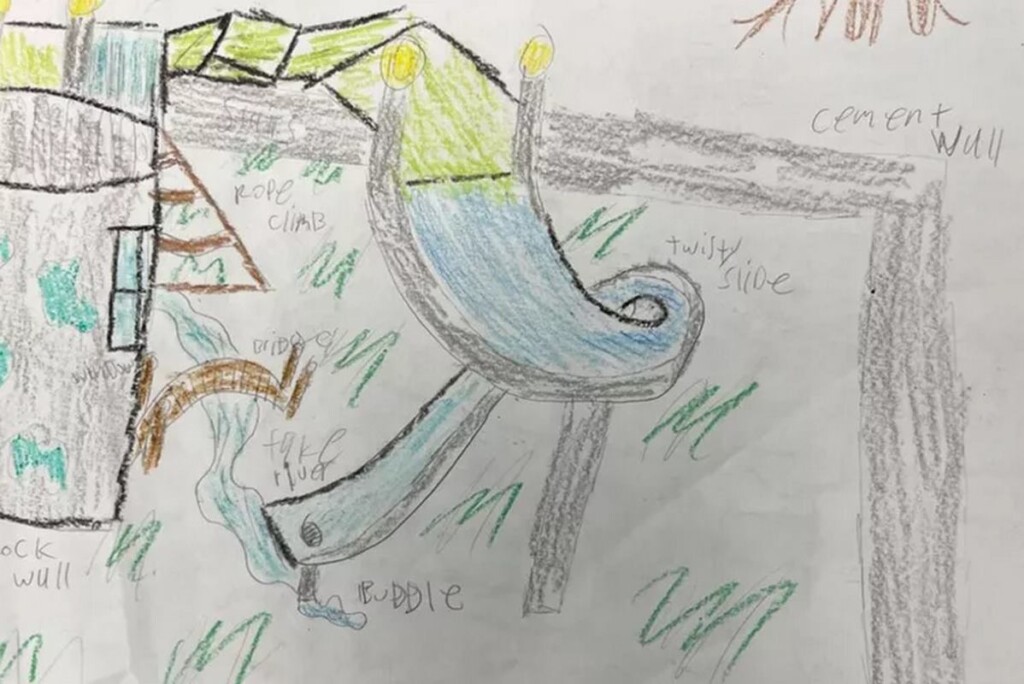
A young Utah resident has had her classroom civics lessons suddenly explode into life after some crayon drawings she made of a better playground became reality.
Her mom brought her to city hall along with her drawing, and being that a new playground was already budgeted for, they followed 11-year-old Rosili Olson’s lead.
The new Bicentennial Park – credit, Clearfield City/Facebook
Olson, now 12, had made the drawings to sketch out what she thought would be the best playground for her and her younger sisters to play on.
“Rosili realized the playground by her house was suited for ages 5-12 and was not geared toward her younger sister,” Clearfield County officials wrote in the caption of a Facebook video showing off the creation process. “After seeing her initiative and detail, we knew we had to make her dream happen.”
Olson’s mother called city hall and asked if it were possible to bring them in. They agreed, and soon were in the office of Eric Howes, the city’s head of parks and recreation, to make the pitch.
“After seeing all the effort she put into all of those drawings knowing we’d already ordered the playground for the park right by her house, the next best thing was to say, ‘We’ve got a playground coming in next year,’” he said, with the Facebook statement adding that they “reviewed multiple versions until we had checked all her boxes and got the colors right.”
Olson, second from right, cuts the ribbon – credit, Clearfield City/Facebook
The collaborative process saw Olson and Howes meet four or five times, right up until the Septebmer 24th ribbon-cutting ceremony which Olson was of course a part of.
SHARE This Cute Story Of Civic Engagement With Your Friends…
Quote of the Day: “The way of truth is along the path of intellectual sincerity.” – Henry S. Pritchett
Photo by: Getty Images for Unsplash+ (cropped)
With a new inspirational quote every day, atop the perfect photo—collected and archived on our Quote of the Day page—why not bookmark GNN.org for a daily uplift?
For every bird-lover out there, these “smart” feeders are bringing the popular hobby into the 21st century, allowing you to watch your feathered friends like never before.
With just 40 days until the Christmas shopping season—with its songs about turtle doves, french hens, and calling birds—we found a great gift idea for the birdwatcher in your life.
Smart feeders include cameras allowing you to watch live streaming of all the action and better identify the wildlife whenever it swoops in to eat your nuts and seeds. Many use AI to offer identifications of the birds you see—bolstering your own knowledge and ability to identify the different species in your yard.
Some are solar-powered, but all include a camera mounted in the glass of the feed reservoir, and a platform beneath to ensure winged visitors are always in the picture frame. Here are four examples from Amazon.com…
A recent article on Nat Geo reviewed a number of smart feeders, and the clear overall favorite was the NetVue Birdfy®.
There are several options to choose from, with the basic model including a feeding deck and a reservoir for seed. It uses AI to identify 6,000 different species. The rechargeable camera battery can run for six months on a single charge. The camera is 1080p resolution, with color night vision.
More expensive models are either powered by solar, or feature both trays for feeding hummingbirds and seed-lovers. Another model includes a suet attachment, a mini hummingbird feeder, and a fruit holder with jelly feeder for attracting orioles. Still another offers a seed guard to keep squirrels out.
For all the models, the app allows 20 different devices to view the feeding camera at once—bringing together whole families, neighborhoods, or birding groups, to drop-in and see the feeder.
The basic model of the NetVue Birdfy is available for a limited time for $144—ninety dollars less than the listed retail price, but the cost goes up for “Pro” versions featuring solar panels, hummingbird options, or squirrel-blockers.
The BIRD BUDDY® Smart Birdfeeder was Nat Geo’s second favorite pick because its AI algorithm not only included 1,000 species, but had an exceptional track record at getting the identifications correct. By comparison, the NetVue Birdfy seemed to get some IDs wrong.
It has a better camera, capturing 5 megapixel photos and 1080p HD video, and a rotatable solar panel built-in to take better advantage of the sun, if you don’t want to recharge with their USB cable.
The BIRD BUDDY app, which is needed to view the pics and video, delivers arrival notifications that will buzz your phone whenever a bird arrives. Uniquely, it will take a picture of every bird that lands to help you take your birding identifications into the field.
The BIRD BUDDY costs $279, but some customers on Amazon don’t like paying the additional $5.99 per month fee ($59/annually) required to use the app.
The Osoeri Bird Feeder has several points that could make it more appealing than the others listed here. For starters, the AI identification software claims to be able to ID 11,000 species. That’s more or less every known avid on the planet, but the app does cost $5 a month.
One advantage is the initial price point. At $99, it’s substantially cheaper than the other options. The camera is 135 millimeter, 1080p HD resolution, has color night vision, and 4x magnification. It also has a wider view than the Bird Buddy (135 degrees compared to 120).
It is equipped with an adjustable solar panel, but for owners who don’t get enough sun, some complain about the battery life. However, 86% of the reviews are 4 stars or above. Instead of being made of plastic like the NetVue, it is metal so less likely to be damaged by squirrels.
The feeder can store bird videos and pictures in the cloud for free for up to 30 days, but you can extend the storage time by subscribing.
If you already have a Ring, OG, Wyze, or Blink camera, you can save a hundred dollars or more by buying the Wasserstein Bird Feeder Camera Case, which attaches to your own camera.
The upgraded model with a solar panel included with the feeder costs just $79, and uses whatever features you already know your camera can do, so it doesn’t come with an accompanied app.
Customers like the functionality, design, and ease of assembly of the wildlife feeder, commenting that it works well, is an example of innovative design, and is easy to assemble. It’s also all metal, so has been noted for its stability. The non-solar model is $59.
Can organisms without a brain still show signs of intelligence? Researchers at Tohoku University had this question in mind when conducting a study to measure the decision-making processes in fungi.
While it may sound like science fiction, this level of basal cognition is possible even in fungi, which created these shapes above.
“You’d be surprised at just how much fungi are capable of,” Yu Fukasawa of Tohoku University, told his university press team. “They have memories, they learn, and they can make decisions. Quite frankly, the differences in how they solve problems compared to humans is mind-blowing.”
Appreciation for the fact that not only are fungi their own kingdom of life, but one that’s more similar to animals than plants, is growing in the public consciousness, particularly among scientists.
Fungi grow by releasing spores, which can germinate and form long, underground, spidery threads known as mycelium. We typically only see the tiny mushrooms on the surface without realizing that there’s a vast network of interconnected mycelium beneath it. Single mycelia have been found growing across 900 hectares of ground—one organism, stretching over 2,000 acres.
It’s through this network that information can be shared, somewhat like neural connections in the brain, and GNN has reported before that electrical signals very similar to human vocabulary have been detected running along mycelial networks.
The present study examined how a wood-decaying mycelial network responded to two different situations: wood blocks placed in a circle versus an X arrangement. For example, if the fungi didn’t display decision-making skills, they would simply spread out from a central point without consideration for the position of the blocks. Remarkably, this is not what the researchers witnessed.
For the X arrangement, the degree of mycelial colonization was greater in the outermost four blocks. It was hypothesized that this was because the outermost blocks can serve as “outposts” for the mycelial network to embark on foraging expeditions, therefore more dense connections were required compared to the five blocks inside the X.
In the circle arrangement, the degree of mycelial colonization was the same at any given block. However, all the empty space inside the circle remained clear. It was proposed that the mycelial network did not see a benefit in overextending itself in an already well-populated area.
These findings suggest that the mycelial network was able to communicate information about its surroundings throughout the entire network, and change its direction of growth accordingly based on the shape.
To avoid wasting energy growing into the center of the circle, for example, each mycelial tip would have to have some information that the center of the circle was an unwise place for growth—which it could only gain from information from the mycelial cells on the other side of the circle.
Our comprehension of the mysterious world of fungi is limited, especially when compared to our knowledge of plants and animals. This research will help us better understand how biotic ecosystems function and how different types of cognition evolved in organisms.
SHARE With Your Friends Who Fungi Can Have Spacial Recognition…
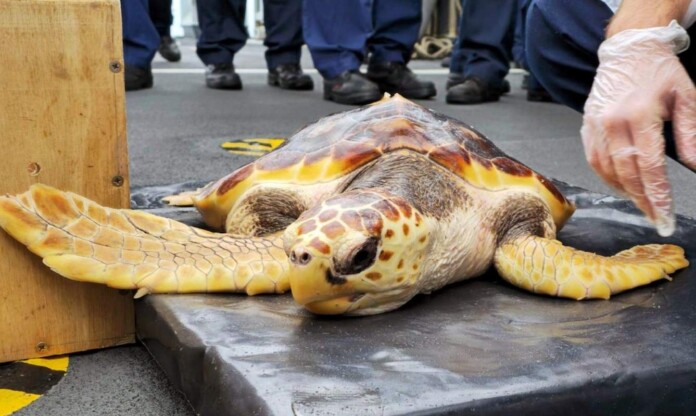
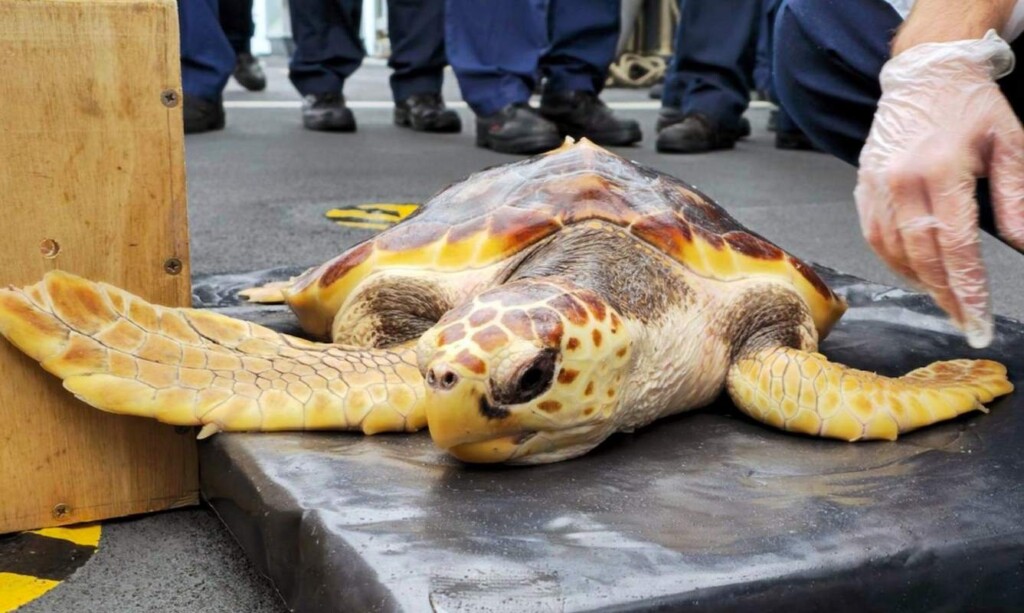
After being blown thousands of miles off course, cold-stunned, and beached, six exhausted sea turtles hitched a ride back to their home in the Azores onboard a Royal Navy ship.
The 6 loggerhead sea turtles, whose home lies in the warmer seas far to the south of the British Isles, were likely blown off course by a storm before being stunned into lethargy by the cold North Atlantic waters.
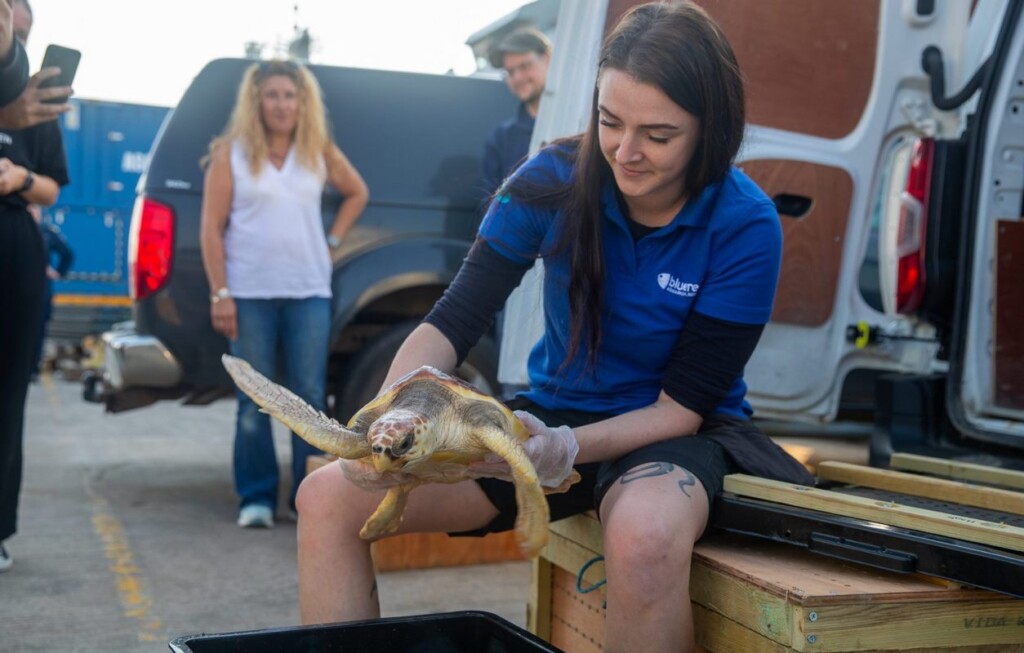
They may even have died after washing up on the beaches of Cornwall and Devon, but were rescued by members of two local marine sanctuaries who nursed them back to health.
Once fit again, the carers at Newquay Blue Reef Aquarium and Anglesey Sea Zoo weren’t sure what to do with these tropical mariners. They couldn’t be released back into the North Atlantic, but neither of the aquariums had the resources to transport them intercontinentally.
Enter the HMS Medway en route to the Caribbean on counternarcotics patrol and disaster relief via the Azores.
Alongside her regular cargo of food supplies, spare parts for machinery, and disaster relief/aid kits Medway also loaded Jason, Gordon, Perran, Hayle, Holly and Tonni the 6 loggerhead turtles.
Royal Navy via SWNS
She departed Plymouth last week on a mission to replace her sister ship HMS Trent, and had a little stopover in the Portuguese islands for a turtle ‘repatriation.’
“As professional mariners, many of us are keen to do what we can to reduce the loss of biodiversity at sea,” said Rod Jones, the Royal Navy’s Senior Maritime Environmental Protection Adviser.
Royal Navy via SWNS
“Encountering marine wildlife is one of the great joys of seafaring and if we can assist, even in a small way, to make that more likely in the future we are pleased to be able to do that.”
“Assisting turtles to return to warmer waters may not be the Royal Navy’s primary role but as a government body we are very pleased to be able to support the UK’s ambition for more healthy and diverse seas.”
SHARE These Turtles’ Helping Hand From His Majesty’s Navy…
For decades, the SS United States has been moored off Philadelphia as a reminder of the nation’s seafaring past, but looking now to the future, it will be sunk to create a natural wonder—the world’s largest artificial reef.
While coral reefs are in danger worldwide, features like concrete blocks and shipwrecks can offer vital shelter and habitat to dozens of marine species, and many old vessels in many different countries have gone to rest in this way.
The United States was built in the 1950s with the aim of ferrying troops around the country in case of a war. After it proved unnecessary, it was converted to a luxury ocean liner that became the fastest vessel on the high seas, and it still holds the Transatlantic speed record.
Celebrities and heads of state like John F. Kennedy routinely promenaded along its decks, being shuttled to and from Europe, until 1967 when it was decommissioned, two years after the death of her chief designer and engineer.
Now, the Okaloosa County Board of County Commissioners has approved a contingent contract to see the United States off on her final voyage to Destin-Fort Walton Beach, Florida, where she would be sunk to join a collection of 500 other artificial reefs that provide a true spectacle for divers.
Two processes: a District Court mediation, and an environmental review, stand in the way of the conversion from liner to reef, but both are expected to conclude without issue.
The deal will “also come with money from the county to open a land-based museum dedicated to the ship, one that would be run by the conservancy,” reported the New York Times.
“To have an opportunity to have the SS United States right here by our shore is a heritage and a legacy that is generational,” said Okaloosa County Commissioner Mel Ponder. “I’m very excited for not only what it does for the diving community, but also the fishing community, but the community at large.”
The deal might cost as much as $10 million, as the ship is owned by theSS United States Conservatory, run by Susan Gibbs, the granddaughter of the ship’s main designer who had previously dismissed the idea. However, she (the boat) isn’t getting any younger, and there is an ongoing dispute with the City of Philadelphia over rent and mooring fees which must now be substantial after 28 years of parking.
There are also signs that Gibbs has changed her tune.
“The SS United States has inspired millions the world over as a symbol of American pride and excellence,” said Susan Gibbs, president of the SS United States Conservancy, the nonprofit working to preserve the vessel. “Should the ship be converted into an artificial reef, she will become a unique historic attraction above and below the waterline.”
According to the Florida Fish and Wildlife Conservation Commission, for every dollar spent on artificial reefs in the Florida Panhandle, the conservative overall economic benefit of the artificial reef system over its life span is $138, a 13,800% return on investment. This includes job creation in the construction and maintenance of reefs and increased economic activity in related sectors such as charter boats, dive equipment rentals, and local retail.
SHARE This Innovative Idea For The Famous Ship’s End Of Life…
Quote of the Day: “All the world’s a stage and most of us are desperately unrehearsed.” – Sean O’Casey
Photo by: Kyle Head
With a new inspirational quote every day, atop the perfect photo—collected and archived on our Quote of the Day page—why not bookmark GNN.org for a daily uplift?
The cancer kitchen alley - supplied to China Daily
The cancer kitchen alley – supplied to China Daily
In the city of Nanchang, in an alleyway near a cancer hospital, two senior citizens run a “community cancer kitchen” to support those caring for their loved ones.
Earning the gratitude and goodwill of their nation now that they’ve made national headlines behind the confines of their alley, Wan Zuocheng and Hong Gengxiang have been doing this charity work for two decades.
“No matter what life throws at you, you must eat good food,” Mr. Wan told South China Morning Post.
For just 3 RMB, the equivalent of around $0.32, anyone can use the kitchen spaces they’ve set up in the alleyway to cook meals. Sometimes it’s for the patients so they can eat something familiar rather than hospital food, while sometimes it’s for the people who care for the patients.
In 1993, Wan and Hong ran a restaurant in a building next to the Jiangxi Cancer Hospital, but after it was demolished, they opened a breakfast stall in front of the site.
“There was a couple who came to us with their child,” Wan said, talking about the day in 2003 they decided to start their charity kitchen.
“They said he didn’t want treatment, he just wanted a meal cooked by his mom. So we let them use our kitchen.”
As time passed they added more utensils, appliances, stoves, and ovens to their stall. This came with gradually increasing use of water, electricity, and coal, but as the costs rose, so too did the community, supporting the couple and their efforts to provide the invaluable service they relied on.
Donations began to outpace expenditures, and now nearly 10,000 people come to cook in the cancer kitchen.
“We and the patients are inseparable now. For us, without the patients, we would feel lonely, and for the patients, they would encounter difficulties without us,” Wan told China Daily. “Many of those coming here are cancer patients and their families who are going through tough times.”
“I will help them as long as I am able to,” said Wan.
Food is incredibly important in Chinese culture, as is the case in most places on Earth. Rather than asking how things are going, in parts of China it’s a common greeting to instead ask someone if they’ve eaten yet.
It’s been thoroughly observed in medicine that the odds of beating cancer can be improved with positivity, and what could be more positive than a loved one bringing you a home-cooked meal?
In 2019, the local government funded a renovation of the cancer kitchen, moving it indoors and equipping it with more than 20 cooking positions and ventilators. In 2020, they were accorded the honor of being named first among the “People Who Move China,” a popular television recognition similar to CNN Heroes.
WATCH the story below from SCMP…
SHARE This Touching Charity Operation And These Two Hardworking Souls With Your Friends…
Hemp leaf extract rich in CBD was recently shown in a study to kill both species of yellow fever mosquito in their larval phase, including one that had developed insecticide resistance.
The study demonstrates yet again how many different things hemp products can be used for, but unlike anything discovered so far, use as an insecticide could literally save millions of lives.
“Mosquitoes are one of the deadliest animals in the world, mainly because as adults they serve as vectors of disease,” said Erick Martinez Rodriguez, lead author of the study and a graduate student in entomology at Ohio State University. “It’s very important to be able to control these pests at an early stage, when they are at the most vulnerable.”
Much like infectious bacteria, the rampant use of insecticides to control mosquito populations has led to some populations developing robust resistance to these poisons.
Inspired by previous Ohio State research which discovered that the bark properties of a plant native to Madagascar worked as a natural mosquito insecticide and repellent, Rodriguez sought to determine if hemp could act as a viable and safe alternative to current biopesticides.
Larvae are far more easy to target than adult mosquitoes which can fly and travel long distances.
To test hemp’s toxic effects against mosquito larvae, Rodriquez and his team took air-dried hemp leaves, pulverized them into a fine powder, and soaked that in methanol for a few weeks to reach the desired CBD concentrations.
The methanol was later removed from the solution to make it easier to chemically analyze, resulting in an extract that was eventually given to the larvae with their food.
Depending on the concentration of hemp extract used, the team discovered that the hemp leaf was potent enough to be equally toxic to both strains of mosquito larvae. What surprised Rodriquez was the small amount needed to be so deadly.
“If you compare the amount of hemp extract needed to kill 50% of the population to other synthetic conventional insecticides, it is on the high side, but when you compare it side-by-side to other natural extracts we have tested in our lab, only a relatively low amount is required to produce high mortality values in larvae,” Rodriguez told Ohio State’s press team.
While CBD eventually led to 100% mortality for the larvae, different concentrations of the hemp extract caused different mortality rates in the hours leading up to that time.
Cannabidiol, or CBD for short, is one of many active compounds in the hemp plant that’s non psycho active. Hemp is just one kind of the Cannabis sativa plant, and one which typically contains low amounts of THC, the compound that gets us all high.
CBD, and hemp more generally, have many medicinal and household uses, some of which GNN has reported on before. Among those uses are veterinary care products, which raises interesting questions about the toxicity of CBD to other animals, for example, insects we don’t want killed like butterfies or honey bees.
“CBD is a compound that appears to be safe for people and our companion animals to ingest,” said Peter Piermarini, co-author of the study. “It’ll be interesting to learn more about how CBD interacts with various proteins in mammals and insects to understand why it’s safe for people but not insects.”
SHARE The News Of This Priceless Discovery With Your Friends…
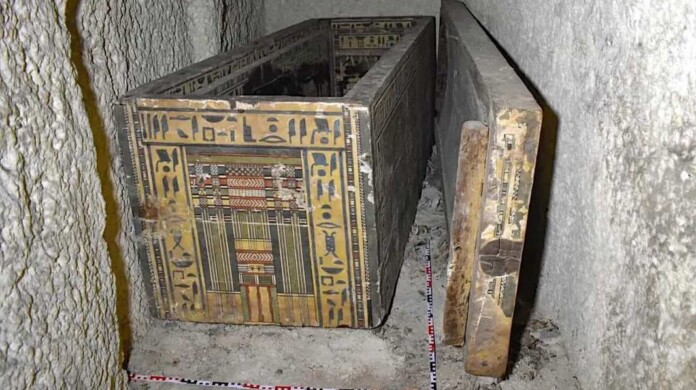
credit - Egyptian Ministry of Tourism and Antiquities
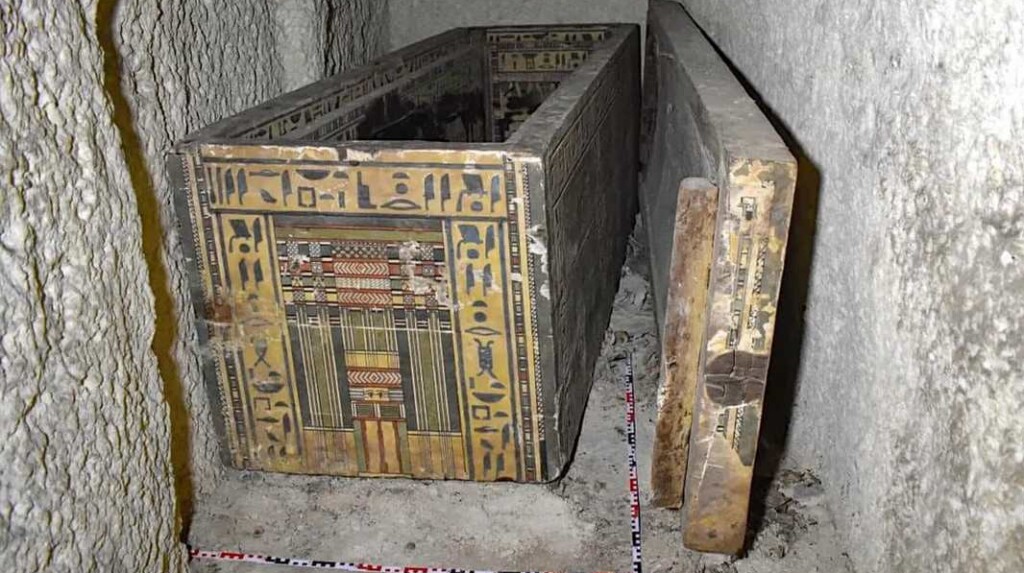
credit – Egyptian Ministry of Tourism and Antiquities
There’s never a dull moment down in the land of the Nile for those with a shovel.
A recent discovery of two exquisitely detailed sarcophagi, one sealed inside another, was made recently in the ancient land of Asyut, dating to the 19th century BCE, in the earlier days of the Middle Kingdom.
Interred within was Idi, the daughter of a local governor. Inscribed upon them was the moniker “Lady of the House,” alongside hundreds of hieroglyphs instructing her how to travel over to the next world.
The coffins were found during archaeological cleaning work inside the tomb of Asyut’s governor Djefaihapi, which happened to be the largest non-royal tomb in Egypt at that time, indicating that he was one of the most important rulers of any territory in ancient Egypt.
Idi’s burial chamber was around 50 feet below ground, but even so, it was plundered by tomb robbers long ago. Fortunately, they couldn’t carry off the sarcophagi which are probably the most important and relevant objects to scientists today.
The preliminary examination works of the woman’s skull and bone remains indicated that she had died at a young age before she was 40 and had suffered a congenital defect in the foot, a statement from Egypt’s Supreme Council of Tourism and Antiquities said.
According to Joann Fletcher, an archaeologist at the University of York who was not involved in the excavation, the Middle Kingdom is one of the lesser-understood periods of Egyptian history, sandwiched between the pyramid builders of the Old Kingdom, and the much better-documented New Kingdom, featuring some of the civilization’s most renowned native figures such as Tutankhamun and Ramses II.
The discovery of Idi will help inform Egyptologists about the manners and customs of family burials during this overshadowed period in history.
Who Do You Know That’s Fascinated By Ancient Egypt? SHARE The Story With Them…
The Hiroshima Memorial Peace Park, enshrining the only structure left standing in the city after the bombing - credit, CC 2.0. Geoff Whalen, retrieved from Flickr
The Hiroshima Memorial Peace Park, enshrining the only structure left standing in the city after the bombing – credit, CC 2.0. Geoff Whalen, retrieved from Flickr.
Nihon Hidankyo, an organization of survivors from Nagasaki and Hiroshima, has won the Nobel Peace Prize for their fierce campaigning to end the threat of nuclear war that so dramatically scarred their lives.
Coming at a time when humanity lies more heavily between the crosshairs of the bomb than perhaps any time since the Cuban Missile Crisis, the award is a powerful reiteration: that a nuclear war cannot be won, and must never be fought.
Founded in 1956, the organization’s chief activity is sending survivors of the bombings around the world to share testimony and contribute to what Chairman of the Nobel Committee Joergen Watne Frydnes called the “nuclear taboo.”
Speaking to reporters, Frydnes warned the “nuclear taboo” was now “under pressure” and that Nihon Hidankyo’s work to reinforce it was invaluable. While nominated several times in the past, Nihon Hidankyo has never won.
A tearful Toshiyuki Mimaki, the co-head of the group, said: “Never did I dream this could happen,” according to AFP.
“[Japan’s nuclear survivors] help us to describe the indescribable, to think the unthinkable, and to somehow grasp the incomprehensible pain and suffering caused by nuclear weapons,” the committee said.
On August 6th, 1945, a US bomber dropped the uranium bomb above the city of Hiroshima, killing around 140,000 non-combatants. Three days later, a second bombing at Nagasaki resulted in similar destruction. Additional details about these decisions have emerged in recent years.
As CNN reported, despite the overall number of nuclear weapons continuing to fall, the number of operational weapons—those that could be used—has been both increasing, and becoming more sophisticated.
Russia has already established the parameters for the use of its nuclear weapons in the current war with Ukraine—and they aren’t limited to deterring a nuclear attack, and in fact, are almost all merely met since Ukraine’s counter-invasion of Kursk. Israel, a nuclear-armed state that keeps its arsenal secret, is currently engaged in a three-and-a-half front war, and was recently found guilty of carrying out genocidal acts in Gaza at the International Court of Justice.
North Korea has altered its national defense strategy, removing a unified Korean Peninsula as the regime’s highest goal for the first time in its history. South Korea now participates in nuclear weapons sharing with the US, and Japan’s new prime minister has expressed his desire to do the same.
The Bush Jr., Trump, and Biden Administrations have either unilaterally removed the US from, or declined to renegotiate—the five major arms control agreements established during the Cold War.
Possessed by some of these states in addition to China, hypersonic glide cruise missiles could in theory now deliver a nuclear warhead across continents without any ability of existing states to intercept them. Russia’s improved ICMBs now travel over the South Pole, bypassing the vast majority of NATO anti-missile infrastructure.
The US, France, China, North Korea, and the UK, are all undergoing significant nuclear weapons modernization programs.
To summarize, the risk of a nuclear exchange is more threatening than it has been in a long time, and the Nobel Prize, coming at such a moment, delivers a powerful statement against their use or possession.
SHARE The Inspiring Message Of These Survivors With Your Friends…
Quote of the Day: “This is what I believe we should all aim for: to make contributions to others’ lives that will grow infinitely in our absence.” – Tom Rath
Photo by: Getty Images for Unsplash+
With a new inspirational quote every day, atop the perfect photo—collected and archived on our Quote of the Day page—why not bookmark GNN.org for a daily uplift?
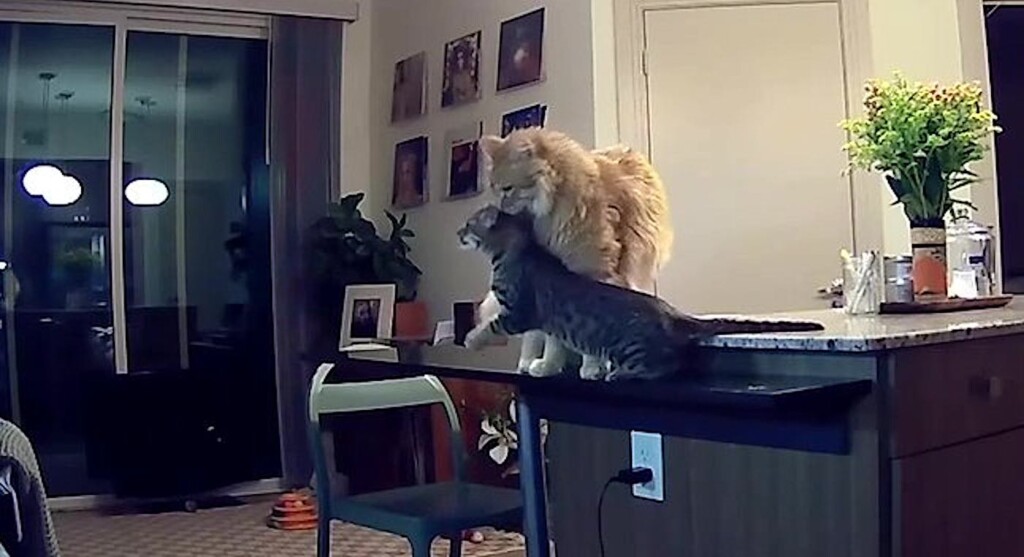
A family’s surveillance video has captured a cat teaching the house rules to the new kitten—picking it up by the scruff of the neck and pulling it off the kitchen counter.
Olivia Goodman was enjoying the night chatting on the phone while her older cat Frank disciplined the new kitty in the other room.
The six-year-old cat has been living with Olivia since he was a kitten so is well aware of the house rules, but five-month-old Whelan is still learning.
The video shows little Whelan standing atop the kitchen counter, when Frank jumps up and proceeds to figure out the best way to safely pull the kitten back down to the floor.
“I thought it was hilarious,” said Olivia, a senior accountant in Austin, Texas.
“He was teaching Whelan a lesson about being on the counter.
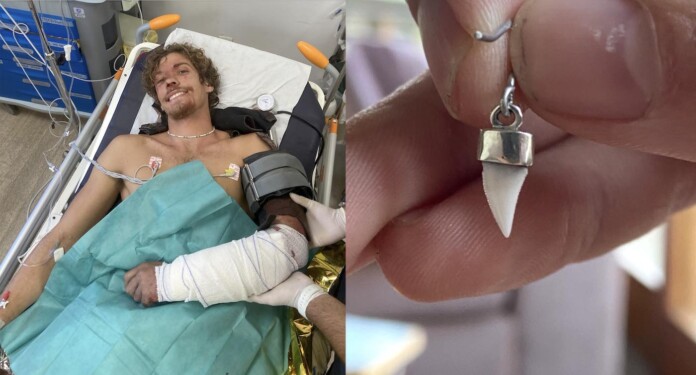
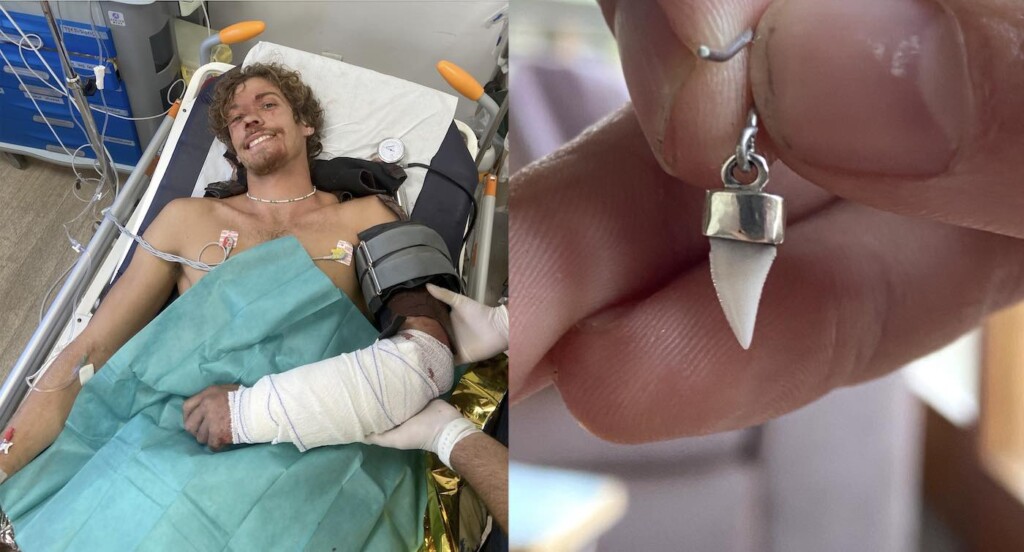
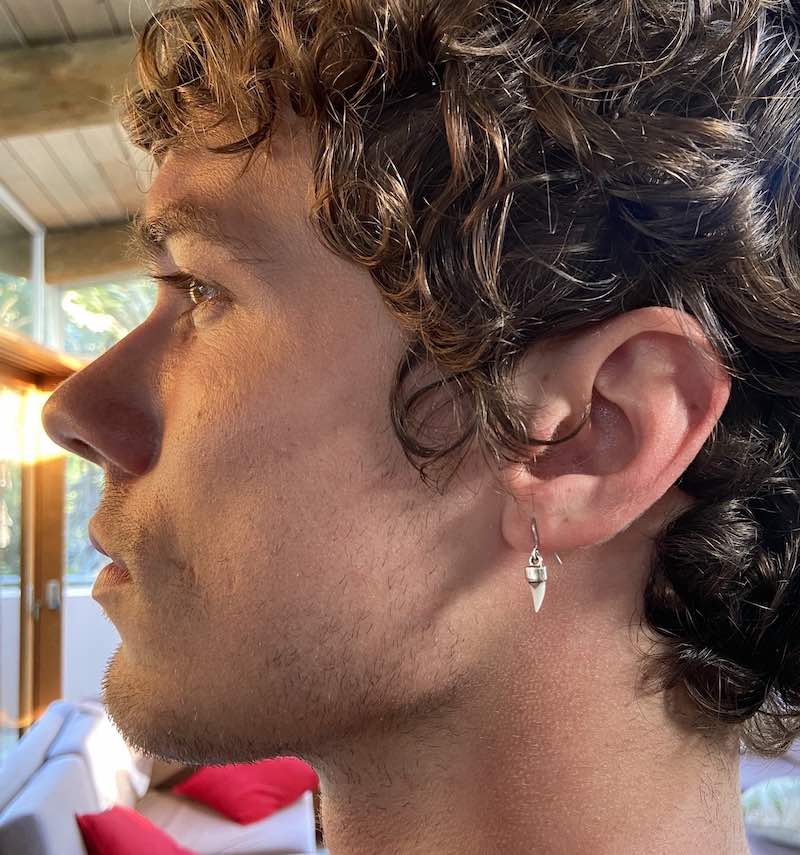
After a shark bite, Angus Kockott used the embedded shark tooth to make an earring - via SWNS
After a shark bite, Angus Kockott used the embedded shark tooth to make an earring – via SWNS
A diver who was attacked by a shark has turned one of its teeth into an earring—and says wearing the ‘trophy’ has given him closure.
Angus Kockott was freediving in the shallow water off a French Polynesian island in May when, out of nowhere, a 7-foot grey reef shark appeared from behind the coral and clamped its jaws on his arm.
The 20-year-old fought off the shark by stabbing it in the gills using a 4-inch knife used for cutting dive lines.
Angus managed to swim back to the boat and tied goggles around his arm to create a makeshift tourniquet.
“If I hadn’t blocked the shark with my arm, it could have gone for my neck,” said the sailor from South Africa. “I would’ve been toast.”
He was rushed by military aircraft to a hospital in Tahiti where, during a six-hour surgery, doctors found a tooth in his arm—and now he wears it with pride.
“It’s been a defining experience in my life,” said the young diver. “And that’s why I got the tooth made into an earring.”
“Wearing it feels like the close of this chapter. I got through it, and I’ve got my trophy hanging on my ear.”
But, he doesn’t blame the animal. “My assumption was it was a territory thing. You can’t blame the animal.”
Angus Kockott with shark tooth earring – via SWNS
After a nerve graft and skin graft to try to repair the damage, and three weeks recovering in Tahiti, he flew home to South Africa, where he is undergoing physical therapy and nerve treatments.
Attorney Jay Shooster with his dad Frank - via SWNS
Attorney Jay Shooster with his dad Frank – via SWNS
An attorney has issued a warning over an elaborate AI voice-cloning scam which nearly fooled his dad into handing over $35,000.
You may have heard about election interference scams that use AI to recreate a candidate’s voice to spread disinformation about voting—but that same artificial intelligence is being used to create panic in family members over the phone.
Scammers impersonating Jay Shooster called his dad Frank, convincing him that his son had been in a serious car accident, was arrested, and needed bail money.
Even though he’s an educated retired attorney, the terrified 70-year-old had no idea it was not his son.
“I got a phone call and it was my son, Jay. He was hysterical, but I knew his voice immediately.
“He said he had been in an accident, broke his nose, had 16 stitches, and was in police custody because he tested positive for alcohol after a breathalyzer, blaming it on the cough syrup he had taken earlier.”
His 34-year-old son, who is campaigning for Congress in Florida’s 91st District in Boca Raton, believes the scammers managed to create the fake voice from his 15-second TV campaign ad.
On September 28, the impersonator pleaded with Frank not to tell anyone about the situation. Moments later, another man identifying himself as attorney ‘Mike Rivers’, said Jay needed a $35,000 cash bond to avoid being held in jail for several days.
The scam escalated when ‘Rivers’ instructed Frank to pay the bond via a cryptocurrency machine—an unconventional request that heightened Frank’s suspicions.
“I became suspicious when he told me to go to a Coinbase machine at Winn-Dixie,” Frank says. “I didn’t understand how that was part of the legal process.”
He eventually realized something was not right after his daughter, who Frank was visiting, told him that AI voice-cloning scams were on the rise—and hung up the phone.
“It’s devastating to get that kind of call,” said Frank. “My son has worked so hard, and I was beside myself, thinking his career and campaign could be in ruins.”
Jay, who often goes to court on consumer fraud cases as an attorney, was shocked to find himself a target.
“I’ve been paying attention to AI and its effects on consumers, but nothing prepares you for when it happens to you,” Jay says.
“They did their research. They didn’t use my phone number, which fit the story that I was in jail without access to my phone.”
The scam’s sophistication left Jay stunned, saying, “All it takes is a few seconds of someone’s voice—the technology is so advanced that they could have easily pulled my voice from my 15-second campaign ad.”
Jay is advocating for changes in AI regulation to prevent such scams from harming others.
“There are three key policy solutions we need,” he says. “First, AI companies must be held accountable if their products are misused.
“Second, companies should require authentication before cloning anyone’s voice. And third, AI-generated content should be watermarked, so it’s easily detectable, whether it’s a cloned voice or a fake video.”
If elected to the Florida House of Representatives, Jay plans to take action against the rising misuse of AI technology, including voice-cloning scams.
He aims to introduce legislation that would hold AI companies liable for misuse, ensuring they implement necessary safeguards such as voice authentication and watermarking.
“We need to create clear regulations to stop these types of crimes from happening,” Jay says. “It’s not just about technology — it’s about protecting people from the trauma and financial damage that can result from these scams.
“I want to push for more stringent requirements for AI developers to ensure their tools are not used maliciously.”
As AI technology rapidly evolves, Jay and Frank hope their story serves as a warning for others to stay vigilant.
“This shows how important it is to stay calm and think things through carefully,” Frank notes. “You have to listen and ask questions if something doesn’t add up. Scams like this are becoming more sophisticated, but we can’t let our guard down.”
PLEASE SHARE WITH FRIENDS And Family So They Can Avoid Getting Scammed…
MIT researchers have some good news for the environment: “Mercury emissions from human activity have been declining over the past two decades, despite global emissions inventories that indicate otherwise.“
The unexpected reduction in human-driven pollution led to a 10 percent decline in mercury concentrations in the air.
For the new study, researchers analyzed measurements from all 51 available monitoring stations in the Northern Hemisphere and found a steep decline between 2005 and 2020.
They used two separate modeling methods to determine what is driving that trend. Both techniques pointed to a decline in mercury emissions from human activity as the most likely cause.
Global inventories, on the other hand, have reported opposite trends. These inventories estimate atmospheric emissions using models that incorporate average emission rates of polluting activities and the scale of these activities worldwide.
“Our work shows that it is very important to learn from actual, on-the-ground data to try and improve our models and these emissions estimates. This is very relevant for policy because, if we are not able to accurately estimate past mercury emissions, how are we going to predict how mercury pollution will evolve in the future?” says Ari Feinberg, a former postdoc in the MIT Institute for Data, Systems, and Society (IDSS) and lead author of the study.
Due to a lack of additional data from global monitoring stations and limitations in our understanding of mercury pollution, the researchers couldn’t pinpoint a definitive reason for the mismatch between the inventories and the recorded measurements.
“Mercury emissions are moving in the right direction, and could continue to do so, which is heartening to see. But this was as far as we could get with mercury. We need to keep measuring and advancing the science,” adds co-author Noelle Selin, an MIT professor.
Feinberg and Selin are joined on the paper by an international team of researchers that contributed mercury measurement data and statistical methods to the study. The research was published in the Proceedings of the National Academy of Sciences.
Why the Mercury Mismatch?
A global treaty that aimed to cut mercury emissions—a potent neurotoxin that enters the atmosphere from sources like coal-fired power plants and small-scale gold mining—was signed in 2013 and went into force in 2017.
The Minamata Convention calls for an evaluation every five years. The first meeting of its 128 signatories—including the US, EU, China and Russia—coincided with disheartening news reports that said global inventories of mercury emissions had increased, despite international efforts to reduce them.
This was puzzling news for environmental scientists like Selin. Data from monitoring stations showed atmospheric mercury concentrations declining during the same period.
Inventories combine emission factors—such as the amount of mercury that enters the atmosphere when coal mined in a certain region is burned—with estimates of pollution-causing activities, like how much of that coal is burned in power plants.
“The big question we wanted to answer was: What is actually happening to mercury in the atmosphere and what does that say about emissions over time?” Selin says.
Modeling mercury emissions is especially tricky. First, mercury is the only metal that is in liquid form at room temperature, so it has unique properties. Moreover, mercury that has been removed from the atmosphere by sinks—like the ocean or land—can be re-emitted later, making it hard to identify primary emission sources.
At the same time, mercury is more difficult to study in laboratory settings than many other air pollutants, especially due to its toxicity, so scientists have limited understanding of all chemical reactions mercury can undergo. There is also a much smaller network of mercury monitoring stations, compared to other polluting gases like methane and nitrous oxide.
“One of the challenges of our study was to come up with statistical methods that can address those data gaps, because available measurements come from different time periods and different measurement networks,” Feinberg says.
The researchers used statistical techniques to aggregate data and combined data from 11 regions, which helped them overcome data gaps and evaluate regional trends.
Then the researchers used two modeling methods — biogeochemical box modeling and chemical transport modeling — to explore possible causes of that decline. Box modeling was used to run hundreds of thousands of simulations to evaluate a wide array of emission scenarios. Chemical transport modeling is more computationally expensive but enables researchers to assess the impacts of meteorology and spatial variations on trends in selected scenarios.
For instance, they tested one hypothesis that there may be an additional environmental sink that is removing more mercury from the atmosphere than previously thought. The models would indicate the feasibility of an unknown sink of that magnitude.
“As we went through each hypothesis systematically, we were pretty surprised that we could really point to declines in anthropogenic (human-made) emissions as being the most likely cause,” Selin says.
Their work underscores the importance of long-term mercury monitoring stations, Feinberg adds. Many stations the researchers evaluated are no longer operational because of a lack of funding.
While their analysis couldn’t zero in on exactly why the emissions inventories didn’t match up with actual data, they have a few hypotheses.
One possibility is that global inventories are missing key information from certain countries. For instance, the researchers resolved some discrepancies when they used a more detailed regional inventory from China. But there was still a gap between observations and estimates.
In addition, it’s difficult to determine how long it takes the pollutant to be released into the atmosphere from discarded products like thermometers or scientific equipment.
In the future, researchers from multiple countries, including MIT, will collaborate to study and improve the models they use to estimate and evaluate emissions. This research will be influential in helping that project move the needle on monitoring mercury, Feinberg says.
This research was funded by the Swiss National Science Foundation, the U.S. National Science Foundation, and the U.S. Environmental Protection Agency.
Quote of the Day: “The soul that is within me no man can degrade.” – Frederick Douglass
Photo by: Levi Guzman
With a new inspirational quote every day, atop the perfect photo—collected and archived on our Quote of the Day page—why not bookmark GNN.org for a daily uplift?
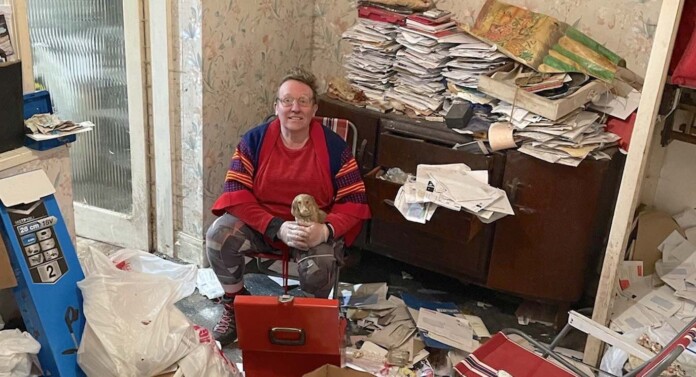
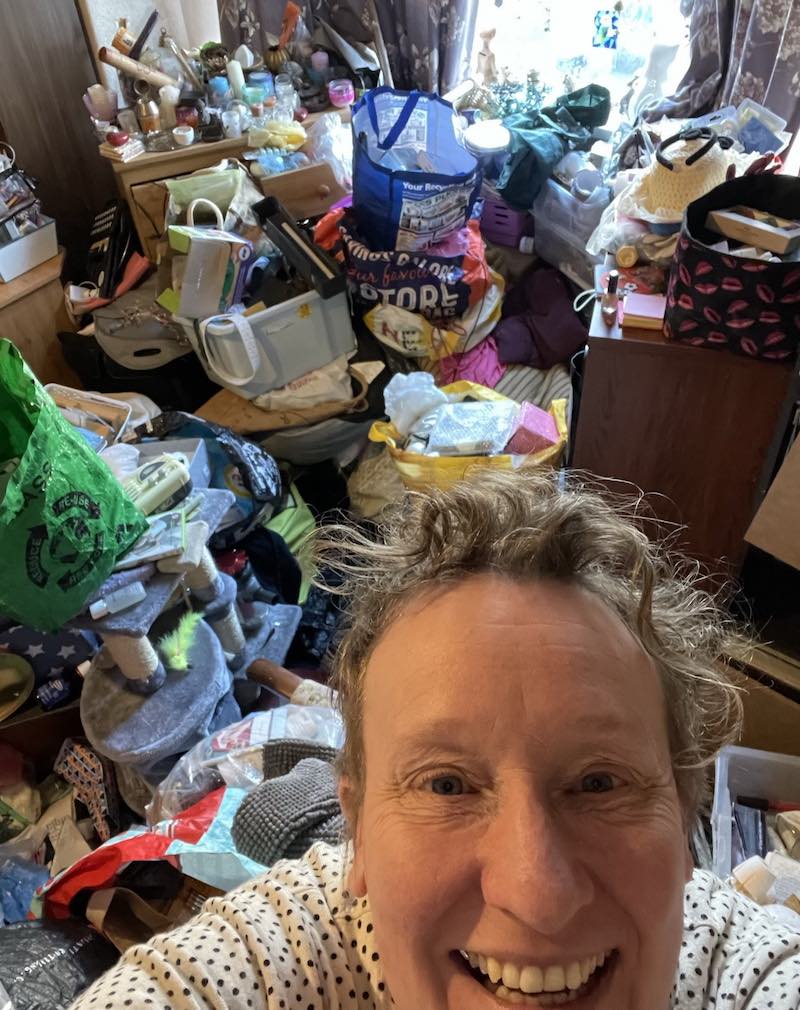
A former ‘hoarder’ is now spending her days transforming the lives of people living in houses filled with mountainous piles of clutter and filth.
Lisa Curtis grew up with a fondness for ‘collecting’ things, which she later realized most people would describe as ‘hoarding’.
Her journey out of that mess began in 2013 when her 65-year-old father died. She discovered his house was bursting with chaos because he was also a hoarder.
She spent six months of her weekends sifting through his belongings, choosing what to keep, donate, sell, or discard to clear the mess.
“My dad would never let us into his house,” explained the 53-year-old from Newcastle, England. “I walked in and found that time had just stood still—he hadn’t thrown anything away.”
His mother (Lisa’s grandmother) had died back in 2001 and he started hoarding her old possessions to deal with the grief, and had also failed to keep on top of his housework.
Heartbroken, Lisa cleared out his cluttered, dirty home bit-by-bit and later realized that she also shared some of the same ‘collecting’ tendencies.
She then turned her attention to her own 3-bedroom home—stacked full of random collections—and managed to get rid of thousands of items.
She began taking requests for decluttering help from friends and colleagues and in 2017 her side-hustle became a full-time job for which she earns around 50k a year.
Now the mother-of-three spends every day walking into hoarders’ homes to help them tackle their habits—rewarded by the fact that she’s making a real difference in people’s lives (watch the video below).
Former hoarder Lisa Curtis is now helping others with clutter-filled homes – via SWNS
“I can help people because I understand how they feel,” said Lisa, who posts videos on Tiktok at @motherclutteruk. “It’s not just laziness, there’s a story behind every hoarder.”
Some of Lisa’s most difficult projects have included rat-infested chairs and dead animals never taken outdoors.
“I work with quite a lot of older blokes, whose houses are piled full and they have a tiny little corner with a chair where they spend all day.”
She helps women who have shopping addictions, compulsively buying things like homeware and crafting supplies—and some even pay thousands to rent storage because they can’t fit all their stuff.
“I had one lady who had thousands of knitting magazines, all completely unopened.
“I dealt with men who have stored their pee. I asked ‘why?’ and he couldn’t give an answer. He just couldn’t get rid of anything.”
She said being a collector doesn’t necessarily mean a house is unsanitary, but due to the lack of space, it can often lead to that for some people. It “happens slowly” over time, and often results in her getting elbow-deep in mildew, grease, and dust—and even a moldy freezer.
But because Lisa has struggled with hoarding tendencies herself, she can empathize—and, as a result, people are more comfortable letting her into their homes.
Some of her clients have included white-collar workers like bank managers and architects—but you’d never know from the outside, because hoarders often feel great shame around their habits.
Lisa now wants to educate others on hoarding and raise awareness, so people don’t have to feel so ashamed.
“Mean comments are what keep people from asking for help, but everyone has a story and if you knew theirs, you’d be less inclined to say horrible things.”
SHARE THE INSPIRATION To Inspire Others On Social Media…
Just in time for Halloween, meet the dad and daughter who like to dress up together as famous Disney duos on frequent visits to their favorite theme park, called ‘Disneybounding’.
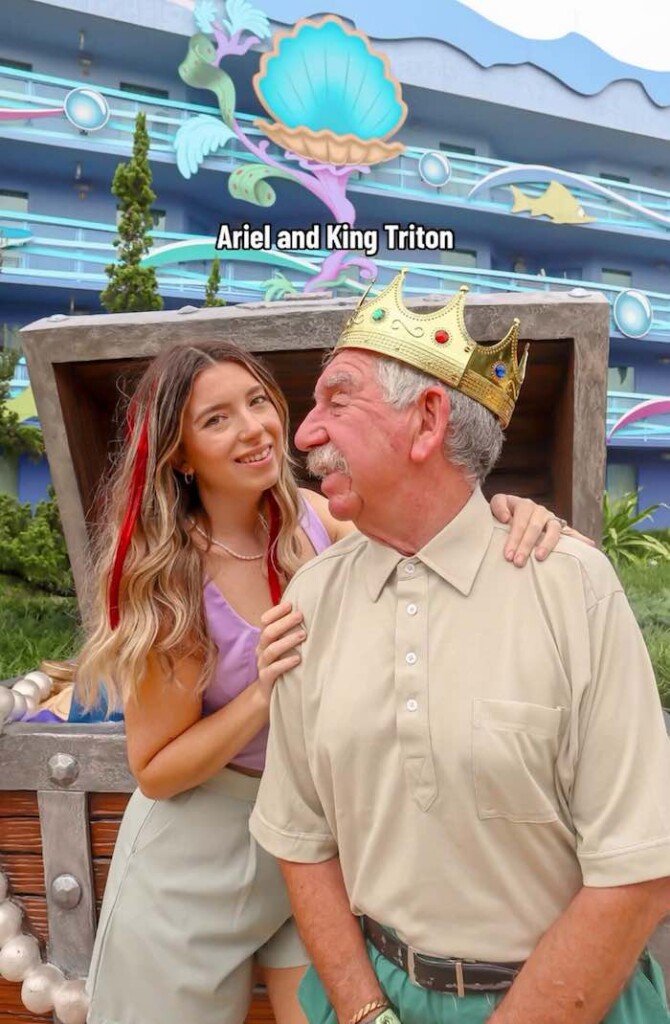
Charlie Perez and her dad Eric Mcgough have now enthusiastically dressed up in eight sets of father-daughter costumes over the last 16 months in an homage to iconic films such as Toy Story, Beauty and the Beast, Pinocchio, and Up.
The idea came from a follower on Charlie’s Instagram page who pointed out that the 71-year-old looked a lot like Jane’s father from Tarzan, Professor Archimedes Q. Porter.
The 27-year-old told her dad about it and suggested they don matching costumes the next time they head to Disney World, while still being discreet in adherence to theme park rules.
‘Disneybounding’ is a way to dress up as Disney characters while still following the rules of Disney parks, which prohibit costumes and masks for guests 14 and older. Disneybounders use everyday clothing, accessories, and color palettes to resemble their favorite Disney characters.
The pair first got dolled-up as Jane and the Professor May 2023, and have been coming up with new ideas ever since, including Ariel and King Triton from Little Mermaid.
Charlie Perez dressed like ‘Jane’ from Tarzan with dad Eric Mcgough – IG and SWNSCharlie Perez and Eric Mcgough – SWNS
“When I first asked my Dad about it, I think he was a little bit reluctant in case people thought it was silly, said Charlie, who lives in Orlando, Florida. “But once we found our outfits, he really got into the character.”
“My Dad is my best friend and he’s always there for me.
“I truly think he is the best Dad in the world and I feel so lucky to have him—and to create these amazing memories with him.”
Charlie Perez and her dad Eric Mcgough pay homage to Up! – SWNS
Although her parents still live in Lincolnshire, England, Eric often visits Charlie and they always go to nearby Disney World together.
“We try to do dad–daughter characters, but also anyone that my dad looks like specifically.”
“Most of the time it is just us using regular items of clothing but styling them to look like a specific character.”
Charlie Perez and her dad Eric Mcgough as Toy Story characters – IG / SWNSCharlie Perez and her dad Eric Mcgough as Mary Poppins characters – IG / SWNS
“A few of the costumes I ‘made’ myself. I painted my dad’s shirt (to depict Sulley from Monsters Inc), and for Mary Poppins I hand stitched the bows the dress.
“It’s been a wonderful bonding experience.”
GIVE YOUR FRIENDS SOME COSTUME IDEAS By Sharing This on Social Media…