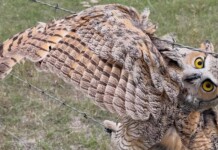
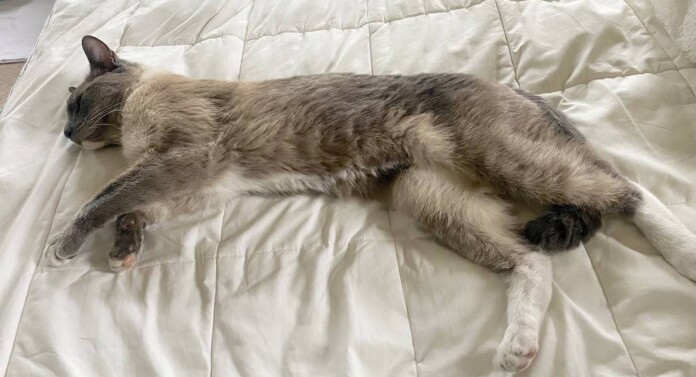
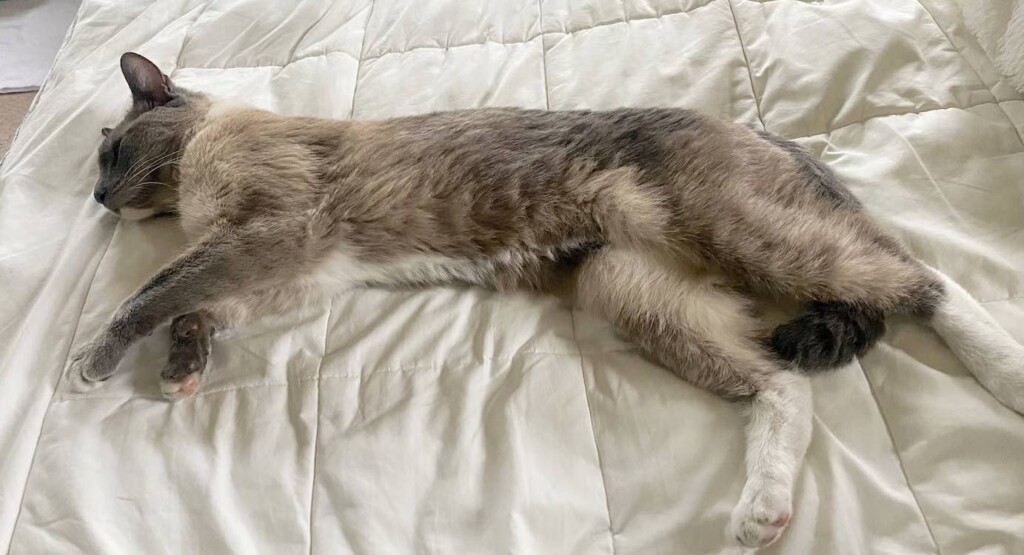
An incredible story reminiscent of Homeward Bound, recently came out from California—that a cat who had accompanied a family to Yellowstone National Park, was lost there.
Despite the distance of over 800 miles, the cats’ owners got a call two months after the sorrowful trip that their animal had been found in California, not Wyoming.
Benny and Susanne Anguiano have been on many camping trips with their cat Rayne Beau, and were confident that the naturally solitary and self-reliant animal wouldn’t get lost.
Visiting Yellowstone, Rayne Beau was startled by something and ran off into the trees not to be seen again, despite Benny and Susanne looking for him every day of their trip.
Time ticked by, and eventually, the couple had to make the abhorrent decision to leave.
“We had to leave without him,” Mrs. Anguiano told KSBW News. “That was the hardest day because I felt like I was abandoning him.”
60 days passed at their home in Salinas, Monterrey, when they suddenly got a call from an SPCA in Roseville located in northern Sacramento County.
They had a Pet Watch microchip, which the SPCA was able to read and gather the Anguianos’ contact information. Apparently, a woman had found the cat in Roseville and decided that since he was obviously a pet she would take him to the shelter.
Susanne contacted local news to try and share the remarkable story of Rayne Beau’s journey home in the hopes that individuals who may have taken him in, fed him, or saw him pass by, will come forward and enlighten the family as to the path their cat took on his long, 800-mile walk back home.
WATCH the story below from KSBW…
SHARE This Unbelievable Journey With Your Friends…
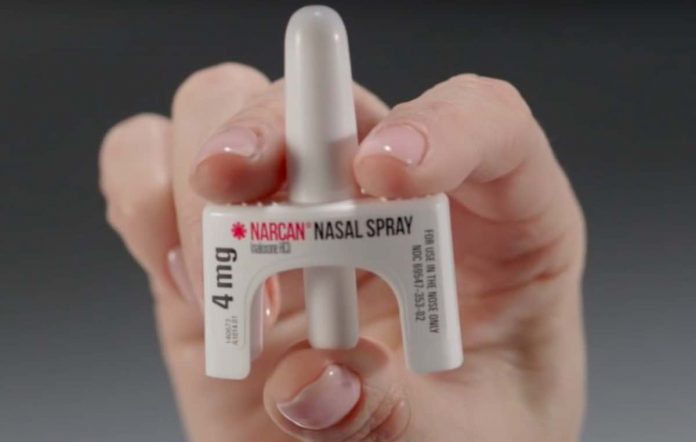
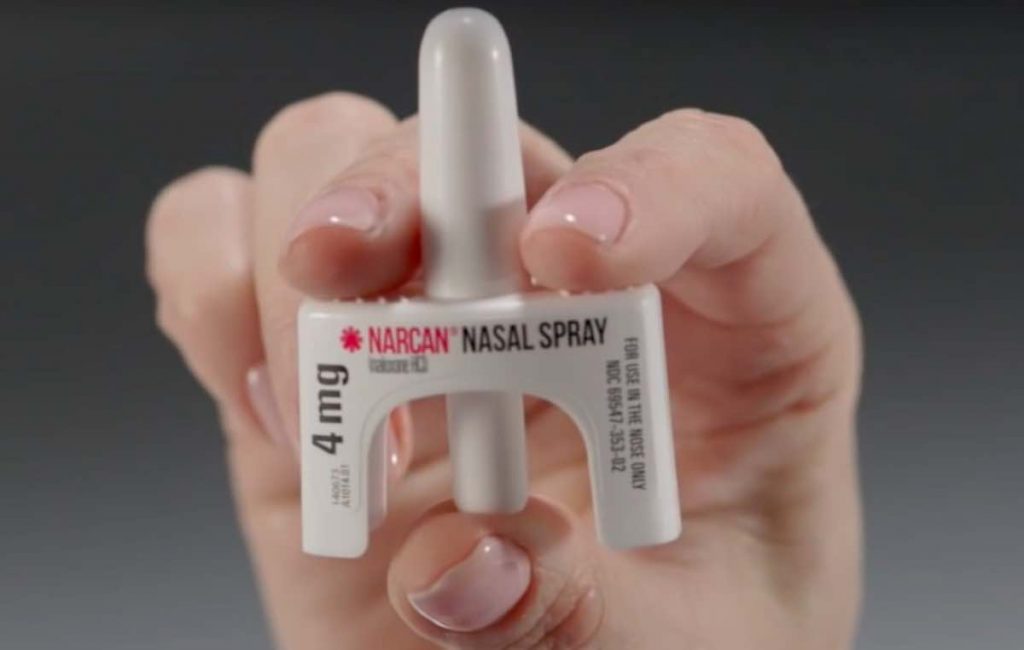
Narcan, a naloxone-based anti-overdose nasal spray, is one factor in the reduction - released by Adapt Pharma.
Narcan, a naloxone-based anti-overdose nasal spray, is one factor in the reduction – released by Adapt Pharma.
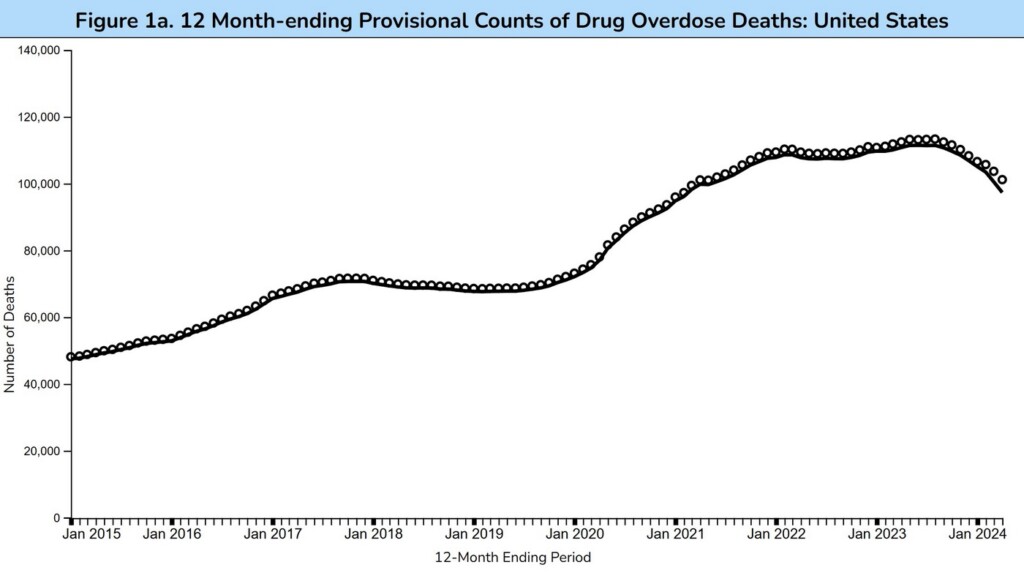
For the first time in decades, drug overdose deaths in the US fell—by 10.6% while in certain states the decline was 20, and even 30%.
Identified in a survey conducted by the CDC, it interrupts a one-way trendline that has been rising higher and higher since 2019, and has given some scientists “so much hope.”
Those in the field of American medicine trying to combat and quantify the problem say that a 1-year drop is no reason “to spike the football,” and the work to try and establish what was the cause of the reduction is now ongoing.
NPR, covering the survey, says that the commonly available drug naloxone which can work to interrupt and diffuse an opioid overdose, has definitely played a factor.
The simple nasal spray is highly effective at reversing overdoses, and NPR spoke with one addict of street drugs like fentanyl in Vermont who said that he and other users regularly carry naloxone, and have built the habit of dosing in pairs or groups to make sure that if an overdose occurs, someone is there to help that person.
credit CDC
“For a while we were hearing about [drug deaths] every other day. When was the last one we heard about? Maybe two weeks ago? That’s pretty few and far between,” Mr. Donaldson, an addict from Burlington, told NPR.
Of particular note have been Washington, Ohio, and Missouri, where drug deaths have fallen 15%, 31%, and 34% respectively.
“A year ago when overdose deaths continued to rise, I was really struggling with hope,” said Brad Finegood, who directs the overdose crisis response in Seattle. “Today, I have so much hope.”
Finegood said that they’ve tripled the amount of naloxone out in the community, and added that his department found in a survey that 85% of high-risk drug users now carry the overdose-reversal medication.
Other hypotheses include better drug enforcement and control of fentanyl coming across the southern border, and although other medications have increased in circulation, like xylazine, which is also toxic, it’s possible that fentanyl was just that much more lethal.
Of all the public health workers and scientists NPR spoke with, agreement was unanimous that only the briefest of celebrations is merited in the hope these reductions can continue and become sustained since tens of thousands of Americans still overdose on illicit drugs every year.
SHARE This Inspiring Trendline With Your Friends On Social Media…
Quote of the Day: “Thou art fairer than the evening air clad in the beauty of a thousand stars.” – Christopher Marlowe
Photo by: prottoy hassan
With a new inspirational quote every day, atop the perfect photo—collected and archived on our Quote of the Day page—why not bookmark GNN.org for a daily uplift?
Credit: Dina Averuk Photography – Submitted by: Wish of a Lifetime via AARP
Credit: Dina Averuk Photography – Submitted by: Wish of a Lifetime via AARP
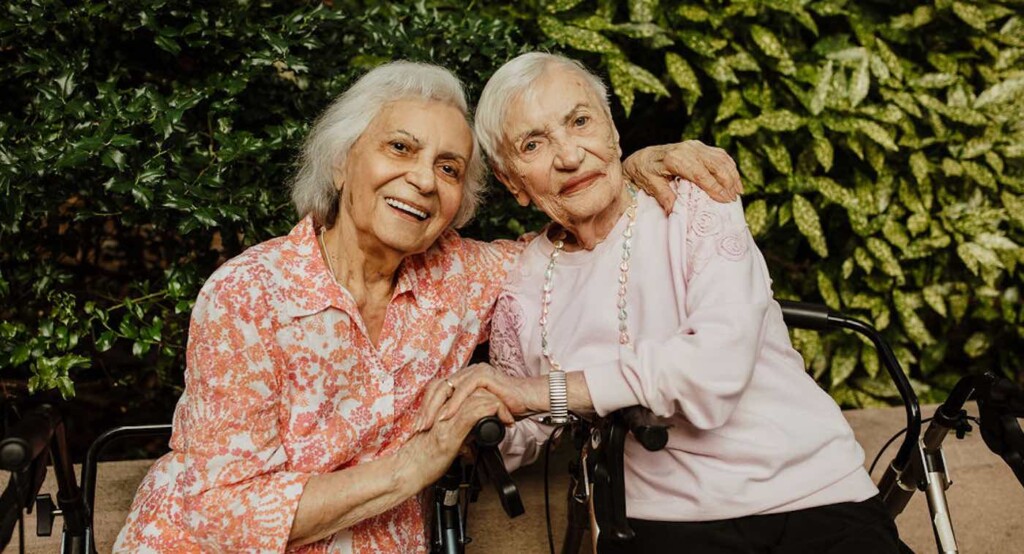
Helena Stefaniak’s life story is one marked by the bonds of sisterhood growing up in war-torn Warsaw—and she rekindled that spirit of resilience one last time at age 100, thanks to an AARP program that grants wishes for seniors.
Helena and her sister Barbara protected one another from the horrors of their surroundings during World War II. Yet, the war ultimately tore them apart five years after the Nazis invaded Poland in 1939. They forcibly took her to a work camp in Germany in 1944, while Barbara’s fate remained unknown.
Helena recounted her harrowing experience being on her own for three years, saying, “I was really lost. Most of the time the war was going, I was scared.”
Despite the odds, Helena never lost hope of reuniting with her sister.
After enduring years of hardship and uncertainty, Helena was liberated from the work camps and became determined to find her sister. The relentless search finally led to their reunion in Germany in 1947.
Helena and her new husband started afresh, moving to Connecticut and living among fellow Polish immigrants. The sisters reunited again in New Jersey in 1950, where Barbara lives—and their bond remained unbreakable through the decades.
This year, though, as she approached her 100th birthday—and with her health deteriorating—Helena’s greatest wish was to reunite with Barbara once more.
Touched by their story, Wish of a Lifetime from AARP made Helena’s dream come true, allowing her to travel from her current home in Montana to New Jersey, so she can spend precious time with her beloved sister.
“At our age, you have to say goodbye,” Barbara told GNN.
Helena, 52, and Barbara, 48, in 1976 visiting Poland for first time since WWII – Submitted by Wish of a Lifetime from AARP
“I was very, very happy. I know I won’t see her again, and that was our last time.
Founded by Jeremy Bloom in 2008, Wish of a Lifetime, a charitable affiliate of AARP has granted over 2,700 wishes nationwide, averaging 300 per year.
“We believe that everyone should be able to age with hope and joy. We empower wish recipients to fulfill their hopes while reconnecting with the people and passions that matter most to them.”
Helena, for one, is grateful beyond words. “Thank you from the bottom of my heart.”
SHARE THE WISH MAKING OPPORTUNITY With Friends and Seniors on Social Media…
An international team of researchers believe electric cars could go farther on a single charge, and their batteries last longer, now that they’ve made a discovery—the reason batteries lose capacity over time.
It is well known that, for example, older mobile phones run out of power more quickly. But, until now, the common phenomenon was not completely understood.
Led by an engineer at the University of Colorado-Boulder, the breakthrough could lead to the development of better batteries, while advancing energy storage technologies to accelerate the transition to clean energy.
“We are helping to advance lithium-ion batteries by figuring out the molecular level processes involved in their degradation,” said CU Boulder Professor Michael Toney, the study leader.
Engineers have been working for years on designing lithium-ion batteries—the most common type of rechargeable batteries—without having to mine for cobalt, the expensive rare mineral linked to environmental and worker rights concerns.
Researchers have previously tried elements such as nickel and magnesium, but those batteries have even higher rates of “self-discharge”, which is when the battery’s internal chemical reactions reduce the stored energy.
Because of self-discharge, most EV batteries have a lifespan of 7-10 years before they need to be replaced, so Prof. Toney and his team set out to investigate the cause of it.
He explained that in a typical lithium-ion battery, lithium ions, which carry charges, move from one side of the battery, called the anode, to the other side, called the cathode, through a medium called an electrolyte. During the process, the flow of the charged ions forms an electric current that powers electronic devices.
Charging the battery reverses the flow of the charged ions and returns them to the anode.
Previously, it was thought batteries self-discharge because not all lithium ions return to the anode when charging, reducing the number of charged ions available to form the current.
In the new study, published in the journal Science, the research team
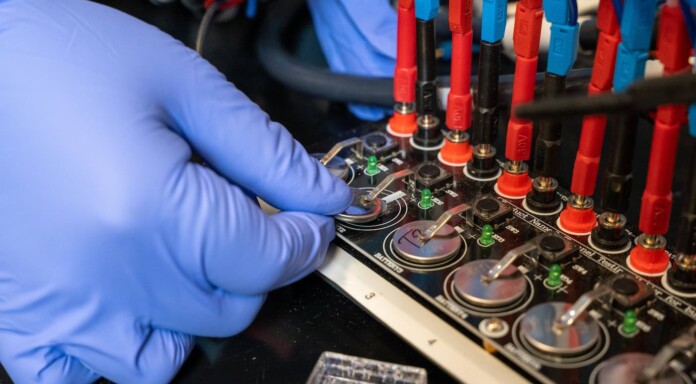
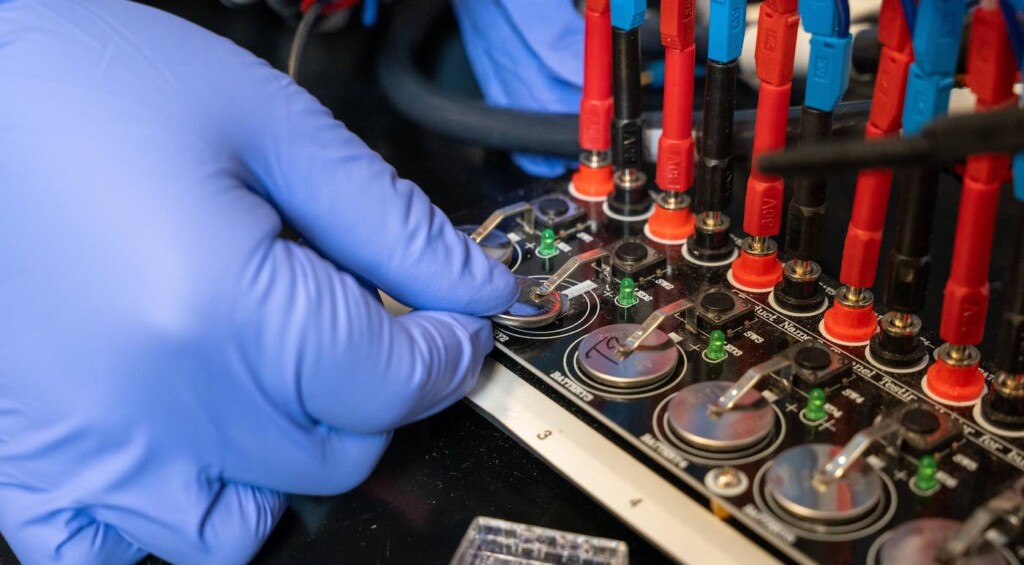
used the Advanced Photon Source—a powerful X-ray machine at the U.S. Department of Energy’s Argonne National Laboratory in Illinois—and found that hydrogen molecules from the battery’s electrolyte would move to cathode and take the spots that lithium ions normally bind to. As a result, lithium ions have fewer places to bind to on the cathode, weakening the electric current and decreasing the battery’s capacity.
“Some of these low cobalt-containing batteries can potentially provide a higher driving range, but we also need to make sure they don’t fall apart in a short period of time,” says Toney.
Now that they have a better understanding of the self-discharge mechanism, engineers can explore a few ways to prevent the process, such as coating the cathode with a special material to block hydrogen molecules, or using a different electrolyte.
Prof Toney added: “We can inform the battery chemistry community on what needs to be improved (because) having a better battery is very important in shifting our energy infrastructure away from fossil fuels to more renewable energy sources.”
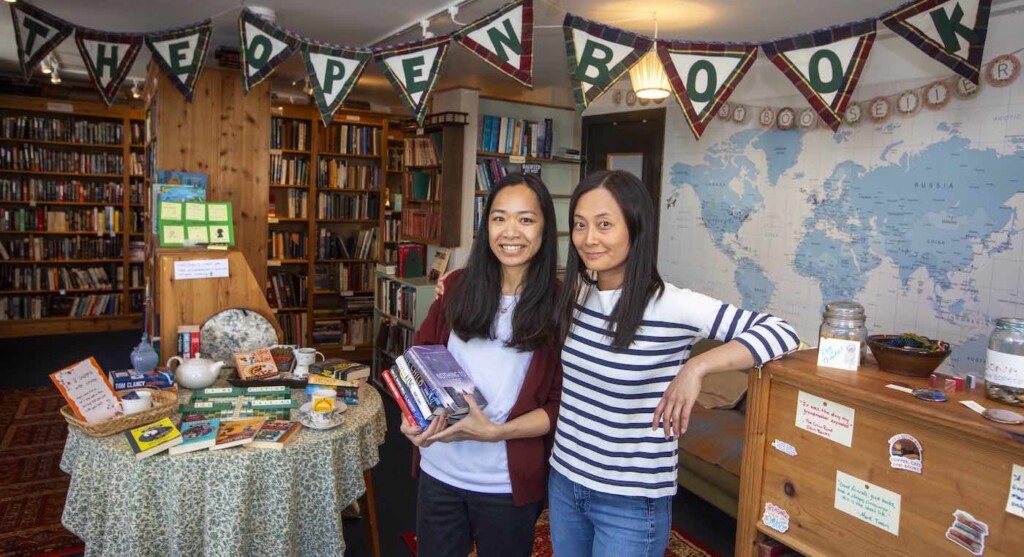
Open Book shop in Wigtown, Scotland – Airbnb / SWS
Open Book shop in Wigtown, Scotland – Airbnb / SWS
More than 450 guests have enjoyed accommodations in the “world’s only book shop Airbnb” where guests spend the night—and run the store during the day.
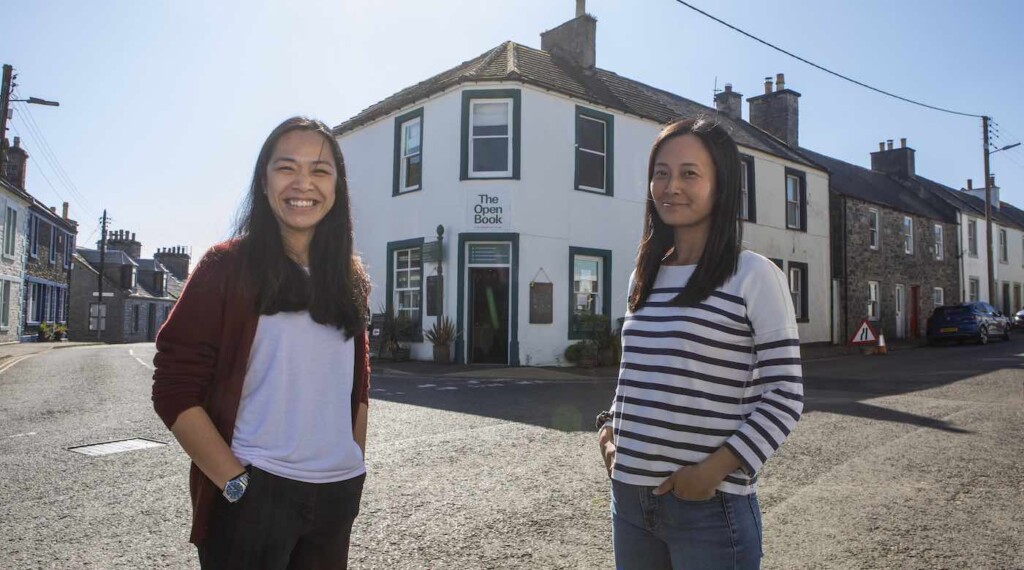
The village of Wigtown is known as Scotland’s National Book Town, and one of its charming bookshops—The Open Book—rents out its upstairs flat, giving literary-lovers the chance to ‘live their dream’ of having their very own shop by the sea.
Airbnb says it is ”the first ever bookshop residency experience” and is so popular it has a two year waiting list of guests coming from around the globe, from Hawaii to Beijing.
The shop, set up by The Wigtown Festival Company, aims ”to celebrate books, independent bookshops and welcome people from around the world”
Since welcoming its first visitors in August 2014, the nonprofit Open Book Airbnb has become a sensation with guests saying they’re delighted by the unusual experience of minding their own bookshop.
“There’s no better feeling than somebody buying a book that you put on display,” said one recent occupant from Austin, Texas, on the BBC.
“Nestled in the pristine surroundings of Galloway, The Open Book is a charming bookshop and apartment, situated on the main street of Wigtown. A holiday home with a difference, it presents a unique opportunity for visitors to run a real bookshop at the heart of the town’s vibrant community.
“Booked through Airbnb, paying guests live in the self-catering apartment upstairs and run the bookshop below it for the duration of their stay.
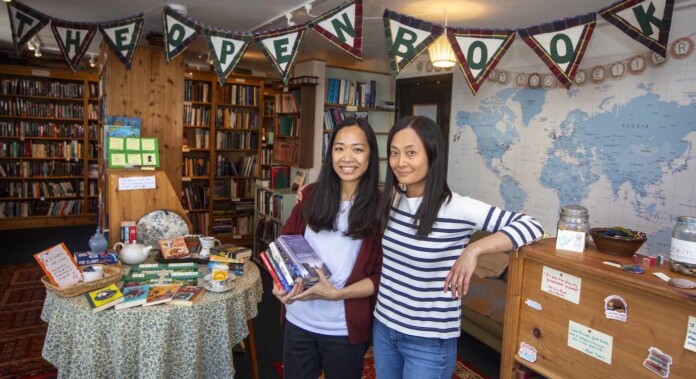
The Open Book in seaside town of Wigtown, with guests Daisy Yeung and Lydia Man – SWNS
During their stay, guests are free to change displays, price books, re-categorize them, and make inventive use of the blackboard that entices visitors inside to browse or chat. Some guests are happy to quietly run the bookshop, while others come with firmer plans and creative ideas!
“Come to Wigtown to experience the life of a second-hand bookshop owner in a remote Scottish town. Sea, highlands, native forests, amazing people, and bookshops are just on our doorstep.”
The guests this week are Daisy Yeung, who traveled from Hong Kong, and her longtime friend Lydia Man.
“So far we are enjoying it very, very much,” said Daisy, who said she heard about the interesting Airbnb in a blog online.
“My dream is to be a book seller one day, but since it is very hard to be a book seller and make enough money, we thought it would be fun to have a taste of it. The weather here is really excellent this week, and everybody here is just so nice.”
Despite buying a few books in the area, Daisy admits she has been too busy with the shop to open a page.
The friends wanted to devise a theme for their week’s stay and, since September 18 is Mid Autumn Festival in China, they decided to celebrate their cultural celebration at the book shop.
Serving tea at The Open Book shop/ Airbnb in Wigtown Scotland via SWNS
“Traditionally we Chinese people gather with our family and friends on this day and light up lanterns and eat something called moon cakes, which is what we have brought and are sharing with people today,” said Daisy.
“We didn’t bring a lot of things but we did bring moon cakes!” joked Lydia.
The shop is the brainchild of author and filmmaker Jessica Fox, and proceeds from the annual rentals contribute over $10,000 to the Wigtown Festival Company’s charitable work.
Photo shoot for All Dogs Matter - by Wex Photo Video via SWNS
Photo shoot for All Dogs Matter – by Wex Photo Video via SWNS
Lonely dogs were treated to a special furry photoshoot to help them find their forever homes.
The photoshoot will promote residents of the London, England rescue shelter All Dogs Matter, and featured some of their older, bigger, and less ‘photogenic’ pooches.
The focus was also placed on pairs of pups that need to be adopted together.
Whether in foster care or housed at the shelter, they were treated to a day of extra attention in the countryside where they were given the ‘supermodel treatment’.
Ready for their close ups included 12-and-14-year-old Bobby and Brandy, a bonded pair of Yorkshire Terriers (pictured above), who’ve been looking for a home for several months.
Alice, a sweet and clever 2 year-old crossbreed (pictured above and on the website), also lapped up the lens.
Brian and Cody, a very sweet and bonded pair (10 months – 1 year old) are up for adoption or fostering at All Dogs Matter shelter – Wex Photo Video / SWNS
The idea came after a poll of 2,000 adults found that while nearly half of Brits would like to get a dog—or a second furry pal—58 percent said they would rather opt for a younger canine.
And while 47 percent would consider adopting, more than half of the people who’d like a younger dog think it’s easier to train one from a puppy.
However, a whopping 71% of those aged 18–34 admitted that seeing a cute dog’s image on Instagram or TikTok, can prompt them to go check out rescue sites.
The stunning glamour shots were all captured on second-hand cameras, provided by Wex Photo Video, which has partnered with the shelter to give these dogs another shot at showcasing their personalities.
“Every dog deserves their moment in the spotlight, regardless of age or appearance,” said Paul Wareham, marketing director at the camera retailer, which also commissioned the poll.
3-year-old brothers Rumi and Ryan are gentle spirited and regal; up for adoption at All Dogs Matter shelter-by Wex Photo Video/ SWNS
“These lovable hounds have got so much to give, so we’re hoping these glamorous shots can help find them a home.”
The survey revealed 46% of people would feel good about themselves for giving an abandoned dog a second chance at life, and one-third was inclined to choose dogs who have been waiting for a new owner for a long time.
And, if they could spot a dog’s personality shining through a photo, nearly nine in ten of younger respondents (18 – 34) say they would be motivated to request a viewing at a rescue shelter.
Many people reckon that younger dogs would have fewer health issues and would be around longer than older dogs, according to the OnePoll.com survey. But Ira Moss, founder of All Dogs Matter, the charity that rescues and rehomes animals around London and overseas, looks at it from a different angle.
“We see firsthand how much love and joy that rescued, overlooked dogs can bring into a home, but they’re often passed over simply because they don’t have that ‘puppy appeal.’
“This photo shoot has allowed us to show that with a little love and the right photo, all of our wonderful dogs can shine brightly – and hopefully find a new home.”
Quote of the Day: “Recognizing the need is the primary condition for design.” – Charles Eames
Photo by: Michael Niessl
With a new inspirational quote every day, atop the perfect photo—collected and archived on our Quote of the Day page—why not bookmark GNN.org for a daily uplift?
Freddy Montigny jumps from Vercors Massif mountain range on flying carpet – via SWNS
Freddy Montigny jumps from Vercors Massif mountain range on flying carpet – via SWNS
A daredevil has turned his childhood fantasy into reality—by soaring from mountain cliffs on a flying carpet.
The 44-year-old has spent years honing his skills with a triad of extreme sports to get ready for his dream of becoming a real-life Aladdin.
Freddy Montigny developed the unique stunt using his expertise in paragliding, skydiving, and hang gliding, all of which gave him the control needed to launch himself on a magic carpet ride.
The thrilling video shot by drones (see below) shows Freddy’s most daring jump to date from the Croix des Têtes—a 2,400-meter French mountain cliff in the Vercors Massif range—where he flew over the valley, descending to 1,600 meters on the small carpet, before pulling his parachute’s ripcord.
“I’ve always wondered what part of the myths and legends we were told as kids was true,” said the adventurer who lives in Choranche, France.
“I started paragliding at 25, skydiving at 30, and hang gliding at 35.
“All these activities helped me master the art of carpet flying.”
Freddy believes his carpet flights are safe after his years of practice at the Vercors range, near the city of Grenoble—and he always has a trusty parachute, his main safety net.
“If anything goes wrong, I just open it and release the carpet.
“With the height I’m jumping from, I have plenty of time to correct any mistakes.”
While he admits that his ‘magic carpet’ isn’t quite like the legends, it’s close enough.
“With this flying carpet, I’ve learned that while you can’t fly at any speed or to any destination, it’s still an amazing way to defy reality.”
Freddy, who previously worked as a professional drummer and stage technician, now calls himself a ‘professional carpet rider,’ chasing his dream to new heights.
Watch the jump below, preferably while playing Magic Carpet Ride by Steppenwolf…
SHARE THE THRILL With Adventurous Friends on Social Media…
Some teachers consider finger counting a signal that youngsters are struggling with math, while others associate its use as advanced numerical knowledge.
Now, new research is the first to show that children’s performance in arithmetic can show a “huge” improvement through the teaching of a finger-counting method.
Swiss and French teams explored whether finger counting can help primary-school-aged children to solve math problems. They said adults rarely use their fingers to calculate a small sum, because such behavior could be attributed to cognitive impairments or “pathological difficulties” in math.
But young children under age 8 who use their fingers to solve such problems may be seen as intelligent, probably because they have already reached a level that allows them to understand that a quantity can be represented by different means.
The research aimed to determine whether children who don’t count on their fingers can be trained to do so, and whether such training would result in enhanced arithmetic performance.
The study, published in the journal Child Development, focused on 328 five- and six-year-old children at kindergarten, mainly living in France, and tested their abilities to solve simple addition problems.
The kindergarteners were recruited through their teachers, who voluntarily took part in the experiment, which included a pre-test, training held over two weeks, a post-test closely after the training’s end, and a delayed post-test.
The results showed an “important increase” in performance between pre- and post-test for the trained children who did not count on their fingers originally—from 37% to 77% of correct responses—compared to non-finger users in the control group.
Whether children who use finger counting are using it as an arithmetic procedure or understand something deeper about numbers will still need to be determined with future research.
“Our findings are highly valuable because, for the first time, we provide a concrete answer to the long-standing question of whether teachers should explicitly teach children to use their fingers for solving addition problems,” said study leader Dr. Catherine Thevenot.
“Finger calculation training is effective for over 75% of kindergartners,” she added. “The next step is to explore how we can support the remaining 25% of children who didn’t respond as well to the intervention.”
Dr. Thevenot, of the Institute of Psychology at the University of Lausanne, Switzerland, says the study came about as a result of conversations with primary school teachers.
“They often asked me whether they should encourage or discourage children from using their fingers to solve calculations.
“Surprisingly, the existing research didn’t offer a clear answer, which left teachers understandably frustrated with my frequent response of ‘I don’t know.’
“This recurring question, coupled with the lack of concrete evidence, inspired me to investigate the issue myself.
“When I first saw the results, I was amazed by the huge improvement in performance among children who didn’t initially use their fingers to solve the problems.
“Before our intervention, these children were only able to solve about one-third of the addition problems during a pre-test. After training, however, they were solving over three-quarters of them.
“This improvement truly exceeded my expectations,” said Dr. Thevenot. “The difference was striking, especially compared to the control groups, where gains were insignificant.
“An important question now is to determine whether what we taught to children goes beyond a mere procedure to solve the problems.
“In other words, we want to know whether our intervention led to a deeper conceptual understanding of numbers, specifically whether children better grasp how to manipulate the quantities represented by their fingers.
“In fact, we have already started addressing this question and the initial results are very promising. However, we still need to carry out additional experiments to confirm that these improvements are indeed a direct result of our training program.”
1..2..3..GO! SHARE the Fascinating Study With Parents on Social Media…
Professor Zhugen Yang with origami paper sensor used for disease detection – Cranfield University / SWNS
Professor Zhugen Yang with origami paper sensor used for disease detection – Cranfield University / SWNS
A cheap new test using origami paper sensors can help detect infectious diseases, such as COVID-19, much earlier and easier than current methods, say scientists.
The innovative method identifies biomarkers in wastewater, enabling rapid tracking of diseases using the camera in a mobile phone—and costs only a buck for each use.
Cranfield University researchers in England built on work conducted during the Covid pandemic, saying the new test device could dramatically change how public health measures are directed in any future pandemics.
Testing wastewater is one of the main ways to assess the prevalence of infectious diseases. Scientists take samples from water treatment plants nationwide and use the results to understand which areas have the highest infection rates—a method that was used during the Covid-19 pandemic.
Professor Zhugen Yang led the development of the new sentinel sensors, working with scientists from the University of Glasgow and Zhejiang University in China.
He began the research in 2020 to develop a test to detect the SARS-CoV-2 virus, Influenza A, and Influenza B in wastewater using a paper-based platform and ultraviolet torch or phone camera.
Until now, the most accurate ways of testing wastewater samples have been methods like the PCR test (polymerase chain reaction), which must be conducted in centralized laboratories by well-trained personnel.
That means samples are collected, stored, and transported under refrigeration to the lab location before being processed, which can take several days and is comparatively expensive.
Prof. Yang described the new test in the journal Cell Reports Physical Science, calling it “rapid, user-friendly and portable”.
Wastewater samples are placed onto a wax-printed paper sheet which is folded in an ‘origami’ style. The paper contains chemicals that react to certain disease markers, triggering a fluorescent color to emerge.
Using a phone camera, the results can be read and the data collected easily shared.
“This could be a real game-changer when it comes to predicting disease rates and improving public health in the face of future pandemics.
“The simple test we have developed costs just £1 and uses the commonly available camera function in a mobile phone, making it readily accessible.”
At the peak of the pandemic in 2021, he performed tests at four quarantine hotels around Heathrow Airport.
The entire sample-to-answer process took less than 90 minutes compared to around four hours for a PCR test, with the process conducted in the basement of one of the hotels using minimal equipment.
Results showed that the new device gives results at least as accurate as the PCR test, but at a much lower cost—and can provide an early warning of disease in the community.
Yang says the device is particularly useful for areas with limited resource because of its ease of use, low cost and fast results.
“During Covid-19 we proved that fast community sewage analysis is a really effective way to track infectious diseases and help manage public health.”
In the future, it could potentially be used to track new variants and help to establish whether the variant is still spreading in the community, as well as monitoring antimicrobial resistance. Further development is being sponsored by the Leverhulme Trust Research Leadership Scheme and a grant from the Biotechnology and Biological Sciences Research Council.
SHARE THE INNOVATION With Origami Lovers on Social Media…
FREE WILL ASTROLOGY – Week of September 21, 2024
Copyright by Rob Brezsny, FreeWillAstrology.com
LIBRA (Sept. 23-Oct. 22):
The bird known as the gray-headed albatross makes long, continuous flights without touching down on the ground. I propose we nominate this robust traveler to be one of your inspirational animals in the coming months. I suspect that you, too, will be capable of prolonged, vigorous quests that unleash interesting changes in your life. I don’t necessarily mean your quests will involve literal long-distance travel. They may, but they might also take the form of vast and deep explorations of your inner terrain. Or maybe you will engage in bold efforts to investigate mysteries that will dramatically open your mind and heart.
SCORPIO (Oct. 23-Nov. 21):
You are in a good position and frame of mind to go hunting for a novel problem or two. I’m half-joking, but I’m also very serious. I believe you are primed to track down interesting dilemmas that will bring out the best in you and attract the educational experiences you need. These provocative riddles will ensure that boring old riddles and paltry hassles won’t bother you. Bonus prediction: You are also likely to dream up an original new “sin” that will stir up lucky fun..
SAGITTARIUS (Nov. 22-Dec. 21):
Your spinning and weaving abilities will be strong in the coming weeks. I predict that your knack for creating sturdy, beautiful webs will catch the resources and influences you require. Like a spider, you must simply prepare the scenarios to attract what you need, then patiently relax while it all comes to you. Refining the metaphor further, I will tell you that you have symbolic resemblances to the spiders known as cross orbweavers. They produce seven different kinds of silk, each useful in its own way—and in a sense, so can you. Your versatility will help you succeed in interesting ways.
CAPRICORN (Dec. 22-Jan. 19):
Capricorn basketball player JamesOn Curry had the briefest career of anyone who ever played in America’s top professional league. Around his birthday in 2010, while a member of the Los Angeles Clippers, he appeared on the court for 3.9 seconds—and never returned. Such a short-lived effort is unusual for the Capricorn tribe—and will not characterize your destiny in the coming months. I predict you will generate an intense outpouring of your sign’s more typical expressions: durability, diligence, persistence, tenacity, resilience, determination, resolve, and steadfastness. Ready to get underway in earnest?
AQUARIUS (Jan. 20-Feb. 18):
It’s a good time for you to embrace the serpent, metaphorically speaking. You may even enjoy riding and playing with and learning from the serpent. The coming weeks will also be a favorable phase for you to kiss the wind and consult with the ancestors and wrestle with the most fascinating questions you know. So get a wild look in your eyes, dear Aquarius. Dare to shed mediocre pleasures so you can better pursue spectacular pleasures. Experiment only with smart gambles and high-integrity temptations, and flee the other kinds. PS: If you challenge the past to a duel (a prospect I approve of), be well-armed with the future.
PISCES (Feb. 19-March 20):
The typical length of mating encounters for panda bears is from 30 seconds to two minutes. There was a dramatic exception to the rule in 2015, however. Lu Lu and Zhen Zhen, pandas living at the Sichuan Giant Panda Research Center in China, snuggled and embraced for 18 minutes. It was unprecedented. I encourage you, too, to break your previous records for tender cuddling in the coming weeks. The longer the cuddling lasts the more likely it is you will generate epiphanies and awakenings.
ARIES (March 21-April 19):
Few of the vegetables grown in the 21st century are in their original wild form. Many are the result of crossbreeding to increase the nutritional value of the food, boost its yield, improve its resistance to insect predators, and help it survive weather extremes. I invite you to apply the metaphor of crossbreeding to your life in the coming months. You will place yourself in maximum alignment with cosmic rhythms if you conjure up new blends. So be a mix master, Aries. Favor amalgamations and collaborations. Transform jumbles and hodgepodges into graceful composites. Make “alloy” and “hybrid” your words of power.
TAURUS (April 20-May 20):
“All I ask is the chance to prove that money can’t make me happy,” quipped comedian Spike Milligan. I propose we make that your running joke for the next eight months. If there was ever a time when you could get rich more quickly, it would be between now and mid-2025. And the chances of that happening may be enhanced considerably if you optimize your relationship with work. What can you do now to help ensure you will be working at a well-paying job you like for years to come?
GEMINI (May 21-June 20):
The World Health Organization says that 2 billion people in the world don’t have facilities in their homes to wash their hands with soap and water. But it’s almost certain that you don’t suffer from this lack. Most likely, you get all the water you require to be secure and healthy. You have what you need to cook food and make drinks. You can take baths or showers whenever you want. You wash your clothes easily. Maybe you water a garden. I bring this to your attention because now is an excellent time to celebrate the water in your life. It’s also a favorable time to be extra fluid and flowing and juicy. Here’s a fun riddle for you: What could you do to make your inner life wetter and better lubricated?
CANCER (June 21-July 22):
Cancerian rapper and actor Jaden Smith has won a few mid-level awards and has been nominated for a Grammy. But I was surprised that he said, “I don’t think I’m as revolutionary as Galileo, but I don’t think I’m not as revolutionary as Galileo.” If I’m interpreting his sly brag correctly, Jaden is suggesting that maybe he is indeed pretty damn revolutionary. I’m thrilled he said it because I love to see you Cancerians overcome your natural inclination to be overly humble and self-effacing. It’s OK with me if you sometimes push it too far. In the coming weeks, I am giving you a license to wander into the frontiers of braggadocio.
LEO (July 23-Aug. 22):
Research by psychologists at Queen’s University in Canada concluded that the average human has about 6,200 thoughts every day. Other studies suggest that 75% of our thoughts are negative, and 95 percent are repetitive. But here’s the good news, Leo: My astrological analysis suggests that the amount of your negative and repetitive thoughts could diminish in the coming weeks. You might even get those percentages down to 35 percent and 50 percent, respectively. Just imagine how refreshed you will feel. With all that rejuvenating energy coursing through your brain, you may generate positive, unique thoughts at an astounding rate. Take maximum advantage, please!
VIRGO (Aug. 23-Sept. 22):
You have probably heard the platitude, “Be cautious about what you wish for. You might get it.” The implied warning is that if your big desires are fulfilled, your life may change in unpredictable ways that require major adjustments. That’s useful advice. However, I have often found that the “major adjustments” necessary are often interesting and healing—strenuous, perhaps, but ultimately enlivening. In my vision of your future, Virgo, the consequences of your completed goal will fit that description. You will be mostly pleased with the adaptations you must undertake in response to your success.
WANT MORE? Listen to Rob’s EXPANDED AUDIO HOROSCOPES, 4-5 minute meditations on the current state of your destiny — or subscribe to his unique daily text message service at: RealAstrology.com
Quote of the Day: “Moonlight is sculpture; sunlight is painting.” – Nathaniel Hawthorne
Photo by: Michael Niessl
With a new inspirational quote every day, atop the perfect photo—collected and archived on our Quote of the Day page—why not bookmark GNN.org for a daily uplift?
The power connections at the Sherco Coal Power Plant in Becker, MN - credit, MPCA Photos, CC 2.0.
The power connections at the Sherco Coal Power Plant in Becker, MN – credit, MPCA Photos, CC 2.0.
Researchers at the Berkeley National Labs have determined that oil, coal, and gas power plants still have a major role to play in America’s energy economy—as electrical sockets.
There are years of red tape needed for renewable energy projects to connect fully with the grid, but because coal and gas plants already negotiated that process long ago, one of their best uses for Americans in the future will be to act like a home electrical socket that the renewables could “plug” into.
In a feature piece on CNN, “experts” say that there are more clean energy projects waiting to be connected to the grid than there is power—from all sources—circulating in the grid right now; a startling statement considering the billions in borrowed money being spent to transition the US electrical grid to renewable sources.
Described by CNN as “seven years of bureaucracy and red tape,” attaching new solar and wind farms to the grid is so much more difficult than connecting them to a thermal power plant and piggybacking on that existing infrastructure.
“This should be one of the main strategies that we adopt going forward, because we already have so many existing assets, so much grid infrastructure and we don’t want to just throw them away,” said Umed Paliwal, a senior scientist at UC Berkeley and a lead author of a new study on the topic.
The study found that there are enough suitable lands around thermal power plants that are currently decommissioned or that run only as backup power sources to build 1,000 gigawatts of renewable capacity that could all use the grid connections at the thermal plant to deliver clean energy years ahead of schedule, if they weren’t built next to one.
In the piece at CNN, Sherco’s aging power plant in Minnesota is currently awaiting decommissioning, but its power grid infrastructure is being used by an enormous solar farm from Xcel Energy—one of the largest in the country.
“Any fossil fuel power plant does not operate every single hour of the day,” Sonia Aggarwal, CEO of clean energy think tank Energy Innovation told CNN. “[T]hat big plug, this really valuable resource that everyone is waiting years to get access to—that’s just sitting there, not being used.
Like an aging sports star who’s not quite ready to call it quits, the energy sources that powered America’s past may yet have a game or two left in the tank to help the team, so to speak, move ahead to a brighter future.
SHARE These Remarkable Facts And Figures With Your Friends…
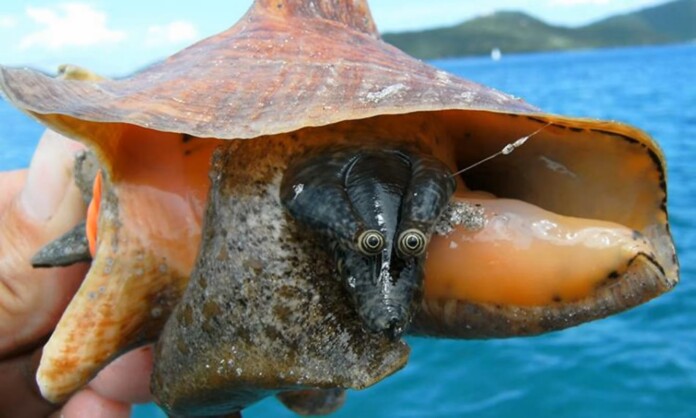
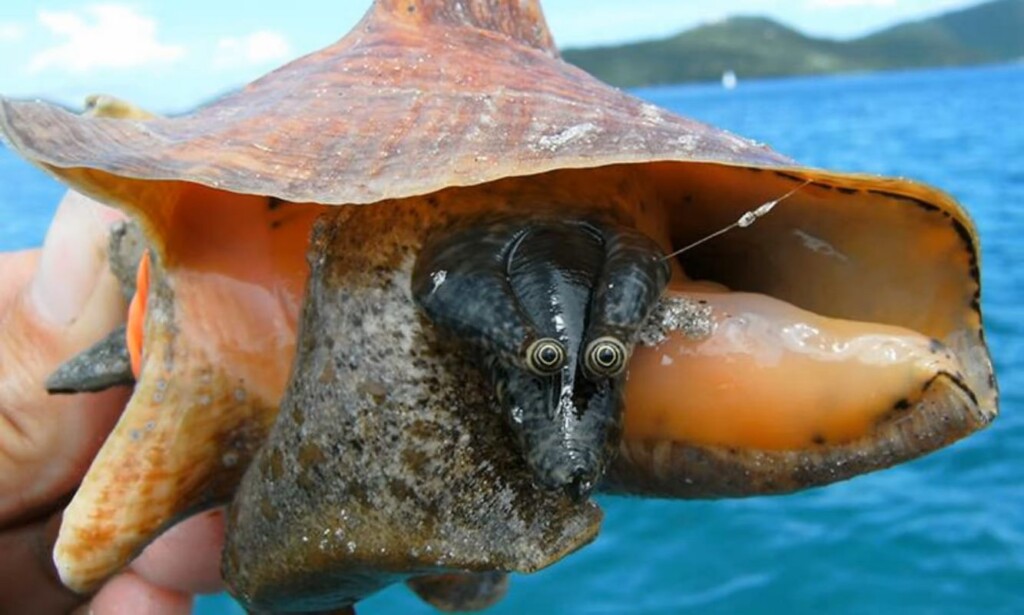
A mature queen conch - creidt, Jennifer Doerr, NOAA Southeast Fisheries Science Center, Galveston.
A mature queen conch – credit, Jennifer Doerr, NOAA Southeast Fisheries Science Center, Galveston.
This incredible critter is the queen conch, and look out fellas she’s single.
She’s one of many queen conch bachelorettes being saved by a new initiative in Florida that’s relocating these endangered mollusks to deeper waters.
Warming seas off the Florida Keys have made this species lethargic and survival-focused, impeding their reproductive activities. Marine biologists hope that in the cooler, deeper waters, they will pair up and mate without issue.
The small but dedicated team of mollusk matchmakers at the Florida Fish and Wildlife Conservation Commission (FWC) have moved over 200 individuals of this species of near-shore conch to an offshore reef in the Upper Keys from waters around the city of Marathon.
The Gulf of Mexico is a tumultuous environment for native sea life, with oil spills, hurricanes, and some of the fastest-warming water temperatures on the planet.
“It’s because we’re dealing with very shallow water, too cold in the winter, OK in the spring, and in the summer it gets too hot,” Gabriel Delgado, a research scientist and conch specialist with the FWC who played chief matchmaker during the relocation project, told the Guardian.
“The animals shut down. Instead of going into reproduction, they shunt their energy into basically survival and never really develop their reproductive organs very well.”
In a successful example of crowdsourcing, the FWC asked the public to help locate queen conchs near the shore that could be relocated.
“We asked the public to keep their eyes open. They reported them online, some people emailed, and we used community volunteers to gather up the 208 that we moved in June to an offshore aggregation,” said Delgado.
It’s been more than a year since the relocation happened, and while breeding activity hasn’t been recorded yet, the most recent dive to check up on the loveshells found them all still mingling in the reintroduction zone.
SHARE This Hardwork On Behalf Of A Special Species With Your Friends…
A Scottish woman has been leaving notes and trinkets of affirmation in random places around her hometown.
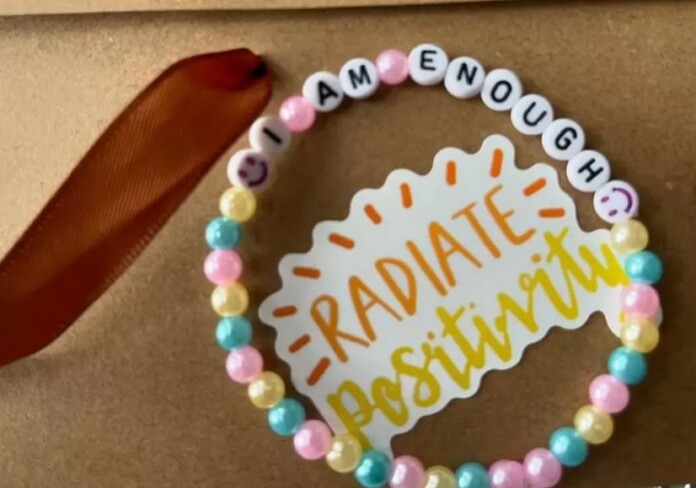
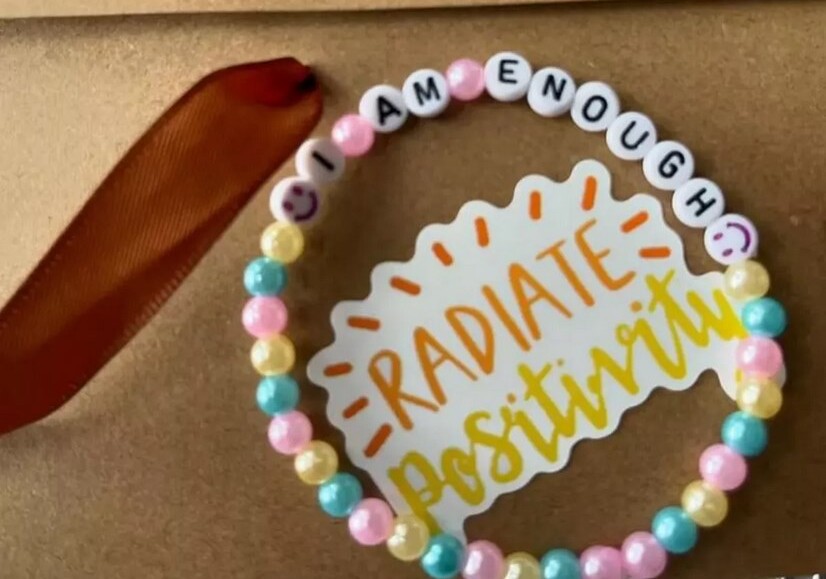
Reading “I AM ENOUGH: Radiate Positivity” she hopes they serve to put smiles on the faces of those who find them and lift the spirit of the whole city of Glasgow.
Education worker and admitted “Swifty,” Beth McNeill said she made around 70 of the bracelets for the Wembly Leg of Taylor Swift’s Eras tour, where fans regularly exchange them with each other.
But dealing with depression and anxiety herself, McNeill felt there was a place for the bracelets beyond the concert venue, and began leaving them inside envelopes around Glasgow.
“It’s infectious really, making someone happy in turns makes you happy. I think more than ever we need the little things in life to put a smile on our face,” McNeill told the Daily Record. “We never know what someone is going through, if my bracelet puts a smile on someone’s face that is having a tough time or not it’s a win for me.”
– credit Beth McNeill, released to the media.
The envelopes read “Open Me!” and pictures are beginning to appear on social media from people discovering them.
“I like to be that cheerleader for my students. I came up with the idea that if I can put these affirmations on bracelets it can be a lovely reminder on your wrist how wonderful a person you are, that you aren’t your anxiety, you can get through the day,” said McNeill.
SHARE This Woman’s Great Idea To Spread Positivity In Scotland…
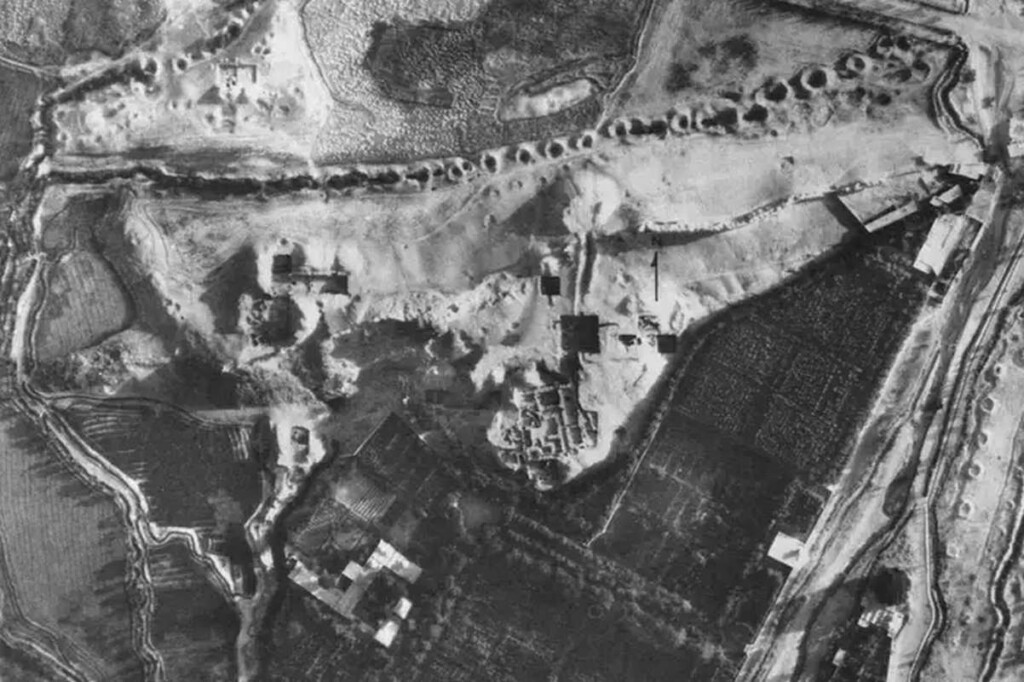
Spanish technical archaeologists have identified ancient irrigation ducts in desert regions around the world using AI.
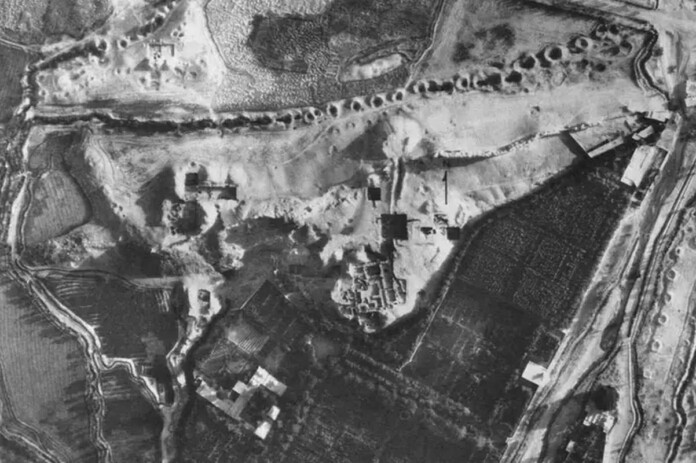
The AI was trained to pour through old spy satellite photos taken during the Cold War and look for evidence of underground aqueducts that carried water from highlands or mountains down into baking plains.
Unlike the iconic Roman above-ground aqueduct, these ‘qanats’ as they’re called, contained channels dug underground that were punctuated by a series of vertical shafts to allow airflow and maintenance. Being below ground prevented them from drying out in the desert sun.
A collection of qanats in Iran was included in a UNESCO World Heritage Site in 2016 that ensconced the Great Wall of Gorgon, and others are pending designation elsewhere. These fascinating innovations are found cross-culturally in North Africa, South America, China, and Central Asia.
The earliest qanats examined by the AI may have been dug 3,000 years ago, and unless one is standing right next to the access shafts, they are extremely difficult to locate and identify.
“These systems were extremely innovative,” Hector Orengo at the Catalan Institute of Classical Archaeology in Spain who led the study, told New Scientist. “They allowed people to live in areas where it would have been unthinkable before.”
US Cold War spy satellites photographed vast areas of the globe for the intelligence services, and Orengo et al. trained their AI to examine these for signs of qanats in the Middle East and North Africa taken between 1959 and 1986 by the HEXAGON satellite.
The AI was trained on satellite pictures of qanats known to archaeologists, like those in Rissani, Morocco; Afghanistan’s Maiwand region, and the baking hot Gorgan plain in Iran.
The AI provided the team with guesses as to where a qanat may be located, and in 88% of these instances, it guessed correctly. Of these discoveries, the AI was able to identify the entire length of the qanat 62% of the time.
The newly-trained AI should be ready to examine photographs for undiscovered qanats across these regions—a method unquantifiably more efficient and safer than using human surveyors.
SHARE This Awesome Use Of AI With Your Friends Who Like History…
Quote of the Day: “Nobody made a greater mistake than he who did nothing because he could do only a little.” – Edmund Burke
Photo by: Bekah Russom
With a new inspirational quote every day, atop the perfect photo—collected and archived on our Quote of the Day page—why not bookmark GNN.org for a daily uplift?
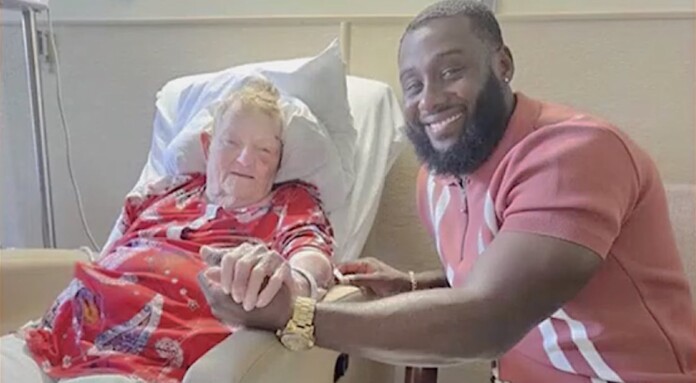
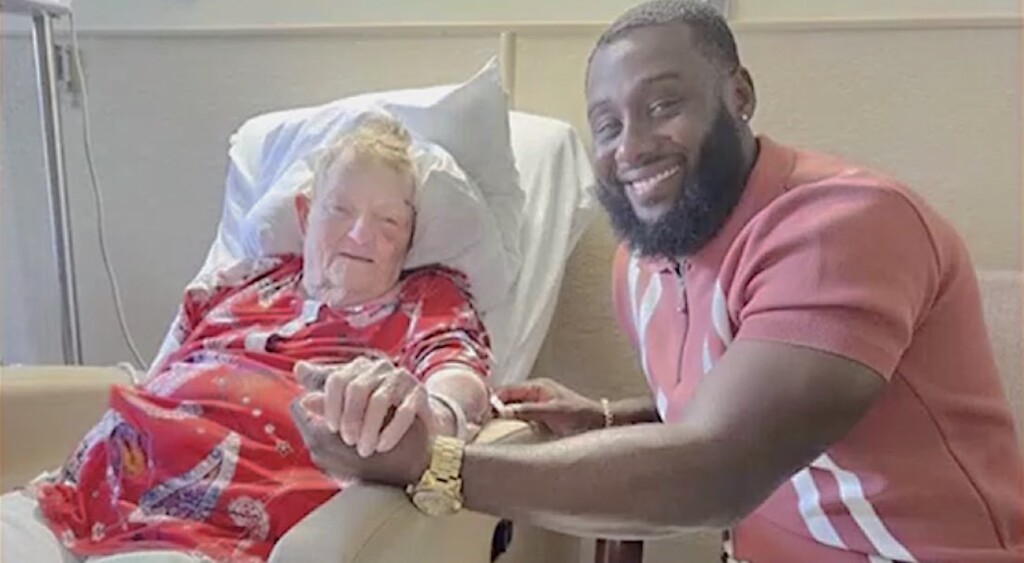
UPS driver Raheem Cooper was passing through his normal route in the Georgian town of Valdosta when he saw an elderly woman collapsed on her driveway.
Calling emergency services, Cooper stayed with the woman, identified later as Marie Coble, all the while calling her ‘grandmother.’
The woman was checked into the hospital where emergency brain surgery had to be performed on a subdural hematoma. She made it through the harrowing procedure and began the road to recovery in the hospital.
Kayla Cochran, Coble’s granddaughter, heard of what Cooper had done for her and managed to track him down.
“I found his number and called him and told him thank you,” Cochran told WALB News. “That he was truly an angel to our family to have found her because if he wouldn’t have, she would have died that day.”
“Five days after the surgery, she hadn’t talked at all,” Cochran said. “And when he came into the room, she brightened up and actually pushed herself up and gave him a hug. That’s the first time since this whole thing has happened.”
Following up, Cooper started a GoFuneMe to raise money for the family, seeing as how members had to drive in from out of town to stay with Coble while she recovered. He just wants to lend a helping hand, he insists, and kicked the fund drive off with $100 of his own money.
Earlier this week Raheem Cooper, received a letter from UPS’s chief executive officer for his acts of heroism. At his local branch, a coworker got him tickets to the Florida State University football game, and the supervisor presented him with a plaque in his honor.
WATCH the story below from WALB…
SHARE The Story Of Raheem The Angel in Brown With Your Friends…
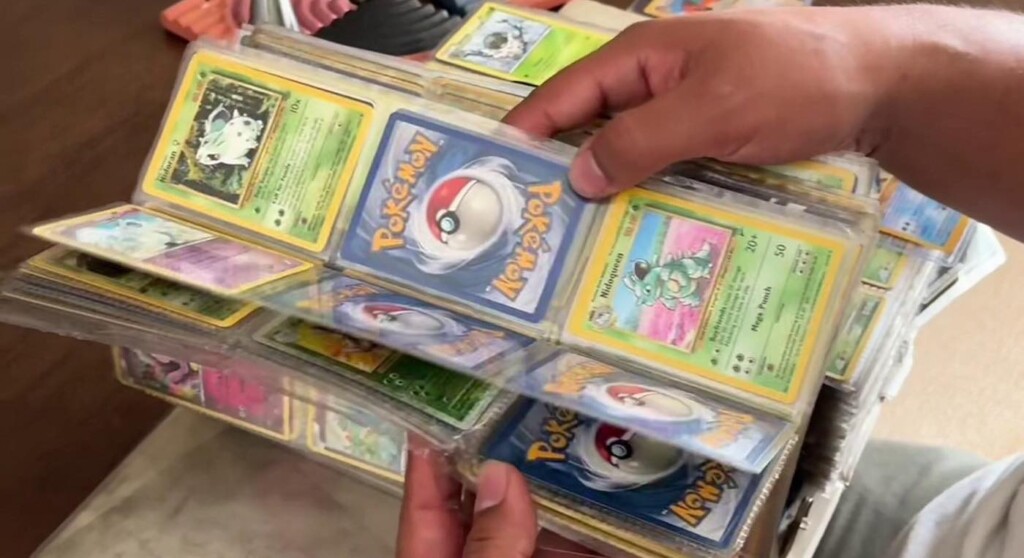
Juan Pardo scanning his Pokémon card collection – SWNS
Juan Pardo scanning his Pokémon card collection – SWNS
A woman was left stunned when she discovered that her husband was sitting on a small fortune thanks to his childhood Pokémon card collection.
Because Madeline Brice and her husband Juan Pardo are each one year either side of 30, it means they were born bang in the middle of the emergence of Pokémon in the US, which took the toy and video game market by storm and never let up.
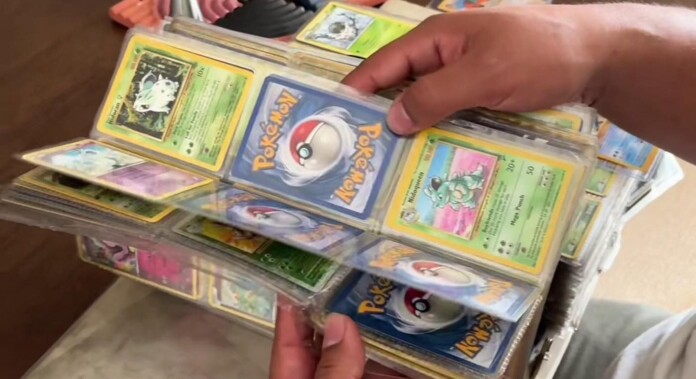
Pardo began collecting Pokémon cards at the age of five after becoming obsessed with the Pokémon television show that arrived on these shores along with the cards. He owns 1,500 and has preserved them safely in laminated card collection sleeves.
Finding an app that allowed him to scan each card and see its value across collectible markets, Pardo was shocked to see that many were worth triple-digit sums. After scanning the first 670 cards, the reported value was above $2k.
Many of the cards were bought by Pardo’s mom after he had stopped collecting them in the lead-up to attending university. His mom kept going for old time’s sake.
“It’s my collection but it’s mainly her thing,” he admitted to the British news agency SWNS. “I was totally shocked when I realized how much they’re worth.”
Juan’s most valuable card is a Reverse Holo Charmander currently valued at $229.
Though the collection could fetch a decent sum, Pardo has no plans to sell his childhood treasure anytime soon, not least because another 20 years in storage might see the value go up even further.
SHARE This Man’s Fortune With Anyone You Know Who Might Have Some Cards…