











All News - Page 205 of 1704 - Good News Network
Home Blog Page 205

Family of Fallen Soldier Given Keys to New Home Built by Volunteers in N. Carolina-WATCH

Courtesy of Operation Coming Home and Garman Homes (Facebook)

14 years after the death of an Army Sgt. in Iraq, his widow and children walked into a brand new house—gifted to them in honor of his memory.

The “Hero Home #27” was built through Operation Coming Home, a mission to help injured troops and families of fallen service members, and is located in Fuquay-Varina, North Carolina.

“We thank God for everybody who had anything to do with it,” said Ava Bradley. “We appreciate everybody. Everybody.”

Staff Sgt. Juantrea Bradley is survived by Ava and two children who moved into their new house in January. Singing and ceremony, tears and tributes filled the spacious front lawn before Ava was handed the keys.

Volunteers from Garman Homes organized to build the house, but all kinds of local and national businesses donated components like windows and air conditioning to furnish the home and ensure Ms. Bradley and her kids are comfortable.

MORE VETERANS HONORED: Military Veterans Who Lost Limbs Receive Mortgage-Free Homes to Honor Their Service

“When our business and values align, we get to do something meaningful and powerful with the best people we know—for a hero we never got to meet,” Garman Homes wrote in a statement.

“It shows they appreciate what their dad and my late husband did. We are not alone,” Ava said, reports local news. “They see it, and they love us, too.”

WATCH the story from WRAL News… 

SHARE This Incredible Effort To Ensure A Man’s Family Was Looked After… 
The Greatest Conservation Story Ever Told Isn’t Really Being Told

wikimedia commons Lord_Howe_Island_-_panoramio cc license wikimedia commonsDavid Stanley
Lord Howe Island – David Stanley CC 3.0. Wikimedia commons

This week GNN reported that for the first time in over four decades, Peruvian diving petrels have four active natural nests on Chañaral Island, Chile, after a dedicated conservation group cleared the island of a deadly invasive species. But this is just one chapter in a long, often untold story.

Reporting on the climate crisis became one of the most popular beats for journalists around the world, and the term “sixth mass extinction” quickly and repeatedly found its way onto front pages across the West. It’s not even close to an appropriate term, though, since the previous 5 mass extinctions involved the die-off of 70% or more of all species on Earth.

But even if there are parts of the globe where that term accurately describes the degradation of the natural environment, just on its own, the success of protecting and restoring isolated island ecosystems like Chañaral, experienced in the last 2 decades merits the abandonment of the phrase “sixth mass extinction.”

For example, GNN has reported on successful eradication campaigns of invasive species on the islands of, Macquarie, Lord Howe, Tetiaroa Atoll, Redonda, Sombrero, and Hawadax.

When the Aichi Biodiversity Targets set between the decade 2010 and 2020 came due, the only target that was considered achieved was the eradication of invasive species; mostly on islands.

Hawadax Island in the Aleutian archipelago. USFW

The report cites 800 invasive mammal eradications on 181 islands worldwide, ensuring the survival of 236 native terrestrial species, and even more seabirds. Island Conservation, the non-profit working on Chañaral, has on its own successfully restored 65 islands worldwide, benefiting 1,218 populations of 504 species, and subspecies, with recent examples on Kamaka in French Polynesia, Ngerkeklau Island in Palau, and the Wallis and Futuna Islands.

YOU MAY ALSO LIKE: Wild and Wonderful Saiga is No Longer Endangered with a Million Roaming Now in Central Asia

Island Conservation reports there have been over 1,000 island invasive species removal projects worldwide, “all resulting in long-term benefits to native species and other 851 seabird restoration projects targeting 138 seabird species,” the organization stated recently.

Magnificent frigate birds nesting on Seymour Norte Island – Island Conservation, released.

On the Galapagos archipelago alone, giant tortoises have been restored from the very brink of extinction to their native habitat on Española, land iguanas were returned to Santiago Island for the first time in 200 years, and eradication programs restored the native habitat on Seymour Norte and Mosquera islands, befitting seabirds like those above.

BUT ALSO ON LAND: Norway Rewilds Arctic Coal Mining Town in Largest Operation of its Kind, Gives New Hunting Ground for Polar Bears

In 2020, the UK government established the Atlantic Ocean’s largest marine protected area when they enclosed the 200 square kilometer island of Tristan da Cunha, and 700,000 square kilometers of ocean—an area three times as large as Britain.

Far from there being a sixth mass extinction event taking place, newspapers might be missing what’s becoming the greatest conservation story ever told.

TELL The Greatest Conservation Story Ever Told To Your Friends…

Man Awarded for Quick Rescue Response to House Fire in the Washington Mountains

Released photo by Washington State Department of Transportation – WSDOT

A humble maintenance worker for the Washington State DoT is being honored for rescuing several people from an intense blaze.

The story comes from Blewett Pass on US 97 where Brandon Haight was checking conditions on a route he frequents for his work. Amid the snow and the failing light, he noticed a red glow coming from a residential area and black smoke swirling up among the pines.

Pulling over, he discovered a house had caught fire. Thinking quickly, Haight radioed the traffic management center, since there is typically no mobile phone service in that section of Blewett Pass.

With fire and rescue made aware of the emergency, Haight flew to the scene and began banging on the doors and windows of the home yelling “fire!”

All the residents had made their escape just minutes before the whole house was engulfed in flames and spread to a nearby RV, but Haight had warned the man inside it as well, and all those present cleared the area.

Brandon Haight with his DoT Safety Challenge Coin – Released photo by Washington State Department of Transportation – WSDOT

KOMO News reports that a state trooper said the fire was so intense it could be felt from the road, and it caused many of the surrounding pines to catch fire as well. The trooper added in his report that the fact that no one died is almost certainly because of Haight’s efforts.

ANOTHER FIRE RESCUE:  Hero NYC Cops Carry Four Elders Out of Burning Building on Their Shoulders (WATCH)

Haight was awarded WSDOT’s Safety Challenge Coin to honor his commitment to safety in his community and for his heroic efforts.

SHARE This Man’s Right-Place-Right-Time Heroics With Your Friends… 

Blind Jazz Sax Teacher Inspires Students to ‘Feel’ Their Instruments–Uses His ‘Disability’ as Teaching Tool

Matt Weihmuller and students - photo by Rob-Harris Productions Inc.
Matt Weihmuller and students – photo by Rob-Harris Productions Inc.

From a Tampa performing arts conservatory comes the story of a blind jazz saxophonist who uses his disability as a teaching tool. Like Obi-Wan Kenobi, he encourages his students to act on instinct; to feel the music through their instruments, and not let the waking world deceive them.

“Welcome to every day of my life,” says Matthew Weihmuller in his jazz improvisation class after turning the lights off. “Then we have a big laugh,” he adds.

Profiled in Fox 13’s “Extraordinary Ordinary” segment with Walter Allen, Weihmuller teaches jazz advanced, basic, and improv at the Patel Conservatory in Tampa.

When Weihmuller started playing, he needed braille sheet music, and pieces would take months; even years to learn. As if that weren’t difficult enough, few people in the country were capable of providing braille music, so he started “brailling” his own, with the help of his mom—all the way through college.

“They can’t look at their instrument. Now, they have to feel their instrument with their fingers and hands, right?” Weihmuller told Fox 13. “Now, we’ve got to listen to the music. We can’t read it… It forces the students to use their other senses.”

MORE STORIES LIKE THIS: Blind Hockey Goalie Invited to Play on Sighted Team: ‘An Incredible Experience!’

Advanced jazz musicians will understand that during improvisational sessions, a musician has to be ready for sudden changes in time signature or key. This is nearly impossible to express through sheet music. At least in this regard, the children are learning in the best way for this unorthodox, yet traditional form of jazz music.

OTHER INSPIRATIONAL FIGURES: Third-Generation Craftsman Goes Viral–Now has Millions Watching Him Fix Shoes as ‘America’s Cobbler’

As an educator with blindness, Weihmuller stresses turning any disadvantage into an advantage, a teaching philosophy that has led some students to tell the man that he has changed the way they look at life.

“It’s everything for me, as an educator to hear someone say that you changed their life,” he states. “It’s awe-inspiring and I hope that I can inspire others who are dealing with their situations, disabilities, barriers, and challenges in the same way that I have.”

WATCH Weihmuller play below… 

SHARE The Wisdom And Command Of This Tampa Music Teacher…

“Seek the lofty by reading, hearing or seeing great work at some moment every day.” – Thornton Wilder

Quote of the Day: “Seek the lofty by reading, hearing or seeing great work at some moment every day.” – Thornton Wilder

Photo by: Caught In Joy (cropped)

With a new inspirational quote every day, atop the perfect photo—collected and archived on our Quotes page—why not bookmark GNN.org for a daily uplift?

Incredible New Image Captures Evidence of Once-Flowing River on Mars

Riverine gravel ridges on Mars as captured by the Mars Reconnaissance Orbiter - NASA via SWNS
Riverine gravel ridges on Mars as captured by the Mars Reconnaissance Orbiter – NASA via SWNS

The picture above was taken not on Earth, but by the Mars Reconnaissance Orbiter (MRO) as it searches for signs of water and ice on the Red Planet.

Photographed above an ancient river system in the Aeolis Planum region, the incredible pictures conjure imaginative images of a Martian surface very different to that of today.

The MRO typically flies at an altitude of about 155 to 196 miles (250 to 316 kilometers) above the planet’s surface, allowing it to capture intricate details.

These ridges show the location of the old river beds in Mars’ distant past.

“River beds often get filled with gravel and the surrounding terrain is often built up of fine-grained mud from river overflows. The gravely river bottom and the fine-grained surroundings can lead to a strange phenomenon that geologists call inverted channels,” the space agency wrote.

“After the river disappears, the fine-grained surroundings can be easily eroded away leaving the gravely river bed as a high-standing ridge. The angle at which the ridges join together indicates that these rivers flowed from top-right to bottom-left.”

The image was captured by the High-Resolution Imaging Science Experiment (HiRISE) camera on MRO, and was catalogued by NASA on the final day of January 2024.

Riverine gravel ridges on Mars as captured by the Mars Reconnaissance Orbiter – NASA via SWNS.

The MRO is a spacecraft designed to search for the existence of water on Mars and provide support for missions to Mars, as part of NASA’s Mars Exploration Program.

OTHER MARTIAN DISCOVERIES: Ancient Lake Sediment on Mars Builds Excitement for Evidence of Life in the Perseverance Rover Samples

It was launched from Cape Canaveral in August 2005 and reached Mars in March 2006.

As of July 2023, the MRO has returned over 450 terabits of data, helped choose safe landing sites for NASA’s Mars landers, and discovered pure water ice glaciers in new craters in the Northern polar region. It has also found chloride deposits, suggesting that lakes may have been scattered over large areas of the Martian surface.

SHARE This Dramatic Evidence Of Waterflow On Mars… 

Endangered Seabirds Flourishing on Island for First Time in Decades as Invasive Rabbits Removed

Peruvian diving petrel chick - Centro de Estudios Avanzados en Zonas Áridas (CEAZA), released via Island Conservation
Peruvian diving petrel chick – Centro de Estudios Avanzados en Zonas Áridas (CEAZA), released via Island Conservation

For the first time in over four decades, Peruvian diving petrels have four active natural nests on Chañaral Island after a dedicated conservation group cleared the island of a deadly invasive species.

This unique Chilean ecosystem has seen a resurgence in its seabird population following the successful removal of rabbits in 2017—and last year, the partners announced the first seabird chick born on the island in over 40 years.

The achievement is the result of a collaborative effort between Chile’s National Forestry Corporation (CONAF), Laboratorio de Ecología y Diversidad de Aves Marinas from the Universidad Católica del Norte, and one of the most serially successful wildlife organizations on Earth—Island Conservation.

The team discovered four active natural nests, including two with chicks, one with an adult, and a fourth with a fledgling. This breakthrough offers great hope for the birds, known locally as ‘yuncos’, that were classified as ‘Endangered’ by the International Union for the Conservation of Nature (IUCN) just four years ago.

In addition to the rabbit removal, Island Conservation scientists also implemented social attraction tools to encourage birds to return. This included solar-powered speakers that play petrel calls, a sign to passing individuals of high-quality nesting habitat nearby.

Today, thanks to all these efforts, the Peruvian diving petrel is now classified as just ‘Near Threatened’.

Peruvian diving petrel in the surroundings of Chanaral Island – credit Ivan Torres, Island Conservation

“The return of seabirds to Chañaral Island is not only important for the species population, but vital to the overall ecosystem health,” said Island Conservation Island Restoration Specialist María José Vilches.

PENGUIN HERO DOGS: Island is Wonderland for Penguins Once Again After Dog Helps Eradicate 300,000 Invasive Rabbits

“Seabirds are critical connectors between the land and the sea, fertilizing the soil with their guano and nourishing the near-shore marine environment. It is incredibly encouraging to see the petrels returning to their island home to nest.”

“The success of the social attraction tools used in the restoration of the Peruvian diving petrel colonies on Chañaral Island has been supported by evidence from parallel sites without sound systems where no signs of petrels have been recorded,” said Chañaral Island Park Ranger in the Humboldt Penguin National Reserve, Cristian Rivera.

credit – Island Conservation, released

“These innovations are the first of their kind on a Chilean island and demonstrate the effectiveness of this tool. Within two days of the sounds systems being implemented, petrels began arriving to explore the island.”

GOATS ARE HEROES TOO: ‘The Running of the Goats’: NYC Park Gets Rid of Invasive and Poison Plants With 24 Goats Enjoying a Vacation

Chañaral Island was once home to a thriving reproductive colony of Peruvian diving petrels until the introduction of invasive rabbits and foxes in the last century led to their local extinction, wiping out approximately 100,000 pairs. Invasive foxes fed on the native seabirds while invasive rabbits eroded their nesting habitat. Though invasive foxes were removed decades ago, invasive rabbits persisted, degrading the habitat and preventing the petrels from nesting.

“Once invasive species have been removed from islands, seabird populations can be—and have been—restored with remarkable success,” said Island Conservation Conservation Program Science Manager Coral Wolf. “We’re beginning to see this on Chañaral Island, and I can now envision a not-too-faraway future where we carry these sound systems away, when the birds don’t need them anymore.”

HATCH Some Gratitude on Social Media By Sharing the Fantastic Birding News…

Kinder than Chemo Cancer Drug Cured This Young Man of Leukemia–Available in the US

Family photo courtesy of Sandrine Heute

Picture a very unhappy situation: you have leukemia; what are your options? Everyone knows about the side effects of chemo, and most people will have some idea about the Nobel Prize-winning CAR-T cell therapy—but there’s also a third option.

It seems startling to be so overlooked because it’s so straightforward. Blinatumomab cured the young fellow above of his B-cell acute lymphoblastic leukemia.

The BBC reports that 20 medical centers in the UK are already using off-brand stocks of blinatumomab to treat this cancer, and the country has already approved the drug for adult use.

‘Blina’ as it’s referred to for short, is also an immunotherapy drug; it seeks out and kills cancer cells that typically disguise themselves from the body’s innate immune system. However, unlike chimeric antigen receptor T cells (CAR-T cell), blina is cheaper.

Blina is a kind of targeted therapy drug called a bispecific T-cell engager (BiTE). It’s administered via a pump and plastic bag through a tube inserted into the patient’s arm.

The bag is carried around in a slim backpack, and the supply lasts a few days. CAR-T cell therapy requires a patient’s cells to be taken out and modified to fight off whichever cancer is present—which takes time.

Like CAR-T, the healthy normal cells are not destroyed as in the case of chemotherapy, allowing the patient to continue leading a mostly normal life.

ALSO CHECK OUT: Cervical Cancer Trial Hailed as ‘Remarkable’ After 35% Reduced Death Rate Using Simple Intervention

“Chemotherapies are poisons that kill the leukemic cells but also kill and damage normal cells—and that is what causes their side effects,” said chief investigator and consultant pediatric hematologist, Professor Ajay Vora to the BBC. “Blinatumomab is a gentler, kinder treatment.”

Gentler on the body—not on the cancer. Arthur, now 11, was one of the first kids to receive the treatment at Great Ormond Street Hospital in London. His family got the word that his blood cancer was cured on New Year’s Eve.

MORE CANCER ADVANCEMENTS: Immunotherapy for Hard to Treat Cancer Just Granted FDA Fast Track During Promising Clinical Trial

Having started chemo years before which both left him very weak and failed to kill the cancer, the family called blina a “little ray of sunshine” and said that they celebrated the new year twice as hard.

On March 29th, 2018, the US Food and Drug Administration granted accelerated approval to blinatumomab after successful trial results, though serious side effects were not uncommon. It’s available for B-cell acute lymphoblastic leukemia treatment.

SHARE This Boy’s Recovery And The Incredible Potential Of This Gentle Treatment…

Bulldog Puppy Spontaneously Regrows Part of its Jaw After it Was Removed During Cancer Surgery

Tyson the bulldog (Courtesy of Melissa Forsythe)

A puppy’s jaw spontaneously regrew after Cornell veterinarians removed a majority of his lower left mandible due to cancer. Although this phenomenon has been documented in children, this is the first reported case of its kind for dogs of any age or breed.

Tyson, a 3-month-old French bulldog, was originally scheduled to see Cornell’s Dentistry and Oral Surgery Service for cleft palate surgery in the spring of 2023 when his primary veterinarian noted a cancerous tumor on his jaw.

“Tyson’s tumor was an oral papillary squamous cell carcinoma, which is a malignant cancer in dogs,” said dentistry and oral surgery resident Alexandra Wright, DVM ’18, who led Tyson’s care team. “Oral squamous cell carcinoma is the second-most common malignant oral tumor in dogs, and this papillary subtype has previously been reported in young dogs.”

Wright published a report on this case in Frontiers in Veterinary Science, with co-authors Dr. Nadine Fiani, associate clinical professor and section chief, and Dr. Santiago Peralta, associate professor in the Dentistry and Oral Surgery Service.

Wright explained to Tyson’s owners, Melissa Forsythe and Mike Lacagnina of Rochester, New York, that to remove the tumor, a majority of the puppy’s lower left mandible had to be removed, which meant life without a fully functioning lower jaw.

“We didn’t know if we wanted to put a puppy through all this. The prognosis at the time was uncertain,” Forsythe said, according to the Cornell Chronicle.

However, since Tyson’s CT scans were clear, meaning that the cancer hadn’t spread to other sites in the body, “we decided to give him a chance and continue with surgery. We had no idea his jaw would grow back.”

Although there had been anecdotal cases of portions of mandibles regenerating in young dogs, this did not seem likely for Tyson because of how much bone was removed.

MORE MIRACULOUS CANINE RECOVERIES: Abused and Stuck in Shelter for 450 Days ‘Mind-blowing’ Dog Charms Everyone at Rehab and Finds Forever Home

The case report suggests he managed to surpass all expectations due to a significant amount of periosteum, a thin membrane that covers bone surfaces, preserved during surgery. Periosteum contains blood vessels and nerves that support the bone and are crucial to the growth of the original mandibles.

credit – Dr. Alexandra Wright, study author and hospital resident.

“This was likely imperative to the regeneration of new bone,” Wright said. It also helped that the dog’s tumor was detected so early, though the precise reason for the jaw regrowth in Tyson’s case remains a history-making mystery.

“More has to be done to understand the likelihood of this occurring in other dogs and if a specific age range makes a difference,” Wright said, “but this case documents a very positive surgical outcome in a life-threatening situation.”

Tyson’s new mandible is nearly as functional as the original, though it is technically considered abnormal because it no longer has certain features. For instance, there is no mandibular canal, where major blood vessels and nerves typically reside, and there are no teeth. However, it is the same length as the one on the right, which prevents drifting, and there is no evidence of cancer in the regenerated bone.

After this surgery, Tyson underwent another to address his cleft palate.

MORE STORIES OF CARE AND LOVE: Dog of War Finds Loving New Home After Cheating Death Twice in Ukraine Devastation, Thanks to British Charity

“He spent the majority of his puppyhood wearing an E-collar, not able to play with toys or chew on anything,” said Forsythe, who would take him for walks around the house to keep him stimulated. “He was the best patient.”

She still doesn’t give him hard food or hard toys, but he enjoys his water-soaked kibble and many soft toys.

Tyson the bulldog (Courtesy of Melissa Forsythe)

Forsythe keeps Wright up to date on how full Tyson’s life has been after his time at Cornell. He recently graduated obedience class, passed his Canine Good Citizen test, and walked in a Christmas parade with his dog-training friends. Wright describes this as the most rewarding part of the case.

Forsythe hopes Tyson’s outcome will benefit other dogs with this diagnosis. Wright agrees: “His case now demonstrates the possibility of complete bone regeneration when working with a patient this young.”

SHARE This Amazing Story Of Canine Recovery With Your Friends… 

“All colors are the friends of their neighbors and the lovers of their opposites.” – Marc Chagall

Quote of the Day: “All colors are the friends of their neighbors and the lovers of their opposites.” – Marc Chagall

Photo by: Jannet Serhan

With a new inspirational quote every day, atop the perfect photo—collected and archived on our Quotes page—why not bookmark GNN.org for a daily uplift?

3rd Generation Shoemaker Goes Viral–Has Millions Watch Him Fix Shoes as ‘America’s Cobbler’

Jim McFarland - Americas Cobbler, Facebook
Jim McFarland – Americas Cobbler, Facebook

“You know what you call it [when] a cobbler is just getting waves and waves of shoes in? A ‘shoenami.'”

This A+ dad joke can be attributed to Jim McFarland, aka ‘America’s Cobbler’—a viral internet star who has millions of followers across Instagram, TikTok, and YouTube that tune in to watch him fix shoes.

Some men are born to do a job, and with a story about being teethed as an infant on a piece of shoe leather, McFarland’s title seems well-earned.

“My great uncle trained my grandfather,” McFarland told Fox News 13’s Extraordinary Ordinary segment.

“He had a shop in Anderson, Indiana, around 1900. My grandfather, by the time he was about 20, had his own shop in Hamilton, Ohio around 1918. In 1981, my dad opened this shop, and I took over in ’86.”

After entering one of the world’s oldest surviving professions, he spent more than 20 years at McFarland Shoe Repair in Lakeland, Florida. It was during the COVID-19 pandemic that he decided to try something new, and with the help of his daughter he launched a social media presence. The success was a kick in the head.

@americascobbler Recrafting Chanel flats with a side of relaxing music😌🎵 #chanel #recraft #shoerepair #americascobbler #black ♬ Autumn Leaves - Timothy Cole

“It baffles me. I soak it all in because I’m like, ‘wow, I’m a shoe cobbler!'” McFarland told Fox 13. “This person cares this much about a shoe cobbler, I’m going to give them all the time they want.”

On TikTok @americascobbler has 1.2 million followers. On Instagram, americascobbler has 624K. On YouTube, @americascobbler has 170K.

Commenters note the relaxing music, the pleasurable sounds of the dozens of special tools wielded with skill and precision, and the incredibly satisfying sight of watching a master craftsman at work.

MORE ARTISAN APPRECIATION: One of Scotland’s Last Master Kilt Tailors Creates Unique Online Course to Keep the Artform Alive

Lastly, McFarland said that a two-thirds majority, it seems, of the comments on his videos and picture decks involve people expressing an interest in learning the craft, which he says is the most satisfying part of his success; generating interest among the next generation of cobblers.

ALSO CHECK OUT: Laid Off in Lockdown, Construction Worker Starts Crafting Radiator Covers–And Earns First Million

He recommends going to cobbler shops nearby and asking if they are willing to offer work as an apprentice. He adds that it gives the old cobblers an avenue into retirement while offering the prospective amateur the best possible start. A typical apprenticeship takes 3 to 5 years.

WATCH his appearance on Extraordinary Ordinary…

KEEP This Man’s Viral Train Going By Sharing Some Of His Videos With Your Friends…

2,000-Year-old Scroll Burnt in Pompeii Decoded and Read for First Time by Three Genius Students

Herculaneum scrolls – Vesuvius Challenge

In October, GNN reported on the first winner of the Vesuvius Challenge, which sought to inspire young people to use AI technology to decode burnt scrolls found in a Pompeii library.

Now, the grand prize has been collected by Youssef Nader, Luke Farritor, and Julian Schilliger, who will split an amazing $700,000 bounty for their efforts.

Their skills were able to create a deep learning program that took a rolled-up scroll of papyrus that was turned to charcoal in the Vesuvius eruption 2,000 years ago, and decode 4 passages of 140 characters each, with at least 85% of characters legible.

Their submission was substantially more recoverable than almost all others, who tended to manage about 30%.

What did the scroll say? Well, it’s merely one page in what appears to be a treatise, but it’s believed the Ancient Greek talks about music, food, and how to enjoy life’s pleasures.

“It’s been an incredibly rewarding journey,” Mr. Nader told the Guardian. “The adrenaline rush is what kept us going. It was insane. It meant working 20-something hours a day. I didn’t know when one day ended and the next day started.”

Silicon Valley figures Daniel Gross and Nat Friedman created the Vesuvius Challenge in March of 2023, to place up to $1 million in cash prizes in the hands of any engineers who could program AIs to read the carbonized papyrus.

The papyrus scrolls in question were found in Herculaneum, a city destroyed by Vesuvius’ eruption, in a villa that may have belonged to Julius Caeser’s father-in-law.

The collection of 800 scrolls was found 275 years ago, and represents the only intact library known from the Classical World. Many archives of thousands of clay tablets from the ancient kingdoms of Assyria and Babylon have been found, but being made of clay, they tend to last longer than papyrus.

The scrolls can’t be unrolled—they would simply turn to ash—but some of them held at the Institut de France were imaged at the Diamond Light Source particle accelerator near Oxford by Gross and Friedman. These high-resolution CT scans of the scrolls were then released to anyone who wanted to try to decode them.

OTHER GLIMPSES INTO THE PAST:  Archaeologists Discover a ‘Master Blacksmith’s’ Workshop Dating to the Very Dawn of the Iron Age in Britain

The picture above is just 5% of the scroll in question.

There were several prizes on offer; each related to a different scope of accomplishment.

Per the Vesuvius Challenge’s webpage, Youssef Nader is an Egyptian Ph.D. student in Berlin who was able to read a few columns of text back in October, winning the second-place ‘First Letters Prize.’ His results back then were particularly clear and readable, which made him the natural lead for the team that formed.

21-year-old Luke Farritor, college student and SpaceX intern from Nebraska, was the first person in history to read an entire word from the inside of a Herculaneum scroll (ΠΟΡΦΥΡΑϹ, “purple”). This won him the first-place ‘First Letters Prize,’ a few weeks before Youssef’s results.

Vesuvius Challenge First Word winner

And finally, Julian is a Swiss robotics student at ETH Zürich who won three ‘Segmentation Tooling Prizes’ for his incredible work on Volume Cartographer. This enabled the 3D mapping of the papyrus areas.

“For the Grand Prize, they assembled into a superteam, crushing it by creating what was unanimously deemed the most readable submission,” reads a release on the challenge website.

YOU MIGHT ALSO LIKE: The Only Piece of Roman Pottery Inscribed with Poet Virgil’s Verse Discovered

The papyrologists studying the decoded texts provide this sentence—from an Epicurean philosopher writing almost 2,000 years ago: “…as too in the case of food, we do not right away believe things that are scarce to be absolutely more pleasant than those which are abundant.”

The scientists are working hard to publish a paper on the full extent of the work, and hopefully all involved finish the whole scroll, and more besides, in the not-too-distant future.

SHARE This Truly Incredible Achievement By Such Young Minds On Social Media…

Buck Institute Scientists Discover a Potential Way to Repair Synapses Damaged in Alzheimer’s Disease

Brain memory neurons activated during memory formation - UIC image
Brain memory neurons activated during memory formation – UIC image

A new study proposes a strategy for reversing the memory problems that accompany Alzheimer’s disease and related dementias, exploring an alternative to the laser-focused approach of big pharma to target toxic tau proteins known to go hand in glove with these diseases.

Rather than remove the damaging compound, scientists at the Buck Institute for Research on Aging aimed to reverse the damage the compound caused using an innate protein found in the kidneys and the brain.

“While newly approved drugs for Alzheimer’s show some promise for slowing the memory-robbing disease, the current treatments fall far short of being effective at regaining memory. What is needed are more treatment options targeted to restore memory,” said Buck Assistant Professor Tara Tracy, PhD, the senior author of the study.

The protein in question is called KIBRA, named because it is found in the kidney and the brain. Along with being produced in the kidney, Tracy and her team identified its presence throughout brain synapses, which are the connections between neurons that allow memories to be formed and recalled.

They also found that KIBRA is deficient in the brains of people with Alzheimer’s and dementia.

“We wondered how the lower levels of KIBRA affected signaling at the synapse, and whether understanding that mechanism better could yield some insight into how to repair the synapses damaged during the course of Alzheimer’s disease,” said Buck Staff Scientist ​​Grant Kauwe, Ph.D., co-first author of the study.

“What we identified is a mechanism that could be targeted to repair synaptic function, and we are now trying to develop a therapy based on this work.”

To figure out how KIBRA affects synapses, the team created a shortened functional version of the KIBRA protein. In laboratory mice that have a condition mimicking human Alzheimer’s disease, they found that this protein can reverse the memory impairment associated with this type of dementia. They found that KIBRA rescues mechanisms that promote the resilience of synapses.

MORE DEMENTIA STORIES OF HOPE: New Alzheimer’s Drug Slows Mental Decline By 27% in Trial Hailed as ‘Most Encouraging to Date’

The team next wanted to measure the levels of KIBRA in the cerebrospinal fluid of humans to understand how it changed along with other key markers in Alzheimer’s, such as toxic tau protein or beta-amyloid. They found that higher levels of KIBRA in the cerebrospinal fluid, but lower levels in the brain, corresponded to the severity of dementia.

“We also found this amazing correlation between increased tau levels and increased KIBRA levels in the cerebrospinal fluid,” said Tracy. “It was very surprising how strong the relationship was, which really points to the role of KIBRA being affected by tau in the brain.”

The team is exploring this phenomenon further, in hopes that KIBRA could be used as a biomarker of synaptic dysfunction and cognitive decline that could be useful for diagnosis, treatment planning, and tracking disease progression and response to therapy.

RELATED: Electrical Brain Stimulation Improves Mental Processes in Alzheimer’s Patients

“Interestingly, KIBRA restored synaptic function and memory in mice, despite not fixing the problem of toxic tau protein accumulation,” said Kristeen Pareja-Navarro, co-first author of the study. “Our work supports the possibility that KIBRA could be used as a therapy to improve memory after the onset of memory loss, even though the toxic protein that caused the damage remains.”

While addressing the root cause of a disease, in this case the tau protein, would in theory be the more desirable treatment method, almost all pharmacological options for doing so have failed to demonstrate robust success in diminishing the symptoms of Alzheimer’s.

These repeat failures give the impetus for seeking another approach.

SHARE This Important Development With Your Friends On Social Media… 

Dinosaur Evergreens Thought Extinct for 2Mil Years Discovered by Park Ranger–the Grove is the ‘Find of the Century’

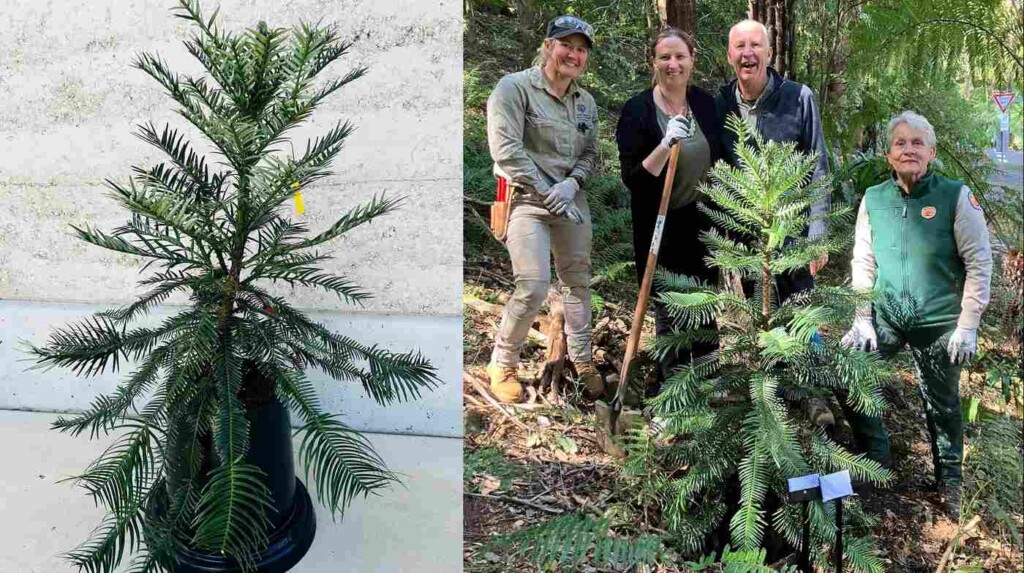
Wollemi pine trees rising after bushfires –Supplied by John Spencer / National Parks and Wildlife Service

From Australia comes a story too cool to believe. Like a vegetable version of Jurassic Park or King Kong, a copse of pine trees from a species that evolved in the Cretaceous Era were found high in the mountains.

These living fossils, to use the classic phrase, survived both the comet impact and subsequent global firestorm that killed the dinosaurs, as well as two intervening ice ages to make it to our time, and Australian botanists are treating the specimens as a top-secret national treasure.

The Wollemi pine evolved 91 million years ago and went extinct according to the fossil record 2 million years ago, but in the Blue Mountains west of Sydney, a stand of 90 specimens were found high in the more remote peaks in 1994.

For the past three decades, and in extreme secrecy, a team of specialists from the National Parks and Wildlife Service (NPWS) of Australia has been gradually planting small clumps of the Wollemi pine in other locations to help ensure it has every chance to see another 91 million years.

It helps the story that the Wollemi doesn’t look much like any pine tree you’ve seen in the woods by your house. Sporting Granny Smith apple-green foliage that grows in a pattern similar to a fern, it has a covering of bark reminiscent of Coco-puffs.

“Wollemi Pine seedlings and saplings grow less than one centimeter a year. They won’t mature until they can reach the rainforest canopy and access the sunlight above,” research scientist Berin Mackenzie told national news, adding that they grow extremely slowly.

MORE STORIES LIKE THIS: These 385 Million-year-old Tree Roots Look Just Like Ours, and Tell a Tale Just Like Ours

The level of security is startling for a tree. From the original stand of 90 trees, hundreds now grow across three translocation sites. Visits to the sites are very rare, and avoided in all but the most necessary occasions. Workers have to decontaminate themselves of any seeds and sanitize their bodies to ensure they don’t bring disease or invasive species that could threaten the trees.

ABC New Australia heard from one scientist who rhetorically asked what a Wollemi pine smells like so he could respond with “methyl alcohol” from the sanitizing agents.

Before you resolve to go out looking for them, unauthorized entry into the sites is punishable by up to 2 years in prison and a fine of $330,000 according to the Australian Biodiversity Conservation Act. It’s possible such a visitor already visited the original grove, either by accident or design, because a parasitical tree disease has been detected among the original residents.

“One of the biggest dangers that we have is people actually come and visit these. We know people want to but they really can’t,” NSW Environment Minister Penny Sharpe said.

OTHER RARE PLANTS: He Found the Largest Old Growth Cedar in BC – The Tree of His Lifetime (LOOK)

Wollemi pine seedlings have been shipped across the world to botanical gardens, and can actually be purchased at nurseries as part of an effort to save the species and discourage people from trying to access the grove and translocation sites.

“The species was discovered in the nick of time and on the brink of extinction. We have a really rare and important opportunity here to intervene and help it persist,” research scientist Berin Mackenzie told ABC News Australia.

The first generation of scientists working on the project are now either retiring or nearing their retirement, and feel that passing their knowledge and training on to their pupils has been a true privilege.

SHARE This Incredible True Story About The Race To Save A Prehistoric Tree… 

“There’s high value in cultivating an attitude that actively looks for the best in life and regards problems as potential opportunities.” – Rob Brezsny

Dollar Gill

Quote of the Day: “There’s high value in cultivating an attitude that actively looks for the best in life and regards problems as potential opportunities.” – Rob Brezsny

Photo by: Dollar Gill

With a new inspirational quote every day, atop the perfect photo—collected and archived on our Quotes page—why not bookmark GNN.org for a daily uplift?

Here It Is: Stricken Mars Helicopter is Spotted by Rover–Then NASA Retired it With Honors

A zoomed in image of the Igenuity helocopter and the Perseverance Rover. credit - NASA, via SWNS
A zoomed-in image of the Ingenuity helicopter and the Perseverance Rover. credit – NASA, via SWNS

NASA and all space lovers were able to bid a final farewell to the boundary-breaking Mars helicopter, Ingenuity, after a lonely, far-off glimpse of the little craft was captured by the Perseverance Mars Rover on Sunday.

A stark picture shows Ingenuity in its final resting place among the Martian dunes after needing to execute an emergency landing and damaging one of its rotors.

Perseverance captured the scene on its Left Mastcam-Z Camera, one of a pair of cameras located high on the rover’s mast.

NASA announced the end of mission for Ingenuity on 25 Jan, stating the “history-making Ingenuity Mars Helicopter has ended its mission at the Red Planet after surpassing expectations and making dozens more flights than planned.”

Ingenuity landed on Mars February 18th, 2021, attached to the belly of NASA’s Perseverance rover and first lifted off the Martian surface on April 19. Always one for the dramatic, NASA attached a small piece from the original Wright Flyer on the underside of the craft’s rotors for luck in its mission to prove that powered, controlled flight on Mars was possible.

MORE PERSEVERANCE NEWS: NASA Summarizes What New Mars Rover has Found as it Finishes it’s Mission at Just Over 1,000 Days

Originally designed as a technology demonstration to perform up to five experimental test flights over 30 days, the first aircraft on another world operated from the Martian surface for almost three years.

Ingenuity flew more than 14 times farther than planned while logging more than two hours of total flight time.

A zoomed-out image of the Ingenuity helicopter credit – NASA, via SWNS

Over an extended mission that lasted for almost 1,000 Martian days, more than 33 times longer than originally planned, Ingenuity was upgraded with the ability to autonomously choose landing sites in treacherous terrain, and proved itself resilient having dealt with a dead sensor, cleaned itself after dust storms, operated from 48 different airfields, performed three emergency landings, and survived a frigid Martian winter.

“The Perseverance rover is currently too far away to attempt to image the helicopter at its final airfield,” the Jet Propulsion Laboratory team at NASA which operated Ingenuity, wrote in a release.

YOU MAY ALSO LIKE: Solar-Powered Mars Plane Set to Cruise Red Planet Looking for Water

But that wasn’t to be, and a final glimpse of the little pioneer was achieved, giving the public a chance to say live long and prosper.

NASA has made its robotic explorers’ final hours extremely emotional before; when the Insight Lander “signed off” on social media by wishing encouragement for humanity.

SHARE This Bit Of Space History And Romanticism With Your Friends… 

Archaeologists Discover a ‘Master Blacksmith’s’ Workshop Dating to the Very Dawn of the Iron Age in Britain

An AI generated image of the smithy - credit DigVenture
An AI generated image of the smithy – credit DigVenture

A routine planning application in Britain ended up uncovering the remains of an ancient British blacksmith’s workshop that has so far yielded 10,000 artifacts demonstrating the breadth of ironworking ongoing during Pre-Roman England.

Located in Wittenham Clumps, Oxfordshire, the workshop, or smithy, was likely the abode of a master of the craft, as evidence shows extensive material and tool use that indicates complex pieces such as swords and large cartwheels.

Radiocarbon dating puts the smithy as being established at around 771 BCE, with the last date of organic material coming in 515 BCE; mere decades after ironworking first arose in Britain.

The discovery includes not only the remains of the building, but also the lining of the forge, and evidence of other key elements like an intact tuyere, or a metal tube used to blow air into the furnace.

“It’s exceptionally rare to find a complete tuyere, especially one that’s as old as this,” said Gerry McDonnell, the archaeometallurgical specialist who examined the finds. “Although there are examples from later periods, including Saxon, Viking-age, and medieval pieces, this is one of the only known Iron Age ones in the country, if not Europe. The fact that it dates not just to the Iron Age, but to the first few centuries of ironworking in Britain, is remarkable.”

“What’s more, the size of it suggests we’re looking at a hearth that was much larger and more specialized than that of your average village smithy,” he continued.

Iron was far more plentiful than the materials needed to make bronze, and once the techniques for discovering and smelting it were diffused throughout England, it’s clear from the site that mastery was attained quickly among the population’s craftsmen.

The vast majority of artifacts produced in the Iron Age weren’t very big and could be produced with quite a small hearth, while larger hearths would have taken much more skill and resources to control, said the researchers.

The foundations of the workshop in Wittenham Clumps – credit DigVenture

“The only reason a blacksmith would need a bigger hearth would be if they were forging something long like swords or trade bars, or big, like, cartwheels. The fact that this early Iron Age smithy had a specialist tuyere shows us this was much more likely to have been a serious operation by a highly-skilled, master blacksmith,” explains McDonnell.

The only reason the site was found at all was because the charity which owns the land on which it was found, Earth Trust, wanted to redevelop their visitor center, which required an archaeological survey.

MORE DISCOVERIES FROM THE PERIOD: Iron Age Puzzle Solved as Unknown Warrior Finally Identified as British Warrior Woman

For the excavations, the trust contacted DigVentures, a social archaeology venture that enables civic participation in archaeology and heritage projects through crowdfunding, crowdsourcing, and digital methods.

Among the 10,000 artifacts that were discovered were iron bars and small fragments that were flung off by the smith’s hammering, and solidified in the splash zone around the anvil.

The remains of the tuyere – credit DigVenture

“It’s always exciting to uncover the remains of ancient buildings that were occupied thousands of years ago, but it’s even more special when we find such direct evidence of who lived there and what they were doing inside,” Nat Jackson, DigVentures Site Director, who led the excavations, told Earth Trust in a statement.

“In this case, the range of evidence is remarkable. We’ve got almost every component of the blacksmith’s workshop; the building, internal structures, hearth lining, tuyere, even the tiny bits of metal that fly off when the blacksmith is hammering the metal. The only thing we haven’t found is the tools.” he said.

STAY UP TO DATE WITH ARCHAEOLOGY: Hoard of Bronze Jewelry Found in Polish Lake Reveals Ancient Celtic Water Burial Ritual

“It’s an incredible thrill to uncover something like this. It basically allows us to peer back in time and see what could have been one of Britain’s earliest master blacksmiths at work,” he concluded.

The excavations that took place from 2018-2020 revealed an Iron Age settlement including a cluster of roundhouses, an Iron Age pantry, and evidence of ceremonial or ritual activity including animal burials, as well as a later Roman villa where archaeologists found the remains of a tiny Roman pet dog.

SHARE This Incredible Discovery With Your Friends… 

Tomato Juice Can Kill Salmonella and Other Bacteria with Its Super Anti-Microbial Properties

Mar Styazhkin, Unsplash

Scientists have shown that tomato juice kills a particular bacteria responsible for Typhoid fever, a debilitating tropical disease, in addition to other bacteria that can harm people’s digestive and urinary tract health.

Salmonella Typhi is a human-specific pathogen often transmitted in food that not only causes all the symptoms of food poisoning but the potentially deadly Typhoid fever, which even after decades of medical advancement is still a major worldwide public health concern.

The team behind the discovery—from Cornell University, New York, set out to discover which antimicrobial peptides in tomato juice made it so effective against Salmonella.

First they checked to see if tomato juice really does kill Salmonella Typhi and once they had confirmed it did, the team looked at the tomato genome to find the antimicrobial peptides that were involved.

The most significant discovery is that tomato juice is effective in eliminating Salmonella Typhi, its hypervirulent variants, and other bacteria that can harm people’s digestive and urinary tract health.

In particular, the team identified in their recently published paper antimicrobial peptides that can eliminate these pathogens by impairing the bacterial membrane, a protective layer that surrounds the pathogen and keeps it together.

MORE HOLISTIC NEWS: Hospitals Could Use Honey and Vinegar as Antibiotic for ‘Low-Cost’ Wound Care

Perhaps substantiating the finding is the fact that as far back as February 2018, the FDA has not registered a single instance of a product recall or advisory from a major food company because of Salmonella contamination that involves tomatoes or tomato juice.

The researchers said they hope that when the public learns about the outcome of the study, they will want to eat and drink more tomatoes as well as other fruits and vegetables.

Who Knew The Humble Tomato Was Also An Antibiotic? SHARE The News…

‘It’s Scratching, Dude’– US Coast Guard Inspectors Rescue Stowaway Dog from Shipping Container

Inspectors with stowaway Connie – Photograph by Petty officer 1st class Lucas Loe / US Coast Guard
Inspectors with stowaway Connie – Photograph by Petty Officer 1st Class Lucas Loe / US Coast Guard

It was amid a mountain of shipping containers that US Coast Guard inspectors managed to locate this sweetheart, who was trapped inside for as many as 8 days without food or water.

At the international port in Houston, Ryan McMahon, a petty officer 2nd class, was conducting a routine inspection of the more than 10,000 containers that fill the port at any time, when he and his colleagues detected the sound of scratching coming from one of them.

The container was about 25 feet up the stacks, and they had to use a crane to bring it down. Inside were a couple of junked cars and a small happy dog.

“She just seemed happy more than anything, to be out of that dark space and in the arms of people that were going to take care of her,” McMahon told the AP.

Before taking her to Forever Changed Animal Rescue in a suburb of Houston called Pasadena, they decided to name her Connie. Coast Guard spokesmen said that she was likely a junkyard resident in her former life, and ran into one of the junked cars, perhaps in a bout of fear, before it was loaded into the container.

MORE FANTASTIC POOCHES: Abused and Stuck in Shelter for 450 Days ‘Mind-blowing’ Dog Charms Everyone at Rehab and Finds Forever Home

“It would take at least another week to get to where she was going [on a cargo ship] and two weeks without food or water. I don’t think she would have made it,” McMahon said.

RECENT DOG RESCUES: When Dog Shelter Makes Appeal for Homes as Temps Plummet Below Zero People Arrive in Droves

Perhaps the most fitting end to the story would have been for one of the inspectors to adopt Connie the Containership Dog, but it wasn’t the right time for any of them.

At the shelter, Connie is reported to have won everyone over with her wonderful attitude, and while receiving treatment for heartworm and malnourishment, she will soon be ready for adoption.

SHARE This Beautiful Girl And Her Fortuitous Rescue… 

“The man who never alters his opinion is like standing water, and breeds reptiles of the mind.” – William Blake

Quote of the Day: “The man who never alters his opinion is like standing water, and breeds reptiles of the mind.” – William Blake

Photo by: Ryan Hyde (and Liam Edwards on the homepage)

With a new inspirational quote every day, atop the perfect photo—collected and archived on our Quotes page—why not bookmark GNN.org for a daily uplift?