











All News - Page 241 of 1719 - Good News Network
Home Blog Page 241

Robotic Hand with Bones, Ligaments and Tendons Created for First Time Using 3D Printing

Soft robotic hand – ETH Zurich / SWNS

Using new innovations in 3D printing, scientists at ETH Zurich have succeeded for the first time in printing a robotic hand with bones, ligaments, and tendons—all made of different polymers in one go.

The various polymers can be fine-tuned to replicate the elasticity or rigidity of a human hand, representing a major advancement over existing 3D-printed prosthetics.

While 3D printing technology was previously limited to fast-curing plastics, researchers have now made it suitable for slow-curing plastics as well.

They say these materials have “decisive” advantages as they have enhanced elastic properties and are more durable and robust.

The use of such polymers is made possible by new technology developed by researchers at ETH Zurich in Switzerland and a US startup from Mass. Institute of Technology which can be used to create delicate structures and parts with cavities as desired. InkBit from MIT now offers the technology and prints complex objects on customer request.

The technology also makes it easy to combine soft, elastic, and rigid materials.

MORE FROM ETH ZURICH: ‘Wearable Muscles’ Restore Mobility in Those Who Have Trouble Moving Their Arms

“We wouldn’t have been able to make this hand with the fast-curing polyacrylates we’ve been using in 3D printing so far,” said Thomas Buchner, a doctoral student from ETH Zurich who led the authorship of the paper published on their work.

“We’re now using slow-curing thiolene polymers. These have very good elastic properties and return to their original state much faster after bending than polyacrylates,” he said, adding this makes them ideal for making complex prosthetics.

3D-PRINTING FEATS: Chinese Scientists Create Way to 3D Print Ceramic Engineering Components Suspended in Air Without Support

“Robots made of soft materials, such as the hand we developed, have advantages over conventional robots made of metal,” said ETH Zurich robotics professor Robert Katzschmann. “Because they’re soft, there is less risk of injury when they work with humans, and they are better suited to handling fragile goods.”

Usually, 3D printers produce objects layer by layer: nozzles deposit a given material in viscous form at each point; a UV lamp then cures each layer immediately.

YOU MAY ALSO LIKE: This Man Learned Robotics on YouTube, Now He’s Creating Affordable 3D Prosthetics For Others—WATCH

To accommodate the use of slow-curing polymers, the researchers added a 3D laser scanner that immediately checks each printed layer for any surface irregularities.

A feedback mechanism compensates for these irregularities when printing the next layer by calculating any necessary adjustments to the amount of material to be printed in real-time and with pinpoint accuracy.

The researchers from Switzerland and the US jointly published the technology and their sample applications in the journal Nature.

WATCH the details of their innovations in this cool video…

SHARE This Futuristic Advancement From MIT And Zurich With Your Friends…

“Somewhere, something incredible is waiting to be known.” – Carl Sagan

Quote of the Day: “Somewhere, something incredible is waiting to be known.” – Carl Sagan

Photo by: Johannes Plenio

With a new inspirational quote every day, atop the perfect photo—collected and archived on our Quotes page—why not bookmark GNN.org for a daily uplift?


Young Inventor Surprised With 2023 Dyson Award for ‘The Life Chariot’ Designed to Save Lives in Ukraine

Life Chariot and its inventor Piotr Tłuszcz - James Dyson Foundation
Life Chariot and its inventor Piotr Tłuszcz – James Dyson Foundation

As he watched the conflict unfold in Ukraine, young Polish inventor Piotr Tłuszcz observed the challenges of medical evacuations across the rough terrain of the frontline.

This inspired him to design The Life Chariot, a MEDEVAC off-road ambulance that can attach to any vehicle with a towing hook or eye.

The vehicle’s low weight and suspension make it safer for a casualty to travel in than the boot of a car—the typical method for the often-stretched Ukrainian Defense Forces.

Piotr’s interest in designing trailers started with off-road trips with his family through the Balkans and Pyrenees. He then spent the next 10 years and the course of his bachelor’s and master’s degrees designing off-road and cave rescue trailers, before creating The Life Chariot which debuted at the Łódź Design Festival this year.

The Life Chariot increases the evacuation capabilities of rescue teams by adding room for one injured person on a stretcher and two more seats for medics or the lightly wounded. (Watch it in action in a video below…)

The first two trailers were given to the Ukrainian Medical Military Unit and the Polish Voluntary Medic Unit of Damian Duda “W Międzyczasie” Foundation, having been tested in terrains such as mountain trails, forests, caves, and mines. Their feedback provided and informed weatherproofing upgrades.

SHE WON A 2022 DYSON AWARD: New Scoliosis Brace that Grows With Patients Wins Dyson Award For Grad Student Who Wants to Make a Difference

“This year the James Dyson Award gives a special Humanitarian prize to Piotr, who has designed an ingenious way of recovering injured people from challenging terrain,” said Sir James Dyson, Founder and Chief Engineer at Dyson in a statement.

“The Life Chariot can be towed by anything—allowing medics to do their life-saving work with the resources they have at hand. It’s also brilliant to see his iterative design process continue in response to feedback from those using it on the ground.”

GREAT YOUNG INVENTOR: 12-year-old Develops Fire Detection System That Wins Her $25,000 and Top Junior Scientist Award

Piotr is continuing to implement upgrades to The Life Chariot based on feedback received from medics working on the front line. He is also working on adapting the vehicle for mountain rescue purposes.

“I hope that The Life Chariot, with support from the James Dyson Award, will continue to save lives, whether in frontline evacuations or rescues from accidents in inaccessible places,” Piotr said on the occasion of the award.

SEE Piotr’s invention and THEN his reaction to his recognition by Dyson…

SHARE This Young Man’s Achievement And Invention With Your Friends… 

Bumper Snowfall to Start Early Ski Season in Europe: ‘One of the best starts I can remember’

The slopes in Cervinia, Valle d'Aosta. © Andrew Corbley
The slopes in Cervinia, Valle d’Aosta. © Andrew Corbley

Last week, ski resorts from the French Alps right the way down to the Dolomites are reporting over 3 feet, or a meter of fresh powder, kicking off an early start to the skiing season.

It was assumed that Europe’s favorite winter pastime was going to be delayed after a persistently warm October, but November temps fell to a crisp 1990s sort of climate.

In dozens of locations across the Alps, towns and communes experienced 2 meters of snow, or over 6 feet, falling on them in just 24 hours.

Big resorts in France, Switzerland, Italy, and Austria have all moved the opening date of the season up at least a week to November 18th. This includes big resorts like Tignes and Val Thorens in France, Passo del Tonale, Temu, and Madonna di Campiglio in Italy, Kitzbühel in Austria, and Davos, Zermatt, and Verbier in Switzerland, with the latter opening three weeks earlier than last year.

“Storms have been piling into the Alps for the last two weeks, with snow accumulations of more than 100cm quite widespread now on the upper slopes,” managing director of Ski Solutions holiday company, Ian McIlrath told Travel Weekly.

CHECK OUT: Minnesota Snow Sculpting Team Takes First Over Artists From Germany, Finland in World Championships–LOOK

“This will ensure a solid base for the winter ahead, and with a lot more snow in the forecast, it’s shaping up to be one of the best starts to the winter ski season that I can remember.”

Some ski resorts lower down the mountains have been forced to close as the climate changes, and like the record snowfall in California and Utah last spring, the news comes as a nice reminder that you can always count on the weather, precisely because you can never count on the weather.

SHARE This Winter Wonderland With Your Friends Planning A Winter Getaway…

Flying Car You Can Park in Your Garage Lifts Off on Maiden Voyage: Meet the $200,000 Switchblade

The Samson Sky Switchblade – SWNS

Last year, GNN reported on the Samson Switchblade, a street-legal car that had received its airworthiness certificate from the FAA, and was ready to begin testing.

Last week, a veteran pilot took the Switchblade up on its maiden flight; driving it to the airport, deploying its wings and tail, and taking off for a 6-minute flight 500 feet above the ground.

The highly-anticipated two-seater received 2,300 reservations from 57 countries and all 50 states in the US, and the news of the successful maiden flight will likely see that grow.

Here’s exactly how it works. It needs an airport runway to take off and a private pilot’s license to fly. It uses unleaded gasoline rather than leaded airplane fuel and needs three minutes to switch into flying mode.

The aircraft can then be flown to the airport nearest your destination at up to 200mph and within a range of 450 miles. It can reach altitudes of 13,000 feet supposedly. Once landed, it folds in its wings and tail and is small enough to be parked in a normal garage.

“Today is the culmination of many years of hard work and persistence to make the vision of a flying sports car a reality,” said Sam Bousfield, Samson Sky CEO and designer of the Switchblade. “This puts us on the path towards producing thousands of Switchblades to meet the large and enthusiastic demand we’re receiving.”

The Samson Switchblade in Flight – SWNS via Samson Flight

The Samson Team will use flight test data to finalize production engineering and build several production prototypes.

FLYING TAXIS NEXT: New Ohio Factory to Produce Electric Air Taxis That Carry 5 Passengers With Vertical Take-off and Landing

The Switchblade comes in two kit types, a $180k model that permits a pilot to operate in clear weather conditions, and a $200k version to fly under different weather conditions, including flying into clouds and with zero visibility.

All models are shipped in a kit format, and must be assembled by a professional.

MORE FLYING CARS: Flying Taxi Takes Off for the First Time in Public Display From XPeng Motors – VIDEO

Perhaps the closest competitor to the Switchblade is the AirCar, a Slovakian flying car that received its own airworthiness certificate.

“AirCar certification opens the door for mass production of very efficient flying cars,” its creator, Professor Stefan Klein, said last year. “It is official and the final confirmation of our ability to change mid-distance travel forever.”

WATCH it take off… 

SHARE This Era-Defining Moment With Your Friends Who Love Tech…

Dominica Creates World’s First Sperm Whale Reserve–for the 200 That Call the Island Home

Will Falcon aka Vitaly Sokol, CC license

Sperm whales are the ocean’s greatest nomads, but one island in the Caribbean is creating a permanent home for them.

A roughly 300 square mile patch of ocean in the territorial waters of Dominica is the only place known on Earth where sperm whales can be seen regularly throughout the year when they arrive to breed, and it’s here that Prime Minister Roosevelt Skerrit of the island nation has established the world’s first sperm whale reserve.

“The 200 or so sperm whales that call our sea home are prized citizens of Dominica,” Mr. Skerrit said.

“Their ancestors likely inhabited Dominica before humans arrived. We want to ensure these majestic and highly intelligent animals are safe from harm and continue keeping our waters and our climate healthy.”

The marine reserve covers 800 square kilometers for those using metric, an area where commercial shipping and fishing will be forbidden from entering. Large ships can harm sperm whales, but smaller vessels, designated in the law as artisanal fishing, will be permitted inside the reserve provided their methods do not harm the whales.

MORE PROTECTIONS FOR WHALES: Blue Whales Return to California at Levels Not Seen Since Before the Whaling Industry

Sperm whales have the biggest teeth in the animal kingdom. They also have the biggest brains, and can pass down a unique cetacean culture that includes dialects of their clicking language.

Tourists will be able to view and swim with the creatures in sustainable numbers, BBC reports. 

SHARE This Great News For Sperm Whales With Your Friends… 
“Self-love is the source of all our other loves.” – Pierre Corneille

Quote of the Day: “Self-love is the source of all our other loves.” – Pierre Corneille

Photo by: Chela B.

With a new inspirational quote every day, atop the perfect photo—collected and archived on our Quotes page—why not bookmark GNN.org for a daily uplift?


Archaeologists Find 24 Bronze Statues ‘Without Equal’ Preserved in Tuscany for 2,300 Years That ‘Rewrite History’

credit Italian Ministry of Culture, Tourism, and Antiquities

Whilst excavating Roman-era baths in the Tuscan hills outside Siena, archaeologists have stumbled upon what is quite simply one of the most significant discoveries ever found in Italy.

24 bronze statues in perfect condition emerged, sometimes first with a hand, or with a head, from the mud around an area famous for thermal hot springs, along with a hoard of over 5,000 Roman coins in bronze, silver, and even gold.

The incredible statues, which haven’t even turned green with age thanks to the oxygenless environment of the mud, date to the Republican period of the 200s BCE, a time of great upheaval in Tuscany when the Romans were in the process of fully subsuming the Etruscan civilization of the Italian Peninsula which predated them.

The discovery site in the modern town of San Casiano dei Bagni, was once an Etruscan settlement, and the baths were used first by them and by the Romans afterwards until the century of their collapse 600 years later.

The lead excavator, Jacopo Tabolli, a historian at the University for Foreigners in Siena, spared no hyperbole in describing the find—starting by saying it would “rewrite history,” of the Peninsula.

He called it “without equal… the largest deposit of bronze statues of the Etruscan and Roman age ever discovered in Italy and one of the most significant in the whole Mediterranean,” adding that nearly all statuary art from this period is in terracotta.

The statues depict deities like Apollo and Hygieia, a Greek goddess of health first worshiped in Corinth.

credit Italian Ministry of Culture, Tourism, and Antiquities

The excellent state of the statues has also preserved inscriptions in the Etruscan language and Latin. Some are honors for the gods but there are also the names of important and powerful Etruscan families like the Velimna of Perugia, and the Marcni.

MORE ROMAN DISCOVERIES: Spy Satellite Photos Reveal Hundreds of Long-Lost Roman Forts, Challenging Decades-Old Theory

For the Sindaco, or the mayor of San Casiano dei Bagni, he sees a little more green in the bronzes than the archaeologists.

“This discovery,” he said, “offers San Casciano not only a cultural and touristic opportunity, but a true occasion for rebirth.”

NEWS JUST LIKE THIS: Tiny Italian Town Dug Up an Extremely Rare Roman Temple while Trying to Build Supermarket

“There will be born a new museum, that will host the exceptional statues and an archeo-park; two new places that will, for the town, be a real motor of development and add an enthusiasm to young archaeologists around the world who will come to see and work here.”

Before they can return to the museum, the statues were taken to a preservation center in Grosseto.

SHARE This History Rewriting Discovery With Your Friends Who Love Rome…

Kenyans Flock to Fields and Parks to Ring in 3-Day Weekend for New National Tree-Planting Holiday

Kenya Forest Service (KFS) Head of Conservancy Mr. Fred Ogombe planting a tree during the Participatory Forest Management Plan in 2019. CC 2.0. Violet Atieno/CIFOR

Kenyans have a new holiday on their working calendar—something like a Kenyan Arbor Day when citizens are encouraged to go plant two tree seedlings.

It’s part of the nation of 50 million’s plan to contribute to slowing global warming, and the seedlings will be provided to families for free from sponsored nurseries.

While many in the cities will simply be enjoying another day off, BBC and Africa News spoke with several residents who felt happy to contribute to both the macro and micro environmental destiny of Kenya.

“I have come to plant trees here, because our water levels have been diminishing. Even here at the river source, the levels are very low, trees have been cleared,” Mr. Stephen Chelulei told the BBC.

“It’s a great opportunity for everyone to get out there and plant a tree because we got to take care of our environment,” said Michael Kisangi, CEO of Soul of Africa Tours and Travel, who spoke to Africa News.

Along with citizens, florists and tree nurseries have been celebrating for obvious reasons.

Tree cover in the country has been reduced through the decades to just 7% of what it was, and the Ministry of Environment hopes that by the end of the next 10 years, that can be increased by about 12%.

MORE NEWS LIKE THIS: India’s Mass Tree Planting Success: Forest Cover Grows by Half-Million Acres in Two Years

The Environment Minister Soipan Tuya told local Citizen TV the response had been “amazing” with 2 million signups so far on the new app that helps Kenyans to find places to plant the trees, and to ensure they are planting the correct species to the corresponding habitat.

Tuya is expecting double-digit million trees by the end of the rainy season in December, and 15 billion by 2032.

WATCH the story below from Africa News… 

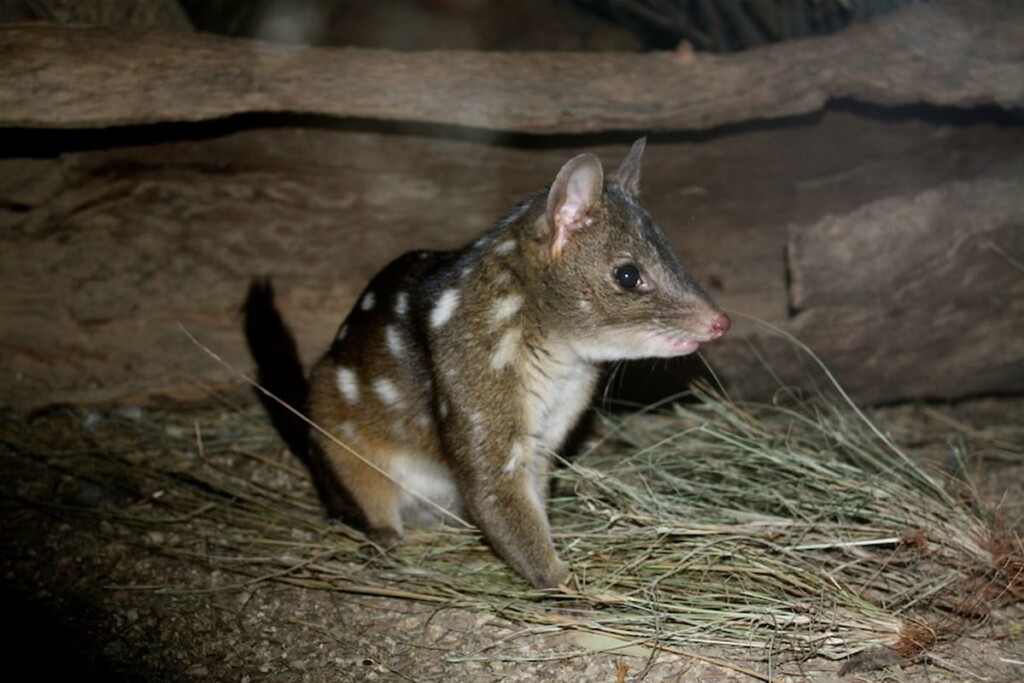
Long-Beaked Creature Is Proven Not Extinct in First Ever Photos: ‘Blows My Mind’ After 60 Years

By paweesit – CC 2.0, Flickr

An egg-laying mammal named in honor of Sir David Attenborough has been rediscovered after it was thought extinct for more than 60 years.

This extremely strange animal is just one of two extant mammal species on Earth that lays eggs.

According to the conservation org Re:wild, it’s one of just five surviving species of monotreme, an ancient clade of egg-laying mammals found only in Australia and New Guinea, whose origins go back to the Jurassic era some 160 million years ago.

There are three long-beaked echidna species. One is critically endangered, but this one, Zaglossus attenboroughi, is known only from a single individual collected by a Dutch botanist during an expedition to the Cyclops Mountains in 1961.

“I was euphoric, the whole team was euphoric,” Dr. James Kempton told BBC News of the moment he spotted the Attenborough echidna in camera trap footage. “I’m not joking when I say it came down to the very last SD card that we looked at, from the very last camera that we collected, on the very last day of our expedition.”

It’s the stuff of dreams, and Kempton was able to telephone Sir David with the news, with the famous filmmaker saying he was “absolutely delighted.”

Lasting four weeks, the expedition included biologists from several universities from the UK and Czechia, Re:wild, and YAPPENDA, an Indonesian conservation-focused NGO.

The expedition was looking in some of the most remote rainforest on Earth in the northern highlands of the Indonesian half of New Guinea, and they also discovered a new frog species, several dozen new insects, and observed “healthy” populations of tree kangaroos as well as the most famous New Guinea residents: birds of paradise.

MORE NEWS LIKE THIS: ‘Like Finding a Unicorn’: Researchers Rediscover Black-Naped Pheasant-Pigeon, a Bird Lost to Science for 140 Years

In fact, the team found so much life, and worked closely alongside the native community who play a game of ‘seek the echidna’ as a form of feud resolution, that all the members came down certain the area needed to be protected.

“One of the goals of YAPPENDA is to ensure the preservation of the Cyclops Mountains and their remarkable biodiversity,” said Malcolm Kobak, cofounder of YAPPENDA. “To see photos of this endemic species is both encouraging and inspiring. The [echidna] holds a special place in the traditions of the Indigenous inhabitants of the Cyclops and is emblematic of Cyclops’ conservation efforts.”

MORE EXTINCT SPECIES RETURNING: Holly Tree Presumed Extinct for 200 Years Discovered After Placement on Most Wanted List: ‘Nature surprises us’

Re:wild was just one part of the expedition, but they’re getting used to this kind of good news and good press. Their “25 Most Wanted” initiative to document missing species has so far financed the rediscovery of 9 other animals from all the major orders around the world that have been presumed extinct.

These include Jackson’s climbing salamander, the silver-backed chevrotain, the Somali sengi, the velvet pitcher plant, Wallace’s giant bee, the Fernandina giant tortoise, Voeltzkow’s chameleon, the Pernambuco holly tree, and the Siera Leone crab.

WATCH the camera trap footage that set off the celebrations… 

SHARE This Absolutely Great News For Nature With Your Friends… 

Good Samaritan Surprising Strangers with Kindness Every Day for 3 Years Is Crowned UK Hero with a Statue

The UK’s Kind Hero, Sebbie Hall - SWNS
The UK’s Kind Hero, Sebbie Hall – SWNS

Sebbie Hall was just 17 when he decided to dedicate his life to helping others. And it took only 3 years for the nation to recognize him as a hero—as the UK’s kindest person.

He works tirelessly to help others and has founded his own charity to encourage others to follow his lead, The Sebbie Hall Kindness Foundation, which helps vulnerable youngsters.

During his three years of good work, he donated 400 coats and blankets to homeless charities, gifted 800 toys to children’s homes, and even used his own pocket money during his teens to pay for stranger’s coffees.

Now 20, the kind hero from Lichfield who was born with a rare chromosome anomaly initially started spreading kindness during lockdown after discovering classmates didn’t have access to a computer.

His first thought was to donate his own device but conscious this wouldn’t help all his pals, he raised money to buy them a laptop each by carrying out kind acts—like washing cars.

Following a search for the UK’s kindest people by KIND Snacks, he has been crowned the UK’s 2023 Kind Hero and honored with a statue near Tower Bridge in London alongside the likes of Captain Cook, Winston Churchill, and Jo Newby, the KIND Snacks 2022 Hero, who has fostered 92 children in her time as a volunteer foster mom.

The six-foot tall likeness, commissioned by the healthy snack bar brand, features Sebbie in a superhero-style cape and stance inspired by his motto, ‘kindness is my superpower.’

GOOD SAMARITAN NEWS: She Was About to End it All, Until a Stranger She’d Never Meet Told Her ‘Don’t Jump’

“It warmed our hearts to see the sheer volume of people selflessly devoting their time and effort to fostering kindness in their communities,” said Sam Wainwright, KIND spokesman.  “The scale of impact delivered through the entries we read was absolutely overwhelming.”

“Sebbie’s story in particular highlights the importance of kindness and its transformative power in driving positive changes for others.”

Following its stint in the capital, the statue will be transported to a long-term home in Lichfield, Staffordshire.

MORE KIND-HEARTED HEROES: After Job Lay Off, Jersey Man Said ‘I Want to Mow Your Lawn’ and His Free Services Spread Across Nation

KIND Snacks launched the search earlier this year and received almost 500 nominations before selecting kind-hearted Sebbie following an extensive judging process.

“Honouring Sebbie’s kindness with a statue felt like the right way to celebrate such an outstanding person,” said Wainwright.

CELEBRATE This Kind Hero And His Awesome Statue With Your Friends… 

“Freedom is nothing but a chance to be better.” – Albert Camus

Quote of the Day: “Freedom is nothing but a chance to be better.” – Albert Camus

Photo by: Ronny Sison

With a new inspirational quote every day, atop the perfect photo—collected and archived on our Quotes page—why not bookmark GNN.org for a daily uplift?

Send an Inspiring Message Every Day With These Positive Affirmation Socks–LOOK

Notes to Self
Notes to Self

The words we tell ourselves matter. Now you can remind yourself—and others—that you are amazing, smart, courageous, or beautiful with Notes To Self socks, because words make all the difference.

In a world where mental health is an increasing concern, a Kansas mom from the heartland of America began weaving inspiring messages—to put on your feet. Laura Schmidt is the visionary behind the unique sock company where positive affirmations become a memorable step in your morning and bedtime routines.

Notes To Self

She has always believed in the power of positive thinking, but remembers the moment in 2011 when her feet were propped up on a car dashboard and it dawned on her what an incredible billboard your socks could be for promoting positive thinking.

“My whole life I’ve used positive affirmations to help me with my confidence,” she says.

Schmidt had already succeeded in the corporate world, in direct sales, and as a mother of three in Prairie Village, Kansas, so empowering others to reach their goals was a way of life.

Laura Schmidt, founder of Notes To Self

“I like the idea that someone wearing the socks sees a phrase such as ‘I am strong’ first thing in the morning when they are putting on their shoes, and at the end of the day.”

She envisioned that the positive reminder, articulated in the present tense, would stay with the wearer throughout the day, with the simple act of wearing socks.

The website for Notes to Self® socks says “each pair of high-quality athletic socks come with arch support and a breathable mesh top”. They sell multiple styles of socks including compression, gripper, ultra low cut, crew, wool crew, and child sizes.

Each of the variety of affirmations—‘I am confident’, ‘I am awesome’, ‘I am beautiful’, ‘I am smart’, ‘I’m a great mom’, or the sassy ‘I am crushing it’—offer a daily dose of positivity right down to your toes. (And you can get a 10% discount using an exclusive coupon code for GNN readers: GOODNEWS2023)

Schmidt, herself, must be wearing ‘I am generous’ socks, because her company has donated over 135,000 pairs of their socks to homeless shelters, women’s shelters, and children in need.

They also support small businesses–and all their socks are exclusively made in the USA.

When the first prototype for the socks was worn by Laura’s daughter to her volleyball practice in 2011 adorned with the phrase “I am confident”, the feedback proved overwhelmingly positive. Since then, millions of people have experienced the uplifting power of Notes to Self socks as a consistent reminder of their self-worth.

Schmidt has received numerous testimonials from customers who’ve shared their journeys of perseverance which were uplifted by the simple act of looking down at their socks. That’s not surprising, since previous research has shown positive affirmations can reduce stress, increase self-esteem, and enhance overall well-being.

NotesToSelf

One customer was suffering from debilitating health setbacks in the hospital when friends gave her a pair of socks from Notes to Self.

“She believed that focusing on those positive words helped her reconnect neurons in her brain,” Laura recalled. “Many times, people don’t understand how powerful these are until they glance down at their feet and see the words. And then they get it.”

One of the many gift sets at NotesToSelf

With the holidays coming up, GNN is offering an exclusive discount of 10% for all our readers until December 31, providing a great gift option for sharing positivity with all your family and friends. Just click here to shop on their website and use the coupon code: GOODNEWS2023.

Check out their Gift Box Sets—and Christmas ornaments stuffed with a pair of socks.

Change begins one step at a time. Whenever optimism is needed, Laura’s affirmation socks can help move you in the right direction.

DON’T FORGET TO SHARE the Cool Gift Idea on Social Media…

Watch Arizona Firefighters Rescue Entangled Hawk: ‘Humans, Pets, Animals–We Take Care of Them All’

credit - Tucson Fire Department
credit – Tucson Fire Department

In Tuscon Arizona, fire and rescue were out proving that for them, saving someone’s hide is all the same whether it’s covered in clothes or feathers.

An adult Cooper’s hawk was reportedly trapped in fishing line in Christopher Columbus Park.

The Tuscon Fire Department unit called Ladder 4 was deployed to the scene and was able to safely get a black sack over the hawk before lowering it down to a waiting raptor handler.

“Crews were able to get the bird to ground level and free the hawk 👏 Humans, pets, animals, we take care of them all at #TFD,” said the department on social media.

SHARE This Gorgeous Rescue With Bird-Loving Friends on Social Media… 

Wave-Powered Desalination System Produces 13,000 Gallons of Drinking Water a Day From Each Buoy

credit - Oneka Technologies
credit – Oneka Technologies

If a new Canadian startup is successful with its product, it could decarbonize the whole desalination industry, using only energy from the sea to turn seawater into drinking water.

300 million people rely on seawater from a global industry of 21,000 desalination plants, nearly all of which use fossil fuels to complete the energy-intensive process of thermo-desalination, or reverse osmosis—the two methods that can turn seawater into clean water at scale.

The startup Oneka however uses modular machines that attach to the seafloor like buoys and convert the kinetic energy of 3-foot waves into mechanical energy that drives a reverse osmosis and creates 13,000 gallons of drinking water a day with the largest commerically-available module.

It’s expected that if the worst predictions of climate change come to pass, more and more of the world will rely on desalinated water at least some of the year according to data collected by the BBC, and the industry is predicted to grow 9% to a yearly value of $29 billion by 2030.

Oneka presents a suite of advantages over land-based desalination plants. The first is that it takes up no space on land; particularly important for island nations. The second is that their modules emit no greenhouse gases. The third has to do with a drawback of desalination technology as it stands.

Whether using the thermal process or reverse osmosis, desalination of seawater creates a waste product of highly saline brine water or salt. If released or leaked back into the ocean, it can poison acres of sea life, or plants and groundwater if released on land.

DESALINATION AT HOME: For First Time, Seawater Made Drinkable by Sunlight to Be Even Cheaper Than Tap Water

Oneka’s technology mixes the saline solution with three-quarters of all the seawater taken up in a single day, releasing it back into the ocean with a mere 25% greater content of salt than before.

The module desalinators can be chained next to each other to conserve space and make it easier for the piping system that transfers the clean water on land to be installed.

MORE CLIMATE TRANSFORMERS: Patagonia Gives Away Its Entire $3 Billion Worth To Fight Climate Change

Making the machines the complete eco-friendly package, Oneka has found their chains, anchorage, and buoys are all sealife friendly, and quickly become populated by various creatures according to the company.

They have tested their buoy desalinators in harsh weather of 6-meter waves (nearly 30 feet) and found they work well. These early modules have already been sold to communities in Chile, one of the driest parts of the world.

WATCH how it works below… 

SHARE This Potentially Revolutionary Invention With Your Friends… 
First Advanced Parkinson’s Patient to Walk Again with New Spinal Implant, ‘It’s Incredible’

Marc walks AGAIN with Swiss device – Jocelyne Bloch / CHUV Lausanne University

A Frenchman who received a new spinal implant has regained significant motor functions including the ability to walk unaided for miles after losing all such faculties to advanced-stage Parkinson’s Disease.

In the latter stages of the moto-neuron disorder, patients lose the ability to correctly use their muscles, and at some points movement can shut off entirely and they can crumple to the floor.

63-year-old Marc from Bordeaux, France was diagnosed with the condition 20 years ago, and it got so bad that there had to be someone holding his arms at all times in case his walking gait just froze.

He was the subject of the experimental spinal implant technology developed through a collaboration between the Swiss Federal Institute of Technology in Lausanne and the Lausanne University Hospital that has also restored some mobility to a man with a spinal cord injury that left him paralyzed.

When you see images of people with spinal cord injuries walking again with the help of implants, there’s normally a computer attached to their back, or they’re in a laboratory setting.

But watching Marc walk with his new implants, it’s like the real thing. The implants still needs another 5 years of work, and the study published on Marc’s experience is seen as a major ‘stepping stone.’

“I practically could not walk anymore without falling frequently, several times a day. In some situations, such as entering a lift, I’d trample on the spot, as though I was frozen there, you might say,” Marc told the press. “Right now, I’m not even afraid of the stairs anymore. Every Sunday I go to the lake, and I walk around 6 kilometers [3.7 miles]. It’s incredible.”

The scientists had to make a map of Marc’s spinal cord and discover the locations responsible for signaling the legs to move. Electrodes were then implanted at these locations, allowing stimulation to be delivered directly into the spine.

MORE PARKINSON’S NEWS: Tai Chi Can Curb Parkinson’s Disease Symptoms for Years and Lower Needed Drug Doses–Study

Two sensors are worn by the patient, in this case Marc, on the posterior leg muscles. When walking is initiated, the sensors continually send information to a stimulator under the skin on Marc’s abdomen where it continually sends electricity to the electrodes on his spine to correct abnormal signals that would cause him to tremble or lose coordination.

To coordinate the stimulator, Marc had to do a lot of walking around in a lab while the team monitored him with motion detection cameras and computer modeling.

MORE PARALYSIS REVERSED: First Time Someone With Cut Spinal Cord is Able to Walk Freely, Thanks to New Swiss Technology

“At no point is [the patient] controlled by the machine,” Professor Eduardo Martin Moraud, of Lausanne University hospital, told the Guardian. “It’s just enhancing his capacity to walk.”

The team says it’s committed to testing this same intervention in 6 more patients to get a really good feel for the potential for it to be available one day to the public at large.

WATCH Marc find his feet again… 

SHARE Marc’s Incredible Recovery Through This Amazing Technology On Social Media… 

The Hubble and Webb Telescopes Join to Create Unprecedented Photo of Universe

This panchromatic view of galaxy cluster MACS0416 was created by combining infrared observations from NASA’s James Webb Space Telescope with visible-light data from NASA’s Hubble Space Telescope. credit NASA, ESA, CSA, STScI, J. Diego (Instituto de Física de Cantabria, Spain), J. D’Silva (U. Western Australia), A. Koekemoer (STScI), J. Summers & R. Windhorst (ASU), and H. Yan (U. Missouri).

In a tour de force of techno-stargazing, NASA trained both the Hubble and James Webb space telescopes on the same patch of galaxies to create an unprecedented view of the universe.

The resulting panchromatic image combines visible and infrared light of the galaxy cluster MACS0416—4.3 billion light-years from Earth.

It includes a bounty of galaxies outside the cluster and a sprinkling of sources that vary over time, likely due to gravitational lensing, the distortion and amplification of light from distant background sources.

To make the image, in general the shortest wavelengths of light were color-coded blue, the longest wavelengths red, and intermediate wavelengths green. The broad range of wavelengths, from 0.4 to 5 microns, yields a particularly vivid landscape of galaxies, NASA explains on its website.

Those colors give clues to galaxy distances. The bluest galaxies are relatively nearby and often show intense star formation, as best detected by Hubble, while the redder galaxies tend to be more distant as detected by Webb. Some galaxies also appear very red because they contain copious amounts of cosmic dust that tends to absorb bluer colors of starlight.

MORE STORIES LIKE THIS: X-rays and Webb Telescope Provide Dazzling Views of Space Invisible to the Unaided Eye

MACS0416 is actually two galaxy clusters that are slowly colliding, and one day when our bones have long turned to dust they will merge to become a single entity. Studying it with both telescopes therefore is like a two-for-one deal, and of particular interest to the team snapping this photo were “transients,” or objects that vary significantly in light signal over the observation period.

This side-by-side comparison of galaxy cluster MACS0416 as seen by the Hubble Space Telescope in optical light (left) and the James Webb Space Telescope in infrared light (right) NASA, ESA, CSA, STScI

They identified 14 such transients across the field of view. Twelve of those transients were located in three galaxies that are highly magnified by gravitational lensing, and are likely to be individual stars or multiple-star systems that are briefly very highly magnified. The remaining two transients are within more moderately magnified background galaxies and are likely to be supernovae.

“We’re calling MACS0416 the Christmas Tree Galaxy Cluster, both because it’s so colorful and because of these flickering lights we find within it. We can see transients everywhere,” said Haojing Yan of the University of Missouri in Columbia, lead author of one paper describing the scientific results.

PREVIOUS WEBB RESULTS: NASA Celebrates ‘One Year of Science’ From Webb Telescope with Jaw-Dropping Image

One transient in particular was named “Mothra” after a giant monster from the Godzilla universe. In the photo it is gravitationally lensed about 4,000 times, suggesting to the team that there is likely another object in the foreground they can’t see.

SHARE This Triumphant Image With Your Friends In Need Of A Desktop Background…

“I must kill off memory. . . and I must learn to live anew.” – Anna Akhmatova

Quote of the Day: “I must kill off memory. . . and I must learn to live anew.” – Anna Akhmatova 

Photo by: Clay Banks

With a new inspirational quote every day, atop the perfect photo—collected and archived on our Quotes page—why not bookmark GNN.org for a daily uplift?

Bison Herd New to Park Uncover Ancient Petroglyphs With Their Hooves Fulfilling Indigenous Prophecy

Bison herd hooves uncover ancient petroglyphs – Wanuskewin Heritage Park

In a remarkable and inspiring occurrence, the reintroduction of plains bison to ancestral First Nations lands in Canada saw the beasts unearth important petroglyphs, and in doing so fulfill a prophecy held by the elders of the Dakota Tribe.

It states that when the bison, extinct in the area for over 100 years finally return to them, the tribe’s fortunes would change for the better.

In 2019, a $40 million project on the Wanuskewin Heritage Park, part of the national parks system of Canada and which protects sacred land to several tribes, organized the reintroduction of bison by taking six female calves from Grasslands National Park in southern Saskatchewan, and a male bull and four females with ancestry to Yellowstone.

The first sign that fortunes for the Dakota were improving came just 8 months after that, when the bisons’ hooves uncovered something that 40 years of human archaeology couldn’t.

With a lack of organic material, the two petroglyphs carved into a pair of boulders were dated to between 300 and 1,800 years ago, a span of time when the Dakota, Nakota, Assiniboines, Ojibwa, Cree, and Blackfoot all inhabited the area of Wanuskewin at various periods.

Archaeologist Ernie Walker told Diane Selkirk of Smithsonian Magazine that he was walking toward some bison who were enjoying a grassless area of dust called a wallow when he spotted a rock protruding awkwardly from the ground.

Newly discovered ancient petroglyphs – Wanuskewin Heritage Park

Noticing a part of the rock had a deep groove cut into it, he began to remove dirt and dig the rock out a bit, revealing the crisscrossing lines of a “ribstone,” a ceremonial petroglyph carved to appear like the bison’s ribcage.

“We’d found the detritus of everyday living: broken stone tools… and things like that,” Walker says. “But [we] didn’t find ideas. [We] didn’t find emotions. The petroglyphs brought that. They’re that other dimension… They’re a glimpse into somebody’s hopes and dreams.”


MORE IMPORTANT DISCOVERIES LIKE THIS: Cherokee Nation First U.S. Tribe to be Invited to Preserve Their Heirloom Species in Global Seed Vault

In total, the ensuing excavations found 4 petroglyphs, the 550-pound ribstone, a 1,200-pound boulder, and two smaller specimens. They even found the stone knife nearby that made the carvings.

“We have been so fortunate over the years to have had these wondrous stories emerge that we are able to share with the community,” Darlene Brander, CEO of Wanuskewin Heritage Park, said in a statement. “Today it is our duty to share this story as our call to reconciliation by shining a light on the distinct and beautiful cultures of the Northern Plains People.”

credit – Wanuskewin Heritage Park

The petroglyphs were the first ever found on the 600-acre site, and the placement was particular. 380 yards straight on from the boulders was a notable area for native hunters: a buffalo jump—where herd animals could be spooked into running right off the edge of a cliff.

“The elders used to tell us when the bison come back, that’s when there’ll be a good change in our history,” said Wahpeton Dakota elder Cy Standing. “We’ve been down a long time. But it feels like we are starting the way up.”

MORE GOOD NEWS FROM INDIAN COUNTRY: Spirit Mountain, Which is Sacred to Tribes, is Designated a New National Monument

While the Dakota believe large rocks are sacred are should be left where they are, the elders agreed that sharing the ribstone and the others with the world would be acceptable. Wanuskewin is a pending UNESCO World Heritage Site, and such objects are important parts of telling the story of the sacred place.

In an interesting deviation from petroglyph carving around the world, the Wanuskewin boulders are carved in the so-called hoofprint tradition, which involved carving recognizable features of an animal rather than the animal itself. In this case, the lines are supposed to represent a ribcage; a design that would have been easy to see for the bison hunters on the plains.

SHARE This Interesting Story Of Connection, Spiritualism, And Discovery On Social Media…

World-First Video of Dolphins Stealing From Crab Pots Leaves Scientists Fascinated

Dolphins raiding crab pots - Supplied by Dolphin Discovery Centre
Dolphins raiding crab pots – Supplied by Dolphin Discovery Centre

In a bit of never-before-seen film, a dolphin was recorded off the coast of Australia robbing the bait from a crab trap.

The behavior was captured by a camera mounted on the trap by the Dolphin Discovery Centre in Bunbury, Western Australia.

In the footage, the dolphins can be seen using their eyes, bodies, teeth, and beak—officially called a rostrum—to pilfer the crabbers’ pots.

“The footage was certainly surprising—we knew something was happening,” said Dolphin Discovery Centre volunteer and filmmaker Axel Grossman. “But we had no clue that the dolphins were acting to such an extent, through so much effort, learning and physical and mental problem solving [to steal the food].”

ABC News AU talked to a 40-year crabber from the Bunbury area who said that this phenomenon isn’t new, but also isn’t exactly old.

MORE ANIMAL INTELLIGENCE: Houston Elephants Do Yoga 7-days a Week to Stay Flexible and Healthy

“In the last 20-odd years, it happens all the time. If you see some dolphins around you can guarantee you’re going to get your crab nets raided,” crabber Russell Dawson said.

Mr. Dawson is getting around the clever cetaceans by replacing the fishy bait with a box filled with bait that’s locked shut with narrow steel cables. Small holes will allow the crabs to detect and get a pinch of the bait inside where the larger rostrums of the dolphins cannot.

MORE DOLPHIN STORIES: Dolphins Self-Treat Their Own Skin By Lining Up to Rub on Specific Coral

Experts at the centre said they look forward to investigating this new human-dolphin relationship. The intelligent dolphins are capable of adapting rapidly to changes in their environment, and the more interactions like this with anthropogenic elements in their environment, the better, the experts say, they can understand how we can structure our marine activity to accommodate and safeguard the animals.

SHARE These Clever Underwater Thieves With Your Friends…