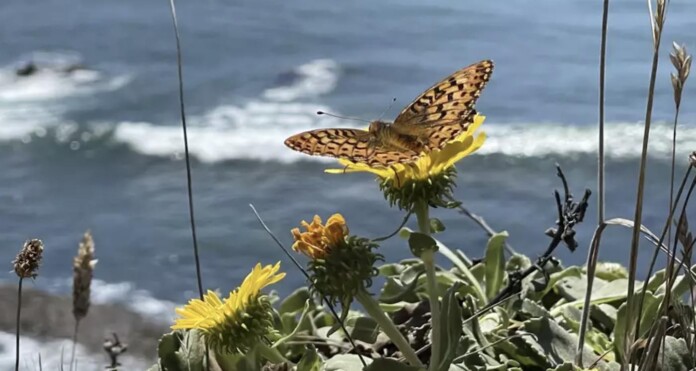
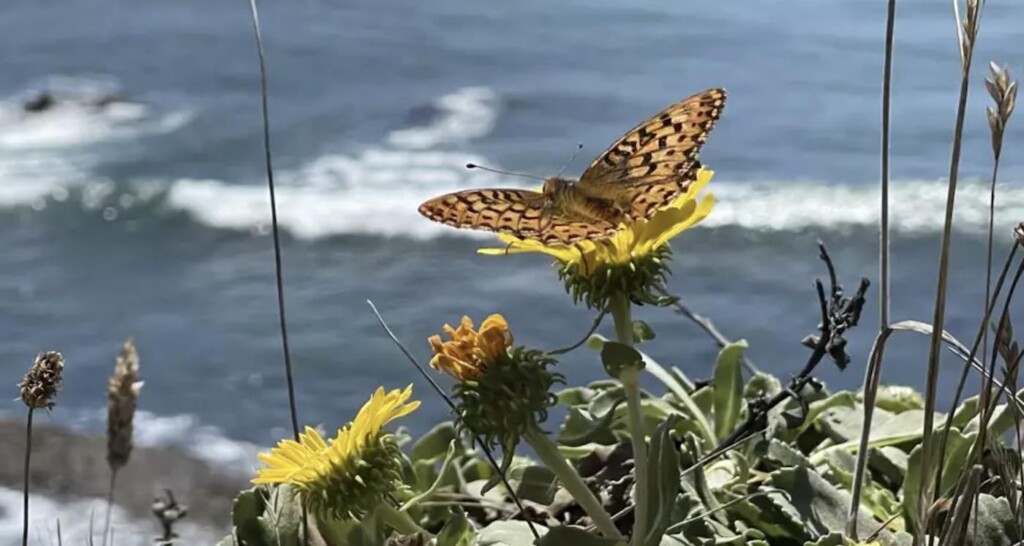
The Behren’s silverspot butterfly along the Pacific coast – By US Fish and Wildlife Service
The Behren’s silverspot butterfly along the Pacific coast – By US Fish and Wildlife Service
In California, a joint effort will oversee a multi-stage, four-year plan to help Behren’s silverspot butterfly return in numbers to the coastline of Northern California.
Vitalized by a $1.5 million grant from the State of CA Wildlife Conservation Board, the Mendocino Land Trust (MLT) is planning to plant 35,000 early blue violets, the only plant which the caterpillars of these blazing orange butterflies can eat, along with a mixture of supporting native plants.
Invasive grasses have greatly decreased the footprint of these small purple flowering plants along Northern California’s Mendocino coastline—from Salt Point Park in Sonoma County to the Mendocino Headlands, Anna Bride—and the conversion of these plants back to native wildflowers will cover 53 acres.
Furthermore, scores of caterpillars bred in captivity by Speyeria Conservation and Research are set to be released into this new habitat this spring. According to Speyeria, Behren silverspot caterpillars enter a state called ‘diapause’ during wintertime, which is a little like hibernation but for insects. They don’t grow and don’t develop an appetite.
In a Facebook post, the organization said it has 1,412 caterpillars in diapause currently in captivity, meaning it promises to be a busy spring.
The joint effort involves California State Parks, the Bureau of Land Management, the Laguna Foundation, the Sequoia Park Zoo, and Wynn Coastal Planning & Biology, and will last for four years during which time they hope to release 600 of these specimens.
“MLT’s winning this grant is a victory for the butterfly and a testimony to the dedication of all of these organizations,” MLT wrote in a statement.
The plan comes not a moment too soon, as scientists working on the project told SF Gate that a mere 92 sightings of this butterfly have been documented over the past 15 years.
The Wildlife Conservation Board was established in 1947, and it has evolved today to be an organization that has three primary goals: land acquisition, habitat restoration, and development of wildlife-oriented public access facilities.
On its website, WCB details 17 programs, ranging from butterfly rescue to forest and desert conservation.
SHARE These Dedicated Individuals Working For To Rescue The Butterflies…
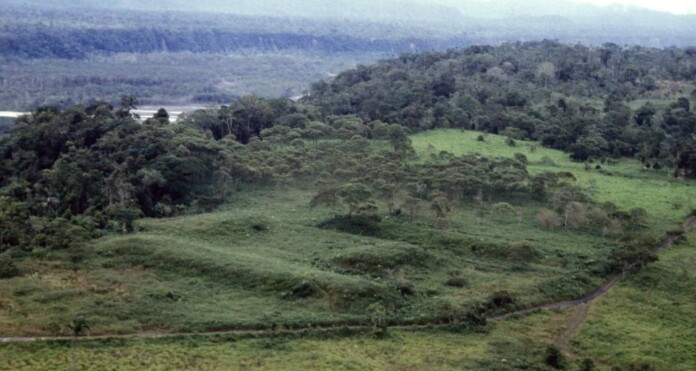
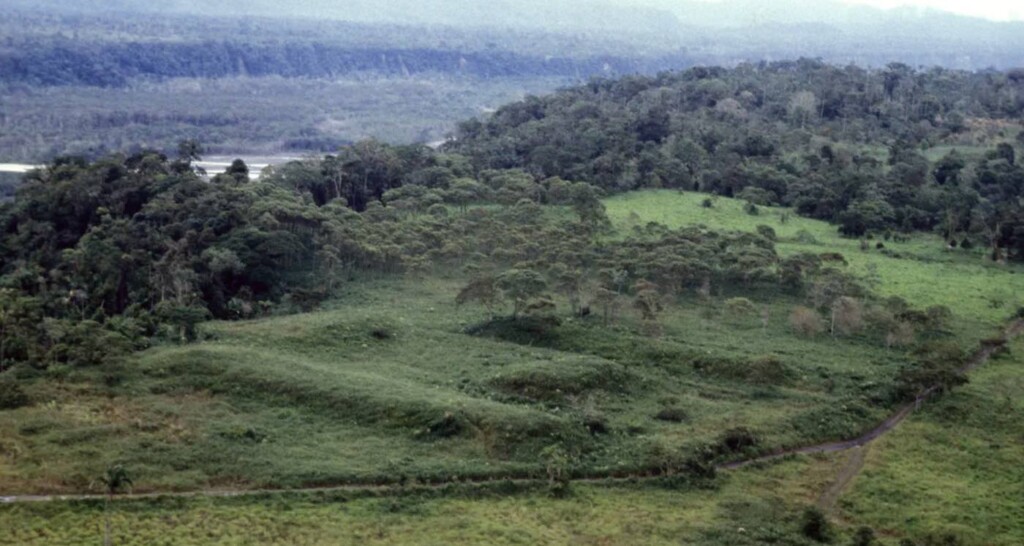
Ancient City Hidden near Ecuadoran river – Photo by study’s lead author Stéphen Rostain
Ancient City hidden near Ecuadoran river – Photo by study’s lead author Stéphen Rostain
Another ancient and lost city has been identified by archaeologists working with LiDAR in the Amazon Rainforest—with this most recent society dating as far back as the Greco-Persian Wars of Ancient Greece.
Located in Ecuador’s Upano Valley on the eastern side of the Andes Mountains, the area’s vast civilizational footprint had been surveyed and excavated in places going back 20 years before the government employed LiDAR to determine the scope of the city(ies) once and for all.
Published last week in the journal Anthropology, the researchers identified 6,000 earthen platforms across an area of 100 square miles. In their current theories, the researchers divide the society’s works into 16 different settlements connected by a series of sophisticated roads that were wide and straight.
Since the advent of laser radar systems like LiDAR (light detection and ranging) in archaeology, the Amazon Basin, once considered a dead-end street for the locating of worthwhile sites, is now the single-most exciting place on Earth, with evidence of lost civilizations appearing under the trees spanning thousands of years of history and at a level of sophistication that no one believed to be possible.
It now shows that, during certain centuries, the Amazon’s poor soil and seemingly impenetrable jungle may have been home to millions of agrarians capable of brilliant displays of organization and engineering.
At the moment, little is known about the people who inhabited this land 2,500 years ago. They were agrarian for certain, evidenced by the agricultural terraces and drainage ditches, and probably grew maize and sweet potatoes.
“Scientists are demonstrating conclusively that there were a lot more people in these areas, and that they significantly modified the landscape,” said Christopher Fisher, an archaeologist at Colorado State University who has done similar work but not at Upano, told Science News.
“This is a paradigm shift in our thinking about how extensively people occupied these areas.”
According to a statement released by the researchers from Ecuador and the French National Center for Scientific Research, this 2,500-year-old society constitutes the earliest and largest low-density agrarian urbanism documented in the Amazon thus far. Such extensive early development in the Upper Amazon resembles similar Maya urban systems in Central America.
“Such a discovery is another vivid example of the underestimation of Amazonia’s twofold heritage: environmental but also cultural, and therefore Indigenous,” writes lead author Stephan Rostain and his colleagues. “…we believe that it is crucial to thoroughly revise our preconceptions of the Amazonian world and, in doing so, to reinterpret contexts and concepts in the necessary light of an inclusive and participatory science.”
LiDAR has uncovered sites of similar importance in Belize, Mexico, Bolivia, and Brazil.
SHARE This Paradigm Shift with Your Friends Interested In Ancient History…
Quote of the Day: “Ill habits gather unseen degrees, as brooks make rivers, rivers run to seas.” – John Dryden
Photo by: Lycheeart
With a new inspirational quote every day, atop the perfect photo—collected and archived on our Quotes page—why not bookmark GNN.org for a daily uplift?
Whether in the harshest parts of Africa or the richest parts of California, longevity in humans is increasing.
Also, the gap between male and female life expectancy is narrowing, the researchers at Spain’s Universidad de Alcalá report in the journal PLoS One.
The authors split world populations into five clusters and found each area demonstrated longer life expectancies and fewer disparities between genders over the last 30 years. They also said their data predicts that these trends will continue into the next decade.
But although safer and safer conditions for blue-collar jobs have meant that men are dying less on the job, the experts believe they will never average the lifespans of women due to conditions caused by their Y chromosome, which seems to be associated with increased risk of lethal, non-communicable diseases.
In terms of life expectancy, researchers found that most countries in the world have seen improvements in longevity over the past two centuries according to data from across all continents between 1990 and 2000. Measures used were life expectancy at birth and eight other mortality indicators from the United Nations Populations Division records relating to 194 countries.
They then lumped these countries together to create five separate clusters based on their mortality and longevity characteristics between 1990 and 2010.
Amongst all five of the clusters of countries, the researchers found that life expectancy is increasing and the male-female mortality gap shrinking. The researchers also extended their model to predict outcomes for the groupings in 2030 and found a continuation of these trends.
Though all areas improved, Africa was found to be the region with the most significant improvements in mortality indicators.
“This fact clearly presents the growth in the aging processes around the world during the last 30 years,” said lead author Professor David Atance. “Even the best-performing high-income countries continue to grow, although these improvements slowed over time.”
He added that the closing of the gender longevity gap, which is decreasing in both the cluster analysis and country analysis worldwide, could be explained by the past “harmful” lifestyles of blue-collar males falling by the wayside in recent years.
If larger and larger slices of national populations age into their late 70s, 80s, and 90s as Atance and others have predicted, humanity will need to rapidly re-examine the picture of old age in our societies away from sitting in rocking chairs being cared for.
Renowned psychologist Gabor Mate has compared the phenomenon of a gerontocracy to the idea of “elders versus the elderly” where in traditional societies the old are still contributing and valued members of the community, who are consulted for their wisdom, but who can also still physically pull their weight.
SHARE These Encouraging Upward Trends With Your Friends…
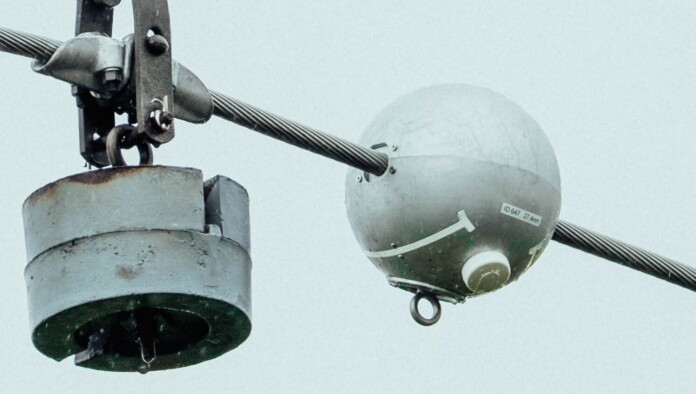
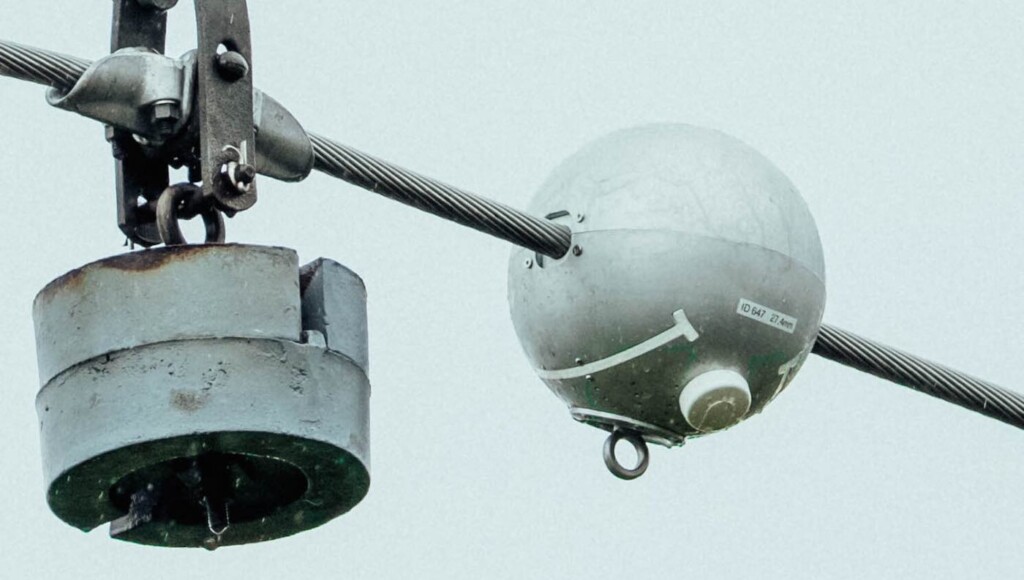
A Norwegian company named after a mythical Norse god is helping power lines transmit as smoothly and evenly as possible with the help of a small magic sphere the size of a soccer ball.
Heimdall Power is bringing its technology—which is already a hit across Europe—to North America, with a first stop in Minnesota and Michigan.
Power lines today, explains Michelle Lewis writing at Electrek, are mostly ‘dumb’ which is to say that there is no information about how much more electricity is being delivered than is needed, or how much less. No real-time information exists about how they are operating at all in most cases.
For a country like the United States of America where there can be found 160,000 miles of power lines, the untapped potential is enormous.
Installed in a few minutes by a drone, Heimdall’s flagship product, a spherical sensor that mounts on high voltage power lines and is called the Neuron, monitors the voltage, temperature, and angle of electrical currents in the lines in real-time, transmitting that information back to grid managers who may, for example, see that there is an enormous over-transmission in one part of the grid that could either be tamped down to save money for the consumers, or reallocated to another part of the grid where demand is higher.
The Neuron was pioneered with the Norwegian utility Arva, which now uses them extensively through its grid portion.
“Both Arva and other grid companies are going to build out the power grid, to double the capacity we have today over the next ten years,” says Trond Are Bjørnvold, department manager at Arva, in a statement. “The investments will be enormous, but we should not invest more than necessary. We should also strive to prioritize the development in the correct order.”
With the Neurons: “We now know exactly how much spare capacity that is available in the line, and how much power we could potentially send through the network,” Bjørnvold added
Heimdall claimed in a statement that better control over the lines has saved customers hundreds of millions of Norwegian Kroner, or almost $10 million.
To further increase the accuracy of the Neuron, Heimdall has partnered with the Switzerland-based Meteometrics, which added machine learning data and computational software on weather conditions. This finished product is now coming to the US on the back of deals with Great River Energy in Minnesota, and another, unnamed, publically-traded utility in Michigan.
“By combining our weather insights with Heimdall Power, we’re offering companies a look into their real-time power line capacities—something that a majority of energy grid companies have not had access to before,” said Paul Walsh, CEO of Meteomatics North America. “We’re looking forward to continuing our work together stateside.”
SHARE This Awesome Improvement To World Power Transmission…
Elton John During His Farewell Yellow Brick Road World Tour, for which he won an Emmy - CC 2.0. slgckgc. Flickr
Elton John During His Farewell Yellow Brick Road World Tour, for which he won an Emmy – CC 2.0. slgckgc. Flickr
It’s not referring to a tropical disease to say that someone has an EGOT. It means they’ve got a mantlepiece at home where stand an Emmy, a Grammy, an Oscar, and a Tony—the four major pop culture awards in America.
Only 18 entertainers have achieved this quadruple, and now Elton John stands among them as the 19th, having recently won an Emmy for his concert film, Elton John Live: Farewell From Dodger Stadium.
John was not able to attend the ceremony because of needed recovery from a knee surgery, “which isn’t surprising if you think of the number of pianos he’s jumped off from in platform heels,” said John’s husband, David Furnish.
John has collected two Oscars: one for The Lion King’s Cany You Feel The Love Tonight? and another for Rocketman’s (I’m Gonna) Love Me Again.
For the ‘T’ in EGOT, he won a Tony for scoring the musical version of the opera Aida.
For the ‘G’—the Grammy, it’s a case of take your pick, with John having collected quite a few over his decades as a musician.
“I am incredibly humbled to be joining the unbelievably talented group of EGOT winners tonight,” said John in a statement. “The journey to this moment has been filled with passion, dedication, and the unwavering support of my fans all around the world. Tonight is a testament to the power of the arts and the joy that it brings to all our lives. Thank you to everyone who has supported me throughout my career; I am incredibly grateful.”
According to Smithsonian Magazine, the term EGOT was first used on Miami Vice. Its imaginary alumni include Richard Rogers, Hellen Hayes, Rita Moreno, Whoopi Goldberg, Viola Davis, John Legend, Alan Menken, Mell Brooks, Audrey Hepburn, John Gielgud, Marvin Hamlisch, Johnathan Tunic, Mike Nichols, Scott Rudin, Robert Lobez, Andrew Lloyd Weber, Tim Rice, and Jennifer Hudson.
It seems appropriate that the acronym would be finished on Elton’s final show ever on tour in North America; the curtain call of all curtain calls, and a tremendous achievement to mark the end of a long chapter in a tremendous career.
WATCH Tiny Fey and Amy Pohler present the award along with peers…
CELEBRATE John’s Wonderful Achievement With Fans You Know…
Artist's illustration of a black hole; NASA/JPL-Caltech
Artist’s illustration of a black hole; NASA/JPL-Caltech
Researchers have discovered the oldest black hole ever observed, dating from the dawn of the universe, and found that it’s still in the process of consuming its host galaxy.
The international team, led by the University of Cambridge, used the James Webb Space Telescope to detect the black hole, which dates from 400 million years after the Big Bang, more than 13 billion years ago.
The results, which lead author Professor Roberto Maiolino says are “a giant leap forward”, are reported in the journal Nature.
That this surprisingly massive black hole—a few million times the mass of our Sun—even exists so early in the universe challenges our assumptions about how black holes form and grow.
Astronomers believe that the supermassive black holes found at the center of galaxies like the Milky Way grew to their current size over billions of years. But the size of this newly-discovered black hole suggests that they might form in other ways: they might be ‘born big’ or they can consume matter at a rate that’s five times higher than had been thought possible.
According to standard models, supermassive black holes form from the remnants of dead stars, which collapse and may form a black hole about a hundred times the mass of the Sun. If it grew in an expected way, this newly detected black hole would take about a billion years to grow to its observed size. The catch is that the universe was not yet a billion years old when this black hole was detected.
“It’s very early in the universe to see a black hole this massive, so we’ve got to consider other ways they might form,” said Maiolino, from Cambridge’s Cavendish Laboratory and Kavli Institute of Cosmology.
He suggests that because the first galaxies to form were extremely gas-rich “they would have been like a buffet for black holes.”
Indeed, this ancient black hole seems to have the metabolism of one who frequents buffets, because the scientists determined it’s gobbling up surrounding matter much more vigorously than its siblings at later epochs.
The young host galaxy, called GN-z11, glows from such an energetic black hole at its center. Black holes cannot be directly observed, but instead they are detected by the tell-tale glow of a swirling ‘accretion disc,’ which forms near the edges of a black hole. The gas in the accretion disc becomes extremely hot and starts to glow and radiate energy in the ultraviolet range. This strong glow is how astronomers are able to detect black holes.
GN-z11 is a compact galaxy, about one hundred times smaller than the Milky Way, but the black hole is likely harming its development. When black holes consume too much gas, it pushes the gas away like an ultra-fast wind. This ‘wind’ could stop the process of star formation, slowly killing the galaxy, but it will also kill the black hole itself, as it would also cut off the black hole’s source of ‘food’.
Maiolino says that the gigantic leap forward provided by JWST makes this the most exciting time in his career.
“It’s a new era: the giant leap in sensitivity, especially in the infrared, is like upgrading from Galileo’s telescope to a modern telescope overnight,” he said. “Before Webb came online, I thought maybe the universe isn’t so interesting when you go beyond what we could see with the Hubble Space Telescope. But that hasn’t been the case at all: the universe has been quite generous in what it’s showing us, and this is just the beginning.”
Maiolino says that the sensitivity of JWST means that even older black holes may be found in the coming months and years. Maiolino and his team are hoping to use future observations from JWST to try to find smaller ‘seeds’ of black holes, which may help them untangle the different ways that black holes might form: whether they start out large or they grow fast.
SHARE This Great Leap In Astronomy With Your Friends Who Love The Stars…
Quote of the Day: “The most wasted day of all is that on which we have not laughed.” – Nicolas Chamfort
Photo by: sean hall
With a new inspirational quote every day, atop the perfect photo—collected and archived on our Quotes page—why not bookmark GNN.org for a daily uplift?
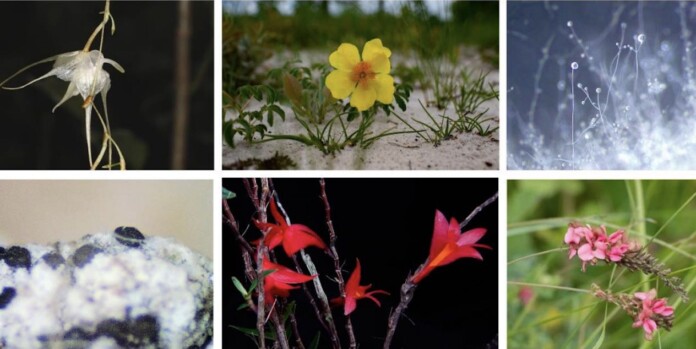
From microscopic fungi growing on lichens in Antarctica, to a towering tree in Cameroon’s cloud forest, weighing in at 7-8 tons, 2023 was a great year for expanding humanity’s understanding of our woody, flowering neighbors.
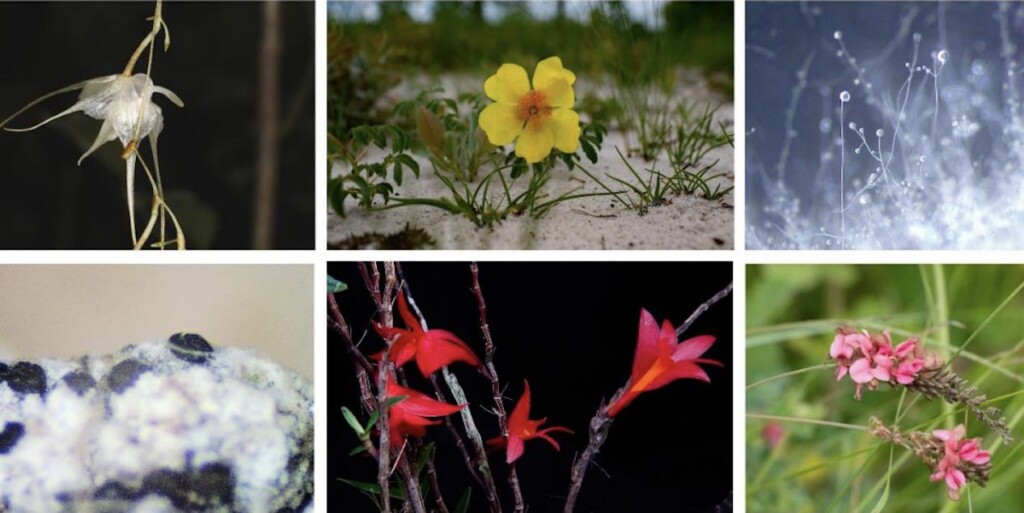
74 plants and 15 fungi were named and described for the first time by botanists and mycologists studying around the world on behalf of the prestigious Kew Gardens in London last year.
During a botanical exploration of Mozambique, botanist Bart Wursten encountered a mysterious plant covered in insect-trapping hairs. It looked just like a sundew (Drosera), a genus famous for its trapping and consumption of insect prey.
Yet, further examination alongside Kew’s Dr. Iain Darbyshire found the plant belongs to the genus Crepidorhopalon, a group of flowering plants in the order Lamiales—including mints and their relatives. In the family that Crepidorhopalon belongs to, no plant carnivory has ever been previously recorded.
Plenty of field and laboratory studies are still needed to confirm whether this new species is truly carnivorous. While we know it can attract and trap insects, whether it can digest and absorb them for nutrition is another question.
A scientific expedition to the volcanic Indonesian island of Waigeo hoped to rediscover a long-lost blue orchid (Dendrobium azureum) last seen more than 80 years ago.
This they did, on the very summit of Mount Nok. The team, including Kew’s Dr. André Schuiteman, also found multiple previously unknown orchid species as well.
One new find was Dondrobium lancilabium wuryae (a new subspecies of D. lancilabium), an orchid with spectacular red flowers named for Mrs. Wury, the wife Ma’ruf Amin, Indonesia’s vice-president. It is the ninth new orchid from Southeast Asia to be described in the last 12 months by Dr. Schuiteman and partners.
Speaking of orchids, check out this one—growing on top of another plant.
In a tiny forest reserve in Madagascar, a group of Malagasy villagers protect and manage the forest with the hope of protecting the Endangered helmet vanga (Euryceros prevostii), a stunning blue-beaked bird. Visitors flock to glimpse a sight of this rare animal bringing income to villagers and incentivizing the forest’s protection.
It’s in this tiny patch of forest that Kew’s Johan Hermans and his Malagasy botanist collaborators found A. bigibbum, an epiphyte orchid that spends its life growing atop other plants.
Were it not for the care and love for a unique bird, it’s likely this forest would’ve been gone long ago, taking its plant life with it. Care for one species can protect countless others that share its home.
While this may look like a simple ground dwelling wildflower, the truth of its identity will surprise you. It’s a tree.
During a National Geographic Expeditions survey of remote Angola, Kew’s Dr. David Goyder found two new tree species buried in the Kalahari sands. Trees known to this region have as much as 90% of their body mass deep under the surface.
Cochlospermum adjanyae is named for Adjany Costa, an Angolan colleague recognized for her achievements with the 2019 UN Young Champions of the Earth Africa prize.
Of the six Lichtheimia species of fungi known to exist already, three can cause unpleasant human diseases from lung infections to serious skin lesions.
We’re thankful then the latest addition to this genus, found in soy waste across multiple South Korean provinces by Kew mycologist Dr. Paul Kirk, is not so related to its pathogenic cousins and poses minimal health concern.
L. koreana’s relatives have been found across the globe in soil, food products, and busy infecting invertebrates.
Of the 750 species of Indigofera known to science, 80 of them owe their scientific naming to Dr. Brian Schrire, a Kew Honorary Research Associate. With his co-authoring colleagues, he has named 18 from South Africa in the last year, giving him the special title of Kew’s highest scoring taxonomist of 2023.
One of the new species, Indigofera abbottii is named for Anthony Thomas Dixon Abbott. Abbott’s work as a pioneering conservationist and amateur plant collector has made many new species finds possible. Pressure is on for this new indigo species, with clearance of habitat for agriculture and housing posing questions for the future.
Microchirita fuscifaucia arrives on the new species list already threatened. It’s known to just two sites in Thailand, both of which are unprotected and at risk of clearance.
The 47 known Microchirita species live a life almost exclusively atop limestone rocks, with their striking flowers of many colors and patterns. This new species is named for its charismatic dark throat.
It joins seven other species described in 2023 by former Kew scientist Carmen Puglisi, and colleagues David John Middleton, Naiyana Tetsana, and Somran Suddee.
SHARE These Awesome, Intriguing Plants With Green Thumbs You Know…
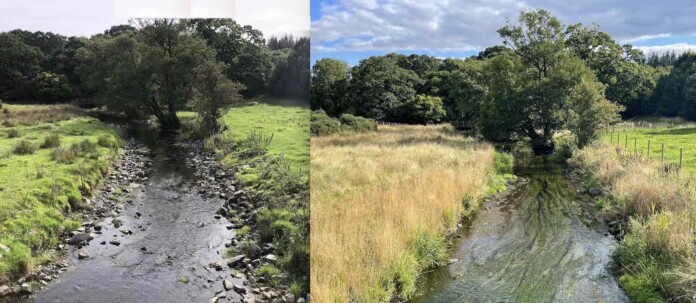
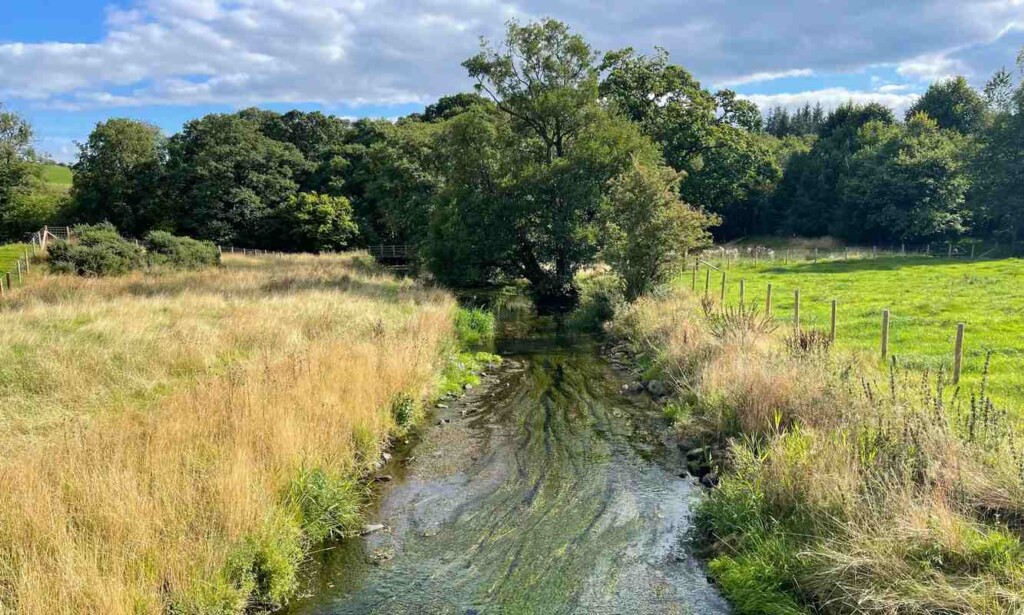
Rewilded creek on Strickley Farm – Courtesy of owner James Robinson
Rewilded creek on Strickley Farm – Courtesy of owner James Robinson
In the UK, farmers are combatting flooding by returning areas of their farms to a more natural state, and seeing the benefits not only in wildlife returning but in flood mitigation.
James Robinson, an intergenerational farmer from Cumbria in northwest England, has worked together with the Ullswater Catchment Management CIC to turn a number of areas of his farm into wetland havens where birds and invertebrates have come back in phenomenal numbers.
To explain a long, related, and detail-filled story in brief, flooding is the UK’s major natural hazard, and part of reason is that many waterways—even small ones—were turned into deep and straight canals hundreds of years ago to permit boats to travel across the country.
Rivers and streams that are deep, straight, and have high banks channel water at much greater volumes and speed than natural, meandering streams—a process which is exactly what some UK farmers like James Robinson have been working to reverse.
The Ullswater CIC, or Community Interest Company, has watched their model of stream restoration spread across the region, which for English readers includes Glenridding, Windermere, West and South Cumbria, and Ullswater.
“People seem to like this model,” said Danny Teasdale, the CEO of Ullswater Catchment Management, in a long, on-site interview conducted by DEFRA.
“And then farmers talk and then someone else will get in touch. We are growing. We’ve been able to employ local contractors, and any money that comes into the CIC goes locally as well,” he said.
There have always been streams running through Strickley Farm where James Robinson and his family have been farming for generations. He calls them “becks” and they have been the epicenter of much flooding over the years.
Becking the trend of flooding
Every so often, Mr. Robinson has had to dredge the streams, pulling up weeds and clearing them out—which was supposed to be flood control, but he never saw it make much of a difference at all.
“Now this bit of land that we had here, 4 or 5 acres—it was rubbish,” he says in a rich northern accent, “in agricultural terms; it was rubbish, but environmentally and its potential or habitat was huge,” Robinson told DEFRA. “So might as well really put it to something where it’s actually going to do a better job than it was for farming.”
Teasdale explains that he surveyed around to map the lowest areas, before re-meandering the stream, putting some ponds where the surrounding depressions were located, and planting about ten acres of trees in clumps along it to prevent soil erosion. Robinson also fenced off the area from his cattle to ensure the vegetation had a chance to robustly regrow.
“The amount of life that has come is absolutely phenomenal,” he told the Guardian. “We get the extra bird life as well. It’s now a fantastic area where there’s always water, there’s always standing water, even when it’s really, really dry.”
“There’re dragonflies in it, there’s snipe in it,” said Teasdale, before adding that Robinson had even seen a barn owl, which hasn’t been seen on the farm in 40 years.
“We’ve come down here one evening and there it was hunting, and we see it most evenings now hunting over there,” says Robinson.
There are numerous other benefits to restoring the natural path and character of streams and rivers, including for carbon sequestration. Grasslands, and in particularly wetlands, store more carbon underground than forests, because there’s less decomposition of plant material.
Furthermore, in the largest study of its kind in the UK, scientists at the UK Center for Ecology & Hydrology found that numbers of the majority of species did better at a partially-rewilded farm than in other comparable farmed landscapes, but without a drop in yield corresponding to the surrender of farming acres.
The scientists put this down to a variety of “ecosystem services” that are difficult to quantify all together, but could involve such things as like natural pest control from increased numbers of insect-eating birds.
WATCH the interview and see the project for yourself…
SHARE This Great Project That’s Making Room For Nature In The North of England…
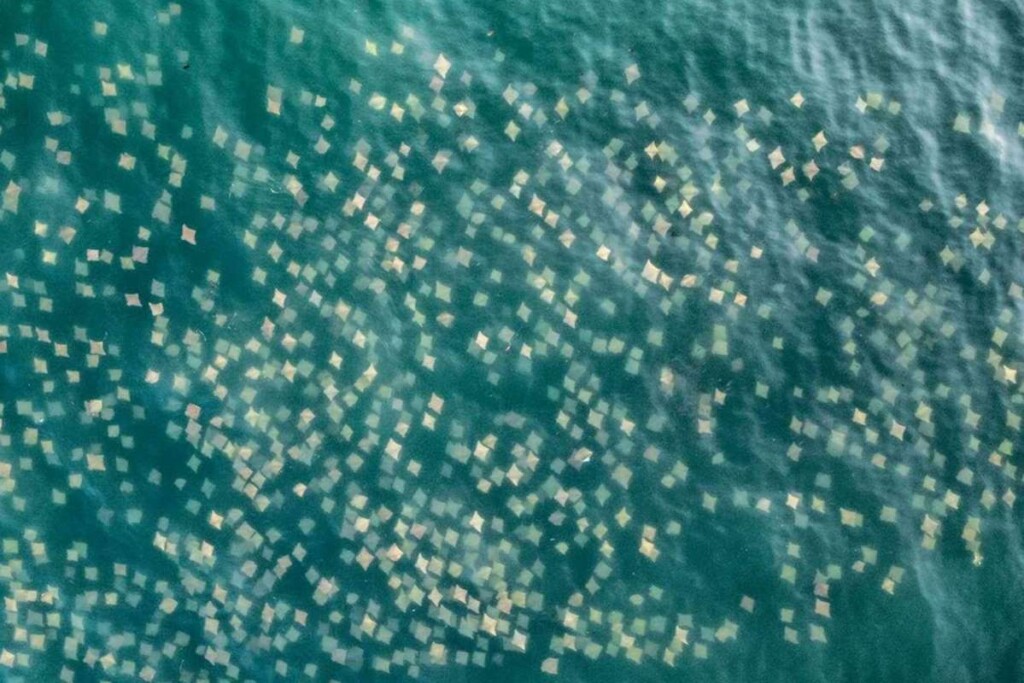
Daniel Lukic hasn’t been piloting drones for that long, but his capturing of a school of cownose rays off the coast of Australia is enough to convince you he’s a master.
The Sydney-based amateur videographer was on Forster Beach when he was lucky enough to be present with his equipment during a rare migration of these rays as they passed by.
Numbering in the hundreds, Lukic’s video taken from above makes it appear like someone threw confetti in the water.
“There was probably 400 or 500, maybe even more. It almost looked like glitter,” he told ABC News AU. “I get pretty excited when I see this sort of stuff because it’s a single moment in time where you just had to be there.”
Marine biologists speaking with ABC suggested that maybe the rays gather in such large numbers (which is known as a ‘fever’ rather than a school) as a means of protection like other fish. The IUCN classifies the cownose ray as “data deficient,” and so doesn’t have anything to say about the conservation status of the animal.
According to ABC, they are normally seen in fevers of around 100 individuals, but the size that Lukic managed to record is either extremely rare, or not rare and scientists just don’t know much about their habits.
It simply doesn’t get enough publicity, considering the fact that modern aviation has reached a point where tens of thousands of giant metal tubes filled with the most flammable liquid can launch themselves into the air at hundreds of miles per hour every day and almost nothing ever goes wrong.
2023 was the safest year in aviation history, with no large, turbofan-powered jet aircraft being involved in anything resembling a crash anywhere on Earth, meaning that scenario just laid out took place tens of thousands of times every day for 365 days without a single fatal crash or collision.
Even fatality risk onboard an aircraft is becoming a percentage of a percentage point, with just 2 losses of life occurring from machine or technical malfunctions onboard.
That’s not to say that no one died onboard aircraft—there were several fatal crashes involving smaller aircraft, one of which— Embraer Legacy 600—was carrying 7 passengers but also the mercenary commander of the Wagner Group, Yevgeny Prigozhin, and two of his allies in the aftermath of their mutiny against the Russian strongman Vladimir Putin.
One wonders why anyone would board an aircraft under those circumstances, and if investigations into the failure of aircraft in flight is one of the most rigorous in society (and they are) then by contrast we can say that the investigation into Embraer Legacy 600 was unacceptably improper.
There was also Yeti Airlines flight 691, which was an ATR 72 prop plane that went down en route to Kathmandu with 75 people on board. All perished after the plane stalled.
But along with representing a much lower share of world air travel and containing technical differences owing to the propellers, this incident, the deadliest of 2023, wasn’t included in the analysis.
So putting aside political assassinations, the skies were safer than at any point in human history, and hopefully the sometimes brusque, always stressed, but evidently competent 600,000 people in America’s airline industry will see 2023 as a challenge to replicate.
SHARE This Excellent Aviation Statistic With Your Friends Who Fear Flying…
Quote of the Day: “The limits of the possible can only be defined by going beyond them into the impossible.” – Arthur C. Clarke
Photo by: GWC (copyright 2019)
With a new inspirational quote every day, atop the perfect photo—collected and archived on our Quotes page—why not bookmark GNN.org for a daily uplift?
What do you do if you’re the last person who speaks an indigenous language that reveres silence? That’s a fine pickle to find yourself in, and for the last speaker of Chaná in Argentina, it was time to finally speak up.
Chaná, correctly called ‘Lanték’ is part of the Charruan language family, and according to the New York Times reporting on the phenomenon of the resurrection of Lanték, it’s a quiet, throaty sort of language that requires far more manipulation of the back of the mouth rather than the front.
Mr. Blas Jaime, an Argentine from the province of Entre Ríos, was already retired and 71 years of age when he decided to go and seek out someone with whom he could chat in his mother tongue. But years of keeping a low profile and speaking only Spanish obscured the fact that there were no other people to chat with—in that moment, and without a shadow of a doubt, Blas Jaime was wielding a dead language.
At a certain critical moment in South American history, Jaime attended an indigenous fair, and was invited by the organizers to tell his story. From that moment, he realized he could never stop talking, realizing the ancient heritage of his people depended on it.
He was featured in several documentaries, dozens of newspaper reports, he delivered a TedTalk, he spoke Chaná in a children’s cartoon to raise awareness of the language, he put his words and face on a coffee brand, and he delivered a speech in Lanték on an artist’s Instagram account which rung out over loudspeakers all over Buenos Aires.
But most importantly, he spent years working with a linguist Pedro Viegas Barros to create a dictionary which now has over 1,000 Chaná words, as well as an index of Chaná rituals and folklore.
His work has attracted the attention of UNESCO, which devotes a large amount of its time, staff, and budget to preserving and celebrating diversity of language around the globe—thousands of which, like Lanték, are at risk of becoming extinct.
“People have to be committed to making it part of their identity. These are completely different grammatical structures, and new ways of thinking,” Serena Heckler, a program specialist at the UNESCO regional office in Montevideo, Uruguay’s capital, told the Times’ Natalie Alcoba.
Different ways of thinking is a good way to put it, because for people like Mr. Jaime, his identity as a native speaker, owing to the disgraceful legacy of colonialsim, involved keeping a low profile.
“It was passed down from generation to generation: Don’t cry. Don’t show yourself. Don’t laugh too loudly. Speak quietly. Don’t say anything to anyone,” said Evangelina Jaime, Mr. Jaime’s daughter, who learned the language from him and now teaches it to others.
Speaking to Alcoba and the Times, Evangelina said that in their peoples’ culture, women were the keepers of memory and stories, but Blas’ mother died without a daughter to whom to pass to torch, so she taught everything to Blas instead. He is now referred to as Tató Oyendén, or custodian of the ancestral memory.
She teaches online to a mixture of academics and individuals from Argentina and Uruguay who believe they may be descendants of colonialized Chaná people.
SHARE This Intriguing Story Of A Language Resurrected From Silence…
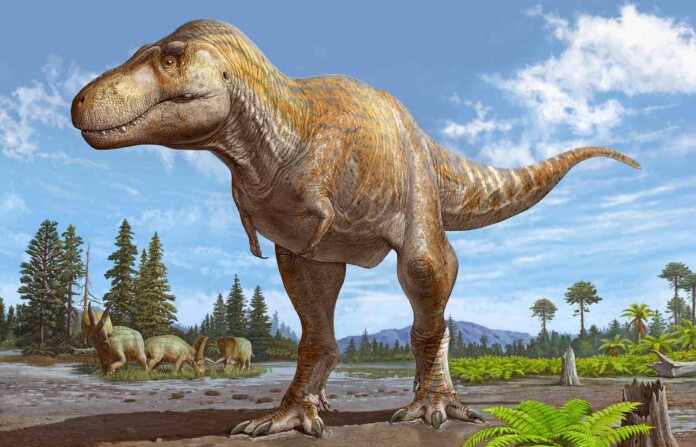
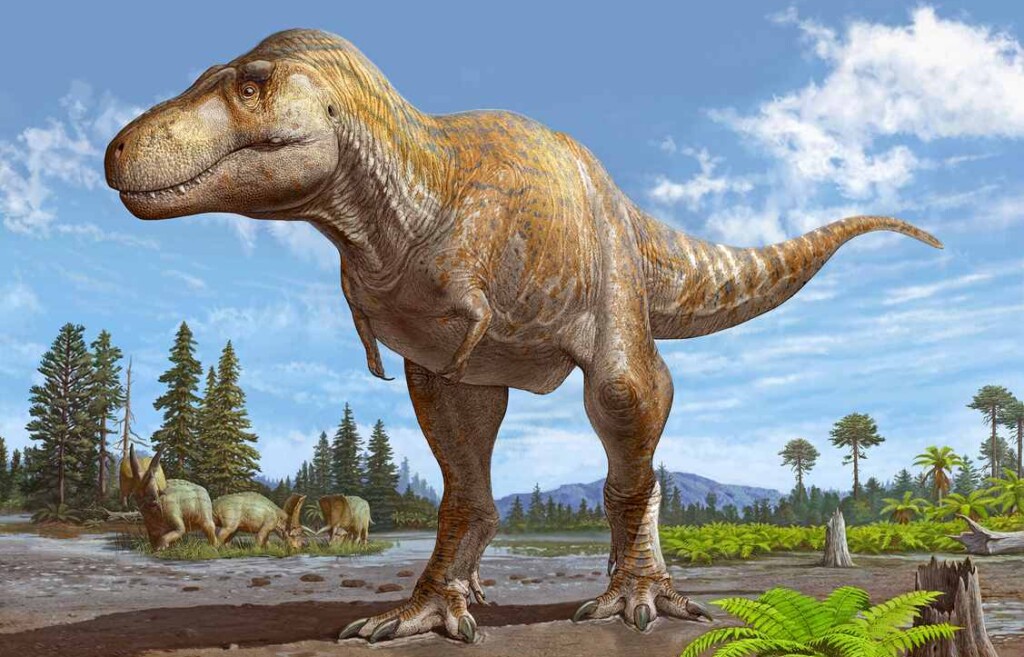
An artist's depiction of Tyrannosaurus macraeensis - SWNS via the study authors.
An artist’s depiction of Tyrannosaurus macraeensis – SWNS via the study authors.
A newly discovered giant dinosaur species may be the closest relative of Tyrannosaurus rex, and could even represent the moment that the genus experimented with a huge body.
The new species was recently described in the journal Scientific Reports by paleontologist Sebastian Dalman and his colleagues. It was a mighty carnivore that lived in North America around five million years before T. rex.
Named Tyrannosaurus mcraeensis, proof of its distinction came from examinations of parts of the animal’s fossilized skull, which was previously discovered at the Hall Lake Formation in New Mexico.
Although the remains were initially assigned to T. rex and are comparable in size to its 30-foot-long body, the research team say that they belong to a new species due to the presence of multiple “subtle” differences in the shape of, and joins between, the skull bones of the specimen and T. rex.
Based on the locations of the remains in relation to rocks and other dinosaur fossils, the researchers suggest that T. mcraeensis may have lived between 71 and 73 million years ago—between five and seven million years before T. rex.
“Analysis of the relationships between T. mcraeensis and other theropod dinosaur species indicates that it may have been… the closest known relative of T. rex,” said Dalman, a doctoral student at the New Mexico Museum of Natural History.
It’s also possible that it was the first of the Tyrannosaurids to experiment with a giant body, owing to the giant-bodied herbivores it shared the land with. The land in this case was called Laramidia, an island continent that existed between 100 and 66 million years ago and stretched from modern-day Alaska to Mexico.
“Tyrannosaurini may have evolved a giant body size by approximately 72 million years ago, alongside other giant dinosaurs from southern Laramidia such as ceratopsians, hadrosaurs, and titanosaurs,” said Mr. Dalman.
The discovery might have also cleared up for good the question of where the most famous of all dinos originated from. Competing hypotheses include suggestions that T. rex evolved in Asia, but now it seems settled to say the tyrant lizard king evolved in Western North America.
SHARE These Important Facts In The Story Of The World’s Most Famous Dino…
Lao focused on preventative medication in at-risk areas - credit, WHO/Enric Catala
Lao focused on preventative medication in at-risk areas – credit, WHO/Enric Catala
Becoming the first sub-Saharan African country to eliminate Malaria in half a century, Cape Verde has gone three years without a single case of transmission.
Malaria kills most people who die every year, and now that the complex phenomenon of various parasites and various mosquitoes has been quelled, it should stay that way owing to the fact that Cape Verde is a nation of islands.
Indeed, all international travelers and migrants have free access to malaria diagnoses, which has been one of the nation’s strategies for controlling the spread of the parasite. Active mosquito control has also helped, as well as a general rise in the standard of testing and treatment.
“This success reflects the hard work and dedication of countless health professionals, collaborators, communities and international partners. It is a testimony to what can be achieved through collective commitment to improving public health,” Cape Verde’s Health Minister Dr Filomena Gonçalves told the BBC.
Mauritius, another island nation in African seas, was the last country to eliminate malaria—doing so in 1973.
Not needing the natural benefits of islands and oceans, the Lao People’s Democratic Republic was recently hailed by the WHO for its successful eradication of the disease lymphatic filariasis.
Commonly known as elephantiasis, it’s a debilitating parasitic disease spread by mosquitoes. For centuries, this disease has afflicted millions of people worldwide, causing pain, severe disability and social stigmatization.
Lao PDR is the 18th country in the Asian and Pacific tropics to have eradicated the disease from their society, proving that determined measures can succeed against it even among low-income countries.
It’s also the second neglected tropical disease that the country has eliminated following the elimination of trachoma as a public health problem in 2017.
To eliminate the disease, which by 2002 was endemic in only one southern Lao province (Attapeu), local health authorities and partners gave preventive medication to at-risk communities from 2012 to 2017. Elimination efforts also benefited from activities to reduce malaria and dengue, including distribution of long-lasting insecticide-treated nets and health education campaigns.
“Our country’s achievement has been made possible through years of collective efforts by dedicated health workers together with support from WHO and partners,” said Dr. Bounfeng Phoummalaysith, the Health Minister for Lao DPR at a ceremony celebrating his ministry’s efforts.
SHARE These Pathological Triumphs In The Developing World…
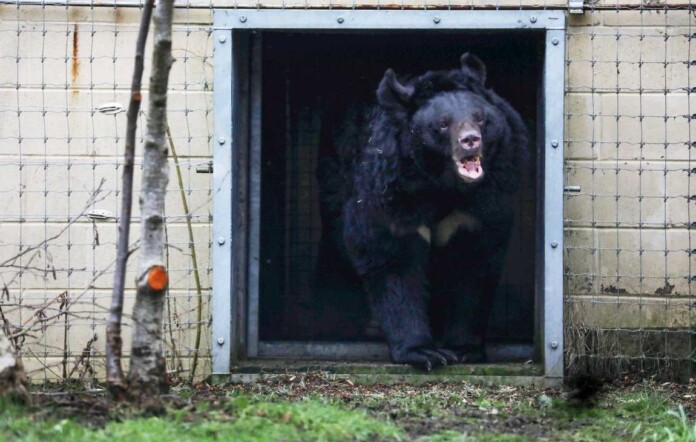
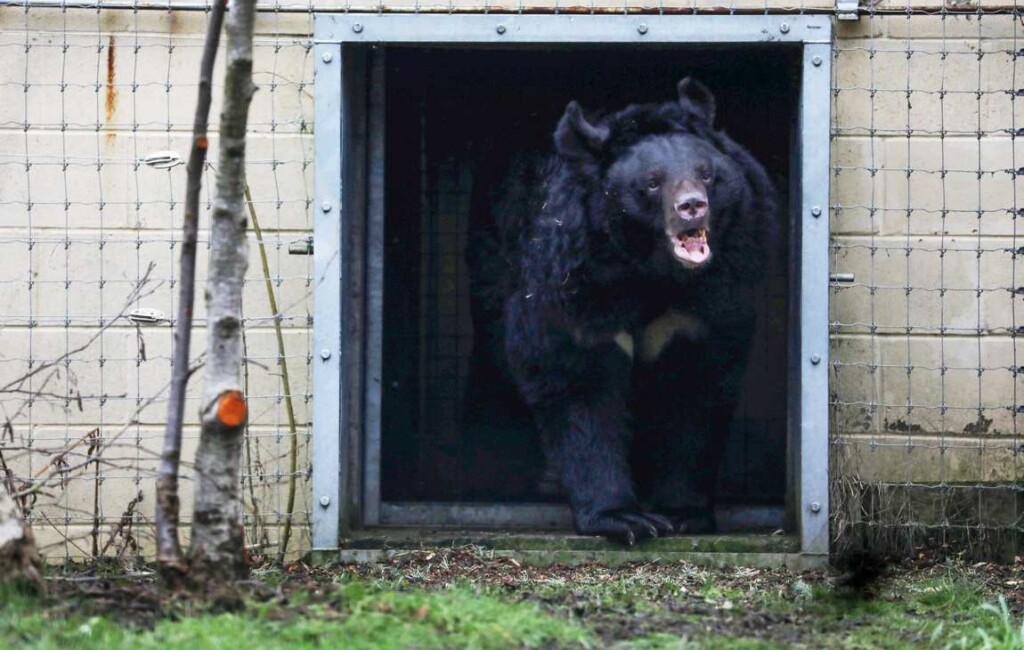
Yamil in his new enclosure in Scotland - Five Sisters Zoo, via SWNS
Yamil in his new enclosure in Scotland – Five Sisters Zoo, via SWNS
A bear trapped in a zoo in Ukraine that had been hit by shelling has been saved by Scottish zookeepers.
The Asiatic black bear was discovered when Ukrainian soldiers entered the village of Yampil which had been under Russian occupation for five months.
The striking bear with dense black fur that was given the same name as the village was concussed from the shelling and had to be carried out of the rubble by soldiers on a tarp. Once out of the warzone, Yampil the bear eventually reached Belgium, where he was cared for by the wildlife charity Natuurhulpcentrum.
Staff at Five Sisters Zoo in West Lothian, Scotland heard about Yampil from the charity, and they decided to fly down to visit him, unsure of what to expect.
“Bears can often suffer mental health problems after going through a traumatic experience, and so it was really important we understood Yampil and what to expect from him,” said Garry Curran, the head of carnivores at Five Sisters. Speaking to the Guardian, he recounted that the team breathed a collective sigh of relief when they saw the bear contentedly chomping on a cucumber when they arrived.
“Although he appeared a little nervous at first, he seems to have adapted surprisingly well and didn’t actually show any concerning stress-related behaviors. He seems to be a calm and gentle individual, which was reassuring for all of us,” Curran told the Guardian.
Arrangements were made to transport the bear to Scotland, and after travelling 690 miles over 12 hours, Yampil arrived at his new home last Friday.
Now, Five Sisters Zoo are fundraising to finish construction of a permanent enclosure for Yampil. The zoo has raised £60,000 through their efforts so far, and are hoping to reach their target of £200,000, which will be used to fund Yampil’s specialist enclosure, care and upkeep. Any interested souls can donate through their appeal link here.
Staff at the zoo are grateful for the money raised so far through donations from individuals and for the materials donated from local businesses used to construct the enclosure.
“We have rescued bears before and have some terrific facilities,” said the owner of Five Sisters, Brian Curran. “However, Yampil is the first rescued Asiatic black bear we will care for, and he requires a whole new enclosure to match his special needs.”
Curran said that if Yampil feels comfortable in his temporary surroundings, he may go into hibernation, which would allow the construction to proceed at a more tranquil pace. WATCH him explore his new environment…
SHARE This Inspiring Animal Rescue Story With Your Friends…
Quote of the Day: “They invented hugs to let people know you love them without saying anything.” – Bil Keane (Creator of The Family Circus)
Photo by: Anastasia Sklyar
With a new inspirational quote every day, atop the perfect photo—collected and archived on our Quotes page—why not bookmark GNN.org for a daily uplift?
They breed anger and derision; they cause annoyance, discomfort, and even expensive repairs, but India’s famous potholes actually saved a life on Friday.
The ‘late’ Darshan Singh Brar was being transported to the Indian version of a wake after his untimely death from a chest infection at the age of 80.
Family, relatives, and friends had already gathered for a banquet and cremation, when the ambulance he was being caried in received a nasty jolt from a pothole on the roads in Nising, in far-Northern India’ Haryana state.
It was then that Mr. Brar’s grandson who was onboard the ambulance at the time noticed his hand moving. Checking his pulse and finding—to his great shock—there was one, he notified the driver to immediately turn toward the nearest hospital.
He was declared alive and savable, and was referred to the Rawal Hospital in the city of Karnal.
“It is a miracle. Now we are hoping that my grandfather recovers soon,” said Balwan Singh, another of Mr. Brar’s grandsons. “Everyone who had gathered to mourn his death congratulated us, and we requested them to have the food we had arranged. It is God’s grace that he is now breathing and we are hoping he will get better.”
A valued and respected member of his local community in Nising, NDTV news reports that “an entire colony” was named in his honor.
He had been feeling very ill and was taken to the hospital in Nising and put on a ventilator. After four days, his heartbeat stopped. He was taken off the ventilator and declared dead.
Doctors at Rawal Hospital said that the grandfather is breathing without the aid of a ventilator and his heartbeat has normalized. They can’t say for certain why the other hospital declared him dead, but speculated it may have been a technical error.
The next time you are planning to go to town hall or the council about the potholes on your street, consider the story of Darshan Singh Brar.
SHARE This True Miracle With Your Friends Who Know India…
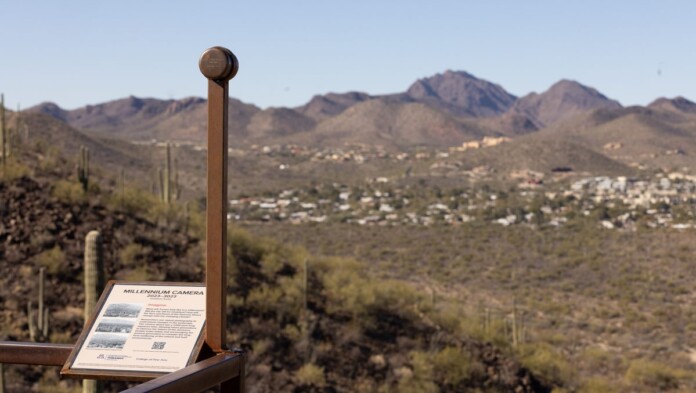
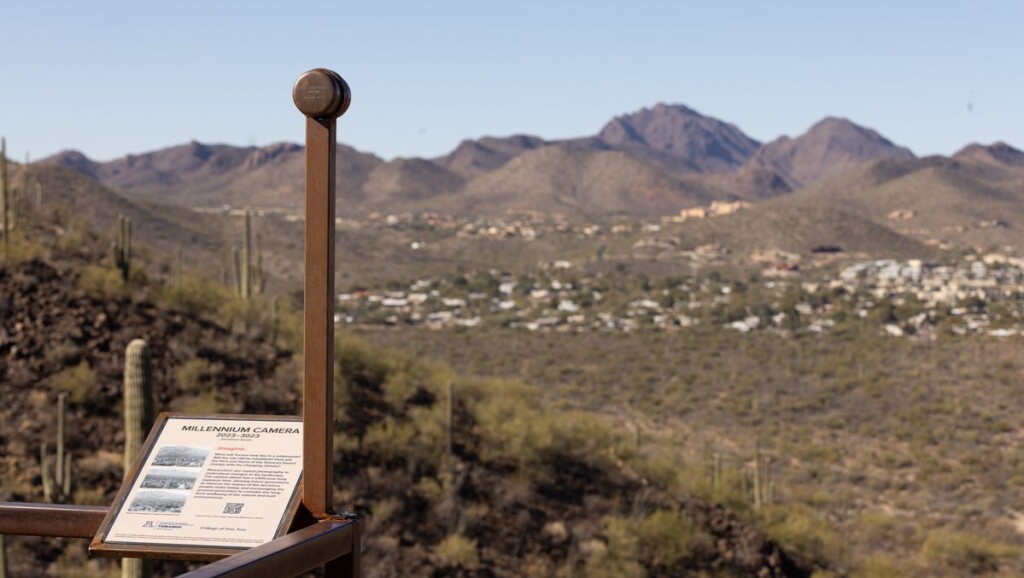
Dubbed the ‘Millennium Camera,’ a device dreamed up by an experimental philosopher in Arizona aims to capture a one thousand year-exposure of Tucson.
Along with some colleagues, Jonathon Keats, a research associate at the University of Arizona College of Fine Arts, installed the camera next to a bench in Starr Pass with the aim of encouraging people to imagine a thousand years into the future.
Any photographer who has turned their camera off auto shoot mode will know that if you let in even just 10 minutes of light, much less 1,000 years, you’ll have a blank white image.
Keats has planned for that, and chose to use a pinhole camera equipped with rare materials.
Through a pin-sized hole in a thin sheet of 24-karat gold, light will slip into a small copper cylinder mounted atop a steel pole. Over ten centuries, sunlight reflected from Tucson’s landscape will slowly fade a light-sensitive surface coated in many thin layers of rose madder, an oil paint pigment.
When, or perhaps if, humans remove the surface from the camera in the year 3024, there will be a millennium-long exposure of the changes of Tucson’s cityscape.
“Most people have a pretty bleak outlook on what lies ahead,” Keats said ahead of his project. “It’s easy to imagine that people in 1,000 years could see a version of Tucson that is far worse than what we see today, but the fact that we can imagine it is not a bad thing. It’s actually a good thing, because if we can imagine that, then we can also imagine what else might happen, and therefore it might motivate us to take action to shape our future.”
The bench at Starr Pass invites hikers to pause and look down at the city, and the camera encourages hikers to imagine what the future will hold.
“One thousand years is a long time and there are so many reasons why this might not work. There are forces of nature and decisions people make, whether administrative or criminal, that could result in the camera not lasting,” he said.
If the camera does last, however, Keats outlines what we can assume the final image will look like. The landscape’s most steadfast features will appear sharpest, although the land is not completely stable, so there will be some inevitable blur to the image.
Conversely, the most dynamic parts will be softest. Sudden changes will result in what will look like multiple images overlapped.
“Let’s take a really dramatic case where all the housing is removed 500 years in the future. What will happen then is the mountains will be clear and sharp and opaque, and the housing will be ghostly,” he said.
“All change will be superimposed on one image that can be reconstructed layer by layer in terms of interpretation of the final image.”
The philosopher is also looking to install the cameras around the globe. In China, he is planning to put one in the once-industrial, yet fast-modernizing city of Chongqing, as well as in Griffith Park in Los Angeles. In May, he will install one in the Austrian Alps.
“This project depends on doing this in many places all over the world. I hope this leads to a planetary process of reimagining planet Earth for future generations,” he adds.
SHARE This Time Capsule Project With Your Friends In To Photography…