It’s easy to think that being in a wheelchair means the end of activities that involve intense physical movements—like big wave surfing or, in Rob O’Byrne’s case, crowdsurfing.
Rob is not someone who thinks this, however, and even though he lost all control of his body from his chest down, he still loves going to gigs, a favorite occasion from before his accident.
Rob has not let his disability impact his attendance at gigs. Being that he can sing but can only move one arm, he has taken up karaoke with a particular like of emulating the voice of Coldplay’s Chris Martin.
One of his favorite bands, they were in Dublin recently for a tour. Rob just had to be there. At a certain point, he told the Guardian, they released these big bouncy balls into the crowd. Concertgoers were having a riot playing keepie-uppie, and in the pursuit of this frivolity, two very large men fell over Rob trying to reach one.
The men were very apologetic, and decided to lift Rob, wheelchair and all, into the air to see better. A smaller stage sat just in front of the main stage connected by a causeway, and soon the two men began to carry Rob closer to the small stage, with the crowd either parting or pitching in to carry him.
“I raised my arm in the air,” Rob remembers. “Eighteen months earlier, I wouldn’t have been able to do that—I’d had a tendon transfer, which helped me get back some muscle that I lost in my arm. I was the first person in Ireland to have that operation.”
Even though the security guards were screaming to put him down, Chris Martin helped pull Rob up onto the stage—in front of 80,000 people. Martin apparently asked him a few questions about his age and profession, then asked Rob to join with him in a simple song.
“He handed me a harmonica. I don’t play, but he said he’d look down when he wanted me to blow on it. He made up a song on the spot: ‘We’re in Dublin with Rob, he’s a PT,’ stuff like that,” says O’Byrne, who is a personal fitness trainer for people with similar injuries. “It was short but sweet.”
After the show, he and his friends were elated going up Dublin’s O’Connell Street, Rob playing the harmonica—in which Martin had stuffed 50 euro—the whole way.
The news went viral and global, with a musician friends as far away as New Zealand calling to express their jealousy that their wheelchair-bound friend had played music with Coldplay in front of more fans than they had cumulatively played for across their whole careers.
WATCH the video below, courtesy of Coldplay and the BBC…
SHARE This Wheelchair User Who Wouldn’t Quit Going to Gigs With Your Friends…
Quote of the Day: “It is the set of the sails, not the direction of the wind that determines which way we will go.” – Jim Rohn
Photo by: Vidar Nordli-Mathisen
With a new inspirational quote every day, atop the perfect photo—collected and archived on our Quotes page—why not bookmark GNN.org for a daily uplift?
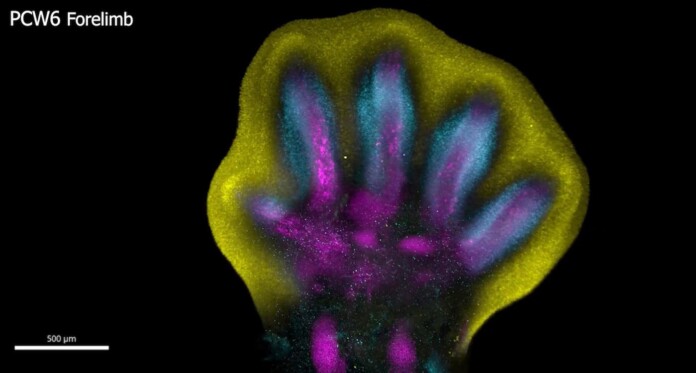
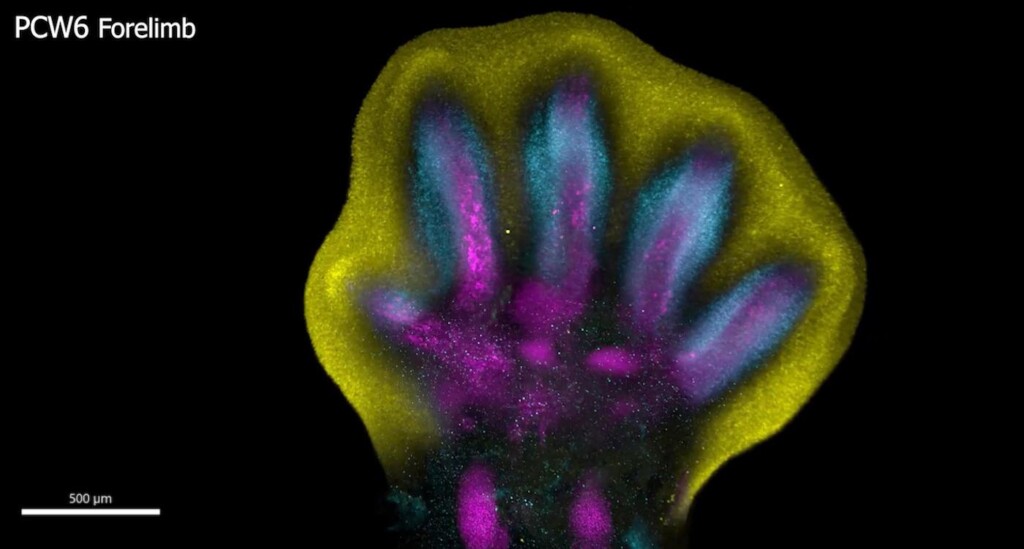
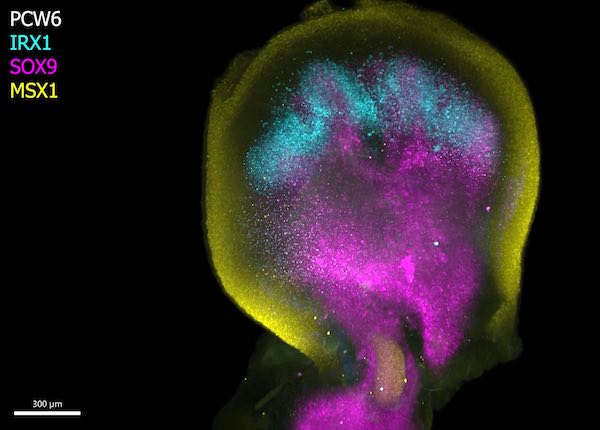
How specific genes work together to shape our fingers and toes: IRX1 (blue) helps in forming our digits, SOX9 (purple) is important for building our bones, and MSX1 (yellow) is related to certain cells between the fingers and toes. (SWNS)
Scientists have uncovered unprecedented insights into the formation of human hands and feet and the intricate processes that govern their development.
Human fingers and toes do not grow outward; instead, they form from within a larger foundational bud, as intervening cells recede to reveal the digits beneath.
After around seven weeks of cell development, an “orchestrated cell death” finally unveils the well-defined shapes of fingers or toes.
This is among many processes captured for the first time as scientists unveil a spatial cell atlas of the entire developing human limb.
Special staining of the tissue revealed clearly how cell populations differentially arrange themselves into patterns of the forming digits.
The research could offer potential for treating muscle-related disorders or injuries, and impact the diagnosis and treatment of congenital limb syndromes.
In the study, which is part of the Human Cell Atlas initiative to map every cell type in the human body, researchers at the Wellcome Sanger Institute, Sun Yat-sen University, EMBL’s European Bioinformatics Institute and collaborators, applied cutting-edge single-cell and spatial technologies to create an atlas characterizing the cellular landscape and pinpointing the exact location of cells of the early human limb.
The atlas, published this month in Nature, provides an openly available resource that captures the intricate processes governing the limbs’ rapid development during the early stages of limb formation.
2 months into development, some molecules cause specific cells in the spaces between fingers or toes to disappear. This process makes the distinct shapes of our fingers and toes visible.
The atlas also uncovers new links between developmental cells and some congenital limb syndromes, such as short fingers and extra digits.
Limbs are known to initially emerge as undifferentiated cell pouches on the sides of the body, without a specific shape or function. But after 8 weeks of development, they are well differentiated, anatomically complex and immediately recognizable as limbs, complete with fingers and toes.
This requires a very rapid and precise orchestration of cells. Any small disturbances to this process can have a downstream effect, which is why variations in the limbs are among the most frequently reported syndromes at birth, affecting approximately one in 500 births globally.
While limb development has been extensively studied in mouse and chick models, the extent to which they mirror human situation remained unclear. However, advances in technology now enable researchers to explore the early stages of human limb formation.
In this new study, scientists from the Wellcome Sanger Institute, Sun Yat-sen University, and their collaborators analyzed tissues between 5 and 9 weeks of development. This allowed them to trace specific gene expression programs, activated at certain times and in specific areas, which shape the forming limbs.
As part of the study, researchers demonstrated that certain gene patterns have implications for how the hands and feet form, identifying certain genes, which when disrupted, are associated with specific limb syndromes like brachydactyly—short fingers—and polysyndactyly, extra fingers or toes.
The team were also able to confirm that many aspects of limb development are shared between humans and mice.
Overall, these findings not only provide an in-depth characterization of limb development in humans but also critical insights that could impact the diagnosis and treatment of congenital limb syndromes and offer potential for treating muscle-related injuries.
“Decades of studying model organisms established the basis for our understanding of vertebrate limb development,” explained Professor Hongbo Zhang, senior author of the study from Sun Yat-sen University in Guangzhou, China. “However, characterizing this in humans has been elusive until now.”
“What we reveal is a highly complex and precisely regulated process. It is like watching a sculptor at work, chiseling away at a block of marble to reveal a masterpiece. In this case, nature is the sculptor, and the result is the incredible complexity of our fingers and toes.”
Dr Sarah Teichmann, senior author of the study from the Wellcome Sanger Institute, and co-founder of the Human Cell Atlas, said, “For the first time, we have been able to capture the remarkable process of limb development down to single cell resolution in space and time.
“Our work in the Human Cell Atlas is deepening our understanding of how anatomically complex structures form, helping us uncover the genetic and cellular processes behind healthy human development, with many implications for research and healthcare.
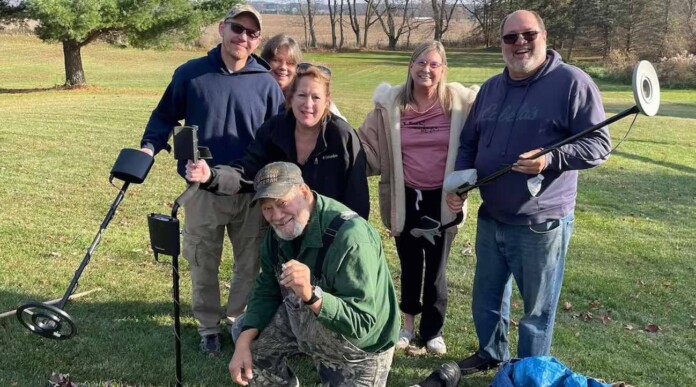
Joseph Novetske (bottom) got his wedding band back thanks to strangers in Michigan – Photo by Mary Ann Novetske
Joseph Novetske (bottom) got his wedding band back thanks to strangers in Michigan – Photo by Mary Ann Novetske
Normally raking the yard is the kind of elbow grease that leaves a sense of accomplishment in its wake, but when Michigan resident Joseph Novetske finished raking his yard, he was left dispirited.
That’s because the 80-year-old realized he lost the wedding ring he had worn for 42 years of graced matrimony with his wife, Mary Ann Novetske, 71.
Searching as best he could, the day crawled to an end, so Mary stepped in to help on the morrow. She went on Facebook to the group What’s Happening in Charlotte Michigan Right Now which has a few hundred of the town’s 9,200 residents.
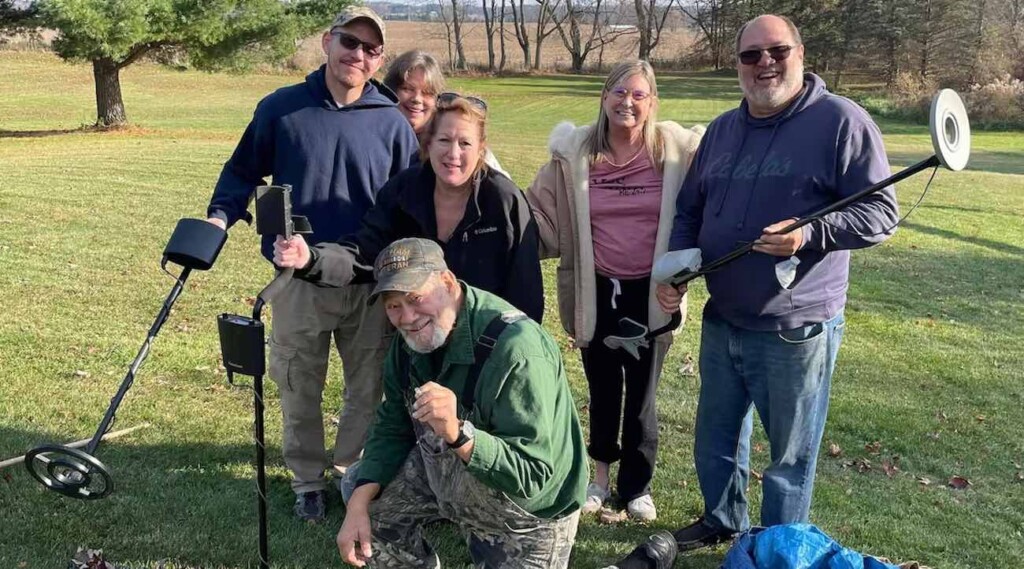
Asking if anyone had a metal detector, Mary also explained what had happened and then went to church with her husband. When they got out, the post had blown up with people offering to drop everything they were doing to come help look among the blades of grass and piles of leaves. Several brought metal detectors.
“They didn’t know us, but here they were, willing to help,” said Mary Ann Novetske. “It was exciting to see so many people care about this.”
She told the Washington Post that from that moment it really felt like it was their community.
The band was handcrafted ahead of the wedding in 1981, and the couple chose vines ensnaring a cross. Even with its shiny exterior and the sun on the afternoon of November 5th, the metal detectors and the volunteers were unable to find it.
The search dragged on on hands and knees, and eventually they had to pass over the piles of wet leaves. In the third hour of searching, Joseph, the ring’s owner, saw something in the grass.
“I saw the band reflecting light because it was a beautiful sunny day,” he told the Post. “There it was!”
Novetske told the Post that the ring had been loose for a good while, and the first thing the couple did after showing their gratitude to the helpers, was go straight to the jewelers to get it resized.
Undoubtedly they found more than just the ring that day, but friends, a community, and hope.
SHARE This Sweet Scavenger Hunt With Your Friends On Social Media…
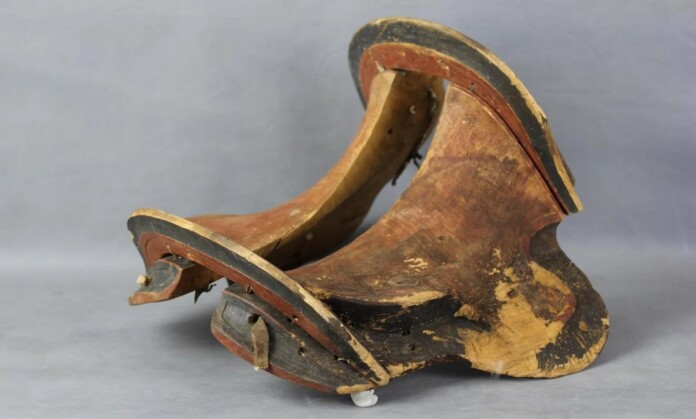
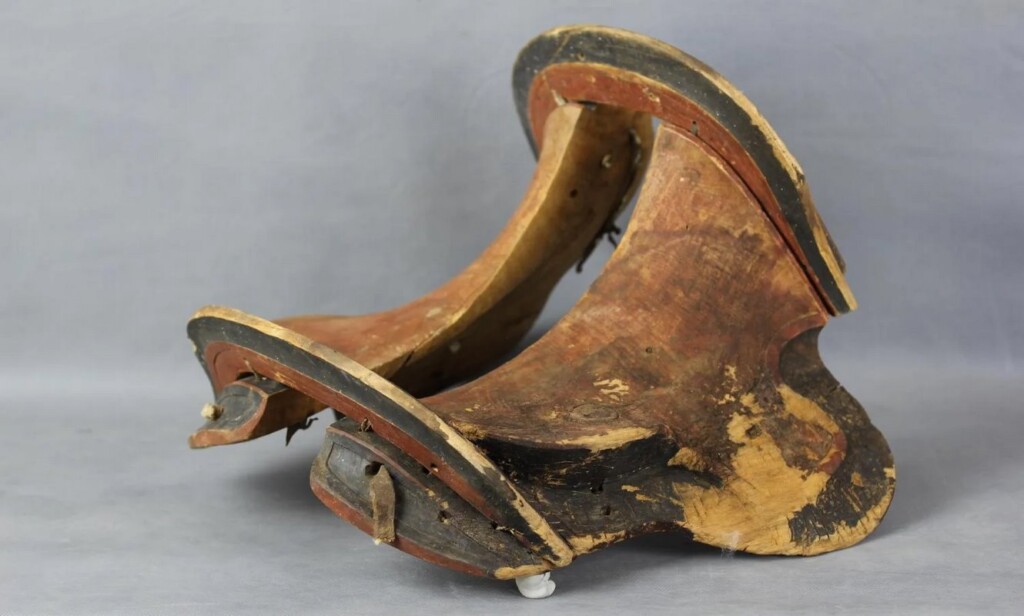
Not only were priceless artifacts of Mongolia’s past recently saved from looters, but among the objects found was a rigid and sophisticated riding saddle made of elegantly carved birch.
Dating to the 4th century BC, it places Mongolia, a nation whose sons and daughters conquered much of Eurasia on horseback, at the center of ancient riding innovations, as a rigid saddle allowed the rider to do much more, including fighting at high speeds and for sustained periods.
Equestrians have been putting pads on horses to protect their backsides since the earliest periods of horse domestication, but the leaps from pad to seat, and from seat to saddle, were neither obvious nor immediate for these ancient riders.
In April 2015, looters sacked an ancient cave burial in the holy Altai Mountains at a known site called Urd Ulaan Uneet, but whatever else they took, they didn’t take the saddle. When it was confiscated by police, the authors went back to the site and discovered the mummified remains of a horse, suggesting that horse and rider were revered together.
Birch grows plentiful in the Altai, and so it’s assumed to have been made by locals and not traded for, and the accompanied technological props have been awarded to the 4th century Mongolians, the date which a radiocarbon analysis of the saddle and the horse bones provided.
“Ultimately, technology emerging from Mongolia has, through a domino effect, ended up shaping the horse culture that we have in America today, especially our traditions of saddlery and stirrups,” said William Taylor, an archaeologist at the Univ. of Colorado, Boulder who co-authored the paper describing the saddle.
The authors write in their paper that long periods on horseback took their toll on both horse and rider. The evidence from burials of the emerging horse cultures of the Eurasian steppes shows that riders often developed skeletal deformities of the lower limbs, hips, and lower back thought to be caused by horseback riding.
Rigid composite frame saddles were made of wood, and elevated some of the rider’s weight off the horse’s spine, while simultaneously reducing the kinetic impacts on the human skeleton from riding.
In the cave, the seat of the saddle is carved from two pieces of wood joined together at the top with nails, while the pommel and the cantle, the curved pieces that make up the front and back of the saddle, were single pieces.
No physical remains of the stirrups were recovered from Urd Ulaan Uneet, but leather strapping attached halfway up the saddle seat suggests there would have been. Iron stirrups dating to slightly after this period have been found in other parts of Mongolia.
“It’s not the only piece of information suggesting that Mongolia might have been either among the very first adopters of these new technologies—or could, in fact, be the place where they were first innovated,” Taylor told his university press.
Horses can travel fast along Eurasia’s steppeland, from Mongolia and China in the east, all the way to Hungary and Ukraine in the west. Technology carried with them would have also moved fast, and it’s likely, the authors write, that the frame saddle and stirrups in combination were invented in Mongolia and transported rapidly westward.
Unfortunately for the people along their route, it was often transported at the tip of a spear, the edge of a sword, or the head of an arrow. The steppe tribes across Eurasia, which include such peoples as the Scythians, Xiongnu, the Huns, Bulgars, Cumen, Magyars, Khitan, and the Mongols, have always been warlike, and along with being able to ride while encumbered, the stirrup’s main advantage is to free the use of a skilled rider’s hands to strike in hand-to-hand combat, or fire a bow with much greater stability.
SHARE This Terrific Find And Page In The History Of Horses…
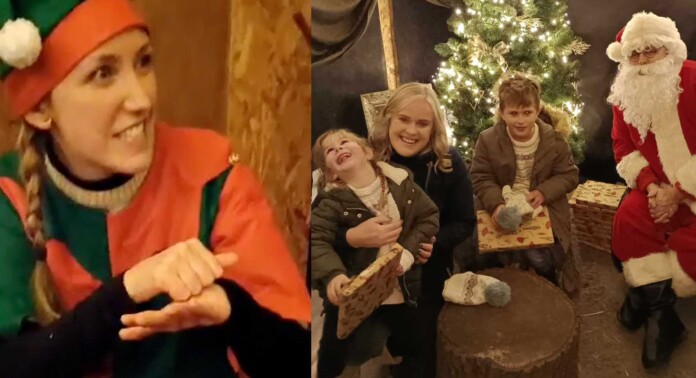
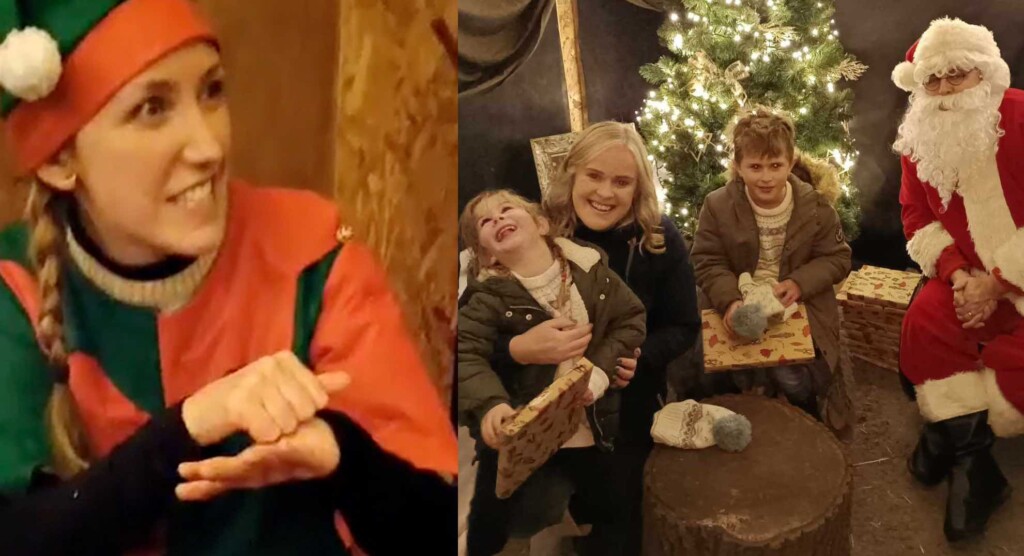
A little deaf girl has been able to tell Santa all by herself what she wants for Christmas for the first time—thanks to an elf who was trained in sign language.
Emily Andrews, four, was captured in a heartwarming video reeling off her wish list via Melanie Boyeson, who acted as an interpreter for the youngster.
The ‘magical’ clip shows Emily asking for a doll, pram, earrings and a blue dragon using sign language while Melanie relays the message to Father Christmas.
Mom Tanya Andrews, 35, said it ‘amazing’ to see ‘everyone become part of Emily’s world’.
She said: “It was just a magical experience. Emily being able to communicate freely with the elf and tell Santa what she wanted was just amazing.
“After the experience, I was in tears. It was so magical to see Emily’s face light up.
“At first she was a little bit shy, probably because she’s never been able to communicate with Santa before, but Melanie was so encouraging.
“A huge thank you to everyone involved for making this magical moment possible.” (WATCH it in a video below…)
Mom said she was able to ‘be in the moment’ instead of having to translate what Santa has said to Emily.
“I was actually able to step back and record it on my phone, and enjoy it instead.”
Emily, who was born profoundly deaf, met Father Christmas with her older brother Hugo at a Santa event held at his school in Goole, East Yorkshire, in England.
The Airmyn Park Primary school heard about the deaf girl and took to social media to search for an interpreter for their festive fair.
“Through the power of Facebook we found Holly the Elf, and she volunteered to visit our grotto and interpret for Emily,” said school official Natalie Dodds.
Even Santa practiced a few of the basic greetings in BSL too, and was able to sign ‘Merry Christmas’ at the end of their meeting.
“It made Emily feel included and everyone became part of her world.”
WATCH the magical moment in mom’s video below…
SHARE With Everyone in the Deaf Community on Social Media…
Quote of the Day: “The whole point of getting things done is knowing what to leave undone.” – Oswald Chambers
Photo by: Jonas Smith
With a new inspirational quote every day, atop the perfect photo—collected and archived on our Quotes page—why not bookmark GNN.org for a daily uplift?
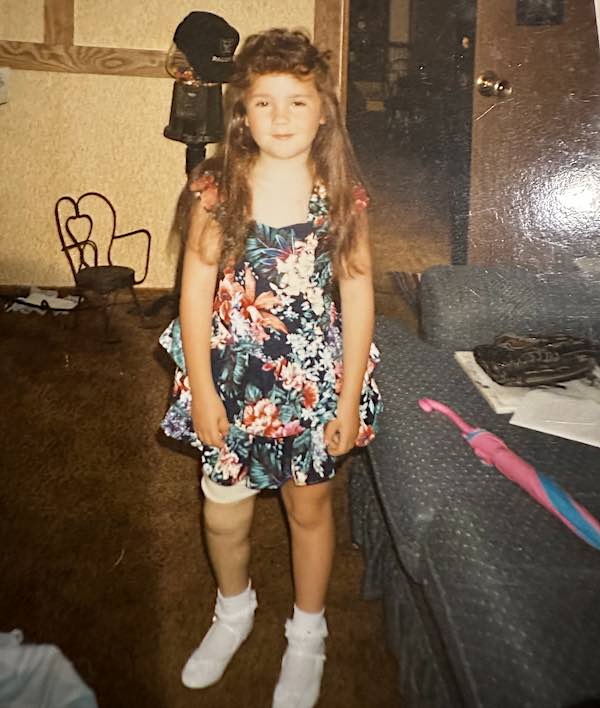
Krystal was 6 years old when Dave Polen began transporting her over 170 miles from her home in Somerville, Indiana, to a hospital.
She was born with Amniotic Band Syndrome and was directed to Shriners Children’s in St. Louis for treatment on her leg and possible amputation.
Dave started volunteering as a driver 30 years earlier, transporting patients so they might improve their quality of life.
Getting back and forth to St. Louis would have been difficult for Krystal’s family as her father worked long hours. So, they accepted an offer for hospital transportation from the local Shriners charity group.
Over the course of 10 trips, the conversations were plentiful on their 3 hour back-and-forth trips to the hospital. Dave was a ‘Driver Dad’ but soon became more. He became a friend—and their unexpected friendship has lasted for over three decades.
In fact, decades after meeting the “sweet little girl” with a prosthetic leg, Dave was a guest at Krystal’s wedding.
As the years rolled on, Dave became sick. Eventually, his doctors gave a diagnosis of end-stage renal failure. They said Dave would need dialysis for the rest of his life or a kidney transplant. Dave also got the warning that an available kidney might take five years to obtain.
Krystal in family photo
Dave reached out to Krystal to talk through the process because her husband had just received a liver transplant that saved his life.
Krystal immediately saw an opportunity to return the favor. She found out they shared the same blood type and, without hesitation, offered to donate her kidney.
“Pack your bags, Dave. You’re going to get a slightly used but new kidney,” laughed Krystal.
“Since I was little, I’ve always questioned why Dave was so good to us because he was so kind and so willing to help out with anything. I’ve always questioned why.
“What I’ve come to understand is: If I was born with one leg so I could give my kidney to Dave, then so be it,” said Krystal.
“This is a gift I can’t ever repay,” said Dave. “I am so thankful! Now, I feel like I can do anything.”
SEND THE BEAUTIFUL STORY to Friends for Inspiration on Social Media…
Apes can recognize friends they haven’t seen for decades, reveals new research from Johns Hopkins University.
The study, documenting the longest lasting non-human social memories ever recorded, found that apes recognize photos of group mates they haven’t seen for more than 25 years, and respond even more enthusiastically to pictures of their friends.
The research team said their findings, published yesterday in the journal Proceedings of the National Academy of Sciences, underscore how human culture evolved from the common ancestors we share with these primates, our closest relatives.
“We tend to think about great apes as quite different from ourselves but we have really seen these animals as possessing cognitive mechanisms that are very similar to our own, including memory,” said one of the study’s authors, Dr Laura Lewis, a biological anthropologist at University of California, Berkeley.
“I think that is what’s so exciting about this study.”
The research team was inspired to pursue the question of how long apes remember old pals through their own experiences working with primates – the sense that the animals recognized them when they’d visit, even if they’d been away for a long time.
“You have the impression that they’re responding like they recognize you and that to them you’re really different from the average zoo guest,” said the study’s senior author Dr. Christopher Krupenye of Johns Hopkins.
“They’re excited to see you again.”
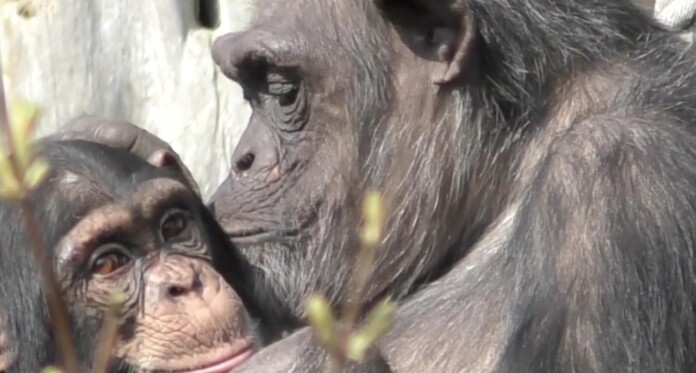
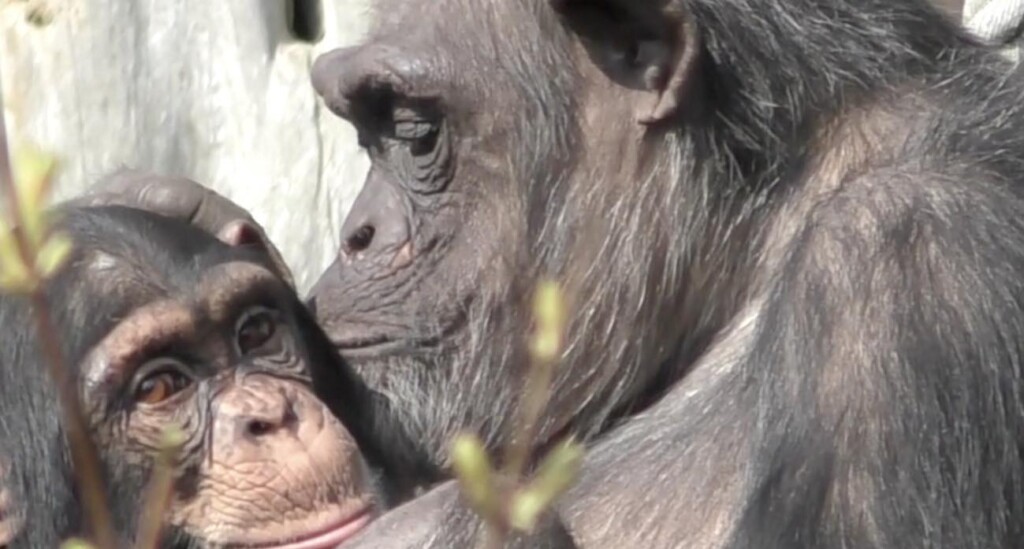
Such emotion was captured on film in 2016 when a 59-year-old chimpanzee—the matriarch of the famous chimpanzee colony of the Royal Burgers Zoo in the Netherlands—was dying of old age. The Dutch biologist Jan van Hooff, who was co-founder of the Burgers colony and had known ‘Mama’ for decades, visited her before she died. Once she became aware of Jan’s presence, even though not seeing him for a long time, her reaction was extremely emotional and warmed the hearts of all the caregivers.
So the goal with this study was to ask, empirically, if that’s the case: Do they really have a robust lasting memory for familiar social partners?
The results showed that chimpanzees and bonobos recognize individuals even though they haven’t seen them for multiple decades—and then there’s a small but significant pattern of greater attention toward individuals with whom they had more positive relationships.
“It suggests that this is more than just familiarity, that they’re keeping track of aspects of the quality of these social relationships,” said Dr. Krupenye.
The researchers worked with chimps and bonobos at three locations: Edinburgh Zoo in Scotland, Planckendael Zoo in Belgium, and Kumamoto Sanctuary in Japan.
The team collected photographs of apes that had either left the zoos or died, individuals that participants hadn’t seen for at least nine months and in some cases for as long as 26 years. The researchers also collected information about the relationships each participant had with former group mates—if there had been positive or negative interactions between them.
The team invited apes to participate in the experiment by offering them juice, and while they sipped it, the apes where shown two side-by-side photographs—apes they’d once known and total strangers.
Using a non-invasive eye-tracking device, the team measured where the apes looked and for how long, observing that the apes looked “significantly” longer at former group mates, no matter how long they’d been apart.
And they looked longer still at their former friends, those they’d had more positive interactions with.
In one of the most extreme cases, during the experiment, bonobo Louise had not seen her sister Loretta nor nephew Erin for more than 26 years at the time of testing. She showed a “strikingly robust” looking bias toward both of them over eight trials. Watch the researchers’ video below…
The results suggest great ape social memory could last beyond 26 years, the majority of their 40- to 60-year average lifespan, and could be comparable to that of humans, which begins to decline after 15 years but can persist as long as 48 years after separation.
Such long lasting social memory suggests that this kind of memory was likely already present millions of years ago in our common evolutionary ancestors.
Krupenye says the idea that apes remember information about the quality of their relationships is another new and human-like finding of the work.
The study also raises the questions of whether the apes are missing individuals they’re no longer with, especially their friends and family.
“The idea that they do remember others and therefore they may miss these individuals is really a powerful cognitive mechanism and something that’s been thought of as uniquely human,” said Dr. Lewis.
It seems, no matter what official measure is used in 2023 to judge the U.S. economy, the numbers look really good for consumers.
The latest positive news comes in the form of a historic milestone reached on the stock market.
The Dow Jones Industrial Average, which is an average of 30 of the largest U.S. companies—including IBM, Apple, Nike, Verizon, Walmart, and Walt Disney—surged to a record high on December 13, passing 37,000 for the first time.
It beat that record on December 14—and then hit another record (37,305) on Friday, December 15. On Monday, December 18, it continued to improve.
To give you a sense of the increase, the Dow was at 30,930 when President Biden was sworn in on January 21, 2021. Since then, it has climbed more than 6,000 points. Another stock index, the S&P 500, is now 1.2% away from its all-time closing high that was reached in January 2022.
There are several reasons for the growth. The U.S. GDP output of goods and services continues to rise, fueling faith in the world’s largest economy. It rose a whopping 4.9% for the 3-month period ending in September—which is more than twice the GDP growth of the second quarter (2.1%). For comparison, the Chinese economy grew by 1.3 percent, just one-fourth as fast as the US in the third quarter.
Unemployment is low. Inflation also continued to edge downward last month as gas prices fell. Higher wages for US workers, one of the most critical post-pandemic measurements, created increased spending, which also fueled investor optimism.
Perhaps the biggest jolt for bullish investors came after seeing a statement from the Federal Reserve the previous Wednesday that said they might cut its interest rate next year.
With a new inspirational quote every day, atop the perfect photo—collected and archived on our Quotes page—why not bookmark GNN.org for a daily uplift?
“It’s become a huge joke with everyone and we’ve all had a good laugh.
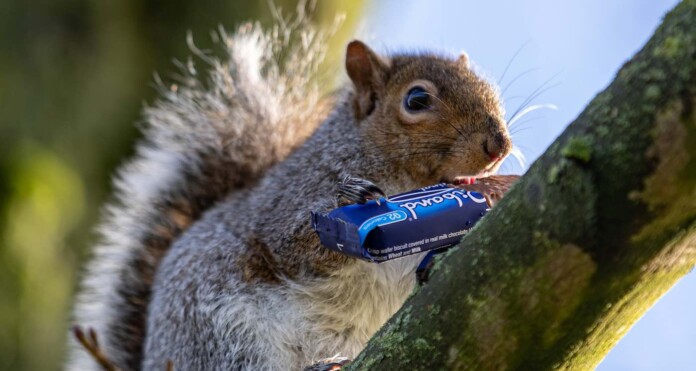
“They have ramped it up even more since we found out, every day I’m picking up wrappers out of rose bushes,” says Fiona. “It’s been hilarious working it out.”
SHARE a GOOD LAUGH With Friends and Squirrel Lovers on Social Media…
Photo by L. MODICA for Knowable Magazine (CC BY-ND)
(Originally published by Knowable Magazine – written by Diana Kwon)
Walk down the cold-remedy aisle of almost any pharmacy and you’ll see a shelf full of zinc supplements. Clearly, people must be worried that they’re not getting enough zinc—a nutrient often touted for its ability to quash the common cold and other respiratory illnesses. But do many of us really need more zinc? And if so, what good does it do?
As researchers learn more about how our bodies use zinc, they’re finding that the element plays a surprisingly key role, particularly within the immune system. “We think zinc is a gatekeeper of immune function,” says Lothar Rink, an immunologist at RWTH Aachen University in Germany who recently coauthored an overview of zinc’s roles in the immune system in the 2021 Annual Review of Nutrition.
And, although scientists still struggle to find good ways to measure zinc levels in the body, it looks as though many people may indeed not have enough zinc in their diet—an essential element—for full immune function.
Too little zinc is clearly bad news for your health. A severe shortage — often the result of a genetic defect or an extremely restricted diet — can cause myriad problems, such as stunted growth in infants and children, hair loss, roughened skin, delayed wound healing and weakened defenses against infections.
But the extent and consequences of more subtle zinc deficiencies have proven harder to pin down. That’s largely because it’s extremely difficult to measure zinc levels accurately in people. Zinc is often on the move both inside and outside our cells. During an infection, for example, blood levels drop as zinc is siphoned out of the bloodstream into cells that help launch an immune response. Zinc levels can also be perturbed by diet, certain drugs and hormones, and health status.
For these reasons, although it is possible to detect zinc levels in blood, these measurements are often imprecise. And unlike iron, which is easily assessed by measuring levels of iron-containing blood proteins like hemoglobin and ferritin, there is no biomarker that can be used as an indicator of zinc levels. “There’s still no 100 percent accurate way to measure zinc in a human being, especially if they have an illness of some kind,” says Daren Knoell, a zinc biologist at the University of Nebraska. Currently, the best way to determine a potential zinc deficit is to look at someone’s dietary intake, he adds.
Knowable Magazine (CC BY-ND)
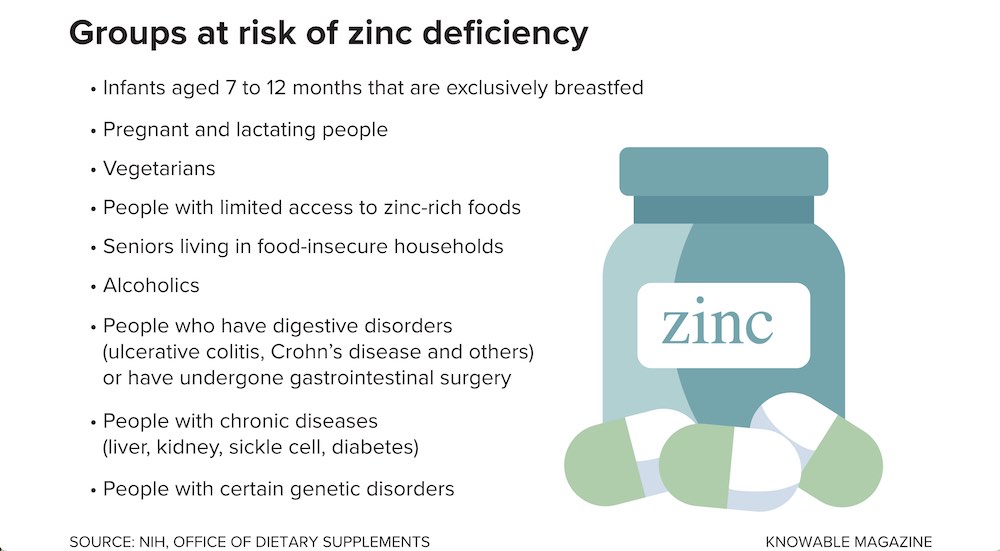
The most common cause of zinc deficiency is not getting enough zinc in your diet. But some groups may be at risk of deficiency due to higher nutritional requirements — during pregnancy, for example, or due to conditions that alter the body’s ability to absorb the mineral, such as Crohn’s and other gastrointestinal diseases.
Because of these limitations, most physicians diagnose zinc deficiency only if patients show symptoms of major deficiency such as rough skin or hair loss, Rink says. “But immune deficiency takes place much earlier, when you have a slight zinc deficiency.” Researchers have found that zinc-deficient individuals are more vulnerable to infection than those with adequate levels of the mineral. Studies have shown, for example, that in healthy elderly individuals, zinc supplements reduced the frequency of infections. (The possible use of zinc supplements to help ward off Covid-19 is an area of active investigation, although the U.S. National Institutes of Health states that there is currently not enough evidence to say if it will be beneficial.)
To help better identify people who aren’t getting enough zinc, Rink is involved in a project aimed at helping clinicians and the general public better assess an individual’s zinc status by using an app to closely track their diet and supplement use.
From the data available so far, it appears that zinc deficiency is relatively common. Based on assessments of diet and the prevalence of stunted growth, a common consequence of inadequate zinc consumption during development, some studies estimate that around 17 percent of the world’s population are at risk of zinc deficiency — and that in certain low- and middle-income regions, such as parts of South Asia, that proportion is as high as 30 percent.
Aging, genetics, pregnancy, illness and other factors all contribute to this shortfall, but diet is the main culprit, when individuals don’t eat enough zinc-rich foods such as seafood, red meat and nuts. Consuming too many phytates, substances found in whole-grain bread, cereals and other sources, can also be a problem. Phytates bind to zinc and prevent it from being absorbed into the body.
Even in the United States, about 15 percent of the population lacks adequate levels of zinc in their diet, according to a 2020 assessment of more than 26,000 US adults by researchers at a supplement company. This may be particularly common among the elderly, largely due to poor diet. But it often goes unnoticed because most people don’t show outward signs of being zinc-deficient, according to Knoell. “But when things go wrong — you get an infection — odds are, you’re going to do worse than somebody who has sufficient amounts of zinc in their diet.”
Knowable Magazine / (CC BY-ND)
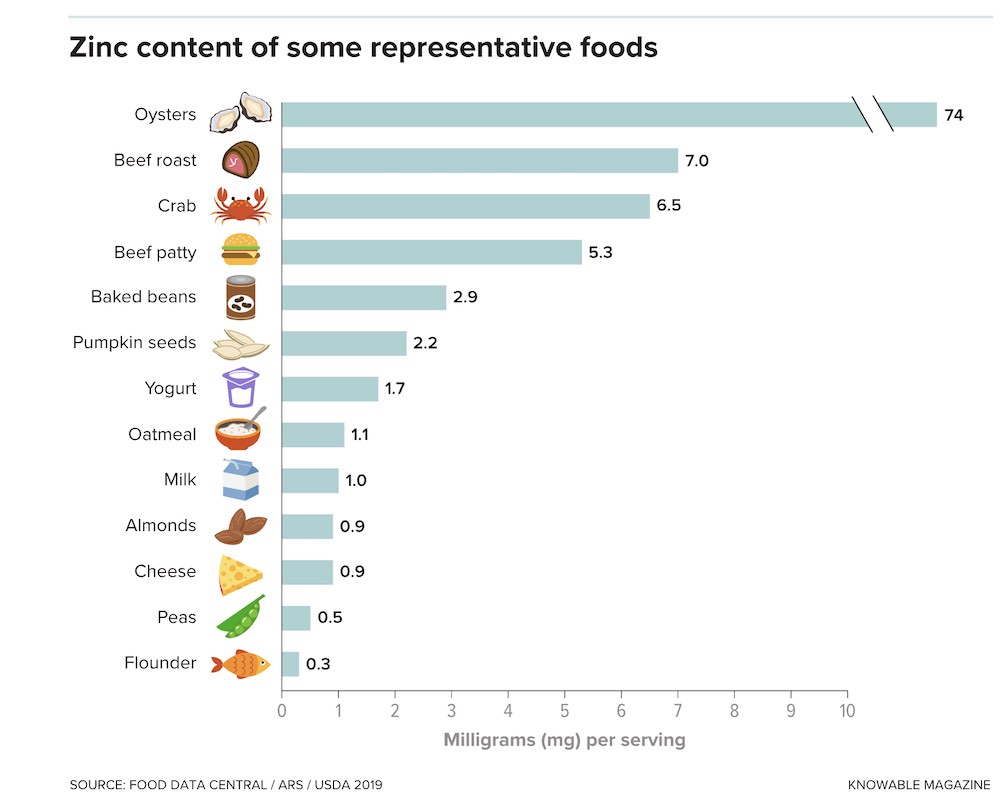
Zinc is present in many different foods. Foods with the highest zinc content include oysters, crab and beef. Phytates, which bind to zinc and limit its absorption into the body, are often present in plants — but plant-based foods, such as pumpkin seeds and oatmeal, can still be good sources of the mineral.
What does zinc do?
Studies show that zinc is important in almost all aspects of the immune system: It helps skin cells and cells lining our organs prevent pathogens from entering, and it keeps the thymus and bone marrow, which are responsible for generating immune cells, functioning normally. Zinc “crops up in all parts of the immune system,” says Sophie Hambleton, an immunologist at Newcastle University in the UK — and zinc-deficient people show a wide range of immune dysfunctions.
Most of the research to date has focused on the role of zinc in the innate immune system, the body’s frontline defense that launches fast, non-specific attacks against foreign invaders. Zinc appears to be involved in making physical barriers — such as the cells that line our organs — more resistant to invasion, as well as ensuring the proper functioning of macrophages, key white blood cells that gobble up pathogens and send out chemical signals to recruit other cellular soldiers.
To ensure that there’s enough zinc to carry out these many jobs, concentrations of the mineral within the body are tightly controlled. At the onset of an infection, for example, immune cells such as macrophages rapidly produce a zinc-transporting protein called ZIP8. This protein controls how much zinc enters these cells, which is important for maintaining the cells’ ability to mop up pathogens and regulating the production of important defense-related molecules, including chemical messengers called cytokines, Knoell and others have found.
More recent work has started to reveal that zinc is also important for the adaptive immune system, which uses memories of prior threats to launch pathogen-specific attacks via antibodies and T cells. In 2019, Hambleton and her colleagues reported that a mutation in another zinc transporter, ZIP7, caused a disease in which patients lack B cells, antibody-producing immune cells that we continuously generate throughout our lives. Further experiments in mice with these same mutations revealed that a lack of ZIP7 reduced the concentrations of zinc within immature B cells, impairing their maturation.
Although it is still unclear what this means for the broader role of ZIP7 in people without this mutation, Hambleton says that it is possible that a defect in ZIP7 may be one way in which an overall deficiency of zinc might lead to problems in immune function.
How much zinc does a person need?
Given how important zinc is to a healthy immune system — and the difficulty of knowing whether a person might be deficient — Rink says zinc supplementation is probably a good idea, especially for people who are at higher risk of being deficient, such as vegetarians, vegans and the elderly. (Rink has consulted for or received research grants from three companies that sell zinc supplements.)
Photo by L. MODICA for Knowable Magazine (CC BY-ND)
Most zinc nutritional supplements are safe and don’t cause any serious side effects at the recommended daily intake, 8 milligrams and 11 milligrams for women and men, respectively, but Rink warns that at very high concentrations zinc can have adverse effects. In 2009, the US Food and Drug Administration warned against the use of Zicam nasal spray and swabs, a common cold remedy containing zinc levels so high that it led to a loss of the sense of smell. Due to this and other potential harms, experts recommend that adults consume no more than 40 milligrams of zinc per day.
Most pharmacies stock over-the-counter zinc supplements. Some studies suggest taking supplements might help reduce the duration and severity of respiratory infections such as the common cold. But open questions — such as the best time to take these supplements, and whether they benefit people who aren’t zinc deficient — remain.
Although clinical trials in humans are scarce, there have been a handful that have examined the effects of zinc supplementation during viral infections. A 2021 review of two dozen clinical trials indicated that in healthy people, taking zinc supplements either as lozenges or nasal sprays at the onset of illness may reduce the duration of the common cold and other respiratory infections by a few days. The study also looked at chronic supplementation, and found evidence that taking zinc supplements daily for seven months to a year might help stave off the effects of respiratory infections, though it did not appear to prevent the common cold.
Hambleton notes, however, that while it’s important to make sure you’re getting enough zinc in your diet, manipulating zinc levels in specific parts of the immune system is not easy because zinc is distributed in different ways across the body. “It’s very simplistic to think that because zinc is required for immunity, more zinc equals more immunity,” she says.
Many open questions remain. For one, the authors of that 2021 review note that there were limitations to the available trials, such as small sample sizes. In addition, the time frame for zinc’s benefits is unclear. Most of the trials looking at the benefits of zinc after infection reported that supplements work only within 24 hours of when symptoms begin — but the team found evidence that window might be longer, and that zinc might be beneficial even when consumed up to three days after the onset of symptoms. And we need better zinc supplements, Knoell says. Most now come in salt form, as zinc sulfate or chloride, but these are not readily taken up by the body, so better formulations would be beneficial, he adds.
There’s also the question of whether certain people are genetically programmed to have a harder time absorbing zinc into their body than others. And researchers also are interested in investigating possible drugs that might target zinc transporters in people who have problems in those proteins.
“We’re starting to ask and answer those questions now in animal models,” Knoell says. “The excitement will be, of course, if some of that translates to the human condition.”
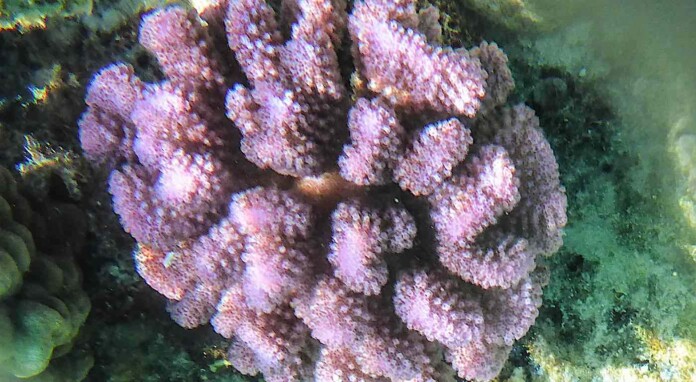
Cauliflower Coral Pocillopora verrucosa on reef off Mo'orea – By Arthur Chapman, CC license
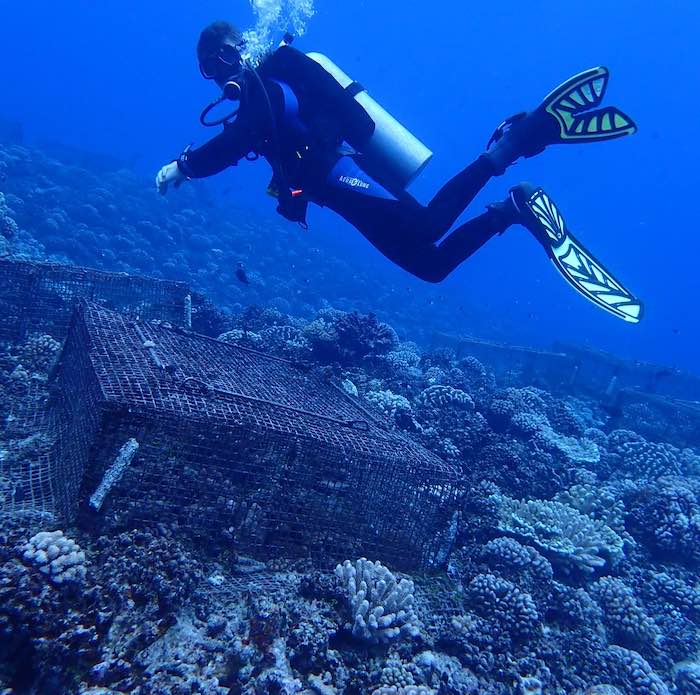
OSU coral researcher Alex Vompe off the north shore of Mo’orea – SWNS / OSU
Some coral species can be resilient to marine heat waves by “remembering” how they lived through previous one, reveals new research.
Scientists at Oregon State University also discovered evidence that the ecological memory response is likely linked to the microbial communities that dwell among the corals.
The study, published today in Global Change Biology, is important because coral reefs are found in less than one percent of the ocean but are home to nearly one-quarter of all known marine species. They also help regulate the sea’s carbon dioxide levels and are a crucial source for scientists searching for new medicines.
“Slowing down the rate of coral cover and species loss is a major conservation goal,” said study author and graduate student Alex Vompe. “Predicting and engineering heat tolerance are two important tools.”
“It is vital to understand how quickly reefs can adapt to ever more frequent, repeated disturbances such as marine heatwaves.
Coral microbiomes—the community of bacteria and archaea living within reefs—could be the key to rapid adaptation.
“Climate change is threatening coral reefs in part because some of the relationships between coral and their microbes can be stressed by warming oceans to the point of dissolution,” explained Vompe.
“But Acropora retusa, a prevalent coral species in the Mo’orean coral reef that we studied, appears to have a powerful ecological memory response to heat waves that the microbiome seems to play a role in.
“This means some coral species may be more resilient to climate change than previously thought.”
Partly funded by the National Science Foundation, the team spent five years studying 200 coral colonies at a reef on the north shore of Mo’orea, French Polynesia. Because of the reef’s recent history, it presented a unique opportunity to examine heat wave response.
In 2010, crown-of-thorns starfish and a cyclone destroyed more than 99% of the corals, effectively hitting the reset button on the reef.
Corals reestablished and went through comparatively minor heat wave events in 2016 and 2017 before experiencing the area’s most severe marine heat wave in recorded history between December 2018 and July 2019. The second-most severe heat wave soon followed in 2020.
“We observed that some species of coral seem to remember exposure to past marine heat waves and maintain a higher level of health in subsequent heat waves,” said OSU Professor Vega Thurber. “And Acropora retusa’s memory response was strongly linked to changes in its microbiome, supporting the idea that the microbial community has a part in this process.”
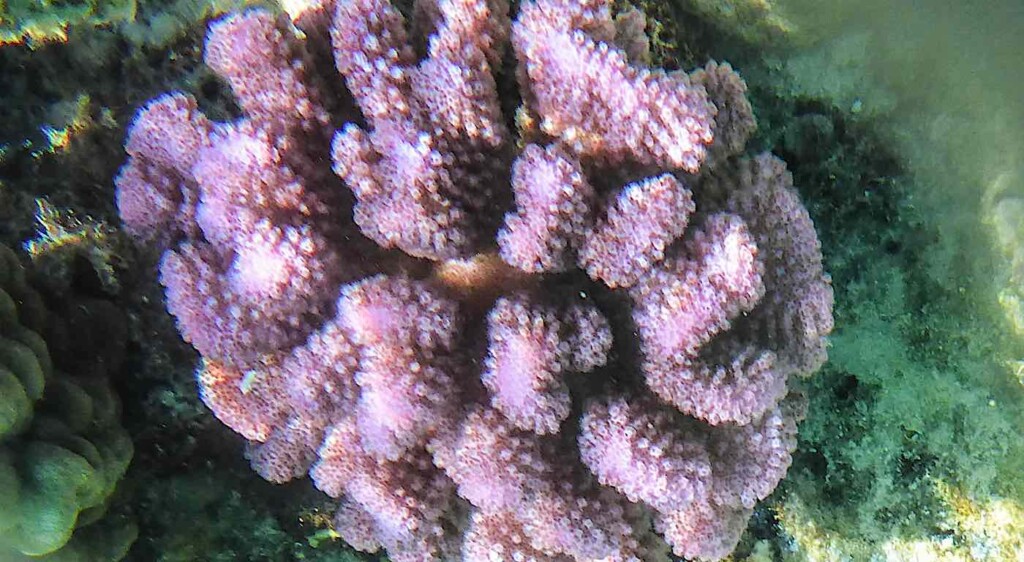
Cauliflower Coral Pocillopora verrucosa on reef off Mo’orea – By Arthur Chapman, CC license
Cauliflower corals in the genus Pocillopora stayed in good health through the heat events, and their microbiomes also showed an ecological memory response, she noted. They were perturbed by the initial 2019 heat wave but recovered to their predisturbance state despite the second heat wave in 2020.
“Members of coral microbial communities have unique biological features that make them more adaptable and responsive to environmental change – short generation cycles, large population sizes and diverse metabolic potential,” Vega Thurber said.
“In two of the three coral species we focused on, we identified initial microbiome resilience, host and microbiome acclimatization, or developed microbiome resistance to repeated heat stress. The latter two patterns are consistent with the concept of ecological memory.”
SHARE the HOPE for Coral Reefs With Ocean-Lovers on Social Media…
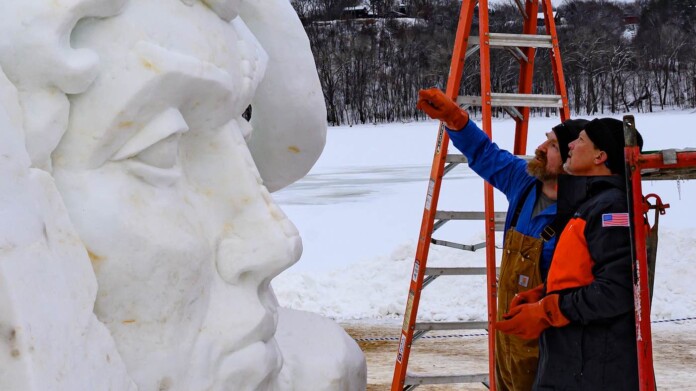
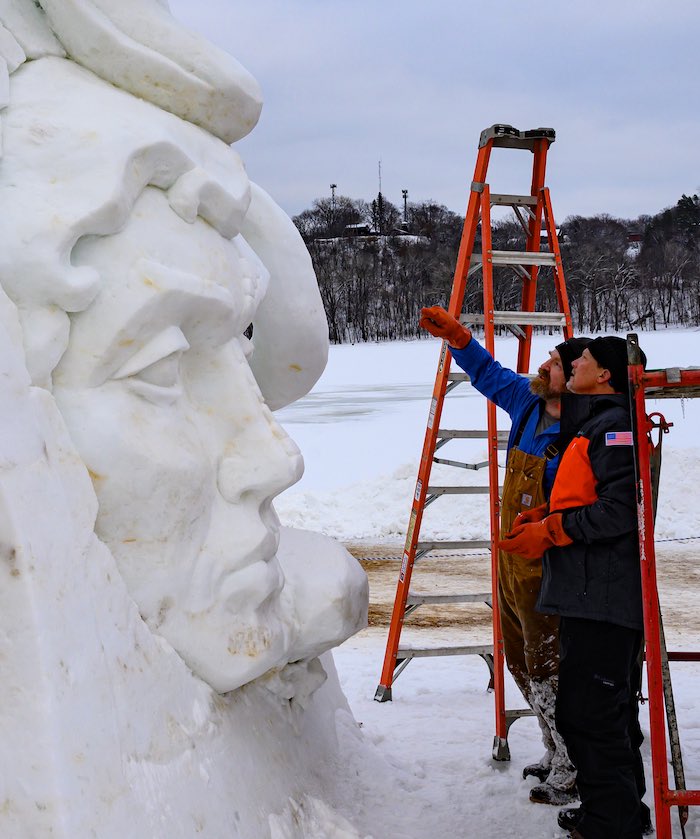
Stillwater, Minnesota is hosting the third annual World Snow Sculpting Championship with artists from eight countries.
The event, sanctioned by the Association Internationale de Sculpture sur Neige et Glace based in Finland, will feature world-class snow sculpting teams from Turkey, Finland, France, Wales, Canada, Mexico, Ecuador, and the U.S. competing to create the most compelling snow sculptures.
“We are thrilled to be hosting this event again in its third year, and to be bringing the beauty and excitement of snow sculpting to Stillwater,” said Robin Anthony, President of the Greater Stillwater Chamber of Commerce and Co-Director of the World Snow Sculpting Championship.
The World Snow Sculpting Championship will be celebrated with a week-long festival of events, entertainment, and activities for people of all ages.
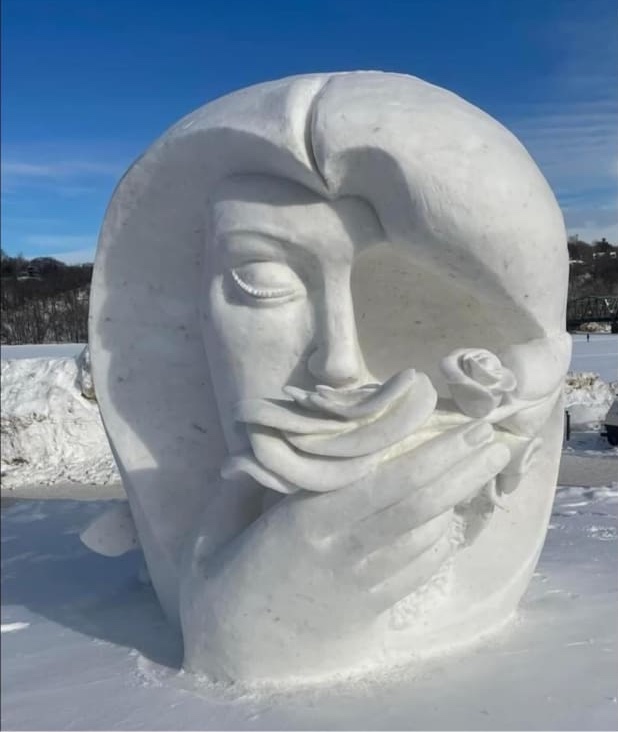
Some of the spectacular sculptures erected during this event include the whimsical and dramatic.
In addition to the events, there will be an indoor market, warming house, and heated tent. You can see the full schedule of events on the official website.
Quote of the Day: “We must sense that we live in a mysterious world—that things happen and can be experienced that remain inexplicable.” – Carl Jung
Photo by: Jr Korpa
With a new inspirational quote every day, atop the perfect photo—collected and archived on our Quotes page—why not bookmark GNN.org for a daily uplift?
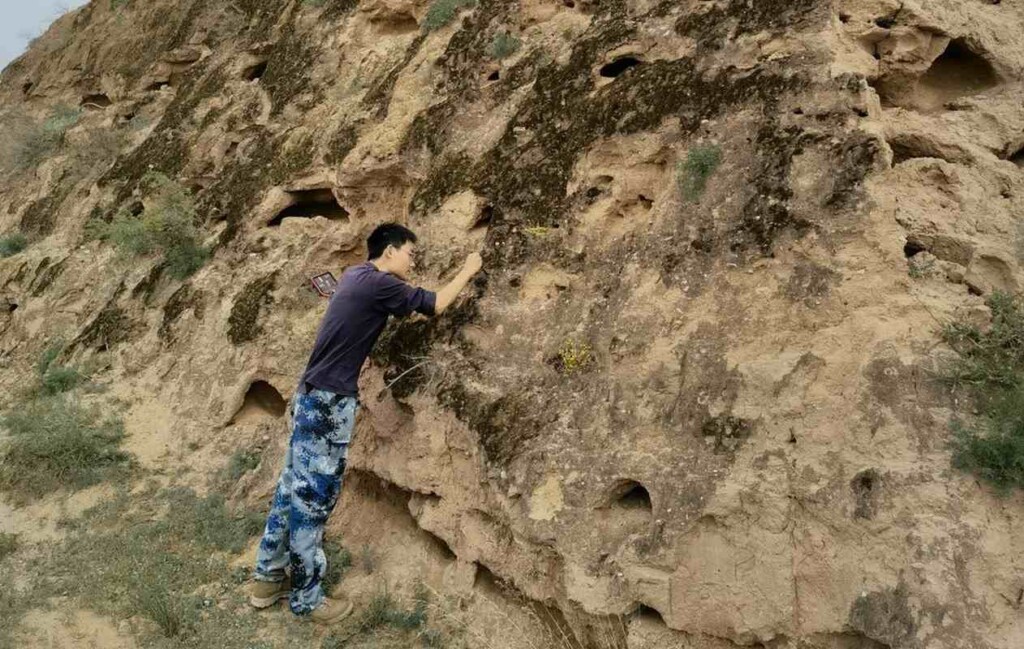
Researcher Yousong Cao helped gather samples from the Great Wall for testing - released to Smithsonian by Bo Xiao
Researcher Yousong Cao helped gather samples from the Great Wall for testing – released to Smithsonian by Bo Xiao
For centuries, soldiers stood guard along the Great Wall of China, defending the heartland of the North China Plain from nomadic invaders like the Huns, and the ancestors of the Mongols.
Now, a new kind of protector stands stalwart on the wall, even as the unfinished parts of the great monument crumble away: biological soil crusts.
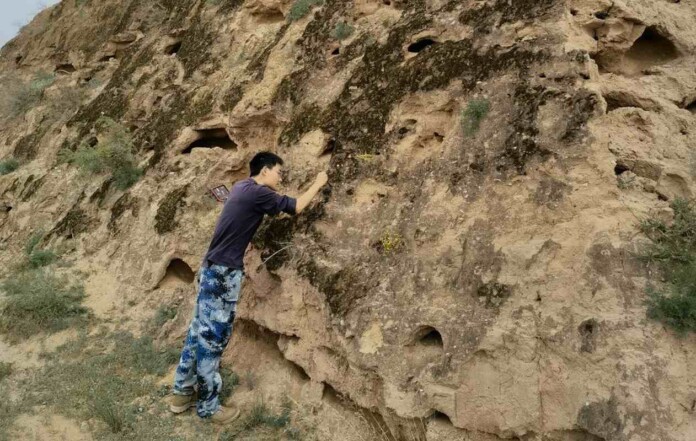
These mixes of lichen, moss, and cyanobacteria form a crusty surface atop loose soil, and play a major role in arid ecosystems, but in Northern China, they are protecting sections of the wall from wind and water erosion.
Scientists hoping to understand the impact of these soil crusts on the famous wall selected a 300-mile-long section to take samples from. The Great Wall of China was built in several stages, separated by hundreds of years. At times, the wealth and power of the Chinese ruling dynasty allowed them to use brick and mortar, but in other times, or in more remote places, rammed earth was used instead.
Rammed earth is a mixture of mud, gravel, and other natural materials that are compacted, much like the surface of the ground. This has allowed biological soil crusts to flourish on the rammed earth sections of the wall, and indeed were found to cover 67% of the sampled areas.
“Compared with bare rammed earth,” the authors of the study wrote in the journal Science Advances, “the biocrust-covered sections exhibited reduced porosity, water-holding capacity, erodibility, and salinity by 2 to 48%, while increasing compressive strength, penetration resistance, shear strength, and aggregate stability by 37 to 321%.”
In many desert parks in the US, signs are posted along trails warning visitors and hikers to stay away from patches of lumpy dark Earth. These are biological soil crusts, and they keep desert environments more fertile than they otherwise would be by keeping the sandy dirt from blowing away.
In fact, half of all the soil on Earth would be blown into the oceans, approximately 700 million metric tons of dust every year, if not for this diminutive phenomenon. Researchers at the University of Almeria, Spain, have estimated that 25% of all the soil in all the world’s drylands is covered in these biocrusts.
Other scientists have estimated that these little colonies of organisms prevent an amount of dust equal to all human-created atmospheric aerosols, and three times as many as humans have placed into the atmosphere through land-use changes, from entering it.
It can take over 50 years for biological soil crusts to form, and merely 1 second of a heavy hiking boot falling to unmake them. So watch your step!
SHARE This Amazing Discovery And Even More Amazing Phenomenon…
Reed Marcum in 2022 during his seventh annual toy giveaway – Photo by Angie Miller
Reed Marcum in 2022 during his seventh annual toy giveaway – Photo by Angie Miller
Reed Marcum was just a kid when he learned that some children in his town of McAlester Oklahoma didn’t have any toys under their Christmas tree.
A shy kid who was bullied in school, Reed remembered the moment very clearly, since he was no stranger to feeling left out. Even though his parents divorced when he was just 7, there were people who stepped in to make Christmas time special, so the thought this his fifth-grade friend would find nothing under the tree was tough to hear.
Whatever the reason his heart or his blues, he proposed to his mother to hold a toy drive, similar in structure to a backpack drive they had organized the year before. Reed’s mother, Angie Miller, posted a video on Facebook explaining her son’s intentions, and asked for donations of toys or money to buy toys for a giveaway that Reed had decided to do as a 4-H project.
“There was a great response—lots of people went out and bought new toys to donate, or they sent money for us to buy them,” Miller said.
That was all 7 years ago, and now as a university freshman, Reed still drives two-and-a-half hours home from his campus in Stillwater to participate in the annual toy drive; now in its seventh edition.
10,000 toys are slated to be handed out in this year’s giveaway which takes place as a drive-through event, with eager kids in the back seats gesticulating to their parents which toy they like the most. Each kid also receives a pair of socks, underwear, trousers, a shirt, gloves, and a hat.
“We have walls of toys lined up on each side of the cars, and kids tell us which ones to grab as their parents drive them through the line,” Reed, who studies prelaw and sociology at OK State University, told the Washington Post. “Seeing the happy looks on their faces is always the best part.”
54,000 toys have so far been given out to kids in McAlester, which unfortunately has a poverty rate of 24% according to international statistics.
Reed continues paying forward, as he sees it, the kindness his family received more than a decade ago by starting other charitable programs. He holds silent auctions to benefit pediatric cancer patients, and continues the backpack giveaways he started with his mom when he was just 11 years old.
One resident told the Post that he’s catalyzed everyone in the community; everyone wants to get involved with his work in some way, and the paper says his activities have raised more than $3.5 million.
SHARE This Young Man’s Heroic Work With Your Friends In Time For Christmas…
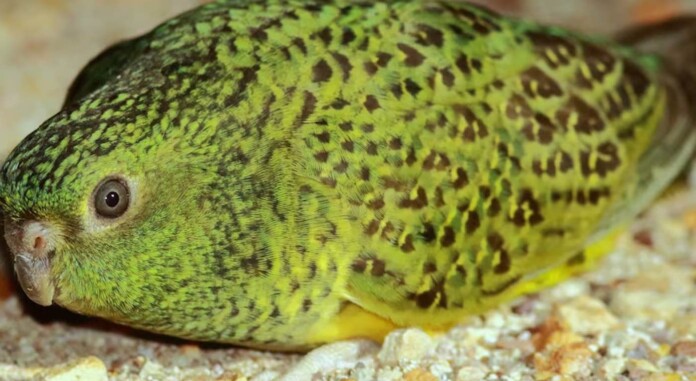
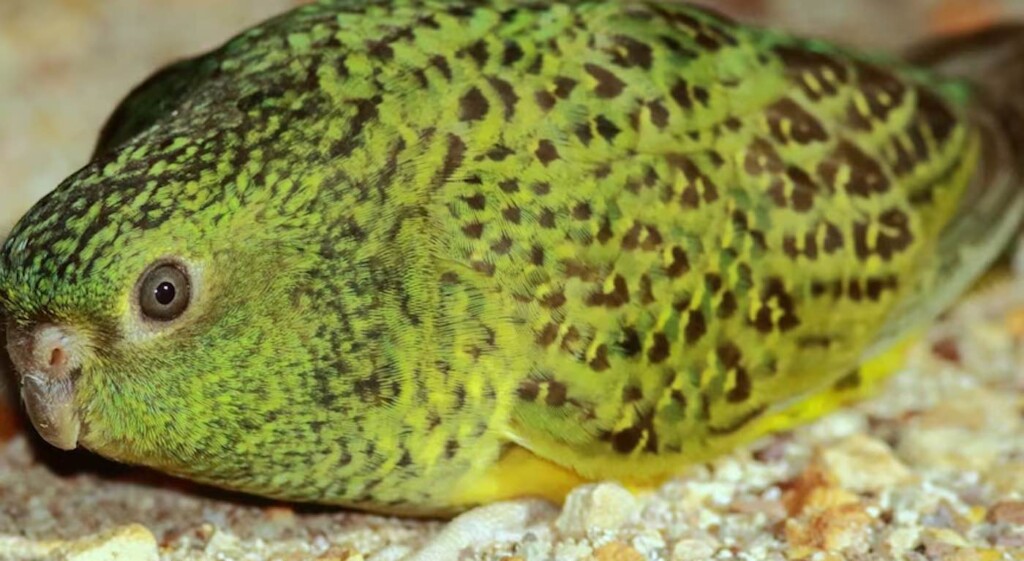
Adult night parrots are ground-dwelling birds that fly – Photo by Steve Murphy
Adult night parrots are ground-dwelling birds that fly – Photo by Steve Murphy
From ABC News Australia comes a fantastic development in indigenous-led conservation, as rangers from the Kiwirrkurra traditional owners have recorded the calls of one of the world’s rarest birds, the night parrot.
There’s nothing better than a natural enigma to heighten or restore your sense of wonder of the natural world, and the night parrot is certainly under this category. A ground-dwelling bird that flies, it does all its calling in spinifex bushes after nightfall.
Feral cats and fires have reduced the available habitat of these animals, and they’re believed to be critically endangered. Now, a Kiwirrkurra ranger team in a remote area of the Gibson Desert in the central regions of the state of Western Australia has become the fifth such team to record their calls.
“It made me really excited that the night parrot still exists there, because it means we’re doing lots of good work,” Kiwirrkurra ranger coordinator Ed Blackwood told ABC. “If that’s there, it means lots of other animals can live and be happy in that same area.”
The calls are extremely valuable conservation data points, as they help define their current habitat areas. Once enough of these recordings have been taken, scientists studying the night parrot will be able to recommend specific spaces for conservation measures.
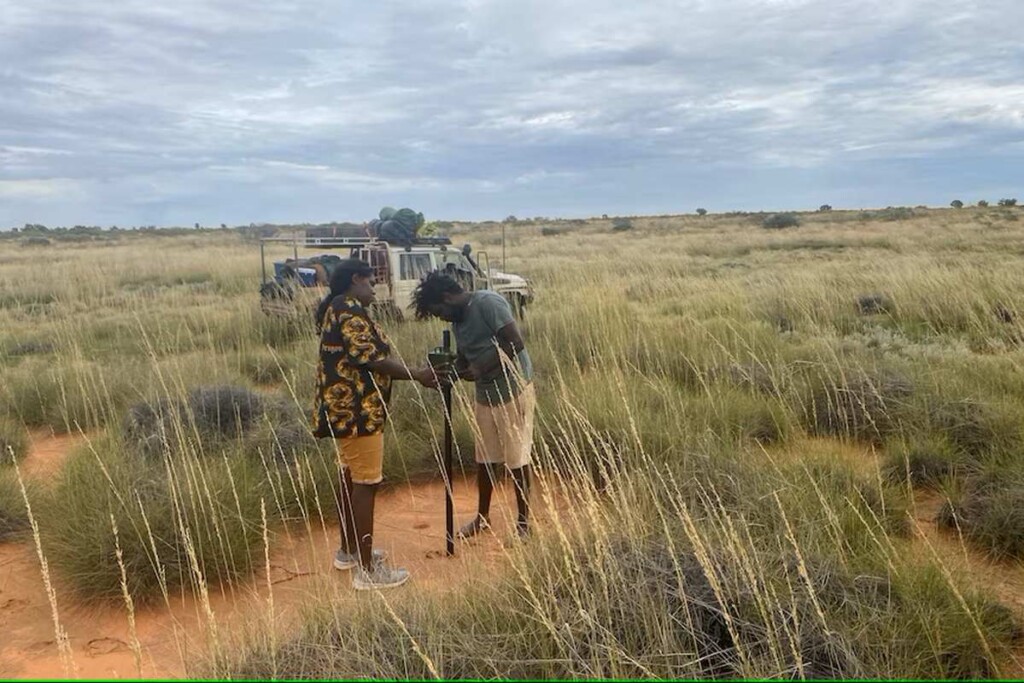
This year, Kiwirrkurra rangers erected sound recording stations in five separate areas and sent the night’s sound to night parrot expert Dr. Nick Leseberg at the Univ. of Queensland. The bird has a predictable calling sequence, so picking them out in the field recordings is not necessarily difficult.
The difficult part is finding where to put the monitors.
Janine West and Conway Gibson erect song meters to detect the night parrot’s call.(Supplied Tjamu Tjamu Aboriginal Corporation)
“Every time we get a new dot on the map, that extends the range of the night parrot just a little bit further. It’s critical,” Dr. Leseberg told ABC.
ABC News was able to speak to indigenous owners who communicated what the night parrot’s call meant to them.
One, Nolia Yurrkultji Ward, said that her mother used to tell her when she was young that it was time for bed when the night parrot calls, advice that Ms. Ward always took out of fear the calls were evil spirits. Hearing them now doesn’t fill her with fright, but fond memories of her childhood.
The discovery in Gibson means that the Kiwirrkurra are now stewards of 4 endangered species, including the great desert skink, the bilby, and the princess parrot.
The call itself is nothing to write home about if it wasn’t attached to such an enigmatic bird, with three short whistles and then a chatter.
Many conservationists are beginning to find value in audio-focused conservation. Camera trap surveys are extremely laborious and don’t necessarily give good indications of the population density of targeted animals. By mapping whole soundscapes, conservationists can get a much better read on the range and density of animals, as well as the overall intactness of the ecosystems they’re studying, since so many animals vocalize.
SHARE This Great Conservation News With Your Friends…
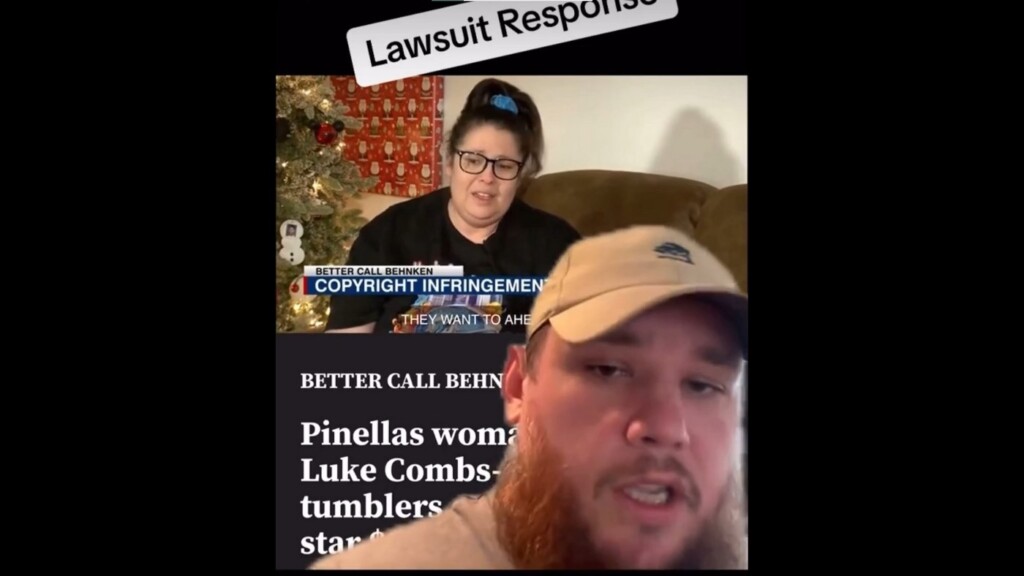
When Country music star Luke Combs learned that a big fan was fined a quarter million dollars for using his likeness, Combs stepped in to help.
A company contracted by Combs’ management identified Florida resident Nicol Harness as selling tumblers and t-shirts with his likeness on them on Amazon. Taking her to court, they won a $250,000 damages judgment, money which Harness, who has congestive heart failure, did not have, and had no means of obtaining.
“She told me she was absolutely shocked by this,” Combs said in a social media post. “I’m so apologetic. Talking to her, it makes me sick honestly that this would happen, especially at the holiday.”
In total, Pinellas had sold just 18 tumblers, earning a total of $360. She had no idea that she was targeted along with a suite of other illegal online vendors in an October lawsuit filed in a court in Illinois.
“So, we do have a company that goes after folks, only supposedly large corporations operating internationally that make millions and millions of dollars, making counterfeit T-shirts, things of that nature run illegal businesses,” Combs explained. “And apparently this woman, Nicol, has somehow gotten wrapped into that.”
Combs said Harness told him she had $5,500 locked in her Amazon account, which the judge determined had to go toward the 250K she has been ordered to pay Combs.
Luke Combs in Amsterdam CC License – Alwyn Greer
“I’m gonna double that send her $11,000 today just so she doesn’t have anything to worry about,” Combs said. “She was never supposed to be involved in anything like this.”
“I invited Nicol and her family out to a show this year so I can give her a hug and say sorry in person,” he said in conclusion. “And yeah, I love you guys. I just wanted to clear that up because it makes me sick for anybody to be thinking I’m this kind of person.”
WFLA Tampa reports that in Illinois, court orders and lawsuits can also be served via email, which Harness said was buried in her junk folder. In Florida, where she lives, court orders and notices of any legal requirements must be served in person.
SHARE This Responsible And Considerate Celebrity With Your Friends…