Quote of the Day: “Sooner or later, those who win are those who think they can.” – Paul Tournier
Photo by: Nighthawk Shoots
With a new inspirational quote every day, atop the perfect photo—collected and archived on our Quotes page—why not bookmark GNN.org for a daily uplift?
Last week in Georgia, people power made a life-saving rescue possible after a driver was trapped under a 3,600-pound car.
A collision launched the 19-year-old motorist through the sunroof as the car flipped over on its head, pinning him underneath without space to expand his chest.
Moments before, Georgia police sergeant Michael Peterson switched on the lights and sirens after seeing a car pass by at high speeds, but after catching up he found it had overturned with three young men clambering out of the passenger doors.
With every moment counting, police body-cam footage captures Peterson speaking with the trapped driver, confirming his life was in the balance, and ordering the teens, some motorists, and other officers who stopped to help to hoist up the nearly 2-ton vehicle while another pulled the victim free.
“C’mon ya’ll, we got this,” Sgt. Peterson can be heard saying.
The Lawrenceville Police Department confirmed that the teen driver had suffered several injuries, but he was recovering in a medical facility. It was the Department’s opinion that without the rapid action of Peterson and the Good Samaritans, he would not have made it.
WATCH the video below…
SHARE This Road Rescue With Your Friends From Georgia Or Elsewhere…
Even arachnophobes may have to tip their hat to this beast, who seems to bend all the rules of his race by sporting electric blue hair gel.
The story of its discovery is a fascinating one, but the exercise of plumbing the depths of a Thailand mangrove forest wasn’t merely scientific in nature, but humanitarian as well.
With the excitement in national news which the discovery of the tarantula drummed up, the team behind it, led by scientist Narin Chomphuphuang and joined by popular Thai YouTube explorer JoCho Sippawat, decided to auction off the rights to give the iridescent spider its scientific name in order to raise money and awareness for JoCho Sippawat’s people.
Sippawat is from the Lahu indigenous group of Northern Thailand and Southern China. While recognized by the latter, in Thailand their existence is denied, and they are subject to mistreatment by the government according to the International Working Group for Indigenous Affairs.
Last year, GNN reported that Sippawat had discovered a tarantula living in the hollow of a bamboo tree—not just a new species but a new genus, as none of the 1,000-strong members of the tarantula family has ever been documented living inside bamboo.
Chilobrachys natanicharum is now the spider’s official name, after two Thai businessmen who bid the highest for the honor.
C. natanicharum has a blue coloration in patches all around the front of its body, which is extremely curious.
“The enchanting phenomenon of blue coloration in animals arises from the fact that blue is one of the rarest colors found in nature, and it is a structural color that is produced by the arrangement of biological photonic nanostructures, rather than pigments,” Mr. Chomphuphuang writes in the introduction of a study describing the species.
“C. natanicharum has unique coloration due to the presence of two types of hair: metallic-blue and violet ones. The color depends on the ratio of the two hair colors,” they wrote in the journal ZooKeys.
courtesy Narin Chomphuphuang
Chameleons produce vivid and fascinating colors via pigments, but the tarantula’s hairs absorb some light and reflect the rest—a complex interplay that makes blue animals especially rare.
“To appear blue, an object needs to absorb very small amounts of energy while reflecting high-energy blue light,” which is challenging, Chomphuphuang told CNN.
While their study is about getting into the nitty-gritty details of the spider and proving exactly why it belongs to which genus and what makes it different from other species, the study lacks any indication of why an ambush hunter that typically relies on camouflage and hiding would sport iridescent blue as its camouflage in a jungle environment.
Bright colors are utilized in many species as a mating tool (think male peacocks compared to female ones), but the brightest tarantulas observed were juvenile males and females.
Typically, tarantulas are arboreal or terrestrial, but this one was found by the team in the hollow of a mangrove tree in a mangrove swamp at low tide, potentially indicating an aquatic aspect to its life.
Based on the conservation status of southern Thailand’s mangroves, the electric blue tarantula is likely one of the rarest of its kind.
SHARE This Stunning Hunter All Bad In Blue With Your Friends…
Ruben Flowers Jr. and son in 1994 - Southwest Airlines
Ruben Flowers Jr. and son in 1994 – Southwest Airlines.
From a Chicago airport comes the beautiful story of a father and son who were able to recreate a special moment to celebrate an even more special one.
Newly-fledged pilot for Southwest Airlines Ruben Flowers III got to ride shotgun on his father’s final flight before retiring, which they memorialized by taking a photo in the same position as one nearly 30 years earlier.
Ruben Flowers Jr. was getting ready for take-off back in 1994 when his son, Flowers III, got to visit the captain. Sitting in the co-pilot’s seat, they snapped a nice photo.
Flowers Jr. flew for Southwest for 30 years, all the while inspiring his three children to take to the skies as well, with Flowers III telling People Magazine it’s the “best office view in the world.
Flowers III was coming to the end of his flight school just as his father was nearing the end of his career, and it was that time when he stumbled across that old family photo and got him thinking of doing something special for his dad.
“It was a dream of mine to make this happen,” Flowers III says. “It was my number one goal to fly with my dad.”
He wasn’t sure whether or not he would complete his flight school before his father’s March 3rd retirement. But fate was on the young man’s side, and on March 3rd as part of a flight from Omaha to Chicago, Flowers II and III sat side by side, pilot and co-pilot, father and son, and snapped the last picture of his dad’s long career.
credit Southwest Airlines
“I really enjoyed flying with my son,” Flowers Jr. told People. “It was truly a blessing for me. It was just awesome.”
After they landed in Chicago, Flowers III kept on going while his dad went to a retirement reception at the airport to celebrate a beautiful career and a beautiful legacy that continues flying after him.
An industry research non-profit has found that battery-electric big rigs have doubled their range and charging speed numbers in just 2 years of operation.
In conducting a real-world test on 21 freight trucks for three weeks, North American Council for Freight Efficiency (NACFE) found this lighting-fast innovation occurring across the market for battery-electric big rigs
This includes models from Ford, Daimler, Tesla, Volvo, and General Motors.
“This gives us real data, real-world experience to look into the future a bit — and I think the future of battery electric commercial trucks is bright,” said Mike Roeth, NACFE’s executive director.
While the NACFE’s 2023 report didn’t contain weight details for the trucks involved, which Roeth admits was frustrating since weight affects range, he confirmed that each of the 21 vehicles was hauling average freight for the shipping company who owned it, and included trailers full of produce or bottled water, and international freight on shipping containers.
The exciting part of the data is the range and charging times were bang in the zone of what Roeth told Canary Media is known as the “sweet spot in… medium regional haul return-to-base,” and represents the largest part of trucking routes within states and encompasses around 300 miles of movement.
The Daimler eCascadia electric tractor-trailer, for example, averaged 322 miles per day which consisted of 26 deliveries.
For those who live inside built-up or urban areas, the idea of silent, emission-free freight trucks passing through town is a tantalizing prospect. Depending on the size, freight trucks, and big rigs can have between 10 to 18 gears, meaning their 0-35 time is extremely smog-filled, slow, and noisy.
However, there’s another aspect to stop-and-go city traffic that makes electric big rigs ideal—regenerative braking systems. This clever bit of tech can recharge the battery pack by utilizing the braking force of the huge heavy vehicle, and NACFE found that the Daimler eCascadia was able to recover a quarter of its charge simply in the course of braking during a 13-hour haul day.
There are big hurdles to overcome before electric trucking is adopted widely. At the moment, without state and federal government support, no trucking company could afford the upfront price tag of the electric trucks over diesel ones, even if they represent savings over time due to reduced maintenance costs. For this reason, outside of EV-friendly states, e-trucking would be very difficult.
More than necessarily the upfront cost impediment is the necessity for and cost of a reorganization of short-term and long-term trucking schedules, employee shifts, employee hours, depot infrastructure, and marketing and business information.
It’s an effort that’s worth making, though, as climate change aside, the truckers love electric rigs since they are far smoother to brake and accelerate, and much less noisy. It’s also worth considering the heavy particulate matter coming out of the exhaust of these big rigs that mildly poisons the driver and pedestrians.
SHARE This Industry Report Promising Big Change In The Right Direction…
Quote of the Day: “No man can taste the fruits of autumn while he is delighting his scent with the flowers of spring.” – Samuel Johnson
(It’s a poetic way of advising, ‘live in the present rather than clinging to the past’.)
Photo by: Joseph Gonzalez
With a new inspirational quote every day, atop the perfect photo—collected and archived on our Quotes page—why not bookmark GNN.org for a daily uplift?
Why do we need fiber? it feeds the bacteria in our gut, which in turn produces something that could prevent food allergies and irritations such as those triggered by peanuts, a study this year showed.
A short-chain fatty acid called butyrate is produced by Clostridium bacteria in our stomach as they ferment fiber that reinforces the walls of the GI tract and protects against colon cancer, among other things.
In a mouse model, researchers at the University of Chicago used an oral solution of butyrate to stymie a life-threatening anaphylactic response in the allergic animals when they were exposed to peanuts.
Without enough fiber in the diet, humans can experience die-offs of these beneficial, butyrate-producing gut microbes. Too much eating of simple sugars and carbs instead makes room for harmful species, resulting in a condition known as “gut dysbiosis.”
Without butyrate, the gut lining can become permeable, and bits of food leak out of the GI tract and into circulation, triggering an anaphylactic response in one pattern of allergic reactions.
One of the ways to rapidly treat this has been a microbiome transplant, also known unpleasantly as a fecal biota transplant. But this has had mixed results in the lab, said Dr. Jeffery Hubbell, Ph.D., one of the project’s principal investigators.
“So we thought, why don’t we just deliver the metabolites like butyrate that a healthy microbiome produces?” he said in a news release.
Hubbell and his colleagues at the University of Chicago did just that in a mouse model in early 2023, but the solution is vile to taste and smell, so a new configuration of polymers that cloak the butyrate has been developed by him and his team.
The researchers administered these “polymer micelles” to the digestive systems of mice lacking either healthy gut bacteria or a properly functioning gut lining.
The treatment restored the gut’s protective barrier and microbiome, in part by increasing the production of peptides that kill off harmful bacteria, which made room for butyrate-producing bacteria.
“We were delighted to see that our drug both replenished the levels of butyrate present in the gut and helped the population of butyrate-producing bacteria to expand,” said Cathryn Nagler, Ph.D., a senior author of the study.
“That will likely have implications not only for food allergy and inflammatory bowel disease, but also for the whole set of non-communicable chronic diseases that have been rising over the last 30 years, in response to lifestyle changes and overuse of antibiotics in our society.”
Nagler and Hubbell co-founded a company called ClostraBio to further develop the butyrate micelles into a commercially available treatment for peanut allergies, reports Univ. of Chicago press. They are working with the FDA on an investigational new drug application and hope to begin clinical trials in patients with moderate ulcerative colitis within the next 18 months.
SHARE This Simple Yet Potentially Huge Drug Target On Social Media…
After 146 days of picketing, the Writer’s Guild of America (WGA) and the Alliance of Motion Picture and Television Producers (AMPTP) reached a tentative agreement to end the strike that has paralyzed Hollywood TV.
Along with raising base pay, the agreement, released as a 7-page document from the WGA negotiating team, includes a system of bonuses based on the success or failure of the streaming numbers of the shows a writer works on.
Some protections against artificial intelligence of also been agreed on, as well as minimum staff requirements for writing rooms.
LA Times reports that in the age of streaming, writers’ rooms have shrunk, freezing out writers who are just launching their careers and making it hard to gain experience.
“This contract—won with the power of member solidarity and our union siblings over a 148-day strike—incorporates meaningful gains and protections for writers in every segment of the membership,” the union said in the document.
For TV viewers, many entertainment shows that had been halted could be back in production as soon as next week, as many are made mere hours in advance of recording time.
This includes NBC’s The Tonight Show With Jimmy Fallon, CBS’ The Late Show With Stephen Colbert, and ABC’s Jimmy Kimmel Live!
SHARE This Good News For Writers With Social Media…
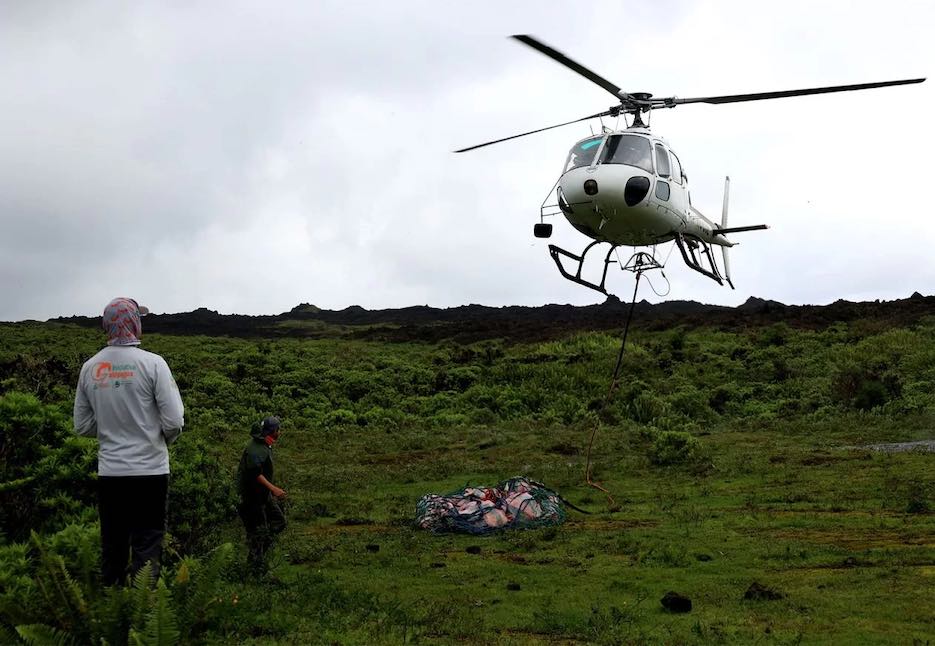
While Australia’s saltwater crocodiles are famous for sporting an evolutionary design that hasn’t changed in tens of millions of years, a newly discovered species of extinct crocodilian is teaching scientists Down Under just how ferocious they once were.
Baru iylwenpeny is a newly discovered species of “cleaver-headed” crocodile from Australia’s Northern Territory that roamed the now-arid landscape around 8 million years ago.
Found in 2009 at the Alcoota fossil bed, an exquisitely preserved skull of this animal was recently examined by biologists at the Museum and Art Gallery of the Northern Territory, and found to be the third new species in this extinct genus of reptile.
Baru crocodiles were the original crocodilian species in Australia, and they evolved there starting around 25 million years ago. The saltwater crocodiles wrastled by the “Crocodile Hunter” Steve Irwin, which became a symbol of Australia during the years of his smash hit TV show, actually evolved in Africa and arrived on the Australian continent much more recently.
By contrast, the Baru crocs lived in a much lusher and wetter environment and evolved to take prey differently.
Today’s saltwater crocs are fast ambush predators that eat a lot of small fish, or take terrestrial animals that stray close to the water, drowning them.
The Baru crocs evolved extremely robust skeletal structures, broader mouths, and denser skulls. With dorsally oriented nostrils and eyes, a poor range of head movement, and fossils found in riverine conditions, it’s believed they hunted mostly megafauna as semi-aquatic ambush predators.
“The main difference between [Baru iylwenpeny] and the other older Barus is that it has bigger back teeth,” said earth science curator at the Museum and Art Gallery of the Northern Territory, Dr. Adam Yates. “All of these adaptations are pretty much giving it a bigger, stronger bite,” he said.
The wider mouth also meant that this species had room for another one of its extra large teeth, and Yates believes it would have pretty much eaten “whatever it wanted.”
As Australia heated up, and riverine environments shrank, the animal as well as all its forbearer species went extinct during the middle of the Miocene Epoch—around 25 million to 5 million years ago.
WATCH a great examination and explanation by Dr. Yates…
SHARE This Great Beast With Your Friends Who Love A Good Science Story…
Thea and her dog Buddy – released to the press by Brooke Chase
After a frantic four hours of search and rescue, a two-year-old toddler from Michigan was found sleeping in the woods amid sweet dreams, fairy dust, and the two family dogs whom she had “wrapped around her finger.”
Thea Chase was playing barefoot in the yard of her home in rural Faithorn, Michigan, when her uncle instructed her to go inside and put some shoes on.
Her Mother Brooke said she had the instinct to go and check on her and their two dogs, a Rottweiler named Buddy, and an English Springer named Hartley.
It soon became terrifyingly clear that Thea was no longer in the yard, after which Brooke and Thea’s uncle began to shout for her. They searched the woods near at hand to the house for about a quarter of an hour before calling the police and Chase’s husband.
“When we get a call like that, everything else stops,” Michigan State Police Lt. Mark Giannunzio told CNN.
In the rural area, the police put out a call for drones, canine teams, and search and rescue personnel to comb the county, while members of Brooke’s close-knit community in town formed their own search party.
Eventually, around midnight, a family friend who was still out looking for Thea on ATV discovered Buddy by the side of a trail. He reported that as he approached the dog started barking.
Thea and her dog Hartley – released to the press by Brook Chase
The still-shoeless 2-year-old was located a short way from the trail, sleeping as soundly as a wood nymph, her head atop Hartley’s body. When the ATV driver tried to wake her up, Hartley informed the man with a not-so-polite growl that it was rude to wake a sleeping angel.
“She has those dogs wrapped around her finger,” said Brooke, who according to CNN was “in a fog” for the whole four hours it took to rescue the girl on a 60°F night, who had wandered off 3 miles into the woods.
SHARE These Two Dutiful Canines And This Great Story With Your Friends…
Quote of the Day: “The young man knows the rules, but the old man knows the exceptions.” – Oliver Wendell Holmes
Photo by: Hermes Rivera
With a new inspirational quote every day, atop the perfect photo—collected and archived on our Quotes page—why not bookmark GNN.org for a daily uplift?
Founder Brian Schwartz mowing the lawn of someone who cant – credit I Want To Mow Your Lawn
There’s a man in New Jersey who wants to mow your lawn. Don’t believe him? Ask the patent office—he trademarked the phrase.
Brian Schwartz from Wayne, New Jersey, has pull-started a nationwide movement to automate and scale kindness after losing his job during the pandemic and feeling like he wanted to make a positive impact in the world.
Soon after, he started a volunteer lawn care organization to help seniors, the disabled, and veterans mow their lawns, trim their hedges, and cut back their trees. And he does it all for free.
“When we help someone like Edna, a dedicated teacher juggling personal battles, or Peter a D-Day Veteran who stormed the Beaches of Normandy, it’s incredibly fulfilling,” Schwartz told GNN. “Every lawn mowed is not just grass cut; it’s relief provided, a burden eased, and a community strengthened.”
While sprouting grassroots in New Jersey, the movement spread internationally, and I Want To Mow Your Lawn was born. Brian now oversees over 500 volunteers in 46 states, with similar orgs springing up in Australia, the UK, and Canada.
I Want To Mow Your Lawn and its volunteers have spruced up over 2,000 lawns, but all this helping others springs from a strong foundation at home.
Volunteers from I Want To Mow Your Lawn at work – credit I Want To Mow Your Lawn.
“Every day I’m reminded of my late father (who passed away January 2021 after a two-year battle from brain cancer), who believed in my vision enough to contribute to its foundation via our GoFundMe to become a 501c3,” Brian said.
“The notion of him looking down with pride, knowing that we’re making a tangible difference, is a powerful driving force. Watching my young son, Dylan, absorb and internalize the work we do is deeply rewarding. Every time we help someone, I see it as not just aiding our immediate community but also shaping the next generation’s values and principles,” he adds.
Once it became clear that there were plenty of people willing to do the work for free, and plenty of people who needed a helping hand, Brian began looking for other ways to help, and began introducing people to more sustainable garden planning, such as installing rock gardens, native gardens, or switching to battery-operated equipment.
Brian can outfit some of his volunteers thanks to collaborations with major equipment makers like STIHL MilwaukeeTool and Ryobi, while ironically, I Want To Mow Your Lawn’s “No Mow May” petition has gathered 700 signatures from clients looking to ensure their lawns remain vital food producing stopovers for bees and other pollinators during key spring months.
The overwhelming support and recognition from individuals, volunteers, and partners like Project Evergreen and Raising Men Lawn Care Service have been heartwarming,” Schwartz told GNN.
A look their the organization’s YouTube channel reveals it’s not all about lawns, but snow and ice, as well as piles of leaves. If there’s a lawn with a problem, Brian and his team are happy to help.
WATCH an explainer video below…
SHARE This Monday MOWtivation On Tuesday With Your Friends…
A tear-jerking moment, captured on film, shows a toddler being reunited with her teenage brother after he saved her from drowning.
The 18-year-old in shot, Eric Johnson, saved his little sister by performing CPR after he found her floating in the family’s swimming pool.
Little Rose was only 2 at the time and was at home with her brother and mom Nina who said that their habit is to always have one person in the room with Rose.
Alert and aware, Eric came into the living room and noticed that the door was open, and neither Nina nor Rose was around. Checking the swimming pool, the big brother found his little sister unconscious in the pool.
He pulled her out immediately and performed CPR. By the time their mom was called 911, Rose was already regaining consciousness.
First responders arrived shortly after and rushed the two-year-old to hospital and put on a ventilator for two days.
“We normally have one person in the room with her but we both went to the restroom. It was only a few minutes,” Nina explained. “Every time I look at him I think about it. I don’t think he realizes that he didn’t just save her life, he saved my life as well, he saved our family’s life.”
The rescue happened two years ago but Nina has decided to share it now for the first time.
According to Nina, the incident has brought the two siblings together, who are now 20 and 4. The two have always been close, but are now closer than ever.
She said: “Their relationship is wonderful. They are so close. They cuddle together. They watch TV together. She shouts at him when he annoys her. It’s beautiful.”
She hopes that the video will inspire others to learn CPR, which has helped her family escape unscathed from the terrifying incident.
“Even if it’s just one person from each family it could make such a difference,” said Nina. “I don’t know where I would be now if Eric hadn’t known how.”
CPR, also known as chest compression, is routinely offered in courses at fire departments and schools, normally for free. It can restart the heart of people who have no pulse or breath, even hours after chest compression is started.
WATCH the reunion below…
SHARE This Touching Moment And Potentially Life-Saving Advice…
The sample return capsule from NASA’s OSIRIS-REx mission is seen shortly after touching down in the desert, Sunday, Sept. 24, 2023, at the Department of Defense's Utah Test and Training Range. The sample was collected from the asteroid Bennu in October 2020 by NASA’s OSIRIS-REx spacecraft. Photo Credit: (NASA/Keegan Barber)
The sample return capsule from NASA’s OSIRIS-REx mission is seen shortly after touching down in the desert, Sunday, Sept. 24, 2023, at the Department of Defense’s Utah Test and Training Range. The sample was collected from the asteroid Bennu in October 2020 by NASA’s OSIRIS-REx spacecraft. Photo Credit: (NASA/Keegan Barber)
In huge spacefaring news, NASA has its hands on a capsule containing about half a pound of material taken from a large asteroid called Bennu.
The first extraterrestrial soil sample brought back by Americans since the Apollo Missions was accomplished as part of the years-long OSIRIS-REx Mission, the first-ever asteroid sample-and-return mission NASA has undertaken.
Touching down in a DoD Test Range in Utah at 10:52 a.m. EDT on Sunday, the OSIRIS-REx capsule represents the culmination of 7 years of hard work that started when a small spacecraft was launched in 2016, remotely directed to the asteroid Bennu where it arrived and sought a safe landing area in 2019, collected a sample in October of 2020, and then headed for home in 2021.
The Bennu sample—an estimated 8.8 ounces, or 250 grams—was transported in its unopened canister by aircraft to NASA’s Johnson Space Center in Houston on Monday.
Curation scientists there will disassemble the canister, extract and weigh the sample, create an inventory of the rocks and dust, and, over time, distribute pieces of Bennu to scientists worldwide.
Moving as fast as possible to get the canister under a “nitrogen purge,” as scientists call it, was one of the OSIRIS-REx team’s most critical tasks yesterday.
Nitrogen is a gas that doesn’t interact with most other chemicals, and a continuous flow of it into the sample container inside the capsule will keep out earthly contaminants to leave the sample pure for scientific analyses.
“For us, this was the World Series, ninth inning, bases-loaded moment, and this team knocked it out of the park,” said Rich Burns, project manager for OSIRIS-REx at NASA’s Goddard Space Flight Center. “The whole team had butterflies today, but that’s the focused anticipation of a critical event by a well-prepared team.”
The returned samples collected from Bennu will help scientists worldwide make discoveries to better understand planet formation and the origin of organics and water that led to life on Earth, as well as benefit all of humanity by learning more about potentially hazardous asteroids.
WATCH a NASA explainer video below… (Note: GNN has no affiliation with any ads displayed)
SHARE Another Small Step For Man But Giant Leap For Mankind…
The listed buildings Saloonen and Vinboden are leased to the University Center in Svalbard (UNIS) for research and teaching purposes. Photo: Eva Therese Jenssen/Sysselmesteren på Svalbard.
On the arctic island of Svalbard, the Norwegian government has just completed the largest re-wilding project in its history.
Polar bears, reindeer, Arctic fox, and many sea birds are now moving back into the Sveagruva mining town, where the depths of the island were plumbed for coal for 100 years.
Sveagruva was an industrial community nestled in a remote fjord, which before its closure had its own power station, wharf, water supply, and everything else that was necessary to house up to 300 workers and run mining operations on a large scale.
The Storting, or Norwegian parliament, decided in 2017 to wind down operations and clear the area to return it to its natural state. All traces of human activity since mining began in 1910 were to be removed, with the exception of cultural monuments and buildings from before 1946.
It’s now so empty and pristine that no passing polar bear could ever have imagined humans had ever been there apart from three red houses spared by their monument designation.
“This is Norway’s largest nature restoration ever, and an expression of a long-term and consistent Norwegian policy to preserve wilderness nature on Svalbard,” said Climate and Environment Minister Espen Barth Eide.
“There is less and less untouched nature in the world, and the restoration of nature and ecosystems is therefore one of the most important goals in the new global nature agreement. The clean-up in Sveagruva is an important contribution to this.”
Before the re-wilding began 12 people from NIKU (Norwegian Institute for Cultural Heritage Research) spent six weeks scanning and photographing the entire town of Sveagruva. Around 170,000 images and 6,000 scans, in total more than 18 terabits of raw data, have become a huge digital 3D model that can be experienced at a nearby tourist outpost.
Project manager Morten H. Johansen at Store Norske and climate and environment minister Espen Barth Eide in today’s Sveagruva with a picture of how it looked before. Photo: Eva Therese Jenssen/Sysselmesteren på Svalbard.
“In many ways, the clean-up of Svea and Lunckefjell has been a project that has involved the entire population of Svalbard,” said Lars Fause, the head of civil affairs in Svalbard. “I am impressed by how the various companies and units have worked together. This has been one of the success factors for the project being carried out so efficiently and cost-effectively.”
While 2.5 billion Norwegian Krone, or around $230 million was budgeted for the project, the project came in at merely $83 million.
7 national parks and 23 nature reserves cover the island of Svalbard, making it by percentile one of the most well-conserved island ecosystems in the Arctic at around 66%.
SHARE This Massive Action On Behalf Of A Wild Island With Your Friends…
Quote of the Day: “A very small degree of hope is sufficient to cause the birth of love.” – Stendhal
Photo by: public domain
With a new inspirational quote every day, atop the perfect photo—collected and archived on our Quotes page—why not bookmark GNN.org for a daily uplift?
In early September, a video surfaced at Monterey Bay Whale Watch’s Evan Brodsky’s Instagram of a dolphin “mega pod”—where thousands of these marine mammals school together in one massive pod that stretches from one end of Brodsky’s video camera lens to the other.
Dolphin pod size varies wildly between place and individual species, but in general they range from between several dozen to a hundred, with membership being a fluid affair and inter-pod migration common.
In places with a high abundance of food, pods can merge temporarily, forming a superpod; such groupings may exceed 1,000 dolphins.
“On this day we saw thousands and thousands of long-beaked common dolphins spread out for miles! Literally every splash you see is a dolphin,” Brodsky said, filming the march with his drone.
At last weekend’s Malvern Autumn Festival in the UK, growers from across the Isles showed off the truly frightening proportions that vegetables can grow to, headlined by massive pumpkins brought in on a forklift.
4th place winner Tim Saint transported his whopping 667 lbs. pumpkin in a trailer to display at the event held over the weekend in England’s Worcestershire.
Even though he needed a pallet, trailer, and industrial strapping to move the thing, his was a small fry compared to Curtis Leach’s 1st prize-winning pumpkin that arrived at weights usually reserved for cars.
At 638 kilograms, or 1,373 lbs, the gargantuan gourd was 40 kilograms more than the second-place entry, but half as heavy as the current Guinness World Record for heaviest pumpkin, which was 2,700 pounds.
“I grew a 667 lbs. pumpkin this year which I’m delighted at,” said Mr. Saint. “I’ve been growing pumpkins for 20 years and that’s the biggest I’ve ever done It’s got to be over 3ft tall at least, I’m 6ft tall myself and it’s big.”
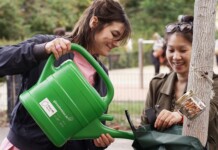
“The secret is just plenty of water and manure, plenty of cow manure especially,” added Mr. Saint, who did take 1st prize for largest beetroot. “It takes a lot of water, I normally give it five watering cans of water a day.”
Peter Glazebrook with his 1st prize for the longest cucumber and David Robson with his 4th placed leak – via SWNSIan Stott with his cabbage – via SWNSLesley and Wayne Price from Hereford with their giant zucchini-like fruit known as a marrow – SWNS
One of the largest harvest festivals in the UK, there are 35 categories for giant or long vegetables, and this year 8 new world records were set, including for Largest Runner Bean Leaf, Heaviest Runner Bean, Tallest Tomatillo Plant, Longest Luffa, Heaviest Bell Pepper, Heaviest Cucumber, Heaviest Broad Bean, and Longest Broad Bean.
Ian Stott brought along a 49-pound cabbage which secured him second spot on the winner’s podium this year.
“It’s 22kg and about four-and-a-half feet wide,” he said proudly, adding that “it’s not been a good year for cabbages, it was so hot at the beginning of the season.”
“You’ve got to have the right seed and Mother Nature needs to be on your side… They weren’t that big this year. I’ve had them 6ft across and it’s a bit hard to not break leaves off him,” said Mr. Stott, who lost out on 1st prize to Annette Stone, who managed to break 54 pounds with her cabbage.
Ian Neale 80 with his 1st Place for his giant swede and 1st place for giant celery – via SWNS
SHARE This Mega Produce With Your Friends for A Laugh…
NASA researchers John Connell and Yi Lin (seated) from SABERS. credit NASA
Along with routinely launching robots across the final frontier, NASA is also involved in sustainable aviation research, and this division may have cracked the code to creating a lighter, safer battery back with multiple times more discharge power than lithium-ion batteries.
Lithium-ion batteries, the current industry standard for electric vehicles, contain liquids that make them vulnerable to overheating, fire, and loss of charge over time. By contrast, NASA’s SABERS (Solid-state Architecture Batteries for Enhanced Rechargeability and Safety) project is developing experimental solid-state battery packs that do not suffer from these drawbacks.
SABERS receives funding from NASA’s Convergent Aeronautics Solutions project, which is designed to investigate certain technologies to solve aviation’s biggest challenges: in this case, battery-powered flight.
Carbon from air travel equates to around 2% of all global greenhouse gas emissions. Batteries are hypothesized as a potential ameliorating solution to emissions-heavy jet fuel.
During the past year, SABERS’ solid-state batteries have been honed to produce a discharge rate much higher than any other example on the market by a factor of 10—and then again by a factor of 5.
Inside the battery, sulfur and selenium cells stacked directly on top of one another without casings allow for greater weight savings. Along with the cells themselves, multiple batteries can be stacked without any separation between them.
“Not only does this design eliminate 30 to 40 percent of the battery’s weight, it also allows us to double or even triple the energy it can store, far exceeding the capabilities of lithium-ion batteries that are considered to be the state of the art,” said Rocco Viggiano, principal investigator for SABERS at NASA’s Glenn Research Center in Cleveland.
It has so far allowed the SABERS team to power objects at 500 watt-hours per kilogram–double that of an electric car.
This year, the main objective for SABERS was to show the battery’s properties meet its energy and safety targets while also demonstrating it can safely operate under realistic conditions and at maximum power, NASA writes.
Partnering with Georgia Tech, SABERS has been able to use different methodologies in their work which has so far benefitted the batteries.
“Georgia Tech has a big focus on micromechanics of how the cell changes during operation. That helped us look at the pressures inside the battery, which then helped us improve the battery even more,” said Viggiano.
“It also led us to understand from a practical standpoint how to manufacture a cell like this, and it led us to some other improved design configurations,” said Viggiano.
In a true paradigm shift, persevered timbers show that early man, and potentially older species than Homo sapiens, were building wooden structures 476,000 years ago.
Wikipedia lists the earliest carpentry assemblage ever found previously as a water well cover carved from oak boards from 5,600 BCE. The oldest wooden tool ever found was a carved spear from about 416,000 years ago.
These 5-foot-long logs had clear signs of woodworking with stone tools, with the end of one set atop another at a right angle. There are notches cut into the ends to allow them to fit into one another, a technique that makes them seem a little like Lincoln Logs.
Nothing of the sort has ever been found from this period and is rarely found from the Neolithic period.
Professor Larry Barham at the University of Liverpool led the excavations on a river bank near Kalambo Falls in the southern African country of Zambia, and said that it changed how he views our early ancestors.
“This find has changed how I think about our early ancestors, they made something new, and large, from wood,” Professor Barham told the BBC. “They used their intelligence, imagination, and skills to create something they’d never seen before, something that had never previously existed.”
While unlikely to have been a hut or a cabin, the researchers believe it could have been part of a platform that hosted other structures on top of it, or, because of its proximity to the river, a kind of jetty to go fishing from.
While ancient wooden digging sticks were found during the excavations, no bones of any hominid have been unearthed. Homo sapiensfossils begin to appear around 315,000 years ago, leading to the possibility that we either haven’t dug in the right place for Homo sapiens, or a previous species of our genus was intelligent enough to use stone tools to perform basic carpentry techniques.
“But it could be a different species—[perhaps] Homo erectus or Homo naledi—there were a number of hominid species around at that time in southern Africa,” said Geoff Duller, professor of geography at the University of Aberystwyth, and co-author on the study.
SHARE This Quite Extraordinary Back-Dating With Your Friends…