Quote of the Day: “Live as though you’re living a second time… the first time you did it wrong, and now you’re trying to do it right.” – Viktor Frankl
Photo by: Dmytro Tolokonov
With a new inspirational quote every day, atop the perfect photo—collected and archived on our Quotes page—why not bookmark GNN.org for a daily uplift?
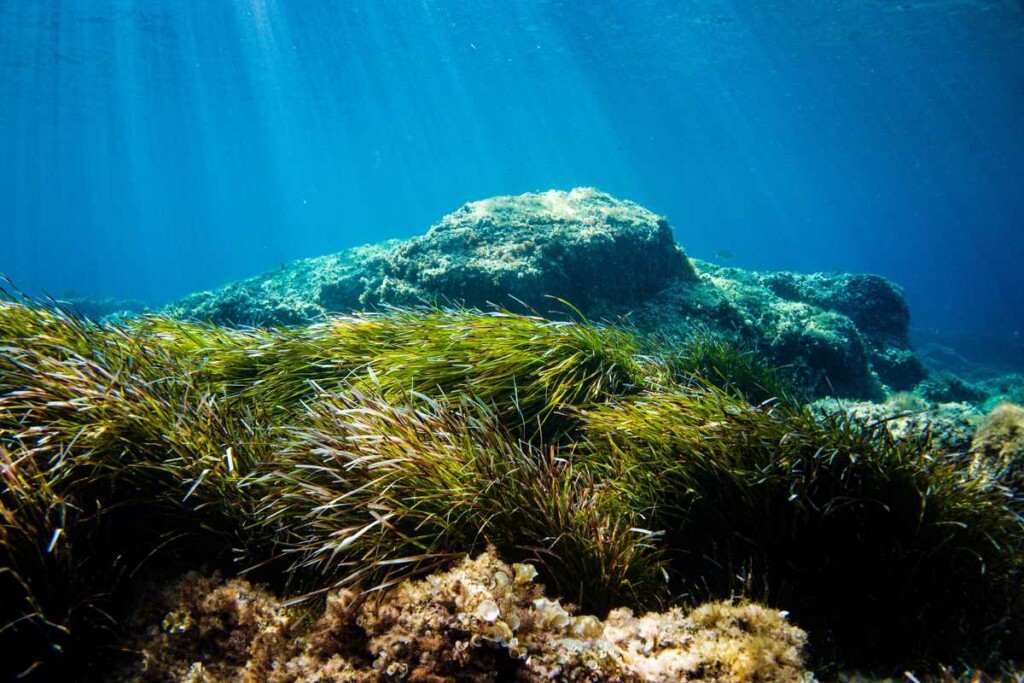
To any government reading, there’s a plant that provides habitat for nearly all the species of the sea, anchors the sediment on the seafloor, dissipates wave energy, regulates ocean acidity, and that holds 35-times more carbon per cubic inch of rootstock than tropical rainforest—and best of all, it’s neither fictional nor rare.
Posidonia oceanica, or seagrass, plays all these important roles for marine ecosystems, and scientists and conservationists working at the Med Sea Foundation on the island of Sardinia, Italy, believe that by restoring their seagrass meadows they can safeguard their own coasts, as well as the world, from climate change.
The new project launched by Med Sea looks to plant 1 million seagrass plants by 2050 across 19 square miles (50 square kilometers) of coastline on Sardinia’s Sinis Peninsula—and also throughout the Mediterranean.
Seagrass accounts for one-tenth of all the carbon stored in the ocean, but they are fragile ecosystems and are easily damaged by human activities.
To that end, Med Sea has paired their planting with the installation of 60 anti-trawl barriers which are massive blocks of concrete or stone that will destroy the trawl nets and anchors of any boat that tries their hand at this illegal coastal fishing method.
Posidonia oceanica also plays an indispensable role in the protection of coastline from wave energy, as well as the formation and consolidation of the sediment and sand that form the beaches which draw over two million tourists to the island every year.
Med Sea is receiving support for their planting enterprise from the University of Exeter in the UK, an electric-vehicle racing organization called Extreme-E, and Sotheby’s Auctioneers.
Other countries are also recognizing the value of seagrass and restoration activities are underway, or perhaps have already concluded, in Wales, and in the state of Virginia.
WATCH a mini-doc about the project with great underwater video quality…
A snake new to science has been named after Harrison Ford in honor of his passionate environmental advocacy and for the matter of a small character he played in a small film series called Indiana Jones.
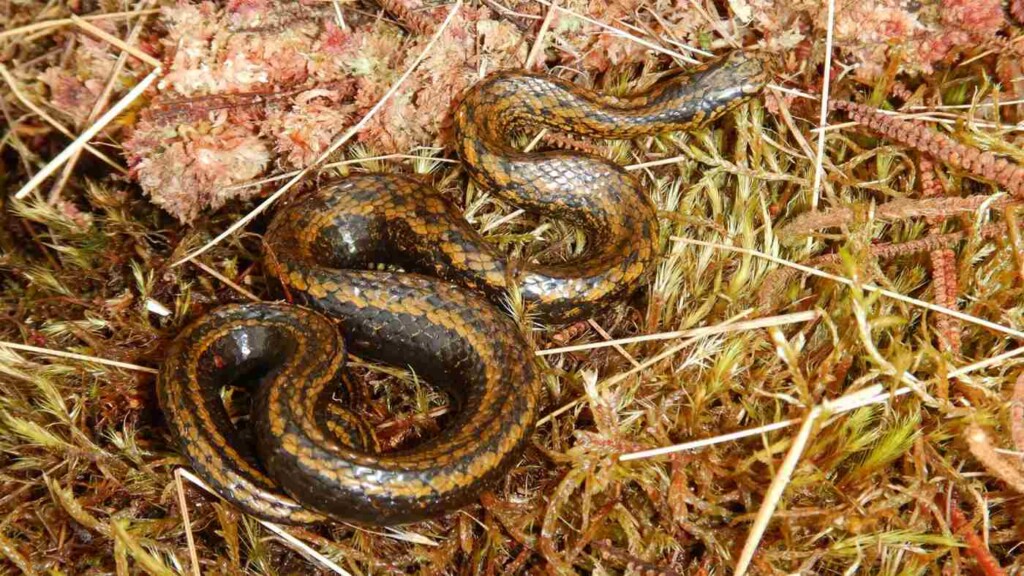
Tachymenoides harrisonfordi was discovered by German herpetologist Edger Lehr on Peru’s remote Otishi Plateau, an area prowled by narcotraffickers, and the story of its discovery was in itself worthy of a scene in one of Ford’s classic films of the adventurous archaeologist.
One of the least explored grasslands on Earth, Peru’s Otishi National Park lies accessible almost only by helicopter high in the Andes Mountains. The area has been coined “cocaine valley” and Lehr told Conservation.org all about the harrowing brushes with the narcotraffickers that colored the expedition so dangerous that he decided to end it a week ahead of schedule.
“I carried a walkie-talkie so we could communicate if the team was separated,” Lehr recounted. “On the ninth day of the trip, I suddenly heard unfamiliar voices coming through the speaker. We were in this incredibly remote location, so we immediately knew that there were other people around who were using the same radio frequency — channel eight. The voices seemed to hear us, too, and they sounded shocked.”
At times they saw they were being monitored via drone, and discovered footprints around their camp one morning. They heard engine sounds at various intervals, and after discovering a new lizard species and an unmapped waterfall, they called it quits—receiving emergency evacuation by a Peruvian Air Force helicopter.
The reward for their daring and perseverance however was the first official description of Tachymenoides harrisonfordi. The 16-inch-long snake belongs to the family Colubridae, which is one of the largest snake families and made up of almost entirely non-venomous snakes.
For a long time, Colubridae was known as a “wastebasket taxon” where any snake that didn’t fit into the other major snake families was classified. Now however, molecular phylogenics has stabilized the family into a much more sensible organization with 8 sub-families.
With golden scales running down the top of its body, becoming more plentiful near its head, the snake camouflages well with its environment.
While some biologists advocate against giving scientific names after famous people, Lehr says that species can only be protected if they are known, and the species name harrisonfordi will help to draw attention to the value of it and its pristine, albeit dangerous, habitat.
Tachymenoides harrisonfordi – credit Edger Lehr, University of Illinois
Of course there’s also the irresistable reference to Ford’s famous character’s getaway in the opening scene of Indiana Jones: Raiders of the Lost Ark, where, after narrowly avoiding death by poison blowdart in the jungle, Indy leaps into a seaplane’s cargo hold only to find the pilot’s pet python in the back.
“I hate snakes Jock! I hate ’em!” he says famously.
“The snake’s got eyes you can drown in, and he spends most of the day sunning himself by a pool of dirty water—we probably would’ve been friends in the early ‘60s,” Harrison Ford said in a statement about the snake. “In all seriousness, this discovery is humbling. It’s a reminder that there’s still so much to learn about our wild world—and that humans are one small part of an impossibly vast biosphere.”
A board member of Conservation International, this in the third animal species named after Ford. An ant and a spider were also given the species name harrisonfordi, but there’s a little something extra about giving it to a snake, even if, in reality, Ford quite likes the slithering reptiles.
SHARE The Awesome Story Of Adventure And Science With Your Friends…
Mr Fred Rogers - CC 2.0. Intergalactically Speaking, retireved via Flickr (Copy)
Mr Fred Rogers – CC 2.0. Intergalactically Speaking, retrieved via Flickr
It’s a beautiful day in the neighborhood, haven’t you heard? Mister Rogers said so—and now his simple advice on how to be a good person has been backed by sophisticated polling data.
As part of the Gallup National Health and Well-Being Index, saying hello to more than 1 neighbor was shown to correlate with greater self-perception of well-being.
Averaged across five dimensions that included career, communal, physical, financial, and social well-being, the increase which greeting a neighbor had led to around a 2-point increase on a scale of 0-100 up until the sixth neighbor, at which point further greetings had no measured impact.
Interestingly, when the well-being scores are looked at individually and not averaged together, the sixth neighbor is where the perception of well-being in life peaks for social and communal well-being, but not financial well-being.
No; perception of financial well-being kept on climbing and climbing, only to cease at the 11th such greeting; a profound revelation—repeated positive social interaction benefited perception of personal finance even more than personal sense of community.
Men were more likely to greet neighbors than women, as were people with children under the age of 18 in the household, and people with a household income of more than $120k a year.
Individuals aged 40 to 65+ were the most common greeters of neighbors, and 27% of the over 4,000 participants greeted 5 neighbors or more in a day.
“Recent Gallup research in partnership with Meta has shown that the U.S. compares favorably with other nations around the world in social interactions,” the polling company states, “with those in the U.S. more likely than those in countries such as Mexico, India, and France to interact with the people who live near them.”
“Notably, greeting neighbors is also linked to career wellbeing (liking what you do each day), physical wellbeing (having energy to get things done), and financial wellbeing (managing your money well),” the report continued. “The associations found among these latter three elements are likely more multifaceted in nature and could be reinforced in part through the correlations found with social and community wellbeing.”
WATCH what used to be our daily reminder below…
SHARE This Study (And Fred Rogers) Wisdom With Your Friends (And Neighbors)…
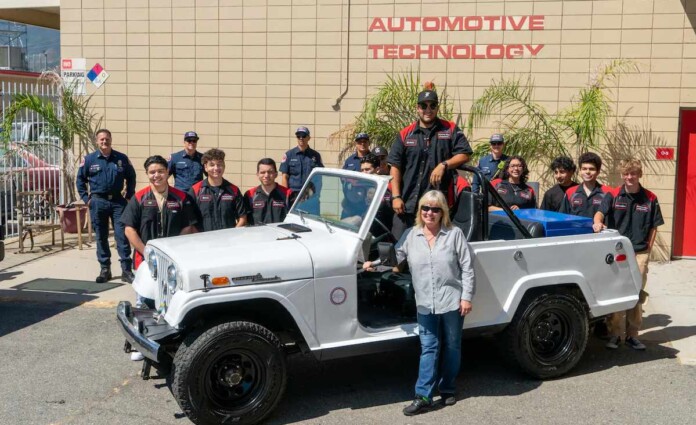
Tigger Porter, center, with high school students in Corona, Calif., who overhauled her family's 1969 Jeepster Commando. (Corona-Norco Unified School District)
Tigger Porter, center, with high school students in Corona, Calif., who overhauled her family’s 1969 Jeepster Commando. (Corona-Norco Unified School District)
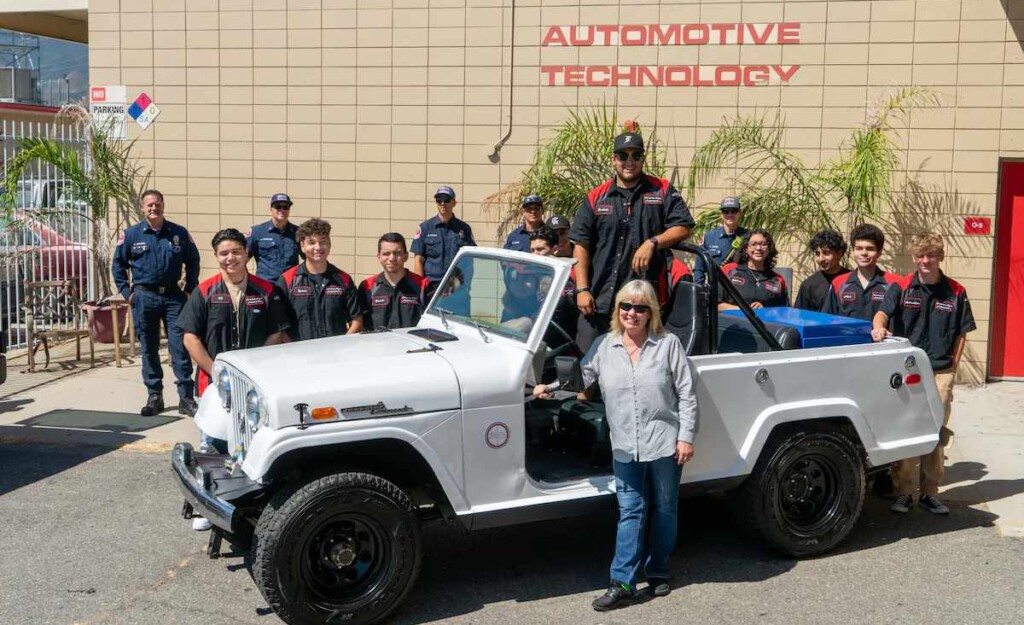
From a California high school comes a touching story of family, dedication, and engineering as a mob of students finished restoring a 1969 Jeep that was very special to a nearby family.
Shane Porter, husband and father of two fine young men, was struggling with two cancers when he bought a 1969 Jeep Commando as a family fixer-upper. He hoped to create fond memories in what he knew could be his last few years.
From 2016 to 2022 the family tinkered away, and then Porter, a 30-year employee at the California Department of Forestry and Fire Protection, passed away at 57. The Jeep wasn’t finished, and neither Tigger—his wife of more than 35 years, nor his sons Michael and Tim, could bring themselves to lay a finger on the car.
The barely-functioning automobile sat there for months, with the family unwilling to either part with it or keep repairing it, until one day a family friend and head of the automotive technician class at Corona High School paid the family a visit and said the Jeep would be a stellar project for his students.
The 1969 Jeepster Commando after Shane Porter first purchased it in 2016. (Tigger Porter)
The teacher, Bob Mauger, got a great reception from his advanced class which includes juniors and seniors, as well as from the Porter family.
Once inside the school, Mauger and his class realized that the Jeep needed way more work than they first thought. The class provides free labor on cars—typically those that belong to family members of the students—provided that the owners buy any new parts.
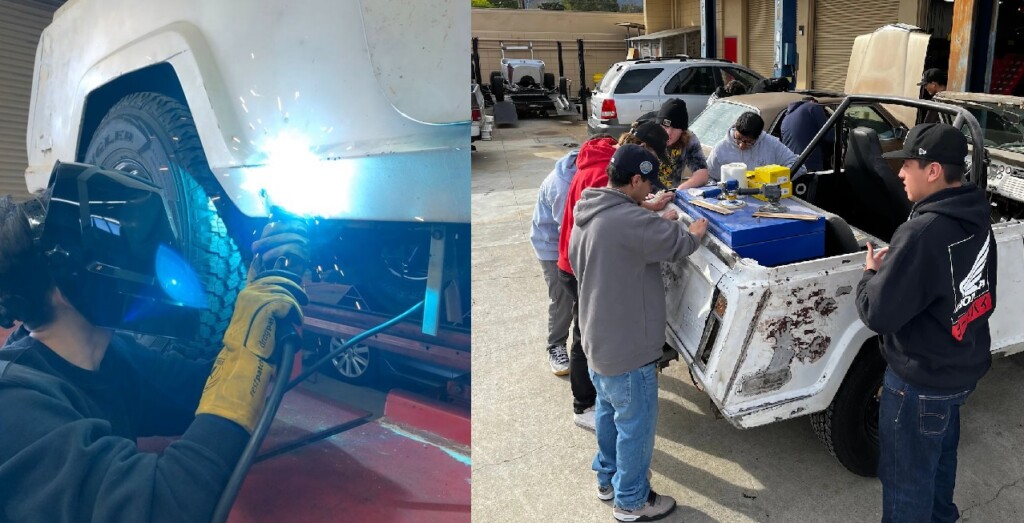
Students spent more than a year working on the vehicle. (Bob Mauger)
“The kids are learning how to give back,” Mauger told the Washington Post. “They’re not just learning how to fix their own car, but they’re learning how to be a good human. That’s what the world needs.”
The engine needed to be rebuilt with many new parts. There were structural issues as well, and the cooling system needed refurbishing along with the transmission and transfer case. There were also electrical malfunctions and a bad infestation of rust. The rebuild took 15 months, with the class regularly involving other areas of the school’s trades program like metal shop class, and Mauger regularly paying out of pocket for parts.
On July 27th, the class presented the Porter family with the car, sparkling with a new coat of metallic paint.
Tim and Michael were getting ready to depart for the Army and Air Force, and were blown away by the opportunity to actually drive the car they spent so many hours working on with their father.
“It was going to help the kids learn, which is what my husband was all about,” said Tigger Porter, who graduated from Corona High School in 1984. They had no idea who we were, but they did it. This was truly a work of love.”
SHARE This Heartwarming Story Of Family Memories Made Whole On Social Media…
Quote of the Day: “If you count all your assets you always show a profit.” – Wilson Mizner
Photo by: Andre Adjahoe
With a new inspirational quote every day, atop the perfect photo—collected and archived on our Quotes page—why not bookmark GNN.org for a daily uplift?
Economists told CNN recently that Taylor Swift’s Eras Tour is becoming such a massive phenomenon that it’s having demonstrable impacts on the US economy at large, but it’s not only stadium venues, record labels, and ticket vendors benefiting.
Everywhere she goes, Swift is making big donations to US food banks allowing them to feed hundreds of thousands of needy Americans.
The Eras Tour kicked off in Arizona, where she presented a hefty check to the Arizona Food Bank Network big enough to fill tractor-trailers with 40,000 pounds of fresh produce, and reinforce benefit programs for children who rely on school meals and seniors who rely on food stamps.
Based on the homelessness burden in Washington state, estimated as the sixth-highest in the country as a percentage of population, the Seattle-based non-profit Food Lifeline likely received a similar size gift from Swift, though they declined, according to CNN, to state how much.
Food Lifeline said it too would be using the money for fresh produce rather than canned or packaged food.
Second Harvest of Silicon Valley also received the Swift largesse, then Three Square Food Bank serving Las Vegas and southern Nevada, then Food Bank of the Rockies in Colorado.
“It is really meaningful to get a gift from someone who, like Taylor Swift, has the ability to bring so much attention to our cause and to the work that we’re doing,” Beth Martino, CEO of Three Square, told CNN.
April saw the tour arrive in Houston, where Swift donated to the Houston Food Bank.
“I’m just so glad (Swift) supports food banks, because the need is high, especially with inflation now,” Amy Ragan, the chief development officer for the charity, tells TODAY.com. “Food banks are working hard every day. And you know, it’s been tough getting food donations at some points.”
Swift also gave each of the 50-member-strong trucking team that has done the heavy lifting and the late nights that make her show possible, a $100,000 ‘life-changing bonus, leaving them all shocked and humbled.
With Florida, Louisiana, and Indiana left on the US leg of the Eras Tour, there’s still room for more charity if there’s room in Swift’s wallet, since there’s no doubt there’s room in her heart.
SHARE This Incredible Act Of Giving Back By The Megastar Singer…
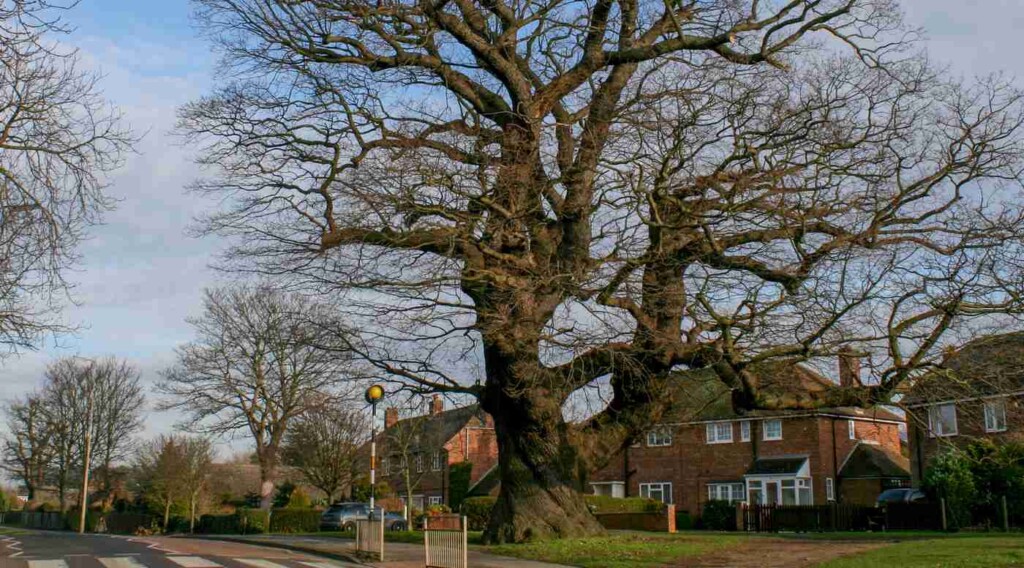
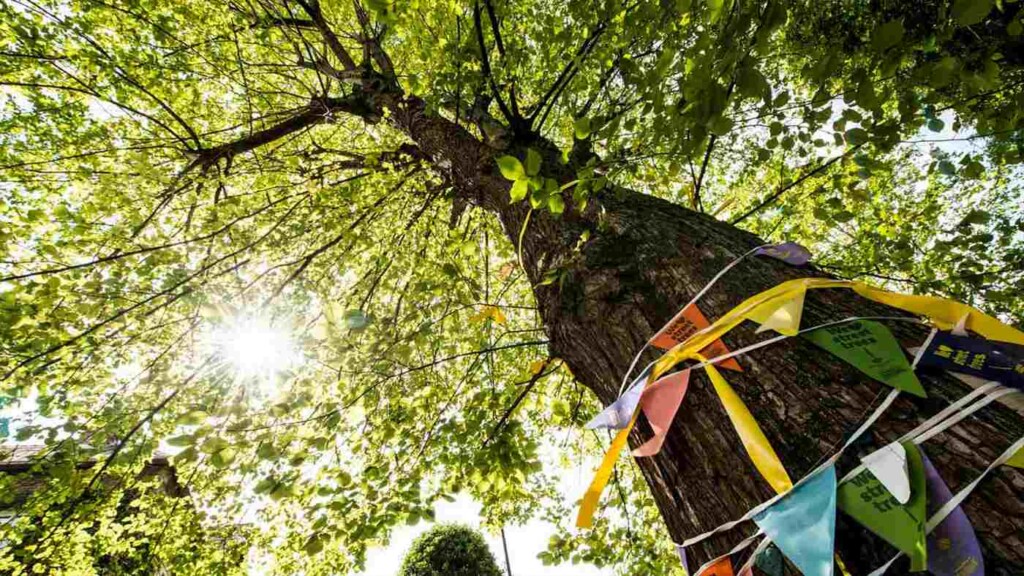
It’s a wonderful time of the year in Britain, the time to honor the Isles’ Tree of the Year.
Organized by the Woodland Trust, one of the UK’s largest nature advocacy, conservation, and educational organizations, this years’ entries revolve around a theme of honoring ancients which dwell among us in towns and cities.
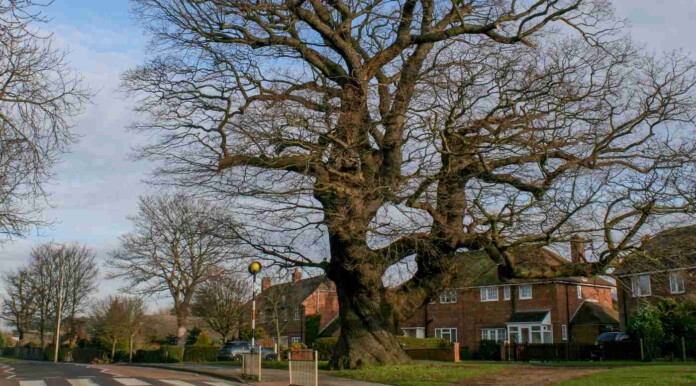
The Oak of Belton Lane—referred to in some places as the Grantham Oak, is believed to be 500 years old. It could be a favorite for the award, as it has already been nominated in previous years.
In centuries past, the top half of the tree was routinely pruned for fodder and firewood, a practice which incidently helps trees live longer. Trees cut in this way, called “pollarding” often develop bizarre shapes that seem completly out of sync with the surrounding woodland. Not a problem with this tree, since the neighborhood it sits in was built in an arch around the magnificent oak.
It’s facing stiff competition, as Sheffield’s Chelsea Road Elm demonstrates the resilience of trees even in the face of urbanism. Saved from the chop of a development company after it was discovered to host breeding habitat for the rare white-letter hairstreak butterfly, it also was one of a few hundred elm trees that survived the Dutch elm disease epidemic that killed about 60 million trees in Britain.
Sheffield’s Chelsea Street Elm – Philip Formby, Woodland Trust
“They give thousands of urban wildlife species essential life support, boost the UK’s biodiversity and bring countless health and wellbeing benefits to communities.”
Another strong contender is the Crouch Oak of Addlestone, believed to have sheltered Queen Elizabeth I and her entourage as they had a picnic beneath its boughs.
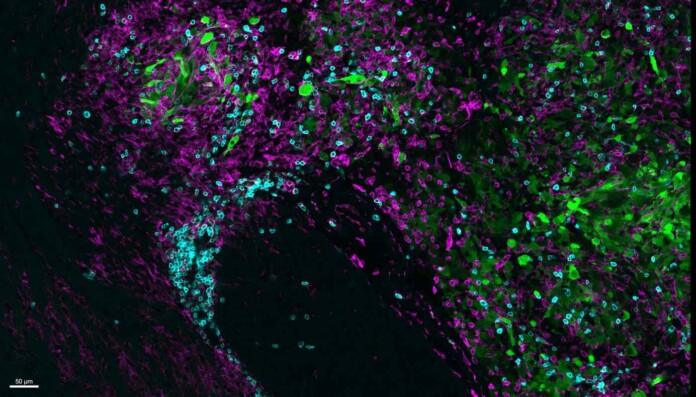
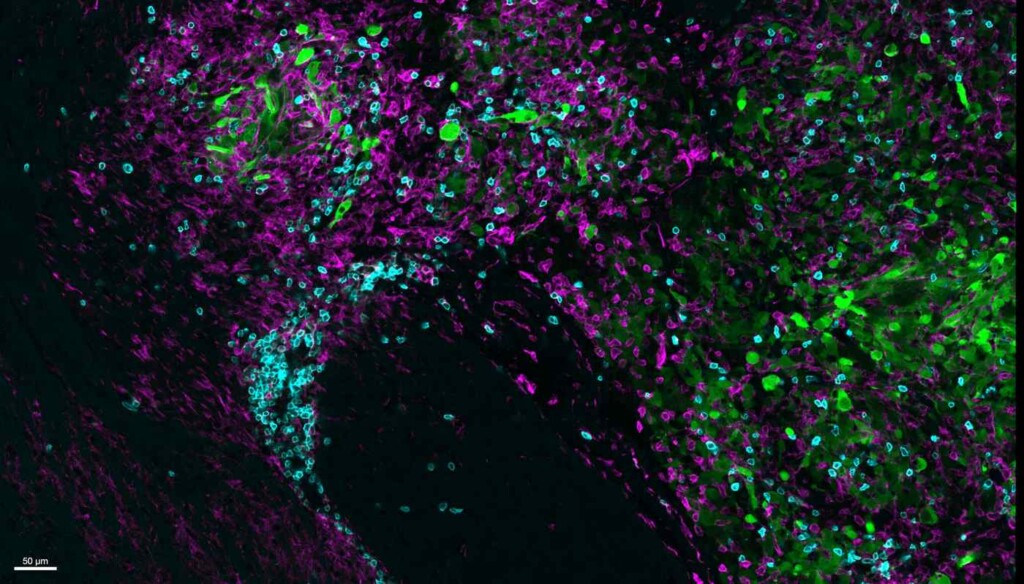
Anti-CTLA-4 therapy induces immune system's killer T cells (cyan) to infiltrate glioblastoma (green) and promote an anti-tumor partnership with brain-resident immune cells called microglia (magenta).
Credit: Salk Institute
Anti-CTLA-4 therapy induces immune system’s killer T cells (cyan) to infiltrate glioblastoma (green) and promote an anti-tumor partnership with brain-resident immune cells called microglia (magenta). Credit: Salk Institute
A team of scientists at the Salk Institute have found that a particular kind of immunotherapy was able to train the brain’s ‘invisible scalpel’ on an incurable form of brain cancer in mice.
Glioblastoma is the most common form of brain tumor, and while it’s also the most deadly, our brains come equipped with the immune cells needed to destroy them.
The problem is, cancer tumors have mechanisms that allow them to evade the detection of the immune system. That’s where immunotherapy comes in. While not universally effective, many tumors can be treated or even cured by immunotherapy, which helps the immune system see through these evasive mechanisms and destroy the cancer.
Professor Susan Kaech, director of the NOMIS Center for Immunobiology and Microbial Pathogenesis, led a team to investigate whether immunotherapy could be used on glioblastomas by experimenting with an immunotherapy drug called anti-CTLA-4 and two specialized immune cells called CD4+ T cells and microglia respectively.
“There are currently no effective treatments for glioblastoma—a diagnosis today is basically a death sentence,” says Professor Susan Kaech, senior author of the paper published in the journal Immunity.
“We’re extremely excited to find an immunotherapy regimen that uses the mouse’s own immune cells to fight the brain cancer and leads to considerable shrinkage, and in some cases elimination, of the tumor.”
Both anti-CTLA-4 and CD4+ T cells have been overlooked or unfavored in clinical research on account of there being more effective alternatives identified in the early years of immunotherapy research.
Regarding anti-CTLA-4, the more-effective alternative, PD-1, never worked in glioblastoma models. Anti-CTLA-4, however, does—by blocking cells from making the CTLA-4 protein, which, if not blocked, inhibits CD4+ T cell activity.
The researchers found that by allowing T cell activity to take place, CD4+ T cells secreted a protein called interferon-gamma that caused the tumor to throw up “stress flags” while simultaneously alerting microglia. A specially adapted immune cell for the brain environment, they started eating up these stressed tumor cells.
Each stressed-out cell the microglia ate led the tumor to create more interferon-gamma, leading to more consumption until the whole tumor was devoured.
“We were stunned by this novel codependency between microglia and CD4+ T cells,” says co-first author Siva Karthik Varanasi, a postdoctoral researcher in Kaech’s lab. “We are already excited about so many new biological questions and therapeutic solutions that could radically change treatment for deadly cancers like glioblastoma.”
Next, the researchers will examine whether this cancer-killing cell cycle is present in human glioblastoma cases. Additionally, they aim to look at other animal models with differing glioblastoma subtypes, expanding their understanding of the disease and optimal treatments.
SHARE This Big Brain Cancer Breakthrough On Social Media…
Quote of the Day: “Happiness is not a goal; it is a by-product.” – Eleanor Roosevelt
Photo by: Sander Weeteling
With a new inspirational quote every day, atop the perfect photo—collected and archived on our Quotes page—why not bookmark GNN.org for a daily uplift?
Joe Schilling died saving seniors in Maui – released by Penny Schilling
Joe Schilling died saving seniors in Maui – released by Penny Schilling
Hula dancers swayed to the ocean waves on a South Carolina beach, all paying tribute to a hometown hero who died saving seniors in the midst of the Maui wildfire in Hawaii.
Joe Schilling had moved to downtown Lahaina recently, where he lived in an apartment building that was caught up in the fires which devastated the town last week.
“From what we know, when Joe started to evacuate, there were elderly people in his community who were stranded,” said Joe’s sister, Penny Schilling.
“He helped an elderly woman to escape and she is the one who verified what happened,” said Schilling.
Apparently, Joe had gone back into the building to help another 4 senior Maui citizens who were unable to leave. He collected them in his apartment where he sent a text message to Penny saying he was trying to keep the smoke out.
The luau on Surfside Beach, SC helped raise money for those impacted by the fires, and for Americans looking to chip in, there are several organizations that are doing work there including the American Red Cross, the Kākoʻo Maui Fund organized by The Hawaiian Way, and Hawaiian Community Foundation.
KA’ANA LIKE This Story With Your Friends On Social Media…
In Bordeaux, a British powerlifter with Down Syndrome is a walking, pressing, squatting inspiration to all who watch him compete, and he’s just bagged the 5th gold medal of his career.
At just 127 pounds (57 kg) Dan MacGauley took first place in the European Bench Press Championship, posting 154 lbs. (70 kg) classic, and 198 lbs. (90 kg) equipped—meaning with a weight belt and gloves—which was a new personal best.
The 33-year-old who was told he’d “never achieve anything,” was already a world champion, four-times Commonwealth champion, and British champion before his European debut earlier this month in Bordeaux.
Dan, who has autism and is deaf in his left ear, underwent two rounds of open-heart surgery when he was a toddler. He’s overcome as many obstacles as one could imagine to take home the double gold for classic and equipped.
“Loads of people have said to us that they go to work and come home after a long day and it’s an effort to go to the gym,” said his mother Judith, who’s also a powerlifter. “But that they see Dan there, smiling and laughing despite all his problems, and it gives them the motivation they need.”
Dan McGauley at his gym in Colchester – SWNS
Dan was temporarily wheelchair-bound and first got into powerlifting more than ten years ago when he visited the gym to lose weight. He won his first gold medal at an international competition during the Powerlifting Commonwealth Championship back in 2015 in Vancouver.
McGauley’s personal best (equipped) is 733 lbs (332 kg) with 256 in the deadlift, 286 in the squat, and 198 in the bench.
“When he’s powerlifting he likes carrying out the same routine over and over again—it comes naturally to him,” said Judith. “When he’s underneath the bar, that bar doesn’t know him from anyone else. There is no distinction made because he’s got problems.”
“He is just a brilliant person. He loves the sport and everyone around him support him doing it.”
SHARE This Barely-Believeable True Inspiration With Your Friends…
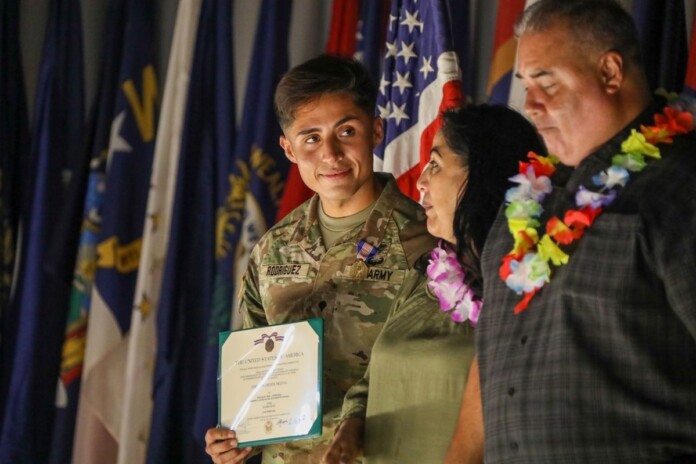
Army Specialist Rene J. Rodriquez receives the Soldiers Medal
Army Specialist Rene J. Rodriquez receives the Soldiers Medal
On July 19th, Specialist Rene J. Rodriguez, an El Paso native and Army combat medic, was recognized for his heroic actions during a Soldier’s Medal award ceremony for saving a woman from a brutal assault.
Leaving Schofield Barracks that afternoon, Rodriguez was heading to the North Shore for the weekend, when he noticed a woman being violently assaulted outside of a coffee shop in Wahiawa.
It wasn’t only the violent act he saw, but a crowd of bystanders and onlookers doing nothing to stop it.
With complete disregard for his own safety, he made the decision to intervene. Putting himself between the attacker and the woman, Rodriguez took the brunt of the attack, shielding the woman while encouraging her to climb into his vehicle.
“He [the attacker] comes back around, opens my door, opens the passenger door and pulls the lady out, and begins to beat her again. I run out of my driver’s side, I go the passenger side and I push him, he pushes me back,” Rodriguez recalled in an interview.
His pushing and shoving allowed the woman to get back in the car.
“I am about to sit down,” the Army Specialist continued, “and this is when he punches out the window and attempts to pull out. So I look to the side. And I see that he’s trying to unlock the car. At this point. This is when I started my car, I put it in drive. I just drove away.”
Introduced in July 1926, the Soldier’s Medal is the highest Army individual decoration honor a Soldier can receive for an act of valor in a non-combat event. Over 18,500 Soldiers have received the decoration since its inception.
Of the 18,500 soldiers that have received the award, only 241 in the regular Army have been so honored—or around about 1/20th of 1% of all soldiers on active duty.
“Receiving the Soldier’s Medal is a humbling experience that reminds me of the values we hold dear as soldiers: courage, selflessness, and dedication to the greater good,” Rodriquez said in a statement.
SHARE This Man’s Heroism With Your Friends On Social Media…
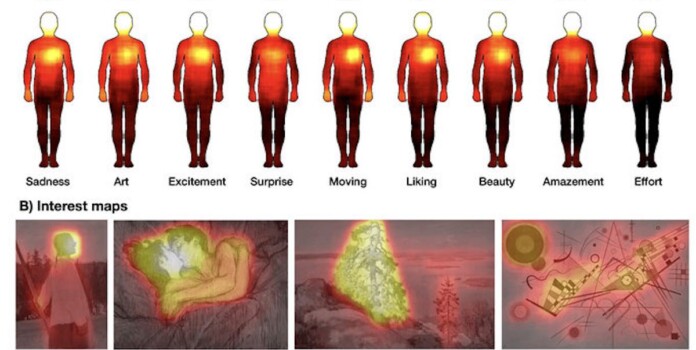
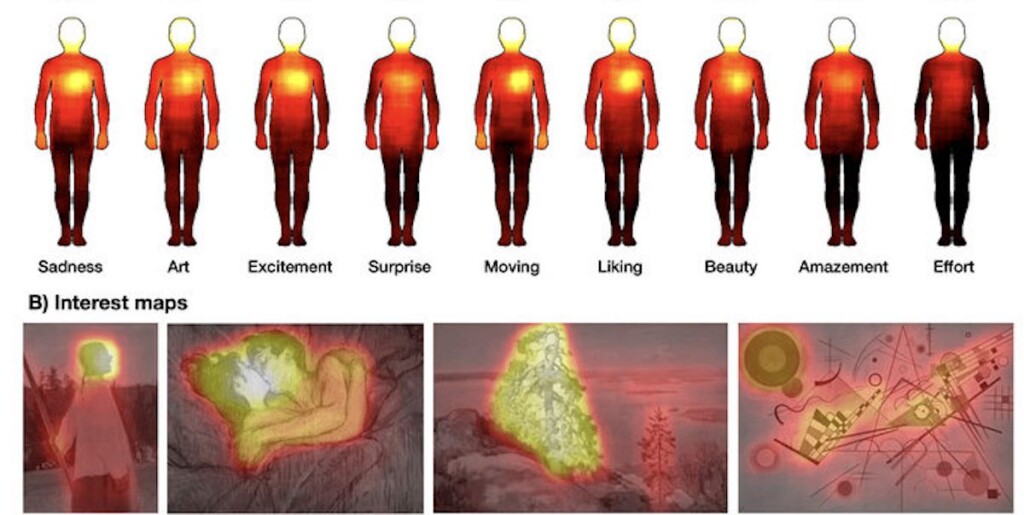
The image shows the bodily sensations evoked by art – University of Turku / SWNS
The image shows the bodily sensations evoked by art – University of Turku / SWNS
People all around the world are drawn to creating and consuming art, and human emotions are often a central subject in visual artworks as well as in music and performance art.
However, the mechanisms underlying the feelings that art evokes remain poorly characterized.
Now, a new study reveals how viewing visual art affects our emotions. The research subjects viewed different kinds of artworks and described the feelings that the art stimulated in their bodies.
The researchers recorded the subjects’ eye movement while they viewed the art. In addition, the subjects assessed what kind of emotions they felt looking at each piece of art.
“Viewing the art evoked many different kinds of feelings and emotions in people,” said Professor Lauri Nummenmaa from the Turku PET Centre at the University of Turku, Finland.
“Even though many of the pieces handled sad or scary topics, the emotions that the people experienced were mainly positive. The bodily sensations evoked by art also contributed to the emotions: the stronger the body’s reaction was to the artwork, the stronger were the emotions experienced by the subject,” he said.
Altogether 1,186 people from different countries participated in the study and they assessed the emotions felt while engaging with over 300 artworks. The research was conducted with online surveys and eye movement recordings in the laboratory.
Viewing visual art pieces evoked a wide range of emotional experiences that formed five broad clusters: aesthetic dimensions, positive emotions, negative emotions, touching feelings, and feelings of surprise and effort.
Empathy, anger, fear, and elegance evoked experiences almost everywhere in the body, whereas liking, beauty, amazement and effort elicited sensations mainly in the head area.
The Finnish authors of the study published in the journal Cognition & Emotion also revealed that it was the human face and figure that got the most attention.
“In the artworks, human figures were the most interesting subject and were looked at the most. People have a tendency to empathize with each other’s emotions and this is probably also the case when we view human figures in art,” said team member Riitta Hari from Aalto University. “The human emotions presented in art pieces can be absorbed by the viewer unnoticed, through so-called mirroring.”
Dr. Nummenmma suggests that this research could be useful in mental health therapies.
SHARE The Science Of Art With Scientists Or Artists You Know…
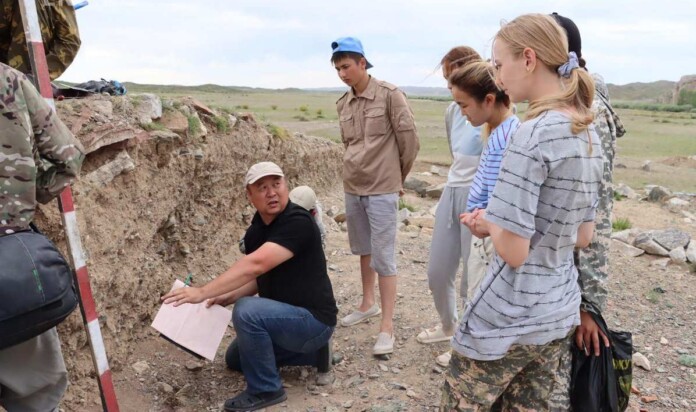
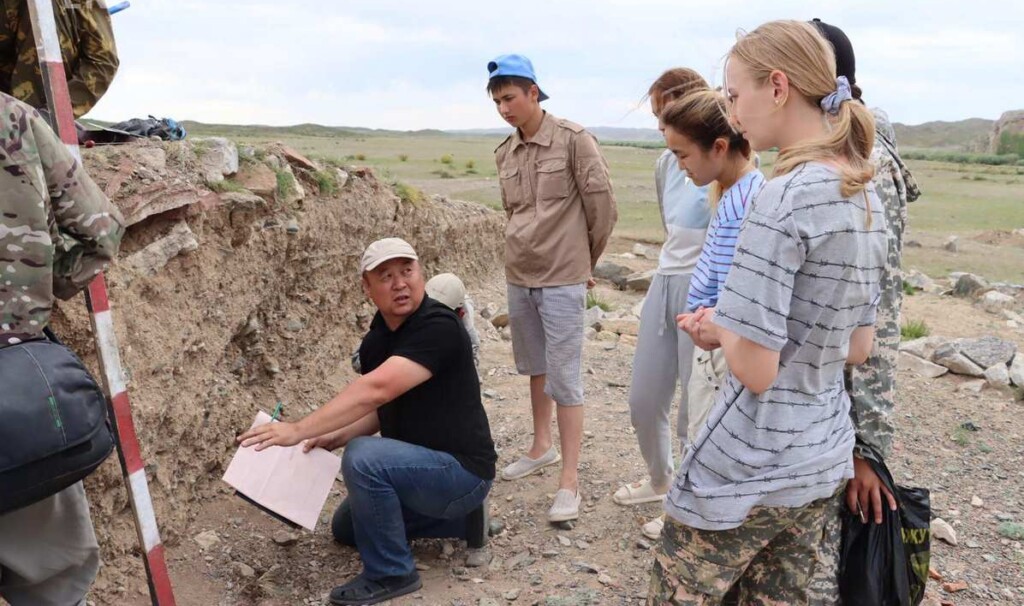
credit - L. N. Gumilyov Eurasian National University
credit – L. N. Gumilyov Eurasian National University
A large hexagonal step pyramid has been discovered in the most unlikely place: the grassy steppes of Kazakhstan.
While typical of Mesopotamian, Egyptian, Mesoamerican, Nubian, and some South and East Asian cultures, the nomadic horse tribes of the steppe are not known for monumental stone pyramidal architecture.
Nevertheless, dating back 4,000 years ago to the Bronze Age, the step pyramid (or is it a steppe pyramid) is 500 square meters in area, and is described by a national team of archaeologists as a “sophisticated and complex structure.”
Located in a place called Kyrkungir near Toktamys village in the Abai region of Kazakhstan’s far east, interest in the site arose in 2014 when funerary mounds were discovered there containing burial goods of ceramic vessels, food offerings, bronze beads, and other jewelry.
Announced recently by the Archaeology and Ethnology Department of the Eurasian National University, the pyramid has been under excavation for some time, and is the first to ever be found on the Eurasian steppes.
“The steppe pyramid is built with great precision, it is hexagonal. There are thirteen meters and eight rows of stones between each face,” said Ulan Umitkaliyev, head of the department, in a statement.
A much larger black stone with a flat top was arranged in the corner of each face.
credit – L. N. Gumilyov Eurasian National University
“It is a very sophisticated complex structure with several circles in the middle. The exterior walls of the structure of this complex are dominated by images of various animals, especially horses.”
These decorations have led the team to believe that the pyramid may have been a worship center for a horse cult. Thought to have occurred sometime between 1,000 and 200 years before the construction of the pyramid, the domestication of the horse changed the lives of steppe peoples, from the ancient Saka and Butai cultures to the Mongols of the Middle Ages, forever.
With six sides, each measuring 13.8 meters in length, the total footprint of the structure would span around 500 square meters, or around 5,300 square feet—the same as a luxurious American home with a 3-car garage. It’s unclear how high the pyramid would have been.
Long appreciated in the historical record for their roles as conquerors, warriors, and traders, it seems there is still more to be learned of the people of the steppe.
SHARE This Groundbreaking New Discovery With Your Friends…
Quote of the Day: “There is no limit to the power of loving.” – John Morton
Photo by: Alok Verma
With a new inspirational quote every day, atop the perfect photo—collected and archived on our Quotes page—why not bookmark GNN.org for a daily uplift?
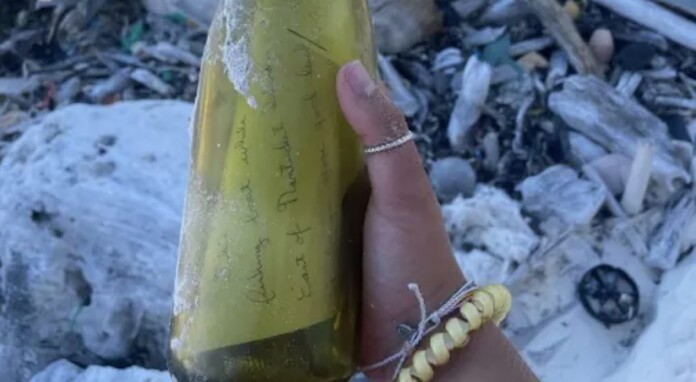
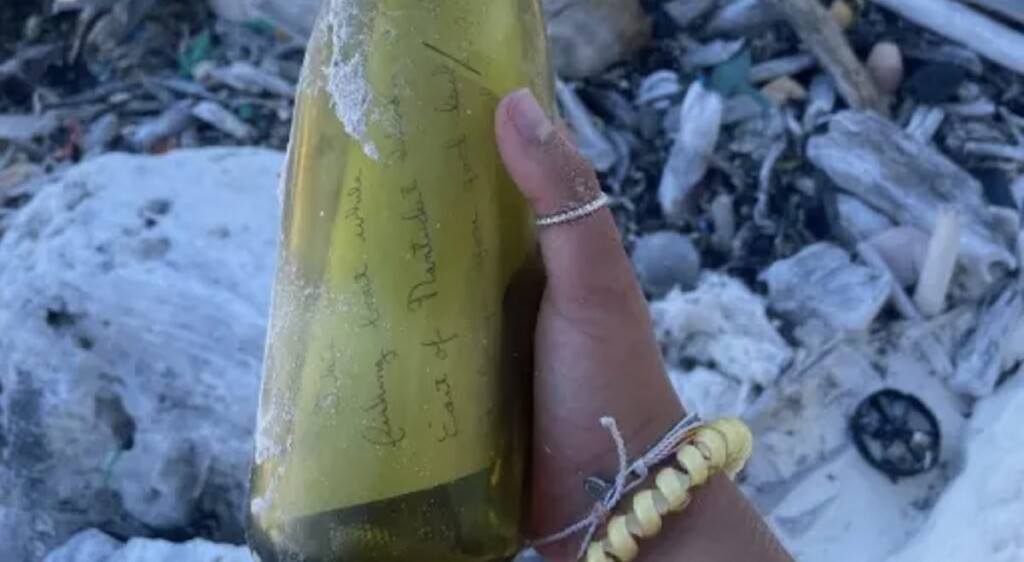
Cassidy Beach holds bottle she found on South Caicos island that Pennel Ames tossed
Cassidy Beach holds bottle she found on South Caicos Island that Pennel Ames tossed
Ms. Cassidy Beach was recently the latest in a long chain of people to be walking along a beach or a harbor and see a dark green bottle with a letter in it.
This one she found on a beach in the archipelago of the Turks and South Caicos Islands, in the Caribbean north of Haiti. Dated September 20th, 2004, it was cast adrift by Mr. Pennel Ames, a commercial fisherman from Nantucket.
Between 2000 and 2006, Ames threw hundreds of these bottles off his boat into the Great South Channel. They have washed up and been found in Portugal, Spain, France, Ireland, Great Britain, Florida, all over the Caribbean, and the Canary Islands.
80 people have taken the time to remove the artificial corks, read the letter inside, and write back.
Together with his wife Sharon and their two daughters, Pennel Ames perfected the techniques for preserving penned paper inside glass, and have every once in awhile enjoyed pulling a strange letter out of the mail and reading where their bottles have arrived.
“You get your mail and you kind of know your bills and the familiar people who send stuff to you,” Mrs. Ames told The World. “But then, all of a sudden, you get an envelope and you go, ‘Oh, wow, I don’t know that person. That’s a bottle letter.’”
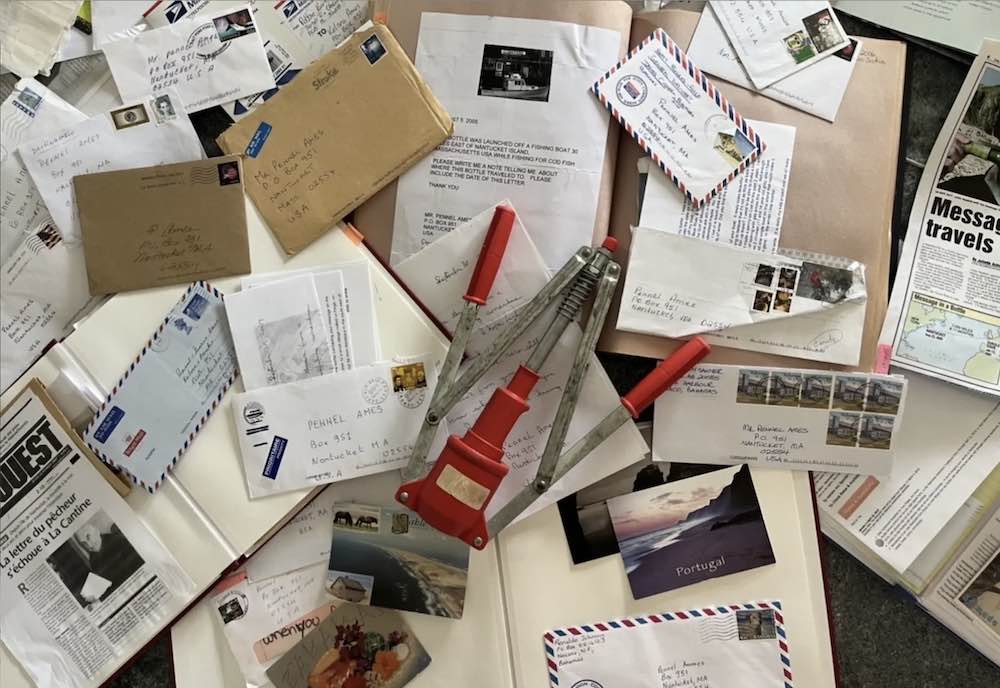
Letters from people who found bottles thrown by Pennel Ames – Courtesy of his wife, Sharon Ames
Sometimes they’re in English, but often they’re in Spanish, owing to the Canary Current bringing their bottles down to countries like Cuba and the Dominican Republic.
The currents of the Atlantic Ocean keep all the bottles north of the Equator, moving in a big ocean “gyre” in a clockwise motion around the North Atlantic.
Still living in Nantucket, they have scrapbooks of all the letters and envelopes, photographs, postcards, news articles, and printed emails from everyone who has found a bottle and written back. They have a whole book for France alone, a nation special to the Ameses because of an incident where a Frenchmen found one, and then his son also found one years later.
Ms. Beach was working for the NOAA on acoustic data from harbor porpoises and dolphins and wrote to the Ameses that this would bring her to Massachusetts, not far from their house.
The World reported that she stopped in to deliver their letter, and her reply, personally.
“As soon as I walked in the cottage, they had a whole dining room table full of letters and books,” Beach said. “They had one book dedicated to France alone. And it was just really cool.”
SHARE This Cool Intergenerational Story Of Connection With Your Friends…
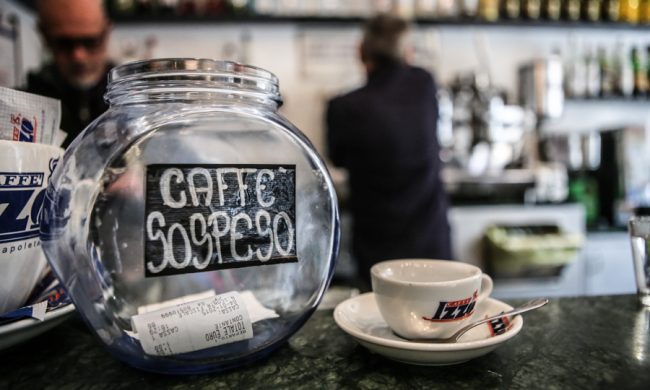
A jar for paying forward coffee in Italy – credit Devid Rotasperti
Humans are hardwired to feel good when performing acts of kindness towards others, an imperative trait in any animal that evolves to live and hunt in social groups.
This is such a truism that performing random acts of kindness for other people was more effective in reducing symptoms of depression than specifically planning activities for the sake of enjoyment, a new study found.
The study sought to test methods of cognitive behavioral therapy, a non-pharmaceutical treatment for depression and anxiety that’s proven to work through confronting patterns of thought and behavior that lead to depressive or anxious thoughts, and consciously moving away from them by retraining one’s brain.
The methods included random acts of kindness, such as buying a stranger’s coffee at Starbucks or baking cookies for the mailman, as well as planning fun activities twice a week and “cognitive reappraisal,” which coaches people with depression or anxiety to record triggering thoughts, and actively contemplate what would make the resulting stress diminish.
The participants would record a variety of feelings as measurements before the study, during the study, and five weeks after its conclusion. These included feelings of social isolation, self-consciousness in public, or life satisfaction.
“We did think that, if there was going to be an advantage of one group over another, it might be the thoughts record group, since that’s such a tried-and-true way of addressing depressive [and anxiety] symptoms,” coauthor Jennifer Cheavens of Ohio State University, told the Greater Good Magazine.
“But the kindness group did as well or better, and that group also had increases in social connection that didn’t happen in the other two groups.”
Indeed, all three groups experienced improvements in the measurements. The random acts of kindness group had a much bigger impact on positive cognition and emotions early on which tapered off as the study period advanced. The thoughts records, or cognitive reappraisal group had the opposite effect, where it started off negative, but became stronger and stronger over time.
Another surprise was just how easy it was for the random acts of kindness group to perform the kind acts.
“I was surprised it was not a particularly hard sell,” Cheavens continued. “The people in the acts of kindness group had better uptake in some ways than the people in other groups.”
The kindness acts is a particularly important finding because it necessitates a connection with other people. Social isolation is a high-risk factor for survival; the same as smoking 15 cigarettes a day.
Cheavens felt that as well as being a powerful therapeutic strategy, random acts of kindness can be “add-on therapy” to pretty much most mental health disorders, reasoning that anytime we can get out of our own heads, it seems to be of benefit to our well-being.
ACT On This Finding And Perform A Random Act Of Kindness Towards Others…
The year was 1998, and Malaysian lawyer Ahmad Zaharil was a bit confused when he saw a distressed Indian-Malaysian woman in her 50s being brought into a courtroom to be charged with shoplifting.
Zaharil felt compelled, he explained in a TikTok video, to ask her what her case about, to which she replied that it was because she stole a pencil box worth 18 Malaysian ringgit, or just over 5 American dollars, from a supermarket.
She had promised, she told Zaharil, that she would give her son a pencil box if he finished first in his classroom exams. He was in fourth grade and passed his exams with flying colors.
The lawyer and father of five asked for the case to be postponed while he went to gather evidence of the case, reasoning that if she were to be jailed, no one would be at home to care for her son. The teacher confirmed that indeed her son was the top student, but upon offering double the value of the pencil box to the owner of the supermarket in exchange for the case to be dropped, the man declined.
Zaharil took up the case for free and managed to get jail time and fines waived in exchange for a 1-year good behavior promise.
“Before she left, we passed the hat around and collected a couple of hundred ringgit contributed by court staff, policemen, and me. We handed over the money to the woman,” Zaharil, 57, told The Star. “She left after expressing her gratitude and I never saw her again.”
In 2018, 20 years later, a young lawyer approached Zaharil one day in court.
“Hello, Sir. You may not know me,” he began, “but I am the son of the cleaner you helped 20 years ago. Remember the pencil box case?”
Ahmad Zaharil, who said it was because Malaysians are “one big family” that he chose to help the woman – Facebook
“I almost fainted when he told me who he was,” said Zaharil. “It was heart-warming and one of the happiest moments in my life.”
Malaysia is a fascinating country, with several major ethnic groups living under a parallel legal system of civil law for non-Muslims, and Sharia court for cases in which all parties are Muslims.
Zaharil, a Malay, said that it was this spirit of national unity and brotherhood that led him to help the woman, an Indian by origin, get out of a jam. He maintains contact with the family and visits them for the Hindu festivals Diwali, and Hari Raya.
SHARE This Generous Lawyer’s Story Of Kindness With Your Friends…
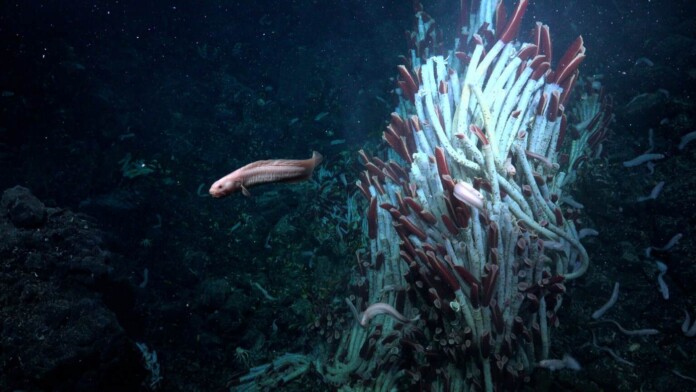
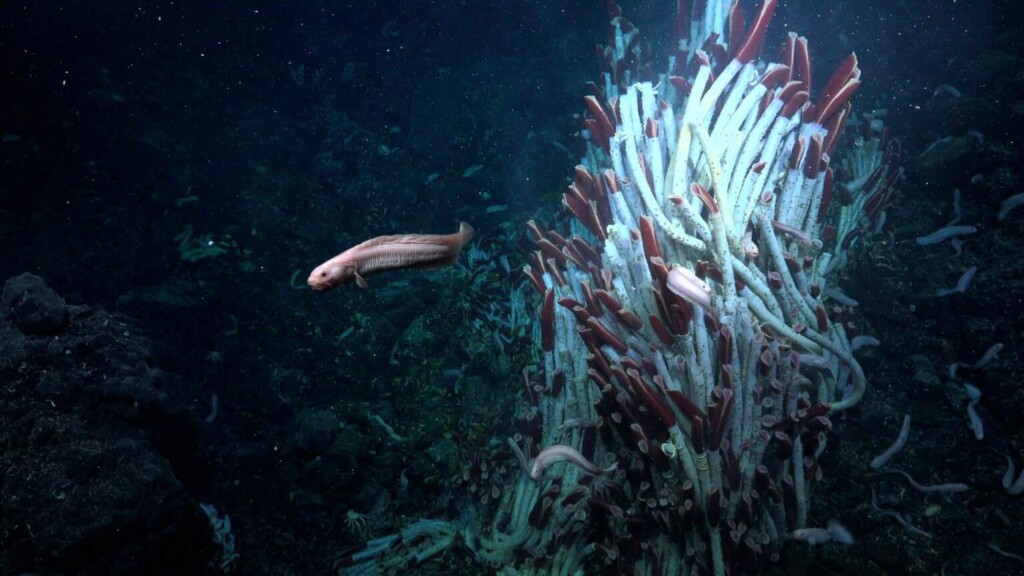
Eelpout swims by a tower of tubeworms. (ROV SuBastianSchmidt Ocean InstituteCC BY-NC-SA)
Eelpout swims by a tower of tubeworms. (ROV SuBastianSchmidt Ocean InstituteCC BY-NC-SA)
Exploration and mapping of deep-sea life has come on in leaps and bounds over the last two decades, and the discoveries have been worth their weight in gold—like this new finding from the Schmidt Ocean Institute of life beneath undersea volcanic vents.
At a well-studied undersea volcano on the East Pacific Rise off Central America, an international team of marine biologists and oceanographers have discovered ecosystems of worms, snails, and bacteria living underground, under the seafloor.
Using an underwater robot, the science team overturned chunks of volcanic crust and discovered these narrow cave systems. Animals enter and exit them freely, adding a new dimension to hydrothermal vents, showing that their habitats exist both above and below the seafloor.
“On land we have long known of animals living in cavities underground, and in the ocean of animals living in sand and mud, but for the first time, scientists have looked for animals beneath hydrothermal vents,” says the institute’s executive director, Jyotika Virmani.
“This truly remarkable discovery of a new ecosystem, hidden beneath another ecosystem, provides fresh evidence that life exists in incredible places.”
Hydrothermal vents are fascinating underwater hotspots of life. As corals are the foundational creature of reefs, tube worms are a foundational species on the vents. However, their young have never been seen on the vents themselves, leading some scientists to hypothesize that they travel beneath them to reproduce.
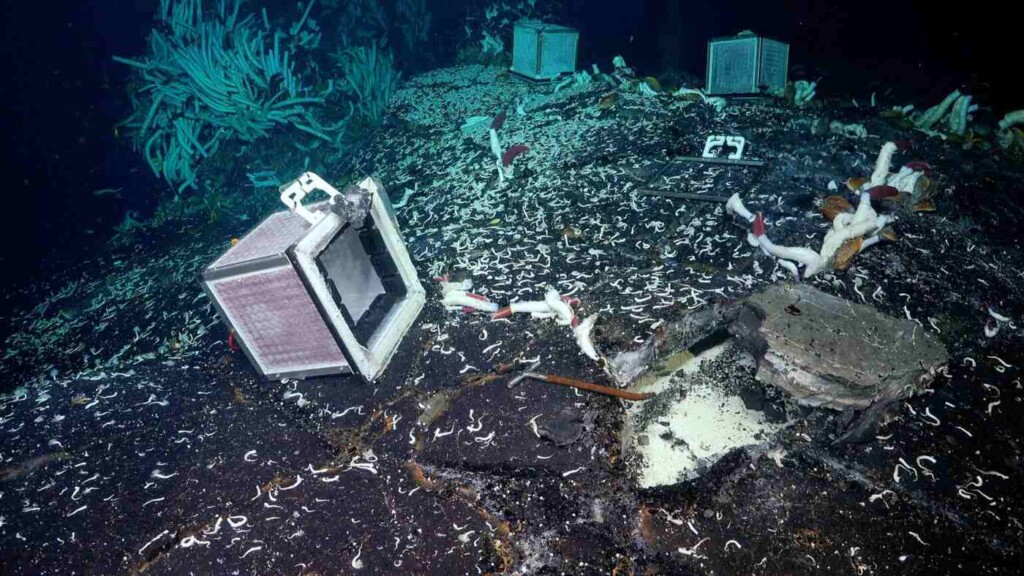
To determine if the worms or other animals travel through vent fluids, the science team used Schmidt Ocean Institute’s underwater robot, ROV SuBastian, to conduct experiments by gluing mesh boxes over cracks in the earth’s crust. A non-toxic red pigment was released into the mesh box that colored all the animals inside.
The mesh box experiment. (ROV SuBastian/Schmidt Ocean Institute/CC BY-NC-SA)
When the boxes were removed after several days along with the crust they saw that animals living below the surface in hydrothermal cavities emerged and could be seen uncolored.
The discovery is reminiscent of other surveys of life in the deep places of the sea to which few people travel.
Undersea volcanoes off of Australia’s Cocos Keeling Islands were recently surveyed for life, and all manner of wild and wonderful species were discovered there.
“The discoveries made on each Schmidt Ocean Institute expedition reinforce the urgency of fully exploring our ocean so we know what exists in the deep sea,” said Wendy Schmidt, president and co-founder of Schmidt Ocean Institute. “The discovery of new creatures, landscapes, and now, an entirely new ecosystem underscores just how much we have yet to discover about our Ocean–and how important it is to protect what we don’t yet know or understand.”
WATCH the great video footage from the survey below…
SHARE This Beyond-Fascinating Deep-Sea Science With Your Friends…