












All News - Page 284 of 1724 - Good News Network
Home Blog Page 284

New Solar System Found Where Planets Orbit Two Suns—Just like Luke Skywalker’s Home in Star Wars

- Fair use. Star Wars TGC: Edge of Darkness (Card: Sandcrawler)
– Fair use. Star Wars TGC: Edge of Darkness

A new solar system has been found where planets orbit two suns just like on Luke Skywalker’s home planet in Star Wars.

It’s the fifth multi-star system ever discovered, and the third one which features two stars.

Tatooine, the desert home planet of Luke and Anakin Skywalker was imagined as a desert world with two suns when Star Wars was first released in 1977. Fans would have to wait more than 30 years for the confirmation that such systems actually exist with the discovery of Kepler 16, a binary star system with a gas giant planet in orbit around them.

Now astronomers at the University of Birmingham have discovered another binary star system called BEBOP-1 after the project which funded its discovery—”Binaries Escorted By Orbiting Planets,” or BEBOP.

Three years ago the Birmingham researchers Dr. Matthew Standing and Dr. Lalitha Sairam found that a planet, called TOI-1338b, orbiting these two suns had already been spotted by NASA’s TESS (Transiting Exoplanet Space Surveyor) space telescope.

That planet was found using the transit method, meaning it was discovered when a telescope recorded the drop in perceived light coming from the host star every time the planet orbited in front of it. Over 5,000 exoplanets have been found since the first two were identified in 1992; most via the transit method.

MORE EXOPLANET NEWS: On Distant Planets that Don’t Rotate, Life May Exist Under Skies of Permanent Dawn and Dusk

They were able to register the planet’s size, but not its mass. In the study of exoplanets, mass is the more important finding, as it can inform whether the planet is rocky or gaseous.

Using state-of-the-art instruments installed on two telescopes in the Atacama Desert in Chile, the team tried to measure the mass of TOI-1338b. Despite their best efforts following years of work, they could not achieve their goal, but instead discovered a second planet—BEBOP-1c—and measured its mass.

Artist’s impression of Kepler 16 – NASA – JPL – Caltech

“BEBOP-1c has an orbital period of 215 days, and a mass 65 times larger than Earth, which is about five times less than Jupiter’s mass,” said Dr. Standing, lead author of the paper documenting its discovery. This likely indicates it’s a gas giant.

At the moment only two planets are known in the BEBOP-1 system—what are known as ‘circumbinary planets,’ but more might be discovered in the future with repeat observations, the research team said.

MORE ASTRONOMY NEWS: Scientist Finds Saturn Doing Something Never Seen Before in Our Solar System: ‘Hiding in Plain View for 40 Years’

Although rare, circumbinary planets are important in pushing the understanding of what happens when a planet is created, according to scientists.

Discovered by the Kepler Space Telescope, several star systems in the constellation Cygnus have two stars and were the first to excite Star Wars fans. Kepler 16b, also a gas giant, was quickly dubbed “the Real Tatooine,” while a different star system designated Kepler 35, not only has a gas giant, but estimations believe there could be two rocky worlds sitting in the system’s habitable zone where the radiation and temperature are not too hot and not too cold.

Additionally, astronomers found a triple-star system in 2016 using a new instrument at the European Southern Observatory’s Very Large Telescope. A planet found there called HD 131399A(b), is one of the strangest ever found—8 times the size of our solar system’s largest planet Jupiter, and which orbits via the influence of all three stars in the system; taking 550 Earth years to finish a single revolution.

“I like to start thinking about it from when the planet is opposite all three stars,” Kevin Wagner, an astronomer at the University of Arizona who helped the discovery, told Gizmodo at the time.

“When they aren’t eclipsing, you’d see three suns in the sky. As the planet progresses in its orbit, the stars will start to grow apart, to the point where the setting of one coincides with the rising of another.”

OTHER ASTROPHYSICS: Astronomers Observe 2 Neutron Stars Colliding and the Extreme Reaction ‘Defies All Expectations’

In essence, writes the Gizmodo author, you’d have two seasons: one with three sunrises and sunsets every day, and another of perpetual daylight, where a rising star (or stellar pair) is always there to replace a setting one.

Not that anyone or anything could live on that world—being as far away from its star(s) as Pluto is to the sun, and made of gas.

SHARE The Science Behind Star Wars’ Tatooine With Your Friends… 
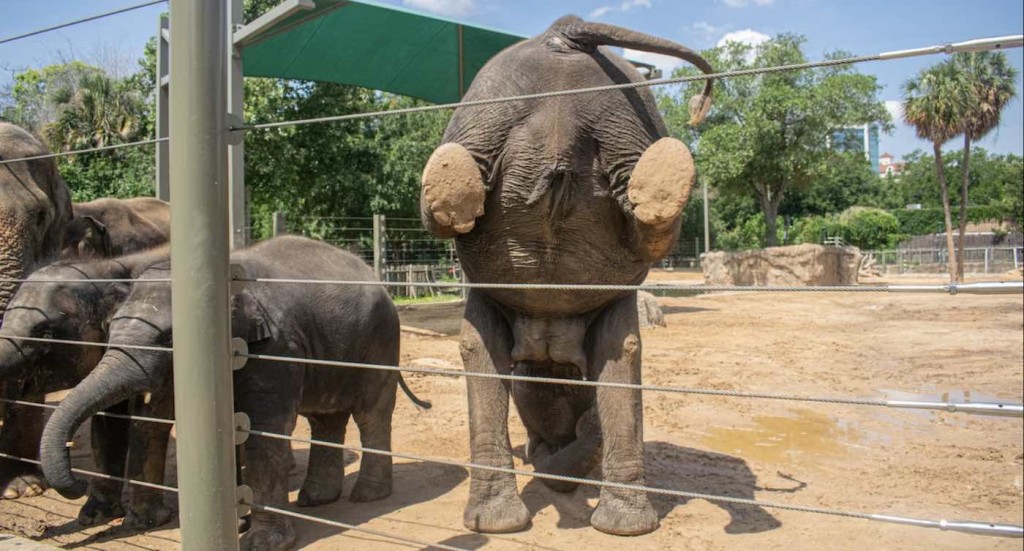
Houston Elephants Do Yoga 7-days a Week to Stay Flexible and Healthy

Jackelin Reyna Houston Zoo

Elephants are one of the holiest animals in Hinduism. Also, yoga was invented in India.

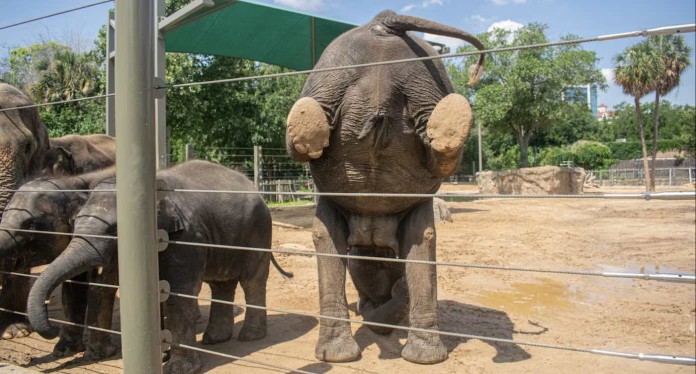
Is it any surprise then that elephants really like doing yoga? Check out this picture for example—the world’s largest and heaviest land animal doing a headstand. Can you do a headstand?

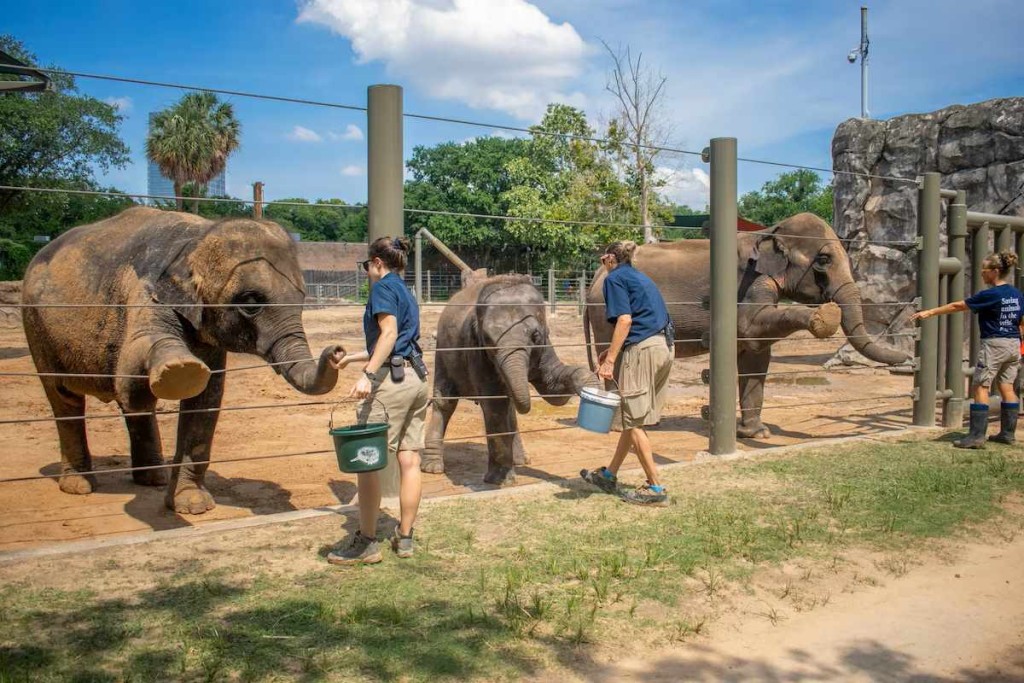
At the Houston Zoo, elephants participate in a static or slow-motion stretching practice much like yoga for between 30 seconds and 5 minutes a day to help them strengthen muscle groups while stimulating their brains and bodies.

During their yoga, the zoo’s elephant keepers are able to get a full look at their entire bodies, from trunk to tail, as well as check on their range of motion. If anything seems off, they’ll call over one of the five staff veterinarians for a check-up. To help keep them motivated to move, the elephants are rewarded with special treats like whole wheat bread, cantaloupe, raisins, or bananas, on top of their regular diet of roughage.

Tess the nearly 40-year-old mother of four and grandmother of one, pictured here standing on her head, keeps limber with the most number of moves of any of the herd. Methai, a 54-year-old matriarch, takes things a bit easier.

“Cultivating strong, positive relationships with our elephants is critical to providing them with the best healthcare to ensure their well-being is put first,” said Kristin Windle, Houston Zoo elephant supervisor.

Jackelin Reyna Houston Zoo

“The elephant yoga stretching sessions allow us to build that relationship using positive reinforcement to increase their range of motion and get eyes on their skin, feet, and inside their mouths. We can learn a lot about our elephants in these important sessions.”

MORE ZOO STORIES: Sloth Is Friends With Zookeeper and Won’t Get Out of Bed Until They’ve Had Morning Cuddles

The more intelligent an animal is, the more attention they need when kept at zoos. These are Asian elephants, which are believed to be more sensitive and generally intelligent than African bush elephants.

As any yoga practitioners reading will know, yoga, which means unity, isn’t just a way to limber up but is also extremely beneficial for cognitive exertions, whether academic or emotional.

SHARE These Elephant Yogis With Your Yoga Friends On Social Media… 

Mumbai’s ‘Museum on Wheels’ Travels to Rural Villages to Benefit Children

Museum on Wheels-credit: MOW

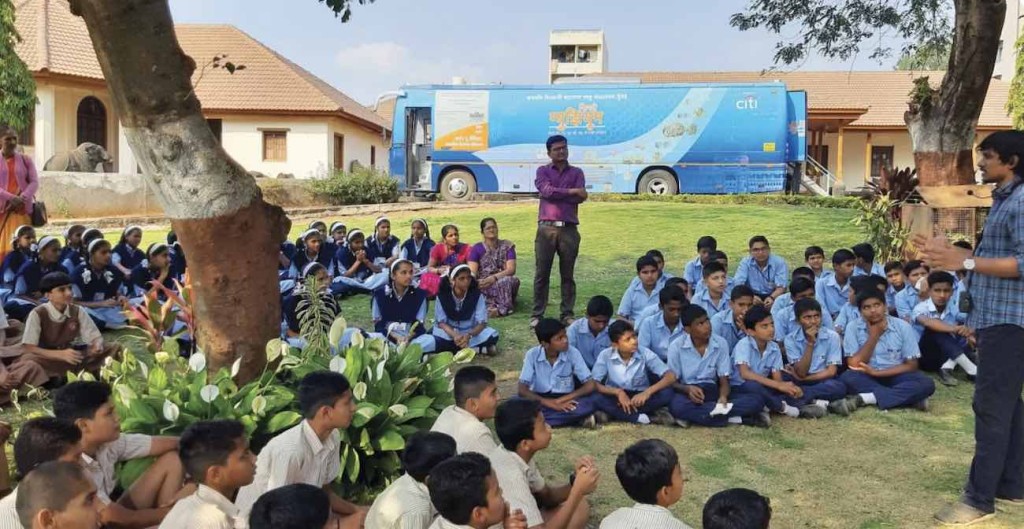
Since 2015, a mobile museum has been traveling around the most rural parts of India, introducing disadvantaged schoolchildren to the rich tapestry of Indian history—from the dinosaurs to the Mughals.

The innovative education idea has so far traveled over 50,000 miles and visited 700 cities in the states of Karnataka, Maharashtra, Goa, Gujarat, Haryana, and Delhi NCR.

The “Museum on Wheels” was dreamed up by the staff at a famous Mumbai Museum called Chhatrapati Shivaji Maharaj Vastu Sangrahalaya, who received support for the idea of a pair of large coach buses carrying museum-like exhibitions to rural communities from both parents and the government.

“Even in today’s day and time, people from rural backgrounds, especially children, do not see museums as a place that can aid learning. With this initiative, we want to change the narrative and say, ‘If you can’t visit a museum, we can bring it to you’,” says Krutika Mhatre, who spearheads the MOW project.

She told The Better India that the subject matter rotates every 6 months based on feedback from schoolteachers in the towns and cities visited.

Museum on Wheels -MOW

The overwhelming success of the MOW initiative led to the museum getting a government grant for the purchase and outfitting of a second bus in 2019.

“We wanted to start with a topic that everyone was familiar with. So we based it on Harappan civilization, and it was a great success,” said Krutika.

It makes sense—the Harappan, or Indus Valley Civilization, was the first great civilization of the Indian subcontinent, dating back to 3,300 BCE. The Harappans built the Great Baths, an archaeological find today recognized as a World Heritage Site.

Museum on Wheels – MOW

But the MOW has also featured exhibitions on the dinosaurs of Cretaceous India, traditional Indian games, Indian coinage through the ages, and other past civilizations.

Krutika remembers that not only did many of the schools they visited not have a museum in town to go to, but many of the classrooms didn’t even know what a museum was.

It’s especially important in a nation like India that is so big, where human history stretches back so far, and which is also rapidly modernizing.

SHARE This Capital Idea With Your Friends Interested In Education… 

“Gladly, as his suns fly through the Heavens’ glorious plan. Run, brothers, your race—Joyful, as a hero to victory.” – Friedrich Schiller, Ode To Joy

Quote of the Day: “Gladly, as his suns fly through the Heavens’ glorious plan. Run, brothers, your race—Joyful, as a hero to victory.” – Friedrich Schiller, Ode To Joy, the poem used in Beethoven’s 9th Symphony (translated from German)

Photo by: Will Li (cropped)

With a new inspirational quote every day, atop the perfect photo—collected and archived on our Quotes page—why not bookmark GNN.org for a daily uplift?

Firefighting Drone Can Douse Wildfires From Above the Hillsides Where Firefighters Can’t Go

Photo by ADAI / University of Coimbra

In one of Europe’s technical centers for firefighting research, a nimble drone that can carry a fire hose is being tested for quick-response firefighting.

Hovering 164 feet above a potential blaze, a pair of symmetrical jet streams can channel the water from a nearby fire engine onto mountainsides where the bulky automobile can’t get.

In a demonstration video, a pile of burning roadside brush the size of a 4-door sedan was snuffed out by the jets in about 15 seconds.

Called SAP (for “ported nozzle system” in Portuguese) the device took 4 years to manufacture at the University of Coimbra’s Forest Fire Research Laboratory.

Certain parts of Portugal have been scorched recently, more so than usual, and the firefighters working at Coimbra are looking for quicker, more flexible responses to combat small fires before they become large blazes.

Science has shown that the greater a nation’s abilities to target and contain small fires, the statistically fewer are their larger ones. This type of drone could be a critical tool for quick and early fire control.

MORE GOOD FIRE NEWS: California Tribe Reignites Age-Old Practice of Intermittent Burns to Prevent Wildfires

It’s designed to be user-friendly and as light as possible (46 pounds or so). While it’s limited in range to the length of its hoses, the developers believe it will be ideal for fires that are dangerous to approach such as those created by chemicals or explosives.

Currently, the durations of droughts across many parts of the world have reached short-term records, leaving many forests in North America, Australia, and Southern Europe vulnerable to blazes.

MORE GOOD FIRE NEWS: Europe Realizes its Shepherds and Ranchers Are Key in Preventing Wildfires

Reporting on the subject, the BBC adds that another pair of eyes in the sky—satellites—are becoming one of the most important tools for firefighters, as they can scan forest reserves for the early stages of wildfires, as well as use smart-computing to create a picture of the wind conditions.

The development comes as New York City’s air quality was suddenly made the worst in the world after winds blew the smoke from Canadian wildfires down across the Mid-Atlantic.

SHARE This Awesome Piece Of Kit With Your Friends In Firerprone Areas… 

103-year-old Mainer ‘Lobster Lady’ Celebrates Birthday Marking Her 95th Lobster Season

Credit - Wayne Gray

Virginia Oliver has already renewed her lobster fishing license for the 2023 season. Unlike other lobstermen however, for this Mainer it’s an almost century-long ritual.

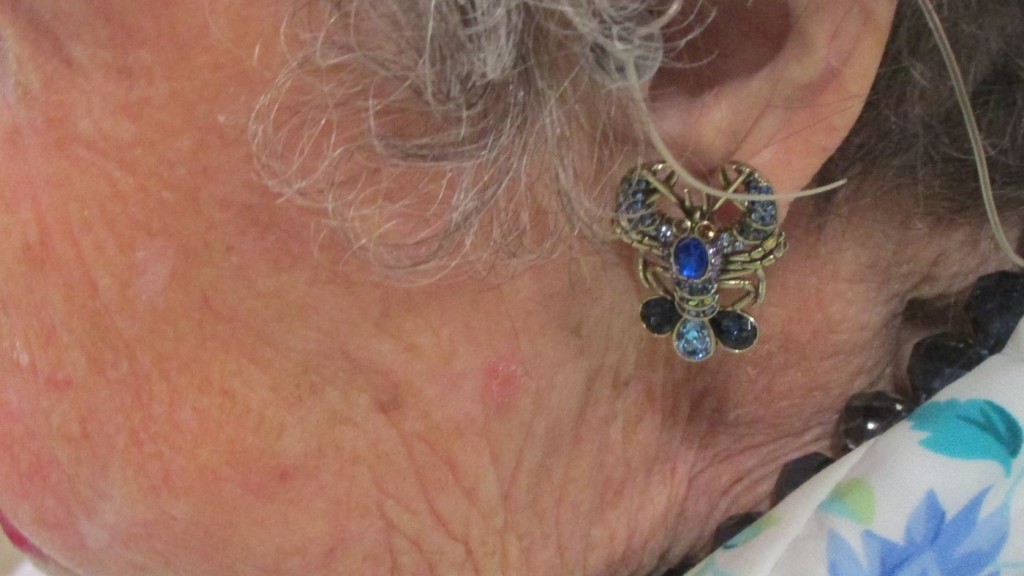
That’s because Virginia is the state’s oldest lobster fisherman—at 103 years old, an anniversary that she celebrated with friends, family, news reporters, and lobster-shaped earrings studded with jewels last Tuesday.

Affectionately named the “Lobster Lady,” Virginia has been trapping and hauling the crustaceans since she was 8 years old.

“It’s really not work to me,” the Messenger reported she had said when she was 101. “It’s just what I do. I like to do it. I wouldn’t go if I didn’t want to.”

Credit – Wayne Gray

All four of her children lobster, as well as her late husband. She says she loves the freedom that working on the water offers her.

Her life, upon reaching its 102nd year, was illustrated in a children’s book called The Lobster Lady—Maine’s 102-year-old Legend

Asked candidly when she planned to retire, she replied to News Center Maine that it would have to be when she dies, and not a moment before.

WATCH the story below from News Center Maine…

SHARE This Inspiring Woman’s Story With Your Friends… 
This Super Sniffer Dog Can Help Save the Endangered Species of Great Crested Newts

Freya the springer spaniel - SWNS
Freya the springer spaniel – SWNS

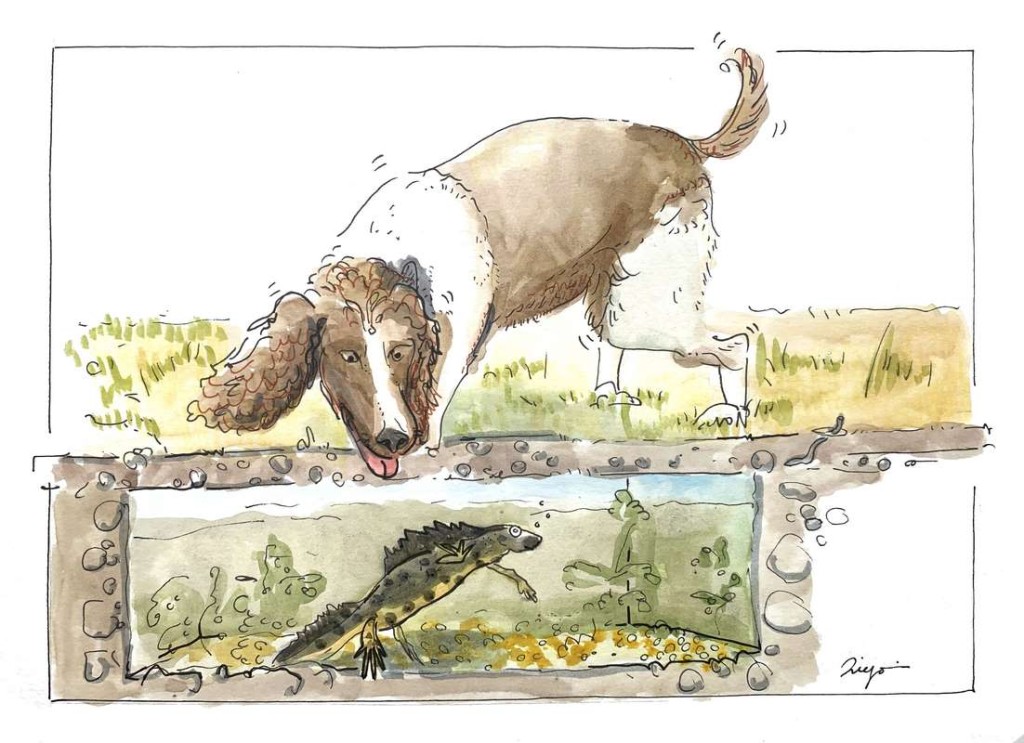
A super skilled sniffer dog called Freya is helping to track down highly-endangered great crested newts in an attempt to save the species.

The six-year-old English springer spaniel’s powerful nose can sniff out the semi-aquatic creatures even when they are hiding underground, say scientists who found that Freya was able to locate the newts 87% of the time.

The great crested newt is a species of special conservation concern across the UK as well as central and northern Europe.

While much is known about their life in the water, little is known about their behaviors on land, as they’re often underground and out of sight in mammal burrows or rocky crevices. By being so hidden, it’s difficult to gather data about them.

Great crested newts breed in ponds and spend the majority of their lives either in woodland, grassland, freshwater, wetlands, or farmlands.

They have black warty skin with a striking orange stomach and can be found across lowland England and Wales, but due to a loss of ponds across the years, the UK populations have fallen accordingly.

Freya was sent out to find how environmental factors specific to great crested newts might affect their detectability.

She was tested to see whether she could identify the newts at a range of distances and in different types of land, including sandy or clay soil either with or without vents, which are present in mammal-like burrows.

While she had two false positives during the first run-through, she had an 87% success rate overall.

OTHER UNLIKELY CONSERVATIONISTS: Island is Wonderland for Penguins Once Again After Dog Helps Eradicate 300,000 Invasive Rabbits

She was also able to detect newts in both sandy and clay-vented and unvented soils with high accuracy.

Over 128 trials, published together in PLoS One, she showed an 88% success rate, with the 12% of false calls generally being false positives.

Freya and the newts – SWNS

Freya was significantly faster at detecting great crested newts in vented soil versus unvented soil, naturally because more scent-carrying air would be leaving the burrows.

Study author Nikki Glover believes other dogs would likely require significant training to achieve success rates as high as Freya, with accuracy also depending on the specifics of the detection site.

MORE INTERESTING SCIENCE: 10-year-old’s Backyard Discovery Reveals ‘Mind-blowing’ Interaction Between Plants and Insects

“This pioneering research shows how detection dogs can be a valuable addition to the current toolbox used to locate threatened amphibian species, particularly those using subterranean shelters,” said Ms. Glover, a research student at Salford University.

SHARE This Scientist Spaniel And Their Amazing Results At Newt Finding… 

Four Colombian Children Found Alive in Jungle Five Weeks After Plane Crash

Presidency handout
Presidency handout

Four Colombian children from an indigenous community who survived a plane crash have been found alive after being lost five weeks in the jungle.

GNN reported two weeks ago about the plight of four Colombian children who miraculously survived a plane crash that killed all three adults on board.

At the time, rescuers were hot on their trail, and unconfirmed reports said they might have been found deep in the Guaviare province, but now the military rescue squad who had found cast-away items they were using to survive, finally managed to locate the youths and bring them home after a harrowing 5 weeks in the jungle.

Sounding like the beginning of a young adult novel series, the crash took place on May 1st on a route between the cities of Araracuara, in Amazonas province, and San Jose del Guaviare, a city in Guaviare province.

It took 2 weeks for Colombian military and rescue units to locate the crashed Cessna 206 light aircraft.

The units followed a trail of cast-away items, including a baby bottle, hair scrunchies, scissors, and plastic wrapping, to several areas where the children, aged 13, 9, and 4, along with a 12-month-old baby, sheltered and found food to eat.

Narcizo Mucutuy, the grandfather of the three girls and one boy, told reporters he was delighted at the news of their rescue.

MORE STORIES OF SURVIVAL: Little Boy Lost for 6 Days in Harsh Kenyan Wilderness is Rescued: ‘An Amazing Moment’

“As the grandfather to my grandchildren who disappeared in the jungles of the Yari, at this moment I am very happy,” he said.

“A joy for the whole country!” Colombia’s President Gustavo Petro said in a message via Twitter.

The children had some knowledge of where to look for food and shelter from their indigenous backgrounds.

WATCH the story below… (Note: GNN has no affiliation with any ads displayed)

SHARE This Ultimate Story Of Wilderness Survival With Your Friends…

“If a window of opportunity appears, don’t pull down the shade.“ – Tom Peters

Quote of the Day: “If a window of opportunity appears, don’t pull down the shade.“ – Tom Peters

Photo by: Jack Ward (cropped)

With a new inspirational quote every day, atop the perfect photo—collected and archived on our Quotes page—why not bookmark GNN.org for a daily uplift?

Some People Are Magnets for Mosquitoes – It Could Be the Soap They’re Using

By Akshay Bandre
By Akshay Bandre

Why some people are mosquito magnets might be due to which soap they use in the shower, according to new research, as the pesky insects fly towards or away from specific aromas.

“It’s remarkable the same individual that is extremely attractive to mosquitoes when they are unwashed can be turned even more attractive to mosquitoes with one soap,” said senior author Dr. Clement Vinauger. “Then, they become repellent or repulsive to mosquitoes with another soap.”

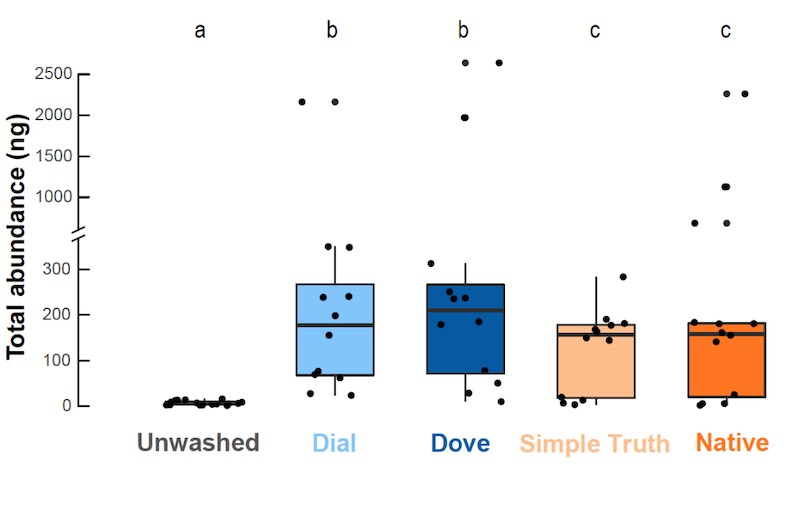
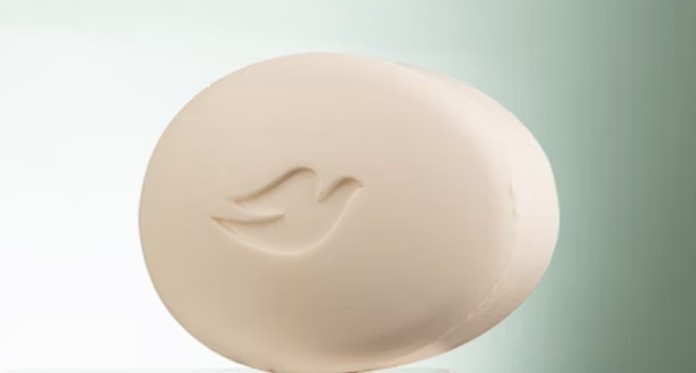
The results of the team’s experiments found that washing with Dove and Simple Truth increased the attractiveness of some of the volunteers, while the smell of the Native brand tended to deter the blood suckers, according to the team at Virginia Tech.

Commenting on the many theories for why some people attract mosquitoes while others get off bite-free, co-author Dr. Chloe Lahondere says it’s not easy to pinpoint a specific reason.

“Everybody smells different, even after the application of soap. Your physiological status, the way you live, what you eat, and the places you go all affect the way you smell.

“And soaps drastically change the way we smell, not only by adding chemicals, but also by causing variations in the emission of compounds that we are already naturally producing.”

A series of experiments found soaps did impact mosquitoes’ preferences. Chemicals emitted by four human volunteers were analyzed both before and an hour after they’d applied body washes by Dial, Dove, Native, and Simple Truth (see the specific types below). Odor profiles of the soaps themselves were also broken down by chemical.

Choose a coconut-scented soap

Each participant emitted their own unique odor, some of which were more attractive to mosquitoes than others. Soap-washing significantly changed these—and not only by adding floral fragrances to the mix.

NEED TO KNOW: Science Shows What Actually Repels and Doesn’t Repel Mosquitoes: DEET, Citronella, Blood Type Myths Busted

Effects of exhaled carbon dioxide (CO2), another important cue for mosquitoes, were excluded by conducting tests on fabric that had absorbed the participants’ odors.

Humans can’t smell CO2, which we and other animals exhale with each breath. Mosquitoes can. It boosts females’ activity, making them explore surrounding space in search of a host.

“All of the soaps contained a chemical called limonene which is a known mosquito repellent but in spite of that being the main chemical in all four soaps, three out of the four soaps we tested increased mosquitoes’ attraction,” said Dr. Vinauger.

The study published in iScience identified four chemicals associated with mosquito attraction. Three chemicals repulsed the mosquito, including a coconut-scent in American Bourbon and a floral compound used to treat scabies and lice.

The two soaps advertised as more “natural” (Simple Truth and Native) tended to be less chemical-heavy soaps (e.g., lower abundance of saturated and unsaturated hydrocarbons, such as alkanes and alkenes) than Dial and Dove.

RELATED: Breakthrough For Kenyan Scientists Who Discover Natural Microbe That Completely Stops Malaria in Mosquitoes

Four body washes were selected based on their brand popularity, and fragrance: 1) Dial Body Wash with Marula Oil, 2) Dove Deep Moisture Nourishing Body Wash 3) Simple Truth Organic Honey Blossom Baby Shampoo & Body Wash, and 4) Native Coconut and Vanilla Body wash.

Clement Vinauger / Virginia Tech

They were combined to create and test attractive and repellent odor blends, which had strong impacts on the preference of the insects from the Aedes aegypti species.

“With these mixtures, we eliminated all the noise in the signal by only including those chemicals that the statistics were telling us are important for attraction or repulsion,” said Vinauger.

However, the effect of soap applications on the proportion of landing observed was a function of the interaction between the soap and the volunteer. Specifically, fewer mosquitoes landed on either sleeve when volunteer 1 was washed with either Dial, Simple Truth, or Native soap, than when only their unwashed scent was presented.

“I would choose a coconut-scented soap if I wanted to reduce mosquito attraction.”

He now plans to expand the results and find some general patterns or rules by testing more soap varieties and many more people—and explore how soap impacts mosquito preference over a longer period of time.

CHECK OUT: New Mosquito Repellent Works Better Than DEET, is Safer, and Smells Good

“We’re very curious to look at the time course of the effect… if you take a shower in the morning, does it still matter to mosquitoes in the evening?”
SPREAD THE BUZZ: Share the Soap Tips For Outdoorsy Pals on Social Media…

Scientists Amazed By Sighting of Extremely Rare Jellyfish Only Seen Once Before (WATCH)

The Ocean Exploration Trust via SWNS

A group of scientists were left amazed after the sighting of an extremely rare jellyfish that was only seen once before.

The team of experts spotted the animal during an expedition by the Ocean Exploration Trust, a nonprofit dedicated to marine exploration and research.

The video below captures the moment and shows the bizarre-looking creature slowly making its way through the depths, as the team of experts is left entranced at the sight of it.

One scientist can be heard exclaiming, “Woah! What is that?”—while the vehicle they’re operating remotely first encounters the jellyfish.

“I’ve never seen anything like that,” another can be heard saying. “I have no idea what it is.”

The animal was sighted on May 31 in the deep and remote Pacific Ocean, 130 miles from the nearest landmark Kingman Reef, which is 4,800 miles away from Australia.

Classified an “undescribed” because it has no name or detailed description by any researchers, the species has only ever been seen once before, on a 2015 expedition by The Ocean Exploration Trust.

It distinguishes itself from other jellyfish by three long “tentacles” sprouting at an odd angle from the top of its head.

LOOK: Photographer Records the Moment a Giant Jellyfish Floats Beneath Paddleboarder

It is also, surprisingly, believed to prey on other jelly-like animals, such as other jellyfish and swimming sea cucumbers using its long tentacles to catch prey.

Dr. Dhugal Lindsay, a research scientist with the Japan Agency for Marine-Earth Science & Technology, commented on the creature’s strange tentacles, saying, “This is extremely rare for a jellyfish as they are normally radially splittable into ‘pizza slices’ with even, rather than odd, numbers.

“They hold the tentacles in front of them as they swim, so that the tentacles come into contact with their large gelatinous prey before the bow wave of the water they “push” before them as they swim reaches it and it senses this water movement and escapes—a kind of stealth predation so-to-speak.”

WATCHAmazing Video of Giant Phantom Jellyfish from Deep in the Dark Fathoms at 3,200 Feet

This new species is believed to be part of the Bathykorus genus, but does not match any other species of this kind due to its brown color.

At this point, it’s really anyone’s guess.

The Ocean Exploration Trust has more free live streams of their expeditions at www.nautilus.live.com.

FLOAT This Mysterious Beauty To Your Friends By Sharing On Social Media…

Dancing or Brisk Walks Can Slash Diabetes Risk By 74%, Even When it Runs in the Family

Dancing or going for brisk walks can slash the risk of diabetes by three quarters, according to a huge new study.

Those who managed more than an hour of moderate-to-vigorous exercise per day were 74 percent less likely to be diagnosed, compared to sedentary peers.

The protection even applied to genetically-predisposed patients when the disease runs in the family. In fact, their susceptibility fell further than individuals at low genetic risk who were inactive.

“People are unable to control their genetic risk and family history,” said the study’s senior author Professor Melody Ding, of Sydney University. “But this finding provides promising and positive news that through an active lifestyle, one can fight off much of the excessive risk for type 2 diabetes.”

The Australian team tracked 59,325 adults from the UK Biobank—a database holding detailed information about the genes and health of around half a million Brits.

Participants wore accelerometers on their wrist at the start and were then followed for up to seven years.

It is the first study to show that genetic risk of type 2 diabetes, linked to unhealthy lifestyles, can be counteracted by exercise.

CHECK OUT: New Artificial Pancreas for Type 2 Diabetes Manages Blood Sugar Twice as Well as Jabs –Now Approved in UK

Moderate-intensity physical activity describes movements that get you sweating and slightly out of breath, such as brisk walking or landscaping. Examples of vigorous-intensity physical activity include running, aerobic dancing, cycling uphill or at a fast pace and heavy gardening such as digging—all activities that make you out of breath or cause you to breathe heavily.

Prof. Ding’s father who’s in his sixties was recently diagnosed with diabetes, which has turned into one of the world’s top ten killers due to the obesity crisis.

“So the result of the study is extremely heartening for my family and myself,” she said. “As an already active person, I now have extra motivation to keep this active lifestyle.

POPULAR: ‘Artificial Pancreas’ is Revolutionizing Diabetes Treatment: ‘I never dreamed this would be developed in my lifetime’

The researchers say the study demonstrates higher levels of physical activity should be promoted as a major strategy for prevention.

The study also found that people with a high genetic risk score were 2.4 times more likely to develop it, if they didn’t exercise.

“If you have a family history of type 2 diabetes, or even if you don’t, today is the day to start being physically active,” said Susan Luo, lead author of the paper published in the British Journal of Sports Medicine.

SHARE With At-Risk Friends and Family on Social Media…

2 Conservatives on Supreme Court Seal Historic Decision to Preserve Voting Rights in Alabama Gerrymandering Case

2023 Supreme Court Justices – By Fred Schilling, Collection of the Supreme Court of the United States

In a historic win for voting rights, the U.S. Supreme Court Thursday ruled in Allen v. Milligan in favor of Black voters, with Chief Justice John Roberts and Justice Brett Kavanaugh joining the court’s three liberal justices, ruling that Alabama’s congressional map violates the Voting Rights Act, which prohibits racially discriminatory voting practices or procedures.

They gave their thumbs up to the decision of a 3-judge district court order that struck down Alabama’s 2021 congressional map, and required the redrawing of the state’s congressional map.

Even though Blacks make up 27 percent of the voting-age population in Alabama, the map passed by the state legislature only carved out one district out of seven that contains a majority of Black voters, which equates to 14% of the districts reflecting the state’s demographics.

In its decision, the high court also affirmed that under Section 2 of the VRA, race can be considered in the redistricting process to provide equal opportunities to communities of color and ensure districts are not drawn in a way that weakens their voting strength.

The five justices cited in their decision the overwhelming evidence of discrimination presented by the plaintiffs in the district court.

“Alabama attempted to rewrite federal law by saying race could not be considered in the redistricting process even when necessary to remedy racial discrimination,” said Legal Defense Fund deputy director of litigation Deuel Ross, who argued the case before the court in October.

“Today’s decision is a recognition of Section 2’s purpose to prevent voting discrimination and the very basic right to a fair shot.”

Plaintiffs from the case released a joint comment that read, in part: “The Supreme Court affirmed the district court’s order that a new map be drawn that complies with federal law—one that recognizes the diversity in our state rather than erasing it. Today we can move forward with these reaffirmed protections (that) civil rights leaders fought and died for.”

CHECK OUT: Ohio Man Brings Voters of All Stripes Together to Agree to Disagree Over ‘Dinner and a Dialogue’

In 2018, Michigan voters successfully passed a proposition that would eliminate gerrymandering for future elections—and it was all thanks to one woman’s Facebook post. They followed in the footsteps of a California measure passed in 2010 that put the duty of drawing Congressional districts into the hands of an independent, transparent commission—instead of leaving it to partisan politicians.

Tish Gotell Faulks, a Legal Director at the American Civil Liberties Union, hopes that when the Alabama Legislature redraws the new, more fair voting districts, more residents can vote for representatives that reflect their beliefs, values, and priorities.

POLL: Top 5 Issues That Americans Think People Need to Come Together to Solve

This decision sends a clear message to U.S. lawmakers that their responsibility has not changed: They must ensure that voters of color are not denied an opportunity to participate in the electoral process.

WE VOTE THAT You Share This Political Win For Fairness on Social Media…

“If the path be beautiful, let us not ask where it leads.” – Anatole France

Quote of the Day: “If the path be beautiful, let us not ask where it leads.” – Anatole France

Photo by: Levi Bare

With a new inspirational quote every day, atop the perfect photo—collected and archived on our Quotes page—why not bookmark GNN.org for a daily uplift?

Survey Reveals Americans are Retiring Earlier Than They’d Expected

Americans are retiring earlier than they’d expected—that’s according to a new survey of 2,000 retirees.

The poll found that, on average, people initially expected to retire at 63.2 years old, but instead did so at 61.5 years old—beating the median point by almost two years.

One in three (32%) said that they “would have retired earlier if they’d had the chance.”

However, 51% admitted to having difficulties accepting the changes to their health as they age.

Conducted by OnePoll on behalf of ClearMatch Medicare, part of HealthPlanOne, the random double-opt-in survey found that 87% or retirees stayed out of the workforce after leaving it, while 22% reported it was difficult to let go of their previous employment.

Although 78% reportedly found fulfillment in their career, only 25% said they actively missed working. Half of respondents said they didn’t miss it at all.

Of the 13% that had returned to the workforce, 40% did so to occupy their time, while many did so to help family members, friends, or former employers, or for other reasons not outlined in the survey. Only one in four returned to work because the cost of living had increased.

RELATED POLL: Over 50s Say They’ve Become More Daring –Trying Skiing, Skydiving, Marathons, and Even Getting a Tattoo

“My company begged me to do consulting for them,” one respondent recounted in an open-ended response, while another said that their former boss “called me back twice.”

Despite this, 44% of those polled admitted that the amount of money they saved up for retirement wasn’t enough.

88% of those surveyed were currently enrolled in Medicare, available in the US for people over 65.

When asked to share their thoughts on the most common myths about retirement, 57% cited the belief that Social Security would totally cover their retirement, while almost half (51%) brought up their mistaken assumption that all healthcare costs would be covered under Medicare.

CHECK OUT: Adults 70 and Older Swear by These Activities to Keep Them Younger Than Their Age – ‘Stereotypes No Longer Apply’

Artist Transforms Drab City Streets Painting 130 Houses–Increasing Everyone’s Home Values Too (LOOK)

Aerial view of rainbow painted houses by Tash Frootko in Gloucester-SWNS
Aerial view of rainbow painted houses in Gloucester, England-SWNS

A year ago, we introduced you to an artist who began transforming an old neighborhood by painting the drab homes with vividly cheerful colors—and now she’s unveiled her latest street of 63 “rainbow homes”.

Tash Frootko has been painting houses in Gloucester since 2018, providing free makeovers for entire streets and several squares within the city in southwest England.

Locals say it has not only created a better atmosphere for positive living but has even pushed home values up by 30 percent—which is also great for Tash, who works as a property developer.

Now she has unveiled her fifth and largest project to date: 63 houses on Hopewell Street painted in bold and vivid colors.

The 44-year-old long-time Gloucester resident says her efforts demonstrate what an individual with a vision can achieve.

”I started these transformations because there was such negative morale about the appearance of the city.”

The response from the community has been overwhelmingly positive.

“It was like, Tash appeared from nowhere and turned our street into a work of art,” said Rob Wilks, who has lived here for 63 years.

SWNS license

“The tireless work she does behind the scenes to fix the issues of the street before adding her signature colors is admirable.”

Tash says the backdrop for her artistry has been there all the time. “It just needed a creative mind and a huge injection of color.”

”My projects get more exciting every time, and I seem to have a template and formula that works.

After self-funding the home make-overs for years, her success attracted funding this year from Gloucestershire County Council, which will cover some of the expenses.

”I will continue to work completely voluntarily so that every penny of funding goes towards making the area shine.”

LOOK AT HER: She Turns Old Leather Sofas into Chic $200 Handbags to Cut Down on Waste–And They’re Flying Out the Door

Tash Frootko SWNS

Brigitte Wurfel-Mathurin, who has lived on Barton Street for 37 years, described the change as “life-changing”.

“She has created a kaleidoscopic masterpiece here—and another landmark for Gloucester. It makes me feel so proud to say that I live in Barton and Tredworth.”

Some of the rainbow painted houses by Tash Frootko in Gloucester-SWNS

Tash’s project began five years ago when she painted the houses on a small street to “reinvigorate” the local area with creativity. Since then, 134 houses have been wrapped in her eye-popping color palette with over 1,300 liters of paint.

LOOK! Berlin Artists Transform Swastika Graffiti into Friendly Works of Street Art

She’s always envisioning new plans to transform other parts of the city using simple paint to create huge “outdoor art galleries.”

This year, the work included a huge floral mural by street artist Sophie Mess, murals by Stuart Doust, a quirky door installation, and a rainbow staircase.

“There is no end to this lady’s ability,” gushed Wurfel-Mathurin. “Her remarkable vision and drive is phenomenal and she takes the community on the adventure with her.

WATCH: Friendship on Street Corner When Artist Makes Incredible Puppet to Look Like Local Senior –MUST SEE

“She has bought love, fun, color and laughter to the street,” said Wilks. “We can’t thank her enough for that.”

Watch the wonderful video below…

PAINT SMILES on Your Friends’ Faces By Sharing The Inspiration on Social Media…

Sealed Vial Reveals the Smell of Ancient Rome With Patchouli Scents From Time of Jesus

Bottle of 2,000 year old Roman perfume –University of Córdoba via SWNS

A real whiff of ancient Rome from 2,000 years ago was unleashed as a sealed vial of Roman perfume has been opened—and a whiff of patchouli oil wafted through the air once again.

The stopper, made of dolomite—a type of carbon, and a tight seal with bitumen enabled the contents of the tiny glass container to be “extraordinarily” preserved.

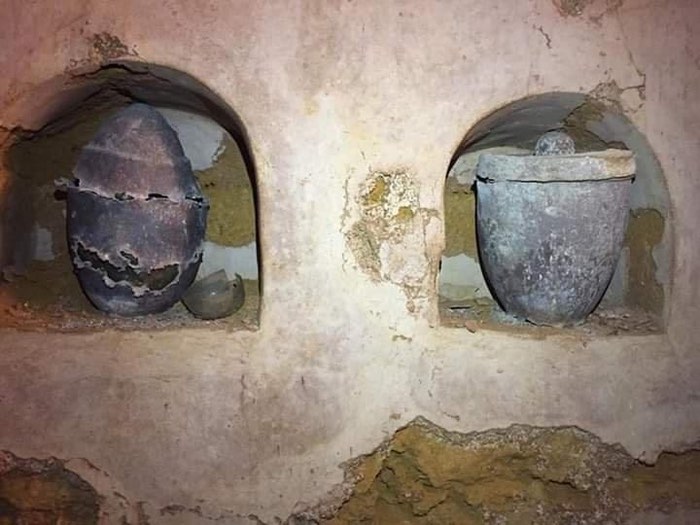
The vial was discovered with the ointment intact in a funerary urn in the Roman city of Carmo, today’s Carmona, near Seville in Spain.

It was discovered during an archaeological dig in a mausoleum that was found during the construction of a house on the Calle Sevillat.

It had been preserved, solidified, inside a vessel carved in quartz, which was still perfectly sealed.

It was a collective tomb, possibly belonging to an affluent family. In addition to numerous objects related to funeral rituals, the cinerary urns of six adult individuals—three women and three men—were found.

Location where the ointment where found – University of Córdoba via SWNS

In one of the urns, made of glass, over the cremated skeletal remains of a woman between 30 and 40 years old, a cloth bag had been placed containing three amber beads and a small quartz flask carved in the shape of an amphora, containing the ointment.

LOOK: Archaeologists Reveal Extraordinary Cave Art Carvings Beneath 2000 Years of Sediment in Alabama

The truly extraordinary aspect of the find was that, twenty centuries later, it was still perfectly sealed, and that the solid residues of the perfume had been preserved inside, which made it possible for researchers to test every component of the find.

Professor of Organic Chemistry at the University of Cordoba, José Rafael Ruiz Arrebola, was able to analyze the sample and the results were published in the journal Heritage.

To work out what was in the perfume, Prof. Arrebola and his team used X-ray diffraction and gas chromatography coupled with mass spectrometry.

POPULAR: The First Viking Ship Burial Found in Over 100 Years Reveals its Lost Secrets

Beyond identifying the airtight bitumen seal and the cylindrical stopper made of dolomite, two components of the perfume were identified.

The base or binder—which allowed for the preservation of the aromas, and the essence itself—was a vegetable oil, or possibly olive oil according to some indications reflected in the analysis.

The results of chemical analyses showed the essence itself was patchouli, an essential oil obtained from a plant of Indian origin that is used in modern perfumery.

CHECK OUT: Archeological Dig Starts at 5,000-Year-Old Tomb Linked to King Arthur

The monumental characteristics of the tomb and the valuable material used for the vessel containing the oil, suggests that it was a highly valuable product.

“To our knowledge, this is possibly the first time a perfume from Roman times has been identified,” said Arrebola.

“This is the first report on the use of bitumen as a sealing agent in an unguentarium with a dolomite stopper—another unique finding.”

MORE: 300 Epic Ancient Murals ‘Unique in the World’ Depict Creation Myths on Texas Rock: ‘Oldest Books in North America’

These findings constitute a breakthrough in the field of Roman perfumery, uncovering the use of patchouli as an essential oil.

SEND THIS Sweet Smell Around the World By Sharing on Social Media… 

Your Inspiring Weekly Horoscope From Rob Brezsny: A ‘Free Will Astrology’

Our partner Rob Brezsny provides his weekly wisdom to enlighten our thinking and motivate our mood. Rob’s Free Will Astrology, is a syndicated weekly column appearing in over a hundred publications. He is also the author of Pronoia Is the Antidote for Paranoia: How All of Creation Is Conspiring To Shower You with Blessings. (A free preview of the book is available here.)

Here is your weekly horoscope…

FREE WILL ASTROLOGY – Week of June 10, 2023
Copyright by Rob Brezsny, FreeWillAstrology.com

GEMINI (May 21-June 20):
“All the things I wanted to do and didn’t do took so long. It was years of not doing.” So writes Gemini poet Lee Upton in her book *Undid in the Land of Undone*. Most of us could make a similar statement. But I have good news for you, Gemini. I suspect that during the rest of 2023, you will find the willpower and the means to finally accomplish intentions that have been long postponed or unfeasible. I’m excited for you! To prepare the way, decide which two undone things you would most love to dive into and complete.

CANCER (June 21-July 22):
Cancerian author Denis Johnson had a rough life in his twenties. He was addicted to drugs and alcohol. Years later, he wrote a poem expressing gratitude to the people who didn’t abandon him. “You saw me when I was invisible,” he wrote, “you spoke to me when I was deaf, you thanked me when I was a secret.” Now would be an excellent time for you to deliver similar appreciation to those who have steadfastly beheld and supported your beauty when you were going through hard times.

LEO (July 23-Aug. 22):
Don’t make a wish upon a star. Instead, make a wish upon a scar. By that I mean, visualize in vivid detail how you might summon dormant reserves of ingenuity to heal one of your wounds. Come up with a brilliant plan to at least partially heal the wound. And then use that same creative energy to launch a new dream or relaunch a stalled old dream. In other words, Leo, figure out how to turn a liability into an asset. Capitalize on a loss to engender a gain. Convert sadness into power and disappointment into joy.

VIRGO (Aug. 23-Sept. 22):
At age nine, I was distraught when my parents told me we were moving away from the small town in Michigan where I had grown up. I felt devastated to lose the wonderful friends I had made and leave the land I loved. But in retrospect, I am glad I got uprooted. It was the beginning of a new destiny that taught me how to thrive on change. It was my introduction to the pleasures of knowing a wide variety of people from many different backgrounds. I bring this to your attention, Virgo, because I think the next 12 months will be full of comparable opportunities for you. You don’t have to relocate to take advantage, of course. There are numerous ways to expand and diversify your world. Your homework right now is to identify three.

LIBRA (Sept. 23-Oct. 22):
Most of us continuously absorb information that is of little or questionable value. We are awash in an endless tsunami of trivia and babble. But in accordance with current astrological omens, I invite you to remove yourself from this blather as much as possible during the next three weeks. Focus on exposing yourself to fine thinkers, deep feelers, and exquisite art and music. Nurture yourself with the wit and wisdom of compassionate geniuses and brilliant servants of the greater good. Treat yourself to a break from the blah-blah-blah and immerse yourself in the smartest joie de vivre you can find.

SCORPIO (Oct. 23-Nov. 21):
Over 25 countries have created coats of arms that feature an eagle. Why is that? Maybe it’s because the Roman Empire, the foundation of so much culture in the Western world, regarded the eagle as the ruler of the skies. It’s a symbol of courage, strength, and alertness. When associated with people, it also denotes high spirits, ingenuity, and sharp wits. In astrology, the eagle is the emblem of the ripe Scorpio: someone who bravely transmutes suffering and strives to develop a sublimely soulful perspective. With these thoughts in mind, and in accordance with current astrological omens, I invite you Scorpios to draw extra intense influence from your eagle-like aspects in the coming weeks.

SAGITTARIUS (Nov. 22-Dec. 21):
“When I paint, my goal is to show what I found, not what I was looking for.” So said artist Pablo Picasso. I recommend you adopt some version of that as your motto in the coming weeks. Yours could be, “When I make love, my goal is to rejoice in what I find, not what I am looking for.” Or perhaps, “When I do the work I care about, my goal is to celebrate what I find, not what I am looking for.” Or maybe, “When I decide to transform myself, my goal is to be alert for what I find, not what I am looking for.”

CAPRICORN (Dec. 22-Jan. 19):
Vincent van Gogh painted Wheatfield with a Reaper, showing a man harvesting lush yellow grain under a glowing sun. Van Gogh said the figure was “fighting like the devil in the midst of the heat to get to the end of his task.” And yet, this was also true: “The sun was flooding everything with a light of pure gold.” I see your life in the coming weeks as resonating with this scene, Capricorn. Though you may grapple with challenging tasks, you will be surrounded by beauty and vitality.

AQUARIUS (Jan. 20-Feb. 18):
I suspect that your homing signals will be extra strong and clear during the next 12 months. Everywhere you go, in everything you do, you will receive clues about where you truly belong and how to fully inhabit the situations where you truly belong. From all directions, life will offer you revelations about how to love yourself for who you are and be at peace with your destiny. Start tuning in immediately, dear Aquarius. The hints are already trickling in.

PISCES (Feb. 19-March 20):
The renowned Mexican painter Diego Rivera (1886–1957) told this story about himself: When he was born, he was so frail and ill that the midwife gave up on him, casting him into a bucket of dung. Rivera’s grandmother would not accept the situation so easily, however. She caught and killed some pigeons and wrapped her newborn grandson in the birds’ guts. The seemingly crazy fix worked. Rivera survived and lived for many decades, creating an epic body of artistic work. I bring this wild tale to your attention, Pisces, with the hope that it will inspire you to keep going and be persistent in the face of a problematic beginning or challenging birth pang. Don’t give up!

ARIES (March 21-April 19):
“Everything that irritates us about others can lead us to an understanding of ourselves,” said psychologist Carl Jung. What was he implying? That we may sometimes engage in the same behavior that bothers us about others? And we should examine whether we are similarly annoying? That’s one possible explanation, and I encourage you to meditate on it. Here’s a second theory: When people irritate us, it may signify that we are at risk of being hurt or violated by them—and we should take measures to protect ourselves. Maybe there are other theories you could come up with, as well, Aries. Now here’s your assignment: Identify two people who irritate you. What lessons or blessings could you garner from your relationships with them?

TAURUS (April 20-May 20):
In 1886, a wealthy woman named Sarah Winchester moved into a two-story, eight-room farmhouse in San Jose, California. She was an amateur architect. During the next 20 years, she oversaw continuous reconstruction of her property, adding new elements and revising existing structures. At one point, the house had 500 rooms. Her workers built and then tore down a seven-story tower on 16 occasions. When she died at age 83, her beloved domicile had 2,000 doors, 10,000 windows, 47 stairways, and six kitchens. While Sarah Winchester was extreme in her devotion to endless transformation, I do recommend a more measured version of her strategy for you—especially in the coming months. Continual creative growth and rearrangement will be healthy and fun!

WANT MORE? Listen to Rob’s EXPANDED AUDIO HOROSCOPES, 4-5 minute meditations on the current state of your destiny — or subscribe to his unique daily text message service at: RealAstrology.com

(Zodiac images by Numerologysign.com, CC license)

SHARE The Wisdom With Friends Who Are Stars in Your Life on Social Media…

“Be not simply good—be good for something.” – Henry David Thoreau

Quote of the Day: “Be not simply good—be good for something.” – Henry David Thoreau

Photo by: Ahmed Zalabany (cropped)

With a new inspirational quote every day, atop the perfect photo—collected and archived on our Quotes page—why not bookmark GNN.org for a daily uplift?

This 23-Year-Old Founder is 3D Printing Schools in Madagascar Aiming to be a ‘Stepping Stone’ for the Community

Photo courtesy of Geoffrey Gaspard

A young entrepreneur is using 3D printers to create cheap school campuses in rural Madagascar.

It takes just $40,000 and 18 hours to build a “Thinking Hut,” as they’re called, and founder of the project Maggie Grout is aiming to get the cost even lower before handing the reins over to local professionals.

GNN previously reported on Maggie Grout’s idea in 2021 during the pandemic. It was then that she and a San Francisco architect came up with the idea of making them honeycomb-shaped so that additional modules could be added seamlessly.

And indeed, the first completed campus is called the “Honeycomb.”

Madagascar is one of the most challenging places in Africa to develop, but also the most opportune owing to a lack of any armed conflicts and a government welcoming of foreign workers.

But extreme poverty, lack of infrastructure, terrible roads, and a delicate, priceless natural ecosystem all pose challenges to anyone seeking to implement large-scale development projects.

Instead, Grout brought her 3D printers over in a single shipping container and has now printed a school in the town of Fianarantsoa, a city in south-central Madagascar with 200,000 people.

“From that first project, I really learned how to streamline the logistics,” Grout told Fast Company. “I learned how to put together the supply chain when there’s not a lot of locally available materials. And then I learned how to work in harmony with the local people.”

OTHER 3D-PRINTING USES: World’s First 3-D Printed School Poised to Be Built in Madagascar For Half the Price of Traditional

Local people are the key—lack of institutional presence in rural areas means that almost any economic activity has a foundation built on years of trust between community individuals. When foreigners come in, building trust is often the biggest challenge to getting a project off the ground in Madagascar.

However, from the onset, Grout said she wanted to rely on the locals as much as possible. During the first project, she learned how to best manage a team of cross-cultural partners. She used local people to install traditional windows and doors, and worked with the Madagascar Ministry of Education to bring in teachers.

MORE MADAGASCAR NEWS: Tree Growing Nonprofit is Sprouting Entrepreneurs With Unique Training and Lots of Trees for Madagascar

“We do think through the holistic collateral impacts of what we’re doing,” Grout says. “We’re really just aiming to be a stepping stone for [the community] to be successful on their own… We don’t want them to be dependent on us.”

Her long-term goal is to establish Thinking Huts in many different countries.

WATCH Grout explain her project below… 

SHARE This Awesome Use Of 3D-Printing With Your Friends…