










All News - Page 296 of 1715 - Good News Network
Home Blog Page 296

Researchers Develop Glowscope that Turns Smartphone into Sensitive Microscope Normally Costing $100,000

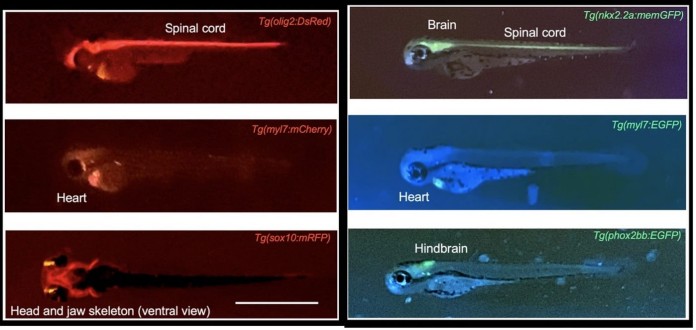
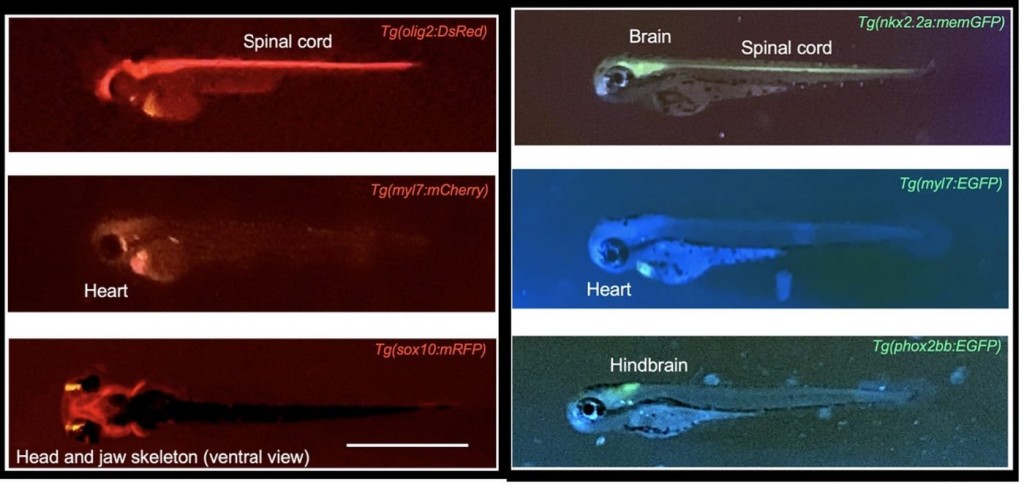
Fluorescent microscopy done with smartphone - credit Hines Neural Development Lab
Fluorescent microscopy done with smartphones – credit Hines Neural Development Lab

Researchers looking to help students at school have used low-cost materials like theater lighting filters to turn regular smartphone cameras into fluorescent microscopes.

The resolution they say is around one-thousandth of a millimeter, but the cost reduction could literally be hundreds of thousands of US dollars.

Called the “Glowscope” a team at the biology department at Winona State University, Minnesota, designed the configuration to help with STEM outreach and education.

In a study published in Nature, the Winona team showed that 10-micrometer resolution could be achieved with the Glowscope, which allowed them to perform detailed fluorescent microscopy on zebrafish.

“The resolution and sensitivity of modern smartphone and tablet cameras surpass the capabilities of many scientific cameras still being used for research applications,” the authors explain.

In testing whether a clip-on macro lens, theater and stage lighting filters, and hunting and fishing flashlights could combine with a smartphone to do microscopy, the researchers found that Glowscopes were sensitive enough to detect green and red fluorophores well, and were capable of detecting changes to heart rate and rhythmicity in embryonic zebrafish.

It was mostly new smartphones and tablets that were tested, from both Apple and Samsung models, with timelapse viewing done at resolutions of 1080p and 120 fps.

The team listed the Amazon.com product links for all components, which totaled between $30-$50.

MORE STEM TOOLS: He Invented a $2 Paper Microscope For Remote Lab Work So Scientists Don’t Have to Haul Heavy Equipment

Last year, GNN reported on a $2.00 microscope called the ‘Foldscope’ made out of paper invented for similar reasons.

Stanford University bioengineer Manu Prakash saw in his team’s $50,000 microscope a serious contradiction. As well as being bulky and ridiculously challenging to transport to remote locations, it needed training from skilled technicians to know how to use it. It also had to stay well out of the weather and other environmental impacts.

So he invented a portable one. Costing $1.75, the Foldscope has a 140x zoom, which is a small enough field to see a malaria parasite inside a cell.

SHARE This Great Idea With Your Friends In STEM…

College Wrestler Scores ‘Quadruple Leg’ Takedown Against a Grizzly Bear to Save a Friend

Brady and Kendall - @bachsmania, Facebook
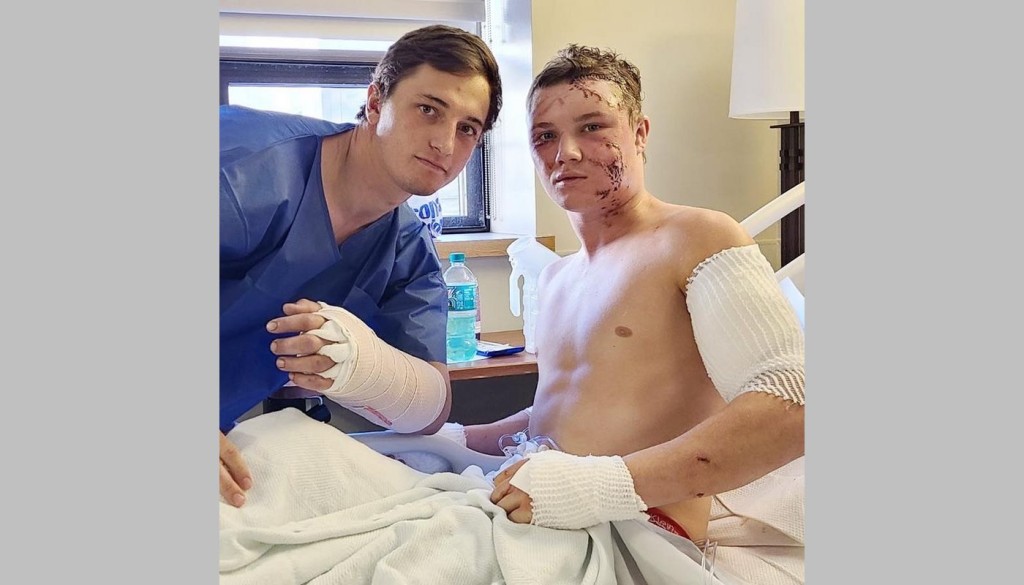
Brady Lowry and Kendall Cummings – @bachsmania, Facebook

It takes bravery to compete in college wrestling, and sophomore NJCAA wrestler Kendall Cummings needed every ounce of it when he decided he was not going to let a mamma grizzly bear maul his friend to death.

Last year, Cummings was out with his friends Brady Lowry, Gus Harrison, and Orrin Jackson in the Wyoming woods looking for shed antlers from elk, moose, and mule deer, which along with being a fun way to pass time in the woods, can also earn a college kid a few hundred dollars for a big pair of antlers.

The four buddies were out on the Bobcat-Houlihan Trail, which sits on the outskirts of Yellowstone when in the late afternoon, they decided to split up to cover more ground and meet back together on a large rock at the top of a hill.

Ryan Hockensmith at ESPN, detailing what would become a gruesome encounter, wrote that Brady turned around to warn Kendall not to step in this fresh pile of bear scat when what was likely a female grizzly bear, which can weigh around 500-pounds, slammed into him.

The impact from the bear knocked the young man over dozen yards, and she continued to swat at him as he rolled, “dribbling him” like a basketball, Hockensmith wrote.

Kendall was not about to let it happen, and after trying to use his voice to scare her away, he jumped on her back to distract her after she had managed to pin Brady up against a tree.

Then Kendall ran; as fast as he could. Grizzly bears can sprint over 30 miles per hour, and it wasn’t even a few seconds before she had turned around and lept on top of him instead.

“I can’t even express how grateful I am for him,” Brady told Cowboy State Daily. “I don’t know what I’m going to pay him back [sic], I don’t. I owe him everything.”

Female Grizzly Eating Grass – Terry Tollefsbol / NPS

Grizzly bear attacks are extremely rare—8 in the last 150 years, with a risk rate of around 1 in 2.7 million.

MORE HEROES: Three Young Men Become Heroes After Saving Blind Man Who Fell on Subway Tracks

Hunters and others who work in the wilderness say the only way to survive an attack like this is to play dead, which is exactly what Kendall did as soon as he realized he could do nothing else.

Kendall suffered horrific injuries, but Brady, who had had the better of it, managed to escape the scene, call 911, and meet up with their two friends who were unaware of what was happening. Eventually, the bear lost interest in the limp body of Kendall who stumbled to his feet and back down the trail where he met up with  Brady and the others. The two were eventually medically evacuated by helicopter.

At a trauma center in Billings, Montana, surgeons stitched and reconstructed Kendall’s face and head, which the bear had repeatedly bit. Brady was taken to a less-equipped hospital in Powell, Wyoming, but was eventually transported to Billings, and to the same room as Kendall.

MORE STORIES OF BROTHERHOOD: Four Teen Surfers Hailed for Rescuing Drowning Brothers On a Foggy California Coastline

Brady’s father Dallas drove all the way from Utah to Billings to marvel at the 21-year-old sophomore who was prepared to give all he could to rescue his son.

“You saved my son’s life,” he told Kendell.

“I would have rather died than have gotten away and known I could have helped,” Kendell told him.

100 days after the attack, last January, Brady competed in an NJCAA wrestling meet while Kendall, not yet medically cleared to go back to the mat, cheered him on.

With friends like these, am I right?

SHARE This Story Of Courage And Brotherhood With Your Friends… 

San Quentin Prison is Using a Scandinavian Model of Rehabilitation to Turn Ex-Cons into Good Neighbors

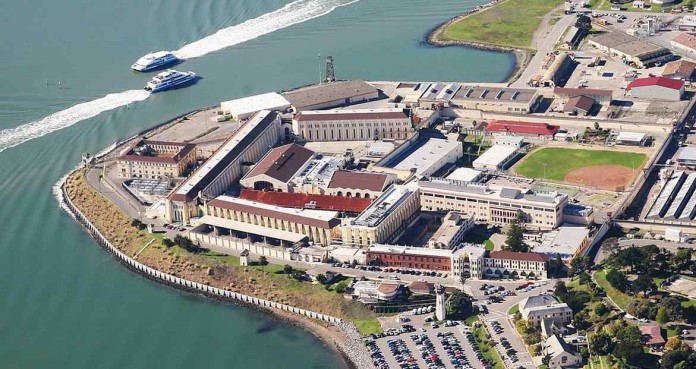
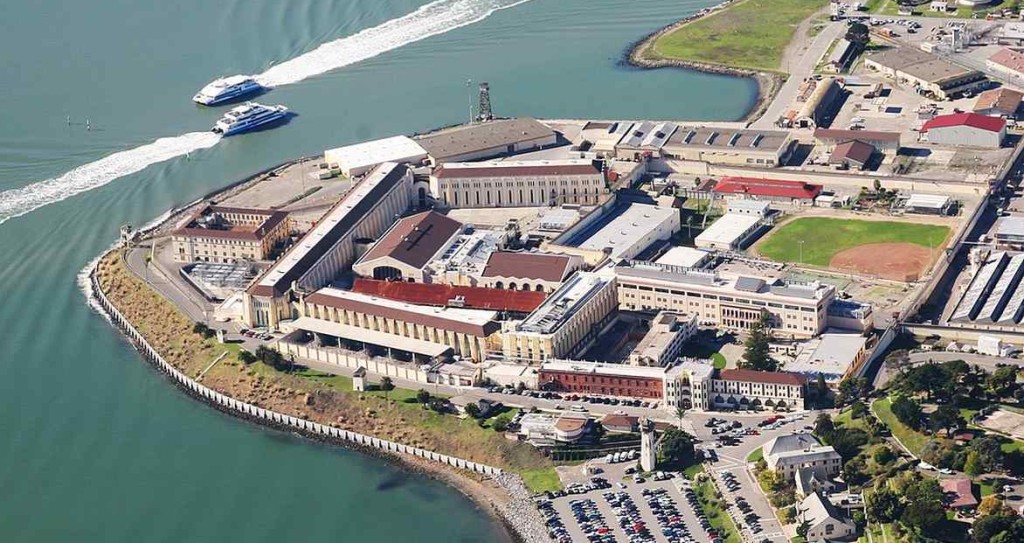
San Quentin Prison, California CC 2.0. Jitze Couperus

San Quentin State Penitentiary, one of the most notorious and harsh prisons in the US, is the stage for a radical new method of treating the incarcerated population; new for America that is.

That’s because SQ has adopted Scandinavian methods of rehabilitation that aim to protect the California public by turning convicts into neighbors.

Whether one believes prison should serve as a punishment or as enforced rehab, the reality of the matter is that most inmates will eventually rejoin society. In fact, 30,000 prisoners re-enter society every year in California alone.

The question as Governor Gavin Newsom saw it, was what kind of people does one want rejoining their society from incarceration?

As a statement, “Little Scandinavia,” a project to turn prisons into places that allow criminals the opportunity to turn themselves into good neighbors, isn’t taking place in some small out-of-the-way penitentiary where a policy trial could be closely studied without impacting the state prison bureaucracy, but in the biggest, baddest, and saddest prison in the state.

Opened in July 1852, San Quentin is the oldest prison in California. SQ’s death row for male inmates is the only one in the state, and the largest in the US where until Newsom’s tenure, it was equipped with a gas chamber. Charles Manson, along with dozens of other notorious criminals were housed there.

Governor Newsom hopes to replicate changes that recently took place at the Pennsylvania State Correctional Institution at Chester, where the entrance to the prison ward called Little Scandinavia is painted with colorful murals.

Inside, inmates have clean box showers with doors. A communal kitchen with skillets, pots, and even a bright blue Dutch oven, serves 54 people who are responsible for cleaning it after use. On the ground floor of the bloc, sofas colored green like unripe limes are arranged close together as part of Little Scandinavia’s emphasis on congeniality.

Green semi ottomans, by no means out of place in an Ikea showroom, sit below rows of wall-mounted phones. Chester has job training programs that can work with inmates on instructions in 6-figure salary careers if they have a background, while other professions such as plumbing and electrical work are also taught there.

MORE POSITIVE PRISON NEWS: As Incarceration Rate Falls, U.S. Prisons Are Being Repurposed into Homeless Shelters, Farms – Even Movie Studios

“Do you want them coming back with humanity and some normalcy, or do you want them coming back more bitter and more beaten down?” Gov. Newsom asked rhetorically, echoing the sentiments at Chester.

In a feature piece previewing the changes taking place at SQ, the LA Times went to Chester to interview the prison staff at Little Scandinavia and found they had been changed almost if not moreso than the inmates.

“I never once thought, as a correctional officer, I had the ability to change somebody’s life. Never dawned on me whatsoever,” Michael Tompkins, an officer at Chester, told the Times. “And that’s when a lightbulb went off in my head… You recognize that when you have the ability to help someone, it feels good.”

The epiphany for Tompkins came on a trip to Norway to learn about the prison system there. A Norwegian corrections officer asked him what a good day on the job was like, to which Tompkins answered, the ones when he can go home to his family safe and unassaulted.

POSITIVE REFORM AROUND THE US: Hula Dancing is Proving to Be an Unlikely Source of Reform for Male Prisoners

The Norwegian replied that his good days on the job were when he was able to make a difference in someone’s life.

This Scandinavian model and others like it have been adopted in heavily-blue California, deeply-red North Dakota, and always-purple Pennsylvania, and if it will work in SQ, it can work anywhere.

SHARE These Inspiring Reforms With Your Friends On Social Media… 

Newly Discovered Enzyme Turns Air Into Electricity, Promising a New Clean Source of Energy

By Ameen Fahmy
By Ameen Fahmy

Imagine being able to draw moisture from the air through your fingertips and create an electrical current as a result—that’s pure comic book superhero stuff right?

Not so, since researchers have been able to use a bacterial enzyme that conducts hydrogen to create electricity, literally out of thin air.

The discovery promises to open up a new field of clean energy that would take on all kinds of sci-fi forms.

Recent work by the team at Monash Biomedicine Discovery Institute at Monash University, Australia, has shown that many bacteria use hydrogen from the atmosphere as an energy source in nutrient-poor environments.

“We’ve known for some time that bacteria can use the trace hydrogen in the air as a source of energy to help them grow and survive, including in Antarctic soils, volcanic craters, and the deep ocean,” said Monash Univ. Professor Chris Greening. “But we didn’t know how they did this, until now.”

In their discovery paper published in Nature, the researchers extracted the enzyme responsible for using atmospheric hydrogen from a bacterium called Mycobacterium smegmatis. They showed that this enzyme, called Huc, turns hydrogen gas into an electrical current.

OTHER WAYS TO USE BACTERIA: French Town to Light its Streets With Bacteria Luminescence That Needs No Electricity

“Huc is extraordinarily efficient,” notes co-author Dr. Rhys Grinter. “Unlike all other known enzymes and chemical catalysts, it even consumes hydrogen below atmospheric levels—as little as 0.00005% of the air we breathe.”

Laboratory work performed by Ph.D. student Ashleigh Kropp showed that it’s possible to store purified Huc for long periods.

“It is astonishingly stable,” she said. “It’s possible to freeze the enzyme or heat it to 80 degrees Celsius, and it retains its power to generate energy. This reflects that this enzyme helps bacteria to survive in the most extreme environments.”

SIMILAR BREAKTHROUGHS: Scientists Develop Breakthrough Method for Recycling Industrial Plastics at Room Temperature in 20 Minutes

The bacteria that produce enzymes like Huc are common and can be grown in large quantities, meaning humanity could potentially have access to a sustainable source of the enzyme. Dr. Grinter says that a key objective for future work is to scale up Huc production. “Once we produce Huc in sufficient quantities, the sky is quite literally the limit for using it to produce clean energy.”

“This is a really exciting discovery that could be a game changer in addressing climate change. It speaks to the strength of Monash research in developing smart solutions to the world’s most pressing problems. A big congratulations to [the team] what a fantastic achievement,” said Deputy Vice-Chancellor, Professor Rebekah Brown, who was not involved in the study.

WATCH an explainer video below… 

SHARE This Spine-Tingling Discovery With Your Friends… 

“Nothing ever seems impossible in Spring, you know.” – L.M. Montgomery

Quote of the Day: “Nothing ever seems impossible in Spring, you know.” – L.M. Montgomery  (Happy first day of Spring!)

Photo by: Anton Darius

With a new inspirational quote every day, atop the perfect photo—collected and archived on our Quotes page—why not bookmark GNN.org for a daily uplift?

Self-Taught Oklahoma Architect Builds Round Barn Inspired by US Capitol and Fueled by Dedication–LOOK

Jay Branson - YouTube
Jay Branson – YouTube

Jay Branson, a self-taught architect, started building a round barn in rural Oklahoma to process his grief.

Its beauty draws strangers off the highway in Oklahoma, and a gentle kind of obsession mixed with down-home prairie demeanor saw the barn turn into something more like a cathedral.

The story begins decades ago when Branson went to visit a friend in Washington D.C., where he stood under the dome of the US Capitol and wanted dearly forever after to build a round structure with a dome.

Growing up a chiseled farmhand turned handyman, Branson is entirely self-taught in architecture and home-building, and built houses in the tiny decaying town of Marshall, Oklahoma. When his first wife Julie passed away, he needed a project to keep his mind going.

Settling on a round barn to park his motor home, his neighbor suggested he turn it into a wedding venue, which struck him as a good idea.

After completing the large main area using interlocking concrete-filled foam and rebar blocks that fit together like LEGOS, he began to imagine what a dome might look like, and produced a sketch of the interlocking octagons and diamonds that would form the arched ribs of the dome to be built with poplar wood.

It draws the gaze up to an oculus where natural light floods the space and regularly causes visitors to shed a tear.

HOMEBUILDING NEWS: Man Builds Cozy Treehouse to Post on AirBnB and Earns Enough to Quit His Job (LOOK)

For 7 years Jay Branson has been all alone out there on the plains, although he occasionally got help from his new wife and always has the company of his dog. But for the most part, this quiet, self-deprecating man has built one of the most impressive structures in the county, all by himself.

Jay Branson – YouTube

“I just started cutting,” Jay told his great-niece, Hailey Branson-Potts, reporting for the LA Times. “You know, if you figure the circumference of any structure that’s round, and divide it into segments, there’s a way. You’ve just got to make it even, get it exactly right, and just start building.”

MORE GREAT ARCHITECTURE: Secret to Durability of Roman Concrete that Has Stood Test of Time for Over 2,000 Years Finally Discovered

Round barns have a fascinating history. They were considered by early ranchers as more economic because feeding the animals becomes a continuous motion around the edge. They were also believed to be spiritually superior since the “devil couldn’t hide in the corners,” and the round shape doesn’t provide a flat wall to be knocked over by a tornado.

Branson is currently fighting a battle against recurrent prostate cancer, and is attempting to design demonstration-sized pieces for several unfinished areas like the bridal suite, so in case something should happen to him there is some evidence for someone else to understand how to move forward.

WATCH the stirring documentary report by the LA Times below… 

SHARE This Man’s Incredible Vision And Determination On Social Media…

Watch Heartwarming Reaction When Ukrainian Students Get Shocking News They Won Full College Scholarship in U.S

Dickinson College
Dickinson College

We bring you the uplifting moments when five students in war-torn Ukraine received the life-changing news that they will receive an all-expenses paid college education to study at a college in Carlisle, Pennsylvania, thanks to the incredible generosity of philanthropist Sam Rose.

The retired lawyer and real-estate developer provided $2 million for scholarships to Dickinson College that will pay all costs for these students, giving them a chance for a future they may not have dreamed possible.

In addition to tuition for all four years, the Sam Rose ’58 International Scholarship will cover the costs of textbooks, dining and living expenses including support for travel, health insurance, and other basic needs through the academic year in addition to support during summer and winter breaks.

The five students were overwhelmed with emotion upon hearing the news from Dickinson College president, John Jones.

“Thanks to Sam’s incredible generosity, we are able to offer these students a world-class education away from the war in Ukraine,” said Jones, who placed a series of calls to Ukraine so he could personally share the scholarship offer with each student.

“We are excited to meet and learn from our new Ukrainian students, who will help us build a more interesting and engaging campus community.”

A LITTLE MORE PHILANTHROPY: Ocean Cleanup Nonprofit Gets $25Mil From Airbnb Co-Founder to Launch Massive Plastic Pollution Cleanup

Dickinson has a long history of supporting students around the world facing strife, including through the Conflict Zone Student Support Fund, which assists international students whose demonstrated financial need has increased because of extreme violence or war in their homeland.

More than 1,800 students are currently being supported through scholarships and grants, and more than 3,642 donors have contributed to make this possible, with gifts of all sizes helping to change lives through Dickinson. Including the establishment of the new scholarship, Rose has contributed $17.5 million to the Campaign for Scholarships.

Watch the priceless reactions of each of the scholarship winners…

SHARE This Home-Grown PA Philanthropy With Your Friends On Social Media…

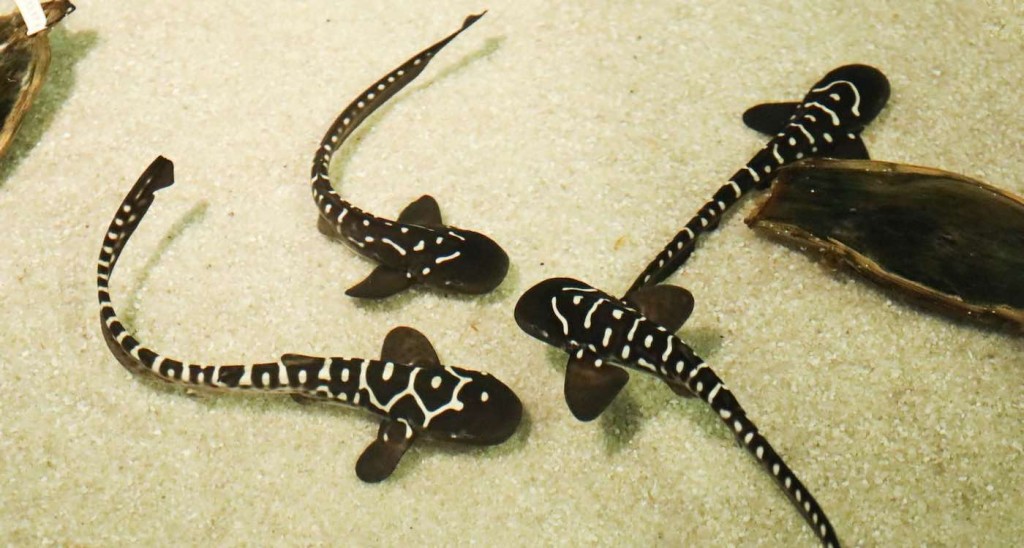
500 Baby Sharks to be Released in Unprecedented Rewilding of the Ocean

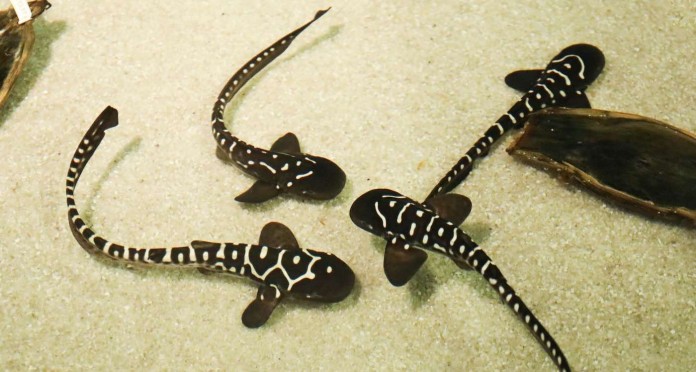
Released by Reshark.org / © Georgia Aquarium

Out in the wilds of Indonesia, zebra sharks are extremely rare. Overhunted, these striped bottom dwellers were at risk of going extinct.

Now though, an international consortium of 44 aquariums in 15 countries is banding together to create a huge captive-breeding-and-release program that aims to reintroduce 500 sharks to their native waters.

Such an effort has never been undertaken before, and rewilding is typically reserved for mammals and other terrestrial species.

Protections of sharks and rays around Raja Ampat in Indonesia, one of the richest tropical marine environments known to man, have already allowed populations of these ancient creatures to rejuvenate.

The zebra shark seemingly hasn’t benefited, at least in Raja Ampat, from these protections. Oceans are difficult places to rewild. It’s extremely difficult, almost possible, to control territories, limit comings and goings, and keep track of threats.

Recently, the aquarium team, called ReShark, released their first eggs into the waters of Raja Ampat—90 miles from the nearest town, surrounded by limestone pinnacles hovering on the turquoise seas.

MORE OCEAN CONSERVATION: 8th Annual Ocean Conference Raises $20 Billion, And Pledges For Marine Protection

“It’s such a milestone,” Nesha Ichida, an Indonesian marine scientist helping manage this work for ReShark, told Nat Geo. “This is such a hopeful, momentous moment.”

Most sharks give birth to live young, but because the zebra shark lays eggs, that look like strange, gnarled, tree nut casings, they are much easier to breed in captivity for the aim of reintroduction.

“Conservation groups, local communities, local government, and the large public aquaria together in a coalition that has never really happened before, the potential is really amazing,” said Dr. Mark Erdmann, Vice President of Asia Pacific Marine Programs for Conservation International.

“And obviously we’re going to recover zebra sharks in Raja Ampat, but this is just the start I mean the potential to do this with other endangered shark and ray species all around the world is immense.”

WATCH the first eggs arrive in Raja Ampat… 

SHARE This Wonderful World First For The Oceans With Your Friends… 

More Efficient Way to Suck Up CO2 From Air By Storing it in Baking Soda and Water

Carbfix
Existing carbon capture storage infrastructure, Carbfix

A new study shows that methods of sucking up atmospheric air and filtering out the CO2 can be improved by adding copper to the filter material, potentially opening up the technology to dozens more uses that could produce a meaningful difference in the fight against climate change.

The addition of copper also converts the captured CO2 to a harmless baking soda that could be stored in the oceans, or turned into a saleable product.

Some scientists say the only way to limit the warming of the Earth to less than 1.5°C over this century is if humanity starts to extract some of the CO2 they’ve added to the atmosphere through carbon capture methods.

These machines come in two forms: one that uses large fans to pull regular air from the environment, filter out the CO2, and then store that underground or produce other chemical products, and a second that does the work directly at the exhaust point of large factories, power plants, or natural gas wells.

The former method deals with CO2 at very few parts per million, while the latter does so at much higher concentrations, but with placement limited to industrial facilities.

Now, a study published in Science Advances shows that when copper is added to the ammine-based filter devices on the large ambient carbon-capture machines, they filter out CO2 three times as much, reducing cost and improving efficiency.

“To my knowledge, there is no absorbing material which even at 100,000 ppm, shows the capacity we get it in direct air capture of 400 ppm,” said lead author Professor Arup Sengupta from Lehigh University in the US.

DON’T DESPAIR HEADLINES: Growth in Carbon Capture Projects This Year is Dramatic, Showing Global Determination to Cut Emissions

But more than the increased performance, the addition of the copper opens up a new possibility for where the absorbed CO2 can be placed—in the ocean.

The ocean is one of the three major carbon storehouses on Earth, and the climate change body of science shows that too much CO2 causes the oceans to acidify, but the copper and amine created a chemical reaction in seawater than turned the captured CO2 in the study into non-acidifying, sodium bicarbonate, or baking soda.

MORE CARBON CAPTURE HEADLINES: New Wyoming Carbon Capture Project Will Eliminate 5 Million Tons of CO2 Per Year

With the potential of storing captured carbon in the ocean, the placement of carbon-capture facilities would go from being limited to places with significant underground storage capacity and existing drill infrastructure to anywhere there’s a coastline.

“I am happy to see this paper in the published literature, it is very exciting, and it stands a good chance of transforming the CO2 capture efforts,” Professor Catherine Peters from Princeton University told the BBC who wasn’t involved in the research project.

While Sengupta’s new method turns the CO2 into baking soda for depositing in the seas, other methods actually involve baking soda.

Last July, GNN reported that Tata Chemicals Europe opened the UK’s first industrial-scale carbon capture and usage plant. The plant captures 40,000 metric tons of carbon dioxide each year—the equivalent to taking over 20,000 cars off the roads.

SHARE This Positive Climate Headline With Your Friends… 

“Prosperity tries the fortunate, adversity the great.” – Rose Kennedy

Quote of the Day: “Prosperity tries the fortunate, adversity the great.” – Rose Kennedy 

Photo by: MV Vacation

With a new inspirational quote every day, atop the perfect photo—collected and archived on our Quotes page—why not bookmark GNN.org for a daily uplift?

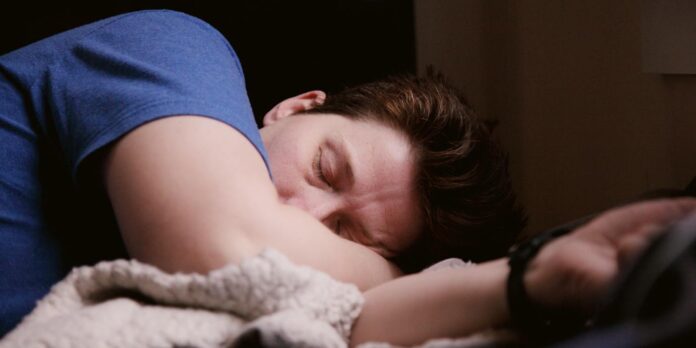
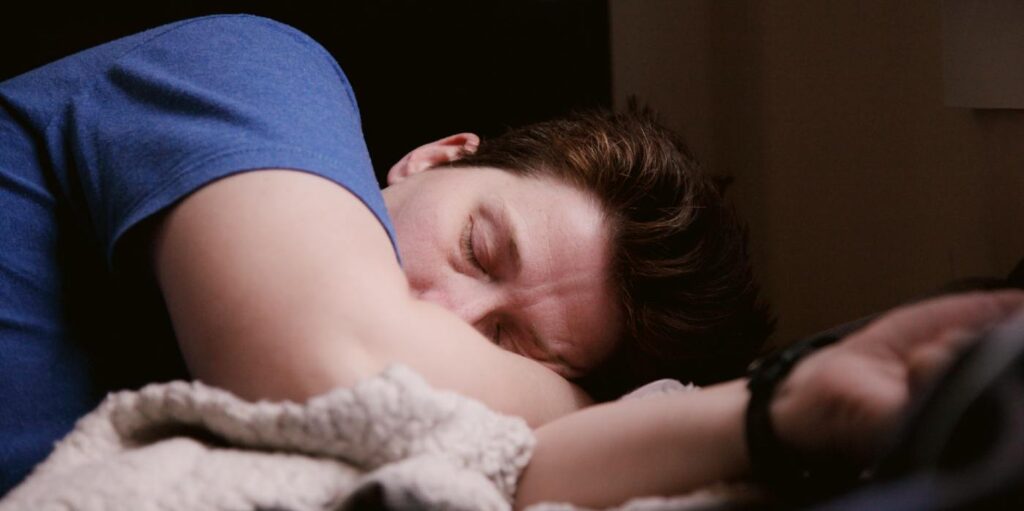
Top Strategies to Beat Snoring, According to New Poll of Sleepless Adults

Shane hfvFunLkFgg
Shane hfvFunLkFgg

52% of American adults either snore or have a partner who does, according to a new poll, and 72% of them have resorted to a host of tricks to try and silence the noise.

The top strategies to beat snoring include using extra pillows and drinking water before bed – some even attest to putting a tennis ball in your pajamas to stop you lying on your back.

Nasal strips, dilators, a hot shower before bed, and even sleeping while sitting up also featured in the top 30 list.

But while some avoid alcohol before bed or even at all (both 15%), one in 10 swear by a drink before nodding off to stop snoring.

Others have resorted to taping their mouth, putting a clothes pin on their nose, and even sleeping with their head at the end of the bed.

The survey by Onepoll of 2,000 adults was part of the 2023 Sleep & Snore Report commissioned by MuteSnoring.com in partnership with WebMD. It revealed that 53% of those who snore or live with a snorer are so fed up with the noise, they would do anything do stop it.

This sees them spend an average of $45.30 a year on items to try and silence it, but they would be willing to spend up to $596.60 if it meant it would stop for good.

More than four in 10 (42%) would even consider surgery in a bid to bring an end to the habit.

“While some of these are proven to help with snoring— like using extra pillows, humidifiers, and opening up the airways, things like sleeping upside down in the bed and wearing an eye mask aren’t likely to help that much,” according to Michael Johnson, CEO of Rhinomed.

It also emerged that, due to sleep disruption, 38% of partners have ended up sleeping in separate bedrooms—and 60% have admitted they’ve simply come to accept that it’s never going to go away.

In a bid to stop snoring, 42% have turned to the internet for advice, and 37% have sought help from health professionals.

Those classed as obese are more likely to be snorers (57%), compared to those who have an underweight (19%) or healthy body-mass index (29%).

Michael Johnson added: “Snoring doesn’t have to be something you simply put up with. With sound strategies, you really can reduce or even eliminate the snoring noise in your bedroom – and not surprisingly, improving your nasal breathing is one of the best things snorers can do.”

TOP STRATEGIES RESPONDENTS HAVE TRIED TO STOP SNORING

1. Using extra pillows
2. Nasal strips/ dilator
3. Hot shower or bath before bed
4. Drinking more water
5. Having a humidifier on
6. Sleeping sitting up
7. Sleeping the other way round e.g. head at the end of the bed
8. Avoiding alcohol before bed
9. Nasal spray before bed
10. Saline rinses/ sprays
11. Sipping warm honey and lemon before bed
12. Using a mouthguard
13. Rubbing decongestant onto your chest before bed
14. Exercise before bed
15. Wearing an eye mask
16. Eating mints before bed
17. Buying anti-snore pillows
18. Wearing compression socks
19. Snoring exercises
20. Buy a snoring ring that’s meant to stop you snoring
21. Rubbing Vaseline on the tip of your nose
22. Put a tennis ball in your Pjs to stop you lying on your back
23. Drinking alcohol before bed
24. Thyme oil on your feet
25. Acupuncture

The sleep expert Olivia Arezzolo offers these tips to reduce snoring:

1. Sleep on your side – By sleeping on your back, you exacerbate snoring. Sleeping on your side, or at the very least, having your face on the side, reduces it.

2. Ensure you are at a healthy weight – Weight reduction can in some cases eliminate symptoms.

3. Consider a nasal dilator for a simple, straightforward solution that can help to make breathing easier at night.

4. Reduce alcohol intake – Alcohol is a risk factor for snoring because it relaxes the muscles in the upper airways, causing them to collapse through the night and amplify snoring.

Do you have more snoring tips to share? Share in the comments below or on Social Media…

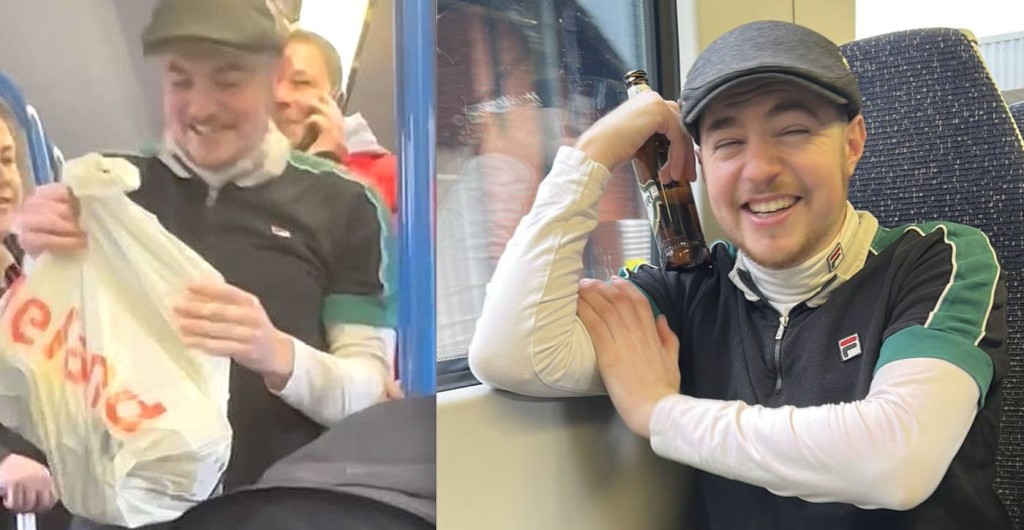
Football Fans on Delayed Train Ordered Beer Delivery with Just 60 Seconds to Spare at Next Station–WATCH the Hilarity

Jordan Sullivan – Kennedy News and Media via SWNS license

A group of English football fans were so thirsty while stuck on a delayed train that they ordered a beer delivery from Uber Eats mid-journey—and gambled on being able to collect it with exquisite timing upon arrival at the next station.

Daniel Adams and Jordan Sullivan were on their way to watch West Ham play a match against Brighton on March 5th—but delays saw their one-hour journey turn into three-and-a-half hours.

The spunky duo along with five friends had packed two beers each for their 10am train from London, which didn’t arrive in Brighton until 1.30pm.

As they were approaching Three Bridges station in Crawley, West Sussex, Jordan was inspired to put in an order with Uber Eats hoping that they’d be able to time their arrival at the next station with the delivery driver.

32-year-old Daniel was so convinced that they wouldn’t be able to pull off the plan that he promised to tip the delivery driver an extra 20 if he managed to get the four beers and two ciders to them in time.

Friends captured the ensuing hilarity on video as the pair communicating with determined delivery driver Gino, who was waiting for them clutching their order at platform five.

The nerve-wracking clip shows Jordan, who only had a one-minute window, hopping off the train frenetically searching for Gino.

Daniel, from East London, said, “Our first instinct was that it was never going to work. How would the driver get through the barriers?

“When we were coming up to the station, we had about 20 minutes and Jordan said we should order.

“I said if he wanted to try and waste his money then he could, by all means, but I wasn’t trying it. When he ordered, I said that was £20 down the drain!”

But Jordan was in constant contact by phone with Gino the deliveryman who was waiting at the platform for the revelers.

FUN: The Public Gave Names to Snowplows in Madison, Wisconsin–And They are Hilarious

Jordan Sullivan on train –Kennedy News and Media via SWNS license

“If it went wrong, he would have had eight beers at the station,” said Daniel.

When the train arrived, the video below shows Jordan bolting outside to find the driver, eventually grabbing the drinks, while Daniel stood with his foot in the door so he didn’t get left behind.

LOOK: Meet the Alpaca Who Thinks She’s a Dog and Rides in a Car Bought Especially For Her

Luckily the group got to the game on time, despite the 2.5 hour delay, all the while chanting the name of the delivery driver, Gino.

The train journey ended up being the best part of the day, because their team lost 4-0.

SHARE the Brilliant Beer Run With Sports Fans on Social Media…

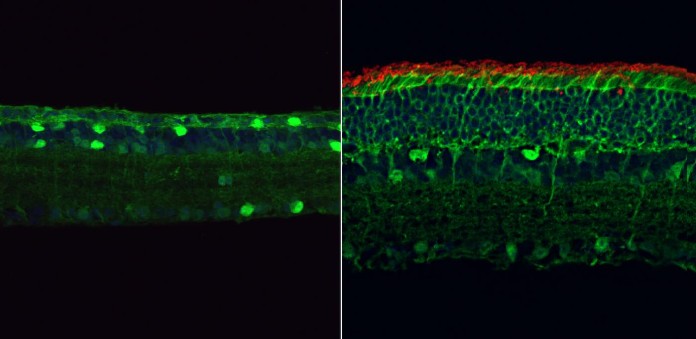
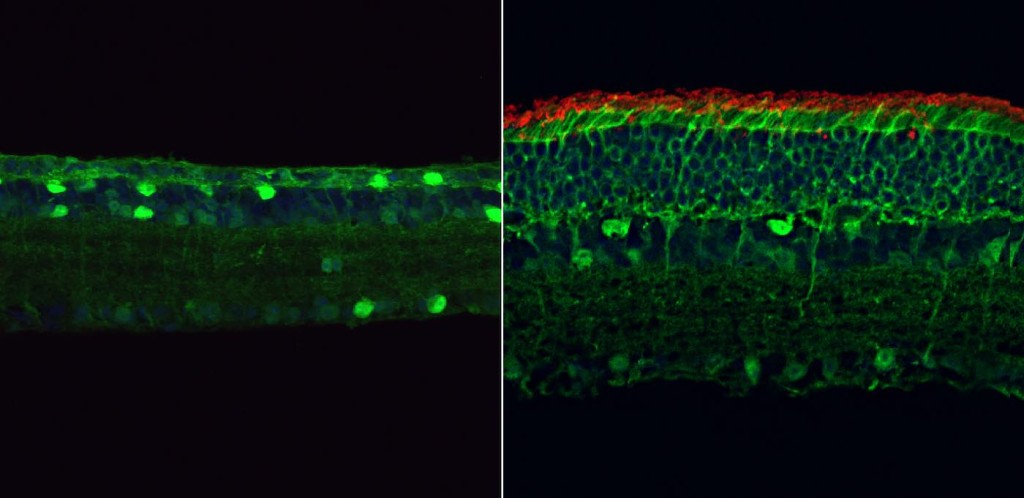
CRISPR Gene Editing Reverses ‘Permanent’ Vision Loss in Mice–Offering Hope for Retinitis Pigmentosa Patients

Professor Kai Yao – SWNS

The ‘three blind mice’ of song could actually be seeing again after scientists restored vision in breakthrough research that could reverse the condition in people as well.

The hereditary condition retinitis pigmentosa is one of the most common causes of blindness, affecting one in every 4,000 people. Now, researchers in China have used a genome-editing technique to correct a mutation that leads to the condition in both mice and humans.

Not only did the genetic correction lead to the mice regaining their sight, but the mice were shown to retain their sight well into old age.

The study team, from the Wuhan University of Science and Technology, hope this promising new method could soon be used to similarly restore people’s vision in years to come.

Retinitis pigmentosa (RP) can be caused by mutations in more than 100 different genes. Symptoms begin with the dysfunction and death of dim light-sensing rod cells, before the disease spreads to cone cells required for color vision. Eventually, RP leads to severe and irreversible loss of vision.

POPULAR: Red Light Therapy Could Improve Your Eyesight After it Declines Due to Age

Led by Professor Kai Yao, the team attempted to rescue the vision of mice with RP caused by mutations in the gene encoding a critical enzyme – called PDE6β – by engineering a new use for the CRISPR genome editing tool.

When the system was programmed to target the harmful mutant gene (PDE6β), it was shown to be able to correct the mutation and restore the enzyme’s activity in the retinas of the mice.

This correction prevented the death of rod and cone photoreceptors in the eye and helped to restore the mice’s normal electrical responses to light.

The authors published the breakthrough study in the Journal of Experimental Medicine, then performed a series of behavioral tests with the mice to evaluate their sight.

They found that the mice were able to navigate their way out of a visually-guided water maze almost as well as those with normal eyesight, and showed typical head movements in response to visual stimuli. The mice retained their good vision even into old age.

MORE: CRISPR Gene-Editing Experiment Partly Restores Vision In Legally Blind Patients

Yao praised his team’s findings, but tempered their successful experiment by saying that further studies were required.

“The ability to edit the genome of neural retinal cells—particularly unhealthy or dying photoreceptors—would provide much more convincing evidence for the potential applications of these genome-editing tools in treating diseases such as retinitis pigmentosa.

RELATED: Eye Drops to Replace Reading Glasses For Aging Eyes Go on Sale Following FDA Approval

“However, our study provides substantial evidence for the in vivo, a process occurring inside a living organism, applicability of this new genome-editing strategy, and its potential in diverse research and therapeutic contexts—in particular for inherited retinal diseases such as retinitis pigmentosa.”

DON’T HESITATE to Open Eyes to This Breakthrough on Social Media…

Descendants of Charles Dickens and ‘Jacob Marley’ Meet-up 180 Years After Author Named Character in Christmas Carol

Lucinda Hawksley and Mark Dickens - SWNS
Lucinda Hawksley and Mark Dickens – SWNS

The family of Charles Dickens met the descendants of the real-life Jacob Marley Friday—180 years to the day that the author decided to immortalize him in ‘A Christmas Carol’.

Mark Dickens and Lucinda Hawksley from the Dickens family met Christopher Marley, a relative of the late Dr. Miles Marley.

Marley’s name was used by Dickens in 1843 when he developed the character of Jacob Marley, the regretful business partner of the miserly Ebenezer Scrooge.

Dr. Marley was an Irishman in London who held a St. Patrick’s Day party where Dickens was a guest.

During dinner the subject of strange surnames came up and Dr. Marley said he thought his name was a “most uncommon one”. Dickens reportedly declared: ”Your name shall be a household word before the year is out”.

‘Marley’, indeed, would soon become a name indelibly linked with the iconic holiday tale ‘A Christmas Carol’.

Dr. Marley died in Port Isaac in Cornwall, England, in 1854, but now decedents of the two families have met—including Dickens’ great, great, grandson Mark, and great, great, great, granddaughter Lucinda.

Miles Marley’s grave at the St. Endellion Church near Port Isaac, Cornwall – SWNS

To enhance the ceremony, they even met at the same address where their two ancestors met—11 Cork Street in London, the real Marley’s former practice.

“My great, great grandfather was constantly on the lookout for interesting names to use for the important characters in his novels,” said Mark. “He took a long time to settle on the right ones, and because of this so many of them are household names today.

Jacob Marley, the late partner of Ebenezer Scrooge and the first ghost to visit him in A Christmas Carol is, of course, one.

“Reconnecting with the descendants of Dr. Miles Marley who was acquainted with Charles Dickens is a wonderful moment.”

Lucinda added, “He was a wonderful magpie of a writer, always collecting names and personality traits to use in his novels.

“That he was such a keen observer of human nature and the world, helped him to write relatable characters who remain relevant even today.

“Opportunities such as meeting the descendants of the original ‘Marley’ (in name, not in personality!) are a really lovely benefit of having a famous ancestor.”

LOOK: Rent Winnie the Pooh’s Tree House in the Original Hundred Acre Wood at This ‘Bearbnb’

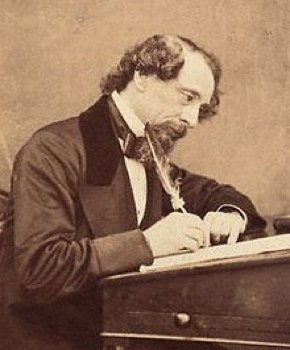
Charles Dickens photo, 1858

Organizer, historian Barry West said, “This is an historically important moment. Dickens and Marley are reputed to have had their initial and important conversation 180 years ago today—in this very same place.

“The name Marley was immortalized through books, plays, theatre performances, and education. The families met to remember the wonderful gift Charles Dickens gave us and the world in what was to become the timeless story that is still as relevant today.

“Perhaps one day we will see a blue plaque to commemorate the location the conversation and the wonderful novella A Christmas Carol,” he added, referring to a national historical marker.

POPULAR: Author of ‘Rainbow Bridge’ Poem About an Animal Heaven was Finally Revealed–She Had No Idea it Went Viral

Paul Graham, Honorary Secretary of the Dickens Fellowship confirmed: ”On 25th March, 1938, a letter from Miss M.M. Lloyd appeared in The Daily Telegraph relating how her grandfather, Dr. Miles Marley, had met Dickens at a St. Patrick’s Day dinner he held at his office in Piccadilly on March 17th, 1843.

Miss Lloyd’s story was picked up and retold in the pages of The Dickensian, the journal of the Dickens Fellowship.

“It was unusual, but not unknown, for Dickens, who delighted in inventing names for his characters, to use the names of real people he had met in his fiction. Fagin in Oliver Twist was named after Bob Fagin, a fellow worker with the young Dickens in the infamous blacking workhouse where he labored whilst a child.

“The odious Bentley Drummle in Great Expectations was named after one of Dickens’s early publishers, Richard Bentley, with whom Dickens had quarreled.

CHECK OUT: ‘Lord of the Rings’ Film Cast Crowdfunded to Buy J.R.R. Tolkien’s Home And Dedicate it to Fans

“Major characters in the Carol, except for Marley, have names that Dickens invented for his purpose. Scrooge, Cratchit, and Fezziwig are names that would not be encountered in the streets of London.

“Marley stands alone as being unusual in belonging to a real person.”

SHARE the Historic Literary Meeting With Book-Lovers on Social Media…

“If you feel safe in the area you’re working in, you’re not working in the right area. Always go a little further in. Go a bit out of your depth.” – David Bowie

Quote of the Day: “If you feel safe in the area you’re working in, you’re not working in the right area. Always go a little further in. Go a bit out of your depth.” – David Bowie 

Photo by: Wynand Uys

With a new inspirational quote every day, atop the perfect photo—collected and archived on our Quotes page—why not bookmark GNN.org for a daily uplift?

Two Sisters Put Up for Adoption at End of WWII Finally Reunite After 75 Years Apart

Annie ljpelaar and Sheila Anne Fry – SWNS
Annie ljpelaar and Sheila Anne Fry – SWNSgen

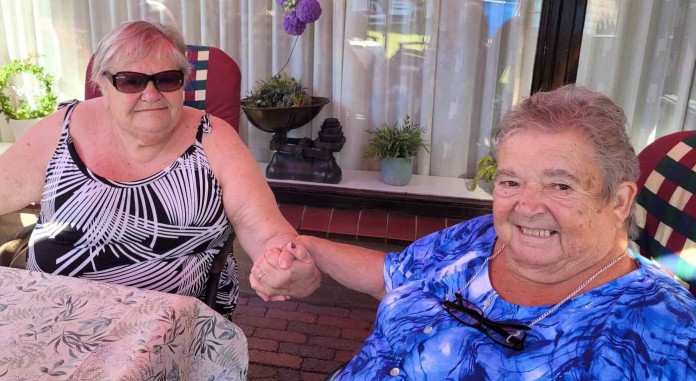
It took 75 years but, two sisters who were placed up for adoption at the end of World War II were finally reunited.

Annie Ijpelaar and Sheila Anne Fry, both in their late 70s, have Sheila’s daughter-in-law and Anne’s son to thank for the reunion, after they took it upon themselves separated to track their long-lost relatives.

Adopted in the UK as an infant in 1946, Sheila had no knowledge of who her birth parents were—but using a DNA product, they discovered she had a half-sister who lived in the Netherlands, born just a few months after her to the same father.

Sheila’s daughter-in-law, Karen, was messaged by Annie’s son, Marc, and both sisters did a DNA test which confirmed that they were related.

After meeting for the first time last year, Sheila said, “It was like looking in the mirror and talking to myself. It was amazing.”

“We have the same hobbies, and the same medical complaints—it is very strange.”

She always knew she was adopted because her parents told her: “I was special because mummy and daddy picked me.”

They said her father was a Canadian soldier who fought against the Nazis in Europe and returned home after the war.

The search for Sheila’s birth father had remained unsuccessful for eight years, leading the family to believe they’d hit a dead end.

CHECK OUT: Sisters Find Each Other After 45 Years Apart – Living in the Same City With Sons Going to the Same School

Annie and Sheila Anne comparing their crafts – SWNS

Meanwhile, in the Netherlands, Annie was also trying to uncover her family history, after finding out her stepfather was not her biological father. Annie only discovered the truth after overhearing a conversation between relatives and searching through family documents.

Annie’s biological father was a Canadian soldier who had fought in World War II and participated in the liberation of the Netherlands from Nazi occupation.

Annie’s 50-year-old son, Marc, made a breakthrough when a joke between cousins led to him ordering a DNA test. When the email arrived announcing a DNA match, Marc was astonished to discover that his mother had a half-sister.

After verifying the DNA connection by testing both sisters, Marc finally told his mother he had found her a sister and arranged a video call in May 2022.

WATCH: Puppy Siblings Adopted by Different Families Immediately Recognize Each Other During Walks One Year Later

“They had an amazing conversation,” said Marc. “They look the same, they have the same hobbies. It was amazing.”

The face-to-face meeting took place in the Netherlands a couple months later.

“We both love to crochet, and we both knit and do crafts,” said Sheila, who joked, adding “I must say, Annie is a lot better than me.”

Annie agrees that the meeting was “very special”.

“We immediately connected… and although the language was a problem it felt very natural to see and talk to my sister after all these years.

POPULAR: 14 Years After Receiving Christmas Shoebox Gift, Filipino Girl Marries Idaho Boy Who Sent it

“It can be difficult to keep in touch as we are not very good with computers and phones.

“My English is not good, but I am trying to learn. I wish she lived closer.”

SHARE the Reunion With Your Own Sisters, With Gratitude That You Know Them…

8th Annual Ocean Conference Raises $20 Billion, And Pledges For Marine Protection

The Ocean Agency / Richard Vevers

By Elizabeth Claire Alberts

International delegates attending the eighth annual Our Ocean Conference in Panama March 2-3 have pledged billions to protect the world’s oceans. Participants made 341 commitments worth nearly $20 billion, including funding for expanding and improving marine protected areas and biodiversity corridors.

Previous Our Ocean conferences have generated more than 1,800 commitments worth approximately $108 billion.

The president of Panama, Laurentino Cortizo Cohen, who inaugurated the event, said the conference was an opportunity for “countries of the world to hold frank conversations with the purpose of committing ourselves to actions for the preservation and strengthening of life in the ocean.

“As Panamanians we inhabit a narrow strip surrounded by blue,” Cohen said in a statement. “To protect it, we should all think of the ocean as a source of life and recognize it as a great ally in our fight against the climate and biodiversity crises.”

Panama, the first Latin American country to host an Our Ocean conference, announced at the event that it was adding 36,058 square miles to its existing Banco Volcán Marine Protected Area in the Caribbean Sea, an area characterized by deep-sea mountain ranges and high biodiversity. The Banco Volcán was established in 2015 ​​with the protection of 5,487 square miles. Its expansion would bring the total amount of ocean protection within Panama’s exclusive economic zone to more than 54%.

Ocean sponges and algae on Gulf of Mexico coral -NOAA

“With the protection of more than half of its seas, including extensive ocean reserves on both sides of the isthmus, Panama is not only ensuring the conservation of its marine biodiversity and the livelihoods of the people who depend on these ecosystems in the long-term, but is also positioned to lead a much more ambitious regional effort,” said Héctor Guzmán, a marine biologist at the Smithsonian Tropical Research Institute and co-founder of the marine conservation network MigraMar.

Panama’s Ministry of Environment also stated at the conference that the country intended to stop more than 160,000 tons of plastic from being imported and consumed in the country by eliminating single-use plastics like cups and utensils, plastic packaging and virgin plastic.

POPULAR: Ocean Cleanup Nonprofit Gets $25Mil From Airbnb Co-Founder to Launch Massive Plastic Pollution Cleanup

Another commitment came from charitable organizations Bloomberg Philanthropies and Arcadia, which established a fund worth $51 million to help support Indigenous peoples and local communities, NGOs and governments to improve and expand marine protection and to help nations protect 30% of oceans by 2030, a goal of the Kunming-Montreal Global Biodiversity Framework.

An alliance of organizations, foundations and private donors also committed to a donation of $5 million to help developing countries join the high seas treaty that was being negotiated — and eventually agreed upon — in New York at the same time as the Our Ocean Conference.

A coalition of groups, known as the Connect to Protect Eastern Tropical Pacific Coalition, also announced a recent commitment of $118.5 million in private and public funds to strengthen marine protections for the Eastern Tropical Pacific Marine Corridor (CMAR), an area encompassing more than 500,000 square kilometers (193,000 square miles) of highly productive and biodiverse waters of Ecuador, Colombia, Panama and Costa Rica.

The U.S. and the European Union also pledged large sums—about $6 billion and $865 million, respectively—to help protect marine biodiversity.

Shawn McCready, CC license

Dan Crockett, the oceans and climate director at the nonprofit Blue Marine Foundation, who attended the conference, said the amount and worth of the commitments made were “impressive.”

“There was a strength to the amount of money being put on the table,” Crockett told Mongabay.

CHECK OUT: Parts of the Great Barrier Reef Show Highest Coral Cover in 36 Years

Crockett said he also felt encouraged to see countries working collaboratively to create marine protected areas across political boundaries, such as the development of CMAR, which can help protect migratory species that “do not know about or respect” country boundaries.

“That really was and continues to be incredibly inspiring and encouraging,” Crockett said. “If environment ministers can set down their differences and come together around ambitious ocean conservation, it provides a lot of hope.”

Tony Long, chief executive officer of the platform Global Fishing Watch said that conference attendees showed a “clear commitment to providing ocean sustainability” and motivation to enact those changes.

RELATED IN ASIA: Fishermen Getting Paid to Collect Plastic Trash at Sea, As Indonesia Slashes Pollution

He added that pushing these commitments into action would be the crucial next step.

“There have been some fantastic commitments here, but we still need those actions to take place,” Long said. “The more we see the community come together to drive those actions forward, the quicker the health of our ocean will be maintained.”

Originally published by Mongabay (CC BY-ND 4.0 license)

SAIL This Progress to Ocean Lovers on Social Media…

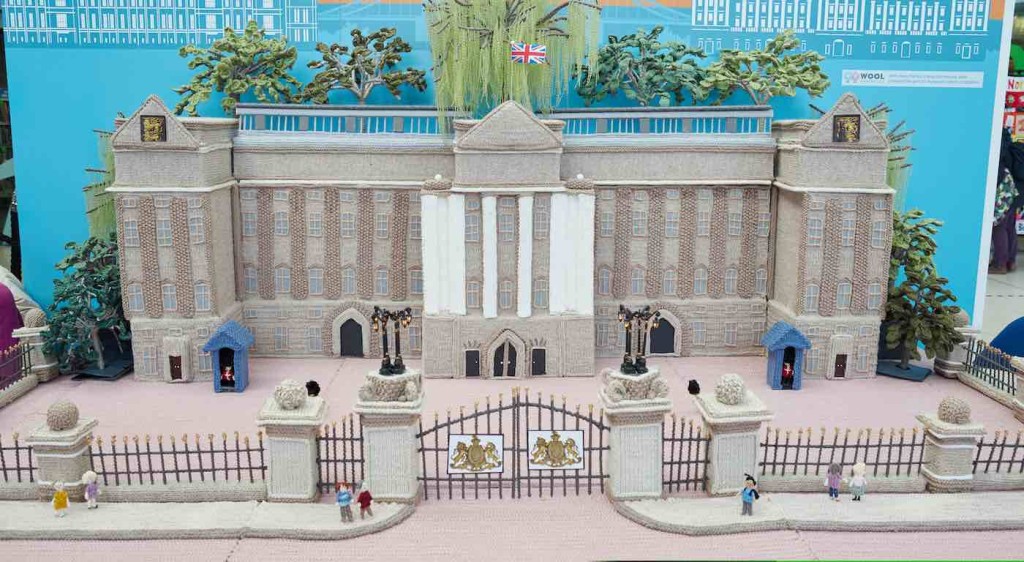
93-Year-old Grandma Creates 6-foot Buckingham Palace Entirely Out of Wool-Look at the Incredible Details

Knitted Buckingham - SWNS
Keiron Tovell – SWNS

A great-great grandmother dubbed the ‘Queen of Knitting’ has created a massive six-foot long replica of Buckingham Palace made entirely out of wool.

Margaret Seaman spent eight months knitting the model of His Majesty’s main residence in London, after taking up the craft seriously just 10 years ago.

Even better, the 93-year-old has used her craft to raise over $120,000 for charities and gets stopped on the street because of her new celebrity status.

“Now, when I sit in the car whilst we’re out, people knock on my window and say, ‘are you the lady that does the knitting?

“But I don’t feel any different—I’m still Margaret.”

Her most recent creation, the woolly Buckingham Palace, has been lovingly built over months with polystyrene blocks for structure and wiring to create the gates.

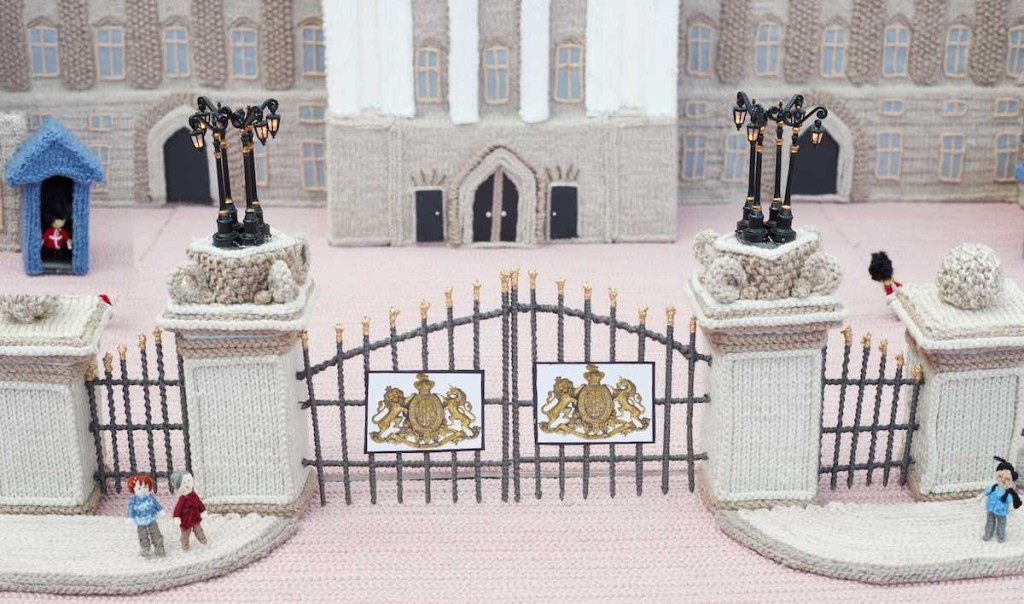
It features tiny guards with bear-skin hats and pedestrians staring up at the grand palace, with landscaping and trees around the structure.

Knitted Buckingham – SWNS

It is now standing on display at The Forum in Norwich’s Norfolk Makers Festival until March 19.

Despite the adoration she has received she won’t commit to creating any more of the royal estates, saying the intricate gate detail was the hardest thing to make.

“I just love a big challenge and I like to keep myself busy. I never dreamed it would lead to all this excitement.”

The mother of four is grandmother to 13, great-grandmother to two, and a great-great-grandmother to one little boy.

“I find it hard to walk,” said the widow from Caistor-on-Sea in Norfolk. “My gardening and walking days are over but I can sit and knit and raise money for good causes.”

Knitted Buckingham gates – SWNS

She joined a knitting club for the company after she lost her 86-year-old husband Fred.

The retired amusement park owner rose to fame after she spent 13 hours a day creating the royal Sandringham Palace in Norfolk in 2019, complete with stables.

KNITTING KINDNESS: Volunteer Knitters Are Finishing Craft Projects for Loved Ones Who’ve Passed

She then got bored during the Covid-19 pandemic and turned 34 balls of wool into an NHS ‘Knittinghale Hospital’.

She lost count of how many balls of wool she used for Buckingham Palace, estimating “at least 100” balls were used, donated from the Wool Warehouse.

Margaret, who lives with her 74-year-old daughter says, “I usually knit for about eight or nine hours during the day and then I go to bed at 9pm and I knit for another three or four hours.

“It’s all in my head normally, I don’t stop to write things down. I always think that’s a waste of time.

“I start on a piece, work so far on it and then if I get stuck and can’t think what to do next, I leave it and start on something else. Usually I’ve got five or six pieces on the go at the same time and I work on whichever one my brain tells me to do.”

LOOK: Quarantined Needleworkers Around the World Unite to Create Record-Breaking String of 79,000 Flags

By displaying her incredible works she has raised over £100,000 ($120,000) for different causes and she just donated £10,000 to the three major hospitals in Norfolk.

The Producer of the Norfolk Makers Festival, Jayne Evans, said she was not shocked when Margaret was awarded the British Empire medal (BEM) after she first displayed her Knitted Sandringham—based on the Royal family’s country estate.

Knitted Sandringham – SWNS

“Margaret has wowed the crowds at our Festival for years now. She is a role model for both older people and younger generations and has become like a dear Grandmother to me.”

THE BEST BOY: 11-Year-old Crocheting Prodigy is Raising Thousands of Dollars for Orphans–One Stitch at a Time

She was also aptly awarded the ‘Oldie Champion Knitter of the Year’ bestowed by the Oldie Magazine and presented by the Duchess of Cornwall in 2021.

With her latest project, Margaret hopes to raise money for the new children’s hospice in Addenbrookes Hospital, in Cambs.

SHARE The Intricate Knitting With Friends and Family on Social Media…

Your Inspired Weekly Horoscope From Rob Brezsny: A ‘Free Will Astrology’

Our partner Rob Brezsny provides his weekly wisdom to enlighten our thinking and motivate our mood. Rob’s Free Will Astrology, is a syndicated weekly column appearing in over a hundred publications. He is also the author of Pronoia Is the Antidote for Paranoia: How All of Creation Is Conspiring To Shower You with Blessings. (A free preview of the book is available here.)

Here is your weekly horoscope…

FREE WILL ASTROLOGY – Week of March 18, 2023
Copyright by Rob Brezsny, FreeWillAstrology.com

PISCES (Feb. 19-March 20):
In describing her process, Piscean sculptor Anne Truitt wrote, “The most demanding part of living a lifetime as an artist is the strict discipline of forcing oneself to work steadfastly along the nerve of one’s own most intimate sensitivity.” I propose that many Pisceans, both artists and non-artists, can thrive from living like that. The coming weeks will be an excellent time to give yourself to such an approach with eagerness and devotion. I urge you to think hard and feel deeply as you ruminate on the question of how to work steadfastly along the nerve of your own most intimate sensitivity.

ARIES (March 21-April 19):
I highly recommend the following experiences: 1. ruminating about what you learned in a relationship that ended—and how those lessons might be useful now. 2. ruminating about a beloved place you once regarded as home—and how the lessons you learned while there might be inspiring now. 3. ruminating about a riddle that has long mystified you—and how clarifying insights you receive in the coming weeks could help you finally understand it.

TAURUS (April 20-May 20):
For “those who escape hell,” wrote Charles Bukowksi, “nothing much bothers them after that.” Believe it or not, Taurus, I think that in the coming weeks, you can *permanently* escape your own personal version of hell—and never, ever have to return. I offer you my congratulations in advance. One strategy that will be useful in your escape is this idea from Bukowski: “Stop insisting on clearing your head—clear your f*cking heart instead.”

GEMINI (May 21-June 20):
Gemini paleontologist Louis Agassiz (1807–1883) was a foundational contributor to the scientific tradition. Among his specialties was his hands-on research into the mysteries of fossilized fish. Though he was meticulously logical, he once called on his nightly dreams to solve a problem he faced. Here’s the story: A potentially crucial specimen was largely concealed inside a stone. He wanted to chisel away the stone to get at the fossil, but was hesitant to proceed for fear of damaging the treasure inside. On three successive nights, his dreams revealed to him how he should approach the work. This information proved perfectly useful. Agassiz hammered away at the slab exactly as his dreams suggested and freed the fossilized fish. I bring this marvel to your attention, Gemini, because I suspect that you, too, need to carve or cut away an obstruction that is hiding something valuable. Can you get help from your dreams? Yes, or else in deep reverie or meditation.

CANCER (June 21-July 22):
Will you flicker and sputter in the coming weeks, Cancerian? Or will you spout and surge? That is, will you be enfeebled by barren doubts, or will you embolden yourself with hearty oaths? Will you take nervous sips or audacious guzzles? Will you hide and equivocate, or else reveal and pounce? Dabble gingerly or pursue the joy of mastery? I’m here to tell you that which fork you take will depend on your intention and your willpower, not on the caprices of fate. So which will it be: Will you mope and fritter or untangle and illuminate?

LEO (July 23-Aug. 22):
I applaud psychologists who tell us how important it is to feel safe. One of the most crucial human rights is the confidence that we won’t be physically or emotionally abused. But there’s another meaning of safety that applies to those of us who yearn to express ourselves creatively. Singer-songwriter David Bowie articulated the truth: “If you feel safe in the area you’re working in, you’re not working in the right area. Always go a little further into the water than you feel you’re capable of being in. Go a bit out of your depth, and when you don’t feel that your feet are quite touching the bottom, you’re in the right place to do something exciting.” I think this is a wise strategy for most of us, even those who don’t identify as artists. Almost everyone benefits from being imaginative and inventive and even a bit daring in their own particular sphere. And this will be especially applicable to you in the coming weeks, Leo.

VIRGO (Aug. 23-Sept. 22):
You are in the sweet, deep phase of the Receiving Season. And so you have a right and a duty to show the world you are ready and available to be blessed with what you need and want. I urge you to do everything necessary to become a welcoming beacon that attracts a wealth of invigorating and healing influences. For inspiration, read this quote by author John Steinbeck: “It is so easy to give, so exquisitely rewarding. Receiving, on the other hand, if it be well done, requires a fine balance of self-knowledge and kindness. It requires humility and tact and great understanding of relationships . . . It requires a self-esteem to receive—a pleasant acquaintance and liking for oneself.”

LIBRA (Sept. 23-Oct. 22):
Libran poet E. E. Cummings wrote that daffodils “know the goal of living is to grow.” Is his sweet sentiment true? I would argue it’s only partially accurate. I believe that if we want to shape our destinies with courage and creativity, we need to periodically go through phases of decay and decline. They make periods of growth possible. So I would say, “The goal of life is to grow and wither and grow and wither and grow.” Is it more fun to grow than to wither? Maybe. But sometimes, withering is educational and necessary. Anyway, Libra, I suspect you are finishing a time of withering and will soon embark on a series of germinations and blossoms.

SCORPIO (Oct. 23-Nov. 21):
All of us have elements of genius. Every person on the planet possesses at least one special talent or knack that is a gift to others. It could be subtle or unostentatious, like a skill for communicating with animals or for seeing what’s best in people. Or maybe it’s more spectacular, like composing beautiful music or raising children to be strong and compassionate. I mention this, Scorpio, because the coming weeks will be an excellent time to identify your unique genius in great detail—and then nurture it and celebrate it in every way you can imagine.

SAGITTARIUS (Nov. 22-Dec. 21):
The emblem associated with Sagittarius is an archer holding a bow with the arrow pointed upwards. This figure represents your tribe’s natural ambition to always aim higher. I bring this to your attention because your symbolic quiver is now full of arrows. But what about your bow? Is it in tip-top condition? I suggest you do some maintenance. Is the bow string in perfect shape? Are there any tiny frays? Has it been waxed recently? And what about the grip? Are there any small cracks or wobbles? Is it as steady and stable as it needs to be? I have one further suggestion as you prepare for the target-shooting season. Choose one or at most two targets to aim at rather than four or five.

CAPRICORN (Dec. 22-Jan. 19):
It’s prime time to feel liberated from the urge to prove yourself to anyone. It’s a phase when your self-approval should be the only kind of approval you need, a period when you have the right to remove yourself from any situation that is weighed down with gloomy confusion or apathetic passivity. This is exciting news! You have an unprecedented opportunity to recharge your psychic batteries and replenish your physical vitality.

AQUARIUS (Jan. 20-Feb. 18):
I suspect you can now accomplish healthy corrections without getting tangled up in messy karma. Here are my recommendations: 1. As you strive to improve situations that are awry or askew, act primarily out of love rather than guilt or pity. 2. Fight tenderly in behalf of beautiful justice, but don’t fight harshly for ugly justice. 3. Ask yourself how you might serve as a kind of divine intervention in the lives of those you care about—and then carry out those divine interventions.

WANT MORE? Listen to Rob’s EXPANDED AUDIO HOROSCOPES, 4-5 minute meditations on the current state of your destiny — or subscribe to his unique daily text message service at: RealAstrology.com

(Zodiac images by Numerologysign.com, CC license)

SHARE The Wisdom With Friends Who Are Stars in Your Life on Social Media…

“Rebellion without truth is like spring in a bleak, arid desert.” – Khalil Gibran

Quote of the Day: “Rebellion without truth is like spring in a bleak, arid desert.” – Khalil Gibran

Photo by: Ehimetalor Akhere Unuabona

With a new inspirational quote every day, atop the perfect photo—collected and archived on our Quotes page—why not bookmark GNN.org for a daily uplift?