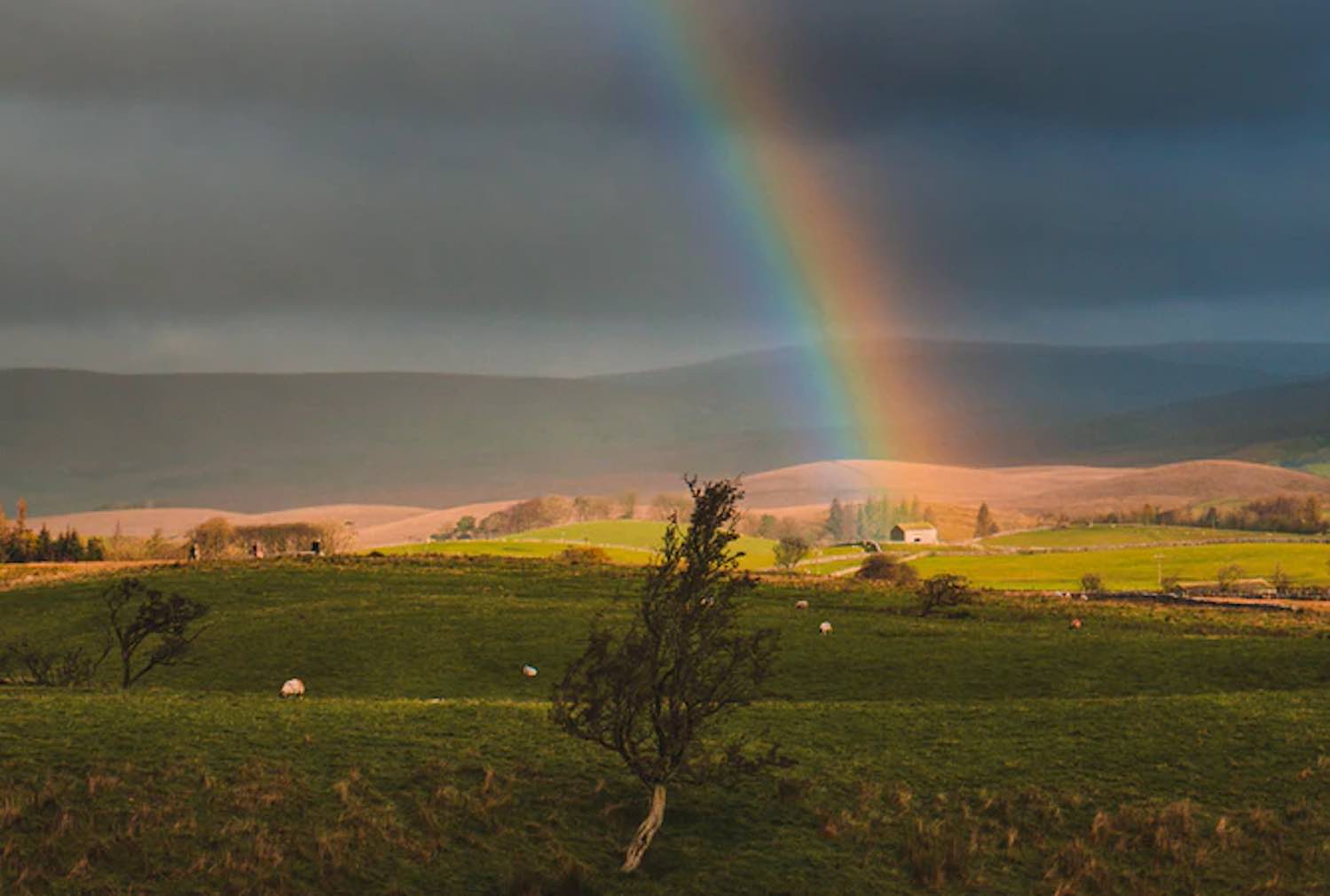
Quote of the Day: “Weather is a great metaphor for life—sometimes it’s good, sometimes it’s bad, and there’s not much you can do but carry an umbrella or choose to dance in the rain!” – Terri Guillemets
Photo by: Getty Images for Unsplash+
With a new inspirational quote every day, atop the perfect photo—collected and archived on our Quotes page—why not bookmark GNN.org for a daily uplift?
86 years ago today, Ernest Hemingway’s novel For Whom the Bell Tolls was first published. A story about a young American volunteer who joined the government of Spain as a guerrilla fighter during the Spanish Civil War, a conflict that was widely viewed as a dress rehearsal for the Second World War because the Italian Fascists and German Nazis were supporting an overthrow. READ more about this seminal work… (1940)
There’s viral—and then there’s the video that recently dropped on social media platforms of Georgia high schoolers playing the prank of a lifetime on their principal.
51-year-old Bobby Davis of Lakeview-Fort Oglethorpe High School was sitting in his office when someone rushed in saying a fight had broken out in the cafeteria.
Not on Davis’ watch—the principal tore off down the hall. Arriving at the scene, his worst fears were confirmed. There was a ring of students, phones held high in the air, with two kids going at it in their midst.
He quickly pushed his way through the crowd and grabbed a student he knew very well, one who had a history of fighting.
In the phenomenally well-shot mobile video, the tumult of discord dissolved into cheers: “Happy Birthday!” the crowd shouts.
It was Davis’ Birthday. The young man whom he’d grabbed had organized the surprise. It was a bittersweet moment that left Davis jumping up and down, not unlike a child.
De’Zayviun Watkins, 17, told TODAY that principal Davis had changed his life for the better. As a young man of inclinations towards high school football, Watkins was unstable and prone to fights. He struggled with anger, but Davis, who’s also involved with the football team, gradually helped him reconsider what his life might be like, and to discover his empathy for others.
Time with Davis turned the angry teen into a writer of poetry, a composer of music, and an aspiring auto mechanic. His journey at Lakeview-Fort Oglethorpe doesn’t have long left, and Watkins wanted to leave an unforgettable mark on his mentor.
For his part, Davis, who also spoke with TODAY, said that students know when figures of seniority don’t care about them, and that the only way to ensure they have the right environment is to treat them with compassion.
“If your kids don’t feel like they’re loved and respected, they’re not going to learn,” he says. “If they don’t feel safe, they’re not going to learn. You got to know your kids for who they are. They know if you really don’t care.”
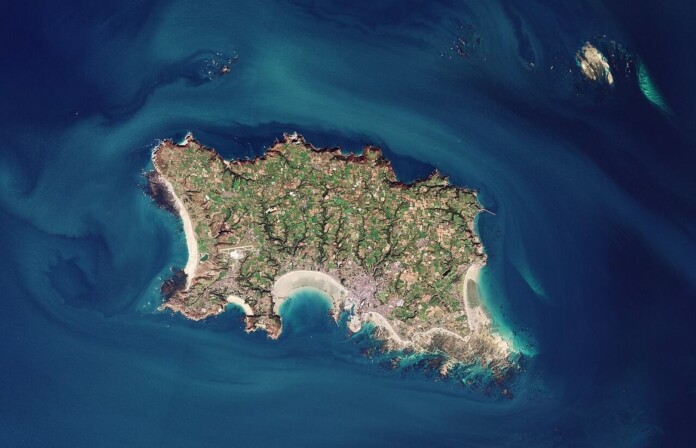
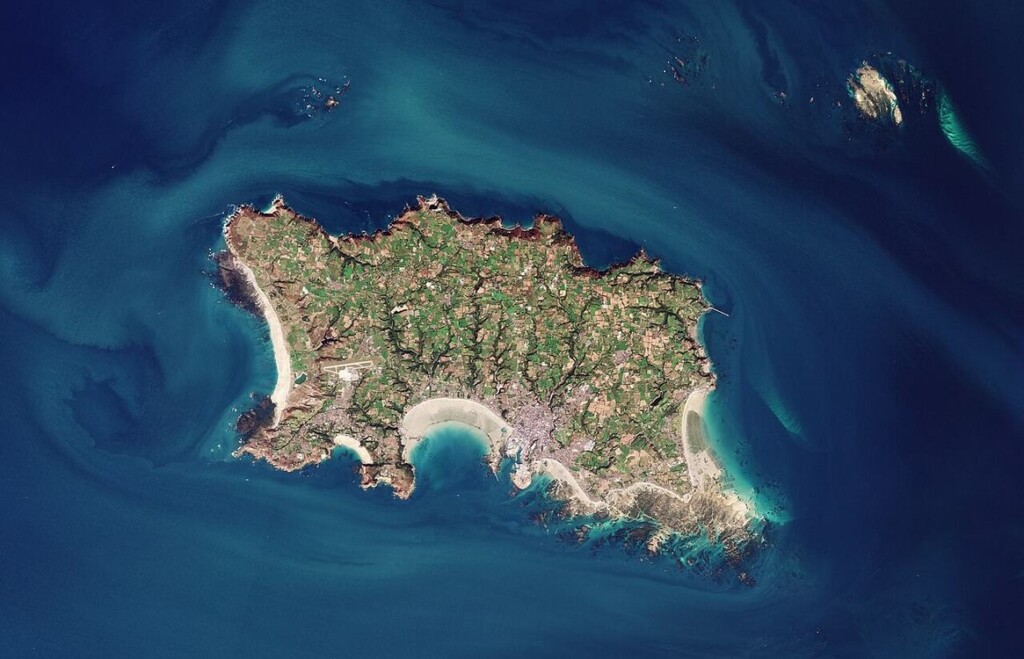
Jersey as seen from Copernicus Sentinel-2 - credit, ESA CC 3.0. SA - IGO
Jersey as seen from Copernicus Sentinel-2 – credit, ESA CC 3.0. SA – IGO
The self-governing British Isle of Jersey announced in late August it would increase its percentage of protected waters by 15%.
Now, 21.7% of Jersey’s seas will be protected from trawling and other damaging fishing practices. Coming into force on September 1st, the new regulations target some of the most valuable and vulnerable habitat surrounding the Channel island.
For those unaware, Jersey is a semi-autonomous quasi micro-nation of Norman-British heritage; one of 3 considered “Crown Protectorates” under the British Commonwealth.
Officially called a “Bailiwick,” Jersey administers its own environmental laws and regulations, which it often does in consultation with both French and British officials given its position in the English Channel.
Jersey’s Minister for the Environment, Mary Le Hegerat said Jersey’s seas were “one of the island’s greatest natural assets” and that “important, structurally complex zones” of ocean around the island acted as feeding grounds and nurseries for both fish stocks and other marine life valued for biodiversity.
The Jersey Government is actively working with its fishing industry to open up new fishing areas less sensitive to disturbance, and the entire network of protected areas will continue to be managed through the Bailiwick’s Marine Spatial Plan, which is prepared in consultation with French authorities.
“Protecting important habitats today helps ensure Jersey’s waters remain productive and biologically rich in the future,” said Jersey’s head of marine resources Francis Binney. “At the same time, we recognize the challenges facing the fishing industry and are committed to working with fishers to build a resilient and economically sustainable sector.”
“This is not about choosing between conservation and fishing—it is about ensuring that Jersey continues to have both healthy seas and a successful fishing industry for decades to come.”
It’s not an unreachable goal, as scientific observation of marine protected areas around the world consistently see that protecting the richest marine environments tends to increase fish stocks in the exploitable sees surrounding them in such a way as to be more valuable to the fishing industry than if they were open to commercial fishing.
SHARE This Small Island Making A Big Difference In Marine Conservation…
A man and a woman stopping at a Texas ATM noticed a bag lying atop the machine.
Every inch of the bag was stuffed with money, yet the anonymous Samaritan immediately called the Lewisville Police Department.
Information on one of the bags indicated that it might have come from the next door Chick-fil-A. He took it over to ask the supervisor about it, but was told the cash and a smaller bag containing 19 checks, were not theirs.
By then, an officer had arrived on scene, and the man, who identified himself only as a Lewisville barber, readily handed it over. Investigators eventually determined that the cash and checks belonged to Bank of America, and that a technician with Brinks had been instructed to bring the cash with them after repairing the ATM.
Inside the money bag was a receipt showing how much the anonymous man had readily relinquished: $128,514.
At the station, Lewisville Police Chief Brook Rollins called for help, as protocol in such circumstances is to double count the money then run it through an electric currency counter. After that was done, they had found exactly $128,514. Not a dollar was missing.
“I’ve had cases where good Samaritans have turned in property that they found, wallets, IDs, things like that,” Lewisville Police Detective Gina Miller told CBS Texas. “But in the case of $128,000, I’ve never had somebody turn in that kind of money before.”
“The bag was just sitting there,” Miller said. “There was no indication of a crime occurring. It looked like it was just left there by accident.”
The Lewisville PD say they want to honor the Good Samaritan, who agreed to be thusly received so long as the ceremony was private. Miller said that many people would have the instinct to sneak off with such a large sum of money, but that “Finders keepers losers weepers” is not a legal defense, should they be caught doing so.
Police Chief Rollins said, by contrast, the man knew it was the right thing to do, and did it without hesitation.
WATCH the story below from CBS Texas…
SHARE This Honest Man’s Good Deed When It Would Have Been Easy To Steal…
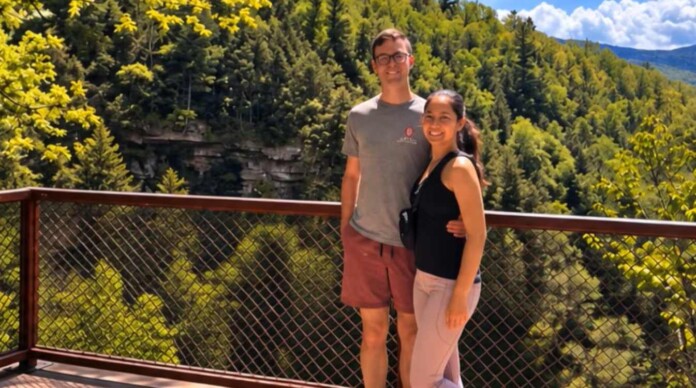
Nick and Eva Broderick on their hike which nearly killed them - credit,
Eva Broderick
Nick and Eva Broderick on their hike which nearly killed them – credit, Eva Broderick
Nick Broderick describes the moment he decided to marry his girlfriend Eva as electric: it was as if he were struck by lightning.
Love language aside, that’s actually exactly what happened.
While enjoying a hike in the Kettle Moraine State Forest in Wisconsin in August of 2025, Nick and his girlfriend Eva had come to within 2 miles of their car when the weather turned.
The rain began to fall, but with nowhere to shelter they decided to make a march for the finish carpark. At a certain point, rather prophetically, Eva turned around and looked at the man who would become her husband and asked…
“What if we get struck by lightning?”
All Nick remembers is hearing a boom. A tree beside them took the brunt of a lightning strike, while the lovers were shocked by the ground current. It left Nick stiff as a board.
“All I remember was being curled in a fetal position with my hands over my ears, screaming, I think, and feeling what can only be described as electricity in my feet,” Eva Broderick said.
“I was curled into Nick, and I looked over. He was laying on his back, his eyes were half open, glazed over, and he was blue and not breathing.”
Eva immediately started CPR after calling 911, but the signal was poor, and besides that she had no way of communicating where they were along the trial. It took 50 minutes for search and rescue to locate them, during which time Eva had to restart her boyfriend’s heart twice.
But Nick and his heart were made of sterner stuff, and he pulled through after a 3-day stay in the hospital with just a pinch of hearing loss in one ear and some tendon damage.
Realizing both his heart and his life metaphorically belonged to Eva, he proposed upon discharge from the hospital, and, wanting to change the narrative of August, the pair were married short of a year to the day that they both almost died amid nature’s fury.
“I’ve made the joke quite a few times that he can’t leave me. I brought him back from death, so he’s kind of stuck,” Eva Broderick, who was presented with a lifesaving award from the Palmyra Fire Department, told Action News 5, reporting on their story.
SHARE This Electric Love Story With Your Friends On Social Media…
Quote of the Day: “It’s not what you are going to do, but it’s what you are doing now that counts.” – Napoleon Hill
Photo by: Alex Guillaume
With a new inspirational quote every day, atop the perfect photo—collected and archived on our Quotes page—why not bookmark GNN.org for a daily uplift?
76 years ago today, Tom Petty, was born in Gainesville, Florida. As an 11-year-old he met Elvis Presley, which sparked his love of rock and roll. As a guitar-playing singer-songwriter, he was one of the best-selling musical artists of all time, with over 80 million records sold worldwide powered by mega hits like “American Girl,” “Won’t Back Down,” and “The Waiting (Song)”. READ more… (1950)
Mount Mabu in Mozambique - credit, httpsdoi.org10.3897zse.92.9948 CC 4.0. Int
Mount Mabu in Mozambique – credit, httpsdoi.org10.3897zse.92.9948 CC 4.0. Int
A government decree published on August 24th set aside 23,000 acres as the Mount Mabu Community Conservation Area in Mozambique.
This means that one of the wettest areas in southern Africa, known as the “butterfly forest,” will be protected, as will the 200-plus butterfly species that live there.
Mabu, and its somewhat isolated mountain chain slopes, contain very high rates of endemism: described as species found there and only there with few exceptions.
Mongabay were abreast of the news via a researcher whose work on Mount Mabu spanning over two decades has uncovered multiple species new to science, including the Mount Mabu forest viper, but more than anything else: butterflies.
Mount Mabu and the neighboring Mount Namuli play host to at least 200 different species of butterflies. Presented by Sir David Attenborough for the BBC in 2013, the renowned naturalist described it as the “butterfly forest,” and the name somewhat stuck.
Julian Bayliss, whose research trips have greatly expanded the understanding of species on Mount Mabu, described the mountains and their butterfly forests as “possibly the largest continuous block of [medium-altitude] forest type in southern Africa” in 2014, and pondered at the time what could possibly be done to protect its natural riches.
As GNN has previously reported, Mozambique has long been a tremendous challenge for conservationists, as one of Africa’s longest post-colonial civil wars and unchecked poaching rendered many of the nation’s parks and wild places void of wildlife.
Now stable and at peace, the nation is trying to rebuild its wildlife populations, but nothing could be better than protecting what already exists before there’s a need to rebuild it. The government decree, issued by the Ministry of Agriculture, Environment, and Fisheries, describes the reserve as “dedicated to the protection, conservation and sustainable use of natural resources by local communities.”
A community management plan is in the works, but the outlook is positive, Mongabay writes, as the mountains are treated as sacred by those very locals.
A considerable number of protected spaces have been established since the end of the civil war, and now the country’s official conservation authority states that 25% of the national territory is preserved in some way, ranging from sustainable use to total preservation of wilderness.
FLY Over To Social Media And Share The NEWS About The Butterfly Forest…
A major arts and heritage conservation project in China has born unexpected fruit thousands of miles away in New York City.
In the Chinese arts and antiquities gallery of the Metropolitan Museum of Art, a 50-foot-long mural devours the attention of an entire room with its arrangement of Buddha and his attendants.
The Medicine Buddha mural had long attracted the wonder of Zhang Jian, director of the “Meticulous Painting Institute” at the Chinese National Academy of Arts, which since 2013 has poured billions of Chinese RMB into restoring, conserving, and repatriating Chinese artifacts around the country and the world.
Describing it as wielding an “awe-inspiring energy,” Zhang learned that the mural was originally located in the ancient Guangsheng Temple in central China. Standing in its halls years later, staring at the vacant space where the massive mural had originally hung, Zhang was struck with an idea.
Over the next 3 years, he led a team of special artists and conservationists to the Met to meticulously—excruciatingly—copy the mural for a life-sized replica that captures every single crack, faded contour, and conservationist correction it had faced in its 700 years on the Earth.
This project was made possible with the unerring support of the Met itself, a collaboration which marks arguably the highest ever undertaken between Chinese and American cultural institutes.
Now in October, the Met is to co-host an international symposium in Beijing about Chinese murals, marking the first time the New York museum has jointly held a major academic conference in China with a national research body.
Jason Sun, the Met’s curator of Chinese art, told the South China Morning Post that the results achieved by Zhang’s team—including the realization that conservators had incorrectly arranged the mural segments so that Lord Buddha’s head was 2 centimeters off kilter—as having “profound historical and practical significance.”
Painted around 700 years ago during the Mongol-administered Yuan Dynasty, on clay tiles mixed with rice straw, the mural depicts the Medicine Buddha seated with his chief attendants surrounded by numerous figures.
Yet its presence in the Met isn’t the result of it being a plundered relic. Mainland China was mostly free from Western colonial occupation when the impoverished monks from Guangsheng Temple chopped the mural up into sections and sold it to fix the collapsing roof of their temple.
Among the keystones of Buddha’s teachings is the unavoidable truth that all things are impermanent, so if they were good students of the Great Sage, those impoverished monks would not have hesitated to part with the relic, that traded hands across the West until it arrived at the Met via donation from Arthur Sackler in 1965.
The China National Arts Fund, a state-endowed philanthropic fund established in 2013 under the National Academy of Arts, was as recently as 2025 tasked specifically with the preservation of ancient murals and other works. So far, 40 ancient murals from caves and temples across Western China have been painstakingly examined and copied, but if they are held overseas, the Fund has the directive to pay for their study, and potentially, their recreation.
Yet Zhang had a different sort of intention for that recreation: one that the Met administrators enthusiastically supported. In 2024, SCMP reports that the Fund had formalized a research partnership with the Met, whereby the famous museum granted their colleagues in East Asia full authorization for prolonged detailed study of the work, and the sharing of ultra-high-resolution digital images.
“The Met staff actively coordinated with visitors for us,” said Meng Ying, an artist on Zhang’s team which visited the Met 3 times over the following years. “Though our lifts and lighting equipment occasionally blocked sightlines, visitors were remarkably understanding.”
As Meng said, studying portions of the work required specialized hydraulic lifts and expansive light fixtures, conditions which he described as being “unprecedented” in the history of the Met. This went on for days at a time, while the team poured their attention onto the smallest details to reproduce exactly what it was that the Guangsheng Temple was missing.
This included using clay-rich mud and rice straw to make the tiles, which they sourced from as close to the temple as possible. It involved extensive studying into the mineral pigments—considering what would have been available to the medieval painters, and how such materials could have changed over 700 years.
“Lighting, digital cameras ,and printing all change how a color looks. We had to tweak our paints over and over again on site,” said Han Maoyuan, another artist on the team.
Yet further, the team layered their mud tiles to create a base-layer painting and a second to replicate the scars left by time and intervention.
As mentioned earlier, the team’s exhaustive examination of the mural revealed that its original mounters in the Met’s galleries had misunderstood Chinese brushwork, and misaligned the Buddha’s head by 2 centimeters. Met staff told SCMP that after the disbelief wore off, they couldn’t walk through the room without noticing that the Buddha’s head was crooked.
The finished mural produced by Zhang and his team made its public debut at the China National Arts and Crafts Museum in Beijing, where on September 24th, in honor of President Xi Jinping’s visit to the US, an exhibition was held featuring the fruits of the National Art Fund’s preservation and reproduction efforts.
Zhang said it would allow this ancient mural to re-enter contemporary cultural life, yet with all the context that great works of art carry with them as the centuries load up on their shoulders.
Other murals from Guangsheng, as it turns out, are located in American Museums—in Cincinnati and Missouri—both have which have already contacted Zhang for the purpose of examining the alignments and conditions of the works.
SHARE This Inspiring Institutional Collaboration For The Sake Of Art And History…
Brazil's Senate chamber - credit, Wilson DiasABr - Agência Brasil CC 3.0 Br
Brazil’s Senate chamber – credit, Wilson DiasABr – Agência Brasil CC 3.0 Br
With Brazil’s senate voting 75 to 1 in favor, one wonders what took them so long?
The nation was one of the richest in the world that still had a customary 6-day workweek, with fulltime employment considered 44 hours, rather than the 40 we know of in the US.
That changed with the introduction of a Proposed Amendment to the Constitution 221 (PEC. 221) which puts South America’s largest economy at parity for working hours with the US and so many others.
This includes 40 hours a week, and 2 days of paid time off for full-time employees, with the days off being left up to negotiation between unions and their employers, though it’s assumed most will aim to secure either Saturday or Sunday, depending on whichever one they had previously worked.
“At first glance, it may seem like a subtle change. But for those who wake up early, take a crowded bus, work their shift and return home at the end of the day, this change is enormous,” Senate President Davi Alcolumbre told Brazil’s Courthouse News. “One more day of rest means more time for family.”
The reduction of 44 hours to 42 and the additional day off kick in 60 days from the passage of the PEC. It will fall to 40 a year later, ensuring employers have time to reorganize schedules or hire additional workers in advance.
The lower house of Brazil’s legislature passed an identical measure in May, and as per the separation of powers in the country, such cases no longer require an executive signature, meaning the law will come straight into effect.
Not that it would have mattered much if it did, as the PEC was supported by both the incumbent president and his opponent, who attended the senate hearing online to vote in favor, just 11 days before second-round elections.
PEC 221 was originally introduced in 2019 and would have shrunk the workweek to 34 hours, but this was later adjected up to 40, but still down from 44. It marks the first changes to labor hours by the legislature since 1988, Courthouse reported, when full-time work was reduced from 48 hours to 44.
East Asian economies famous for their productive, yet intense work cultures maintain 6 working days, including Singapore and Japan, though in either case it varied by sector.
CELEBRATE This Relief For The Workers Of Brazil With Your Friends…
A mere puff of steam could be the ticket to much larger and reliable strawberry yields in California, the LA Times reported.
University of California Santa Cruz (UCSC) researchers have been developing boiling water vapor as an alternative to chemical fumigants for the sterilization of the soil strawberries are grown in, which are believed to harm the environment, other animals, and even the growers themselves.
Just recently, the UCSC team enrolled 4 organic strawberry growers for a trial that saw sophisticated machines inject gouts of steam into the growing beds before the strawberries were planted.
Longtime strawberry farmer Rod Koda was one of those who participated, and he told the LA Times that the results were bigger plants, healthier plants, and more strawberries.
The steam is used to kill soil bacteria, fungi, and weeds which can harm, kill, or delay strawberry plants. For years, strawberry farmers had no alternative to the chemical fumigants other than to simply “roll the dice” on losing their entire harvest to soil-born diseases like fusarium wilt.
Yet certified organic produce cannot be grown with such toxins, and so organic strawberry growers had to take gambles that might lead to bankruptcy, or else grow them through hydroponics. Now though, with steam fumigation, there seems to be an effective alternative.
In reality, steam has been used for decades in greenhouses as a pesticide. The injection of it into soil is just a novel take on a classic growing application.
“We’re going back to the future, where we’re looking back at an older technology but we’re finding more ways to engineer more efficiently and use it,” said Jenny Broome, a UCSC researcher working on the project.
Strawberries are one of California’s most valuable and largest crops, with some 35,000 acres dedicated to these delicate delicacies.
Growing well in shade, close to the ground, and with such soft fruit, the strawberry is a tempting target for pests of all classes. Growing them organically can be a real challenge, and perhaps that’s why agri-tech researchers focus on developing innovative solutions to improve their yields, such as through hydroponics and other indoor methods.
GNN just recently reported on the adoption of a 3D textile, originally meant for insect-proof body armor lining for America’s military, as a sort of strawberry security blanket. Draped over fields, they tripled yields of strawberries grown in North Carolina by keeping out insects and letting in breeze, moisture, and sunlight.
SHARE This Great Holistic Technique For Growing Strawberries Organically…
Quote of the Day: “Hope is the companion of power and mother of success; for who so hopes strongly has within him the gift of miracles.” – Samuel Smiles
Photo by: Illiya Vjestica
With a new inspirational quote every day, atop the perfect photo—collected and archived on our Quotes page—why not bookmark GNN.org for a daily uplift?
6 years ago today, the high-profile sale of a Ming Dynasty artwork brought the world not only into contact with the most remarkable painting of a stone ever made, but also the depth of the Chinese relationship with the natural world. Called Ten Views of Lingbi Rock, the painting sold for $77 million at auction, the highest ever for a Chinese classical painting. READ all about the painting… (2020)
A new study has discovered that contact with nature may help people develop healthier eating habits.
The research from Anglia Ruskin University in the UK is reportedly the first to provide evidence that exposure to natural environments can influence people’s relationship with food.
The study, published in the journal Body Image, involved 500 UK adults who were assessed on their individual levels of contact with the natural world, such as how much they noticed nature in their everyday lives, as well as the frequency and duration of the time spent around nature.
The participants also completed surveys measuring body image, self-compassion, connectedness to nature and intuitive eating—which is an anti-dieting approach to eating that focuses on listening to the body’s internal signals instead of following strict eating rules.
The study found a direct positive relationship between nature contact and intuitive eating, but pathways involving other factors were even more important.
“One pathway involved nature contact influencing intuitive eating habits through higher levels of body appreciation. It is thought that nature contact helps people feel more comfortable in their body, more appreciative of what their body can do and more responsive to their body’s needs, which in turn leads to higher levels of intuitive eating.”
“A second pathway involved self-compassion. Greater nature contact promotes self-compassion and the researchers believe this provides a buffer against responding to difficult thoughts and emotions through impulsive eating. Instead, it may encourage people to follow their body’s signals and choose foods that better meet their physiological needs.”
Lead author Viren Swami, Professor of Social Psychology at ARU said, “These findings are important because they provide the first evidence that contact with nature may shape people’s eating habits.
“We already know that contact with natural environments can reduce anxiety and depression and improve various measures of wellbeing, including life satisfaction.”
“Our new study is the first to show how it can influence our eating habits, thanks to helping people develop more positive relationships with their bodies and greater self-compassion, and these findings could have practical benefits for public health professionals.
“We recognize there are limitations to this study, particularly as it is based on self-reported data, and further studies in other countries are needed. However, these initial results suggest that greater access to and engagement with nature could support efforts to promote healthier, more sustainable eating behaviors.”
SCHEDULE A HIKE WITH DIETING FRIENDS By Sharing This on Social Media…
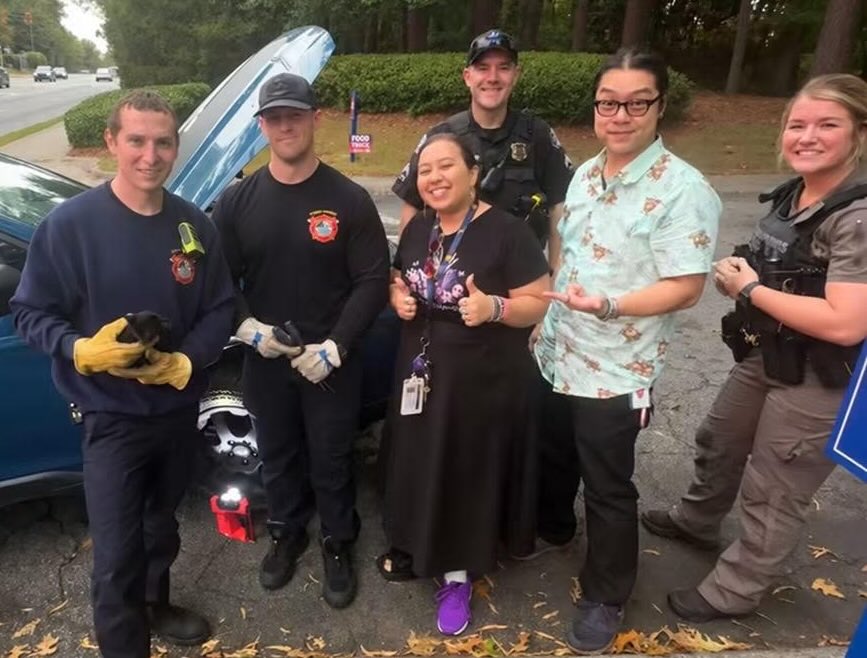
Sandy Springs Fire and Rescue service rescues kitten in suspension
Sandy Springs Fire and Rescue service rescues kitten in suspension – Courtesy of Nicole Motahari
A high school teacher in Sandy Springs, Georgia, got an unexpected surprise on her way to work earlier this month.
“It was a pretty wild story,” she told GNN—and it happened just in time to celebrate her Halloween wedding anniversary.
“My husband and I were driving to pick up birthday cupcakes for my journalism students when another driver started honking at us.” Apparently, there was something hanging underneath our car.”
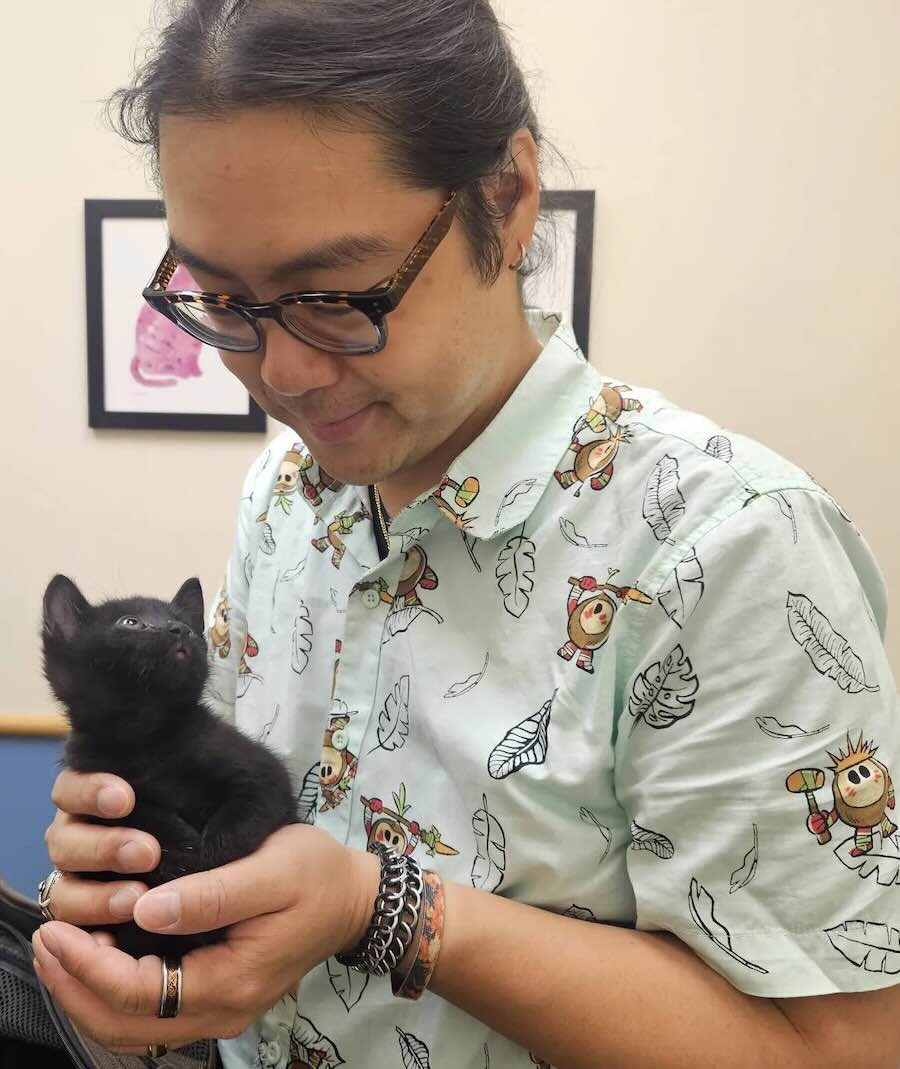
“That something turned out to be a tiny black kitten trapped in the suspension,” said Nicole.
They called for emergency help so they could continue driving without putting their feline friend at risk.
It took three firefighters and two police officers to rescue the stubborn little stowaway that weighed just over a pound (544g).
“We took him straight to the vet,” she reported, where they learned he was less than seven weeks old.
Naturally, because the couple was married on Halloween, she and Brandon decided it was fate that brought the black cat across their path, and immediately took it home.
Nicole and Brandon with Sandy Spring finest – Courtesy of Nicole MotahariSafe and happy at home – Courtesy of Nicole Motahari
“Adopting a tiny black kitten in October feels especially fitting!”
Aviator Heating and Cooling gives Diane and Brian Johnsen free HVAC system
Aviator Heating and Cooling gives Diane and Brian Johnsen free HVAC system in partnership with Lennox Feel the Love program
An Oregon couple facing financial hardship can now endure the winter in comfort and with ‘peace of mind’ since a new HVAC system was installed in their home at no cost.
Diane and Brian Johnsen of Beaverton received a complete heating and cooling system installed—valued at approximately $16,000—with the labor performed by local contractor Aviator Heating & Cooling.
The homeowners had been navigating difficult circumstances, including financial pressures that led the wife to work three jobs to help keep up with the mortgage.
When their existing HVAC system could no longer be repaired, a replacement was the only option, so they applied for the Lennox Feel the Love program.
It’s described as a community initiative that helps qualifying homeowners receive essential home improvements for free.
The gift brought much-needed relief included a new heating/cooling system and thermostat, with Aviator handling the on-site installation.
“Are you kidding?” Brian quipped to KOIN-TV news in the video below. “We were ecstatic.”
Old and new HVAC systems – Aviator HVAC in Oregon
Before-and-after photos show the home’s aging furnace and the new energy-efficient equipment that will provide reliable heating and cooling throughout the couple’s retirement years.
Aviator Heating and Cooling technician with Lennox Feel the Love representative and seniors Diane and Brian Johnsen
Since 2009, the Lennox Feel the Love program has helped more than 3,100 families with HVAC system donations. You can submit a nomination on their webpage, here.
Aviator says it’s committed to helping families in need throughout Beaverton, Portland, and surrounding Oregon and south-east Washington communities.
“Especially in our retirement years,” Diane added in the interview below. “It means the world to us.”
(Watch the heartwarming scene from KOIN-TV below…)
Knitted traffic officer – Credit: Emma Trimble via SWNS
Knitted traffic officer – Credit: Emma Trimble via SWNS
Villagers have knitted speed cameras and life-sized traffic cops to fake-out reckless motorists, in a bid to slow down drivers.
The locals in Fillongley, Warwickshire, dressed the mannequins in high-visibility vests to look like traffic cops in a crafty bid to cut down on accidents.
Members of the town’s Knit and Natter group created the realistic cameras and mannequins after a spate of crashes along the villages main street.
The group’s latest recruit is a knitted officer stationed beneath a 30mph sign, complete with a mock speed gun aimed at oncoming traffic.
And locals believe the effort is working with many drivers falling for the mock speed cameras.
Heather Badham, the town’s councillor/mayor, said their realistic creations have been faking out drivers all week since they were installed on October 13 following four months of preparation.
Knitted speed cop – Credit: Emma Trimble via SWNS
“It has had a massive impact,” said the 58-year-old.
“90% of the accidents are caused by people coming down the Nuneaton road, not seeing the signs and then hitting someone.
“Since putting these up, we’ve been chuckling as people saw the man and thought he was real. You could see the brake lights coming on.
“They don’t take notice of the flashing 30 sign and go too fast—but they see the cameras and slow down.
Quote of the Day: Though criticism and negative thinking can serve as a steam valve for pain, they never solve my problems—only distract me from them. – Courage to Change: One Day at a Time in Al-Anon
Photo by: Getty Images For Unsplash+
With a new inspirational quote every day, atop the perfect photo—collected and archived on our Quotes page—why not bookmark GNN.org for a daily uplift?
896 years ago today, Zhu Xi, a revolutionary Confucian scholar of the Song Dynasty, was born. His shifting of the emphasis from the I Ching to the Four Books reshaped the Chinese view of the world, which is not an easy thing to do. His commentaries and perspectives formed the basis for the Chinese civil service exam from his day to 1905. READ more about the great thinker… (1130)