












All News - Page 337 of 1714 - Good News Network
Home Blog Page 337

Ancient 3,000 Year-old Canoe Discovered Beneath Wisconsin Lake Carved From Single Piece of Oak

Tamara Thomsen (3rd from right) discovered the 3000-year-old canoe. –Wisconsin Historical Society

The smiling face in the middle on the right side of the raft in this picture belongs to a woman who has managed to find two ancient Native American canoes in the same lake, within 12 months of each other.

In November of 2021 Tamara Thomsen, a maritime archeologist and member of the Wisconsin Historical Society, discovered a canoe of the bottom of Lake Mendota, near Madison, that was 1,200 years old.

Thomsen probably couldn’t believe her luck when during a recreational dive this May, she spied another canoe in the depths of the water.

In September the Wisconsin Historical Society alongside native nations recovered the canoe, and radiocarbon dating places it to 1000 BCE, making it the oldest ever discovered in the Great Lakes region by roughly 1,000 years.

The 3,000-year-old dugout canoe is carved from a single piece of white oak and measures approximately 14.5 feet in length.

As it was found in the same area the first canoe was discovered, it suggests that the location of Lake Mendota’s shoreline may have changed over time and could have once been much lower, according to Dr. James Skibo, Wisconsin Historical Society state archeologist.

“Finding an additional historically significant canoe in Lake Mendota is truly incredible and unlocks invaluable research and educational opportunities to explore the technological, cultural, and stylistic changes that occurred in dugout canoe design over 3,000 years,” said Skibo.

“Since it was located within 100 yards of where the first canoe was found at the bottom of a drop-off in the lakebed, the find has prompted us to research fluctuating water levels and ancient shorelines to explore the possibility that the canoes were near what is now submerged village sites.”

MORE ARCHEOLOGY NEWS: 300 Epic Ancient Murals ‘Unique in the World’ Depict Creation Myths on Texas Rock: ‘Oldest Books in North America’

Although it is likely that water transportation dates back to the arrival of Native peoples in this region, this discovery provides the earliest direct evidence, and helps to tell a more complete story of the continuum of Native life in Wisconsin and the Great Lakes region. Members from the Ho-Chunk Nation and Bad River Tribe were present at the canoe recovery.

Wisconsin Historical Society

“The recovery of this canoe built by our ancestors gives further physical proof that Native people have occupied Teejop (Four Lakes) for millennia, that our ancestral lands are here and we had a developed society of transportation, trade and commerce,” said Ho-Chunk President Marlon WhiteEagle in a statement.

“Every person that harvested and constructed this caašgegu (white oak) into a canoe put a piece of themselves into it. By preserving this canoe, we are honoring those that came before us.”

Wisconsin Governor Tony Evers also commented on the discovery, saying he looked forward to learning more about the pair of canoes.

RELATED: Viking Age Shipyard Uncovered at Birka is Like Nothing Ever Found Before

“This incredible finding provides an opportunity for us to work in concert with Tribal Nations to not only study but celebrate the history of the Indigenous people who’ve called this land home since long before Wisconsin became a state,” he said.

The canoe was hand-excavated in preparation for today’s recovery mission and then securely transported to the State Archive Preservation Facility in Madison for preservation and storage.

It will be cleaned and cared for by Tribal members and Society staff before being hand-lowered into a large preservation vat also containing the 1,200-year-old canoe discovered in 2021. Together the canoes will undergo a two-year preservation process that will conclude with freeze-drying to remove any remaining water.

SHARE This Serendipitous Dip In Lake Mendota On Social Media…

Adopted Man Discovers Family After 20 Years When Brother Used His Unusual Name to Track Him Down

Pictured Iverson Poff meeting his biological family. An adopted man discovered his biological family after 20 years when his brother tracked him down on Instagram - thanks to his unusual first name. See SWNS story SWSMfamily. Iverson Poff, 20, was adopted from birth and raised by his adoptive parents - but always secretly wondered who his biological family were.
– SWNS

An adopted man discovered his biological family after 20 years when his brother tracked him down on Instagram thanks to his unusual first name.

Iverson Poff, 20, was adopted from birth and raised by his adoptive parents—but always wondered who his biological family were.

Iverson, who grew up in Portland, Oregon had a few baby pictures provided by the adoption agency. However it was a closed adoption where adoptive family and the biological family have no contact, and the adoption agency used had long since shut its doors.

It was July 20th however, that he got an Instagram message from a man called Jalen Vickers; he said he was his older brother.

“I have that date tattooed on my arm, because it was so important to me,” said Poff. “I opened the message instantly and I knew straight away who it was. I just knew.”

Vickers explained that thanks to Iverson’s unique first name which his mom had remembered, it was easy for him to be found.

16 hours after he got the message, Iverson was on a flight to Salt Lake City where his mother and three biological siblings were waiting to meet him.

He described it as the “most euphoric moment” after meeting the family he thought he’d never know—and now he’s planning to move to Utah to be closer to them.

– SWNS

“When I first met my family it was like seeing angels. It was crazy—I can’t even explain it,” he remembered. “I was actually in the process of doing DNA tests to try and find them on Ancestry, but they found me before I had chance to finish.”

Poff knew he had two biological siblings, but the third was born post-adoption agency pictures. It transpired he had not only an older brother, but also two younger sisters aged 18 and 13.

VERY SIMILAR: Son Discovers His Birth Mom Worked at the Same Hospital, After Searching For Years

He described the meeting as “very surreal” and “breath-taking.”

He learned from his mother, Danielle Zimmerman, that she had been unable to support him at the time she got pregnant.

She had flown from her home in Florida at the time all the way to Utah to give birth to Iverson there, so his adoptive family could take him straight in.

“We discussed it and chose not to focus on the past,” Poff said of his personal origin story. “Why do that when I have so much in the present and the future to focus on?”

RELATED: Babies Mixed Up in Hospital, But Then Families Decide to Raise Them Together and They’re All Best Friends Now

He ended up staying in Utah for three weeks, during which time he got to do ‘normal family things.’

“When I met them, I felt like the void in my head was filled,” he said. “Like I’d been missing puzzle pieces that I now have. Its awesome. “I have to count my blessings. I’ve been very fortunate.”

SHARE This Heartwarming Origin Story On Social Media…

New Florida Community Survived Hurricane Virtually Unscathed After Being Designed for Resilience

credit - babcock range blog
credit – babcock range blog

Even as two million Floridians lost power during the recent Hurricane Ian, one unique community survived intact.

Despite being located around 20 miles from Fort Myers, the heart of the devastation, Babcock Ranch’s blend of solar power, native flora, and built-to-code construction has meant that apart from ripped up pool coverings, broken fence posts, and a missing shingle or two, they never even lost power.

Roughly 4,600 residents live in Babcock Ranch, billed as a storm-resilient and 100% solar-powered town.

“They were told that Babcock Ranch was built to stand up to storms—but you never really know for sure until you see how everything performs when a storm comes,” Lisa Hall, a community representative, told CBS news. “Ian put it to an extreme test.”

Built around 25-feet higher on average than surrounding communities, Babcock Ranch is beyond the reach of storm waters, and with buildings specified for Cat 4 hurricane winds of 145 mph, Babcock passed the test and how.

Built in 2018 specifically for climate resiliency, the town has its own wastewater plant and water system that penetrates deep into an underground aquifer. Drinking water wasn’t contaminated and never shut off.

READ MORE: Architect Appalled by ‘Horrible’ Homes Planned for Village Buys Land Herself to Design Attractive Eco-Houses

700,000 solar panels owned by Florida Power & Light provide every home with electricity, and despite covering an area of 900 acres, they remarkably sustained minimal damage. Neither power nor internet ever went out.

The solar panels provided power to a storm shelter that wasn’t even expected to be used because of the late-delivery of a diesel generator. At the last minute the shelter was opened, and remained the only one in the area that still had power.

Unsurprisingly, the town expects its population to grow to 50,000, with 6 million square feet of commercial space.

RELATED: A New Neighborhood is Being Built in Utah That Looks Like a European ‘One-Car Town’

Residents have organized several donation drives to help out communities less-fortunate that them.

“It [is] a constant outpouring of support from Babcock Ranch residents who know how incredibly fortunate they are to have homes and community still intact,” Hall said.

SHARE This Good News From The Bad Storm On Social Media…

“The life given us, by nature is short; but the memory of a well-spent life is eternal.” – Cicero

Quote of the Day: “The life given us, by nature is short; but the memory of a well-spent life is eternal.” – Marcus Tullius Cicero (Ancient Roman statesman, lawyer, scholar, philosopher)

Photo by: Allec Gomes

With a new inspirational quote every day, atop the perfect photo—collected and archived on our Quotes page—why not bookmark GNN.org for a daily uplift?

Exposure to More Foreign Accents Helps Children Grow Their Vocabulary Faster, Gamified Science Shows

When learning a language, the more foreign accents a child hears the faster they learn words.

This was observed using some clever science and shows that it wasn’t bilingual children, but children in a language class with multiple accents who learned and remembered new words at an accelerated rate.

Today more and more kids are growing up in multi-ethnic environments, especially in Europe, global cities like Singapore, or for digital working nomads.

“Until now, there was a lack of studies on the influence of regional and foreign accents on children’s learning of new words,” says Dr. Adriana Hanulíková at the German language department at the University of Freiburg.

To fill this gap, the researchers had 88 Freiburg children aged 7 to 11 play a computer game based on the popular card game “Spot It!,” which is known as “Dobble” in Germany. In the game, two identical objects on different playing cards have to be discovered and named as quickly as possible.

For the study, the children played the game on the computer with virtual peers. They spoke either standard German or German with a Swiss or Hebrew accent. The game included six terms that are usually unknown to children of elementary school age.

The study’s game-based design is a particularly suitable tool for this research said Dr. Hanulíková.

“The children learn from other children while playing, not from adults, the latter being the focus of almost all studies to date. In addition, children are required to say and use these words in interaction, not to just passively recognize them. In this way, the experimental design resembles natural learning in everyday life.”

All 88 children who participated in the study were German speakers, some of them bilingual or multilingual. The researchers also asked how often per week each child hears regional and foreign accents.

The evaluation of the experiment showed that the children benefited from long-term experience with different accents: children with this experience found it easier to learn unfamiliar words from other children who spoke unfamiliar accents in this virtual game situation.

This effect occurred especially when children heard both regional and foreign accents in their daily life. Whereas experience with regional accents alone also predicted learning, children who had experience with foreign accents showed, at least in tendency, similar effects. Bilingualism had no corresponding effect.

RELATED: It’s a Myth That Adults Can’t Learn Languages as Easily as Kids – Benefits Multiply if Families Learn Together

Further studies are thus needed to investigate in more detail what type of experience in children’s vocabulary acquisition leads to which effects, and how these might differ from the learning of new words by adults, says Dr. Hanulíková.

Having access to a second language improves not only career outcomes, but sets a brain up for better capabilities long-term, from childhood to the golden years. Research has also shown that it doesn’t slow down learning levels during early schooling.

Bilingualism is associated with multiple cognitive advantages, such as increased attentional control, greater working memory capacity, and symbolic representation, in infants, adolescents, and adults.

READ ALSO: Spending Quality Time With Dad ‘Helps Young Children Do Better at School’

With the large demand for bilingual education, especially across the anglophone and Chinese worlds, Dr. Hanulíková’s research is vital for understanding the best and most natural environments for this instruction to thrive in the educational system.

SHARE This News On Social Media: Condividate Questa Notizia Sui Vostri Social…

Zac Efron Bonds with 81-Year-Old Hero Who Inspired His New Film, The Greatest Beer Run Ever Movie: ‘I Was Honored’

When Zac Efron signed up to play a still-living person, he knew there would be challenges.

What he didn’t know was underneath the heroism of that real-person, there was a kind man honored to have his story told, which made Efron all the more honored to portray him.

The movie The Greatest Beer Run Ever, streaming on Apple TV, is based on the memoir of the same name by John “Chickie” Donohue, who went from the United States to the jungles of Vietnam in order to give his friend serving there a cold beer and a pat on the back from home.

“It’s one of those unbelievable real-life scenarios that you just can’t believe a guy got himself into,” says Efron. “It’s a beautiful story about human nature, love and a really difficult war and time in history.”

Donohue was on set during pretty much most of the filming, but despite the fact he knew nothing about show business, and nothing about Zac Efron, here was this Hollywood A-lister treating him with deference.

RELATED: Wes Anderson Designed a Luxury Train Car – and It Looks Like Something Out of His Movies

“Instinctively I said, ‘I like this guy!” Donohue told People“I had no mission to teach anybody anything. My mission was simply to let the guys over there know that we truly, truly supported them.”

From The Greatest Beer Run Ever – Apple TV.

Donohue added he had already seen the movie twice, and feels Efron played him better than he did when he was actually going to deliver beer to soldiers in Vietnam.

The then-26-year-old merchant mariner and New York native boarded a cargo ship bound for the war, and ended up traveling all the way to the front lines.

For Efron, the connection he made to the real-life hero was the biggest reward of all the effort that involved location shooting in terrible weather, and having to maintain a handlebar moustache the whole time, adding he just wanted to turn in a performance “Chickie” could be proud of.

The film was released on Apple TV September 30th.

WATCH Tthe trailer below…

SHARE This Touching Hollywood Tale On Social Media… 

Galaxy Twinkling with Universe’s Oldest Stars Discovered by Astronomers

James Webb Telescope - NASA
James Webb Telescope – NASA

The James Webb Space Telescope recently made its debut with the “Deep Field” image, but as we are absorbed by the beautiful colors of near-infinity, scientists have used the data behind the shot to identify a very old and fascinating object in space.

Named the “Sparkler,” it’s a “globular cluster” nine billion light years away. The light as it’s reaching us is as it was just 4.5 billion years after the Big Bang, meaning just after it became possible for stars to form.

JWST’s high-resolution snapshot contains thousands of galaxies and dense groups of millions of stars, but for co-lead author Dr. Kartheik Iyer, the most interesting were ancient collections of stars from a galaxy’s infancy that can contain clues about its earliest phases of formation and growth.

“Looking at the first images from JWST and discovering old globular clusters around distant galaxies was an incredible moment, one that wasn’t possible with previous Hubble Space Telescope imaging,” said Iyer.

The Sparkler got its name for the compact objects appearing as small yellow-red dots surrounding it, referred to by the researchers as ‘sparkles,’ and which turned out to be the globular clusters.

NASA Administrator Bill Nelson on the unveiling of the telescope’s first images, said that the Deep Field contained very little of the galaxy, approximately as much as if one were to hold a grain of sand on the end of their finger, extend their arm and hand and measure the sand grain against the sky itself.

Incredibly though, examination of the globular clusters spotted in this tiny area of space revealed that five of the clusters were among the oldest ever recorded.

Southern Ring Nebula imaged with two different Webb instruments. credit / NASA, ESA, CSA, and STScI

Difficult analysis would follow

“Since we could observe the sparkles across a range of wavelengths, we could model them and better understand their physical properties, like how old they are and how many stars they contain,” said Dr. Iyer.

“We hope the knowledge that globular clusters can be observed at from such great distances with JWST will spur further science and searches for similar objects.”

LOOK: Scientists Stunned by New Jupiter Images With Galaxies ‘Photobombing’ the Webb Telescope

The Milky Way galaxy has about 150 globular clusters. The study in The Astrophysical Journal Letters sheds light on how and when these dense clumps of stars formed.

It is known they can be extremely old. But it is incredibly challenging to measure their ages.

Using very distant globular clusters to age-date the first stars in distant galaxies has not been done before and is only possible with JWST.

WATCH: Travel 2,000 Light-Years in 60 Seconds With New Video From NASA’s Webb Telescope

“These newly identified clusters were formed close to the first time it was even possible to form stars,” said lead author Dr. Lamiya Mowla, of the University of Toronto in Canada. “We are observing the Sparkler as it was nine billion years ago, when the universe was only four-and-a-half billion years old, looking at something that happened a long time ago.”

“Think of it as guessing a person’s age based on their appearance; it’s easy to tell the difference between a five and ten year old, but hard to tell the difference between a 50 and 55 year old.”

In total there were three images of the Sparkler using different wavelengths including infrared and spectrographic.

The Sparkler’s sparks were confirmed through spectroscopy, or the examination of light, to be old globular clusters because the researchers did not observe oxygen emissions with measurable spectra given off by young clusters that are actively forming stars.

While Hubble could barely see the Sparkler, JWST magnified in by a factor of 100 due to an effect called gravitational lensing whereby a galaxy cluster in the foreground distorts what is behind it, much like a giant magnifying glass.

MORE JAMES WEBB NEWS: New Webb Image Captures Clearest View of Neptune’s Rings, Revealing the Ice Giant in Whole New Light

The technique helped them produce three separate images of the Sparkler, allowing astronomers to examine it in greater detail.

“Seeing several of the Sparkler’s globular clusters imaged three times made it clear they are orbiting around the Sparkler galaxy rather than being simply in front of it by chance,” noted co-author Professor Marcin Sawicki, of Saint Mary’s University, Nova Scotia.

SHARE This Science News With Your Social WEBB…

Cat Who Sneaks into School Gets His Class Photo Taken – And Portrait Packet is Sent Home to Mom

Ziggy the Cat - Emma Roberts Facebook
Ziggy the Cat / SWNS

A cat performed the most head-scratching stunt in Wales recently on class picture day, leaving a group of proud moms “in floods of laughter.”

10 and 7-year-olds Meghan and Chloe Roberts were all dressed up and excited to have their picture taken at Drury Primary School, but their excitement couldn’t compare with that of Ziggy, their orange and white cat who regularly visits the school.

When Ziggy the “honorary student,” felt it was his turn, the 4-year-old effortlessly jumped up on the photo chair, looked straight at the camera, got his snap, and promptly left.

“Chloe handed the letter to me and I expected it to be her photos,” Chloe’s mom Emma Roberts told local Welsh news, The Leader. “But then when I looked I was just in floods of laughter and so were the other mums standing by me.”

“I asked her what had gone on and she said he just jumped on the chair. He didn’t need any encouragement, he just got up there for a photo. The school has just accepted him and he goes there at any opportunity. He’s there every day.”

Indeed the headmaster has described the cat’s attendance record as “an excellent example for other pupils.”

RELATED: Family Left Stunned When Their Dog Escaped–Only to Return Later With a Ribbon From a Dog Show

Emma has called him a “complete menace,” because when Ziggy makes it onto school grounds, there’s no removing him. He saunters around, sleeping on books, on the headmaster’s desk, and walking in and out of classrooms while they’re in session.

However the school at this point has just accepted him.

Emma shared the incident on Facebook with an opener that read “If a cat could be the village idiot, then that cat belongs to me. He is ridiculously embarrassing.”

MORE LAUGHS: This Tortoise Attacks All the Black Shoes That Come Near Him- WATCH for a Laugh

No doubt Ziggy will be incredibly proud of his photo, and Emma admits she bought a copy of it from Tempest Photography to place on the mantelpiece next to Chloe’s and Meghan’s.

SHARE This Adorable Cat With Perfect Attendance On Social Media…

“Never underestimate the power you have that can take your life in a new direction.” – Germany Kent

Quote of the Day: “Never underestimate the power you have that can take your life in a new direction.” – Germany Kent

Photo by: Bit Cloud

With a new inspirational quote every day, atop the perfect photo—collected and archived on our Quotes page—why not bookmark GNN.org for a daily uplift?

Lonely 67-Year-Old Sets Up Woodworking ‘Shed’ to Combat Loneliness in Men, Following Global Trend

Across the English speaking world, men are learning that the easiest way to cure a bout of social isolation is not by talking face to face, but shoulder to shoulder.

When Phillip Jackson moved back to England from Australia, he was 67, and immediately felt like a stray dog in his native town of Barnsley.

Realizing many of those in town at his age had their own problems with social isolation, he launched a Barnsley UK chapter of an Australian community building movement called “Men’s Shed,” which has expanded across the anglophone world, and included more than 50,000 men.

Capitalizing on most men’s (and women’s) appreciation of woodworking, a Men’s Shed is essentially a collective support group for men with not enough friends or too much time on their hands. The original concept was to get together and make things out of wood, but in reality its about plugging into the social fabric of a community, whether that’s through meeting up for a coffee, building a park bench, or listening the problems someone is going through in their marriage.

“It’s like the shed at the bottom of your garden,” Jackson told The Guardian. “but all your friends are there. It’s a break from people’s weekly routines. It gets them out and talking to similar people.”

In 2005, there were an estimated 200 Men’s Sheds operating in Australia. Today the Australian Men’s Shed Association has a membership base of over 1,200 Men’s Sheds.

It’s become a big part of Australia’s mental health outpatient options, with the recent round of fundraising managing to secure 153 Men’s Shed chapters AUD$10,000 from the Ministry for Health and Aged Care.

“We have this kind of male pride thing,” said Mike Jenn, 70, and a member of a United States Men’s Shed. “‘I can look after myself. I don’t need to talk to anyone,’ and it’s a complete fallacy. Not communicating helps to kill us.”

SIMILAR: Female Entrepreneurs Tend Community Gardens While Growing Their Small Businesses, Too

There are 17 U.S. Men’s Sheds, including one in Hawai’i. They are springing up in Canada as well, and surging in number around the UK.

“It’s not really a woodworking shop. It’s a community enterprise where people with problems can come and discuss them with friends,” said Jackson.

The age range of “Shedders” as Jackson calls them, tends to vary from 22 through to 87, which makes sense because anyone can feel lonely at times. He adds that the members come from all walks of life—ex-coalminers to shopkeepers.

READ ALSO: The ‘Frazzled Cafe’ Online Provides Virtual Support From a Comedian Mindfulness Expert

Not only can Men’s and Women’s Sheds be a great place for learning and laughing, they can literally save lives, as loneliness has been shown to shave years off of one’s life, elderly or young.

For Americans who feel a woodworking/support group would be welcomed in their own community, the U.S. Men’s Shed Association has plenty of resources for those looking to start their own shed, including step by step process for getting 501(c)3 non-profit status, applying for grants from healthcare and other funding sources to launch a program, and even ideas for how to plan your first meeting.

SHARE This Great Community Movement With Your Friends Who Might Need It…

India Deploys Super-Sniffer Dogs to Protect Newly-Introduced Cheetahs from Poachers

Golden retriever plays with a cheetah at the Columbus Zoo, 2016.

It’s been more than 70 years since Cheetahs sprinted across the hot plains of India, and now that they’re back, the Indian government is taking no chances on their safety.

That’s why they’re hiring specialists—six German shepherds to patrol the grounds of the 80,000 acre Kuno National Park for signs of poachers.

Asian News International reported that the dogs are undergoing a 7-month training program at the Tibetan Border Police Force’s National Training Center for Dogs, where they will hone their tracking skills and obedience.

Released on the 17th of September, five male cheetahs and three females were flown to India from a game reserve north of Windhoek, Namibia, in the first-ever international translocation of the animal. Declared extinct in India in 1952 mainly due to overhunting, the cheetah’s great stronghold lies in Namibia thanks to its open flat ground, sparse populations, and rich game numbers.

“Today the cheetah has returned to the soil of India,” said Indian Prime Minister Narendra Modi in a video address. “The nature loving consciousness of India has also awakened with full force,” he added. “We must not allow our efforts to fail.”

South China Morning Post reports that Ilu the German shepherd and her teammates will also be taught to sniff out tiger bones, elephant tusks, and other highly-trafficked wildlife parts.

“Dogs trained at the ITBP dog training center have a high rate of wildlife crime detection,” Ishwar Singh Duhan, inspector general of basic training at the Tibetan facility, told ASI. “There are scores of success stories where dogs have helped in the arrest of poachers and recoveries of wildlife species and their remains.”

7,000 cheetahs exist across Africa, but the other major sub-species, the Asiatic cheetah is hanging on by a thread. It used to roam from Arabia through the Fertile Crescent and Zagros Mountains, all the way to India and Pakistan.

The hope is that they will recover in India and create a growing, diverse population that will protect the species from localized catastrophe such as disease, drought, reduced genetic diversity, or civil war.

SHARE This Follow-up On India’s New Cheetahs…

Singapore Uses Bright Colored Signs to Created a Dementia-Friendly Neighborhood – LOOK

Markings like green, blue, and red, cover the buildings in Khatib Central – credit IMMORTAL

In keeping with the Singapore government’s initiative to enable ‘aging in place’, a dementia-friendly wayfinding solution was devised for Khatib Central and Chong Pang City, which were identified as residential estates with aging populations.

The project’s objective was to create a system that assists seniors and those afflicted with dementia in navigating around their neighborhoods safely and independently.

This was achieved by formulating wayfinding strategies that support easy navigation between residential blocks and key amenities around the estates, especially within high-traffic zones.

The estate was co-designed in 2019 by community stakeholders, healthcare partners and design consultants. 22% of Singapore’s population is already over 60, and health authorities worry that there could be as many as 158,000 people with dementia by 2050.

Building upon research to ascertain the needs of the elderly and dementia patients, the resulting wayfinding solution involves zoning areas by color and symbol, as well as developing a signage system that allows easy spatial recognition.

The residential blocks were sectioned into zones and each was assigned a bold colors, either red, green or blue. The zone colors were painted on the façade of the blocks, along with block numbers prominently displayed in large fonts, making them easily legible from a distance.

The vertical pillar signs double as benches – credit IMMORTAL
Signs in Khatib central – credit IMMORTAL
Photo credit: IMMORTAL

Other features of the wayfinding project include super-sized graphic walls and pillar signage that incorporate directional elements, universal icons, as well as stenciled symbols of pineapples, tropical fish and rubber trees, chosen for their close association with the area’s heritage.

These simple yet distinctive visual cues serve as visual anchors for clear identification by color zone and are positioned at common areas such as lift lobbies and stairwells. In addition, directional signage on aluminum panels were integrated with concrete seats that double as resting spots for senior residents.

RELATED: Sunshine Could Ward Off Dementia and Strokes: First-Ever Direct Link to Vitamin D Found

On the streets, barriers dissuade confused elderly residents from wandering into the main roads, while they also double as barriers to cyclists who are instructed to dismount and push their bikes along.

The signage system was applied seamlessly to the existing infrastructure, making for a community-friendly approach that prioritizes the well-being of the elderly demographic.

Locals caring for elderly relatives in the area note that there is room for improvements, for example the pillar signs are covered with perhaps too much information.

GOOD DEMENTIA NEWS: Reading, Doing Crafts, Playing Instruments or Games Associated With 23% Lower Risk of Dementia

Beyond the large fonts and clear instructions, some signs or building facades are covered in large murals of everyday things and places. These depict things like the ang ku kueh, a tortoise-shell shaped traditional pastry that can help guide someone to the bakery.

SHARE This Modern Accessible City Planning On Social Media… 

Lost for 97 Years, Rediscovered Magnolia Tree Spurs Hope for its Restoration in Haiti

Credit: Eladio Fernandez

An expedition team in northern Haiti has rediscovered a magnolia tree that has been lost to science for 97 years.

The team used the tree’s telltale features to find it: beautiful alabaster flowers and uniquely shaped glossy emerald leaves. In a country stricken with widespread habitat destruction, this rediscovery has given conservationists hope that Haiti’s montane forests can be rewilded.

The northern Haiti magnolia (Magnolia emarginata) has been missing since scientists first discovered it in 1925, and is considered critically endangered according to the IUCN Red List of Threatened Species.

“The chances of finding this tree were one in a million considering that so few of Haiti’s forests remain,” said Eladio Fernandez, who led the expedition and is the communications director for Haiti National Trust.

“This rediscovery serves as a beacon of hope for the biodiversity of Haiti. Despite the bleak state of the country’s degraded forests, it still harbors species like this that are found nowhere else in the world, giving us the opportunity to save them.”

Hispaniola is home to five known endemic magnolia species, all of which are considered critically endangered and restricted to the wet mountainous forests over 2,200 feet (700 meters) above sea level.

After consulting herbarium records, the team from Re:wild decided to search for the northern Haiti magnolia in mid-June when the flowers are in bloom, making the tree easier to identify against the canopy, and increasing the chances of rediscovery. The five-person team finally set out on its multi-day expedition on June 15.

RELATED: He Finally Located Source of Mysterious Sound–A New Frog Species Named After His Rewilding Quest in Costa Rica

For three days the team focused its search on the mountains of Massif du Nord, where they thought there would be suitable elevated habitat for the magnolia, close to the destroyed forest where the species was discovered. They also suspected that this lost magnolia species may have been growing in dense mountainside forests, making it especially challenging to document and study.

Local Haitian guide Macsillon L’Homme and Eladio Fernandez expedition leader – credit Eladio Fernandez.

The mountainous terrain limited the search and exhausted the team, but by the end they were able to identify 16 adult northern Haiti magnolia trees with flowers in various stages of growth in an isolated forested ravine and are confident that more remain in the area.

The team also found juvenile magnolias, standing less than one meter tall, giving them hope for a viable population of this once-lost species, and locals assisted in collecting herbarium samples.

Haiti National Trust is now planning a seed collection trip in the late fall to begin a conservation program for the tree. They plan to draw on knowledge from the successful cultivation of the other four magnolia species from elsewhere across Hispaniola to start a nursery and begin restoration efforts with local communities.

SIMILAR: ‘Huge Surprise’ as Giant River Otter Thought to be Extinct Pops Up in River in Argentina

“This rediscovery energizes our efforts to rewild Haiti,” says Anne-Isabelle Bonifassi, executive director of Haiti National Trust. “We’ve been working hard in Haiti’s Grand Bois to rewild the forests there, including Haiti’s other endemic magnolia species, and we are excited to apply that work to help us preserve another beautiful and iconic magnolia.”

SHARE This Hopeful Rediscovery With Your Friends…

“Worrying is the brain’s default position. We have to learn how to keep negative emotion in check by amplifying positive emotions.” – Ray Williams

By Irudayam, CC license

Quote of the Day: “Worrying is the brain’s default position. We have to learn how to keep negative emotion in check by amplifying positive emotions.” – Ray Williams

Photo by: Irudayam, CC license

With a new inspirational quote every day, atop the perfect photo—collected and archived on our Quotes page—why not bookmark GNN.org for a daily uplift?

By Irudayam, CC license

Thrilled Swimmers are Visited By Playful Penguins and Sea Lions at the Equator – WATCH

WildCreatures / Rumble video

When most people think of penguins, they usually think of icy Antarctica, yet only 7 of the 17 known penguin species live there. This small Galapagos penguin actually lives and thrives near the hot equator—and these swimmers were delighted when they came to play.

With their scuba fins, the humans were diving in the waters off Fernandina, where the flightless birds find an abundance of food, due to the convergence of powerful ocean currents—including the cold Humboldt waters bringing yummy anchovies, sardines, and mullet.

The penguins are amazingly agile in water, able to reach speeds of 20mph (35km/h) using their powerful flippers.

As the pair of divers were snorkeling with the curious penguins in the blue waters near the rocky shores of the Galapagos Island, playful sea lions swept in as well, and all was captured on video.

The sea lions rolled and cavorted, inviting the clumsy humans to play and follow them as they dashed back and forth and all around them.

Truly the clowns of the ocean, they seemingly were eager to have fun with anyone who enters their domain.

POPULAR: Watch Her Intimate Encounter With Humpback Whale Flipping-on the Charm Near Vancouver

One sea lion even tried to catch one of the penguins in what seemed to be a game, but the penguin was not amused. Wisely, penguins avoid sea lions as they are also known to prey on penguins when the opportunity arises—but it is not uncommon to find the animals here curiously approaching humans.

The swimmers in this group enjoyed a once in a lifetime experience as they played with sea lions and penguins in their own habitat and on their own terms.

WATCH the video from WildCreatures below… (NOTE: GNN is not affiliated nor benefitting from any ads that might play.)

LOOK: Curious Whale Nudges Paddle Boarder in Argentina in Stunning Video (WATCH)

SPLASH Some Fun Toward Your Friends by Sharing on Social Media…

Free Life Jackets Loaned to Anyone in Need – Now Saving Lives in 1,000 Locations Across the US

Sea Tow Foundation
Sea Tow Foundation

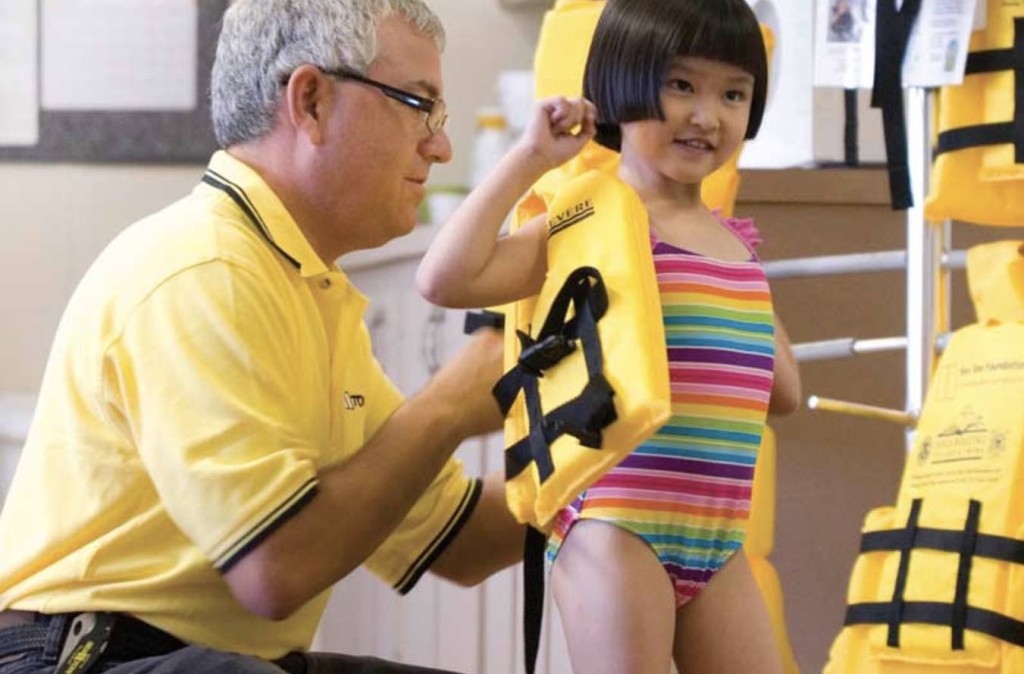
What began in 2008 as a single life jacket loaner booth for boaters to borrow any size preserver before going on the water, has now turned into the world’s largest life jacket loaner program.

And, they crossed a huge milestone last month, setting up location number 1,000 at the beach in Clearwater, Florida.

The program now operates loaner stations in all 50 states, plus Washington, D.C., American Samoa, and the Virgin Islands—all thanks to a Long Island, New York captain.

Capt. Joe Frohnhoefer kept seeing boating accidents and tragedies that could have been prevented, so he decided to start the nonprofit Sea Tow Foundation in 2007 to provide the education and resources to eliminate them.

He started the Life Jacket Loaner program the following year to prevent drowning by providing free life jackets that boaters of any size can borrow and return at the end of their outing.

The lifelong seafaring New Yorker passed away in 2015, but his legacy lives on through the efforts of the foundation and his daughter Kristen, who is now president of the board.

RELATED: Floater Wetsuit Helps People Overcome Their Fear of Water

“Since 2008, we’ve distributed over 90,000 life jackets,” said Gail Kulp, the group’s Executive Director.

Sea Tow Foundation

“We believe that financial struggles or lack of access to resources should never be an obstacle to safety.”

“It’s truly game-changing when someone puts on a life jacket,” according to Capt. Kahle, the Commander of US Coast Guard in St. Petersburg. “The statistics don’t lie—life jackets save lives.”

LOOK: Boston Officers Rescue Father and Son Floating on Cooler

“This means an awful lot from an outreach and education standpoint,” said Brian Rehwinkel, Florida Fish & Wildlife Conservation Commission. “If you don’t have a life jacket, you can’t wear one. With this program there’s no reason for someone to go out on the water without one.

Going on the water and need a lifesaver? Check out the map of every loaner location, here. People can donate life jackets, too, according to the Foundation’s website.

WATCH: See a Drone Save a 14-Year-old From Drowning in Powerful Spanish Current

Learn more about starting your own Life Jacket Loaner Stand, or make a tax-deductible donation to the Sea Tow Foundation on their website, BoatingSafety.com.

SAVE a Life By Sharing the Resources With Boaters on Social Media…

New Alzheimer’s Drug Slows Mental Decline By 27% in Trial Hailed as ‘Most Encouraging to Date’

American biotech company Biogen announced the results of a phase 3 clinical trial that showed a new Alzheimer’s drug slowed the rate of cognitive decline for early onset patients by 27%.

The Alzheimer’s Association (AA) called the robust study of lecanemab, which is a monoclonal antibody designed to clear clumps of amyloid protein from the brain, “the most encouraging results in clinical trials treating the underlying causes of Alzheimer’s to date.”

The CEO at Eisai—the Japanese pharmaceutical company partnering with Biogen—claims the results of the lecanemab study, named Clarity AD, “proves the amyloid hypothesis, in which the abnormal accumulation of Aβ in the brain is one of the main causes of Alzheimer’s disease.”

Eisai believes these findings will create new horizons in the diagnosis and treatment of Alzheimer’s disease as well as further activate innovation for new treatment options.

The study enrolled 1,800 patients with early stage Alzheimer’s, with half receiving placebo and half receiving twice-weekly infusions of the lecanemab. Results showed the drug did reduce toxic amyloid plaque in the brain and slow patients’ memory decline, while improving their ability to perform day-to-day tasks.

The full analysis of the trial has yet to be released.

RELATED: Alzheimer’s Memory Loss Reversed in Mice After Scientists Discover Method to Form New Brain Cells

Alzheimer’s advocates and researchers look forward to learning more about the data at a meeting in November, including participant safety and the percentage of patients who experienced any brain swelling.

“If those data are consistent with what we saw today regarding efficacy and safety, we strongly support FDA approval and full [Medicare] coverage,” added the AA in a statement.

“Today’s announcement gives patients and their families hope that lecanemab, if approved, can potentially slow the progression of Alzheimer’s disease, and provide a clinically meaningful impact on cognition and function,” said Michel Vounatsos, Chief Executive Officer at Biogen.

The U.S. Food and Drug Administration (FDA) has agreed that the results of the 18-month trial can serve as the confirmatory study to verify the clinical benefit of lecanemab, setting a date of January 6 to announce its decision.

POPULAR: Large Study Suggests Doing Chores May Be Linked to a 21% Reduced Risk For Alzheimer’s Disease

However, researchers say that amyloid is only one component of Alzheimer’s disease—and some are calling the benefits measured in this trial “small”.

Amyloid is “associated with the problem, but it isn’t ‘the’ problem”, a neurobiologist at the University of Texas and a sceptic of the amyloid hypothesis told NATURE. “If you modulate it, of course you can have some small benefit.”

But others are chiming a much more hopeful note.

“This is a historic moment for dementia research, as this is the first phase 3 trial of an Alzheimer’s drug in a generation to successfully slow cognitive decline,” said Dr Susan Kohlhaas, the director of research at Alzheimer’s Research UK.

CHECK OUT: Eating Oily Fish Like Salmon May Cut Risk of Developing Alzheimer’s by Nearly 50%

“Many people feel Alzheimer’s is an inevitable part of aging. This spells it out: if you intervene early you can make an impact on how people progress.”

HOPEFUL? Then, Share the Results on Social Media to Spread the Optimism

“Conduct your blooming in the noise and whip of the whirlwind.” – Gwendolyn Brooks

Quote of the Day: “Conduct your blooming in the noise and whip of the whirlwind.” – Gwendolyn Brooks

Photo by: Daniel Weiss

With a new inspirational quote every day, atop the perfect photo—collected and archived on our Quotes page—why not bookmark GNN.org for a daily uplift?

Taking Ketamine and Looking at Smiling Faces is a Therapy That Could Help End Depression, Shows Clinical Trial

Being given an illicit drug called ketamine and then looking at smiling faces could help end depression, according to a new study.

Researchers found that reading happy words and looking at happy faces, including one’s own, can prolong ketamine’s antidepressant effects for months.

Besides its use as an illicit party drug, ketamine was approved by the US FDA in 1970 for use as an anesthetic to kill pain, and was used in treating injured soldiers on the battlefields in the Vietnam War.

Doctors began to realize that the drug had powerful effects against depression and suicidal thoughts: Called ‘the speedster of antidepressants’ because it works within hours, emergency responders sometimes give it to agitated people rescued from suicide attempts.

In a new therapy developed at the University of Pittsburgh for those suffering with treatment-resistant depression, just one ketamine injection was followed by automated computer-based training that used positive words and imagery to improve how a person sees themselves.

Words such as “sweet”, “lovable” and “worthy” will flash on a screen alongside the patient’s photo and pictures of smiling people.

The scientists behind the plan have found depression can be kept at bay for at least a month if the digital techniques are used when ketamine has prepared the brain’s plasticity.

“Using simple conditioning during the period after ketamine treatment, when the brain is receptive to soaking in new information, allows us to go after key features of depression,” reports Dr. Rebecca Price, an Associate Professor of Psychiatry at the school.

RELATED: FDA Approves First Depression Treatment in Decades: A Nasal Spray Doctors Can Administer for Quick Relief

“Training the brain to link perceptions of yourself with positive ideas during this ketamine-primed plasticity window exceeded my expectations.

“I was surprised and amazed to get such clear findings from an intervention that was so minimal.”

The results of the double-blind, randomized clinical trial conducted locally in Pennsylvania were published last month in the American Journal of Psychiatry.

According to a National Institute of Mental Health analysis, nearly 21 million American adults experienced at least one major depressive episode in 2020–and nearly 3 million of those diagnosed do not respond to traditional antidepressant medication. For people with such treatment-resistant depression, psychoactive drugs, such as ketamine, offer an alternative chance at long-term remission.

POPULAR: Scientists Finally Provide Relief For Depression By Locating Exact Target for Deep Brain Stimulation 

Though symptom relief can be felt just two hours after a ketamine infusion, the drug’s effects often wear off after a couple of weeks meaning patients go back for more. It’s not an easily accessible treatment either: In the US, ketamine infusions often come with high out-of-pocket costs and long waiting lists.

As a result, Dr Price and her team are reorienting their goals to improve access to intravenous ketamine treatment and boost its effect by pairing the drug with digital therapies.

“We are interested in creating an automated intervention that any computer or device can run, making it as accessible as possible.

CHECK OUT: Phase 3 Trial of MDMA Therapy for Severe PTSD is So Successful That 67% Don’t Qualify For Diagnosis Now

“Our goal is to leverage digital technologies and develop a strategy that will efficiently extend time between appointments, save patients money and get more patients effective depression care.”

The clinical trial enrolled more than 150 adults with treatment-resistant depression. Following a ketamine infusion, one group of patients completed eight 20-minute trainings over four days, and another group received a non-therapeutic version of the computer tasks. A third group received a saline infusion followed by the active training. In the following month, people in the ketamine-plus-training group reported feeling fewer depression symptoms for longer than those who did not receive training or who did not receive ketamine, suggesting that the neuro-cognitive training extended ketamine’s antidepressant effects.

Based on the findings, Pittsburgh’s Innovation Institute filed a provisional patent for the treatment method, to benefit those who have exhausted all other options.

MORE: Another Study Shows Psychedelic Psilocybin Mushrooms Offering Long-Term Relief From Depressive Symptoms

Currently the team are figuring out how they could get the content on an iPad or smartphone and bring patients the same benefits that they receive on a computer in a clinic.

Ongoing research is also exploring how similar techniques could help ease suicidality, and future research may expand to anxiety, disordered eating, and more.

“This automated intervention is so simple that it could be repurposed to address a variety of mental health conditions and easily tweaked to match the needs of an individual patient,” said Price, who was among the first to show that intravenous ketamine can reduce suicidal thoughts

“If playing little digital games is what it takes to maintain a response and reliably get one month of depression relief, that’s already an improvement over the status quo.”

SHARE The Hope With Depression Warriors on Social Media…

Complimenting a Stranger is What We’d Most Like to Do in Public But Don’t Have the Guts, Says Top 10 Survey

YouTuber Yung Filly – Peperami / SWNS

Complimenting a stranger in the street is the top thing adults would most like to do in public, but don’t have the guts, according to a poll from the UK.

The poll of 2,000 adults found 40 percent ‘consciously limit’ themselves in life because they fear being criticized when doing things more freely.

Well over half of respondents feel more alive when they push themselves out of their comfort zone, but they are often too scared to take the leap.

One in three (34 percent) worry what other people would think if they were to be so adventurous—and 43 percent hold so much of themselves back that they believe others would be shocked to learn their true personality.

Pavan Chandra from Peperami, which commissioned the poll as part of a new campaign to encourage spontaneity, said, “We as a nation are traditionally known as being a bit stiff and reserved.

“However, if everyone went outside of their comfort zone once in a while, they’ll start seeing the fun and exciting side of life.”

The survey, carried out by OnePoll, revealed that going to the cinema alone, singing aloud, and walking barefoot are other unconventional activities we are too embarrassed to indulge in.

via GIPHY

However, while 62 percent believe everyone should be able to feel like their most expressive self without judgement, 24 percent feel judged on a daily basis.

Many reckon those closest to them would be shocked to see them doing something they wouldn’t normally do.

RELATED: Positive Psychology Students Learn by Giving Free Hugs on Campus (WATCH)

Trying something new, visiting a new place, or something fun that makes you laugh, were the things that encouraged people to break out of the ordinary in everyday life—and most people reported being happy, free, or excited as a result of stepping out.

“We want to encourage people to let go of their shyness and do what they want more freely without embarrassment,” added Chandra.

How many things from this top 10 list have you done in public? (Sans No.6, we would encourage you to transfer these to your bucket list—and, try doing five and ten at the same time!)

TOP 10 THINGS ADULTS WISH THEY COULD DO FREELY IN PUBLIC

1.    Compliment a stranger
2.    Go to the cinema alone
3.    Walk down the street singing loudly
4.    Tell someone they love them
5.    Listen to something without headphones
6.    Fart or burp openly
7.    Walk barefoot
8.    Do yoga stretches in the park
9.    Adjust your underwear
10.   Dance in the street

To encourage the nation to break boundaries and have a moment of spontaneous joy, YouTuber Yung Filly, the new brand ambassador for the snack creators, is encouraging his close friends to let go of their inhibitions in a three-part video series, at @peperamitv via social channels.

RELATED: People Are Hard-Wired To Be Kind And Generous, Says Study