All News - Page 35 of 1689 - Good News Network
Home Blog Page 35

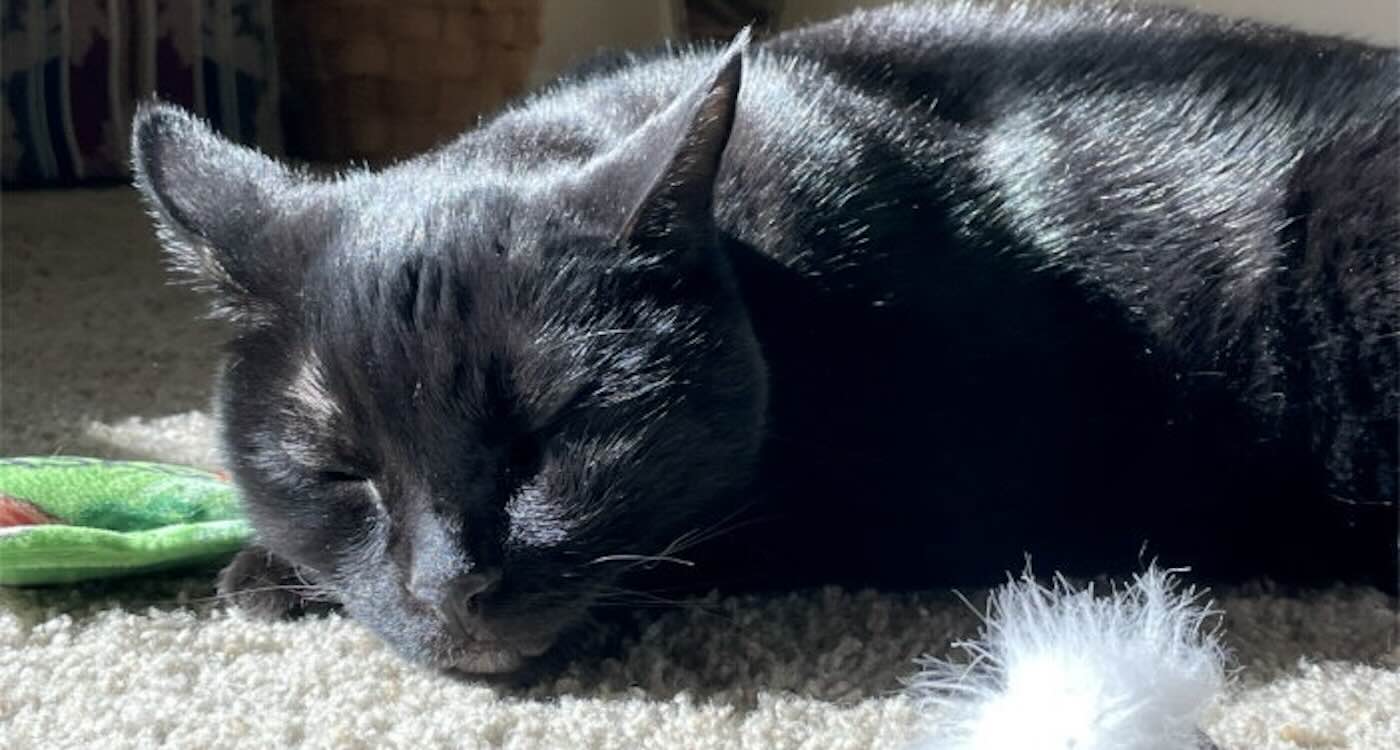
A Campus Sensation ‘Pudge the Cat’ is Lifting Spirits in College Football Locker Room After Injury

Pudge locker room press conference – Bowling Green University / Youtube

The game of football is often a testament to tough guy testosterone—with brute force, pain tolerance, and toughness considered to be hallmarks of the sport.

But every once in a while, it reveals a softer side too—like Pudge the cat.

During a recent practice at Bowling Green University in Ohio, a player suffered a serious injury and the team was devastated.

But number 47, George Carlson, knew a cat who could help. He carried the fluffy, exotic short-haired cat into the locker room believing he could lift everyone’s spirits.

Pudge did the rest. Players were captivated by the new tawny mascot. He received pats and scratches and brought smiles to everyone in the room.

Eventually, a feline-sized brown and orange jersey showed up in the locker room—and videos of Pudge with players went viral on social media. A reporter recently even tried to interview Pudge. (The cat had no comment).

“I wanted to bring morale up, so I brought him in on a Sunday,” Carlson said on a social media post. “And the rest is history.”

The new season started on August 28th, with the pug-faced Persian starring as the unofficial mascot for the Bowling Green Falcons.

The four-legged ‘Falcon’ has found a home in the fiercest of sports, purring its approval of the softer sideline of football.

MORE PURR-FECT PALS: Cat Walks Boy to School Daily and Unites a Scottish Community–Vote for Him for UK National Cat Award

SHARE THE TEAM TABBY With Cat Lovers on Social Media…

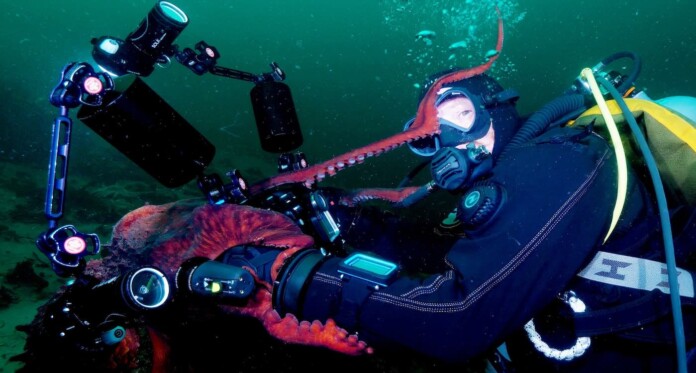
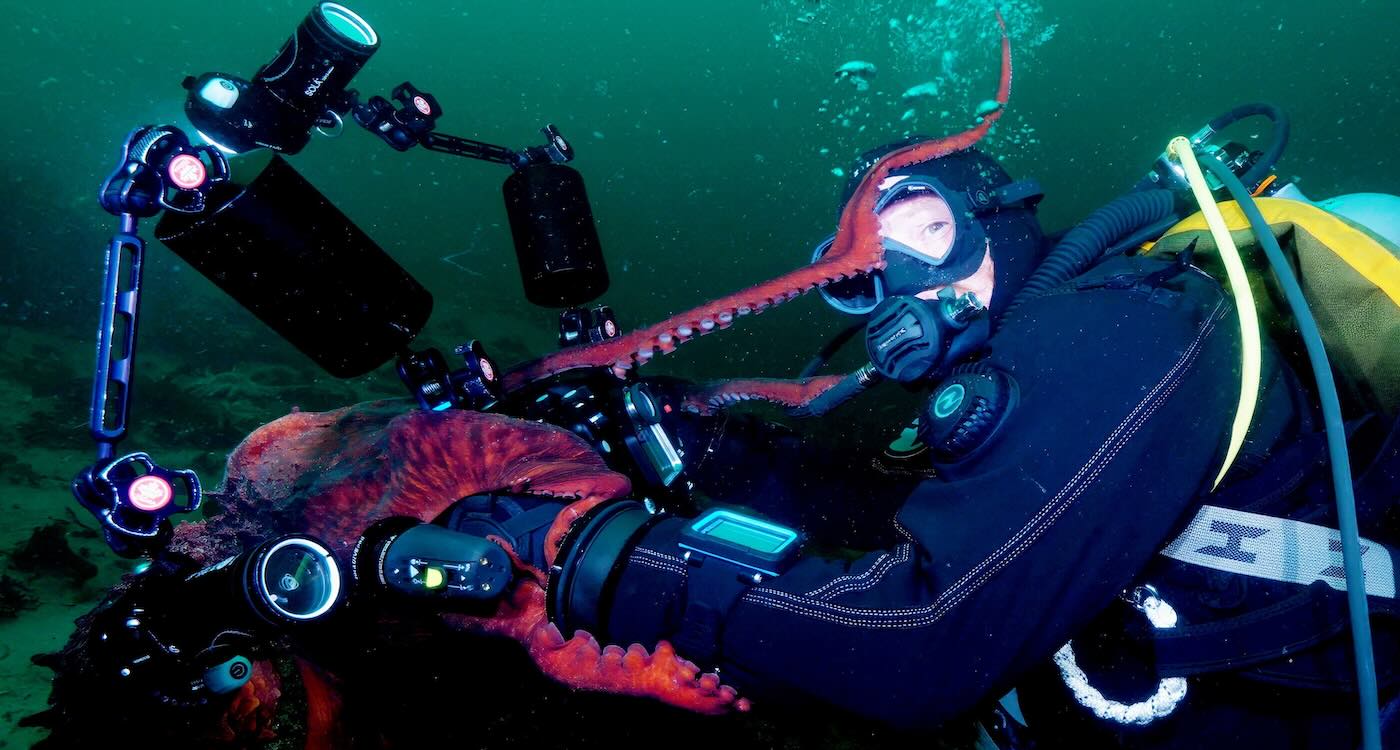
Octopus Playing With Divers Grabs the Camera and Takes Underwater Selfie (WATCH)

Octopus hugs diver and plays with camera - SWNS / Chris Mullen
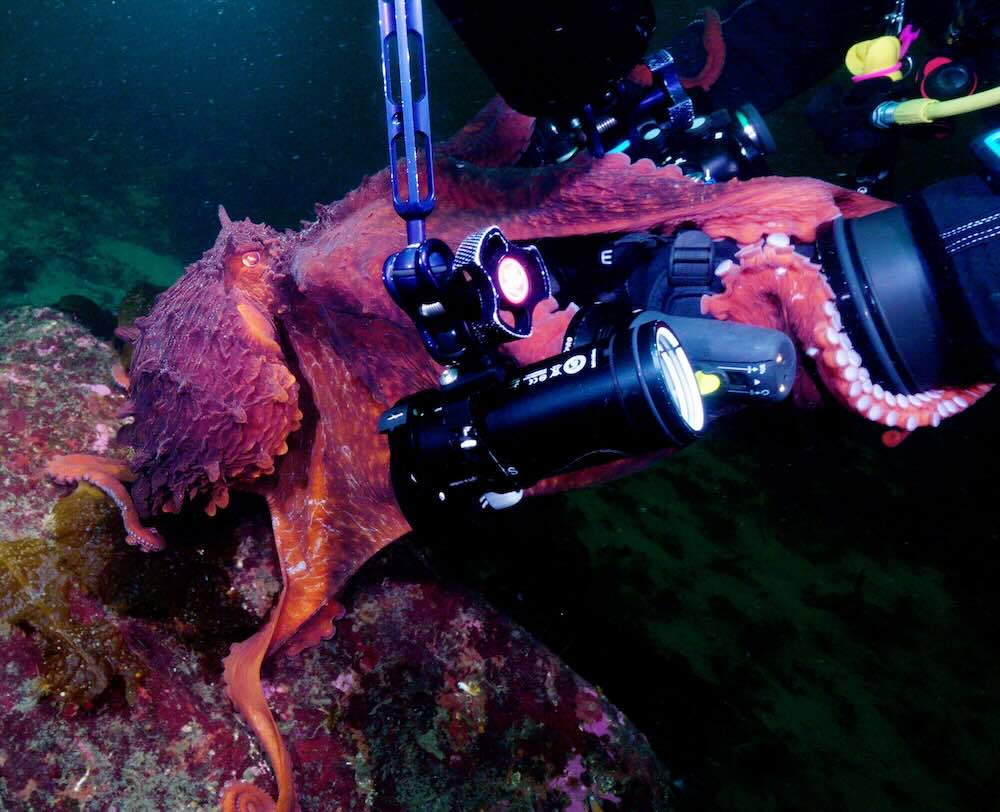
Octopus hugs diver and plays with camera – SWNS / Chris Mullen

Two stunned divers have spoken about the ‘crazy’ moment the world’s largest species of octopus came out to play with them before taking a selfie.

35-year-old Canadian Chris Mullen was scuba diving off the coast of his hometown of Vancouver Island with his friend John Roney when they encountered a Giant Pacific octopus.

While nearing the end of their dive in early August, the curious cephalopod came out from underneath a rock and stretched out its arms to take hold of John’s camera and become a videographer itself.

“(It was) carrying around my camera for about five minutes,” John told CBC news. Then suddenly, it “was jumping over to give Chris a big hug.”

Chris, who has been diving since 2015, told SWNS news: “We originally saw it on our way out, we passed it at the beginning of the dive, and took a couple of pictures when it was underneath a rock.

“30 minutes later, we passed back on the way home and it stretches quite far from where it was to grab hold of the camera. It really went out of its way to get hold of John and his camera.” (See the video at the bottom…)

Giant Pacific Octopus Plays With Dive Camera – SWNS / Chris Mullen

“I like to give them space, but as I tried to swim away, it dropped the camera and started moving towards where I was going to—effectively following me.

“It briefly stopped to interact with another octopus, and then saw me up higher filming it, and it made a beeline right for me and jumped on me next.

“It was wild,” recalled Chris. “It was crazy what was going on.”

Video of the encounter off Canada’s western coast has racked up thousands of views on Chris’s Instagram page.

Fellow diver John added, “The moments where you see these animals, where they’re choosing to have this interaction and controlling the interaction, willingly participating in it, it really displays in the intelligence of these animals.

SO CUTE! Watch Little Octopus Demand Endless Attention From Aquarium Worker Who Captures it All on Video

A Giant Pacific Octopus encounter off coast of western Canada – by Chris Mullen / SWNS

“Because the camera was still rolling it gave us this really unique look at the underside of their suckers.

“Chris has got same great photos of it actually holding the camera and aiming it towards the wall. We were joking the octopus was a videographer too.

“Moments like that really capture people’s curiosity. It shows them a world they might not get to see otherwise.”

MORE OCTO-FUN: Watch What Happens When An Octopus Steals a Tennis Ball From a Border Collie

WATCH the video below…

REACH OUT TO OCTOPUS-LOVERS By Sharing This on Social Media…

“The ability to delude yourself may be an important survival tool.” – Jane Wagner

By Jezael Melgoza

Quote of the Day: “The ability to delude yourself may be an important survival tool.” – Jane Wagner

Photo by: Jezael Melgoza

With a new inspirational quote every day, atop the perfect photo—collected and archived on our Quote of the Day page—why not bookmark GNN.org for a daily uplift?

By Jezael Melgoza

Good News in History, August 31

Statue of Queen Wilhelmina in Noordwijk - Majalinno CC BY SA 3.0.

145 years ago today, Wilhelmina Maria, Queen of the Netherlands, was born. The longest-reigning female monarch outside Great Britain, and the longest-reigning monarch in Dutch history, Wilhelmina was a constant figure in 20th-century world affairs, with a deep intellect, charm, and august presence coupled with a demonstrable business acumen giving her natural wisdom, until the occupation of her country by the Nazis forced her to become a symbol of the resistance. READ some highlights from her life… (1880)

New Cancer Therapy for Cats ‘Could Save Human Lives’ Too

Tina Thomas's cat ‘Jak’ – SWNS
Tina Thomas’s cat ‘Jak’ – SWNS

A new targeted treatment for cats with head and neck cancers may also help save human lives in the future, say scientists.

The first-ever clinical trial of the therapy found that more than a third of felines who received treatment (35%) had their disease controlled with minimal side effects.

And the drug will likely be effective for humans with head and neck squamous cell carcinoma (HNSCC, which is notoriously deadly and difficult to treat), according to the American research team.

“There are two major findings from this study,” said study senior author Professor Daniel Johnson. “It showed us that it’s possible to target a transcription factor that drives oncogenesis, which is something that has been notoriously difficult in the past.

“Also, it demonstrated that pets with cancer can be a good representation of human disease and that clinical trials in pets may yield more reliable results than tests in mouse models.”

Prof. Johnson says the drug is the first to target the transcription factor STAT3, which is present in a range of both solid and liquid cancerous tumors, including a majority of HNSCC cases.

The idea to test the HNSCC drug on pet cats arose when study first author Dr. Jennifer Grandis talked to her sister, who is a veterinarian.

Oral cancers in pet cats—including HNSCC—are extremely difficult to treat and most animals die within two to three months of diagnosis.

MORE CAT STUDIES: Cats With Arthritis Are Wearing Caps in Groundbreaking Research to Understand and Relieve Their Pain

“There is remarkable clinical, histopathologic, and immunologic similarity between feline and human HNSCC,” said Prof. Johnson of the University of California, San Francisco.

One cat who benefited from the trial was a nine-year-old black domestic shorthair named Jak (pictured below and above). He was diagnosed with HNSCC, and vets gave him just 6-8 weeks to live.

Jak, weeks after treatment – Tina Thomas /SWNS

Owner Tina Thomas said, “It was just a gut punch. We wanted more time with him.”

“When I found out about this clinical trial, I knew I wanted him to be a part of it.”

Jak went to weekly treatments for one month and during that time his symptoms and watery eye improved significantly. He ultimately lived more than eight months beyond his most dire diagnosis.

“It was meaningful to us because he was here in our lives,” recalled Tina. “During that time, my son finished college and my daughter finished her master’s program.

“Jak got to spend one more Christmas with us, and he loved our Christmas tree. He was worth every bit of the effort.”

CAT LOVERS NEEDED THIS: Scientists Finally Discover Why Some Cats Are Orange–and Why They Tend to Be Males

None of the cats in the trial developed side effects that were attributable to the treatment other than mild anaemia, according to the study published in the journal Cancer Cell. Of the 20 cats that were enrolled, seven exhibited either a partial response or stable condition during the study period.

Of the seven that responded, the average survival post-treatment was 161 days.

When the research team looked at tumors and blood samples from the cats who underwent treatment, they saw that the compound was working in two ways.

It not only blocked the activity of STAT3, but it also raised levels of PD-1, a protein associated with an immune response to cancer.

Dr. Grandis said: “This study is a great example of how we can think more carefully about spending our very limited resources on studies in lab mice that are not even the best models of human cancers.

“By partnering with veterinary oncologists and doing clinical trials in companion animals, we can learn an enormous amount about how these drugs work while also helping people’s pets.

PURR-FECT NEWS: Man is ‘Overwhelmed’ as His Bengal Cat is Returned From 16-year Absence After a Phone Call

“None of the cats in these trials were harmed, and many of them benefited.”

The researchers say that conducting clinical trials in pets can be a “much better” model of how drugs will work in humans, compared with lab mice.

The team is currently working with a small biotech company to advance the new compound in clinical trials for both pets and humans.

SHARE THE CANCER HOPE On Social Media…

Injured Spinal Cords Repaired With Breakthrough 3D-printed ‘Scaffolding’–Team Regrows Nerves in Rats

Credit: McAlpine Research Group / University of Minnesota

A breakthrough in stem cell biology has been 3D-printed in Minnesota—and the lab results show promise for spinal cord injury recovery, and even reversal.

A research team at the University of Minnesota Twin Cities demonstrated a groundbreaking process that combines 3D printing, stem cell biology, and lab-grown tissues to provide spinal cord injury recovery.

Currently there is no way to completely reverse the damage and paralysis. A major challenge is the death of nerve cells and the inability for nerve fibers to regrow across the injury site. This new research tackles this problem by building a bridge.

The team created a unique 3D-printed framework for lab-grown organs, called an organoid scaffold, with microscopic channels. These channels are then populated with ‘spinal neural progenitor cells’ derived from adult stem cells in humans, which have the capacity to divide and differentiate into specific types of mature cells.

“We use the 3D printed channels of the scaffold to direct the growth of the stem cells, which ensures the new nerve fibers grow in the desired way,” said Guebum Han PhD, a former University of Minnesota mechanical engineering researcher and first author of the paper published in Advanced Healthcare Materials, a peer-reviewed scientific journal.

“This method creates a relay system that when placed in the spinal cord bypasses the damaged area.”

In the study—funded by the NIH, the State of Minnesota Spinal Cord Injury and Traumatic Brain Injury Research Grant Program, and the Spinal Cord Society—the researchers transplanted these scaffolds into rats with spinal cords that were completely severed.

The cells successfully differentiated into neurons and extended their nerve fibers in both directions—rostral (toward the head) and caudal (toward the tail)—to form new connections with the host’s existing nerve circuits.

The new nerve cells integrated seamlessly into the host spinal cord tissue over time, leading to significant functional recovery in the rats.

COOL BREAKTHROUGHS:
• Woman Given New 3D-Printed Windpipe in World First
Lab-Grown Blood Stem Cells Could Replace Bone Marrow Donations for Transplants

“Regenerative medicine has brought about a new era in spinal cord injury research,” said Ann Parr, professor of neurosurgery at the University of Minnesota. “Our laboratory is excited to explore the future potential of our ‘mini spinal cords’ for clinical translation.”

While the research is in its beginning stages, it offers a new avenue of hope for those with spinal cord injuries—and the team hopes to scale up production and continue developing this combination of technologies.

SPREAD SOME HOPE By Sharing The Good News on Social Media…

Japanese Kicker Learned Football By Watching YouTube Videos And Just Became Hero for His Hawaii College Team

Kansei Matsuzawa – Courtesy of University of Hawai’i Athletics Department

The best story from college football’s opening weekend felt like an inspiring movie playing on the big screen.

Kansei Matsuzawa grew up playing soccer in Tokyo, Japan, and became a captain and three-year letter winner for the sport at Makuhari Sogo High School.

He graduated in 2017 and was working as a waiter, until a trip to America changed everything.

He visited the United States and saw his first NFL game. The kickers in particular caught his eye and he started to think — or, really, dream.

I could do that, right? Couldn’t I?

He returned to Japan with a new goal firmly implanted in his mind. Someday, Kansei would return to America to become a college football kicker. In the meantime, he learned to kick by watching YouTube videos of Seattle Seahawks player Jason Myers. He practiced on his own and sent highlight videos to about 50 schools in the United States.

Eventually, an opportunity arose at Hocking College, a small community college nestled in the Appalachian foothills of Ohio. In two seasons at Hocking, he hit 16-of-17 extra points and 12-of-17 field goals, including a game-winner from 50 yards—and other schools took notice

MORE INSPIRING SPORTS: She Just Made History as Major League Baseball’s First Female Umpire–Walking on The Field to Huge Cheers (WATCH)

Kansei soon earned a spot at the University of Hawaii and was put on the practice squad for the 2023 season. But, last year, he played in all 12 games for the Rainbow Warriors team, and made every extra point (32-of-32) to lead the school in scoring (68 points). He even kicked a game winner against Fresno State and earned academic All-Mountain West honors.

Kansei Matsuzawa – Courtesy of University of Hawai’i Athletics Department

The big game

Then, last Saturday in College Football’s Week Zero and Hawaii’s opening game, the Warriors trailed Stanford by three points late in the fourth quarter. Kansei hit a 37-yard field goal to tie the score at 20 with about two minutes left.

Moments later, Hawaii forced a punt and then moved the ball down to Stanford’s 21-yard line. Only two seconds remained on the clock. And the kid from Japan would take the field to win it all.

Fans in attendance and thousands more watching on the national TV broadcast were overflowing with suspense. Kansei lined up for a 38-yard, potential game-winning field goal. A CBS announcer narrated what happened next.

“Snap…kick…Is up…”

Far-flung hopes that took root almost 4,000 miles away in Japan were realized as a football sailed through the uprights in a late summer Honolulu sky.

“…And good!!!…Hawaii has done it!!!”

The kicker had become a hero. An improbable dream, born a world away, came true.

WATCH the moment…

SHARE THIS STORY ON SOCIAL MEDIA WITH THE SPORTS FANS IN YOUR LIFE…

Your Weekly Horoscope – ‘Free Will Astrology’ by Rob Brezsny

Our partner Rob Brezsny, who has a new book out, Astrology Is Real: Revelations from My Life as an Oracle, provides his weekly wisdom to enlighten our thinking and motivate our mood. Rob’s Free Will Astrology, is a syndicated weekly column appearing in over a hundred publications. He is also the author of Pronoia Is the Antidote for Paranoia: How All of Creation Is Conspiring To Shower You with Blessings. (A free preview of the book is available here.)

Here is your weekly horoscope…

FREE WILL ASTROLOGY – Week of August 30, 2025
Copyright by Rob Brezsny, FreeWillAstrology.com

VIRGO (Aug. 23-Sept. 22):
In Andean cosmology, the condor and the hummingbird are both sacred messengers. One soars majestically at high altitudes, a symbolic bridge between the earth and heaven. The other moves with supple efficiency and detailed precision, an icon of resilience and high energy. Let’s make these birds your spirit creatures for the coming months. Your challenging but feasible assignment is to both see the big picture and attend skillfully to the intimate details.

LIBRA (Sept. 23-Oct. 22):
In the ancient Greek myth of Psyche, one of her trials is to gather golden wool from violent rams. She succeeds by waiting until the torrid heat of midday passes, and the rams are resting in the cool shade. She safely collects the wool from bushes and branches without confronting the rams directly. Let this be a lesson, Libra. To succeed at your challenges, rely on strategy rather than confrontation. It’s true that what you want may feel blocked by difficult energies, like chaotic schedules, reactive people, or tangled decisions. But don’t act impulsively. Wait. Listen. Watch. Openings will happen when the noise settles and others tire themselves out. You don’t need to overpower. You just need to time your grace. Golden wool is waiting, but it can’t be taken by force.

SCORPIO (Oct. 23-Nov. 21):
In 1911, two teams tried to become the first humans to reach the South Pole. Roald Amundsen’s group succeeded, but Robert Falcon Scott’s did not. Why? Amundsen had studied with Indigenous people who were familiar with frigid environments. He adopted their clothing choices (fur and layering), their travel techniques (dogsledding), and their measured, deliberate pacing, including lots of rest. Scott exhausted himself and his people with inconsistent bursts of intense effort and stubbornly inept British strategies. Take your cues from Amundsen, dear Scorpio. Get advice from real experts. Pace yourself; don’t sprint. Be consistent rather than melodramatic. Opt for discipline instead of heroics.

SAGITTARIUS (Nov. 22-Dec. 21):
A lighthouse isn’t concerned with whether ships are watching it from a distance. It simply shines forth its strong beams, no questions asked. It rotates, pulses, and moves through its cycles because that’s its natural task. Its purpose is steady illumination, not recognition. In the coming weeks, Sagittarius, I ask you and encourage you to be like a lighthouse. Be loyal to your own gleam. Do what you do best because it pleases you. The ones who need your signal will find you. You don’t have to chase them across the waves.

CAPRICORN (Dec. 22-Jan. 19):
In 1885, Sarah E. Goode became the fourth African American woman to be granted a U.S. patent. Her invention was ingenious: a folding cabinet bed that could be transformed into a roll-top desk. It appealed to people who lived in small apartments and needed to save space. I believe you’re primed and ready for a similar advance in practical resourcefulness, Capricorn. You may be able to combine two seemingly unrelated needs into one brilliant solution— turning space, time, or resources into something more graceful and useful. Let your mind play with hybrid inventions and unlikely pairings.

AQUARIUS (Jan. 20-Feb. 18):
I expect you will be knowledgeable and smart during the coming weeks, Aquarius. But I hope you will also be wise and savvy. I hope you will wrestle vigorously with the truth so you can express it in practical and timely ways. You must be ingenious as you figure out the precise ways to translate your intelligence into specifically right actions. So for example: You may feel compelled to be authentic in a situation where you have been reticent, or to share a vision that has been growing quietly. Don’t stay silent, but also: Don’t blurt. Articulate your reality checks with elegance and discernment. The right message delivered at the wrong moment could make a mess, whereas that same message will be a blessing if offered at the exact turning point.

PISCES (Feb. 19-March 20):
Liubai is a Chinese term that means “to leave blank.” In traditional ink painting, it referred to the portions of the canvas the artist chose not to fill in. Those unpainted areas were not considered empty. They carried emotional weight, inviting the eye to rest and the mind to wander. I believe your near future could benefit from this idea, Pisces. Don’t feel you have to spell everything out or tie up each thread. It may be important not to explain and reveal some things. What’s left unsaid, incomplete, or open-ended may bring you more gifts than constant effort. Let a little stillness accompany whatever you’re creating.

ARIES (March 21-April 19):
In some Buddhist mandalas, the outer circle depicts a wall of fire. It marks the boundary between the chaotic external world and the sacred space within. For seekers and devotees, it’s a symbol of the transformation they must undergo to commune with deeper truths. I think you’re ready to create or bolster your own flame wall, Aries. What is non-negotiable for your peace, your creativity, your worth? Who or what belongs in your inner circle? And what must stay outside? Be clear about the boundaries you need to be your authentic self.

TAURUS (April 20-May 20):
Centuries ago, builders in Venice, Italy, drove countless wooden pilings deep into the waterlogged mud of the lagoon to create a stable base for future structures. These timber foundations were essential because the soil was too weak to support stone buildings directly. Eventually, the wood absorbed minerals from the surrounding muddy water and became exceptionally hard and durable: capable of supporting heavy buildings. Taurus, you may soon glimpse how something you’ve built your life upon—a value, a relationship, or a daily ritual—is more enduring than you imagined. Its power is in its rootedness, its long conversation with the invisible. My advice: Trust what once seemed soft but has become solid. Thank life for blessing you with its secret alchemy.

GEMINI (May 21-June 20):
In Inuit myth, Sedna is the goddess who lives at the bottom of the sea and oversees all marine life. If humans harm nature or neglect spiritual truths, Sedna may stop allowing them to catch sea creatures for food, leading to starvation. Then shamans from the world above must swim down to sing her songs and comb her long black hair. If they win her favor, she restores balance. I propose that you take direction from this myth, Gemini. Some neglected beauty and wisdom in your emotional depths is asking for your attention. What part of you needs reverence, tenderness, and ceremonial care?

CANCER (June 21-July 22):
In ancient Rome, the lararium was a home altar. It wasn’t used for momentous appeals to the heavyweight deities like Jupiter, Venus, Apollo, Juno, and Mars. Instead, it was there that people performed daily rituals, seeking prosperity, protection, and health from their ancestors and minor household gods. I think now is a fine time to create your own version of a lararium, Cancerian. How could you fortify your home base to make it more nurturing and uplifting? What rituals and playful ceremonies might you do to generate everyday blessings?

LEO (July 23-Aug. 22):
In Persian miniature painting, entire epics are compressed into exquisite images the size of a hand. Each creation contains worlds within worlds, myths tucked into detail. I suggest you draw inspiration from this approach, Leo. Rather than imagining your life as a grand performance, play with the theme of sacred compression. Be alert for seemingly transitory moments that carry enormous weight. Proceed on the assumption that a brief phrase or lucky accident may spark sweet changes. What might it look like to condense your full glory into small gifts that people can readily use?

WANT MORE? Listen to Rob’s EXPANDED AUDIO HOROSCOPES, 4-5 minute meditations on the current state of your destiny — or subscribe to his unique daily text message service at: RealAstrology.com

(Zodiac images by Numerologysign.com, CC license)

SHARE The Wisdom With Friends Who Are Stars in Your Life on Social Media…

“A lawn is nature under totalitarian rule.” – Michael Pollan

Photo credit: Unsplash+ Community

Quote of the Day: “A lawn is nature under totalitarian rule.” – Michael Pollan

Photo by: Unsplash+ Community

With a new inspirational quote every day, atop the perfect photo—collected and archived on our Quote of the Day page—why not bookmark GNN.org for a daily uplift?

Photo credit: Unsplash+ Community

Good News in History, August 30

Melbourne skyline - Melbpal, CC BY 4.0. SA

190 years ago today, the city of Melbourne was founded in southeast Australia. A traditional meeting place of several Aboriginal peoples including the Boonwurrung, Wathaurong, and Wurundjeri peoples, Melbourne blossomed rapidly into a “canvas city” following the designation of a crown colony in 1837, and news of a gold rush in 1850. Melbourne today is the largest city in Australia, and consistently ranks among the most livable in the world. READ more about the city… (1835)

Divers Explore Wreckage of WW1 Submarine 100 Years After it Sank – (LOOK)

Dominic Robinson/ Rick Aryton / SWNS

A group of divers have explored the wreckage of a First World War-era Royal Navy submarine 100 years after it sank.

Professional shipwreck diver and YouTuber Dominic Robinson and a team of 10 dived down to check out the century-old M1 sub 20 miles off the coast of Plymouth in mid-August.

Dominic Robinson / Rick Aryton / SWNS

They found her in a wreck, missing the famed 12-inch gun—typical of the era’s battleships—which she apparently carried as armament.

The HMS M1 was constructed during WW1 but was never used in combat due to fears the Germans would copy its revolutionary design.

The sub sank in 1925 when a Swedish ship, the SS Vidar, is believed to have accidentally struck her while she was submerged—leading to the loss of all crew—another little tragedy amid the tragic, inconclusive European conflict.

It was missing until a salvage team located it in 1967 and was then formally identified by a dive team in 1999.

Described by Robinson in a film made of the dive as “one of the most incredible submarines ever built.”

“We were on the water for about three hours so it’s a fairly significant effort for about 25 minutes of diving to look around the wreck,” Robinson told England’s Southwest News Service. “The general view is the collision knocked the gun off the mount, and I think the weight of it has carried it into the sand beneath the main wreckage.”

Dominic Robinson /Rick Aryton / SWNS
Dominic Robinson / Rick Aryton / SWNS

Robinson claims that diving like this is rare and “well beyond” what many divers will do.

“If you were to go Egypt or somewhere like that they would take you to 20 meters, advanced would be 30 meters, and if you really pushed it 40 meters. This is 74 meters. so it’s well beyond what 99% of divers will do, but we want to see things that people don’t see.”

Robinson’s YouTube channel—Deep Wreck Diver—has 13,500 subscribers and is dedicated to showing viewers deep shipwrecks.

“I want to help people understand and the history of these things that are forgotten,” he said.

WATCH a 40-minute film of the dive….

SHARE This Interesting Underwater History Experience With Your Friends… 

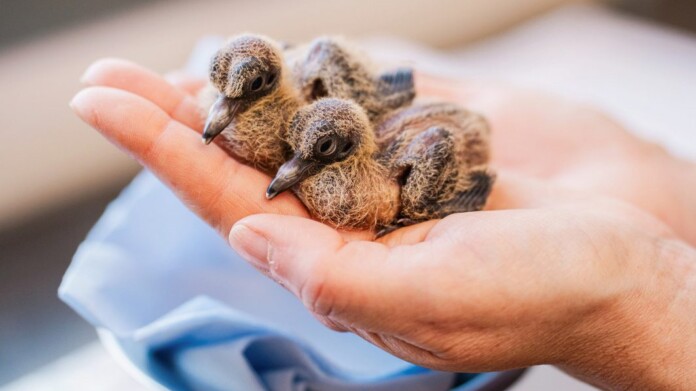
Zoo Experts Hatch Eight Rare Dove Chicks in Bid to Save Extinct Species

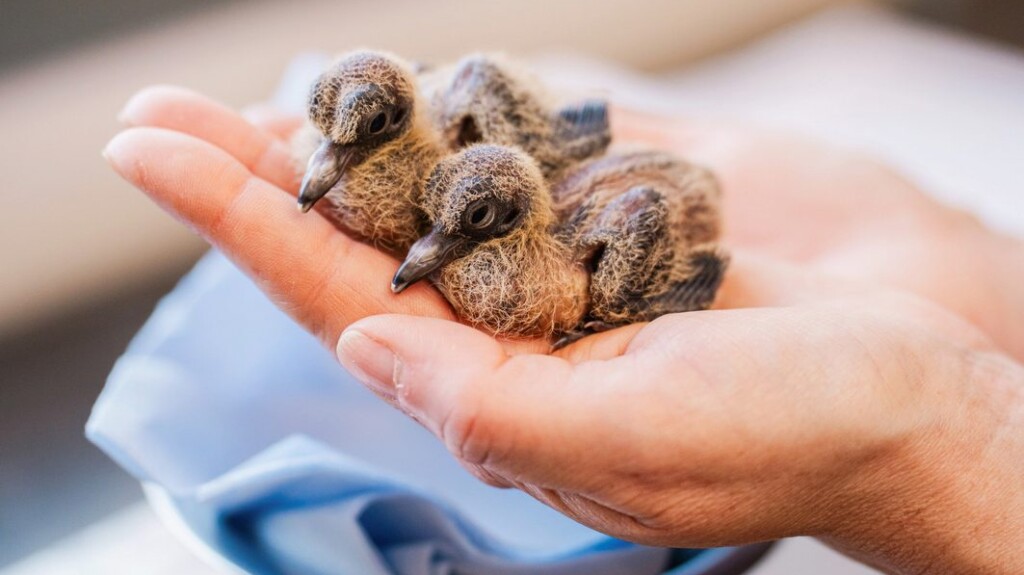
The Socorro dove chicks - credit, Chester Zoo SWNS
The Socorro dove chicks – credit, Chester Zoo SWNS

Conservationists have successfully hatched 8chicks in a bid to save an ultra-rare species of dove which has been extinct in the wild for over half a century.

Socorro doves are only cared for in zoo conservation-breeding programs across Europe and North America after they became extinct in 1972.

Experts at the Chester Zoo are now celebrating the arrival of 8 chicks, known as squabs, bringing fresh hope the species can be brought back from the brink.

Approximately 200 birds represent the entire surviving population and the zoo hopes another clutch of eggs might now also be on the way.

Chester Zoo cares for two breeding pairs and the chicks will bolster the insurance population of Socorro doves looked after by avian specialists.

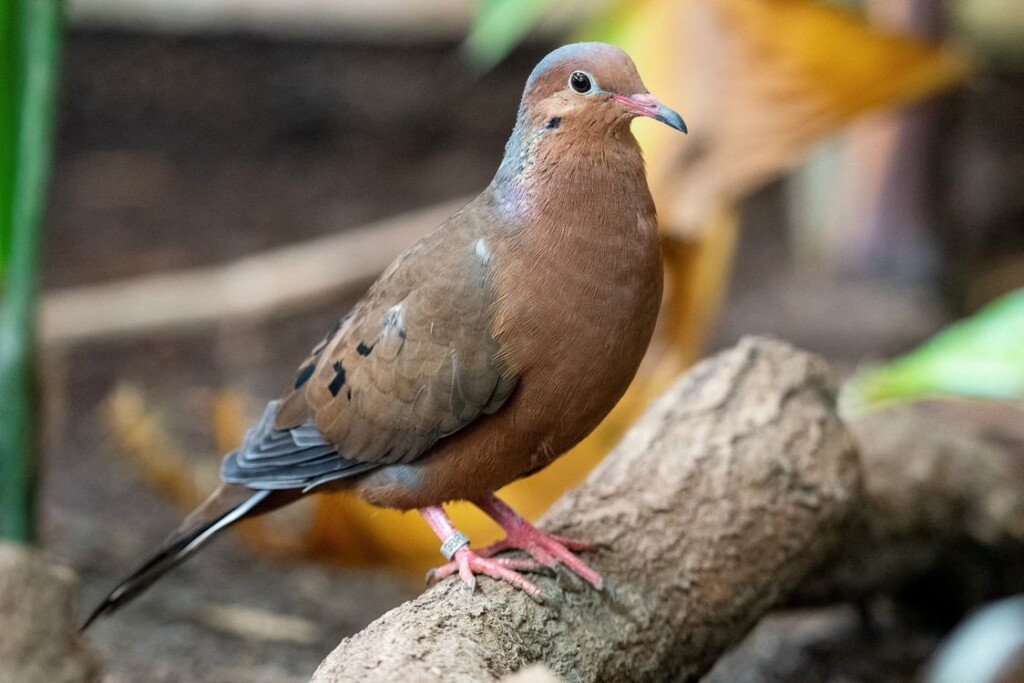
“We have several chicks which have successfully reached independence, and the others are on the verge of being fledged,” said the zoo’s Clare Rafe, assistant team manager for birds. “We’ll keep looking after these amazing birds. They might look quite plain and brown from a distance, but they have what looks like shimmery blusher on their heads.”

“They have big personalities, too, with the males being a bit aggro—they certainly aren’t peace doves!”

Unlike other species of doves, Socorro doves do not live in flocks, preferring to pair off or live individually. They also share chick-rearing duties.

“It’s a 50-50 arrangement most of the time, but we have found the females will raise their chicks up to a point and then become ready to mate again, so they’ll start raising a new clutch of eggs before the first have fledged.”

“In the wild, they would only have perhaps a two or three-month nesting window between storms and heat waves. When that happens, the fathers take over with the older chicks, feeding them and caring for them.”

An adult Socorro dove in captivity – credit, Chester Zoo SWNS

Socorro doves originally lived on Socorro Island off the coast of Mexico, but a mixture of factors led to their extinction in the wild.

Andrew Owen, head of the bird department at Chester Zoo, said that historically, the Socorro dove had few natural predators as the island remained uninhabited by people.

“Sheep introduced in the 1800s caused extensive damage to the wild vegetation and in 1957 a naval base was established on the island,” said Owen.

ALSO CHECK OUT: Virgin Births Have Been Documented in Rare Bird Population – The Endangered California Condor

“Naval staff and their families brought domestic cats which became feral and caused tremendous damage to the native wildlife, including the Socorro dove population…”

“Sadly, the Socorro dove was overlooked by conservationists for many years and if it wasn’t for the efforts of a group of German aviculturists, who created a breeding program for the species, it would have been lost forever.”

MORE OF THE WORLD’S RAREST BIRDS: Rare Pink Pigeon Hand-Raised at UK Zoo for First time – a Milestone After Species Dropped to Just 10 Birds in the Wild

“In 1995, the Socorro dove conservation breeding program was formally established when the European Association of Zoos and Aquariums (EAZA). Without the valuable work zoos do, these species would be lost forever.”

It’s not the only dove species that Own has recently been involved in saving. A trio of blue-eyed ground dove chicks were successfully hand-reared in Brazil with help from Owen and his Chester Zoo team. Fewer of these birds remain on Earth than even the Socorro dove.

SHARE Chester Zoo’s Great Work With Our Planet’s Dove Species… 

MIT to Give Bees a Break with Robot HAZMAT Pollinator

MIT's robot bee - released by the reseachers
MIT’s robot bee – released by the researchers

In 2021, researchers at the Massachusetts Institute of Technology (MIT) tried to build a robot pollinator based on the anatomy of bees.

Bees’ flight capabilities are quite sophisticated, but strangely, the MIT roboticists ended up building a robot that sported 8 wings and 4 bodies.

Now, a new design, closer to nature’s own model, is proving substantially superior. Capable of 17 minutes of flight time, the new robotic bee is 100-times more efficient.

Demonstrated in a paper published recently in Science Robotics, the scientists suggest that an artificial hive of these robobugs could give bees a break and pollinate plants kept in vertical indoor farms with fluorescent lighting; a very difficult environment for bees.

Additionally they could be used in more harmful environments such as space, or areas contaminated with radiation.

“The amount of flight we demonstrated in this paper is probably longer than the entire amount of flight our field has been able to accumulate with these robotic insects. With the improved lifespan and precision of this robot, we are getting closer to some very exciting applications, like assisted pollination,” says Kevin Chen, an associate professor in the Department of Electrical Engineering and Computer Science (EECS), head of the Soft and Micro Robotics Laboratory.

Part of the flight success was down to splitting the 4 bodies down to just 2

“In our old design, the performance of each individual unit was always better than the assembled robot,” Chen told MIT press. 

Whereas 8 wings generated counterforces that slowed the bee robot down, 4 has proven much better, and the new model can even perform aerial flips. Each wing is connected to a mechanical set of muscles called actuators.

ALSO CHECK OUT: This Soft Robot Needs Only Physics and Air to Spontaneously Sync and Scoot at Top Speeds

These are formed from small layers of elastomer stuck between two very thin carbon nanotube electrodes. The actuators rapidly compress and elongate, generating mechanical force that flaps the wings.

A longer hinge—the greatest challenge in building the new model, reduced the torsional stress experienced during the flapping-wing motion.

MORE MICROROBOTS: Tiny Robots Can Help Fix Leaky Old Water Pipes Without Having to Dig Up Roads

“Compared to the old robot, we can now generate control torque three times larger than before, which is why we can do very sophisticated and very accurate path-finding flights,” Chen says.

Moving forward, they want to push the design to the limit of its performance, with a target of 10-times longer flights, as well as precise, controlled take-off and landing maneuvers that could be done from the center of a flower.

SHARE This Mechanical Hazmat Bee With Your Friends… 

Small Chinese County Reverses Desertification with Arduous Tree-Planting Method Across 240,000 Acres

Photo by Quan Jing on Unsplash

A rural village has led the transformation of a barren ravine into a flourishing forest mosaic in one of the least-habitable parts of their country.

When Deng Xiaoping took control of Communist China in the 1970s, the land around the Mo Us desert was described by visiting environmental scientists as a heavily desertified landscape unfit for human habitation.

Given to large social engineering projects, there were discussions among Party bosses about moving the entire Youyu county population away from the hostile land, where yellow sands would whip through towns, darkening the sky.

You’d never know that now if you passed through the Shipaogu area, where tree-planter Wang Zhanfeng lives today. Cloaked in grasses, Mongolian pine, and larch trees, as well as orchards, animal pastures, and soccer fields, the landscape has been completely reversed.

“In my childhood, we had to cover our bowls while eating, otherwise they would be filled with sand,” Wang told China Daily.

Wang, his father, and his father before him, all worked on the Youyu county afforestation movement, where the county’s villages rejected the fate seemingly dealt to them by nature, and began pursuing a radical and complicated method of afforestation.

China Daily writes that Youyu had been a meeting point of agricultural and grassland civilizations, as well as a crucial passage for Shanxi merchants traveling to Mongolia. However, continuous wars had ravaged its ecology.

With the arid soil incapable of holding water, it wasn’t possible to simply plant trees where they needed them most. Instead, the villagers would grow seedlings on the nearby mountain sides—where they also fetched water necessary for manual irrigation of each individual tree.

ALSO CHECK OUT: China Pledges to Plant Forests of Trees Equal to the Size of Belgium – For Each of the Next 5 Years Straight

Teams of women would carry the water, while men would dig pits with shovels and line the bottom with river silt to improve its holding capacity. While China was experimenting with market capitalism, while she was becoming the workshop of the world, this backbreaking labor continued until the method for cultivating trees on the harsh land was perfected.

That work eventually spanned over 240,000 acres.

The Youyu afforestation program was recognized by the UN as one of the world’s finest examples of human desert control and ecological restoration, winning the New Sustainable Cities and Human Settlements Award in New York City last October.

COMBATING THE DESERT: China Announces Completion of a 1,800-Mile Green Belt Around the World’s Most-Hostile Desert

The return of workable land meant the return of economic opportunity. Youyu county is now one of the largest horse-breeding centers in all of China, as well as one of the great centers of soccer talent production. Sheep wool, fruit, and tourism all bolster the local economy, generating tens of millions in revenue.

SHARE This Incredible Effort From The Northern Chinese With Your Friends…

“How prompt we are to satisfy the hunger and thirst of our bodies; how slow to satisfy the hunger and thirst of our souls.” – Thoreau

Quote of the Day: “How prompt we are to satisfy the hunger and thirst of our bodies; how slow to satisfy the hunger and thirst of our souls.” – Henry David Thoreau

Photo by: Anton Konstantinov

With a new inspirational quote every day, atop the perfect photo—collected and archived on our Quote of the Day page—why not bookmark GNN.org for a daily uplift?

Photo by Anton Konstantinov

Good News in History, August 29

Dr. Ambedkar on a 2015 Indian postage stamp - credit Ministry of Communications GODL India

On this day, 78 years ago, Dr. Bhimrao R. Ambedkar was appointed to chair the Indian constitutional drafting committee. This national hero is responsible for the constitution being one that is largely considered one of the most robust and progressive in all world law, as it guaranteed equal treatment under the law for all members of India’s many castes, something not even Mahatma Gandhi envisioned for a post-Independence India. READ more about his work on the constitution… (1947)

Solar-Powered Cars Race Across Australian Outback – with Fins to Also Harness the Wind

The Brunel Solar team from the Netherlands celebrates victory in Adelaide - credit, Charlie Bliss, Tim Hanley, Riley Williams, Julian Modra, Michael Hurren & Reece Calvert from Swift Hound.
The Brunel Solar team from the Netherlands celebrates victory in Adelaide – credit, Charlie Bliss, Tim Hanley, Riley Williams, Julian Modra, Michael Hurren & Reece Calvert from Swift Hound.

At the Bridgestone World Solar Challenge, innovators and motorsport experts competed to race solar-powered cars 2,000 miles across the Australian Outback.

Reminiscent of the 24 Hours of Le Mans, when Interwar Period engineers tried to balance speed, maneuverability, and durability with wild designs, some of which eventually became road-standard, the World Solar Challenge hopes to push engineers to develop sustainable solutions to challenges facing electric automotion today.

This year, the spirit of innovation and problem solving was pushed even further, as along with racing from Darwin to Adelaide, the challenge took place in the wintertime, with 20% less sun than in other Australian seasons.

When looking at the cars, the first thing one notices is how much they look like aircraft carriers—a necessity for fitting enough solar panels to charge the batteries.

The other boat-like design is their narrow undercarriage and hull-shaped sides which help make them more aerodynamic. Much of the actual horsepower of an average car comes from pushing the air out of its way. The more aerodynamic a car, the less wind it must move, and the less energy it consumes.

This year however, even with these radical body shapes, the contests have had to push further the bounds of aerodynamism and efficiency.

“Fins are the flavor of the month, or certainly the flavor of this event,” said one organizer.

A SIMILAR TEST BUT IN MOROCCO: Students Build World’s First Off-Road Solar-Powered SUV–and Drive it Across Morocco

Indeed many of vehicles sported one or even two hi-tech fins. The Millennium car from the University of Michigan team uses its fin like a combination of the rudder and sail on a boat, generating forward thrust while also stabilizing it in crosswinds.

“This event is very relevant to look at the future,” said Bridgestone Vice President Hiroshi Imai, in a report from Reuters. “Even near-future technology may come from this kind of event.”

MORE SOLAR CARS: The Car Fueled Entirely by the Sun Takes Huge Step Towards Production

The Dutch team Brunel Solar eventually won the race, arriving in Adelaide 34 hours after leaving Darwin. Their car, the Nuna 13, had not one but two fins, which it used to achieve higher speeds without extra energy consumption.

WATCH the video below from Reuters… 

SHARE This Automotive Innovation With Your Friends On Social Media… 

Latin American States Protect Second-Largest American Rainforest as the ‘Great Mayan Reserve’

(Left to right) Guatemalan President Bernardo Arévalo, Mexican President Claudia Sheinbaum and Belizean Prime Minister Johnny Briceño - credit, Gob.mx, released.
(Left to right) Guatemalan President Bernardo Arévalo, Mexican President Claudia Sheinbaum and Belizean Prime Minister Johnny Briceño – credit, Gob.mx, released.

Mexico, Belize, and Guatemala have announced the creation of a “biocultural” reserve to protect a trinational area corresponding with the borders of the classical Mayan empire.

The second-largest intact tropical rainforest in the Americas, the Maya Region stretches tens of millions of acres through southern Mexico and her two Central American neighbors.

Its treasures are many and varied, from towering temple pyramids to as-yet undiscovered ruins, and from the Maya’s living descendants who practice traditional craft, sport, and ritual, to the native wildlife like jaguar, tapir, and quetzal birds which live alongside them.

Covering 600,000 hectares in Belize, 2.7 million in Guatemala, and 2.4 million in Mexico, (more than 14 million acres in total) the reserve encompasses the lands and homes of 2 million people, and 7 million plant and animal species.

“We should be proud to be able to tell the world [that] we have united our will to preserve and restore the legacy of this extraordinary biological and cultural wealth,” Mexican President Claudia Sheinbaum said in a statement. “We are not only protecting an ecosystem, but also honoring the legacy of the civilization that once flourished in these territories.”

“Today’s agreement is historic and beautiful. Thank you, President Arévalo, and thank you, Prime Minister Briceño,” she said, referring to the heads of state of Belize and Guatemala.

The agreement was signed at the Grand Mundo Maya Calakmol Hotel, built in Mexico in recent years following the completion of the Great Maya Train Project.


La Jornada reports that the design and governance of the reserve will be overseen by a council of individual protected area authorities appointed by the three member states. Issues and dangers such as transnational crime, logging, and other issues will be addressed collaboratively through cooperative forest monitoring and capacity building projects.

MEXICAN STORIES: In World First, Mexicans Just Voted for Their Supreme Court Justices

Belizean Prime Minister Johnny Briceño described the project as “a bridge to a future where sustainable development, regenerative tourism, and ancestral wisdom guide our path.”

For his part, Guatemalan President Bernardo Arevalo was more poetic, saying that by signing the agreement, his nation was committing to a shared future.

MORE STORIES LIKE THIS: In Belize, Maya Descendants Are Reviving an Ancient, Sacred Ballgame

“We are also located in the heart of one of the natural lungs of the world. The great Mayan jungle is living history, cultural heritage of all humanity and natural heritage of humanity. This territory is an invaluable, infinite and diverse source of life.”

SHARE This Commitment to Protecting A Large Chunk Of The Western Hemisphere…

Rugby Player Turned Quadriplegic Completes Incredibly Recovery by Summiting Unconquered Asian Mountain

Ed Jackson (right) stands atop the summit of Tian Shan - credit SWNS
Ed Jackson (right) stands atop the summit of Tien Shan – credit SWNS

A retired rugby star turned quadriplegic has made an unbelievable recovery from a broken neck to reach the peak of a previously unclimbed mountain in Asia.

Ed Jackson became the first person to successfully ascend the unnamed, 15,485-foot-high peak in the Tien Shan Mountains of Kyrgyzstan on August 23rd.

Ed Jackson, the ex rugby player who has recovered from a devastating spinal injury, (moustache and no beard) with his colleagues – credit SWNS

The former professional rugby player for English teams Bath and Wasps was warned he may never walk again after diving into a shallow pool eight years ago and suffering a spinal cord injury.

But after years of rehab from a team of experts, his sights were set higher than a return to the rugby pitch—nothing less than a never-before-climbed peak amid the famous Central Asian range.

After arriving at the foot of the mountain, Ed and his team establish a remote base camp with the support of local shepherds, before tackling the technical ascent across glacial terrain, steep ice, and rock faces.

Jackson was predictably elated when he reached the summit.

“I’ve been working towards this for so long, and for it to finally come to fruition feels incredible,” he said, according to England’s Southwest News Service. “The climb was far more technical and demanding than I could ever have imagined, and it took absolutely everything to reach the top.”

“I felt the strength of everyone who has carried me to this point. This summit isn’t just mine, it belongs to all of them too,” he added.

The expedition was led by Adrian Nelhams, a highly respected mountaineer and guide who Jackson credits as the reason this “ascent was possible”.

ALSO CHECK OUT: Surfer Conquers Biggest Waves in the World Despite Only Having One Leg

The climb marks a milestone not just in exploration but also in adaptive adventure as it is believed to be the first ever first ascent of a high-altitude peak by someone with a disability.

– credit SWNS

In the years leading up to the attempt, Jackson founded the Millimetres to Mountains Foundation (M2M) to support people facing adversity through outdoor challenges. He dedicated the climb to the beneficiaries of the charity, and to the local Kyrgyz children’s organization, CDI Children at Risk, who will have the honor of naming the mountain peak.

MORE STORIES LIKE THIS: Rugby Team Carries Wheelchair-bound Dad up Snowdon Peak – Fulfilling His Lifelong Dream (LOOK)

Jackson is set to meet the children in the days following after the expedition.

“The fact that the children we’re supporting in Kyrgyzstan will get to name this mountain only seems right to me,” he said, considering how many people helped him reach the summit.

The climb has also raised funds for M2M’s projects in the UK and CDI’s work with children with disabilities in Kyrgyzstan. More information can be found on their website.

SHARE This Staggering Achievement With Your Friends…

Washington State Protects the Old-Growth Forests of Tomorrow, Creates 77,000 Acres of ‘Legacy Forests’

A forest on the Olympia Peninsula - credit Danny Novo CC BY-NC-ND 2.0.
A forest on the Olympia Peninsula – credit Danny Novo CC BY-NC-ND 2.0.

In Washington state, a new Public Lands Commissioner has announced that 77,000 acres of special forests will be taken off the state’s logging rotation for conservation purposes.

These “legacy forests,” as they’re being called, are in a state of growth between secondary forests and old growth forests. They’re defined as one which was logged before World War II, but has since been allowed to grow, settle, and diversify, and contains large amount of biodiversity and more space between trees.

They could be thought of a little like a “coming of age forest” or the old growth forests of the 22nd century.

The astonishingly and aptly named Commissioner, David Upthegrove, said that legacy forests conserve more carbon than secondary growth forests, and anchor more of the state’s biodiversity.

“This is the kind of forest we want future generations to inherit,” Upthegrove said of the surrounding forest on Tiger Mountain during a Tuesday news conference.

The 77,000 acres were identified after a new land inventory method was created for the state’s large timber concessions. It’s been suggested for years now that with such vast forest reserves, there would be some areas liable for logging that have reached a state similar to old growth forest.

Foresters, data scientists and forest ecologists updated the inventory model, and identified 106,000 acres of structurally complex forest that met the criteria for legacy forests. Of these, Upthegrove announced that three-fourths would be removed from the state’s logging rotation, and that the governor’s mansion would look for new ways to manage the land, such as offering it up on carbon markets.

The state typically sells forest logging rights to timber companies, and the Seattle Times reports that the proceeds go to fund local governments, schools, and other trust funds.

“I think we’ve struck a good balance that’s going to do more for climate, more for habitat, while still meeting our responsibilities to schools and local governments,” Upthegrove said.

WASHINGTON STATE OF MIND: More Than 90% of Schools in England Ban Smartphone Use, 13 US States Have Already Taken Action

Most of the total and potential legacy forest acreage is found along the Olympic Peninsula and Cascades range.

As is often the case in such decisions, stakeholders were left unsatisfied. Logging interests were not happy with the announcement, and question its legality, while advocates for the protection of legacy forests were disappointed that 29,000 acres were left available for logging.

MORE WAYS OF FORESTS PRESERVATION: Giant Corporations Protect 15,000 Square Miles of Forests in Partnership With WWF Stewardship Program

Regardless of any one entity’s feelings on the announcement, the legacy forest announcement raises an interesting question for forest management and conservation to consider around the world over the next few decades: how to manage biodiverse, mature forests that have previously been logged at some point but were able to return to an almost natural state.

SHARE This Great US Forest News With Your Friends…