All News - Page 354 of 1727 - Good News Network
Home Blog Page 354

Japan Breaks Another Record For Having Even More Centenarians –And There are Several Reasons

Shigeru Nakamura, from Osaka, who turned 115 in 2020.

Japan recently broke its own record for the number of centenarians in its population.

At 90,000, not only do the Japanese enjoy humanity’s longest lifespans, but also the largest percentage of the population (0.06%) living over 100.

Work ethic, a seafood-rich diet, deep family ties, and now improving medical technology are elongating the lives of the longest-living people on earth yet further, defying perceived limits on the human body, mind, and spirit.

Japan had only 153 centenarians in 1963, when the record was counted in population census data. The number topped 1,000 in 1981, 10,000 in 1998 and 50,000 in 2012.

SIMILAR: Optimistic Men Have a Better Shot at Less-Stressful, Healthy Aging, Finds New Study

Now, the number of people who will turn 100 between now and next March stands at 45,141. The Japanese government sends out silver trophies, letters, and flowers to its citizens who survive to the ripe old age.

There’s also a public holiday, translated roughly as Respect for the Aged Day, celebrated yesterday.

The coast of Gōtsu City, Shimane Prefecture seen from the Osakihana lighthouse. CC 3.0.

The largest number of these long-lived folk come from Shimane Prefecture, the second-least populated area on the Japanese island of Honshu.

88% of these centenarians are women, including the two previous oldest people on Earth, who both passed away this year.

SHARE These Amazing Statistics On Social Media…

“Being defeated is often a temporary condition. Giving up is what makes it permanent.” – Marilyn vos Savant

Quote of the Day: “Being defeated is often a temporary condition. Giving up is what makes it permanent.” – Marilyn vos Savant

Photo by: Wolfgang Hasselmann

With a new inspirational quote every day, atop the perfect photo—collected and archived on our Quotes page—why not bookmark GNN.org for a daily uplift?

United Airlines Pre-Orders 200 Flying Taxis With Vertical Takeoff for 4 Passengers

- released
– released

Working to revolutionize commuting in cities world-wide, United recently-announced a $15 million investment and a purchase agreement for 200 four-seater electric flying taxis.

These taxis have been in development for sometime. Known as “eVTOLs” (electric vertical take-off and landing vehicle), United believe they have the potential to really work in the transportation market.

Signed with Eve Air Mobility, United, who has invested in these eVTOL projects before, is expecting the first deliveries as early as 2026, and could order an additional 200 units according to the contract.

Under the terms of the agreement, the companies intend to work on future projects, including studies on the development, use and application of Eve’s aircraft and the urban air mobility (UAM) ecosystem.

With the skies above major cities set to become the next lanes of traffic, aviation authorities will need ideas about how to manage the transportation environment in a world where 500-1,000 flying taxies work in every metropolis making several trips per day.

SIMILAR: Researchers Pull Carbon Out of the Sky And Convert it to Instant Jet Fuel, Reshaping Aviation For Good

EVE is working with UK Air Mobility to try and develop a contingency plan to debut alongside their eVTOLs.

“United has made early investments in several cutting-edge technologies at all levels of the supply chain,” said Michael Leskinen, President of United Airlines Ventures.

“Today, United is making history again, by becoming the first major airline to publicly invest in two eVTOL companies. Our agreement with Eve highlights our confidence in the urban air mobility market and serves as another important benchmark toward our goal of net zero carbon emissions by 2050 without using traditional offsets.”

GOOD AVIATION NEWS: A Dozen Airlines Team Up for Half-Million Ton Carbon Capture Technology

United was the first major U.S. airline to create a corporate venture fund, United Airlines Ventures (UAV), designed to support the company’s 100% green commitment to reach net zero emissions by 2050 without the use of traditional offsets. Through UAV, United has led the industry in investments in eVTOL and electric aircraft, hydrogen fuel cell engines, and sustainable aviation fuel.

SHARE This Futuristic Transport News On Social Media…

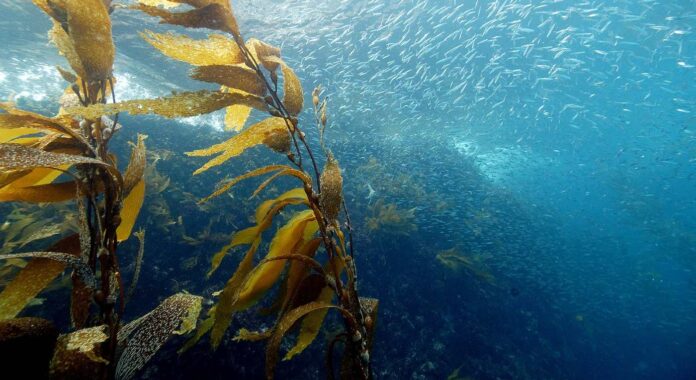
Australia’s Ocean Kelp Forest is Growing at Light Speed–Rivaling the Mighty Amazon for Absorbing CO2

National Marine Sanctuaries


National Marine Sanctuaries

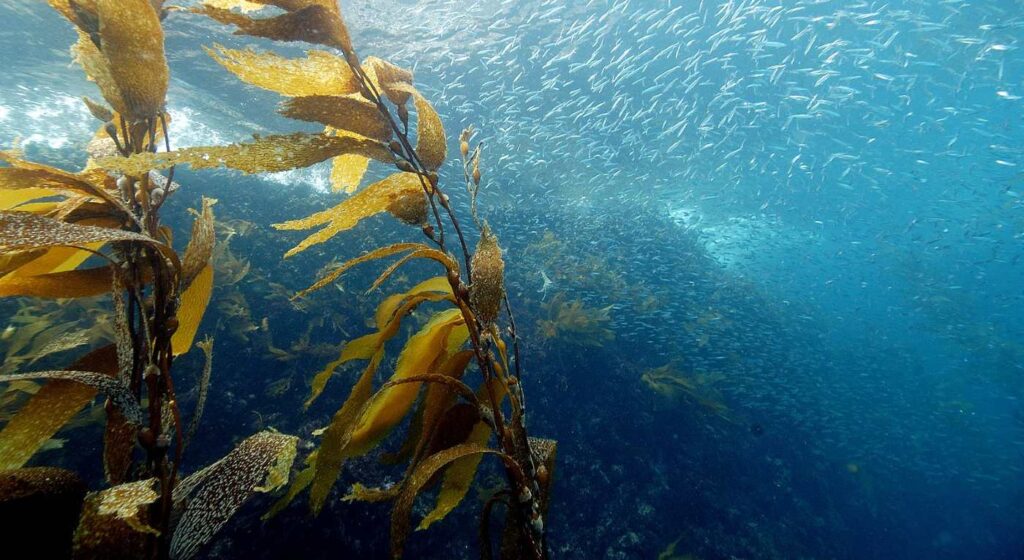
Great forests of ocean kelp were found in a recent study to be between 4 and 11-times more productive than the most productive crops grown today like wheat, corn, and rice.

On land, the fastest growth rates occur in the tropics, but in the ocean the most productive ecosystems are found in the temperate zones where cool, nutrient-rich waters create forests of golden, bull, and bamboo kelp that can grow 100 feet tall (35 meters).

This was the result of a global diving survey organized by the University of Western Australia, during which they found the most productive sea forests outgrow even the mighty Amazon Rainforest.

These most productive forests came from South Australia and South Africa, where can be found the Great Southern Reef and the Great African Sea Forest respectively.

The Great African Sea Forest is believed to be expanding in size, unlike many other mega undersea habitats. Made up of bamboo kelp, and containing huge amounts of biodiversity, it stretches over 400 miles from Cape Town’s waters to Namibia’s, nourished by an Antarctic current known as the “Benguela upwelling.”

The Great Southern Reef in Australia is fringed by a golden kelp forest stretching 5,000 miles across the continent’s coast. Next to the golden kelp, bull kelp can grow at a rate of 14 centimeters per day.

“On land, we can use satellites to measure tree growth, but underwater things are much more complicated as most satellites cannot make measurements at the depths kelp forests are found,” Dr. Albert Pessarrodona from the university’s Oceans Institute and School of Biological Sciences, told the Sydney Morning Herald.

To get around this fact, divers around the world compiled productivity reports on kelp forests, which were then compared and analyzed for nutrient levels, sun penetration, and wave exposure.

RELATED: Seaweed is the Food –and Fuel– of a Sustainable World, And it May Start in Australia

The findings were that tropical forests were not the most productive, and that those from the temperate zones contain kelps that can grow 11-times faster than wheat, corn, or rice.

This mass natural production aids in the world’s food security, the authors found, and nowhere is this more demonstrated than Indonesia. The aquaculture of their seaweed forests create products as varied as bioplastics alongside ice cream.

SEE: Share a Moment of Awe With This Jewel of Australian Animals: the Leafy Seadragon

As well as assisting in human flourishing, these forests play a critical role in the global carbon cycle by absorbing carbon dioxide from the atmosphere. Much like their productivity being much higher than terrestrial counterparts, the rate at which they absorb CO2 has been measured at 30x faster than trees on land.

Scientists from the non-profit Great Southern Reef estimate that if just 0.001% of the ocean’s surface was cultivated with these productive forests, it would offset the emissions of the entire global aquaculture industry.

SHARE These Mind-Blowing Facts To Your Climate Conscious Friends… 

Beekeeper Shocked When Neighbor Gives Up Farmland to Host Hives: “I’ve never experienced anything like that.”

Credit Petra Hanner, Tips.
Credit Petra Hanner, Tipps.

Near Austria’s border with Germany, an agriculturalist let one-fifth of his farming estate return to wild meadows in order to support his neighbor’s beekeeping operation.

The hyper-cultivation around Franz Nigl’s property in Leiten, Austria, was never really “his thing,” and wanting to hear the meadows “buzzing” again, he let his good neighbor Josef Krenn, a hobbyist beekeeper, take it over.

“I’ve never experienced anything like that,” Krenn admits. “We benefit from each other. Franz grows the flowers and in return he gets good honey from me.”

Local news outlet Tipps spoke to both men, and described the 2.4 acre (one hectare) meadow as an “oasis” of insects and flowers, with 40 different blooming plant species on which Krenn’s bees can feed.

GOOD BEE NEWS: Bee Bricks That Help Thousands of Solitary Bees Are Now a Requirement for New Buildings in Brighton

“As far as I can, I try to ensure that nature benefits,” Nigl said, explaining his intentions. “There should be a direct obligation to cultivate flowering areas, [but] unfortunately, people today walk through nature blind and no longer know the connections. I know that you can’t do much yourself on a large scale anyway, but you can on a small scale on your doorstep.”

Nigl wants to leave an even greater area of his estate to the bees next season.

99% of all beekeepers in Austria do so as a hobby, but there are 33,000 of them, maintaining nearly half-a-million hives and still rising.

The alpine countryside is famous for wildflowers, and provided they have a safe place to hibernate through the winter, the zone can support huge populations of bees.

SHARE This Story About A Buzzing-Good Neighbor…

Patagonia Gives Away Its Entire $3 Billion Worth To Fight Climate Change

Yvon Chouinard – Released

Practicing what he preaches, Patagonia founder Yvon Chouinard donates the entire $3 billion of his apparel company’s valuation to fight climate change.

As staunch an activist as you could find, Chouinard was “really pissed off” to see himself in a business news article as being valued as a billionaire, so his response was to announce that all profits in perpetuity shall go to the Patagonia Purpose Trust for helping prevent environmental disaster.

“I never wanted to be a businessman,” Chouinard wrote. “I started as a craftsman, making climbing gear for my friends and myself, then got into apparel.”

At 83, Chouinard worked with a team of lawyers alongside his family to create a model that would allow the company to continue to operate as a for-profit enterprise, but that would also act as a fundraising engine on the environment’s behalf.

2% of the family’s stock will fund an effort to ensure the company remains committed to Chouinard’s values, while the other 98% will go to projects that protect habitat and biodiversity, and fight the environmental crisis.

Patagonia has long been known as a company that does everything it can to support the environment, such as donating 1% of profits every year since 2001, amounting to $140 million, to projects that protect and restore vulnerable ecosystems, or even opening a regenerative ag-based brewery that uses a perennial grain called Kernza instead of wheat to make beer.

“While we’re doing our best to address the environmental crisis, it’s not enough,” Chouinard continued. “We needed to find a way to put more money into fighting the crisis while keeping the company’s values intact.”

RELATED: Patagonia’s CEO is Donating Company’s Entire $10 Million Tax Cut to Fight Climate Change

Chouinard and the staff considered going public in a bid to drive investor money towards the cause, but concluded that the pressure for growth and responsibility to shareholders would have made it impossible.

Instead of going public, Patagonia explain they’re “going purpose,” by devoting their products and projects to their one and only shareholder—Earth.

SHARE This Heroic Climate Action On Social Media… 

“In life, you need either inspiration or desperation.” – Anthony Robbins

Quote of the Day: “In life, you need either inspiration or desperation.” – Anthony Robbins

Photo by: Brian Lundquist

With a new inspirational quote every day, atop the perfect photo—collected and archived on our Quotes page—why not bookmark GNN.org for a daily uplift?

Astronauts Could 3D-Print Tools on Mars Made From Martian Dust, Says Exciting New Study

NASA / JPL / Caltech

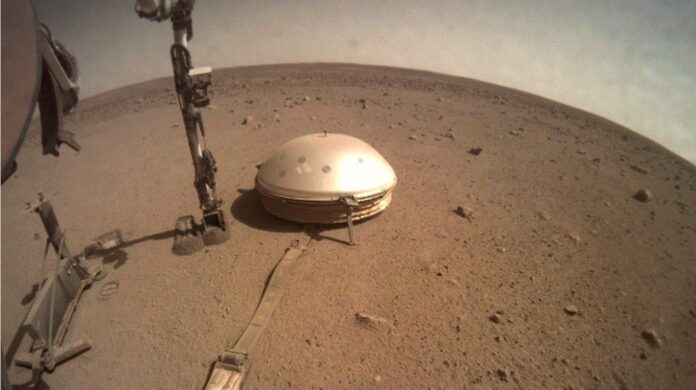
We could 3D-print tools on Mars made from the planet itself—and the exciting experiment could change the future of space travel, according to engineers.

The breakthrough means that future missions will be able to print essentials for repairs such as spare parts for rockets.

It’s a significant discovery because researchers say they can’t carry everything out to space, and if they forget a tool on a mission they can’t come back to get it.

Taking materials out there is also hugely expensive, noted the study’s authors: it costs $54,000 to put just one kilogram (2.2 lb) of material into the Earth’s orbit.

As a result, researchers at Washington State University in the US believe 3D-printing is the burgeoning field that could be the answer to make space travel cheaper and easier.

The team discovered small amounts of simulated crushed Martian rock, mixed with titanium alloy, made a strong, high-performance material that could be used to make tools and rocket parts on the red planet.

LOOK: Beautiful Crystal New to Geology Discovered in China’s New Moon Rock Samples

They made tools using between 5% and 100% Martian regolith, a black powdery substance intended to imitate the rocky, inorganic material on Mars’ surface that could be collected by a robotic arm or rover.

When it came to adding just 5% of Martian dust in the mix, there were no cracks or bubbles and it was far better than just titanium alloys.

They believe this combination could be used to build lighter weight pieces still capable of carrying heavy loads.

“It gives you a better, higher strength and hardness material, so that can perform significantly better in some applications,” said the study’s corresponding author Professor Amit Bandyopadhyay.

Meanwhile the 100 percent concentration parts were brittle and cracked easily. However Prof. Bandyopadhyay reckons 100% Martian rock materials would still be great as coatings to defend against rust or radiation damage.

CHECK OUT: Organic Solar Cells Promise Low-Cost, Bendable, and Efficient Panels

Alongside graduate students Ali Afrouzian and Kellen Traxel, Bandyopadhyay used a powder-based 3D printer to mix up the fake Martian rock with titanium alloy, a metal commonly used in space because it is light, strong, and heat-resistant.

A high-powered laser shot through the materials to get them up to 2,000 degrees Celsius. After that, the melted mixture flowed into a moving platform where researchers could create it into varying sizes and shapes.

Once it cooled, they tested it for durability and strength to reveal the exciting new options in space travel.

RELATED: World’s First 3D-Printed House Made Of Local Raw Earth – And it Closes the Roof With a Dome

But more is possible and, publishing their research in the International Journal of Applied Ceramic Technology, the team reckons there are even better composites to be found using different metals and printing techniques.

“This establishes that it is possible, and maybe we should think in this direction because it’s not just making plastic parts which are weak but metal-ceramic composite parts which are strong and can be used for any kind of structural parts,” added Bandyopadhyay, who worked on similar experiments using simulated crushed moon rock (lunar regolith) for NASA in 2011.

Since then space agencies have worked more and more with 3D printing, and the International Space Station now has its own devices to manufacture the materials they need on site and for experiments.

Manufacture Some Mars-velous Curiosity on Social Media By Sharing…

Safari Park Worker is Best Friends With Lion That He’s Cuddled and Pampered For Years – WATCH

By Shandor Larenty - via TikTok/SWNS
By Shandor Larenty – via TikTok/SWNS

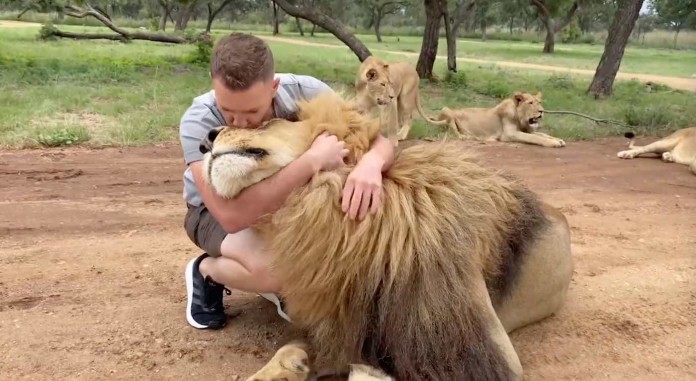
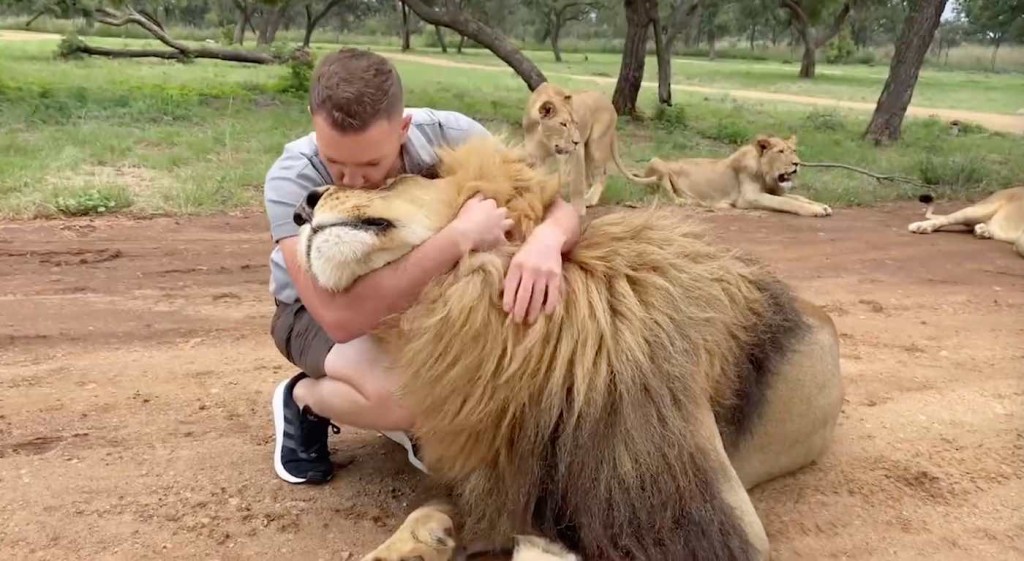
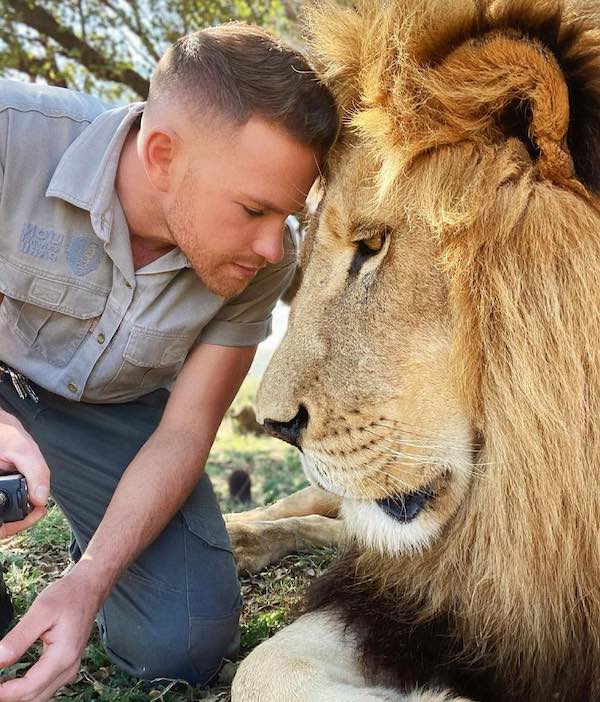
Meet the South African animal expert who has been best friends with a 550-pound lion named George for over ten years.

The pair first met when George was born at the Lion and Safari Park in Gauteng, South Africa, where Shandor Larenty works as the head of animal husbandry.

Since then, Shandor has groomed the big cat and played with him every day—and the pair can often be seen cuddling together in an extraordinary way.

The 10-year-old lion has developed from a tiny cub to the head of his own pride, but he always makes time for Shandor.

“It’s like watching a child grow up,” said the 27-year-old animal lover. “It’s exactly the same feeling.

And George chooses to spend time with Shandor as much as the other way around.

“George is similar to me in the sense that while he’s social, he also likes to be alone a lot. It’s amazing to see that when I arrive he’ll leave the rest of the pride and walk over.

Shandor Larenty and George the Lion – TikTok / SWNS

Shandor says that lions have good days and bad days just like us. “If I go in there and he doesn’t come running up, then I know it’s not going to happen.”

RELATED: Largest Ever Lion Airlift to Send 33 Circus Cats to New Home in Africa

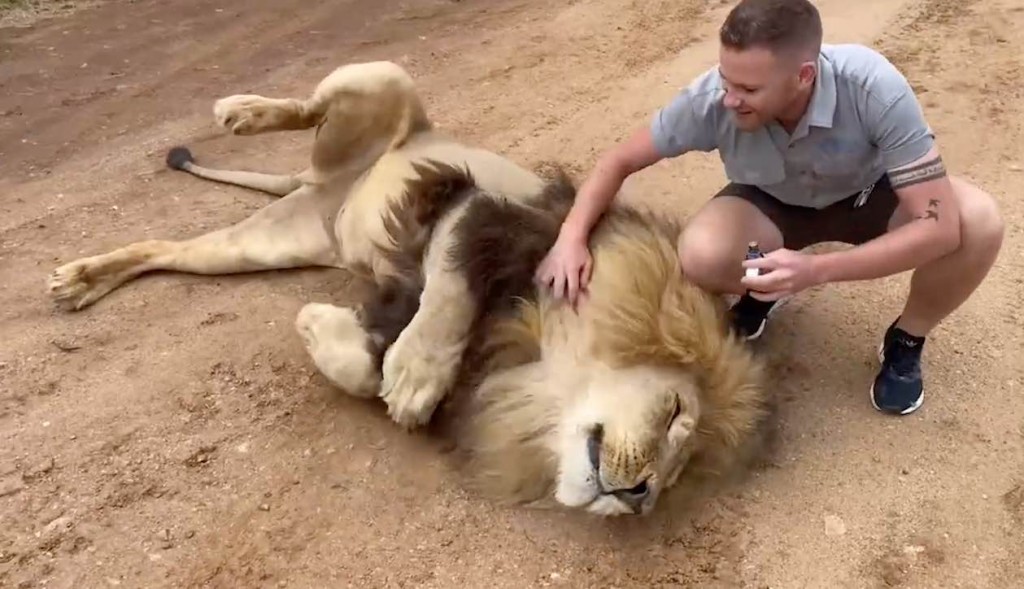
George loves to be pampered and Shandor massages, brushes his hair, and plays with him at least once a day.

“He absolutely loves the fly repellent we make for him. He rolls around like a little kitten, and it’s his favorite time to get a massage, or a foot rub—he loves it.” (Watch the video below…)

TikTok / SWNS

George once saved him from an attack

“I always say, at the end of the day, their natural instinct kicks in, so if one lion has a go at you, the others join in.

One time Shandor was with George’s son, who’s part of the pride.

“Lions have two growls. On that day the growl was really not happy, and he just walked up to me and growled like that—and out of the blue he came running at me.

“From the left hand side came George’s lioness who grabbed him and from the right hand side George came running and knocked me to the side and grabbed (his offspring).

“It gave me time to get away.”

RELATED: Give Your Feline Some Catnip – Getting Hooked on it Has Benefits

Most of the time there is only benefit for the young lion whisperer.

“I can think of times in my life where I was really struggling and the animals really helped me.”

These days, Shandor and George have become TikTok sensations and their videos regularly receive hundreds of thousand of views.

LOOK: Kefir the Maine Coon Cat is So Big People Mistake Him For a Dog

WATCH the incredible video…

Pounce On The Chance To Share the Amazing Video With Friends on Social Media…

Toddler Given Cancer Prognosis of 6-12 Months Defies the Odds to be Declared Cancer-Free in 8 Months

SWNS
SWNS

A toddler given a prognosis of six to 12 months to live after doctors found a tumor has defied the odds and been declared cancer-free.

In April of 2021, Leanne Waite and her husband, Chris, were dressing their three-year-old son when they noticed his left arm was in severe pain after it got caught in his t-shirt.

After going to a hospital in Swindon, Wiltshire, they were told by medical staff the tot could have been a broken collarbone, but after running tests they discovered a lump on his collarbone.

Medics at a second hospital confirmed the family’s worst fears following a biopsy: Albie was diagnosed with a rhabdoid tumor and given a prognosis of just six to 12 months to live.

The tot had surgery to remove some of the fast-growing tumor, which left him with a scar that stretches across his neck. He also underwent chemotherapy and radiotherapy.

“I cannot even explain the shock of finding out Albie had cancer,” said the mother of four, from Gloucestershire. “It went from an injury to a prognosis.

The cancer treatment was difficult, too, as the toddler was tired all the time and had no energy to do anything. But, Leanne managed to breastfeed Albie throughout the entire ordeal, during which he was hooked to a feeding machine three times a day.

Then, eight months after the diagnosis, the family learned that he had made a miraculous recovery—and just two days before Christmas Albie got to ring the bell at Bristol Children’s Hospital to declare he was cancer-free.

LOOK: UK’s Most Premature Twins Finally Go Home 5 Months After Being Given 0% Chance of Survival

“Watching him bounce back to the boisterous child he was before is just amazing.”

SWNS

“Somehow, we pulled through as a family,” said Leanne, who believes they couldn’t have done it without the support of their extended family which took turns caring for the other children.

“Albie is amazing; he loves running around and is a social butterfly.”

“I think because he spent so many of his early days in and out of hospital surrounded by different staff, he has become so socially advanced.”

Now the family treasures every day together and urges other parents to follow their instincts when they know something is wrong.

RELATED: Premature Baby Becomes a Prodigy at 3, Joining Mensa After They Run Out of Questions For the Toddler

“We don’t take any family time for granted and cherish each moment we have together.”

SHARE the Hope With Other Families on Social Media…

Woman Hailed as Hero For Using Drone to Locate Over 200 Lost Pups For Free

Erica Hart via SWNS
Erica Hart via SWNS

A dog lover has been hailed a ‘real-life superhero’ for using her drone to reunite families with their lost pups—most recently, just in time before a ‘deadly’ storm hit.

September 9th was a normal Friday for Erica Hart, as she abandoned her shopping trip to rush home and launch a drone search for a schnauzer before a rumbling thunderstorm made things worse.

Jamie Hollinshead phoned her from Clayton, Yorkshire, to say his rescue dog Hilda had bolted from their garden and they’d already searched for two hours.

The 33-year-old rushed to the last-known location and within 20 minutes spied the escaped pooch running down a residential road.

When the two-year-old dog darted into a nearby field and kept moving, Erica was able to direct Jamie and his wife to the best spot for intercepting her.

The couple from Clayton, who adopted the rescue dog this past April, has hailed Erica a ‘real-life superhero’ and believes Hilda could have been killed had she not been found before the thunderstorm hit minutes later.

“What she did is brilliant. She’s a hero, a real superhero.

POPULAR: Family Left Stunned When Their Dog Escaped–Only to Return Later With a Ribbon From a Dog Show

“She saved her life. She could have been run over or the storms could have panicked her—you just think the worst straight away.”

“Erica was in constant communication with us. She knew what she was doing and where to look,” said Leah, who had no idea how the dog escaped their fenced yard, but thought it must have been spooked by the thunder.

“As it was getting later, we thought we’d never see her again. It brought a tear to my eye when we got her back.”

Erica, from Goldthorpe, joked, “It was great to see the owner’s face when they’d been chasing the dog for hours, then I turn up and it’s over in 20 minutes.

“Thank god we found her when we did. The storms started minutes after I got the drone down.”

“Once that drone’s above the dog, it’s not going anyway because I can guide people in quick enough. It’s like a military operation.

The humble drone operator believes she’s rescued more than 200 dogs in seven years and has started a Facebook group where users share lost dog posts and Erica shares the happy endings.

RELATED: Watch a Drone Save a 14-Year-old From Drowning in Powerful Spanish Current

She doesn’t charge any money for the service and says she does it purely for the love of dogs – even if it means spending money on fuel for her car instead of treating herself.

“I’ve gone without stuff for myself to put petrol in the car to find a dog (but) when I post it on Facebook and I see the comments I lay in bed with a smile on my face and realize why I do it.

“Thank you so much Erica Hart for all your help,” wrote one fan. “You’re a star.”

LOOKMan Spots His Dog on Television That Was Missing For 2 Years – He Knew That Infamous Underbite

SHARE the Hero Story to Make Dog Lovers Smile on Social Media…

“From what we get, we can make a living. What we give; however, makes a life.” – Arthur Ashe

Quote of the Day: “From what we get, we can make a living. What we give; however, makes a life.” – Arthur Ashe

Photo by: Napendra Singh

With a new inspirational quote every day, atop the perfect photo—collected and archived on our Quotes page—why not bookmark GNN.org for a daily uplift?

New Poll Reveals The Secret to Happiness is Practicing Gratitude

File photo by Nathan Dumlao, CC
Photo by Nathan Dumlao, CC license

The secret to maximum happiness may be expressing gratitude, a new poll suggests.

The random double-opt-in survey of 2,000 Americans looked at the potential connection between gratitude and happiness — revealing that 65% of respondents who report that they’re “very happy” on a daily basis were more likely to “always” give thanks.

While looking at the correlation between life satisfaction and gratitude, one-third of respondents said they “always” express gratitude in their everyday lives. Of those, 62% noted they were “very satisfied” with their lives.

Conducted by OnePoll on behalf of Motivosity, the survey also found that, on average, respondents believe they express gratitude to others about six times a month – and they receive the same amount of appreciation back.

Regionally, residents in the southwest (75%), northeast (74%) and midwest (73%) were more likely to express gratitude than others surveyed in the county—followed by the southeast (68%) and west coast residents (63%).

RELATED: The Power of Thanks: Research Links Gratitude to Successful Marriages

“There’s a dramatic correlation between gratitude and happiness,” said Logan Mallory, vice president of marketing at Motivosity. “When people are proactive about being grateful, it rewires their brain to look for positives instead of the negatives around them.

“Previous studies and these survey results tell us that if you want to experience an increase in life satisfaction, just express gratitude more often!”

Respondents say they receive the most gratitude from their spouses or partners (28%), family members (26%), and friends (24%) – with bosses (17%) and co-workers (15%) trailing further down the list.

With bosses and co-workers low on the list to show gratitude, perhaps it’s not surprising that only 18% of employed respondents feel appreciated at work.

MORE: Companies With Co-Workers Who Don’t Get Along Should Encourage Gratitude Journaling, Says Study

Even those who are “very satisfied” with their lives feel twice more recognition at home than at their jobs (46% vs. 24%).

“Public acknowledgment has a massive impact on making people genuinely feel that their day-to-day efforts make a difference because feeling appreciated improves life quality.”

A UC Berkeley study showed that people who practice gratitude consistently report a host of benefits, including:

• Higher levels of positive emotions
• More joy and pleasure
• More optimism and happiness
• Being more helpful, generous, compassionate, and forgiving
• Feeling less lonely and isolated.

Saturn’s Rings Could Have Been Formed By a Missing Moon That Smashed Into Planet 160 Million Years Ago

NASA

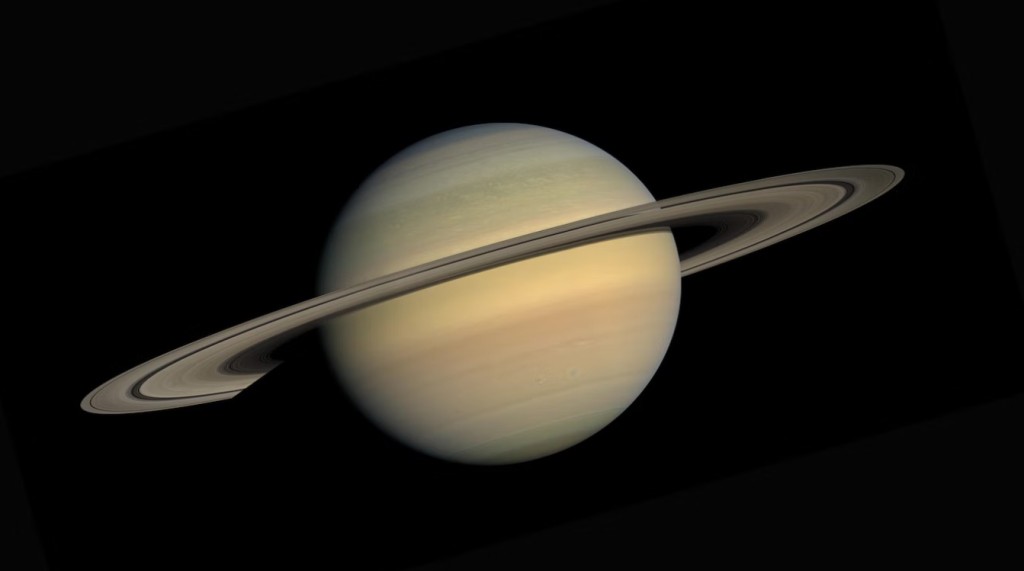
Saturn’s rings and tilt could be the product of an ancient, missing moon, a new study suggests—and a “grazing encounter” may have smashed the moon to bits to form Saturn’s rings.
Jennifer Chu | MIT News

Swirling around the planet’s equator, the rings of Saturn are a dead giveaway that the planet is spinning at a tilt. The belted giant rotates at a 26.7-degree angle relative to the plane in which it orbits the sun. Astronomers have long suspected that this tilt comes from gravitational interactions with its neighbor Neptune, as Saturn’s tilt precesses, like a spinning top, at nearly the same rate as the orbit of Neptune.

But a new modeling study by astronomers at MIT and elsewhere has found that, while the two planets may have once been in sync, Saturn has since escaped Neptune’s pull. What was responsible for this planetary realignment? The team has one meticulously tested hypothesis: a missing moon.

In a study appearing this week in Science, the team proposes that Saturn, which today hosts 83 moons, once harbored at least one more, an extra satellite that they name Chrysalis. Together with its siblings, the researchers suggest, Chrysalis orbited Saturn for several billion years, pulling and tugging on the planet in a way that kept its tilt, or “obliquity,” in resonance with Neptune.

But around 160 million years ago, the team estimates, Chrysalis became unstable and came too close to its planet in a grazing encounter that pulled the satellite apart. The loss of the moon was enough to remove Saturn from Neptune’s grasp and leave it with the present-day tilt.

What’s more, the researchers surmise, while most of Chrysalis’ shattered body may have made impact with Saturn, a fraction of its fragments could have remained suspended in orbit, eventually breaking into small icy chunks to form the planet’s signature rings.

The missing satellite, therefore, could explain two longstanding mysteries: Saturn’s present-day tilt and the age of its rings, which were previously estimated to be about 100 million years old — much younger than the planet itself.

“Just like a butterfly’s chrysalis, this satellite was long dormant and suddenly became active, and the rings emerged,” says Jack Wisdom, professor of planetary sciences at MIT and lead author of the new study.

LOOK: Scientists Stunned by New Jupiter Images With Galaxies ‘Photobombing’ the Webb Telescope

The study’s co-authors include Rola Dbouk at MIT, Burkhard Militzer of the University of California at Berkeley, William Hubbard at the University of Arizona, Francis Nimmo and Brynna Downey of the University of California at Santa Cruz, and Richard French of Wellesley College.

A moment of progress

In the early 2000s, scientists put forward the idea that Saturn’s tilted axis is a result of the planet being trapped in a resonance, or gravitational association, with Neptune. But observations taken by NASA’s Cassini spacecraft, which orbited Saturn from 2004 to 2017, put a new twist on the problem. Scientists found that Titan, Saturn’s largest satellite, was migrating away from Saturn at a faster clip than expected, at a rate of about 11 centimeters per year. Titan’s fast migration, and its gravitational pull, led scientists to conclude that the moon was likely responsible for tilting and keeping Saturn in resonance with Neptune.

But this explanation hinges on one major unknown: Saturn’s moment of inertia, which is how mass is distributed in the planet’s interior. Saturn’s tilt could behave differently, depending on whether matter is more concentrated at its core or toward the surface.

POPULAR: Travel 2,000 Light-Years in 60 Seconds With New Video From NASA’s Webb Telescope

“To make progress on the problem, we had to determine the moment of inertia of Saturn,” Wisdom says.

The lost element

In their new study, Wisdom and his colleagues looked to pin down Saturn’s moment of inertia using some of the last observations taken by Cassini in its “Grand Finale,” a phase of the mission during which the spacecraft made an extremely close approach to precisely map the gravitational field around the entire planet. The gravitational field can be used to determine the distribution of mass in the planet.

Wisdom and his colleagues modeled the interior of Saturn and identified a distribution of mass that matched the gravitational field that Cassini observed. Surprisingly, they found that this newly identified moment of inertia placed Saturn close to, but just outside the resonance with Neptune. The planets may have once been in sync, but are no longer.

“Then we went hunting for ways of getting Saturn out of Neptune’s resonance,” Wisdom says.

RELATED: Astronomers Detect Radio Pattern ‘Like a Heartbeat’ From a Galaxy Far Away

The team first carried out simulations to evolve the orbital dynamics of Saturn and its moons backward in time, to see whether any natural instabilities among the existing satellites could have influenced the planet’s tilt. This search came up empty.

So, the researchers reexamined the mathematical equations that describe a planet’s precession, which is how a planet’s axis of rotation changes over time. One term in this equation has contributions from all the satellites. The team reasoned that if one satellite were removed from this sum, it could affect the planet’s precession.

The question was, how massive would that satellite have to be, and what dynamics would it have to undergo to take Saturn out of Neptune’s resonance?

Wisdom and his colleagues ran simulations to determine the properties of a satellite, such as its mass and orbital radius, and the orbital dynamics that would be required to knock Saturn out of the resonance.

They conclude that Saturn’s present tilt is the result of the resonance with Neptune and that the loss of the satellite, Chrysalis, which was about the size of Iapetus, Saturn’s third-largest moon, allowed it to escape the resonance.

MORE: X-Ray Explosion of a White Dwarf Star Captured for the First Time

Sometime between 200 and 100 million years ago, Chrysalis entered a chaotic orbital zone, experienced a number of close encounters with Iapetus and Titan, and eventually came too close to Saturn, in a grazing encounter that ripped the satellite to bits, leaving a small fraction to circle the planet as a debris-strewn ring.

The loss of Chrysalis, they found, explains Saturn’s precession, and its present-day tilt, as well as the late formation of its rings.

“It’s a pretty good story, but like any other result, it will have to be examined by others,” Wisdom says in an article reprinted with permission of MIT News. “But it seems that this lost satellite was just a chrysalis, waiting to have its instability.”

LAUNCH This Fascinating Story to Science-Lovers on Social Media…

Passengers Flying to Hawaii Surprised with Free Ukuleles and a Lesson Aboard World’s Happiest Flight –WATCH

Known for their inflight mischief designed to make passengers smile, Southwest Airlines outdid themselves this week on a flight to Honolulu.

After boarding the plane in Long Beach, California, flyers were delighted on Friday to find a ukulele waiting for them in their seat.

They would soon learn that Guitar Center, the world’s largest musical instrument retailer, was behind the stunt, with instructors onboard to give them a free lesson

The ukuleles—arguably the world’s happiest instrument, and the one that conjures up the Aloha spirit of Hawaii—is also one of the easiest to learn to play.

It is so easy, in fact, that passengers learned to play the song “Hello, Aloha. How are you?” from start to finish, during the flight.

Each passenger received a Road Runner carrying case containing a Mitchell MU40 Soprano ukulele—and the first-ever in-flight ukulele lesson in the sky.

Passengers then flew across the Pacific Ocean, unified, one chord at a time. (Watch the video below…)

Guitar Center of Long Beach

“I’ve taught students through Guitar Center Lessons since 2014, but never in an airplane. It was inspiring to see how quickly passengers of all ages picked up the ukulele – many with no musical background,” said Alexandra Windsor, educational specialist for Guitar Center Lessons.

WATCH: Airline Passenger Hilariously Bust a Move When Gate Agent Tells Him to Sing

Even if you weren’t on the flight, you can enter the Ukuleles Take Flight sweepstakes for a chance to win round trip air travel on Southwest for a winner and a guest, and two Mitchel MU40 Soprano ukuleles, here at Southwest.fm/ukuleleflight.

Watch the great video from Guitar Center below…

SHARE This Lesson in Happiness on Social Media…

Your Inspired Weekly Horoscope From Rob Brezsny: A ‘Free Will Astrology’

Our partner Rob Brezsny provides his weekly wisdom to enlighten our thinking and motivate our mood. Rob’s Free Will Astrology, is a syndicated weekly column appearing in over a hundred publications. He is also the author of Pronoia Is the Antidote for Paranoia: How All of Creation Is Conspiring To Shower You with Blessings. (A free preview of the book is available here.)

Here is your weekly horoscope…

FREE WILL ASTROLOGY – Week of September 17, 2022
Copyright by Rob Brezsny, FreeWillAstrology.com

VIRGO (Aug. 23-Sept. 22):
It’s impossible to be perfect. It’s neither healthy nor productive to obsess on perfectionism. You know these things. You understand you can’t afford to get bogged down in overthinking and overreaching and overpolishing. And when you are at your best, you sublimate such manic urges. You transform them into the elegant intention to clarify and refine and refresh. With grace and care, you express useful beauty instead of aiming for hyper-immaculate precision. I believe that in the coming weeks, dear Virgo, you will be a master of these services—skilled at performing them for yourself and others.

LIBRA (Sept. 23-Oct. 22):
According to Libran poet T. S. Eliot, “What we call the beginning is often the end. And to make an end is to make a beginning. The end is where we start from.” Those are your guiding thoughts for the coming days, Libra. You’re almost ready to start fresh; you’re on the verge of being able to start planning your launch date or grand opening. Now all you have to do is create a big crisp emptiness where the next phase will have plenty of room to germinate. The best way to do that is to finish the old process as completely as possible.

SCORPIO (Oct. 23-Nov. 21):
Now and then, you slip into phases when you’re poised on the brink of either self-damage or self-discovery. You wobble and lurch on the borderline where self-undoing vies with self-creation. Whenever this situation arises, here are key questions to ask yourself: Is there a strategy you can implement to ensure that you glide into self-discovery and self-creation? Is there a homing thought that will lure you away from the perverse temptations of self-damage and self-undoing? The answers to these queries are always yes—if you regard love as your top priority and if you serve the cause of love over every other consideration.

SAGITTARIUS (Nov. 22-Dec. 21):
“Sometimes serendipity is just intention unmasked,” said Sagittarian author Elizabeth Berg. I suspect her theory will be true for you in the coming weeks. You have done an adroit job of formulating your intentions and collecting the information you need to carry out your intentions. What may be best now is to relax your focus as you make room for life to respond to your diligent preparations. “I’m a great believer in luck,” said my Uncle Ned. “I’ve found that the harder I work, the more luck I have.” He was correct, but it’s also true that luck sometimes surges your way when you’ve taken a break from your hard work.

CAPRICORN (Dec. 22-Jan. 19):
Tips to get the most out of the next six weeks: 1. Be the cautiously optimistic voice of reason. Be the methodical motivator who prods and inspires. Organize as you uplift. Encourage others as you build efficiency. 2. Don’t take other people’s apparent stupidity or rudeness as personal affronts. Try to understand how the suffering they have endured may have led to their behavior. 3. Be your own father. Guide yourself as a wise and benevolent male elder would. 4. Seek new ways to experience euphoria and enchantment, with an emphasis on what pleasures will also make you healthier.

AQUARIUS (Jan. 20-Feb. 18):
Aquarian author Richard Ford has advice for writers: “Find what causes a commotion in your heart. Find a way to write about that.” I will amend his counsel to apply to all of you non-writers, as well. By my reckoning, the coming weeks will be prime time to be gleefully honest as you identify what causes commotions in your heart. Why should you do that? Because it will lead you to the good decisions you need to make in the coming months. As you attend to this holy homework, I suggest you direct the following invitation to the universe: “Beguile me, mystify me, delight me, fascinate me, and rouse me to feel deep, delicious feelings.”

PISCES (Feb. 19-March 20):
“I am lonely, yet not everybody will do,” observed Piscean author Anaïs Nin. “Some people fill the gaps, and others emphasize my loneliness,” she concluded. According to my reading of the astrological omens, Pisces, it’s your task right now to identify which people intensify your loneliness and which really do fill the gaps. And then devote yourself with extra care to cultivating your connections with the gap-fillers. Loneliness is sometimes a good thing—a state that helps you renew and deepen your communion with your deep self. But I don’t believe that’s your assignment these days. Instead, you’ll be wise to experience intimacy that enriches your sense of feeling at home in the world. You’ll thrive by consorting with allies who sweeten your love of life.

ARIES (March 21-April 19):
My reader Monica Ballard has this advice for you Aries folks: “If you don’t vividly ask for and eagerly welcome the gifts the Universe has in store for you, you may have to settle for trinkets and baubles. So never settle.” That’s always useful counsel for you Rams. And in the coming weeks, you will be wise to heed it with extra intensity. Here’s a good metaphor to spur you on: Don’t fill up on junk snacks or glitzy hors d’oeuvres. Instead, hold out for gourmet feasts featuring healthy, delectable entrées.

TAURUS (April 20-May 20):
I will remind you about a potential superpower that is your birthright to develop: You can help people to act in service to the deepest truths and strongest love. You can even teach them how to do it. Have you been ripening this talent in 2022? Have you been bringing it more to the forefront of your relationships? I hope so. The coming months will stir you to go further than ever before in expressing this gift. For best results, take a vow to nurture the deepest truths and strongest love in all your thoughts and dealings with others.

GEMINI (May 21-June 20):
Your mind is sometimes a lush and beautiful maze that you get lost in. Is that a problem? Now and then it is, yes. But just as often, it’s an entertaining blessing. As you wander around amidst the lavish finery, not quite sure of where you are or where you’re going, you often make discoveries that rouse your half-dormant potentials. You luckily stumble into unforeseen insights you didn’t realize you needed to know. I believe the description I just articulated fits your current ramble through the amazing maze. My advice: Don’t be in a mad rush to escape. Allow this dizzying but dazzling expedition to offer you all its rich teachings.

CANCER (June 21-July 22):
“Poetry is a life-cherishing force,” said Pulitzer Prize-winner Mary Oliver, who published 33 volumes of poetry and read hundreds of other poets. Her statement isn’t true for everyone, of course. To reach the point where reading poetry provides our souls with nourishment, we may have to work hard to learn how to appreciate it. Some of us don’t have the leisure or temperament to do so. In any case, Cancerian, what are your life-cherishing forces? What influences inspire you to know and feel all that’s most precious about your time on earth? Now would be an excellent time to ruminate on those treasures—and take steps to nurture them with tender ingenuity.

LEO (July 23-Aug. 22):
Please promise me you will respect and revere your glorious star power in the coming weeks. I feel it’s important, both to you and those whose lives you touch, that you exalt and exult in your access to your magnificence. For everyone’s benefit, you should play freely with the art of being majestic and regal and sovereign. To do this right, you must refrain from indulging in trivial wishes, passing fancies, and minor attractions. You must give yourself to what’s stellar. You must serve your holiest longings, your riveting dreams, and your thrilling hopes.

WANT MORE? Listen to Rob’s EXPANDED AUDIO HOROSCOPES, 4-5 minute meditations on the current state of your destiny — or subscribe to his unique daily text message service at: RealAstrology.com

(Zodiac images by Numerologysign.com, CC license)

SHARE The Wisdom With Friends Who Are Stars in Your Life on Social Media…
“Healing comes from gathering wisdom from past actions and letting go of the pain that the education cost you.” – Caroline Myss

Quote of the Day: “Healing comes from gathering wisdom from past actions and letting go of the pain that the education cost you.” – Caroline Myss

Photo by: DESIGNECOLOGIST

With a new inspirational quote every day, atop the perfect photo—collected and archived on our Quotes page—why not bookmark GNN.org for a daily uplift?

Daily Multivitamins Could Help Keep Seniors Mentally Sharp—and May Protect Against Dementia

A daily multivitamin helps keep people over the age of 65 mentally sharp, and may also protect against dementia.

Researchers estimated supplementation for three years roughly translated to a 60% slowing of cognitive decline, equating to nearly two years of normal mental capacity.

There are currently around 5.6 million people with Alzheimer’s and related dementia in the United States. In Great Britain the number is 900,000, but it’s projected to rise to 1.6 million people by 2040.

The study was organized around a big cohort of 21,000 men and women across the United States in order to investigate whether taking a daily cocoa extract supplement or a daily multivitamin-mineral supplement reduces the risk of developing heart disease, stroke, cancer and other health outcomes.

A smaller trial done on the same cohort was based around the idea that cocoa extract is rich in compounds called flavanols, and previous research suggests that the compounds may positively impact cognition.

“There’s an urgent need for safe and affordable interventions to protect cognition against decline in older adults,” said study co-principal investigator Professor Laura Baker.

She also explained that several micronutrients and minerals are needed to support normal body and brain function, and deficiencies in older adults may increase the risk for cognitive decline and dementia.

In the trial researchers tested whether daily administration of cocoa extract compared to a placebo and a multivitamin-mineral compared to a placebo improved cognition in older adults.

RELATED: Vitamin D Could Help Protect Women Against and Even Reverse Ovarian Cancer – Study

2,200 participants from the cohort aged 65 or older completed tests over the telephone at the beginning and annually to evaluate memory and other cognitive skills.

“Our study showed that although cocoa extract did not affect cognition, daily multivitamin-mineral supplementation resulted in statistically significant cognitive improvement,” added Dr. Baker, of Wake Forest University School of Medicine.

“This is the first evidence of cognitive benefit in a large longer-term study of multivitamin supplementation in older adults.”

The research team estimated that three years of multivitamin supplementation roughly translated to a 60% slowing of cognitive decline, equating to around 1.8 years of normal mental capacity.

CHECK OUT: These Superfoods Can Provide Important Nutrients With a Single Bite

They said that the benefits were relatively more pronounced in participants with “significant” cardiovascular disease, which is important because those people are already at increased risk for cognitive impairment and decline.

“It’s too early to recommend daily multivitamin supplementation to prevent cognitive decline,” she said.

“While these preliminary findings are promising, additional research is needed in a larger and more diverse group of people.”

“Also, we still have work to do to better understand why the multivitamin might benefit cognition in older adults.”

SHARE This Daily Regimen Idea On Social Media…

Doctor Ditches Car Stuck in Traffic to Run 45 Minutes and Perform Critical Surgery

credit - Dr. Nandakumar
credit – Dr. Nandakumar

Stuck in total gridlock, an Indian doctor ditched his car and ran 1.8 miles (3 kilometers) to the hospital where one of his patients was awaiting him for gallbladder surgery.

Traffic in the 8-million-man metropolis of Bengaluru can be so bad, it’s “meme-triggering” according to the Times of India.

Heavy rains had, on August the 30th, caused a particularly infamous stretch of road in the capital of the state of Karnataka to become partially waterlogged. With traffic showing no signs of easing, gastroenterological surgeon, Dr. Govind Nandakumar, made a decision.

He knew he already had a patient prepped for surgery, and two other patients later in the day with scheduled procedures.

“I did not want to waste any more time waiting for the traffic to clear up as my patients aren’t allowed to have their meals until surgery is over,” said Dr. Nandakumar to the Times. “I did not want to keep them waiting for so long.”

The traffic in Bengaluru has prevented patients from reaching hospital emergency rooms before, so Nandakumar didn’t bother to chance it.

CHECK OUT: Doctors on a Plane Save Woman’s Life by Constructing Makeshift Ventilator Out of Nearby Parts

“The patient recovered well, and the surgery went smoothly,” he said. “I run everyday and in fact before I had to do this I just finished in the gym. Normally I run 3-5 kilometers a day, but running in the middle of the road in formal shoes is not ideal.”

There’s something to be said here about being able to run a 5K; it could save your life, or someone else’s.

SHARE This Great Story And Important Lesson With Your Friends…

Guam Kingfishers Could Soon Return to the Wild After a 30-Year Absence Thanks to Ambitious Scientists

Guam kingfisher - CC 2.0. Heather Paul
Guam kingfisher – CC 2.0. Heather Paul

A long shot rescue plan for the Critically-Endangered Guam kingfisher is set to take place on the wilds of an island nowhere near Guam.

Having been extirpated from Guam via invasive brown tree snakes, captive breeding centers have kept the species treading water until now.

A scientific mission born of a partnership between the Nature Conservancy and the Fish and Wildlife Service, to return them to the wilds—not of Guam, but on the Palmyra Atoll chain next year, is likely their only hope of long term survival.

Sometimes in the Anthropocene, biodiversity can be saved—just not in its original form. The world is better off with the strikingly beautiful Guam kingfisher, all rusty brown with blue prim, but until the past wrong of introducing the brown tree snake can be righted, the “Sihek” as it’s called in the language of Guam, needs a place to grow up again.

Today, only two of Guam’s 12 native forest birds remain in the wild. The successful release of the sihek on the atoll could inspire similar recovery initiatives on Guam, but most importantly stop the inbreeding that’s currently harming the birds’ lifespans in captivity.

“Like all extinct-in-the-wild species, the fate of sihek rests directly in our hands,” said Dr. John Ewen of the Zoological Society of London and chair of the Sihek Recovery Team. “We have the opportunity to return this species to the wild in a highly responsible way, learning about their needs in a wild environment with low risk.”

The first challenge for the Team, founded in 2020, was finding a place to put the bird. The Cocos Islands next door to Guam was thought an ideal place, until the discovery of a flourishing brown tree snake population scuppered that idea.

Palmyra Atoll – CC 2.0. Island Conservation

As GNN has reported before, eradication of invasive species on islands has been the great success story of modern conservation. Among these beneficiaries are the islands of the Palmyra Atoll, which lie around 1,000 miles south of Hawai’i.

SIMILAR: Island is Wonderland for Penguins Once Again After Dog Helps Eradicate 300,000 Invasive Rabbits

Palmyra had a rat problem, but has returned to its pristine state of insects, geckos, and other animals.

“This proposed experimental conservation translocation of our sihek to Palmyra Atoll not only benefits the sihek but gives us the opportunity to highlight Guam’s biological uniqueness,” said Anthony Tornito, wildlife biologist for Guam Department of Agriculture Division of Aquatic and Wildlife Resources.

The plan is by no means straightforward. While Palmyra has a scientific research station, there is nothing in the way of an aviary. All materials must be flown out in advance, reports Audubon. 

20 sihek eggs will then be transferred to Hawai’i, and in order to reduce the risk of foreign germs or parasites spreading on the recently-recovered atoll, the resulting chicks will be hand-reared until 9 of them can be transferred in cages to Palmyra. After getting their “ticket to ride” by the vet traveling with them, they will finally be able to return to wilderness.

CHECK OUT: We Finally Rid An Island of 300,000 Rats – Now Everything is Blooming

“This release is coinciding with Guam’s Chamoru cultural renaissance and this initial release on Palmyra Atoll is a catalyst for the species’ eventual, and long-awaited, return to the wild on Guam,” said Tornito.

It’s going to be long-awaited for the scientists of the Shiek Recovery Team as well, who don’t know which of the available prey species the sihek will favor, who won’t know what time of year, considering the 365-day perfect temperatures, the birds will breed, or how far they will disperse.

“It’s going to be really interesting to see what they will choose to eat once they are in the wild,” Stefan Kropidlowski, the refuge manager of Palmyra Atoll National Wildlife Refuge, told Audubon Society.

“We’re such a small, tiny little island that most people don’t even know about—the fact that we can help another small, little, tiny Pacific island achieve their conservation goals is fantastic.”

TWEET Or Talk About This Birds Comeback With Your Friends…