All News - Page 380 of 1724 - Good News Network
Home Blog Page 380

Students Learn at Graduation the Snapchat Founder Paid Off Their College Debt With More Than $10 Million

Otis College of Art and Design

Graduating seniors at an LA arts school were overwhelmed with joy when, getting ready to make the walk in cap and gown, they heard they would be receiving more than just a diploma.

The 284-strong Class of 2022 from Otis College of Art and Design would have their entire student loan debt paid off by the college’s most successful alumni, Snapchat co-founder Evan Spiegel.

Totaling an undisclosed, record-breaking gift of more than $10 million, Spiegel’s donation was added to by Kora Beauty founder Miranda Kerr, Spiegel’s wife and partner in the Spiegel Family Fund.

“It changed my life and made me feel at home,” Spiegel, who took summer classes at Otis during high school, told the graduating class. “I felt pushed and challenged to grow surrounded by super talented artists and designers, and we were all in it together.”

Ever since the federal government decided to start guaranteeing student loans in 1965, and universities realized that it wasn’t an unemployed teenager paying for their education but the entire United States taxpayer base, tuition costs have far outpaced any other metric of inflation.

MORE: Zimbabwe Youth at Berkeley Creates Free Online Coding Classes to Help Others Get Similar Scholarships

Otis can cost $50,000 for a liberal arts degree, but some of the recipients of Spiegel’s generosity had wracked up $70,000 or more. With less-than-obvious career paths and the lingering employment difficulties of the pandemic, some seniors remarked it was a huge weight off their shoulders.

“Student debt weighs heavily on our diverse and talented graduates,” said Charles Hirschhorn, President of Otis College of Art and Design. “We hope this donation will provide much-deserved relief and empower them to pursue their aspirations and careers, pay this generosity forward, and become the next leaders of our community.”

RELATED: Walmart Announces Plan to Pay 100% of College Tuition Plus Books For Its Workers

“My mom was crying,” graduate Farhan Fallahifiroozi told the LA Times. “They were so worried about it for me. I had so much debt. If it’s really all gone, it puts me so much ahead.”

(WATCH the moment the students found out the news.)

SHARE The Relief of These Students With Your Friends…

Watch Adorable Moment a Sloth Reunited With Her Baby After It Was Found Stranded and Crying On Beach

SWNS
SWNS

This is the adorable moment a three-fingered sloth was reunited with her baby, after it was found stranded and crying on a beach.

The cub was separated from its mother who had already started to climb its way back up the tree and into the canopy this month.

Fortunately, staff from Jaguar Rescue Center in Puerto Viejo de Talamanca, Costa Rica spotted what had happened and scooped up the tiny creature.

It was then rushed to the vet for a check up where it was found to be in good shape, before the rescuers hatched a plan to safely reunite mum and baby.

They recorded its cry and played it out to the mother to summon her down, and once she began her descent her precious tot was carefully handed back.

RELATED: Owl Immediately Adopts Two Rescue Chicks the Moment She Meets Them – After Her Own Eggs Failed

The video of their reunion on Playa Chiquita went viral on Instagram and it now has over 26,000 views.

The caption read, “We are happy to announce that we were able to reunite this mother and baby 3-fingered sloths (Bradypus variegatus).

“On May 10, one of the staff members found the baby crying on the floor near the beach.

“He spotted the mom on the tree, but she was climbing back to the canopy, so he brought the baby for a check-up with the vet, the sloth was healthy and didn’t have any injuries.

“We recorded the cry of the baby and played it near the tree to get the mom’s attention, we waited patiently until the mom came down for the baby.

MORE: Lucky Rescue for 5 Sheep Stuck on English Rooftop

“The JRC created this method a few years ago, we use it every time to be able to reunite mom and baby sloths.

“It melts our hearts every time we can witness the reunion of a mom and her baby.”

(WATCH the video for this story below.)

DON’T Go Slow on Sharing the Good News; Share It…

“A hard beginning maketh a good ending.” – John Heywood

John Fowler

Quote of the Day: “A hard beginning maketh a good ending.” – John Heywood

Photo by: John Fowler

With a new inspirational quote every day, atop the perfect photo—collected and archived on our Quotes page—why not bookmark GNN.org for a daily uplift?

John Fowler

Big Brothers Big Sisters Receives $122 Million Donation From Mackenzie Scott

Big Brothers Big Sisters of America

The charity Big Brothers Big Sisters of America has accelerated into the fast lane toward transforming youth mentorship in the U.S. with Tuesday’s $122.6 million donation from philanthropist MacKenzie Scott.

The 118-year-old nonprofit will use the record-breaking gift to further its mission to ensure every young person has access to powerful one-on-one mentoring relationships that empower them for success in school, career, and life.

Currently BBBSA operates 230 local offices serving more than 5,000 communities across all 50 states. Scott’s funding will support expanding the organization’s staff and training–and assist them in closing the gap on the estimated one in three youth who lack a positive, sustained role model.

The group says more than 13 million young Americans experience emotional, behavioral, or developmental conditions like depression—and hopes to attract families and volunteers in ‘turnkey ways’ that meet them where they are in life.

RELATED: Man Wins 200 Million on the Lottery and Donates Almost All of It to Save the Earth

“We are confident that MacKenzie’s investment will compel more people to help grow the village of mentors, volunteers, and donors needed to positively impact young people’s lives today and well into the future,” said Artis Stevens, the CEO of BBBSA.

“Mentoring is an integral part of the solution… including post-secondary readiness, social emotional learning, and a stronger sense of belonging and inclusion.”

The unprecedented investment from the former wife of Amazon founder Jeff Bezos is the largest donation from a single individual in the organization’s history.

POPULAR: Irish Woman Who Won $145M Lottery Has Given Over Half: ‘I’m Addicted to Helping People’

“We know that no one person, organization, or gift can do this work alone, but one person—no matter their background—can make an incredible difference through positive and inspired action. MacKenzie’s investment and belief in Big Brothers Big Sisters shows this on a large-scale.”

Ms. Scott has given away $8 billion in the past two years to hundreds of charities, since her divorce left her with 4% of Amazon’s shares—including, recently donating $436 million to Habitat for Humanity.

INSPIRE Your Brothers and Sisters By Sharing This Great News on Social Media…

7-Year-old With Incurable Condition Amazes Doctors: Now Walking, Talking, And Top of Her Class

SWNS

A blind girl has amazed doctors after she regained her sight and ‘cured herself’ of a usually life-long brain condition.

Evie-Mae Geurts was registered blind at just a few months old, and when her head started to swell a few months later, her 28-year-old mom demanded answers.

Doctors discovered she had hydrocephalus, the build up of fluid in the ventricles deep within the brain, at just eight months old.

The pressure inside her head was 32 times the normal level, and doctors warned while they could help relieve the pain and build up, the damage to her brain was done. The continued pressure meant her sight was gone forever, and she’d likely never learn to walk and talk.

Against all the odds, not only did her sight return when she was a toddler; Evie-Mae Geurts also learned to walk and talk.

RELATED: 13-Year-old Boy Granted a “Make-A-Wish” and Uses It to Feed the Homeless Every Month for a Year

More than that, her hydrocephalus disappeared last year. Usually hydrocephalus is a condition which can’t be cured and forever requires shunts—hollow tubes surgically placed in the brain—to drain fluid from the area.

SWNS

Evie-Mae is now thriving as a seven year old. She lives without shunts, is top of the class, and can see perfectly without any glasses.

While she is still undergoing eye tests every six months to monitor her progress, doctors have been amazed by her journey. “They can’t believe it,” said proud mother Amy. “Evie is phenomenal. We’re so proud of her. She’s an amazing little girl, and so brave.”

SWNS

When doctors took out the shunts Evie-Mae no longer needed, they had to shave her hair back to do the procedure.

MORE: Pregnant Mom Saves Unborn Baby’s Life By Rushing to Hospital Despite Showing No Warning Signs: ‘It was Instinct’

At the hair salon afterwards, the stylists told the little girl how brave she’d been to go through so much. She answered, “Just like Eugene cuts Rapunzel’s hair to save her in Tangled, the doctors cut my hair off to save me.”

SHARE This Amazing Story of One Girl’s Medical Turnaround With Others…

IKEA Will Start Selling Solar Panels in Some U.S. Stores This Fall

The popularity of solar has gone through the roof—and now IKEA is making it easier to install some panels on your roof.

Launching this fall in California, members of the U.S. IKEA Family customer loyalty program will be able to purchase home solar solutions, available through SunPower, to generate and store their own renewable energy and live more sustainably.

“At IKEA, we’re passionate about helping our customers live a more sustainable life at home. We’re proud to collaborate with SunPower to bring this service to the U.S. and enable our customers to make individual choices aimed at reducing their overall climate footprint,” said Javier Quiñones, CEO & Chief Sustainability Officer, IKEA U.S.

“The launch of Home Solar with IKEA will allow more people to take greater control of their energy needs, and our goal is to offer the clean energy service at additional IKEA locations in the future.”

Home Solar with IKEA combines the strengths of IKEA retail and knowledge of life at home with the expertise of SunPower, a trusted brand with more than 35 years in the solar industry.

SunPower is known for delivering innovative solar products and making it simple for its customers to switch to renewable energy.

MORE: Buy Some Wind Power With Your Furniture? IKEA is Now Selling Renewable Energy

“We are thrilled to deliver exceptional solar products to IKEA customers through a unique and simplified buying experience,” said Peter Faricy, SunPower CEO. “Together with IKEA, we can help introduce the incredible benefits of solar to more people and deliver on our shared value of making a positive impact on the planet.”

Home Solar with IKEA is just one of the many ways IKEA is working to become circular and climate positive by 2030. In the U.S., IKEA has a robust renewable energy portfolio, including two wind farms, two solar farms, a couple of geothermal systems, seven biogas-fuel cells, and rooftop solar arrays on 90% of IKEA locations.

LOOK: These Solar Shingles on Your Roof Could Be Producing Energy With Simple Installation

IKEA U.S. also recently launched the Buy Back & Resell service nationally in 37 store locations.

The service gives IKEA Family members the opportunity to sell back their gently used IKEA furniture in exchange for IKEA store credit.

Participants will be able to give their furniture a second life through resale in the store’s As-Is section, providing an even more sustainable and affordable option for many people.

Source: SunPower Corp/IKEA 

SEND Some Sunshine to Friends; Share This Story…

Acres of Toxic Chemicals and Rusting Cars Becomes National Park After Amazing Transformation

The Krejci dump before and after in Cuyahoga Valley – Chris Davis / National Park Service

When President Gerald Ford signed a bill creating Cuyahoga National Recreation Area in Ohio in 1974, the boundaries of the site deliberately included a well-known local garbage dump, assuming it could be easily cleaned.

When the National Park Service (NPS) discovered it was a nearly-unmanageable chemical wasteland where even the water and soil were flammable, a decades-long cleanup effort converted it, at the polluters’ expense no less, into a vibrant marsh ecosystem with some of the highest biodiversity in the region.

Where once thousands of rusted barrels oozed out congealed industrial slime, and a soup of pesticides, arsenic, paint, and heavy metals ran along the ground among discarded tires, now lies tranquil forested ponds full of fish, insects, and amphibians. Black-eyed Susans, New England asters, swamp milkweed, and foxglove, visited by birds, bees, and butterflies all grow along the borders of this now thriving ecosystem so clean that NPS staff remark you could eat the very dirt.

“This was a toxic wasteland only a few decades ago. To find this diversity of species there today is remarkable,” said Ecologist for Cuyahoga Valley National Park, Chris Davis.

The story begins when the Krejci (krech-ee) family, who opened up a dump along a river between Akron and Cleveland in 1940. In a time before municipal waste management, people were responsible for their own waste disposal, and Krejci innocently offered them an out-of-the-way place to do it.

MORE: Preserved by Students for Years, WWII Internment Camp Becomes National Park

As the years went by, the 200-acre site, with 50 acres meant for landfilling, began accepting heavier and heavier waste, until many of the Rust Belt’s biggest manufacturers began relying on Krejci for disposal of their most harmful chemicals.

Getting stuck with the bill

As the years passed, the Cuyahoga area became a National Recreation Area, and eventually a national park—the only one in the Rust Belt states. However visitors, began getting sick, and when NPS members finally got wind of the severity of the situation at the dump, a 25-year cleanup process began.

To lead the cleanup, NPS needed a lot of cash, so they nominated Shawn Mulligan, a former Assistant Attorney General for Colorado, as an attorney representing the NPS. Mulligan would pursue companies like Chevron, Ford, Federal Metal Co., and Chrysler for almost $50 million in damages to pay for the cleanup.

RELATED: 1,000 Doctors Now Prescribing Nature By Giving Free Admissions With National Park Passes

“It was unfair to the American public to bear all these costs,” Mulligan told the NPS magazine. “The National Park Service should not contain sacrifice zones. Every parcel of property is held in the public trust, and we have a responsibility to do everything we can to protect and preserve that resource.

The case dragged on, and few of the EPA legal staff believed it would yield a positive result for them. Eventually, as the NPS reported in a 2016 magazine issue, Ford quietly took the NPS legal team aside and decided on a solution: let the Motor City mechanics pay for and organize the whole cleanup.

The cleanup begins

NPS nominated Veronica Dickerson, the environmental protection and safety manager for Cuyahoga Valley National Park, to help oversee the project.

“To get assigned to it, you’re like a little kid getting a Christmas present,” Dickerson told ABC news Cleveland, last year. “It was amazing to… start to work on this project and see it through completion.”

CHECK OUT: China Pledges to Plant Forests of Trees Equal to the Size of Belgium – For Each of the Next 5 Years Straight

Burying much of the toxic waste over the years created a serious hazard, as the toxins were able to spread through the water table and soil to other areas beyond where the fencing ended.

With offices and resources close at hand, Ford hired contractors to begin excavating the contaminated soils, but every inch further dug revealed more sludge—and even more dangerous carcinogens like polychlorinated biphenyls, or polyaromatic hydrocarbons.

LOOK: Sikh Men Created a Lifeline Using Turbans to Rescue Hikers at a Canadian Park

The rusted cars and barrels, the tires, and all the other waste and discarded machinery was cleared out from 2002 to 2012, along with 400,000 tons of contaminated dirt—equivalent to 20 feet of topsoil.

Once no more barrels were to be found sticking out of the ground, and samples of the soil were clear of containments, the ground was contoured to match the surrounding ecosystem, and several wetlands were built up on the 50-acre dumping site.

Krejci dump today

Today, indigenous plants have been restored, and natural wetlands and all the plant and animal species they support are thriving.

Park visitors who experience the full-summer landscape find themselves soaking up the vista of native wildflowers and grasses as they watch turtles sun themselves on floating logs and listen to birds sing.

RELATED: ‘Genetic Goldmine’ Unearthed in the Desert Could Help Crops Survive Global Warming

Ford have been involved the whole way, paying their debt to society to a tune of $29 million, and continue ensuring that the grasses and vegetation grow undisturbed, and that soil erosion is prevented.

“[The Krejci site] is now as clean as any natural area in the park,” Dickerson says. That’s something remarkable, considering what it was in 1985.”

“You can categorize wetlands and these are right up there with a three and a four (the top rating for wetlands). They can sustain high levels of benthic communities and critters and turtles. They can sustain life here. It’s a vibrant resource for them.”

SHARE This Great Conservation Story With Your Pals…

Watch the Moment a Lost Panther Kitten is Reunited With Mother, Thanks to Florida Wildlife Officials

A six-month-old Florida panther kitten is now mewling for joy having been reunited with its mother after determined conservation work.

After the Florida Wildlife Commission (FWC) became alerted back in March to a panther kitten that had been found separated from its mother, she was brought to the zoo in Naples, Florida.

“Initially, there was no sign of an adult female panther, so FWC and U.S. Fish and Wildlife Service biologists used towels with the kitten’s scent to mark along nearby trails in hope of attracting the (mother panther) to the area to reunite her with her offspring,” FWC said in a Facebook post.

Placing the kitten inside of a cage next to a livestream camera, they waited throughout the night to see if the mother came back. She didn’t.

The decision was then made to transport the kitten to White Oak Conservation center in Yulee, a distance of nearly the entire Florida peninsula, for rehabilitation in the hope that the female kitten could be released back into the wild someday.

Then, cameras saw an adult panther exploring the cage site, after which FWC decided to bring the kitten back to Naples and try the plan again. She didn’t show up. Again.

LOOK: We Finally Rid An Island of 300,000 Rats – Now Everything is Blooming

Fortunately for the furry family, the conservationists didn’t give up, and as sure as one could say third time’s the charm, the following night, on May 20th, cameras recorded the scene when the mewling kitten was approached by an adult panther who immediately displayed maternal instincts, such as trying to nuzzle the young one through the cage bars, and looking for a way to break it open.

The FWC then opened the cage door and the two wandered off into the woods, the kitten sporting a shiny new collar—one with a GPS tracker to keep an eye on its range and health in the coming days.

FWC recently noted the females were both “alive and well.” A purr-fect ending to a stressful separation.

(WATCH the video for this story below.)

Featured image: FWC screenshot

RAISE a Paw and Share This Reunion With Friends…

“We are pain and what cures pain, both.” – Rumi

Quote of the Day: “We are pain and what cures pain, both.” – Rumi

Photo by: Ashley Batz

With a new inspirational quote every day, atop the perfect photo—collected and archived on our Quotes page—why not bookmark GNN.org for a daily uplift?

Dolphins Self-Treat Their Own Skin By Lining Up to Rub on Specific Coral

by Angela Ziltener
Angela Ziltener video

Amazing footage shows dolphins rubbing against a specific type of coral—possibly to extract healing elements that will keep their skin healthy.

Researchers say it is the dolphin equivalent of “showering” after getting out of bed.

If a human comes down with a rash, they might put ointment on it. Similarly, Indo-Pacific bottlenose dolphins get skin conditions, and a new study shows they, in essence, are self-medicating by lining up (nose-to-tail) to rub themselves against corals.

Researchers have now shown that the corals have medicinal properties, suggesting that the dolphins are using the marine invertebrates to medicate skin conditions.

Thirteen years ago, co-lead author Dr. Angela Ziltener, a wildlife biologist at the University of Zurich in Switzerland, first observed dolphins rubbing against coral in the Northern Red Sea, off the coast of Egypt.

She and her team noticed that the dolphins were selective about which corals they rubbed against, and they wanted to understand why.

“I hadn’t seen this coral rubbing behavior described before, and it was clear that the dolphins knew exactly which coral they wanted to use,” Dr Ziltener said. “I thought, ‘There must be a reason.’”

Most dolphin research is conducted from the surface of the water, but because Dr. Ziltener is a diver, she was able to study the dolphins up close.

CHECK OUT: Dolphins Have Similar Personality Traits to Humans, Study Finds

It took some time to earn the trust of the pod, which she was able to do in part because the dolphins weren’t phased by the large bubbles released by her air tank. Once the pod allowed her to visit them regularly, she and her colleagues were able to identify and sample the corals that the dolphins were rubbing on.

Dr. Ziltener and her team found that by repeatedly rubbing against the corals, Indo-Pacific bottlenose dolphins were agitating the tiny polyps that make up the coral community, and these invertebrates were releasing mucus.

To understand what properties the mucus contained, the team collected samples—of the gorgonian, leather, and sponge corals—and analyzed them using state of the art equipment. Their findings were published in the journal iScience/Cell Press.

Study lead author Professor Gertrud Morlock and her team found 17 active metabolites with antibacterial, antioxidative, hormonal, and toxic activities.

This discovery of the bioactive compounds led the team to believe that the mucus of the corals and sponges is serving to regulate the dolphin skin’s microbiome and treat infections.

RELATED: Size Doesn’t Matter to a Dolphin Mom As She Adopts a Whale Calf

“Repeated rubbing allows the active metabolites to come into contact with the skin of the dolphins,” said Professor Morlock, an analytical chemist and food scientist at Justus Liebig University in Germany. “These metabolites could help them achieve skin homeostasis and be useful for prophylaxis or auxiliary treatment against microbial infections.”

The reefs where the corals are found are important places for the local dolphin populations—where they go to rest and to have fun.

“Many people don’t realize that these coral reefs are bedrooms for the dolphins, and playgrounds as well.”

MORE: Dolphins Have a Musical Social Media: Whistling Helps Them Bond With Friends at a Distance – and Increases Offspring

In between naps, Ziltener says the dolphins often wake to perform the coral rubbing behavior.

“It’s almost like they are showering, cleaning themselves before they go to sleep or get up for the day.”

Watch the video below…

SHARE This News From the Deep Blue Sea With Ocean-Loving Pals…

Homesick Londoner Asks Real Italian Moms and Grandmas to Be Rotating Cooks at His Restaurant ‘My Momma’

La Mia Mamma
Corsaro’s mother Anna Famà (L) and Mamma Sara (R), La Mia Mamma

A homesick London restauranteur decided to the ditch the employment of culinary school graduates, and start hiring that almost mythical allegory of culinary folklore—the Italian grandmother.

For Peppe Corsaro, this return to his roots was met with huge success in the London restaurant scene, and has brought dozens of mammas from all regions of Italy.

“La Mia Mamma” is a 3-month chef-in-residency program for Italian moms and grandmas who want to travel to London to showcase their region, or province’s culinary treats. It started when Corsaro, missing his native Sicily and the marathon Sunday lunches he used to enjoy, thought he’d simply fly in his mother to cook for him in his restaurant.

Sportingly, his own mamma, Anna Famà, agreed immediately, and the project began as a pop-up in 2018. Since then Corsaro’s expanded the pilot to two full-time restaurants and a deli. After three months, the three mammas-in-residence hand their chef hats over to a new brigade of mammas from a different region.

Along with exceptional taste and attention to detail, La Mia Mamma’s secret to success is the fact that preparations and dishes can vary wildly between regions, and even within regions, such that diners have a near-endless opportunity to broaden their understanding of Italian cuisine.

RELATED: Gourmet Meals Cooked Over Molten Lava: Foodies Offer One-of-a-Kind Experience in Ancient Canyon (LOOK)

For example the Germanic influence of northern Lombardy doesn’t often carry down into the food capital of Milan, much less the provinces bordering Emilia Romagna to the south.

“We’re not looking for professional chefs, but housewives who cook for their families,” Corsaro tells CNN. Most of the mammas are in their 60s, and never lived abroad. The mammas are screened via social media, before flying to London for a quick demo. Then they are set up with housing, a transportation card, and a salary equal to about a sous chef.

MORE: Couple Finds Large Pearl Worth Thousands After Ordering Clams on 34th Anniversary With Favorite Restaurant

“It never happened that a mamma left happy to leave, and those who have gone often ask me when they can come back,” says original mamma Famà, who took on an ambassadorial role helping the mammas feel more at home.

Most mammas aren’t used to cooking for 200 people in a restaurant setting, but it’s always a relaxed attitude, as one might imagine from literal home cooking.

At the moment, the cuisines of Lazio and Sardegna are being featured—so if you’re in London…

SEAL This Story With a Chef’s Kiss; Share It On Social Media…

The Painting Paid for Grilled Cheese Sandwiches 50 Years Ago – Now Earns the Restaurant Thousands

maud painting released Jon Dunford_Miller & Miller Auctions Ltd grilled cheese
Jon Dunford, Miller & Miller Auctions Ltd

When John Kinnear bought a selection of paintings for an impoverished Nova Scotia painter, his chief hope was that they might buy him a grilled cheese sandwich.

His favorite diner in London, Ontario made an unforgettable grilled cheese, with five-year old cheddar and freshly baked bread. Maybe if they liked one of the paintings he could secure a series of sandwiches on the house.

Now 50 years later, that trade has secured Irene and Tony Demas, the married couple running the diner, a small fortune, as the paintings were made by the now-acclaimed folk painter Maud Lewis and sold some weeks ago for a quarter of a million dollars.

50 years ago, Irene and Tony hoped one day to convince their regular customer Mr. Kinnear to try something other than the grilled cheese, but not only did they fail in that regard, they found themselves making a deal for free grilled cheeses in the future.

Irene had learned that bartering rather than dealing with money was better in many circumstances, and traded food from her restaurant out to other merchants and professionals. So when Mr. Kinnear arrived one day for his customary sandwich carrying with him a selection of paintings, it wasn’t a big deal to make a swap.

One painting stood out to the pregnant Mrs. Demas—a cheery painting of a black pick-up truck going down a neighborhood road, which she thought would look great on her son’s bedroom wall.

MORE: A Chair Bought for $5 in a Junk Shop Sells at Auction for over $16,000

“I just sat there in silence for quite a while. I’d never ever seen any art like that before,” Demas remembered, telling the Guardian. “At first I thought they might be playing some sort of trick on me, did a kid do some of these?”

Using leftover paint that fishermen would use to paint their boats, and whatever wooden boards were of clean enough condition to paint on, Maud Lewis, a poor artist whose acclaim has grown hugely since her death in 1970, painted many works throughout her difficult life.

Ron Cogswell, CC license

In return for some painting supplies, Mr. Kinnear received some of her paintings after he felt sorry for her.

After news of her fame and the soaring value of her works reached the Demases, their children encouraged them to auction off the painting that hung in their bedroom for all their childhood.

RELATED: Adjoining Cottages Once Home to Both a Man and His Clever, Beloved Bull Go Up for Auction

“My husband’s 90 and I don’t think I have another 50 years to hang on to it,” said Mrs. Demas, before the sale. “The kids are saying, use the money and travel and just enjoy life.”

The sale fetched $273,000 ($350,000 CAD) which should be enough for some serious enjoyment, or at least a lifetime’s supply of grilled cheeses.

SERVE Up This Fun Story From Canada; Share It With Chums…

Parents Are Most Proud of Their Child’s Ability to Show Empathy and Kindness, Says New Poll

SWNS

Parents are most proud of their child’s ability to be compassionate, display kindness, and go above and beyond to help and support a friend.

A poll of 1,000 parents, with kids aged three to seven, also revealed seeing their offspring demonstrate selfless qualities evoked feelings of pride.

On average, children left their moms and dads feeling delighted six times a week from their display of these caring traits.

And 84 percent see these qualities shine through when their kids interact with their friends.

The research was commissioned as part of the launch of the inaugural Thomas & Friends International Friendship Day Awards, which honour the best examples of friendship shown by UK children over the past year.

“The research has really highlighted the importance parents put on ensuring their children build great relationships at an early age,” spokeswoman Claudia Caron said. “Friendship can teach a child so many things and the survey has illustrated many of the positive impacts that give parents a sense of pride.

“Mums, dads and caregivers also clearly relish helping their children to create long lasting, quality relationships, and parents are putting in the effort to make sure this happens.”

It also emerged children have an average of five friends with two picked out for best friend status.

And 77 percent of parents actively try to help their child develop their friendships with other children.

MORE: Little Boy Finds Massive Ancient Shark Tooth Millions of Years Old

Encouraging conversations, teaching them how to say sorry to others and letting them go on play dates and to other people’s houses were the top ways they look to help.

Whereas four in 10 have hosted play dates of their own and 36 percent ensure their kids go to the same events as their mates.

The children of those polled have enjoyed three play dates in the last month, according to the OnePoll survet, with an average of four-and-a-half hours spent hosting other children.

Parents also fall back on their own experiences of making buddies when helping their child foster their own.

Nearly nine in 10 also believed it’s important for their youngster to display their gratitude towards a friend who has gone above and beyond for them.

A day to remember

Thomas & Friends International Friendship Day Awards will recognize outstanding acts of friendship by children, with nominations now open and the winners announced on International Friendship Day on 30th July.

RELATED: With His Handmade Bowl, this 12-Year-old Raised $325,000 for Ukrainian Kids

Dad, singer and musician, Aston Merrygold, who is helping to launch the awards, said: “The awards, honestly, bring such a big smile to my face.

“I feel really honoured to be helping bring it all to life for all the children across the country who have done such amazing and kind things for their friends.

“I think it’s going to bring so much joy and happiness to children to be able to thank their friends for their kind gestures and for being so empathetic towards them.

“I look forward to meeting all the winners and giving them their trophies and prizes at the awards ceremony for International Friendship Day in July.”

It comes after the poll also found 73 percent of adults were concerned about the impact past lockdowns may have had on their children, having not been able to see their pals.

And 67 percent have looked to make up for lost time once restrictions were lifted.

While 69 percent were more focused on helping build and maintain friendships for their child as a result.

CHECK OUT: Adorable Dash-cam Video Shows Father and 6-yo Belting Out Sinatra’s ‘Me & My Shadow’

It also emerged television has its part to play in friendship for 71 percent, as parents believe certain shows can teach kids how to be good friends.

More than half of parents have rewarded their child for showing kindness to others, while 21 percent have done so for their own as well as other youngsters.

To help your child recognize their friend and the wonderful thing they have done, or to recognize your own child, head here.

SHARE This Story With Parents Who’ll Love It…

“The world is a very puzzling place. If you’re not willing to be puzzled, you just become a replica of someone else’s mind.” – Noam Chomsky

Quote of the Day: “The world is a very puzzling place. If you’re not willing to be puzzled, you just become a replica of someone else’s mind.” – Noam Chomsky

Photo by: Bobby Stevenson

With a new inspirational quote every day, atop the perfect photo—collected and archived on our Quotes page—why not bookmark GNN.org for a daily uplift?

Divers Recover 12 Tons of Trash From Lake Tahoe –Along With Engagement Rings and Wallets

By Clean Up The Lake

A scuba dive team has completed an extraordinary clean-up of Lake Tahoe after a full year of work, pulling up more than 12 tons of submerged trash.

Organized by the nonprofit Clean Up The Lake, the team restored every inch of 72 miles of the crystal blue lake’s shoreline and sub-shore, collecting 24,797 pieces of litter weighing a total of 25,281 pounds.

As divers circumnavigated the lake, they recovered not just typical plastic and glass litter, but lost wallets and engagement rings, too.

“Over the past year, despite winter weather, COVID, and wildfire related challenges, our dive team has been in the water at every opportunity to complete this unforgettable effort,” said Colin West, founder and executive director of Clean Up The Lake.

“Ultimately what we hope people remember is the length that one group of individuals was willing to go to in order to protect their home and their planet, and in turn people should ask themselves how they are choosing to contribute to preserving our environment today.”

LOOK: Photo of Paralyzed Man Cleaning Plastic From India River Goes Viral – And He’s Showered With Gifts to Better His Life

The project was made possible by a $100,000 matching donation from Tahoe Blue Vodka, The Tahoe Fund, and Nevada’s Lake Tahoe License Plate program, among others.

Clean Up The Lake

“I still can’t quite grasp what our team has accomplished,” said West. “Completing this 72-mile clean-up is a testament to what our team is capable of, and we are just getting started.”

The divers also found vintage Nikon film cameras, lamp posts, massive pieces of broken down boats and engine blocks, and cordless telephones.

RELATED: Hawaii Group Sets Record For Largest Haul of Plastic Removed From The Great Pacific Garbage Patch

Clean Up The Lake announced that they will be performing clean-ups across three other different lakes this year—Donner Lake, Fallen Leaf Lake in the Tahoe basin, and a clean-up of June Lake.

POPULAR: Two South African Women Take On Mission to Tackle Plastic Along One of Worst Rivers For Ocean-Bound Pollution

These 2022 projects require additional funding–and you can donate at CleanUpTheLake.org.

The Tahoe Fund also announced it has commissioned artists to create a sculpture using some of the recovered items from the Lake.

CLEAN UP Your Social Media Feeds By Sharing This With Friends…

The Mechanism Behind Memory Loss in Aging Was Identified By Scientists at Johns Hopkins

By Milad Fakurian
By Milad Fakurian

Neuroscientists at Johns Hopkins have identified a mechanism in the brain behind age-related memory loss.

The system lies in the hippocampus, the memory control center of the brain, and its discovery sheds fresh light on the causes of dementia and could combat Alzheimer’s and other age-related neurological disorders.

“With many memory disorders, something is going wrong with this area,” says the senior author, professor James Knierim of the university in Baltimore.

The mechanism lies in a tiny region called CA3, which lies deep in the brain’s temporal lobe, within the hippocampus. It helps us recognize patterns, influencing the fine balance between pattern separation and pattern completion operations—and, consequently, learning and memory.

When they swing out of balance as the brain ages memory becomes impaired, causing symptoms like forgetfulness or repeating oneself.

The Hopkins team now believes, based on their mice studies, that this may be caused by the loss of CA3. The pattern separation function fades away, and the pattern completion function takes over.

POPULAR: Memory Loss Was Reversed in Mice Using a Brain Liquid From Younger Peers in ‘Groundbreaking’ Study

Neurons responsible for each are typically more prevalent in the center and at the edge, respectively. With aging, activity in the middle becomes overactive, and the interplay between the two regions becomes abnormal, creating a dominance in pattern completion.

In normal brains, pattern separation and pattern completion work hand-in-hand to sort and make sense of perceptions and experiences, from the most basic to the highly complex.

RELATED: 4 Common Medicines Have Reversed Alzheimer’s in Mice

If you visit a restaurant with your family and a month later you visit the same restaurant with friends, you should be able to recognize it was the same restaurant, even though some details have changed. This is pattern completion. But you also need to remember which conversation happened when, so you do not confuse the two experiences. This is pattern separation.

When pattern separation disappears, pattern completion overpowers the process.

With your brain focusing on the common experience of the restaurant to the exclusion of the details of the separate visits, you might remember a conversation about a trip to Italy during one visit, but mistake who was talking.

“We all make these mistakes, but they just tend to get worse with aging,” said Prof. Kneirim.

In experiments, detailed in Cell Reports, the researchers compared young rats with unimpaired memories to older rats with unimpaired or impaired memories. The older rats with unimpaired memories performed water maze tasks as well as the young rats.

CHECK OUT: Coffee and Tea Drinking May be Associated With Reduced Rates of Dementia

But neurons in the CA3 region were already beginning to favor pattern completion at the expense separation, yet the physiological finding had not shown up in their behavior.

Something was allowing the rats to compensate for the deficit. It is echoed in humans who remain surprisingly sharp into their older years.

Pinpointing the memory loss mechanism could lay the groundwork for learning what prevents impairment in some people—opening the door to preventing or delaying cognitive decline in the elderly.

“If we can’t stop it, maybe we can enhance other parts of the brain to compensate for the losses that are occurring,” he concluded.

LOOK: Dementia Cases Have Declined by 13% in US and Europe Every Decade Since 1988, Researchers Found

The same team previously demonstrated the anti-epilepsy drug Levetiracetam improves memory performance by reducing hyperactivity in the hippocampus. The latest, more specific information about how memory impairment occurs might allow scientists to better aim such drugs toward the deficits in the future.

Current drugs can only treat the symptoms—not the cause.

DON’T Forget to Share the Breakthrough with Brains on Social Media…
As the World Runs on Lithium, Researchers Develop Clean Method to Get It From Water

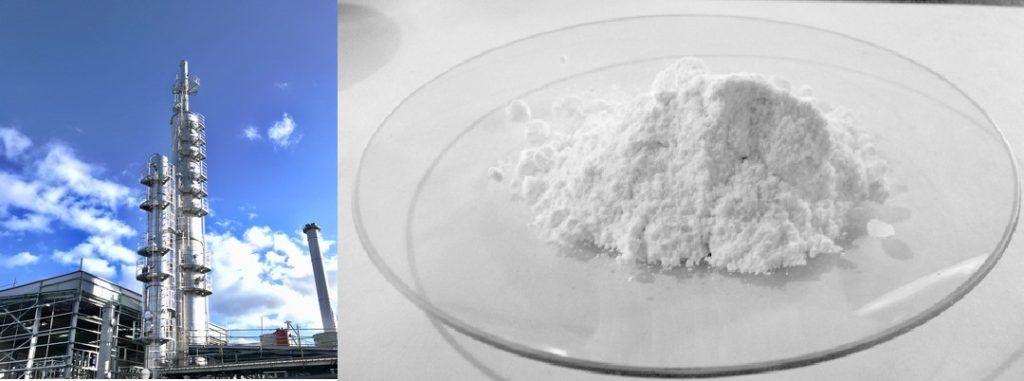
Lithium rich salt flats in Argentina (right)

Centuries ago, alchemists thought they could turn lead into gold. Today, the prospect of coaxing valuable materials from abundant resources guides scientists who have seen a golden opportunity.

The U.S. Department of Energy’s Pacific Northwest National Laboratory is working with companies to test an approach that uses magnetic nanoparticles to capture critical materials, such as lithium, from various wastewater sources.

Lithium is an essential ingredient in many electronic and energy technologies, including the lightweight lithium-ion batteries that power everything from our phones to electric vehicles.

The global market for lithium is huge, but precious little is produced in the United States.

Not only does the patent-pending technology being developed at the Lab in Richland, Washington, provide an opportunity to produce lithium and other critical materials, it does the job much faster and at a lower cost.

At the heart of the process are magnetic nanoparticles surrounded by an adsorbent shell that latches onto the lithium and other metals found in water that is used in various industrial processes. That includes the water in geothermal power plants, known as geothermal brines, or water pulled from the subsurface during oil or gas production.

Lithium is present in much of water pumped during oil and gas extraction across the U.S. and Canada. PNNL scientists estimate that if just 25 percent of the lithium in such water  were collected today, it would equal the current annual worldwide production. Testing is ongoing, involving PNNL, Moselle Technologies, Canada Natural Resources Limited, and Conoco Phillips. The team is stress-testing the technology by “subjecting it to extended cycle testing with the magnetic separator system, a needed step for full-scale industrial production,” reports PNNL.

RELATED: Scientists at Stanford Revitalize Batteries By Bringing ‘Dead’ Lithium Back to Life

“By using the magnetic nanoparticles to attach to the lithium particles in solution, we expect the resulting concentrate to be in a purer form, thereby reducing the cost of further processing, and this will take out more than half the cost,” said CEO Jerry Mills of Moselle, the Texas company which has licensed the tech and plans to pilot it in several locations.

Once the tiny, iron-based particles are added to the water, the lithium is drawn out of the water and binds to them. Then, with the help of a magnet, the nanoparticles can be collected in just minutes with the lithium hitching a ride, no longer suspended in the liquid and ready for easy extraction. (See an example in the video below—with no audio.)

Best of all, after the lithium is extracted, the recharged nanoparticles can be used again. The process also could be used in effluents from desalination plants, or even directly from seawater.

RELATED: New Technology is Recycling Tons of Lithium-Ion Batteries in Canada and the U.S.

The PNNL process goes to work immediately. Compare that with conventional lithium extraction methods that pump groundwater into large, costly evaporating ponds—which take months or even years to evaporate enough to access the lithium, and impact groundwater management in arid regions where they are mainly deployed (mostly Australia, Chile, and China).

CHECK OUT: The Perfect Energy Source Is Already Here – Endless Geothermal Is Poised for Release From Deep in the Earth

Geothermal boost and beyond

If this technology were deployed at geothermal plants, the value of recovered lithium could potentially increase the cost-effectiveness of this form of clean renewable energy, which uses water to capture the heat deep below the Earth’s surface and then converts it into green electricity.

In addition to Moselle, they are teaming with other commercial partners to evaluate the use of the technology for their lithium resources in Nevada and Canada.

Finally, with an eye on a different set of applications, researchers at PNNL are customizing the shell of the nanoparticle to specifically target other commercially valuable elements and minerals used in energy technologies, medical imaging devices, and more.

MORE: Long-lasting Solid-state Lithium Battery From Harvard May Solve a 40-year Problem

For example, they are collaborating with Moselle and Geo40 to explore the possibility of extracting cesium and antimony from geothermal brines at a geothermal plant in New Zealand.

“PNNL’s novel approach is truly remarkable,” says Steven Ashby, director of Pacific Northwest National Laboratory. “It offers the promise of extracting critical minerals in a quick, cost-effective manner. And innovation like this just might be worth its weight in gold.”

THIS News is Proof of Progress for the Planet…SHARE it on Social Media…
“We must unlearn the constellations to see the stars.” – Jack Gilbert

By Bobby Stevenson

Quote of the Day: “We must unlearn the constellations to see the stars.” – Jack Gilbert 

Photo by: Bobby Stevenson

With a new inspirational quote every day, atop the perfect photo—collected and archived on our Quotes page—why not bookmark GNN.org for a daily uplift?

Common Clay in Kitty Litter Could Be the Friendliest Way to Cut Emissions and Fight Climate Change

Photo from Wikipedia, CC license

MIT researchers have come up with a dirt-cheap solution to curbing methane emissions in the air—a major cause of global warming—using minerals commonly found in cat litter.

Methane is a far more potent greenhouse gas than carbon dioxide, and is mostly being emitted by such sources as slash-and-burn agriculture, mining, and dairy farming.

“A lot of the methane is from distributed and diffuse sources, so we started to think about how you could take that out of the atmosphere,” says doctoral student Rebecca Brenneis, who wrote the paper describing their findings in the journal ACS Environment Au.

The team of MIT scientists, which includes Associate Professor Desiree Plata, has developed the promising approach that uses the inexpensive and abundant type of “dirt” or clay called zeolite.

Zeolite clays are so inexpensive that they are currently used to make cat litter. Treating the zeolite with a small amount of copper, the team found, makes the material very effective at absorbing methane from the air, even at extremely low concentrations.

In their lab tests, tiny particles of the copper-enhanced zeolite material were packed into a reaction tube, which was then heated from the outside as the stream of gas, with methane levels ranging from just 2 parts per million up to 2 percent concentration, flowed through the tube. That range covers everything that might exist in the atmosphere, down to subflammable levels that cannot be burned or flared directly.

RELATED: Hundreds of US Cities Composting Their Food Waste Helps Farmers and Cuts Tons of Emissions

The process has several advantages over other approaches to removing methane from air, Plata says. Other methods tend to use expensive catalysts such as platinum or palladium, require extreme temperatures of at least 600 degrees Celsius, and tend to require complex and risky processes involving oxygen, which is highly combustible, along with methane.

“The 600 degrees where they run these reactors makes it almost dangerous to be around the methane,” said Brenneis.

As for the new process, “I think we’re still surprised at how well it works,” says Plata, in MIT News.

MIT’s process can work at concentrations of methane lower than other methods—even small fractions of 1 percent—which most methods cannot remove, and does so in air rather than pure oxygen, a major advantage for real-world deployment.

The method converts the methane into carbon dioxide. That might sound like a bad thing, given the worldwide efforts to combat carbon dioxide emissions, but Plata points out that carbon dioxide is much less impactful in the atmosphere than methane, which is about 80 times stronger as a greenhouse gas over the first 20 years, and about 25 times stronger for the first century.

RELATED: World’s Biggest Factory to Suck Carbon from the Sky and Store it For Millions of Years Turns on in Iceland

Even converting half of the atmosphere’s methane to carbon dioxide would increase CO2 levels by less than 1 part per million (about 0.2 percent of today’s atmospheric carbon dioxide) while saving about 16 percent of total radiative warming.

Ideal locations for collection would be dairy barns and coal mines. These sources already tend to have powerful air-handling systems in place, since a buildup of methane can be a fire, health, and explosion hazard.

The team has just been awarded a $2 million grant from the U.S. Department of Energy to continue developing specific equipment for methane removal in these types of locations. The next phase of the research will focus on ways of structuring the clay material so to aid in the flow of large volumes of gas.

MORE: Researchers Pull Carbon Out of the Sky And Convert it to Instant Jet Fuel, Reshaping Aviation For Good

One potential major advantage of the new system is that the chemical process involved releases heat. By oxidizing the methane, in effect the process is a flame-free form of combustion. If the methane concentration is above 0.5 percent, the heat released is greater than the heat used to get the process started, and this heat could be used to generate excess electricity.

The team’s calculations show that “at coal mines, you could potentially generate enough heat to generate electricity at the power plant scale, which is remarkable because it means that the device could pay for itself,” Plata says.

Over the next 18 months, they’re aiming to demonstrate the concept under conditions more challenging than in the lab. Ultimately, they hope to be able to make devices that would be compatible with existing air-handling systems and could simply be an extra component added in place.

SHARE The Hopeful and Promising Solution With Friends on Social Media…

(The work was supported by the Gerstner Philanthropies, Vanguard Charitable Trust, the Betty Moore Inventor Fellows Program, and MIT’s Research Support Committee.)

New Google Headquarters Uses ‘Dragonscale’ Solar Panels to Capture Sunlight From All Angles

By Iwan Baan / Google

A new Google campus in California is fulfilling its goal of working with green energy 90% of the time—in part by powering its building with solar panels inspired by ‘dragon skin’.

The Bay View campus in Mountain View opened this month to employees on 42 acres in Silicon Valley.

Designed by architects at Bjarke Ingels Group and Heatherwick Studio—as well as Google’s design and engineering teams—two sun drenched office buildings take up 1.1 million square feet covered by 90,000 silver solar panels.

“This is the first time we designed and developed one of our major campuses, which allowed us to rethink the very idea of an office and what’s possible for the building industry,” said the company on its blog. “The result is a set of buildings that show what’s possible in human-centered and sustainable workplace design.”

To help deliver on its commitment to operate every hour of every day on carbon-free energy by 2030, the “first-of-its-kind dragonscale solar skin”, as well as nearby wind farms, will power the campus on carbon-free energy 90% of the time.

The dragonscale roof has the capacity to generate nearly 7 megawatts of energy.

By Iwan Baan / Google

“The prismatic nature of the glass ‘traps’ the light that would normally escape from traditional flat solar panels and reduces reflective glare that can be a problem for drivers and pilots,” explains Asim Tahir, Google District & Renewable Energy Lead.

POPULAR: Scientists Powering Tesla on 9,400-mile Journey With Rolled-up Printed Solar Panels

Elsewhere, an integrated geothermal pile system (the largest in North America) is estimated to reduce carbon emissions by roughly 50% and will help both heat and cool the campus. The massive geoexchange field is integrated into the structural system, reducing the amount of water typically used for cooling by 90%, equal to five million gallons of water annually.

“Bay View is 100% electric where even the kitchens are electric to decrease carbon emissions,” say the tech giant.

By Iwan Baan / Courtesy of Google

Google says the interior of the buildings reemphasized their vision for the future of work. It was designed to balance Googlers’ desire to come together as teams with the need for a quiet environment that enables deep-focus work.

The campus incorporates biophilic design principles, including greenery, natural daylight and views outside from every desk to improve the health and wellbeing of those inside the building. Clerestory windows modulate direct light onto desks with automated window shades that open and close over the course of the day.

The ventilation system uses 100% outside air. This means air flows one way, so there is no recycled air, which is much healthier for occupants.

To remove toxins and create the healthiest environment possible, the project team vetted thousands of building products and materials — everything from carpet tiles, paints, piping, plywood and furniture were evaluated using the Living Building Challenge (LBC) Red List as a framework.

To help deliver on its commitment to replenish 120% of the water it consumes by 2030, the site is net water-positive with all non-potable water demands being met using the recycled water it generates on site.

RELATED: Solar Panels That Make Electricity at Night are Finally Here – And They’re Cheap and Don’t Need Batteries

A series of above-ground ponds gather rainwater, combined with a building wastewater treatment system, together serve as a water source for cooling towers, flushing toilets, and landscape irrigation.

By Iwan Baan – Courtesy of Google

The campus includes 7.3 acres of high-value natural areas—including wet meadows, woodlands, and marsh—that contribute to Google’s broader efforts to reestablish missing essential habitat in the Bay Area.

CHECK OUT: California Erects Solar Panels Over Canal to Save Huge Supply of Water From Evaporation

Sustainability at the Bay View campus is expected to earn a LEED-NC v4 Platinum certification and become the largest facility ever to attain the International Living Future Institute LBC Water Petal Certification.

Local residents can also benefit from the opening of the Bay View campus, including public access to expanded trails with panoramic views of the Bay, improved bike connections to Stevens Creek and Bay trails, and new bike lanes with the widening of R.T. Jones Road.

HAIL This Architectural Progress By Sharing it on Social Media…