










All News - Page 395 of 1715 - Good News Network
Home Blog Page 395

Winners of Best Underwater Photography Awards Will Take Your Breath Away – LOOK

© HannahLeLeu / UPY2022
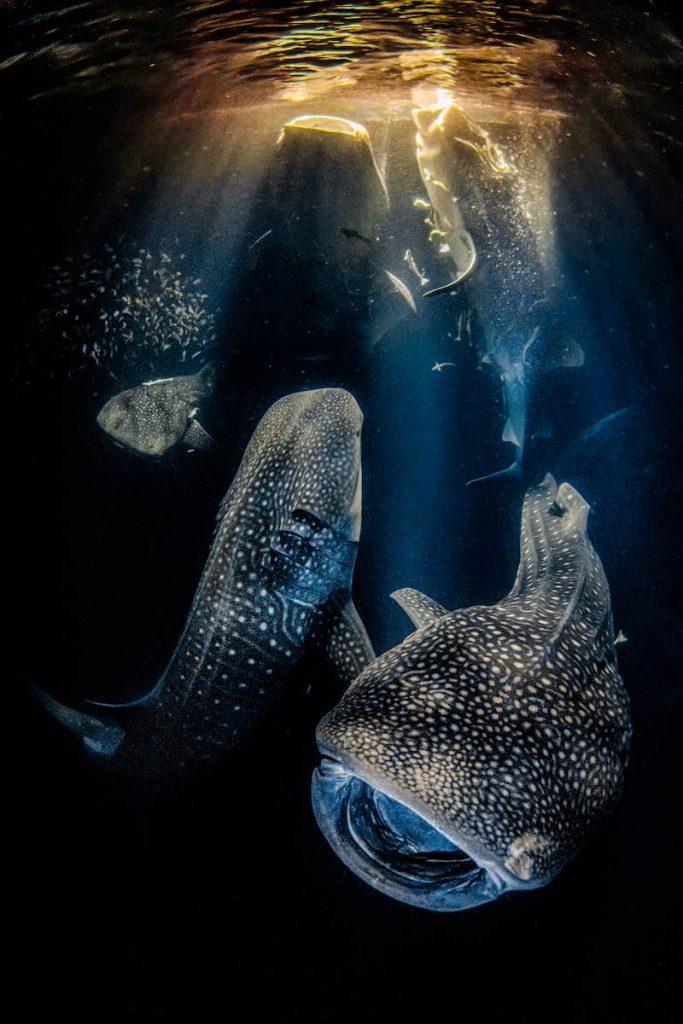
© RafaelFernandez Caballero / UPY2022

An astounding photo of five whale sharks, feeding together at night in the waters of the Maldives has won the 2022 Underwater Photographer of the Year contest.

Rafael Fernandez Caballero from Spain triumphed over 4200 underwater pictures entered by photographers from 71 countries. The photo captures a unique ocean event, taken in demanding photographic conditions.

“Giants Of The Night” features five whale sharks, the biggest fish in the world, feeding together on nocturnal plankton that have been concentrated in the lights of a boat. “It was already incredible when one whale shark came to our boat,” explains Fernandez. “But more and more kept arriving. I was diving with Gador Muntaner, a shark researcher, who couldn’t believe it, as their numbers grew.”

“He counted 11 sharks that night – a once in a lifetime encounter that nobody thought was possible.”

Competition judge, Peter Rowlands, commented, “this image took my breath away from the first viewing and I never tired coming back to it.” Judge Alex Mustard said, “photography needs light— and simply recording these giants in a dark ocean is a massive achievement.”

Founded in 1965 by Rowlands, a British photographer, the Underwater Photographer of the Year contest has 13 categories, testing photographers with themes such as Macro, Wide Angle, Behavior—as well as categories for photos taken specifically in British waters.
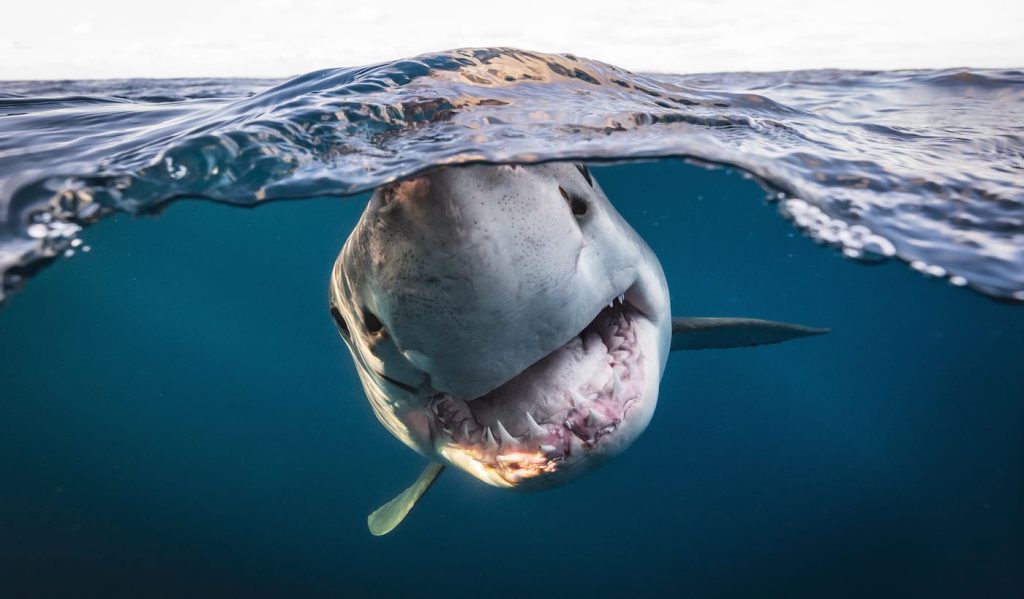
© MatthewSmith / UPY2022

Matty Smith, an Englishman now living in Australia, was named as British Underwater Photographer of the Year 2022 for a portrait of a great white shark taken in the Neptune Islands, South Australia.

To produce “Great White Split” Smith build a special supersize dome port for his camera, as well as a carbon pole and remote trigger to allow him to get this revealing perspective.

“I had wanted to shoot a charismatic over/under portrait for years,” explained Smith. “Some techniques I had previously tried failed terribly, so this time I designed and constructed my own equipment to get the camera exactly where I wanted. Surprisingly, the sharks were instantly attracted to the camera, in fact it was a battle to stop them biting it!”

© Quico-Abadal / UPY2022

The competition also aims to promote new photographic talent.

Quico Abadal, from Spain, was named as Up & Coming Underwater Photographer of the Year for a creative image “Supernova In Paradise”. Adabal’s photo was taken at sunset off Sairee Beach, Koh Tao, Thailand and is purposely shown upside down.

“This photo features Jeniya, who moves so poetically in the water,” explained Abadal. “What I like about this photograph is the imperfection of backscatter in the dark water, creating the feeling of outer space and making it perfect to me.”
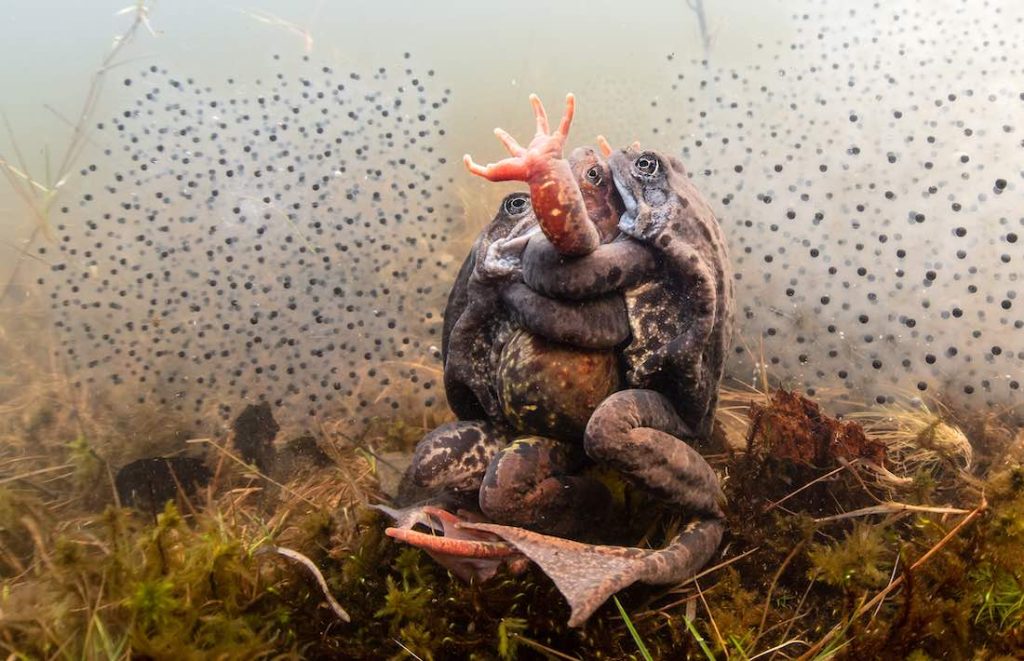
© PekkaTuuri / UPY2022

The winner of the My Backyard category was Pekka Tuuri of Finland. He spent four days and four nights in April in a local pond—wearing a drysuit with argon, and lots of undergarments—to capture a photo of frogs mating, and called it: All you need is love!

“I floated and stayed put among the frogs and quite soon they accepted me and my camera as a part of the scenery. The frogs climb on top of my camera, make grunting sounds in my ears and squeeze between my face and the backplate of the camera. The active spawning time lasts about two days and nights. What an experience!”
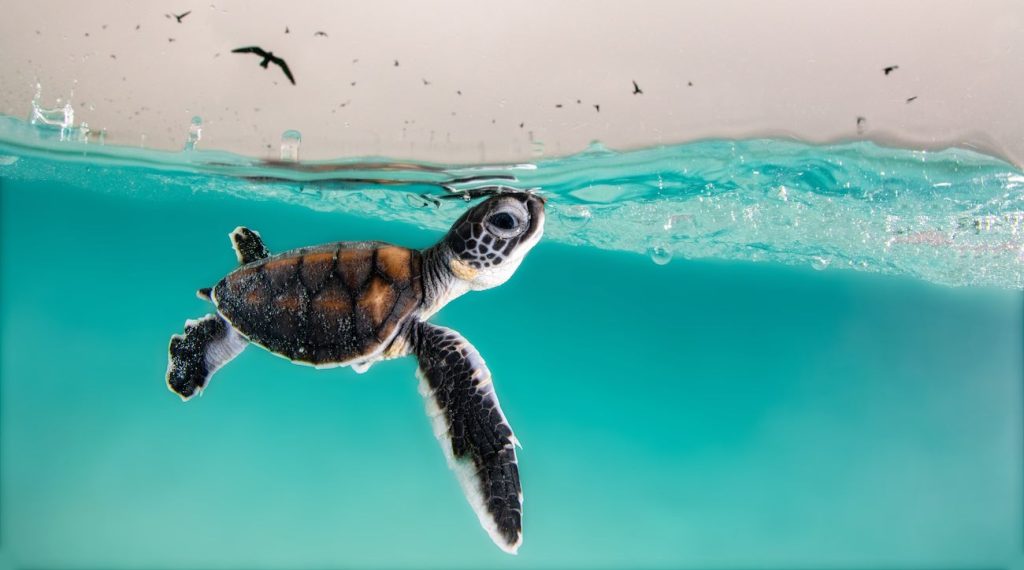
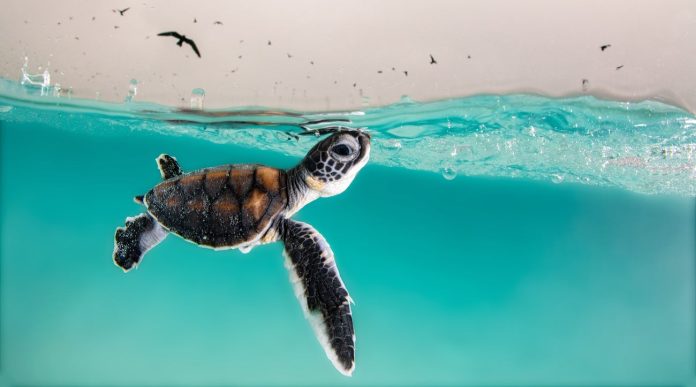
© HannahLeLeu / UPY2022

Taking third place in the category of Wide Angle, Hannah Le Leu of Australia captured a green sea turtle hatchling at Heron Island and captioned the photo: Against All Odds.

“It cautiously surfaces for air to a sky full of hungry birds. Against all odds, this hatchling must battle through the conditions of a raging storm whilst evading a myriad of predators,” says Hannah. “Not only has the tropical storm brought out thousands of circling birds, but there are also patrolling sharks and large schools of fish on the hunt for baby turtles. Only one in 1000 of these hatchlings will survive.”
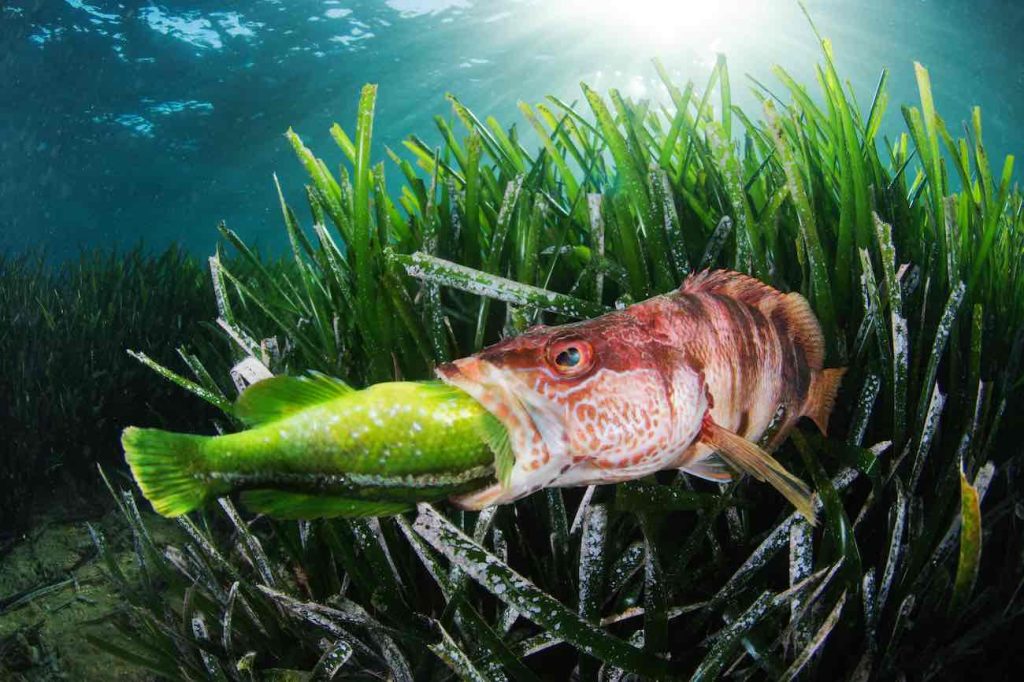
© Francisco JavierMurcia Requena / UPY2022

A runner up in the category of Behavior, Javier Murcia, also from Spain, submitted ‘The Circle of Life’.

RELATED: See the Stunning Winners of the Northern Lights Photographer of the Year Competition

“A diseased species is usually easy prey for a predator. In this case, a Mediterranean predatory fish has hunted a green fish (Labrus viridis), abundant in the Mediterranean. The moment was unique, the green wrasse swam slowly and roughly, it was probably sick, and a few meters away I could see the sawing hiding among the dense posidonia meadow to hunt it down. It was a matter of being patient and in the blink of an eye I caught it. It was so interested in swallowing it that I was able to get within a few inches without flinching.”
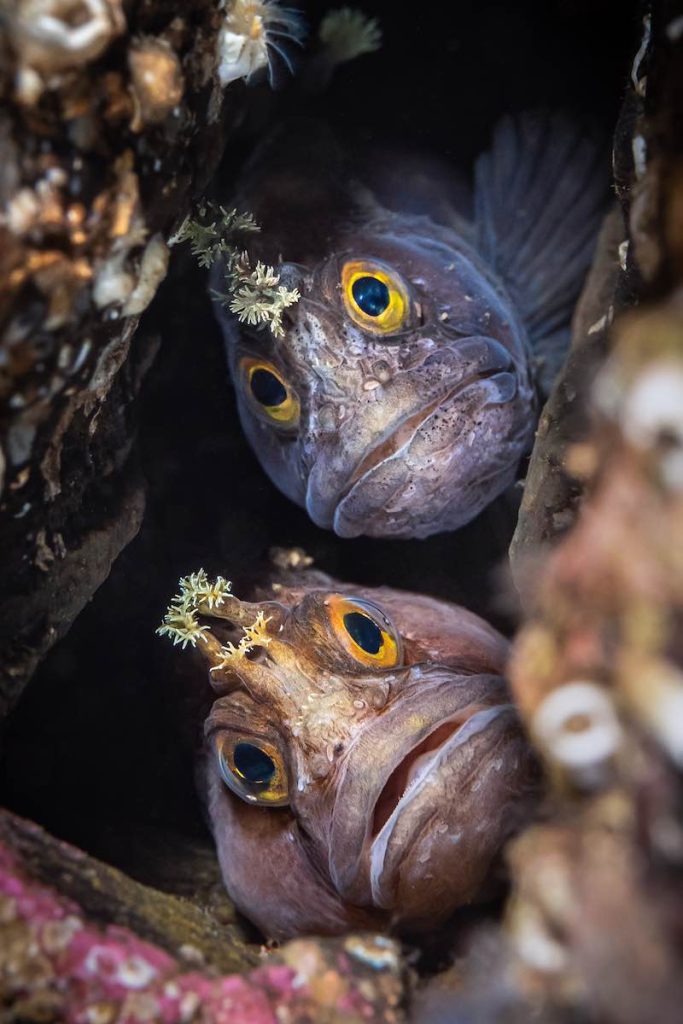
© DanBolt / UPY2022

The winner of the category, British Waters Macro, was Dan Bolt, from the UK with his image, Best Buddies.

“2021 was the 10 year anniversary of my first trip to the beautiful Loch Carron. I’m not very good at finding Yarrels blennies, (but) we were diving on an area of reef, and after an excited squeal and waving of a torch in my direction I dropped down to see that my buddy had found not one, but two beautiful little blennies holed up in a crack in the rock. Having my long macro lens on was an advantage as I could stand-off from the reef enough to get some light into their home so we could all see their some-what bemused little faces. Best buddies for sure!”

© Lewis Jefferies / UPY2022

UK photographer Lewis Michael Jefferies won the category called Living Together with his image entitled, A Peaceful Coexistence.

POPULAR: See the Incredible Images in the Wildlife Photographer of the Year Contest – And Vote on the Peoples Choice Award

“In the summer months Jelly fish frequent the British isles in larger numbers, thought to be attracted by the warmer waters. In 2021, there were huge numbers of these Compass jellyfish in Falmouth Bay. It was a perfect summers evening – clear and calm with hardly a breath of wind. We grabbed the paddle board and camera and headed to the beach in search of jellyfish. I had a sunset shot like this in mind and fortunately all the elements lined up to create something quite memorable.

“I hope my image can inspire others to explore and appreciate the wonders that are found right in our backyard, in British waters,” says Jefferies.

SEND Some Ocean Beauty to Friends by Sharing on Social Media…

Huge Black Diamond Sold for $4.3 Million–and No One Knows Where it Came From or How it Was Formed

SOTHEBY'S
SOTHEBY’S

A giant black diamond with an origin unsolved for decades has sold at auction, despite scientists unsure whether it was formed from lava or dropped from a meteorite—or stranger things besides.

It’s easy to be romantic about diamonds. As well as being ‘forever’ and ‘a girl’s best friend,’ they also can harken back to the magic of human mythology—such as the Hammer of Thor being forged in the heart of a dying star.

The extraordinary hardness of the stones, as well as the diversity of color, elicits theories about their formation that are equally incredible—and this jet black “carbonado” diamond weighing almost 4 ounces (111 grams), which is scientifically unexplainable, is a perfect example.

Aptly named ‘The Enigma Diamond’, it fetched $4.3 million at Sotheby’s, as the largest faceted diamond to ever appear on the auction market. Weighing a staggering 555.55 carats, the black naturally-colored diamond surpasses the weight of other giants like the 530-carat Great Star of Africa.

Cutting Enigma into its 55 facets took three years, due to the carbonado diamond’s hardness.

Exactly what a carbonado diamond is, and how it is formed, scientists don’t know—and their lack of certainty has led to some fascinating possibilities. They do know that Enigma, and all other carbonados, formed in an unknown event around 3-4 billion years ago—and they’re only ever been found in Brazil and the Central African Republic.

Meteormight

As diamonds are formed hundreds of miles below the earth’s surface, they often encapsulate other minerals. Carbonados contain unique collections of minerals, such as a titanium nitride called “osbornite”, not found in any other diamonds but which is commonly found in meteorites.

SOTHEBY’S

Another curiosity of carbonados is their age. They are always at least 500 million years older than the oldest-ever diamond found in other sources like Kimberlites, which are essentially church-organ-like tubes that shot diamonds out in spurts of lava millions of years ago. Furthermore, the true host rock of carbonados, the magma-based minerals they were born of, has never been identified.

RELATED: Researchers Solve Mystery of Scattered Black Glass in Chilean Desert – it Was Made by an Exploding Comet

“A revised model for the origin of carbonado is developed based on: (1) new observations which show that white dwarf stars can have diamond cores; (2) carbon-rich exoplanets may have diamond-bearing mantles; and (3) new shock wave experiments on methane suggest that diamond may be present in large gaseous planets such as Saturn, Uranus, and Neptune where diamond in the core is solid, and in Jupiter where liquid diamond may be present,” writes Stephen Haggerty, the pioneering geologist and diamond expert who in 1996 first proposed that carbonados come from meteorites.

However, any diamonds ever found in meteorites have been truly minuscule, while carbonados are regularly quite large. As the science of carbonados advanced, evidence that osbornite has been found in Earth’s crust has lead other researchers to develop theories that the black diamonds are homegrown.

Are they home-baked diamonds…

Diamonds are at their heart, a form of carbon. Yet carbonados, true to their mysterious nature, are formed from the light carbon isotope C12; in other words, the carbon that makes up biological life.

“Are carbonados fossils of the very earliest organisms to form on Earth?” Peter Heaney a  mineralogist at Pennsylvania State University, pondered in Nat Geo. “Nobody knows the answer to that.”

RELATED: Pastor Finds and Then Gives Away 706-Carat Diamond to His country

This idea has been proposed before as an explanation for other common diamonds, but another possibility is that the strange black diamonds, like common ones, were formed in the mantle. This was previously thought impossible. However, in 2010, another carbonado researcher found strikingly similar diamonds in a truly ancient form of crystalized lava called komatiite, which flowed like a liquid, during Earth’s early history to around 2.7 billion years ago.

The komatiite theory contains a model in which carbonado-like diamonds could be formed in these unthinkably hot lava flows, but doesn’t explain yet another curious feature of The Enigma diamond and other carbonados.

…Or, from a dying star?

The surfaces of these black diamonds are covered in pores, a feature which under the extreme heat and pressure near the Earth’s core would simply not allow a crystal to remain intact. Heaney thinks the pores contained radioactive phosphate minerals which left the pores as they decayed, and darkened the diamonds’ color in the same process.

POPULAR: World’s Largest Air Purifier Transforms Chinese Smog into Actual Diamonds

Haggerty proposes another extraterrestrial theory for the pores, which is that they were formed as molten carbon degassed on the surface of a dying star.

Whatever the secret behind the formation of these strange black diamonds, there is no doubt that they are extremely captivating in all respects. And whether they came from an erupting lake of liquid diamond on a far away world, and then carried here on a meteorite, or whether they were forged in Mount Doom by Tolkien’s Sauron, there’s no origin story that isn’t sufficiently mind-blowing to be featured in a fantasy book.

SHINE On This Crazy Diamond and Share With Friends on Social Media…

Editors note: This story has been altered to correct a previous editor’s misunderstandings of the difference between The Hobbit and the mythology of Thor.

“The only walls that exist are those you have placed in your mind. And whatever obstacles you conceive, exist only because you have forgotten what you have already achieved.” – Suzy Kassem

Quote of the Day: “The only walls that exist are those you have placed in your mind. And whatever obstacles you conceive, exist only because you have forgotten what you have already achieved.” – Suzy Kassem

Photo: by Gene Devine

With a new inspirational quote every day, atop the perfect photo—collected and archived on our Quotes page—why not bookmark GNN.org for a daily uplift?

Iceland To Hang Up Her Harpoons For Good, Issuing No More Whaling Permits

baleen whale cc license wikimedia commons Whit Welles Wwelles14 -
Whit Welles Wwelles14, CC license

Whales off the coast of Iceland will be left alone by the end of next year, after the nation’s Fisheries Minister announced a cancelation of all new permits for commercial whaling.

The country had already banned international whaling crews in their waters, but now, once the current permits expire in 2023, the practice will end, for good.

Still, only one whale was hunted last year, as there is little economic demand for it in the ‘land of fire and ice’.

In fact, a 2018 Gallup poll found that 84% of Icelanders had never eaten whale meat.

For ten years, the International Fund for Animal Welfare has been campaigning to persuade Icelanders that whales are worth more alive than dead.

LOOK: Incredible Video Shows a Husband and Wife’s Amazing Encounter With a Group of Humpback Whales

New economic feasibility studies find that whales would generate more tourism revenue from being seen—on whale-watching tours—than from being eaten, and the campaign generated 175K signatures, the largest signature campaign in the nation’s history.

Transcend Media Service reports that hundreds of thousands of whale-watchers visited the northern European nation in 2019 to observe both the minke whales—the world’s smallest baleen whale—and fin whales, the world’s second largest species.

Whale sightings are bound to become more lively in coming years, now that average annual catches will drop to zero, from around 83 caught yearly from 2003-2019.

POPULAR: See 1,000 Glorious Fin Whales Feeding Together: Share Their Comeback From Near Extinction

SHARE the Great News From Iceland With More Whale Fans….

100 Nations Take Action To Save Oceans from Illegal Fishing and Plastic Pollution

One Ocean Summit in France-Youtube
One Ocean Summit in France/YouTube

Representatives from more than 100 countries arrived last week in France for a summit on protecting oceans from pollution, plastic, and overfishing.

The nation which birthed the most famous marine biologist in history (that’d be Jacques Cousteau) welcomed the One Ocean Summit, the highlight of which was a 43-nation agreement to create a treaty to regulate the high seas in a more sustainable way.

A deal is looking likely when the United Nations meet in in March, and President of the European Commission described one as “so close.”

Being beyond the territorial jurisdiction of any country, the laws of the high seas must be made and changed through international accords, and thereby suffer from the “tragedy of the commons” problem that occurs whenever something is removed from the profit-loss function of the market.

A largely European affair, the U.S. nevertheless said it would throw its weight behind any proposals to introduce an international deal on curbing plastic pollution.

The European Bank for Reconstruction and Development joined the European Investment Bank and other state development banks to create a €4 billion fund for helping countries reduce their share of plastic pollution that ends up in the oceans.

CHECK OUT: Norway Closes Down Its Last Arctic Coal Mine and Transforms Land into Giant National Park

The summit in Brest also saw six more countries join the International Maritime Organization’s Cape Town agreement which sets safety standards for shipping vessels, while several EU nations said they would deploy their national navies to step up surveillance on illegal fishing vessels.

MORE: Maine is First U.S. State to Ban PFAS “Forever Chemicals” in All Products—and Huge Companies Are Getting On Board

Colombia and France also jointly announced a blue carbon financing program to help improve the restoration of coastal mangroves and other important ecosystems.

Speaking for the private sector, 22 shipping countries pledged to reduce underwater noise pollution, sulfur pollution, and greenhouse gas emissions above deck, while 18 ports also signed on to reduce emissions.

DON’T WASTE the Good News; Share This Story…

Surviving 8,000-Mile Journey, Girl Finally Finds 6-Foot Boat Launched By Students

Courtesy of Cassie Stymiest, EducationalPassages.org

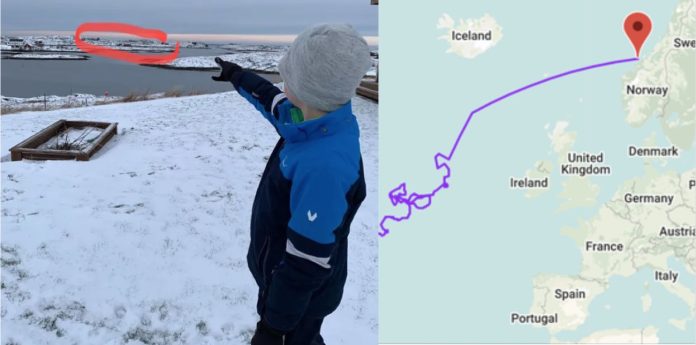
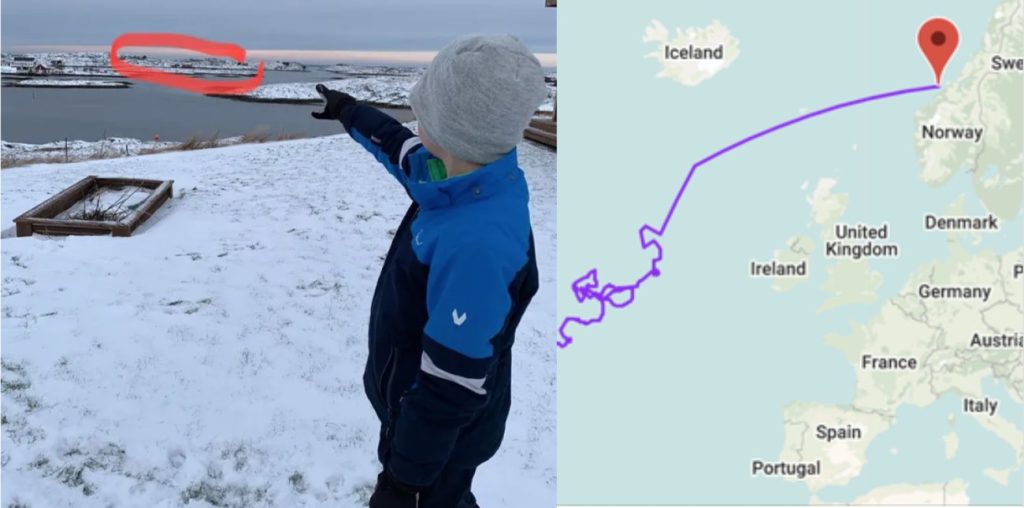
A student project focusing on learning about the oceans saw high schoolers launch a small boat filled with mementoes drifting across the Atlantic.

Lost at sea for 462 days, the vessel finally struck land in remote Norway, where a young sixth-grade boy got to share it with his classmates.

Back in the 2019-20 school year, Rye Junior High students in the classroom of science teacher Sheila Adams were told that they would be participating in an experiment with Educational Passages, a Maine-based nonprofit that teaches about oceans and their impact.

However, after pandemic restrictions forced the students into remote learning, Ms. Adams instructed them to design a piece of personalized artwork that could be scanned and copied and placed on top of of the six-foot boat complete with mast, hull, and keel.

The following school year, Adams was assigned to a different fifth grade class who were also scheduled to work with Educational Passages. Adams and executive director for EP Cassie Stymiest decided to merge the project between the two classes, and asked the new kids to load the cargo hold with small trinkets and decide what colors the boat would be painted.

Lost at sea

The boat, christened Rye Riptides was launched from Massachusetts’s shore in October of 2020, equipped with a GPS tracker that occasionally would log waypoints showing the kids where their boat was.

During hurricane season the GPS stopped responding for a time, before turning back on on August 18th, and again on September 30th, after which it didn’t transmit its location for four months.

“Honestly, I thought it would sink,” Solstice Reed from the sixth grade class admitted to Seacoast Online.

Then on January 30th, Stymiest got an update: Rye Riptides had made landfall somewhere on the small island of Smøla off the coast of Norway.

CHECK OUT: Top Skills American Teens Want to Learn and Do After School

“This is an educational project built by students in Rye, New Hampshire, U.S.A. Contact Educational Passages for more information and if you know anyone that can assist in a recovery to avoid damage to the vessel,” Stymiest wrote on a Norway Facebook group around the area in which the boat landed.

“It is an unscrewed vessel, like a message in a bottle, but we would like to recover it and have it brought to a nearby school to connect students.”

RELATED: Kindergarten Kids Had Never Seen Snow So Florida Teacher Gets Sister to Ship a Snowman, ‘It’s Here!’

Local news outlets picked up the story and published it. A local sixth grader, Karel Nuncic, saw the story and along with his dog and family, went out on their boat to find Rye Riptides.

While the cargo hold was intact, everything else was lost, including the mast, hull, keel, and rudder. The brightly covered boat was covered in gooseneck barnacles from its long voyage.

Nuncic’s sixth grade class are planning to write a letter in reply, since their English second language is quite good—Karel’s mom even recorded him reading the letter contained in the boat written by the Rye students. The classes are also scheduled to have a video call.

MORE: 8-Year-old Slips His Handwritten Book Onto a Library Shelf—And It Now Has a Years-Long Waitlist

“There’s a magical thing, there’s so much hope in it, you really just don’t know what’s going to happen. When you’re sending it out, you have no idea where it’s going to end up, how it’s going to get there, if it ends up (anywhere) at all,” Stymiest said. “But these kids, they put their hopes and dreams and wishes into it and I tend to think sometimes that helps.”

SAIL This Fun Story Over to Friends…

Calorie Restriction is Key Factor in Enhancing Human Health, Say Yale Researchers

Decades of research has shown that limits on calorie intake by flies, worms, and mice can enhance life span in laboratory conditions. But whether such calorie restriction can do the same for humans had remained unclear.

Now a new study led by Yale researchers confirms the health benefits of moderate calorie restrictions in humans—and identifies a key protein that could be harnessed to extend health in humans.

The research was based on results from the Comprehensive Assessment of Long-term Effects of Reducing Intake of Energy (CALERIE) clinical trial, the first controlled study of calorie restriction in healthy humans. For the trial, researchers first established baseline calorie intake among more than 200 study participants. The researchers then asked a share of those participants to reduce their calorie intake by 14% while the rest continued to eat as usual, and analyzed the long-term health effects of calorie restriction over the next two years.

The overall aim of the clinical trial was to see if calorie restriction is as beneficial for humans as it is for lab animals, said Vishwa Deep Dixit, the Waldemar Von Zedtwitz Professor of Pathology, Immunobiology, and Comparative Medicine, and senior author of the study. And if it is, he said, researchers wanted to better understand what calorie restriction does to the body specifically that leads to improved health.

Since previous research has shown that calorie restriction in mice can increase infections, Dixit also wanted to determine how calorie restriction might be linked to inflammation and the immune response.

“Because we know that chronic low-grade inflammation in humans is a major trigger of many chronic diseases and, therefore, has a negative effect on life span,” said Dixit, who is also director of the Yale Center for Research on Aging. “Here we’re asking: What is calorie restriction doing to the immune and metabolic systems and if it is indeed beneficial, how can we harness the endogenous pathways that mimic its effects in humans?”

MORE: Lifting Weights for Just Three Seconds a Day Helps Our Muscles Grow, According to Scientists

Dixit and his team started by analyzing the thymus, a gland that sits above the heart and produces T cells, a type of white blood cell and an essential part of the immune system. The thymus ages at a faster rate than other organs. By the time healthy adults reach the age of 40, said Dixit, 70% of the thymus is already fatty and nonfunctional. And as it ages, the thymus produces fewer T cells. “As we get older, we begin to feel the absence of new T cells because the ones we have left aren’t great at fighting new pathogens,” said Dixit. “That’s one of the reasons why elderly people are at greater risk for illness.”

For the study, the research team used magnetic resonance imaging (MRI) to determine if there were functional differences between the thymus glands of those who were restricting calories and those who were not. They found that the thymus glands in participants with limited calorie intake had less fat and greater functional volume after two years of calorie restriction, meaning they were producing more T cells than they were at the start of the study. But participants who weren’t restricting their calories had no change in functional volume.

“The fact that this organ can be rejuvenated is, in my view, stunning because there is very little evidence of that happening in humans,” said Dixit. “That this is even possible is very exciting.”

With such a dramatic effect on the thymus, Dixit and his colleagues expected to also find effects on the immune cells that the thymus was producing, changes that might underlie the overall benefits of calorie restriction. But when they sequenced the genes in those cells, they found there were no changes in gene expression after two years of calorie restriction.

This observation required the researchers to take a closer look, which revealed a surprising finding: “It turns out that the action was really in the tissue microenvironment not the blood T cells,” Dixit said.

Dixit and his team had studied adipose tissue, or body fat, of participants undergoing calorie restriction at three time points: at the beginning of the study, after one year, and after two. Body fat is very important, Dixit said, because it hosts a robust immune system. There are several types of immune cells in fat, and when they are aberrantly activated, they become a source of inflammation, he explained.

“We found remarkable changes in the gene expression of adipose tissue after one year that were sustained through year two,” said Dixit. “This revealed some genes that were implicated in extending life in animals but also unique calorie restriction-mimicking targets that may improve metabolic and anti-inflammatory response in humans.”

RELATED: Intensive Exercise the ‘Best Way to Alleviate Symptoms of Chronic Anxiety Without Drugs or Therapy’

Recognizing this, the researchers then set out to see if any of the genes they identified in their analysis might be driving some of the beneficial effects of calorie restriction. They honed in on the gene for PLA2G7—or group VII A platelet activating factor acetylhydrolase —which was one of the genes significantly inhibited following calorie restriction. PLA2G7 is a protein produced by immune cells known as macrophages.

This change in PLA2G7 gene expression observed in participants who were limiting their calorie intake suggested the protein might be linked to the effects of calorie restriction. To better understand if PLA2G7 caused some of the effects observed with calorie restriction, the researchers also tracked what happened when the protein was reduced in mice in a laboratory experiment.

“We found that reducing PLA2G7 in mice yielded benefits that were similar to what we saw with calorie restriction in humans,” said Olga Spadaro, a former research scientist at the Yale School of Medicine and lead author of the study. Specifically, the thymus glands of these mice were functional for a longer time, the mice were protected from diet-induced weight gain, and they were protected from age-related inflammation.

These effects occurred because PLA2G7 targets a specific mechanism of inflammation called the NLRP3 inflammasome, researchers said. Lowering PLA2G7 protected aged mice from inflammation.

CHECK OUT: Get Your Body Moving to Put the Brakes on Early Parkinson’s, Study Says

“These findings demonstrate that PLA2G7 is one of the drivers of the effects of calorie restriction,” said Dixit. “Identifying these drivers helps us understand how the metabolic system and the immune system talk to each other, which can point us to potential targets that can improve immune function, reduce inflammation, and potentially even enhance healthy lifespan.”

For instance, it might be possible to manipulate PLA2G7 and get the benefits of calorie restriction without having to actually restrict calories, which can be harmful for some people, he said.

MORE: Exercise Alters Brain Chemistry to Protect Aging Synapses, Study Finds

“There’s so much debate about what type of diet is better—low carbohydrates or fat, increased protein, intermittent fasting, etc.—and I think time will tell which of these are important,” said Dixit. “But CALERIE is a very well-controlled study that shows a simple reduction in calories, and no specific diet, has a remarkable effect in terms of biology and shifting the immuno-metabolic state in a direction that’s protective of human health. So from a public health standpoint, I think it gives hope.”

This research is in Science journal.

Source: Yale University

SHARE This Story With More Health Fans…

“When the future comes—no matter what comes with it—I’ll be smarter. I’ll be stronger.” – Ally Carter

prottoy hassan

Quote of the Day: “When the future comes—no matter what comes with it—I’ll be smarter. I’ll be stronger.” – Ally Carter

Photo: by prottoy hassan

With a new inspirational quote every day, atop the perfect photo—collected and archived on our Quotes page—why not bookmark GNN.org for a daily uplift?

New Study Busts the 7 ‘Dog Years’ Myth and Explores Data That Could Help Humans Live Longer

uppy koa at princeton released Camden Olson only for this story
Camden Olson

A new study into how long dogs live busts the myth that each of our years is seven for dogs—and could even help humans live longer.

A commonly-held belief is that dogs age seven times faster than us, so a one-year-old dog is like a seven-year-old child.

But large breeds age ten times quicker than us and some small dogs can be half of that.

Now scientists are studying the genomes of 10,000 dogs in a long-term study called the Dog Aging Project.

And they hope they will be able to see why ‘super centenarian’ dogs that live to 20 can survive so long and apply it to people.

Professor Joshua Akey, at Princeton University, said, “This is a very large, ambitious, wildly interdisciplinary project that has the potential to be a powerful resource for the broader scientific community.

“Personally, I find this project exciting because I think it will improve dog, and ultimately, human health.

LOOK: Researchers Find the Key to Fixing Human Allergies to Dogs

“We are sequencing the genomes of 10,000 dogs.

“This will be one of the largest genetics data sets ever produced for dogs, and it will be a powerful resource not only to understand the role of genetics in aging, but also to answer more fundamental questions about the evolutionary history and domestication of dogs.

“One part of the project that I am super excited about is a ‘super-centenarian’ study, comparing the DNA of exceptionally long-lived dogs to dogs that live to the average age for their breed.”

The researchers hope to identify specific biomarkers of canine aging.

Prof Akey added, “This is the first study of its kind in dogs and I think it’s a clever way of trying to find genetic differences that contribute to exceptional longevity.”

They anticipate that their findings will translate to human aging, for several reasons, dogs experience nearly every functional decline and disease of aging that people do; the extent of veterinary care parallels human healthcare in many ways, and our dogs share our lived environments, a major determinant of aging and one that cannot be replicated in any lab setting.

MORE: Dogs Can Differentiate Between Languages, Study Finds

Professor Daniel Promislow, at the University of Washington and principal investigator, said, “Given that dogs share the human environment and have a sophisticated health care system but are much shorter-lived than people, they offer a unique opportunity to identify the genetic, environmental, and lifestyle factors associated with healthy lifespan.”

The project has been outlined in the journal Nature.

DON’T Let Fascinating News Age; Share This Story…..

Scientists Discover How to Destroy Toxic PFAS – the ‘Forever Chemicals’

The media has dubbed them “forever chemicals,” but now scientists are putting their name to the test.

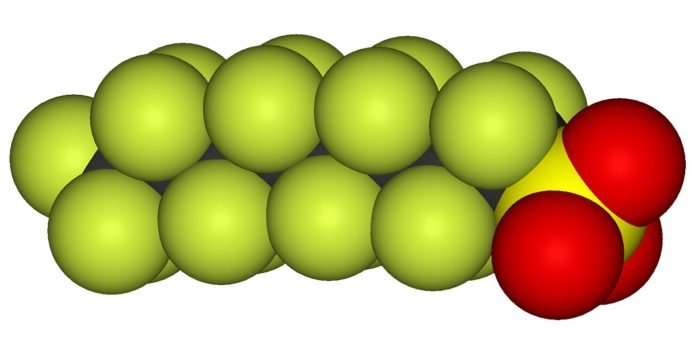
Perflourinated or polyfluorinated alkyl-substances (PFAS) are known to be nearly impossible to break apart, and tend to accumulate in groundwater sources, soils, and other places. Their health effects are known, as is a new method to destroy 99% of them in water sources.

Known as “supercritical water oxidation” (SWO), a paper recently published found the procedure could destroy 99% of of a wide variety of known and unknown PFAS contained in a water sample.

When water is heated to to 374°C (705.2°F) under pressures of 220 bar, it becomes not gas, nor liquid, but a state known as supercritical. Here, accelerated oxidation and other reactions cause the PFAS to dissolve into component elements, which can be more readily collected and disposed of.

In testing SWO, the EPA-backed researchers found that only 27% of the weight of the water sample’s fluorinated content came from the PNAS the scientists were targeting, suggesting a large portion belonged to forever chemicals not identified in the study. Such a finding lends huge credence to SWO as a cleaning method.

RELATED: Tap Water Produces a Protective Shield Against Microplastics, Scientists Discover

“As a destructive technology, SCWO may be an alternative to incineration and could be a permanent solution for PFAS-laden wastewaters rather than disposal by injection into a deep well or landfilling,” the authors write in their paper.

MORE: US Aims to Replace All its Lead Water Pipes from Coast to Coast Using Funding From Infrastructure Bill

Discovering a way to destroy these chemicals is valuable because restricting their manufacturing and use would be difficult because they are prized for their ability to resist oil and water, and high temperatures—and because they are one of the principal components of fire-fighting technology.

CHECK OUT: New Hydrogel Tablet That Can Purify a Liter of River Water in an Hour

“Given that supercritical water oxidation systems are already commercially available, this may be a technology that could soon be deployed for significantly impacted sites or wastewaters,” lead author Max Krause told Scientific American. “We are currently evaluating air emissions to understand all of the pathways and to be certain we are destroying the PFAS.”

SHARE This Research Breakthrough With Others Online…

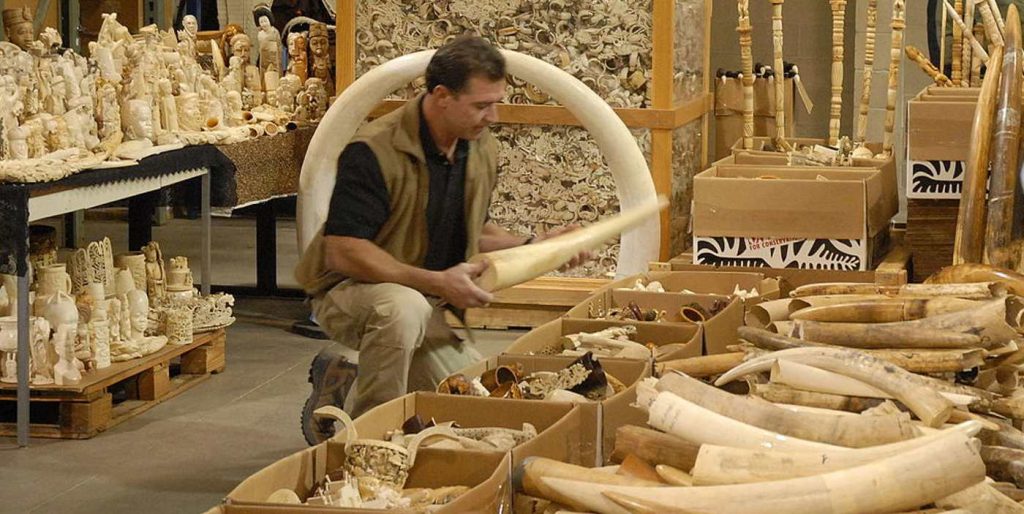
Researchers Pioneered a Way to Use DNA From Elephant Tusks to Catch Poachers

eized_ivory_slated_for_destruction_in_the_crush._(10843354356) wikimedia commons cc license USFWS Mountain-Prairie
USFWS Mountain Prairie, CC license

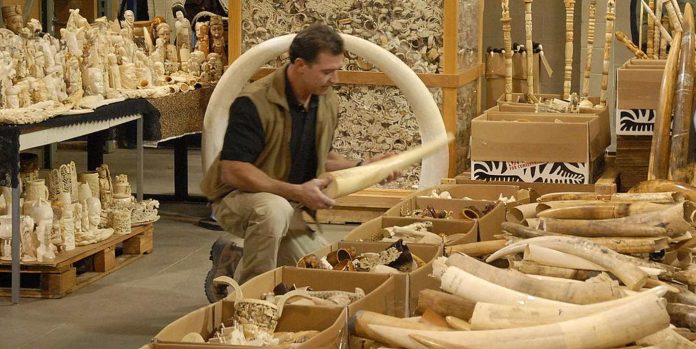
Two men from the Democratic Republic of Congo were arrested on November 3 outside of Seattle, Washington, having been indicted on charges of trafficking after they were caught trying to smuggle 49 pounds of elephant ivory into the U.S.

The men owe their indictment and day in court to Samuel Wasser, a crack sleuth on the trail of the world’s major organized crime syndicates responsible for the trade in illegal wildlife parts like elephant ivory.

His 15-year production of a database containing familial relationships between poached animals like elephants is creating maps which authorities are using not only to make arrests of criminal henchmen, but identifying the geographical chokepoints organized crime is operating through.

CHECK OUT: ‘World’s Loneliest Elephant’ Kavaan Finally Reaches New Home, Gets Hugs From Cher And New Pachyderm Pal

Taking DNA samples of a single elephant tusk isn’t likely to reveal anything that authorities, either rangers or detectives, might need to know to stop elephants being poached. Ivory is often mixed together in the scramble to smuggle it out of Africa, meaning that the right and left tusk of a single elephant could be separated by thousands of miles and hundreds of days.

RELATED: 35 Circus Elephants Arrive in Amazing Florida Sanctuary to Retire Among Forest, Grassland, and 11 Watering Holes

Directing the Center for Environmental Forensic Science at the University of Washington, Wasser has pioneered a method of connecting metaphorical red yarn between elephant ivory confiscated by authorities, and where in Africa it was taken from.

Now, when Wasser gets to take DNA samples from confiscating ivory, he can look for distant familial matches in his database to get a picture of where the animals and their family lived, and where they were smuggled to.

He can gather family IDs, their migration paths, national park locations, airports, shipping ports, transit countries, nationality of arrested suspects, smuggling methods, and more that can give him and wildlife authorities an idea of the patterns poachers, and their organized backers, are using.

MORE: Baby Elephant Rescued After Falling Into Indian Well 30-Feet Deep

Recently, in 2019, a seizure of nine tons of ivory in Singapore allowed Wasser to enter dozens of individual genotypes into his database, which created a family tree of 40 familial matches. He can then look at where those familial matches came from, where they ended up, who was arrested in conjunction, and provide the authorities with leads to use in further busts, or evidence to beef up prosecution power.

SHARE This Great Conservation News With Others…

Astronomers Discover a New Type of Star Covered in Helium Burning Ashes

Artist's impression of a rare kind of stellar merger event between two white dwarf stars. Nicole Reindl Licence type Attribution (CC BY 4.0)
Artist’s impression of a rare kind of stellar merger event between two white dwarf stars/Nicole Reindl; CC license

A team of German astronomers, led by Professor Klaus Werner of the University of Tübingen, have discovered a strange new type of star covered in the by-product of helium burning. It is possible that the stars might have been formed by a rare stellar merger event.

While normal stars have surfaces composed of hydrogen and helium, the stars discovered by Werner and his colleagues have their surfaces covered with carbon and oxygen, the ashes of helium burning—an exotic composition for a star.

The situation becomes more puzzling as the new stars have temperatures and radii that indicate they are still burning helium in their cores—a property typically seen in more evolved stars than those observed by Werner and his team in this study.

Published alongside the work of Professor Werner and his team, a second paper from a group of astronomers from the University of La Plata and the Max Planck Institute for Astrophysics offers a possible explanation for their formation.

“We believe the stars discovered by our German colleagues might have formed in a very rare kind of stellar merger event between two white dwarf stars,” says Dr Miller Bertolami of the Institute for Astrophysics of La Plata, lead author of the second paper. White dwarfs are the remnants of larger stars that have exhausted their nuclear fuel, and are typically very small and dense.

RELATED: What Wintering Squirrels Can Teach Astronauts

Stellar mergers are known to happen between white dwarfs in close binary systems due to the shrinking of the orbit caused by the emission of gravitational waves. “Usually, white dwarf mergers do not lead to the formation of stars enriched in carbon and oxygen,” explains Miller Bertolami, “but we believe that, for binary systems formed with very specific masses, a carbon- and oxygen-rich white dwarf might be disrupted and end up on top of a helium-rich one, leading to the formation of these stars.”

Yet no current stellar evolutionary models can fully explain the newly discovered stars. The team need refined models in order to assess whether these mergers can actually happen.

MORE: Even Dying Stars Can Still Give Birth to Planets, Scientists Discover

These models could not only help the team to better understand these stars, but could also provide a deeper insight into the late evolution of binary systems and how their stars exchange mass as they evolve. Until astronomers develop more refined models for the evolution of binary stars, the origin of the helium covered stars will be up for debate.

“Normally we expect stars with these surface compositions to have already finished burning helium in their cores, and to be on their way to becoming white dwarfs.

These new stars are a severe challenge to our understanding of stellar evolution.” explains Professor Werner.

This research was published in the Monthly Notices of the Royal Astronomical Society: Letters

Source: Royal Astronomical Society

Share This Far-Out News on Those Social Feeds…

“How fast you have forgotten your strength… You were born a winner, a warrior—one who defied the odds.” – Suzy Kassem

Quote of the Day: “How fast you have forgotten your strength… You were born a winner, a warrior—one who defied the odds.” – Suzy Kassem (Rise Up and Salute the Sun)

Photo: by Xuan Nguyen

With a new inspirational quote every day, atop the perfect photo—collected and archived on our Quotes page—why not bookmark GNN.org for a daily uplift?

Lifting Weights for Just Three Seconds a Day Helps Our Muscles Grow, According to Scientists

Andrea Piacquadio

People who say they don’t have time to exercise might have to rethink after scientists proved just three seconds a day lifting weights was enough to strengthen muscle.A new study by researchers in Australia and Japan found doing just one downward bicep curl a day using a heavy weight increases muscle strength by more than 11 percent.

Whole body workouts could be over in just 30 seconds if the findings hold up in other muscle groups, the scientists added.

For the study, 39 healthy university students were told to complete one muscle contraction a day ‘at maximum effort’ for just three seconds, five days a week for four weeks.

The students were split into groups who did three different types of bicep curl.

One group used their biceps to lower a weight down towards the floor, which fitness experts call an eccentric bicep curl.

Other participants lifted the weight up, called a concentric curl, or held it parallel to the ground, called an isometric contraction.

Another group of 13 students did no exercise at all.

Students who did the downward bicep curl saw their muscle strength grow by 11.5 per cent.

Participants who performed other types of curl also grew stronger, although their increase in muscle strength was smaller than for those who did a downward bicep curl.

The group of volunteers who did no exercise at all did not see any increase in their muscle strength.

RELATED: Get Your Body Moving to Put the Brakes on Early Parkinson’s, Study Says

Professor Ken Nosaka from Edith Cowan University in Perth, Australia, who designed the study, said the results show people don’t need to spend vast amounts of time exercising to get stronger muscles.

Prof Nosaka added, “The study results suggest that a very small amount of exercise stimulus—even 60 seconds in four weeks—can increase muscle strength.

“Many people think you have to spend a lot of time exercising, but it’s not the case. Short, good quality exercise can still be good for your body and every muscle contraction counts.”

During the study, the researchers measured each group’s eccentric, isometric and concentric strength.

CHECK OUT: Coffee is Now Linked to Reduced Risk of Many Ailments, Including Liver Disease, Parkinson’s, Melanoma, Even Suicide

Only the group of students who did the downward or eccentric curl saw an increase in their all three types of strength.

Participants who did concentric lifting saw some improvement in their isometric strength but no improvement elsewhere, while the isometric group only saw an increase in their eccentric strength.

MORE: Intensive Exercise the ‘Best Way to Alleviate Symptoms of Chronic Anxiety Without Drugs or Therapy’

Prof Nosaka added, “The findings are exciting for promoting physical fitness and health, such as prevention of sarcopenia—a decrease in muscle mass and strength with ageing.

“We haven’t investigated other muscles yet, but if we find the three-second rule also applies to other muscles then you might be able to do a whole-body exercise in less than 30 seconds.

“Also, performing only one maximal contraction per day means you don’t get sore afterwards.”

The findings were published in the Scandinavian Journal of Medicine and Science in Sports.

LIFT UP Those News Feeds; Share This Story…

Ancient Shard of Bone Said to Be From St Valentine’s Finger On Display at Medieval Church

SWNS
SWNS

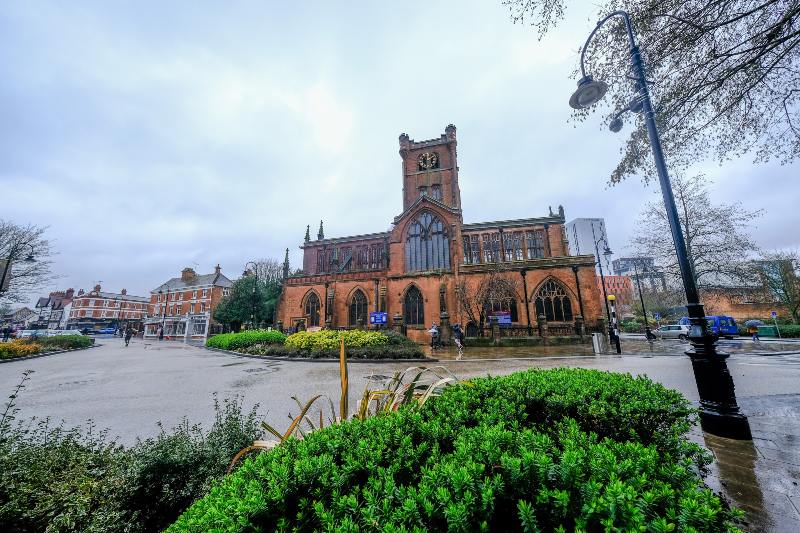
Couples have flocked to a medieval church to be blessed by a priest with an ancient shard of bone purported to be from the finger of St Valentine himself.

The fragment of bone has been displayed in a 10cm (4 inch) reliquary placed on the altar at St John the Baptist in central Coventry for Valentine’s Day.

The relic is believed to have been at the church for more than 180 years and even survived The Blitz when the English city faced heavy German air raids in 1940.

Loved-up couples visited the church over the weekend to be blessed by Father Dexter Bracey, the Rector of St John’s, with the unusual relic.

One visitor said, “I know some people might find it a bit bizarre but we don’t have many mysterious ancient relics in Coventry so we find it really fascinating.

“It might be slightly macabre rather than romantic but to be blessed in the presence of St Valentine himself can only be a good thing, right?”

MORE: Town Called Lover is Celebrating Valentine’s Day – Including a Couple Who Moved to be ‘The Lovers from Lover’

The story of how a piece of the 3rd-century Roman saint ended up in Coventry is typical of the church, which is renowned for a past shrouded in mystery.

SWNS

In the early 1830s, a catacomb in Rome said to contain St Valentine was excavated and the tiny basilica of Santa’s Maris in Cosmedin in Rome now houses his skull.

In 1838 the Roman Curia ordered the sending out of various body parts in packages to Roman churches all over the world.

Relics became symbols of prestige for churches and cities, and St John’s Church was a well-established and influential place of worship.

It was founded in 1344 following the death of Edward II by his widow Queen Isabella, and continued to have royal patronage.

At that time Coventry did not have a Roman Catholic church and St John’s appeared to be an active church, but within the strict discipline of the Church of England.

SWNS

Mike Polanyk, visitor liaison and communications officer, said, “Sadly existing records during the 19th century are scant—they were either burnt in a fire in 1861 or lost in the Great Flood of 1900.

MORE: A Valentine’s Day Message for the World: Love Never Fails

“We do know the 1906 renovation and subsequent additions to the fabric of St John’s reflected the influence of the Oxford movement and a ‘high church’ worship under rector Fr Robinson at the church—both before and during the First World War, so the relic could have been transferred to the church then.

“When the War Memorial Window was being constructed in 1921, we know of an instruction that says ‘the window is in keeping with the sacred artefacts on display there’… but it doesn’t say what.”

There was no firm mention of the relic in the church records until the 1930s when acclaimed architect Sir Ninian Comper redesigned the south-facing Saint John’s Chapel.

Mr Polanyk added, “He also gave the chapel an Oxford movement feel as well as a fetching tabernacle for the relic, which gained the admiration of Sir John Betjeman.

“Comper wanted a suitable resting place for the artefact, being impressed by the wax seal affixed to it with a stamp of authenticity.

“I find it interesting the relic and tabernacle survived the first Blitz in 1940, despite the damage to the rest of the chapel.”

SHARE This Fascinating History With Others on Social Media…

Watch a Daughter Surprise Her Deer–Loving Dying Mom With Visit from Bambi – Her Face Says It All

Lisa McDonald/Facebook Kindness Group

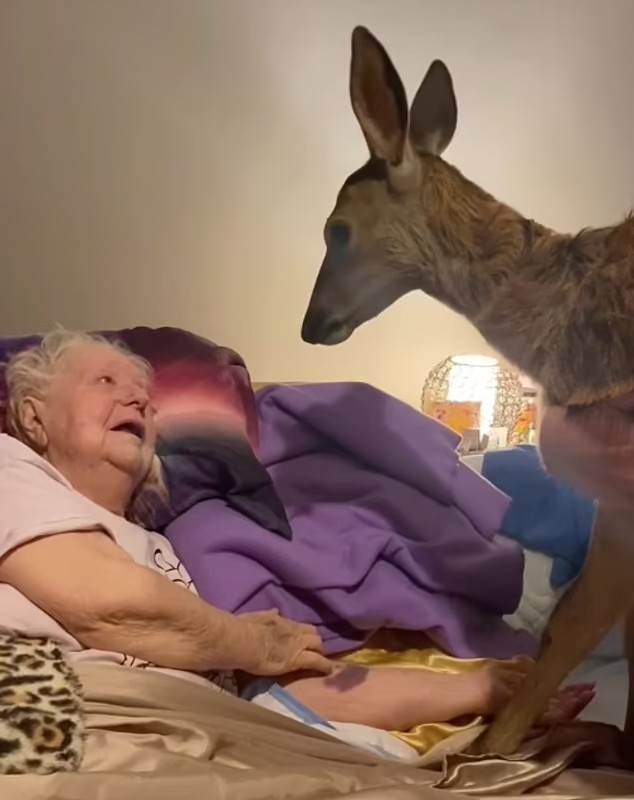
Lisa McDonald and her sister had been caring for their mother in palliative care for sometime, when they thought of a perfect way to bring a smile to her face.

McDonald thought that since her mom loves Bambi, wears Bambi T-shirts, has Bambi statues, and thinks deer are the most beautiful animals, what better way to cheer her up than bringing a real-life Bambi into the care home?

Lisa McDonald/Facebook Kindness Group

She posted a series of pictures and a video on The Kindness Pandemic Facebook group of the astonished look on her mother’s face when a fawn walked into the room, which sent a tear-jerking tremor through the group.

“Brought me to tears. What a special and touching moment. Absolutely beautiful people to drive all that way for your mum to experience something so magical before she passes,” one commenter wrote.

“This is so beautiful. She would have absolutely loved this so much. You can see it in her eyes how much joy it brought to her. Bless them, and bless you and your beautiful Mum,” another commented.

MORE: Stray Cats Saved a Restaurant During the Pandemic By Lounging On Miniature Models in the Window (LOOK)

After McDonald came up with the idea, she and her sister found a nearby couple, Chris and Simone, that owned a mobile petting zoo near their home in Melbourne.

They contacted them to see if they could come out with their deer fawn, which was coincidentally called Bambi.

Lisa McDonald/Facebook Kindness Group

“Mum deteriorated quickly today and Simone and Chris didn’t hesitate… they drove two and a half hours to bring Bambi to meet mum,” Lisa told the Daily Mail. “Out of pure love and kindness. I cannot thank them enough for what they have done for my mum and my family.”

(WATCH the video for this story below.)

SHARE This Adorable Story With All Your Friends…

Bird Scientists Need Some Help Finding Species – They’re Turning to Birdwatchers

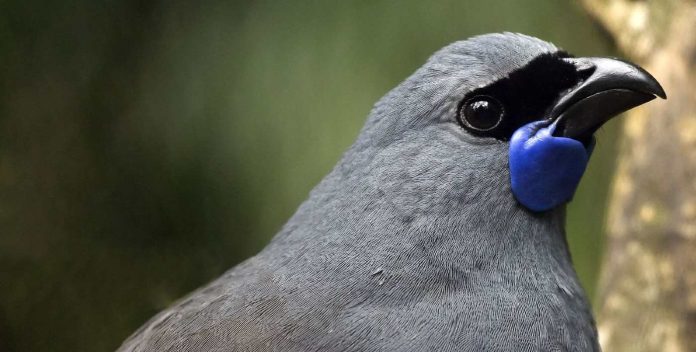
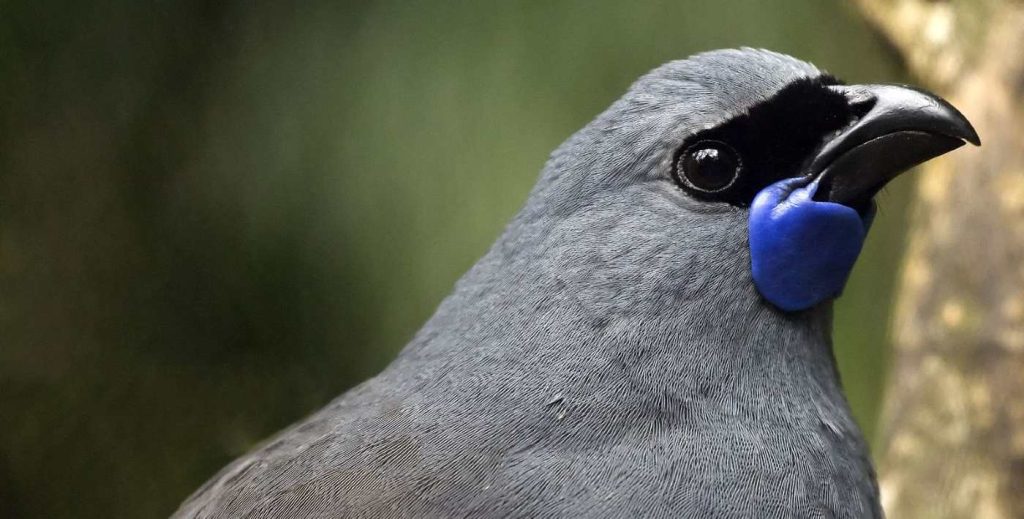
North Island Kōkako/Matt Binns, CC license

A metaphorical wanted poster has been pinned to the wall of the eBird app as conservationists hope birders can help find 10 majestic bird species lost to science.

Called The Search for Lost Birds, it’s a partnership between Re:wild, American Bird Conservation, BirdLife International, and the Cornell University Lab of Ornithology and their eBird app which has more than 700,000 users worldwide.

Re:wild used to be called the Global Wildlife Conservation, and created a much-publicized list of the “25 Most Wanted” lost species a few years ago. Building on successes that saw them find six of the 25 within just three years, including through expeditions to far-off Somalia, Vietnam, Madagascar, and the Indonesian island of North Moluccas—they are now launching “Top 10” lists for each animal group.

Some of these birds haven’t been seen for a decade, others for a century. They include species which vary in size from a finch to a falcon.

“During the past five years, since we launched the Search for Lost Species, our list of species that could be considered lost has grown to more than 2,000,” Barney Long, senior director for conservation strategies for Re:wild, said in a statement.

MORE: Biologists Identify First Animal That Uses the Complexity of Human Language: the Song Sparrow – LISTEN

“We never planned to look for all of them alone, but to encourage others to search and develop partnerships to help. Through this new partnership we’ll be able to get more targeted expeditions in the field. If we can find these lost birds, conservationists can better protect them from the threats they face.”

Good hunting

While none of those one billion eBird sightings contain these lost species, birding has been used reliably in citizen science projects before.

The top 10 most-wanted lost birds are currently:

  • Dusky tetraka, last documented in 1999 in Madagascar
  • South Island kōkako, last seen in 2007 in New Zealand
  • Jerdon’s courser, last seen in 2009 in India
  • Itwombe nightjar (or Prigogine’s nightjar), last seen in 1955 in Democratic Republic of Congo
  • Cuban kite, last seen in 2010 in Cuba
  • Negros fruit-dove, last seen in 1953 in the Philippines
  • Santa Marta sabrewing, last seen in 2010 in Colombia
  • Vilcabamba brush-finch, last seen in 1968 in Peru
  • Himalayan quail, last seen 1877 in India
  • Siau scops-owl, last seen in 1866 in Indonesia

The Search for Lost Birds partnership is launching an expedition to try and find the Siau scops-owl, after unconfirmed reports of a bird matching its descriptions were sighted. The Dusky tetraka will also be the subject of an expedition, while efforts to located the South Island kōkako have yielded 300 reports of its haunting call in recent months.

RELATED: Iconic Pink Flamingos Are Coming Back and Standing Tall in Florida

Playing on this natural instinct for sighting animals that birders have, and which makes Pokémon so popular with all age groups, has hidden benefits as well. An expedition to find the Sinu Parakeet in Colombia, part of the original 25 Most Wanted, yielded dozens of sightings of birds never seen before.

And two birdwatchers from an Indonesian birding club recorded a sighting last year of Asia’s longest missing bird, Borneo’s black-browed babbler. It’s this natural curiosity mixed with the scientific method at a $0 input that makes birdwatchers so valuable in the struggle to conserve bird species.

If a birdwatcher is heading out to India, Madagascar, or any other location on this list, keep the animal and habitat in mind, and a major contribution to science is possible.

FLY This Story Over to Eagle-Eyed Birders in Your Life…

“Real love is a pilgrimage. It happens when there is no strategy, but it is very rare because most people are strategists.” – Anita Brookner

Quote of the Day: “Real love is a pilgrimage. It happens when there is no strategy, but it is very rare because most people are strategists.” – Anita Brookner

Photo: by Damien DUFOUR Photographie

With a new inspirational quote every day, atop the perfect photo—collected and archived on our Quotes page—why not bookmark GNN.org for a daily uplift?

Chemists Discover New Way to Harness Clean Energy From Ammonia

A research team at the University of WisconsinMadison has identified a new way to convert ammonia to nitrogen gas through a process that could be a step toward ammonia replacing carbon-based fuels.

The discovery of this technique, which uses a metal catalyst and releases, rather than requires, energy has received a provisional patent from the Wisconsin Alumni Research Foundation.

“The world currently runs on a carbon fuel economy,” explains Christian Wallen, an author of the paper and a former postdoctoral researcher in the lab of UW–Madison chemist John Berry. “It’s not a great economy because we burn hydrocarbons, which release carbon dioxide into the atmosphere. We don’t have a way to close the loop for a true carbon cycle, where we could transform carbon dioxide back into a useful fuel.”

To move toward the United Nations’ goal for the world to become carbon-neutral by 2050, scientists must consider environmentally responsible ways to create energy from elements other than carbon, and the UW–Madison team is proposing a nitrogen energy economy based on interconversions of nitrogen and ammonia.

The scientists were excited to find that the addition of ammonia to a metal catalyst containing the platinum-like element ruthenium spontaneously produced nitrogen, which means that no added energy was required. Instead, this process can be harnessed to produce electricity, with protons and nitrogen gas as byproducts. In addition, the metal complex can be recycled through exposure to oxygen and used repeatedly, all a much cleaner process than using carbon-based fuels.

“We figured out that, not only are we making nitrogen, we are making it under conditions that are completely unprecedented,” says Berry, who is the Lester McNall Professor of Chemistry and focuses his research efforts on transition metal chemistry. “To be able to complete the ammonia-to-nitrogen reaction under ambient conditions — and get energy — is a pretty big deal.”

Ammonia has been burned as a fuel source for many years. During World War II, it was used in automobiles, and scientists today are considering ways to burn it in engines as a replacement for gasoline, particularly in the maritime industry. However, burning ammonia releases toxic nitrogen oxide gases.

The new reaction avoids those toxic byproducts. If the reaction were housed in a fuel cell where ammonia and ruthenium react at an electrode surface, it could cleanly produce electricity without the need for a catalytic converter.

“For a fuel cell, we want an electrical output, not input,” Wallen says. “We discovered chemical compounds that catalyze the conversion of ammonia to nitrogen at room temperature, without any applied voltage or added chemicals. This is the first process, as far as we know, to do that.”

“We have an established infrastructure for distribution of ammonia, which is already mass produced from nitrogen and hydrogen in the Haber-Bosch process,” says Michael Trenerry, a graduate student and author on the paper. “This technology could enable a carbon-free fuel economy, but it’s one half of the puzzle. One of the drawbacks of ammonia synthesis is that the hydrogen we use to make ammonia comes from natural gas and fossil fuels.”

This trend is changing, however, as ammonia producers attempt to produce “green” ammonia, in which the hydrogen atoms are supplied by carbon-neutral water electrolysis instead of the energy-intensive Haber-Bosch process.

As the ammonia synthesis challenges are met, according to Berry, there will be many benefits to using ammonia as a common energy source or fuel. It’s compressible, like propane, easy to transport and easy to store. Though some ammonia fuel cells already exist, they, unlike this new process, require added energy, for example, by first splitting ammonia into nitrogen and hydrogen.

The group’s next steps include figuring out how to engineer a fuel cell that takes advantage of the new discovery and considering environmentally friendly ways to create the needed starting materials.

“One of the next challenges I would like to think about is how to generate ammonia from water, instead of hydrogen gas,” Trenerry says. “The dream is to put in water, air and sunlight to create a fuel.”

This research is reported in Nature Chemistry journal.

Source: University of WisconsinMadison

Clean energy from ammonia: University discovery a step toward carbon-free economy

India’s Mass Tree Planting Success: Forest Cover Grows by Half-Million Acres in Two Years

Indians Planting Trees-Madhya-Pradesh-Government
Madhya Pradesh Government

A recent report from the Forest Survey of India (FSI) found that recent spurious tree planting activities have taken root in terms of the overall forest coverage in the nation.

The country’s forests have grown by 870 square square miles of forest cover—over half a million acres (2,261 square kilometers), over the last three years, and while that isn’t as big as a medium-sized American national park, the sum is part of an equation that includes deforestation.

A full quarter of the world’s second-most populous nation is covered in forest, which the FSI is focused on making qualitatively rich, not just quantitively.

The three Indian states showing the highest increases in forest cover are Andhra Pradesh with 250 square miles (647 square km), followed by Telangana with 242 square miles (632 square km), and Odisha with 207 square miles (537 square km).

Also compared with losses, mangrove forest coverage has increased by 17 square miles.

Showing results

During the last few years there have been some monumental tree planting efforts undertaken—sometimes in mere hours, by Indians. In 2016, Indians planted 50 million trees in a single day in the state of Uttar Pradesh, which broke a world record set by Pakistan by around 49 million.

A year later, volunteers in Madhya Pradesh planted 66 million trees, another world record.

And India’s love of tree planting is not all monumental efforts. For example in the village of Piplantri, Rajasthan, they combat the historical prejudice against daughters by planting 111 trees upon the birth of every baby girl.

Grow Some Positivity: Share This Green Good News Story…