Billy Macon is a faithful husband, father, and grandfather. He ran his own business, wrote a book, and enjoys his hobbies. But for six decades there was always something which gnawed at the 80-year-old.
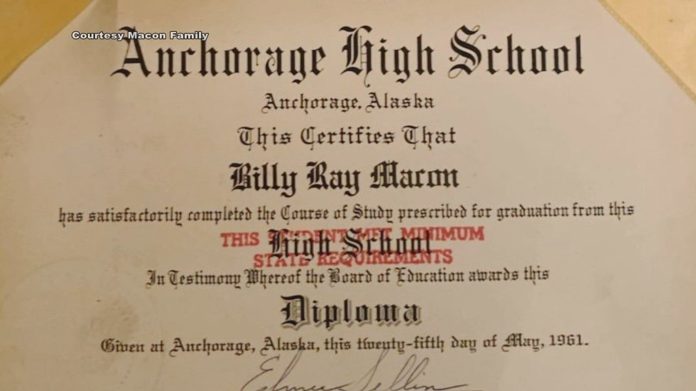
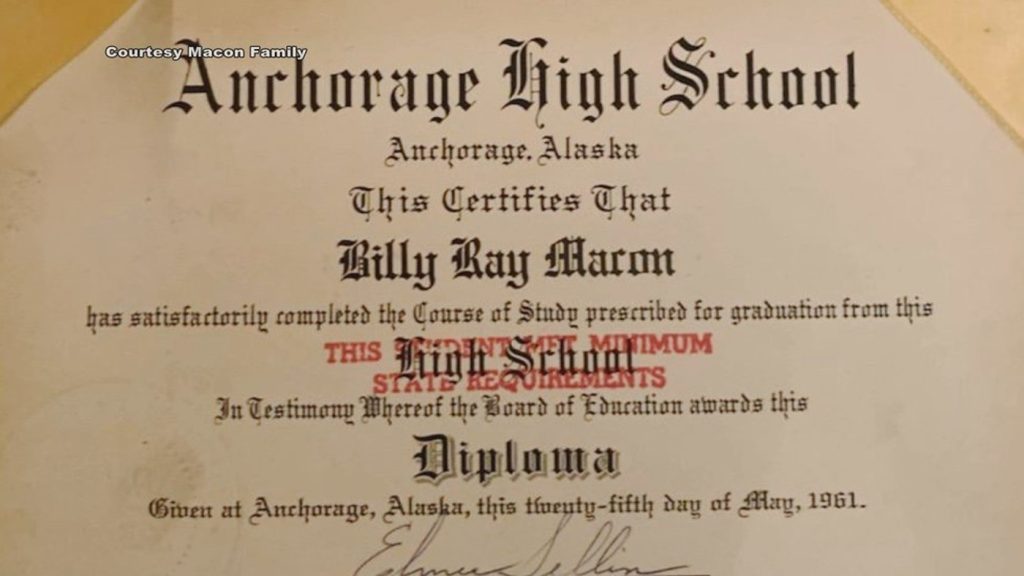
Though Macon graduated from West Anchorage High School in 1961, his diploma was given to him with a red stamp displaying a rude reminder that “this student met minimum state requirements,” and turning the diploma from a point of pride, into a point of pain.
In an interview with Alaska News, Macon’s wife said he never displayed the certificate in the house, but had it stowed it away in a plastic bag. It belittled his commitment to family and education. For as a senior, he was already married with a child and had a second on the way. He was working at the nearby Elmendorf Air Force base to support them, which required a one-hour walk, while finding time to study when he was able.
“I tried to do homework when I’d get home from school, but by the time I’d get to it a little bit, it was time to get on my walking track out to Elmendorf,” Macon said. “So I’d walk out to Elmendorf, work half the night and then walk all the way back.”
Macon’s granddaughter Tafena Timpson, after seeing what the red stamp had done and was continuing to do to her grandfather’s sense of pride, tried to contact the school district, but had no success.
Later, looking to do something nice for his 80th birthday, Timpson wrote a moving social media post hoping to capture the incredible value of a man which the state’s examiners had failed to notice.
Sven Gustafson saw the post and decided to right the wrong. As principal of the same school that Macon had graduated from in 1961, he organized a special re-graduation ceremony, complete with a recital from the school choir and new diploma sans stamp.
“It’s unbelievable, it is unbelievable,” he said. His wife confirmed that he plans to hang this one on the wall.
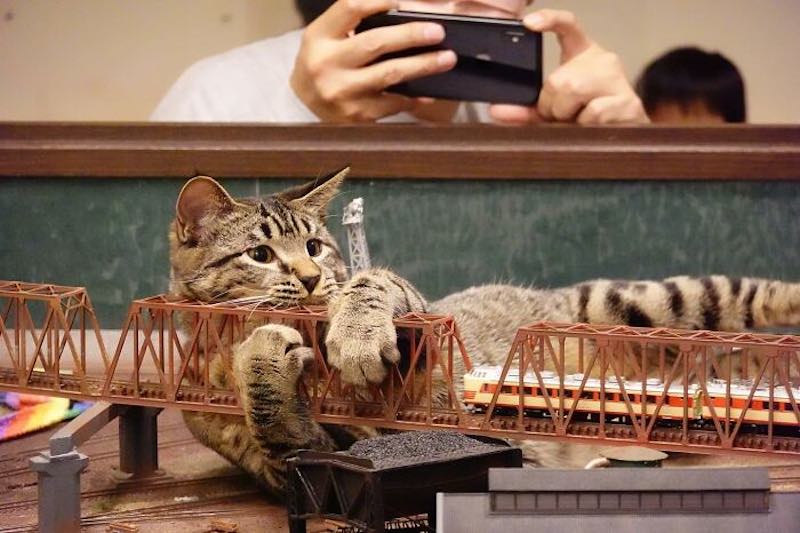
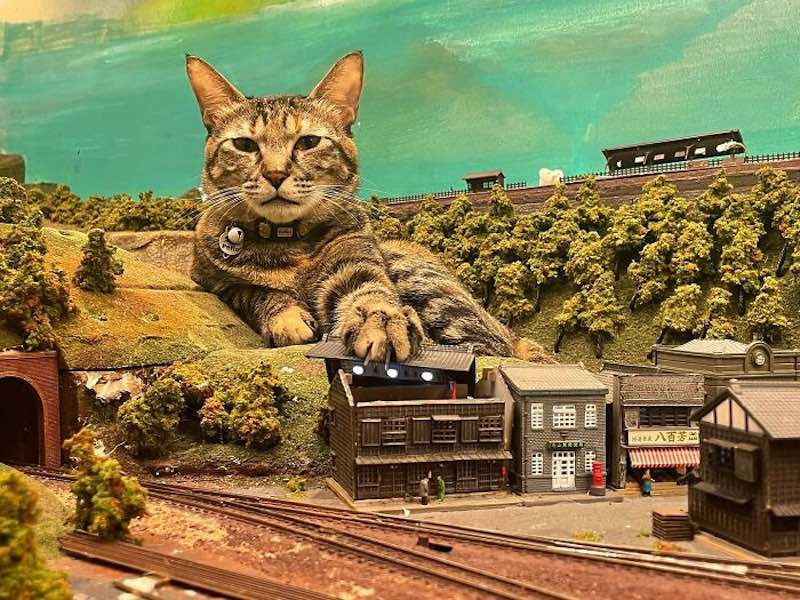
In classic Japanese horror films, megalithic monsters roam the countryside destroying everything in their path, however, at one Osaka restaurant nearly done in by the COVID-19 pandemic, it was a band of non-marauding “Catzillas” that stepped in to save the day.
Naoki Teraoka’s miniature-railway-themed restaurant was doing well until the pandemic struck. Like many others in the industry, as patronage dwindled, there wasn’t much he could do. Things got so bad the restauranteur was actually thinking of closing his doors—until an unlikely hero in the form of a stray kitten turned things around.
Even in the midst of financial turmoil, Teraoka didn’t have the heart to turn away the sickly kitten he’d noticed hanging around the restaurant. He and his family decided to adopt the baby cat they named Simba—only to realize Simba was part of a package deal.
Soon after they’d taken Simba in, another puss appeared at their window that turned out to be Simba’s mom. With a lack of customers and surplus food to spare, Teraoka started feeding the stray kitty. Then, during a particularly rainy spell, Momma Cat showed up with three kittens in tow. Teraoka decided to adopt them in as well.
“It was a financially difficult time for us, but we decided to help the cat family. Yes, we thought we were helping them, but they were the ones who helped us,” Teraoka told Bored Panda.
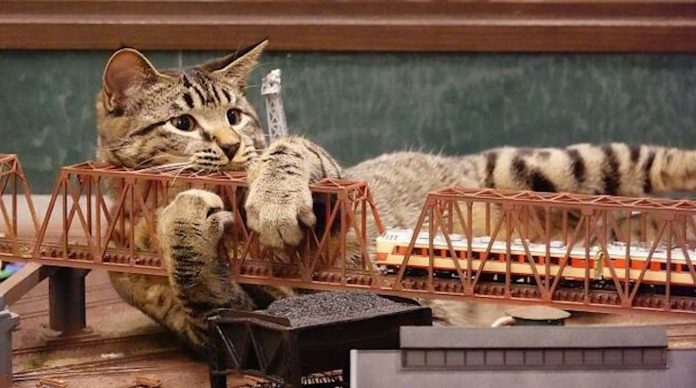
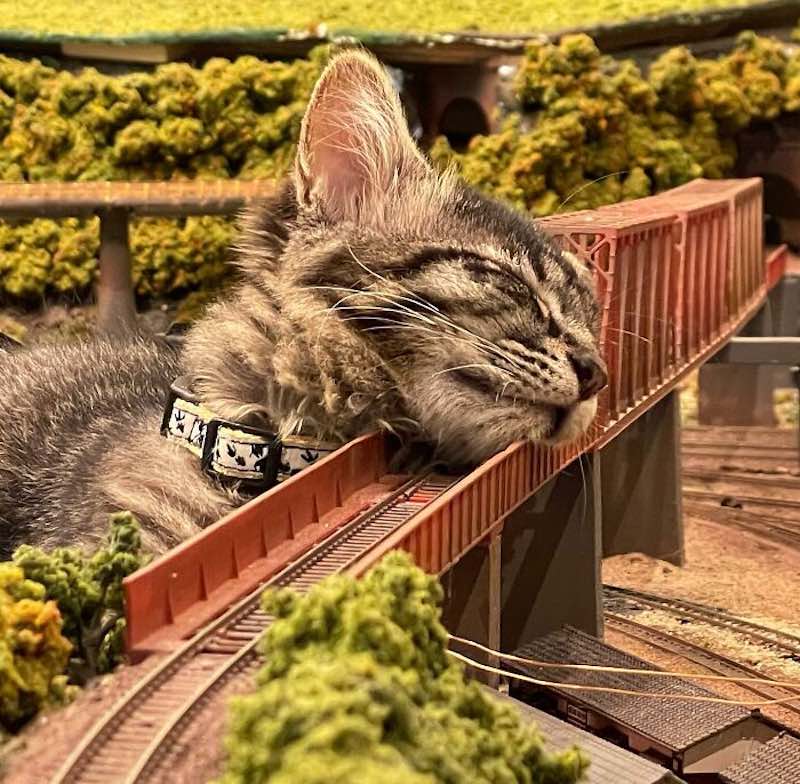
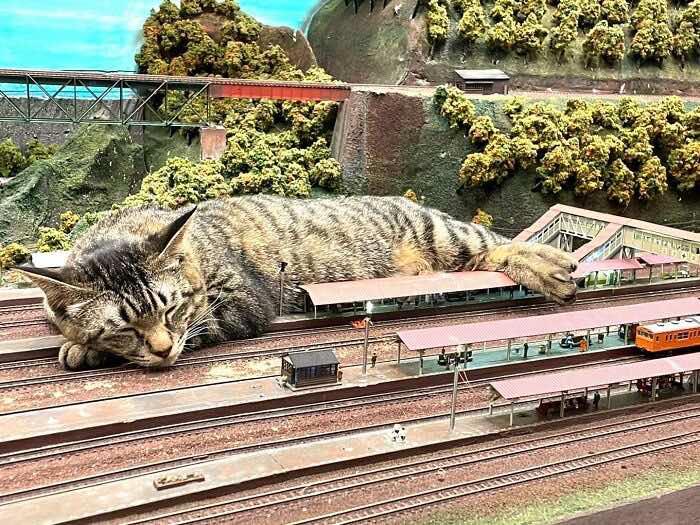
The cats began making themselves at home amidst the restaurant’s perfectly scaled model train dioramas. Though diminutive in real life, the kitties towered over the miniature landscapes looking very much like something out of a movie that might easily be titled, “Attack of the 50-Foot Felines!”
Amused by the whimsical tableaux they created, Teraoka began taking photos of the cats lounging and playing in their tiny locomotive world and posting the results to Instagram.
Not only did the photos become a sensation, but they also inspired Teraoka with an idea to reinvent the restaurant that turned out to be a real winner.
While the model trains remained an attraction, Teraoka transformed the place into a cat sanctuary where patrons could interact with stray cats as they dined—and even adopt them! As customers began to flow in and popularity grew, he was able to expand his operations with a second-floor cat shelter and kitty hotel.
Teraoka tries to populate his establishment with felines that are most at risk. To date, he’s traveled as far as 200 miles to make a rescue, has been responsible for finding homes for more than 60 strays, and has taken dozens more off the streets.
They say cats have nine lives. While Teraoka may have started out with the intention of saving one Simba’s, it’s a favor that’s since been returned in monster proportions and shows no signs of stopping anytime soon.
Quote of the Day: “We are each other’s harvest. We are each other’s business. We are each other’s magnitude and bond.” – Gwendolyn Brooks
Photo: by Jannet Serhan
With a new inspirational quote every day, atop the perfect photo—collected and archived on our Quotes page—why not bookmark GNN.org for a daily uplift?
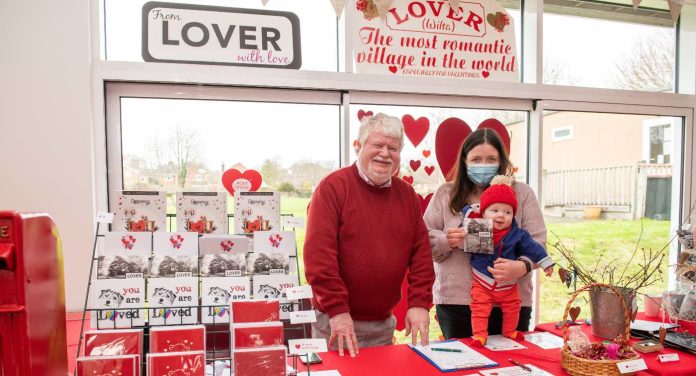
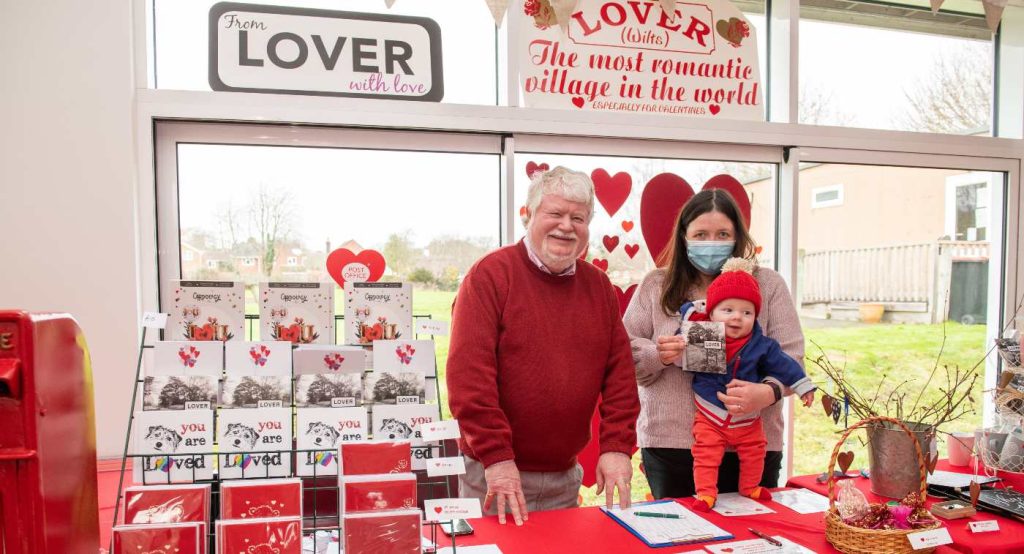
The ‘world’s most romantic village’ is celebrating Valentine’s Day—including a couple who moved there to be ‘the lovers from Lover’.
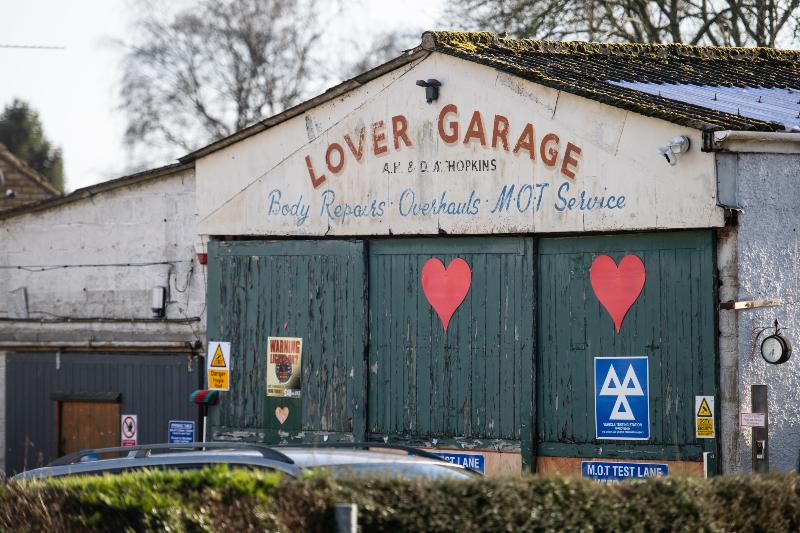
The small community of Lover in Wiltshire, England became popular with people who flocked there to post cards for February 14.
The main post office has closed, but a temporary one opens during the week of Valentine’s Day to keep the tradition alive.
Residents of the village formed the Lover Community Trust and in the past five years have stamped more than 8,000 cards and letters with ‘Sent from Lover’.
Supported by the Royal Mail, a team of volunteer cupids stamp cards with Lover’s special postmark before they are sent all around the world.
Residents of the pretty village also hang heart-shaped bunting, wreaths, and balloons on their garden fences and front doors.
One local couple, 71-year-old Jill Stark and her 72-year-old husband Fred, moved to Lover after falling in love with a property located in the centre of the village.
SWNS
The pair were drawn in by the name of the village—and the idea of being the ‘lovers from Lover’.
Jill said, “We’ve been helping with the Lovers Community Trust since we moved here.
SWNS
“I can see the post office from my back window and it seems to be thriving with business which is so lovely to see.
“The village has such an amazing vibe and there is a real feeling of togetherness about the place.
SWNS
“We felt that as soon as we arrived and every day since—we’re just so happy here.
Fred added, “The name Lover really stood out to us, and although the property itself and the village were hugely important, that name really helped us make a final decision.
“Being the ‘lovers from Lover’ just sounded too good of an opportunity to miss so we went for it.
SWNS
“The village is amazing and we feel lucky to have been residents here now for over 18 years.”
MAKE a Loved One Smile Today; Share This Sweet Story…
Michel Roccati was paralyzed in a motorbike accident which completely severed his spinal cord. Unlike some other forms of paralysis, there’s no therapy for him, and absolutely no sensation whatsoever in his legs.
An hour after receiving a new medical implant that emits electrical signals into his spinal cord however, he was able to take some steps supported by a wheeled-walking aid.
“I used to box, run, and do fitness training in the gym. But after the accident, I could not do the things that I loved to do, but I did not let my mood go down. I never stopped my rehabilitation,” Roccati told the BBC. “[Now] I stand up, walk where I want to, I can walk the stairs—it’s almost a normal life.”
In various cases of paralysis, damage to the spinal column prevents signals from the brain from reaching the extremities, but like a WiFi repeater, the implant carries the signals further down the body. The surgery to install the device is complex, and requires fibers to be attached to individual nerve sections.
It also contains powerful artificial intelligence software, and emits signals like nervous system biology would. Controlled by software on a tablet, pre-set programs train the electrodes on the implant to command the trunk and legs to perform certain kinds of movements.
“Within a single day, activity-specific stimulation programs enabled these three individuals to stand, walk, cycle, swim, and control trunk movements,” the researchers wrote in their recently published paper in Nature Medicine. “Neurorehabilitation [created] sufficient improvement to restore these activities in community settings, opening a realistic path to support everyday mobility.”
Backing from the study came from Dr. Ram Hariharan at the Northern General Hospital of Sheffield, UK.
“I have not heard of any study where they have put in an implant [into a patient with a complete spinal cord cut] and demonstrated muscle movements and improving balance, enough to stand and walk,” he told the BBC. “They have done something that has not been done before.”
It’s not a complete therapy yet, as the device is too complicated to be used in everyday settings, but the rehabilitations exercise the dormant leg muscles to improve health, mood, and often restore little bits of movement capabilities.
Professor Grégoire Courtine, who led the team that developed the technology, believes that if used in conjunction with stem cell regeneration, farther down the line it could bring patients back to something like normal life.
(WATCH the video for this story below.)
SHARE This Breakthrough News Story in Those Social Feeds…
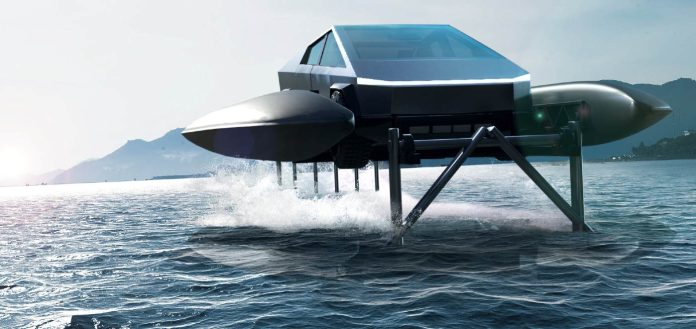
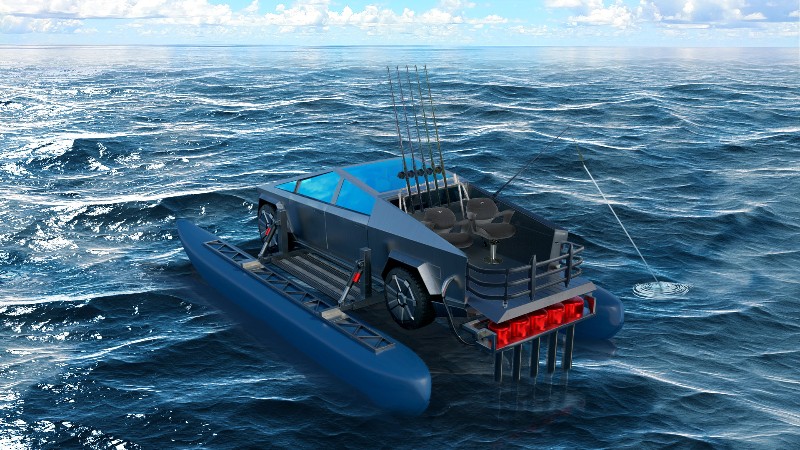
A James Bond-inspired concept will allow Elon Musk’s Cybertruck to be driven on water.
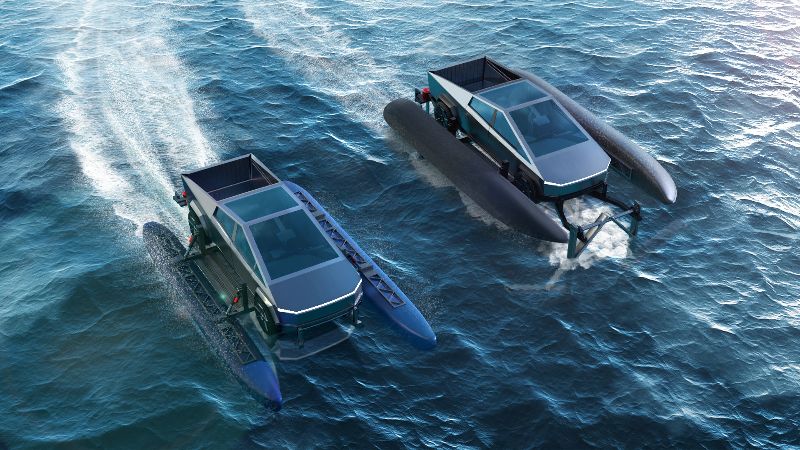
The Cybercat idea is designed to quickly transform Tesla’s vehicle into an all-electric high performance amphibious catamaran.
It sees the addition of electric outboard motors, pontoons, and optional hydrofoils in the Foiler model, which fold or collapse into parts to be stored in the vehicle.
They can then be installed “by a single person in less time than it takes to launch a boat.”
Elon Musk has previously said the Cybertruck design “influenced partly by The Spy Who Loved Me”, and even bought the 1976 Lotus Espirit featured in the film.
Now Cybercat creator Anthony Diamond believes that taking the vehicle onto the water will “pay homage to this passion.”
He explains, “We believe that with more than 1.3 million Cybertruck reservations, the market potential for Cybercat is immense and total gross margins comparable to those generated from the Tesla Model S and X vehicle lines combined are achievable.”
The Cybercat has estimated pricing of between $22,900 and $32,900, while the Foiler would market at $35,400 to $42,900.
SWNS
Cybercat would have a top speed of around 25+ mph and a range of 115 miles, while the Foiler is expected to reach 40+ mph with a similar range.
Diamond says the patent pending concept is “not a third-party aftermarket solution. Instead, we intend to work directly with OEMs (original equipment manufacturer) to bring the concept to market.”
“We are both serious and excited about this concept and intend to work with OEMs to bring these watercraft to market,” he adds.
Seattle-based Cybercat company TSWLM Electric Vehicles Inc.—named after the Bond film —are now accepting emails to demonstrate market interest and “substantially increase the probability that Cybercat becomes real.
SWNS
CYBERCAT SPECS (estimated):
TOP SPEED (Est.) – 25+ mph (22+ knots)
RANGE (Est.)
– 115+ mi. at 6 mph (100+ NM at 5 knots)
– 50+ mi. at 15 mph (44+ NM at 13 knots)
POWER – Up to 335 HP (5x 50 kW outboard electric motors)
PRICING: $22,900 TO $32,900
CYBERCAT FOILER SPECS (estimated):
TOP SPEED (Est.) – 40+ mph (35+ knots)
RANGE (Est.)
– 75+ mi. at 25 mph (65+ NM at 22 Knots)
– 115+ mi. at 6 mph (100+ NM at 5 knots)
POWER – Up to 335 HP (5x 50 kW outboard electric motors)
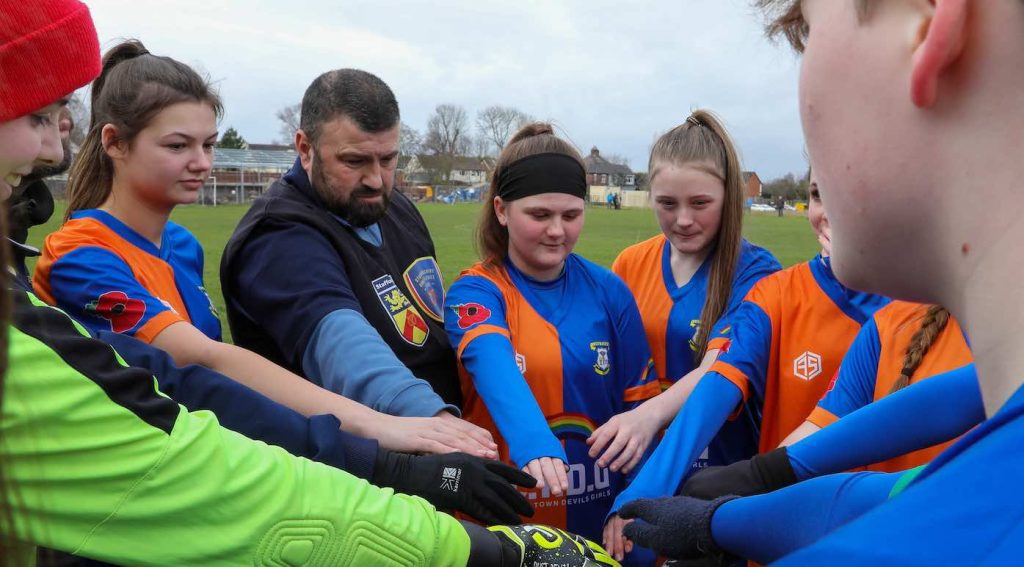
He said, “After a good few weeks we got down to training and they really started to take it in what I wanted.
“My ethos has really been on doing the basic stuff well and letting the girls decide what they feel they need to work on rather than dictating the sessions myself.”
Stuart’s first season was blighted by the pandemic, which forced him and Ivan to get creative with training.
They organized team-building activities with the girls to help them bond on and off the field.
Stuart then spent the sessions they could hold focusing on the basics of football like passing, shooting, and movement to try and bring the girls up to a good standard.
He said, “The 2020/2021 season was really stop and start because of the pandemic but this gave us more time to train together as a team.
SWNS
“Our first game together we were at home, and when we scored a goal it was like winning the World Cup.
The team’s star player, 15-year-old Chelsea, has also impressed individually, becoming the top scorer in the league with a whopping 30 goals.
Their newfound form led them to a top of the table clash at the start of February, where they were sadly beaten 3-2 by rivals Wyrley Pumas.
Although this means they have been denied the league title, the team have still exceeded expectation by winning promotion to the county’s top division.
Stuart, whose 14-year-old daughter Rebecca plays for the team, added, “We are about giving girls the opportunity to play football no matter what.
SWNS
“We gave it everything we had on the weekend but sometimes it’s just not your day.
“No-one would have ever thought this time two years ago that we’d be in this position yet here we are.
“All the effort that the girls, us coaches and parents have put in to get this point has been immense.
“If I didn’t have the support of Ivan helping me every week this would have been an impossible task so I’m incredibly grateful to have him on side.
“All we want is to bring more girls into the game and show that it’s not all about having the best players; it’s about hard work and giving everyone the chance to play.
“We’re going into next season full of confidence and ready to compete against tougher opponents, but for now we’re still very much enjoying our victory.
STRIKE a Good News Goal in Those News Feeds; Share This Story…
Quote of the Day: “It is easy to love and sing one’s love. But to be loved, that is true greatness.” – Hélène Cixous
Photo: by Dim Hou
With a new inspirational quote every day, atop the perfect photo—collected and archived on our Quotes page—why not bookmark GNN.org for a daily uplift?
In a 2018 report, GNN introduced a California health practitioner who invented a natural, drug-free patch that can treat nausea in people and pets—and relieve cramps and vertigo.
Now, GoPatch is meeting a crucial need with its new product to alleviate anxiety.
GoPatch founder Nicole Burdock knew that anxiety was the most common mental health challenge that Americans faced—even before the pandemic.
“I can only imagine, after these past 2 years with so many individuals working remote, being isolated, and unable to connect with friends and loved ones, how devastating this has been to our mental health, said Burdock. “I can’t even fathom.”
Gina Raulston, an ex-police officer living in Tennessee, now works in the prison system.
“Anxiety has always been a battle. Out of nowhere it tears at the very fabric of my life. I exercise regularly, eat as healthy as I can, but I seem to always find myself with anxiety.”
“I am also an officer’s wife, a mother, and I have a demanding career. Some days I feel like I shouldn’t feel the anxiety. I feel weak for admitting the anxiety is real,” admits the Chattanooga woman.
“I’ve taken Wellbutrin for years and still had panic attacks often. This patch has changed my life. I place it over my belly button and within a couple of minutes the anxiety is gone. There are no side effects. No pills to take. No harsh chemicals. Just a patch.”
Gina with GoPatch
Charlotte, a 57-year-old in Santa Barbara, California, says she particularly recommends the patch for people who don’t like going to the dentist. “It goes SO much less stressfully.”
Her neighbor’s elementary school daughter also had success with the patch. After trying the product, which is reported to be safe for children over 4-years-old, Mani was able to return to school after many weeks at home. “This anxiety patch is incredible,” she told Burdock. Mani’s mother wasn’t sure what to expect but says, “She was so calm and happy, not at all like before.”
The homeopathic patches are formulated with micro-doses of diluted essences from plants, minerals, and natural ingredients—and are made in the USA.
Whatever the ingredients, it apparently works. And her company, GoPatch, offers a money-back guarantee if it doesn’t work. But, the testimonials from customers speak loudly that there is something at work here.
Charlotte’s mother Lynne told GNN, “I have been dealing with several very stressful life situations and have been rather flooded with tension and stress, which has also caused an increase in pain from an ongoing problem. I have tried more techniques, medications, Physical Therapies, chiropractors, and acupunctures than I could possibly count.”
“I also am familiar with homeopathy but it has not been particularly helpful in the past either. Therefore, I was hopeful, but somewhat skeptical, expecting that the GoPatch would be just one more thing I had tried. But I applied a patch over my navel around noon and after an hour I had a marvelous afternoon and evening and could enjoy my three grandchildren in the Christmas pageant, in a way I had not been able to do for many years!”
“I now have very little pain and have been less tense and stressed than I have been for over a year,” she said. “It really feels like a miracle and an answer to innumerable prayers.”
Menstrual relief, too
Heather Gallagher has used GoPatch’s menstrual patches. After her second pregnancy, her period began to be heavy, with debilitating cramps.
“One morning I had to get ready to get my eldest to school then head off to work, and I could not even stand up. I crawled to the bathroom in agonizing pain and remembered that I had GoPatch in my first aid box. I grabbed one, put it on and was ready to call in sick for work. About 15 minutes later, I realized how the patch worked, and it worked fast. I left the patch on for the rest of my cycle and noticed not only did I not have pain but the bleeding wasn’t heavy.”
A GoPatch distributor, Health First Pharmacy in Windsor, California, reported that a woman came into the store complaining that she‘d tried everything for her granddaughter’s cramps, so they showed her the GoPatch product. Later, the young girl was writhing in pain on the bathroom floor but after the patch was applied, she was able to get up and go to school.
Burdock, whose nausea patches have also helped innumerable people to stop getting seasick and carsick, is proud of her work as an alternative health practitioner who has become an entrepreneur so she can reach more people.
“GoPatch has touched the lives of people on every continent, bringing them relief through our patches; even Antarctica, by folks traveling by boat.”
“That is making my heart’s wish come true, which actually brings tears to my eyes.”
$3 off every product
GNN has partnered with GoPatch to offer readers an exclusive discount: Use this General link (or coupon code Good3) to get automatic $3.00 discount on any other product.
Electreon announced a partnership with the Michigan Department of Transportation to establish a wireless charging demonstration project that will include a 1-mile stretch of road to recharge EVs while they drive.
The Michigan Project is expected to be launched next year in Detroit at the site of Ford’s central transportation innovation district, and will provide infrastructure that can wirelessly charge EVs while they are in motion or stationary.
Michigan Gov. Gretchen Witmer said the wireless charging project is an important component in electrifying vehicle fleets.
“As we aim to lead the future of mobility and electrification by boosting electric vehicle production and lowering consumer costs, a wireless in-road charging system is the next piece to the puzzle for sustainability.”
The midwestern state will provide $1.9 million in funding for the Michigan Project, which is being carried out in collaboration with the Ford Automotive Company, DTE, a local energy company that will provide a connection to the electricity grid for the electric road, and ROUSH CleanTech, which converts commercial vehicles into EVs, and will provide an electric truck for the project.
“Hosting the first wireless charging road system in the U.S. as part of the open platform we are providing at Michigan Central will serve as a magnet to attract innovators to test on this nationally significant asset, and also show people the value electrification can create,” said Carolina Pluszczynski, Michigan Central development director.
Electreon, based in Israel, has similar pilot projects already operating in Germany, Italy, and Sweden—and is currently preparing to provide a wireless charging network in Israel for 200 public buses in Tel Aviv.
The company’s inductive in-road charging technology was adopted last year by the “Arena of the Future” project near Milan, in Brescia, Italy, with Electreon integrating its wireless technology to charge two Stellantis vehicles, and an IVECO bus while driving.
Last October, the first fully-operational bus to use Electreon’s charging technology launched in the city of Visby in Gotland, Sweden, which is helping the nation reach its target of installing 2,000 km of electric highways by 2030.
“Electreon’s wireless technology works excellently with our electric vehicles and we are now ready to mass produce vehicles with the new technology,” said a spokesperson for the Higer bus company.
A Thor lookalike who became superfit to help him fight his cystic fibrosis says he can now laugh properly for the first time ever, after trying a “life-changing” medication.
Ben Mudge -SWNS
Ben Mudge was diagnosed with cystic fibrosis as a baby and grew up as a pale and “really skinny” lad coughing constantly due to excess mucus.
He began weight training in his teenage years in order to improve his health, and was soon likened to Thor, the hammer-wielding superhero played by Chris Hemsworth.
Now 31 years old, the Irishman is a buff personal trainer inspiring others with cystic fibrosis, by sharing his story on Instagram to raise awareness of the disease, which can dramatically shorten life expectancy.
But despite becoming fit, active and strong, Ben said his cystic fibrosis would still cause him to cough whenever he did anything, including while training.
He believed he was as healthy as he would ever be, until recently when he tried a new treatment in November. The medication called Kaftrio became available from the National Health System last year—and he was stunned by the instant results.
He said he can now breathe, speak, and laugh without coughing—and it feels like he is living “a dream”.
“I didn’t expect a significant change, but within hours of taking the medication, I took a deep breath and I started to cry,” said Ben, who currently lives with his wife Janice in Newtownabbey, Belfast. “I never realized what breathing should feel like!”
“I used to cough all day long—and now I can’t remember the last time I did. The worst thing was I couldn’t laugh without coughing and now I can laugh without having to think about it – it’s so surreal.”
Within five hours of taking the medication, he could take in a deep breath—and he posted a moving video testimonial for his followers (see below).
“I just started to cry—that’s the first time I have ever been able to breathe like that.”
“My voice even sounds different!”
Ben Mudge as Thor – SWNS
He says his aim is to show young people that cystic fibrosis “shouldn’t hold them back”.
“Nobody prepares you for being sent a video of a kid doing push ups and the kid saying, ‘I’m doing it to be like Ben Mudge’.”
Ben Mudge – SWNS
He also wants to encourage them to try the new medication that has been so life-changing for him.
Quote of the Day: “Everyone carries with them at least one piece to someone else’s puzzle.” – Lawrence Kushner
Photo: by Mon-Œil – CC license
With a new inspirational quote every day, atop the perfect photo—collected and archived on our Quotes page—why not bookmark GNN.org for a daily uplift?
Sadio Mané in 2018 by Екатерина Лаут - CC license on Wikipedia
For the first time in their country’s history, the talented footballing nation of Senegal has taken home Africa’s finest sporting prize: The African Cup.
Sadio Mané in 2018 by Екатерина Лаут – CC license on Wikipedia
They won The African Cup of Nations in thrilling overtime fashion, defeating Egypt 4-2 on penalties after extra time in the final.
Their success throughout the prestigious AFCON tournament has been marked with scenes of extreme joy and inspiration—but also generosity.
The President of Senegal declared Monday a national holiday and a parade of tens of thousands turned out to meet the team as they returned home from the tournament in Cameroon.
Senegal’s top goal-scorer Sadio Mané was named The Player of the Tournament. He scored 3 goals and assisted on two others—and scored the penalty to win the shoot out.
And it couldn’t have happened to a nicer man.
A Premier League and Champions League winner playing for Liverpool, Mané has taken every opportunity to use his world-class paycheck for acts of generosity, both at home in England and more recently during the AFCON.
During the tournament, he personally paid for airline tickets so that 50 Senegalese fans could fly to Cameroon to watch the games.
After the first knock-out round game against Cape Verde, Mané was hospitalized with a concussion and, whilst being treated, discovered that a local boy arrived in critical condition after being struck by a motorcycle. After Mané heard the story, he paid the boy’s entire bill, which the parents were unable to afford.
This was not the first time Mané has lent a helping hand in West Africa. He has donated more than $1 million to build a school, a hospital, and soccer academy in his home village of Banbali, where he grew up playing soccer bare-footed.
He regularly shows up on social media in videos being helpful and kind—assisting roadies in loading the team bus, giving fans his jerseys, and even cleaning the toilets at his local Liverpool mosque.
“Why would I want 10 Ferraris, 20 diamond watches, or 2 planes?” says the man who will become a forever-legend in African football. “I built schools, a stadium, we provide clothes, shoes, food for people who are in extreme poverty. I prefer that my people receive a little of what life has given me.”
The Senegal national football team had already reached the final in the last continental Cup in 2018—so, as they say in the sporting world, “demons were exorcized” with this victory. Furthermore, Senegal’s strategy to retain their team’s head coach, Aliou Cissé, after his failure to win the last tournament, has paid off.
African football analysts are describing it as a case of Africa “trusting one of its own.” History has seen the continental teams rarely experience success unless lead by European or Latin American coaches. Cissé is one of a few yet growing number of successful African bosses.
“I think this man deserves all the success he gets because he is the most criticized coach I have ever seen in my life, but he never gives up,” said Mané after Senegal beat Burkina Faso 3-1 in the semi-final.
“We would like to win for our country and for him because he deserves it after everything he has been through as a player and now as a coach.”
Cissé reached the AFCON final as a player and captain in 2002, but missed his penalty in the shoot out that year, which cost his team the title. In the 2002 World Cup, he captained Senegal to beat the previous world champions France 1-0, before taking the team all the way to the quarter finals, becoming only the second African team to progress that far.
“Since independence we have been running to catch up. Now we too have a star on our shirt,” said Cissé before his players swamped him at his press conference.
The victory of Cissé, Mané, and Senegal as a team, and as a nation, wraps up some beautiful narrative sporting screenplays, and epitomizes why soccer is known as “the beautiful game.”
SHARE on Social Media And Score a Kindness Goooooal…
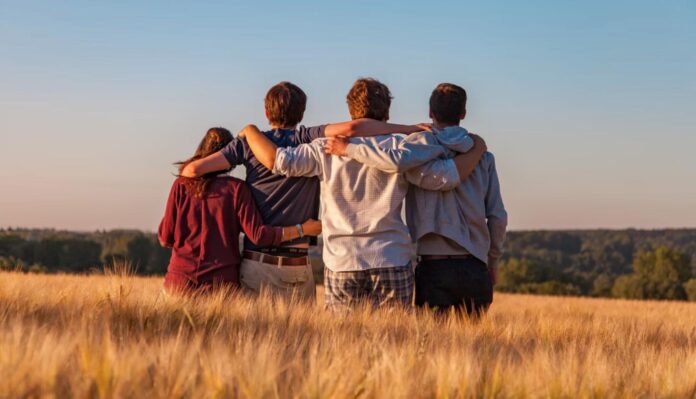
Playing video games can actually help people make new friends.
@JESHOOTS
The average American has made five new online friendships through playing video games over the last 18 months, according to a new poll.
The survey of 2,000 adults found that 39% has seen an increase in their online friend list since the pandemic began, with the average gamer becoming so close with their new pals that they’d invite four of them to their wedding.
Aside from friendships, nearly half of gamers (46%) believe it is important that their “significant others’ play video games and 43% had dated someone they met through online gaming.
Sixty-four percent of respondents said they cherished their video games because they helped them feel less lonely and connected them with other people.
Just as many respondents said buying a new video game makes them feel like they’re allowing themselves to be happier.
Commissioned by World of Warships and conducted by OnePoll, the survey also revealed that video games have helped six in 10 people learn more about the real world.
75 percent of gamers have done some kind of real-world research on the games they play, and 57% consider themselves experts on the topics they research, thanks to video games.
Real-world passions lead many to play video games that depict their hobbies — such as racing games (12%), boxing games (9%) and simulation games (9%).
Additionally, six in 10 (62%) said games had led them to explore new goals in their lives.
“Regardless of your interests, everybody can find a game that resonates with their passions and engage with it,” said Artur Plociennik, regional publishing director at World of Warships. “If you have an interest in a certain topic, like naval history, for instance, chances are that playing a naval history game enables you to immerse yourself even further while giving you the chance to be a part of a vibrant community.”
A third of gamers (35%) prefer games that offer authentic representations of the real world and 36% said they want a plot based on realism, while 22% enjoy a more imaginative, fantasy world—a world different than their own.
TOP 10 GAMING GENRES
Racing games
Boxing games
Simulation games
Rhythm/music games
Football games
Basketball games
Historical strategies or shooters
Visual novels
Soccer games
Baseball games
Have you made any new friends this way? Let us know in the comments…
FREE WILL ASTROLOGY – Week of February 12, 2022
Copyright by Rob Brezsny, FreeWillAstrology.com
AQUARIUS (Jan. 20-Feb. 18):
Actor Leelee Sobieski was mourning her romantic adventures—or rather the lack of romantic adventures. She said, “If only I could find a guy who wasn’t in his 70s to talk to me about white cranes, I’d be madly in love.” The good news is that Sobieski knows *precisely* what she wants, and it’s not all that complicated. The bad news is that there are few men near her own age (38) who enjoy discussing the fine points of the endangered bird species known as the white crane. I bring her predicament to your attention, Aquarius, in the hope that you’ll be inspired to be as exact and lucid as she is in identifying what you want—even as you cheat just a bit in the direction of wanting what is actually available.
PISCES (Feb. 19-March 20):
I’ve never offered you the wisdom of actor Natalie Portman, but her idealistic attitude about relationships is exactly what I think you should aspire to in the coming months. She said, “I always ask myself, would I want someone to do something that wasn’t comfortable for them to do just to please me? And the answer is no.” What do you think, Pisces? Do you suspect it might be interesting to apply that principle to your closest alliances? I hope so. If you do, the planetary energies will conspire to deepen your intimate bonds.
ARIES (March 21-April 19):
“Real love is a pilgrimage,” declared author Anita Brookner. “It happens when there is no strategy, but it is very rare because most people are strategists.” That’s the bad news, Aries. The good news is that you have more potential than ever before to free your love of strategic maneuvering and manipulation. For the foreseeable future, I invite you to drop all romantic agendas and simply make yourself extra receptive to love’s teachings. Are you ready to learn what you don’t even realize you need to know?
TAURUS (April 20-May 20):
In the near future, I’ll be pleased if you dole out lavish praise to allies who enchant you. I will celebrate if you deliver loving inspirations and lush invitations to those who help you fulfill your reasons for being here on the planet. To get you in the mood, here are some suggested provocations. 1) “Your body makes mine into a shrine; holy, divine, godtouched.” –Ramona Meisel; 2) “Your luster opens glories on my glowing face.” –Federico García Lorca; 3) “All night long if you want. We’ll tell our secrets to the dark.” –Gayle Forman; 4) “I’ll let you be in my dreams if I can be in yours.” –Bob Dylan; 5) “We are each other’s harvest. We are each other’s business. We are each other’s magnitude and bond.” –Gwendolyn Brooks.
GEMINI (May 21-June 20):
In Gemini author Orhan Pamuk‘s novel Snow, the main character Ka asks a woman named Ipek, “What is the thing you want most from me? What can I do to make you love me?” Ipek’s answer: “Be yourself.” In the coming days, Gemini, I would love you to engage in similar exchanges with those you care for. According to my understanding of the astrological omens, now is a favorable time for you and your best allies to shed all fakery and pretense so that you may be soulfully authentic with each other—and encourage each other to express what’s most raw and genuine.
CANCER (June 21-July 22):
Are you in the mood to make extravagant gestures in behalf of love? Are you feeling an urge to move beyond your habitual approaches to intimate togetherness as you dare to engage in fun experiments? Now is a good time for such behavior with allies you trust. To spur your imagination, immerse yourself in the spirit of this poem by Nizar Qabbani: “I abandon my dictionaries to the flames, / And ordain you my language. / I fling my passport beneath the waves, / And christen you my country.” Your homework: Dream up and carry out a playful and audacious venture that will energize one of your close relationships.
LEO (July 23-Aug. 22):
I’ve created a list of splashy titles for stories or poems or songs or artworks or dances that you could compose for lovers or people you want to be beloved allies. I hope my list inspires you to get gushy and lyrical. I hope you’ll be creative and marvelous as you express your passionate appreciation. Here are the titles: 1. Glistening Passion. 2. Incandescent Rapture. 3. Succulent Dazzle. 4. Molten Luminosity. 5. Splashy Fire Bliss. 6. Shimmering Joy Beams. 7. Opulent Delirium. 8. Wild Soul Synergy. 9. Sublime Friction. 10. Fluidic Gleam Blessings. 11. Throbbing Reverence. 12. Sacred Heart Salvation.
VIRGO (Aug. 23-Sept. 22):
Author Eve Ensler tells us, “You have to give to the world the thing that you want the most, in order to fix the broken parts inside you.” This is perfect counsel for you to carry out in the coming weeks, Virgo. Life will conspire to help you heal yourself, in dramatic and even semi-miraculous ways, as you offer the people and animals you care for the same blessings that you crave to receive. I foresee an influx of restorative karma flowing in your direction. I predict the fixing of at least some of your broken parts.
LIBRA (Sept. 23-Oct. 22):
In Michael Chabon‘s novel The Mysteries of Pittsburgh, the character named Arthur says to the character named Cleveland, “Love is like falconry. Don’t you think that’s true?” Cleveland replies, “Never say love is like anything. It isn’t.” I propose we make that your meditation during this Valentine season, Libra. In accordance with astrological omens, you will be wise to purge all your preconceptions about love. Use your ingenuity to revive your innocence about the subject. Cultivate a sense of wonder as you let your imagination run wild and free in its fantasies about love and sex and intimacy.
SCORPIO (Oct. 23-Nov. 21):
I’ll love it if sometime soon you create a situation in which you tell an ally words similar to what author Jamaica Kincaid spoke to her lover: “To behold the startling truths of your naked body frees me to remember the song I was born from.” Do you think you can make that happen, Scorpio? The astrological indicators at play in your life suggest that it would be right and sacred for you to do so. And if there is no such ally, then I hope you will deliver the same message to your naked self. And by the way, what is the song you were born from? (PS: There has never been a better time than now to learn treasured truths about yourself through your connections with others.)
SAGITTARIUS (Nov. 22-Dec. 21):
I’m afraid I must be downright practical and mundane in my oracle for you. Don’t hate me! I’m only reporting what the planetary omens are telling me. They say that now is a favorable time for you to practice, practice, and practice more the fine arts hinted at by author Ivan Goncharov: “A close, daily intimacy between two people has to be paid for: It requires a great deal of experience of life, logic, and warmth of heart on both sides to enjoy each other’s good qualities without being irritated by each other’s shortcomings and blaming each other for them.” Be diligently positive, Sagittarius, as you work through the demanding daily trials of togetherness.
CAPRICORN (Dec. 22-Jan. 19):
I’ll offer you a radical idea about love from author Hélène Cixous. Although it’s not always true for everyone, it will have special meaning for you in the coming months. She wrote, “It is easy to love and sing one’s love. That is something I am extremely good at doing. But to be loved, that is true greatness. Being loved, letting oneself be loved, entering the magic and dreadful circle of generosity, receiving gifts, finding the right thank-you’s, that is love’s real work.” How about it, Capricorn? Are you up for the challenge? Are you willing to expand your capacity to welcome the care and benevolence and inspiration coming your way from others?
WANT MORE? Listen to Rob’s EXPANDED AUDIO HOROSCOPES, 4-5 minute meditations on the current state of your destiny — or subscribe to his unique daily text message service at: RealAstrology.com
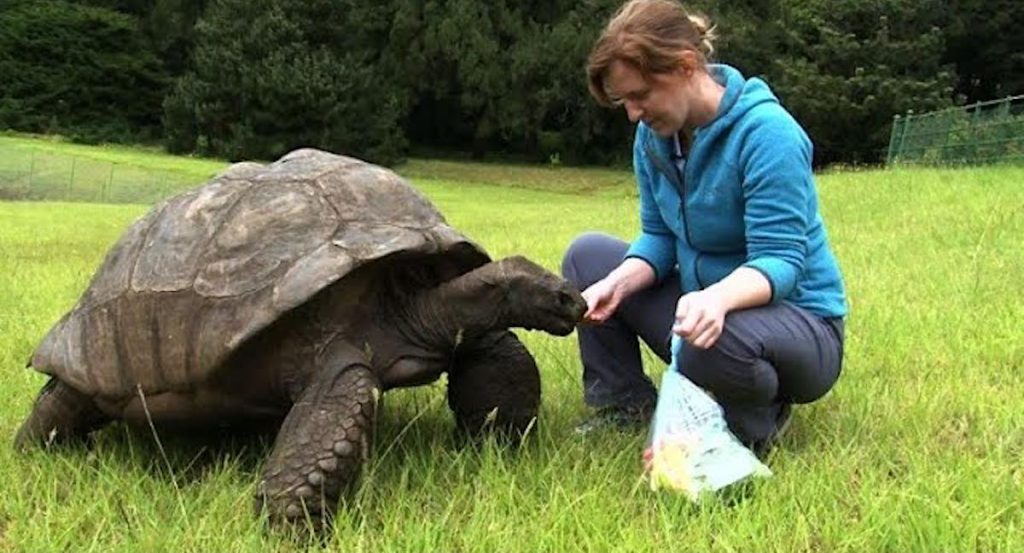
A Seychelles giant tortoise named Jonathan recently was named by the Guinness Book of World Records to be the oldest land animal—at 190 years old.
YouTube
Living on the island of St. Helena’s with other giant tortoises, he was brought there as a gift to the island’s governor Sir William Grey-Wilson in 1882.
Thought to be born in the year 1832, Jonathan’s advanced age is really only a guess, based on the fact that he was fully mature when he arrived, making him at least 50 in 1882. The Guinness folks say, in all likelihood, he’s been alive for more than two centuries.
He was around for two world wars, the invention of trains and automobiles, and the end of slavery. He’s lived through the rise and fall of both fascism and communism, and he predates the light bulb, the photograph, the telephone, and the Eiffel Tower.
The old timer is part of an endangered species, but one that is famous for its longevity. An Aldabara giant tortoise named Adwaita, which was presented to the British East India Company, was thought to be 255 when he died in a Calcutta zoological garden.
As for Jonathan, he is still eating and mating, though he needs a little help from his caretakers.
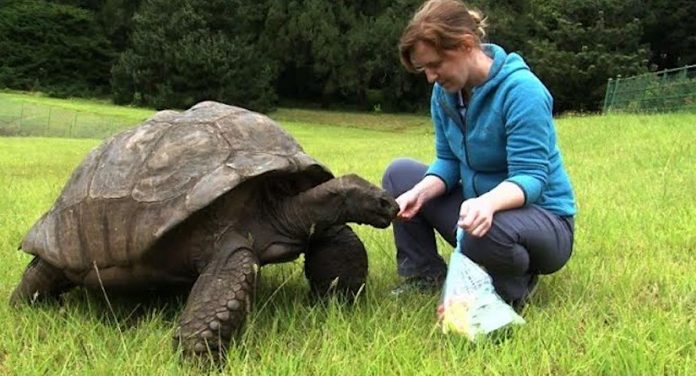
“The Veterinary Section is still feeding him by hand once a week to boost his calories, vitamins, minerals and trace elements, as he is blind and has no sense of smell,” according to a statement from the Plantation House, the governor’s residence.
“His hearing, though, is excellent and he loves the company of humans, and responds well to his vet Joe Hollins’ voice, as he associates him with a feast.”
Indeed, his reported activities have changed little, even while society raced by. 31 governors have president over the Plantation House during his life, over the same span where 39 U.S. presidents have been inaugurated.
“While wars, famines, plagues, kings and queens and even nations have come and gone, he has pottered on, totally oblivious to the passage of time,” Veterinarian Joe Hollins reports.
“Jonathan is symbolic of persistence, endurance, and survival and has achieved iconic status on the island.”
Back in his homeland on the Seychelles islands, the conservation program Nature Protection Trust of Seychelles has produced a new generation of critically-endangered native giant turtles, raising 160 juveniles so far, and introducing them into the wild.
Quote of the Day: “Remember that at any given moment there are a thousand things you can love.” – David Levithan
Photo: by Laura Ockel
With a new inspirational quote every day, atop the perfect photo—collected and archived on our Quotes page—why not bookmark GNN.org for a daily uplift?
A decades-old fusion reactor project in England recently broke its own record for highest-ever sustained energy from fusing atoms together.
Providing just over 11 megawatts of energy over a five-second period using the same process as what powers our Sun, the researchers have laid a foundation for far bigger achievements in the future.
The Joint European Torus (JET) tokamak in Oxford, UK, created a spinning plasma controlled by superconducting magnets which fused hydrogen isotopes together into helium. The neutrons given off as energy during this process generated 59 megajoules of energy, around twice as much as what JET produced the last time it ran this experiment in 1997.
“These landmark results have taken us a huge step closer to conquering one of the biggest scientific and engineering challenges of them all,” said Ian Chapman, who leads the Culham Centre for Fusion Energy (CCFE), where JET is based, in a statement.
When the enormous tokamak nuclear reactor ITER comes online in southern France in 2025, it will be the world’s largest fusion reactor—a comically-large conglomeration of the most complicated engineering components costing $22 billion. But before this massive facility begins testing, the much smaller JET will be able to give the data behind this recently-broken record to ITER’s operators to act as a yardstick, since JET is essentially the same machine only smaller.
Nuclear fusion could mean unlimited clean energy for the world if only scientists can create a reactor that creates more power than it uses.
ITER is expected to produce around 10-times as much as it uses. While JET, a one-tenth mock up of ITER, generated only 0.33% electricity where 1% is breakeven, the same modeling that achieved this result states that ITER will work.
ITER will be powered by two hydrogen isotopes called deuterium and tritium. The former is more easily found, and is used along with seawater in other nuclear fusion tests. The latter is rare in nature and usually only obtained through nuclear fission reactors, that is, normal nuclear power plants. The entire world’s supply of tritium is 20 kilograms, reports Science.
The last time these two isotopes were used to create a plasma was the last time JET set a record for energy produced back in 1997.
“JET really achieved what was predicted. The same modeling now says ITER will work,” fusion physicist Josefine Proll at Eindhoven University of Technology, told Nature. Proll, who was not involved in JET’s research, added that a 5-second plasma containment is “really, really impressive.”
“It’s a really, really good sign and I’m excited.”
In December, the US Department of Energy’s National Ignition Facility set a different fusion record, using laser technology to produce the highest recorded fusion power output relative to power input. The burst beat JET’s 1997 record, but the event lasted less than one second and produced just 1.3 megajoules.
This article is written by Enrique Ortiz and has been reprinted with permission from Mongabay.
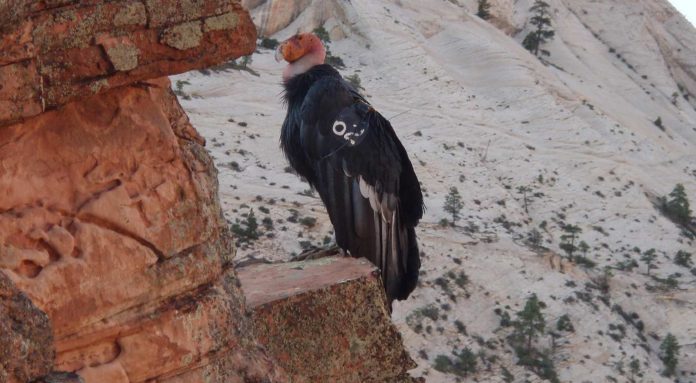
California Condor. Photo by Enrique Ortiz
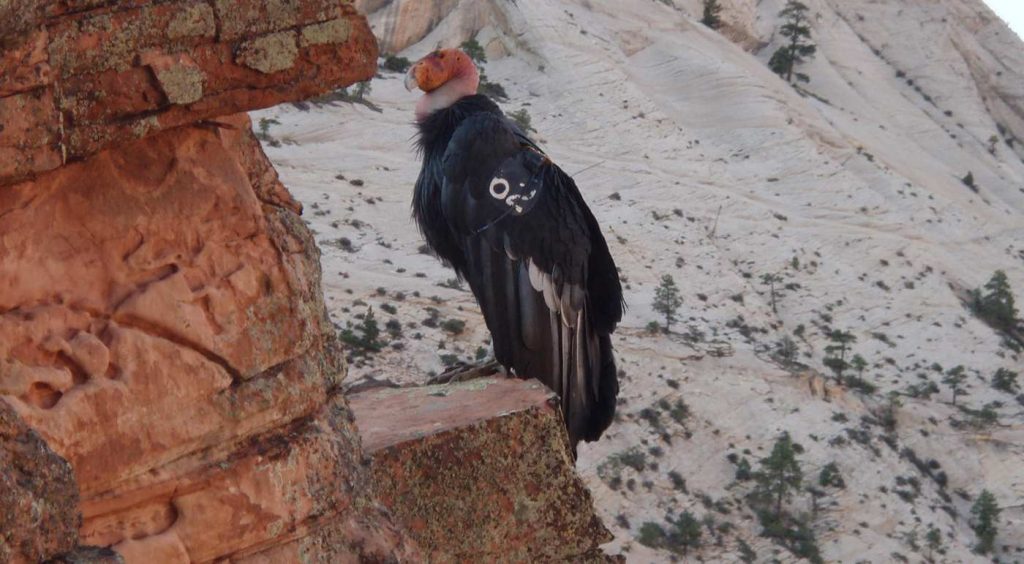
A few years ago, alone on the top of a mountain in Zion National Park, in Utah, USA, I had an almost mystical experience that immediately transported me to the Illescas Peninsula, in Piura, Peru. Out of nowhere, a California Condor appeared with a number written on a plastic plate attached to its wing, perching a few feet from me.
It was an extraordinary event because, one, it is a very rare species which “miraculously” was saved from extinction. And two, was that back in the early 1980s, Illescas and I were directly involved with its survival mission. It was as if that condor had come to greet me… and whisper something in my ear.
By the late 1970s, it was clear that the California Condor was on its way to disappearing, as a result of poisoning, hunting, and habitat destruction. The annual censuses showed a significant drop in numbers.
At the time, there was a bitter discussion about what to do. Some said that extinction was inevitable, and, as a matter of respect, we should let the species go in peace. Others, practical and stubborn, believed that they could be saved and that it was necessary to act quickly and radically. When only 22 of them remained in the wild, flying freely in the skies of North America (in addition to some in captivity), the U.S. Fish and Wildlife Service (USFWS) decided to act. With the technical support of scientists, led by the San Diego Zoo, they proceeded to capture them all. None were left free. It was all or nothing.
The Illescas peninsula: a surreal place
In the 1980s, the Illescas peninsula was one of those almost inaccessible places, with a surreal air about it. It was the only known site on the coast where the Andean Condor nested. What made it even more appealing was that, from that point of the northern coast where the Humboldt current flows away from the mainland in the direction to the Galapagos Islands, there were no towns or roads to or from the nearest city, Chiclayo. Just a stretch of 200 kilometers of a completely pristine beach, the longest in Peru. To get there you had to be very well equipped.
Furthermore, feral populations of donkeys and goats, introduced animals of unknown origin, were known to exist there. The mountains, rising at the edge of a sea with colonies of sea lions and whale bones stranded in time, in the middle of a desert full of attractive animals, such as the tiny Sechura foxes and coral snakes, were the dream of a young biologist.
A bold, but risky plan to save the California condor
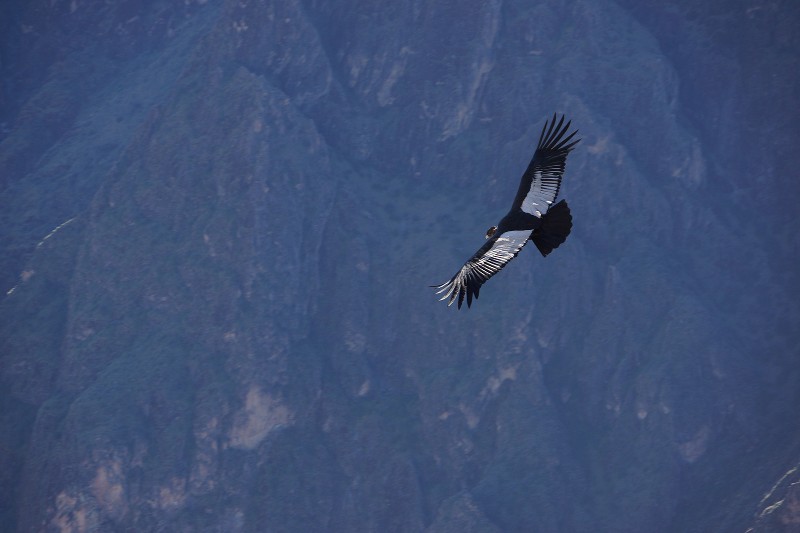
Andean Condor. Photo by Enrique Ortiz
The California Condor, beyond being the largest North American bird, has a religious and magical significance for the ancestral and modern cultures of its country. The idea of catching them seemed risky and bold.
The plan was to reproduce the California Condor in captivity, and while the causes that led to their near extinction were corrected, they would be re-introduced into the wild to repopulate their original territories. Very little was known about them, and at the time, no one had experience with such a program. Those biologists were literally putting their necks on the line, but they did have high hopes and an appropriate budget. Though captive breeding techniques had already been developed, reintroducing birds to the wild was more difficult, even more so for a bird of that size and wide flight range. And, if successful, would they survive in freedom? Would the effort have served any purpose?
Experimenting with the techniques this endeavor demanded was a great challenge, and such a limited number of California Condors could not be put at risk in testing them. A substitute was needed. Voila!
The Andean Condor is the closest and most similar relative to that of the California Condor, and therefore, it had to help to save it. The plan also needed a safe place where it could be carried out, one with wild condors and free from human interference. And this is how we got to the Illescas Peninsula in Peru, the perfect place for it.
An existing captive population of Andean Condors in the United States, probably of Peruvian origin, was chosen for the task, and their chicks were the focal point. The chicks, born and cared for in captivity at the San Diego Zoo, were fed for more than a year with puppets in the same way as their parents would (even imitating their caring sounds), and totally isolated so that they would not get imprinted with people. Can you imagine the patience of the technicians? Something like this can only be done with a lot of love and dedication.
Field testing the plan
With the support of both governments, these Andean condor chicks, already fledged and ready to fly, were brought to Peru in the early 1980s, and carefully taken to the Illescas peninsula. Such an important cargo demanded major efforts without making it news to anyone. They were released in places that may once have been nests and then monitored around the clock, 24/7.
At the same time, several wild Illescas condors were caught and tagged, to monitor the local population and to learn about their social life, critical information for the program. Each Andean Condor, imported and native, carried on its wing an individual identification, and a transmitter of location data.
In addition, these carried a small solar panel that powered the devices. Everything had to be very small and light, and at the time, it was like science fiction. Those were the beginnings of a satellite tracking technique widely used today. The condors were permanently followed to find out about their movements, or… if they were alive. As a field research assistant, I was one of those dedicated trackers.
The experience of living 24 hours a day for months, without Sundays or holidays, wandering with a telescope through the desert and the mountains, alone, and in special dune buggies for the program, was unforgettable. I remember being awakened at night— from the holes I made in the sand to sleep—by feral donkeys, who were more surprised than I by the encounter. And for the condors, my dearest extra-large chicks, I developed an almost paternal affection. While sometimes my only entry for the day was that “at 3:42 pm one of them had scratched its butt,” it was never boring.
Other times I witnessed wild condors—adults totally alien to the Peruvian-North American chicks—coming to feed them as adoptive parents. The community cared for the young! That time was undoubtedly one of the most spectacular in my life.
Applying lessons from Peru to California
Making a long and rich history short, there in Illescas, techniques were developed that later were used to save the California Condor. Thanks to its brother, the Andean Condor, scientists learned (and put into practice) what was the proper care to be taken, the times and dependency factors, the gear to be used, and above all, about the sociability of these wonderful animals.
Well, coincidentally now, it is a tremendous joy that that place where all this happened is about to be declared as the “Illescas National Reserve.” This beautiful place is finally being categorized and protected for its own biological and geological attributes. It is one of the westernmost continental points of Peru, with the last remnant (to the north) of the old coastal Cordillera (mountain range).
These conditions created the environment where species unique to Illescas flourished, and a mixture of warm and cold environments, with mangroves, fog Loma vegetation, penguins, dozens of migratory bird species, as well as a healthy population of the endangered Andean Condor. All this thanks to SERNANP (the Peruvian Park Service), the Piura authorities, and the Sechura desert peoples.
Hours later, already recovered from the encounter with the wild Condor in Utah, I relayed my experience to a park ranger, and he probably thought I was under the influence of a hallucinogen. Well no. See the photo that proves it.
Ten years after Illescas, the California Condors were reintroduced to the wild in various places in the United States, and today there is a growing population of about 350 flying freely. They were spared from joining the list of confirmed extinct species, which includes the massive Ivory-billed Woodpecker, among other unfortunate creatures.
Thanks to the Andean Condor and the future Illescas National Reserve, the California Condor was saved. Ahh, condor friend from Utah, you’re welcome!
released polymer film courtesy of the researchers; Christine Daniloff, MIT
Polymer film courtesy of the researchers; Christine Daniloff, MIT
Using a novel polymerization process, MIT chemical engineers have created a new material that is stronger than steel and as light as plastic, and can be easily manufactured in large quantities.
The new material is a two-dimensional polymer that self-assembles into sheets, unlike all other polymers, which form one-dimensional, spaghetti-like chains. Until now, scientists had believed it was impossible to induce polymers to form 2D sheets.
Such a material could be used as a lightweight, durable coating for car parts or cell phones, or as a building material for bridges or other structures, says Michael Strano, the Carbon P. Dubbs Professor of Chemical Engineering at MIT and the senior author of the new study.
“We don’t usually think of plastics as being something that you could use to support a building, but with this material, you can enable new things,” he says. “It has very unusual properties and we’re very excited about that.”
The researchers have filed for two patents on the process they used to generate the material.
Two dimensions
Polymers, which include all plastics, consist of chains of building blocks called monomers. These chains grow by adding new molecules onto their ends. Once formed, polymers can be shaped into three-dimensional objects, such as water bottles, using injection molding.
Polymer scientists have long hypothesized that if polymers could be induced to grow into a two-dimensional sheet, they should form extremely strong, lightweight materials. However, many decades of work in this field led to the conclusion that it was impossible to create such sheets. One reason for this was that if just one monomer rotates up or down, out of the plane of the growing sheet, the material will begin expanding in three dimensions and the sheet-like structure will be lost.
However, in the new study, Strano and his colleagues came up with a new polymerization process that allows them to generate a two-dimensional sheet called a polyaramide. For the monomer building blocks, they use a compound called melamine, which contains a ring of carbon and nitrogen atoms. Under the right conditions, these monomers can grow in two dimensions, forming disks. These disks stack on top of each other, held together by hydrogen bonds between the layers, which make the structure very stable and strong.
“Instead of making a spaghetti-like molecule, we can make a sheet-like molecular plane, where we get molecules to hook themselves together in two dimensions,” Strano says. “This mechanism happens spontaneously in solution, and after we synthesize the material, we can easily spin-coat thin films that are extraordinarily strong.”
Because the material self-assembles in solution, it can be made in large quantities by simply increasing the quantity of the starting materials. The researchers showed that they could coat surfaces with films of the material, which they call 2DPA-1.
“With this advance, we have planar molecules that are going to be much easier to fashion into a very strong, but extremely thin material,” Strano says.
Light but strong
The researchers found that the new material’s elastic modulus—a measure of how much force it takes to deform a material—is between four and six times greater than that of bulletproof glass. They also found that its yield strength, or how much force it takes to break the material, is twice that of steel, even though the material has only about one-sixth the density of steel.
Another key feature of 2DPA-1 is that it is impermeable to gases. While other polymers are made from coiled chains with gaps that allow gases to seep through, the new material is made from monomers that lock together like LEGOs, and molecules cannot get between them.
“This could allow us to create ultrathin coatings that can completely prevent water or gases from getting through,” Strano says. “This kind of barrier coating could be used to protect metal in cars and other vehicles, or steel structures.”
Strano and his students are now studying in more detail how this particular polymer is able to form 2D sheets, and they are experimenting with changing its molecular makeup to create other types of novel materials.